This is the moment an fake animal rescue centre owner who abused pets in his care was arrested.
Oaveed Rahman, 26, purported to be looking after the animals at a rehoming centre called Save A Paw in Crays Hill, Billericay, Essex. Instead, he left them to suffer in filthy conditions amongst the caracasses of other dogs.
He took about £4,800 from his 11 victims, telling them it would be used to rehome dogs, provide a new kennel block or train dogs to behave around children and other animals.
Advertisement
Essex Police found 37 dead dogs when they first searched the rehoming centre in May, 2025. Four more dead dogs were found after the property was demolished.
“Many animals taken in by you… were subjected to prolonged barbaric mistreatment, cruelty and neglect,” Judge Conley said.
On Friday (20 February), Rahman, of Hope Road, Crays Hills, was jailed for a total of five years and given a lifetime order banning him from owning any animals.
Donald Trump has announced a global tariff after the US Supreme Court ruled that his previously imposed duties are illegal.
The new 10% import duty will apply to all countries and be effective “almost immediately”, the US president said in a post on his Truth Social platform.
The White House announced the levy would take effect on 24 February, although it could face legal challenges.
The law Mr Trump has used to impose the tariff caps it at 150 days, but he brushed off a question about the limit by saying “we have a right to do pretty much what we want to do”.
Advertisement
Advertisement
Supreme Court rules against Trump’s tariffs
It comes after six of the Supreme Court‘s nine judges voted to overturn Mr Trump’s signature economic policy, handing him a significant loss.
The judgment was in response to an application brought by businesses affected by the tariffs from 12 mostly Democrat-run states.
The applicants challenged the way the US president imposed the sweeping country-specific taxes.
Advertisement
Traditionally, tax-raising measures like tariffs are taken through Congress but the president wished to bypass that process.
But the majority judgment found the US Constitution “very clearly” gives Congress that power.
“The framers did not vest any part of the taxing power in the executive branch,” US Chief Justice John Roberts wrote.
The case is the first challenge to a major part of Mr Trump’s agenda to be ruled on by the Supreme Court.
Advertisement
Advertisement
Foreign countries ‘are dancing in the streets’
Trump ‘ashamed’ of judges who ruled against him
Responding to the decision, Mr Trump described it as a “disgrace”.
He said he was “ashamed” of the six Supreme Court judges who ruled against him for not “having the courage to do what’s right” for the US, describing them as “fools and lapdogs” who are “very unpatriotic and disloyal to our Constitution”.
Advertisement
Three of the six judges who ruled his tariffs illegal are Republicans. They include Neil Gorsuch and Amy Coney Barrett, who were appointed during Mr Trump’s first term in office.
Mr Trump thanked the three justices who voted in his favour, before claiming that foreign countries “who have been ripping us off for years” were now “dancing in the streets”.
Mr Trump’s administration had argued that a 1977 law allowing the president to regulate importation during emergencies also allowed him to set tariffs.
Other presidents have used the law to impose sanctions before, but Mr Trump was the first president to invoke it for import taxes.
Following the Supreme Court ruling, he said: “Today I will sign an order to impose a 10% global tariff under section 122 over and above our normal tariffs already being charged.”
Section 122 of the 1974 Trade Act allows the president to institute a “temporary import surcharge” of up to 15% for a maximum of 150 days if he finds there are “large and serious” balance-of-payments deficits to prevent an “imminent” and “significant” depreciation of the US dollar in foreign exchange markets.
Advertisement
What has been the British response?
The UK government said it expected its “privileged trading position” with the US to continue.
A spokesperson said Britain would work with the US to understand “how the ruling will affect tariffs for the UK and the rest of the world”.
The British Chambers of Commerce (BCC) said the decision did little to “clear the murky waters for business”.
Advertisement
William Bain, head of trade policy at the BCC, said Mr Trump could use other legislation to reimpose tariffs – which is exactly what he’s planning.
What are tariffs?
From 2 April last year, a day described by Mr Trump as “Liberation Day”, countries across the world were hit with taxes on their exports.
The tariffs were brought in via executive order from Mr Trump, who invoked the International Emergency Economic Powers Act to do so.
Advertisement
The Act is a 1977 law intended to be used during national emergencies, which Mr Trump invoked, saying the country was in a national emergency because of US trade deficits.
It was also this law that was used to apply levies on Canadian, Chinese and Mexican goods and services entering the US, although Mr Trump’s national emergency rationale was the trafficking of the drug fentanyl into the US.
Image: Donald Trump responding to the Supreme Court’s decision. Pic: Reuters
What does it mean for the economy?
What happens next, and whether roughly $175bn in import taxes will be refunded, remains to be seen.
The decision immediately lowers the effective tariff rate sharply, from 12.8% to 8.3%, according to Michael Pearce, the chief US economist at Oxford Economics.
Advertisement
Many companies, including wholesale chain Costco, have already gone to court seeking tariff refunds.
Justice Kavanaugh wrote in the dissent: “The court says nothing today about whether, and if so how, the government should go about returning the billions of dollars that it has collected from importers.
“But that process is likely to be a ‘mess’, as was acknowledged at oral argument.”
That uncertainty is likely to remain, potentially eliminating any economic benefit from tariff removal.
Emergency services are at the scene of the crash this afternoon (Friday, February 20)
A woman has suffered serious injuries after a crash along a residential street. Emergency services were called to West Street in Wisbech just after 1pm today (Friday, February 20).
Advertisement
The crash involved a car and a woman. Cambridgeshire Police are at the scene with paramedics.
The woman is believed to have suffered serious, but not life-threatening injuries. A police spokesperson said: “We were called at 1.03pm to reports of a collision between a car and a pedestrian on West Street, Wisbech.
“Officers are at the scene together with paramedics and the pedestrian, a woman, is thought to have suffered serious but not life-threatening injuries.”
The East of England Ambulance Service has been contacted for more information.
They are hunted for their unique scales, and the demand makes them the most trafficked mammal in the world.
Wildlife conservationists are again raising the plight of pangolins, the shy, scaly anteaters found in parts of Africa and Asia, on World Pangolin Day on Saturday.
Pangolins or pangolin products outstrip any other mammal when it comes to wildlife smuggling, with more than half a million pangolins seized in anti-trafficking operations between 2016 and 2024, according to a report last year by CITES, the global authority on the trading of endangered plant and animal species.
The World Wildlife Fund estimates that over a million pangolins were taken from the wild over the last decade, including those that were never intercepted.
Advertisement
Pangolins meat is a delicacy in places, but the driving force behind the illegal trade is their scales, which are made of keratin, the protein also found in human hair and fingernails. The scales are in high demand in China and other parts of Asia due to the unproven belief that they cure a range of ailments when made into traditional medicine.
There are eight pangolin species, four in Africa and four in Asia. All of them face a high, very high or extremely high risk of extinction.
While they’re sometimes known as scaly anteaters, pangolins are not related in any way to anteaters or armadillos.
They are unique in that they are the only mammals covered completely in keratin scales, which overlap and have sharp edges. They are the perfect defense mechanism, allowing a pangolin to roll up into an armored ball that even lions struggle to get to grip with, leaving the nocturnal ant and termite eaters with few natural predators.
Advertisement
But they have no real defense against human hunters. And in conservation terms, they don’t resonate in the way that elephants, rhinos or tigers do despite their fascinating intricacies — like their sticky insect-nabbing tongues being almost as long as their bodies.
While some reports indicate a downward trend in pangolin trafficking since the COVID-19 pandemic, they are still being poached at an alarming rate across parts of Africa, according to conservationists.
Nigeria is one of the global hot spots. There, Dr. Mark Ofua, a wildlife veterinarian and the West Africa representative for the Wild Africa conservation group, has rescued pangolins for more than a decade, which started with him scouring bushmeat markets for animals he could buy and save. He runs an animal rescue center and a pangolin orphanage in Lagos.
His mission is to raise awareness of pangolins in Nigeria through a wildlife show for kids and a tactic of convincing entertainers, musicians and other celebrities with millions of social media followers to be involved in conservation campaigns — or just be seen with a pangolin.
Advertisement
Nigeria is home to three of the four African pangolin species, but they are not well known among the country’s 240 million people.
Ofua’s drive for pangolin publicity stems from an encounter with a group of well-dressed young men while he was once transporting pangolins he had rescued in a cage. The men pointed at them and asked him what they were, Ofua said.
“Oh, those are baby dragons,” he joked. But it got him thinking.
“There is a dark side to that admission,” Ofua said. “If people do not even know what a pangolin looks like, how do you protect them?”
In response to a reporter’s question on whether the U.S. could take limited military action as the countries negotiate, Trump said, “I guess I can say I am considering that.” A few hours later, he told reporters that Iran “better negotiate a fair deal.”
Earlier Friday, Iranian Foreign Minister Abbas Araghchi said in a TV interview that his country was planning to finalize a draft deal in “the next two to three days” to send to Washington.
“I don’t think it takes long, perhaps, in a matter of a week or so, we can start real, serious negotiations on the text and come to a conclusion,” Araghchi said on MSNOW’s “Morning Joe” show.
Advertisement
The tensions between the longtime adversaries have ramped up as the Trump administration pushes for concessions from Iran and has built up the largest U.S. military presence in the Middle East in decades, with more warships and aircraft on the way.
On Friday, the USS Gerald R. Ford carrier strike group passed through the Strait of Gibraltar and entered the Mediterranean Sea after being sent by Trump from the Caribbean, according to images of the ship by maritime photographers posted to social media.
Both Iran and the U.S. have signaled that they are prepared for war if talks on Tehran’s nuclear program fizzle out. “We are prepared for diplomacy, and we are prepared for negotiation as much as we are prepared for war,” Araghchi said Friday.
Ali Vaez, an Iran expert at the International Crisis Group, said Iran “would treat any kinetic action as an existential threat.”
Advertisement
Vaez said he doesn’t think Iran’s leaders are bluffing when they say they would retaliate, while they likely believe they could maintain their hold on power despite any U.S. airstrikes.
What Iran and the US are negotiating
Trump said a day earlier that he believes 10 to 15 days is “enough time” for Iran to reach a deal following recent rounds of indirect negotiations, including this week in Geneva, that made little visible progress. But the talks have been deadlocked for years after Trump’s decision in 2018 to unilaterally withdraw the U.S. from Iran’s 2015 nuclear deal with world powers. Since then, Iran has refused to discuss wider U.S. and Israeli demands that it scale back its missile program and sever ties to armed groups.
Araghchi also said Friday that his American counterparts have not asked for zero enrichment of uranium as part of the latest round of talks, which is not what U.S. officials have said publicly.
“What we are now talking about is how to make sure that Iran’s nuclear program, including enrichment, is peaceful and will remain peaceful forever,” he said.
Advertisement
He added that in return, Iran will implement some confidence-building measures in exchange for relief on economic sanctions.
In response to Araghchi’s claim, a White House official said Trump has been clear that Iran cannot have nuclear weapons or the capacity to build them and that it cannot enrich uranium. The official wasn’t authorized to comment publicly and spoke on condition of anonymity.
Tehran has long insisted that any negotiations should only focus on its nuclear program and that it hasn’t been enriching uranium since U.S. and Israeli strikes last June on Iranian nuclear sites. Trump said at the time that the strikes had “obliterated” Iran’s nuclear sites, but the exact damage is unknown as Tehran has barred international inspectors.
Although Iran insists its nuclear program is peaceful, the U.S. and others suspect it is aimed at eventually developing weapons.
Advertisement
What Congress has to say
Trump’s comments have faced pushback from some lawmakers who say the president should get Congress’ approval before any strike.
Democratic Sen. Tim Kaine of Virginia said Friday that he has filed a war powers resolution that would require that step. Though it has no chance of becoming law — in part because Trump himself would have to sign it — some bipartisan consensus has arisen recently among senators who forced votes on previous resolutions on military action in Venezuela.
None of those resolutions passed, but they were successful in showing how lawmakers are troubled by some of Trump’s aggressive foreign policy maneuvers.
“If some of my colleagues support war, then they should have the guts to vote for the war, and to be held accountable by their constituents, rather than hiding under their desks,” Kaine said in a statement.
Advertisement
___
Amiri reported from New York. Associated Press writers Michelle L. Price, Ben Finley, Stephen Groves and Konstantin Toropin in Washington and Jon Gambrell in Dubai, United Arab Emirates, contributed to this report.
Mr Griffiths cofounded fast-fashion retailer ASOS in 2000 and remained a large shareholder after leaving the company.
A spokesperson for the Foreign, Commonwealth and Development Office said: “We are supporting the family of a British national who has died in Thailand and are in contact with the local authorities.”
Anyone feeling emotionally distressed or suicidal can call Samaritans for help on 116 123 or email jo@samaritans.org in the UK. In the US, call the Samaritans branch in your area or 1 (800) 273-TALK
Since 2019, Hodgkinson has trained with coaches Trevor Painter and Jenny Meadows in Manchester.
Meadows, a former international runner, was in France to watch her protege take almost a second off the 800m indoor record, set by Slovenia’s Jolanda Ceplak almost 24 years ago.
“She actually said to me the day before: ‘obviously I know I’m going to get it’,” said Meadows.
“There had been so many benchmarks we measure in training, we had no doubt that she would do it.
Advertisement
“Her biggest fear was to set a world record, but be disappointed with the time. She said ‘what if I can’t smile? What if I’ve got the world record, and everyone’s so excited, and I think, oh that was rubbish. I could have gone faster’?”
The date – 19 February 2026 – had long been set in the diary by Meadows and Hodgkinson given the track in Lievin is notoriously fast.
“Lievin has had a lot of world records over the years, and we kind of thought ‘you know what, let’s go with the statistics’,” Meadows said.

“We’re only probably going to get one opportunity during this indoor season to go for it. So that’s the event that we picked, and that’s the date we’ve really had etched in our minds the last three months.”
Advertisement
“I’ve got to say, the time she did was the bare minimum of what she was happy with,” Meadows added.

“She definitely would have liked to run faster, and there was definitely half a second, maybe even up to one second in those legs.”
Everything you need to know as person seriously injured in major crash | Cambridgeshire Live
Need to know
Two people were taken to hospital
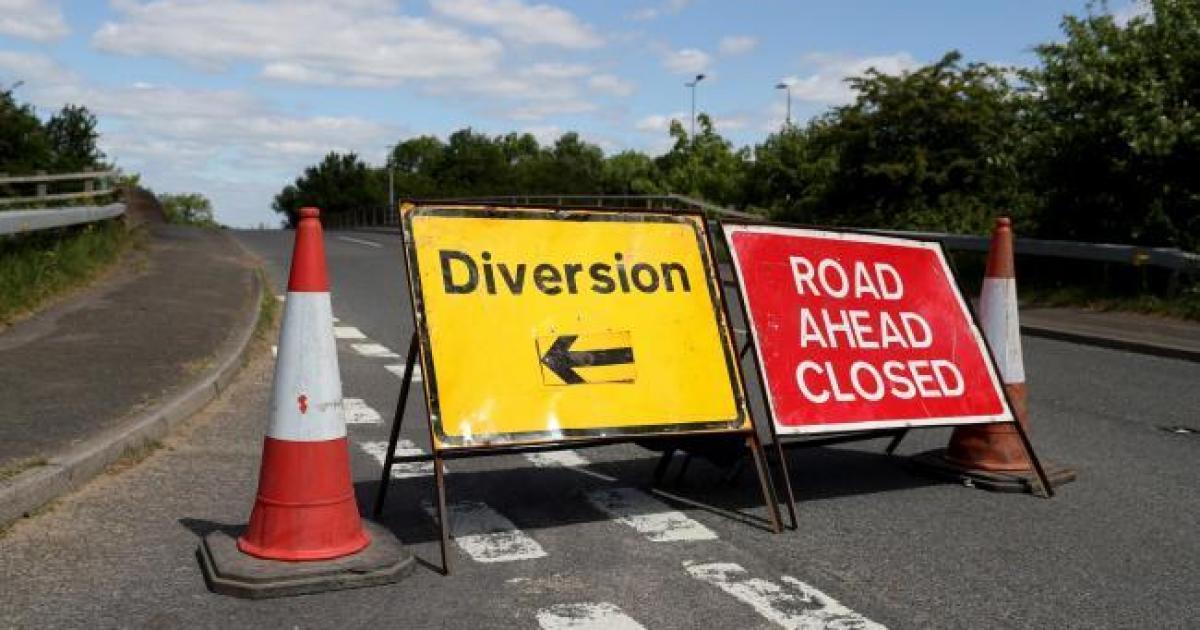
Police closed the road(Image: Getty Images)
Everything you need to know
A person has been seriously injured in a major crash in Cambridgeshire. The incident saw a head-on collision take place involving two vehicles this morning. One of the vehicles involved was a truck.
Police officers were called to the A1307 Babraham westboundat 5.25am and they closed the road. Ambulance crews, including two ambulances and a paramedic car, arrived shortly after to provide urgent medical assistance.
Two people were injured in the crash and were taken to hospital for treatment. Both patients were taken to Addenbrooke’s Hospital in Cambridge.
One person has been left with serious injuries, while the second is reported to have sustained only minor injuries. The A1307 Babraham westbound was closed to all traffic immediately following the arrival of the emergency services. This closure began around 6am and remained in place for several hours.
Drivers faced significant delays while the westbound stretch of the A1307 was closed. Drivers were advised to seek alternative routes while the road was cleared and investigated.
Cambridgeshire Police has launched an investigation. The East of England Ambulance Service said two ambulances and a paramedic car were sent
What’s in store for you today? (Picture: Metro.co.uk)
The Moon in Aries is tied to Mars in Aquarius, creating a sizzling cosmic energy. Thoughts become action today, and productivity is on the cards.
Pisces, Aquarius and Capricorn, changes are simmering beneath the surface. Tune into this transformation and embrace it with an open mind.
Ambition and innovation will stir today. Don’t apologise for what you want; go after it now, and who knows what the future holds.
Ahead, you’ll find all the star signs’ horoscopes for today: Saturday February 21, 2026.
Advertisement
Like checking your horoscope every morning?You can now sign up to our free daily newsletter to get a personalised reading for your star sign delivered straight to your inbox.
Today you get a double shot of courage as a cosmic blend of strong emotions and electric ideas sets things in motion. You’re bold, fired up and ready to act, but your moves are fuelled by innovation, not just instinct. The Moon in your sign and its tie to Mars in Aquarius turns energy into purpose and may push you in unexpected ways. Just watch the impulse to charge ahead without a plan.
Your inner world is buzzing beneath that calm exterior. You’re fired up behind the scenes with planning and maybe even scheming of the productive kind. Flashes of insight around career, purpose or long-term goals could arrive like lightning, especially when you give yourself space to think unconventionally. This isn’t the day for basking in your comfort zone, as it’s more about breakthroughs.
A lively line-up means your energy is electric, your ideas spark like lightning and your social charm is off the charts. Today’s cosmic blend fuels your thirst for action, adventure and a few clever debates along the way. You’re not just thinking outside the box, you’ve launched it into orbit. Group projects or visionary goals could get the green light. Just be mindful not to scatter your brilliance in too many directions.
Your usual cosy instincts get a jolt of ambition and innovation. You may be dreaming about change, but also ready to do something daring, especially in your career or shared ventures. Emotional courage meets strategic firepower, making this the perfect time to take a calculated risk or lead with confidence. Break free from outdated rules and trust your ability to navigate unfamiliar territory.
You may feel bold, bright and a bit rebellious as the Aries Moon aspects Mars in eccentric Aquarius. This alignment fires up your desire for adventure, big ideas and thrilling connections. You’re ready to shake things up, whether it’s booking a spontaneous trip, diving into a new philosophy or sharing something that really needs saying. Even so, being right isn’t as powerful as using wisdom when it’s needed.
You could get a celestial nudge to shake up your usual systems in a strategic way. You may crave depth, efficiency and a dash of rebellion, especially around work, wellness or behind-the-scenes matters. It’s the perfect day to tackle a problem with fresh eyes or finally kick an unhelpful habit for good. Enthusiasm meets precision now and your instincts are sharp. Just don’t let perfectionism slow you down.
Cosmic messages for Cosmic messages for Virgo today
Libra
September 24 to October 23
Sparks may be flying in love, collaboration or creative pairings. This is no time for tiptoeing, as you’re drawn to bold connections and brilliant minds, craving excitement with purpose. Someone may challenge you, but that’s not a bad thing, as it could ignite something fresh. A little playful tension might push things in a stimulating new direction.
Your focus zeroes in on routines, responsibilities and that to-do list you’ve been eyeing up. But this isn’t about dull activity, it’s about action with attitude. You’re ready to revolutionise your daily flow, ditch outdated habits and spark change where life has felt stale. Health, work or home projects could get a boost. Be determined, be efficient and above all trust your instincts.
Your energy is practically electric thanks to today’s Moon-Mars tie-up. You’re fired up creatively, romantically and intellectually, and you’re not in the mood to play small. This cosmic blend fuels daring self-expression, unplanned adventures and inspired ideas that deserve sharing. Flirt with life, share that wild concept or dive into a project fearlessly. Let your inner visionary take the wheel and enjoy the ride.
Your foundations are on fire, but in a constructive way. Emotions may bubble up around home, family or your sense of stability, pushing you to make bold moves where you usually prefer careful planning. Have a sudden urge to rearrange your space, initiate a tough conversation or set new boundaries? Follow it. This is action with intention. Lead with calm confidence, but don’t fear the shake-up.
Your mind is blazing and your conversations may be too. You’re bursting with ideas and the urge to act now. Discussions are lively, curiosity fills the air and your words can motivate or mildly startle those around you. Use the energy of the Aries Moon and Mars in your sign to champion a cause, launch a project or say what’s been simmering. Your originality is your power today.
Your inner world buzzes with daring intentions, even if you’re keeping them private. You’re quietly preparing a revolution, driven by intuition and a surge of enthusiasm. This is the perfect time to liberate yourself from an old habit, limiting belief or sleepy routine. Don’t underestimate the power of a private breakthrough. Big changes often start small but can be truly revolutionary.
Your daily Metro.co.uk horoscope is here every morning, seven days a week (yes, including weekends!). To check your forecast, head to our dedicated horoscopes page.
As a loyal Metro reader, we want to make sure you never miss our stories when searching for your news. Whether it is the latest politics news explained, live football coverage or a showbiz scoop.
Click here and tick Metro.co.uk to ensure you see stories from us first in Google Search.
Our journalists work hard to deliver the most important stories from around the world
Liverpool is not one of the “blue zones” – a term used for regions of the world where people tend to live unusually long lives, such as parts of Sardinia, Okinawa and Ikaria.
Healthy life expectancy in Liverpool is only about 56 years. However, overall life expectancy is much higher there, with many people living into their late 70s and beyond. This means many residents spend their final working years and a large part of retirement managing chronic illness or disability.
Ageing is inevitable but losing independence is not. As a PhD researcher studying muscle ageing, I work with adults in their 70s whose strength, mobility and resilience challenge common assumptions about later life – despite many of them living with long-term health conditions.
Jackie has three prolapsed discs in her spine and osteopenia, a condition where bone density is lower than normal and fracture risk is higher. Norma lives with a stoma following bowel cancer surgery. Mike jokes that his medical notes make him sound like “a wreck”.
Advertisement
But then you see the three of them train together five times a week.
During lockdown, when gyms closed and isolation threatened their health, they converted Mike’s garage into a makeshift training space so they could keep moving and stay independent. “We thought, we’ve got to do something,” Mike told me.
They embrace effort. They run parkrun, climb stairs deliberately, and value the feeling of being challenged – slightly breathless but capable. I think of them as Liverpool’s “blue people”. Their experience suggests that ageing well depends less on where you live, and more on how you live.
I met them through Research Roasters, a science cafe connecting scientists and the public around health and ageing. They volunteered for studies on muscle health and physical function in later life, and helped shape how they were designed and delivered. They helped refine participant information and consent materials, introduced me to community groups and offered feedback on study design.
Muscle ageing starts earlier than many people realise. From our 30s, strength begins to decline – often faster than muscle size. People can look healthy while their muscle function is deteriorating.
Advertisement
One simple way to glimpse this is through movement. Try standing up from a chair and sitting back down five times as quickly as possible without using your hands. If it feels slow, difficult or unstable, it may signal reduced muscle quality.
This matters because muscle function predicts future health. Poor muscle quality increases fall risk, slows recovery and raises the likelihood of conditions such as type 2 diabetes.
At the microscopic level, muscle quality is shaped by proteins. These generate force, produce energy and repair damage. Unlike genes which remain relatively stable, proteins are constantly renewed. During physical activity, muscles rebuild and reorganise their protein machinery to meet demand. When muscles are not challenged, this renewal slows. The system becomes less responsive and function declines.
Advertisement
In my research, we use “dynamic proteome profiling” to track how thousands of muscle proteins are produced and renewed in older adults. This approach measures how quickly proteins are built, repaired and replaced inside muscle tissue.
Participants complete strength and mobility tests, wear activity monitors and provide small muscle samples, supported by a multidisciplinary team of researchers and clinicians. We analysed thousands of proteins and also grew their muscle stem cells in the lab, to understand how muscle adapts to activity.
The results do not show simple deterioration. Older muscle is different, but remains adaptable. Protein turnover may be slower and some repair processes less efficient, but muscles still respond to activity by building the proteins needed for strength, energy production and resilience.
Even later in life, muscles can adapt when they are used. This helps explain why our participants became stronger and more capable despite existing health conditions. Their experience highlights a crucial point. Ageing is strongly influenced by how muscles are used across the lifespan.
Advertisement
Blue people
Ray’s gym is a community fitness space in Liverpool where many of our participants train regularly. Not a formal research site, it is where the group work out, supporting each other and maintaining the strength and mobility that underpin their independence. The environment encourages effort, personal progress and accountability.
Members are not defined by their age. They are people working towards goals that matter to them – often, simply staying independent and in control of their lives.
This challenges common narratives about blue zones, which emphasise location, diet or lifestyle traditions as the main drivers of longevity. Those factors matter, but they can create the impression that healthy ageing is largely determined by where you live, rather than what you do. Liverpool’s “blue people” suggest something different.
Their strength comes not from perfect health but ongoing adaptation. They challenge their muscles and stay engaged with their bodies. Muscle quality is not fixed – it reflects the demands placed on it.
The implications are significant. Healthy ageing does not require relocation to longevity hotspots or adherence to exotic diets. It begins with recognising muscle as the organ that underpins independence, and maintaining it through regular activity.
Research is helping us understand the biology behind this process. New studies and recruitment cycles reflect growing efforts to understand how muscle health can shape independence across the lifespan.
Advertisement
The people taking part are already showing what this looks like in practice. They are not reversing ageing, but they are maintaining capability. In doing so, they offer a realistic and accessible vision of growing older well.
Most of us can become a “blue person” by investing in the organ that most strongly shapes whether we age with independence as well as longevity: muscle.
Cambridgeshire County Council has said it will cut the speed limit along Bates Drive after a fatal collision to try and improve safety
The speed limit along Bates Drove near Littleport will be cut to try and improve safety after a fatal crash. Cambridgeshire County Council has said it will be cutting the speed limit from 60mph to 50mph.
Advertisement
The decision was made following a number of incidents on the road, including a “tragic” fatal motorcycle collision that happened in June last year.
A report published by the county council said another “serious” motorcycle collision took place just eight days later, and that a further two incidents where people had been injured had been recorded along the road in recent years.
A multi-agency investigation was launched to assess the safety of the road following the incidents. The report said: “The investigation team undertook several site visits and conducted a thorough review of the traffic conditions. Their assessment concluded that the existing speed limit is inappropriate for the road’s structure and environment.
“Bates Drove is characteristic of Fenland infrastructure, it is undulating due to subsidence, narrow in places, and visually deceptive in terms of safety, particularly for powered two-wheeled vehicles.
Advertisement
“Additionally, sections of the nearby A1101 are straight and encourage higher speeds, further increasing the risk of serious collisions. Many surrounding Fen roads are already subject to a 50mph limit, reflecting the unique challenges posed by the terrain and road layout.
“Reducing the speed limit on Bates Drove would bring it in line with these roads and enhance safety for all road users, especially vulnerable groups.”
Concerns were raised by some about the plans to cut the speed limit along Bates Drove. Five objections were lodged during a statutory consultation on the proposals, with many making the argument that it would be better to repair the roads than to cut the speed limit.
One objector said: “The road surface is more of an issue than the speed limit. The new speed limit won’t be enforced and so won’t make a difference. The council is proposing speed limit changes purely as it’s cheaper than sorting the road.”
Advertisement
The county council report said road maintenance is “undertaken according to the authority’s asset management plan”. It added that cutting the speed limit would not be a substitute for ongoing maintenance, but would be a “proportionate and evidence-based measure to address specific risks identified by a multi-agency investigation”.
The plans were considered at a meeting this week (February 18) by Councillor Lorna Dupré, Councillor John Wells, and Richard Ling, the interim head of parking and traffic management.
They agreed that the Traffic Regulation Order (TRO) should be made to cut the speed limit along Bates Drove from 60mph to 50mph. The decision notice said the members believed it would be “unlikely” that the national speed limit would be maintained if the route was resurfaced and maintained to a higher standard.
It also said that the “risk of harm” at 60mph was “still much higher” than at 50mph and that on these grounds alone a lower speed limit could be “justified”.
Advertisement
To get more breaking news and top stories delivered directly to your phone, join our new WhatsApp community.Click this linkto receive your daily dose of CambridgeshireLive content.
We also treat our community members to special offers, promotions, and adverts from us and our partners. If you don’t like our community, you can check out any time you like. If you’re curious, you can read ourPrivacy Notice.