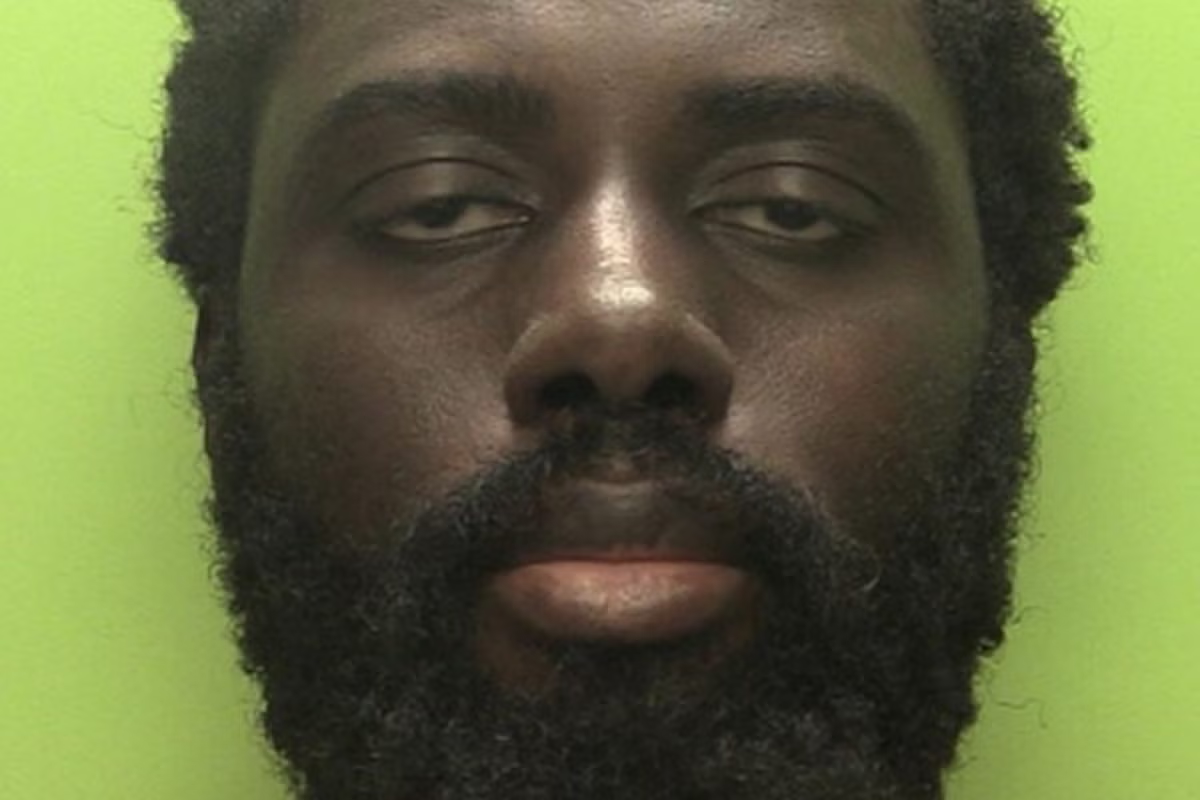
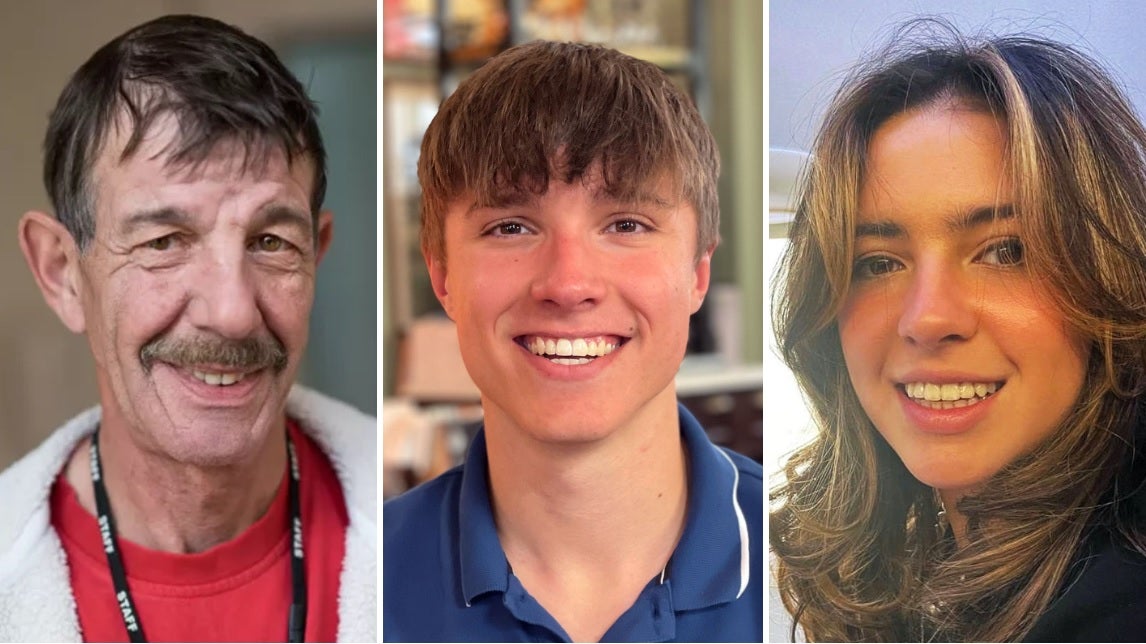
Calocane, who had been diagnosed with paranoid schizophrenia, killed University of Nottingham students Barnaby Webber and Grace O’Malley-Kumar, both 19, and caretaker Ian Coates, 65, and attempted to kill three more people in Nottingham in June 2023.
A series of reports into the incident by the NHS so far have highlighted failings in Nottinghamshire Healthcare Foundation Trust’s management of Calocane, including failures to appropriately assess the risk he posed to himself and others. A public inquiry will now scrutinise prosecutors, police and medical professionals.
During the first day of the hearings on Monday, the inquiry heard that Calocane first had a serious violent episode on 24 May 2020. But mental health professionals ruled Calocane was safe to be treated in the community rather than being admitted.
Advertisement
Ian Coates, Barnaby Webber and Grace O’Malley-Kumar were fatally stabbed by Calocane (PA)
Counsel to the inquiry Rachel Langdale told the hearing that, during the incident, Calocane, who is referred to as “VC” in proceedings, was found “repeatedly kicking and punching a door” in an attempt to get into a neighbour’s flat.
He was assessed by a mental health professional and found to be suffering from a psychosis mental health episode and “was noted to be presenting with mental health issues, hearing voices, appeared vacant, and had not slept for five days”.
At a follow-up mental health act assessment, Dr Gandhi, along with an approved mental health practitioner, Ben Williams, and a mental health nurse Anna Palmer, agreed he would be offered treatment with antipsychotic medication in the community rather than as an inpatient admission.
Advertisement
According to the statement, Dr Gandhi said he was leaning towards detaining Calocane “given it was the first presentation of psychosis, and a lack of information on risk history”. But he said that the team of professionals also “considered the research evidence that shows overrepresentation of young Black males in detention”.
Dr Gandhi said it is part of his role in assessments to be aware of research, evidence and data including health inequalities but that it would not have affected the decision to admit or treat Calocane in the community.
The inquiry will look at how appropriate that mental health act assessment was.
KC Langdale’s statement later quotes Royal College of Psychiatrist’s evidence stating there is “there is no evidence that psychiatrists are not admitting patients because they are black. The rates of admission are the same as at the time of the publication of the independent review and recent evidence shows that detentions are going up.”
Advertisement
She added that in the specific case of Calocane the inquiry may want to consider whether race was a factor however said the evidence so far received does not suggest it was and that it he was admitted on four on four occasions.
Shortly after being released, Calocane was arrested after attempting to get into another neighbour’s flat and causing the the woman to become so scared she jumped out of her first floor window, causing serious damage to her spine.
Following his arrest, Ms Palmer spoke with his mother, Celeste Calocane, who “noted that she would prefer that her son goes into hospital for treatment, as he’s a risk to others in his current mental state”, the inquiry heard.
Ms Langdale added that the chair of the inquiry Deborah Taylor may ask why Calocane was released at that stage and whether release straight into the community was appropriate.
Advertisement
It was not until the next day, during a further mental health act assessment, that he was recommended for section.
The inquiry will also probe why services deemed, prior to discharging him, that there had been “no incidents of violence” from Calocane despite the episodes in May 2020, as well as a prior incident in which he “had entered a neighbour’s flat to confront those who believed were trying to spy on him and torment his mind”.
Ms Langdale’s opneing statement further revealed in Christmas 2022, Calocane sent his parents files over christmas which included, a document explaining he “had been hearing voices in his head all the time, but this wasn’t the result of mental ill-health”, but it was explained by “mind control technology”, the inquiry heard.
After the attacks on June 13, analysis of Calocane’s phone was undertaken, which show he researched “mind control technology” and watched videos including of a shooting. He also viewed documents with some content relating to the law and police powers, Ms Langdale said.
Advertisement
He largely kept a low profile during his fourth hospital admission in early 2022, spending most of his time on his phone.
Ms Langdale said the inquiry will “explore with treating clinicians whether they ever asked VC what he was viewing on his phone, if not, why not, and whether patients routinely have unfettered access to their phone”.
His risk assessment was updated for the final time prior to the attacks on February 28 2022 – which noted “that given the history of violence and aggression, there should not be home visits, and if a home visit was required it should be a joint visit; no lone working”.
Ms Langdale added: “We will ask why this assessment of the risks to the community medical team did notapply equally to other students and the wider public.”
Advertisement
In September 2022 Calocane was discharged from the early intervention in psychosis team which were responsible for his care in the community at the time. He was discharged back to his GP as the team could not make contact with him despite attempts to.
The inquiry will consider whether discharging him to his GP for non-attendance to appointments should have been a signal of his deteriorating mental health.
In the months leading up to the killings in June 2023 Calocane’s GP sent text messages asking him to arrange an appointment, however he was not seen and was not provided with any medication.
“The Inquiry will consider the role of primary care services following discharge of non-engaging patients, especially where the non-engagement may be an indication of deteriorating mental health and increased risk,” the statement said.
Advertisement
Ms Langdale also said there appears to be a “lacuna” in terms on monitoring patients’ medication as Calocane’s GP claimed this was the responsibility of the trust.
“It does not appear the GP practice took any steps to manage VC’s prescriptions or make any efforts to ensure he received any. VC was essentially in the community disengaged from any health service and unmedicated”, the inquiry heard.
Calocane was sentenced to an indefinite hospital order in January 2024 after admitting manslaughter by diminished responsibility and attempted murder – something which has been widely criticised by the victims’ families.
DEIR AL-BALAH, Gaza Strip (AP) — Friday marks six months since Gaza’s ceasefire deal took effect, a milestone largely lost in the confusion over the new and even more fragile ceasefire in the Iran war.
The ravaged Palestinian territory of 2 million people has seen the most intense fighting stop between Israeli forces and Hamas-led militants. But most of the ceasefire work remains to be done, from disarming Hamas and ending its two-decade rule to deploying an international stabilization force and beginning vast reconstruction. Gaza residents are in limbo, with limited aid entering through a single, Israeli-controlled border post.
Such challenges could represent what’s to come in the latest war, as U.S. President Donald Trump’s approach to peacemaking appears to be stopping bombardment and leaving the bigger picture for others to work out.
Whether Trump can force through that kind of deal on Iran, with more actors in play and global markets quivering at every statement, is yet to be seen.
Advertisement
The Board of Peace goes quiet
Focusing on a deal’s details is crucial. Already the Iran war’s two-week ceasefire has created deadly confusion over Lebanon as Israel insists the deal doesn’t apply there and continues to attack the Iranian-backed Hezbollah, while Iran insists it does and threatens to upend the agreement. Israel made a surprise announcement Thursday authorizing direct negotiations with Lebanon, despite the lack of diplomatic ties.
Not long ago, the U.S.-created and Trump-led Board of Peace kicked off with $7 billion in pledges and sweeping intentions of resolving not only Gaza but other conflicts that emerge around the world.
Nine days after the board’s initial meeting, the U.S. and Israel attacked Iran.
The Board of Peace has not met again, and it’s still waiting for Hamas to respond to its proposal on disarming, a major concession and perhaps the hardest step. Hamas’ charter calls for destroying Israel.
Advertisement
Advertisement
A U.S. official said Hamas has not been given a definite deadline to respond to the proposal but added that “patience is not unlimited.” The official was not authorized to comment publicly and spoke on condition of anonymity.
The lack of a deadline can weaken pressure to act. Meanwhile, diplomacy is busy putting out different flames.
Board of Peace director Nickolay Mladenov told the U.N. Security Council last month that the world should not lose sight of Gaza as a new war flared. The choice in Gaza is between “a renewed war, or a new beginning; the status quo, or a better future,” he added. “There is no third option.”
Advertisement
‘It’s as if there’s no ceasefire at all’
Palestinians might suggest a third option: neglect.
Six months into the Gaza ceasefire that took effect on Oct. 10, little beyond the largely silenced explosions has changed.
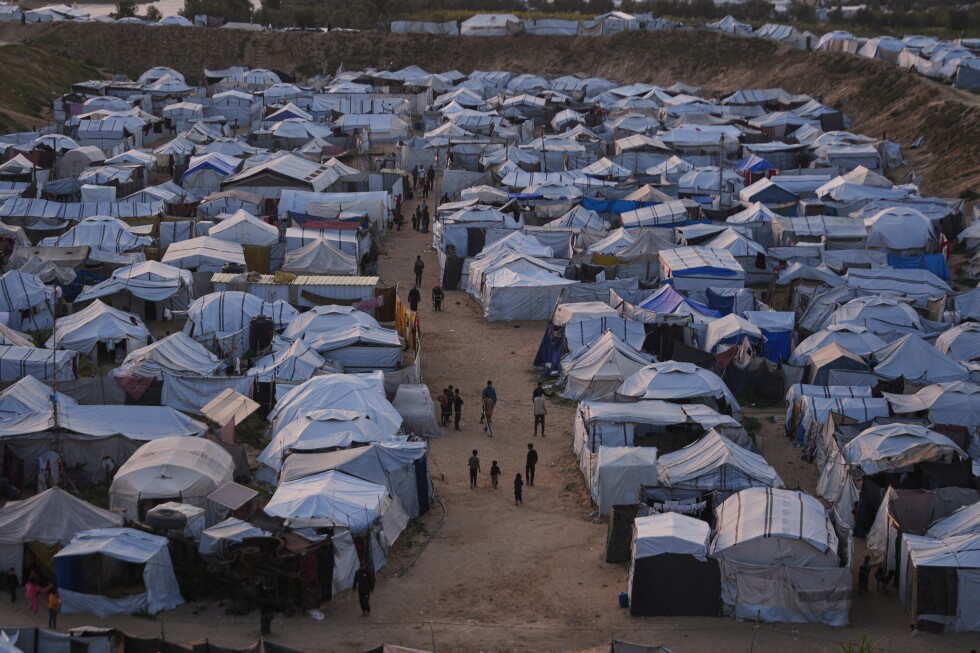
Vast tent camps house most of the territory’s population. Other residents shelter in damaged apartment buildings. Health workers and other humanitarian workers say there has been little progress in the expected surge of medical supplies and other aid.
Advertisement
Sign up for Morning Wire:
Our flagship newsletter breaks down the biggest headlines of the day.
Advertisement
The U.S. 20-point ceasefire plan for Gaza is largely failing on the humanitarian front, five international aid groups said in a scorecard released Thursday. They said conditions have deteriorated further in Gaza since the Iran war began.
“During the first two weeks of March 2026, trucks entering Gaza declined by 80%, and the price of basic goods increased dramatically,” they said. Medical evacuations have stalled.
Palestinians expressed fading hopes for any immediate improvement in their lives.
Advertisement
“There is pollution and disease. It’s as if there’s no ceasefire at all,” said Maysa Abu Jedian, a displaced woman from Beit Lahiya.
“The war is still ongoing and life is still terrible as it is,” said Eyad Abu Dagga, also sheltering in a camp in Khan Younis.
Tents rippled in the breeze, and children played on the sand against a backdrop of shattered buildings.
While the heaviest fighting has subsided, Israeli forces have carried out airstrikes and fired on Palestinians near military-held zones. Militants have carried out shooting attacks on troops, and Israel has said its strikes are in response to that and other ceasefire violations.
Advertisement
As of Thursday, Israeli attacks have killed 738 people in the six months since the ceasefire, according to Gaza’s Health Ministry. The ministry, part of the Hamas-led government, maintains detailed casualty records that are seen as generally reliable by U.N. agencies and independent experts. It does not give a breakdown of civilians and militants.
Funerals for two cousins were held Friday in Gaza City, a day after they were killed. “We were standing idly, drinking coffee, next to each other. We suddenly saw a (projectile) hitting the men,” said Anwar Saleh, an eyewitness. Israel’s military said it had struck a “terrorist” in northern Gaza.
Overall, the health ministry says 72,317 Palestinians had been killed since the war in Gaza began with the Oct. 7, 2023, Hamas-led attack on Israel.
‘Sustained diplomatic pressure at the highest levels’
Unwavering focus on Gaza, once at the heart of a passionate international outcry, has been lost with the rise of a new regional war. That, too, has decreased pressure for progress on the ceasefire.
Advertisement
The humanitarian groups’ scorecard notes that any forward movement on aid issues in the Palestinian territory has “generally required sustained diplomatic pressure at the highest levels, particularly from the United States. That pressure, however, has not been applied consistently or at the scale needed to secure full implementation.”
The Trump administration is not the only player to be distracted. The entire Middle East, including key Gaza mediators Egypt and Qatar, now focuses on Iran and that war’s effects on their economies.
With the added uncertainty over Israel’s renewed war with Hezbollah in Lebanon, there could be even less interest from countries to contribute troops to a Gaza stabilization force. One of the few confirmed troop contributors, Indonesia, already has seen three of its peacekeepers in southern Lebanon killed in recent days.
___
Advertisement
Anna reported from Lowville, New York. Associated Press writers Matthew Lee in Washington and Edith M. Lederer at the United Nations contributed.
Pleasence appeared in four episodes of Coronation Street, where she played the character Monica Sutton, a small recurring role in early 1968.
In a statement shared on social media, her agency said: “We are very sad to announce the passing of our dear client, Angela Pleasance.
“During her career which spanned more than six decades, Angela appeared in more than sixty different screen roles.
Advertisement
“Some of her most memorable roles were in films including From Beyond the Grave and A Christmas Carol.
“In 1968, the actress joined Coronation Street in a guest role as a character named Monica Sutton.
“She then went on to work extensively in TV and appeared in shows such as Doctor Who, Happy Valley, Casualty and Whitechapel, in which she had a regular role for a series, The Bill.
“Angela also had a minor role in the 2002 Hollywood movie Gangs of New York.”
Advertisement
Her agency added: “While never defined by any one genre, her contribution to the British industry remains a distinctive and much-admired part of her legacy.
“Our thoughts are with her family at this very sad time.”
Coronation Street star Craig Charles on why he left the ITV soap
Craig Charles played taxi driver Lloyd Mullaney on Coronation Street from 2005 to 2015.
His character, which was popular with viewers, was notably involved in the show’s dramatic 50th-anniversary tram crash storyline, which was broadcast live.
Advertisement
It was in May 2015 that Craig announced he would be leaving Coronation Street for Red Dwarf, BBC Radio 2 and BBC Radio 6 Music.
Craig said: “The death of my brother, and my unexpected departure as a result, did change my life.
“It made me re-evaluate things and made me ask: ‘If that had happened to me, would I be happy with what I had achieved?’
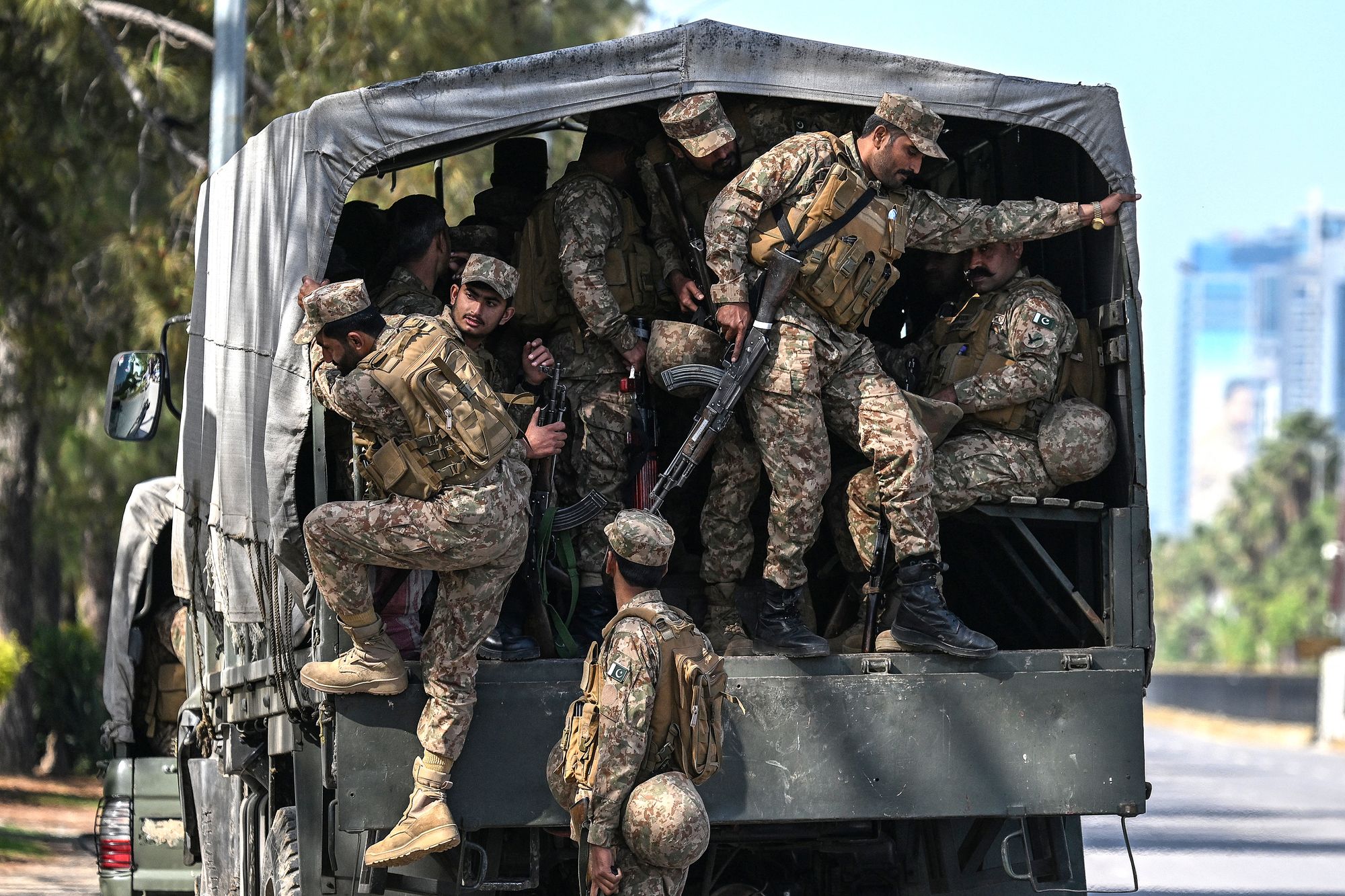
Islamabad entered a state of lockdown on Friday as Pakistan’s capital prepared to host high-stakes negotiations to end the US-Israeli war on Iran.
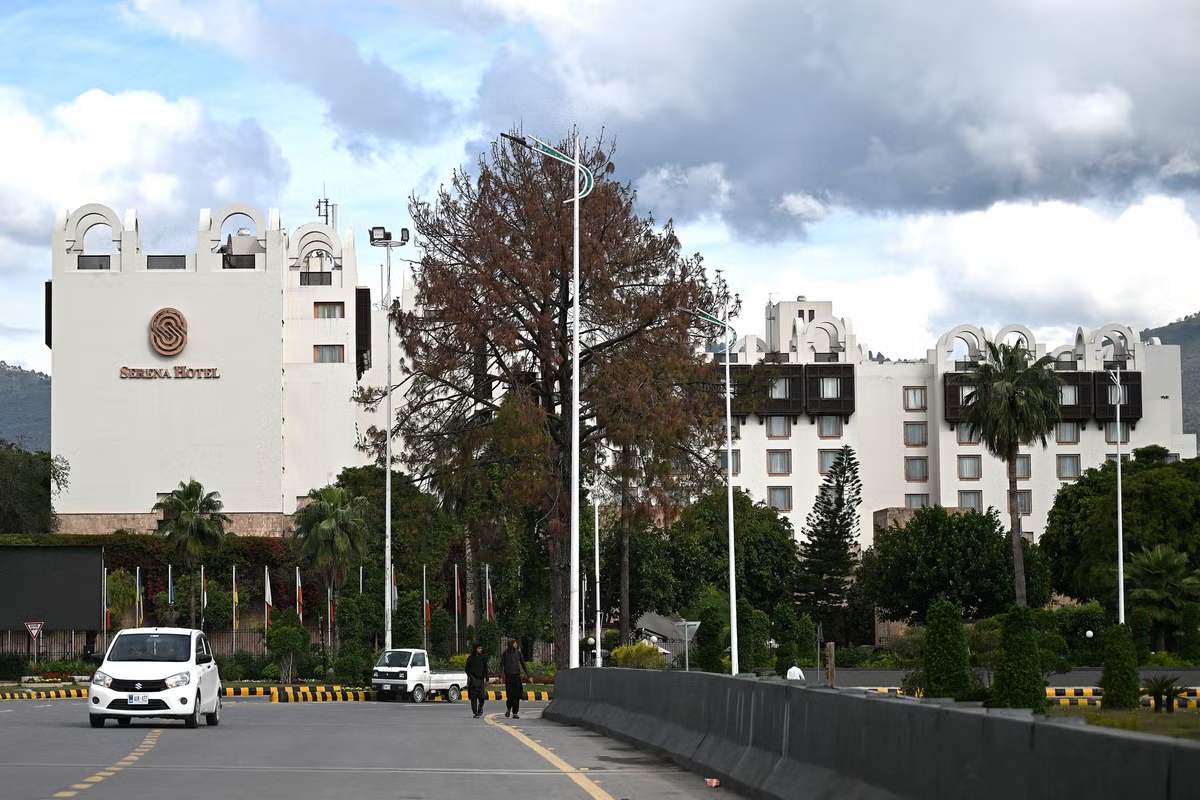
Army and paramilitary personnel guarded the roads around Serena Hotel, the venue of the talks, as police beefed up security across the city. On Wednesday, the luxury hotel’s management had asked its guests to check out by 5pm as the government had requisitioned the property for an “important event from this evening until Sunday”.
Pakistan’s political and military leaders achieved a major diplomatic breakthrough by mediating a ceasefire between the US and Iran early on Wednesday. The ceasefire was declared less than two hours before the deadline on US president Donald Trump’s threat to obliterate a “whole civilisation” if Iran did not open the Strait of Hormuz, a critical maritime route that usually carries a fifth of the global supply of oil and gas.
Although the truce was immediately threatened by Israel’s deadly strikes on Lebanon which killed hundreds of people, it paved the way for American and Iranian diplomats to gather in Pakistan and negotiate an end to nearly six weeks of intense fighting.
Advertisement
Pakistani soldiers arrive for deployment at the Red Zone in Islamabad (AFP via Getty)
The diplomats will be under great pressure to pull off what some analysts are describing as “mission impossible” – a deal that brings peace to the Middle East and stabilises a world economy battered by the closure of the Strait of Hormuz.
In preparation for the meeting, the government declared public holidays on Thursday and Friday while police imposed strict traffic restrictions in Islamabad.
“The Red Zone and surrounding areas are closed to all types of traffic except official vehicles. Citizens are requested to avoid unnecessary travel,” the city police said in an advisory.
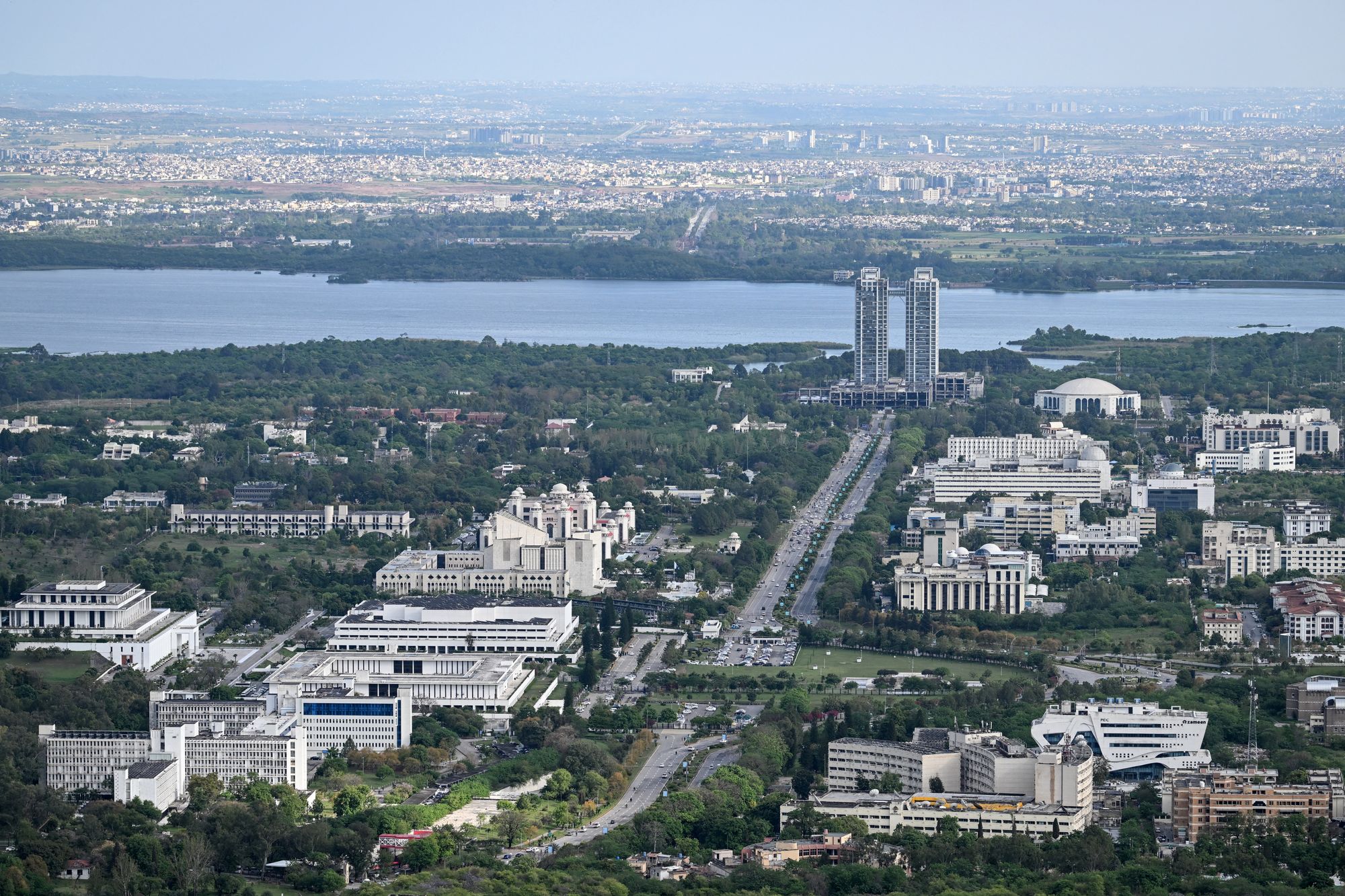
The Red Zone is a city landmark housing key government offices and foreign missions.
An army truck drives past Serena Hotel in Islamabad (AFP via Getty)
The heightened security measures are informed by the threat of terrorism, which remains real and present. There was a suicide bombing in Islamabad as recently as February and it was one of the triggers for the Pakistani airstrikes that fuelled weeks of fighting with neighbouring Afghanistan.
Islamabad accuses the neighbouring country of sheltering Islamist and ethnic insurgents responsible for carrying out terror attacks on its soil. Kabul denies the allegations.
Advertisement
“Given those risks, the lack of preparation time and the high-profile nature of these talks, this is a very challenging visit from a security perspective and speaks to the importance this administration places on the negotiations,” Elizabeth Threlkeld, director of the South Asia Program at the Stimson Center, said.
A view of the Red Zone in Islamabad (AFP via Getty)
The US is expected to send a delegation headed by vice president JD Vance to conduct the talks in Islamabad, while Iran is set to be represented by foreign minister Abbas Araghchi and parliament speaker Mohammad Bagher Ghalibaf.
Gulf nations such as Qatar and Saudi Arabia, both of which are parties to the conflict, may also send delegations to Islamabad and hold talks on the sidelines.
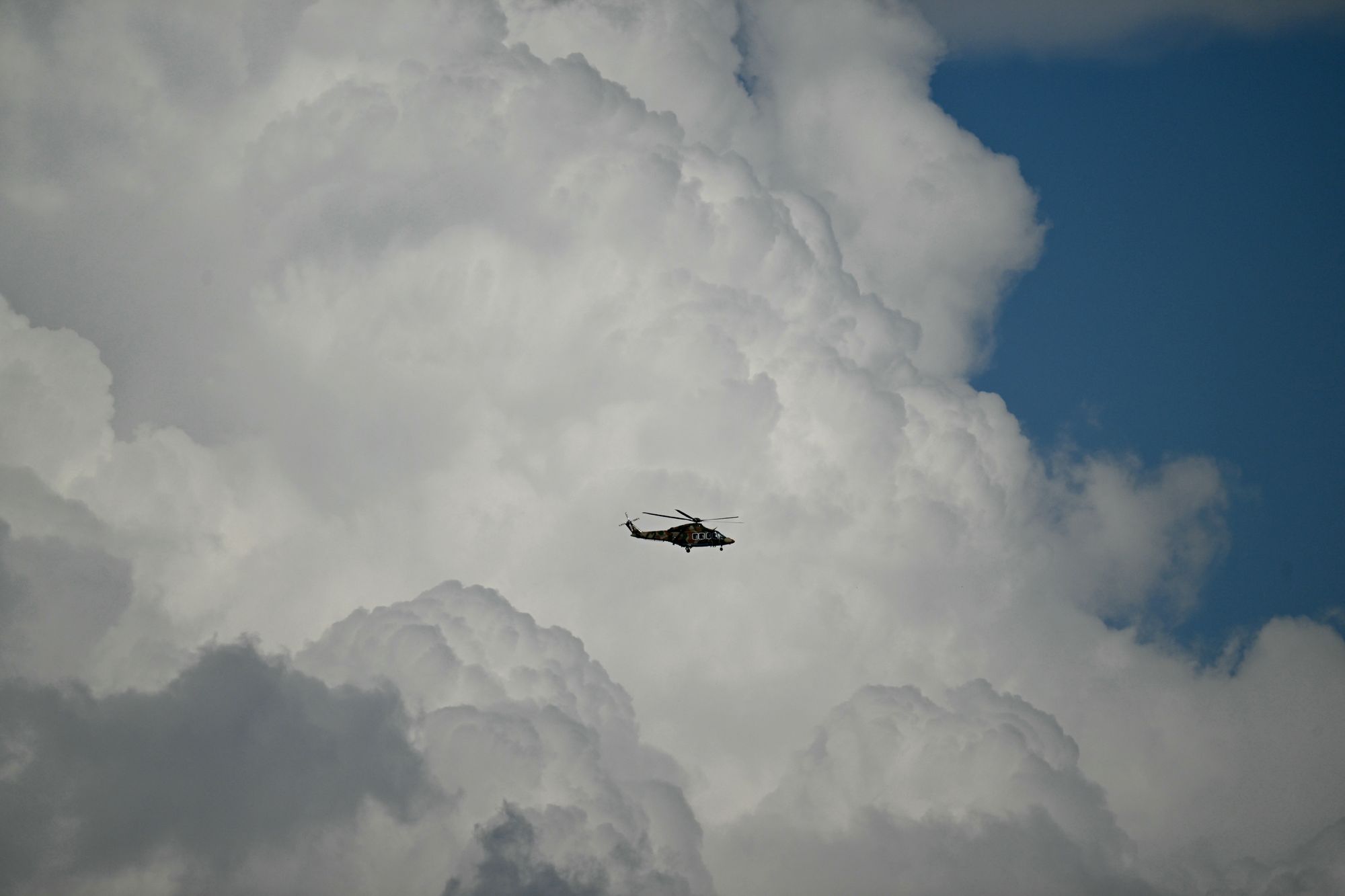
A Pakistani army helicopter flies over Islamabad ahead of the talks between the US and Iran (AFP via Getty)
Pakistani interior minister Mohsin Naqvi assured US chargé d’affaires Natalie Baker of elaborate arrangements for the visiting diplomats.
The newspaper Dawn reported that a 30-member US team was already in Islamabad to assess the security preparations.
Security analyst Zahid Hussain said the challenge for Pakistan was not just protecting the venue but to prevent diplomacy from being overtaken by forces outside the room.
Advertisement
Aside from this, analysts say, there isn’t much Pakistan can do. “What it lacks is meaningful leverage to compel concessions if the US and Iran are not willing to come to terms,” Ms Threlkeld said.
WASHINGTON (AP) — The largest monthly jump in gas prices in six decades caused a sharp spike in inflation in March, creating major challenges for the inflation-fighters at the Federal Reserve and heightening the political challenges of rising costs for the White House.
Consumer prices rose 3.3% in March from a year earlier, the Labor Department said Friday, up sharply from just 2.4% in February and the biggest yearly increase since May 2024. On a monthly basis, prices rose 0.9% in March from February, the largest such increase in nearly four years.
It’s the first read on inflation to capture the effects of the Iran war.
Excluding the volatile food and energy categories, core prices rose 2.6% in March from a year earlier, up from 2.5% in February. But last month core prices rose a modest 0.2%, suggesting that rising gas prices haven’t yet spread to many other categories.
Advertisement
The gas price shock stemming from the Iran war has shifted inflation’s trajectory, from a slow, gradual decline to a sharp increase further away from the Fed’s 2% target. As a result, the central bank will almost certainly postpone any cut in interest rates for months and many Fed officials have said a rate hike may be needed if inflation doesn’t cool. Gas prices are also a highly visible cost that has outsize impacts on consumer confidence and political sentiment.
Higher gas prices sap consumers’ ability to spend on other goods and services and as a result could also slow economic growth. At least in the short run, many Americans can only make limited changes to their daily driving habits, which are largely determined by where they live, shop, and work. As a result, most people will pay higher prices for gas, and potentially cut back elsewhere.
Gas prices averaged $4.15 a gallon nationwide Friday, up from $2.98 on the day before the war began, according to motor club AAA.
The big question for consumers and the economy is whether the surge in oil and gas prices will create a sustained, broader inflation shock, similar to what occurred in the aftermath of the pandemic in 2021-2022. Inflation reached a peak of 9.1% in June 2022, as COVID-19 snarled supply chains and several rounds of stimulus checks pushed up consumer demand. Prices soared for groceries, furniture, restaurant meals and many other goods and services.
Advertisement
This time, economists say the job market and consumer spending are weaker, and there are no large government stimulus checks being issued to spur demand. The unemployment rate is low, at 4.3%, but companies aren’t scrambling to hire the way they were when the economy emerged from the pandemic, which led many firms to offer sharp pay increases to attract and keep workers.
Advertisement
Sign up for Morning Wire:
Our flagship newsletter breaks down the biggest headlines of the day.
Rapid pay increases and solid income growth helped consumers weather the higher prices that resulted from the pandemic’s supply chain disruptions, and fueled spikes in demand that led many companies to raise prices further.
Advertisement
“That’s where this really differs, is that we aren’t seeing anywhere near the strength of demand,” Alan Detmeister, an economist at UBS, said. In 2021 and 2022, income growth “was increasing really strongly. We aren’t seeing that now,” he added.
Detmeister thinks the better comparison will likely be to 1990-91, when higher oil and gas prices stemming from Iraq’s invasion of Kuwait contributed to a recession, but didn’t lead to a jump in inflation, in part because of weaker consumer spending.
The gas price spike’s impact on inflation is, in some ways, similar to President Donald Trump’s tariffs, in that their effect will depend largely on the size and duration of the increase.
For now, economists expect that in March and April the impact will largely be confined to energy-intensive industries, such as airlines, package delivery services and public transportation. Overall, the U.S. economy is much less dependent on oil and gas than it was in previous decades.
Advertisement
Still, the large jump in inflation — which is almost certain to continue for several months — has already shifted the debate at the Federal Reserve, which began the year expecting to cut its key interest rate at least a couple of times. But a growing number of Fed officials are now willing to consider hiking rates instead if core inflation doesn’t cool noticeably.
Most officials are almost certain to support keeping the Fed’s key interest rate unchanged in the coming months, at about 3.6%, as they evaluate how the economy evolves. Investors now don’t expect the Fed to cut rates until late 2027.
Higher gas prices are tricky for the Fed because they can also slow growth by weighing on consumer spending, potentially causing layoffs. The Fed would typically cut its rate to encourage more spending if unemployment rises, while it raises rates to combat inflation.
More expensive oil and gas will also likely lift grocery prices, creating more pain for consumers who have already absorbed a roughly 25% jump in food costs since the pandemic. Nearly all groceries are shipped by diesel-fueled trucks, and diesel fuel prices have risen even more than those for regular gas. Still, analysts don’t expect food prices to accelerate for another month or two.
He added: “I’ve benefited from individual, national security briefings, which I’m grateful for, but I think we need to have more partnership, more dialogue, more engagement, because, as we saw with the Bella 1 tanker, it didn’t take long for something that happened on the high seas to come right into the Moray Firth and be an issue that we had to wrestle with.”
The actress starred in the ITV soap alongside Philip Lowrie and Martin Shaw
Former Coronation Street and Casualty star Angela Pleasence has died, aged 84.
Advertisement
Angela appeared in Coronation Street in early 1968 as Monica Sutton. Although her role as Monica was a guest appearance across four episodes, viewers will recall her days in the long-running soap. Born in South Yorkshire, she was the daughter of acting legend Donald and his wife, Miriam Raymond.
Get MEN Premium now for just £1 HERE – or get involved in our WhatsApp group by clicking HERE. And don’t miss out on our brilliant selection of newsletters HERE.
The Sheffield actress sadly died aged 84-years-old. In a statement shared on social media, her agency said: “We are very sad to announce the passing of our dear client, Angela Pleasance. We were honoured to represent Angela, who built a career of quiet distinction spanning more than five decades.
“After training at RADA, she made her stage debut in 1964 as ‘Titania’ in a production of A Midsummer Night’s Dream at the Birmingham Repertory Theatre.
Advertisement
“She went on to perform at the National Theatre and in the West End in productions including Ghetto, The Hothouse, and The Cherry Orchard.
“Angela also became closely associated with classic British horror, delivering memorable performances in films such as From Beyond the Grave, The Godsend, and Martin Scorsese’s Gangs of New York. In these roles, she brought remarkable depth and unease to complex, often enigmatic characters.”
It concluded: “While never defined by any one genre, her contribution to the British industry remains a distinctive and much-admired part of her legacy. Our thoughts are with her family at this very sad time.”
Advertisement
Outside of the Weatherfield cobbles, the actress was known for her role as Catherine Howard in the 1970BBC television series The Six Wives of Henry VIII, she also appeared in The Possessed, A Legacy, Murder at the Wedding, The Walls of Jericho, The Barchester Chronicles, Mansfield Park, Casualty, The Bill, Whitechapel and Happy Valley.
Angela also starred as Queen Elizabeth I in the 2007 Doctor Who episode “The Shakespeare Code”, and Winnie in the BBC drama Happy Valley.
Carly Madison Gregg, 15, was convicted of killing her mum and attacking her stepfather in a chilling assault captured on surveillance video in Mississippi
Emilia Randall GAU Writer
14:00, 10 Apr 2026
An “evil” 15-year-old girl murdered her mother before playing with her dogs beside the corpse – and then attempted to kill her stepfather.
Carly Madison Gregg’s heinous acts were captured in harrowing CCTV footage from her family home.
Advertisement
During five days of shocking evidence, jurors witnessed Gregg hiding a weapon behind her back while pacing through her Mississippi home, reports ABC news.
The crack of gunfire echoed through the recording. Prosecutors stated she shot her mother, Ashley Smylie, in the face on March 19, 2024. Smylie was a 40-year-old secondary school maths teacher.
Prosecutors claimed her appalling attack began after a mate informed Gregg’s mum about the teenager’s cannabis consumption. Gregg’s legal team maintained she was experiencing a mental health breakdown, reports the Mirror US.
Following the shooting of her mum, Gregg is captured returning to the kitchen as though nothing had happened. Gregg is then filmed messaging on her mobile and frolicking with her pet dogs.
When her stepfather, Heath Smylie, returned home Gregg launched her attack on him as well – firing a bullet in his direction.
He succeeded in wresting the firearm from his stepdaughter and placed a frantic emergency call. “She killed her mom,” he can be heard telling operators.
His heartbreaking 999 call was also broadcast to jurors. Heath Smylie testified that the “gun went off in my face before the door was open.”
Advertisement
The 15-year-old wept in court on hearing her sentence.
She was condemned to life imprisonment without the possibility of parole. “Carly Gregg is evil and that’s not easy to say, but the truth of the matter is that sometimes evil comes in young packages,” said Rankin County District Attorney Bubba Bramlett.
“She doesn’t know what was going on at that time. We’re asking you to find her not guilty by reason of insanity,” Gregg’s defence solicitor Kevin Camp implored the jury before their verdict.
Advertisement
“I put three in my mom and I got three – I got three more waiting for my stepdad,” state prosecutor Kathryn Newman reenacted. “You think that sound like an insane person? No.”
After just two hours of deliberations, the jury found Gregg guilty on all counts. The defence announced their intention to appeal.
In September, Gregg’s lawyer James Murphy, who spoke to the Clarion Ledger about “mistakes” which resulted in an “unjust outcome” in Gregg’s “unfair” murder trial, lodged an appeal.
Advertisement
Gregg’s legal team argued the case went to trial on an “exceptionally compressed schedule and under a series of statutory and constitutional errors that tainted both sentencing and the overall fairness of the proceedings.
“Carly was indicted barely two months after the incident and brought to trial within six months-effectively a ‘rocket docket,’” the brief stated.
“In a case of this magnitude requiring collection and review of extensive medical and mental-health records, multiple evaluations, substantial family/background history, and a disputed motive-such acceleration is extraordinary in Mississippi criminal practice.”
Gregg’s legal team has petitioned for oral arguments before the state’s supreme court, hoping to overturn her conviction and sentences or return the matter to the lower court for fresh proceedings and sentencing.
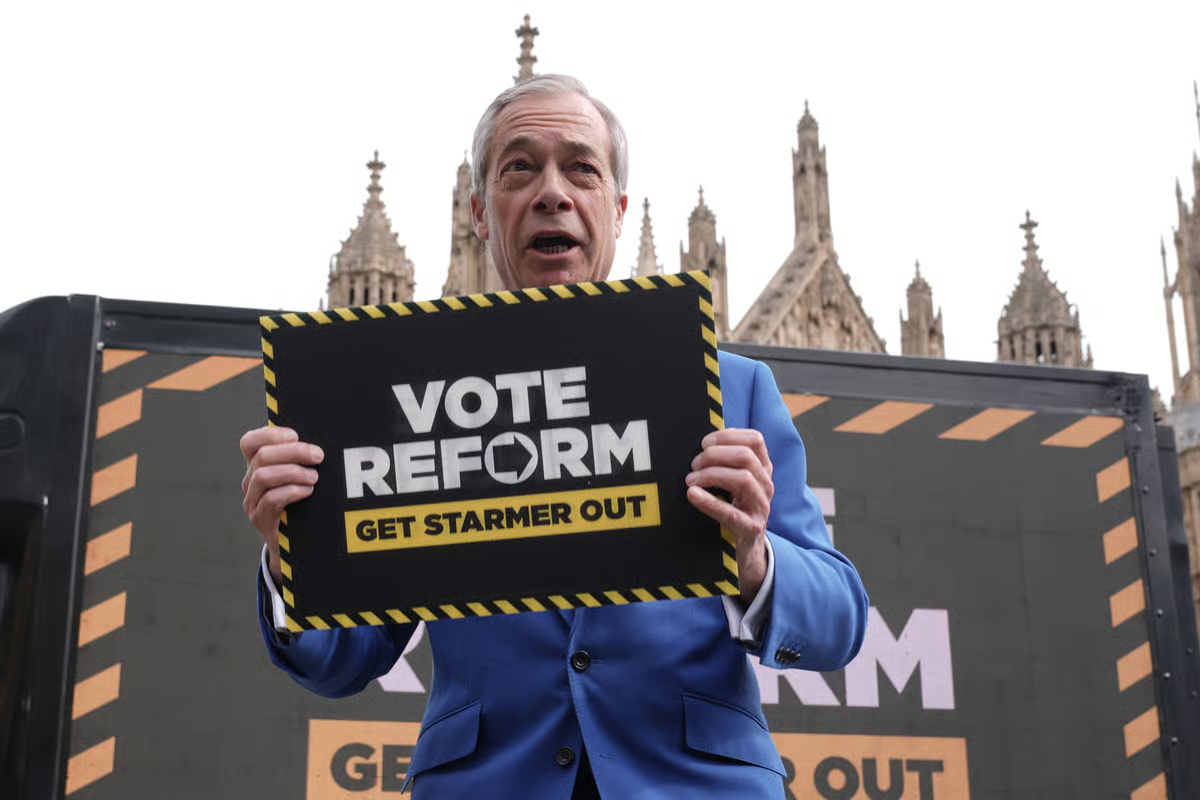
Asked why the slogan focuses on the Prime Minister, as opposed to a Reform policy, Mr Farage told reporters the upcoming elections “are in some of Labour’s strongest areas in the country, and the offering that he gave the country back in 2024, frankly, has been ignored completely”.
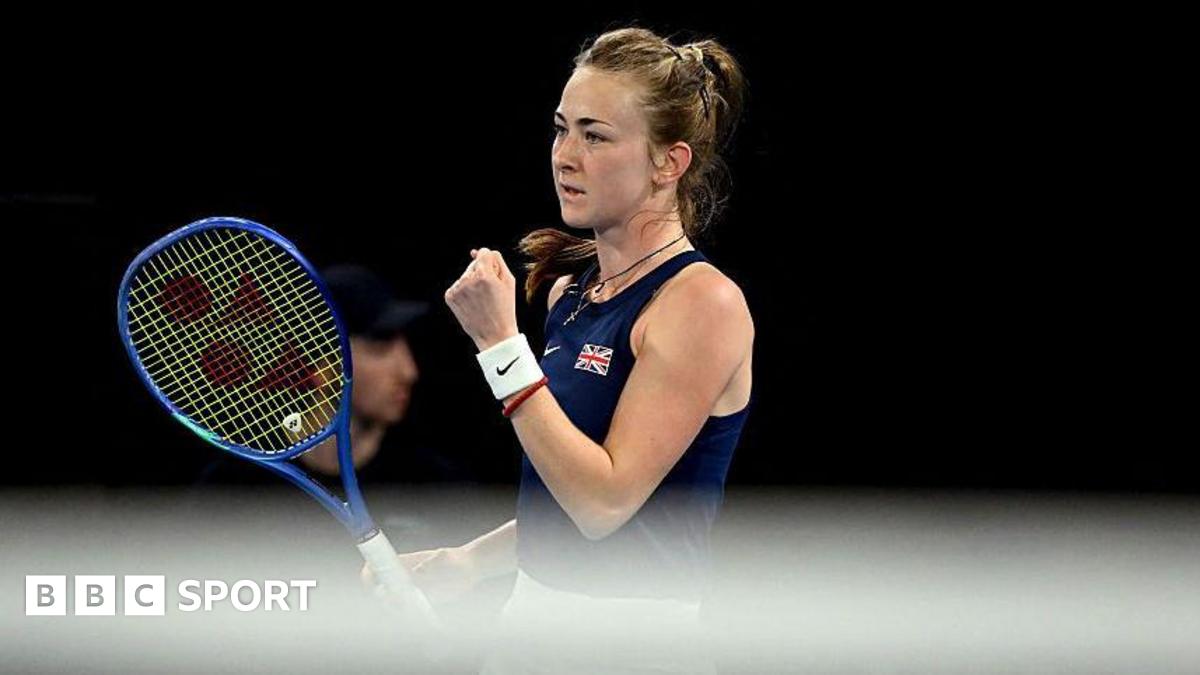
Stojsavljevic, 17, is the second-lowest ranked player in a Great Britain team missing Emma Raducanu, Sonay Kartal, Katie Boulter, and Fran Jones – all of whom are ranked inside the world’s top 100 for singles.
But the 2024 US Open junior champion, described by Great Britain captain Anne Keothavong as “not your average 17-year-old”, was unfazed by her underdog status and the Australian crowd, holding her nerve to clinch the first set in a tie-break after letting a 3-1 lead slip.
She later saved five break points in the penultimate game of the match before converting her first match point.
“It feels amazing. I can’t believe it. I can’t even remember the last point,” Stojsavljevic said. “I had amazing support from the side and managed to get through.
Advertisement
“Going into it, I knew she’d have the home ground. I’m grateful to the people supporting GB today.
“It was a good match. We have very similar games, both quite aggressive, so I’m happy I got through it.”
Keothavong added: “She’s not your average 17-year-old. For some, it can be overwhelming, but I think for Mika, she’s really taken it into her stride. I also have to credit her team-mates. They’ve shown her the ropes.
“Being able to express whether you feel nerves, that’s OK, because your opponent’s probably going to feel exactly the same, if not more because let’s face it, the pressure was on Talia [Gibson] and any player going on court against her.”
Advertisement
Dart’s meeting with world number 80 Birrell was characterised by service struggles, with no fewer than 16 breaks of serve and 27 break-point opportunities across the match.
After losing the opening set 6-4, the turning point for Dart came in the fifth game of the second when she held to 15 to end a run of four consecutive dropped service games. She then won three of the next five games, including a crucial second hold, to force a deciding set.
At 3-3 in the third, the 29-year-old broke Birrell for the eighth time before winning the next two game to secure the win.
The object was thrown “full force” at the windscreen of a passing car.
14:02, 10 Apr 2026Updated 14:03, 10 Apr 2026
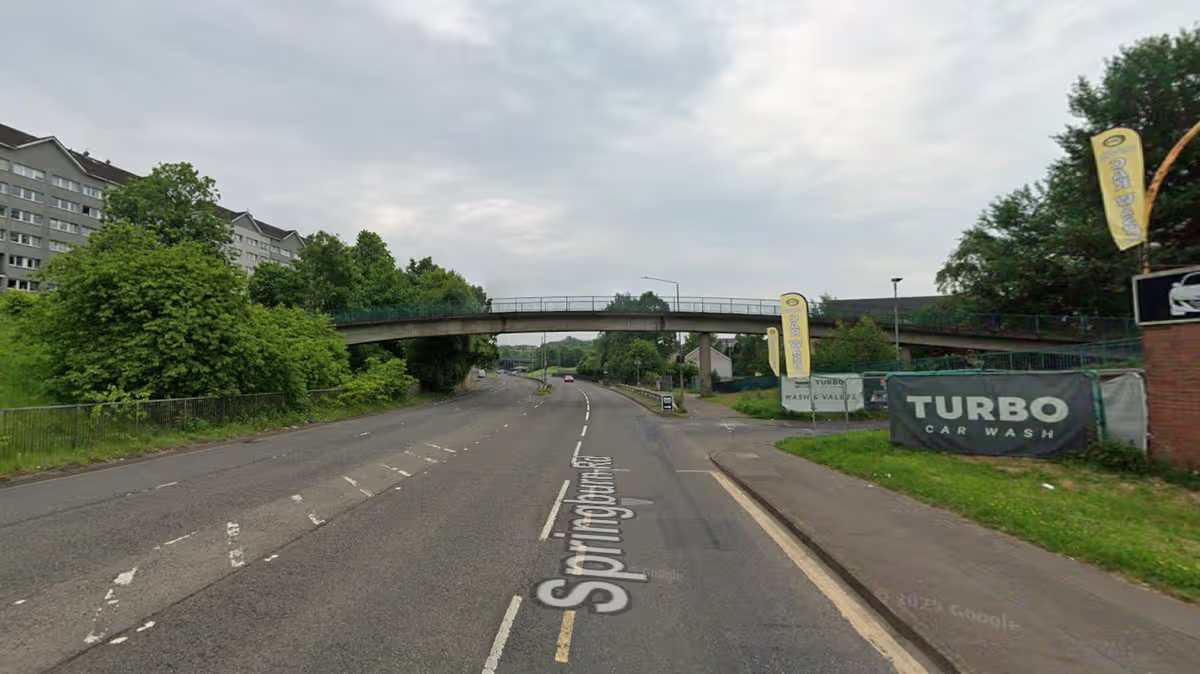
A six-year-old child was left “covered” in shattered glass after a “brick” was thrown from a bridge in Glasgow. A motorist was forced to slam on the brakes after the object smashed into their windscreen while travelling along Springburn Road.
Emergency services were called to the scene at around 7.50pm last night after the driver managed to pull over safely. No injuries were reported following the incident but police are now investigating, reports Glasgow Live.
The No1seems2care Facebook page shared images of the “extremely dangerous” incident. In a post, they said: “Imagine driving a car with a 6-year-old child on board and youths throw a brick full force at your windscreen from the bridge at Springburn.
Advertisement
“The child was covered with fragments of glass and absolutely terrified. Not only could this have seriously injured or killed the child, the sudden impact and shock could have caused the driver to lose control and crash the vehicle into other vehicles.
“This was an extremely dangerous thing to do! This isn’t the first time this has happened at the bridge at Springburn and the bridges on the M8 near the Royston area.
“This has to stop before people get seriously injured or killed. This could happen to you or your loved ones. Please talk to your children about this. Thank you.”
A Police Scotland spokesperson confirmed they are investigating the incident.
The spokesperson said: “Around 7.50pm on Thursday, April 9, we received a report of a windscreen being damaged from an item thrown from an overbridge on Springburn Road, Glasgow.
Advertisement
“There were no reported injuries and enquiries are ongoing.”
Get more Daily Record exclusives by signing up for free to Google’s preferred sources. Click HERE














































You must be logged in to post a comment Login