Sean McGrotty drowned along with his sons Mark and Evan, his wife Louise James’ 14-year-old sister Jodie-Lee Daniels and his wife’s mother Ruth when their car slid off a pier and sank in Lough Swilly
Claudia Savage, Martin McCullough, Press Association and irishmirror.ie
20:28, 22 Mar 2026Updated 20:30, 22 Mar 2026
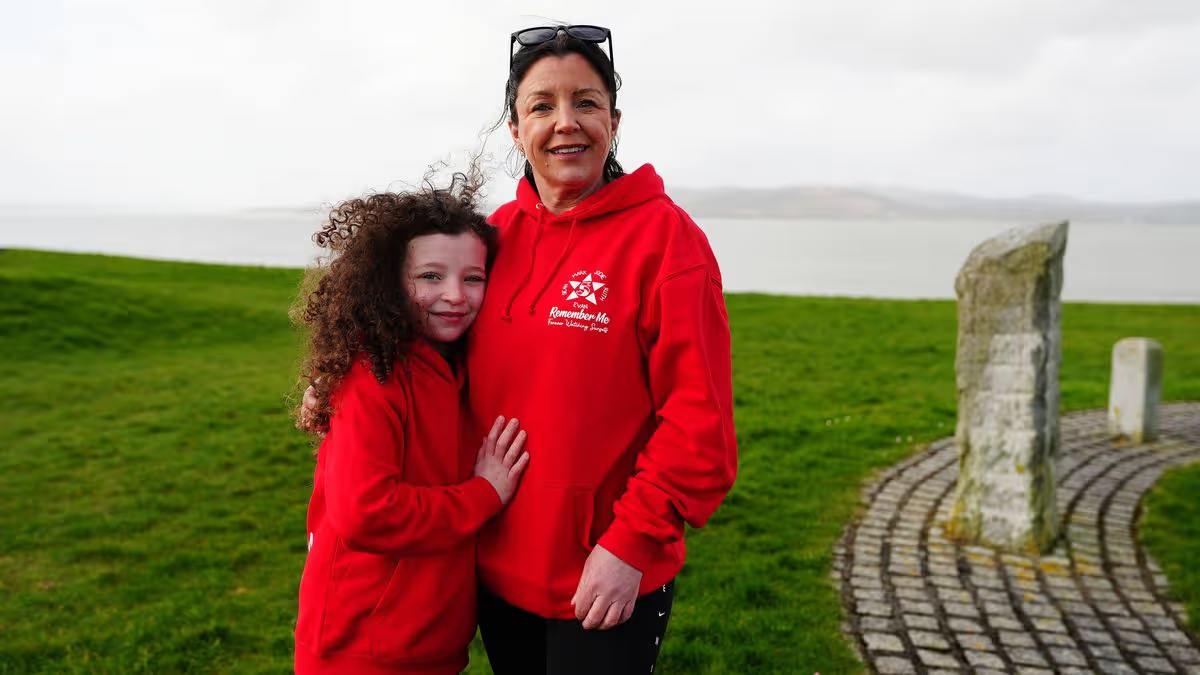
A mother who lost five members of her family in a pier tragedy 10 years ago has said it “feels like it was yesterday” as hundreds came out for a memorial walk.
Louise James’ partner Sean McGrotty, their two sons Mark, 12, and Evan, eight, her mother Ruth and her 14-year-old sister Jodie died when their SUV sank after sliding off a slipway in Buncrana, Co Donegal, in March 2016.
Mr McGrotty handed his baby daughter through the broken driver’s side window just moments before the vehicle sank to former footballer Davitt Walsh, who swam out into the harbour in an effort to save the six occupants.
Approaching the 10-year anniversary of their death, hundreds attended a memorial walk in Buncrana wearing red and white.
Prior to setting off a minute’s silence was held and a family friend sang Your Love Keeps Lifting Me Higher and Higher.
Advertisement
Ms James said she felt “overwhelmed” at the support and love from the community.
“Very overwhelmed. It was a fantastic success, it was amazing, the sun came out it was beautiful,” she said. “Very, very, very overwhelmed.”
She added: “It went exactly how I wanted it to go, with laughter and fun and everyone smiling and remembering them, that’s what I wanted.”
It is understood the vehicle lost grip on a thick blanket of algae coating the structure and slid into the waters of Lough Swilly.
There were no signs at the slipway warning of the dangers of slipping and a gate designed to control crowds using a summer ferry service in the popular tourist spot was left open.
It was used by people watching the sun going down despite dangers that were highlighted during the inquest in 2017.
Ms James said Rioghnach frequently come down to the pier to remember their family.
Advertisement
“We come down and we’ll do the walk,” she said.
“This is the walk along the shoreline, so it’s beautiful, you know, it’s a very peaceful walk and Rioghnach will play in the play park, so it’s really nice where her brothers played as well.”
Ten years on, Ms James said the tragedy “feels like it happened yesterday”.
Advertisement
“Still feels like it was only yesterday so it’s very overwhelming but a sadness too,” she said.
Donations for the walk were collected for the RNLI, and the walk finished at Lough Swilly RNLI lifeboat station.
Ms James said “it was lovely” to see the people of “Derry and Donegal” pulling together.
“But not just Derry and Donegal it was the whole of Ireland, because there was people here from Cork and Wicklow, and so lovely to see them all and just to be here supporting us in what we wanted to do,” she said.
Advertisement
She added: “It was great just to support the RNLI and the good work that they really do. And this is all for them, too.”
Before the walk, those gathered heard a prayer: “We pray for all who grieve, for every broken heart in the community that still remembers.
“Help us to stand together in compassion, to support one another, to support one another and to never forget the precious lives that were lost.
“May we honour them and how we live with kindness, with care and love for one another, may their memory always be a blessing.”
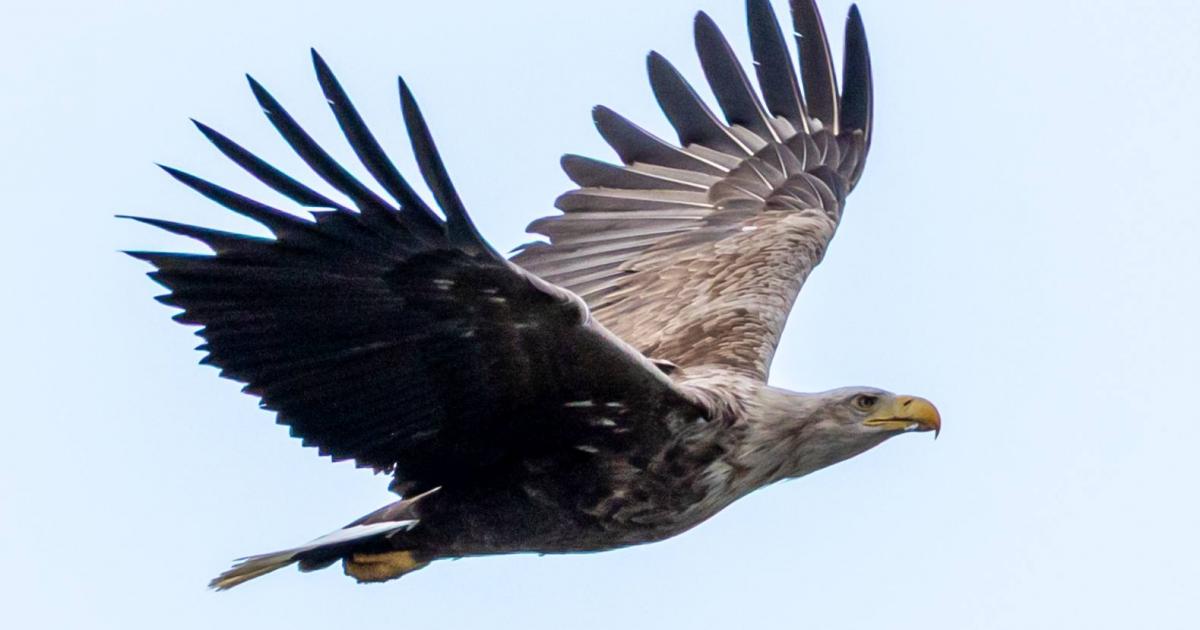
The NFU-led survey found that 85 per cent of respondents in Durham, Cumbria and North Yorkshire opposed the return of the birds, mainly due to concerns about livestock welfare and the future of upland farming.
Abigail Teward, NFU environment adviser, said: “It is extremely concerning that 58 per cent of farmers who completed the survey were unaware of the project at all.
“This is particularly worrying given that a longstanding NFU position is that any reintroduction programme must involve early, meaningful and transparent consultation from organisations with the farming community.”
Advertisement
White-tailed eagles, one of Europe’s largest birds of prey, have already been reintroduced in Scotland and other parts of the UK.
However, the NFU survey revealed that a majority of farmers believe their reintroduction in Cumbria, North Yorkshire and Durham would pose significant risks to sheep farming, which underpins local economies and cultural heritage.
Farmers warned that without robust evidence, properly funded mitigation measures, and clear long‑term management plans, the costs and consequences of reintroduction would fall disproportionately on them.
Abigail Teward said: “With 85 per cent of respondents opposing reintroduction, farmers are clearly telling us they are deeply concerned about what this would mean for their animals, their livelihoods and the future of upland farming in Cumbria.
Advertisement
“These concerns are grounded in evidence gained from feedback from farmers in Scotland where white-tailed eagles have been reintroduced and other parts of the UK and should not be dismissed.
“Any decision must fully recognise the risks farmers believe they will be asked to shoulder.”
William Maughan, NFU North regional board chair, said: “Farmers are not opposed to nature recovery, but it must work alongside productive agriculture, not undermine it.
“The survey shows serious reservations about how livestock welfare would be protected and who would bear the long‑term responsibility if problems arise.
Advertisement
“Farmers fear that without clear evidence, properly funded mitigation, and a credible long‑term plan, reintroduction would leave them bearing the costs and consequences.”
A further concern was the practical challenge of managing sheep across large and remote upland areas, where close monitoring is often not feasible.
The NFU said the survey findings will inform ongoing discussions with conservation organisations and policymakers.
O’Neill has juggled the roles of Rovers boss and Northern Ireland manager since arriving at Ewood Park in February
15:06, 03 May 2026Updated 15:09, 03 May 2026
Michael O’Neill admitted he has enjoyed the buzz of club football as he declined to answer further questions on his Northern Ireland future after Blackburn’s Championship campaign ended in a home defeat to already-relegated Leicester.
O’Neill has juggled the roles of Rovers boss and Northern Ireland manager since arriving at Ewood Park in February, but while he was successful in steering Blackburn to safety, the 56-year-old has said a long-term job share is unsustainable.
Although O’Neill has not given a direct answer on where he sees his future, those Blackburn fans who want him to remain in charge have heard all the right noises from him.
Advertisement
This week he said the “conditions have to be right for all three parties”, referring to the Irish Football Association, Blackburn and himself, adding that conversations so far have been “very positive”.
O’Neill would not answer direct questions on his future after Saturday’s match as he said his main priority was taking a week off, but he spoke glowingly of his time at Blackburn.
“They’ve made me and my family feel extremely welcome,” O’Neill said. “My wife, my daughters love coming here to the games, so it’s been a real positive experience. It has been draining at times. I’m not going to lie.
“When you’re in that bottom situation, every manager will tell you that…you’re just trying to get your team to a position of safety and obviously it took us to the 45th game, but thankfully we managed to do that.”
Advertisement
This has been O’Neill’s first taste of club football since he spent just shy of three years at Stoke between November 2019 and August 2022, a spell that proved a temporary break from the job of Northern Ireland boss he has otherwise held since 2011.
“You enjoy it when it’s going well,” he said. “But yeah, I’ve enjoyed the day-to-day element of working with the staff. I don’t have staff that I work with on a daily basis in my international job. My staff just come in for the camps.
“Basically I suppose I’m a sole trader, I work on my own and go to games on my own and have conversations with the relevant people and keep in touch with the players.
“Here you’re walking into a staff that’s here every day, you’re working with the analysts, you’re working with the medical team and obviously the coaching staff and people above me in the club.
Advertisement
“It does have a different feel to it in terms of that and from that point of view it is enjoyable.”
Former Northern Ireland captain Steven Davis has been a key part of O’Neill’s Blackburn set-up while also part of his international staff, with the 41-year-old still in the early days of his own coaching career.
“He was an excellent support for me throughout the time because we’ve both been living in a hotel for the best part of three months so we spent a lot of time together,” O’Neill said. “I think we realise now that we probably quite like each other because we had no choice.”
Theo may be gone, but his shadow looms large over Todd. (Picture: ITV)
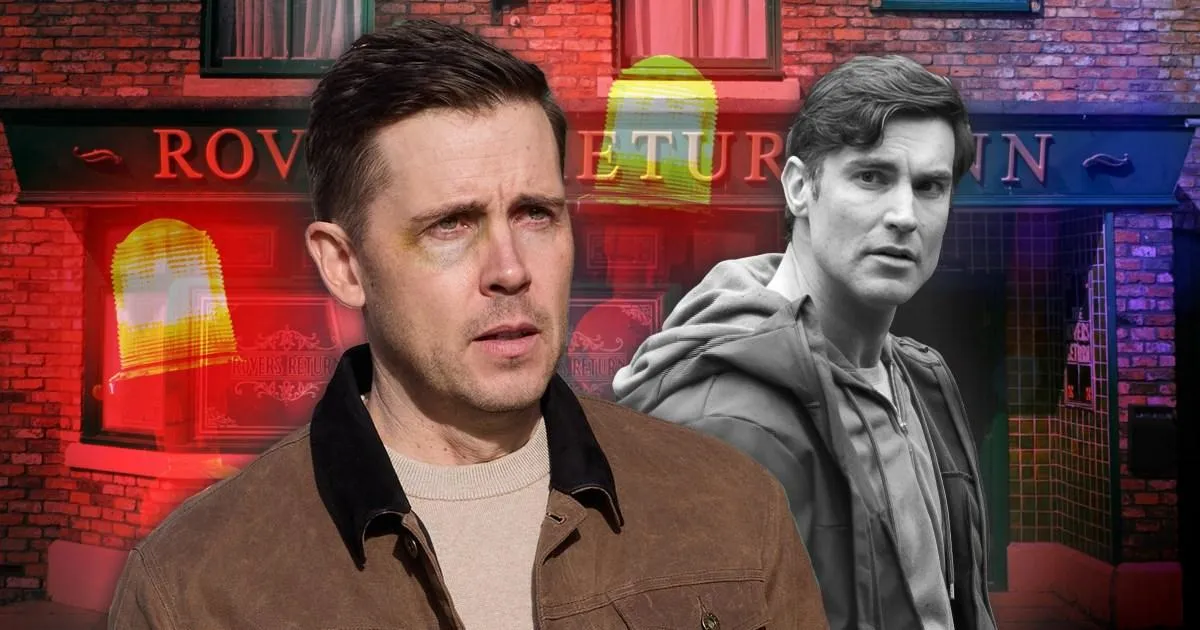
Theo Silverton (James Cartwright) is dead. The abusive monster’s demise might have a nation of Coronation Street fans cheering, but what does this mean for his victim, Todd Grimshaw?
Theo was determined not to let Todd escape. (Picture: ITV)
An unhinged Theo chased Todd down. If he couldn’t have Todd, nobody could…
Fortunately, Todd managed to give Theo the slip. (Picture: ITV)
The next thing we know, the scream of Betsy Swain (Sydney Martin) rang out into the night. Theo was dead, struck down by an unseen assailant.
Now a murder investigation is about to kick off on the street, Todd’s future looks more uncertain together. Actor Gareth Pierce, who portrays Todd, shares insight into his character’s emotional headspace after learning that his abuser is dead.
”It’s a real cocktail of emotions,’ shares Gareth. ‘In a similar way to what you’ve already seen in the police station immediately after the last really bad beating. He was there to report Theo but there was still that real conflict of emotions where he’s almost defending this person, even though he’s at least woken up enough to realise he has to get out of the relationship in that moment. This is very similar.’
Advertisement
‘ Upon finding it’s Theo that’s died, there must be some relief, but I think there’s also a great deal of shame. It had got to that stage where there’s some self-blame for Todd, it must be a horrible feeling when you know something has suddenly got so much more serious and so beyond your ability to control the situation. He must also be really, really scared as well.’
It’s easy to understand why. After months of relentless abuse, Todd finally found the strength to leave Theo with the courage and support of his friends, only for the vile bully to beat him so badly that it put him in hospital. Then, just as Todd was about to fly off to Thailand to stay with his mum and brother, Theo broke into his flat, refusing to let Todd go.
dfs
As Theo’s death is now an active murder investigation, both DS Lisa Swain (Vicky Myers) and Kit Green (Jacob Roberts), who initially interviewed Todd when he reported his partner for abuse, will be taking on the case.
Gareth reveals Todd’s feelings about the investigation:
‘I think there’s quite a mix of emotions there as well. There’s some determination to find out who has done it on Todd’s part, because this was still someone that he loved and had a strong connection to in spite of how dangerous and horrific the abuse had become.’
Advertisement
Don’t miss a Soaps scoop! Add us as a Preferred Source
As a loyal Metro Soaps reader, we want to make sure you never miss our articles when searching for stories. We have all the latest soaps news, spoilers, videos, and interviews, with a vibrant community of highly engaged readers.
Click the button below and tick Metro.co.uk to ensure you see stories from us first in Google Search.
Now you can ensure you never miss a story from the Soaps team
Advertisement
Swain and Green are on the case. (Picture: ITV)
‘But I think Todd is very intelligent and he also knows that he is a likely suspect. So I think there’s also that situation where as soon as you know that you are having to convince someone that you had nothing to do with it, then you start acting in a way that could very much read as suspicious’
Does this mean Todd killed Theo? After months of terrifying bouts of violence, emotional manipulation and gaslighting behind closed doors, it’s safe to say that Todd has more motive than anyone to want Theo dead.
But this is Todd Grimshaw we’re talking about. Is he truly capable of murder? Gareth isn’t ruling anything out.
‘I think definitely our audience will have those suspicions and actually we see that Todd certainly has plenty of motive, some might even go as far as to say justification after having to remain stoic in the face of such sustained provocation. It’s interesting to think is anyone capable of murder in extreme circumstances.’
‘I think we all hope to think of it as far more black and white or good and evil, but I think it’s probably often much more grey in real life. Certainly in a show like ours you get a sense that, maybe Theo really did push him that far.’
Summer despised Theo for leaving Billy to die. (Picture: ITV)
Then there’s Gary Windass (Mikey North), Theo’s former best friend. Outraged to discover he’d employed an abuser, Gary not only fired Theo, but threatened his life and smashed his van with a mallet. Not an encouraging sign, given that Gary’s already killed two people in his time.
Gary explicitly threatened Theo’s life: (Picture: ITV)
Let’s not forget Carl Webster, who knows that Theo left Billy to die and was trying to trick him into a confession in order to extort Summer out of her late adoptive dad’s life insurance money.
Carl tried to bait Theo into a murder confession. (Picture: ITV)
We know that Todd’s nearest and dearest would go to the ends of the earth to free him from Theo’s clutches, but would any of them go full vigilante. Gareth Pierce thinks it’s a distinct possibility.
‘Just as the audience will say that Todd has plenty of motive, they’ll also know that lots of other people have motive as well, especially due to the way that Theo has actively isolated Todd from his closest friends and family. We’ve seen them start to join the dots and reconnect with Todd and try to extricate him from the relationship over these past few weeks’.
‘So I think that those are the people that the audience will have been willing to swoop in as saviours, and they will definitely have the spotlight on them. The audience will be wondering if, rather than just save Todd from the situation, they’ve actually gone as far as taking the law into their own hands.’
As suspect number one, the police will be watching Todd like a hawk. And not just the police. We all know how Corrie residents love a good gossip. Todd won’t be able to buy a paper from the Kabin without being scrutinised for any sign of guilt. Gareth explains.
Advertisement
‘I think he definitely has all of those emotions; grief, hurt, anger, even relief. He also knows that he very much has a lens on him and his reaction for many reasons. His friends will be watching him thinking, this man was abusing you, he was being awful to you, how can you even grieve for him?’
Will Todd ever escape the prison Theo made for him? (Picture: ITV)
What about the future? Will we ever see the old Todd again, the sharp-witted devil-may-care trickster who delighted in taking the mick out of his fellow Street residents? Gareth Pierce hopes so, but points out the reality of overcoming such psychological trauma.
‘I think, even when speaking to people just day to day when I’m out, one of the more painful aspects of the story has been witnessing Todd’s spark really leaving him. It’s been very effective and painful, but I think that’s definitely something that the audience have said to me that they really do want to see, his playful side returning. So we’ll be hoping that we get Todd back to that place eventually.’
‘But I think, consistent with coming out of a relationship like this, it will take some time. I think that when Todd is feeling rubbish about himself, that’s when quite often he masks his vulnerability with a spikiness, a sarcasm and maybe a lack of patience for the people around him. Maybe we will see some of that returning in the immediate aftermath just as a method of self-protection.’
What does the future hold for Todd without Theo? (Picture: ITV)
While Todd escaped his abusive relationship, many people aren’t so lucky. Gareth Pierce emphasised the importance of this issue story, and how proud he was to do it justice.
‘I think that I’m the type of person who would have put a fair bit of pressure on myself when first asked to carry a storyline like this to do it justice and to do survivors justice and ensure that they feel seen in what goes out on screen.’
Advertisement
‘But now there is that sense that we’ve depicted it truthfully, and to hear how invested and on the journey our audience have been with us, then yeah absolutely I’m proud. I’m hugely proud of the work that every single member of this team has done and it really is credit to everybody’s dedication.’
Three people have died and five others have fallen ill in a suspected hantavirus outbreak aboard a cruise ship travelling from Argentina to Cape Verde.
Two of the dead are a Dutch couple. The man, 70, suddenly developed fever, headache, abdominal pain and diarrhoea and died on arrival at the island of St Helena, a British territory in the South Atlantic.
The woman, 69, was evacuated to South Africa, where she died in a Johannesburg hospital. A third fatality was still on board, according to a source cited by AFP.
A British national aged 69 is in intensive care in Johannesburg and has tested positive for the virus, local officials said.
The outbreak was reported aboard the MV Hondius, a polar cruise ship run by Oceanwide Expeditions carrying around 150 tourists from various countries. The vessel departed Ushuaia in southern Argentina on 20 March and was due to arrive in Cape Verde on 4 May.
Advertisement
Hantavirus is usually passed to humans from rodents via their urine or faeces and can cause severe respiratory illness.
Who are Oceanwide Expeditions?
The Dutch cruise firm emerged from scientific voyages to the high Arctic archipelago of Svalbard by the Netherlands-based Plancius Foundation.
Oceanwide Expeditions started commercial operations in 1993. It is based in the Dutch port of Vlissingen (Flushing) and specialises in expedition voyages to the polar regions, with the slogan: “Explore the best of Antarctica and the Arctic.”
Advertisement
The fleet comprises three ice-strengthened ships: Hondius, Ortelius, and Plancius.
The company says: “Our expeditions attract independent travellers from around the globe who are characterised by a strong interest in exploring remote regions.”
Passengers are typically aged between their 30s to their 80s. Most are between 45 and 65.
Oceanwide Expeditions sets out the procedure when passengers become unwell – which is largely concerned with Covid infections.
Advertisement
It says: “In event of passengers becoming unwell onboard we will follow a set protocol to keep that person and other guests, crew and staff safe and minimise potential spread of infections.
“Infected passengers (Covid or non) are recommended to stay in their cabins, have meals in their cabins and minimise contact with other passengers and crew. There is no requirement to go into isolation unless strictly indicated by a doctor or medical advisor.”
Simon Calder4 May 2026 07:32
Advertisement
Cruise operator says Cape Verde has not authorised disembarkation
The operator of the MV Hondius has said Cape Verdean authorities have not yet authorised the disembarkation of passengers requiring medical care, as the ship remains off the coast of Cape Verde with three passengers dead and two crew members requiring urgent medical attention on board.
In a statement, Oceanwide Expeditions said local health authorities had visited the vessel to assess the two symptomatic individuals on board but were yet to make a decision on transferring them to medical care in Cape Verde. One passenger remains in intensive care in Johannesburg.
Dutch authorities have agreed to lead a joint effort to repatriate the two symptomatic passengers from Cape Verde to the Netherlands, the company said, along with the body of one of the deceased and a closely associated guest who is not symptomatic. The repatriation depends on authorisation from Cape Verdean health authorities.
“The priority of Oceanwide Expeditions is to ensure that the two symptomatic individuals on board receive adequate and expedited medical care,” the company said. It added it was working closely with the WHO, Dutch health authority RIVM, relevant embassies and the Dutch Ministry of Foreign Affairs.
Advertisement
Stuti Mishra4 May 2026 07:30
The polar expedition ship at the centre of the Atlantic hantavirus outbreak
The MV Hondius is a Dutch-flagged polar expedition vessel operated by Oceanwide Expeditions, designed for some of the world’s most remote waters. The company describes it as the world’s first-registered Polar Class 6 vessel, built to navigate ice-strengthened seas around Antarctica and the Arctic.
The 107.6-metre ship typically takes passengers on expedition cruises lasting between 10 and 19 days, with prices starting from around $7,800 per person. Its passengers tend to be adventurous travellers aged between 45 and 65, though the company says guests range from their 30s to their 80s.
Advertisement
On this voyage, the Hondius had departed Ushuaia in southern Argentina — a common gateway to Antarctica — on 20 March, heading north toward Cape Verde off the west coast of Africa. It is now docked in Praia, the Cape Verdean capital, with around 150 tourists from various countries on board, according to South African health authorities.
The Foreign Office said it was closely monitoring the situation and stood ready to support British nationals if needed.
(AFP/Getty)
Stuti Mishra4 May 2026 07:00
Foreign Office in touch with cruise company on potential virus outbreak
The Foreign Office said it is monitoring reports of hantavirus outbreak aboard the MS Hondius cruise ship.
Advertisement
Here is the ministry statement in full:
“We are closely monitoring reports of a potential hantavirus outbreak on the cruise ship Hondius and stand ready to support British nationals if needed. We are in touch with the cruise company and local authorities.”
Stuti Mishra4 May 2026 06:30
Advertisement
What are the symptoms of hantavirus?
Symptoms of hantavirus vary depending on which syndrome it causes, but both can be severe.
HPS, which affects the lungs, typically begins one to eight weeks after exposure. Early symptoms include fatigue, fever and muscle aches — particularly in the thighs, hips, back and shoulders. These can progress rapidly to breathing difficulties as the lungs fill with fluid.
HFRS, which affects the kidneys, usually develops within one to two weeks of exposure, though in rare cases it can take up to eight weeks. Initial symptoms come on suddenly and include intense headaches, back and abdominal pain, fever, chills, nausea and blurred vision.
The WHO has said the virus requires “careful patient monitoring, support and response.”
Advertisement
Stuti Mishra4 May 2026 06:00
What is hantavirus?
Hantavirus is a rare infection passed to humans from rodents — typically through contact with their urine, droppings or saliva, according to the US Centers for Disease Control and Prevention. It can also spread through a bite or scratch from an infected rodent, though this is uncommon. While rare, the WHO has said it can also spread between people.
The virus causes two distinct syndromes. Hantavirus Pulmonary Syndrome, or HPS, is a severe disease affecting the lungs. Hemorrhagic Fever with Renal Syndrome, or HFRS, affects the kidneys. Both can be fatal. There is no specific treatment or cure, but early medical attention can improve the chances of survival.
Advertisement
(PA)
Stuti Mishra4 May 2026 05:40
WHO confirms one hantavirus case and five suspected on cruise ship as death toll hits three
The World Health Organisation has confirmed one laboratory case of hantavirus and five suspected cases aboard a cruise ship in the Atlantic, with three people dead and one in intensive care in South Africa.
“Of the six affected individuals, three have died and one is currently in intensive care in South Africa,” the WHO said in a statement, adding that medical care was being provided to passengers and crew and that virus sequencing was ongoing.
The WHO said it was facilitating coordination between member states and the ship’s operators for the medical evacuation of two symptomatic passengers, as well as a full public health risk assessment. “Hantavirus infections are typically linked to environmental exposure to infected rodents’ urine or faeces. While rare, hantavirus may spread between people, and can lead to severe respiratory illness,” it said.
Advertisement
Stuti Mishra4 May 2026 05:33
Full story: What we know about hantavirus virus outbreak on Atlantic cruise ship
Stuti Mishra4 May 2026 05:21
Advertisement
Three dead and five ill in hantavirus outbreak on Atlantic cruise ship
Three people have died, and five others have fallen ill in a suspected hantavirus outbreak aboard a cruise ship travelling from Argentina to Cape Verde.
Two of the dead are a Dutch couple. The man, 70, suddenly developed fever, headache, abdominal pain and diarrhoea and died on arrival at the island of St Helena, a British territory in the South Atlantic.
The woman, 69, was evacuated to South Africa, where she died in a Johannesburg hospital. A third fatality was still on board, according to a source cited by AFP.
A British national aged 69 is in intensive care in Johannesburg and has tested positive for the virus, local officials said.
Advertisement
The outbreak was reported aboard the MV Hondius, a polar cruise ship run by Oceanwide Expeditions carrying around 150 tourists from various countries. The vessel departed Ushuaia in southern Argentina on 20 March and was due to arrive in Cape Verde on 4 May.
Now here’s a thought which certain of your Press letter writers will be able to answer. ‘Does Banksy have to have planning permission?’
Derek Reed,
Advertisement
Middlethorpe Drive,
York
—
Stick to the rules
Advertisement
ONCE again the planning regime in York shows how its decisions are inconsistent, illogical and unfair.
Outside the city walls in Fishergate, harmless window graphics in a student block are refused by council officers on the grounds they have a negative impact on the building and surrounding streetscape.
Meanwhile, inside the city walls in Piccadilly, entirely inappropriate alien shipping containers are approved by the very same planning authority with no mention of “a significant adverse visual amenity of the location, by virtue of their scale, position and number” or that they “appear as a large and dominant feature in the streetscene, appearing obtrusive in its surroundings”.
The excuse of “temporary” in Piccadilly no longer stands up after three extensions of time in contravention of The 1990 Planning Act making it clear this is not justified.
Advertisement
The latest five year extension brings this supposedly “meanwhile” use to at least 14 years – a greater longevity than might be expected from window graphics!
Matthew Laverack,
Lord Mayors Walk,
York
Advertisement
—
Lead by business?
CUTTING the cost of welfare and illegal immigrants is a priority of the Reform party.
Opponents say this is not fully costed. Leaders of this party are mainly businessmen who have succeeded and made money from running their own companies.
Advertisement
This is in complete contrast to almost all other parties who are either legal know it alls or career politicians who have no idea what running their own business for a profit entails.
So who would you trust with Britain’s finances?
A party who can make ends meet or ones that borrow and spend and bankrupt the country?
I know which I prefer.
Advertisement
Barrie Crowther,
Walton,
Wakefield
What do you think?
Advertisement
Feel strongly about an issue? Write us a letter. Please write no more than 250 words and you must provide your full name, address and mobile number. Send your views by email to: letters@thepress.co.uk
Write a comment
Join the debate and leave a comment in our comments section below this article – we may use your comments for a follow up article.
The proposal, submitted by developers MacMarshalls, seeks permission in principle for up to four houses on land behind Silver Birch Close, near High Rid Farm.
Planning documents argue the site should be classed as “grey belt” land, meaning it does not strongly contribute to Green Belt purposes, and it is described as a small infill plot between existing development that would “not fundamentally undermine” the wider Green Belt.
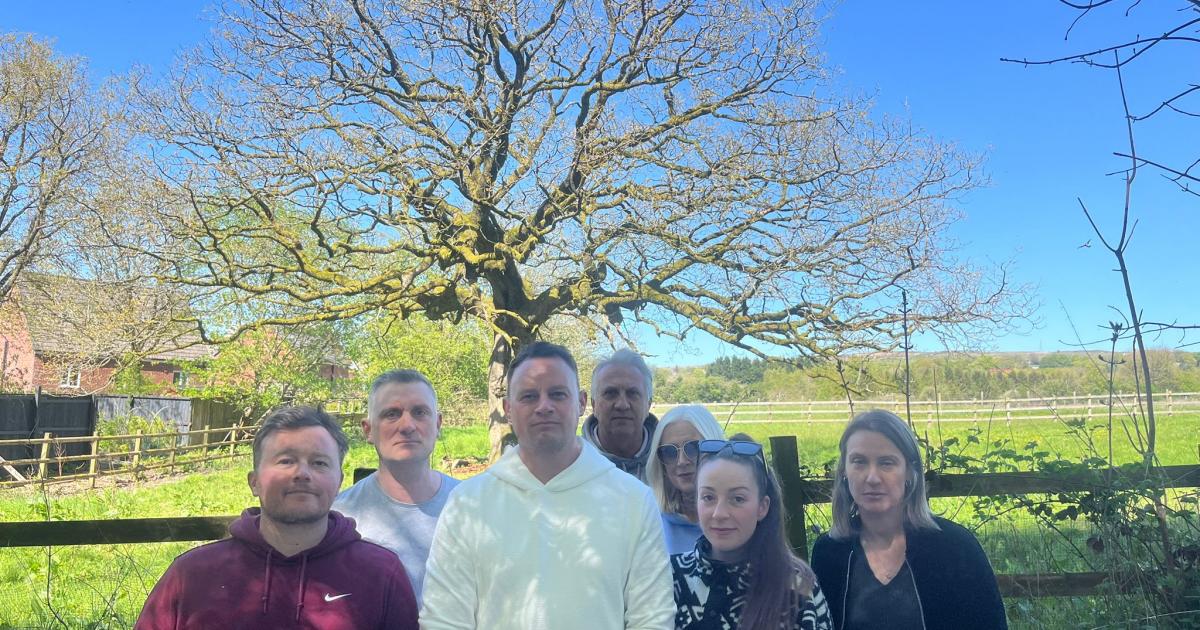
The ‘beautiful’ tree helps provide a habitat for animals (Image: NQ)
But people living nearby say the field is anything but expendable.
Charlotte Woodcock, who lives on Silver Birch Close, said the land is centred around a “veteran” oak tree believed to be hundreds of years old.
Advertisement
She said: “It’s irreplaceable.
“It’s a veteran tree which is minimum three hundred years old and it’s beautiful.
A veteran tree is one that is of exceptional age, size or ecological value, often supporting a wide range of wildlife.
She added: “The unique selling point of my house is that it has a view on to this beautiful tree and land that I was told can’t be built on because it is Green Belt land.
Advertisement
“That will be ruined.”
“I will tie myself to the tree if I have to.”
The application, lodged with Bolton Council on April 23, comes as the authority cannot currently demonstrate a five-year housing supply, something the applicant says creates a “demonstrable unmet need” for new homes.
However, residents fear approving the scheme could open the door to further development.
Advertisement
Louise Williams, who also live son Silver Birch Close, said: “For me it’s all around this grey belt, because if this gets approved. It will set a precedent and then where is the line drawn?”
The Green Belt land is adjacent to more which worries residents (Image: NQ)
Wildlife is another key concern, with residents reporting deer and protected bats using the land.
Mature trees and hedgerows are known to act as important habitats and corridors for species, say residents.
Ms Williams said: “These are protected species, which I’m sure love this land and the tree. It’s such a shame for the wildlife.”
Advertisement
The planning statement maintains the site is suitable for development, stating it lies within Flood Zone 1 and suggesting any surface water risk could be addressed through design.
But resident Paul Roberts said existing problems are already evident.
He said: “Flooding can happen quite often especially in winter, the drain that runs along the bottom of all our gardens is full to the brim of water.
“The tree roots help prevent flooding by soaking up the water, if this goes it could risk more flooding.”
Advertisement
The drains run along the bottom of the land to prevent flooding into neighbouring propeorties (Image: NQ)
Andy Dakin, who works in property insurance claims, warned building on the field could make matters worse.
“I work in property insurance claims and see everyday issues the last thing we want to see is the urbanising of this farmland which would significantly increase impermeable surfaces, intensify run-off and materially exacerbate flood risk.”
Access to the site is also being questioned.
High Rid Lane where the proposed access route will be, is described by residents as a narrow, single-track road in parts, with space for only one vehicle at a time
Advertisement
While the application suggests traffic from four homes would be limited, council highways engineers acknowledge the road is “sub-standard in width and forward visibility”, albeit with no objection in principle if improvements are made.
Silver Birch Close residents are ‘not happy’ (Image: NQ)
Residents say that does not reflect reality on the ground.
“I walk a pram down this lane every day and can see first-hand the issues cars face trying to get down a one-track road,” Ms Woodcock said.
“Allowing an access road just wouldn’t be viable.”
Advertisement
There is also frustration over how the plans came to light, with some residents saying they only became aware through Facebook despite claims of consultation.
Planning documents state neighbours were consulted on April 27, but residents say no letters, notices or posters were received or displayed in the area, with many only becoming aware through social media.
Ms Woodcock said “I only found out because of a community group n Facebook.
“If I didn’t go on this page, I would have never of known, and for those older generations that don’t use social media, they won’t have a clue.”
Advertisement
The applicant concludes the scheme represents sustainable development in a location close to shops and transport links.
For residents, however, the issue is more fundamental.
“It’s a whole ecosystem that should just be left,” Ms Woodcock said.
People gathered at the Sands statue to mark 45 years since the republican’s death amid a row over it being erected without planning permission
16:04, 03 May 2026Updated 22:01, 03 May 2026
crowds gather for an event to mark the 45th anniversary of Bobby Sands’ death
A Bobby Sands statue that was erected without planning permission “is going nowhere”, a Sinn Fein MLA has said.
The statue of the IRA hunger striker, who was 27 and an MP for Fermanagh and South Tyrone when he died in 1981, was unveiled last year at the Republican Memorial Garden in Twinbrook, west Belfast.
Advertisement
It then emerged that it had been erected without planning permission, although Belfast City Council had not previously taken any action.
A DUP motion before the council on Thursday calling for the matter to be “reconsidered” was passed, with support from other unionists and the Alliance Party.
A Sinn Fein amendment seeking a review of the “current enforcement status of all such structures” across the council area was unsuccessful.
SDLP councillors abstained from the vote, after which west Belfast councillor Paul Doherty resigned from the party, stating that the statue of the IRA hunger striker “holds real significance”.
On Sunday, people gathered at the Sands statue to mark 45 years since the republican’s death.
Sinn Fein MLA Danny Baker said the hunger strikers, 10 of whom died during the 1981 Maze Prison hunger strike, had inspired “many generations and many generations here to come”.
He told the crowd: “The spirit of the prisoners (and) our communities can never be broken.
“Our opponents were shook to their core last year and will continue to be because we are on a path, a path to Irish unity, based on equality and rights.
“There’s one very simple message I was asked to give today: the statue is going nowhere, not now and not ever.”
Advertisement
Sinn Fein MLA Pat Sheehan told the crowd the emergence of the IRA was “a direct response to the violent and repressive nature of the orange state, layered upon 800 years of British colonial occupation”.
“I say to unionists, save your lectures and your moralising for others,” he said.
“We will commemorate our patriot dead in our own way.”
Advertisement
He compared unionists voting for a reassessment of the Sands statue to efforts by British prime minister Margaret Thatcher in the 1980s to “criminalise” Sands.
“Forty-five years later, today in 2026, those in unionism will also fail,” he said.
“This statue of Bobby Sands has pride of place and will have pride of place here in Twinbrook, in Bobby’s home community for generations to come.
“When all of us here today are dead and gone, and largely forgotten about, Bobby Sands will still be remembered. He and his comrades will remain a beacon of light for freedom-loving people everywhere.”
On tackling crime in London, she backed more stop-and-search, more live facial recognition in crime hot spots, “immediate justice” with on-the-spot fines for graffiti and anti-social behaviour to “take back our streets,” and 10,000 more police officers nationwide, including many in London.
A vet has shared a 9-point new puppy checklist for dog owners to follow when bringing a puppy home for the first time, covering everything from vaccinations and vet registration to socialisation and training
A veterinary expert has identified nine essential steps that every pet owner should take straight away after welcoming their new puppy home.
Advertisement
Bringing a puppy into your household is both thrilling and often daunting, and according to Jen Wormleighton, Head of Veterinary Services at Animal Friends, the first few months of a puppy’s life constitute a vital period for shaping behaviour, establishing routines and ensuring lifelong wellbeing, , reports the Express.
What every new puppy owner should know…
According to Jen, concentrating on several key fundamentals can help owners in avoiding typical early pitfalls.
1. Know Your Puppy’s Stage Before They Arrive
By eight weeks old, the majority of puppies are weaned, inquisitive, and prepared to learn. It’s beneficial to confirm your puppy’s exact age with the breeder or rescue organisation so you’re aware of their needs upon arrival. This also allows you to arrange matters such as training, feeding schedules, and early routines with assurance.
Advertisement
2. Book Their Vaccinations, Flea and Worming Treatments Straight Away
If your puppy hasn’t had their first vaccinations, arrange them the instant they arrive at your home. Maintain their boosters every 2-4 weeks and keep on top of flea and worming treatments as well. These initial precautions help protect them as they develop and discover their new surroundings.
3. Register with a Vet Before your puppy arrives home
Register them with a vet so you’re fully prepared for routine care, advice and any emergencies. Make sure they are microchipped and update your contact details with the appropriate database, such as Pet Database, to ensure records remain up to date. If you’re adopting, your puppy should have already undergone a health check and received vaccinations, though it’s still worth familiarising yourself with the ongoing responsibilities so you feel ready for the road ahead.
4. Start Socialisation from Day One
Puppies between eight and twelve weeks old are remarkably receptive to new experiences. This is the ideal opportunity to gently introduce them to new people, sounds, objects and everyday handling. If they haven’t yet completed their vaccinations, carry them outside so they can safely take in the world around them. These small but significant early encounters help nurture a confident, well-adjusted dog.
5. Establish a Simple Toilet Routine
First thing in the morning, after naps, meals and playtime, and approximately every hour in between, take your puppy to their designated toilet spot. Choose the same location each time, such as a patch of grass, and reward them when they get it right. Frequent, consistent trips yield excellent results.
6. Begin Gentle Training on Day One
Basic commands can be introduced as soon as your puppy settles in. Brief sessions using treats and praise will help them learn to sit, come when called and take treats calmly. Keep things enjoyable, relaxed and always end on a positive note.
7. Offer Chews to Redirect Nipping
Teething occurs early in a puppy’s development, and those tiny teeth can be surprisingly sharp. Keep multiple safe chew toys within easy reach and offer them whenever your pup starts nibbling hands or clothes. This teaches them what’s acceptable to chew while providing relief for sore gums.
8. Restrict Walks Until Full Vaccination
After your puppy has completed their vaccination course, begin with short, gentle walks. Prior to this, limit outdoor exposure to carrying them outside for fresh air and new experiences without risking infection.
9. Create a Daily Routine From the Start
Mealtimes, toilet breaks, rest periods, play sessions and training work most effectively when they occur at approximately the same time each day. A consistent routine helps your puppy feel settled and makes the learning process easier for you both.
For generations, we took social skills for granted. Parents just assumed that, through regular interaction with adults and peers at school and at home, their children would learn how to interact and communicate with others, encompassing everything from empathy and active listening to conflict resolution.
But then came the digital age.
Now, parents and experts alike have noticed that technology may be affecting these critical interpersonal tools and behaviours, with Gen Z and Gen Alpha demonstrating fewer social skills than their predecessors.
mother image via Getty Images
Advertisement
Even adults might need reminders of these useful social skills. But you can give kids a head start by practicing early on.
“I absolutely see a drop-off in kids’ social skills, and phones and social media are a big part of it,” observed JJ Kelly, a licensed clinical psychologist known as the “Punk Rock Doc.”
The issue here is that technology acts as a barrier — instead of a gateway — to better communication. It’s all too tempting for kids (and adults! I’m just as guilty of this behaviour) to hide behind a screen and say (or not say) what they want because the screens serve as a shield from the real world.
Parenting and life coach Randi Crawford believes that phones and other digital devices “replaced the practice of living IRL.” There was a time when kids would figure things out in real time, she says, through awkward conversations, reading the room, making friends, making mistakes and making adjustments. But now, kids and adults alike can “curate everything behind a screen.”
The downside to this behaviour, according to Kelly, is that technology “has taken away infinite numbers of daily opportunities to practice bravery in real life.”
Advertisement
This includes basic skills like making eye contact, navigating awkward moments, resolving conflict or saying something vulnerable in person. Instead of embracing opportunities for healthy conflict resolution, kids online resort to passive aggression, ghosting and public shaming. Kelly calls this “normalised hiding,” in which, instead of working through discomfort, she says, kids are “retreating behind a screen.”
“
Kids aren’t getting worse. They’re just, very simply, getting fewer chances to practice being brave humans.
– JJ Kelly, licensed clinical psychologist known as the “Punk Rock Doc.”
But it’s in discomfort that important social growth happens. “Social skills are built in discomfort,” said Crawford. “It’s not fun, but that’s how we learn.” So while it may feel safer to talk via text or social media, face-to-face interactions are still essential for developing communication skills.
Advertisement
Rest assured that this problem is solvable. “Kids aren’t getting worse,” Kelly emphasised. “They’re just, very simply, getting fewer chances to practice being brave humans.”
In-person social skills may feel like a relic from the 20th century, but in the right context, they can empower our 21st-century children.
These slightly uncomfortable conversations can have long-term positive effects.
Once you’ve established digital device boundaries with your kids and have provided a welcoming, safe space for them, it’s time to get down to business.
Advertisement
Kelly Gonderman, a licensed clinical psychologist and the clinical director at We Conquer Together in Orange County, California, suggests having the following five conversations as a family. Not only will these talks teach kids fundamental social skills, but they’ll help them become more well-rounded, empathetic adults.
How To End A Conversation
Wait, who needs to learn how to end a conversation? Young people raised on texting and online chats, that’s who. “Screens have made this [skill] invisible,” observed Gonderman. “You just stop responding, and kids are bringing that habit into face-to-face interactions where it reads as rude or dismissive.”
Why is this skill important? “It’s one of the most underrated social skills because it signals to the other person that the interaction had a natural arc — a beginning, a middle and an end,” said Gonderman. “Without it, people are left wondering where they stand.”
Advertisement
How can learning this skill empower kids today? “Kids who can end conversations gracefully feel less socially anxious,” said Gonderman. “They’re not trapped in interactions they don’t want to be in and they’re not accidentally leaving people feeling dismissed or confused.”
How can parents approach this subject with their kids? By modelling how to end a conversation themselves. Something like, “‘It was really good to talk to you, I’m going to go check on something,’ suggested Gonderman. “The goal isn’t a perfect exit line, it’s just some kind of signal that the conversation is wrapping up.”
How can they practice these skills at home? Dinnertime chats are a good place to start. “At the end of a family conversation, have your kid practice closing it,” Gonderman said. “‘That was a great talk, I’m going to go do homework now.’ It sounds silly, but doing it in a low-stakes environment makes it automatic in a higher-stakes one.”
How To Disagree Without An Audience
Advertisement
Trolling. Flame wars. Call it what you will, but “social media rewards public callouts,” Gonderman said. It may sound weird to us olds, but do your kids even know how to disagree with someone without turning it into a public forum? “Real life requires the ability to tell someone directly that something bothered you, without performing it for anyone else,” said Gonderman.
Why is this skill important?Because, according to Gonderman,“social media has turned disagreement into a performance.” Unfortunately, “the real skill, telling someone directly that something bothered you, is being lost. That skill is what keeps relationships intact long term.”
How can learning this skill empower kids today? “A kid who can say, ‘Hey, that hurt my feelings’ one on one, without needing a group to back them up, is going to have fundamentally healthier friendships and eventually healthier adult relationships,” Gonderman said.
How can parents approach this subject with their kids? Gonderman advised parents to model disagreement in front of their kids: “Let your kid see you address something with your partner or a friend directly instead of venting to someone else,” she said. “They’re watching everything.”
Advertisement
How can they practice these skills at home? Gonderman suggested engaging in role-play: “‘Pretend I said something that bothered you. What would you say to me?’ The more they practice saying it out loud in a safe context, the less terrifying it feels in real life.”
How To Be With Someone Who’s Upset – Without Fixing It
Not only is this a critical skill for kids to learn, but many adults could also benefit from this type of empathy lesson. “A lot of kids default to jokes or distraction when a friend is struggling because sitting with discomfort is a skill nobody taught them,” said Gonderman.
Why is this skill important? According to Gonderman, most conflict in adult relationships comes down to one person feeling unheard: “The ability to sit with someone in discomfort without immediately trying to solve it is one of the highest-value emotional skills a person can have. And almost nobody teaches it explicitly.”
Advertisement
How can learning this skill empower kids today? “A kid who can just be present with a friend who’s upset is going to be the person everyone trusts,” said Gonderman. “That kind of friendship is rare, and kids who offer it are valued deeply.”
How can parents approach this subject with their kids? Demonstrating curiosity instead of assumption is the key here: Parents can ask their kids, “Do you want me to help you figure it out, or do you just want to vent?” Gonderman says, “That single question does more than almost anything else.” But then make sure to do what they ask; don’t offer help if they just want to vent.
How can they practice these skills at home?Snag a moment when emotions are small, advised Gonderman. “When your kid is mildly frustrated about something, resist the urge to fix it immediately. Just say, ‘That sounds really frustrating.’ Let it sit. You’re modelling that feelings don’t need to be solved, just acknowledged.”
Phones absolutely play a role in kids’ underdeveloped social skills.
How To Be A Good Witness When Something’s Wrong
Whether it’s watching a peer being bullied or someone having problems at home, Gonderman confirms that “the bystander problem is real.” Kids may know what the right thing is, but they don’t know how to get involved without complicating the situation.
Advertisement
Why is this skill important? Learning how to be a good witness allows you to be a force for change. “Bystanders aren’t bad people; they’re unprepared people,” Gonderman said. “Kids genuinely don’t know how to step in without making things worse, so they don’t step in at all. Teaching them what to actually do changes that.”
How can learning this skill empower kids today? “A kid who knows how to be a good witness has more confidence, more self-respect and stronger relationships,” said Gonderman. “Acting in line with your values feels good. Watching something wrong happen and doing nothing does not.”
How can parents approach this subject with their kids? Gonderman recommended debriefing the actual scenarios that come up with your kids: “When your kid mentions something that happened at school, ask what they did, what they wish they’d done and what they might do next time. No judgment, just reflection.”
How can they practice these skills at home?As with the other conversations, Gonderman advised working through specific scenarios. That means not staying in the abstract: Instead of asking your kids what they would do if someone was being bullied, try this: “What would you say if you saw someone sitting alone at lunch being made fun of by the table next to them?” It’s the specificity that makes it real.
Advertisement
How To Lose Well
While there’s nothing inherently wrong with participation trophies, Gonderman has observed that kids aren’t learning necessary sportsmanship skills anymore: “Competition, disappointment, not getting what they wanted, these are things kids used to learn through constant low-stakes repetition,” she said. “Less of that is happening now.”
Why is this skill important?Losing well teaches emotional regulation and resilience, explained Gonderman. “A kid who falls apart every time they don’t win is going to struggle with disappointment their whole life, because life involves a lot of it.”
How can learning this skill empower kids today?Gonderman calls this skill a social asset, as much as an emotional one: “Knowing how to lose gracefully makes a kid someone others actually want to play with, compete against, and eventually work with.”
Advertisement
How can parents approach this subject with their kids? “Don’t rush past the feeling,” said Gonderman. “Let them be disappointed for a minute. Then, when the heat is off, talk about what was hard about it and what they’d do differently. Skipping straight to ‘You’ll do better next time’ teaches them to skip the feeling too.”
How can they practice these skills at home?Gonderman suggested playing games at home where someone has to lose, like board games and card games, anything with a clear winner. “Make losing a regular, normal, low-stakes occurrence so it stops feeling catastrophic when it happens out in the world.”
Straight talk: Awkward conversations are worth the momentary discomfort.
As a mother myself, I appreciate that there are many things we can learn from our children. At the same time, that doesn’t mean we should completely abandon our roles as parents – even if it means voluntarily sitting in the discomfort with our kids.
Advertisement
Nobody likes this part of the parenting job, and I get why avoidance is so appealing, but Kelly also reminded readers that “courage very rarely backfires.”
StockPlanets via Getty Images
Overcoming the awkward and leaning into these necessary conversations can set both you and your kids up for success for years to come.
Lean into that fear, because it’s a signal that deep down, you know these conversations are the right thing:
“If there is anything you’re afraid to talk to your kid about,” advised Kelly, “it probably means you need to talk to your kid about it — even if they scoff or are awkward, they will remember the conversation and your ability to have it.”
Sometimes, kids need to put the devices away and have a good, old-fashioned chat with their cringe parents. They may not understand the purpose right away, but what’s more important than anything is that you start the discussion.
Advertisement
What can parents do to help get their kids’ social skills back on track?
Before sitting down to have these important — and occasionally uncomfortable — conversations with your kids about social skills, parents need to take two fundamental steps:
Reassess the role phones/devices play in your child’s universe.
“If you want your kids’ social skills to get back on track, you have to be willing to set real boundaries around technology,” said Kelly. That can mean putting off getting them their own phones for as long as possible, and introducing apps slowly, “like a privilege that’s earned over time, not a right.”
Advertisement
She also reiterated the importance of parental controls — not as a means of surveillance, but to keep your children safe.
Reassess how you respond when your child brings conflict home.
You can be a safe, empathetic space for your child when they’re dealing with something tough. “That’s where the gold is,” said Kelly. “They’re trusting you.” If your kids can trust you, that’s how they build courage.
She advises parents to start with validation, like, “That sounds really hard.” From there, ask your child whether they want you to listen or help problem-solve.
Advertisement
“When parents keep the conversation open, instead of dismissing it, kids learn to effectively navigate conflict, align with their personal values, and treat others the way they want to be treated,” said Kelly.






















































You must be logged in to post a comment Login