Pamela Doherty spoke up about John Leathem’s wife after someone referred to her online as “his poor wife”.
The of murdered teenager Paige Doherty has slammed the wife of the killer for sticking by her husband.
Advertisement
Pamela Doherty, 43, was provoked into posting about John Leathem’s wife, Katya Karbowiak, after someone put a comment on a post referring to “his poor wife”.
Leathem, 42, was sentenced to life after he admitted killing the 15-year-old – who who was 4ft 8in – at his deli in Clydebank, in 2016. Paige’s body was found two days later dumped in a wood.
She had more than 140 injuries and had been stabbed 61 times. Pamela wrote on Facebook: “I’ve never said much about what I think about the wife of the man who killed Paige. So here it is.
“When Paige died, I had loads of people say I should tell people ‘don’t blame the wife’.”
Advertisement
Pamela explained that she believes Karbowiak was wrong to stand by her husband. She added: “I gave her the benefit of the doubt. I thought she was maybe terrified. Maybe he had threatened her.
“Instead, she defended her husband, even shouting outside Low Moss Prison he was innocent. When people feel sorry for this woman, please remember.”
Pamela told the Record in March about her wish to visit Leathem in jail and challenge him to explain why he murdered.
Advertisement
The interview marked the 10th anniversary of Paige’s murder and since then, Pamela has held a charity ball in her memory to raise funds for Paige’s Promise, set up to help families who lose children in tragic circumstances.
Pamela belives there was a sexual motive for the attack and that Paige was killed because she fought back. She also said she had written previously to Leathem, asking him to accept a visit from her in jail, but he failed to reply.
Pamela intends to try again. She said: “I want him to face me, look me in the eye and tell me why he took my daughter’s life when she had so much ahead of her.”
Advertisement
Pamela also revealed that the justice system had added to the torture she felt at losing her daughter.
She had to delay the funeral for weeks to allow the defence to have its own post-mortem, and when Leathem appealed against his 27-year minimum sentence and saw it reduced to 23, she had no input into the proceedings.
Get more Daily Record exclusives by signing up for free to Google’s preferred sources. Click HERE.
The 2026 elections are shaping up to be a seismic moment for politics in the UK. Across England’s local elections, Labour is facing up to a devastating result while Reform UK has picked up hundreds of seats. Our panel covered it all, with context, analysis and expert insights.
Big wins for Reform, but can it deliver?
Alia Middleton, Senior Lecturer in Politics, University of Surrey
Reform UK’s surge in areas such as Newcastle-under-Lyme indicates that the party has sustained the support it started to gather in the Midlands and the north of England at the 2024 general election.
The party has rather uniquely demonstrated an ability to steer voters away from both Conservatives and Labour. Gaining councillors and nibbling away at Labour support in the party’s heartlands in Hartlepool and Burnley shows that Labour’s reclaiming of its red wall at the 2024 general election may only be a temporary reinstatement.
Advertisement
Alongside the collapse and prolonged recovery of the Conservatives, Reform seems to be harvesting the party’s votes – take Essex County Council, which Reform now controls, for example. This has been either under Conservative control or no overall control since 1974. In 2021, Reform UK barely registered, but today it has 42 councillors. Several members of the shadow cabinet – including Conservative leader Kemi Badenoch – have seats in Essex. But now Reform seems to be consolidating its support in the county.
One upcoming issue for Reform, however, is that voters will soon expect delivery. Reform has shown it can win votes in local elections but the more councillors it has, the more it needs to show that it can function not just as a campaign machine, but as a professional party that can keep its promises and deliver real results.
Plaid seized an opportunity to demolish Labour in Wales
Marc Collinson, Lecturer in Political History, Bangor University
Wales’ long-dominant Labour Party has been drastically diminished, while Plaid Cymru – a party that has spent a century as a secondary force – has replaced Labour as that party did to the Lloyd George’s Liberals. However, political realignment in 2026 has also seen a transformation on the political right.
Advertisement
While Reform’s increase in support has not led to it becoming the largest party, the usurping of the Conservatives has ensured that Wales’ political landscape now looks radically different. But again, we should take the long view in light of major changes in the electoral system, where long-standing advantages and alliances disappeared overnight.
A parallel was the aftermath of major local government reforms in 1973. Liberals capitalised on the dual unpopularity of Harold Wilson’’s Labour and Ted Heath’s Conservatives to seize control of the city council in Liverpool. Voters had the opportunity to cast a meaningful protest vote and took their chance. As we approach the middle of this UK parliament, perhaps these are a similar protest. Time well tell.
Rhun ap Iorwerth, leader of Plaid Cymru, arriving at the Senedd election counting centre, Llandudno. Peter Byrne/Alamy
A new system – and a new order – in Wales
Stephen Clear, Lecturer in Constitutional and Administrative Law, Bangor University
It is hard to overstate the significance of the new electoral system for the Senedd. This election was not just about choosing politicians, but rather operating under a fundamentally different political structure. That difference was exemplified by Labour conceding, very early in the day, that after decades of dominance in Wales, it will not secure a victory this time.
Advertisement
And for the first time in the history of Welsh devolution, a first minister has been unseated in another devastating blow for Eluned Morgan and Labour.
The old mixed system, of 40 constituency seats elected by first-past-the-post plus 20 regional “top-up” seats (60 MSs in total), could produce something close to one-party dominance. Labour often emerged as the governing party even without a majority because its geographic concentration in South Wales translated efficiently into seats in the Senedd.
The new 96-seat structure, with all seats elected proportionally using multi-member constituencies, makes one-party dominance harder. Now parties get seat totals much closer to their actual vote share. It’s rarer to secure a seat for narrowly finishing ahead.
Advertisement
Practically, this means Wales is likely to be entering a multi-party bargaining era, or prominent coalitions, like other devolved nations and local European parliaments. Consequently, rather than headlines about who won, a more appropriate take in Wales may be “who can govern?”
Green wins can’t compete with Reform breakthroughs
Louise Thompson, Senior Lecturer in Politics, University of Manchester
This would be considered an exceptional electoral moment for the Greens in almost any other circumstances, but their wins pale in comparison to the huge gains made by Reform UK. It was still a good day for the party and shows how much the electorate is looking for alternatives to the two main parties. The Greens have continued the momentum they gained following Hannah Spencer’s success in the Gorton and Denton byelection.
The party’s first mayoral seats with Zoë Garbett in Hackney and Liam Shrivastava in Lewisham, plus its first ever constituency seat at Holyrood are a big step forward. The wins present a real opportunity for the Greens to show that they have moved on from being a small challenger party. They no longer need to focus on building credibility as an electoral option – they’ve shown that they can break through that barrier. The question now is whether they can gain people’s longer-term trust and deliver on their electoral promises.
Advertisement
Experience from their other councils like Brighton suggest that they may need to tighten their rein on their councillors to do this. Perhaps more importantly, results like those we’ve seen in Reading and Plymouth, where they have pushed Labour into second place in the popular vote, demonstrate that they are being seen as a credible alternative nationally to Labour on the left. Labour MPs in these areas are now sitting on very shaky foundations for the second half of this parliament.
Few big surprises emerge from Scotland’s ‘scunnered’ vote
Murray Leith, Professor of Political Science, University of the West of Scotland
In Scotland the polls seemed to be right. The SNP will be be the largest party but will not have a majority. We saw low turnout in many areas, although with some limited, high-turnout, hard-fought constituency battles. Holyrood continues to be a multi-party system with a dominant SNP, but there have been some areas of change.
Nothing shows this better than the Greens winning their first constituency seats (and beating former cabinet minister Angus Robertson into third place), the SNP taking the long-held Liberal Democrat stronghold of the Shetland Islands, and Labour taking Na h-Eileanan an Iar from the SNP. And then you have Reform UK, which has gained regional seats across Scotland. The rise of the Greens and Reform are not at the expense of the SNP, but of Labour and the Conservatives. But the SNP vote share is down too.
Advertisement
What does the result mean? Pundits are calling it the “scunnered” election, a Scottish word that can mean frustrated, irritated or exhausted. It seems suitable. So, what next, Scotland – more of the same? It is certainly a very mixed picture, with some change. Just no change in government.
From patchwork to pointillist painting
Tim Bale, Professor of Politics, Queen Mary, University of London
English local elections involve county, borough and district councils, as well as mayoralties. They take place in some parts of the country but not in others, and in some places all of the seats on a council are up for grabs, while in others it’s only a third.
No wonder, then, that one of the go-to clichés that politicians and pundits routinely reach for on a day like today is “patchwork”. Yet even that may not do justice to the complex reality now that we have entered the era of five- rather than two-party politics.
Advertisement
A better analogy now might be a pointillist painting – lots of coloured dots that resolve themselves into a complete scene as the picture gradually takes shape. Much of what we’ll see in the initial analysis – especially when it comes to those spinning party lines – will be a tale, to quote Shakespeare’s Macbeth, “told by an idiot, full of sound and fury. Signifying nothing.”
Once we know what the myriad contests fought on Thursday mean for the parties’ national vote shares, we’ll be better able to tell whether what we’ve seen in opinion polls was borne out at the ballot box. What I’ll be looking for in particular is whether Reform UK, for all that it has won a huge number of seats, has actually stalled slightly compared to last year, and whether Tory leader Kemi Badenoch’s much-hyped recent progress has made much difference to her party’s performance.
What next for Starmer and Labour?
Karl Pike, Senior Lecturer in Public Policy, Queen Mary, University of London
Keir Starmer is in a kind of lame duck political position – very few people think the prime minister will lead Labour into the next general election. His authority is gradually reducing, and losing these elections around the UK will reduce it further. On that, most people within the Labour party can agree. But they cannot agree on how to respond, and the options Labour MPs have for changing their leader are complicated.
Mayor of Greater Manchester Andy Burnham could win enough support within the parliamentary Labour party (PLP) to challenge Starmer. Or he could succeed Starmer if he stepped aside, and win a majority of Labour members and affiliated supporters in the event of a contest. But the Burnham option requires some choreography that could be disrupted. Burnham is not an MP, and could still be blocked from standing by Labour’s national executive committee. Any Labour leadership contest would have to follow a successful byelection victory for Labour and for Burnham.
Angela Rayner continues to be popular in the party, but there are lingering doubts after her exit from government over her tax affairs. Wes Streeting could probably only become leader if the PLP opted to nominate just one politician, removing the need for a contest. If any candidate from the PLP’s “soft-left” stood against Streeting, I think Streeting would struggle to win.
So the who, when and how all remain up in the air. Meanwhile, the UK government has important jobs to do, all of which require people to focus on governing, rather than party management. It is not clear that the PLP has a majority view on what a different government direction should look like.
I cannot predict what will happen next. It seems unlikely that Starmer can continue to lead Labour into next year and beyond. But much of the discussion around a change of leadership seems to involve a political high-wire act. This is why, for some time now, Labour MPs have been unhappy – but unsure of what to do about it.
The death of two-party politics? Tactical voting means we can’t say that for certain
Thomas Lockwood, PhD Candidate in Politics, York St John University
Advertisement
Early results from England’s local elections might suggest increasing fragmentation in the party system, but “five-party politics” is better understood as an emerging pattern than a settled reality. What stands out most is not a clean realignment, but continued tactical voting and localised switching. Voters are choosing between multiple viable parties depending on context. This might be, for example, prioritising immigration and national discontent in red wall towns, or focusing on environmental concerns and housing in urban and university areas, rather than shifting permanently between fixed blocs.
For the first time in nearly 50 years, Labour has lost Tameside Council in Greater Manchester, which has fallen to no overall control. This is significant as it’s the council area for the constituency of Labour’s former deputy leader Angela Rayner.
On its own, it’s not a seat-threatening result for the next general election, but it is a serious long-term warning sign for Labour’s heartlands. Combined with the wider picture of Reform gaining hundreds of councillors, it shows that the “disrupter” dynamic is structural, not fleeting. But whether these localised surges harden into a durable five-party system, or remain heavily shaped by tactical voting and specific local contexts, will only become clearer in time.
So far, however, Reform will be feeling very encouraged by the state of play.
Advertisement
The turnout story – a win for democracy
Hannah Bunting, Senior Lecturer in Quantitative British Politics, University of Exeter
A really interesting trend in the English local elections is one that is positive for democracy. Turnout appears to have been noticeably higher, possibly by up to eight points on average overall and doubling in some areas. Although Reform is winning in the lowest-turnout areas, reflective of the geography and demographics they are targeting, wards where Reform are winning saw the biggest increases in turnout.
This indicates that Reform is motivating supporters who don’t usually cast a ballot in local elections – however the increase might also be due to an anti-Reform vote. Either way, it appears voters’ lack of participation in recent years was partly because they did not feel that had something to vote for (or against). For some, that has now changed.
It looks to be the opposite story for turnout in Scotland. Coming from a high in 2021, average turnout fell. This may be a further sign of the SNP’s unpopularity, or a sophisticated electorate who understand how their voting system works. It was clear that the incumbent party was going to win, but with reduced enthusiasm from voters. Both are reasons to stay home – with neither jeopardy nor positivity as motivation.
Advertisement
The challanges for Plaid governing in Wales
Bettina Petersohn, Senior Lecturer in Politics, Swansea University
The question now is: can Plaid Cymru govern alone or does it need support from other parties in the Senedd? Depending on where the support is coming from, Plaid might struggle to please everyone.
Data from the Welsh Election Study indicates that while Plaid and the Greens are viewed positively, sentiments towards Labour are mainly negative. So a support agreement between Plaid and Labour may be met with scepticism from both their voters.
Bad news for female representation?
Ceri Fowler, Career Development Fellow in Comparative Politics, University of Oxford
Advertisement
These results suggest that women’s representation in local government will decline. Research undertaken before the election showed that the proportion of women and non-binary candidates varied substantially by party. Overall, around 31% of candidates at this election were women or non-binary, but for the Greens and Labour this is more than 40%. For Reform UK, only 23% of its candidates are women or non-binary.
The success of Reform at this set of local elections, and the decline of Labour, therefore means that even fewer women are likely to be in local government than there were before. If Reform also sees similar success in Wales and Scotland, there may be fewer women in the devolved parliaments too. This is the opposite of the 2024 general election, where the success of Labour led to historic highs in women’s representation. These results show, yet again, how women’s representation is conditional on the success of left-leaning parties.
THIS is a photo of taken in Haxby last year of an otter trying to get into a garden pond.
Aren’t they lovely you might say – but they’re horrible things as far as I’m concerned.
S Robinson,
York
Advertisement
…I WAS saddened to read Stuart’s article concerning the otter in Wigginton.
Is this not proof that we are doing immense damage to our wildlife by building on their natural habitat?
Where will it end?
Yes housing is needed but not at the expense of our wonderful surroundings.
Advertisement
Mrs Eunice Birch,
Sutton on Forest,
York
Otter trying to get into a garden pond in Haxby – photo supplied
Read more:
Advertisement
Government plans are backfiring – here’s why
ABRAHAM Lincoln knew the folly of action against entrepreneurs when he stated: “You cannot help the weak by weakening the strong. You cannot help the wage-earner by pulling down the wage-payer. You cannot help the poor by destroying the rich”.
If you are a renter looking to lease a home don’t expect the new Renters Act to help you find a place. It won’t. Quite the opposite. Existing landlords are getting out of the market. Excessively onerous legislation, coupled with yet more punitive taxation against landlords convinces many ‘would-be’ housing providers that renting out homes is not the business to be in.
The result of all this is a reduction in the supply of an essential commodity at a time of enormous demand.
Advertisement
The Renters Act is a massive disincentive to anyone with an enterprising spirit to provide homes for rent.
It follows on from similar legislation that has largely destroyed the incentive to build new homes. Small and medium housebuilders have largely disappeared and the remaining big companies face choking demands that make developing slow and costly.
These are examples of ill-considered government interference that is backfiring on the very people it was intended to help.
Matthew Laverack,
Advertisement
Lord Mayor’s Walk,
York
What do you think?
Feel strongly about an issue? Write us a letter. Please write no more than 250 words and you must provide your full name, address and mobile number. Send your views by email to: letters@thepress.co.uk
Advertisement
Write a comment
Join the debate and leave a comment in our comments section below this article – we may use your comments for a follow up article.
Thanks for the memories
ST WILLIAM’S College on College Street, York, was originally built 1465.
Advertisement
It was unusual because it was originally built with just the one main entrance and with no ground floor, street-facing windows.
This was apparently for privacy, with only the central archway giving access to the building (the bay windows were added in the 18th century).
I was told many years ago that the idea of the one door was to control drunken and rowdy priests from the debauchery and rowdiness in the surrounding areas.
The area around the Minster including the Treasurer’s House and St William’s College was surrounded by a 12ft high wall and was in fact a self contained area under Church law with it’s own prison and garrison (it still has its own police force) and was completely independent of the City Mayor and laws.
Advertisement
Established in 1106 rescinded in 1834 , the area fell under the symbol of St Peter “cross keys” ( hence the name of the Cross Keys pub) and had four main fortified gates: Bootham and Monkgate plus two others. The early church was all powerful in the medieval period
My father Leonard was brought up in Grape Lane, with his brothers Trevor, Reg and Philip in the small house at the side of Coffee Yard, now the Polymath Bar at 21 Grape Lane.
At one time my grandmother Gertrude I believe ran the Bloomsbury public house. Between the pub and 21 Grape lane (now the site of the Slug & Lettuce ) and on the bend opposite was a large laundry.
More nostalgia pages please, I find them absolutely fascinating.
A serial burglar who smashed his way into homes in Cambridgeshire and other counties has been jailed. Billy Swaley Smith broke into people’s homes and stole several items including jewellery.
He burgled 20 properties across Cambridgeshire, as well as Essex, Norfolk, Suffolk and Essex between January 9 and April 7, 2026. Swaley Smith, 37, of Smockhill Close, Norwich, appeared at Ipswich Crown Court on Friday (May 8).
He admitted to two burglaries in Mulbarton, Norwich on February 12 and in Thetford on April 7. He was sentenced to 876 days in prison.
Advertisement
In the Mulbarton burglary, he smashed his way into a house by using a plant pot and made off with a coin collection, jewellery and handbags.
Blood found on a storage cube was matched to Swaley Smith. In the second incident, he ransacked the house and stole jewellery. He was captured at the scene on CCTV and recognised by officers. He was arrested the following day.
Duncan Etchells, police staff supervisor for Op Converter said: “There was nothing sophisticated about these offences – he simply smashed his way into properties and stole anything he thought he could sell quickly for drugs.
“Burglary is by nature a very invasive crime which has a very real impact on victims who were left dealing with the damage and intrusion caused.
Advertisement
This sentence sends a clear message that we will relentlessly pursue prolific offenders and bring them to justice. Hopefully this process brings some reassurance and closure to those who were targeted by this opportunistic offender.”
This reign, however, could be a fairly short one as he faces his own cousin Jacob Fatu.
After initially rejecting Fatu’s challenge for a title opportunity, Reigns had a change of heart upon being on the receiving end of a ruthless attack on the April 27 episode of Monday Night Raw.
Fatu stood tall following chaotic contract signing on the go-home episode of WWE Raw, slamming Reigns through a table, but can he dethrone the ‘Tribal Chief’ and shock the WWE universe?
The other championship match on the WWE Backlash 2026 card sees Trick Williams defend the United States title against Sami Zayn in a rematch from WrestleMania 42.
Advertisement
Bron Breakker will look to settle a score against former mentor Seth Rollins in a singles match, while the same can be said for Iyo Sky and Asuka as the former tag team partners face off.
Bron Breakker cost Seth Rollins at WrestleMania 42
WWE
Elsewhere on the card, The Miz will team with Kit Wilson to take on Danhausen and a partner of his choosing.
Advertisement
Recently retired John Cena has announced his next appearance official appearance for the WWE will be this weekend and he has some exciting news to share.
“It’s official! I’m headed to Backlash,” Cena wrote on social media. “After months of planning and effort, I am so excited to break some history-making news! I can’t promise it’ll be perfect, but I can promise it will change the WWE experience for superstars and fans! See you live on Saturday in Tampa!”
Here’s everything you need to know about WWE Backlash…
Date, start time and venue
Advertisement
In the UK, WWE Backlash is scheduled to start at 11pm BST tonight, Saturday, May 9, 2026
The Premium Live Event will take place at the Benchmark International Arena in Tampa, Florida.
Where to watch WWE Backlash
Live stream: In the UK, WWE Backlash can be watched and streamed live on Netflix.
Advertisement
A standard subscription costs £5.99 per month and it can be cancelled at any time.
Trick Williams beat Sami Zayn at WrestleMania 42
WWE
Seth Rollins vs. Bron Breakker (with Paul Heyman)
WWE United States championship: Trick Williams (c) (with Lil Yachty) vs. Sami Zayn
Advertisement
Danhausen and TBA vs. The Miz and Kit Wilson
World heavyweight championship:Roman Reigns (c) vs. Jacob Fatu
The year-long ticket is cheaper than buying single-day entry on the gate – which costs £68
This article contains affiliate links, we will receive a commission on any sales we generate from it. Learn more
Advertisement
For thrill seekers, visiting Alton Towers is a yearly pilgrimage. While buying a ticket on the gate is a convenient option, it is often the most expensive choice with a one-day pass costing up to £68 when you get there.
Luckily, Merlin Entertainments, the company behind Alton Towers and more than 20 other top UK attractions, has dropped a new deal that gets you an annual ticket cheaper than buying one-day entry on the doors. Valid for 339 days of the year, it could save theme park fans bucket loads of cash.
Alton Towers Annual Pass holders will be able to visit as many times as you like for 12 months, with the exception of certain dates. Alton Towers is open for the main season from March to November as well as for season events on days in between.
Adrenaline junkies can test their courage on the legendary twists of the Wicker Man or face the sheer vertical drop of the iconic Oblivion. From junior coasters to high-speed mysteries like Th13teen, the park ensures a non-stop day of heart-pounding action for older children and adults alike.
Younger guests will be delighted to explore the UK’s only CBeebies Land, where they can interact with their favourite characters across a variety of colourful, preschool-friendly attractions. Adding to the excitement, the resort has now opened the world’s-first Bluey ride, titled Bluey the Ride: Here Come the Grannies!
For theme park fans looking to try somewhere different, Wowcher’s Theme Park Breaks could be the ideal choice. They’re currently promoting a Gulliver’s Valley Resort Stay and Theme Park Entry deal starting at £139, with options available during school holidays for a family of four looking for an exciting break.
Advertisement
If your family is keen on outdoor adventures, consider a National Trust Family Membership starting at £103 annually. It contains free entry to more than 500 places from houses and gardens to coastlines and countryside.
With more than two million visitors coming through the park gates every year, many have shared their experiences in TripAdvisor. One five-star review said: “We had an excellent time, lovely clean park, amazing rides (we travelled for nearly 5hrs each way with an overnight stay nearby) and it was thoroughly worth it.
“Staff were friendly mostly, and the rides were mainly operating, with other a few with downtimes. We visited midweek in late April, after Easter but before May bank holiday and there were hardly any queue times. A really great experience, but glad we avoided the weekend crowds.”
Advertisement
Another added: “The rides were amazing. We had a really good time and loved it so much. The staff are really kind and the rides are fabulous.”
One family who stayed in the Stargazing Pods said that they had a “Fab family weekend,” adding: “The pods are really warm, cosy and very clean. The take away breakfast was enjoyed by us all. The shower block was probably the nicest I’ve seen on a camp site.”
Not every visitor experience was quite so positive, with one guest noting: “Felt like the park was overbooked in comparison to other years. Anyone that waits 60 mins for a round child’s rollercoaster is insane and their children must have amazing patience.”
Advertisement
But for some it was a ‘truly awesome’ experience, with another guest sharing: “We stayed at Splash Landings Hotel and it was fabulous. The rooms are beautifully decorated (we had the standard rooms), very clean and great amenities, even an iron and ironing board, and a travel cot.
“Their restaurant is fabulous; the food delicious and plenty of it – best buffet breakfast and dinner we’ve ever had. Lovely evening entertainment for the children too.”
Voters in Lewisham in London have had their say in the 2026local elections.
Seats on Lewisham London Borough Council were up for election in the wards of Bellingham, Blackheath, Brockley, Catford South, Crofton Park, Deptford, Downham, Evelyn, Forest Hill, Grove Park, Hither Green, Ladywell, Lee Green, Lewisham Central, New Cross Gate, Perry Vale, Rushey Green, Sydenham, Telegraph Hill, and Whitefoot.
All 54 seats on Lewisham London Borough Council were up for grabs, with each ward represented by either two or three councillors.
Advertisement
Before the 2026 election, the London borough council was run by Labour, who had 50 seats. The 2026 Lewisham mayoral election took place at the same time to determine the council’s leader.
Councillors have been elected in all 32 London boroughs, with a total of 1,817 seats up for grabs. London borough elections take place every four years.
Polls closed at 10pm on Thursday, May 7, with the count taking place on Saturday. Results for the Lewisham local elections are due from 4pm on Saturday.
In total, more than 5,000 council seats were up for grabs across 136 local authorities in England on election day. Mayoral elections also took place in six areas.
Advertisement
Below you can see the full results for every seat up for election in Lewisham. You can select your ward from the drop-down list.
Last week, officers from Darlington’s Neighbourhood Policing Team attended a property in Chilton after receiving information that a suspect was using it “to evade capture.”
After arriving at the scene, they managed to find the suspect inside a suitcase and arrested him.
A screenshot of the man who was find hiding in the suitcase (Image: DARLINGTON POLICE)
Following his arrest, the Darlington Police page took to social media to tell people about the arrest.
In a light-hearted social post, the police team described how the officers’ reputation for finding those in hiding once again proved accurate, joking that they are “Champions at hide and seek.”
Advertisement
The post added: “They did not disappoint on this occasion, too. A new hiding place was unlocked during the game (a suitcase).”
Officers said the man reacted poorly when he was discovered, with the tone of the post continuing the playful theme. “Unfortunately, upon being found, the male became upset that he had lost the game,” the post added.
“He quickly tried to change the game to Twister, but sadly lost at that also.”
Advertisement
Darlington NPT said the arrest was another example of their persistence in locating wanted individuals, adding: “Darlington NPT are quickly becoming top of the leaderboard, throw us a challenge, and we’ll turn up time after time until we win.”
In response, LIV announced a “strategic evolution” – including a newly established independent board – as it bids to find replacement financial investors.
But Masters champion McIlroy, long a fierce critic of the series, has questioned its ability to find new backing, saying: “When one of the wealthiest sovereign wealth funds in the world thinks that you’re too expensive for them, that sort of says something.”
Advertisement
Earlier this week, Bryson DeChambeau said he will focus on growing his YouTube channel and only “play tournaments that want me” if LIV does not survive.
“It’s a question if [players] do want to come back,” said McIlroy, speaking after carding a second-round four-under round of 67 to keep himself in contention at the Truist Championship.
“Obviously we have seen the quotes over the last few days. And, you know, it seems like it all depends on what happens to LIV.
“But if it is a scenario where they have the option to come back and play on the traditional tours, you know, I think [PGA Tour chief executive] Brian Rolapp has said anything that makes this Tour stronger, anything that makes the DP World Tour stronger, I think everyone should be open to that.
Advertisement
“That’s just good business practice.”
The six-time major winner added: “I think everyone sort of knows my views on LIV and where it stands in the game of golf. I don’t think I need to rehash any of that.
“It’s never been for me and, look, it doesn’t mean that LIV is going to go away. They’re going to go and try and find alternative investment, whatever that may look like.”
The warning comes amid concerns that inaction could put companies and jobs at risk, with RMT Accountants & Business Advisors in Gosforth advising firms to address financial pressures early.
Chris Ferguson, director of recovery and restructuring at RMT and a licensed insolvency practitioner, said: “The last few months have been tough enough for many companies, with challenging trading conditions, rising staffing costs and increasing National Insurance contributions all having a significant impact on their finances.
“Recent global events have added even more pressure, leaving many North East business owners feeling stretched to breaking point.”
Advertisement
The conflict in the Middle East has triggered a sharp rise in fuel and energy costs, putting additional strain on businesses, particularly in the transport and manufacturing sectors.
Rising domestic fuel bills are also impacting consumer spending, further affecting the leisure and hospitality industries.
Mr Ferguson believes early intervention can help businesses avoid formal insolvency and protect jobs.
He said: “It’s essential for them to remember that there are options available that could go a long way towards safeguarding their operations and the jobs of their employees.
Advertisement
“The range of solutions that exist to help companies with financial problems is wider than it has ever been, with many options available that don’t involve going through a formal insolvency procedure.”
Recent data shows that 13,676 North East businesses experienced significant and early-stage financial distress in the final quarter of 2025, up 7.9% on the previous quarter and 11.5% on the same period the year before.
Mr Ferguson warned that prolonged conflict could have a lasting impact.
He said: “As well as the immediate impact that businesses are seeing on their costs and cashflow, there’s the potential for a delayed second wave of pressure in the months ahead if the conflict drags on, especially as current energy contracts come to an end.”
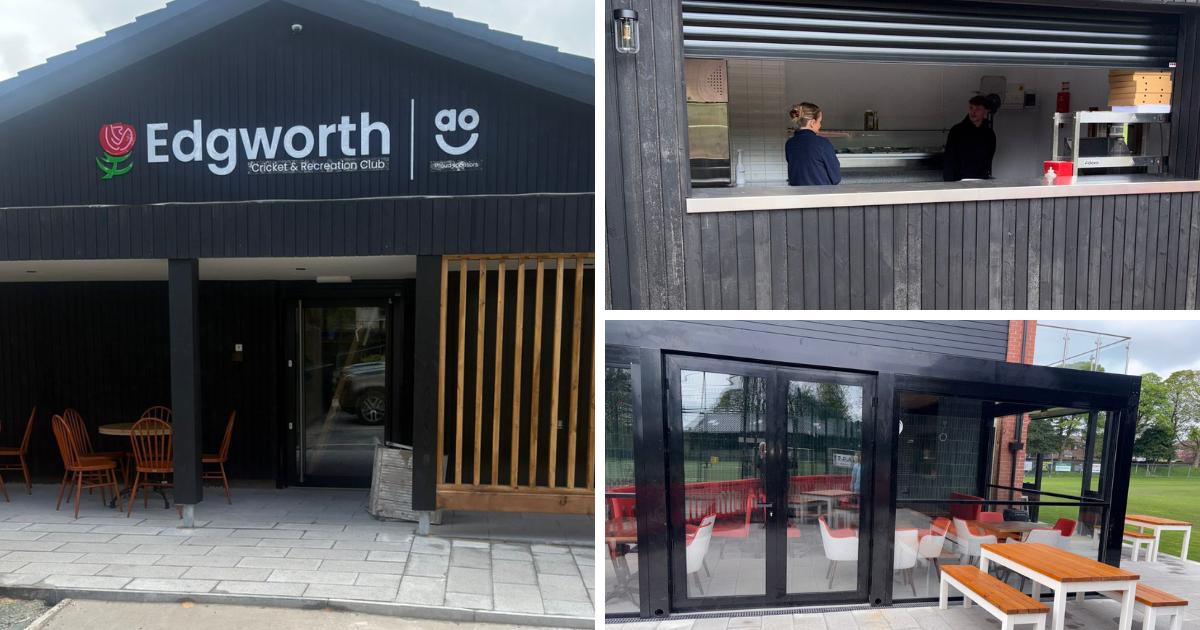
The newly revamped ground in Edgworth officially opened last weekend in time for the new season.
The redevelopment at The Edgworth Cricket and Recreation Club included upgrades to the clubhouse, both on the inside and outside, with more work still planned on the site.
The project was funded through the Jolly Foundation, set up by AO founder John Roberts and his wife Sally, and follows months of building work at the ground.
(Image: John Marriott)
Club members and people involved in the project attended a soft launch on Friday before the venue opened to the public over the weekend.
Advertisement
Dave Enright, chairman of the cricket club, said: “We’ve refurbished the clubhouse, and we’re actually halfway through the development itself because we’re building some indoor nets.
“It’s been tastefully designed with a cricketing theme. It’s fantastic with the support of the Jolly Foundation.
“I think if you’ve mentioned the sport over the last few years, you’d know there’s been fantastic investments in the community.”
(Image: John Marriott)
The work also included improvements to the playing surface ahead of the new cricket season.
Advertisement
Dave said the club had extended the square to allow more matches to be played and carried out drainage work after collapsed drains were discovered underneath the ground.
He said the investment was aimed at improving facilities for younger players and supporting the long-term future of the club.
John Marriott, chairman of The Barlow Institute, said: “It was busy all day, in and out.
(Image: John Marriott)
“Everybody uses it, a lot of people in The Barlow are members of the cricket club. We all work together, and it benefits everybody, it’s all mixing in with all what we supply.
Advertisement
“It keeps getting busier as the year goes on, and the matches there will have much bigger crowds coming.”
The cricket ground forms part of the wider Barlow site alongside the institute and bowling club, which host activities and events throughout the year.
(Image: John Marriott)
John also said he hoped the increased interest in the site would help attract more people to the neighbouring bowling club.
He said: “I don’t want to forget the bowling club, they need more members.
Advertisement
“Bowling clubs are not what they were, this is a good friendly club and that needs promoting as well.”
















































You must be logged in to post a comment Login