Connect with us
DAPA Banner
DAPA Coin
DAPA
COIN PAYMENT ASSET
PRIVACY · BLOCKDAG · HOMOMORPHIC ENCRYPTION · RUST
ElGamal Encrypted MINE DAPA
🚫 GENESIS SOLD OUT
DAPAPAY COMING

NewsBeat

My dad’s from Oxford and I grew up there. But here’s why (unlike my England-supporting brother) I’ll be cheering for Argentina tonight, says VANESSA BELL

Published

on

When Lionel Messi and the rest of the Argentine team line up to sing their national anthem tonight, I will be singing my heart out alongside them, writes Vanessa Bell

It’s billed as one of the biggest grudge matches ever witnessed in international football. And for good reason. 

The Falklands War, the Hand of God, Beckham vs Diego Simeone (remember the 1998 World Cup when Becks reacted with fury after being fouled by the Argentine, kicking out at the player who feigned collapse, earning the England midfielder a red card and widespread vilification back home).

While England and Argentina have disagreed for decades over the right and wrongs of the political and sporting divides between the two countries, this is a match that will divide my family.

For when Lionel Messi, ‘Dibu’ Martinez, Julián Alvarez and the rest of the Argentine team line up to sing their national anthem tonight, I will be singing my heart out alongside them and their 45million countrymen from a bar in Buenos Aires.

Advertisement

Meanwhile, Matthew, 43, my younger brother by three years, will be belting out ‘football’s coming home…’ and cheering on every one of Jude Bellingham’s penetrating runs and Harry Kane’s decisive headers.

So whose loyalty is the truest? Both of us were born in England and raised on the same diet of baked beans, Marmite and rhubarb crumble and custard. 

My father, a doctor and Olympic fencer from Oxford, and my mother, a teacher and aspiring actress from Buenos Aires, met in Paris in the late 1970s.

My first few years were spent living in cosmopolitan Montparnasse in Paris, where my father worked for The American Hospital. 

Advertisement

We moved to the sleepy English village of Dinton in Buckinghamshire in 1985. I was five, and even now remember the distinct feeling of being out of place and craving acceptance from my peers.

When Lionel Messi and the rest of the Argentine team line up to sing their national anthem tonight, I will be singing my heart out alongside them, writes Vanessa Bell

It was during the 1986 World Cup that I took stock of my Argentine heritage for the first time. Watching my homesick mother rooting for her country’s team, match-after-nail-biting match, made a huge impression on me.

Advertisement

Together we lived the drama of that fateful encounter against England in the quarter-finals, with Maradona´s controversial goal quickly followed by his Goal of the Century, a piece of individual genius that dumped England out of the tournament.

My mother was elated when Argentina won the cup. In pretty Dinton, as English as it could be with its 12th-century church and village green, she was moved to tears by Maradona’s iconic pose as he hoisted the trophy high above his head.

I was captivated. It marked the beginning of my unwavering support for Argentina.

Our mother spoke to us Spanish, in a porteño (from Buenos Aires) accent, sang traditional nursery rhymes, dished up family recipes and acclimatised us to Argentine passion. 

Advertisement

It was imperative that we spoke Spanish since her relatives didn´t speak English. Language was her way of connecting us. 

We´d count down the days till we went to visit her family in the Argentine capital, usually over the Christmas holidays, happily leaving behind the grim English winter, and showing off our exotic tans to our school friends on our return.

My brother was born in 1982, the year Argentinian troops occupied the Falkland Islands. 

My mother recalls a frosty reception crossing the English border during and in the immediate aftermath of the war. I remember my parents discussing the conflict at home, abhorring Margaret Thatcher’s decision to torpedo the ARA General Belgrano.

Advertisement

For Argentina today, the Falklands War is far from over. 

Their claim for sovereignty of the islands persists, and the Malvinas, as they’re known there, are everywhere – the islands’ outline emblazoned on T-shirts, on road-signs, tattooed on chests and plastered on the side of buses with the accompanying slogan ´Las Malvinas son Argentinas´ (Las Malvinas are Argentine).

For many Argentinians, England and Thatcher stand for everything that is anti-Argentine and unpatriotic, yet it often feels more political than a tangible dislike for English people.

Indeed there has always been a great appreciation and love of British culture and customs. 

Advertisement

Many send their kids to bilingual English schools, fixate over bands such as The Beatles and Oasis, and have a particular obsession with the Rolling Stones. 

My brother and I moved to London, and while he found his feet and flourished, for me it felt hostile and frantic, and that I was trapped on a hamster wheel.

I’d long toyed with the idea of moving to Argentina and, on the eve of my 30th birthday – 16 years ago – I bit the bullet and left. 

I was drawn to the warmth and openness of Buenos Aires. Here, people work to live and never need an excuse to socialise. In Argentina, the sobremesa (after dinner conversation) is a religion, and spending Sunday lunch with friends and family is sacred.

Advertisement

Soon after arriving, I applied for my Argentine citizenship and began teaching English. I became a freelance writer for international media and set up a successful concierge service called Creme de la Creme, creating curated tours and itineraries of Buenos Aires for discerning tourists.

rawn to the warmth and openness of Buenos Aires. Here, people work to live and never need an excuse to socialise. In Argentina, the sobremesa (after dinner conversation) is a religion, and spending Sunday lunch with friends and family is sacred

Drawn to the warmth and openness of Buenos Aires, Vanessa moved there 16 years ago

When Argentine beat Switzerland 3-1 on Sunday, and knowing they would be facing England in the semi-final, the Argentinian coach Lionel Scaloni immediately insisted: ‘It’s a football match. Let’s not read too much into it.’

Yet for countless Argentinians, it is so much more than that. For many, it’s an open wound that won´t heal, a cross to bear. It’s even seen as a way of honouring the veterans who fought in that war.

Advertisement

Meetings and social engagements have been postponed for later in the week. Schools and offices will close early. 

The atmosphere in Buenos Aires is expectant, the tension palpable. Children at the park frantically swap football cards in the hope of scoring Messi. Regulars at the local pizzeria earnestly discuss tactics, while blue and white flags festoon the streets, shop windows and car windshields.  

People here are highly superstitious and many have their rituals (called cábalas), which they truly believe can influence results.

Sitting in a specific spot on the sofa, wearing the same clothes, popping out at half time to buy cigarettes. Even Visa Argentina´s World Cup advertising campaign shows midfielder Rodrigo de Paul reminding people about their acts of good luck.

Advertisement

Nowadays, my motives for supporting Argentina are tied up with my feelings of gratitude towards my adoptive country. 

Over 16 years, I´ve been able to forge a career and prosper, follow my dreams and build a family with my Argentine partner.

So tonight I’ll be clutching my lucky Messi sticker and sitting at the same table at the same neighbourhood bar as I have done for all of Argentina’s matches. I’m not taking any chances.

As for our bilingual four-year-old son, Messi and the Argentine squad have captured his heart.

Advertisement

I am expecting some friendly banter between my brother over text – and will naturally raise a glass to England if they emerge the victor. But for the sake of my loyalty to Argentina, I can´t cheer your heroes on. Luckily, we have plenty of our own.

Source link

Continue Reading
Click to comment

You must be logged in to post a comment Login

Leave a Reply

NewsBeat

York- Tang Hall Beck St Nicks biodiversity works approved

Published

on

York- Tang Hall Beck St Nicks biodiversity works approved

Plans to reprofile the watercourse of Tang Hall Beck, in Heworth Holme between Burnholme Drive and Tang Hall Lane, have been approved by York Council.

Applicants St Nicks stated the works would enable the establishment of diverse vegetation suitable for animals including invertebrates, amphibians, birds and mammals while providing the public with new access opportunities.

But seven objections were lodged claiming the works could increase the risk of flooding along the beck and elsewhere.

Council planning officers stated they and the Environment Agency found there would be no increased risk of flooding due to the works which would improve biodiversity.

Advertisement

RECOMMENDED READING:


Environmental charity St Nicks’ plans, which were lodged in 2024, include the removal of wood and steel bank protection using a 14-tonne digger.

Protection is set to be removed when water levels are low, with St Nicks staff monitoring the works.

The banks of the beck are set to be reprofiled with the grading changed.

Advertisement

More bends will be created in the watercourse and the beck’s capacity would also be increased.

St Nicks is planning to work with the York Consortium of Drainage Boards (YCDB) and York St John University to put wood debris and brash berms in the stream.

Coarse substrate will also be placed in selected locations in the bed of the beck.

Riparian plants, those which naturally grow along the banks of rivers and streams, are also set to be seeded by St Nicks staff and volunteers.

Advertisement

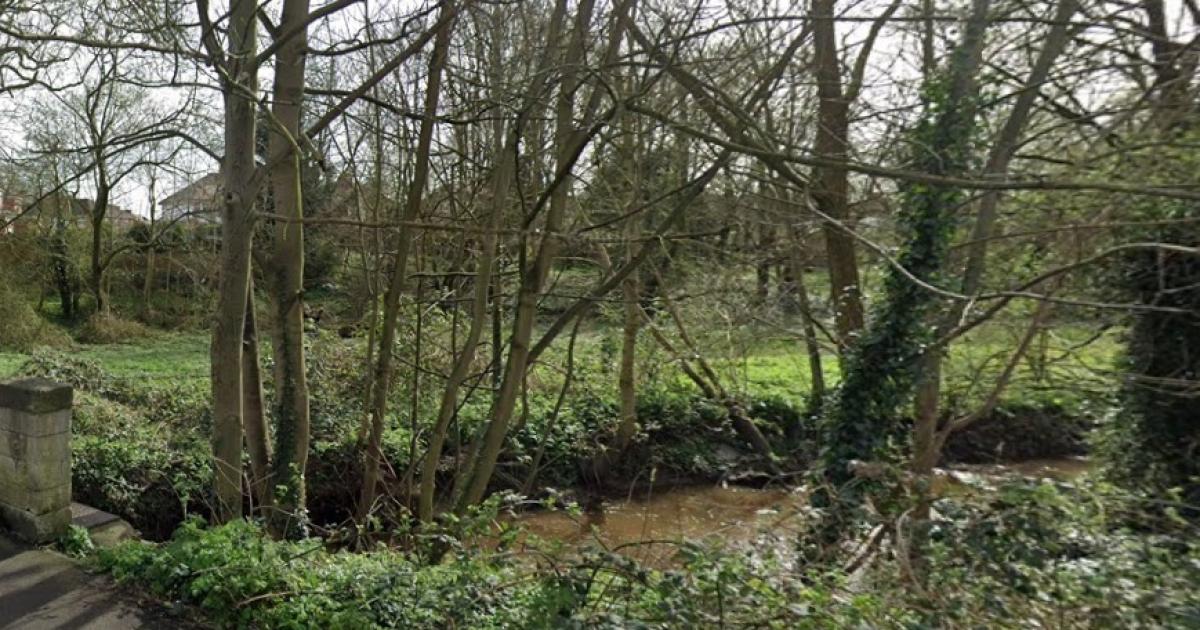
The entrance to Heworth Holme, home to Tang Hall Beck, in Bad Bargain Lane, York (Image: Google Street View)

Plans stated weather and beck levels are set to be monitored throughout the works which would be postponed if conditions become unsafe.

But objectors to the plans, including Osbaldwick and Derwent’s Restore UK councillor Mark Warters, said previous works on the beck in 2017 had raised concerns about flooding locally.

They pointed to flooding in the nearby Osbaldwick Beck in January 2025 which resulted in it bursting its banks in Hull Road Park.

Tang Hall Beck is in a Flood Zone Three which is deemed the most at risk.

Advertisement

Council planning officers stated the intention of the scheme was to improve water quality and biodiversity which was consistent with its local policies.

Officers stated: “The application has been supported by a site-specific flood risk assessment.

“The works include measures to increase capacity of the watercourse, by reprofiling the banks, in addition to altering the profile of the watercourse.

“Overall the assessment concludes there would be no loss of capacity and no increased flood risk, either locally or elsewhere.”

Advertisement

Source link

Continue Reading

NewsBeat

Man torched cars in series of arson attacks across Cambridgeshire

Published

on

Cambridgeshire Live

The man set numerous cars alight across Cambridgeshire

A man torched several cars across Fenland and destroyed victims’ possessions. Rolandas Fedorenko, 25, set fire to a Nissan Juke in Furrowfields car park, Chatteris, in the early hours of April 1, 2025.

Advertisement

He lit a toilet roll and plastic and put it under the bumper, leaving the vehicle to burn out and also damaging a nearby van and fence. Later in the year, he began starting fires again, according to Cambridgeshire Police.

On November 1, in a car park in Palmers Place, Wisbech, he set fire to a cap and put it under the wheel arch of a Mini Cooper. This damaged the car and a nearby van.

On November 25, behind Market Place, in Wisbech, he set fire to a sock and put it under the wheel arch of another Mini Cooper.

Detective Sergeant Leeza McCormick said: “The victims of these fires had valuable possessions destroyed and were left without their normal means of transport. It is also fortunate the fires did not spread to any nearby buildings and put people at risk.”

Advertisement

The force has confirmed the fire did not spread in the second attack and the damage was minor. He was arrested a few hours after the offence behind Market Place.

Fedorenko, of Waterlees Road, Wisbech, admitted the six counts of arson and was jailed for 14 months at Cambridge Crown Court on Friday, July 10.

Source link

Advertisement
Continue Reading

NewsBeat

England vs Argentina – World Cup semi-final LIVE: Moment of truth for Thomas Tuchel’s side as Three Lions look to end Lionel Messi’s World Cup dream in hostile clash

Published

on

England vs Argentina - World Cup semi-final LIVE: Moment of truth for Thomas Tuchel's side as Three Lions look to end Lionel Messi's World Cup dream in hostile clash

Advertisement

Follow Daily Mail Sport’s live coverage of the latest updates as England take on old rivals Argentina in a bid to book a spot in the World Cup final for the first time since 1966.

Advertisement

Source link

Advertisement
Continue Reading

NewsBeat

Man arrested over social media post threatening to shoot Nigel Farage

Published

on

Catherine Turnbull is smiling at the camera. She is wearing a pale blue t-shirt and dark framed glasses. Catherine has short light brown hair. She has some bushes behind her with are slightly out of focus.

A man has been arrested over an alleged threat to shoot Reform UK leader Nigel Farage made in a social media post.

The arrest relates to a post made on X which was reported to police on 8 May, a day after the local and mayoral elections.

The Met Police said a man in his 20s was arrested in south London on Tuesday this week on suspicion of sending threatening communications to a Member of Parliament.

He has been bailed pending further inquiries.

Advertisement

The arrest came six days after Reform spokesperson Ann Widdecombe was killed at her Devon home. Counter terror police are investigating the death.

The Parliamentary Liaison and Investigation Team informed Farage of the arrest on Wednesday.

Farage said: “This is the first time the police have ever proactively acted on a social media post, and I hope they are looking at the other three or four hundred similar posts from this year alone.”

The arrest was first reported in the Daily Telegraph newspaper,, external which said the social media post warned Farage: “I am going to shoot you in the head if you win”.

Advertisement

Police told Farage it could take several weeks to examine digital devices they had seized.

Earlier on Wednesday Reform UK’s home affairs spokesperson said if the party was in government it would provide “round-the-clock protection” for all MPs.

Announcing the proposed policy at a press conference, Zia Yusuf also said Farage “lives his life under the ever-present threat of mortal danger” and those who “question his need for security should stop”.

Source link

Advertisement
Continue Reading

NewsBeat

Wales breaking news plus weather and traffic updates (Wednesday, July 15)

Published

on

Wales Online

The people behind an award-winning Cardiff café said it will have to close at the end of next month after the church where it is based asked them to leave.

Maasi’s, a Pakistani café selling traditional family-recipe meals, has been based at St Luke’s Hall in Canton since it opened in 2021. However, the family-run business said it has now been asked to vacate the hall and claims the church “are not willing to engage further” despite their “best efforts”.

A petition set up to try to get the church to reconsider their decision to “evict” Maasi’s had received over 650 signatures. The church confirmed Maasi’s had been asked to leave the hall by August 31, adding that the café has since outgrown the “charitable” agreement initially agreed when the project first started. Full story here.

Advertisement

Source link

Continue Reading

NewsBeat

Help us test coffee machines and give your verdict

Published

on

Help us test coffee machines and give your verdict

If you can’t start your day without a fresh cup of coffee, or you carefully select which beans or grounds you use, we want your help.

At Telegraph Recommended, we test hundreds of products each year, and we rely on our community members to help verify our experts’ findings. Anyone can join the community, but Telegraph subscribers also have the opportunity to test products for us at home and join our testing days.

We currently have an exciting opportunity to test the latest coffee machines on the market. Ben Moss, a barista trainer, and Silvana Franco, Telegraph food writer and Recommended tester, will be hosting a testing day in Shoreditch, London on July 28 and 29.

Advertisement

Selected subscribers will be invited to Origin Coffee’s Shoreditch training centre and cafe, where Ben and Silvana will share what to consider when buying coffee beans and how to make the best coffee at home – as well as answer your questions.

Source link

Continue Reading

NewsBeat

New BBC boss pushes for new universal ‘household levy’ to replace licence fee – which all would have to play whether they watch channels or not

Published

on

New director-general Matt Brittin, 57, has been in the job just six weeks but is already potentially bringing in a major shake-up with a mandatory household levy to replace the 'busted flush' optional TV licence model

The new BBC boss has said he is pushing for a mandatory ‘household levy’ to replace the optional TV licence, as numbers paying the fee have plummeted.

Director-general Matt Brittin said he was ‘open to all options’ to fund the broadcasting giant after it was revealed that licence fee income has dropped by more than £1billion in real terms in the last decade.

Half a million people stopped paying their licence in the 2025/26 financial year, so the broadcaster is looking to recoup its finances, which Mr Brittin said are in ‘an unpredictable but downward spiral.’

‘We need universality, we need sufficiency,’ he added.

Advertisement

A household levy would mean everyone pays a mandatory fee to the BBC regardless of whether people watch or listen to its programmes. The charge could be levied alongside utility bills, proponents of the idea say.

Germany funds its equivalent of the BBC in this way – households pay a compulsory €18.36 per month (£15.70) to fund the nation’s TV and radio.

Mr Brittin, 57, argued for a possible introduction of a household levy at the House of Lords Communications and Digital Committee as part of the BBC charter review.

He said: ‘It’s very, very hard to run an organisation that can attract the best creative, journalistic and technical people if you’re going to have to cut costs every year’.

Advertisement

New director-general Matt Brittin, 57, has been in the job just six weeks but is already potentially bringing in a major shake-up with a mandatory household levy to replace the ‘busted flush’ optional TV licence model

It comes as it was revealed that licence fee income has dropped by more than £1billion in real terms in the last decade. Half a million licencees stopped paying the fee in the last financial year and the price has now been bumped up to £180 a year

It comes as it was revealed that licence fee income has dropped by more than £1billion in real terms in the last decade. Half a million licencees stopped paying the fee in the last financial year and the price has now been bumped up to £180 a year

Culture Secretary Lisa Nandy said 'no decisions' had been made on introducing the levy earlier this month

Culture Secretary Lisa Nandy said ‘no decisions’ had been made on introducing the levy earlier this month

Advertisement

The new director-general has previously described the licence fee model as a ‘busted flush’ which is ‘no longer fit for purpose’. 

The licence fee price has gone up to £180 a year from April 1, up from £174.50.

But the hike in price appears not to be sufficient, as Mr Brittin floated the idea of introducing a ‘streaming levy’, which would expand the scope of the licence fee to include anyone who watches content on Netflix, YouTube, TikTok or other types of internet video streaming.

But he did tell MPs last week about the ‘appealing’ possibility of concessions for young people and low-income households in paying the fee.

Advertisement

However, Culture Secretary Lisa Nandy said ‘no decisions’ had been made on introducing the levy earlier this month.

She told BBC Radio 4’s Today programme: ‘I think there are different ways of doing a household levy. But every time I have a discussion about the BBC licence fee, if an option is put to me, people assume if I don’t rule it out that the Government has some kind of secret plot to introduce it.

‘I can tell you, hand on heart, that we have made no decisions about this.

‘We’re talking to the BBC about it. We’re also about to go out, as part of the charter process, and consult with the public. We’re determined to get this right.

Advertisement

‘What is not negotiable is that we will fund the BBC properly. That is a commitment that we have made.

‘What is up for negotiation is how we do that, because it has to be sustainable and it has to command public support.’

Mr Brittin stressed the need for the BBC to reinvent itself.

The former Google executive told the committee: ‘I think the onus on us is to reinvent the BBC for the world we’re now in, and that requires us to focus on the audience value, the public service value, of the BBC, what does that mean today?

Advertisement

‘The economic impact, and I think last week we published a sort of an updated report that shows the scale of that impact.

‘And in this moment of geopolitical and international disruption by the scale of technology and innovation to come, the sovereignty impact, British values and how they’re portrayed in the world and how the world sees us.

‘And I think on that third one, we also published last week a report that shows that the BBC is reaching over half a billion people around the world, something we should be really proud of.

‘So the opportunity, I think, for us is to reinterpret the BBC’s mission with today’s technology and today’s setting – that will imply quite a lot of change, and as we discussed last week, also a rethink of the funding mechanism, if we’re to have a BBC that has sufficient universality, scale and sustainability.’

Advertisement

If a household levy was introduced and 100 per cent of households are made to pay – as currently around only 80 per cent pay for a licence – the price could be reduced for users and it would save the BBC hundreds of millions in collection and enforcement costs.

Though critics have raised questions over being made to pay for a service they might not actually be using. 

As it stands, the annual report said the BBC’s financial outlook ‘deteriorated’ in the second half of 2025.

Mr Brittin replaced former BBC head Tim Davie, who resigned in November 2025 over the controversial BBC Panorama edit of Donald Trump’s speech on January 6, 2021, which made it sound like he encouraged the attack on the US Capitol.

Advertisement

Source link

Continue Reading

NewsBeat

‘Beautiful’ County Durham hotel in village which won first World Cup

Published

on

'Beautiful' County Durham hotel in village which won first World Cup

Sitting on the village green in West Auckland, The Manor House Hotel is one of County Durham’s oldest buildings – a 12th-century former hunting lodge that has been welcoming guests for centuries.

West Auckland is a former mining village in County Durham that carries one of English football’s most extraordinary facts: it is the home of the first World Cup.

When England face Argentina in Wednesday’s semi-final, local people will do so knowing that a team of colliery workers from this small village won the original world championship 117 years ago.

Even today, signs around West Auckland proclaim it the “home of the first World Cup”.

Advertisement

At the centre of it all, overlooking the village green, sits The Manor House Hotel — a 12th-century building with original wooden beams, sloping roofs and creaky floorboards that has watched the village’s story unfold for centuries.

The statue on West Auckland village green

The hotel

The Manor House dates to the early medieval period and is listed by Historic England as the former principal residence of the Eden family, who occupied it from the 16th century before moving to Windlestone.

It is reputed to have served as a hunting lodge for Henry VIII.

The building retains much of its original character — guests who arrive expecting a standard hotel are consistently surprised by the age and atmosphere of the place.

Advertisement

Today, it operates as a 31-room hotel with a spa, indoor swimming pool, restaurant, brasserie and dog-friendly courtyard rooms.

Room rates start at £80 for a cosy double, rising to £130 for a deluxe room.

The restaurant serves traditional and locally sourced British cuisine, while the adjacent brasserie offers the same kitchen in a more relaxed setting.

The restaurant is open Monday to Friday from 7am to 9.30am for breakfast, 11.30am to 5pm for lunch and 6pm to 8.30pm for dinner.

Advertisement

On Saturdays lunch service runs from 11.30am to 5pm and dinner from 6pm to 8.30pm.

On Sundays dinner is served from 6pm to 8.30pm.

What visitors say

The Manor House holds a Travellers’ Choice award from TripAdvisor, placing it in the top ten per cent of properties on the platform.

Advertisement

A reviewer from Bishop Auckland who visited in February 2026 wrote: “Received a warm welcome in the lounge.

“Had Sunday lunch in the brasserie as we had our dog with us.

“He was given a welcome bowl of fresh water and a fuss from the waitress.

“Starters (soup and pate) were perfect… The service was really friendly and kind.”

Advertisement

A visitor from Canterbury who stayed in August 2025 wrote: “I must say, in our experience, the food was excellent.

“We chose the chicken and the beef.

“Both were delicious, well cooked, perfect-sized portions and delivered with a smile and very friendly service…

“The sticky toffee pudding was delicious.

Advertisement

“Excellent value, good service and very tasty food.”

A reviewer from Canada, who visited for afternoon tea in June 2024, described it as “such a beautiful place with a nice menu option.

“Staff were very friendly and welcoming. Facility was very clean with lots of seating options.

“Highly recommended.”

The first World Cup

West Auckland Town AFC were an amateur colliery team when they were selected — some accounts suggest by mistake, as the Football Association had declined the invitation — to represent England in the Sir Thomas Lipton Trophy in Turin in 1909.

They won the tournament, beating FC Winterthur of Switzerland 2-0 in the final.

Advertisement

They returned two years later to defend the trophy and won it again, this time beating Juventus in the final — keeping the trophy for good as the rules of the competition specified.

Getting there

The Manor House Hotel is on The Green, West Auckland, DL14 9HW.

It is approximately three miles from Bishop Auckland town centre and around 13 miles south-west of Durham City.

By road, take the A688 from Bishop Auckland towards Barnard Castle and turn off at West Auckland.

Advertisement

Free off-street parking is available on site.

The nearest train station is Bishop Auckland, which has regular services from Darlington, itself on the main East Coast Main Line.

Taxis are available from Bishop Auckland station to West Auckland.

The X1 bus service connects Bishop Auckland with West Auckland village.

Advertisement

Source link

Continue Reading

NewsBeat

Camden High Street could be made permanently car-free after new consultation

Published

on

Camden High Street could be made permanently car-free after new consultation

Councillor James Slater, cabinet member for planning and a sustainable Camden, said: “Camden Town is an important shopping and transport hub for local residents as well and being an internationally recognised destination that draws people in from across London, the rest of the UK, and the world.

Source link

Continue Reading

NewsBeat

by an expert in football coaching

Published

on

by an expert in football coaching

As a football coach, Thomas Tuchel has done things differently to many of his colleagues.

For example, it is extremely rare for lower league footballers to become the head coaches of top sides. But that’s what Tuchel did, playing as a defender in Germany’s bottom tiers, before going on to manage elite teams like Paris Saint-Germain and Chelsea.

It’s also unusual for youth team coaches to become coaches to senior sides, or to make the leap from coaching relatively small clubs to some of the bigger clubs in the world. Tuchel, England’s head coach, has made these switches too, and in doing so has demonstrated two particular managerial skills: awareness and adaptability.

The two qualities complement each other. A strong sense of awareness is required to effectively assess situations and players, and then recognise how and when a team might need to change its approach. It requires the ability to evolve and mature.

Advertisement

And a distinct aspiration for Tuchel is not to remain the same coach that he has been in the past. He has said: “[You] need to constantly adapt your style to what is needed, and to your group, and to change yourself, and to develop and to grow.”

He is also known for his perfectionism and dedication. And according to a former colleague, his total commitment to a cause can galvanise a group if it is harnessed correctly.

The colleague said: “Extraordinarily good coaches like him are very intense, that’s part of the deal. They live and breathe football, and that attitude transmits to the team.

“They want to do everything well, and that creates a strong feel for the collective. Everybody wants to give their all, every day, every game. That’s why teams immediately get better once he starts working with them.”

Advertisement

Tuchel retains very high expectations of performance. He does not mask his displeasure on the sidelines, and is not afraid to tell players when they are not playing well. But his methods involve much more than direct criticism.

For instance, after visiting a professor at Mainz University in Germany, Tuchel became an advocate of a technique known as “differential learning”, which emphasises variation rather than repetition of movement in football training. It also involves presenting players with a wide variety of obstacles that demand constant adjustment, while embracing the fact that players and opposing teams are all different.

So Tuchel began to tailor practice sessions to continually challenge and stretch his players. There would be extreme variation in pitch sizes for example, or particularly difficult drills.

Tuchel said of this more creative style of training: “That influenced me a lot, because it changed my role as a coach completely.

Advertisement

“With this [approach] there is no right and wrong. I’m just responsible for the ideas and principles of how we play. Within those they are free to find their own solutions.”

The overall idea for Tuchel is that training ends up being so testing and so demanding, that competitive matches seem comparatively easier to cope with.

Shape-shifter, trophy winner?

Tactical versatility has also been a defining feature of Tuchel’s method. He is well known for his in-game changes, where a side might switch formation six times during a match. He wanted his players to learn to constantly adapt to new roles, shapes and systems.

Advertisement

However, Tuchel has recently explained that if you switch formation too often, players can be conditioned to always look to the coach for a solution. Instead they should be concentrating on how they flexibly apply fundamental defensive and attacking principles, regardless of changes in tactics.

So again, Tuuchel is open to change. He wants to empower his team to make adjustments, without always looking to him for the answers.

To him, awareness and adaptability are crucial qualities required for effective management. This means having the confidence to follow a well-formulated course of action, but also the modesty to appreciate the limits of your capabilities and remain receptive to alternative solutions.

As Tuchel has commented: “I can do it my way, but I never want to say, ‘I know how it’s done.‘

Advertisement

“I know nothing. I just try my things, and every day is new. There are lots of people out there in business who say they know how it’s done. But there’s not just one way to do things. You have to adapt.”

Source link

Advertisement
Continue Reading

Trending

Copyright © 2025