Connect with us

NewsBeat

Naomi Osaka calls on US Open influencers to ‘read up on tennis etiquette’ after umpire was forced to tell off spectators during her first match

Published

on

Naomi Osaka called for fans new to tennis to learn the sport's etiquette after her match was disrupted by influencers

Naomi Osaka called upon influencers travelling to the US Open to ‘read up’ on the sport’s rules for spectators after her first-round match was disrupted by a rowdy group in one of Arthur Ashe Stadium’s luxury suites

The four-time Grand Slam champion had been preparing to serve when the chair umpire told off the guests for appearing to stage an impromptu photoshoot, complete with portable lights. 

‘Guys, please, in the suite behind me, please thank you guys, please take your seat,’ the chair umpire announced to the stadium, as the broadcast camera panned to a group milling freely within their prime seats, taking pictures and talking.

While Osaka was only half-focused on the specifics of the incident while immersed in defeating her opponent Anastasia Zakharova, discussing what happened on the tournament’s showcourt two days later, she suggested that more could be done to ensure that players were not disturbed during matchplay.   

Advertisement

‘I think obviously, if you come to a sporting event, you have to respect the sport,’ she said after her defeat of Katerina Siniakova, which took place on the same court. ‘And I feel like it’s common courtesy to read up on the sport, especially the etiquette.

‘I feel like it could be a good thing for people to make the sport of tennis popular to their specific audience, but I think it has to be managed a lot better, especially in the situation like first-round match.

Naomi Osaka called for fans new to tennis to learn the sport’s etiquette after her match was disrupted by influencers

Advertisement

‘Overall I think there is huge positives,’ she added, on the topic of influencers more generally. ‘You want people to continue to grow the sport. I just think it has to be in a way that everyone knows the rules and the etiquette.’ 

Etiquette largely dictates that fans should save conversation and movement for changeovers or set breaks, when the players are at the chairs. But in 2024, the US Open switched to a policy of ‘free fan movement’, which allows spectators to move during points regardless of on-court action. 

Of the incident itself, Osaka said that she had been more bothered by the noise inside the stadium during both her matches – a constant chatter which complements the endless movement – than the flash lights themselves. 

‘I was going to say today the umpire, she told everyone to be quiet more than I’ve ever heard an umpire tell a crowd to be quiet,’ she continued. 

Advertisement

‘I do think in my first match, I wasn’t really paying attention. I tell people I normally just focus on the match and the court, but there was a moment where there was, like, people shouting, and you could hear it quite clearly. I think it bothered my opponent, too.

‘Maybe that’s what you were talking about, but I’ve heard some people say, like, the lights or whatever. I don’t really see the lights, because obviously, when you are serving, you’re looking at the sun or you’re looking at the night lights. It was more the noise.’ 

Daily Mail Sport contacted the tournament for comment on after Osaka’s press conference, with US Open head of communications Brendan McIntyre sharing the following statement: ‘The USTA is always striving to grow tennis in this country and bring new audiences into the sport. The US Open is our greatest opportunity to do so, and we welcome newcomers to our event. 

‘We want all of our fans and guests to have an incredible time when they attend, but we also need to ensure they do not interfere with the action and competition on the court. We are continually looking for ways to ensure fans in the stands know what is permitted and what is prohibited. 

Advertisement

‘As a result, we have increased signage on the grounds and in stadium, and messaged ticket and suite holders to remind everyone to refrain from any activity that could disrupt the game, including noise levels, flash photography and ring lights. The chair umpire also has the ability to address the crowd if and when necessary.’ 

READ MORE – How influencers are killing the US Open and turning it into a ‘zoo’: Angry top stars hit out at ‘disrespectful’ and noisy content creators disrupting matches for pictures

Source link

Advertisement
Continue Reading
Click to comment

You must be logged in to post a comment Login

Leave a Reply

NewsBeat

Europe’s ‘quietest island’ has 27C weather in September and unspoilt golden beaches

Published

on

Wales Online

The summer holidays may be over, but there’s still plenty to explore, including a stunning Greek island that goes blissfully uncrowded with 27C weather in September

With the UK basking in cooler temperatures, thoughts are turning to European destinations not far from home that still offer a sun-soaked escape in September. And there’s a Greek island that’s a hidden gem with highs of 27C alongside its unspoilt scenes.

Advertisement

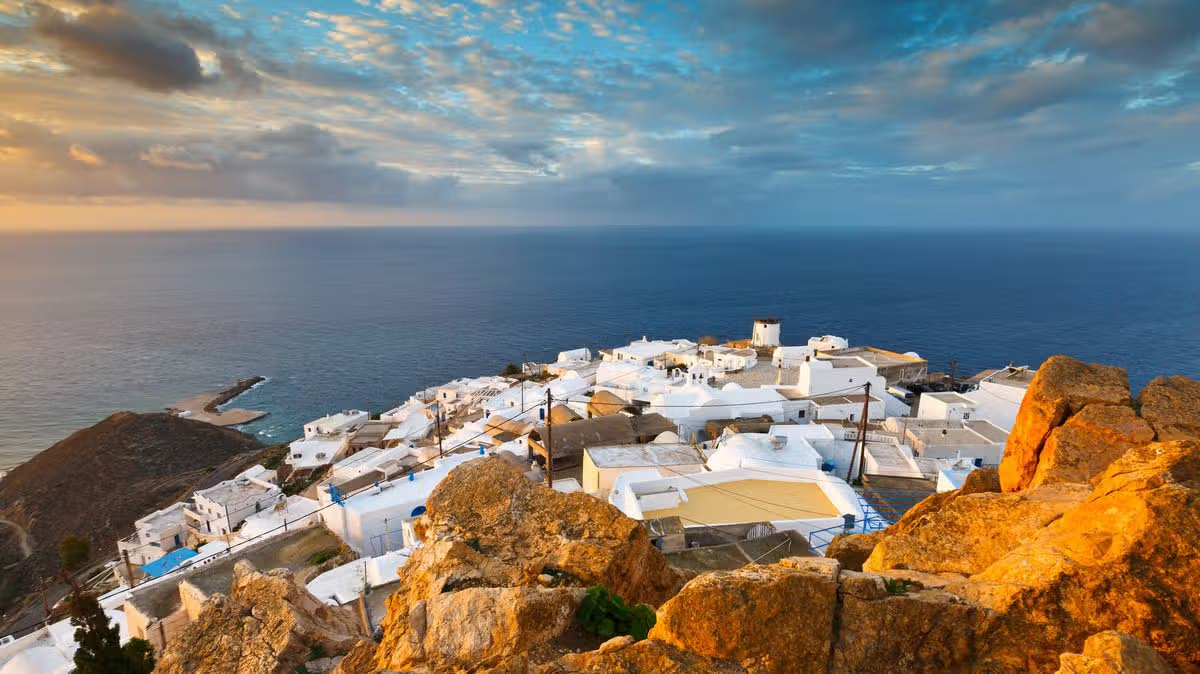
Just east of the packed crowds in Santorini is the beautiful Greek island of Anafi, offering a quieter escape. There are pristine beaches, traditional Greek buildings, and a charming village with family-run restaurants, all set against dramatic landscapes and mesmerising ocean views, for a little slice of paradise.

It’s the ideal destination for those looking for a peaceful retreat this month, and has even been named as ‘Europe’s quietest island’, thanks to its untouched landscapes. While there’s no airport or main roads, it’s within easy reach by ferry and is delightfully walkable, from one side to the other.

One of its main appeals is the stretches of golden sand beaches and crystal-clear turquoise waters, with around 19 lining the shore, including Kleisidi, all without the sight of packed-out parasols. From some of its beaches, Anafi’s Kalamos Rock, which towers 460 meters at the eastern tip of the island, can be spotted, adding to its striking scenes.

Advertisement

The island’s main village, Chora, open all year round, boasts traditional whitewashed houses and narrow cobbled lanes, set against a peaceful, blissfully car-free ambience. The pretty hilltop village offers uninterrupted picture-postcard views, alongside a collection of small, traditional Greek restaurants and cafés, many of which are said to be family-run, for an authentic experience.

While Anafi is home to only around 300 residents, there are some hotels and rentals available for those looking to soak up the serene setting of this untouched island. And a visit in September might just be the perfect time, with facilities remaining open and temperatures reaching up to 27C.

Offering an insight into what the island is like in September, after a holidaymaker asked for some advice on Reddit, one traveller shared: “Anafi is a lovely island and even in summer doesn’t get overwhelmingly busy. Yes, some businesses may be closing down, but you’ll still find tavernas open and maybe even the bus service still running. There are currently boats scheduled from Santorini to Anafi all through October (though not daily). If you can find accommodation availability, then you’re sorted. The beaches are still there, and hopefully the weather.”

Advertisement

Another added: “Tourist stuff across Greece typically closes down mid to end October. The season is considerably longer now than it used to be. You’ll be fine.”

The local tourism board, Discover Greece, also offered a glimpse into the uncrowded oasis. They noted: “It is said that the island of Anafi in the Cyclades emerged from the angry waves at the command of the god Apollo and was a refuge for the sea-weary Argonauts. Today, Anafi, the child of music, is a haven for all visitors seeking intimacy with nature at its most unspoilt. Even the most seasoned traveller will find one-of-a-kind relaxation and reflection in plentiful supply on this gem in the Cyclades.”

Do you have a travel story to share? Email webtravel@reachplc.com

Source link

Advertisement
Continue Reading

NewsBeat

Be careful what you post on social media, MP warns, after tweet apology

Published

on

Be careful what you post on social media, MP warns, after tweet apology

Asked what advice she might give to young people using social media, Ms Edwards said: “I guess it’s important to live life in the present, and saying things on social media – obviously, as I’ve experienced, if you don’t think it through properly – can be interpreted in a different way than you intended, and can really store up problems.

Source link

Continue Reading

NewsBeat

‘The Falklands are our future’: Javier Milei vows to impose sanctions on off-shore drilling as he restates Argentina’s claim to the islands

Published

on

'The Falklands are our future': Javier Milei vows to impose sanctions on off-shore drilling as he restates Argentina's claim to the islands

Advertisement

Argentina’s firebrand President has vowed to impose sanctions on off-shore drilling off the Falkland Islands. 

In an uncharacteristically muted televised address on Wednesday night, Javier Milei reiterated the country’s claim on the Islands and said he would introduce sanctions on any oil companies working in the area ‘under the British occupation’.

The President insisted: ‘The Falklands are Argentinean. Historically and legally. There can be no argument. They are part of the Argentine territory. 

‘The islanders on their usurped territory do not have a legitimate right to self-determination and any argument on any such self-determination is invalid.’ 

Advertisement

Milei said the Sea Lion oilfield, which is owned by an Israeli and a British firm and where production is expected to begin in 2028, was a ‘clear and present danger’.

‘If we do not act swiftly in a few months, they will have the material capacity to access the oil that lies underneath our sea. Something that has never happened before,’ he said.

The President insisted the Falklands is ‘facing a new fear’ and claimed the UK has ‘failed to heed’ the call of the United Nations to not undertake ‘unilateral actions’ on the territory. 

Advertisement

In a televised address on Thursday night, Argentina’s President Javier Milei reiterated the country’s claim on the Falkland Islands

Milei said: ‘For more than 50 years, the United Nations have been calling Argentina and the United Kingdom not to undertake unilateral actions on the territory of the islands until the dispute is resolved, including the use of its national resources

‘However, the United Kingdom has systematically failed to heed that call.’

And announcing plans for a naval base in Tierre del Fuego in the south of Argentina, he said Mr Trump and the US was ‘assessing their historical position in regard to the Falklands’.

Advertisement

‘That is not empty words as they understand that Argentina is a reliable partner and a valuable ally for decades to come,’ he said

‘Our role and relevance as a country in the world has changed dramatically.

‘The Falklands are our future – we need to recover these islands which are nationally relevant. There is no other path forward.’

He was speaking after Donald Trump hinted he would not back Britain if Argentina invaded the Islands again. 

Advertisement

The US president on Thursday jibed that the UK ‘isn’t doing well’ and had failed to ‘help’ with the military campaign against Iran.

The US has traditionally taken a neutral position regarding the Falklands, which Argentina calls the Malvinas.

But Mr Trump recently suggested that the stance is being reviewed, in what many regard as a pressure tactic to get more UK military cooperation. 

Asked in an interview with GB News whether he would ‘come to the aid’ of the UK in the event of another invasion, Mr Trump said he clearly remembered the 1982 conflict.

Advertisement

‘I was there when they had the first war, that was a long time ago… you comported yourself very well, took it back very shortly. But it is a long way away,’ he said.

‘So, your country’s not doing well. Don’t forget you get a big percentage of your oil from the Strait of Hormuz and you weren’t there to help me.

‘Your country was not there to help me.’

The US has historically taken a neutral position on the Falklands, but Trump (pictured in 2025 with Milei) has hinted that could change

The US has historically taken a neutral position on the Falklands, but Trump (pictured in 2025 with Milei) has hinted that could change

Advertisement

Sarah Rogers, a senior official in the US State Department, wrote on X that ‘exciting things are happening in the Western Hemisphere’ alongside a photo of her and Mr Milei ahead of his speech. 

Downing Street said earlier this week that the UK’s position on the Falklands was ‘long-standing and unwavering’.

‘Sovereignty rests with the UK, and the islanders’ right to self-determination is paramount.

‘The UK’s position is clear. The islanders have repeatedly expressed their wish to remain a British overseas territory.’

Advertisement

– READ MORE: ‘You weren’t there to help me’: Trump hints he wouldn’t back Britain if Argentina invaded the Falklands – as he jibes that the country ‘isn’t doing well’

Advertisement

Source link

Advertisement
Continue Reading

NewsBeat

Family’s anguish at death of North Yorkshire teenager

Published

on

Family's anguish at death of North Yorkshire teenager

Bailey Chadwick’s mum Dayle Knight described how they made pilgrimages to the shrine set up in his memory by the roadside on the B6265 where he was fatally injured.

“We go there to listen to him, to feel close to him, to keep his memory alive,” she said, at times almost breaking down in tears. “He was simply trying to walk home late at night.”

She was giving the family personal statement at the hearing when Joseph Henry Stott was sentenced for drink driving.

Advertisement

Harrogate Magistrates’ Court heard the estate agent drove over Bailey as he lay on the road and did not stop.


RECOMMENDED READING


Bailey’s mum said the 19-year-old loved music, especially Oasis, and would play his guitar and sing for hours.

“My home was full of music, now it is silent. It is unbearable,” she said.

Advertisement

She would never forget the moment her life was “shattered forever” when she learnt of his death on the B6265 on July 20, 2025.

“I am not the same person I was before Bailey was killed. He deserved to live, he deserved to grow up.”

His friends were heartbroken, she said, constantly talking about his kindness and how he made everyone feel included.

Bailey had a strong work ethic, had plans to travel and had all his life before him, she said.

Advertisement

Source link

Continue Reading

NewsBeat

Red Arrows scheduled to fly over York region today

Published

on

Red Arrows scheduled to fly over York region today

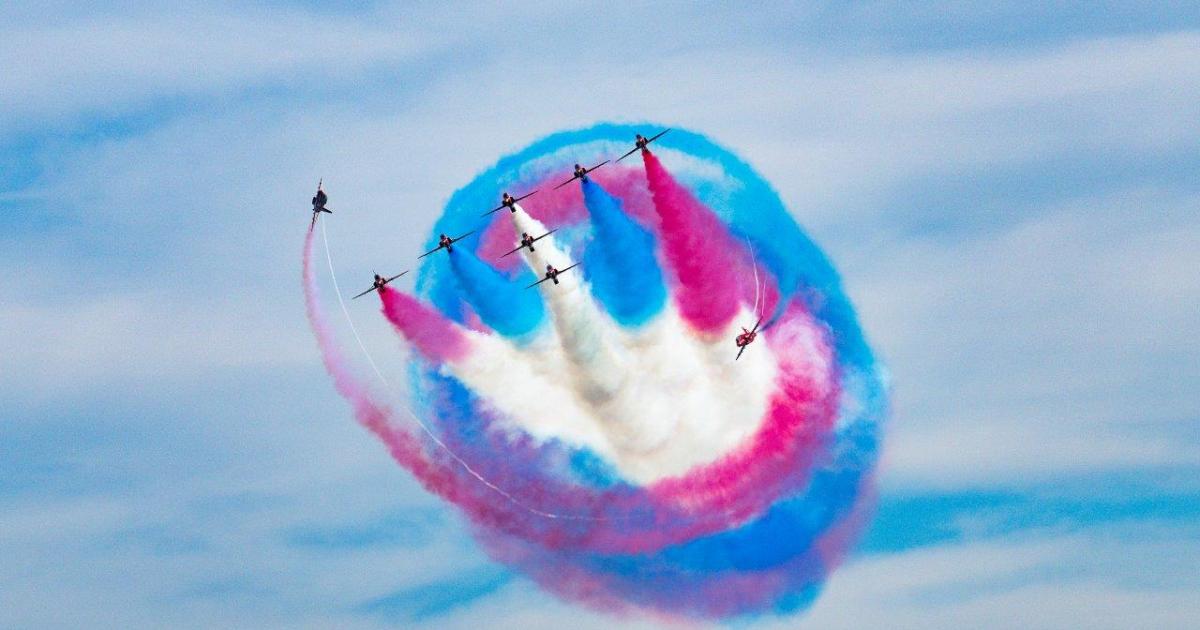
The RAF aerobatic team is scheduled for a formation transit through the Vale of York between 5.26pm and 6.30pm according to unofficial sources.

Met Office reports say the area is seeing broken cloud and sunny spells this afternoon with cloud expected to increase.

The flat Vale of York has long been used by the Red Arrows, who often transit this corridor on the way to or from northern engagements.

Advertisement

According to the European Airshows website, the unit’s next scheduled show is The International Ayr Show: Festival of Flight at the Ayr Seafront in South Ayrshire tomorrow and Saturday.


Send us your pictures

If you get any shots of the Red Arrows flying over our region today, send them to us at newsdesk@thepress.co.uk, or DM us via our Facebook page The Press in York.


Advertisement

Source link

Continue Reading

NewsBeat

How a little stress may help our cells protect themselves

Published

on

How a little stress may help our cells protect themselves

The cells of our body are frequently exposed to hazards that can cause them to be damaged, malfunction or die. Yet they have defence systems that can sometimes be strengthened by small doses of stress, a phenomenon known as hormesis. Scientists are investigating whether food compounds and medicines can harness these protective processes to benefit health.

The hazards of modern life are often discussed in terms of their potential to damage major organs. For example, air pollution can damage the lungs and contribute to asthma and other breathing disorders.

Although effects at the organ level are important, this view can miss the challenges faced by the individual cells that make up the lungs and every other part of the body. Our cells are frequently exposed to stresses including ultraviolet radiation from the sun, alcohol, pollutants and the byproducts of some medicines.

These hazards can damage DNA, which carries a cell’s genetic instructions, as well as proteins and the fatty membranes surrounding cells. If the damage becomes severe enough, it can cause cells to malfunction or die. Yet, despite this seemingly constant barrage of potential stresses, most of our cells adapt, survive and function effectively throughout our lives.

Advertisement

Stress responses

Our cells possess specialised stress responses that detect particular hazards and alter the activity of genes involved in protecting the cell. One of the best-studied examples is NRF2, a protein that acts as a molecular switch for hundreds of protective genes. When activated, these genes help cells limit damage and remove potentially harmful chemicals.

Other stress responses increase the ability of cells to remove and recycle damaged proteins, repair DNA or slow down cell division to conserve energy and prevent damage from spreading. Severe or prolonged stress can still overwhelm these defences and cause lasting harm.

One of the most remarkable features of these responses is their ability, under certain circumstances, to convert a small challenge into a useful adaptation that can leave cells better able to cope with a later challenge. This dose-dependent pattern, in which a limited exposure to a stressor stimulates a protective response while a stronger exposure causes harm, is known as hormesis.

Exercise provides a familiar comparison. Placing muscles under temporary strain, followed by recovery and repeated exertion, stimulates adaptations that make them stronger and better able to cope with future demands. Some cellular stress responses may work according to a similar principle, leaving cells better prepared to face a repeat challenge.

Advertisement

Researchers have proposed that these responses may also help us cope with some of the chemical compounds produced by plants to deter predators and pests. When we eat plants as fruits and vegetables, some of their compounds may create a mild challenge that activates protective responses in our cells.

Broccoli and other cruciferous vegetables provide one example. When they are chopped or chewed, they produce sulforaphane, a compound that can activate NRF2 in laboratory-grown cells and animals.

Chopping or chewing broccoli produces sulforaphane, a compound that activates the cell-protection protein NRF2 in laboratory cells and animals.
Natalia Deriabina/Shutterstock

The evidence that consumption of broccoli or sulforaphane stimulates the NRF2 response in people remains uncertain. A systematic review of 18 human studies found mixed results, and many of the studies had methodological limitations that could have distorted their findings. One barrier has been a lack of ability to measure effects on stress responses by taking a blood sample. Researchers are trying to identify such biomarkers to allow them to investigate the human health benefits of sulforaphane and other compounds in more detail.

Stress response targeting medicines

Fruits and vegetables supply fibre, vitamins, minerals and many other compounds. Their health effects arise through numerous interacting processes, with adaptive cellular stress responses potentially contributing alongside these other mechanisms.

Advertisement

Scientists have spent decades studying the intricate ways in which cells sense and adapt to different stresses. Learning how these protective responses are switched on could be useful beyond nutrition. Researchers are now using this knowledge to develop medicines that activate cellular defence systems as treatments for different diseases.

One example is omaveloxolone, which activates NRF2. In April 2025, it became the first medicine approved in the UK specifically for Friedreich’s ataxia, a rare inherited condition that progressively damages the nervous system and causes problems with movement. In a 48-week clinical trial, people receiving the medicine performed better on an assessment of physical impairment than those receiving a placebo.

As with all medicines, there are potential risks. Activating a cellular stress response too strongly or for too long may have harmful effects, so researchers must establish which stress responses can be targeted safely and which diseases could benefit.

Hormesis does not mean that deliberate exposure to pollution, ultraviolet radiation or other hazards are beneficial. Neither does it show that supplements marketed as NRF2 activators are beneficial in healthy people. The dose, duration and type of stress all influence how cells respond.

Advertisement

The cells of our body are constantly exposed to potential sources of damage. When a challenge is limited, cell defence systems may adapt, leaving them better able to cope with later stress. This process, hormesis, may help explain some of the health benefits of regular exercise and a diet rich in fruits and vegetables.

As scientists learn more about the process of hormesis and how cells defend themselves, carefully targeted medicines may offer new ways to treat specific diseases.

Source link

Advertisement
Continue Reading

NewsBeat

British Army ‘told to stop non-essential training exercises’ in cost-cutting move

Published

on

Daily Mirror

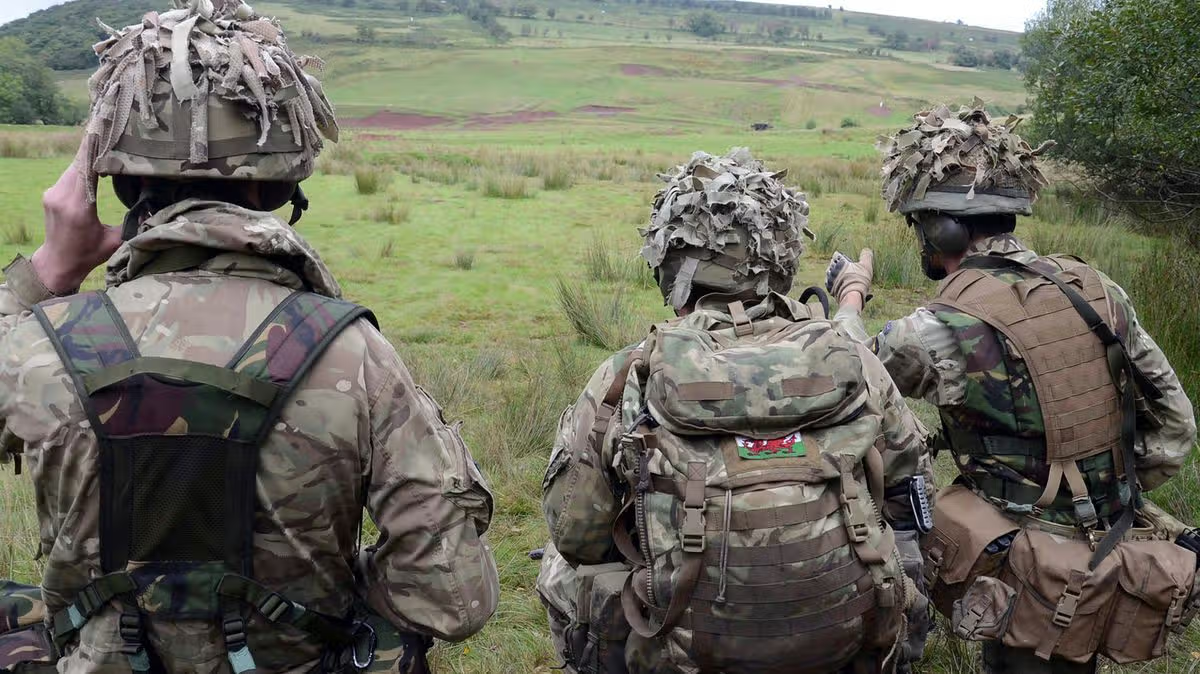
Troops preparing to be deployed will continue to train as normal, according to reports, but cancelled exercises involve those using Apache helicopters

The British Army has been told to halt non-essential training exercises in an effort to save money.

Advertisement

Troops preparing to be deployed or on deployments, those who are on standby or in a quick-reaction role will continue to train as normal, The Times and the BBC reported.

But collective training exercises for UK-based units are being suspended for most of this year amid budget pressures.

Now-cancelled exercises included ones involving tanks and Apache helicopters, according to the reports.

The Army did not deny the cuts and said a training regime that has been informed by lessons from the Ukraine conflict – such as on drone warfare and modernisation – is being prioritised.

Advertisement

Andy Burnham is under pressure to hike defence spending to 3 percent of national income by 2030, rising to 3.5 percent by 2035.

The Prime Minister was this week urged by the chairman of the Commons Defence Select Committee, Labour MP Tan Singh Dhesi, to “urgently commit to charting a pathway to reaching 3 percent of GDP spend on defence by 2030 which, as his Chancellor rightly noted, is critical to keeping our country safe”.

Plans set out in the Defence Investment Plan (Dip) will see defence spending rise to 2.7 percent of GDP by 2027/28, but there are no firm details on how further increases will be achieved beyond that date.

Advertisement

The Treasury has consistently said the Government will set out plans for reaching both 3 percent and 3.5 percent at the spending review, due to take place next year.

An Army spokesperson said: “Our training continues and we are prioritising activity that contributes most directly to readiness, deployability and operational effectiveness. We are also investing £2 billion to transform training for the British Army over the next 15 years.”

Source link

Advertisement
Continue Reading

NewsBeat

Argentine leader says oil firms working off Falklands face sanctions

Published

on

A cut of of Anthony Zurcher wearing a suit and tie in front of a red, black, grey and blue graphic background featuring the US Capitol Building

Argentina’s President Javier Milei has said he will sanction oil companies working off the Falklands as he reiterated the country’s claim on the British overseas territory in the south-west Atlantic Ocean.

In a national address, Milei said the “winds of change” favoured Argentina’s claim to the Falklands, pointing to Washington’s readiness to review its neutrality on the dispute.

Milei said the Sea Lion oilfield, where a British and an Israeli firm are due to begin exploration work, was a “clear and present danger”.

More than 40 years after the armed conflict over the territory, the sovereignty of the archipelago remains hotly disputed between Britain and Argentina.

Advertisement

BBC News is seeking comment from the UK government on Milei’s statement. It reiterated this week that Falkland islanders “are British with a right to determine their own future”.

The Sea Lion oilfield contains an estimated 1.7 billion barrels of oil, and production is expected to begin in 2028.

“If we do not act swiftly in a few months, they will have the material capacity to access the oil that lies underneath our sea – something that has never happened before,” Milei said.

It is not yet clear how or to what extent the sanctions will be imposed or tightened. In Argentina, a current law already allows for restrictions of activities of oil companies participating in projects considered unauthorised on the islands.

Advertisement

In a 2013 referendum, residents of the islands voted overwhelmingly to remain a British overseas territory – with 99.8% voting in favour and just three voting against.

When asked in an interview with GB News earlier on Thursday if the US would “come to the UK’s aid” during a potential territorial dispute, Trump replied that Britain had “not been there to help me” with his country’s war with Iran.

Trump’s latest remarks come after he previously said the US could revise its neutral position on the islands’ sovereignty if the UK failed to increase defence spending.

Milei also announced plans for a naval base in Tierra del Fuego in the south of Argentina, saying Trump and the US were “assessing their historical position in regard to the Falklands”, which Argentina refers to as Las Malvinas.

Advertisement

“That is not empty words as they understand that Argentina is a reliable partner and a valuable ally for decades to come,” he said.

“There are winds of change in the world that are favourable to our claim,” Milei added.

“I want to be quite clear with everybody. The Falklands are Argentinean. Historically and legally,” Milei said.

Hours before Milei’s speech, Sarah Rogers, a senior official in the US state department, posted a photo of herself with Milei alongside the caption: “Exciting things are happening in the Western Hemisphere.”

Advertisement

Argentine forces landed on the Falklands to stake a territorial claim in 1982, sparking a 74-day war over the territory as a British military task force ejected them.

The conflict led to the deaths of 255 British military personnel, three islanders and 649 Argentine military personnel.

Source link

Advertisement
Continue Reading

NewsBeat

Pair would admit assaulting Stanley shop assistant, but deny robbery

Published

on

Pair would admit assaulting Stanley shop assistant, but deny robbery

Peter Laws, 43, and 28-year-old Corey Carr are accused of robbing the assistant of cigarette lighters at Isha’s Mini Store, in South Moor, Stanley, on Monday July 13.

Lawyers for both told a hearing at Durham Crown Court in August that the case, “is capable of being resolved”, as both defendants would plead to assault, but deny the intention when entering the premises was to rob the assistant.

When the case came back before the court on Wednesday (September 2), Tony Davis, for Laws, re-iterated that a guilty plea would be forthcoming to a charge of assault, but his client would plead not guilty to robbery.

Alleged robbery took place at Isha’s Mini Store, in South Moor, Stanley, on July 13 (Image: Google)

“The allegation is all captured on CCTV and there was an assault and cigarette lighters were taken, but the defendants maintain that was not the purpose of the enterprise, at all.

Advertisement

“It was a fight which broke out among the men.”

Kelly Clarke, prosecuting, said she has been unable to speak to the reviewing Crown lawyer and so pleas to robbery would be all that would be accepted at the moment.

Read next … more stories from The Northern Echo, by clicking here

Judge Richard Clews agreed to adjourn the hearing for a week to enable the Crown to be consulted and to give its views over the acceptability of pleas to assault.

Advertisement

Both Carr, of Rydal Avenue, Stanley, and Laws, of no fixed abode, were remanded to remain in custody pending the next hearing, on September 9.

Carr appeared from Holme House Prison, Stockton, and Laws, from HMP Durham, via video link at the hearing.

Source link

Advertisement
Continue Reading

NewsBeat

Ayrshire welcomes UK’s ‘Forrest Gump’ to help Britain reconnect with local food and communities

Published

on

Daily Record

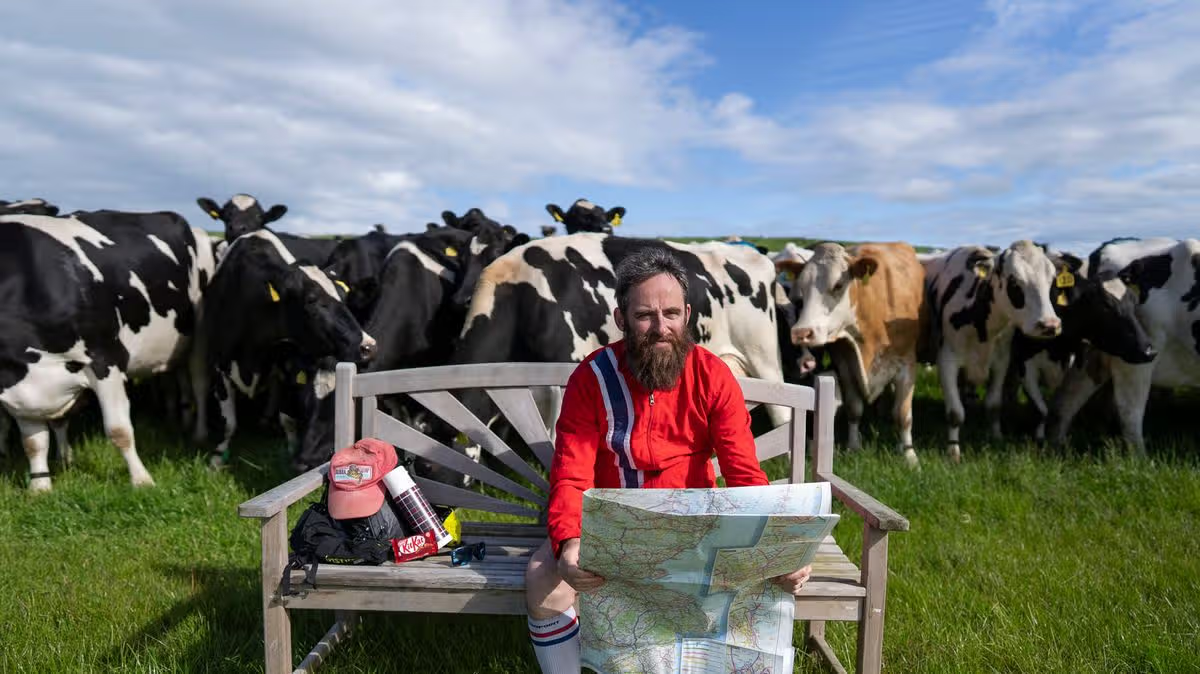
Rob Pope was in the region as he takes on a new challenge, The Taste Trail, this September.

Ayrshire this week welcomed the UK’s ‘real-life ‘Forrest Gump.’

Advertisement

For British ultra-marathon runner, Rob Pope, was in the region as he takes on a new challenge, The Taste Trail, this September.

The challenge has been set by Nestlé, and will see Rob travel more than 500 miles on foot to follow the story of food from farm to fork in Britain today.

It comes as new research, commissioned by Nestlé UK & Ireland, highlights how removed many of those in Scotland feel from the people and places behind their food.

Around a third (35%) say they feel more disconnected from their food than ever, with the most common reasons including buying most food from supermarkets and rarely thinking about where it comes from (53%), and food being available all year round, making people think less about seasonality or origin (38%).

Advertisement

On 2nd September, his challenge started in Ayrshire.

Rob passed through and stopped by Nestlé’s Girvan factory before continuing on his journey to Brighton on his coast-to-coast challenge.

The whole route sees Rob follow the farm, factory and community story as he passes through York, the Midlands and Crawley before ending up on the south coast.

Along the way, Rob will discover how familiar ingredients are grown, produced and made, while encouraging people to slow down and reconnect with what they eat.

Rob Pope’s challenge forms part of Nestlé’s ‘Made by Britain’ campaign, which showcases Nestlé’s commitment to UK manufacturing, farming and local communities.
That commitment is rooted in more than 160 years of history in the UK, including where Rob’s journey begins in Ayrshire, where Nestlé’s Girvan site produces milk chocolate crumb, a key ingredient used in UK-made confectionery including KitKat, Aero and Quality Street.

The site is supplied with milk from farms through Nestlé’s Milk Plan and partnership with dairy cooperative, First Milk, and plays an important role in connecting dairy farming with the confectionery products made and enjoyed across Britain.

Advertisement

British endurance athlete, Rob Pope said: “As a runner, food was always fuel to me. And most people treat it the same way. We grab it, eat it and move on. We don’t always think about where it came from or who made it.

“Now I’m taking the long way back to it, slowing down to learn where my food is grown and produced right here in Britain.

“Today, I’m in Ayrshire to learn about how milk from British dairy farms is turned into milk chocolate crumb, a key ingredient in some of the UK’s favourite chocolate bars.

“Over 500 miles, coast to coast, my journey covers a dairy farm in Ayrshire, through chocolate city York, the distribution heartland in the Midlands, down to Brighton on the south coast, I will be properly reconnecting with where food comes from.

Advertisement

“I’ve spent my life trying to go faster. This time I’m doing the opposite – slowing right down to learn where my food is grown and produced right here in Britain.”

Dr Emma Keller, Head of Sustainability at Nestlé, said: “Most of us pick food up from a supermarket shelf without thinking too much about how it got there. But behind every product are the farmers, factory teams and local communities who make it possible. So much of the food we know and love are not just made in Britain but made by Britain.

“The Taste Trail is about following that farm to fork journey and meeting some of the people involved along the way. Rob is helping to shine a light on all the steps behind the food we eat, and just as importantly, how we make sure that any surplus food reaches those who need us most. We’re proud to be working with Felix, the UK’s largest food redistribution centre, to donate thousands of meals to those in need.”

Rob added: “I want to use my slowest trip yet to pay attention to where our food comes from.

Advertisement

“I’m excited to meet the people behind the ingredients which ends up in your morning coffee and your favourite chocolate bar.”

As part of the challenge, for every mile covered by Rob, Nestlé will donate more than 300 meal equivalents to Felix, the UK’s largest food redistribution charity.

An estimated total of more than 175,000 meals equivalents will be donated on completion of the challenge, helping more food reach people who need it most.

The public can donate too by visiting https://tinyurl.com/TheTasteTrail.

Advertisement

Rob’s journey will be shared in a series of mini-episodes, released throughout September on @nestleuki, following his visits to the farms, factories and communities that make up The Taste Trail.

Search ‘Nestlé The Taste Trail’ on YouTube to follow Rob’s journey.

Source link

Advertisement
Continue Reading

Trending

Copyright © 2025