

Connect with us
DAPA Banner

NewsBeat

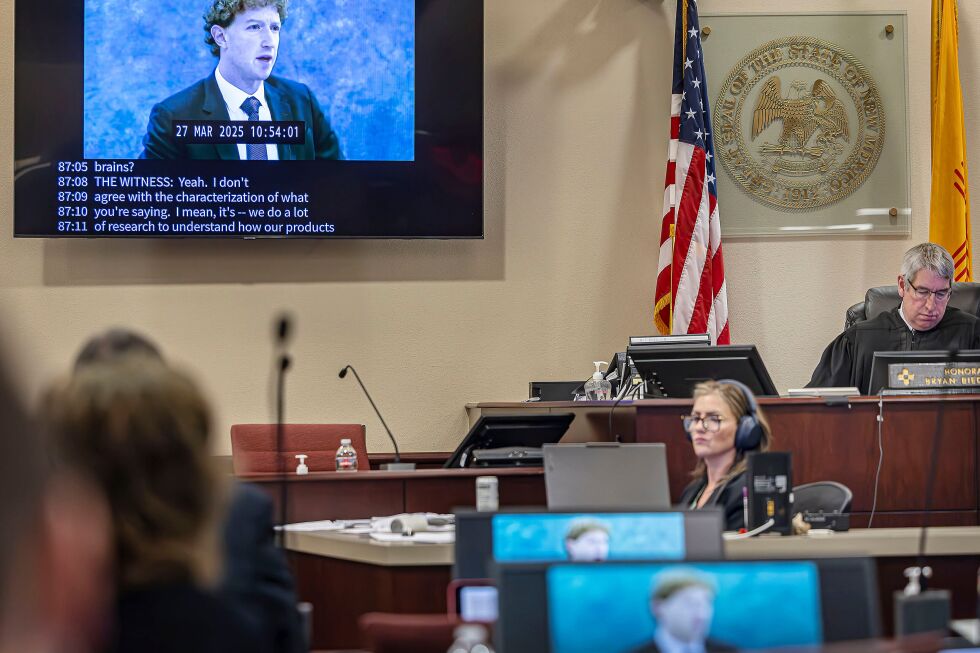
New Mexico trial nears end over children’s safety risks on Meta

Published

on

Landmark trial against Meta highlights mental health risks for children

SANTA FE, N.M. (AP) — A jury began deliberations Monday in a landmark trial in New Mexico where social media conglomerate Meta is accused of misleading its users about how safe its platforms are for children.

Meta’s attorneys dispute the claims and say the company provides built-in protections for teenagers and weeds out harmful content but that some potentially harmful gets past its safety nets for some users.

Jurors heard closing arguments after six weeks of testimony from scores of witnesses that included local teachers, psychiatric experts, state investigators, top Meta officials and whistleblowers who left the company.

The case in New Mexico state court is among the first to reach trial in a wave of litigation involving social media platforms and their impacts on children.

Advertisement

New Mexico prosecutors have accused Meta — which owns Instagram, Facebook and WhatsApp — of prioritizing profits over safety in violation of state consumer protection laws. They have raised concerns about the safety of complex algorithms, and a variety of messaging features and settings.

“It’s clear that young people are spending too much time on Meta’s products, they’ve lost control,” prosecution attorney Linda Singer told the jury in closing statements. “Meta knew that and it didn’t disclose it.”

Prosecutor says trial evidence shows Meta failed to enforce its minimum user age

Singer said testimony and evidence at trial showed Meta’s algorithms had been recommending sensational and harmful content to teenagers, while alleging that the company failed to truly enforce its minimum user age of 13.

“The safety issues that you’ve heard about in this case, weren’t mistakes. …. They were a product of a corporate philosophy that chose growth and engagement over children’s safety,” Singer said. “And young people in this state and around the country have borne the cost.”

Advertisement

Meta attorney Kevin Huff on Monday highlighted witness testimony about Meta’s investments in the safety on its platforms, describing automated features and roles dedicated to safety.

“Meta has built innovative, automated tools to protect people,” he said. “Meta has 40,000 people working to make its apps as safe as possible.”

But he added that Meta’s systems aren’t perfect: “No one can, with billions of pieces of content every day, even the best system, cannot catch all of it.”

He said the company’s enforcement of minimum age limits are hamstrung by U.S. government restrictions on collecting young children’s data.

Advertisement

Meta attorney insists the company has disclosed risks of its platforms

Huff told the jury that the company “disclosed to the world that its safeguards are not perfect, and that some bad content and bad actors get onto its service.”

“Common sense also says that parents and teens know that there is bad content on the internet, and on Facebook and Instagram specifically,” he added. But Huff noted the social media company has disclosed risks of its platforms in its user agreements, website, ads and on television.

“Wherever it could get its message out, Meta was disclosing risk to the public,” Huff said.

Singer urged jurors to impose a civil penalty that could exceed $2 billion against Meta, based on the maximum $5,000 penalty per violation on two counts of consumer protection violations, and an estimated 208,700 monthly users of Meta platforms under the age of 18 in New Mexico. The violations include “unconscionable” trade practices.

Advertisement

“Over the course of a decade Meta has failed over and over again to act honestly and transparently, failed to act to protect young people in this state,” Singer said. “It is up to you to finish this job.”

Huff called the state’s request for penalties “a shocking number” and said prosecutors failed to provide any examples of teenagers who chose to use Instagram because of a false understanding of its risks.

“Even though teens are aware of the risks, they continue to use Instagram because they enjoy Instagram,” Huff said.

A second phase of the trial will follow with a judge deciding whether Meta created a public nuisance and should be on the hook financially to fund programs to address alleged harms to children.

Advertisement

Company’s attorneys say the state has cherry-picked evidence to support its case

Attorney General Raúl Torrez filed suit in 2023, accusing Meta of creating a marketplace and “breeding ground” for predators who target children for sexual exploitation and failing to disclose what it knew about those harmful effects. State investigators created social media accounts posing as children to document online sexual solicitations and the response from Meta.

Meta attorneys accuse prosecutors of cherry-picking evidence and conducting a shoddy investigation.

Meta executives emphasized at trial that the company continuously improves safety and addresses compulsive social media use without infringing on free speech or censoring users.

But the prosecution on Monday said that public assurances about safety disclosures from Meta executives including founder Mark Zuckerberg and Instagram head Adam Mosseri often didn’t square with internal studies and communications at the company.

Advertisement

“It was included in Meta’s internal research — again this was research that didn’t get disclosed by Meta — one-in-three teens experienced problematic use,” Singer said. “They knew these kids were struggling with problematic use — again, addiction.”

The jury is assembled from residents of Santa Fe County, including the politically progressive state capital city.

Limits on liability for tech companies

Tech companies have been protected from liability for material posted on their social media platforms under Section 230, a 30-year-old provision of the U.S. Communications Decency Act, as well as a First Amendment shield.

Prosecutors say New Mexico is not seeking to hold Meta accountable for content on its platforms, but rather its role in pushing out that content through complex algorithms that proliferate material that can be addictive and harmful to children.

Advertisement

In California, a jury already is sequestered in deliberations on whether Meta and YouTube should be liable for harms caused to children using their platforms. The bellwether case could impact how thousands of similar lawsuits against social media companies are likely to play out.

Source link

Advertisement
Continue Reading
Click to comment

You must be logged in to post a comment Login

Leave a Reply

NewsBeat

The major energy bill change hitting UK households from April 1

Published

on

Manchester Evening News

Households across the country will see changes to the costs of their energy bills from April onwards

UK households are set to be hit with changes to their energy bills from next month. Energy regulator Ofgem confirmed that the energy price cap – which determines the maximum amount people can be charged per unit of gas and electricity on a standard tariff – will be reduced by 6.7 per cent for the average household from April.

Advertisement

A typical household will save £117 a year on their energy bills from April 1, 2026, saving around £10 each month. The price cap will fall to £1,641 a year for dual-fuel customers paying by Direct Debit, making bills 11 per cent, or £208, lower than for the same period in 2025.

The reduction comes after a difficult year for households. Between April and June 2025, the price cap rose to £1,849 a year following a six per cent increase of £111 that affected around 11 million customers on default tariffs.

Get MEN Premium now for just £1 HERE – or get involved in our WhatsApp group by clicking HERE. And don’t miss out on our brilliant selection of newsletters HERE.

The rise was driven by an 11 per cent jump in wholesale energy costs, adding £86 to the average bill. It marked the third consecutive quarterly increase, with bills soaring nine per cent higher than the previous year.

Advertisement

But while the new price cap will be “welcome relief” for many households, bills remain significantly higher than pre-crisis levels, says Shay Ramani from Free Price Compare, a UK-based comparison service.

“The £117 saving works out at just over £10 a month, which barely scratches the surface for the estimated six million households still in fuel poverty,” Mr Ramani said. “Families should use this window to review their energy usage, consider switching tariffs if better deals emerge, and ensure they’re claiming all available support.”

The April 2026 price drop is partly caused by changes to how environmental and social schemes are funded. The UK government announced this will be done by ending funding for the Energy Company Obligation scheme, as well as removing 75 per cent of costs for the Renewables Obligation scheme from people’s energy bills, saving customers an average of £150.

A further £38 reduction comes from falling global wholesale energy prices, according to Ofgem data.

Advertisement

Under the new cap, electricity will cost 24.67 pence per kilowatt hour for customers on standard variable tariffs paying by Direct Debit, with a daily standing charge of 57.21 pence. Gas will be charged at 5.74 pence per kilowatt hour, with a standing charge of 29.09 pence per day. These rates represent averages across England, Scotland and Wales, including five per cent VAT.

The reduction will be automatically applied to your bill from 1 April onwards. The exact amount each household saves will depend on how much energy is used and the type of tariff:

Standard variable tariff

For energy used after 1 April, the savings will be applied to your unit rate for gas and electricity. Your energy supplier will contact you to confirm the details of your new rates.

Advertisement

Fixed price tariff

Suppliers have confirmed that the savings will be passed on in full to customers on fixed price tariffs. This means if you are already on a fixed price tariff on 1 April, your tariff will be amended so that savings are applied to your unit rates going forward.

Your energy supplier will contact you to confirm your new rates. For anyone signing a new fixed price tariff after 1 April, we expect the savings to be taken into account.

Pre-payment meter

If you are on a smart pre-payment meter, your energy supplier will automatically apply the savings to any energy used from 1 April. If you are on a traditional pre-payment meter – such as those which use a key or card, you will benefit from the savings the first time you top up your key or card after 1 April.

Other types of tariffs

Some examples of these include:

Advertisement
  • Tracker tariffs, where unit costs for gas and electricity fluctuate daily to reflect live wholesale prices
  • Time-of-use tariffs, where the unit cost for electricity changes depending on the time of day, with cheaper rates offered during off-peak times like overnight

Where a tariff includes costs associated with either the Energy Company Obligation or Renewable Obligation schemes, the savings will be passed on from April.

How you receive the savings will depend on the specific tariff you are on. For example, the impact may vary across different times of day or pricing periods.

Your energy supplier will provide you with more information on how these changes will work.
Source link

Advertisement
Continue Reading

NewsBeat

Castlegate in York closed for essential water works

Published

on

Castlegate in York closed for essential water works

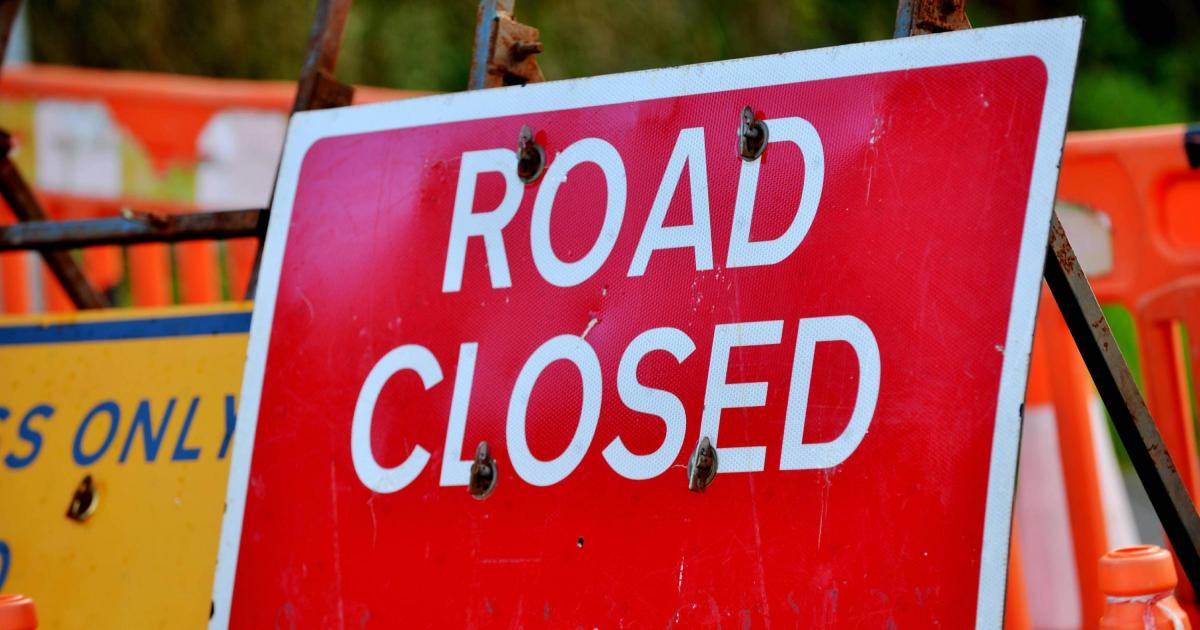
Castlegate, off Tower Street and Castle car park, closed at 8am on Monday morning (March 23) and will remain so until 5pm on Friday (March 27).


Recommended reading:

Road near major York car park set to close for gas works

Road near major York car park set to close for water supply works

Advertisement

It comes after City of York Council announced that water works were taking place along the road – two months after the road was closed and dug up for gas works.

Castlegate has been closed for essential works for five days (Image: Newsquest)

Castlegate is home to Fairfax House and St Mary’s Church, close to Castle Museum and JORVIK Viking Centre.

It is closed between its junction with Friargate and number 28 Castlegate.

Traffic signs are in place to designate this area but no diversion signs are in place, the council said.

Advertisement

Source link

Continue Reading

NewsBeat

Georgia public schools may do daily weapons checks

Published

on

Georgia public schools may do daily weapons checks

ATLANTA (AP) — Georgia could become the first state to require every student to be checked for weapons when arriving at a public school each day.

A bill is nearing passage that would require weapons detection systems in a further reaction to a 2024 school shooting that killed four.

“That rifle would have never reached our hallways,” said Daria Lezczynska, a junior at Apalachee High School in Winder, where the shooting took place. “Lives would have been saved. Families would not be grieving, Students like me would not be carrying this trauma.”

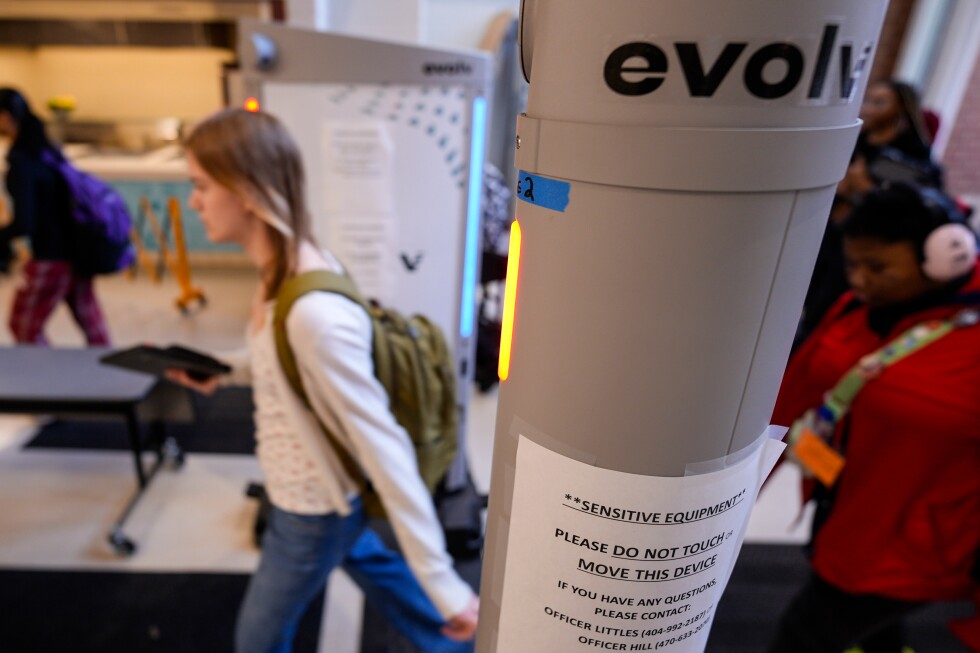
Some schools have long used metal detectors or required students to carry clear backpacks to cut down on weapons. But a new generation of technology marries computer analysis with cameras or the same electromagnetic fields as metal detectors to detect knives and guns. The systems have spread rapidly through schools, arenas, stadiums and hospitals.

Advertisement

“It’s very commonplace for me to walk through a weapons detection system when I enter into a courthouse,” said Chuck Efstration, the bill’s sponsor and Republican house majority leader who represents the Apalachee campus. “Georgia’s students and educators deserve similar security with weapons detection systems inside of every Georgia public school.”

There’s little rigorous research nationwide proving that weapons detectors prevent school shootings. In Georgia, there are questions about who will pay what can be $10,000 or more per system. School employees must staff checkpoints and search bags. And even supporters of the systems say searchers can become dulled by a multitude of false alarms and miss the few actual weapons. Some question whether weapons detectors are necessary in elementary schools, as Efstration’s bill mandates. And those who find Georgia’s gun laws too permissive say installing weapons detectors everywhere is a form of surrender, accepting that society will be awash in guns and violence.

A Senate committee on Monday passed an amended version of Efstration’s bill, meaning it needs final votes in the Senate and House in the closing days of Georgia’s 2026 legislative session before reaching Republican Gov. Brian Kemp’s desk for his signature or veto.

Few schools traditionally required weapons checks

It’s unclear how many schools nationwide use weapons detectors. A U.S. Department of Education survey found that in the 2021-2022 school year, 6.2% of all schools and 14.2% of high schools nationwide required random metal detector checks. Only 2.4% of all schools and 6.2% of high schools required daily metal detector checks. More schools required clear bookbags or banned bookbags than required daily metal detector checks. Checks were more likely to be required when a school was in a city, when the majority of students were nonwhite, and when large majorities of students were poor.

Advertisement

Atlanta’s school district spent more than $4 million to roll out new systems in 2021 in middle and high schools, replacing old-style metal detectors. District Police Chief Ronald Applin said officials wanted something that students could move through more quickly, saying traditional detectors were “too cumbersome.”

Applin said guns found at Atlanta schools fell from 32 the year before the new system to four so far this year.

The 1,700 students at Midtown High School typically hold their laptops in the air as they pass through detection gates, with a computer screen telling employees whether a bag needs a secondary search.

“It’s not real adversarial at the metal detector,” said School Resource Officer Meredith Littles. “A lot of people get worried about the dynamics of what that looks like. But it’s very non-intrusive.”

Advertisement

False alarms can dull vigilance

One key question is how sensitive to make the system, said Nikita Ermolaev, a research engineer at IPVM, which tests and researches security technology. Too sensitive, and alarms go off for everything. Not sensitive enough, and weapons slip through. And trying to maintain vigilance is a challenge.

“You have 100 alarms and the first 99 of them are false alarms on laptops or binders, right? You’re naturally going to assume that the 100th alarm is also going to be on something benign,” Ermolaev said. “And that’s how sometimes weapons such as guns or knives can go through the system.”

Then there’s the cost. Georgia gives each public school campus $50,000 a year for school safety, but many districts are already using that money to pay on-campus officers. House budget writers have proposed borrowing an additional $50 million for grants to districts.

“While we absolutely think weapons detection is imperative, it can only be made possible with appropriate funding,” said Gretchen Walton, an assistant superintendent in Cobb County, which with 103,000 students is Georgia’s second-largest school system.

Advertisement

Others, including some Democrats, see the focus on weapons detection as misplaced. They say Georgia should be looking to limit children’s access to guns.

“We have allowed guns and weapons of war to become more available than a pack of gum in this state, then act confused when people keep dying,” said Democratic state Rep. Bryce Berry, a public school teacher who voted against the bill in the House. “Let’s stop hiding behind procedure and politics and pretending that the threat our children face is some vague, mysterious force.”

Advertisement

Source link

Continue Reading

NewsBeat

‘I’m a divorce expert – here’s 8 surprising ways to tell if your marriage is in trouble’

Published

on

Daily Mirror

Jennie Sutton is an award-winning divorce coach and founder of Untying the Knot. Here’s how to spot the signs your marriage is struggling – and some unexpected ways to heal

When I got married I was 24, it was a traditional church ceremony, I was in love and hopeful and excited about a long, happy future together. However, like many couples, the reality was very different to what I had imagined. As the years passed, I doubted myself more and more. As a lifelong people-pleaser, I did what many women do: I adapted, I rationalised and I tried “harder”.

My self-worth quietly deteriorated, and I learned to numb the discomfort through drinking a glass or two more than usual, rather than question what I was experiencing. But one night, as I was wiping down the kitchen surfaces a quiet inner voice said, “If you’re staying for others, it’ll slowly erode your wellbeing”. That was the moment that the penny dropped. Love, I learned, is not always enough to sustain a marriage and unhappiness on its own is a valid reason to leave.

READ MORE: Ghostlighting, lovebombing and bashing the ex – red flags to look out for in dating

Advertisement

It’s something that Zoe Ball reflected on in the latest episode of her podcast with Jo Whiley, Dig it, in response to a listener’s question. Discussing the agonising period before she and her husband Norman Cook ended their marriage after 18 years, Zoe said, “You try everything and you think this is not working and then the anticipation of coming out with it and saying to your partner ‘this is the time’ is so scary because it’s overwhelming on all fronts.

“You’re worrying about your kids, you’re worrying about your partner and you’re worrying about you and how it will all work out. Something I can tell you from personal experience is that, yes, it is a lot to go through but you will come out the other side of it – and the fact that you know you need to do this you will all be better in the end. The kids will be fine, it’s amazing how resilient kids can be.”

Like Zoe, I’m now on the other side and in the past seven years since my marriage came to an end, I’ve created a new, single life for myself. And I’m now a divorce coach, using my experiences to help other women who’ve lost themselves in marriage. I help them recognise when their union is over and I also help guide them to get the help they need if their relationship can be revived. Here’s how to spot the signs your marriage is struggling – and some unexpected ways to heal and spark new life.

Advertisement

You feel lonelier with them than on your own

Loneliness in a marriage feels like a room stripped bare – the walls are still there but the warmth, colour and vitality have faded. To reconnect with each other, discover each other’s love languages. This means that you might need physical touch to feel love, but your spouse might prefer words of affirmation (praise), or acts of service (a cup of tea in the morning).

How to heal: Even small, regular gestures, such as making a coffee the way your partner likes it, leaving a short note of appreciation, or taking five minutes to really listen, can restore intimacy. Over time, these micro-moments add up, transforming isolation into connection.

You can’t wait to spend time away from them

If being away without your spouse feels like a reset button for your nervous system and a few hours of pure “you”, this is a hint that both of you might need to rediscover your independence.

Advertisement

How to heal: See alone time as a break from the stresses and strains that you carry together. And when you’re back together, share your solo experiences together. Start to discover each other as two full people, not two halves who might be suffocating each other.

You miss who you used to be

You may find that somewhere along the way, ‘you’ disappeared into ‘us’ along with your passions and solo adventures. But don’t forget that relationships thrive when both partners feel alive individually.

How to heal: Embrace your old passions, and find some new ones, whether it’s painting, acting, singing, reading, hiking or salsa dancing. Not only will you feel more alive, but your partner gets to see you as the whole person you’ve always been.

Advertisement

You avoid talking about them with other people

When friends and family ask how your partner is, do you dodge the question? This might be because you’ve subconsciously deleted them from the conversation, sometimes out of fear, frustration or embarrassment. This habit can erode connection.

How to heal: Consider seeing a third party such as a coach, therapist or even a trusted friend who can try and understand why you’re doing this.

‘Fine’ is the answer to every question

Does your partner reply to every question about how they are with, ‘fine’? That word can mean an awful lot more than first appears including fear, boredom or disconnection.

How to heal: Tell your partner how it makes you feel: “When you say ‘fine’, I feel shut out. I want to know how you really are.” Use open questions such as, “what was the highlight of your day?” This gives your partner a chance to re-engage and is a reminder to both of you that communication is a shared responsibility.

Advertisement

You already know how arguments will go

Arguments can fall into a familiar pattern where you speak, they deflect and you shrink. It can feel like the same old sequence, replayed like a scratched vinyl record.

How to heal: Break this cycle by creating a daily rewind – allow yourselves to have 15 minutes to chat about what went well, what could’ve gone better, and if you could have the row again, what would you change? Interactions like this increase connection. Over time, you might start to notice subtle shifts, for example, more willingness to explore each other’s perspective, and a sense that your partner is on the same page.

Your body always feels tense

Perhaps you always seem to have tight shoulders, clenched jaws and restless legs? These physical signs can often mirror tension in your relationship.

Advertisement

How to heal: Take a physical approach with your partner – try touching each other, shared movement or even breathing in sync, all of which can release stress. Take time together, have a walk after dinner or even hold hands while listening to music. Small gestures like these can reset not only your body but also your emotional rhythm.

Your social world has reduced

Over the years, friends may fade and social circles tighten but don’t forget that fresh perspectives invigorate relationships. Consider encouraging new experiences, meeting new people and sharing what you learn, as they all add fuel to your relational fire.

How to heal: Attend a workshop, join a local club, or even host a dinner with a mix of old and new friends. You’ll find that different conversation with new ideas, fun debates and shared laughter can all inspire your relationship.

Advertisement

*Jennie Sutton is an award-winning divorce coach and founder of Untying the Knot (untyingtheknot.me). She’s also a contributor to Emotional Alchemy: The True Stories of Turning Breakup and Divorce Pain into Power by Sara Davison, available at amazon.co.uk

READ MORE: MAFS expert issues Valentine’s Day warning with guaranteed way to mend relationship

Source link

Continue Reading

NewsBeat

Boy, 10, missing from Lanarkshire town as cops issue frantic appeal

Published

on

Daily Record

Cole Gallacher, aged 10, disappeared around seven hours ago and has not made contact with loved ones since.

A young boy has gone missing from a town in Lanarkshire, sparking a frantic police appeal. Cole Gallacher, aged 10, disappeared from Whistleberry Wynd in Hamilton at around 9.30am on Tuesday, March 24.

Advertisement

Cole has failed to make contact with loved ones for seven hours now, and worries are mounting for his safety. He is described as white, 4ft 8in tall with brown/blonde hair which is permed on top and short at the sides.

He was wearing black school trousers, a black waterproof Zavetti jacket and pink and black Nike trainers when he vanished. Police Scotland say enquiries are underway to trace the schoolboy but members of the public are being asked to come forward if they have spotted Cole or have any insight as to where he might be.

The force is also asking residents to check sheds and outbuildings in case he has retreated from the weather and taken respite in there. Inspector Colin Thapar said: “We are growing concerned for Cole’s welfare and are urgently trying to trace him to ensure he’s safe and well.

Officers are carrying out a number of enquiries but I’m also asking for the public’s help. Have you seen Cole and do you have any information on where he might be? If you do, please come forward.

Advertisement

“I am also asking people to check their sheds and outbuildings in case he’s taken shelter there.” Anyone with information is urged to contact Police Scotland on 101 quoting reference 0984 of 24 March.

Get more Daily Record exclusives by signing up for free to Google’s preferred sources. Click HERE.

Source link

Advertisement
Continue Reading

NewsBeat

The Clunes-naissance: why is Martin Clunes taking over our screens?

Published

on

The Clunes-naissance: why is Martin Clunes taking over our screens?

In the last decade, though, Clunes’ on-screen exploits have been far more varied. Between 2018 and 2019, he appeared in the BBC adaptation of Vanity Fair, sitcom Warren and the thriller Manhunt – before going quiet, barring a few voiceover roles and a Doc Martin role reprisal. Each role has showcased his dramatic versatility – in ways we probably wouldn’t expect – flitting from pompous aristocrat to police officer, to the angry, abrasive driving instructor Warren.

Source link

Continue Reading

NewsBeat

Children play around missiles as remnants of projectiles pictured across Middle East | World News

Published

on

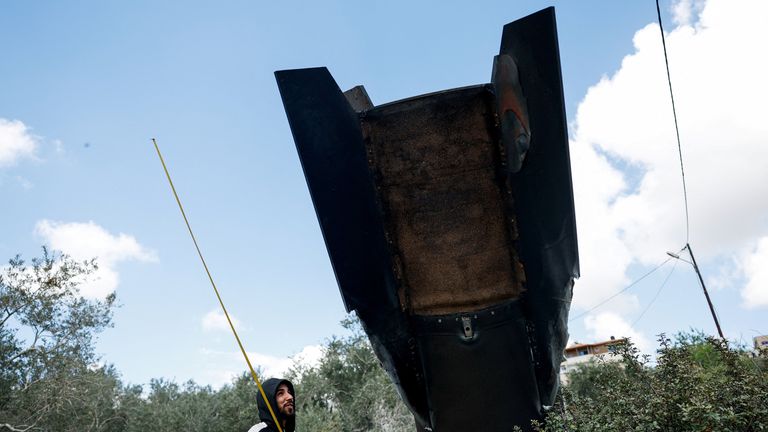
A girl stands next to the remnants of a missile in Kifl Haris village in the West Bank. Pic: Reuters

As the US-Israel war with Iran enters its fourth week, pictures have emerged of projectiles, including missiles, across the Middle East – some in unexpected locations.

On Tuesday, a girl was pictured in a West Bank village posing next to a missile – its tailfin sticking out of the ground.

Iran war latest – Tehran targets Israel & Gulf

Image:
Pic: Reuters

Pic: Reuters
Image:
Pic: Reuters

Pic: Reuters
Image:
Pic: Reuters

Pic: Reuters
Image:
Pic: Reuters

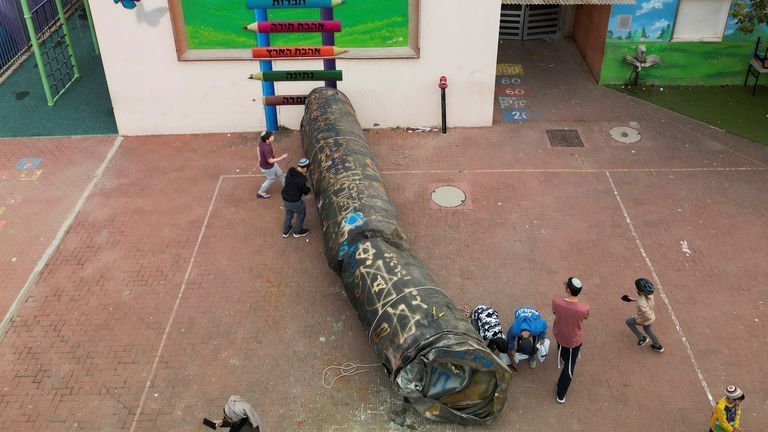
On Monday, children were pictured with part of a similar munition after it landed in a nursery school playground, also in the West Bank.

Part of a missile landed in a nursery school playground in the Israeli settlement of Peduel in the West Bank. Pic: Reuters
Image:
Part of a missile landed in a nursery school playground in the Israeli settlement of Peduel in the West Bank. Pic: Reuters

Pic: Reuters
Image:
Pic: Reuters

A drone view of children surrounding the projectile. Pic: Reuters
Image:
A drone view of children surrounding the projectile. Pic: Reuters

Pic: Reuters
Image:
Pic: Reuters

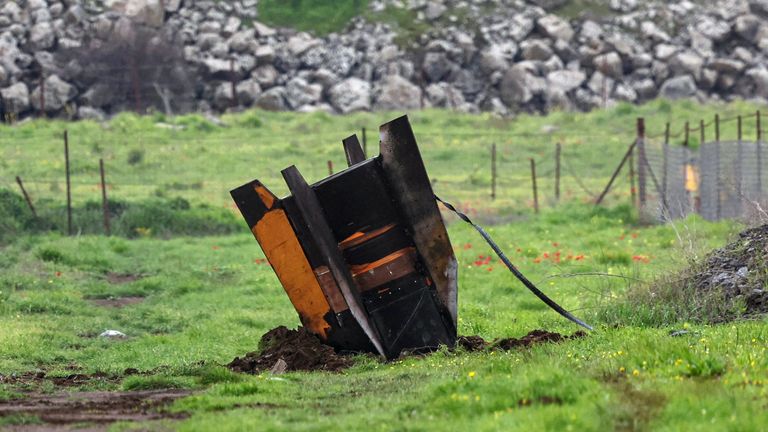
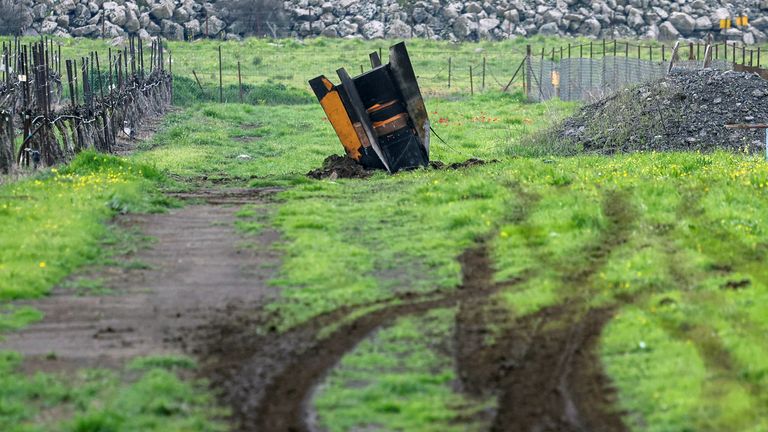
Last week, a missile was pictured with its tailfin protruding from the ground in the Israeli-occupied Golan Heights.

The tailfin of a missile in the Israeli-occupied Golan Heights. Pic: Reuters
Image:
The tailfin of a missile in the Israeli-occupied Golan Heights. Pic: Reuters

Pic: Reuters
Image:
Pic: Reuters

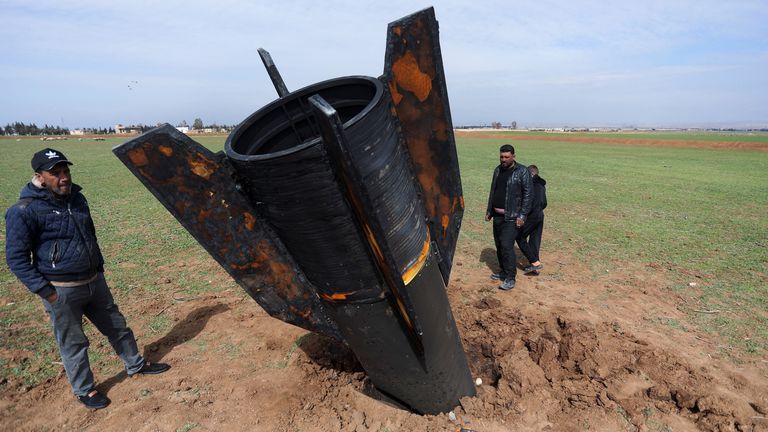
Earlier this month, shepherd boys in eastern Syria, seemingly oblivious to the potential dangers, were pictured next to an unexploded missile that landed in an open field outside Qamishli.

An unexploded missile near Qamishli in eastern Syria. Pic: AP
Image:
An unexploded missile near Qamishli in eastern Syria. Pic: AP

Pic: AP
Image:
Pic: AP

Pic: AP
Image:
Pic: AP

The conflict has been largely fought in the air, with the US unwilling to commit ground troops to further its stated war aim of regime change in Iran, not least because US President Donald Trump has long promised not to involve America in “forever wars”.

Thousands of munitions have been fired since hostilities began on 28 February, with 372 missiles and 1,806 drones launched at the UAE alone.

Advertisement

More than 1,500 people have been killed in Iran, more 1,000 in Lebanon, and 18 in Israel, while the US has lost 13 military personnel.

Several people have also been killed in Gulf states across the region including Bahrain, the UAE, Kuwait, Oman and Saudi Arabia.

Millions of people in Lebanon and Iran have been displaced.

Advertisement

Source link

Continue Reading

NewsBeat

Sunderland and South Tyneside Complex Needs Hub to open

Published

on

Sunderland and South Tyneside Complex Needs Hub to open

Located in West Boldon, the new centre will serve children aged 11 to 17 from Sunderland and South Tyneside who need intensive mental health and emotional support.

The Complex Needs Hub, based at the White House on Follingsby Lane, will be the first of its kind in Sunderland and South Tyneside and among a small number operating nationally.

Councillor Michael Butler, cabinet member for children’s services, child poverty and skills at Sunderland City Council, said: “There’s currently nothing like this in Sunderland and South Tyneside, so this is a real step forward.

Advertisement

“This innovative project will allow us to provide much more rounded care and support to young people from Sunderland and South Tyneside with complex mental health and emotional/behavioural needs.

“This means that some of our most vulnerable young people, who would otherwise have had to be placed outside of the area, will soon be able to be cared for much closer to home and their families.”

The hub will include four specialist care beds, with two used by Together for Children Sunderland, which delivers children’s services on behalf of Sunderland City Council, and two commissioned by South Tyneside Council.

The centre is funded through a joint capital project between Sunderland City Council and the Department for Education.

Advertisement

Staffed by a team of 30, the home will offer round-the-clock care and is expected to create new job opportunities in the area.

Helen Monks, director for social care at Together for Children Sunderland, said: “This is about bringing support for children and young people with high emotional and mental health needs in-house.

“The new hub will allow us to take a much more personalised approach to the young people’s care, with support covering both mental and therapeutic care.


Read more:

Advertisement

“It will also be much more convenient for the young people and their families.”

The centre will be Ofsted-registered.

Renovation work on the site is expected to take around eight months, with the hub expected to open before the end of the year.

Advertisement

Source link

Continue Reading

NewsBeat

Best broadband providers 2025, recommended by readers

Published

on

Best broadband providers 2025, recommended by readers

Choosing the best broadband provider is one of the most crucial domestic decisions you’ll make. Your broadband governs everything from watching TV to security cameras and working from home. A typical household has dozens of internet-connected devices, all of which suffer if the broadband isn’t good enough. With a huge list of providers, each offering a wide range of packages, how do you pick?

We surveyed 1,019 Telegraph readers across the UK* to find out what they thought of their broadband service. The vast majority used one of the big seven: BT, EE, Sky, Virgin Media, Vodafone, TalkTalk and Plusnet. Any provider supplying fewer than five per cent of those surveyed was discarded.

As well as speed, reliability and value for money, we asked readers how easy the providers were to contact and how helpful they were once they got through. Our reviews of the winners are below, followed by the answers to some frequently asked questions.

Advertisement

The best broadband providers: At a glance

Note: All prices listed below are the starting costs and were accurate at the time of publication.


How to choose the best broadband provider

Depending on where you live, there’s a huge range of broadband speeds on offer. However, you don’t want to pay for higher speeds than you need. For a small home that only uses the internet for leisure (watching TV, web surfing, email), a connection speed of less than 100Mbits/sec is fine. For a large family home with several people streaming at once, the faster connections available from full-fibre providers are worth it.

Source link

Advertisement
Continue Reading

NewsBeat

Fire out and shelter order lifted after Texas oil refinery explosion

Published

on

Fire out and shelter order lifted after Texas oil refinery explosion

An oil refinery fire near the Texas coast was put out Tuesday and a shelter-in-place order was lifted, hours after a large explosion at the complex shot plumes of smoke into the air, officials said.

No one was injured in Monday’s explosion at the Valero refinery in Port Arthur, about 90 miles (145 kilometers) east of Houston, Mayor Charlotte M. Moses said. She had urged residents in parts of the west side of the city to stay put.

“There’s been an explosion, yes, but we’re OK; everybody’s OK,” she said. “They’re trying to put the fire out as quickly as possible.”

Residents at least several miles away said they felt their homes shake. Some schools in the area were closed Tuesday as a precaution.

Advertisement

The explosion comes amid a spike in gas prices driven by uncertainty over the global oil supply because of the Iran war.

The refinery has about 770 employees and can process about 435,000 barrels of oil per day, according to Valero’s website. The plant refines heavy sour crude oil into gasoline, diesel and jet fuel.

Images and video posted online show a large plume of smoke and flames billowing out from the refinery.

Valero did not respond to emails and a call from The Associated Press seeking comment. Local television stations reported a company spokesperson said everyone was accounted for.

Advertisement

Texas state Rep. Christian Manuel said in a post on social media that the Texas Commission on Environmental Quality arrived at the refinery with air monitoring equipment and was working with local and state partners.

Source link

Advertisement
Continue Reading

Trending

Copyright © 2025