Connect with us
DAPA Banner

NewsBeat

new sustainability rules are changing the way races are won

Published

on

new sustainability rules are changing the way races are won

The first races under Formula 1’s new regulations delivered exactly what the sport’s rule-makers had hoped for: more overtaking. At the recent Australian Grand Prix in Melbourne, passes on track nearly tripled compared with the previous year. At the Chinese Grand Prix over the weekend the increase was less extreme, but still noticeable.

This revealed something unexpected about Formula 1’s new generation of cars. Many of the passes did not come from the classic ingredients of racing – a driver braking later into a corner, carrying more speed through the apex, or finding a daring line. Instead, they often happened when one car temporarily ran out of electrical power.

Under one of the most significant rule changes in the sport’s history, roughly half of a Formula 1 car’s output now comes from its electric motor. Drivers must carefully manage when their batteries deploy or regenerate energy. When the battery runs low, the car temporarily becomes vulnerable. Once the battery is recharged by recovering energy from braking, the driver can attack again. These cycles can create sudden swings in performance within a race.

This is raising questions about whether Formula 1’s push for sustainability is changing how races are won.

Advertisement

A greener engine era

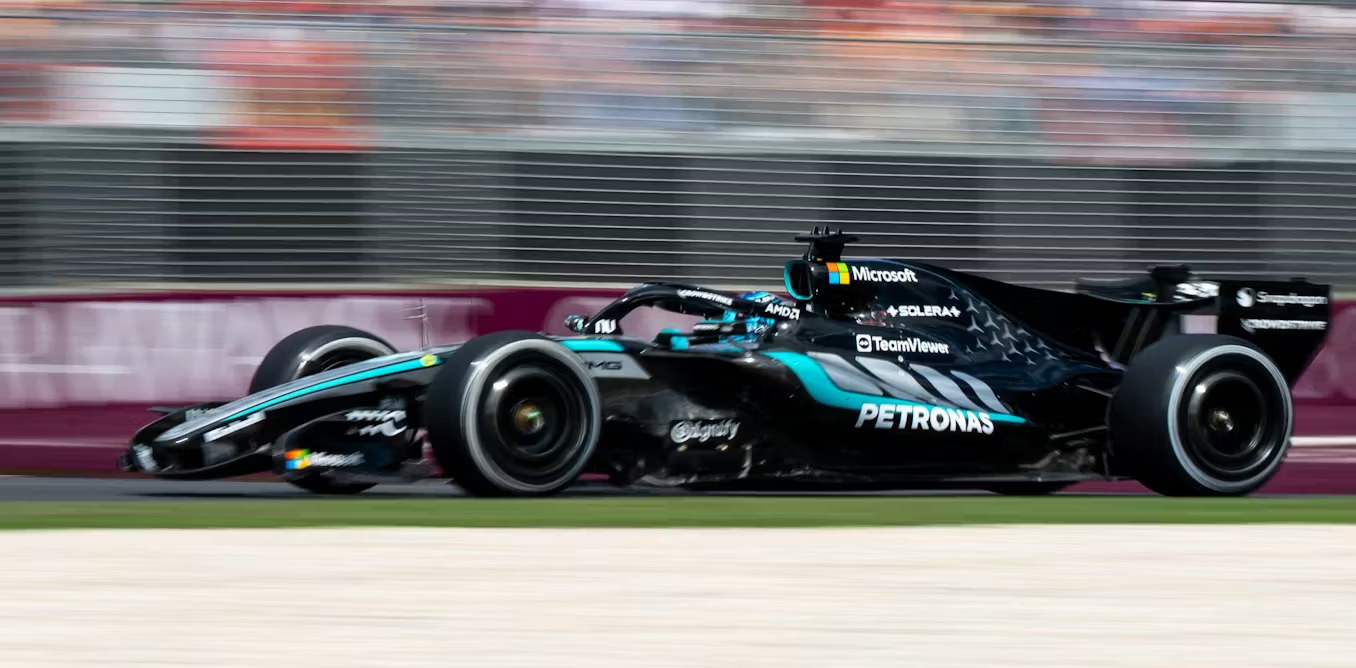
Under the new regulations, the cars still look like Formula 1 machines. But the way they generate and deploy power is very different. The familiar turbocharged combustion engine remains, but it now shares power almost equally with the electric system.

The combustion engine also now runs on 100% sustainable fuel, designed to be carbon-neutral over its lifecycle. The cars themselves are smaller and lighter, with new active aerodynamic systems aimed at reducing air resistance on straights.

The latest cars still look like petrol-powered F1 machines…but inside they’re very different.
Sports Press Photo / Alamy

Major rule changes often trigger waves of experimentation as teams search for new advantages, and managing energy has suddenly become central to racing strategy. In a study published in Organization Science, my colleagues and I showed that Formula 1 teams face a classic strategic trade-off: incremental improvements are safe but rarely transformative, while radical innovations can produce breakthrough performance – or spectacular failure.

Advertisement

A new kind of racing

The Australian Grand Prix offered an early glimpse of how racing is being affected. Early in the race, Mercedes driver George Russell and Ferrari’s Charles Leclerc repeatedly overtook each other within a few laps. But the pattern was unusual: neither driver was consistently faster. Instead, their cars were alternating between phases of energy depletion and recharge. The result looked less like traditional racing and more like a strategic ebb and flow of electrical power.

In the new hybrid era, drivers may need to adjust braking points or racing lines to regenerate electricity efficiently. They may even need to lift their foot from the throttle when in past seasons the same situation would have called for flat-out acceleration.

Some drivers have already expressed concerns that the new cars could feel less instinctive if energy constraints become too restrictive. If success increasingly depends on managing software systems and electrical energy flows, some drivers may feel that the essence of their craft is shifting. After the Chinese Grand Prix, veteran racer Fernando Alonso called this the “battery world championships”, and recent champion Max Verstappen likened it to Mario Kart.

The F1 sustainability paradox

Formula 1 has long argued that it operates like a moonshot laboratory, where extreme competition accelerates development. Technologies refined in racing have later appeared elsewhere, from advanced braking and handling systems in road cars to sensor technologies now used in hospitals. Even the choreography of Formula 1 pit stops has inspired procedures used by emergency medical teams.

Advertisement

The new generation of engines aims to extend that tradition by demonstrating sustainable innovation through advanced hybrid systems and sustainable fuels. But there is a paradox here. Early estimates suggest Formula 1’s new synthetic, net-zero fuel could cost hundreds of dollars per litre, more than ten times the cost of conventional racing fuel – and a hundred or more times the cost of regular petrol.

While this shows what is technically possible, unless production costs fall dramatically these fuels may remain confined to racing or high-performance supercars. In other words, the sport may develop impressive sustainable technologies – but ones that remain too expensive for everyday mobility.

Racing for the future

None of this means the regulations have failed. Formula 1 has a long history of dramatic rule changes producing awkward early seasons before engineers unlock their potential. Previous technological revolutions such as ground-effect aerodynamics in the late 1970s or the hybrid power units introduced in 2009 and then in 2014 required years of refinement before teams fully mastered them. Something similar may happen this year.

The first two races of the new season offered a first hint of tension facing the sport, but whether it ultimately produces better racing remains uncertain. At times, the difference between new and old F1 resembles the contrast between choreographed WWE matches and Olympic wrestling: more visually dramatic, yet less about raw athletic contest.

Advertisement

What is clear is that the 2026 regulations have already begun to reshape Formula 1 in ways few expected.


Source link

Advertisement
Continue Reading
Click to comment

You must be logged in to post a comment Login

Leave a Reply

NewsBeat

NCP: Major UK car park firm collapses into administration

Published

on

NCP: Major UK car park firm collapses into administration

NCP, one of the UK’s largest car park operators, has entered administration, placing 682 jobs in jeopardy.

The company, which manages approximately 340 sites nationwide, has struggled with declining occupancy and mounting losses since the Covid-19 pandemic.

PwC has been appointed as administrator for the business.

Despite the move, all NCP car parks will continue to operate as normal, and staff will remain employed while administrators assess the company’s options.

Advertisement

The firm’s financial difficulties stem from a significant post-pandemic drop in demand for parking, which has failed to rebound to pre-Covid levels.

This downturn has been particularly acute in city centre and commuter locations, attributed to shifts in commuting and consumer driving patterns, which have affected car park occupancy.

NCP also cited challenges posed by the high costs associated with long-term inflexible leases on sites that have become unprofitable.

NCP, which is one of the UK’s biggest operators with around 340 car parks nationwide, appointed administrators at PwC

Advertisement
NCP, which is one of the UK’s biggest operators with around 340 car parks nationwide, appointed administrators at PwC (PA)

Some or all of NCP may be put up for sale as one of the options to secure its future.

Administrators said NCP will be assessing the viability of each location, and some sites may need to be closed as a result.

Zelf Hussain, joint administrator and partner for PwC, said: “NCP has faced a challenging trading environment over several years, with changing consumer behaviours impacting volumes, and a high fixed cost base leading to trading losses.

“Our priority on appointment is to ensure continuity of service while we undertake a detailed review of the business.

Advertisement

“All sites are open, staff remain in post, and trading continues as normal.

“We will be engaging with landlords, employees and other stakeholders as we explore all options, including the potential sale of all or part of the business, to secure the best possible outcome for creditors.”

NCP also cited challenges posed by the high costs associated with long-term inflexible leases on sites that have become unprofitable

NCP also cited challenges posed by the high costs associated with long-term inflexible leases on sites that have become unprofitable (Getty/iStock)

NCP was founded in London in 1931 and is owned by the Japanese firm Park24.

Advertisement

It operates about 340 car parks across the UK, including in major towns and city centres, airports, hospitals and train stations.

Prices differ at each site, but some central London locations can cost up to £60 for 24 hours of parking.

Latest accounts filed at Companies House show that it made a pre-tax loss of £28.2m in the year to 30 September 2023 and was £22.5m in the red the previous year.

Source link

Advertisement
Continue Reading

NewsBeat

Graham Price: Wales’ next generation has arrived as players find what was missing

Published

on

Wales Online

Wales and Lions legend Graham Price gives his thoughts on the result and performance against Italy

Advertisement

This was a game that Wales needed to win in order to maintain our level of progress. The response to all the recent adversities mattered most.

Over the past few seasons, Welsh rugby has been through much turbulence because of coaching changes, young players being blooded earlier than expected, and a squad learning how to carry the weight of the red jersey again.

Against Italy, what we saw was a side beginning to understand exactly what that responsibility means.

Italy arrived with genuine confidence. Anyone who has watched them progress over the past couple of championships knows they are no longer the easy fixture they once were. Their attacking structure is sharp, their backs play with ambition and their forwards no longer take a backward step.

Advertisement

For significant periods of this match, they asked serious questions of Wales.

JOIN OUR WALES RUGBY FACEBOOK PAGE Latest news, analysis and much more

But the difference, and it was a crucial one, lay in how Wales answered those questions. We have had a reputation for being slow starters, even during the times of our greatest success, but the Welsh pack set the tone early. There was a clear intent at the breakdown, where the contest was aggressive throughout. Wales targeted the Italian ball carriers, slowing possession and forcing the visitors to play from less comfortable positions.

It was not always pretty, but international rugby quite often isn’t when the stakes are high.

Advertisement

The scrum in particular offered encouragement. In recent years it has frequently been an area of concern, but on Saturday it provided the platform Wales needed. Stability up front allowed the half-backs to manage territory and apply pressure in the right areas of the field.

And pressure, as every forward knows, eventually produces mistakes.

What pleased Welsh supporters most was the composure when opportunities appeared. Too often in the past Wales have built pressure only to squander it through impatience or indiscipline.

The attack was not over ambitious, but it was effective. Direct carrying through the midfield created space wider out, and when the moment came Wales were ready to strike.

Advertisement

Yet there was also a sense throughout that Wales had another gear if they needed it.

Again, defensively, the organisation was impressive.

Follow all of our channels to ensure you stay up to date with the latest Welsh rugby news. Sign up to our free daily newsletter here and our WhatsApp channel here for all the breaking news.

One of the most encouraging aspects from a Welsh viewpoint was the contribution of the younger players. Welsh rugby has spent the last couple of years talking about transition, about building the next generation of internationals. Ellis Mee, Ben Carter, Eddie James, Dan Edwards and Alex Mann man have now arrived. Matches like this show why that process matters.

Advertisement

You could see the hunger in the way they chased kicks, fought for turnovers and carried into contact. International rugby is a brutal examination, and these players have had to learn what it demands quickly.

Of course, there are still areas Wales will want to sharpen up. We had difficulties in the lineout and there were phases where our attack became a little predictable. Against stronger opposition those details can become costly.

The key difference was composure. When chances appeared in the opposition 22, Wales were clinical enough to convert pressure into points.

That ability and the calmness to finish opportunities under pressure often separates winning teams from nearly teams.

Advertisement

But progress in Test rugby is rarely perfect.

What matters is the direction of travel. On this evidence Wales are moving in the right way. That is what we have achieved in this year’s tournament.

Get the latest Wales Rugby merch at Kitbag

This article contains affiliate links, we will receive a commission on any sales we generate from it. Learn more
Content Image

from £,24.60

Kitbag

Advertisement

Buy Now on Kitbag

The Six Nations is running from February 5 to March 14 and Wales Rugby fans can get the latest jerseys, hoodies and more at Kitbag.

Momentum in rugby is a funny thing, sometimes it begins with a single tackle or carry and suddenly the whole perspective of the match can change.

I believe that moment came when Aaron Wainwright scored his first try, or rather the manner in which he scored it so soon after the kick off. No one was going to stop him.

But, perhaps the most telling moment came late in the game when Italy mounted one final surge. The Welsh defence was stretched and momentum briefly swung towards the visitors.

Advertisement

In years gone by that might have been the point where doubts crept in and we started to lose our composure and discipline.

Instead, Wales held firm. The tackles were made, the ball was turned over, and the pressure released with a clearing kick that brought a roar from the stands that brought the house down.

It was the reaction that resulted from the appreciation of a team rediscovering its resilience.

Advertisement

Anyone who has experienced a full Principality Stadium during the Six Nations knows it becomes more than just a venue. It’s more like a force of nature.

When Wales began to string phases together and push Italy back, the noise lifted the team to another level.

This performance did not solve every challenge facing Welsh rugby. What this match demonstrated, however, is that the core values of the game in Wales – commitment, pride in wearing the national jersey, and a determination not to yield under pressure – remain intact.

Those are values that have long been associated with Welsh rugby, and it has often been highlighted how crucial they are to the national identity of the game.

Advertisement

Rugby in Wales has always been about more than results. It is about identity, the belief that when players pull on the red jersey they represent communities, history and expectation in equal measure.

In the long run, that foundation is what victories are built upon.

Welsh rugby has faced a period of uncertainty in recent years, and every performance has been judged against that backdrop.

Of course, there’s still work to be done. The attack, the set pieces and discipline will always be talking points. Against stronger sides later in the year, Wales will need to show even more progress.

Advertisement

But rugby seasons are rarely about perfection. They’re about building momentum, learning lessons and finding belief.

This victory over Italy felt like a step in that direction.

For Wales, the important thing wasn’t simply that they won it was how they grew into the contest, handled adversity and showed the kind of grit that supporters expect.

If that spirit continues through the rest of the year, Welsh fans might allow themselves a little optimism.

Advertisement

And in Welsh rugby, optimism can be a powerful thing indeed.

Source link

Advertisement
Continue Reading

NewsBeat

How Chelsea signed a star team on hidden payments

Published

on

Eden Hazard of Chelsea poses with the Premier League trophy

With Chelsea enjoying so much success after signing star players through secret payments, did they get off lightly?

If the club had not been so co-operative they faced a much tougher financial penalty and potentially a points deduction.

The starting point was the aggravating factors – length of time of the wrongdoing, the size of payments, that they were made with the knowledge of senior figures and the seriousness of the breaches.

The Premier League Board concluded Chelsea should be fined of £20m with a transfer ban for two complete and consecutive windows.

Advertisement

But there were mitigating factors to take into account.

BlueCo, which bought Chelsea out of Abramovich’s ownership, self-reported the breaches once it had looked through the club’s books.

Added to that, BlueCo made voluntary disclosures and showed “exceptional co-operation”.

This saw the fine halved to £10m and the two-window transfer ban suspended.

Advertisement

The suspension will be activated if they commit a similar breach in the next two years.

The Board also reserved the right to be able to trigger the suspension at any time in the future if the club makes intentionally untrue declarations.

Chelsea were, however, ordered to pay an unpaid transfer levy of £771,288 in connection to Willian and Eto’o. They were banned from signing academy players for nine months, too.

Importantly, there was no breach of profit and sustainability rules.

Advertisement

When the payments were added to Chelsea‘s accounts they were not in excess of the £105m, three-season spending limit.

If they had been then the prospect of a points deduction would have been real.

The Blues had already been fined 10m euros (£8.6m) by Uefa over the same offences.

And Chelsea still have to face a hearing over 74 Football Association charges, which is likely to be another hefty fine.

Advertisement

So this is not quite over yet.

Source link

Continue Reading

NewsBeat

Trump Launches Strongest Attack On Starmer Yet Over ‘Terrible’ Iran Move

Published

on

Trump Launches Strongest Attack On Starmer Yet Over 'Terrible' Iran Move

Donald Trump has claimed it was “terrible” of Keir Starmer not to get involved with the US attacks on Iran in his strongest criticism of the prime minister yet.

The US president said he was “very surprised” when Britain refused America’s requests to “send ships over” to the Middle East.

“You’re our oldest ally,” the president said at a press conference while speaking about the UK. “We spent a lot of money on Nato, and all of these things to protect you, we were protecting them, we are working with them to protect Ukraine – that’s thousands of miles away, separated by a vast ocean.

“We don’t have to do that, but we did it – well, Biden did it,” he said.

Advertisement

But he insisted the US did not need to help with that war.

“I think it’s terrible,” Trump continued. “No, I was very surprised. I told him. We requested two aircraft carriers which they had. And he didn’t want to do it.

“Then right after the war essentially ended, meaning they were obliterated, he said, ‘I would like to send the aircraft carriers’.

“I said, ‘I don’t need them after the war was ended and won. I need them before the war’.

Advertisement

“I was very upset with – not upset, I was not happy – with the UK. I think they will be involved, yeah, maybe.

“But they should be involved enthusiastically! We’ve been protecting these countries for years.”

He added: “Putin fears us. He doesn’t fear Nato. There’s no fear of Europe whatsoever.”

Downing Street has been approached for comment.

Advertisement

Trump has been fuming over Starmer’s reluctance to join the US in its offensive against Iran for weeks.

The UK rejected US requests to use British military bases to launch preemptive strikes against Iran shortly before America and Israel struck Tehran.

A day later, Starmer gave Trump permission to use the sites for “limited and defensive” attacks.

The president has repeatedly insisted the PM is trying to join a war after it has already been “won” – even though hostilities continue.

Advertisement

On Saturday, Trump also requested international partners sent warships to the Strait of Hormuz to stop Iranian efforts to close the major waterway.

Starmer has resisted such calls, telling reporters today that the UK “will not be drawn into the wider war”.

🚨 BREAKING: Donald Trump says it was “terrible” of Keir Starmer to not get involved in the Iran war

“We requested two aircraft carriers which they had and he didn’t really want to do it… I was not happy… they should be involved enthusiastically” pic.twitter.com/syVfSuAleV

— Politics UK (@PolitlcsUK) March 16, 2026

Advertisement

Trump also used his press conference to criticise Starmer for delaying a decision over sending military aide to the Middle East.

Trump said: “Keir Starmer yesterday told me, ‘I’m meeting with my team to make a determination’.

“I said, ‘you don’t need to meet your team, you’re the prime minister, you can make your own decision.’”

Advertisement

Source link

Continue Reading

NewsBeat

Uefa freezes Champions League final ticket prices after fan backlash over World Cup costs

Published

on

Uefa freezes Champions League final ticket prices after fan backlash over World Cup costs

Tickets for the upcoming Champions League final in Budapest will remain at last year’s prices, Uefa announced on Monday, as part of a more fan-centric approach that stands in stark contrast to the ticketing controversies surrounding the World Cup.

The European football governing body has outlined strict conditions for its resale platform, mandating that tickets must be sold at face value with no fees levied on the seller.

This policy directly challenges Fifa’s resale platform for World Cup tickets in the United States, which has been criticised for allowing unlimited resale prices and imposing a 15 per cent fee on both buyers and sellers, leading some to label it “official scalping.”

For supporters of the two competing clubs, thousands of the lowest-priced tickets, set at €70 (£60), will be available for the third consecutive year.

Advertisement

Tickets for disabled spectators are also priced at €70, with a complimentary ticket provided for a companion. Uefa confirmed that each finalist club will receive 17,200 tickets out of the 61,400 available for the 30 May match at Puskas Arena.

Fans have hit out at Fifa over ticket prices for the World Cup

Fans have hit out at Fifa over ticket prices for the World Cup (Reuters)

An additional 4,600 tickets are being offered through a global lottery via Uefa’s website.

Successful applicants will be required to register their mobile phones, which must then be used to access the stadium on match day, as tickets will be non-transferable. Access to purchase resale tickets will be exclusively granted to fans who were unsuccessful in the initial lottery.

Advertisement

Higher category seats, which saw a price increase for last year’s final in Munich, will also maintain their current rates for Budapest, set at €180 (£156), €650 (£562), and €950 (£821).

Over 22,000 tickets are reserved by Uefa for broadcasters, sponsors, national football federations, and other guests.

Uefa’s ticketing policies for its club finals and major tournaments are developed in consultation with Football Supporters Europe, a recognised fans’ group, a practice not adopted by Fifa for World Cup pricing.

Fifa did respond to widespread criticism in December by making a limited number of $60 seats available for each of the 104 matches across the US, Canada and Mexico, to be distributed by national federations to loyal fans.

Advertisement

Source link

Continue Reading

NewsBeat

Trump hits out at UK as Starmer seeks ‘viable’ plan to reopen Strait of Hormuz

Published

on

Trump hits out at UK as Starmer seeks ‘viable’ plan to reopen Strait of Hormuz

But the Prime Minister, who has so far resisted the US president’s demands, said: “We’re working with all of our allies, including our European partners, to bring together a viable collective plan that can restore freedom of navigation in the region as quickly as possible and ease the economic impacts.”

Source link

Continue Reading

NewsBeat

London’s best pubs for Guinness in 2026

Published

on

London’s best pubs for Guinness in 2026

Guinness: still a thing. The once-forgotten pint, the pint of old men with watery eyes and gambling stubs, continues to be the UK’s number one beer.

Why the ongoing popularity? Marketing, for one; it works. Diageo, who own Guinness, have poured millions into advertising the brand — not just at the rugby but getting it in the right pubs, putting it in the right hands of the right influencers, upping the merchadise and so on. The Guinness Open Gate Brewery in Covent Garden can be seen, in certain lights, as a huge, £73m advert posing as a microbrewery.

Source link

Continue Reading

NewsBeat

Emirates issues UK travel update after Dubai airport closure

Published

on

Emirates issues UK travel update after Dubai airport closure

Dubai was forced to temporarily close its airport overnight after an Iranian drone hit a fuel tank in the United Arab Emirates (UAE), as conflict in the Middle East continues.

As morning broke on Monday, a drone hit a fuel tank near Dubai International Airport, the world’s busiest for international passenger traffic, causing a large fire.

Firefighters were able to contain the blaze and there were no injuries reported but the airport suspended all flights before resuming them a few hours later.

Advertisement

Emirates gives update on UK Dubai flights after airport closure

Although Emirates has now also resumed Dubai flights, it is offering a “limited schedule” today and some have been cancelled.

The latest announcement from the airline posted on its travel updates page said: “Emirates expects to operate a limited schedule after 10:00hrs Dubai local time today.

Advertisement

“Unfortunately, some flights from today’s schedule have been cancelled.

“Affected customers will receive a cancellation notice and will be advised on reaccommodation options.”

It advised: “Please check flight status on emirates.com, to ensure your flight is operating before heading to the airport.

“You can amend bookings and rebook flights online within 72 hours of your original departure date by visiting Manage Booking or “Manage Your Booking” on the Emirates app.

Advertisement

Your rights if your flight is cancelled or delayed


“If you are unable to rebook, please contact us. If you booked with a travel agent, please contact the agent for rebooking.

“We apologise for the inconvenience caused.

“Emirates will continue to publish updates as we assess the situation.”

Shortly before this at 09.50am Dubai time (GMT+4), the airline had informed its passengers that all flights to and from the UAE destination were “temporarily suspended”.

Advertisement

It also told travellers to avoid heading to Dubai airport, at the time of the announcement.

In a statement online, Emirates shared: “All flights to and from Dubai have been temporarily suspended.

“Please do not go to the airport.

“Emirates will share updates when available.

Advertisement

“We would like to thank our customers for their understanding and patience.

“The safety of our passengers and crew is our highest priority and will not be compromised.”

Is it safe to travel to Dubai from the UK right now?

The Foreign, Commonwealth & Development Office ( FCDO ) is advising against all but essential travel to the UAE, at the time of writing.

Advertisement

For British nationals, it explains: “Regional escalation poses significant security risks and has led to travel disruption.  

“Stay away from areas around security or military facilities and US or Israeli government facilities.

“Iran continues to strike civilian infrastructure across the region such as hotels, roads, bridges, energy facilities, financial institutions, oil production sites, water systems, and airports.”

For those currently in Dubai, the FCDO recommends to follow the instructions of the local authorities and monitor local and international media for the latest information. 

Advertisement

Brits should also read the FCDO’s advice on ”if you’re affected by a crisis abroad” which includes suggestions on what you might include in your emergency supplies (a link to which can be found on the UK government website).

Additionally, you can sign up to FCDO Travel Advice email alerts.


Recommended reading:

Advertisement

The ‘register your interest in flights from UAE’ scheme has been paused due to commercial flights resuming to the UK from UAE.

However, the FCDO urges if you are still in the UAE and need to get back to the UK, to check availability with the commercial airlines. 

Are you a meant to be heading to Dubai soon or are you a currently in the UAE trying to get back to the UK? Let us know in the comments below.

Advertisement

Source link

Continue Reading

NewsBeat

Best Paysafecard Casinos: Paysafecard Deposits

Published

on

Best Paysafecard Casinos: Paysafecard Deposits

Casinos continue to innovate in order to attract more customers, and the availability of a variety of payment methods has become an important draw for casino sites in the UK.

This has contributed to the emergence of Paysafecard casinos, offering deposits through prepaid cards. Paysafecard is a prepaid card that allows players to make secure deposits without linking a bank account or debit card.

Paysafecard is a safe and secure way of depositing funds into casino sites. It offers a simple way to deposit that avoids having to enter financial information and enables users to add a small amount of funds quickly, thereby promoting privacy, control and speed. This makes it an ideal option for players who value budget and security for their online transactions.

Advertisement

Below we’ve created a guide on this payment method, including a rundown of casinos that accept Paysafecard, how to use it, its benefits and drawbacks and how it compares to other payment methods.

New rules for gambling promotions

Regulations governing UK gambling promotions have changed as of Monday, 19 January 2026.

As a result, promotional offers have altered across a number of brands. The most up-to-date offers, along with their full terms and conditions, are displayed at the top of this page.

Advertisement

Wagering requirements on casino offers are now capped at a maximum of 10x, representing a significant reduction compared with many existing promotions currently available on the market.

Furthermore, mixed offers combining sports betting and casino bonuses are also banned. Readers are advised to review the terms carefully before signing up with any operator.

Best Paysafecard casinos for 2025

Below, we have compiled a list of the best Paysafecard casinos available, while providing some additional detail on their standout features, such as welcome bonus, promotions and game selection.

Advertisement

Betway

Betway is one of the most recognisable gambling brands, and it accepts deposits through Paysafecard.

New users can access their welcome offer of 125 free spins on Big Bass Hold or Spinner after depositing and playing £10 online. There are plenty of other promotions on hand for existing customers.

Betway has a user-friendly interface and one of the best casino apps on the market. It also provides a top selection of casino games, including live dealer options, which makes it among the best online casinos that accept Paysafecard.

Advertisement

Monster Casino

Monster Casino provides a valuable casino sign up bonus for new customers, who can receive up to £50 in a matched deposit and 30 free spins, and new customers can deposit funds using Paysafecard.

Monster Casino offers a wide array of slots and ample table-based games to satisfy all users. Plenty of promotions are on hand too, including free spins for existing customers.

WinoMania

Advertisement

WinoMania is one of the standout new casinos that accepts Paysafecard payments. It has a diverse range of slot and table games on its impressive casino product, and new customers can claim a casino welcome offer worth £50 in a deposit match along with 50 bonus spins for Big Bass Splash using the WinoMania bonus code WINO100.

WinoMania has plenty to offer existing customers too, with weekly cashback, free spins and drop & wins promotions. It also rewards loyalty with its exclusive VIP Club, featuring a range of casino bonuses to use online.

Voodoo Dreams

Voodoo Dreams allows customers to use Paysafecard to unlock its casino welcome offer, worth 140 free spins for users who deposit and play £25 online.

Advertisement

Free spins are unlocked over a seven-day period with a tranche of 20 free spins per day. Paysafecard deposits are straightforward and can be accessed through the cashier.

Voodoo Dreams has a wide catalogue of online slots and table games, with weekly promotions and tournament games also available.

Casilando

Casilando stands out for the quality of its welcome offer for customers using Paysafecard to make their qualifying deposit. New customers can claim 70 bonus spins for signing up for this Paysafecard casino after depositing £15 online.

Advertisement

Free spins are available to use on the popular online slot Rich Wilde and Book of the Dead and they are available for 10 days, which is one of the best eligibilty periods online.

There’s plenty more to enjoy using this online casino too, including an impressive live casino product for blackjack, roulette and more.

Casushi

New Casushi customers can claim 100 free spins for signing up and depositing £10 using Paysafecard. Once you’ve wagered £10 on eligible slots your 100 free spins will be released to use on Big Bass Splash.

Advertisement

Casushi is easy on the eye with clear aesthetics and offers a simple system for making deposits using Paysafecard. Beyond that, there’s a complete casino product to use such as table games, live casino, instant games and jackpots for high-rollers along with an extensive list of slot games.

How to use Paysafecard at online casinos

It is simple, fast, and secure to use Paysafecard for casino deposits. The process should only take a matter of minutes. Here we’ve provided a step-by-step guide on how to make a deposit using Paysafecard at an online casino:

Step 1: Purchase a Paysafecard.

Advertisement

Step 2: Sign up for an online casino account through one of our links.

Step 3: Go to the deposit section and select Paysafecard as the payment option.

Step 4: Enter the 16-digit PIN from your Paysafecard voucher.

Step 5: Confirm the transaction, and the funds will be instantly available in your casino account.

Advertisement

Benefits of using Paysafecard at casinos

Paysafecard is a great option for online casino players to place deposits – below are the main advantages.

Privacy: Paysafecard doesn’t require personal bank or credit card details, making transactions secure and anonymous.

Security: Transactions are protected by a unique 16-digit PIN, ensuring your funds are safe. You don’t have to enter any payment details into the online casino.

Advertisement

Control: Since Paysafecard is prepaid, players can only spend the amount loaded onto the card, helping with responsible gambling and budget control.

Instant deposits: Deposits via Paysafecard are usually processed instantly, allowing players to get down to business playing online.

Drawbacks of Paysafecard casinos

There are some potential downsides of using Paysafecard casinos as there are all with all payment methods. The most common drawbacks of using a Paysafecard include:

Advertisement

No withdrawals: Most casinos do not allow withdrawals via Paysafecard, meaning players will need to choose an alternative withdrawal method (such as bank transfer or e-wallet).

Fees: Casinos may charge small fees for using Paysafecard when depositing funds. This is not across all casinos, but please check.

Limited deposit amounts: Paysafecard comes in fixed payment amounts, which might limit how much you can deposit at once.

Bonus: Some casinos may prevent users that deposit using a Paysafecard from claiming their welcome bonus. Check the terms and conditions of casino sign up offers.

Advertisement

How to withdraw from Paysafecard casinos

Deposits are straightforward using Paysafecard casinos, but as mentioned above, players will need to use a different method for withdrawals: 

Bank transfer: This is the most common method for withdrawing funds. These transactions are safe and secure, although they will take longer than other methods.

Debit card: Customers can also withdraw funds using debit card. This transaction is smoother than bank transfers, offering the same level of security, but with added speed. They can take up to 24 hours to process.

Advertisement

E-wallets: PayPal casino sites are widely available, offering customers a fast and secure method for depositing and withdrawing funds. Neteller and Skrill are also effective e-wallets.

Paysafecard vs other payment methods

Below, we have compared Paysafecard with other popular casino payment methods to see how it stacks up:

E-wallets (PayPal, Skrill, Neteller): These offer a similar speed of use but they often require linking a bank account. Although you’re not sharing financial details, Paysafecard removes all form of contact with the online casino. These are not widely accepted for welcome bonuses.

Advertisement

Debit cards: While debit cards are widely accepted, Paysafecard offers better security for players who don’t want to share their financial details.

Pay by mobile: Pay by mobile casino sites allow users to deposit through their mobile using either pay-as-you-go credit or as an add-on to their mobile phone bill.

Overall, Paysafecard stands out due to the fact that it is prepaid, which makes it more secure. Paysafecard offers wide availability across casino sites, and it is accepted as an eligible payment method to unlock welcome bonuses.

Responsible gambling

Advertisement

Remember to gamble responsibly. Gambling is a form of entertainment, not a way to make money. Never wager more than you can afford to lose, never chase your losses, and take steps to remain in control of your budget from the second you sign up.

It’s particularly important not to get carried away by casino bonuses and free bet offers, both of which are available in abundance.

It can help to make use of responsible gambling tools offered by gambling sites, such as self-assessment calculators, deposit limits, loss limits, self-exclusion and time-outs.

If you need to seek help for gambling-related issues, there are several charities and healthcare providers who offer support and information, including:

Advertisement

Paysafecard Casinos FAQs

What are Paysafecard casinos?

Paysafecard casinos are online casinos that permit customers to make deposits via Paysafecard, offering a fast and safe way of adding funds to their accounts.

Can you make withdrawals with Paysafecard?

Advertisement

No. Users cannot make withdrawals from online casinos using Paysafecard. Customers must choose an alternative method such as a debit card or bank transfer.

Are Paysafecard casinos safe?

Yes. We only recommend Paysafecard casinos that are licensed and regulated by the United Kingdom Gambling Commission, ensuring that customers’ personal and financial details are protected.

What are the benefits of Paysafecards?

Advertisement

Using Paysafecards comes with several benefits, including more privacy and better security, as well as the ability to make instant deposits and more control for users, with no need to enter any personal payment details.

We may earn commission from some of the links in this article, but we never allow this to influence our content. This revenue helps to fund journalism across The Independent.

Source link

Advertisement
Continue Reading

NewsBeat

Can animals sense earthquakes?

Published

on

Can animals sense earthquakes?

For centuries, unusual animal behaviour before earthquakes has been reported worldwide. Livestock becoming restless, wildlife disappearing and snakes emerging from hibernation in the middle of winter. For a long time, scientists dismissed such observations as folklore.

In recent years, however, systematic research has begun to explore whether animals genuinely respond to environmental changes preceding major earthquakes. Although earthquakes are hard to predict even for humans, several studies suggest intriguing patterns in animal behaviour before seismic events.

As the world population increases, more people will be affected when earthquakes happen, making this research more important than ever.

My own research journey began with a serendipitous observation in Italy. I was studying the effects of moon phases on toad reproduction at San Ruffino Lake in 2009, when the toads disappeared for five days. They returned only after a magnitude 6.3 earthquake struck the city of L’Aquila, about 50 miles away.

Advertisement

This observation formed the basis of my 2010 study showing that 96% of common toads abandoned their breeding site five days before the 2009 L’Aquila earthquake. It was one of the first studies to quantify a shift in wild amphibian behaviour before seismic activity. Amphibians’ permeable skin makes them especially sensitive to changes in water chemistry which could make their behaviour a potential early warning of seismic activity.

I also conducted a multi-species study of Yanachaga National Park, Peru, before a major earthquake in 2011. A charity called Wildlife Insights (formerly Team Network) places cameras in many locations in national parks for conservation monitoring. I looked for parks where a large earthquake had occurred and analysed the charity’s photographs for Yanachaga National Park.

The motion-activated cameras recorded a sharp decline in animal activity in the weeks leading up to the quake. Daily counts fell from typical values of around five to 15 separate animal records per day to fewer than five, across all seven orders of vertebrates in the forest. In the final 24 hours before the quake, animal movements completely ceased.

I compared records from around the time of the earthquake to seismically quiet periods in the same season. I found that during less seismically active times, animal numbers stayed constant.

Advertisement

In Peru, the steep decline in activity was pronounced not only in small and medium sized rodents such as pacas and capybaras but also in bigger animals like long nosed armadillos. This “silencing” of the forest suggests that earthquake-related cues affect entire animal communities rather than just one species.

It’s not just wildlife

Research has shown that livestock around the world, particularly cows, also show signs of pre-seismic behavioural and physiological change.

Cows seem particularly prone to unusual behaviour before an earthquake.
cctm/Shutterstock

There are numerous reports of cows panicking and wandering around in areas where they would not normally be seen. For example, stories that cows converged on San Francisco’s Chinatown in 1906 prior to a large earthquake which killed 3,000 people. In 2012, a blog post circulated on the internet showing photographs of cows entering a suburb of Malaysia’s capital city, Kuala Lumpur, and feeding in gardens, two days prior to a magnitude 8.6 earthquake off the coast of Sumatra.

Several Japanese studies have monitored dairy cows using automated milking and activity systems. These studies have reported modest but statistically significant reductions in milk yield and changes in rumination or restlessness in the days preceding some local earthquakes.

Advertisement

Pets seem to be affected too. In 2011, a massive magnitude 9.1 earthquake struck off the northeast coast of Honshu in Japan, generating a tsunami that disabled three nuclear reactors. Post earthquake questionnaires surveyed 1,259 dog owners and 703 cat owners about their pet’s behaviour before the earthquake. About 19% of dog owners and 16% of cat owners reported unusual behaviour. Restiveness was a dominant behaviour in both species, usually within one day prior to the quake. It’s important to note though, that post-event recollections are not considered as scientifically robust as data collected in real time.

What might animals be sensing?

The key question is not whether animals behave differently, but why.

One leading hypothesis, proposed by Friedemann Freund (a scientist for NASA), focuses on environmental changes caused by stress building up in rocks as tectonic plates shift, prior to large earthquakes, releasing electrically charged particles.

These particles can alter the properties of air and soil in the area by increasing the number of positive airborne ions (electrically charged molecules) and appear to affect stress levels and behaviour in animals (including humans). More research is needed but the phenomenon may help explain the changes in animal behaviour before the Italian and Peruvian earthquakes.

Advertisement

However there are many other cues which could contribute to unusual animal behaviour before earthquakes. For example vibrations, disturbances to the local electromagnetic field or sounds outside of human hearing range. We still don’t know exactly which signals, or combination of cues, explains the behaviour.

Despite growing evidence that animals can sense environmental changes preceding earthquakes, the scientific community remains cautious. Several studies have found unusual animal behaviour before earthquakes could later be explained by normal seasonal activity.

Then there’s the fact that earthquakes are rare, which makes the phenomenon difficult to study. I believe animals simply move away from unpleasant or unusual environmental changes, rather than “predicting” earthquakes.

Of ants and earthquakes

There are ongoing studies that may help us learn more about animal behaviour and earthquakes. A systematic trial called Animal Alerts is underway in Lima, Peru, an area with a high level of seismic activity. Researchers have fitted dogs with smart collars which record their heart rate, movement and other parameters in real time.

Advertisement

A 2013 study carried out long-term observations of red wood ant mounds on active faults (cracks in the Earth’s crust that have recently moved and may cause earthquakes). The researchers reported alterations in daily activity rhythms of the ants living on these fault lines. Building on this work, my postgraduate research student, Shanza, is studying earthquake precursors for her master’s degree. She aims to identify which animal species are most likely to respond to early earthquake signals such as positive ions or magnetic field fluctuations. She then plans to simulate some of these conditions in the lab, using ants as a model species.

Animal data alone are unlikely to give reliable earthquake warnings. But the more we can combine animal data with environmental measurements, the closer we will come to reliable forecasts of earthquake hazard risk.

Source link

Advertisement
Continue Reading

Trending

Copyright © 2025