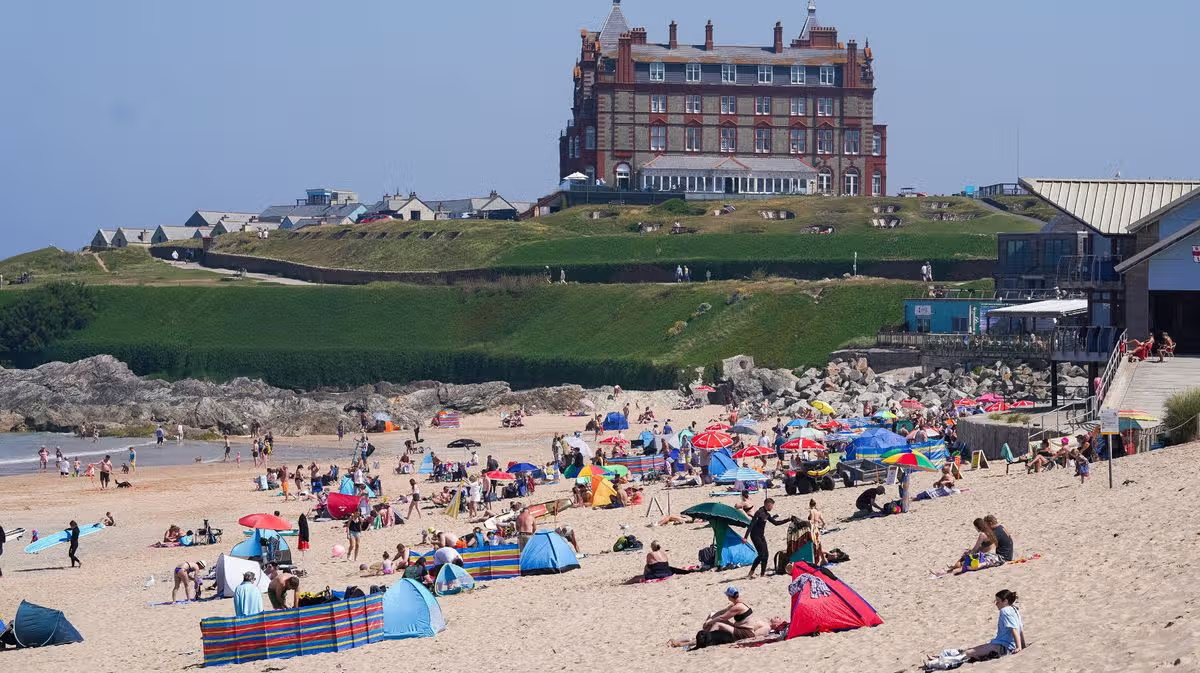
The woman and man who died at Fistral Beach are said to be a father and his daughter, with the pair understood to have been on holiday in Cornwall.
The Sun reports that one witness – a local beach artist – claims the man had “gone in to try and rescue his daughter”.
Sand Phoenix, 33, said he “sprinted” up to help, jabbing the man with an adrenaline pen he had to hand and trying to give him oxygen.
Advertisement
His attempts to save the man’s life were in vain, however, as the victim’s lungs were “full of water”.
Mr Phoenix, who was sleeping on the beach at the time of the incident, said: “He had been pulled out of the water but had been in there about seven minutes.
“The paramedics arrived and carried on trying to give CPR. He was still wearing his trousers so I don’t think he had been swimming.
“It looks like they had been walking near the rocks and had fallen in.”
Advertisement
Another bystander explained he heard shouts for help and saw a woman lying face down in the water when he went down the cliff.
The brave man went into the sea fully clothed in an attempt to grab the woman, who was being bashed against rocks by waves.
Another witness told the Sun: “A woman was desperately trying to ring someone but couldn’t get through [and] was in tears.
“There was a helicopter overhead and there was a lifeboat in the water.
Advertisement
“They recovered one body on the beach, while the other one was brought up the cliff.
“Another man came up soaking wet and in a foil blanket. He knew them and had been trying to help. I’m just in shock, it was awful to watch.”
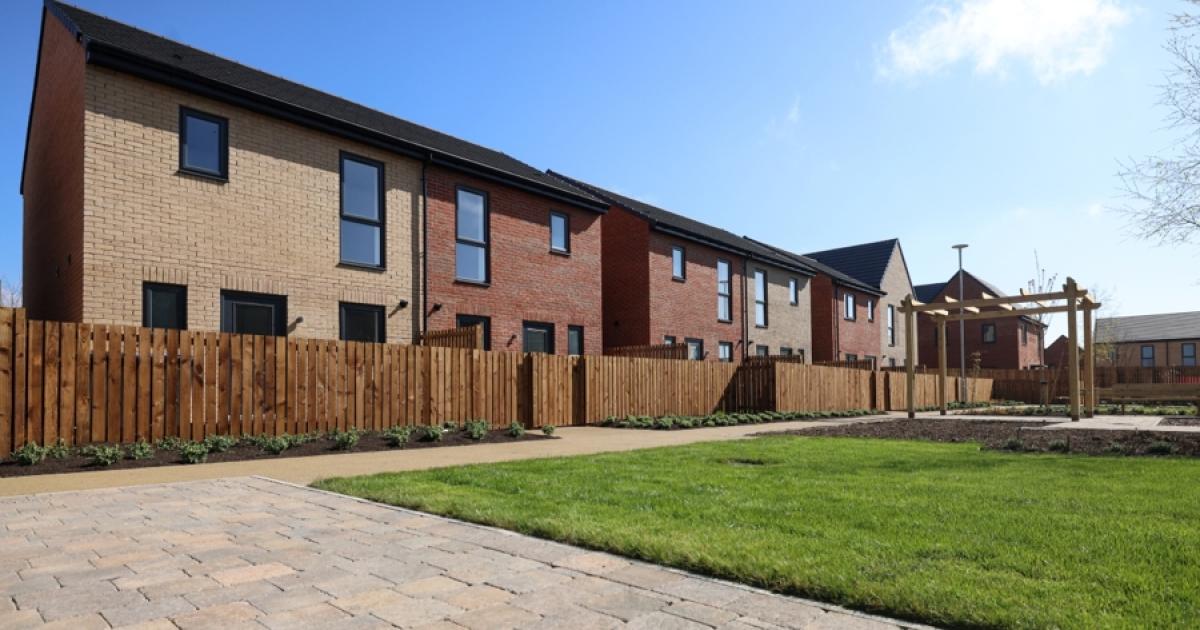
A study by Pepper Money ranked more than 300 locations across England and Wales using factors including house prices, mortgage affordability, rental costs and local earnings to determine where buyers can get the best value for money.
Middlesbrough topped the nationwide index, ahead of Burnley in Lancashire and Merthyr Tydfil in Wales.
Researchers found the town’s combination of lower-than-average house prices, affordable mortgage repayments and relatively strong earnings made it the most attractive location for aspiring homeowners.
Advertisement
The average first-time buyer property in Middlesbrough costs £123,831 — less than half the UK average of £261,700.
Pepper Money said local earnings compare well with house prices, making it easier for buyers to save for a deposit and keep mortgage costs manageable.
The North East emerged as the strongest-performing region overall, with the study suggesting it offers some of the best opportunities for people looking to buy rather than rent.
In total, 13 of the top 20 locations were in either the North East or North West, reinforcing the North’s reputation as one of the most affordable parts of the country for first-time buyers.
Advertisement
According to the research, every North East local authority except Northumberland has lower monthly mortgage costs than local rental prices.
Across the region, the average monthly mortgage payment is £699, compared with a national average of £1,310. In Middlesbrough this is estimated to be £157 per month cheaper than renting.
In Middlesbrough, County Durham and Hartlepool, mortgage payments also account for just 24% of monthly earnings – among the lowest proportions recorded in the study.
Pepper Money said the findings show that despite ongoing challenges in the housing market, there are still many parts of the UK where buying is more cost-effective than renting, with 41% of areas analysed proving cheaper to buy in than rent.
Advertisement
Researchers used Office for National Statistics data on earnings, property prices and rental costs, alongside mortgage affordability calculations, to compile the rankings.
After a wet weekend for most Scots, the end of July stays damp
Experts believe a dozen Scots areas will see rain on Tuesday, as millions of Brits will be soaked.
Advertisement
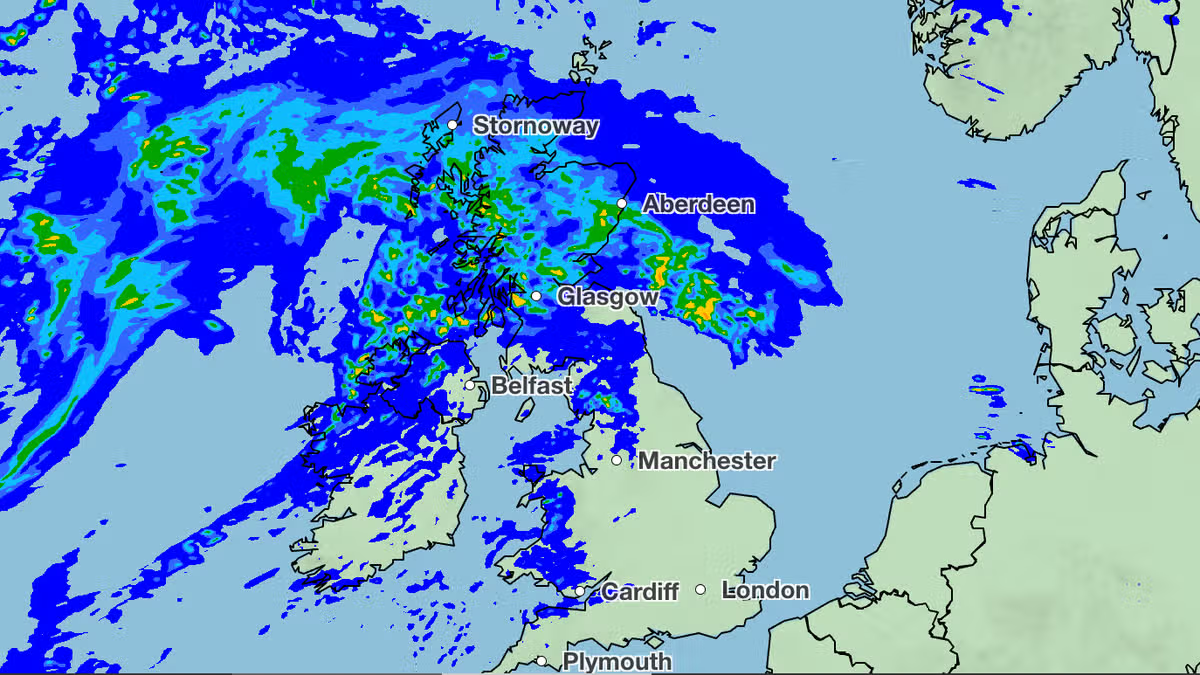
The Met Office believes more than 50 areas of the UK are expected to see rain on Tuesday (July 28) including 12 in Scotland. Rainclouds will move north-eastwards, drenching Northern Ireland, swathes of Wales, south west England, and northern England before hitting Scotland.
The heaviest rain will fall around 3am, when an orange rain cell is forecast to hit central Scotland and deliver 8-16mm of rain around the South Lanarkshire village of Douglas, the Met Office map shows. Once the heavy stops in mid-morning, scattered showers will persist for most of the day in Northern Ireland, north Wales, north west England, and Scotland.
However, it looks like it will stay dry in the Midlands, East Anglia, and southern England.
The Met Office forecast for Tuesday said: “Heavy rain in the north will ease and move away northeastwards on Tuesday, replaced by sunshine and locally heavy showers. England and Wales mostly dry with some hot sunshine developing.”
Advertisement
According to the Met Office’s map, 53 council areas will see some form of rain. It’s estimated 12 Scots, four Northern Irish, nine Welsh, and 28 English top-tier council areas will be hit by precipitation.
Temperatures are set to remain warm and typical for late July. Glasgow will see 20C, Edinburgh 21C, and Aberdeen 22C. Over the Irish Sea, Northern Ireland’s high will be 23C in Newry.
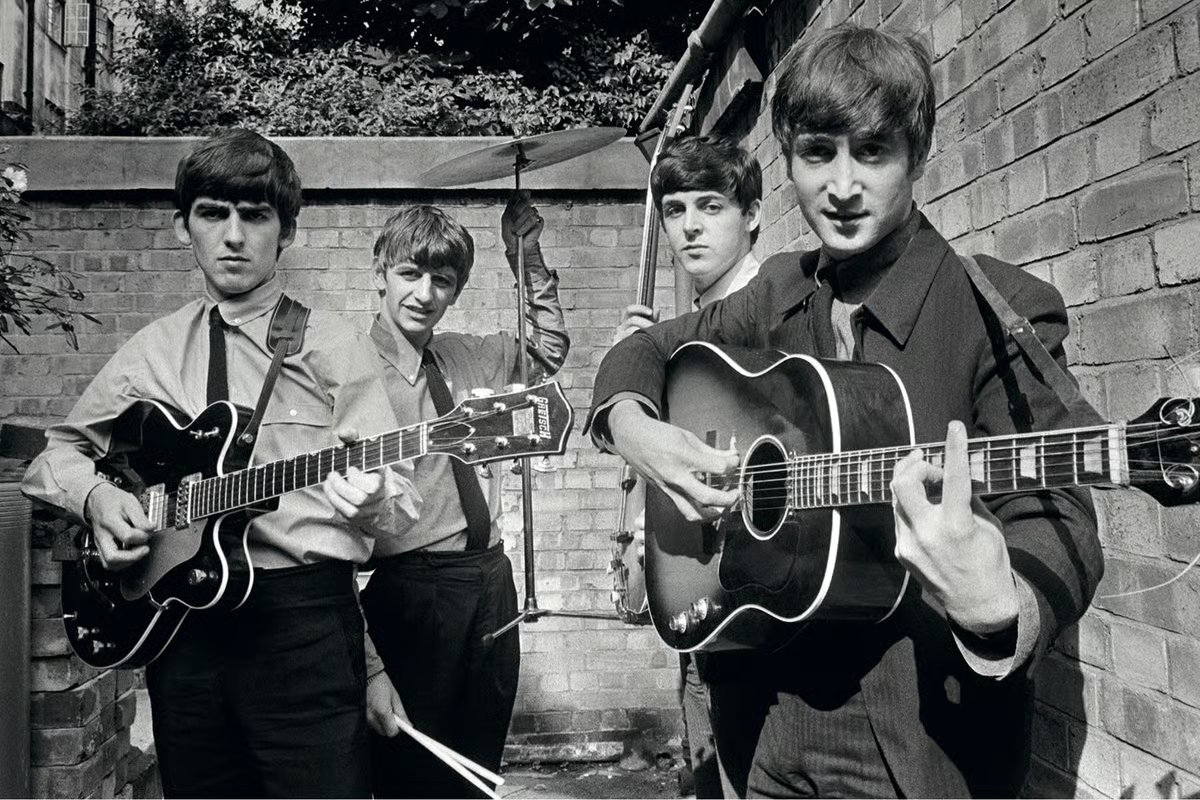
“Since launching the Music Photography Awards in 2022, we’ve deepened our commitment to the art form and re-examined how we interact with visual culture. Whether it’s the detail in a fine art photograph, honouring our roots with iconic image-makers, or working with a new wave of creators, we hope to present an Abbey Road, reframed.”
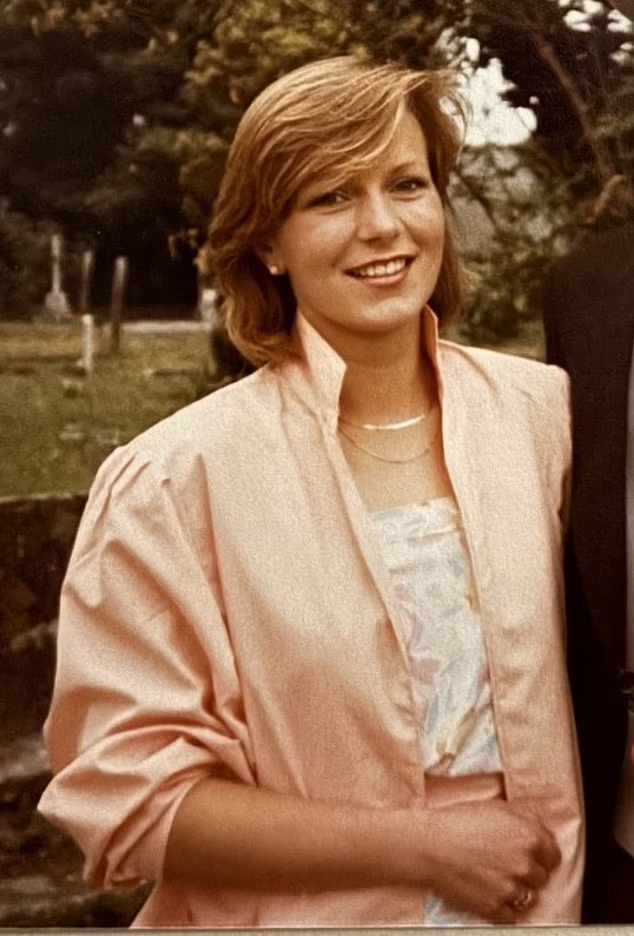
Forty years on from disappearance which shocked the world, Suzy Lamplugh murder probe finally set to be shelved – as police make one last call for witnesses to end family’s agony and help them find her body
Detectives investigating the murder of Suzy Lamplugh have made one last plea for information as they prepared to shelve the 40-year-old investigation into her disappearance.
With the prime suspect now dead, the Metropolitan Police said they remain determined to ‘find her resting place and bring her back’.
Scotland Yard detectives expect to spend the next year contacting around 30 potential witnesses, who are still believed to be alive, after they initially called in with tip-offs and leads when estate agent Ms Lamplugh vanished in Fulham, west London, on Monday, July 28, 1986.
The 25-year-old’s body has never been found, and remains the Met’s largest active murder investigation.
Advertisement
Police have now told Ms Lamplugh’s family the case will become ‘inactive’ next year, but are hopeful advances in forensic testing or a key witness breaking their silence will finally solve the mystery.
Detective Chief Inspector Teresa Foster, who leads the Met’s cold case homicide team, said: ‘We’re not going to give up on trying to find where Suzy is. But yes, it is difficult.
‘It is going to take a change in forensics or technology, or a change of allegiance, or someone coming forward with new information. It is going to be very difficult now after 40 years.’
Asked what detectives hope to achieve as the case prepares to be wound down, she said: ‘It’s finding Suzy. For us and for Suzy’s family, it is finding her.
Advertisement
Suzy Lamplugh – pictured in new photographs released by her family today – was 25 was she vanished in Fulham in 1986
Suzy, pictured (right) for the last time alongside her siblings, brother Richard, and sisters Lizzie and Tamsin
The Lamplugh family – (left to right, back row) Richard, Lizzie, Suzy, Tamsin, Paul and Diane (seated)
Advertisement
John Cannan was the prime suspect in the search for Ms Lamplugh’s killer. But he died in prison in 2024
Suzy Lamplugh (second left) with her siblings, (left to right) Richard, Tamsin and Lizzie
‘It’s finding her resting place and bringing her back.’
Ms Lamplugh was working for Sturgis’ estate agents in Fulham when she left the office to show a home to a potential client. The appointment marked in her diary was with a ‘Mr Kipper’.
Advertisement
Witnesses saw Ms Lamplugh standing outside the address in nearby Shorrolds Road, looking as if she was waiting for someone.
Around ten minutes later, a next-door neighbour heard someone leaving the property and saw Ms Lamplugh outside with a dark-haired man in a charcoal-coloured suit.
But by mid-afternoon, office colleagues had become concerned about her whereabouts and contacted police.
Her abandoned white Ford Fiesta was found, badly parked, a mile away from Shorrolds Road, at 10pm.
Advertisement
The vehicle was unlocked, the handbrake was off, and Ms Lamplugh’s purse was left inside the car door.
She was never seen again.
A newly released family photograph of Ms Lamplugh, whose body has never been recovered
Ms Lamplugh worked as an estate agent in Fulham, and lived in nearby Putney
Advertisement
Her disappearance made headlines around the world
The prime suspect in the case, John Cannan, the middle-class son of a successful car salesman, died in prison in 2024 after being jailed for life in 1989 for the abduction and murder of newlywed Shirley Banks from Bristol.
I know why Jack the Ripper was protected for so long
Advertisement
Hi, I’m Alex Matthews, Editor of The Crime Desk.
In 2014, we revealed the bombshell evidence identifying Aaron Kosminski as the fabled Jack the Ripper. Now, we can reveal his astonishing connection to the Freemasons and claims this motivated his killings and protected him from life in prison.
He had been out on licence from prison when Ms Lamplugh disappeared, having previously been jailed for raping a pregnant woman in front of her own mother and toddler, as well as two robberies.
He was identified as the key suspect in the Lamplugh case in 2002, but always denied involvement. No forensic evidence has ever been found linking him to what happened.
Advertisement
DCI Foster said she and her team remain ‘haunted’ by the fact the case – which unfolded on the doorstep of the case team’s headquarters in Putney – remains unsolved.
She said: ‘It does haunt me because we’ve never found her, she’s never been seen.
‘I think everybody at some stage, who lives in London, can think: That could have been me.’
She said the case was headline news around the world, and remembers hearing about it as a schoolgirl in New Zealand where she grew up.
Advertisement
‘This was a huge story then, and it was just shocking,’ she said.
A young Suzy, pictured alongside her family, including parents Diana and Paul
‘I think for us that are invested in this, it upsets us. We’re very close to the family as well.
‘So yes, it does haunt that we can’t give answers, and we know that we’re up against it 40 years later.’
Advertisement
The Met has recently secured convictions of three historic killers – Janice Nix, who scalded her stepdaughter to death in the bath, and brothers Michael and Anthony Stewart for murdering a civil servant – following disclosures from family members.
And DCI Foster urged those with information about this decades-old case also come forward.
In a direct appeal to anyone for witnesses, she said: ‘We’re not going to stop looking for Suzy.
‘If anybody has that information, you know we’ll take it forward, but we’ll also safeguard them, protect them in any way we can.’
Advertisement
Ms Lamplugh’s parents, Diana and Paul, died in 2011 and 2018 respectively without knowing what happened to their eldest daughter.
Their legacy is the Suzy Lamplugh Trust, a charity they set up in their daughter’s honour which focuses on personal safety, stalking and harassment.
DCI Foster said the surviving family members ‘totally understand’ that the investigation will eventually be deemed inactive.
But she said: ‘It’s not going to be closed.
Advertisement
‘I’ve said to the family that any information comes in from anywhere, we still raise it as an action.’
Hamza Parvaiz, of Manchester Road, died after falling from a cliff at Llandudno’s Great Orme on the evening of July 17.
At County Hall in Ruthin on Monday (July 27), an inquest was opened into the 28-year-old’s death.
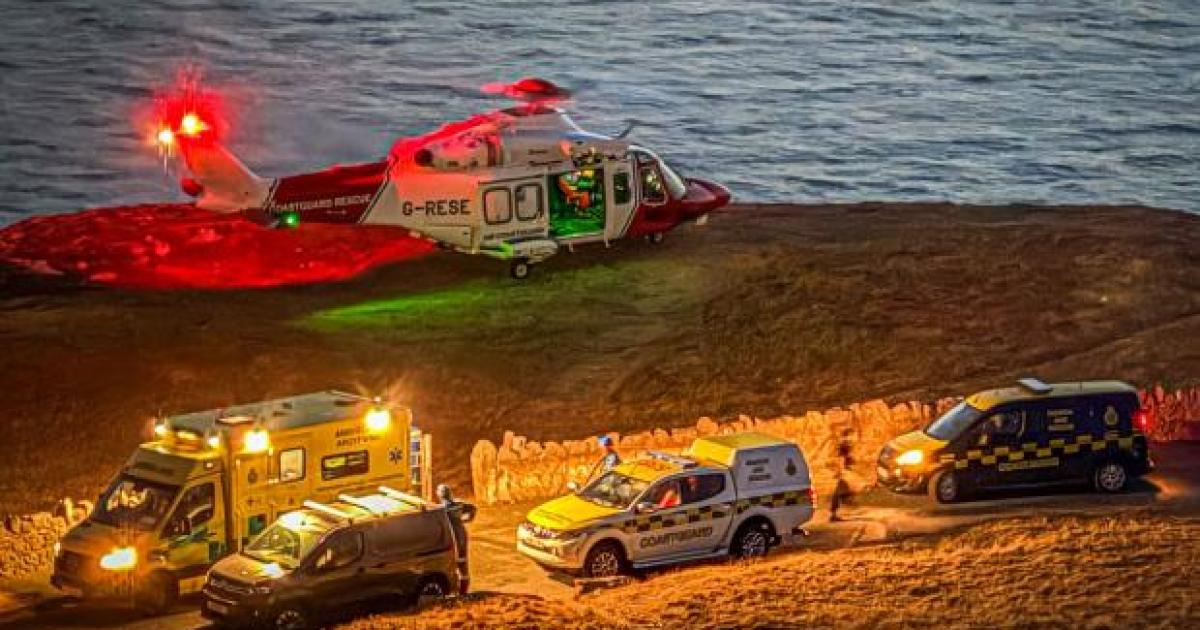
It heard that emergency services were called to Marine Drive below the Great Orme shortly after 8.30pm after a person had seen Mr Parvaiz “lose his footing” while on a grassy coastal path, causing him to fall over a cliff.
Advertisement
The incident sparked a major emergency response, with North Wales Police, the Welsh Ambulance Service, RNLI and the Coastguard helicopter attending the scene.
Mr Parvaiz’s body was reached by an RNLI crew before being lifted up to a Coastguard helicopter.
Every ancient language that has ever been deciphered needed an anchor. Usually that’s a bilingual text, like the Rosetta Stone, or a known relative to compare it to. Linear A, the writing system of the Bronze Age Minoan civilisation on the Greek island of Crete, has neither.
Linear A is described as a “language isolate” because it has no confirmed link to any known language, living or dead. As such, it has posed a significant challenge for linguists over the past century.
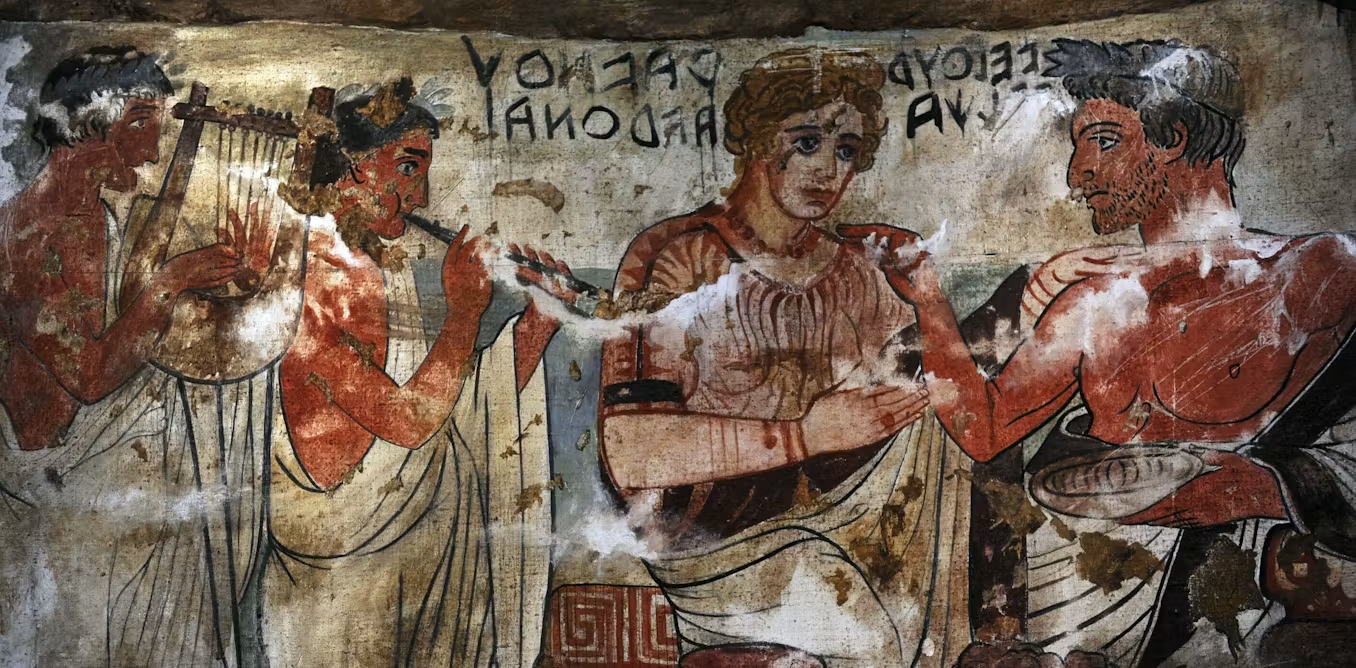
Etruscan, a language of Italy that was used before the rise of the Roman Empire, has fared only slightly better. A partial vocabulary has been collected from short funerary inscriptions, but its grammar and deeper meaning still elude linguists.
Both languages are exactly the kind of puzzle that AI has recently been pulled into – not by replacing the linguists, but by supercharging their hunches. So does AI actually stand a chance of finishing what a century of human effort hasn’t?
Advertisement
A recent case shows both the appeal and the catch. In June 2026, a self-taught AI engineer and amateur linguist claimed a breakthrough on Linear A. It started from a single guess that one unknown word in a prayer inscription derived from a Semitic root meaning “to dwell” or “to inhabit”.
He then used AI-built programming scripts to test that sound-pattern against the rest of a collected Linear A corpus. He was reportedly able to assign values to 40 signs and compiled a 408-word lexicon, showing – in his view – that Linear A is an extinct member of the Semitic language group, which encompasses languages such as Hebrew and Aramaic.
The need for creativity
It’s worth being precise about what AI did and didn’t do here. It didn’t have the idea. The engineer did.
The AI was the research assistant. It rapidly cross-checked a human hypothesis against thousands of characters, work that would have taken a human months by hand. That division of labour is the pattern currently worth paying attention to, far more than any single claim that is still under review.
Advertisement
Linear A inscription on a clay tablet from Hagia Triada, Crete, probably dating to the 15th century BC. From the Archaeological Museum of Heraklion. Zde, CC BY-SA
So where does AI actually help, and where does it hit a wall? It’s genuinely strong at large-scale pattern testing. It can check whether a hunch about one sign or word holds up across an entire archive in minutes instead of years. It can spot repeated sequences a human eye would miss, and restore damaged or fragmentary inscriptions by predicting likely missing characters.
AI also does something distinct called “cross-lingual transfer”, where a model trained on a known language can sometimes infer patterns in a closely related unknown one. This is similar to how knowing Spanish helps you guess at Portuguese.
Researchers have already used this kind of approach successfully on scripts such as Ugaritic, where the language family is known. Ugaritic is an extinct Semitic language, spoken during the late Bronze Age (about 1300-1190BC) in the ancient coastal city of Ugarit (in what is now Syria).
Advertisement
But there’s a hard ceiling: statistical pattern matching can’t manufacture meaning out of nothing. It needs an anchor – a known language family, or a bilingual text – to tell it which patterns are meaningful and which are coincidence.
Linear A and Etruscan are hard precisely because that anchor is missing or incomplete, and no amount of computing power invents one from scratch.
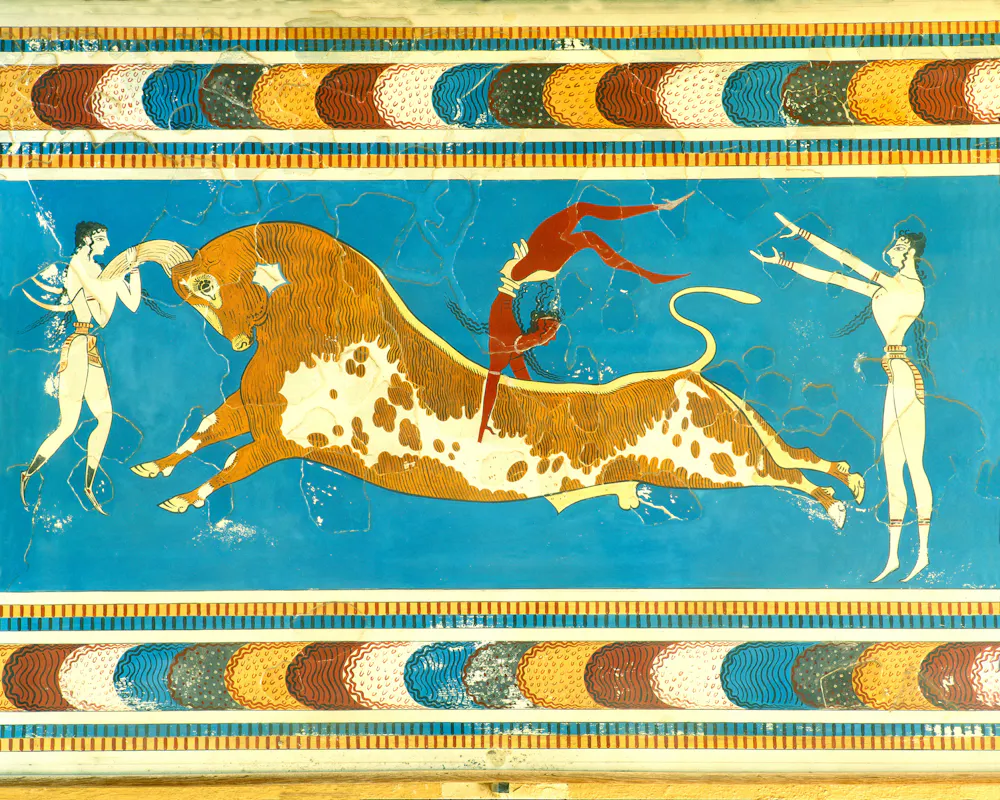
The Minoan civilisation is known for its monumental architecture and sophisticated art. Jim Zuckerman
Scant evidence
With a large enough corpus, an AI model could hypothetically get fluent enough to converse with a Minoan or Etruscan speaker on the model’s own statistical terms. This means that it could recognise repeating patterns of words and other structural units of a language that would allow the AI model to repurpose the terms in a different context. One that might approximate a limited conversation, at least on the surface.
But the AI system still wouldn’t be able to hand a human a translation, because fluency and meaning aren’t the same thing here. The model can learn which signs follow which, and which words cluster together, without ever knowing what any of them actually refer to.
Advertisement
This is also why verifying any AI-assisted claim about these languages is so difficult, and it’s a problem bigger than any one case. Normally, you’d check a proposed translation or interpretation against native speakers, other texts or expert consensus built up over decades. None of that exists for a genuinely undeciphered language. Short of a time machine, there’s no way to check.
Small surviving corpora make this worse: Linear A’s entire surviving corpus is about 7,500 characters, short enough to fit on a single screen and with that little data, almost any hypothesis can find scattered matches to support it.
That is why claims in this space lean so heavily on independent expert scrutiny and peer-review rather than statistical confidence scores. It is also why “AI found a pattern” and “AI found the correct meaning” are very different claims that are easy to blur together.
None of this means that AI is a dead end for these languages. Quite the opposite: it’s a real accelerant, able to compress years of manual cross-referencing into mere minutes and let more people attempt these problems than institutional resources ever allowed.
Advertisement
But it doesn’t remove the two ingredients that decipherment has always required. One is a genuine comparative anchor. The other is rigorous human review, to tell a real breakthrough from an appealing coincidence.
Until one of those shows up for Linear A or Etruscan, AI’s role in deciphering languages will stay what it is today: a very fast assistant to a very old, very human puzzle.
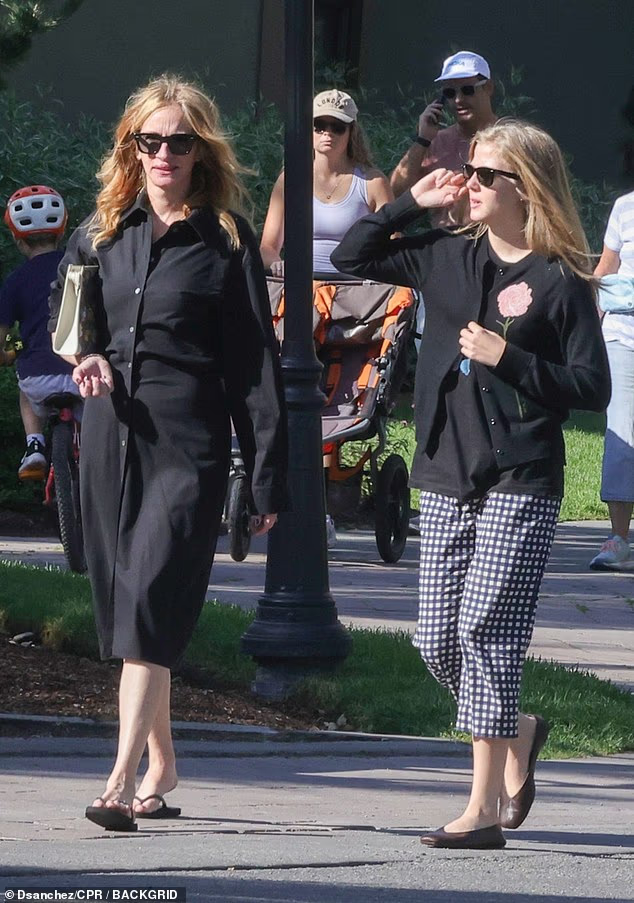
She added black flip-flips and coordinating square-shaped sunglasses while tucking a large, light-colored clutch under her arm.
Hazel, whom Julia shares with longtime husband Danny Moder, wore black and white checked capris, a black T-shirt, and black cardigan with dark ballet flats.
Advertisement
Like her mom, she also wore onyx sunglasses during the outing.
In addition to Hazel, Julia and Moder share Hazel’s twin brother Phinnaeus, and son Henry, 18.
Julia Roberts, 58, was seen with one of her three kids, daughter Hazel, 21, while out in Sun Valley, California on Monday
Advertisement
Roberts wore a knee-length, long-sleeved, button-up black dress
The Pretty Woman star’s niece Emma said ‘I do’ to Cody John in a romantic ceremony over the weekend.
Emma’s father is Eric Roberts, brother to Julia.
The 35-year-old American Horror Story actress and John, 36, exchanged vows outdoors at the actor’s family estate in Sun Valley, per TMZ and Page Six.
Advertisement
The bride, who previously called off an engagement to Evan Peters, wore a custom white gown with asymmetrical sleeves by Monique Lhuillier, as reported by Vogue.
A source told Page Six that the 45-minute nuptials took place outdoors in 95-degree weather.
The outlet reported that Emma’s five-year-old son Rhodes, whom she shares with ex-boyfriend Garrett Hedlund, walked her down the aisle.
Julia and Moder married in 2002, before welcoming their brood.
Advertisement
They celebrated their 24th wedding anniversary on July 4, with the Stepmom star marking the occasion on Instagram.
She added black flip-flips and coordinating square-shaped sunglasses while tucking a large, light-colored clutch under her arm
Roberts attended her niece Emma Roberts’s wedding to Cody John on Saturday
The Oscar winner has been married to Danny Moder since 2002
Advertisement
Join the discussion
Do YOU think Hazel looks like her famous mum Julia Roberts?
She shared a snapshot smiling alongside her husband as they wore matching Ray Ban sunglasses.
The caption read, ‘TWENTY FOUR. MORE MORE MORE.’
Advertisement
And in early February the actress posted an Instagram snap locked in an embrace with her husband to commemorate his birthday, which was January 31.
She wrote in the caption, ‘My fav day. My fav man. #131 #WLF.’
In spring 2025, Moder marked Mother’s Day by sharing an Instagram photo of his wife and their three kids, writing, ‘Mothers make the coolest stuff. Love these guys.’
Alliance MLA David Honeyford said that the figures show many people aren’t aware of the changes
Only 274 people availed of an extended grace period when parking on-street in Lisburn City Centre over five months during a pilot scheme which was extended earlier this month.
Advertisement
In early July, Infrastructure Minister Liz Kimmins confirmed that drivers in Newry and Lisburn who have paid for on-street parking will continue to have up to one hour to return to their cars after their paid parking period expires.
The one-hour grace period was initially introduced as a pilot in late 2025 to provide greater flexibility for people visiting local shops, cafés, and other city centre businesses. During this pilot scheme, more than 1,000 drivers availed of the extra flexibility it provided.
In her response to a written Assembly question from Alliance Lagan Valley MLA David Honeford, Infrastructure Minister Liz Kimmins confirmed that between 8 December 2025 and 30 May 2026, 274 motorists in Lisburn availed of the extended grace period, with 898 in Newry over the same timeframe.
Responding to Mr Honeyford, the Minister said: “Throughout the course of the initial pilot, officials engaged with a range of relevant stakeholders to gather qualitative insights across local communities and businesses. While the feedback received was generally positive, officials were advised that some were not aware of the pilot.
Advertisement
“In response, a number of targeted communication measures were implemented, including the development and installation of informative stickers on all pay and display machines across Lisburn and Newry, and the introduction of messaging on the JustPark app.
“Traffic Attendants do not record vehicles that are parked in compliance with Controlled Parking Zone (CPZ) restrictions; they only log instances where no valid Pay and Display ticket is displayed, before issuing a Penalty Charge Notice (PCN). Consequently, comparable data for parking numbers during the pilot and in previous years is not available.”
The Minister also confirmed that enforcement data indicates a modest reduction in PCNs, falling from 3,274 to 3,119, largely due to fewer fines being handed out after expiry of paid time at a pay and display bay.
She added: “Operational observations also indicate that motorists were aware of the pilot and did avail of the extended grace period, resulting in a change in parking behaviour in both cities through improvements in compliance.”
Advertisement
Mr Honeford said: “This is a really positive initiative that gives people more time to shop, grab a coffee or support local businesses in Lisburn. But when only 274 motorists have used it over six months, we have to ask why.
“The problem is simple. There is no clear signage on the streets or parking machines, and the app doesn’t clearly show people their return time.
“Good ideas only work if people know about them. I’ve written to the Minister asking for better signage and improvements to the app so people can actually benefit from this change.
“We need to move beyond making announcements and make sure policies are properly implemented so they make a real difference for people and for our local businesses.”
As she returns to the music scene after a 17-year absence, Carly Simon is getting candid about her health.
The two-time Grammy winner, 83, revealed to People on Monday that she has been diagnosed with Parkinson’s disease.
She also shared that she’d been treated for basal cell carcinoma, a form of skin cancer, not long after receiving her Parkinson’s diagnosis.
“The truth is, I’ve been learning how to live with Parkinson’s disease,” she told the outlet in a statement. “It has taken me some time to understand the diagnosis, to adjust to it, and to decide how much I wanted to say about it publicly … Some days I’m so tired I can’t get the day moving at all. On others, it gives me a little more room to move, think, work, and feel like myself.”
Advertisement
There is no cure for Parkinson’s, a neurodegenerative disease that can cause muscle stiffness, impaired speech and uncontrolled movement. The disease can be revealed by a mere tremor of the hand, according to the Mayo Clinic.
As for undergoing basal cell carcinoma treatment, Simon noted: “The cancer was removed, but the surgery affected my appearance and made me more self-conscious about being seen in public. I have always been more critical of my appearance than anyone else could possibly imagine (check out the irony of having written ‘You’re So Vain.’), and this gave my inner critic quite a lot of new material.”
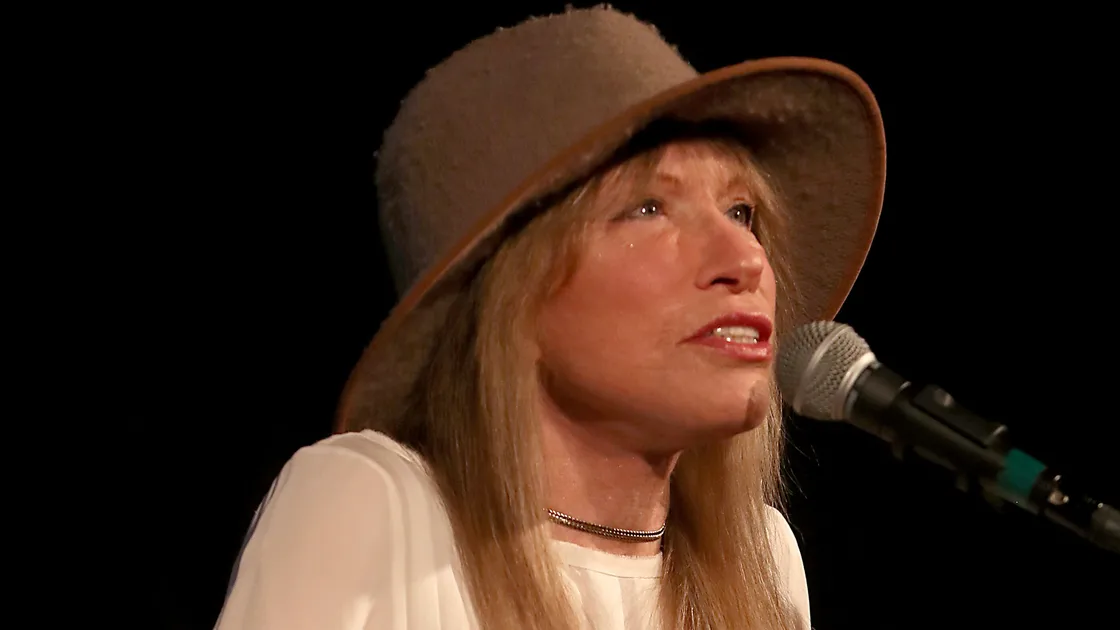
Singer-songwriter Carly Simon confirmed Monday that she has been diagnosed with Parkinson’s disease. She also said she was treated for basal cell carcinoma not long after her Parkinson’s diagnosis.
Boston Globe via Getty Images
A New York native, Simon rose to prominence in the early 1970s with a string of smash songs like That’s the Way I’ve Always Heard It Should Be and Nobody Does It Better, the latter of which was used as the theme for the 1977 James Bond film, The Spy Who Loved Me.
Olivia Rodrigo also sang a rendition of the song to honour Simon being inducted into the Rock & Roll Hall of Fame in 2022.
A breast cancer survivor who underwent a mastectomy and chemotherapy in 1997, Simon has notably maintained a low public profile in recent years. Her last live performance took place in March 2018, when she appeared onstage during the 31st Annual Tibet House US Benefit Concert & Gala at New York’s Carnegie Hall.
And though she’d been slated to attend the 2022 Rock & Roll Hall of Fame induction ceremony, she backed out following the deaths of her two sisters, Joanna and Lucy, just days before the event.
Advertisement
In 2013, Simon joined Taylor Swift on her Red Tour to perform You’re So Vain as a duet.
Theo Wargo/TAS via Getty Images
In her note, Simon said she’d made the choice to step away from the spotlight. “Between my mobility issues, the Parkinson’s diagnosis, the surgery, and the emotional effects of it all, withdrawing from public view was the most palatable reaction,” she said. “If a person is allowed to hibernate during both winter and summer, then I have become an all-season bear.”
While Simon hasn’t released new music since 2008’s This Kind of Love, she acknowledged finding solace in the recording studio. Next month, she’s set to release Comes In Waves, her first studio album since 2009’s Never Been Gone.
“Working on the music gave shape to days that did not always have much shape,” she said. “It gave me somewhere to go without having to leave the room. It reminded me that illness can change your life without becoming the whole of your life.”
Simon concluded her statement by thanking her caregivers, extended family and her two children, Ben and Sally Taylor, whom she shares with her ex-husband, fellow musician James Taylor.
Advertisement
“I do not consider Parkinson’s a gift or a blessing. It is neither. It is difficult, frustrating, and sometimes frightening,” she said. “I am still learning how to live with it and how to accept it without feeling that I have surrendered something essential.”
At the height of the 2015 refugee crisis, a moment of human kindness captured the world’s attention. A young Syrian mother, newly landed by small boat on a beach in Greece, was struggling to feed her child when Militsa (Emilia) Kamvisi, who was then 83, offered to help. The two friends Kamvisi had been sitting with on a nearby bench – Maritsa Mavrapidou and Efstratia Mavrapidou, 85 and 89 respectively – joined in.
A photographer recorded the scene and the three grannies from Lesbos, as they came to be known, became instant symbols of hospitality and welcome. As Kamvisi put it at the time: “What did I do? I didn’t do anything. I just wanted to help the girl, who was wet and tired.”
The poignancy of their gesture was underscored by the fact that all three women were themselves children of refugees. Maritsa Mavrapidou later explained: “Our mothers came here as refugees from Turkey, just across the way, and they were just girls at the time. They came without clothes, with nothing. That’s why we feel sorry for the migrants.”
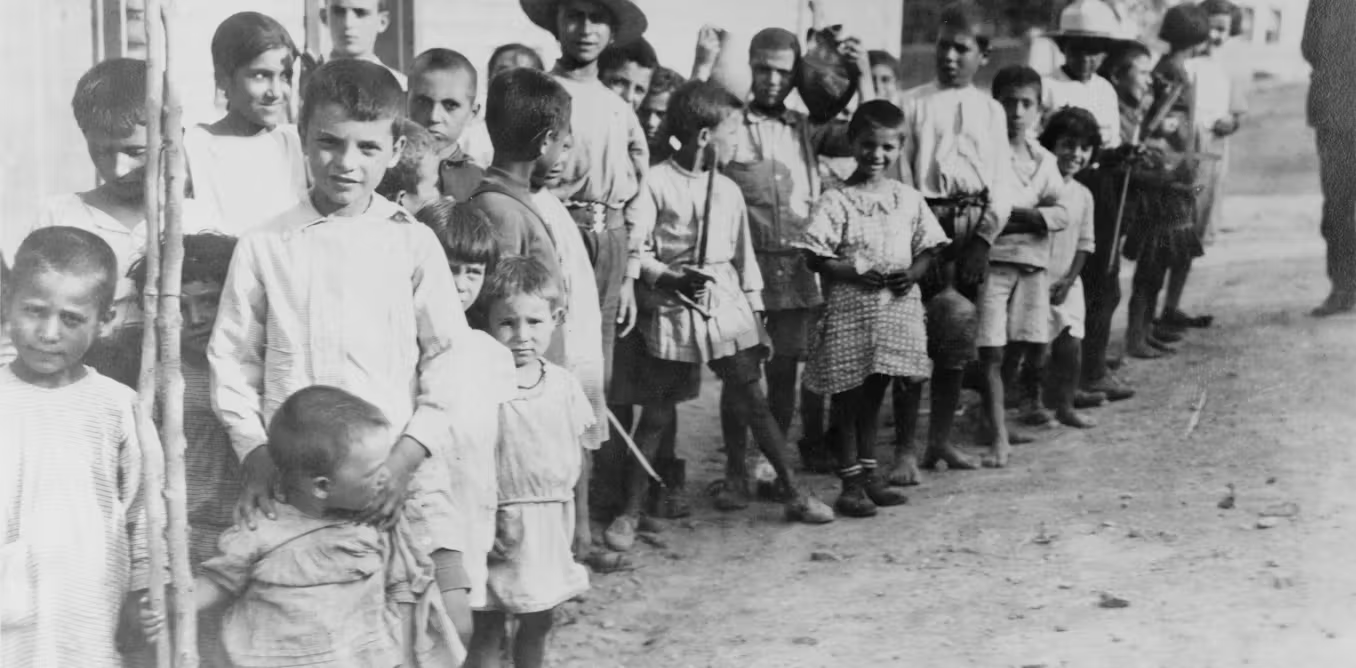
Their mothers arrived in Greece as part of what historians call the 1922-24 Asia Minor forced displacement. Following the collapse of the Ottoman empire and the Greco-Turkish war that ensued, Greece and the newly founded state of Turkey agreed to the exchange and compulsory displacement of their religious minorities. Around 1.2 million people were expelled from Turkey to Greece and 360,000, from Greece to Turkey.
Advertisement
In my new book, A Century of Asia Minor Refugees in Greece: Flight, Fight, and Fraternity, I show how refugee memory and identity changes through time as it passes from one generation to the next. Refugee memories pass through the different stages of trauma, from silence, to long periods during which memories remain dormant and, ultimately, to a reawakening.
Silent witness
Between 2019 and 2020, I travelled throughout Greece conducting over 260 oral history interviews with refugees from Asia Minor and their descendants of the second, third and fourth generations. Asia Minor, also known as Anatolia, refers to the landmass that makes up the major part of western Turkey today.
Among other questions, I wanted to examine how older migrants define their own identities. I was also interested in how they think about new arrivals.
In 2019, I visited the village of Skala Loutron on Lesbos, a settlement originally built in 1931 for 25 refugee families. Nobody spoke of being from Asia Minor.
Advertisement
Dimitris Papachrisos, a second-generation descendant born in 1952, is the president of the local refugee association and the 1922 Refugee Memorial Museum. He recalled the silence and ignorance of his parents’ generation, describing the history of the village as a well-kept secret among traumatised refugees.
“There was no discussion about who is from Asia Minor and who isn’t, it was something forgotten that nobody talked about. Each person would look to survive,” he explained.
Refugees on a boat crossing the Aegean from Turkey to Lesbos, in Greece, in 2016. Mstyslav Chernov/Wikimedia, CC BY-SA
The Greek civil war, which lasted from 1946 to 1949, resulted in entrenched political divisions and social tensions. Refugee descendants struggled to integrate into Greek society. Government policy pushed refugees to give up their own languages and dialects, subsuming their different histories into one national narrative. This silenced any public expression of that past. As a result, until the 1960s, refugee memory only existed in the family.
Neos Milotopos is another village established in 1924 by Cappadocian refugees, most of them from the same village in Turkey. One third-generation descendant, Sophia Kosmoglou, told me her great-grandparents had been massacred in a church in Cappadocia. Her grandparents survived. But nobody spoke of it.
Advertisement
She described how food and culture carried what words could not. “The cuisine is active, meaning we didn’t ever have any pauses,” she said. The Cappadocian food tradition, and her later involvement in the cultural association, led her to discover her family history. The second generation – her parents – threw themselves into the task of surviving; they had to find a way to live, to eat and to raise kids. It was trauma and silence, not stories, that marked this turbulent historical period.
Generational trauma
Between 1967 and 1974, Greece was ruled by a military junta. In 1974, a junta-backed coup against the president of Cyprus triggeredthe Turkish invasion of Cyprus, which brought the regime to its knees. This ushered in a new era of democracy, and saw the Third Hellenic Republic established.
Shaped by this era of ever-increasing social unrest, mobilisation and the international “memory boom” of the 1980s, third-generation refugee descendants began to dig into their families’ histories. Reflecting on this collective reawakening, Kosmoglou said that the “trauma is still present”.
This chimes with what Stratis Balaskas, whom I interviewed on Lesbos, told me. His father had arrived on the island as an unaccompanied minor at the age of six in 1922. Balaskas is Lesbos-born and yet he told me that still today, he feels he is only on the island because “the boat brought us here”.
Advertisement
In the 1980s, Balaskas went to Turkey to find his ancestral home. Within a day, he had found his ancestral home and recovered belongings his family had left behind. The caretaker of his grandfather’s fields, the current owner of the house, had kept them for years. When Balaskas brought them back to Lesbos, his father said: “Take them, keep them, they are yours, they are not mine. I don’t want you to tell me anything again.”
Between 1930 and 1975, scholars at the Centre for Asia Minor Studies in Athens conducted 5,000 interviews with refugees, a selection of which is recorded in the five-volume Greek language book, Η Έξοδος (The Exodus). Many said the same thing: they didn’t wish to talk about or hear of what they had experienced. Living through it was enough.
Younger generations, by contrast, feel a greater urgency to collect stories before they are lost. Niki Chontronikola, who was born on Lesbos in 1992, began building her family tree at the age of 14. From her father, she told me she had “gotten the message, to feel proud”.
By the time her generation came of age, Greece’s membership of the European Union and the country’s abrupt shift from an emigration to an immigration country in the 1990s, through to Europe’s 2015 migration crisis, had created an environment of globalisation, secularisation, Europeanisation and multiculturalism. Old distinctions no longer had the same strength; hybrid identities were emerging.
Advertisement
Reflecting on this multiplicity, Chontronikola said: “When I’m here, I want to say I’m from Asia Minor. When I’m in the rest of Greece, I say I’m from Lesbos. And when I’m abroad, I’m forced to say Greece and then Lesbos.”
Almost 60 years her senior, Vasos Vogiatzoglou captured this same century-long journey in a single confession. As the “oglou” suffix of his surname makes clear, he was born in 1935 in Nea Ionia, one of Athens’s best-known Asia Minor refugee settlements, to refugee parents.
“When I was a kid at school,” he told me, “I used to mutter my last name. I was ashamed to say ‘oglou’. I’m proud of it now.”
The afterlife of the Greek-Turkish population exchange can be traced in other cases of forced displacement, from the 1947 Partition of India to the 1948 Israeli-Palestinian conflict. In light of ongoing wars, migration crises and climate displacement, the question of whether or not to remember – and quite how memory and identity are shaped and reshaped – echoes with new urgency












































You must be logged in to post a comment Login