People should not be expected to put up with this and are urged to get checked
08:58, 12 Feb 2026Updated 09:05, 12 Feb 2026
Women who experience any kind of problems with their period have been urged to get checked by a healthcare professional. A TV doctor has said that “it’s not normal” for some of these issues to ‘take over our lives’.
Known for appearing on health segments on BBC Breakfast and ITV’s This Morning, women’s health specialist Dr Nighat Arif said people should never be made to put up with these issues, especially if they start affecting how you live. The NHS GP claimed that just because something is common to you does not mean it is “normal”.
She said: “You know, it’s not normal to have blood leak through your period products. You know, that period pain that is doubling you up and stopping you from doing activities every day is not normal.
Advertisement
“So, therefore, you need to please go and find the underlying causes for that. Please get your healthcare professional to check for the underlying causes of heavy menstrual bleeding. That could be uterine fibroids, adenomyosis, endometriosis, polycystic ovarian syndrome, bleeding disorders such as von Willebrand’s, and also underactive thyroid conditions or misdiagnosed thyroid conditions.
“A copper IUD or copper coil. Pelvic inflammatory disease. Any infection or discharge alongside your heavy menstrual bleeds could indicate pelvic inflammatory disease. And then explore management options.”
Content cannot be displayed without consent
According to the NHS, most women experience their period every 28 days roughly, but it’s common for periods to be more or less frequent than this. In some cases, it can be as early as every 21 days or as late as every 35 days.
Experts have assured women that their periods “can change”, such as lasting longer or getting lighter. The NHS claims that this “does not necessarily mean there’s a problem” but can be investigated to rule out any possible conditions.
Advertisement
The NHS has lots of information online about possible period problems that an expert can diagnose if symptoms align and testing confirms this is an issue. Read more about it here.
Dr Nighat pointed out in her video that Wellbeing of Women has an online symptom checker for those with period-related issues. It is free to use and available to access here.
The tracker has been developed in partnership with GPs, gynaecologists, pharmacists and women to help tackle the normalisation of period-related symptoms. Results from this symptom checker should not replace advice from your healthcare professional.
Advertisement
Dr Nighat said: “You can jot down all your symptoms and take a letter to a healthcare professional to navigate the next part of the journey. Common is not normal. Always investigate heavy menstrual bleeding.”
He continued: “I have a suggestion. Number one, buy oil from the United States of America. We have plenty. We have so much, and number two, build up some delayed courage. Should have done it before. Should have done it with us as we asked, go to the strait and just take it, protect it, use it for yourselves.
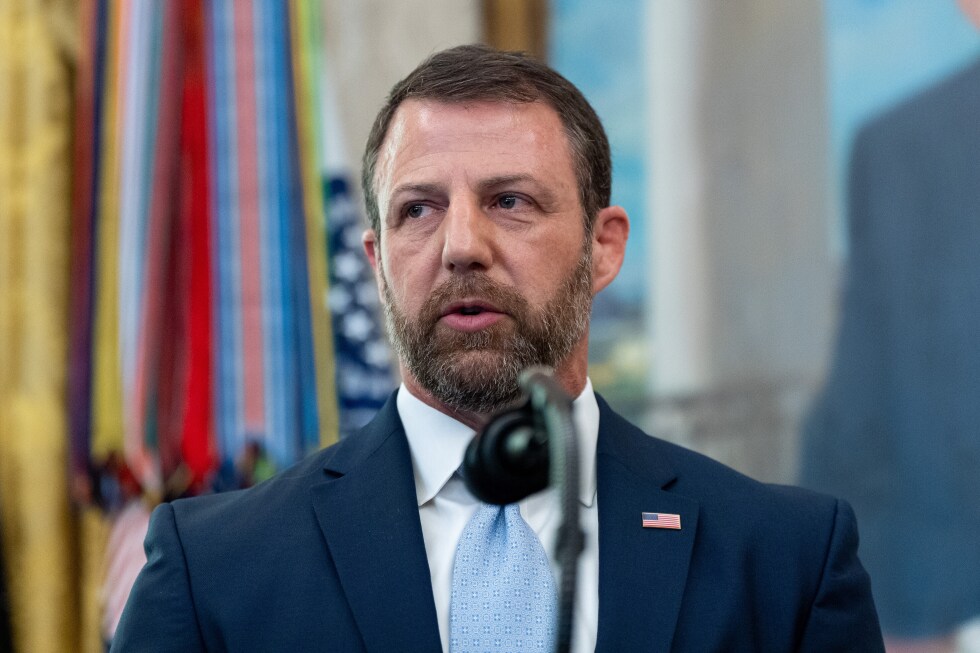
WASHINGTON (AP) — Homeland Security Secretary Markwayne Mullin on Wednesday rescinded a rule that DHS expenditures over $100,000 be personally approved by his office, ending a widely criticized policy implemented by his predecessor Kristi Noem that critics said put a particular burden on the Federal Emergency Management Agency ’s work aiding disaster response and recovery.
The decision marks the first major action by the new Homeland Security leader, sworn in last week, to change a policy implemented by Noem, whom President Donald Trump fired in March.
Mullin’s move is expected to ease a spending bottleneck that lawmakers and states said delayed disaster response and recovery funds, though those impacts are unlikely to be widely felt until after the end of the DHS shutdown, now in its 47th day.
A DHS spokesperson confirmed that Mullin rescinded the rule Wednesday, telling The Associated Press the secretary “re-evaluated the contract processes to make sure DHS is serving the American taxpayer efficiently.” CBS News first reported Mullin’s decision.
Advertisement
The spokesperson said Mullin’s action will streamline the contracting process and allocate aid more efficiently.
The International Association of Emergency Managers praised Mullin’s decision. “We appreciate Secretary Mullin’s common-sense approach to this matter, and we look forward to working with him,” said Josh Morton, president of IAEM-USA.
Noem issued a directive last June requiring that she personally approve any Department of Homeland Security expenditure over $100,000. Critics said the rule undermined FEMA in particular, an agency that routinely issues contracts and reimbursements well over that amount in its work preparing for and responding to natural and manmade disasters across the U.S.
The policy created “an untenable situation for emergency managers,” Morton said, and a bottleneck that also hindered mitigation and preparedness programs, “putting Americans at increased risk from disasters.”
Advertisement
A recently released report by Democratic members of the Senate Homeland Security and Governmental Affairs Committee found the approval rule had delayed at least 1,000 FEMA contracts, grants or disaster reimbursements by September.
The policy came under scrutiny after news reports linked it to unstaffed call centers and delays deploying FEMA Urban Search and Rescue teams to Texas during deadly floods last July, and brought sharp rebuke from some state officials and lawmakers, especially Republican Sen. Thom Tillis of North Carolina, whose state is still recovering from devastation wrought by Hurricane Helene in 2024.
“You’ve failed at FEMA,” Tillis told Noem at a Senate hearing two days before she was fired.
About $2.2 billion in recovery and mitigation dollars were in the DHS approval queue Wednesday, according to FEMA data seen by the AP.
Advertisement
“It’s got a great mission, and I think people at FEMA want to do their job,” Mullin told lawmakers at his March confirmation hearing, sparking cautious hope that he would ease the tumult experienced at the agency under Noem.
Mullin said he would keep the agency ”adequately staffed” after it lost over 2,400 employees last year, and said he was already considering nominees for a permanent FEMA administrator, which the agency still lacks.
Trump has repeatedly floated the idea of eliminating FEMA, saying as recently as Tuesday that the agency is “very expensive and it really doesn’t get the job done.”
Michael Coen, FEMA chief of staff during the Obama and Biden administrations, said, “Hopefully this a step toward transparency and stability between FEMA and states.”
Lifting the spending approval rule will not necessarily mean a rapid flow of FEMA reimbursements to states, tribes and territories, as the agency is still impacted by the DHS fund impasse, now the longest government shutdown in U.S. history.
While FEMA disaster response and recovery activities are paid out of a non-lapsing Disaster Relief Fund, that money is running low, a FEMA official warned lawmakers in a House hearing last week, with about $3.6 billion remaining. The DHS appropriations bill would add just over $26 billion to the fund.
A previous version of this story misstated that the DHS shutdown was in its 46th day, not its 47th, and that the Senate hearing where Tillis rebuked Noem took place one day before her firing, not two.
The police have made three arrests in the early hours following a manhunt after a man in his 20s was seriously injured in a daylight shooting that saw local schools put on lockdown
Three people have been arrested following a daylight shooting that left a man seriously injured.
Advertisement
The incident took place in Bristol, causing local schools to lockdown as police launched a manhunt.
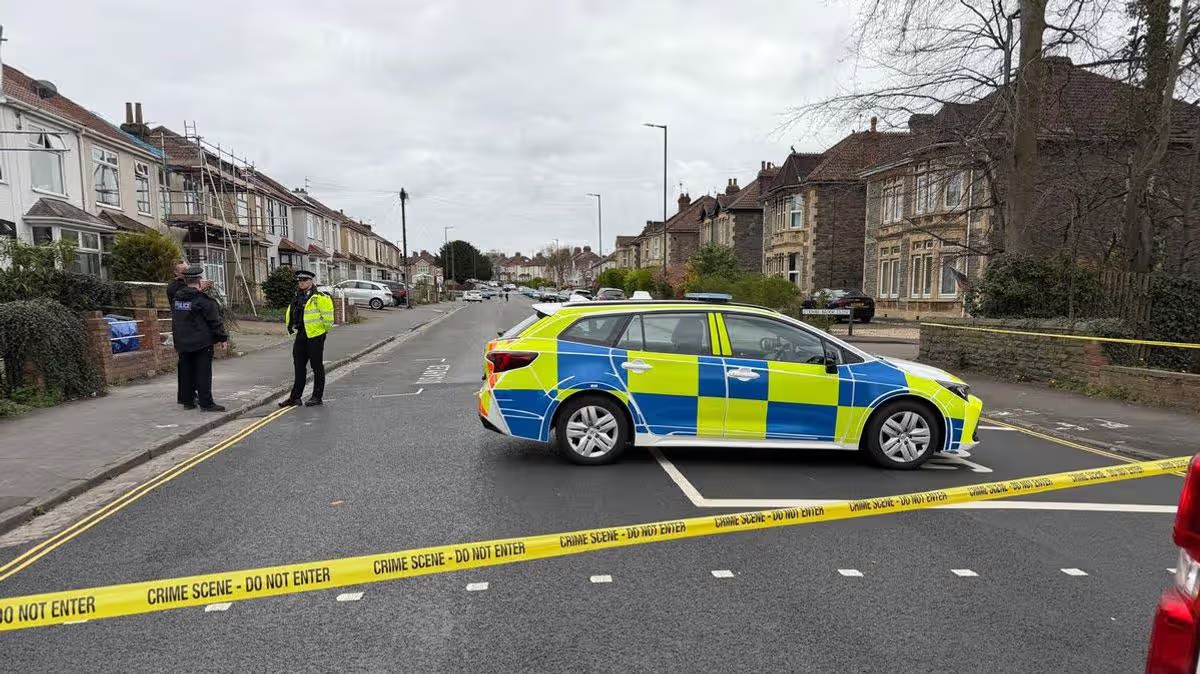
Avon and Somerset Police were called at 1.47pm on Wednesday, April 1 to a report that a gun had been fired at a car in Speedwell Road, which has been taped off near the Wackum pub and near the car wash crossroads.
The victim, a man in his 20s was taken to hospital with a serious injury.
Advertisement
The police have issued a major update in the early hours as three people have been arrested in connection with the incident.
A man in his twenties was arrested just after 2.30am on suspicion of attempted murder, and another man and a woman in their twenties were arrested on suspicion of assisting an offender.
All three remain in police custody.
The force added that enquiries are continuing, however they are not looking for anyone else in connection with this incident at this time.
Advertisement
St Anne’s Woods remains cordoned off as an area of interest and members of the public can expect to see a heightened police presence in this area and in the Speedwell area of Bristol.
A spokesperson for Avon and Somerset Police said: “We understand that this may have been a very concerning incident, but we have deployed a significant number of resources as part of our response, including the National Police Air Service helicopter, specially-trained firearms officers and drone units.
“We continue to appeal for anyone who witnessed the incident to come forward, including anyone with footage of the incident. If you can help, please call us.”
Passionate runner Martin Hull passed away in August last year after being diagnosed with lung cancer two weeks after he completed the Boston Marathon
21:52, 01 Apr 2026Updated 21:54, 01 Apr 2026
Five teams are set to take part in the Belfast Marathon this year in memory of a passionate runner who passed away shortly after being diagnosed with lung cancer.
Martin Hull was preparing to take part in the Boston Marathon last year when he started to feel unwell in the weeks leading up to the event. A passionate runner for many years who had completed more than a dozen marathons prior, he was still determined to take part in the event on Easter Monday and while he managed to complete it, it was a massive struggle.
Two weeks later after attending A&E, Martin received the devastating news that he had lung cancer. He and his family couldn’t understand how someone so fit, who had just trained for and completed a marathon, could develop the disease and sadly he would soon be told that it had spread throughout his body and was terminal.
Advertisement
In the months that followed Martin maintained a postive attitude and encouraged his family to keep up their own running and training. Then on August 19 he passed away peacefully surrounded by his family.
One month later his daughter Megan completed the Belfast Half Marathon in his memory following the plan her dad had created for her.
His wife Lucy said: “Running was one of Martin’s greatest passions. He was a regular at parkrun, logged over 9,500km on Strava, and completed 13 marathons in his lifetime, including three Belfast City Marathons. He approached running the same way he approached everything in life—with dedication and determination. He researched the best trainers, planned the best routes, and took his pre- and post-run fuel very seriously (often pizza). As a family we travelled with him and cheered him on everywhere from Malaga to Loch Ness, but in recent years one race meant more than any other: the Boston Marathon.
“But the weeks before Boston weren’t easy. Martin began feeling unwell, especially when running, and made several visits to the GP as different pains appeared. Despite this, he refused to give up on the dream he had worked so hard for.
“Boston was bittersweet. The atmosphere was incredible, but Martin ran the entire race in intense pain. When we saw him at mile 25—normally too focused to even notice us—he stopped to talk, clearly struggling. Yet his determination carried him forward and he crossed the finish line in 04:52:08. We were incredibly proud, but deep down we knew something wasn’t right.
“Two weeks later our world changed. After a trip to A&E we were told Martin had a tumour in his lung. It was impossible to understand how someone so fit—someone who had just run a marathon—could have cancer. Over the following weeks we learned it had already spread to his lymph nodes, pancreas, spine and bowels. Soon after, we were given the devastating news that his illness was terminal.”
She continued: “Despite everything, Martin never lost hope or his faith in Christ. His diagnosis was ALK-positive lung cancer, a rare type that can affect young, healthy people. Medication gave us precious extra time together, and during that time he continued to encourage us—especially our running.
Advertisement
“Martin passed away peacefully on 19 August with our family beside him. Four weeks later, his daughter Megan ran the Belfast Half Marathon following the plan he had made for her.
“This year we run in his memory. If you can, please support us by donating to help raise awareness, fund research, and support families affected by ALK-positive lung cancer. Martin never gave up—and neither will we.”
Want to see more of the stories you love from Belfast Live? Making us your preferred source on Googlemeans you’ll get more of our exclusives, top stories and must-read content straight away. To add Belfast Live as a preferred source, simply click here
Micklegate has been closed to motorists for almost a week after City of York Council said officials had discovered a void beneath the road surface close to the street’s junction with North Street.
The void, which is clear to observers passing by, has disrupted residents and business deliveries, which are being re-routed.
Recommended reading:
Despite this, the council insists that the street is “very much open for business” throughout the Bank Holiday weekend, with Micklegate still accessible for pedestrians, mobility aid users and cyclists.
Advertisement
Micklegate has been closed to motorists since Thursday (March 26) (Image: Newsquest)
Steve Wragg, the council’s head of highways asset management, said: “We aim to keep disruption to a minimum and are undertaking a thorough investigation of the void and what’s caused it, before we can decide on the best way to resolve it and then re-open the road.”
Nationwide has issued a crucial reminder about the ISA contribution deadline as major changes to the £20,000 allowance loom from April 2027
about Nationwide Building Society has issued an update concerning an approaching final deadline for savers. The latest statement follows an enquiry from a customer on social media.
Advertisement
The customer raised an important question to the organisation about ISAs, asking: “What’s your deadline for the end of the tax year?” During each tax year, you can put up to £20,000 into tax-free ISAs, with the current allowance able to be split between cash ISAs or stocks and shares ISAs, according to your preference.
Responding to the enquiry, Nationwide pointed the customer towards a page on their website offering additional information about the ISAs they provide.
Nationwide was asked to clarify the cut-off date for customers to make deposits into their accounts using this year’s ISA allowance. The organisation stated: “For Nationwide (and all ISA providers), ISA contributions must be made by 5 April (by 11.59pm on 5 April), the final day of the tax year, for them to count toward that year’s allowance.
“This aligns with the HMRC ISA rules, which Nationwide adheres to. All ISAs and rates are accessible in branch, by phone or online, as we understand customers appreciate having options in how they bank, which is why we’ve extended our Branch Promise.”
Advertisement
The Branch Promise represents Nationwide’s commitment to maintain all its 605 high street branches open until at least 2030. The organisation also provided some additional guidance about managing your savings, reports Wales Online.
Nationwide told the customer: “Customers can also check any online ISA or savings accounts on the app with rate and maturity dates all detailed there. Customers can also make use of our in‐app budgeting tool to help them manage their money.”
At present, the building society offers rates of up to 4.5 per cent on its ISA products, including both a five-year fixed term and a three-year fixed term, each providing 4.5 per cent. A major change to ISAs is on the horizon.
From April 2027, the current £20,000 annual allowance will effectively be reduced, meaning only £12,000 will be allowed for deposits into any form of ISA. The remaining £8,000 must be allocated to investment-based ISAs.
EXCLUSIVE: I Love LA is now ready to stream on HBO Max and it stars the daughter of a Hollywood icon.
Hayley Anderson Screen Time TV Reporter
22:32, 01 Apr 2026Updated 22:44, 01 Apr 2026
An I Love LA actress has revealed a surprising family connection between her father and one of her fellow cast members.
HBO Max has finally launched in the UK, bringing with it a wealth of acclaimed programmes, including I Love LA, a sitcom following Maia (played by Rachel Sennott) whose life descends into chaos when her influencer friend Tallulah (Odessa A’zion) makes an unexpected return.
Advertisement
The cast is rounded out by Jordan Firstman, Gossip Girl‘s Leighton Meester, and actress True Whitaker, who portrays Maia and Tallulah’s close friend Alani Marcus.
Cinema enthusiasts may recognise Whitaker as the youngest daughter of acclaimed actor Forest Whitaker, renowned for his roles in The Last King of Scotland, The Butler and Rogue One: A Star Wars Story.
However, it was only upon arriving on the set of I Love LA that True discovered her father had a longstanding connection with one of her co-stars.
Speaking to Reach Plc, Whitaker revealed: “My dad in the show, Keith David, is a friend of my dad’s.
“When I was on set shooting the last episode, I Facetimed my dad being like ‘Hey, do you know this guy? This is my dad.’
“And he [Forest Whitaker] was like ‘Keith?!’ and Keith was like ‘Forest!’
Advertisement
“And apparently my dad is the reason Keith moved to LA. They did Platoon together when they were in their 20s so it was kind of cute to see them reminisce.”
Also featuring Willem Dafoe and Charlie Sheen, the 1980s film Platoon chronicled the experiences of a young American volunteer confronting the brutal realities of the Vietnam War.
While Whitaker portrayed supporting character Big Harold, actor Keith David took on the role of seasoned soldier King.
Advertisement
True also spoke of her renowned father’s delight at her securing a prominent part in I Love LA, having previously appeared in his drama Godfather of Harlem.
She said: “He’s extremely proud of me. Even his assistant pulled me aside and was talking to me and got emotional and was like ‘you have no idea.’
“My dad apparently had just been gloating to everybody and was stoked to see me in this light.
“And for me to be able to use my comedic skills, because obviously in the house I’m annoying and loud and funny but now I can actually utilise it.”
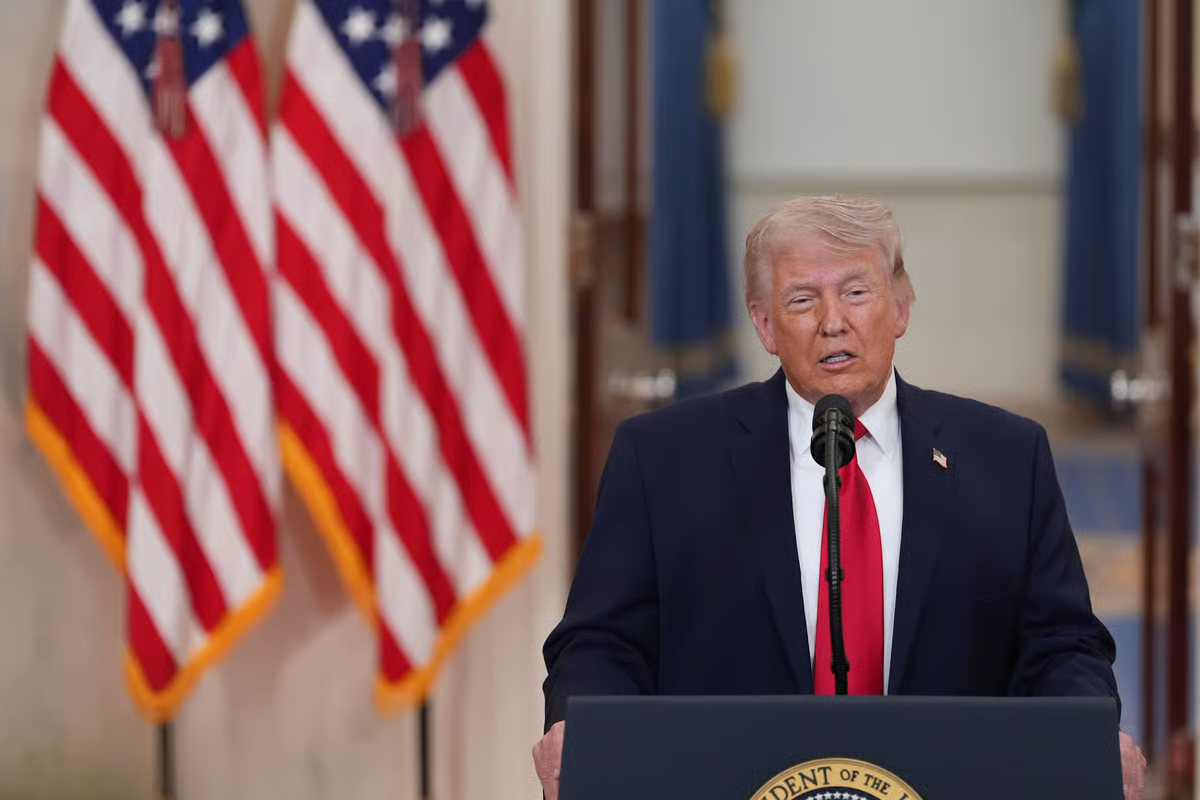
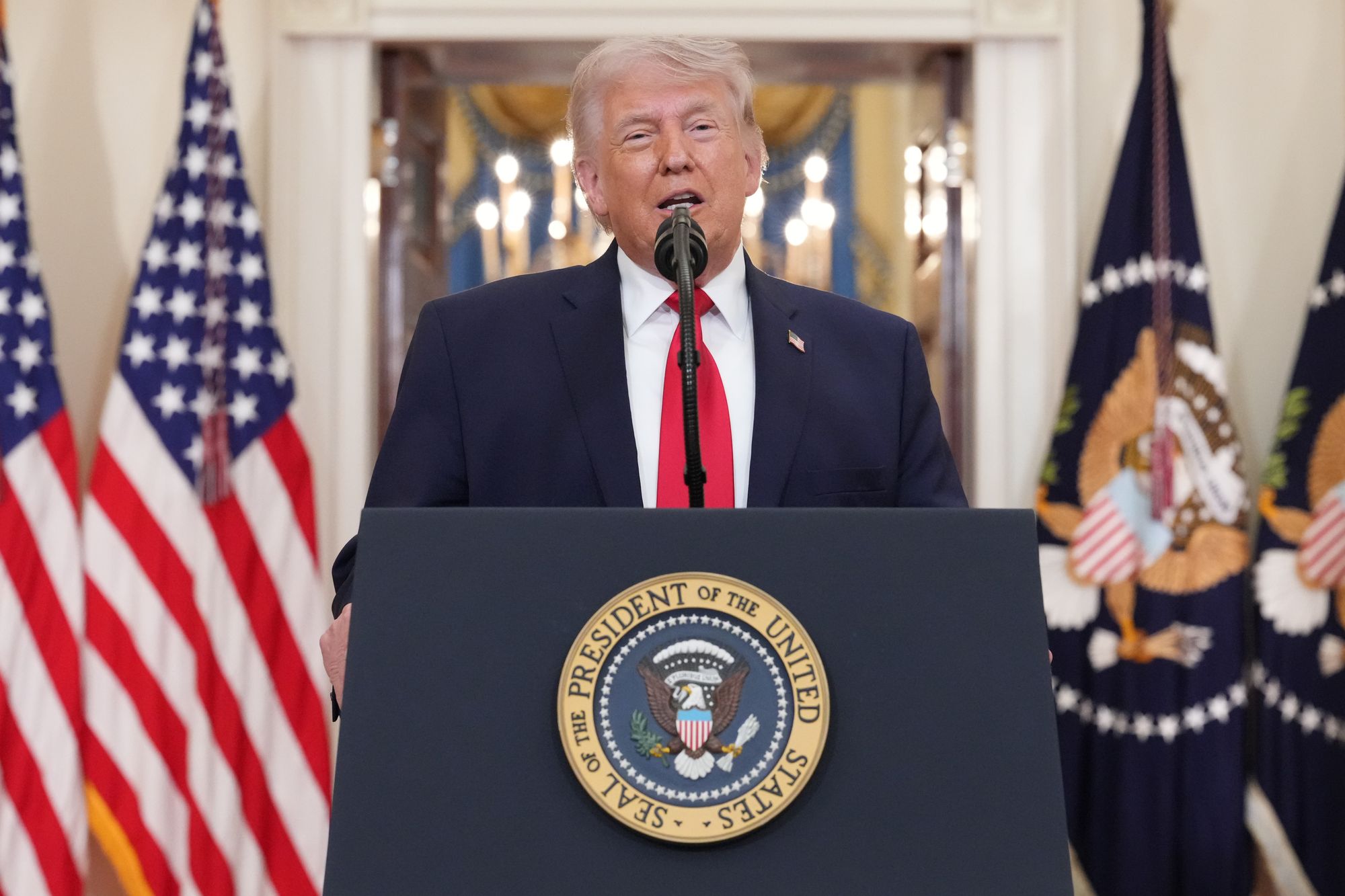
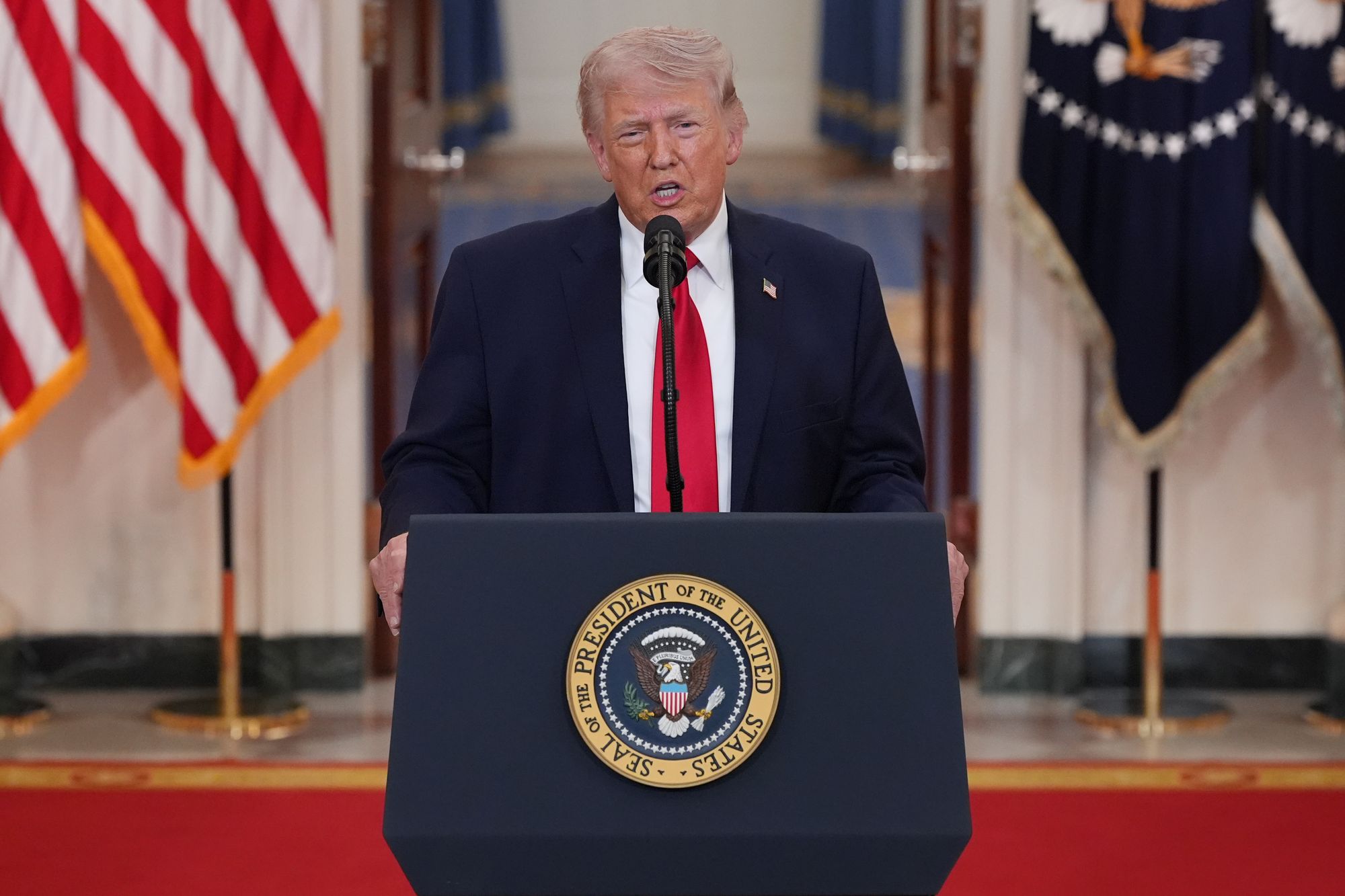
A weary President Donald Trump slurred his way through a disjointed national TV address Wednesday night in which he repeated the same justifications for his war with Iran that he’s been posting on social media throughout the month-long conflict.
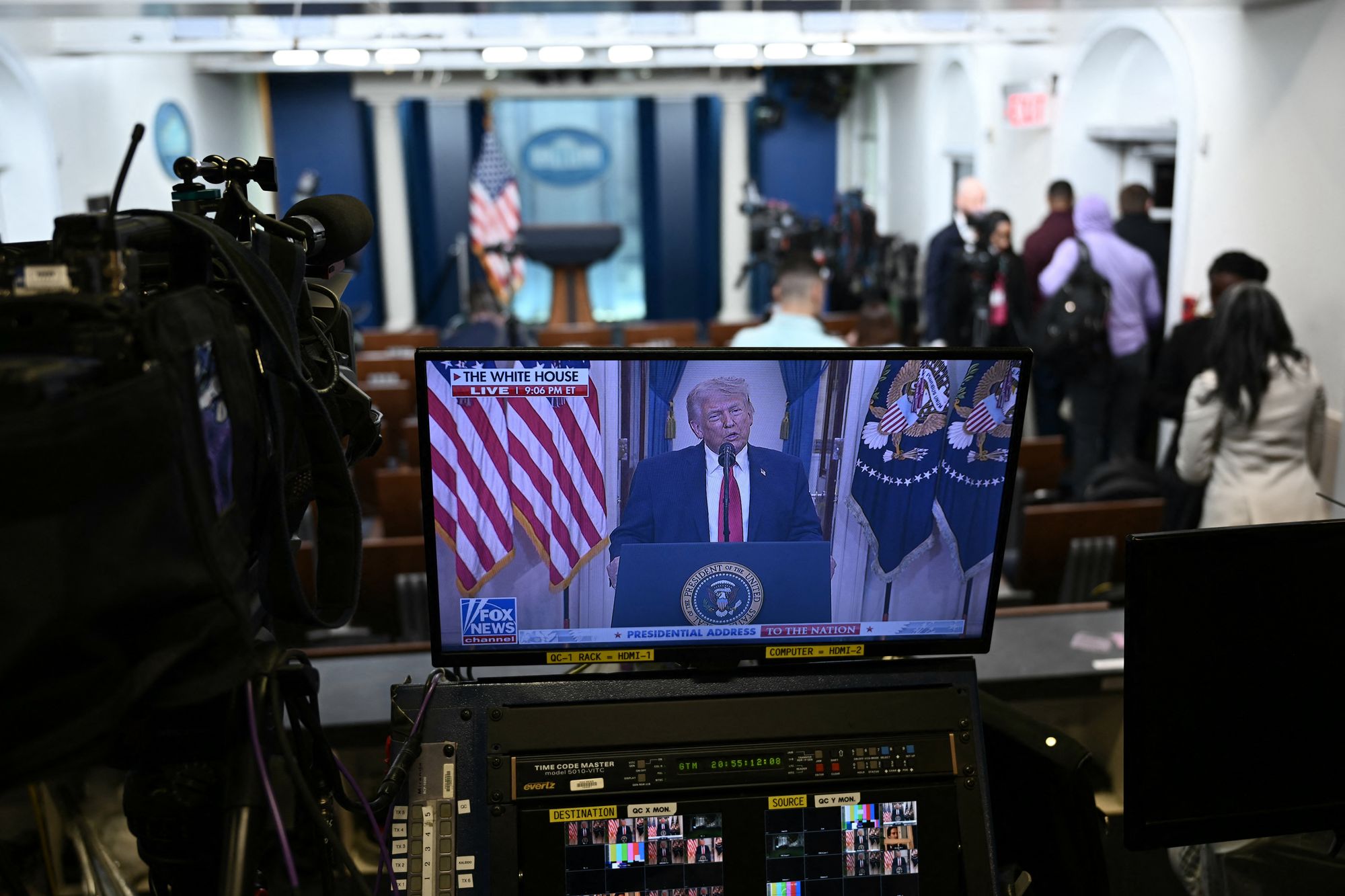
The primetime speech, which pre-empted scheduled television programming on all broadcast networks at the request of the White House, had been billed as a major address in which Trump would finally lay out the justifications for the military action he started against Iran — one that would finally provide details on how and when the conflict would end to an American populace that has grown weary of it.
Instead, the president spent nearly 20 minutes speaking from a lectern in the White House’s main foyer, in prepared marks that often repeated, word for word, his Truth Social posts, and offered contradictory statements about the war, Iran and the now bogged down Strait of Hormuz, while repeatedly having trouble pronouncing words like “enemies,” “Venezuela” and “battlefield.”
Addressing both the cameras and an audience of cabinet members who’d been summoned to offer support — including Vice President JD Vance, Treasury Secretary Scott Bessent, Secretary of Defense Pete Hegseth and Secretary of State Marco Rubio — Trump began by claiming the joint U.S.-Israeli campaign, dubbed “Operation Epic Fury,” had “delivered swift, decisive, overwhelming victories on the battlefield, victories like few people have ever seen before” before repeating many of the same claims he has made about damage to Iran’s military capabilities for the last month in appearance after appearance.
Advertisement
He bragged about Iran’s navy being “gone,” their Air Force “in ruins,” and crowed that “most” of the country’s leaders are “now dead” from decapitation strikes in the opening days of the war while claiming that Tehran’s ballistic missile capability has been “dramatically curtailed.”
In a 20-minute speech from the White House, President Donald Trump offered no new details to a nation wary of his reasoning for going to war with Iran. (AP)
“Never in the history of warfare has an enemy suffered such clear and devastating, large scale losses in a matter of weeks,” Trump said before claiming that the U.S. was “winning and now winning bigger than ever before” as a result of his decision to attack Iran in the midst of negotiations on Feb. 28.
He then pivoted to bragging about oil production in both the U.S. and Venezuela and claimed the country is now “totally independent of the Middle East.”
“We don’t have to be there. We don’t need their oil. We don’t need anything they have, but we’re there to help our allies,” he said.
The president’s rambling address took place just hours after a new CNN poll revealed that Americans have largely soured on the war, with just 34 percent of respondents voicing approval of it. The poll also found a super-majority of 66 percent of Americans disapproving of the war, with 43 percent of those reporting that they strongly disapprove.
Advertisement
Trump proceeded to change subjects once more by launching into another series of grievances as justification for launching the war, including blatantly false claims about Iran’s alleged culpability for the 2000 bombing of the U.S.S. Cole for which al-Qaeda terrorists are preparing to go on trial before military commissions at the U.S. naval base in Guantanamo Bay, Cuba.
He later returned to discussing present events by repeating his oft-used lines about America’s purported objectives of “crippling” Iran’s military capabilities and said he was “pleased” to say the “core strategic objectives are nearing completion.”
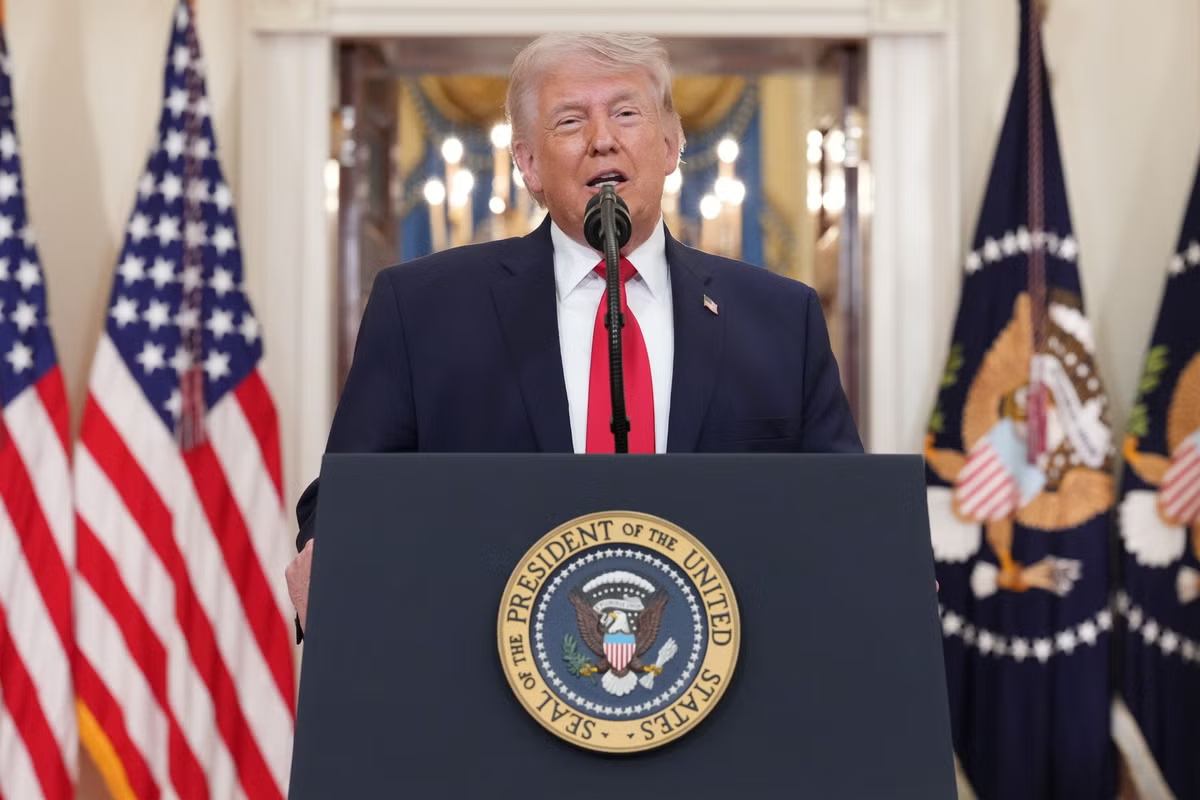
The president had trouble pronouncing numerous words during his rambling address to the nation (AP)
Without offering any evidence, he claimed that the families of the 13 American service members who’ve been killed since the start of the conflict had each asked him to “finish the job” while suggesting that failing to “complete the mission” would dishonor the fallen soldiers and airmen.
And inexplicably, he boasted that U.S. “has never been better prepared economically” to deal with the skyrocketing gasoline prices his war has caused while blaming the sky-high energy costs solely on Iran “launching deranged terror attacks against commercial oil tankers in neighboring countries that have nothing to do with the conflict.”
“We were a dead and crippled country after the last administration, and made it the hottest country anywhere in the world, by far with no inflation, record setting investments coming into the United States — over $18 trillion and the highest stock market ever, with 53 all time record highs in just one year. It all positioned us to get rid of a cancer that has long simmered. It’s known as the nuclear Iran, and they didn’t know what was coming,” he said.
Advertisement
The president’s non sequitur on the U.S. economy and gas prices came as his advisers reportedly brace for oil prices to surge past the $150-a-barrel mark as the Iran war stretches into its second month and the Strait of Hormuz — a vital trade chokepoint through which 20 percent of the world’s oil flows — remains largely closed.
Because Iran has refused to allow most oil tankers passage through the key chokepoint, global oil supplies have been squeezed, leading to the massive price increases on the global oil market.
Yet Trump, seemingly ignorant of the interconnected nature of petroleum trading, appeared to dismiss the war’s effect on oil prices and claimed the U.S. is somehow immune from the effects of the war he started because of what he called his administration’s “drill baby drill” program.
“There’s no country like us anywhere in the world, and we’re in great shape for the future. The United States imports almost no oil through the Hormuz Strait and won’t be taking any in the future. We don’t need it. We haven’t needed it, and we don’t need it,” he said.
Advertisement
The televised address as seen at the James Brady Press Briefing Room of the White House in Washington, DC on April 1, 2026. (AFP via Getty Images)
He then appeared to repeat, verbatim a Truth Social post he’d made earlier this week in which he urged other nations to put their naval power towards forcing the strait to be reopened to maritime traffic.
“They must cherish it. They must grab it and cherish it. They can do it easily. We will be helpful, but they should take the lead in protecting the oil that they so desperately depend on,” he said.
“So to those countries that can’t get fuel, many of which refuse to get involved in the decapitation of Iran, I have a suggestion: Number one, buy oil from the United States of America. We have plenty. We have so much. And number two: Build up some delayed courage … go to the Strait and just take it, protect it, use it for yourselves. Iran has been essentially decimated. The hard part is done, so it should be easy,”
Trump added that when the conflict ends, the disputed waterway would “open up naturally” and predicted that the economic damage from the war he started would reverse itself.
“It will resume the flowing and the gas prices will rapidly come back down. Stock prices will rapidly go back up … our economy is strong and improving by the day, and it will soon be roaring back like never before. It will top the levels that it was a month ago,” he said.
Advertisement
His remarks were no different from anything he’s offered over myriad public appearances since the start of the war, despite hopes that he would provide a timeline for winding down the unpopular military operation.
Instead, he claimed the war would continue for “the next two or three weeks” while U.S. forces “bring [Iran] back to the Stone Age where they belong” and threatened indiscriminate attacks on Tehran’s electrical generation capacity — something that would be a war crime under U.S. law.
“We are going to hit each and every one of their electric generating plants very hard and probably simultaneously, we have not hit their oil, even though that’s the easiest target of all, because it would not give them even a small chance of survival or rebuilding. But we could hit it and it would be gone. And there’s not a thing they could do about it,” he said.
Choosing the right seat on the plane can determine a lot for your overall flight experience, and a travel expert has revealed exactly why you should avoid booking 11A
We all have a preferred window or aisle seat when flying, but one travel expert has revealed the exact seat you should always avoid.
Advertisement
Choosing the right seat on a plane can certainly come with its bonuses. Whether that’s more legroom, closer to the bathrooms, being the first row to be served refreshments, or a quieter spot near the back, away from babies. Yet some seats can be a disadvantage.
Window seats are popular among travellers, particularly for those wanting to enjoy the view during take-off or landing, for a little more privacy, or to take a little snooze against the cabin. One favoured window seat on planes has been 11A, due to its positioning near or over the wing, which is thought to offer less disruption from turbulence.
While it may sound appealing, 11A might not be as relaxing as it sounds. Andrea Platania, operations manager at airport transfer platform Transfeero, said that this specific seat often leaves passengers disappointed.
“Seat 11A might sound ideal because it’s by the window, but it can quickly become frustrating, especially on anything longer than a short hop,” the travel expert said. “You’re quite far from the toilets, which isn’t ideal, and getting in and out of that seat can be awkward.”
Andrea also explained that this seat can prove tricky for those who want to move around and stretch during the flight. “If you’re in 11A, you’re relying on the people next to you to move every time you want to get up. That might be fine once or twice, but over a longer journey it becomes inconvenient very quickly.”
It’s a seat that can also feel a little cut off from the rest of the cabin. “You’re not close to the aisle, so you don’t have that easy access, and you’re not in a premium position either. It ends up being a seat that looks better when you book it than it feels when you sit in it,” he outlined.
Advertisement
But that’s not the only seat you might want to think twice about booking. The expert said that seats 11A and 11F are among the “least rewarding seats” on a flight.
“Seats like 11A and 11F are often overlooked when people are booking, but they’re right in that middle section of the aircraft where you lose a lot of the small conveniences. They don’t seem bad on paper, but in practice, they’re some of the least rewarding seats to be in, Andrea said.
Yet one of the biggest disadvantages of these seats is during food and drink service. “On most short and mid-haul flights, cabin crew will begin service from both the front and the back of the plane, then work their way towards the centre. If you’re sitting in rows like 11, you’re effectively last in line from both directions.”
It can become even more of a drawback during busy flights. He said: “Passengers in seats like 11A and 11F are far more likely to find that popular snacks, meals, or even drinks have already run out by the time the trolley reaches them. It’s something people don’t think about when booking, but it becomes very obvious once you’re in the air.”
If that wasn’t enough to deter you from seats 11A and 11F, Andrea noted that they are inconveniently positioned on board. “You’re not particularly close to the toilets, and you’re not near the exits either, so you don’t get the benefit of convenience in either direction.
“You’re just in that middle zone where everything takes a bit longer.” So next time you book your plane seat, have a think about where you’d rather sit, whether that’s to ensure you’re one of the first to be served your meal or somewhere to ensure little disruption during your flight.
Do you have a travel story to share? Email webtravel@reachplc.com
If your dog barks during walks, there could be a way to stop or reduce this habit
Sophie Buchan Money and Lifestyle Writer
02:11, 02 Apr 2026
If your dog barks on walks, there may be a good reason behind it. And according to one trainer, the cause could lie in what happens right before you even leave the house.
According to Adam Spivey, Director and Head Trainer at Southend Dog Training, one of the worst things you can do is ask your dog if they want to go outside. The expert who set up his company in 2012, explained: “Stop saying ‘do you want to go walkies’ to your dog if it’s dragging you down the street or if it’s barking its head off at everything it sees.
Advertisement
“We know the dog ways to go for a walk. But when we say ‘do you want to go walkies’, all we do is excite the dog and amp up the dog.”
Content cannot be displayed without consent
Because your four-legged friend gets overly excited, they may stop listening – and when you try to attach the leash, they’re already too worked up to stay under control.
He continued: “We wonder why the walk itself is an absolute disaster. The more excited the dog is, the more amped up it’s going to be.
“If you have a dog that’s overstimulated, it’s going to be much more reactive.” But what else can you do to help keep your dog calm during its walk?
Advertisement
Adam continued: “What we wanna do is when it comes time for a walk, call the dog, attach the lead, if the dog starts losing its mind, sit down for 5 minutes, wait for the dog to calm down, then when they’ve calmed down, go to the door, pop the dog behind you, not in front, open the door and if they go to rush out, shut the door.
“Wait until the dog is calm. If you do that walk in silence, it will be much calmer, more intuitive and much more successful.”
And some say this method really works. Taking to the comments a dog owner wrote: “Like you teach silent walks, I do silent “get ready” they know the routine, they know the days they work on the ranch and they know their walking days. I literally get ready quietly and go to the car and they quietly just follow. It’s all very calm and relaxed.”
Another added: “Why I love border collies, my boy just knows when I grab the leash he hears it and comes to me doesn’t jump or run around.”
Advertisement
Dogs Trust: How can I stop my dog pulling on the lead?
Further advice from the professionals at Dogs Trust recommends that owners “stop walking when the lead starts to tighten” to discourage pulling and encourage better leash manners.
It explains: “Teach your dog that walking next to you with a loose lead means they get to move forward – and pulling means they don’t.
“The second the lead starts to tighten, stop walking. Stand still, keep quiet and don’t move forward again until the lead is slack.
Advertisement
“Don’t jerk the lead back or tell your dog off – just stand and wait calmly and quietly. If your dog does not turn back to you, try walking a couple of steps in the opposite direction to get their focus back.”















































You must be logged in to post a comment Login