

Connect with us

NewsBeat

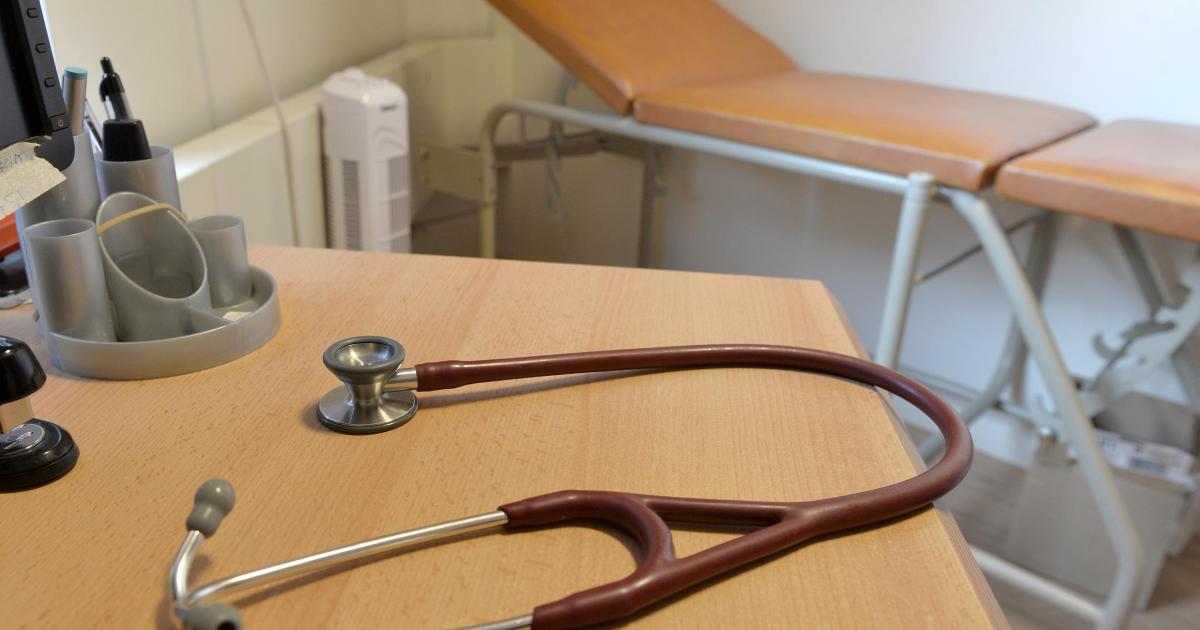
NHS York and Scarborough monitoring rate of violence at hospitals

Published

on

NHS York and Scarborough monitoring rate of violence at hospitals

​Last year, North Yorkshire Police (NYP) recorded 93 crimes at or around Scarborough General Hospital, according to its data.

​Between January 2025 and January 2026, 78 per cent of the incidents recorded were marked as violence and sexual offences.

​North Yorkshire Police also recorded 175 crimes at or around York Hospital over the same period, of which around 48 per cent were violence and sexual offences.

Advertisement

​The York and Scarborough Teaching Hospitals NHS Foundation Trust condemned “any form of violence or abuse” and said it actively encouraged staff to report “all incidents so they can be investigated, and the appropriate action taken”.

​It noted that “encouragingly, we are currently on track to record our lowest yearly incident figures in the past five years, reflecting our sustained focus on prevention and support, while ensuring our teams can provide care in a safe environment”.

​According to official police definitions, violence against the person includes a range of offences from “minor offences such as harassment and common assault, to serious offences such as murder, actual bodily harm and grievous bodily harm”.

​Sexual offences include “a broad category of sexual offences, including indecent assault and unlawful (under age) sexual intercourse,” the police website states.

Advertisement

​The 2024 NHS Staff Survey found that 14.3 per cent of NHS staff who completed the survey had experienced at least one incident of physical violence from patients, service users, relatives or other members of the public in the last 12 months. This was a 0.5 per cent increase from the 2023 results.

​A spokesperson for York and Scarborough Teaching Hospitals NHS Foundation Trust said: “Our staff have the right to come to work and care for patients without fear of verbal, physical or sexual assault, and we take any form of violence or abuse towards our staff extremely seriously. We do not expect staff, patients, or visitors to accept threatening behaviour or discriminatory language, and where appropriate incidents are reported to the police.

​“We actively encourage staff to report all incidents so they can be investigated, and the appropriate action taken. We have clear policies in place, carry out risk assessments where concerns are identified, and provide support to any colleague affected.

​“A range of resources is also available to staff as part of our commitment to reducing incidents, including enhanced training and preventative measures.”

Advertisement

​The NHS Staff Survey also found that 25 per cent of NHS staff who completed the survey experienced at least one incident of harassment, bullying or abuse in the last 12 months from patients/service users, their relatives, or other members of the public.

​The British Medical Association, which represents doctors, has previously said it has lobbied for increasing the maximum penalty for common assault against emergency workers, and has worked in partnership through the social partnership forum to support the development of a strategy.

​The spokesperson for the York and Scarborough NHS Trust said: “We continue to monitor incidents closely across our sites and take further steps where needed to keep everyone safe.

​“Encouragingly, we are currently on track to record our lowest yearly incident figures in the past five years, reflecting our sustained focus on prevention and support, while ensuring our teams can provide care in a safe environment.”

Advertisement

Source link

Continue Reading
Click to comment

Leave a Reply

Your email address will not be published. Required fields are marked *

NewsBeat

Welsh village with Mediterranean gardens make it ‘feel like you’re in Italy’

Published

on

Welsh village with Mediterranean gardens make it 'feel like you're in Italy'

A travel content creator has shared her visit to an enchanting Welsh village with sub-tropical gardens and stunning architecture which is worthy of your staycation ‘bucket list’

Next time you’re contemplating arranging a break close to home, you might want to consider the recommendation of a travel content creator who maintains she’s discovered an idyllic Welsh spot that “feels like you’re in Italy”.

Advertisement

After visiting the destination, Amy Hulley described the stunning village as thoroughly deserving of a place on your holiday “bucket list” as she shared her experience with Instagram followers. “For a moment I genuinely forgot I was in the UK,” she confessed in a video. Visitors can pay an admission charge to explore the village for the day, or book accommodation in one of its quaint hotels and cottages.

The location? Portmeirion in Gwynedd, on the edge of Eryri National Park.

Content cannot be displayed without consent

Amy added: “Pastel buildings. Arches and domes. Palm trees overlooking the water. It felt Mediterranean, almost cinematic.”

She disclosed her visit happened to coincide with a steampunk event, with period costumes and music enhancing the “fun atmosphere”.

Advertisement

Noting the village’s sub-tropical gardens and striking architecture, Amy explained: “Sir Clough Williams-Ellis began creating it in 1925 to prove that colourful, theatrical design could sit beautifully within nature rather than damage it. Every building was carefully positioned to frame the estuary and protect the woodland around it.”

Writing in response, a previous visitor commented: “A wonderful place to visit, a little expensive but worth it!” Another person admitted: “Wow I can’t believe this is in the UK, Amy. Stunning Italian vibes.”

A second person exclaimed: “Can’t wait to visit here! So picturesque.” And a third Instagram user enthused: “This is beautiful, it’s definitely on my bucket list now.”

Portmeirion’s tourism website proudly advertises: “Experience the magic of staying in Portmeirion. See the dawn break over the mountains of Meirionnydd; watch the tide fill the Dwyryd estuary from shore to shore.

Advertisement

“Stay in one of two luxury 4-star hotels or in a suite in the middle of the village. Portmeirion also offers self-catering accommodation on the picturesque North Wales coast. Situated on the southern flank of its own private peninsula, Portmeirion is a place apart.”

The village also features several cafes and an Italian-style gelateria offering authentic home-made gelato. “There are three shops in the village The Prisoner Shop with souvenirs of the famous series filmed here in 1966-67, the Rob Piercy Gallery and The Ship Shop with gifts, toys, housewares and Portmeirion Pottery best-ware, Portmeirion Pottery seconds as well as preserves, wines, and confectioneries,” the website details.

It also served as the setting for the 1960’s cult classic series, The Prisoner, starring Patrick McGoohan. “It was probably one of the most influential pieces of television of the 1960’s not only in the UK and USA, but also in France, Australia, and many other countries,” the site states.

The website continues: “The series is rich in imagery and visual impact. The surreal architecture of the village with its Mediterranean atmosphere coupled with the high-tech interiors, tannoys, surveillance cameras and piped music create a bizarre combination.”

Advertisement

Ensure our latest headlines always appear at the top of your Google Search by making us a Preferred Source. Click here to activate or add us as your Preferred Source in your Google search settings.
Source link

Continue Reading

NewsBeat

Police investigating attempted robbery in Radcliffe on moped

Published

on

Police investigating attempted robbery in Radcliffe on moped

They said the incident took place between 3.30pm and 3.45pm last Sunday (March 1) and two people are thought to have been involved.

The pair were riding a scooter or moped with balaclavas on, one dressed in black clothing and the other in a grey tracksuit jacket with black trousers.

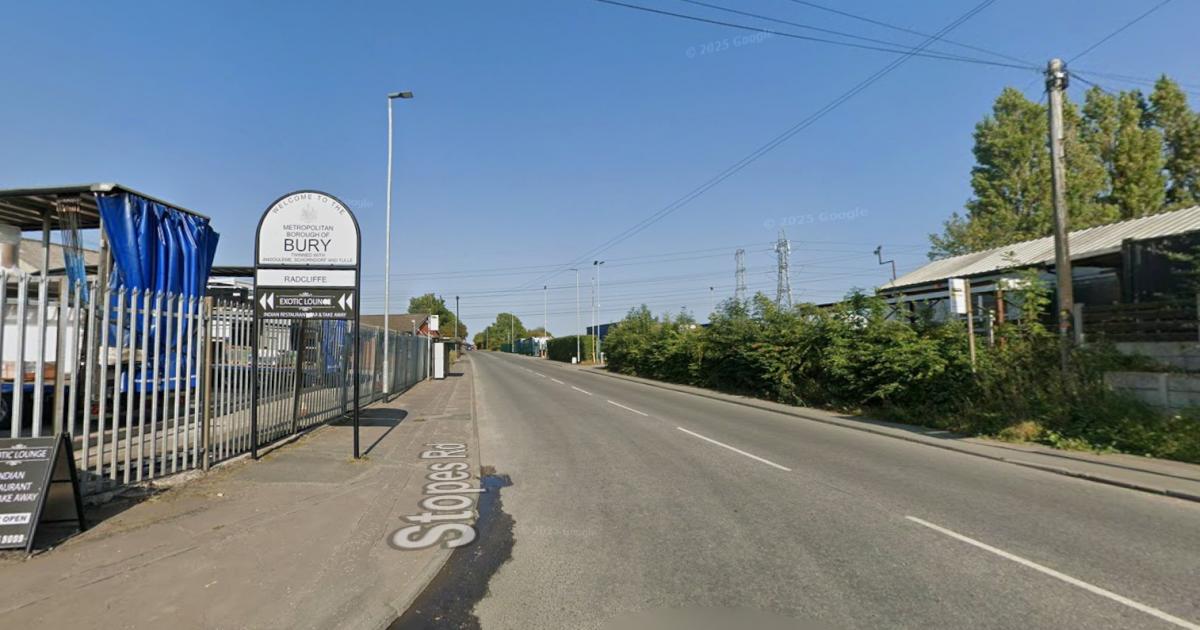
Officers have appealed to anyone who may have witnessed the incident on Stopes Road, near the junction of Countess Lane and Bolton Road, to come forward.

Advertisement

They are also appealing for any CCTV footage or information that could help with their investigation.

A spokesperson for GMP said: “Officers are investigating an attempted robbery that occurred between 3.30pm and 3.45pm on Sunday, March 1, on Stopes Road in Radcliffe, near the junction of Countess Lane and Bolton Road.

“It is believed two people, one wearing black clothing and the second person wearing a grey tracksuit jacket and black trousers with balaclavas and riding a scooter/moped, were involved in the incident.

“Investigators are appealing for any witnesses, information or CCTV footage which could assist their enquiries.”

Advertisement

If you can assist, contact police by calling 101 and quoting CRI/06NN/0003097/26 or alternatively, you can contact Crimestoppers anonymously on 0800 555 111.

Source link

Advertisement
Continue Reading

NewsBeat

North Yorkshire hidden gem chippy with real taste of Whitby

Published

on

North Yorkshire hidden gem chippy with real taste of Whitby

From Magpie Cafe (James Martin approved) to Trenchers, which has just been crowned the UK’s best chippy restaurant at the National Fish and Chip Awards 2026, there are so many to visit.

But there’s one fish and chip shop that’s been hailed a “hidden gem” which some might not know about, and it’s been described as a “proper” chippy.

It comes as someone posted on Reddit: “Which Yorkshire town has the best proper chippy, no debate?

Advertisement

“Everyone claims their local is the best, but let’s settle it properly.

“Crispy batter, decent portion size, chips that aren’t soggy, and proper gravy or curry sauce.

“Which Yorkshire town genuinely does it best? No politeness, just honest answers.”

‘Proper’ Whitby chippy is a go-to spot for a ‘taste of the coast’

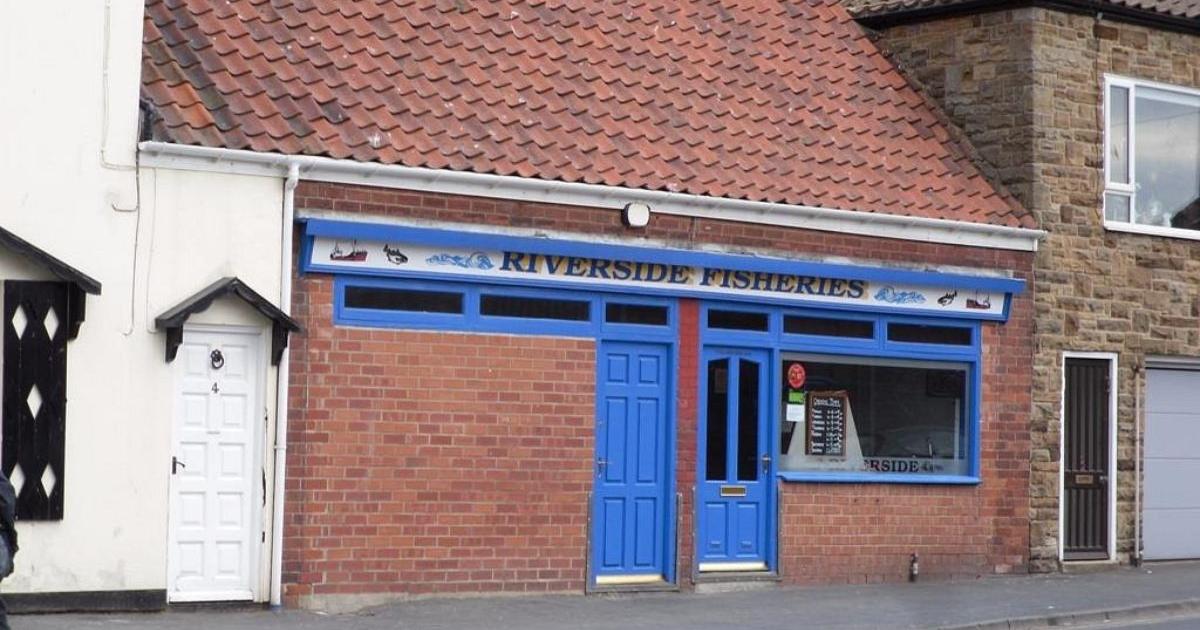
Riverside Fisheries, tucked away on Church Street, received a notable mention by residents and visitors on the Reddit thread.

Advertisement

Someone replied: “It’s a bit of a hidden gem with it being a bit out of the way, but it’s been my go-to for a while whenever I’m over there.”

The eatery is also said to offer a “quintessential Whitby fish and chip experience” and is a go-to spot for an “authentic taste of the coast”.

Welcome to Yorkshire shares: “Riverside Fisheries offers a quintessential Whitby fish and chip experience, cherished by locals and visitors alike for its traditional charm and exceptional value.

Advertisement

“Nestled on Church Street, this popular takeaway has earned a fantastic reputation, reflected in its impressive 4.6/5 star Google rating based on over 200 reviews.

“Renowned for serving gloriously fresh, often ‘criminally light and crispy’ fish and generous portions of chips, Riverside Fisheries prides itself on classic chip shop fare.

“Customers consistently praise the quality and size of dishes like the huge haddock, alongside tasty options such as scampi and homemade tartar sauce.

“The friendly and efficient team ensures brilliant service in an immaculately clean setting, making it a go-to spot for an authentic taste of the coast.”

Advertisement

On Tripadvisor, Riverside Fisheries currently has a “good” 4.1/5 rating based on 155 reviews – 99 of which are rated as “excellent”.

‘Riverside Fisheries offers a quintessential Whitby fish and chip experience’ (Image: Tripadvisor)

A recent customer commented: “Staying nearby in Whitby, so called in for tea.

“Lovely crispy chips, fish had just the right amount of batter.

“Friendly staff and good prices, will definitely be back.”

Advertisement

Someone else who also praised the batter said: “The haddock was lovely and the batter was light and flaky. Very good price.

“We had this as an evening meal and thoroughly enjoyed it. Would definitely visit again. Highly recommended.”

A third impressed guest wrote: “This is one of the best chippies I’ve been to – had the haddock which was really nice and the curry sauce was nice with a bit of a kick to it. Would highly recommend.”

Have you discovered Riverside Fisheries in Whitby? Let us know in the comments below.

Advertisement

Source link

Continue Reading

NewsBeat

Man charged with driving woman to suicide through campaign of domestic abuse | News UK

Published

on

Man charged with driving woman to suicide through campaign of domestic abuse | News UK
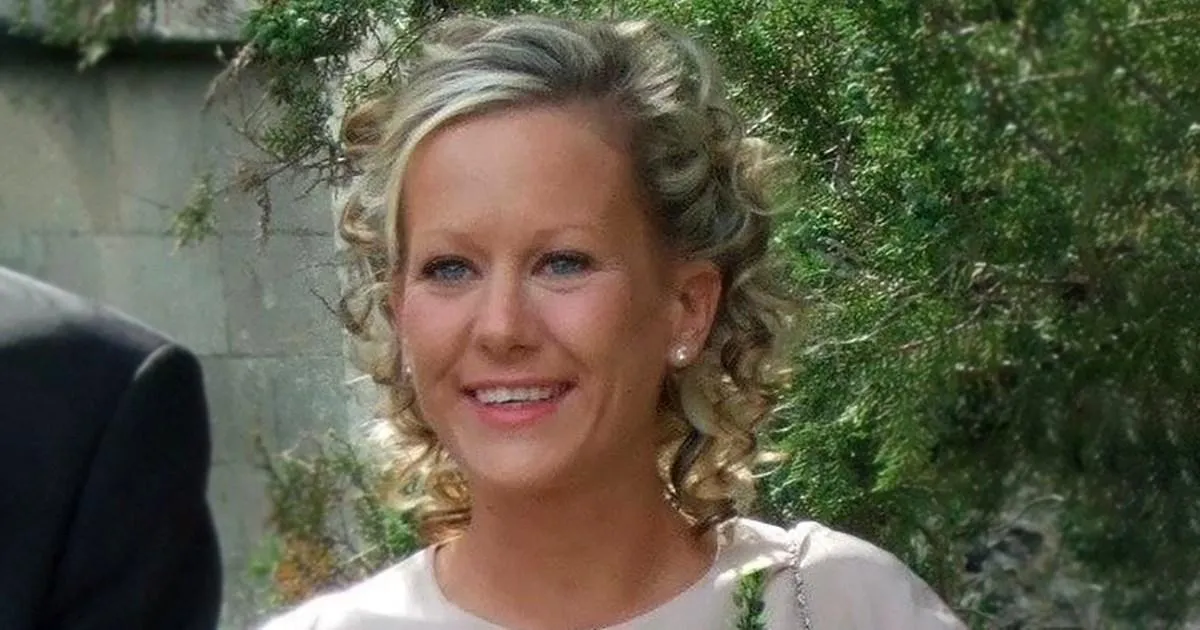
Gillian Morand was aged just 36 when she ended her own life in March 2020 (Picture: Met Police)

A man has been charged with manslaughter over the death of a woman who killed herself after allegedly being subjected to a campaign of domestic abuse.

Gillian Morand was aged just 36 when she ended her own life in March 2020.

A subsequent inquest ruled her death a suicide, but the Met Police has now charged Seyhan Assaf, 45, with manslaughter and coercive or controlling behaviour.

Scotland Yard said the decision was made after ‘information came to light around allegations of domestic abuse that Gillian had previously suffered’.

Advertisement

A spokesperson said: ‘It is alleged Gillian was abused over a significant period of time, and it is further alleged that this abuse contributed to her death.’

Detective Chief Inspector Dan Whitten, from the Metropolitan Police Service, added: ‘This is a complex investigation with very few charges of this nature authorised across the country.

‘We are supporting Gillian’s family, who ask for their privacy to be respected at this difficult time.

‘I ask that anyone who was in contact with Gillian in the decade prior to her death contact us. Any information, irrespective of how insignificant it may seem, may be of considerable value.’

Advertisement

There are currently only two other men in the country facing manslaughter charges over the deaths of women who killed themselves because of alleged domestic abuse.

Samantha Yelland, Senior Crown Prosecutor in CPS London Homicide Unit, said: ‘We have decided to prosecute Seyhan Assaf with manslaughter and controlling or coercive behaviour.

‘This decision comes after working closely with the Metropolitan Police as they have carried out their investigation into the death of Gillian Morand.

‘Our prosecutors worked to establish that there is sufficient evidence to bring these charges to court and that it is in the public interest to pursue criminal proceedings.’

Advertisement

Assaf, of Sidcup, southeast London, will appear at Bromley Magistrates’ Court on Saturday, March 7.

Latest London news

To get the latest news from the capital, visit Metro’s London news hub.

Advertisement

Get in touch with our news team by emailing us at webnews@metro.co.uk.

For more stories like this, check our news page.

Advertisement

Source link

Continue Reading

NewsBeat

How people in the Gulf are reacting to the Iran war

Published

on

How people in the Gulf are reacting to the Iran war

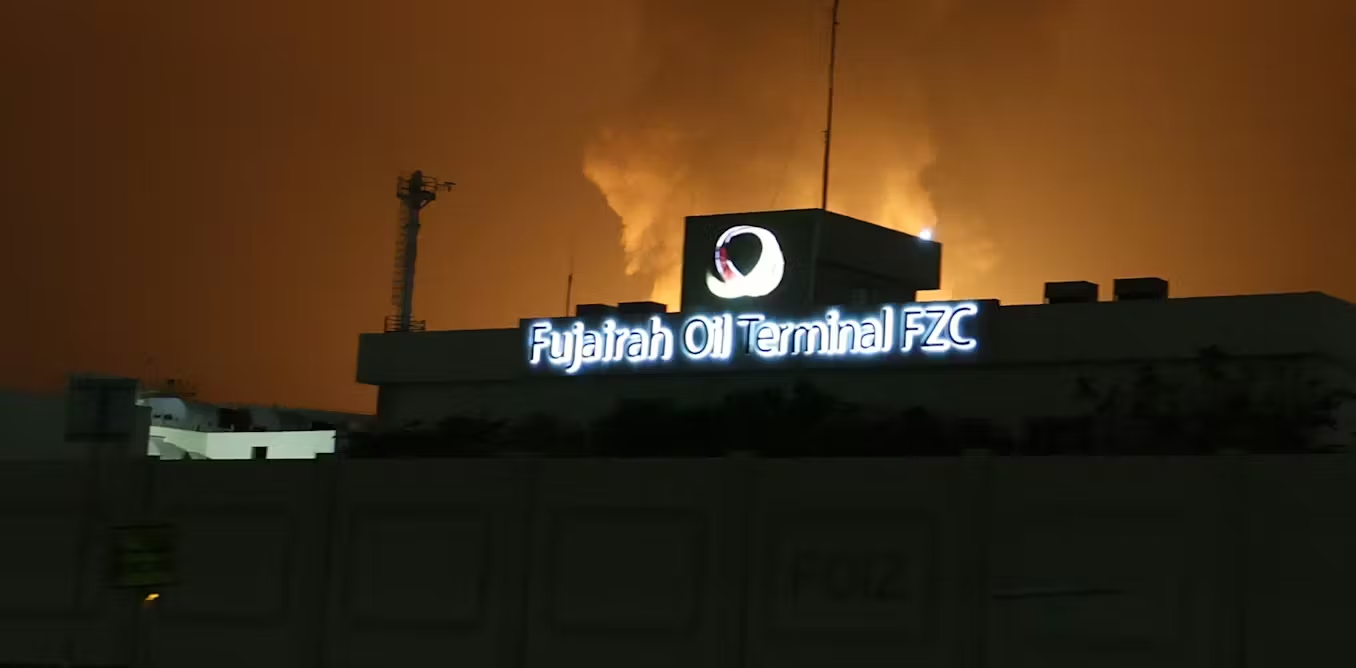
Iran immediately responded to US-Israeli strikes on February 28 by launching coordinated missile and drone attacks against US military installations in the Gulf region. Since then, its targeting has expanded to airports, seaports, hotels and oil refineries. The debris from missile interceptions has produced several casualties.

The first official statements from governments in the Gulf, with the exception of Oman, refrained from condemning the US-Israeli strikes. Those strikes killed Iran’s supreme leader, Ayatollah Ali Khamenei, along with several senior Iranian officials and nearly 180 civilians. Many of these were schoolgirls killed in an attack on a school in southern Iran.

This lack of condemnation did not go unnoticed. Across social media, a wave of debate broke out, with many Gulf citizens asking how governments that style themselves as voices of measured multilateralism could fail to register the illegality of the US-Israeli aggression against Iran.

However, as the barrage continued and many Gulf citizens and residents found themselves stuck indoors, the initial sympathy for Iran’s position began to give way. For most Gulf citizens, the sound of explosions and aerial interceptions is new. The exception is Kuwait, whose population carries the memory of Iraq’s 1990 invasion and occupation.

Advertisement

Like many anxiously watching from a distance, I have been calling family and friends in the Gulf every day. They send voice notes offering insights on the conflict that rarely make it into official Gulf channels.

A military helicopter flies over Doha on March 4 as Iran retaliates against US-Israeli air strikes by firing hundreds of missiles and drones at neighbouring Gulf countries.
STR / EPA

Those who had been through war before knew what to do. An Emirati friend described a message from her Lebanese colleague, who had lived through multiple cycles of conflict and passed along a piece of practical advice: “Keep your windows and doors slightly ajar, so that pressure from nearby explosions does not drive the glass to shatter inward.”

She went on to recount how a Serbian woman in Dubai, who had survived two wars and believed she had exhausted her capacity to do so again, had told her she found the sounds so triggering that she spent the night sleeping in her car in the basement of her apartment building.

The sight of a long queue outside an Emirates airline office in a Dubai mall offended at least one Emirati observer. Expatriates rerouting their lives away from a conflict that had not yet become catastrophic, by any measure, was something this person found “cowardly”, she told me in an indignant voice note.

Advertisement

A Qatari friend put the asymmetry differently. Western governments, she remarked, could be relied on to extract their nationals from the consequences of foreign policy decisions they had supported. In contrast, Gulf populations would be left to absorb them – including rising food prices that could strain household budgets if traffic through the strait of Hormuz remains disrupted.

To date, the casualty figures in the Gulf are relatively low. Three people have died in Kuwait, three in the United Arab Emirates (UAE), three in Oman and one in Bahrain. None were Gulf citizens. Two of those killed in Kuwait were members of the Bidoon, a stateless community that has existed in Kuwait for generations without formal legal recognition.

For now, the absence of citizen casualties has softened the psychological impact of the conflict, exposing the racial hierarchies that have long plagued Gulf societies. But it is possible the Gulf governments are managing disclosure carefully, wary of provoking panic.

The information environment there is tightly controlled. The UAE has warned the public against filming or sharing footage of strikes and interceptions, with violations carrying a fine of 100,000 UAE dirhams (roughly £20,000) and potential imprisonment.

Advertisement

Saudi Arabia, Kuwait, Bahrain and Qatar have also issued directives urging citizens and residents to rely only on official sources.

Regional security questions

The conversation has taken on a different register among Gulf scholars and commentators. Despite the narrow space for debate, the war has opened an unexpected aperture for introspective commentary.

Conspicuously absent have been Emirati voices. Scholars and commentators in the UAE operate under tighter constraints than their Gulf counterparts. Views that interrogate state policy also rarely find their way into public circulation.

Saudi analyst Sulaiman al-Oqaily, speaking on Al Jazeera on February 28, gave voice to a frustration that has also appeared in local media. He argued that the US, nominally a security partner to the Gulf, had revealed itself as focused overwhelmingly on Israeli security, with scant regard for the Gulf states.

Advertisement

Omani scholar Abdullah Baabood put it plainly in a social media post on March 3: “The Iran-US war is not the Gulf’s war, yet Gulf states have become sitting ducks – exposed by geography, constrained by alliances, and vulnerable to escalation they neither chose nor control.”

Qatari commentator Abdulrahman Al-Marri offered a more layered analysis. Also in a post on social media, he insisted any serious engagement with the crisis must begin from its most basic fact: this is a war of choice, manufactured by the US and Israel. But he was equally insistent that this should not obscure the Gulf’s own reckoning with Iran.

The US and Israel and also Iran, in Al-Marri’s framing, are respectively engaged in forms of “state terrorism” and “counter-state terrorism” that have cost the region dearly. Iran’s conduct is not absolved by US-Israeli aggression, he writes. Its support for armed proxies and interventions in Iraq and Syria have left a residue of enmity and distrust that are etched in collective memory across the Gulf.

Yet on one point, the commentary has converged: the Gulf states must stay out of the war. Restraint and diplomacy have been the consistent recommendations.

Advertisement

Alongside this, Al-Marri and others have pointed out that US military bases in the Gulf, long presented as guarantors of security, have revealed themselves as liabilities. They have made Gulf territories a target in a confrontation they did not initiate.

Fifty years after independence, the Gulf region has yet to build a security framework that does not depend on outsourcing its defence to external partners whose interests, as this war has shown, do not reliably align with its own.

Source link

Advertisement
Continue Reading

NewsBeat

Reborn Wales push Ireland to limit to hint at brighter future

Published

on

Reborn Wales push Ireland to limit to hint at brighter future

Ireland starting XV: 15 Jamie Osborne; 14 Rob Baloucoune, 13 Garry Ringrose, 12 Stuart McCloskey, 11 Jacob Stockdale; 10 Jack Crowley, 9 Jamison Gibson-Park; 1 Tom O’Toole, 2 Ronan Kelleher, 3 Tadhg Furlong, 4 James Ryan, 5 Tadhg Beirne, 6 Jack Conan, 7 Nick Timoney, 8 Caelan Doris (captain).

Replacements: 16 Tom Stewart, 17 Michael Milne, 18 Thomas Clarkson, 19 Joe McCarthy, 20 Josh van der Flier, 21 Nathan Doak, 22 Tom Farrell, 23 Ciaran Frawley.

Wales starting XV: 15 Louis Rees-Zammit, 14 Ellis Mee, 13 Eddie James, 12 Joe Hawkins, 11 Josh Adams, 10 Dan Edwards, 9 Tomos Williams, 1 Rhys Carre, 2 Dewi Lake (captain), 3 Tomas Francis, 14 Dafydd Jenkins, 5 Ben Carter, 6 Alex Mann, 7 James Botham, 8 Aaron Wainwright.

Advertisement

Replacements: 16 Ryan Elias, 17 Nicky Smith, 18 Archie Griffin, 19 Adam Beard, 20 Olly Cracknell, 21 Kieran Hardy, 22 Jarrod Evans, 23 Louie Hennessey.

Source link

Continue Reading

NewsBeat

Can you solve the toughest GCSE questions ever set?

Published

on

Can you solve the toughest GCSE questions ever set?

The question has sparked intense debate on Reddit, where users admitted they were completely stumped, even years after leaving school.

One user summed it up perfectly: “The last three questions on Edexcel always left me hopeless.”

A 2025 survey of UK students found that 85% experience exam anxiety, with one in four describing it as nearly unbearable during exams.

Lindsey Wright, Head of Maths Education at Tutors Valley, said: “Exams are designed to challenge students, but parents can make a real difference.

Advertisement

“Understanding how your child learns and providing one-to-one support gives them a safe space to make mistakes, ask questions, and build confidence.

“Research shows 71% of students do not seek any support at all, so this guidance is more important than ever.”

So can you solve this impossible question?

(Image: Tutors Valley)

This video explains how to solve it, and whether or not you found the correct solution.

Advertisement

Fewer than one in five people pass this IQ test, thought to be the shortest in the world at only three questions long.

The Cognitive Reflection Test has a pass rate of just 17 per cent, leaving the majority who attempt it boggled.

It was originally part of a research paper published in 2005 by MIT Professor Shane Frederick, and has recently resurfaced online with many people giving it a go.

Advertisement

As part of his research, Professor Frederick had more than 3,000 participants from a range of educational backgrounds complete the test, but even those attending top American universities such as Yale and Harvard struggled to work out all the answers.

Professor Frederick said: “The three items on the CRT are ‘easy’ in the sense that their solution is easily understood when explained, yet reaching the correct answer often requires the suppression of an erroneous answer that springs ‘impulsively’ to mind.”

So how will you get on?

What are the questions?

1. A bat and a ball cost $1.10 in total. The bat costs $1 more than the ball. How much does the ball cost?

Advertisement

2. If it takes five machines five minutes to make five widgets, how long would it take 100 machines to make 100 widgets?

3. In a lake, there is a patch of lily pads. Every day, the patch doubles in size. If it takes 48 days for the patch to cover the entire lake, how long would it take for the patch to cover half of the lake?

What are the answers?

These are the three most common answers that people guess, but they are actually incorrect:

1. 10 cents

Advertisement

2. 100 minutes

3. 24 days

Professor Frederick said: “Anyone who reflects upon it for even a moment would recognise that the difference between $1 and 10 cents is only 90 cents, not $1 as the problem stipulates.

“In this case, catching that error is tantamount to solving the problem, since nearly everyone who does not respond ‘10 cents’ does, in fact, give the correct response.”

Advertisement

The correct answers are:

1. Five cents

2. Five minutes

3. 47 days

Advertisement

Here are the answers explained

Presh Talwalkar, the author of The Hoy of Game Theory: An Introduction to Strategic Thinking, explained how to work out the correct answers for each of the three questions on his blog, Mind Your Decisions.

1. Say the ball costs X. Then the bat costs $1 more, so it is X + 1. So we have bat + ball = X + (X + 1) = 1.1 because together they cost $1.10. This means 2X + 1 = 1.1, then 2X = 0.1, so X = 0.05. This means the ball costs five cents and the bat costs $1.05

2. If it takes five machines five minutes to make five widgets, then it takes one machine five minutes to make one widget (each machine is making a widget in five minutes). If we have 100 machines working together, then each can make a widget in five minutes. So there will be 100 widgets in five minutes.

3. Every day FORWARD the patch doubles in size. So every day BACKWARDS means the patch halves in size. So on day 47 the lake is half full.

Advertisement

Source link

Continue Reading

NewsBeat

MOVIE REVIEW: We try to survive animal attack horror ‘Primate’

Published

on

MOVIE REVIEW: We try to survive animal attack horror 'Primate'

Chilling chimp kills it in lean, mean flick that, thankfully, opts for practical costume and effects.

Think Cujo with a chimpanzee instead of a St Bernard dog and a pool in place of a car and you get Primate.

Advertisement

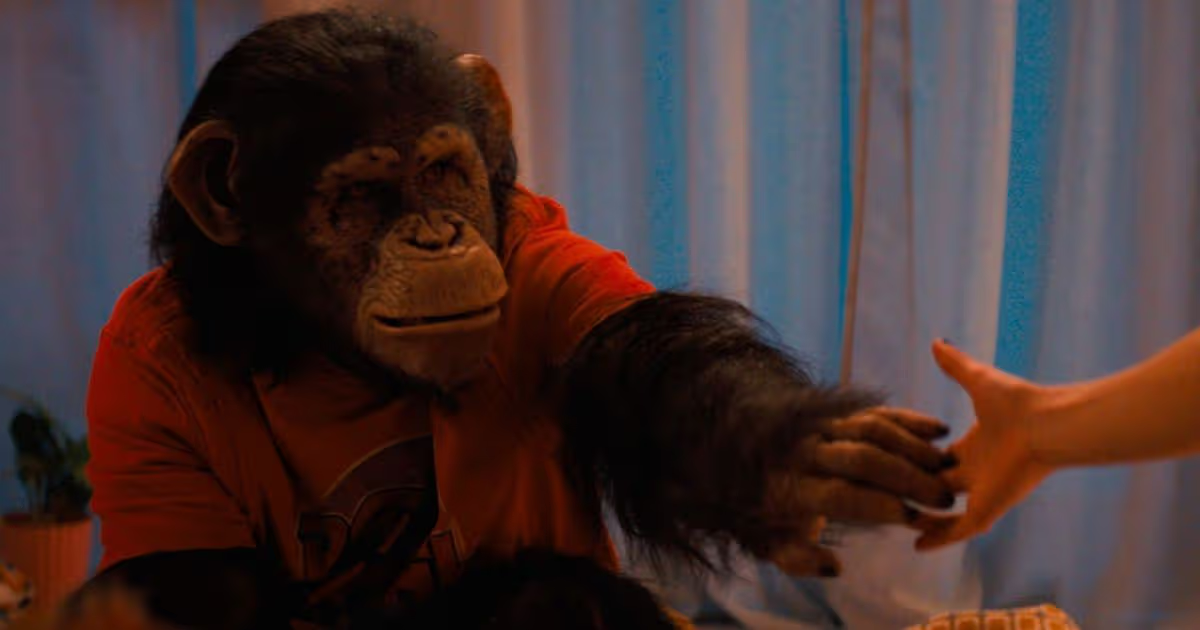
The latest horror from English director Johannes Roberts (The Strangers: Prey at Night, Resident Evil: Welcome to Raccoon City) sees a group of friends’ tropical vacation turning into a terrifying fight for survival when adopted chimp Ben (Miguel Torres Umba) contracts rabies.

Primate is one of the best animal attack flicks to come along in quite some time.

It’s short and simple but shines with its taut tension and gnarly kills.

Roberts bathes his film in vibrant visuals, including several close-ups of an increasingly stricken Ben, peaking with a twisted bedroom scene that sees Ben surrounded by devilish red lighting.

Advertisement

Some of the characters are throwaway fodder – Jess Alexander’s vapid Hannah and Benjamin Cheng’s object of affection Nick – but a nice bond is established between sisters Lucy (Johnny Sequoyah) and Erin (Gia Hunter) and Ben.

Oscar winner Troy Kotsur also projects more with facial expressions and actions than many actors could with hundreds of lines of dialogue as Lucy and Erin’s deaf dad Adam.

The real revelation, though, is Umba who portrays Ben while wearing a practical suit; he’s every bit as convincing as a chimp than anything we’ve seen from motion-capture king Andy Serkis.

Practicality, thankfully, rules the day across the board, which leads to several memorable kills.

Advertisement

READ MORE: MOVIE REVIEW: We knock on the door of found-footage horror ‘House on Eden’

Ben shows no mercy as he punches, bites, scratches and tears his way through his stricken victims; bones break, flesh is ripped and blood spatters everywhere.

And rarely will an electronic soundboard evoke this much dread.

Yes, the lead group make a couple of dumb decisions, but they also show bursts of ingenuity amid a perfect pace that never misses a beat.

Advertisement

Primate is lean and mean with the most chilling chimp I’ve seen since the childhood nightmare fuel of 1991 TV mini-series Chimera (if you know, you know).

Do you have a favourite animal attack horror flick?

Pop me an email at ian.bunting@reachplc.com and I will pass on your comments – and any movie or TV show recommendations you have – to your fellow readers.

Primate is showing in cinemas now.

Advertisement

*Don’t miss the latest headlines from around Lanarkshire. Sign up to our newsletters here.

And did you know Lanarkshire Live had its own app? Download yours for free here.

Source link

Advertisement
Continue Reading

NewsBeat

Luxurious new Irish five-star golf hotel set to open in May

Published

on

Luxurious new Irish five-star golf hotel set to open in May

The Hawthorn, set on a Christy O’Connor Jnr course, features 114 rooms, signature restaurant The Skylark, and a full-service spa.

A luxurious new Irish 5-star golf hotel is scheduled to welcome guests in May 2026, spearheaded by the Connacht Hospitality Group as part of a broader €60 million development.

Advertisement

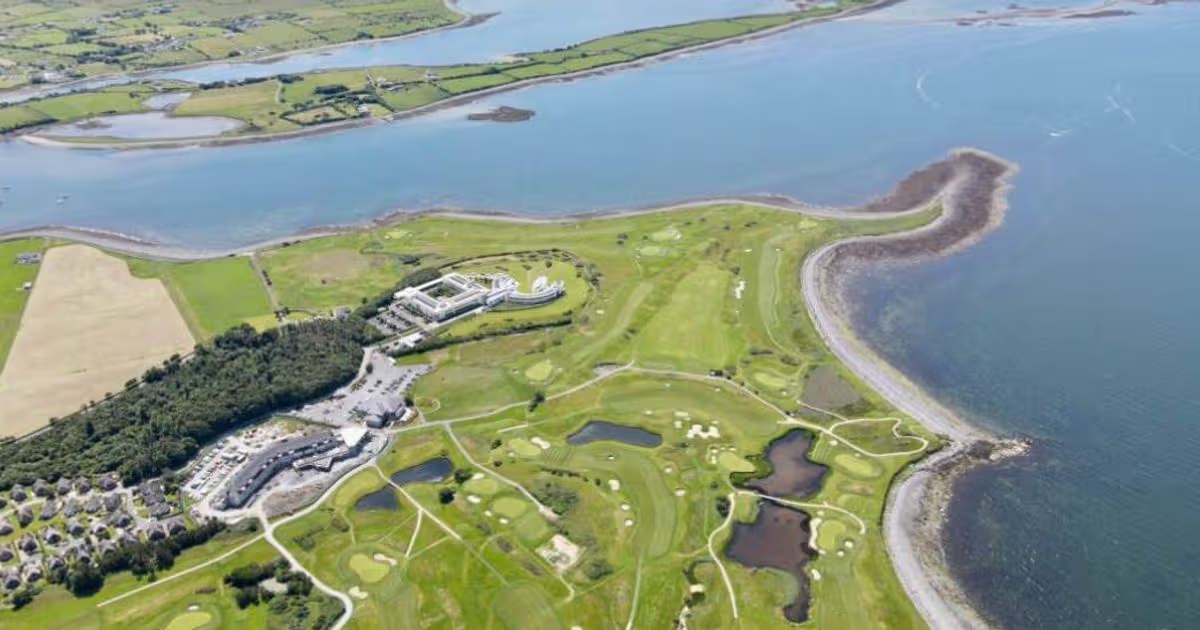
The Hawthorn by Galway Bay, situated within the grounds of the 18-hole Galway Bay Golf Course, features 114 rooms, a signature restaurant called The Skylark, and a comprehensive spa facility.

It marks the first five-star establishment to launch in Galway in over 20 years and aims to blend championship golf, holistic wellness and regional attractions.

With major events including the Open at Portrush and the Ryder Cup scheduled at Adare Manor in 2027, golf tourism across the island of Ireland serves as a significant economic contributor, generating over €700 million each year.

More than 220,000 international golfers arrive annually, with North American visitors, who typically spend three times more than standard tourists, representing the bulk of the market. The industry sustains 15,600 jobs, reports the Irish Mirror.

Advertisement

The May opening will realise a longstanding ambition of Irish Ryder Cup legend Christy O’Connor Jnr to establish the location as a world-class golf destination. The Galway-born former European Tour professional designed the original Galway Bay course that first welcomed players at the scenic site in 1993.

Targeting both domestic and international golfers, the golf hotel sits along the Wild Atlantic Way between north and south. The course has also received recent investment, including a complete bunker regeneration project.

Dean Montgomery, the venue’s director of golf, commented: “The golf course here has always had remarkable natural potential, and it is a privilege to be overseeing its next chapter. Our focus is on elevating the holistic golf experience whilst respecting Christy O’Connor Jnr’s original vision for the site.

Advertisement

“The course offers a compelling challenge for international visitors, and the opening of The Hawthorn will provide luxury-seekers with the perfect base to explore this wonderful destination.”

The Hawthorn also features The Oystercatcher Bar, serving Japanese cuisine alongside sweeping views across the championship course and Galway Bay.

Additional amenities include their own chocolatier at the Chocolate Nest, plus a Whiskey Room and Wine Cellar, tailored for curated tastings and private gatherings.

“As we approach our May opening, there is a real sense of excitement within the team as we prepare to welcome guests to this extraordinary destination,” said Hawthorn General Manager John Keating.

Advertisement

Prospective guests can reserve their stay now, with availability commencing from 15th May 2026.

Want to see more of the stories you love from Belfast Live? Making us your preferred source on Google means you’ll get more of our exclusives, top stories and must-read content straight away. To add Belfast Live as a preferred source, simply click here.

Click here to sign up to our sport newsletter, bringing you the latest sports news, headlines and top stories

Source link

Advertisement
Continue Reading

NewsBeat

Iran’s divided media landscape makes getting information during wartime even harder

Published

on

Iran’s divided media landscape makes getting information during wartime even harder

From brutal crackdowns on nationwide protests in January, to Israel and the United States’ recent strikes, Iran has been in the international spotlight for weeks. Reporting on Iran is challenging, both from inside the country and from outside. During periods of unrest and political turmoil, it becomes even harder and more restrictive.

Iran’s media landscape is divided between outlets closely affiliated with the state and those considered reformist. State-aligned outlets include organisations such as Islamic Republic of Iran Broadcasting (IRIB), Tasnim, Fars News and Mehr News.

These conservative outlets often promote narratives that support Iran’s ruling clerical establishment. Their coverage frequently aligns with the views of hardline leaders such as the supreme leader Ali Khamenei, who was killed in the initial strikes on February 28. Other state-affiliated outlets, including Mizan, which is linked to Iran’s judiciary, similarly publish coverage that portrays the Islamic Republic as the victim of foreign aggression in the current conflict.

There is also a smaller group of reformist publications, such as Shargh Daily, Ham-Mihan and Donya-e-Eqtesad, which tend to offer more analytical and critical coverage of political and economic issues in the country.

Advertisement

But reformist papers operate under constant pressure. During the height of the protests in early January, Iranian authorities imposed a severe internet shutdown and communications blackout. Many domestic news outlets became inaccessible online. A small number of hardline outlets, such as Fars and Tasnim, continued to distribute information through Telegram channels.

For more than two weeks, much of the information emerging from Iran downplayed the scale of the government’s crackdown on protesters. Instead, official narratives emphasised alleged foreign interference, blaming the unrest on the US and Israel.

Reformist outlets that challenge this narrative often face retaliation. Journalists are frequently arrested and newspapers are suspended or closed. The authorities shut down Ham-Mihan in January 2026 after its editor-in-chief published an opinion piece reflecting on the current political unrest and the 1979 revolution that ended the monarchy.

These restrictions mean that state-aligned media outlets often dominate the narrative out of Iran, shaping how events inside the country are presented to the outside world.

Advertisement

Challenges for international media

International media organisations face a different but equally complex set of obstacles. Foreign journalists have a limited presence inside Iran, largely because of the risks involved.

Several reporters working for major outlets such as The Washington Post and The New York Times have been detained by Iranian authorities in the past, creating a climate of caution among international news organisations.

As a result, only a small number of outlets maintain reporters in the country. Organisations such as the Financial Times and Al Jazeera have limited representation on the ground, while many others operate regional bureaus in Turkey or the United Arab Emirates. Agencies such as Reuters, Bloomberg, CNN and CNBC often rely on these regional hubs, while others report on Iran from Europe or North America.

Even from outside, gathering reliable information remains difficult. Many sources inside Iran are afraid to speak with foreign media, as authorities routinely intimidate or arrest individuals who communicate with international journalists. Government officials are also reluctant to speak with foreign reporters.

Advertisement

Internet shutdowns during protests and wartime further complicate reporting. With communications frequently restricted, journalists must rely on information from human rights organisations, activist networks and official social media accounts.

A man looks at copies of Iranian daily newspapers reporting about talks between Iran and the US in February.
Abedin Taherkenareh/EPA-EFE

Diaspora media organisations, which operate outside Iran but broadcast and publish in Persian, play a crucial role in filling some of the gaps in information. These outlets reach audiences both inside and outside the country. Examples include Iran International, BBC Persian, IranWire, Manoto and Voice of America. Though Voice of America was defunded and taken down by the Trump administration, its Persian-speaking news is still operating and providing news from the US to the public. However, it has been accused by some of its staffers of censoring coverage of Iran’s exiled crown prince, Reza Pahlavi, who has emerged as the leading opposition figure during the latest uprising.

Pahlavi frequently appears on other disapora outlets, which provide a platform for opposition voices that rarely appear in Iran’s domestic media unless to be discredited.

Because they maintain extensive networks of sources inside Iran, diaspora outlets are often among the first to receive videos, images and eyewitness accounts of protests or military activity. After verification, this material is frequently used by international media organisations such as The New York Times, CNN and BBC World.

Advertisement

They also report more on the nuances that may be less obvious to foreign journalists, such as how Iranians feel about the war or the death of the supreme leader. While international outlets focused on those mourning the death of Ayatollah Ali Khamenei, the reality is that many ordinary Iranians were celebrating.


À lire aussi :
Mourning, celebration and a divided legacy: why the death of Ali Khamenei reverberates far beyond Iran


Whether working for reformist newspapers inside Iran, international news organisations abroad or diaspora media outlets, journalists covering the country face extraordinary pressures. Many are subjected to hacking attempts, online harassment and, in some cases, physical threats. The work is emotionally demanding, particularly for Iranian journalists who are reporting on events impacting their own country, communities and families.

Advertisement

Source link

Continue Reading

Trending

Copyright © 2025