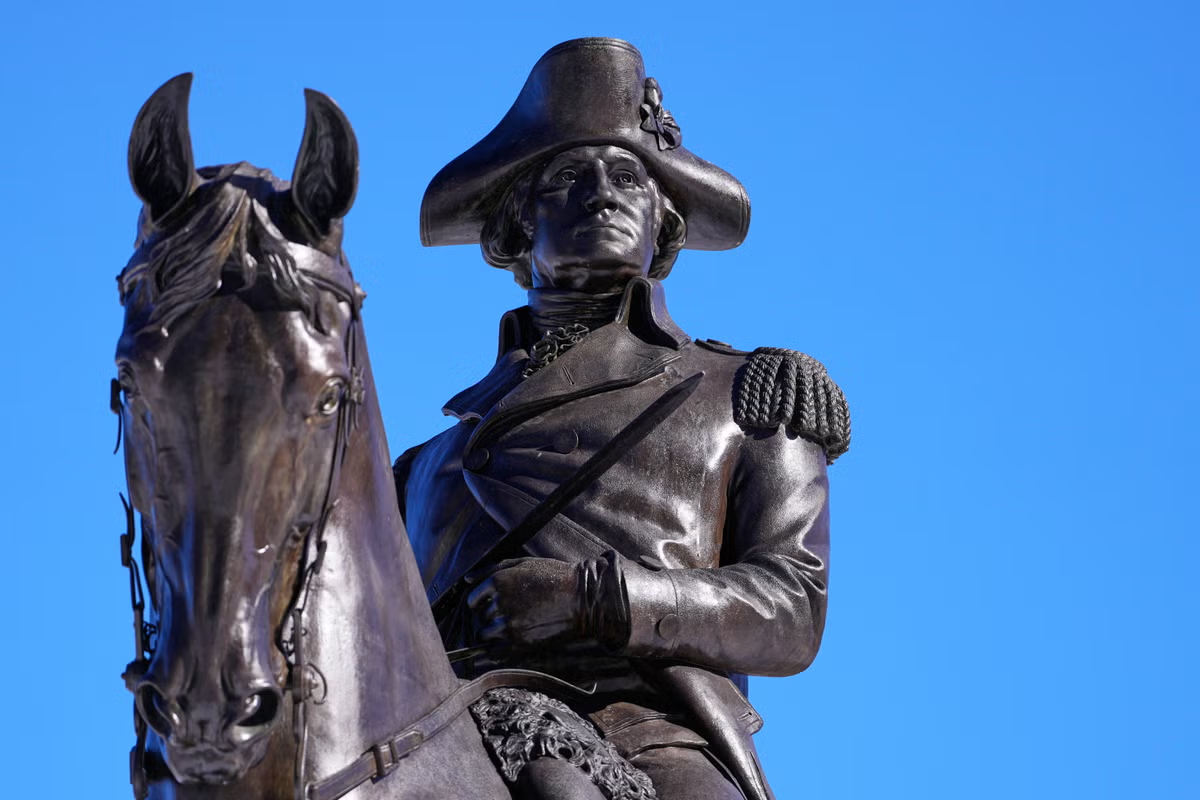
More than a decade before he became the country’s first president, George Washington was leading a critical campaign in the early days of the American Revolution. The Siege of Boston was his first campaign as commander-in-chief of the Continental Army and, in many ways, set the stage for his military and political successes — celebrated on Presidents Day.
Following the Battles of Lexington and Concord, militias had pinned down the British in Boston in April 1775. The Continental Congress, recognizing the need for a more organized military effort, selected Washington to lead the newly-formed army.
What was the Siege of Boston
On this day 250 years ago, Washington would have been nearing the end of an almost yearlong siege that bottled up as many as 11,000 British troops and hundreds more loyalists. The British were occupying Boston at the time, and the goal of the siege was to force them out.
Advertisement
A critical decision made by Washington was sending Henry Knox, a young book seller, to Fort Ticonderoga in New York to retrieve dozens of cannons. The cannons, transported hundreds of miles in the dead of winter, were eventually used to fire on British positions. That contributed to the decision by the British, facing dwindling supplies, to abandon the city by boat on March 17, 1776.
Historians argue the British abandoning their position, celebrated in Boston as Evacuation Day, rid the city of loyalists at a critical time, denied the British access to an important port and gave patriots a huge morale boost.
“The success of the Siege of Boston gave new life and momentum to the Revolution,” Chris Beagan, the site manager at Longfellow House in Cambridge, a National Historic Site that served as Washington’s headquarters during the American Revolution. “Had it failed, royal control of New England would have continued, and the Continental Army likely would have dissolved.”
How the siege shaped Washington
Advertisement
The siege was also a critical test for Washington. A surveyor and farmer, Washington had been out of the military for nearly 20 years after commanding troops for the British during the French and Indian War. His successful campaign ensured Washington remained the commander-in-chief for the remainder of the revolution.
Doug Bradburn, president of George Washington’s Mount Vernon, said Washington took the first steps to creating a geographically diverse army that included militiamen from Massachusetts to Virginia and, by the end of the war, a fighting force with significant Black and Native American representation. It was the most integrated military until President Harry S. Truman’s desegregated the armed forces in 1948, he said.
Washington, a slave owner most of life who depended on hundreds of slaves on his Mount Vernon estate, was initially opposed to admitting formerly enslaved and free Black soldiers into the army. But short of men, Washington came to realize “there are free Blacks who want to enlist and he needs them to keep the British from breaking out” during the siege, Bradburn said.
Ridding Boston of the British also turned Washington into one of the country’s most popular political figures.
Advertisement
“He comes to embody the cause in a time before you have a nation, before you have a Declaration of Independence, before you’re really sure what is the goal of this struggle,” Bradburn said. “He becomes the face of the revolutionary movement.”
Commanding the military more than eight years also prepared Washington for the presidency, Pulitzer Prize-winning military historian Rick Atkinson said. “Perhaps most important, it gave him a sense that Americans could and should be a single people, rather than denizens of thirteen different entities.”
Myths of Washington
His rise to prominence also led to plenty of myths about Washington, many which persist to this day.
Advertisement
One of the most popular is the cherry tree myth. It was invented by one of Washington’s first biographers, according to George Washington’s Mount Vernon, who created the story after his death. Supposedly, a 6-year-old Washington took an ax to a cherry tree and admitted as much when caught by his father, famously saying “I cannot tell a lie … I did cut it with my hatchet.”
The second one is the wooden teeth myth. It was rumored that Washington had wooden dentures and scholars, well into the 20th century, were quoted as saying his false teeth were made from wood. Not true. He never wore wooden dentures, instead using those with ivory, gold and even human teeth.
More than a statesman
During his lifetime, Washington had a myriad of pursuits. He was known as an innovative farmer, according to the George Washington’s Mount Vernon, and an advocate for Western expansion, buying up to 50,000 acres of land in several Mid-Atlantic states. After returning to Mount Vernon, he built a whiskey distillery that became one of the largest in the country.
Advertisement
His connection to slavery was complicated. He advocated for ending slavery, and his will called for freeing all the slaves he owned after the death of his wife, Martha Washington. But he didn’t he own all the slaves at Mount Vernon so he could’t legally free all of them.
Celebrating Presidents Day
For fans of George Washington, Presidents Day is their Super Bowl. Originated to celebrate Washington’s birthday, which falls on Feb. 22, the holiday has become associated with good deals at the mall. Still, there are plenty of places celebrating all things Washington on this day.
There will be a wreath-laying ceremony at Washington’s tomb at Mount Vernon, and there will be a Continental Army encampment. There will be a parade honoring Washington in Alexandria, Virginia, and, in Laredo, Texas, a monthlong celebration features a carnival, pageants, an air show and jalapeno festival.
Olivia is now 6 weeks postpartum and has stepped back into the ring
18:32, 04 Apr 2026
Olivia is the Ringmistress for Circus Vegas
The circus has arrived back in Belfast, and it has a brand new member in tow. Ringmistress, Olivia Mulvaney, 26, gave birth to baby Luca just over 6 weeks ago.
Belfast Live caught up with her to find out how she is finding the balancing act of motherhood with an incredibly unique job.
Advertisement
Olivia’s family has been running circuses for almost 20 years. Her grandfather and brothers started a circus over two decades ago, and then they all split off and started their own circuses, and Circus Vegas officially began in 2004.
The main attractions at Circus Vegas are the motorbike stunt team, which includes their FMX riders and globe of death riders. They also have a brand-new clown, ‘Lupino’, who is a real crowd-pleaser. There are no animals at all used in this circus, and it focuses on thrills, stunts and laughter to keep everyone entertained.
A Ringmistress or Ringmaster would oversee the day-to-day running of the circus as well as the flow of the show to keep the audience engaged. On top of this, she will work with each act to ensure everything is safe and that the artists are happy to perform. She has the final say on whether an act can actually go on, so it carries a lot of responsibility.
Advertisement
Typically, in most portrayals, we see it as a Ringmaster, so it is quite rare to see a woman step into the role. However, Olivia said it is becoming much more common to see women in the job across Ireland.
Olivia enjoys the leadership aspect of the role and said that “it’s nice to see more women being involved in it”.
However, at 6 weeks postpartum, she has stepped back into the ring. It’s a “nice feeling coming back”, and she believes she is in a lucky position, being able to work with her baby by her side.
She added that it is “unusual to live and work with your whole family”, most of whom work in the circus in some capacity. But sees the benefits because she has her support system with her at all times, and they can help lighten the load even at work.
Advertisement
It goes beyond family, and everyone who works in the circus has come together to support her and baby Luca. Olivia also added that “without them, it would be difficult”.
“He’s been absolutely amazing”, says Olivia about how Luca has been doing, especially in the mix of a busy circus environment. She believes he got used to the loud noises during the pregnancy and even falls asleep to the sound of motorbikes, finding it soothing.
There’s more to the circus than the performances we see on stage, Olivia says. With an almost entirely new cast each year, it allows her to meet new people from all walks of life.
She said it also brings in new cultures and different personalities, and she’s even managed to learn a few words in other languages. One of her favourite parts of the job is being able to “socialise with people from all over the world”.
Advertisement
Circus Vegas has returned to Boucher Road Playing Fields in Belfast until April 12. Tickets are on sale now.
A picturesque Cambridgeshire village with a 500-year-old pub has been named one of Britain’s poshest. Hemingford Abbots was included in a list published by the Telegraph.
Advertisement
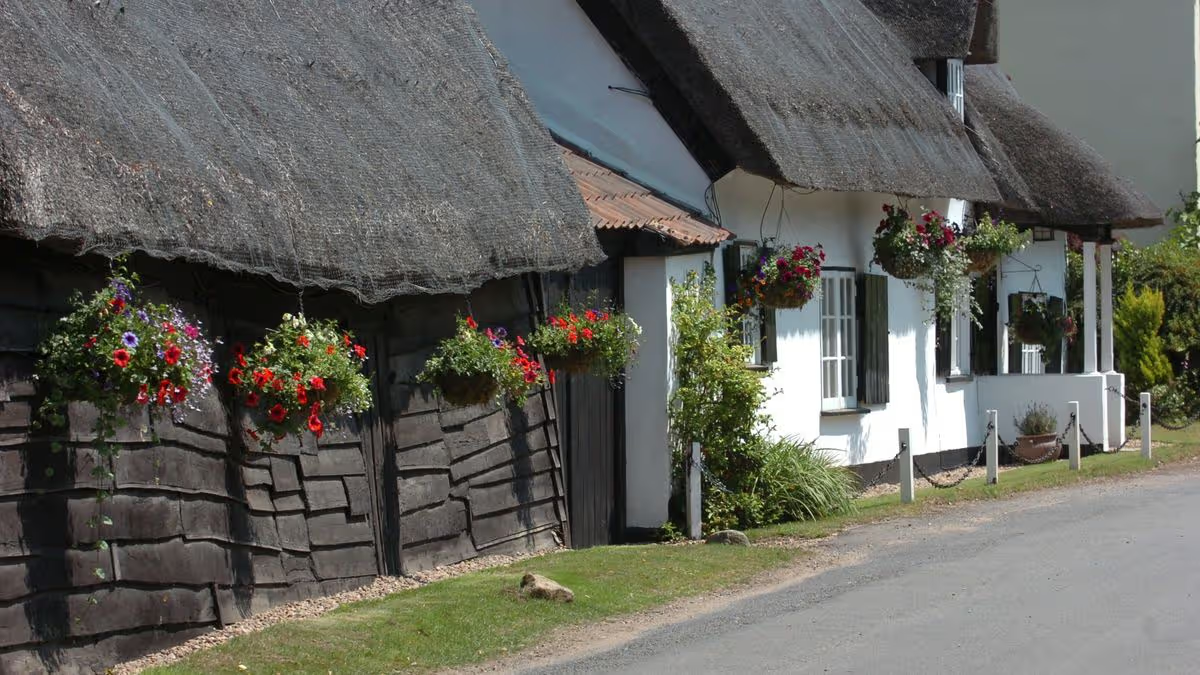
The tiny village is just a few miles to the east of nearby Huntingdon and sits against the banks of the River Great Ouse. The stunning village is perhaps best known for its thatched cottages, wildflower meadows, historic pub and large playing fields.
It was the county’s only entry in the Telegraph’s listing of posh villages, which they compiled having reviewed house prices, community assets, the location and whether it has classic village features including a green, duck pond and thatched cottages.
The Telegraph wrote of Hemingford Abbots: “This small, historic village three miles east of Huntingdon traces its roots to Roman times. It sits proudly in a conservation area on the banks of the Great Ouse where the annual Hemingford Regatta, the oldest village rowing regatta in the UK, is held in July, featuring races and riverside picnics.
“There’s a 500-year-old pub (Axe and Compass), a village hall and a sports pavilion with cricket teams, tennis and bowls. The children’s novelist, Lucy M Boston, based her beloved ‘Green Knowe’ books on a 12th-century manor house in the village.”
Advertisement
The village shares numerous facilities with bordering Hemingford Grey, including a shop, post-office, primary school and sports pitches. It is also well-connected with its walks, containing routes that can take people through St Ives, Godmanchester Nature Reserve, Houghton Mill and its beautiful wildflower meadows.
At the heart of the village is the Axe and Compass pub, which dates back to the 15th century. It is the only one of its kind in the village. providing a lovely country pub atmosphere with a garden that’s perfect for a relaxing day out.
The pub has continued to survive into 2026 against the backdrop of challenges towards pubs nationally. It remains incredibly popular with a 3.9 rating out of five from more than 400 reviews on Tripadvisor.
But the area’s key selling point is its thatched cottages and enormous houses in large gardens, which helps the village earn its posh factor. The Telegraph state the average house price in Hemingford Abbots as being £1.037m, although Rightmove lists it at even higher and £1.7m.
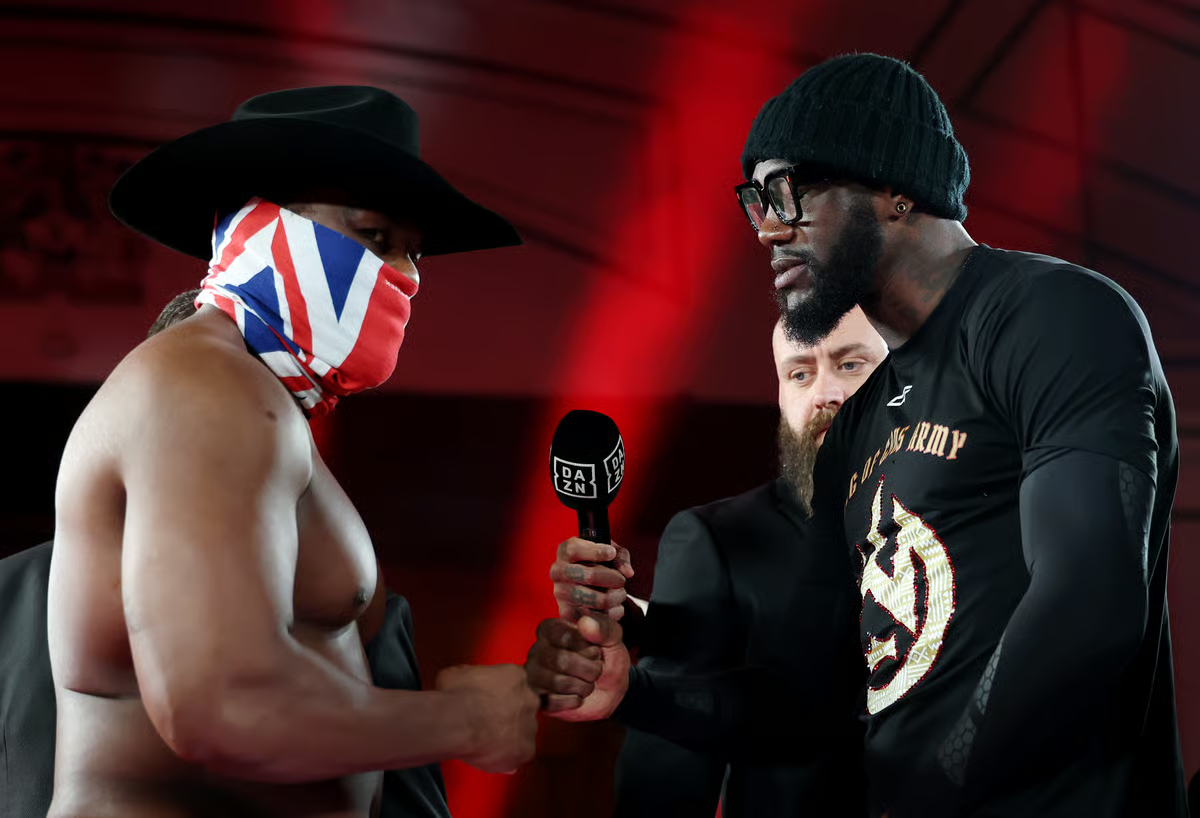
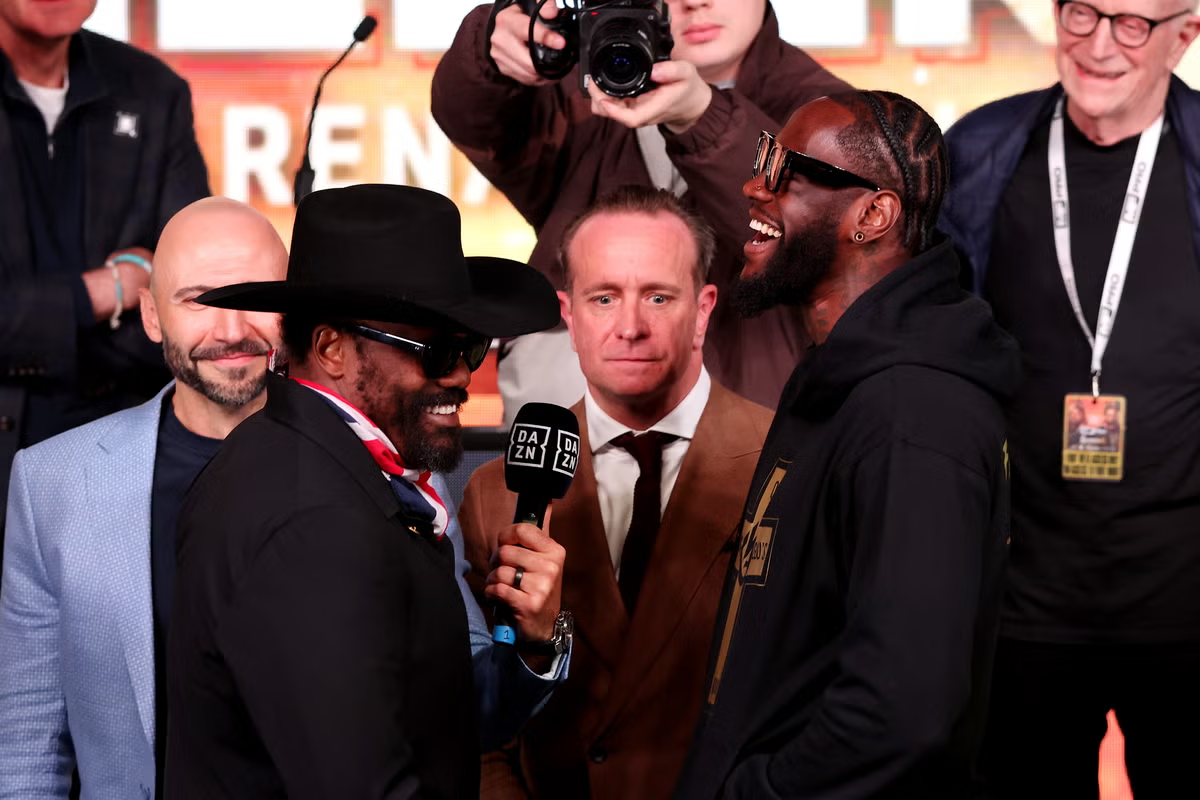
The home favourite Chisora, now 42 years old, comes into the affair with a 36-13 record, but with just one defeat in his last four outings. Wilder, meanwhile, is two years his junior but has lost four of his last six outings, which have come over the course of the last six years. Once considered one of the sport’s greatest talents, his skills have dulled somewhat in recent years, but this fight gives him the chance to end his career on a high.
The American, 40, enters this fight on a 2-4 run after his long, dominant title reign, and has appeared reluctant to use his generational power in recent bouts. But Wilder (44-4-1, 43 KOs) will need it against Chisora, given the latter’s trademark resilience and engine.
The American, 40, enters this fight on a 2-4 run after his long, dominant title reign, and has appeared reluctant to use his generational power in recent bouts. But Wilder (44-4-1, 43 KOs) will need it against Chisora, given the latter’s trademark resilience and engine.
Deontay Wilder (right) takes on Britain’s Derek Chisora tonight (Getty)
Mohanad Abdullaahi Goobe lost his life at the height of a bitter social media conflict
17:57, 04 Apr 2026
Advertisement
It began with a petty insult during a TikTok live stream and spiralled into a murderous war on the streets of a Manchester suburb.
Teenagers – obsessed with pride, ‘beef’ and settling scores – discussed ‘cheffing’ rivals as tensions simmered.
Mindless bravado fuelled increasingly violent social media threats. Fist fights saw ‘winners’ crowned and ‘losers’ licking their wounds as they plotted revenge.
Get MEN Premium now for just £1 HERE – or get involved in our WhatsApp group by clicking HERE. And don’t miss out on our brilliant selection of newsletters HERE.
Advertisement
Soon, boys were arming themselves for one final battle. At the height of the bitter conflict, Mohanad Abdullaahi Goobe lost his life. Just 15-years-old, he was dragged to the floor and knifed in the chest.
For the past four weeks, the events of that day – and the build-up – have been the subject of a tense Bolton Crown Court trial. Three boys – referred to in press reports as ‘Boy A’, 16; ‘Boy B’, 15; and ‘Boy C’, 14, were in the dock. They cannot be named for legal reasons.
It is not known who delivered the fatal blow. This week, ‘Boy A’ and ‘Boy B’ were found guilty of murder. ‘Boy C’ was convicted of manslaughter.
Mohanad’s devastated family said in the wake of the tragedy: “[He] deserves to be remembered for the young man who was loved by his family and loved big in return, not as the boy whose life was taken with no thought or reason.
Advertisement
“We will not allow his name to be known as yet another statistic in the rise of knife crime.”
Here, the Manchester Evening News looks back at the evidence in the case…
‘Who are you talking to?’
‘Boy A’, the court was told, was scrolling on TikTok when he came across a live stream. The person filming noticed his handle. ‘Boy A’ said he was called a ‘p***y’.
“Who are you talking to?,” he wrote in the comments. “Come have it on,” the lad streaming responded. Hours later on August 25 they were squaring off in an alley off Great Western Street in Moss Side.
Advertisement
There was pushing and shoving. Punches were thrown, but none connected. ‘Boy A’ headbutted his opponent, knocking him to the ground. Less than a minute later, the fight was over. ‘Boy A’ told jurors he was the ‘winner’.
“He squared up to me and we started fighting,” ‘Boy A’ said. “I headbutted him about 40 seconds in and knocked him unconscious. He tried to continue, but had to give up and I won.”
The court heard the defeated boy knew Mohanad. Speaking on Snapchat, another friend said the loss had ‘put [them] in aura debt’. A ‘rematch’ would be arranged.
Advertisement
Before that meeting, ‘Boy A’ fought another of Mohanad’s friend of at Alexandra Park. He told the jury he couldn’t remember why or what the scrap, five days after the first, was about.
Captured on video, the two boys were seen brawling in the middle of a large group. Among the crowd was Mohanad and ‘Boy B’. It wasn’t clear what, or who, started the fight. Footage showed spectators shouting encouragement as the two lads swung at each other.
There were numerous ’rounds’ as the fight went on. It ended in ‘Boy A’s’ opponent sitting on him.
That night, things got heated online. It soon became clear in court these weren’t simply schoolyard scuffles. Something much darker was brewing. These were boys wanting to play men.
Advertisement
In Snapchat messages, ‘Boy A’ told a rival he had ‘a bag of shanks’. In court, he said he didn’t have knives and said it to ‘intimidate’ the other boy.
‘These man had a shank and there was 20 of them’
On August 30, ‘Boy B’ filmed a mate as he showed a large knife to the camera. Only his hands could be seen as he unsheathed the blade.
That night, the three of them went to hospital as ‘Boy B’ had a cut on his thumb. He claimed he did it chopping vegetables, but ‘Boy A’ later told jurors he did it ‘swinging the knife about’.
Days later, ‘Boy A’ and pals ‘jumped’ a friend of Mohanad. Boy A was said to be armed with a knife.
Asked by a friend on Snapchat why he ‘let’ that happen, Mohanad replied: “These man had a shank [knife] and there was 20 of them.” The group saw ‘Boy A’s’ allegedpossession of a knife as an ‘escalation’.
“Wallahi [I swear to God] the mandem are patterning [getting] these shanks,” Mohanad wrote. “Get the gloves, IDGAF I’m riding out every day, I might chef [stab] one of them,” he added. “I expect every single one of us to ride out.”
The next day, Mohanad posted stills from a clip of the fight at Alexandra Park, between ‘Boy A’ and his friend. ‘Boy A’ told him to meet for a ‘one-on-one’, but Mohanad refused.
Advertisement
In a group chat, Mohanad wrote: “Imagine cheffing was haram [forbidden] and not illegal… I would chef every single one of them.”
In the days leading up to the fatal fight, one of Mohanad’s friends live on TikTok to ‘p**s off’ the other group. Within hours, a group chat was set up by ‘Boy A’ and a plan for revenge was hatched.
“Tensions were developing and not dying down,” prosecutor Alex Leach KC said.
‘F***ing kill them’
On September 14, Snapchat discussions turned to tactics for the ‘rematch’ on September 15. ‘Boy C’ suggested taking a dog for ‘intimidation’. He and his friends talked about forming three rows of people, with ‘Boy A’, ‘Boy B’ and ‘Boy C’ at the front.
Advertisement
“I want at least 30 people there,” ‘Boy C’ wrote. As plans were put formed on both sides, a boy acting as a ‘go-between’ for the two groups messaged Mohanad advising him to ‘get it over with, no shanks, fists only’.
“You man already took it there,” Mohanad replied. He told another friend to ‘just not go’. The two groups traded insults, with the go-betweenpressing Mohanad to get involved.
“Just do something when you man see us,” Mohanad replied, but agreed to ‘back’ the fight later that day. “This kid should have stayed out of it,” ‘Boy A’ wrote, referring to Mohanad.
Advertisement
‘Boy B’ told ‘Boy A’: “Let’s get the wap [weapon] from the bush.” One of their group said ‘Boy A’ should ‘f***ing kill them’. “Who said I am going to kill another man?,” he replied.
‘Boy B’ messaged someone on TikTok asking: “You coming tomorrow? How many you got left? Any big ting?” In his evidence, ‘Boy A’ said he said he thought it would be a ‘fist fight’ and denied taking knives.
Prosecutors said the earlier video taken by ‘Boy B’ on August 30, showing a friend holding a knife in a plastic bag with its sheath nearby, showed he was ‘involved’ in the acquisition of blades.
“When you look at the messages on September 14, the intention is clear,” prosecutor Alex Leach KC said. “Boy B was in the business of getting a large knife for the following day.”
Advertisement
‘I threw a blow back’
On the day of the fight, September 15, ‘Boy A’ put on his school uniform to trick his mum into thinking he was going to lessons. Instead, he met up with ‘Boy B’ at his house while his parents were at work.
‘Boy B’ filmed ‘Boy A’ as they admired two large knives on his bed. ‘Boy A’ said another friend took the blades over.
After, they got changed and left to meet their group at Whitworth Park. Body cam footage from two patrolling officers at the park shows members of the group with their faces covered.
Advertisement
The boys left, with CCTV footage later showing them walking behind Mohanad’s group along Moss Lane East. As they reached the junction with Monton Street, a fight broke out between the two groups. Up to 20 lads were involved.
Footage showed the violence quickly escalated, with members of both groups running across the road. During the chaos, Mohanad was stabbed.
He was dragged to the ground and kicked before the being stabbed in the chest. He died in hospital later that day. Giving evidence, ‘Boy A’ claimed Mohanad had swung towards him first.
“What did you do?,” his barrister asked. “I threw a blow back, it connected. I was trying to defend myself. I didn’t see if he was injured,” ‘Boy A’ said.
Advertisement
He claimed in the dock he had no prior issues with Mohanad. “Did you arm yourself that day and have a knife?,” he was asked. “No,” Boy A said. “Did you stab Mohanad?,” he was asked. “No,” he said.
Ultimately jurors concluded ‘Boy A’ and ‘Boy B’ were guilty of murder, with ‘Boy C’ convicted of manslaughter. They will be sentenced on May 21.
‘Not just another statistic’
Paying tribute Mohaned following his death, his family said he was ‘quick to laugh, easy to love, with a ready smile’.
His loved ones added: “Mohanad was our 15-year-old son, and a younger sibling to his sister and brother. Mohanad was the baby of the family, he was quick to laugh, easy to love, with a ready smile. Our son had an uncanny ability to make you laugh, making it sometimes difficult to be serious with him.
Advertisement
“Mohanad had many friends, he was loyal and often played the class clown, simply to see them laugh. Mohanad’s life has been cut tragically short, it is difficult to comprehend that seeing your son head off for school in the morning, would be the last time that we would see that handsome face.
“Mohanad deserves to be remembered for the young man who was loved by his family, and loved big in return, not as the boy whose life was taken with no thought or reason.
“We will not allow his name to be known as yet another statistic in the rise of knife crime. Remember Mohanad with love in your heart and a kind word on your lips.”
Advertisement
Senior Investigating Officer Detective Chief Inspector Alex Wilkinson, of GMP’s Major Incident Team, said: “Our thoughts first and foremost remain with the friends and family of Mohanad following this horrific incident.
“I would like to thank them for their courage and strength during the trial, and I hope the verdict will help them in their steps towards justice for Mohanad.
“Our investigators worked tirelessly across this investigation – from undertaking several warrants, speaking to countless witnesses and scouring hours of CCTV footage to understand the elements that have led up to Mohanad’s death.
“One life lost to knife crime is one too many, and we will continue our commitment to get justice for families who have been affected by knife crime.”
The IT system was the target of a cyber attack on Friday with the EA carrying out a full password reset as a security measure in response
The Education Authority says positive steps have been made towards restoring access after an IT system used by pupils in Northern Ireland was hit by a cyber attack.
Advertisement
The IT system was the target of a cyber attack on Friday, April 3, with the EA carrying out a full password reset as a security measure in response.
The C2K school system, provided by Capita, is used as a curriculum support.
The Education Authority (EA) said it was taking the incident “very seriously” and apologised for the impact on pupils who may be preparing for exams over the Easter break.
Advertisement
It said that user passwords are being reset over the weekend, with priority given to students at post-primary schools who are due to sit exams.
In an update on Saturday afternoon, a spokesperson for the EA said: “EA continues to engage with the C2K system provider, Capita, to minimise the impact on staff and pupils, following a recent cyber-attack.
“We are making positive progress towards restoring access to the schools’ C2K system.
“EA teams, along with the service provider Capita and colleagues in schools, have worked around the clock to rapidly develop and test a safe and secure solution.
Advertisement
“We have started to roll this out in schools, with initial priority given to post primary schools and pupils in exam years.
“Work will continue over the weekend and Easter period to restore access across the estate. Details of arrangements will be communicated to pupils by their school as soon as possible.
“We apologise for the unavoidable disruption, but would reassure users, this essential security measure was taken to maintain the integrity of the system and safety of all users.
“EA would like to thank schools and partners for their support as we continue monitor progress over coming days. We will continue to keep schools, parents/carers and pupils updated via EA website Education Authority and our social media channels.”
It’s a bright spring Tuesday morning, the time is 11am.
“I’m sorry, I’m still laid in bed right now,” explains the mother of murdered schoolboy Harvey Willgoose, as she answers my telephone call. “It’s horrendous getting up every morning because I dream about him [Harvey] and wake up every time with a pain in my stomach, I can’t move.”
It’s now 421 days since Caroline got the life-changing call at work from her mother-in-law to tell her something serious had happened to her 15-year-old son at school.
She remembers how a police car swiftly arrived, and she began a journey under blue lights to hospital to be by Harvey’s bedside. When the patrol car dropped down to normal speed and the flashing lights were turned off, she thought he was “alright”.
Advertisement
But the grim reality was her son had slipped away.
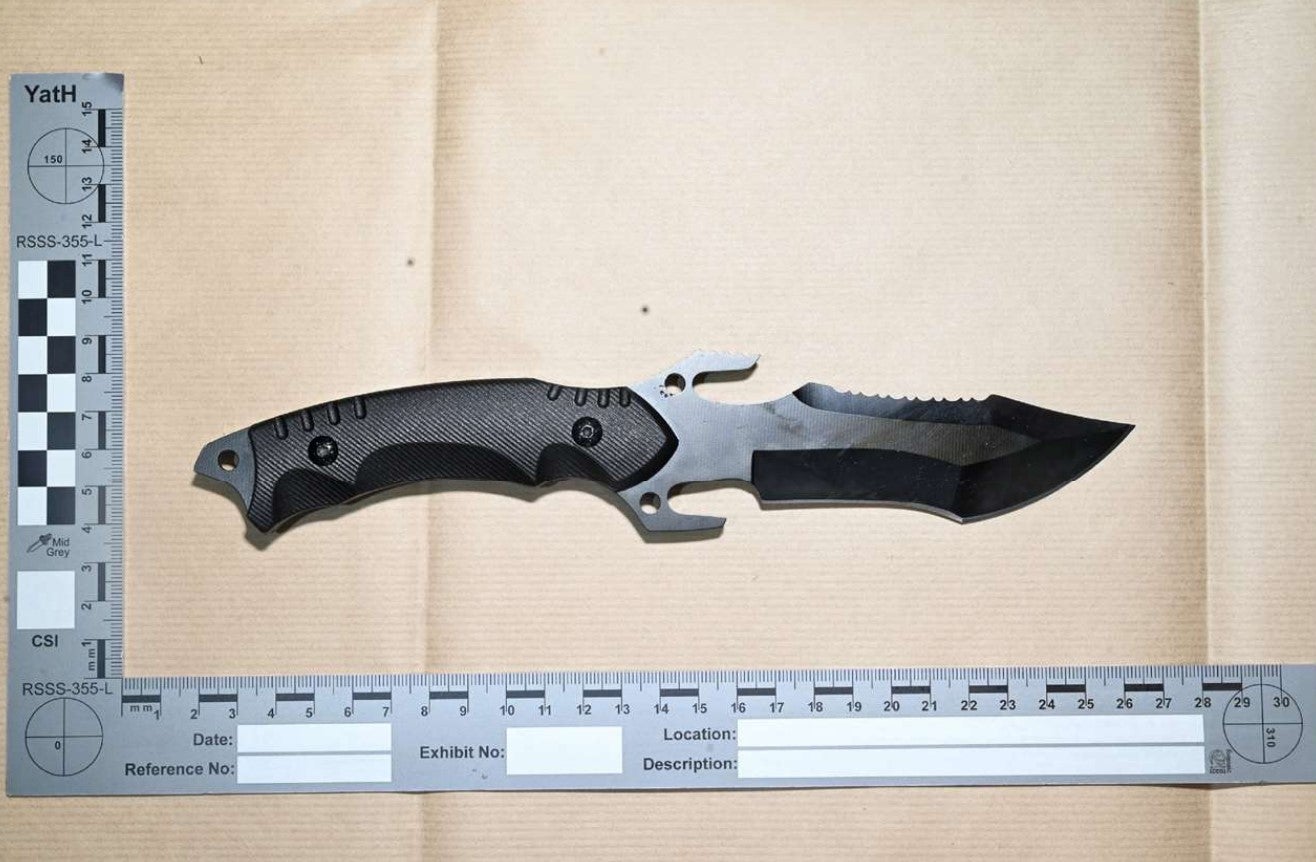
Harvey had been stabbed through the heart with a 13cm hunting knife by fellow pupil Mohammed Umar Khan, also 15, who launched his fatal attack outside the canteen at All Saints Catholic High School in Sheffield in front of children and teachers.
“I think about that day all the time,” says Caroline. “The hope my boy is ok, the shock of finding out and then the mix of rage and sadness. No mother, no parent should ever have to go through it, because it never ends, you can’t move on from it.”
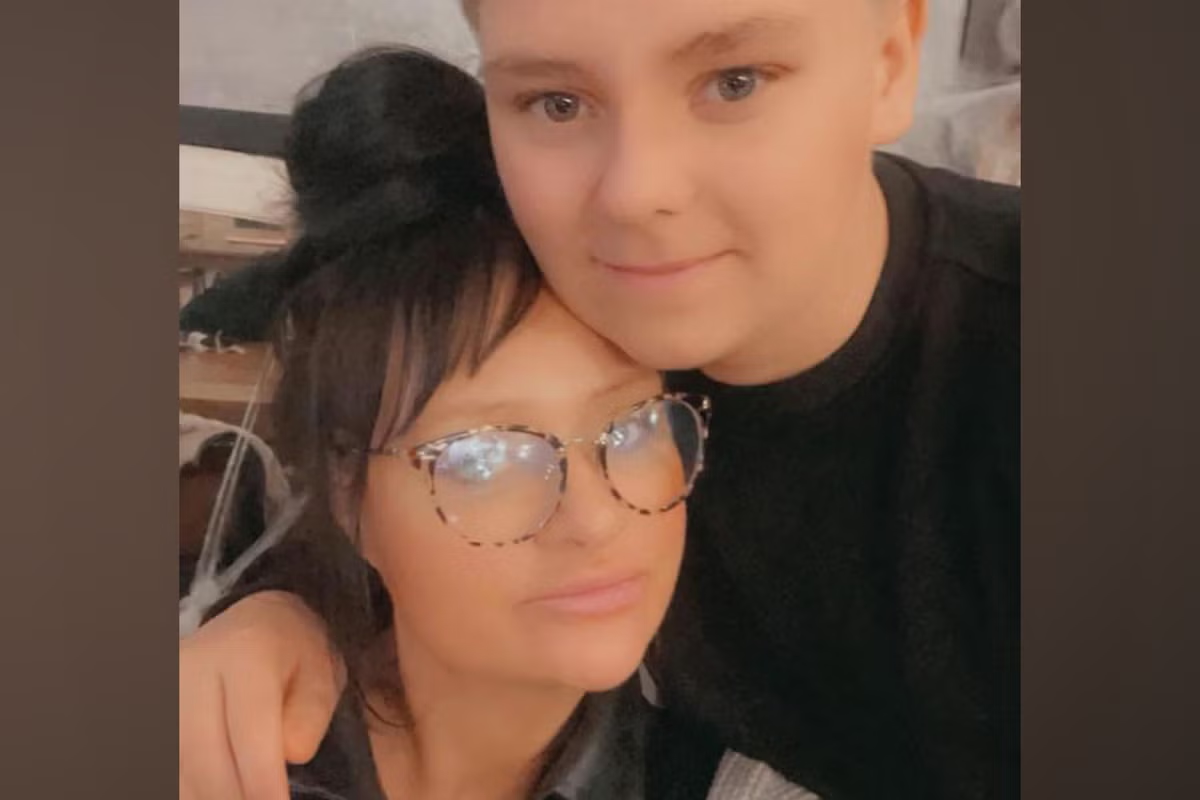
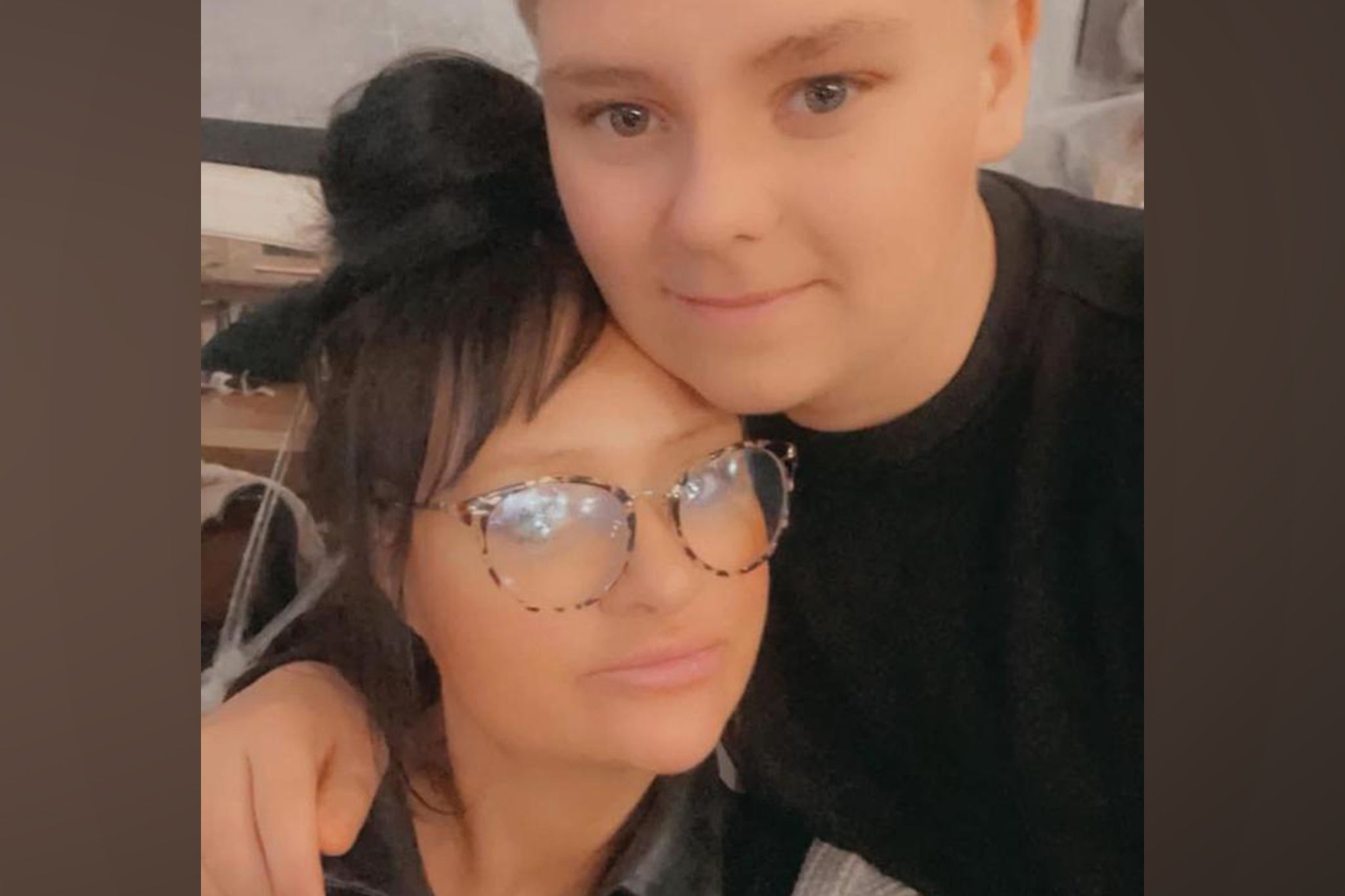
Caroline Willgoose with Harvey before his murder last year (Supplied)
Shortly after his death, the heartbroken mother paid tribute to her son, describing Harvey as “caring, loving and a funny young man”. She shared happy pictures on social media of him at a festival and others with her on holiday in Tenerife and Greece.
Then, days later, when the football team he supported, Sheffield United, played in the city, Caroline and Harvey’s father, Mark, joined supporters in a march before the game. At the 15th minute of the match, emotion broke out inside the stadium as the crowd, joined by players, delivered a standing applause to celebrate Harvey’s life.
Advertisement
Today, in the back garden of his home, where he would play football with friends, the nets are still up, and the ball is on the grass. Inside the three-bedroom house, his school shoes are still out, his clothes are in an ironing pile, and his bedroom remains untouched.
“His dad sometimes goes in [the bedroom] to have a cry because it still smells of him, everything inside has remained the same,” Caroline says.
“We’ve got a dog, a cockapoo, which was born just the day he [Harvey] passed, and he won’t even go that room, he knows there’s something. His [Harvey’s] shoes, clothes in the ironing pile and balls and nets in the garden…. I just can’t get rid of them.
“It’s also simple things like I find an old drawing he’s done from primary school, and things like that. Mother’s Day cards, too. You don’t want to move those things, and they just remain static for you, because you never want to leave your son behind.”
Advertisement
Caroline Willgoose speaks alongside her husband and Harvey’s father Mark at a press conference following the year anniversary of Harvey’s death (PA)
The despair over Harvey’s death has, at times, escalated into frustration and anger over the past year of immense grieving for the family.
Earlier this year, an independent review into Harvey’s death, which was commissioned by the academy trust that runs his school, found “several missed opportunities” to address behaviour and manage risk before the stabbing.
According to the family lawyers Irwin Mitchell, the review, which was not published, showed records were not requested or reviewed before Khan’s move from another school, where there had been incidents involving violence, weapons references and anger.
Also, despite an investigation into a knife allegation on the day of Harvey’s death, the law firm said the report found Khan was allowed into school “unsearched and without any completed assessment”.
The criminal trial, which saw Khan convicted of murder and detained for at least 16 years, heard tensions were running high at the school in the week before the attack, with a lockdown declared on one day after an unproven claim that a pupil in a fight had a knife.
Advertisement
Harvey had stayed off for most of the week, texting his father: “Am not going in that school while people have knives.”
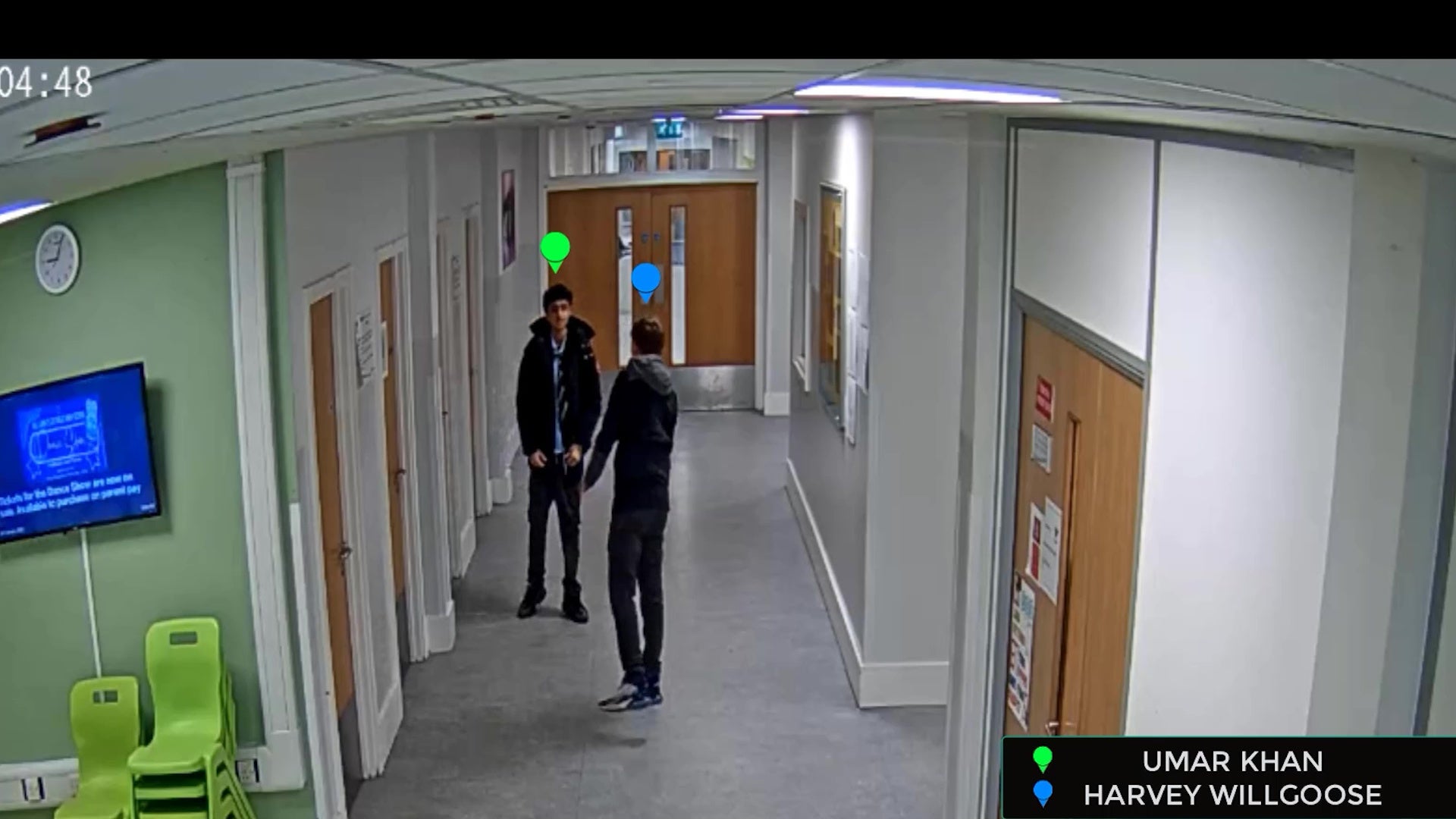
Screen grab taken from CCTV issued by South Yorkshire Police of Mohammed Umar Khan (green tag) and Harvey Wilgoose (blue tag) in the corridor at school before Khan killed fellow pupil Harvey (South Yorkshire Police)
“I feel guilty because we urged him to go into school,” says Caroline. “I felt like we led him into the lion’s den. He didn’t want to go. But then also, where was the protection for my son? Where were the checks by the school?
“If they’d even looked at his [Khan’s] phone they’d have realised he was heading down a dark road with an unhealthy interest in weapons. He was out to kill somebody; there were so many missed opportunities.”
The school trust did release the report’s 10 recommendations, saying it would help implement them. They included mandatory record sharing of any pupil school move with senior sign-off confirming safeguarding and behaviour records have been reviewed before a pupil starts.
The trust also said a number of “robust measures” had been introduced since Harvey’s death – although Caroline says they haven’t gone far enough.
Advertisement
Following her son’s death, an MP, on behalf of the family, asked the school if it would introduce a knife metal detector, known as a knife arch, at its entrance. It responded by saying handheld knife detectors are already in use, she said.
The Independent understands the school took advice on options for security after Heavey’s death and has since brought in other changes including bleed kits, enhanced staff training and updated search policites.
The knife used by Mohammed Umar Khan to murder Harvey Willgoose (South Yorkshire Police)
Caroline, who offered a donated knife arch to all schools in the Sheffield area, says: “Schools are more worried about reputation and not scaring the parents, I’ve even heard some say [knife arches] they look frightening. But by not having the arches, they are putting children at risk.
“It’s a sad matter of fact that if there was one at All Saints on the day Harvey was murdered, he would still be here today.”
Caroline is also calling for stricter punishment for children caught with knives, claiming school leaders avoid suspensions “because it looks bad on school targets”. It comes on the dayThe Independent reveals there were more than 700 incidents of knife crimes in schools in England and Wales last year.
Advertisement
“Doing this, trying to raise awareness and push schools to take action, helps me continue with my life,” she says. “It’s all in the name of Harvey – I just know he would want me to be doing this.”
Cambridge have extended their dominance of the men’s Boat Race, overcoming some of the most choppy and windy conditions in recent memory to win for the fourth consecutive year.
With a team packed with internationals and Olympians that have swept all before them this year, Cambridge arrived as clear favourites to chalk up yet another win after only losing once in the past decade.
Cambridge began strongly, despite the slight disadvantage of starting from the Middlesex station, before Oxford rallied gamely during a messy middle section of the race.
Advertisement
Both teams were warned by the race umpire and there were a series of close calls between the oars of the two sets of rowers.
With water frequently lapping up into the boat in virtual sea conditions, there were briefly even fears that one of the boats could become submerged.
Oxford’s unexpected resistance was brave, but there is no bluffing over the 4.3-mile Championship Course and Cambridge gradually eased to a comfortable four-length victory to win what was the 171st Boat Race. It was Cambridge’s seventh win in eight years to extend their overall lead since 1829 to 89-81.
While the Dark Blues were again defeated in the men’s race they had had something to celebrate in the earlier women’s race, ending a 10-year wait since their last victory.
Advertisement
After starting from the supposedly slower Middlesex station, Oxford led from literally the first stroke to the last, prevailing over Cambridge for the first time since 2016.
Since then, the Light Blues had won eight times in a row, with the 2020 edition cancelled during the Covid-19 pandemic. In front of their proud parents, sisters Lilli and Mia Freischem became the first siblings to compete against one another in the Boat Race, with Oxford’s Lilli securing family bragging rights.
The Dark Blues powered off, taking a lead of half-a-length within the first minute. Cambridge rallied but, as the crews then settled going into the first turn just after Hammersmith Bridge, Oxford had already established clear water. This was vital given that Cambridge had won the toss, and choosing the Surrey station would have given them an advantage on that bend. The Oxford lead mitigated that advantage hugely, however, as they could then move across into the water in front.
Dozens of people were taken to the hospital after the bee swarm attacked a crowd in Panama (Picture: Bomberos De Panama)
A swarm of bees has left 150 people injured, with 50 in hospital, after it attacked a crowd at an Easter event.
Residents in the town of Penonome in central Panama, South America, were left shocked after a colony of Africanised bees, or better known as killer bees, swarmed the neighbourhood.
The swarm happened during the Via Crucis religious procession, known in English as the Stations of the Cross ceremony, which is often held on Good Friday to represent Jesus’s journey to the crucifixion.
Around 150 people were injured in the attack, while 50 were taken to nearby hospitals for treatment.
Advertisement
The local fire department said the recent bee attack marks a series of several in the region this year (Picture: Bomberos De Panama)
According to local outlet Destino Panama, among those injured was the priest who led the religious event, the local fire department said.
The local fire department was called to the scene and shared footage on its social media showing residential streets lined with several emergency service vehicles.
It is not known what caused the swarm to descend on the crowd, but attacks are more likely to occur between January and April when food is scarcer, and the dry, hot weather can make them more irritable.
The swarm marks a series of several bee attacks in the region, with more than 1,820 recorded cases in January and February this year alone, Destino Panama reported.
Advertisement
What are killer bees?
Killer bees, also known as Africanised bees, are a hybrid strain of African and European honey bees, according to the Natural History Museum.
The bees were bred by Brazilian geneticist Dr Warwick E Kerr in 1956 in an effort to improve honey production in Brazil.
The hybrid species combines the European bees’ ability to generate greater honey yields with the African honey bees’ better adaptation to warmer climates.
African honey bees are naturally more aggressive than European varieties – a trait which has been passed onto killer bees.
Advertisement
They are only found in parts of North, Central and South America.
Locals were left shocked after the swarm attacked the neighbourhood (Picture: Bomberos De Panama)
Can killer bees actually kill humans?
Despite their rather dangerous name, a single killer bee is no deadlier than any other honey bee species, the Natural History Museum says.
Killer bees tend to be smaller than honey bees with short wings and carry less venom.
Advertisement
What makes them appear so deadly is when they are forced to defend their nest.
When a European honey bee is threatened, only 10% of the bees will venture out of their hive to protect their home.
Killer bees can be deadly in swarms, but a single killer bee is no deadlier than a European honey bee (Picture: Getty Images/Westend61)
In comparison, killer bees will empty their nests, flying in swarms of around 300,000 to 800,000.
Their numbers can increase exponentially, as with every sting, a pheromone is released to signal for more bees from the colony to join the onslaught.
It is estimated that around 1,000 stings could kill an adult human.
Advertisement
However, it is important to note that killer bees do not attack for no reason.They use their stinging defence when they genuinely believe their colony is at risk.
During an in an interview with YouTube channel Avirales which was released last weekend, Fernandez was not directly asked about Real Madrid but was questioned on which city he would like to live in.
‘I’d like to live in Spain. I really like Madrid, it reminds me of Buenos Aires,’ Fernandez said.
‘Players live where they want. I’d live in Madrid. I get by in English, but I’d be more comfortable in Spanish.’
‘There are eight games left and the FA Cup. There’s the World Cup and then we’ll see.’
Chelsea drop Enzo Fernandez for two games
On Friday, Chelsea manager Liam Rosenior confirmed that Fernandez will not be selected for his side’s FA Cup tie against Port Vale on Saturday, or their Premier League match against Manchester City next Sunday.
Advertisement
‘It’s disappointing for Enzo to speak that way,’ Rosenior said.
‘I have got no bad words to say about him but a line was crossed in terms of our culture and what we want to build. As a character, a person and a player, I have the utmost respect. He’s frustrated because he wants us to be successful.
‘In terms of the decision, it’s not all about me, or the sporting directors. The ownership, the players, we are aligned in our decision.
‘The door is not closed on Enzo. It’s a sanction. You have to protect the culture, and in terms of that, a line was crossed.’
Advertisement
Enzo Fernandez posted a picture from Chelsea’s training ground on the day of the team’s FA Cup tie vs Port Vale (Instagram)
Enzo Fernandez’s agent brands decision ‘unfair’
Fernandez’s agent, Javier Pastore, has said that the Argentina international does not understand the decision and could ‘explore other options’ this summer.
‘The punishment is completely unfair,’ Pastore told The Athletic.
‘Banning the player for two matches, which moreover are also absolutely crucial for Chelsea because qualification for the Champions League is at stake and he is one of the team’s most important players.
‘There’s no real reason or justification for why he has been banned. Enzo didn’t understand the situation. When the coach told him he accepted it because he’s a highly professional guy who’s always fully committed wherever he is and respects decisions, but we don’t understand the punishment because he doesn’t mention any club or say he wants to leave Chelsea, far from it. He only mentions Madrid, the city.
‘Our plan after the World Cup is to meet with Chelsea again and, if there is no agreement, to explore other options.’

















































You must be logged in to post a comment Login