

Connect with us
DAPA Banner
DAPA Coin
DAPA
COIN PAYMENT ASSET
PRIVACY · BLOCKDAG · HOMOMORPHIC ENCRYPTION · RUST
ElGamal Encrypted MINE DAPA
🚫 GENESIS SOLD OUT
DAPAPAY COMING

NewsBeat

North Yorkshire’s hidden abbey that eclipsed Durham Cathedral

Published

on

North Yorkshire's hidden abbey that eclipsed Durham Cathedral

The great shell of the nave rises 100 feet from the valley floor, the arcade of the choir stands almost intact, and the whole complex fills the narrow valley of the River Rye in a way that makes the scale of what was once here almost impossible to process.

This was not just a monastery.

For a period in the 12th century, Rievaulx was the most powerful Cistercian house in Britain and one of the most influential religious institutions in Europe.

Advertisement

How it began

On March 5, 1132, twelve monks arrived in the valley of the Rye from Clairvaux Abbey in Burgundy, sent by Bernard of Clairvaux on a mission to plant Cistercian monasticism in the north of England.

The land was given to them by Walter Espec, the Norman lord of nearby Helmsley Castle, and the monks chose the valley precisely because it was remote, enclosed and cut off from the world – exactly what the Cistercian rule demanded.

What followed was one of the most rapid expansions in medieval monastic history. Within 25 years, the original 12 monks had grown to a community of 140 choir monks and more than 500 lay brothers, making Rievaulx one of the largest monastic communities anywhere in Britain.

The monks diverted the River Rye to create flat ground, raised 72 buildings across a 92-acre precinct, cleared forest, drained marshes, built roads and bridges, and established farms, fisheries and ironworks across a vast surrounding estate.

Advertisement

The man who built its golden age

The central figure in Rievaulx’s story is Aelred, who became abbot in 1147 and ran the community until his death in 1167.

Born in Hexham in 1110, the son of a hereditary priest, Aelred was raised at the court of King David I of Scotland and arrived at Rievaulx as a young man, rising through the community with extraordinary speed.

Under his leadership Rievaulx founded 19 daughter abbeys across Britain and Ireland, making it the mother house of a network that stretched from Yorkshire to Scotland.

The abbey grew wealthy on wool, with fleeces exported to merchants in Florence and Bruges.

Advertisement

Aelred himself became one of the most important writers and theologians of his age, producing works on spiritual friendship, the saints of Northumbria and the life of Edward the Confessor that are still read and studied today. He was canonised in 1191.

The building you see today

The church that stands today is largely the result of two ambitious rebuilding programmes.

The first stone buildings went up in the 1130s in the austere Cistercian Romanesque style, with rounded arches and minimal decoration.

Then, in the 1220s, a spectacular expansion of the choir and presbytery transformed the east end of the church into one of the finest examples of Early English Gothic architecture in the country.

Advertisement

The west range of the monastery, dating from 1135 to 1142, is the earliest surviving Cistercian building in Europe.

The great cloister, at 42 metres square, is one of the largest ever built by the Cistercians in Britain.

At its peak, Rievaulx contained 72 separate buildings across its precinct, and the scale of what survives makes it possible to trace the footprint of almost all of them.

Decline and dissolution

Rievaulx’s decline was slow and painful.

A Scottish raid in the early 14th century, the Black Death, agrarian crisis and the collapse of the wool trade all reduced the community over two centuries.

Advertisement

By December 1538, when Henry VIII’s commissioners arrived to dissolve the abbey, only 23 monks remained in a complex built for 650.

The lead was stripped from the roofs within weeks. The stone followed, quarried for building projects across the region, and the buildings slowly became the spectacular ruins you see today.

Then, in the decades after the Dissolution, ironmasters moved in. A blast furnace and forge were built in the ruins of the monastery, and the abbey precinct became an industrial ironworking site for nearly a century.

The irony of a great wool and iron-producing monastery being used for iron production after its destruction was not lost on later historians.

Advertisement

What to see

The scale of the surviving ruins means there is more to see at Rievaulx than at almost any other abbey in England.

The roofless nave, with its blind arcading and surviving column bases, gives a sense of the original Romanesque church.

The choir and presbytery, rebuilt in the 1220s in gleaming Gothic, show the abbey at its most ambitious and beautiful.

English Heritage provides a free audio tour that guides visitors through the buildings and brings the monastic day to life, from the 2am night office through the working hours of the scriptorium and the refectory to the evening compline.

The on-site museum, housed in the surviving west range, displays carved stonework, floor tiles, and medieval artefacts recovered from excavations, including a bronze reliquary figure and fragments of medieval window glass.

Advertisement

The view from above

From the ridgeline directly above the abbey, the National Trust’s Rievaulx Terrace offers a completely different perspective: a serpentine grass terrace laid out in the 1750s specifically to frame 12 views of the ruins below, with a Palladian temple at each end.

The terrace is currently closed; check the National Trust website before visiting.

Where to eat

The on-site cafe serves hot meals, sandwiches, homemade soup, cakes and scones, and is accessible without paying abbey admission.

It closes 30 minutes before the site.

For a wider choice, Helmsley is three kilometres south and has a full range of cafes, pubs and restaurants, including Mannion and Co on the market square and the Michelin-starred Star Inn four miles away in Harome.

Advertisement

Getting there

Rievaulx Abbey is three kilometres north of Helmsley in the North York Moors National Park, off the B1257.

The postcode is YO62 5LB.

There is a free car park on site. English Heritage members enter free; non-members should book online in advance to save 15 per cent on admission.

The abbey is open daily from 10am to 5pm, with last entry at 4.30pm.

Advertisement

Practical information

Address: Rievaulx, near Helmsley, North Yorkshire, YO62 5LB
Opening times: Daily 10am to 5pm, last entry 4.30pm
Admission: Standard adult admission applies; English Heritage members free; book online to save 15 per cent

Source link

Advertisement
Continue Reading
Click to comment

You must be logged in to post a comment Login

Leave a Reply

NewsBeat

Monaco explosion injures three people, French media report

Published

on

Police near the scene of the blast late at night on a Monaco street

An explosion at a residential building in Monaco has injured three people, two of them critically.

The blast occurred shortly before 21:00 local time (19:00 GMT) after a bag was left outside the building on Rue Révérend Père Louis Frolla, near the border with France.

Minister of State Christophe Mirmand told AFP it was “very likely an attack” and police were investigating.

He said the blast had been caused by an explosive device which appeared to contain bolts and pellets. The Monaco government said a suspect was seen on a video surveillance system fleeing towards France.

Advertisement

More than 100 police and emergency personnel were deployed to the scene.

“This is the first time in history, to my knowledge, that such an act has taken place in the principality,” Mirmand, the head of Monaco’s government, said.

Mirmand told local media that two of the victims had suffered “life-threatening” injuries, but did not disclose the identities of any of the victims. The Monaco government said the three injured people had been taken to hospital in the nearby French city Nice.

Monaco’s Prince Albert II described the incident as a “heinous crime” and “a shock to the entire Monaco community”.

Advertisement

He said “all concerned state services are currently being mobilised” in co-operation with the relevant French authorities.

Officials are expected to provide an update on Tuesday local time.

Source link

Advertisement
Continue Reading

NewsBeat

The secrets behind the save: How goalkeepers decide World Cup penalty shootouts

Published

on

The secrets behind the save: How goalkeepers decide World Cup penalty shootouts

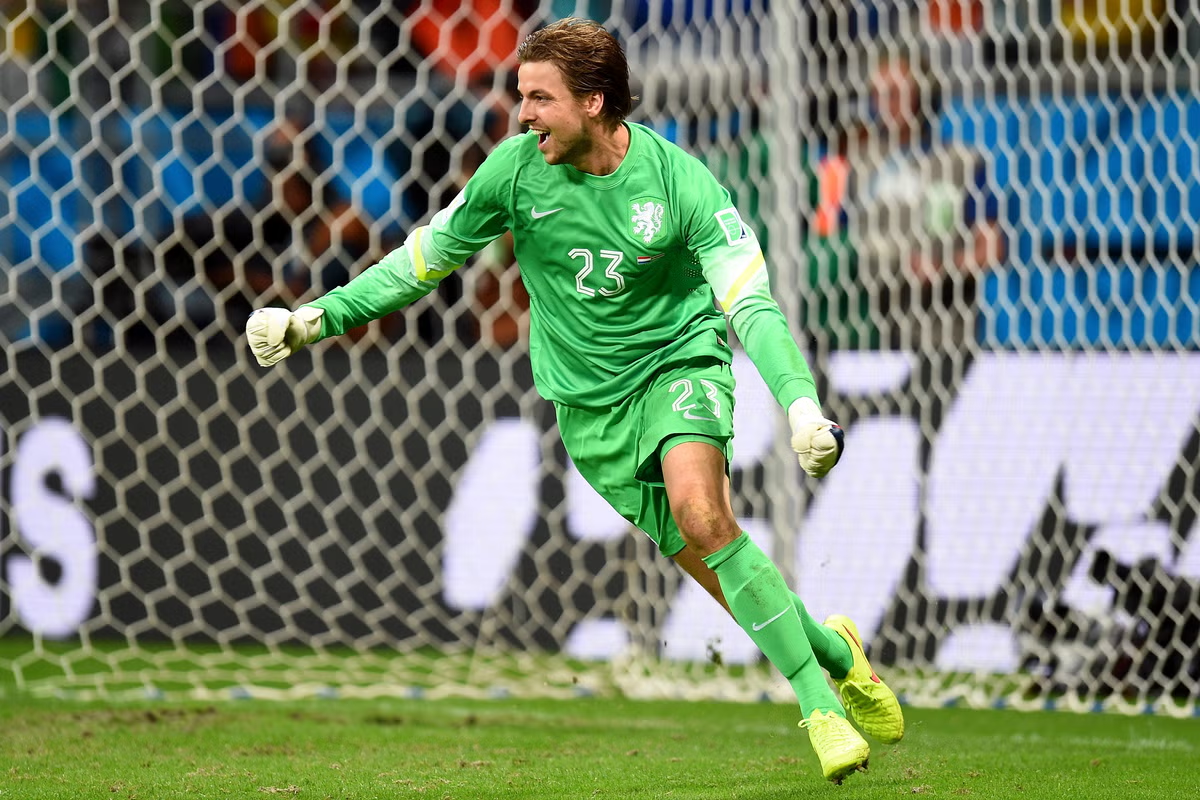
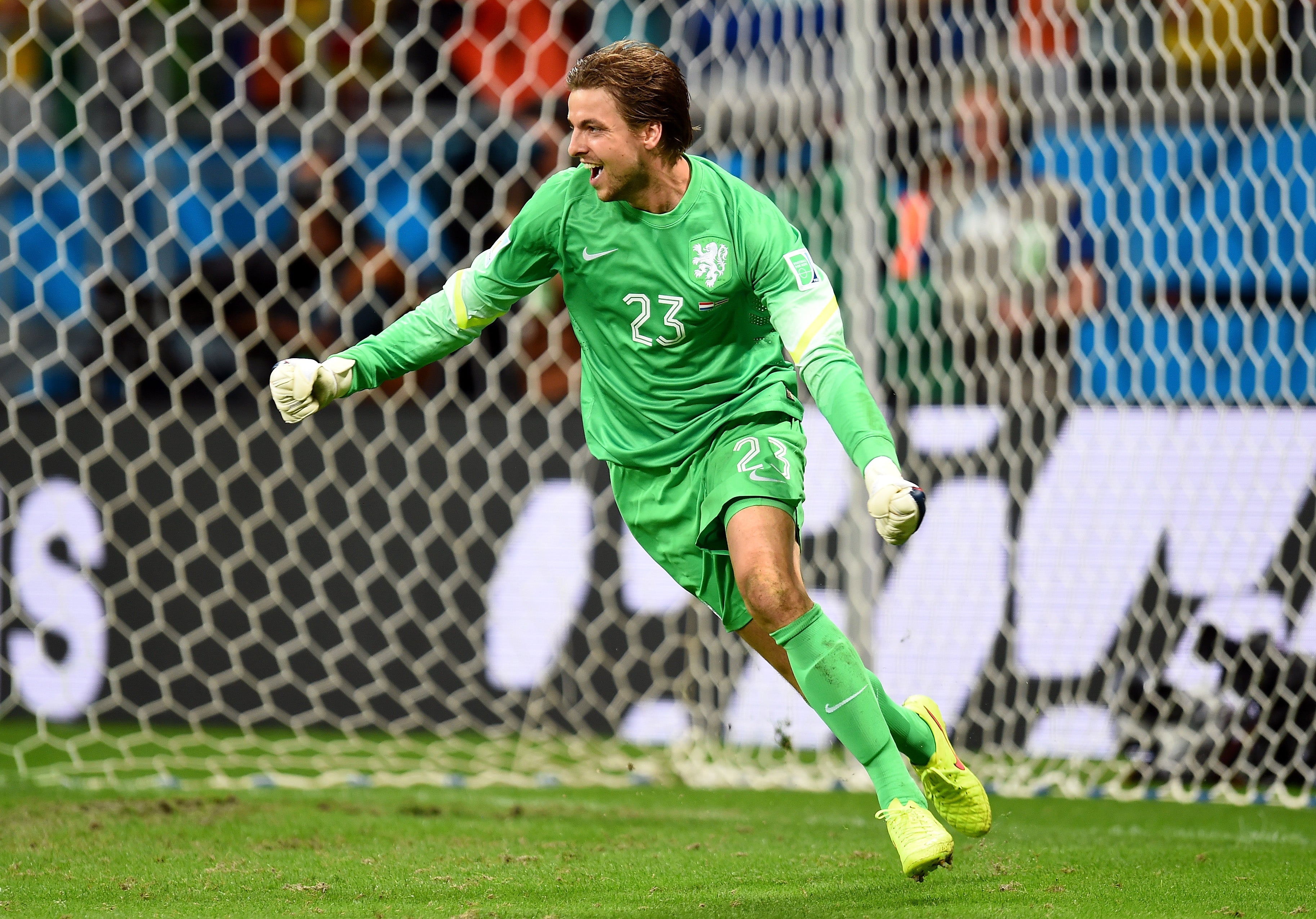
In the midst of one of the most famous World Cup shootouts interventions of all, with so much focus on him, Tim Krul was only looking to one place. That was into the eyes of the Costa Rica players.

“You can see which ones are more nervous,” Krul smiles. “They’re not able to put the ball where they want.”

So it proved with Bryan Ruiz and Michael Umana, as Krul saved from both to send the Netherlands through to the semi-finals in 2014.

Tim Krul was the hero for the Netherlands in the 2014 World Cup quarter-finals against Costa Rica
Tim Krul was the hero for the Netherlands in the 2014 World Cup quarter-finals against Costa Rica (Getty)

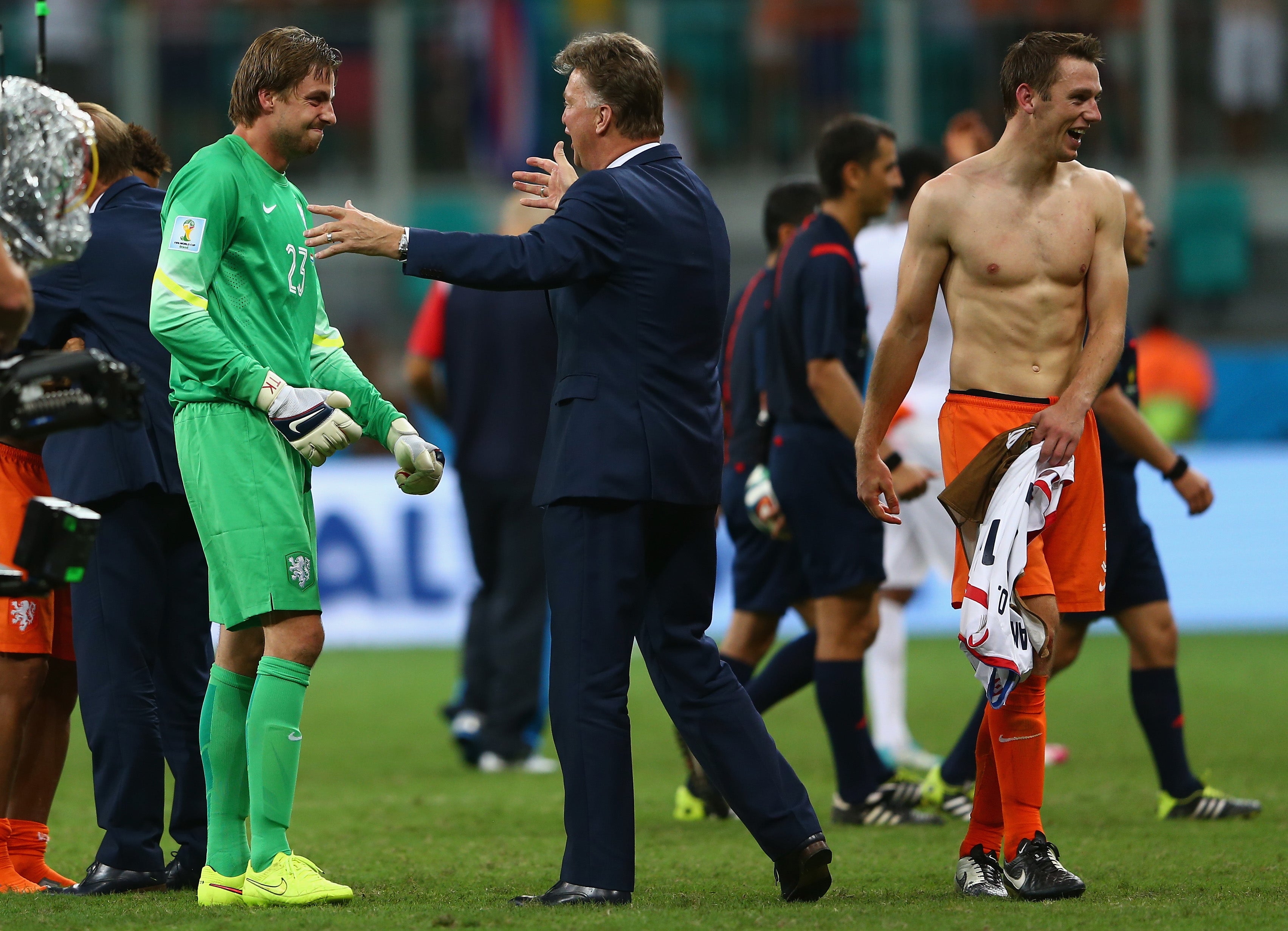
That moment of history came just minutes after Louis van Gaal had specifically brought on the goalkeeper as a penalty specialist, the first time that had happened in the competition’s history.

If it has consequently entered World Cup lore, but arguably had a much wider influence on how the competition is now played, that we are going to see over the next few days. It marked a moment where the focus for shootouts – at least as regards what the most important element is – shifted from kickers to keepers.

Advertisement

For years, after all, most of the thinking had been dominated by whether players could step up, whether they had the “bottle”, whether they could handle the psychology of it all.

The evolution of sports science and superior technical coaching has long moved us past the point where penalties are “a lottery”, but a lot of evidence has since evolved to show that goalkeepers have now introduced much greater variation.

They have become the true differential, as Emiliano Martinez has shown for Argentina and Jordan Pickford for England.

It got to the point with Martinez, and the extent of his proactivity, that Fifa had to change the rules on keeper movement.

Advertisement

Hugo Loris arguably showed it from the other side with France, since he wasn’t even getting close to any of those penalties in the 2022 final. The contrast in the keepers was the difference between winning the shootouts – and winning the World Cup – and not.

If players are confident they can beat a keeper, it’s on. If there’s doubt, the impact can be much greater.

So, while the loneliness of the kicker is still very much what most emotionally resonates with shootouts, the fact they can only take one kick is part of the point. The goalkeeper is involved in all of them.

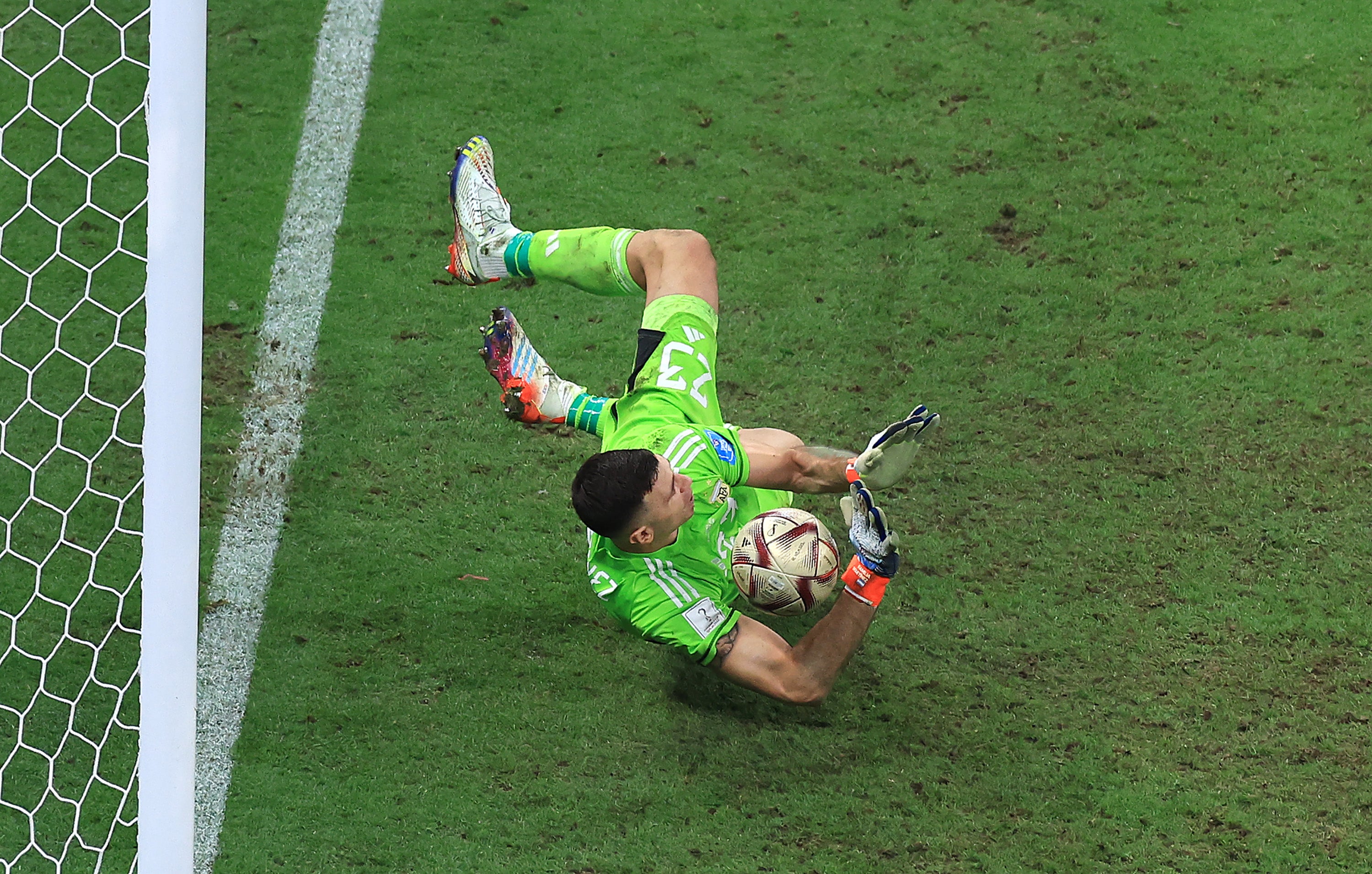
Emiliano Martinez saved Kingsley Coman's penalty in the 2022 World Cup final shootout
Emiliano Martinez saved Kingsley Coman’s penalty in the 2022 World Cup final shootout (Getty)

“I loved the shootout,” Krul says. “Loved it, because I had five chances, minimum. And that’s why I felt the percentages were so much more in favour of me, because I knew one or two of them would be so nervous.”

In other words, they might feel the loneliness of the kicker; goalkeepers can play on that.

Advertisement

“I had a moment in Salvador for that shootout where I was walking to get ready, then looked up and saw the Dutch flag, saw the World Cup flag. And then the spider-cam came down and I saw myself on the screen,” Krul explains. “And just the realisation, ‘this s*** is real’.

“That’s what you dream of as a young boy, to play in a World Cup and have an impact for your country.”

And that’s also what kickers are fearing, to feel that impact in the wrong way.

One illustrative approach that coaches use to think about shootouts is that, if elite players wanted to, they could easily stick a ball in a top corner – where goalkeepers physically can’t reach – at will. All of Diego Maradona, Leo Messi, Roberto Baggio and Michel Platini especially could. And yet all of them have missed big shootout penalties.

Advertisement
Krul was brought on by Louis van Gaal specifically for the penalty shootout
Krul was brought on by Louis van Gaal specifically for the penalty shootout (Getty)

“I spoke to all the strikers and all the midfielders in our squad and even the best were impacted by psychology,” Krul reveals. “I was even thinking, ‘my goodness, you’re a guy who’s killed the biggest Champions League matches and you’re impacted by this.’ So there’s so much going on.”

That’s precisely why Krul and goalkeepers like Martinez definitively moved away from the old approach of pre-emptively deciding where to dive, so as to give yourself the best chance of saving if you went the right way. That is certainly too much of a lottery. Hence, Krul looked into their eyes.

“Players now change their mind in the last split second. And you can see the ones that are more nervous. They are not able to put the ball into the top corner or the bottom corner. That’s the one you go for, where they are hitting it with 85% conviction rather than 100%.

“You have to be able to read and react, of course. You need the explosiveness and the experience, but it’s more and more psychology.

“It is a unique situation, basically.”

Advertisement
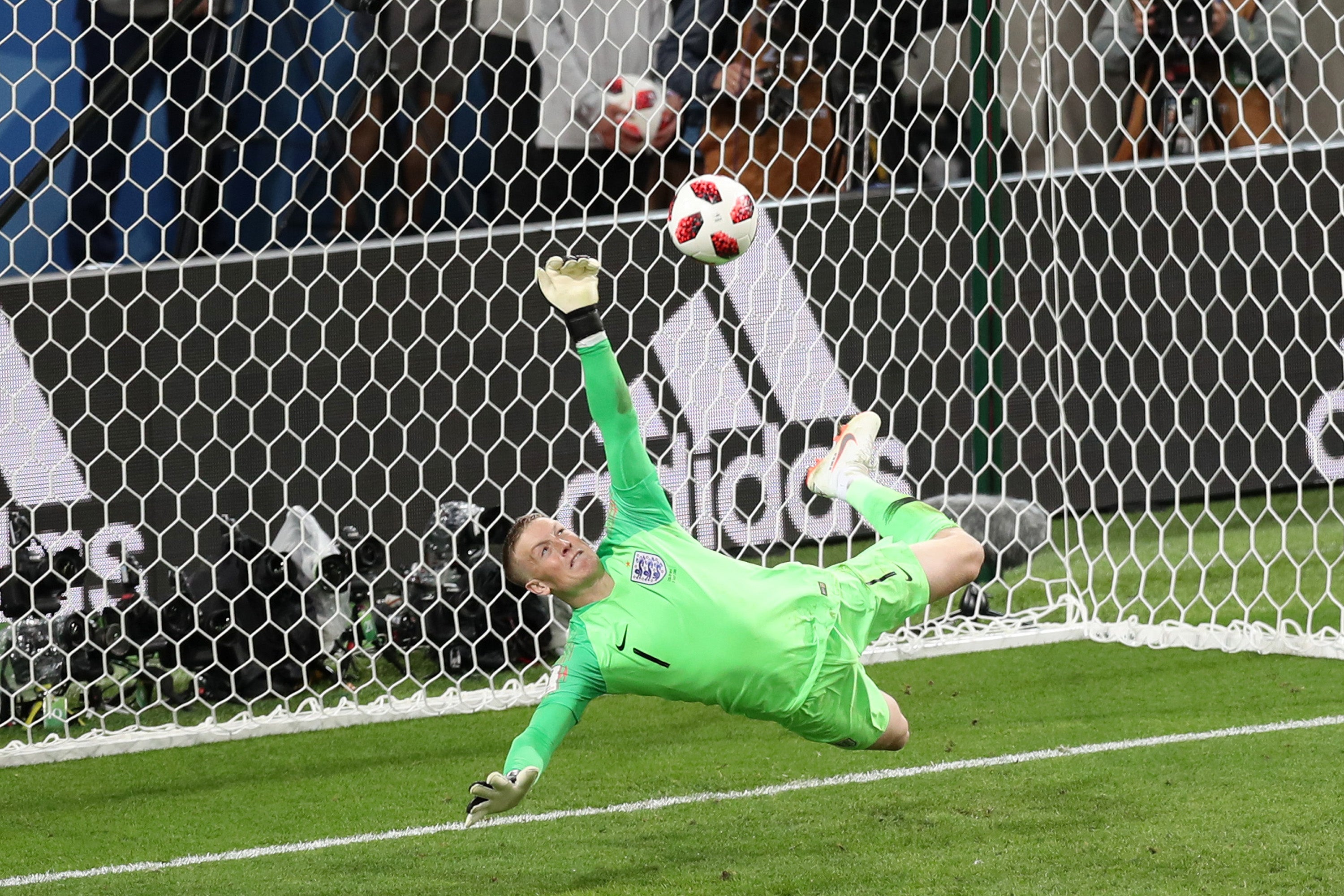
Jordan Pickford's penalty save led England to a first-ever World Cup shootout victory over Colombia in 2018
Jordan Pickford’s penalty save led England to a first-ever World Cup shootout victory over Colombia in 2018 (Getty)

Hence, Pickford is now treating his approach as if they are trade secrets. When asked whether he’d come up with anything new on Saturday, he asserted he wasn’t getting into that as if this was an attempt at industrial espionage.

“It’s my job to make the saves and in tournaments, time and time before, I’ve always come up with a save in a shootout for England and I’ll hopefully continue that,” he said. “We believe in each other – they have confidence I can save a penalty and I have confidence they can score them.”

But that’s where Krul and other goalkeepers are now fully conscious of the twist.

“The pressure is all on the taker. And that’s why emotional control is key with these kinds of moments.”

The goalkeeper, to a far greater degree than ever before, has consequently become the real difference.

Advertisement

Source link

Continue Reading

NewsBeat

Do you want to be an astronaut? Career routes that can take you to space

Published

on

Do you want to be an astronaut? Career routes that can take you to space

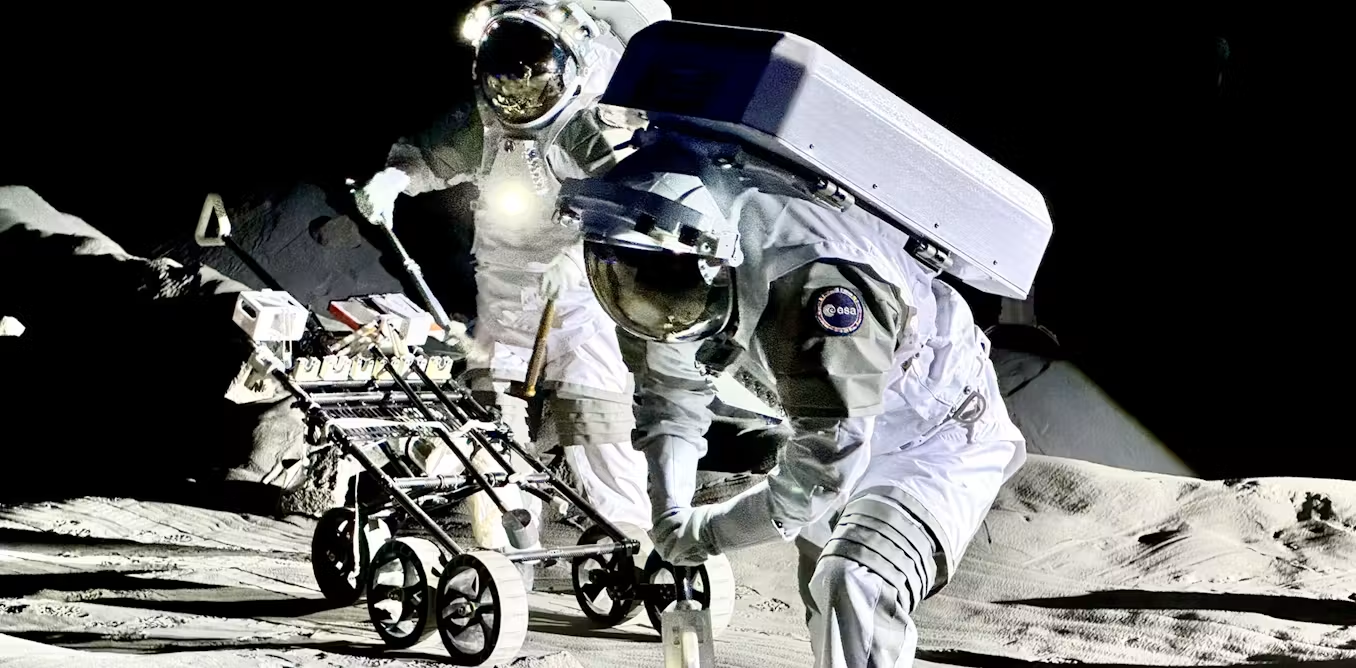
In 2024, I flew on a microgravity, or zero G, parabolic flight with the European Space Agency (ESA). The aeroplane flew big arcs up and down in the sky. At the top of the arc I experienced 22 seconds of weightlessness, just like an astronaut.

On the flight were some of ESA’s newest astronauts, training on the Microgravity Science Glovebox: a see-through box for doing science experiments in space, with gloves to let astronauts use their hands while the box stops the experiment from flying around. I was carrying out research on how to keep astronauts healthy in space.

Piloting us was ESA astronaut Thomas Pesquet, who made floating around look easy: he hung serenely in the cabin while the scientists and trainees crashed about.

My career path to those moments in microgravity looks more like a maze than a straight line. I did an engineering apprenticeship, then an undergraduate degree in physiotherapy, then a Master’s degree in space physiology and health. Finally, a PhD on how to keep astronauts’ backs healthy combined all three.

Advertisement

There is no one way to be an astronaut – you can’t go to astronaut school. You need to pick up skills along the way before applying to be an astronaut candidate. The good news is there are many pathways to becoming an astronaut, or to be floating alongside them, like me.

The Stem and pilot routes

The most obvious and well-known routes are to study science, technology, engineering and mathematics (Stem) subjects, while also becoming a pilot – these paths often intertwine. Exactly which Stem subject, and which kind of flying, counts depends on the space agency or private company you apply to, and on your nationality.

But most of the world’s current astronaut corps took this Stem pathway. Thomas Pesquet is one example: he qualified as an aerospace engineer and a transport pilot before becoming an astronaut candidate in the 2009 class.

The multidisciplinary route

The second, and increasingly common option, is the multidisciplinary route. It includes astronauts who have studied two or more fields that might not seem obviously related to each other, or to spaceflight. Combinations of life sciences and physics are popular, as with Canadian astronaut David Saint-Jacques. He trained as a biomedical engineer, astrophysicist and then as a medical doctor before becoming an astronaut.

Advertisement
Astronauts during a parabolic flight.
©ESA, CC BY-NC

ESA’s John McFall, who was with me on the 2024 parabolic flight, was a Paralympic sprinter and an NHS orthopaedic surgeon before he became an astronaut in 2022. Some combinations are more unusual still: Jessica Meir brought together marine biology and extreme-environment physiology before joining Nasa.

Each of these astronauts offers a unique mix of skills, valued in the complex, problem-solving world of spaceflight. That mix will matter even more on future planetary missions, where one person may need to fill several roles depending on which phase of the mission they are in.

The super-specialist route

The third path is the exact opposite. Instead of going broad, you dive deeply into one topic and become a world-leading expert. For example, ESA’s Sławosz Uznański-Wiśniewski earned two master’s degrees and a doctorate in radiation-tolerant electronics. He then worked at Cern, where he became responsible for the day-to-day running of the Large Hadron Collider, before being selected by ESA in 2022. Sometimes being a specialist
and being really, really good at what you do is itself a pathway to space.

It is worth saying that you don’t always have to decide young. Canadian Jenni Sidey-Gibbons was a combustion engineer and university lecturer before she was selected. Japan’s Makoto Suwa was an earth scientist and senior disaster risk management specialist at the World Bank before he was chosen by the Japan Aerospace Exploration Agency (JAXA) in his forties.

Advertisement

There is no expiry date on the dream, and no single moment when you must decide. It is even fine to stumble along the way. Astronaut Scott Kelly had poor grades at school and failed at least one US Navy exam before becoming an astronaut. He never gave up.

The career path that doesn’t exist yet

Then there is one final route, which none of us knows, because it doesn’t exist yet. When it comes to who they might choose to go into space, commercial spaceflight companies are writing their own rulebooks as they go and are deliberately widening who qualifies as astronauts. We genuinely do not know who the career astronauts of the 2040s will be, or what they will have studied.

However, a strong grounding in mathematics, a science, English and another language is a great start. You will train and live alongside international crews as well as solve problems in space. Whatever you study, your hobbies are the final ingredient. Hobbies make you a rounder, happier, more capable person – the kind of person who makes a interesting crew member.

Get that foundation, do it brilliantly and the rest of what you study is up to you.

Advertisement

Source link

Continue Reading

NewsBeat

Wales breaking news plus weather and traffic updates (Tuesday, June 30)

Published

on

Wales Online

The Met Office has forecast the weather for Wales today.

It writes on its website: “Tuesday will start mostly dry with bright spells, especially in the east.

“However, patchy rain will affect west Wales and as the day progresses locally heavy showers will break out, reaching eastern parts by the afternoon.

Advertisement

“Pleasantly warm. Maximum temperature 21 °C.”

Source link

Continue Reading

NewsBeat

Ripon Grammar School named Northern school of the year

Published

on

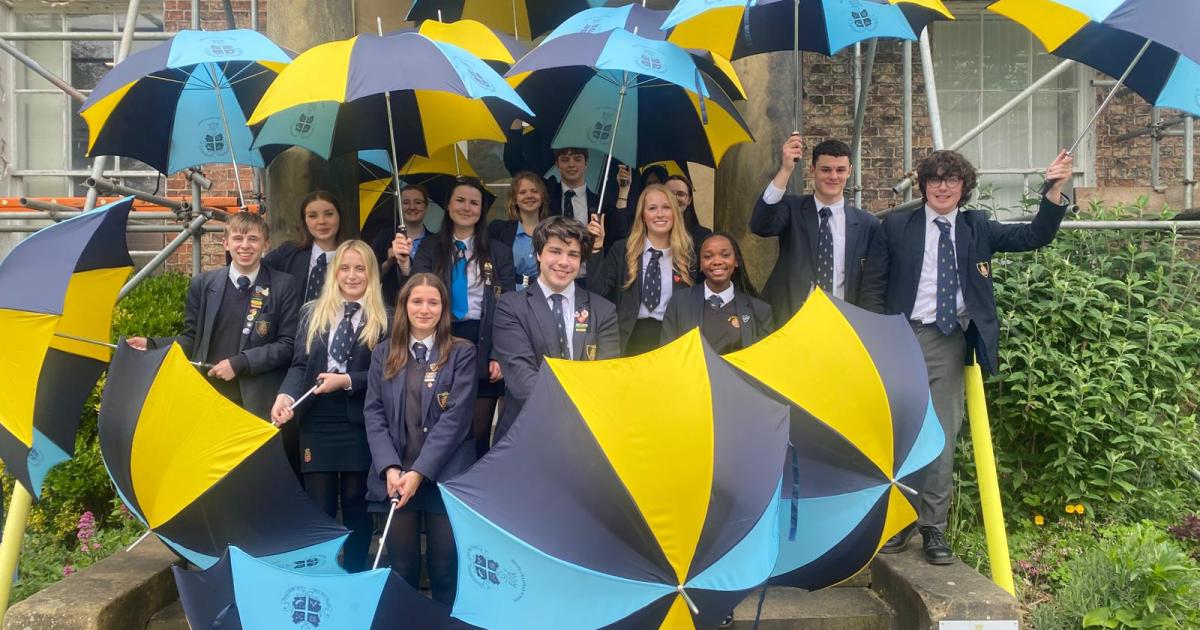
Ripon Grammar School named Northern school of the year

Ripon Grammar School (RGS) has been named the North of England Grammar School of the Year in the LUXlife Private Education Awards.

The accolade recognises the school’s success in providing both academic excellence and high-quality boarding within the state sector.

Jonathan Webb, headmaster of RGS, said: “We are incredibly proud to receive this award.

Advertisement

“It is particularly meaningful because it recognises that a state school can deliver an educational and boarding experience that rivals the very best in the independent sector.

“Our boarding community enriches the whole school and creates opportunities for students from a wide range of backgrounds to thrive.”

The LUXlife Private Education Awards, launched in 2021, celebrate excellence in teaching, innovation, leadership, and student support worldwide.

Melissa Bramall, awards coordinator, said: “We’re proud to recognise the commitment of such compassionate, empathetic, and caring individuals who form the integral teams within the private education market around the globe.

Advertisement

“I want to wish our winners all the best for the future ahead and another sincere round of applause for their accomplishments thus far.”

This latest recognition adds to the school’s accolades, reinforcing its status as a leading provider of state education with a broad national and international reach.

Source link

Advertisement
Continue Reading

NewsBeat

World Cup 2026 round of 32 results, kick-off times and last-16 fixtures

Published

on

World Cup 2026 round of 32 results, kick-off times and last-16 fixtures

The newly-created World Cup round of 32 is set to begin after a thrilling conclusion to the expanded group stage.

Source link

Continue Reading

NewsBeat

Former DUP leader Jeffrey Donaldson could face decades behind bars, say legal experts

Published

on

Belfast Live

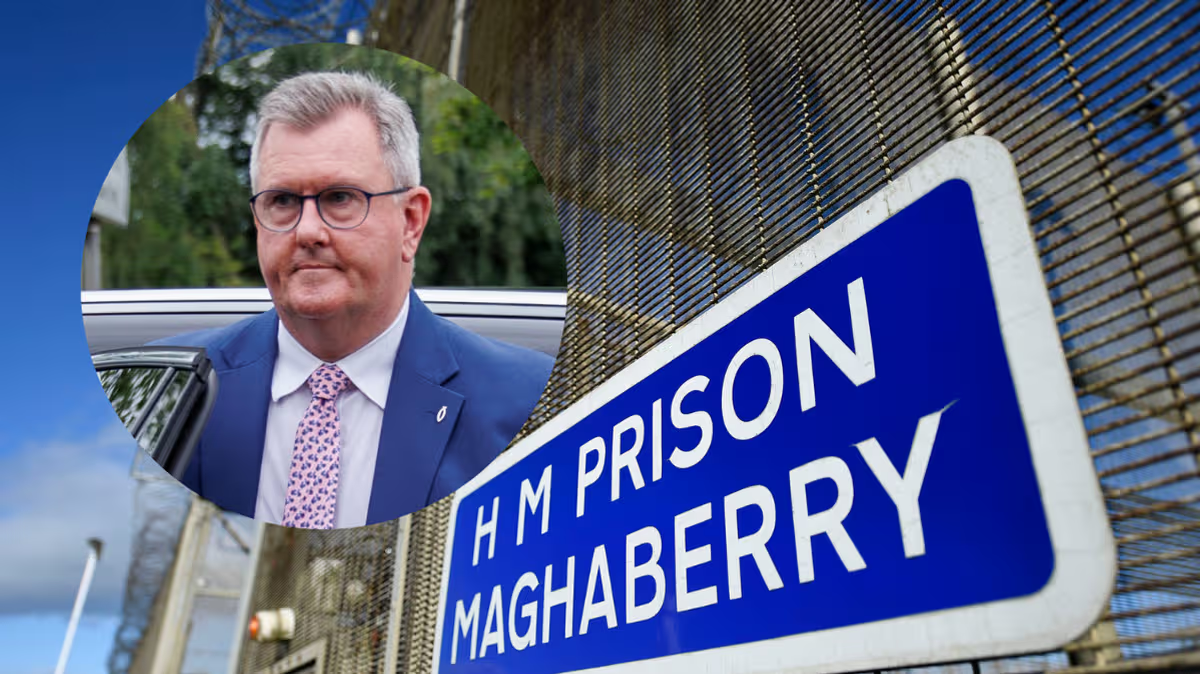
Former DUP leader Jeffrey Donaldson is likely to receive a prison sentence measured in decades rather than years when he returns to court later this year, with legal experts suggesting a term of between 12 and 20 years is the most probable outcome.

Donaldson, 63, was remanded into custody immediately after being convicted by a jury at Newry Crown Court of 18 historical sexual offences, including rape, committed against two girls over a period spanning more than two decades. At the conclusion of the trial, Judge Paul Ramsey warned that a “lengthy sentence of imprisonment” was inevitable.

While Northern Ireland has no formal sentencing guidelines equivalent to those used in England and Wales for these historical offences, previous Court of Appeal decisions provide a clear indication of the range available to the judge.

One senior Northern Ireland lawyer, who has examined comparable appellate cases, told Belfast Live the combination of a rape conviction, multiple victims, 18 offences and the prolonged period over which the abuse occurred places Donaldson’s case towards the upper end of sentences imposed for historical child sexual abuse.

Advertisement

“I think the most probable range is in the region of 12 to 20 years,” the lawyer said. “I think that’s likely to be structured as an extended custodial sentence, with a significant period in custody followed by an extended licence period.”

The lawyer said the inclusion of a rape conviction alongside numerous indecent assault convictions substantially increased the likely sentence.

“I don’t think there’ll be a life sentence,” they added. “Having looked at the Court of Appeal authorities, I don’t think it reaches that threshold.”

However, they stressed that a pre-sentence report, due to be prepared before Donaldson returns to court on 25th September, could influence the final outcome.

Advertisement

“If he were assessed as dangerous or presenting a high likelihood of reoffending, then that could aggravate the sentence further. But because of his age and the historic nature of the offences, an extended custodial sentence is more probable.”

After considering comparable Court of Appeal decisions involving historical rape and prolonged child sexual abuse, Judge Ramsey is likely to consider a global sentence somewhere between 16 and 20 years before deciding whether an extended custodial sentence is appropriate.

Unlike England and Wales, where judges can refer to Sentencing Council guidelines, Northern Ireland judges dealing with historical offences rely heavily on previous Court of Appeal judgments.

The most serious offence for which Donaldson was convicted, rape, carried a maximum sentence of life imprisonment at the time the offence was committed. His remaining convictions for indecent assault and gross indecency each carry lower statutory maximums, although judges sentence the offending as a whole rather than simply adding together the maximum penalty for every conviction.

Advertisement

Instead, the court will apply what lawyers describe as the “totality principle”, ensuring the overall sentence properly reflects the entirety of the offending without becoming disproportionate. In cases involving multiple victims, judges often treat offences against each victim separately before standing back to assess whether the overall sentence is just.

Several aggravating factors are likely to weigh heavily in Donaldson’s case. These include the number of victims, their young ages when the abuse began, the prolonged period over which the offending took place, the abuse of trust, the total of 18 convictions and the inclusion of rape.

The senior lawyer also pointed to Donaldson maintaining his innocence throughout the proceedings and requiring both complainants to give evidence at trial.

“There was no remorse or admission, and the victims were put through a trial, which is recognised as an aggravating factor,” they said.

Advertisement

Potential mitigating factors are far more limited. Donaldson has no prior criminal convictions, and his legal team is expected to emphasise his age, now 63, during the sentencing hearing.

However, because he denied the allegations and was convicted following a trial, he is not entitled to the substantial reduction in sentence available to defendants who plead guilty at an early stage.

The pre-sentence report ordered by Judge Ramsey will also be significant. As well as assessing Donaldson personally, it will help the court determine whether he should be regarded as a dangerous offender, something which could result in an extended custodial sentence.

Under that type of sentence, an offender serves a custodial term before remaining on licence in the community for an extended period after release.

Advertisement

Whatever sentence is ultimately imposed, Donaldson will also be subject to mandatory notification requirements as a convicted sex offender and is expected to face additional restrictions through a Sexual Harm Prevention Order.

The case returns for a pre-sentencing hearing at Newry Crown Court on 25th September. Until then, Donaldson remains in custody at Maghaberry Prison following his conviction.

For all the latest news, visit the Belfast Live homepage here and sign up to our daily newsletter here.

Advertisement

Source link

Continue Reading

NewsBeat

Horoscope today: Your daily guide for Tuesday, June 30, 2026

Published

on

Horoscope today: Your daily guide for Sunday, April 5, 2026

Aries (March 21st – April 20th)

Jupiter enters Leo and inspires bold moves in work and passion projects. You feel braver than you have in years to chase what matters. A fresh opportunity invites risk, but courage brings reward. Remember who you are and what you want, Aries. Luck favours those who act today.

Taurus (April 21st – May 21st)

Advertisement

Avoid overindulgence today as Jupiter in Leo makes it tempting to only see your side of situations, which may cast you as selfish. You find clarity when you pause and step back today, balancing desire with practicality. Small restraint leads to bigger success.

Gemini (May 22nd – June 21st)

Mercury retrograde in Cancer asks you to take charge of important choices around money and commitments. Old plans return for review, and you decide which deserve continuation. A careful choice now prevents later regret. Recognise who’s using emotional blackmail unfairly.

Cancer (June 22nd – July 23rd)

Advertisement

The Moon in Capricorn shines a light on who is truly supportive versus those making empty claims. Emotional clarity hits, and you no longer settle for vague promises. Trust actions over words. Others wanted honesty and today promises they’re going to get it from you.

Leo (July 24th – August 23rd)

Jupiter enters your sign and gives you the courage to pursue personal projects and romance with confidence. Opportunities feel bigger and more exciting, but remember, haste leads to mistakes. Take your time and enjoy what you’ve worked so hard towards this year. Even bold hearts must pause.

Virgo (August 24th – September 23rd)

Advertisement

Mercury retrograde in Cancer encourages reflection on communication with friends and colleagues. A message reread or conversation revisited gives insight you missed the first time. Clarity comes from patience and observation.

Libra (September 24th – October 23rd)

The Moon in Capricorn pushes focus onto career and responsibilities. You see who acts responsibly and who only talks. Real progress follows steady effort, not promises. A simple step now creates the momentum you could not find earlier this month.

Scorpio (October 24th – November 22nd)

Advertisement

Avoid becoming obsessive about what happens next, as Jupiter in Leo begs you to exaggerate your own viewpoint. Seeing the bigger picture strengthens relationships and professional dealings. It also casts you as the fair sign I know you are. Balance softens conflict.

Sagittarius (November 23rd – December 21st)

Mercury retrograde in Cancer makes you reconsider plans you rushed, earlier in the year. A small pause reveals opportunities you overlooked. Make time to fully process what’s never been far from your mind. Careful thought now avoids later setbacks. Wisdom speaks softly.

Capricorn (December 22nd – January 20th)

Advertisement

The Moon in Capricorn illuminates personal responsibilities and achievements. Recognition and reward comes where effort is consistent. Your diligence sets you apart from others now. Beware the Mercury retrograde pushing you to blame the wrong faces and try to work instead, as a team.

Aquarius (January 21st – February 19th)

Jupiter enters Leo and encourages you to step into your ambitions, instead of shelving them as you were. Whether creative or social, it’s your confidence that attracts support, but arrogance repels. It’s up to you today to try and find the happy medium.

Pisces (February 20th – March 20th)

Advertisement

Mercury retrograde in Cancer reminds you to review finances and practical matters. Old mistakes may resurface, but your insight helps you correct them. Vigilance today prevents frustration later. Lies, even white ones told financially come back on you, so don’t tell them!

Aries 0904 470 1141 (65p per minute)*

Taurus 0904 470 1142 (65p per minute)*

Gemini 0904 470 1143 (65p per minute)*

Advertisement

Cancer 0904 470 1144 (65p per minute)*

Leo 0904 470 1145 (65p per minute)*

Virgo 0904 470 1146 (65p per minute)*

Libra 0904 470 1147 (65p per minute)*

Advertisement

Scorpio 0904 470 1148 (65p per minute)*

Sagittarius 0904 470 1149 (65p per minute)*

Capricorn 0904 470 1150 (65p per minute)*

Aquarius 0904 470 1151 (65p per minute)*

Advertisement

Pisces 0904 470 1152 (65p per minute)*

*Astro line horoscopes are updated every Thursday. Calls cost 65p per minute plus your telephone company’s network access charge and will last approximately five minutes. You must be over 18 and have the bill payer’s permission. Service provided by Spoke. Customer service: 0333 202 3390

Source link

Advertisement
Continue Reading

NewsBeat

Long-delayed defence investment plan to be published

Published

on

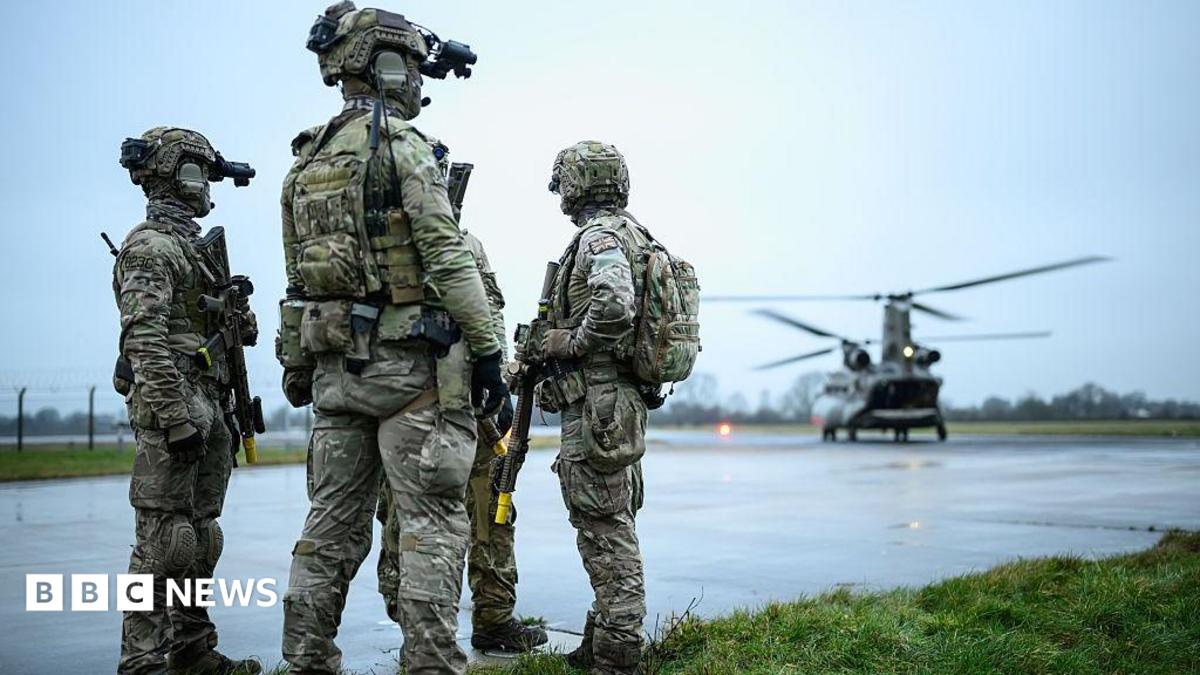
British special forces on a runway with a helicopter nearby

A long-delayed military spending plan will be published on Tuesday, with Sir Keir Starmer saying it would keep Britain “safe and secure long into the future”.

The Ministry of Defence (MoD) said the defence investment plan (DIP) includes £5bn worth of investment to increase the Armed Forces’ use of drones and autonomous weapons.

Earlier this month, the Treasury and No 10 agreed a £13.5bn funding increase, well short of the £28bn the MoD wanted – though new Defence Secretary Dan Jarvis has pushed for more in recent weeks. His predecessor John Healey resigned over the funding row.

The Conservatives said the plan was “too little, too late”, while the Liberal Democrats said it “dangerously short-changed our Armed Forces”.

Advertisement

Before releasing the DIP, the MoD provided an outline of some of its contents, including:

  • The “largest ever drone investment” into the UK Armed Forces – worth £5bn over the next four years to create an “integrated force”

  • Plans for the Royal Navy to become a “hybrid navy”, using self-controlled vessels and AI alongside warships and aircraft and funding for six new warships

  • The British army will receive £50m funding for drones and to develop uncrewed vehicles

  • The Royal Air Force will develop autonomous fighter jets and bring its “uncrewed electronic warfare drone system” into service in 2026

  • The DIP will also go towards what the MoD call “Europe’s biggest drone testing centre” – the Uncrewed Systems Centre in Swindon, which opened in March – as well as a task force for developing autonomous technology

Despite his impending departure from Downing Street, Prime Minister Sir Keir is pushing ahead with the DIP.

Tense Whitehall negotiations over how to fund it have been ongoing for months, with departments across government asked to make cuts.

The row has seen two defence ministers resign over what they said was an inadequate funding increase in the original version of the plan.

Advertisement

The DIP will also explain how new equipment and defence infrastructure will be funded over the coming decade.

It was initially expected to be published in autumn 2025. Following months of talks over funding, the DIP now arrives shortly before the Nato leaders summit in Turkey on 7 July.

Earlier this month, Healey quit the government, saying the DIP fell “well short” of what is needed to protect the UK and meet existing spending commitments, while Armed Forces Minister Al Carns quit saying it was not “transformative enough” in the face of rapidly-evolving warfare.

It has been reported Jarvis has secured some extra money for the plan. He has has also spent the last two weeks “refocusing” the DIP to take on more of the lessons from Ukraine and Iran, the MoD said.

Advertisement

This includes how drones have been used to destroy high-value targets, with Jarvis saying the “character of warfare is rapidly changing”.

He said: “In Ukraine and the Middle East, uncrewed systems are defining conflicts.

“This largest ever UK investment into these evolving technologies will help our Armed Forces stay ahead of our adversaries, backed by the best of our defence industry.”

The Ministry of Defence has said plans to replace ageing warship will be scrapped in favour of building at least six new modern “hybrid” vessels equipped to deploy drones.

Advertisement

Sir Keir said there would be “game-changing investment” to strengthen the Armed Forces on land, at sea and in the air.

He said: “Today’s defence investment plan will help drive growth across the UK, giving our industrial base the confidence, certainty and support it needs to develop and scale the technologies that will keep our country safe and secure long into the future.”

His remarks come after unions and defence firms warned the continued delays to the DIP were a “threat” to British jobs, skills and national security.

Source link

Advertisement
Continue Reading

NewsBeat

Germany humiliation, Jurgen Klopp’s Arsenal dig, Cody Gakpo tears – World Cup round-up

Published

on

Daily Mirror
Germany humiliation, Jurgen Klopp’s Arsenal dig, Cody Gakpo tears – World Cup round-up – The Mirror

reach logo

At Reach and across our entities we and our partners use information collected through cookies and other identifiers from your device to improve experience on our site, analyse how it is used and to show personalised advertising. You can opt out of the sale or sharing of your data, at any time clicking the “Do Not Sell or Share my Data” button at the bottom of the webpage. Please note that your preferences are browser specific. Use of our website and any of our services represents your acceptance of the use of cookies and consent to the practices described in our Privacy Notice and Terms and Conditions.

Source link

Advertisement
Continue Reading

Trending

Copyright © 2025