The Public Accounts Committee says the burden of maintenance costs associated with over 50,000 road openings and reinstatements that take place annually should be shared with the utilities
An Assembly Committee has issued a warning that tens of thousands of road openings conducted annually by utility firms may be playing a role in the decline of Northern Ireland’s road infrastructure.
Advertisement
The Public Accounts Committee has voiced concerns that the Department for Infrastructure is presently unable to establish the expenses associated with these repairs or offer guarantees that taxpayers aren’t footing the bill for related upkeep activities.
In its Report on Road Openings by Utilities, the Committee says that the financial responsibility for maintenance linked to more than 50,000 road openings and repairs taking place each year ought to be distributed between the utilities.
Nevertheless, the Committee has expressed serious concern that it has not been given assurances that this cost-sharing is happening.
Utility providers deliver vital services including gas, electricity and communications, and undertake essential maintenance on their networks. When such work requires opening up roads and pavements, they bear responsibility for restoring them to an acceptable condition for public use.
Advertisement
As part of its investigation into this matter, representatives from the Department for Infrastructure (which monitors utility company performance) provided testimony to the Public Accounts Committee.
In its findings, PAC has put forward a total of 11 recommendations it wishes to see actioned. The Committee asserts that frequent and repeated road openings can undermine the road structure and contribute to the network’s degradation over time.
Chair of the Public Accounts Committee, Daniel McCrossan MLA stated: “Of course there are other causes of defects that the Department is required to repair across the entire network.
“However, when we spoke to officials they couldn’t set out a reliable way of calculating how much of that burden arose from deterioration of the road network linked specifically to utility reinstatements.
Advertisement
“As a result, they couldn’t reassure us that taxpayers were not subsidising repairs that should be properly funded by utility companies.
“We are recommending that by the early Autumn, the Department develops a methodology to determine the cost of maintenance linked specifically to utility reinstatements – and uses it to determine if its cost recovery approach is appropriate and achieving value for money.
“Within a year, we also want to see the Department undertake a full evaluation of the costs and benefits of introducing performance-related financial penalties for utilities.”
The Committee concluded that the state of disrepair of the road network was entirely unacceptable. It pointed to a 2024 Northern Ireland Audit Office finding that more than £3.3 billion worth of maintenance work remained outstanding.
Advertisement
In its findings, PAC highlighted that the disruption stemming from utility works had a considerable impact on motorists and local residents. It pointed to inconsistent contractor conduct, alongside inadequate communication and ambiguous accountability, all of which added to the upheaval and uncertainty faced by households and commercial enterprises.
The Committee expressed its desire to see a significant enhancement in how DfI collected, examined and addressed public complaints – and urged that reporting systems should be straightforward, easy to access and widely publicised.
Deputy Chair of the Public Accounts Committee, Tom Buchanan MLA said they were also demanding immediate measures to reinstate a robust inspection scheme by the Department. He stated: “Visual inspection targets have been missed consecutively for seven years. Effective inspections are essential in ensuring reinstatement works are completed to the required standard and defects identified early.
“Another issue has been the suspension of the core testing programme – which can identify defects beneath the road surface. This represents a serious risk.
Advertisement
“Our report also recommends the Department publishes a wider range of performance data from utilities. More transparent and specific reporting would help drive improvements, shine a light on poor performers and give the public greater confidence that issues are being addressed.
“Within the next 12 months we want to see a detailed action plan published which sets out how the data gathered will be used to support decision making and actions.”
The Committee has also requested that a review of warranties relating to reinstatements be conducted within the next six months – to ensure they safeguard public funds.
Warranties are designed to protect taxpayers from short-term expenses resulting from substandard reinstatements – however, PAC believes the current two or three year warranty periods are inadequate.
Advertisement
PAC praised the Department’s innovative digital mapping and AI initiative, which it stated could in future revolutionise how road conditions are assessed and defects are identified – and it acknowledged the benchmarking work being undertaken with the Highways Authority and Utilities Committee (HAUC UK).
The Committee noted that the Department’s capacity to manage road openings by utilities had been hampered by substantial recruitment and retention difficulties, particularly in professional and technical positions. It recognised the Department’s efforts to innovate in workforce development but stated the challenges were system-wide and required coordinated, cross-departmental action.
Kevin Pringle became increasingly furious after cars left ‘muddy trenches’ along his grass in the quiet cul-de-sac
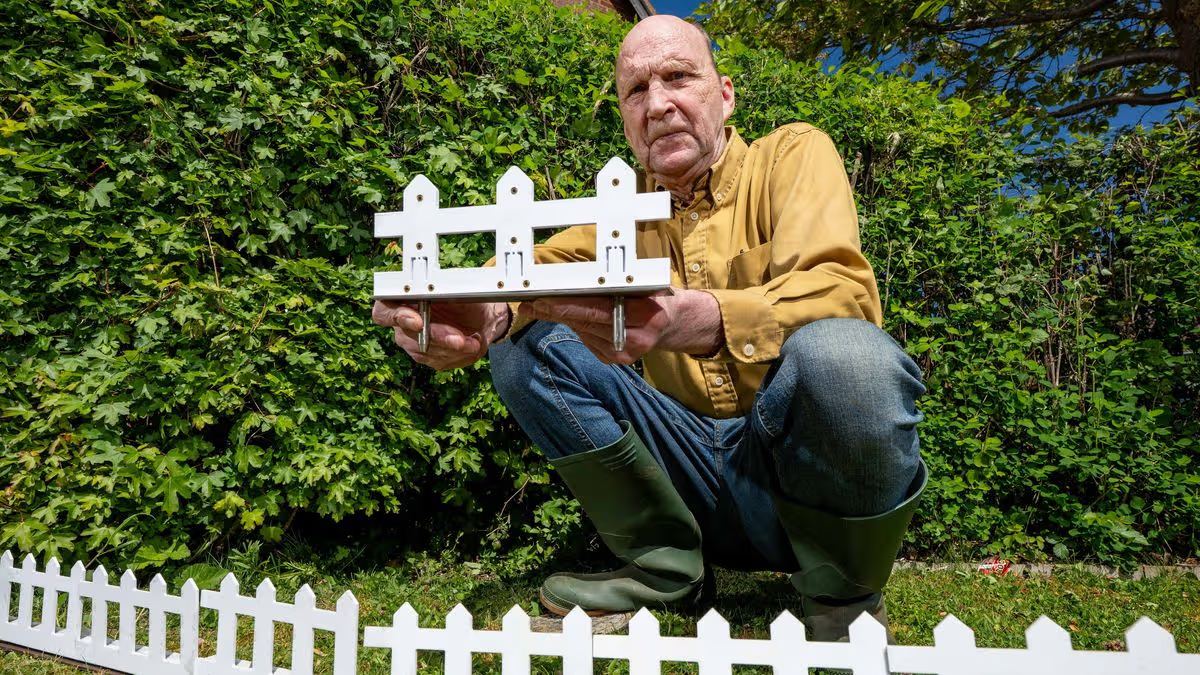
An ex-prison officer has created an innocent-looking garden fence designed to stop nightmare parking – with tiny spikes hidden inside to deflate tyres. Kevin Pringle, 64, patented his own simple but effective product to keep cars from mounting and damaging grass verges after a series of terrible driving outside his home.
Advertisement
He installed the fence, which costs around £40 for half a metre, on his front garden measuring four-foot-wide outside his semi-detached home. Kevin said he had been repeatedly relaying the ground with top soil and grass seed after cars left “muddy trenches” along his grass in the quiet cul-de-sac.
The fence has secret spikes which activate when a car hits and slowly deflate its tyres, acting the same way as a police-used stinger. The retiree said the barrier could be used by councils to stop illegal traveller encampments from setting up on grassland and cricket pitches – or by estates, schools and hotels.
Kevin, who lives in Milton Keynes, said: “The quality of driving and parking has without a doubt gotten worse in recent years. Section 34 of the Road Traffic Act says its an offence to drive anywhere other a designated carriageway but you see illegal parking everywhere.
“Because nothing is done about it, people don’t care and I don’t understand why they don’t realise the effect they’re having. When I searched for solutions, the only suggestion I found was to place big boulders around the edge.
“While this does deter vandals, since they know they’ll risk damaging their vehicle, it creates two new problems – it makes lawn care much harder and the boulders themselves are not very attractive.
“I became determined to find an answer that would both keep the verge tidy and make maintenance easier.”
His picket-style Smart Fence, tried and tested outside Kevin’s own home, has secret spikes that activate when a car hits and slowly deflate its tyres. The former prison officer said he had been plagued by illegal parking tearing up his own lawn which led to his “lightbulb moment”.
He said: “When I first bought the house, the grass verge that goes to the road was in a bit of a mess.
“I cut the grass and trimmed the hedge. Once I’d made it neat and tidy, I found people were using it as an extension to the carriageway.
“I’d seen people parking on it, mounting it and using it as part of the turning space, leaving out the soil and leaving a muddy trench. I had to go out there multiple times with a topsoil and grass seed.”
Advertisement
Kevin spent three years researching different designs as he wanted to make sure his fence was not susceptible to accidental damage such as “hurting little Johnny on his bicycle”.
While research how to make the spikes “disappear”, he realised they needed protecting. He explained: “The plastic fence covers the spikes and the only way to expose the spikes is with enough weight on top of them to break the plastic fencing.
“The plastic will break along the perforations exposing the fence supports which are hollow tubes with a chamfered top edge.
Advertisement
“This means if an attempt is made to use a motor vehicle to vandalize a lawn or verge the driver will no longer be able to just drive away leaving the damage for the land owner to repair.
“Because you can lift the spikes and fence out of the ground, you can then cut the grass as only the base plate which is at ground level.”
Kevin believes his patented design would be significant in preventing unauthorised encampments and would love to see local authorities and councils put it into use.
Advertisement
He pointed out his own council, Milton Keynes, had invested £250,000 over the last five years to protect sites with barriers such as concrete blocks or mounds of earth.
He said: “I read news articles almost daily about where this product could be used. Its use for stopping unauthorised encampments would be phenomenal – and it would be cheaper.”
Kevin had bought a Hyundai Getz on its last legs to test the fence’s ability to puncture tyres and hopes to see his prototype rolled out widely in future.
Advertisement
He said his Smart Fence would protect homeowners from bad drivers absconding the scene and had sought advice around if the user could be held liable.
Kevin added: “If I try and jimmy your backdoor with a screwdriver and it breaks, you don’t have to pay me for damages.
“Tearing up a garden is criminal damage. If you’re committing criminal damage and you damage your tools such as a car, it is your responsibility.”
A Milton Keynes highways spokesperson said: “Under the law, items can’t be placed on public highway land without the proper authorisation.
Advertisement
“Items may only be placed on the highway where the appropriate permissions have been granted and suitable safety measures are in place to protect all road users.”
‘Fabulous well-made top, feels and looks quality, true to size, appropriate for all ages’
Shawna Healey Senior fashion, beauty and home affiliate writer
17:05, 10 May 2026
This article contains affiliate links, we will receive a commission on any sales we generate from it. Learn more
Summer is just around the corner and fashion enthusiasts will be eagerly anticipating dusting off their warm-weather wardrobes. Of course, the notoriously unpredictable British climate means a versatile top that can be layered over a vest or camisole is an absolute must-have.
At Roman, shoppers are clamouring for a layering piece that fits the bill perfectly. Customers report receiving ‘lots of compliments’ on the Ivory Crochet Tie Front V-Neck Tunic Top, and it’s not difficult to understand why.
Advertisement
The Ivory Crochet Tie Front V-Neck Tunic Top is priced at £38, however those who enter the discount code SUN can secure a 10% reduction. This brings the cost down to a reasonable £34.20, and it also comes with complimentary express delivery.
Available in sizes 10 to 20, the crochet top is made from a lightweight knitted fabric. It showcases a flattering round neckline and full-length fluted sleeves that carry a 70s-inspired feel while remaining contemporary and firmly on-trend.
The top boasts a tunic silhouette and is complemented by tassels on the tie detail. Thanks to its adaptable design, the Ivory Crochet Tie Front V-Neck Tunic Top can be styled in a multitude of ways, reports the Manchester Evening News.
Roman’s boho-inspired summer top available for £34.20
The Ivory Crochet Tie Front V-Neck Tunic Top costs £38 but those who apply the discount code SUN can pick it up with a 10% saving. This brings the price down to a modest £34.20 and it comes with free express delivery too.
It pairs beautifully with white jeans or linen trousers for an effortlessly polished look, ideal for the office or weekend outings. While on holiday, team the piece with shorts or a floaty skirt for a laid-back coastal aesthetic.
Advertisement
Meanwhile, Marks and Spencer’s Cotton Blend Crochet Look Collared Cardigan is priced at £30. It’s designed with a regular fit, featuring an attractive tie fastening at the v-shaped neckline and a ruffled trim that provides a polished finish.
Alternatively, Next’s Ecru Cotton Mesh Knit Lace-Up Polo Top is available for £49. A striking addition to your seasonal collection, it showcases a breathable mesh knit construction adorned with delightful faux shells scattered throughout the fabric.
The design is completed with a traditional collar and a nautical-inspired lace-up front featuring gold-tone eyelets, delivering a distinctive, artisanal aesthetic that’s ideal for summer layering. It’s also available in blue and pink.
Back at Roman, the Ivory Crochet Tie Front V-Neck Tunic Top has achieved an impressive overall star-rating of 4.9 out of five from 35 reviews. One delighted customer commented: “Love it. Perfect to cover up over a vest top on cooler evenings.”
Advertisement
Another remarked: “Bought this crochet top for my holiday and to wear in the summer. Goes great with my white trousers and jeans. I’m a 14 and the size is accurate and fits perfectly. Very pleased with my purchase and for the good service I always get from Roman.
“Goes with anything,” a third noted.
“Fabulous well-made top, feels and looks quality. True to size, appropriate for all ages. I wore a small vest top under mine.”
Advertisement
While the Ivory Crochet Tie Front V-Neck Tunic Top has received largely positive feedback, one customer deducted a star due to the colour differing from expectations.
The four-star review states: “Nice top but the colour wasn’t like the picture it was darker and didn’t suit me.”
It’s also worth noting that the top is constructed from 100% acrylic. Although this material offers warmth without bulk, it can be susceptible to static electricity and pilling, creating irritating bobbles that compromise the garment’s appearance over time.
Despite this, another customer was delighted with their recent Roman acquisition, commenting: “Got lots of compliments wearing this. Not as see through as you would imagine. Washes well though I did wash this in a delicates bag so it didn’t get caught on zips or buttons.”
Advertisement
A separate five-star review states: “I absolutely love this top, it’s well made, comfortable and very pretty when on, I put it with silk wide leg pants for an evening, had loads of lovely compliments.”
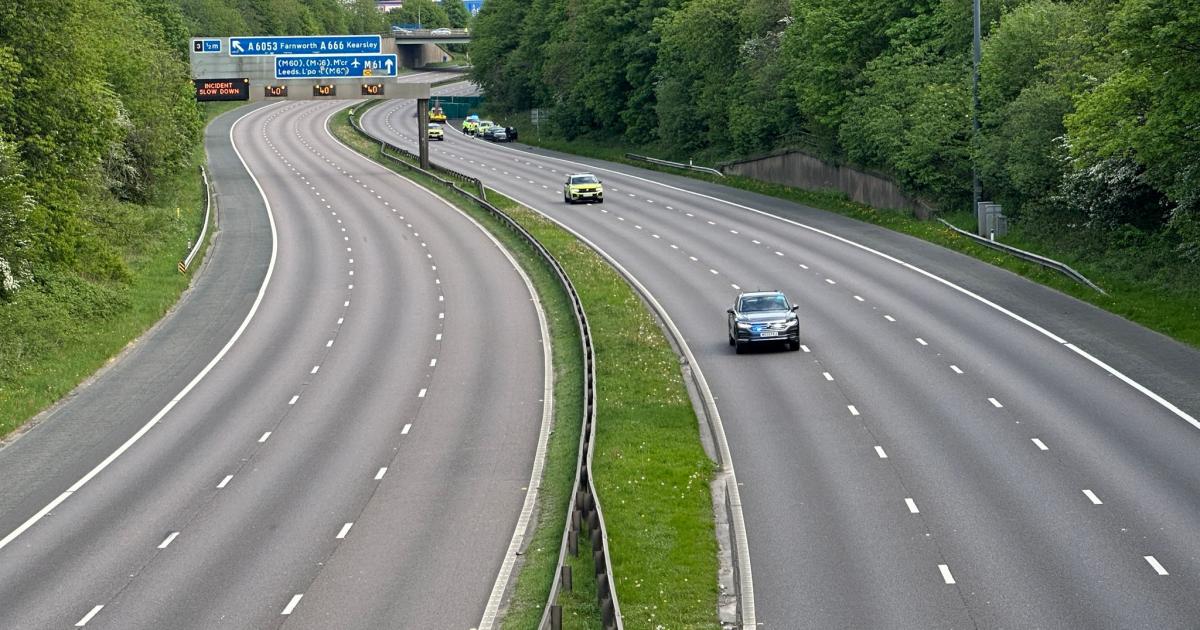
Greater Manchester Police was called to reports of a concern for welfare on the M61 on May 8 just before 12pm, which further led to a collision with a vehicle between junction two at Linnyshaw and junction four at Over Hulton.
The force confirmed on Friday that a man had died and stated there were no suspicious circumstances surrounding his death.
In a fresh appeal for witnesses, GMP has now revealed the man was aged 60 and that its serious collision investigation unit is keen to speak to anyone with CCTV footage, dashcam or mobile phone footage from the area around the time.
Advertisement
The force said: “We were called to reports of a concern for welfare just before 12pm, which further led to a collision with a vehicle between junction two and four.
“One man, aged 60, sadly died at the scene. Our thoughts remain with his family and loved ones, who continue to be supported at this difficult time.
“No arrests have been made and there are not believed to be any suspicious circumstances surrounding this incident.”
The serious collision investigation unit is appealing for anyone who may have witnessed the incident to come forward.
Advertisement
Anyone with information is asked to contact the police on 0161 856 4741, quoting log 1270 of 08/05/2026.
Information can also be shared using our ‘report tool’ or LiveChat function on the Greater Manchester Police website gmp.police.uk
Alternatively, witnesses can contact the independent charity – Crimestoppers – anonymously on 0800 555 111.
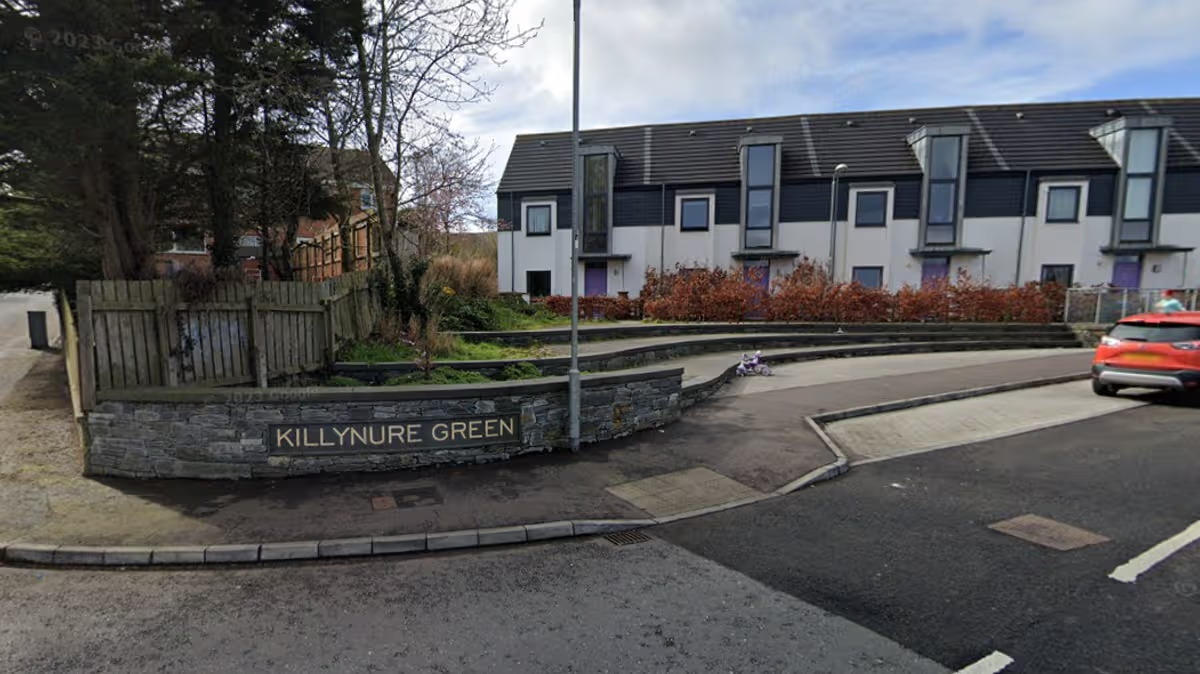
Police were called to the street just before 8pm on Saturday, May 9, following reports of an altercation in the area. A 52-year-old man was later arrested on suspicion of assault while a 45-year-old woman was arrested for multiple offences including assault and driving with excess alcohol in breath.
The man has been released on bail while the woman remains in custody.
A PSNI spokesperson said: “Police received a report of an altercation at Killynure Green, Carryduff, shortly before 8pm, on Saturday 9th May. “Officers attended and arrested a 52-year-old man on suspicion of assault and a 45 year old woman on suspicion of a number of offences including assault, dangerous driving and driving with excess alcohol in breath. The man has been released on police bail and the woman remains in custody at this time. “Enquiries are ongoing and anyone with dash-cam or CCTV footage from the area which could help with the investigation, is asked to call officers in Lisburn on the non-emergency number 101, quoting reference number 1458 09/05/26. A report can be submitted online using the non-emergency reporting form via http://www.psni.police.uk/makeareport/ or you can also contact Crimestoppers anonymously on 0800 555 111 or online at http://crimestoppers-uk.org/.”
Three people have been arrested after a suspected hit-and-run crash which left two teenagers dead.
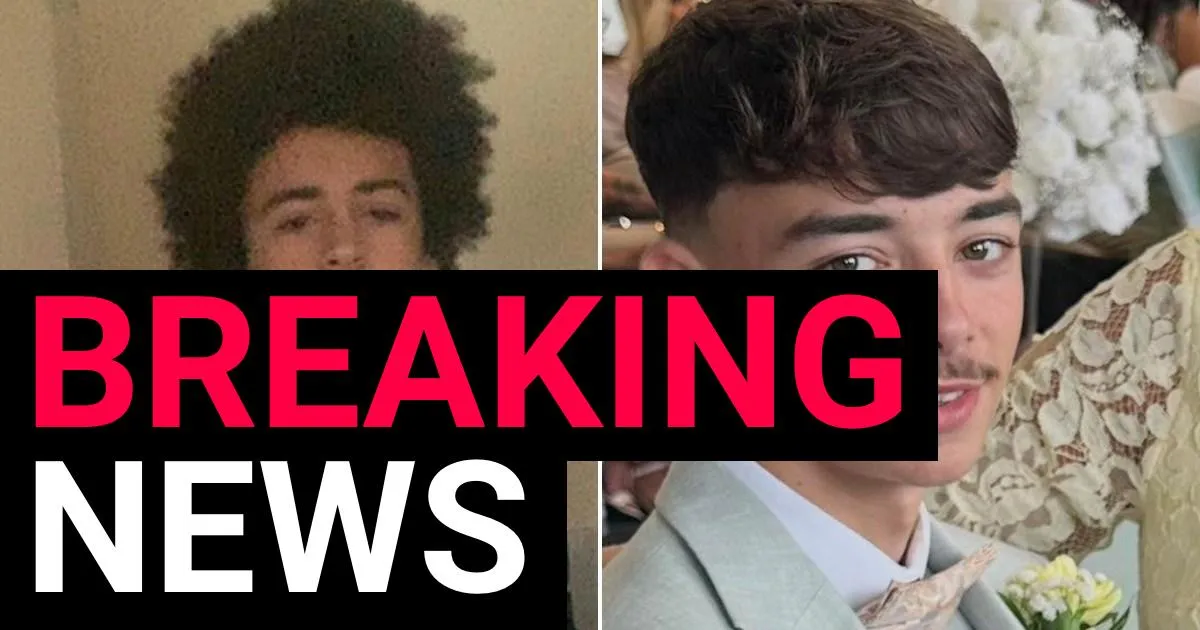
Jaydon Bowyer, 19, and Ta-Shay Canoville, 16, were killed after they were knocked from a motorbike they were both riding at around 1.40am on Thursday.
Police believe they were hit by a BMW, whose occupants fled the scene, leaving Jaydon and Ta-Shay for dead.
Heartfelt tributes to the pair, from Newport, Gwent, described them as the ‘best of mates’.
Advertisement
As the South Wales community reels from the tragedy, it emerged that three people have been arrested over the crash.
Sign up for all of the latest stories
Start your day informed with Metro’s News Updates newsletter or get Breaking Newsalerts the moment it happens.
Advertisement
Gwent Police said a man, 18, and a woman, 40, have been arrested on suspicion of murder.
Separately, a woman, 24, has been arrested on suspicion of assisting an offender.
As the investigation continues, police cordoned off Aberthaw Road, with forensic officers seen collecting evidence.
Gwent Police are appealing for witnesses or anyone with information to come forward immediately.
Advertisement
In the meantime, tributes continue to flood in from the local community and the wider UK.
The scene of the crash in Newport
This included a tribute from Jaydon’s mother Sophie Pederson.
She said she was ‘struggling to process the loss of you, my first-born, my whole world, my absolute everything’.
‘My boy, my darling darling boy. Why just why? How do I live without you here by my side?
‘You were the best boy ever. Everyone adored you. Love you millions always and forever, your broken-hearted mum.’
Advertisement
Jaydon’s hairdresser girlfriend Rachael Stephenson said she ‘never imagined I would see this day having to live in a world without you in it’.
She added: ‘It still doesn’t feel real, you were more to me than just a boyfriend.
‘You were my happiness and the person who made my darkest days feel light again. The pain of losing you so suddenly is something words could never fully explain.
‘We were meant to be till death do us part, with a happy family together like we talked about for hours.
Advertisement
‘We were meant to make so many more memories together, you were taken from us before your time came.
‘I wish I could have one more hug and to hear you laugh and see your smile one more time and to have one more moment with you.
‘You had the purest heart. I’ll love you forever, my gorgeous boy. Rest in peace, my beautiful angel, until we meet again.’
Both of the teens’ families are being supported by specially trained officers, Gwent Police said.
Advertisement
A GoFundMe page has been created to help the boys’ families cover funeral costs.
It has already raised more than £12,000 towards its target of £16,000 and can be found here.
A police spokesperson said: ‘Officers investigating the circumstances leading up to the collision would like to speak to anyone who was travelling along or residents who reside in Aberthaw Road and the surrounding areas to check their CCTV between the hours of midnight – 1.40am on Thursday 7 May.
‘An 18-year-old man and a 40-year-old woman were arrested on suspicion of murder, while a 24-year-old woman was arrested on suspicion of assisting an offender. All three remain in police custody.
Advertisement
‘Anyone with information – including CCTV and dashcam footage – is asked to contact us quoting log reference 2600141467.’
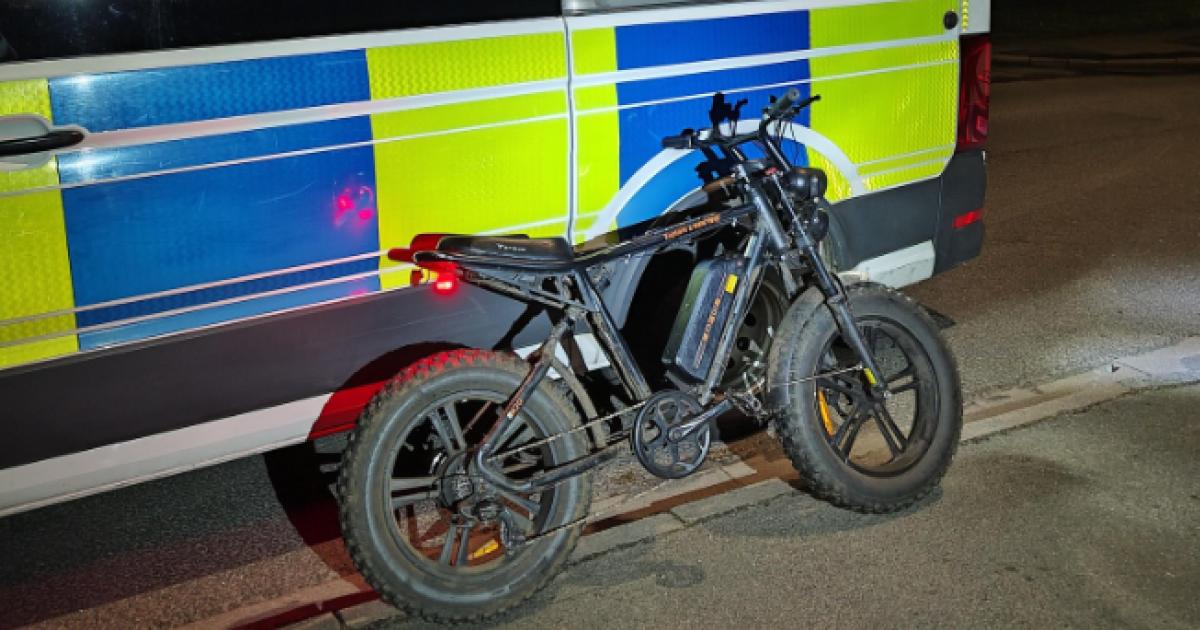
The Farnworth and Kearsley Neighbourhood Team carried out a proactive operation in and around Highfield on Saturday (May 9), focusing on the use of illegal e-bikes.
During the operation, officers seized two bikes and conducted multiple stop-searches and vehicle stops.
A stolen moped was recovered on Anchor Lane, having been taken from Bolton in April.
The stolen moped (Image: GMP)
An illegal e-bike was also seized in Highfield after being found with throttle control and capable of reaching 22mph without pedal assistance.
Advertisement
A Greater Manchester Police spokesperson said: “We will continue our proactive work around Farnworth and Kearsley, and we are dedicated to taking all illegal e-bikes, off-road bikes, and illegal Sur-Ron’s off our streets.
“Please continue to report the use of these bikes in your area to help us build an accurate intelligence picture.”
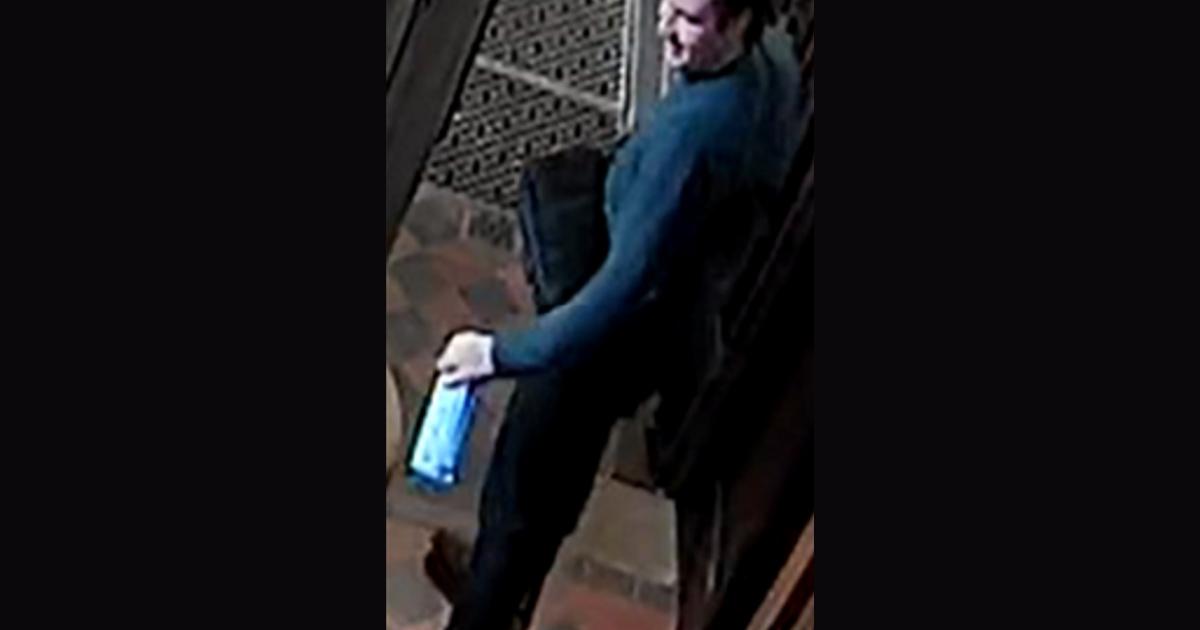
North Yorkshire Police has launched an appeal after reports of a person stealing a bottle of gin from St Lawrence Church in Lawrence Street at 1.19pm on Thursday (March 5).
Recommended reading:
Police have launched a CCTV appeal to find a man officers would like to speak to in relation to the theft (Image: North Yorkshire Police)
The incident is reported to have occurred at St Lawrence Church in York (Image: North Yorkshire Police)
A force spokesperson said: “We are appealing for any help that would lead to the identification of the male shown in the three still image taken from CCTV at the location.
“If you can help, please email david.fulford@northyorkshire.police.uk, or contact North Yorkshire Police on 101, select option 2, and ask for Constable 1222 David Fulford.
Advertisement
“Please quote the North Yorkshire Police reference number: 12260040295.”
The Bafta red carpet was full of Strictly Come Dancing stars this year – even if the winners’ room will not be (Picture: Getty)
The stars of Strictly Come Dancing were out in force to celebrate this year’s TV Baftas – despite not being nominated.
In a shocking turn of events, the glitzy BBC dance show was not recognised in any categories this time around.
This comes after Karen Carney and Carlos Gu’s triumph in the 2025 series, which also marked Tess Daly and Claudia Winkleman’s final one as hosts, with an announcement of their replacements thought to be imminent.
Instead, The Graham Norton Show, Last One Laughing, Would I Lie To You?, and Michael McIntyre’s Big Show were nominated for the entertainment TV Bafta, shutting Strictly out entirely.
Advertisement
Still, its professionals and former contestants donned their finest attire to walk the red carpet this weekend, without the added pressure of potentially having to make a speech.
Dianne Buswell was solo on the carpet, having welcomed her first child, Bowie, with real-life partner Joe Sugg just weeks ago.
Strictly pro Dianne Buswell beamed as she made her first red carpet appearance since giving birth just weeks ago (Picture: Alan Chapman/Dave Benett/Getty Images)
Katya Jones walked with best pal Aimee Fuller, both in dramatic red numbers (Picture: Kate Green/Bafta/Getty Images for Bafta)
Actor Lewis Cope was one of the favourites last series on Strictly (Picture: Zak Hussein/Variety via Getty Images)
The flame-haired pro – who has been confirmed to return to the line-up in 2026 – looked gorgeous in a strapless black gown, with her vibrant locks styled in an up do.
She was joined by Katya Jones in a dramatic, deep red gown. The Russian choreographer was reportedly saved by Strictly bosses from the mass cull of professionals, which left Nadiya Bychkova, Karen Hauer, Gorka Marquez, Luba Mushtuck, and Michelle Tsiakkas ‘devastated’ when their contracts were not renewed.
Meanwhile, contestant Lewis Cope, who wowed everyone with his skills last season, walked the carpet with his girlfriend.
Advertisement
Noticeably absent was ex-host Tess, who has made her fair share of headlines this weekend after announcing she and Vernon Kay are divorcing after nearly 23 years of marriage.
Claudia, on the other hand, jetted back from the Scottish Highlands, where she’s been filming for season 2 of The Celebrity Traitors, which stars Miranda Hart, Maya Jama, James Blunt, Richard E Grant, and more.
Dame Mary Berry looked adorable in pink as she celebrated receiving the highest Bafta honour (Picture: John Phillips/Bafta/Getty Images for Bafta)
Owen Cooper looked cool as ever following a huge year of major award wins (Picture: Alan Chapman/Dave Benett/Getty Images)
He posed with his Adolescence family, Stephen Graham and wife Hannah Walters (Picture: Kate Green/Bafta/Getty Images for Bafta)
Back in Bafta land, Bake Off queen Dame Mary Berry looked delightful in a pastel pink ensemble with matching ballet pumps and a pear necklace.
The 91-year-old has been honoured with this year’s Bafta fellowship, the highest accolade that can be bestowed on a person to recognise their exceptional contributions.
Speaking to Roman Kemp on the red carpet, Dame Mary said sweetly: ‘You hear about actors and directors getting it, so as a cook, I feel very honoured. I’m immensely honoured to join those wonderful people who already won it; it’s amazing.’
Advertisement
Other major names stepping out for one of the most prestigious nights in British television included the cast of Adolescence, which looks set to wrap up its headline-making year in glittering style, having been nominated in 11 categories, including for best limited drama.
The Netflix series propelled schoolboy Owen Cooper to unprecedented overnight stardom in 2025, thanks to his portrayal of 13-year-old Jamie Miller, who is arrested for the murder of a female classmate.
Diving into incel culture and sparking important conversations about online safety and manosphere culture – even in parliament – the four-parter completely rocked the TV landscape, both with moving performances from Cooper and co-stars Stephen Graham, Ashley Walters, and Erin Doherty, and by shooting each ep in one continuous take.
‘Twas a big night for baby bumps, with pregnant TV presenter Laura Whitmore posing alongside husband Iain Stirling (Picture: Alan Chapman/Dave Benett/Getty Images)
Scarlett Moffatt is also expecting her second child (Picture: Kate Green/Bafta/Getty Images for Bafta)
Vogue Williams and Spencer Matthews recently announced their family was growing following a miscarriage last year (Picture: Alan Chapman/Dave Benett/Getty Images)
This afternoon, Owen posed proudly at the Baftas in a super cool jacket, with co-creator Stephen and his wife, Hannah, having pretty much taken him under their wing in the last 12 months.
Tonight was also a big one for baby bumps, as plenty made an appearance.
Advertisement
Vogue Williams debuted hers, having confirmed she and Spencer Matthews are expecting their fourth child.
It’s been a tough year for the spouses, with Spencer telling Metro ahead of the London Marathon that they’d experienced ‘complications’, including a miscarriage.
Stronger than ever, they posed arm-in-arm at tonight’s bash, Spencer looking dapper in a black tux and Vogue wearing a contrasting white lace number, oozing elegance.
Scarlett Moffatt is also pregnant, expecting her second baby with Scott Dobinson, to whom she got engaged in 2023.
Advertisement
Danny and Dani Dyer were the ultimate dad-daughter duo (Picture: Alan Chapman/Dave Benett/Getty Images)
Rachel Duffy opted for a demure blue ensemble – the total opposite of her Traitors cloak (Picture: Alan Chapman/Dave Benett/Getty Images)
Speaking of Traitors, Celeb Traitors winner Alan Carr beamed alongside his TV pal Amanda Holden (Picture: Alan Chapman/Dave Benett/Getty Images)
Frankie Bridge wins the award for the quirkiest neckline (Picture: Alan Chapman/Dave Benett/Getty Images)
The ex-Gogglebox star cradled her growing belly proudly, surely hoping for a calmer night at the Baftas than she had at the I’m A Celebrity South Africa final.
Rounding off the pregnancies we had TV presenter Laura Whitmore, who arrived with Love Island commentator husband Iain Stirling.
Other celebrities in attendance this year included Danny and Dani Dyer, Rick Astley, Alan Carr, Amanda Holden, Louis Theroux, and Aimee Lou Wood.
From across the pond came Severance star Adam Scott, while Steven Knight took a night off from working on the next James Bond movie to celebrate his nominated show A Thousand Blows.
Speaking ahead of the ceremony, Bafta chief executive Jane Millichip praised a ‘particularly strong year’ for television, expressing how ‘excited’ she was to hand out trophies to the winners.
Advertisement
‘This is the last awards of the season for Bafta, and it pretty much closes the awards season itself, so it always feels really celebratory,’ she said following the Film Awards.
What It Feels Like For A Girl lead star Ellis Howard has been recognised in the memorable moment category (Picture: Alan Chapman/Dave Benett/Getty Images)
Adam Scott of Severance made the trip from across the pond (Picture: Alan Chapman/Dave Benett/Getty Images)
Recent Saturday Night Live UK host Aimee Lou Wood posed with fellow The White Lotus star Jason Isaacs (Picture: Alan Chapman/Dave Benett/Getty Images)
Steven Knight was in high spirits, with his show A Thousand Blows nominated this year (Picture: Alan Chapman/Dave Benett/Getty Images)
Greg Davies hosts this year’s ceremony, taking over from Alan Cumming (Picture: Scott Garfitt/Bafta via Getty Images)
She lauded recent television shows for their ‘really stand-out water cooler moments, adding: ‘Whether it’s comedy, entertainment, or drama: Adolescence, Celebrity Traitors, Amandaland, Last One Laughing.
‘They are all really powerful shows in their own right, and I think it’s an amazing platform for British talent.
‘(The awards are) not only recognising great work and excellence but also shine a light on that talent. Hopefully, it will inspire the talents of the future.’
Taskmaster comedian Greg Davies hosts this year’s broadcast, succeeding Alan Cumming.
Advertisement
Watch the TV Baftas 2026 on the BBC from 7pm.
Bafta TV nominations 2026
Actor in a Comedy
Jim Howick in Here We Go
Jon Pointing in Big Boys
Advertisement
Lenny Rush in Am I Being Unreasonable?
Mawaan Rizwan in Juice
Oliver Savell in Changing Ends
Steve Coogan in How Are You? It’s Alan (Partridge)
Advertisement
Actress in a Comedy
Diane Morgan in Mandy
Jennifer Saunders in Amandaland
Katherine Parkinson in Here We Go
Lucy Punch in Amandaland
Advertisement
Philippa Dunne in Amandaland
Rosie Joes in Pushers
Children’s: Non-scripted
A Real Bug’s Life
BooSnoo!
Advertisement
Deadly 60 Saving Sharks
World War Me: Sky Kids Investigates
Children’s: Scripted
Crongton
Horrible Science
Advertisement
Shaun the Sheep
The Wonderfully Weird World of Gumball
Current Affairs
Breaking Ranks: Inside Israel’s War (Exposure)
The Covid Contracts: Follow the Money
Advertisement
Gaza: Doctors Under Attack
Undercover in the Police (Panorama)
Daytime
The Chase
Lorraine
Advertisement
Richard Osman’s House of Games
Scam Interceptors
Drama Series
A Thousand Blows
Blue Lights
Advertisement
Code of Silence
This City Is Ours
Entertainment
The Graham Norton Show
Last One Laughing
Advertisement
Michael McIntyre’s Big Show
Would I Lie To You
Entertainment Performance
Amanda Holden and Alan Carr in Amanda & Alan’s Spanish Job
Bob Mortimer in Last One Laughing
Advertisement
Claudia Winkleman in Celebrity Traitors
Lee Mack in The 1% Club
Rob Beckett and Romesh Ranganathan in Rob & Romesh Vs
Romesh Ranganathan in Romesh: Can’t Knock the Hustle
Advertisement
Factual Entertainment
The Assembly
Go Back Where You Came From
Knife Edge: Chasing Michelin Stars
Race Across The World
Advertisement
Factual Series
Bibaa & Nicole: Murder in the Park
Educating Yorkshire
See No Evil
The Undercover Police Scandal: Love and Lies Exposed
Advertisement
International
The Bear
The Diplomat
Pluribus
Severance
Advertisement
The Studio
The White Lotus
Leading Actor
Colin Firth in Lockerbie: A Search for Truth
Ellis Howard in What it Feels Like for a Girl
Advertisement
James Nelson-Joyce in This City is Ours
Matt Smith in The Death of Bunny Munro
Stephen Graham in Adolescence
Taron Egerton in Smoke
Advertisement
Leading Actress
Aimee Lou Wood in Film Club
Erin Doherty in A Thousand Blows
Jodie Whittaker in Toxic Town
Narges Rashidi in Prisoner 951
Advertisement
Sheridan Smith in I Fought The Law
Sian Brooke in Blue Lights
Limited Drama
Adolescence
I Fought The Law
Advertisement
Trespasses
What It Feels Like For A Girl
Live Event Coverage
Holocaust Memorial Day 2025 on BBC One
Last Night of The Proms: Finale on BBC One
Advertisement
VE Day 80: A Celebration to Remember on BBC One
News Coverage
BBC Newsnight: Grooming Survivors Speak
Channel 4 News: Israel-Iran: The Twelve Day War
Sky News: Gaza: Fight For Survival
Advertisement
Reality
The Celebrity Traitors
The Jury: Murder Trial
Squid Game: The Challenge
Virgin Island
Advertisement
Scripted Comedy
Amandaland
Big Boys
How Are You? It’s Alan (Partridge)
Things You Should Have Done
Advertisement
Short Form
Donkey
Hustle and Run
Rocket Fuel
Zoners
Advertisement
Single Documentary
Grenfell: Uncovered
Louis Theroux: The Settlers
One Day in Southport
Unforgotten: The Bradford City Fire
Advertisement
Soap
Casualty
Coronation Street
EastEnders
Specialist Factual
Belsen: What They Found
Advertisement
Simon Schama: The Road to Auschwitz
Surviving Black Hawk Down
Vietnam: The War That Changed America
Sports Coverage
The 2025 Ryder Cup
Advertisement
The FA Cup Final
UEFA Women’s Euro 2025
Wimbledon 2025
Supporting Actor
Ashley Walters in Adolescence
Advertisement
Fehinti Balogun in Down Cemetery Road
Joshua McGuire in The Gold
Owen Cooper in Adolescence
Paddy Considine in MobLand
Advertisement
Rafael Mathe in The Death of Bunny Munro
Supporting Actress
Aimee Lou Wood in The White Lotus
Christine Tremarco in Adolescence
Chyna McQueen in Get Millie Black
Advertisement
Emilia Jones in Task
Erin Doherty in Adolescence
P&O Cruises Memorable Moment Award
Jamie snaps at the Psychologist in Adolescence
I didn’t make it, did I? in Big Boys
Advertisement
The police are warned of an ambush to plot to silence a key witness in Blue Lights
Alan Carr wins The Celebrity Traitors
Bob Mortimer and Richard Ayoade’s speed date in Last One Laughing
Byron leaves for Brighton to start Uni, where she introduces herself as Paris in What It Feels Like For A Girl
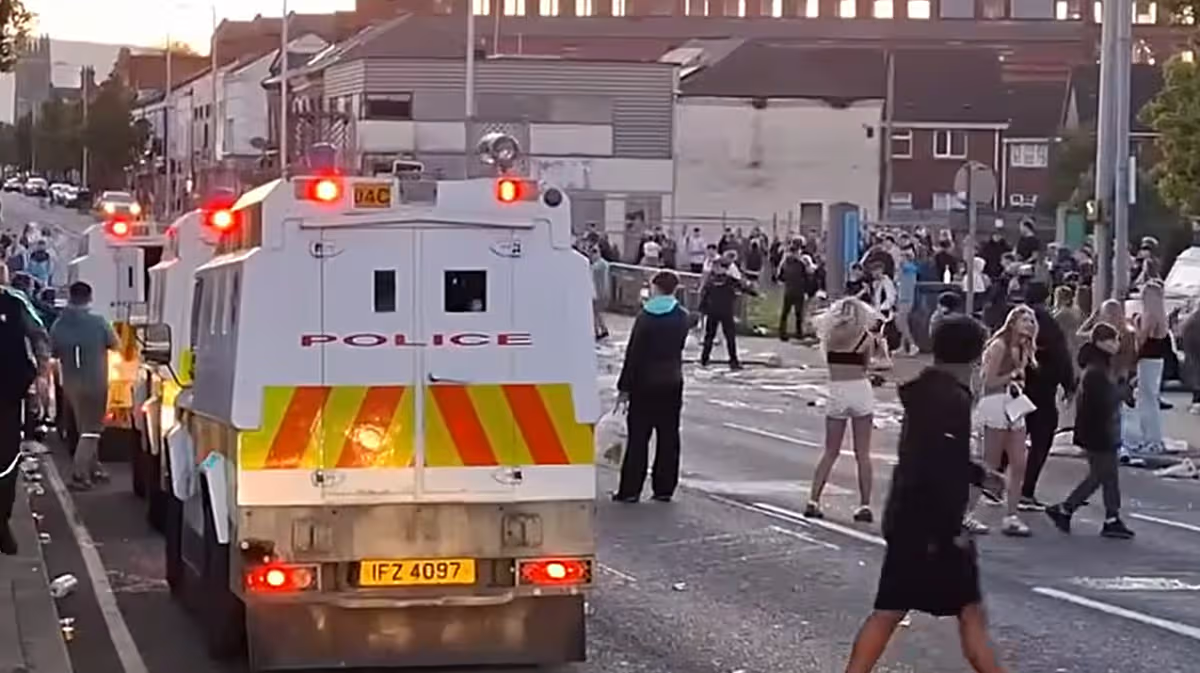
Two fast food restaurants in the Connswater area closed due to large groups of young people gathering, with a window in one restaurant being smashed.
Advertisement
Police said their enquiries are ongoing and they will continue to engage with local representatives to help prevent further instances of anti-social behaviour.
PSNI Chief Inspector Robinson said: “A number of reports were received around the parade, which largely passed off peacefully, of anti-social behaviour and altercations.
“Two fast food restaurants in the Connswater area had to close after large groups of young people gathered in the area, engaged in disorderly behaviour and smashed one of the windows.
“Officers attended and dispersed the crowds, and remained in the area for a time to ensure calm.”
Advertisement
Chief Inspector Robinson continued: “Enquiries are ongoing into individual reports of criminal damage and assault, while additional evidence was gathered at the scene which will now be reviewed by our Public Order Evidence Team.
“There will be consequences, by way of proactive arrests, for those identified as being involved in offences.
“We will continue to engage with local representatives and the wider community in order to help prevent further instances of this behaviour.
Advertisement
“We would particularly ask parents and guardians to speak to their children so they know where they are, and to play their part in ensuring that they do not become involved in such reckless behaviour that could lead to someone getting hurt.”
Anyone who has information, or who can help identify those responsible, is asked to contact police on 101 quoting reference number 1119 10/05/26.
The disorder follows ongoing incidents of young people travelling to the area in recent weeks for arranged fights and anti-social behaviour. Many of these incidents have been centred around the derelict Connswater Shopping Centre.
Advertisement
Speaking to Belfast Live, local DUP councillor Ruth Brooks said: “The trouble involving a small minority at CS Lewis Square should not take away from what was otherwise a successful and well-supported East Belfast Protestant Boys parade.
“There have been ongoing issues with detached youth who travel to East Belfast for the purposes of stirring up trouble and disorder. This is becoming an increasing challenge and has caused issues for residents, youth workers, local communities and, tonight, for parade organisers and those attending responsibly.
“The overwhelming majority of those attending tonight’s parade came to enjoy the occasion responsibly and support a long-standing cultural event within the community.”
Last month, four young people were detained by police at the former Connswater Shopping Centre for anti-social behaviour and criminal damage after entering the derelict site.
Emergency teams have been parachuted into the British overseas territory of Tristan da Cunha in St Helena (Picture: Reuters)
Paratroopers responded to a suspected hantavirus case at a golf course covered in rocks on an island in St Helena.
Army personnel descended on Tristan da Cunha, where a British national thought to have caught the disease had disembarked the MV Hondius cruise ship.
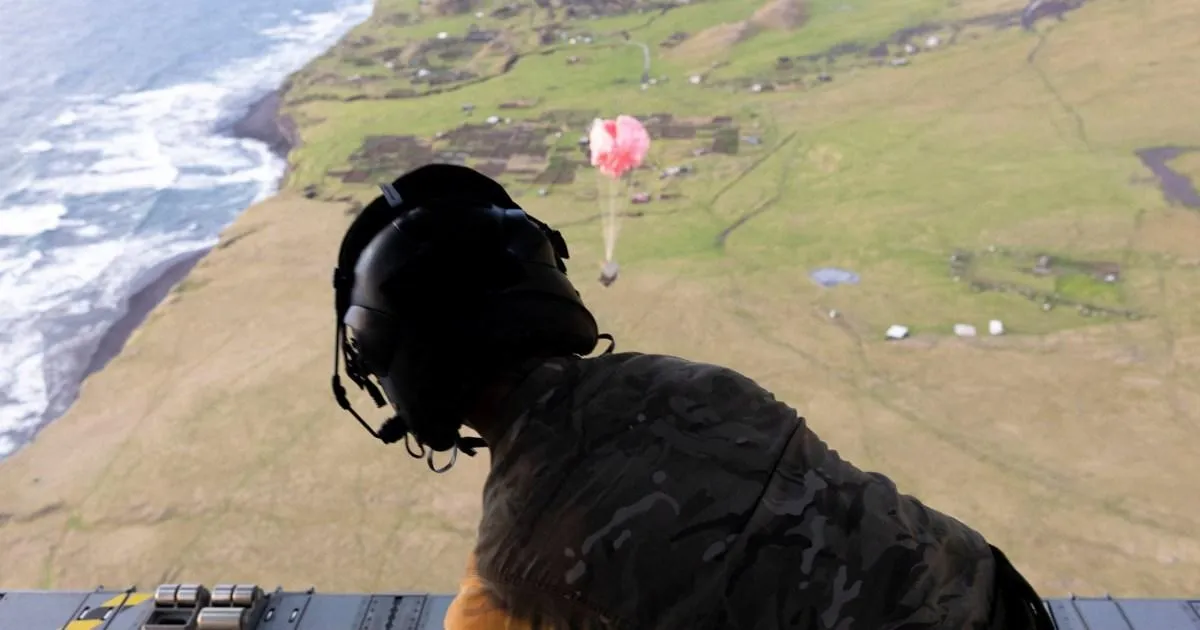
A team including six paratroopers, an RAF consultant and an army nurse parachuted onto the island, which has a population of 221 and is normally accessible only by boat.
They made the vital trip thanks to an RAF A400M transport aircraft which flew a 7,000-mile journey from RAF Brize Norton in Oxfordshire to Ascension Island before heading onto Tristan da Cunha.
Advertisement
It was supported by an RAF voyager for the 56-hour haul.
Six paratroopers, an RAF consultant and an army nurse dropped down onto the island, which is home to just 221 (Picture: 2026 MoD Crown Copyright)
Sign up for all of the latest stories
Start your day informed with Metro’s News Updates newsletter or get Breaking Newsalerts the moment it happens.
Brigadier Ed Cartwright, the commander of the 16 Air Assault Brigade, said: ‘I think the soldiers will have had a great time, but it’s pretty risky.
Advertisement
‘Parachuting has some inherent dangers. The winds were reasonably high.
‘The parachuters – I’ve spoken to them – they described it to me as a ‘pretty tasty jump’.’
The parachutists had to make a ‘difficult descent down through the cloud and then on to the drop zone, which was a golf course covered in rocks’, he explained.
He added that further medical support had been sent over to ensure the team could return safely.
Advertisement
The Ministry of Defence confirmed this was the first time humanitarian support had been delivered by parachute.
Armed forces dropping a medical kit onto the island to help deal with the suspected case (Picture: MoD)
Foreign Secretary Yvette Cooper said: ‘We will continue to work closely with international authorities and the Tristan da Cunha administration, keeping those affected informed and ensuring the right support is in place in the UK and across the Overseas Territories.’
It comes as the UKHSA said the 22 British passengers on the MV Hondius would be repatriated to the UK and be held at an isolation facility at Arrowe Park Hospital on the Wirral, Merseyside.
They are expected to be kept at the former Covid quarantine centre for up to 72 hours.
None of the passengers who disembarked the vessel in Tenerife showed symptoms of the virus, Spanish authorities said.
Advertisement
Two confirmed British cases are currently in hospitals in South Africa and the Netherlands.




















































You must be logged in to post a comment Login