Connect with us
DAPA Banner
DAPA Coin
DAPA
COIN PAYMENT ASSET
PRIVACY · BLOCKDAG · HOMOMORPHIC ENCRYPTION · RUST
ElGamal Encrypted MINE DAPA
🚫 GENESIS SOLD OUT
DAPAPAY COMING

NewsBeat

Nursery worker who abused 21 babies free from jail after serving just 14 months

Published

on

Daily Record

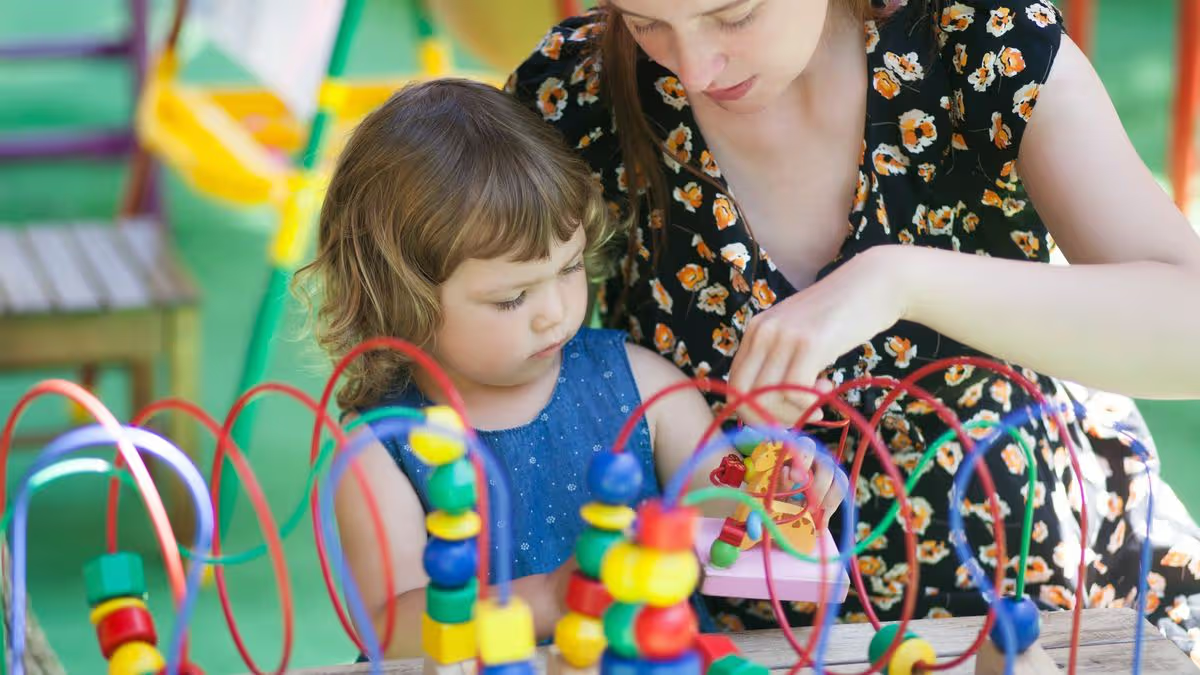
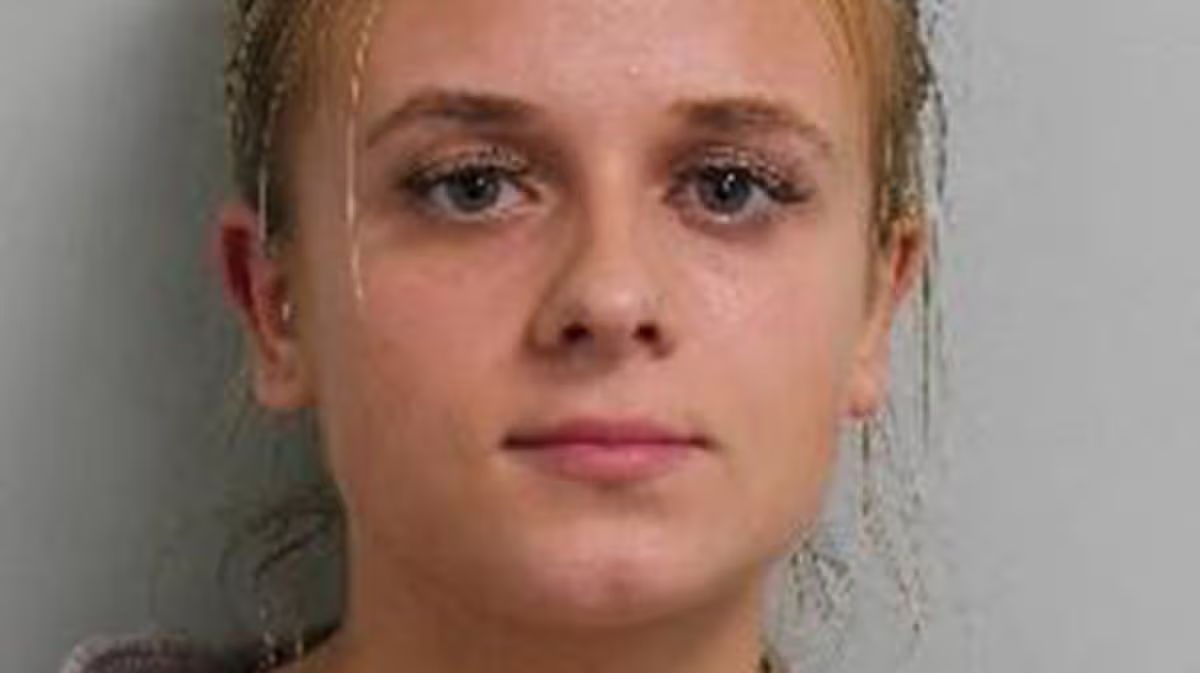
Roksana Lecka, 23, was jailed last September for abusing kids aged as young as ten months at two nurseries.

A “sadistic” nursery worker who abused 21 babies while high on drugs is now living abroad free from prison despite only serving 14 months of an eight year sentence. Authorities in Poland admitted Roksana Lecka, 23, was not detained after she was deported under the UK Government‘s Early Removal Scheme.

Advertisement

Lecka was jailed in September 2025 for pinching, punching and kicking babies as young as 10 months old at two nurseries in west London over several months. In February, she was deported to Poland as part of the scheme.

But officials in her home country claim they were powerless to detain her when she landed. According to reports in Poland, Lecka was not entered into the relevant criminal databases or international alert systems in a way that would have allowed officers to detain her.

As there was no official documentation from the UK and no corresponding entries in national or international law-enforcement systems, border guards in Poland were forced to process her under normal entry procedures, reports the Mirror. Major Dagmara Bielec, of the Nadwislanski Border Guard Unit, reportedly told local media: “A Polish citizen expelled from Great Britain has returned to the country, but her arrival did not take place under any of the formal international co-operation procedures in force between Poland and Great Britain.”

Advertisement

Lecka’s current whereabouts are unknown but she is understood to have landed in Warsaw on February 5. Her crimes included kicking a child in the face repeatedly during months of “gratuitous” and “sadistic” violence which took place between 2023 and 2024.

She was jailed for eight years after admitting seven counts of cruelty to a person under the age of 16 and being convicted of a further 14. Lecka is also banned from returning to the UK. Judge Sarah Plaschkes KC said during sentencing that Lecka “pinched, slapped, punched, smacked and kicked” children, “pulled their ears, hair and their toes”, and toppled them “headfirst into cots” causing bruising and lingering red marks.

She said: “Often the child would be quietly and happily minding its own business before you deliberately inflicted pain, causing the child to cry, arch, try to get away or writhe in distress. Time after time you calmly watched the pain and suffering you have caused. Your criminal conduct can properly be characterised as sadistic.”

Concerned parents and staff raised the alarm after finding bruising and scratches on children who had been in Lecka’s care. Police investigating her crimes discovered CCTV footage of her scratching and pinching children under their clothes, on their arms, legs and stomachs.

Advertisement

Parents of her victims later told a court of their feelings of heartbreak, guilt and distrust and described Lecka as the “worst kind of human”. The fiend, who was living in Hounslow, South West London, attempted to defend her actions, carried out at Riverside Nursery in Twickenham, which is now closed, and Little Munchkins in Hounslow, by claiming she was sleep-deprived and hooked on cannabis and vapes.

It was unclear at the time of her deportation whether Lecka would continue her sentence in a Polish jail and parents subsequently spoke out about their horror that she could be free upon returning to Poland. One father whose son was physically abused by Lecka said at the time her deportation after serving just 14 months, which included time on remand, was “completely inappropriate” and “really hard to swallow”.

He told the BBC: “We felt it undermined all that time and emotion that had gone into the trial. Preparing our witness statements and our victim-impact statements, going through the trauma of that whole investigation and trial, to get a sentence brought a sense of closure and we could all move on from it.

“But then for that sentence not to be served, it was a bit of a hollow feeling.” The victim’s father claimed there is “too much focus on cost savings, rather than upholding the principles of the system”.

Advertisement

Another parents reportedly added: “The expectation obviously was that that sentence would be served. And it now appears it’s not going to be. The reasoning behind custodial sentences, theoretically, is punishment for the offender, some form of rehabilitation and a deterrent to it happening again.

“In this case, the punishment hasn’t been served. It’s unclear if there’s been any rehabilitation. And in terms of a deterrent, if foreign nationals know that effectively they won’t even have to serve that sentence, then I don’t think that deterrent is there either. It just makes the process feel slightly pointless.”

Lib Dem MP Munira Wilson raised the issue in Parliament saying that Lecka’s victims’ parents had not been told whether Lecka would continue to serve the rest of her eight-year sentence or go free. She called for information regarding Lecka’s release terms.

Advertisement

She also wrote to the Home Office but Ms Wilson was told by ministers that, due to time on remand before her trial, Lecka had become eligible for deportation on 7 October 2025 – less than a fortnight after receiving her eight-year sentence.

Alex Norris, minister for border security and asylum said in a letter to the MP: “Whilst Lecka is not required to serve the remainder of her sentence in Poland, we have made Polish law enforcement aware of her convictions so that appropriate safeguarding actions can be taken by the Polish authorities.”

However, according to reports in Poland, the authorities there are unable to monitor her movements or warn childcare institutions about her past convictions and there are even fears she could find a new job working with children.

Last month, a Ministry of Justice spokesman said: “These were appalling crimes, and our thoughts remain with the victims and their families. This Government is deporting foreign national offenders at pace, with more than 5,000 deported last year – a 14 per cent increase on the previous year.”

Get more Daily Record exclusives by signing up for free to Google’s preferred sources. Click HERE.

Advertisement

Source link

Continue Reading
Click to comment

You must be logged in to post a comment Login

Leave a Reply

NewsBeat

Dissident republican group attack Victorian postbox in West Belfast with angle grinder

Published

on

Belfast Live

Earlier this year, the group targeted a statue of the former monarch in a paint attack

Victorian Postbox Vandalised – Waterville Street, Belfast.

A dissident republican group has attacked an historic Victorian-era Royal Mail postbox in West Belfast.

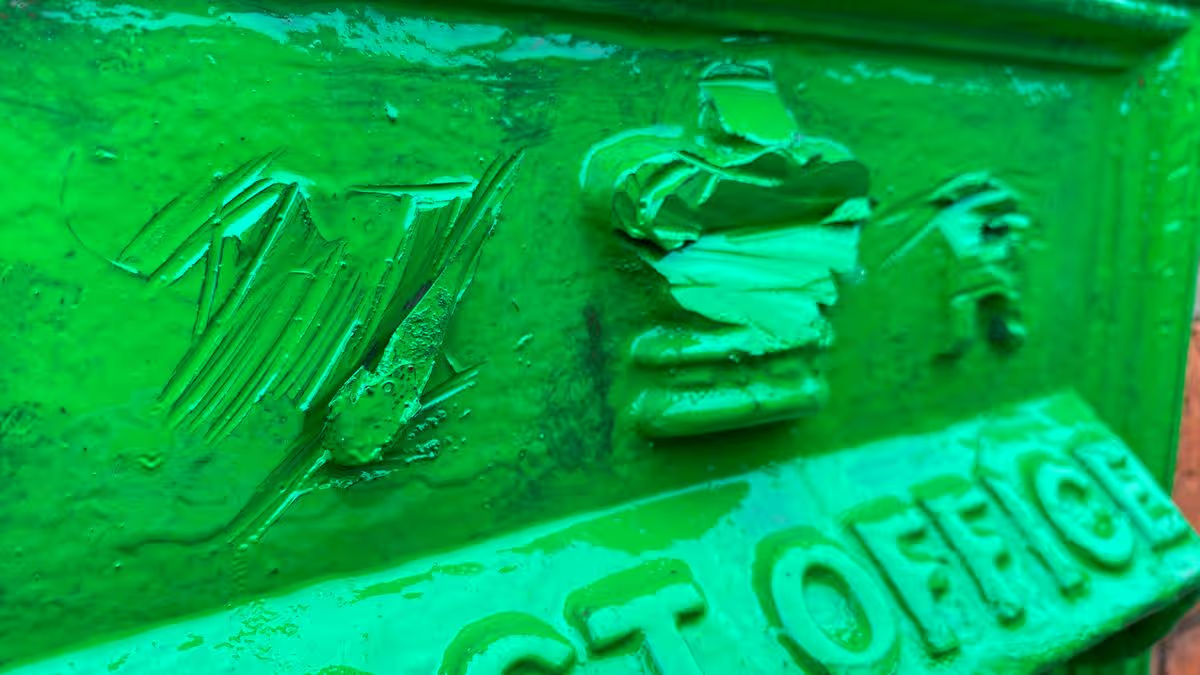
The postbox, which is built into the wall of Clonard Monastery at Waterville Street, was attacked with an angle grinder before its iconic red paint was replaced with green.

Advertisement

A video of the incident was shared online by the group, where an activist can be seen taking the angle grinder to it, causing significant damage to the postbox.

In a Facebook post accompanying the video, the group said: “The symbols of imperialism and an occupying power litter Irish streets.

Advertisement

“In a Socialist Republic, all these symbols, street names, monuments, statues and more will be taken down, destroyed or replaced. All state institutions will be repurposed and handed over to the Irish people for the betterment of all.

“We will not share Ireland with imperialists, fascists, capitalists, royalty or the systems that maintain their power.

“There will be no ‘agreed’ or ‘shared’ Ireland – only a Socialist Republic.”

Advertisement

The PSNI confirmed to Belfast Live that they had not received any reports relating to the incident.

For all the latest news, visit the Belfast Live homepage here and sign up to our daily newsletter here.

Source link

Advertisement
Continue Reading

NewsBeat

Nursery chain served with safeguarding notice by Ofsted

Published

on

Cambridgeshire Live

The nursery chain runs more than 200 settings across England, including eight in Cambridgeshire

Ofsted has has told a nursery chain that runs 247 settings across England, including some in Cambridgeshire, that it is not meeting safeguarding and welfare requirements.

Advertisement

Ofsted served Bright Horizons with a Welfare Requirements Notice (WRN) on Monday, June 22 after checks between October 2025 and June 2026 found “significant weaknesses in organisational safeguarding leadership, governance, oversight and practice”.

The checks happened because of “concerns following a serious safeguarding incident” last September. Ofsted then carried out inspections, site visits and direct engagement with senior leaders at 172 of Bright Horizons nurseries, and identified breaches of requirements in 69 settings. The findings of each were published in individual nursery reports, as is standard practice.

According to the Bright Horizons website, the chain has eight locations across Cambridgeshire including in Cambridge, Ely and Fulbourn:

  • Eddington Nursery, Cambridge
  • Wolfson Court Day Nursery and Preschool, Cambridge
  • Bright Horizons Cambridge Milton Road Day Nursery and Pre-school, Cambridge
  • Cambridge Science Park Day Nursery and Preschool, Cambridge
  • Long Road Day Nursery and Preschool, Cambridge
  • Bunnybrookes Day Nursery and Preschool, Addenbrooke’s Hospital, Cambridge
  • Fulbourn Day Nursery and Preschool, Fulbourn
  • Ely Day Nursery and Preschool, Ely

According to Ofsted, the WRN “is intended to prompt urgent improvement at the highest level of the organisation to ensure higher standards for children across the group”. As the action is against the Bright Horizon group, the outcome has been published on the Ofsted report page of all 247 Bright Horizon nurseries. However, this does not reflect concerns identified at individual nurseries.

His Majesty’s Chief Inspector, Sir Martyn Oliver, said: “The outcome summary we’ve published today sets out clearly what the Bright Horizons group must do, and by when. We will be monitoring their progress closely. My message to parents is to read your nursery’s latest inspection report or update on the Ofsted website.

Advertisement

“The majority of Bright Horizons nurseries are meeting requirements. We have already published reports and updates on all of the nurseries that we visited – today’s action is about identifying improvements that need to happen at a management level within the Bright Horizons group.

“The Department for Education has announced additional funding to support our work in early years – including thousands more no-notice inspections. This is great news and will strengthen our work to check that children are getting the safe, high-quality care they deserve.”

Bright Horizens, one of the UK’s largest nursery chains, has until August 1 to improve. A spokesperson for the chain said whilst it is “disappointed” with the notice against it, ” particularly as the Chief Inspector recognises that the majority of our nurseries are meeting requirements” it is “taking the matter extremely seriously”.

By August 1, Ofsted requires Bright Horizons to ensure:

Advertisement
  • All senior leaders are fully familiar with, and are able to effectively apply safeguarding policies, procedures and arrangements within their oversight role.
  • Safeguarding policies, procedures and arrangements are consistently and effectively implemented across all settings.
  • Senior leaders maintain accurate and timely oversight of safeguarding concerns and risks across the organisation, so that appropriate and timely action is taken to protect children.
  • Safeguarding concerns are consistently identified, recorded, escalated and responded to appropriately across all settings, including consideration of emerging patterns and cumulative risk, in line with statutory safeguarding guidance.
  • Procedures to manage allegations against staff are consistently followed across the settings.
  • Review and strengthen current arrangements for monitoring safeguarding training, supervision and support to ensure these are effective in securing consistent staff understanding and application of safeguarding responsibilities across all settings, including recognition of child protection concerns, escalation routes and whistleblowing procedures.
  • Any weaknesses in staff knowledge or practise of safeguarding responsibilities are addressed, and that robust and effective systems are in place to monitor and evaluate the impact of training and supervision on safeguarding practice.

In a statement, Bright Horizons said: The safety and wellbeing of the children in our care is always our first priority. Whilst we are disappointed that Ofsted have chosen to issue a Welfare Requirements Notice against us, particularly as Sir Martyn Oliver recognises that the majority of our nurseries are meeting requirements, we are taking the matter extremely seriously.

“On those occasions when our practice falls short of the standards we and our families rightly expect, we recognise that this is not acceptable. We are taking swift and robust action at the highest level and are working in partnership with Ofsted to fully address the concerns identified, which we are confident we will be able to do successfully.

“We continue to focus on consistently embedding our strong safeguarding culture across all our nurseries.”

Source link

Advertisement
Continue Reading

NewsBeat

King and Queen will not live in Buckingham Palace after renovations

Published

on

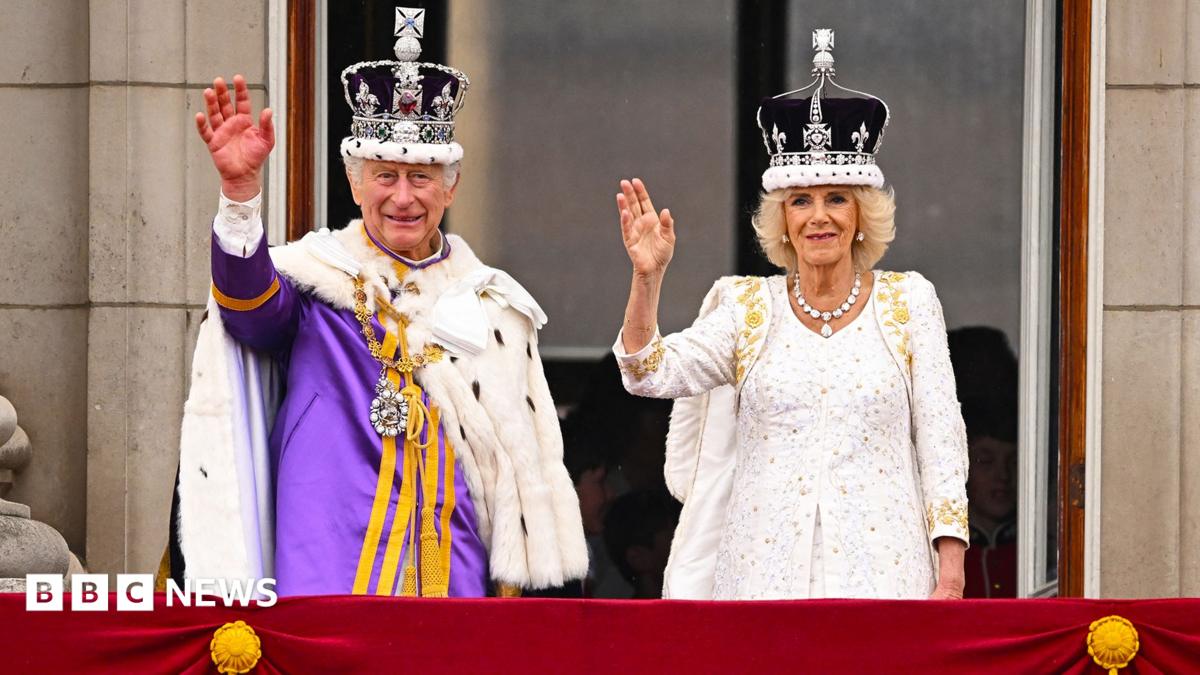
King Charles and Queen Camilla on the Buckingham Palace balcony wearing crowns and robes

The landmark may now also be able to open for a longer period, generating more income. It currently opens its State Rooms to visitors each summer and on selected dates throughout the rest of the year, the proceeds of which go to the Royal Collection Trust, a charity responsible for the care and conservation of royal art.

The King will continue to host a range of events at the palace, from state banquets and garden parties to receptions and audiences with the prime minister and new ambassadors.

“His Majesty retains huge affection for Buckingham Palace and a deep respect for its role in royal and public life,” said a palace spokesperson. “It will be a buzzing hive of royal activity in every other way.”

Norman Baker, former Lib Dem Home Office minister and a critic of royal funding, told the BBC that Buckingham Palace visitor ticket sales should instead go to the Treasury.

Advertisement

“They bring in millions every year, so what should happen is if they’re not living in Buckingham Palace, [they] should open it to the public and all the money from visitors 12 months of the year should go to the Treasury to help pay for refurbishment,” he said.

Graham Smith, CEO of Republic, which campaigns for an elected head of state, said: “The government agreed to spend £369m on refurbishing Buckingham Palace and now Charles doesn’t want to use it.

“But he’ll keep it under lock and key for when he does. Clearly, the palace needs to be fully open to the public all year round.”

Source link

Advertisement
Continue Reading

NewsBeat

Two people in hospital after serious Maguiresbridge crash

Published

on

Belfast Live

The collision happened in the early hours of this morning

Two people have been taken to hospital following a serious crash in Co Fermanagh.

Advertisement

Emergency services have been at the scene of a serious road traffic collision on the Belfast Road in Maguiresbridge this morning, Friday, June 26.

Police earlier said the road was closed in both directions while officers dealt with the incident.

A PSNI spokesperson said: “Road users are advised the Belfast Road, Maguiresbridge is closed in both directions this morning, Friday June 26, due to a serious road traffic collision.

“PSNI officers are diverting traffic flow via the Boyhill Road. Please seek an alternative route for your journey at this time.”

Advertisement

In a statement, the Northern Ireland Ambulance Service said it received a 999 call at 01:29 on Friday, June 26, following reports of a road traffic collision on the Belfast Road area, Maguiresbridge.

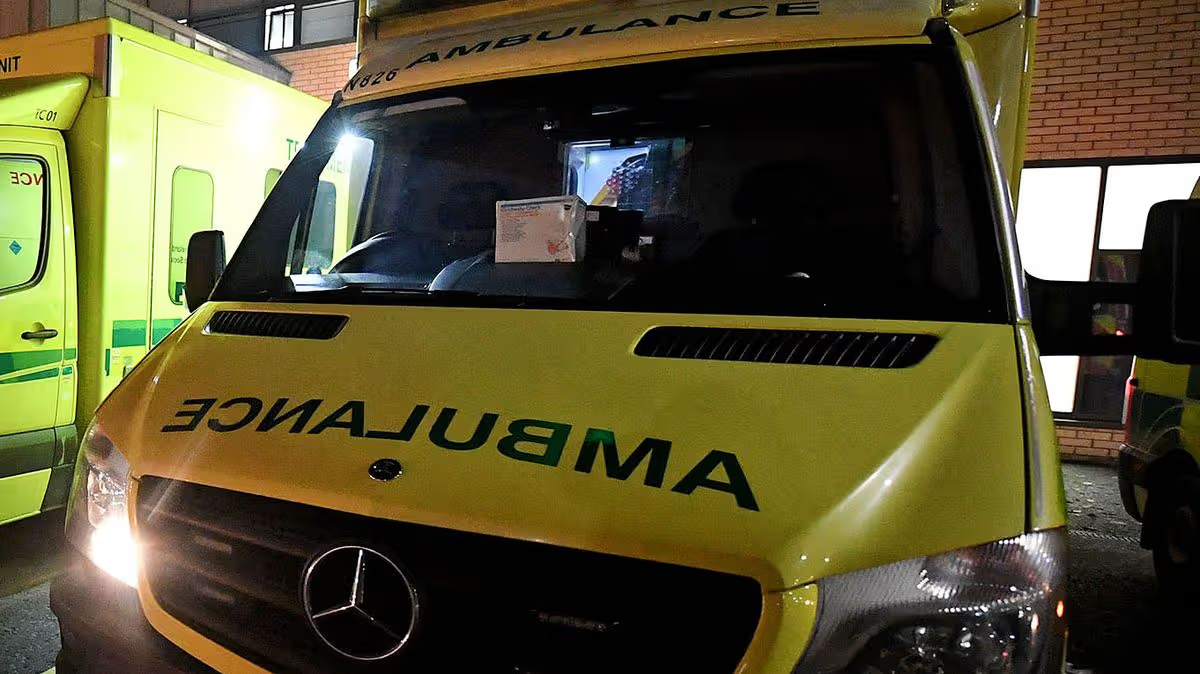
“NIAS tasked two emergency ambulances to the scene. Following assessment and initial treatment at the scene, two people were taken to the South West Acute Hospital by ambulance,” a spokesperson added.

For all the latest news, visit the Belfast Live homepage here and sign up to our daily newsletter here.

Source link

Advertisement
Continue Reading

NewsBeat

How beavers solved a flooding problem in west London

Published

on

How beavers solved a flooding problem in west London

A London council was facing a big bill to solve a flooding problem – until beavers came along and fixed it for free

Until recently, tiptoeing through floodwater to get to work was par for the course for Londoners living around Greenford Tube station. The ticket hall frequently found itself inundated after a heavy downpour. Sandbags were routinely deployed. Nearby neighbourhoods also flooded.   

It left the local council facing the daunting prospect of expensive engineering works to solve the problem – that was until beavers came along and apparently fixed the problem for free.

Advertisement

“Even in situations like on Monday, where there was really heavy rainfall, the area didn’t flood,” said Şeniz Mustafa, England’s first urban beaver officer, who witnessed the animals’ handiwork firsthand. “When they put their minds to it, they really get things finished.” 

Advertisement

Four centuries after being pushed to extinction in England, beavers were reintroduced to Paradise Fields – a 10-hectare former golf course in Ealing borough – in 2023.  

Keen to demonstrate how ‘nature’s engineers’ could make London more climate resilient, conservationists were granted a licence to release five of the animals along the stream running through the land. The Ealing Beaver Project was born.      

The animals got to work immediately, reengineering the landscape around Greenford with a series of dams, which created a new lake almost overnight. They even dismantled an old dam built by volunteers and replaced it with a better one of their own. Incredibly, they still had time to breed – producing a litter within a year of arriving.

Advertisement

“I just can’t believe how much they’ve done in a short period of time, they basically said ‘step aside, humans’,” Mustafa told Positive News. “We do make things a little bit hard for ourselves. It goes to show that we don’t have to use heavy machinery or build infrastructure, nature can do it.”   

The beavers’ handiwork has not only helped alleviate flooding; it’s also boosted biodiversity. 

“We’ve had four new species in the last 11 months alone. One of them is the stickleback, which lives alongside dragonflies and damselflies. We also had red pole, which is a bird that only really stops off on migration,” said Mustafa. 

It goes to show that we don’t have to use heavy machinery or build infrastructure, nature can do it

“The diversity is great. This month we’ve had at least 14 different species of butterfly. There are tadpoles, freshwater shrimp, toads, too. None of that would have happened without beavers.”

Advertisement

“It’s interesting to see how other wildlife will just recolonise and return to a space.” 

It’s a boon for humans, too, especially in a city where access to nature is limited. “The benefit to the local community is massive,” said Mustafa. “[The animals] have completely transformed my perspective of what beavers can do.”

‘When they put their minds to it, they really get things finished,’ says Mustafa. Image: Cathy Gilman

Advertisement

The Ealing Beaver Project is a collaboration between Ealing Wildlife Group, rewilding organisation Citizen Zoo, the Friends of Horsenden charity and Ealing Council, with support from Beaver Trust and the Mayor of London.”

“We are facing climate and ecological emergencies worldwide, but we have the power to make a difference,” London Mayor, Sadiq Khan, told Positive News after the beavers were released. 

“I am committed to ensuring that London is at the forefront of the rewilding revolution as we work to re-establish lost species and reconnect people and nature.”

Advertisement

Main image: iStock

Be part of the solution

At Positive News, we’re not chasing clicks or profits for media moguls – we’re here to serve you and have a positive social impact. We can’t do this unless enough people like you choose to support our journalism.

Give once from just £1, or join 1,800+ others who contribute an average of £3 or more per month. Together, we can build a healthier form of media – one that focuses on solutions, progress and possibilities, and empowers people to create positive change.

Advertisement

Support Positive News

Source link

Advertisement
Continue Reading

NewsBeat

Three ways climate action can be more inclusive for 1.3 billion disabled people

Published

on

Three ways climate action can be more inclusive for 1.3 billion disabled people

Imagine a global political summit that shapes the future of our planet where one of the most populated countries in the world does not have a voice? This may seem unlikely, but currently 1.3 billion disabled people (nearly the population of China) do not have formal representation at policy talks held by the UN’s climate change body.

The United Nations Framework Convention on Climate Change (UNFCCC) hosts negotiations to limit global greenhouse gas emissions and address climate change. Yet, people with disabilities are two to four times more likely to die or be injured in climate-related emergencies such as heatwaves, flooding and storms.

People with psycho-social disabilities such as severe depression, schizophrenia, bipolar disorder or post-traumatic stress disorder are three times more likely to die during heatwaves. During the 2018 heatwave in Montreal, Canada, people with schizophrenia accounted for 25.8% of heat-related deaths, despite representing only 0.6% of the population.

The anti-psychotic medication used to treat symptoms makes patients less tolerant to heat. This increases the risk of heatstroke, severe dehydration and can prove fatal. A wide range of medications has similar effects.

Advertisement

These staggering statistics show the need to place disabled people, who are some of the most vulnerable, at the centre of climate change negotiations. In emergencies, additional barriers put disabled people at greater risk. These include inaccessible evacuation routes, power outages when electricity is required for equipment, and an increased risk of certain infectious diseases.

For five years, disability researchers, charities and advocacy groups, plus the International Disability Alliance (an alliance of 14 global and regional disability organisations) have been campaigning to change this. In February 2026, the UNFCCC finally recognised the Disability Caucus. This group of 120 organisations advocates for the rights of people with disabilities within climate negotiations. This year for the first time it could act as an informal group that coordinates advocacy campaigns to serve the needs of disabled people in climate negotiations.

Informal groups get allocated tickets for some events, such as opening ceremonies, and can have their meetings promoted by organisers during negotiations.

During recent climate negotiations in Bonn, Germany, we observed a growing momentum for disability inclusive climate action. This was largely driven by disabled delegates highlighting the needs of disabled people.

Advertisement

However, more action is needed. Here are three steps to ensure climate action is inclusive for disabled people, and their families.

1. Incorporate the best research

Research on people with disabilities and climate change is critical. Bringing together the best academic research and tools, developed by both disabled and non-disabled researchers, is vital to understand the consequences of climate change for disabled people.

This will support better preparation for climate emergencies and inclusive climate adaptation. Climate adaptation is the process of changing systems, actions and responses to reduce the damage associated with climate change both now and in the future.

Advertisement
Climate justice explained by an expert.

Understanding how mental health is affected by climate is clearly highlighted by the Belém Health Action Plan, announced during the UN climate summit, Cop30, in Brazil in 2025. More than 20% of the world’s poorest people have some form of disability and are the population group most affected by climate change.

At the UCL Warning Research Centre, we have recently developed a Mental Health Vulnerability Index. This first-of-its-kind tool has been developed by a disabled researcher to help reduce mental health inequalities that emerge during climate change. Without formal disability representation in global climate change discussions, such initiatives struggle to gain attention.

Climate discussions must include research about the effect of climate change on disabled people, led by disabled researchers and their allies, to ensure the protection of the health and wellbeing of the people most affected by climate change.

2. Make equal opportunity official

While the Disability Caucus was officially recognised by the UNFCCC in February 2026, the “caucus” status is still not classed as an officially recognised observer organisation, otherwise known as a constituency.

Advertisement

This means the voice of the disabled community does not have an equal opportunity to engage in the negotiations.

The caucus has been supported by the Women and Gender and Youth Constituencies, but disabled people need their own voice to be recognised. Granting full constituency status to the Disability Caucus is essential. Without a formal opportunity to participate equitably, disabled people still cannot contribute to the negotiation process.

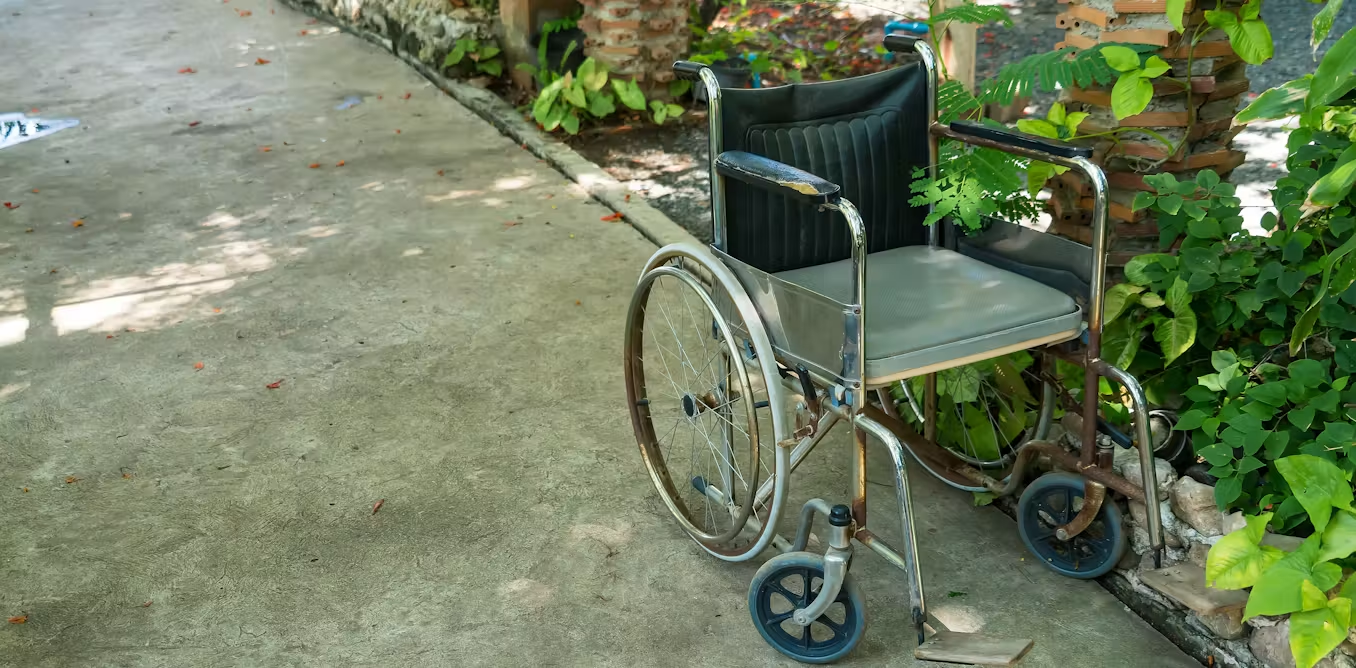
A wheelchair user watches the opening plenary of UN climate negotiations in Bonn, Germany.
UN Climate Change/Lara Murillo, CC BY-NC-ND

3. Create accessible climate policy

Despite the work of disability organisations to improve climate policies by including disabled people, there is still a lack of disabled people negotiating policies or attending as observers. Even when disabled people attend negotiations, there can be barriers to participation.

Advertisement

During the UN climate summit in Glasgow during 2021 (Cop26), venues were not accessible by wheelchair.

Some accessibility barriers could be overcome by providing comprehensive sign language interpretation, braille and transcriptions, and simplified text versions of negotiations or presentations. Low sensory spaces, such as a meditation room at a conference venue, can offer respite to those suffering from sensory overload by providing a low-light, quiet and calm space.

Incorporating research on how climate change affects people with disabilities, led by disabled researchers and their allies, is a crucial part of devising effective policies. Granting the Disability Caucus constituency status is the next key step needed to address accessibility barriers to attending climate negotiations. These three simple actions would finally make climate action inclusive to all disabled people globally.

Advertisement

Source link

Continue Reading

NewsBeat

The Titanic ‘curse’ and the forgotten fearless life of the captain’s daughter

Published

on

The Titanic ‘curse’ and the forgotten fearless life of the captain’s daughter

A supposedly unsinkable ship, an iceberg and a catastrophe that circulates through popular culture – the Titanic disaster is one of the most retold events in modern history. But familiarity comes at a cost. Repeated retellings tend to simplify what happened and reduce the real people involved to a basic story.

Retellings of the Titanic disaster often focus only on the sinking itself and forget what happened afterwards. Many lives were deeply affected by the disaster long after it ended, including people who were not even on the ship.

One such life is that of Helen Melville Smith, daughter of Captain Edward Smith, the man who commanded Titanic on its maiden voyage. While researching my new novel Daughter of the Titanic, I became increasingly struck not by the scale of the disaster itself, but by the quieter afterlives that followed it. Melville was 14 when her father went down with the ship in April 1912. Overnight, she inherited not only personal grief, but a public identity she had not chosen: the captain’s daughter, permanently attached to a disaster she did not witness but could not escape.

What followed has often been framed through the language of fate. Over the next decades, Melville’s husband died in an accident, her mother was killed in a road incident, her son died during the second world war and her daughter died of polio.

Advertisement

Taken together, these events could be interpreted through the language of a “Titanic curse”. As recently as July 2025, a Daily Mail feature revisited Melville’s life through this logic, treating unrelated tragedies as part of a doomed narrative arc.

Survivors of the Titanic talk about their experience.

Psychological research and research into narrative meaning-making have long shown that humans are predisposed to look for patterns, particularly after traumatic events. As psychologist Jerome Bruner has argued, we make sense of experience through narrative, organising events into stories that impose coherence. When multiple tragedies occur, we connect them into meaningful sequences.

The Titanic intensifies this impulse. Because the disaster occupies such a prominent place in public memory, it exerts a kind of narrative gravity. Lives connected to it are drawn into its orbit, interpreted through its lens and reduced to extensions of its story. The Titanic has become, in many ways, a modern myth: a historical event transformed into symbolic narrative, through which later lives are interpreted.

Advertisement

But Melville was not defined solely by catastrophe. She learned to fly aircraft at a time when aviation was still new and dangerous. She drove fast cars, moved within social and artistic circles and remained famous in ways that complicate the image of a life overshadowed by tragedy. Photographs from later life show a poised, fashionable woman who continued to participate in public life despite the losses she had endured.

Flying and motoring were associated with modernity, glamour and risk, and her enthusiasm for both suggests someone drawn to experience rather than retreat. The picture that emerges is not simply of a bereaved daughter, wife and mother, but of a woman who remained curious, socially engaged and determined to continue living fully.

While public narratives may attempt to fix people in place – particularly those connected to major historical events – they continue to reshape their lives in ways that exceed those frameworks.

Melville’s story is therefore not simply one of loss, but one of negotiation between private experience and public expectation, between inherited identity and self-determined action.

Advertisement

The afterlife of disaster

Melville’s life also points to a wider problem in how we tell history. Disasters do not end when the immediate crisis is over. They continue to shape meaning long afterwards, influencing reputations, identities and interpretations across generations. Yet popular retellings tend to focus on the moment of impact rather than its aftermath. Titanic is repeatedly reconstructed as spectacle – the sinking, the heroism, the failure – while quieter, long-term consequences are marginalised.

When we privilege the event over its aftermath, we reduce history to a series of dramatic moments rather than recognising it as a continuing process. Melville’s life offers a corrective, shifting attention from the disaster itself to its enduring effects.

Why are we so drawn to narratives of fate, curse or inevitability when we encounter repeated loss? And what happens when those patterns are imposed on real lives?

Advertisement
Footage of the Titanic leaving Belfast.

In Melville Smith’s case, the idea of a Titanic curse imposes coherence where there may be none, compressing decades of lived experience into a single, legible narrative. In doing so, it recasts survival itself as misfortune.

This is not a neutral process. Historians, journalists and novelists like myself shape how lives are remembered and, in some cases, reduced. With that comes an ethical responsibility: to resist imposing patterns that make lives appear more coherent or narratively satisfying than they were, and to remain attentive to contradiction, complexity and reality.

Melville’s life resists that kind of closure. It contains independence, persistence and contradiction that sit uneasily alongside the narrative imposed upon her. To take that seriously is not only to recover an overlooked figure, but to recognise the limits of the frameworks through which we understand her.

The story of the Titanic disaster continues in the lives shaped by it – lives that cannot be reduced to the tragedy alone without losing what made them human.

Advertisement

Source link

Continue Reading

NewsBeat

Traitors star on rejecting conversion therapy and why a ban sends “clear signal”

Published

on

Belfast Live

He said he considers himself “one of the lucky ones” because he was able to walk away, but that had not come without its hardships

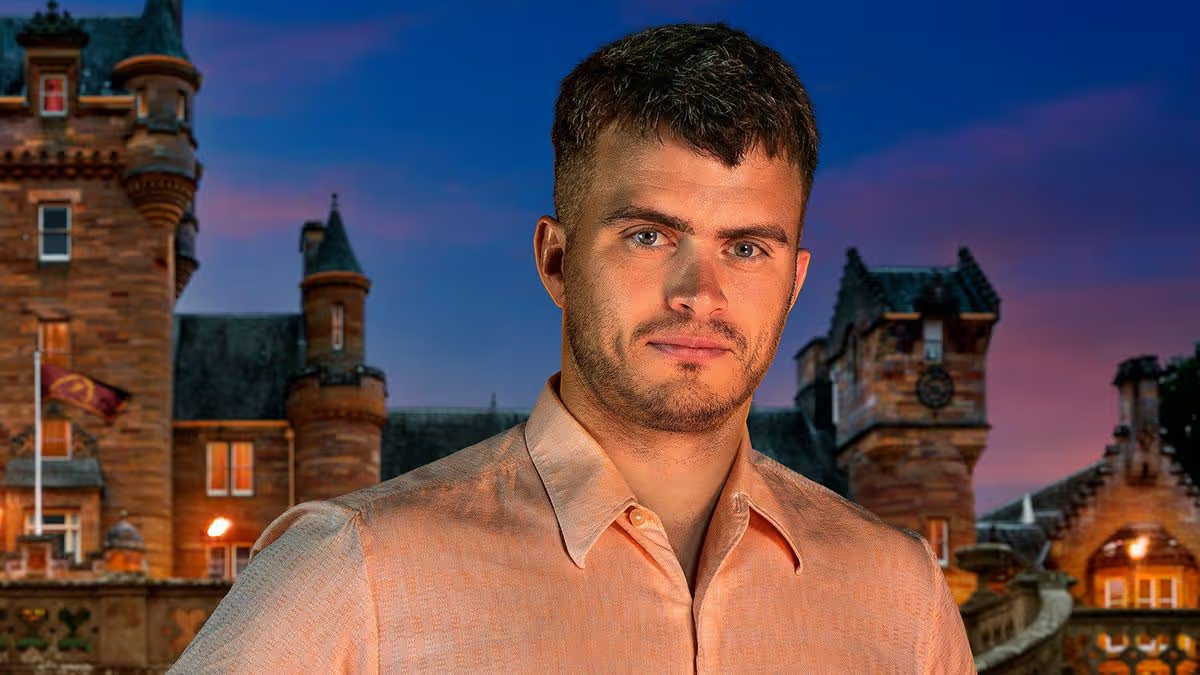
A bid by the Government to ban conversion practices sends a “clear signal” to LGBT+ people that they are “not broken, you don’t need to be cured”, a former Traitors contestant who once faced such so-called therapy has said.

Matthew Hyndman said he was asked in his 20s to “publicly repent” for being gay or leave his evangelical Christian community behind.

Hyndman, who was also known as Matty during January’s series of the gameshow, said no to going through counselling and has now backed a ban on such practices which could see people fined or imprisoned for carrying them out.

Advertisement

Speaking at an event in London as a draft Conversion Practices Bill was published on Thursday, he said he had been an evangelical Christian missionary on a ship sailing around the world as he wrestled with his sexuality.

He said: “I was so embarrassed that I was gay. I was so deeply embarrassed and ashamed, and I didn’t tell a soul. This was not something that I was willing to even utter, because as far as I was concerned, it was the worst sin.”

He said he had for a long time been “completely in denial about my sexuality”, but when it became known he was gay, he was confronted with the prospect of conversion practices.

“I was basically given a choice to publicly repent in front of the entire ship’s community and agree to go through counselling, or go.”

He said he considers himself “one of the lucky ones” because he was able to walk away, but that had not come without its hardships.

“In order for me to walk away, in order for me to say no, there was such a huge risk,” he said. “The risk was that I would lose everyone I know and love. My vocation, my community, everything was so intertwined, particularly when you have a faith, it’s so intertwined.

“So for me to say no was for me to reject the belief of my entire community and walk away. And I did, thankfully. I consider myself one of the lucky ones because I did, I walked away, and I said ‘no, actually, I think I know who I am’.”

Advertisement

He spoke of his belief in the importance of a ban on such practices – which are aimed at changing someone’s sexual orientation or transgender identity and can involve anything from exorcisms to prayers.

Hyndman added: “I think it (a ban) just sends a really clear signal, as well.

“Anyone who is currently experiencing this, anyone who has, they’re hearing from the highest point that this is wrong and that it should not be happening to you. You’re not broken, you don’t need to be cured.”

The draft Bill covers England and Wales only and was a Labour manifesto commitment from 2024.

Advertisement

Hyndman, who is originally from Northern Ireland, appeared at the Alliance Party conference in March to back the party’s bid to ban conversion practices there.

For all the latest news, visit the Belfast Live homepage here and sign up to our daily newsletter here

Source link

Advertisement
Continue Reading

NewsBeat

Two men to be deported after discovery on Bolton street

Published

on

Manchester Evening News

The pair have been jailed

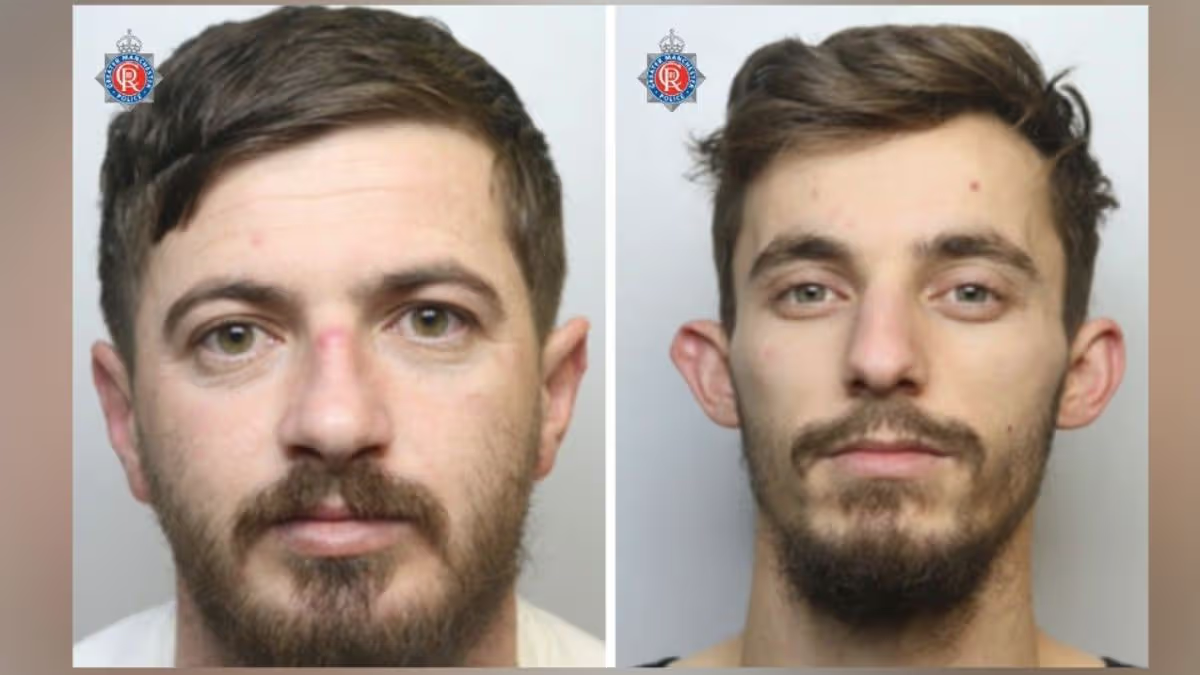
Two men have been jailed and are due to be deported after a ‘large-scale’ cannabis grow was discovered in Bolton. Neighbourhood officers raided a property on Newport Street back on December 23 last year, after receiving intelligence.

Advertisement

Greater Manchester Police says it uncovered a ‘substantial and fully operational’ cannabis farm at the property, which had been ‘professionally adapted’ – including the illegal bypass of the electricity supply to power the grow. CCTV footage was observed as part of enquiries which identified a black van attending the property in the days before the raid.

Two men were captured on camera accessing the secured building, and the vehicle was subsequently traced to Leonard Tota. The now-26-year-old was arrested the following day at his home address, where Ridgan Taga, 26, was also located.

Click here to hear the latest from Manchester’s courts in our newsletter

A search of the address uncovered additional cannabis plants, sophisticated growing equipment, a significant quantity of cash, mobile phones, a suspected debtors list, and keys linking both men directly to the Newport Street premises. GMP says the investigation highlighted a coordinated and organised effort to cultivate cannabis at scale.

Advertisement

Tota, of St George’s Road, Bolton, pleaded guilty the production of cannabis, while Taga, of St George’s Road, Bolton, pleaded guilty to production of cannabis, being concerned in the supply of cannabis and possession of criminal property. Tota was sentenced to 14 months’ imprisonment, while Taga was jailed for a year. Both are due to be deported following the completion of their custodial terms.

Police Sergeant Jessica Prudence, of Bolton town centre neighbourhood policing team, said: “This is an excellent result and demonstrates the dedication and effectiveness of our neighbourhood officers in tackling serious drug-related crime. By acting on intelligence and carrying out thorough enquiries, the team has successfully removed a significant cannabis grow from the community and brought those responsible before the courts.

“We rely heavily on information from the public, and the intelligence you provide plays a vital role in enabling us to take action like this. Drug supply is not a victimless crime – it is often linked to wider, harmful criminality that can have a serious impact on our communities. We would continue to encourage anyone with concerns or information about suspected drug activity to come forward and speak to us.”

Source link

Advertisement
Continue Reading

NewsBeat

Who is Brooke George? British TikTok influencer who could face death penalty in Dubai

Published

on

Who is Brooke George? British TikTok influencer who could face death penalty in Dubai

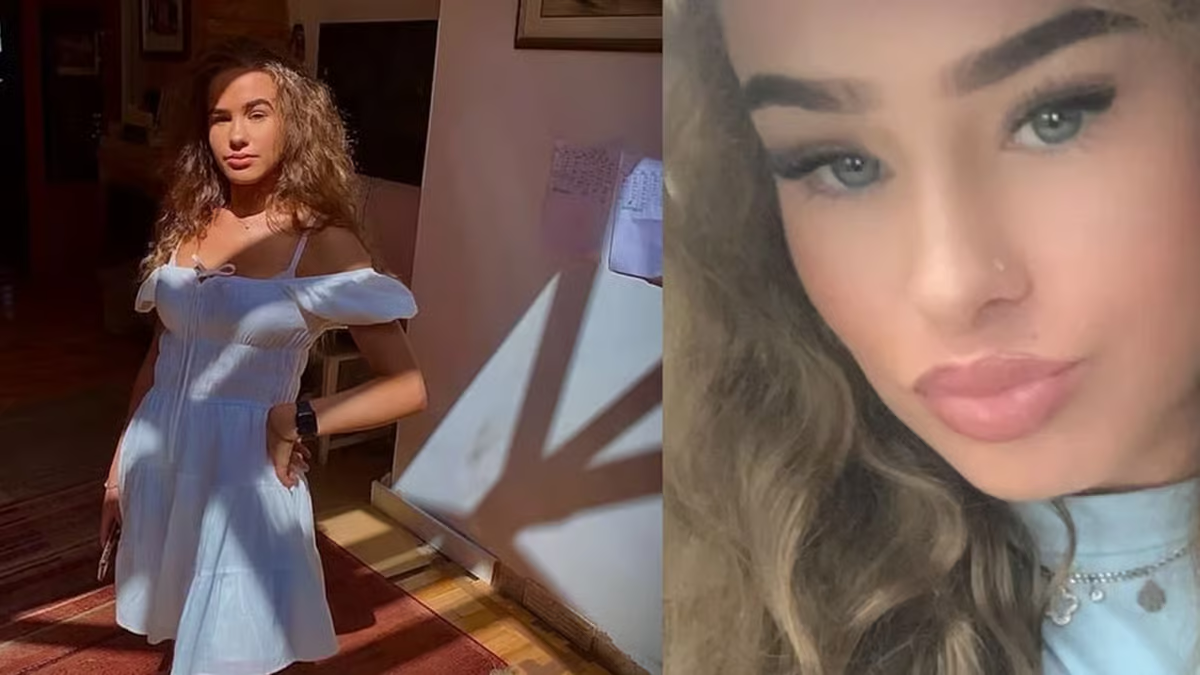
A TikTok influencer with almost 100,000 followers is facing the death penalty in Dubai after being charged with the murder of her boyfriend.

Brooke George, 23, from Gravesend in Kent, claims she grabbed a knife in self-defence after being violently assaulted by a British man in the UAE.

Source link

Advertisement
Continue Reading

Trending

Copyright © 2025