
Business
Revolut Ends Remote-First Policy for Graduate Hires from 2027

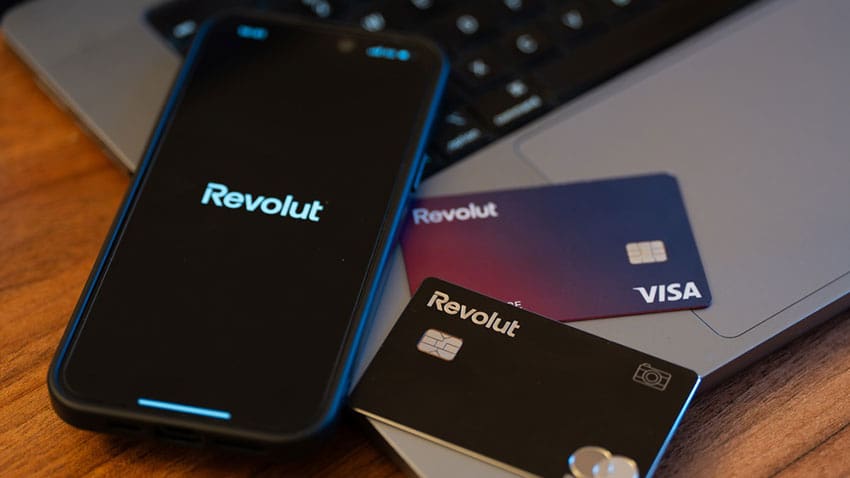
Revolut, the fintech that has long worn its remote-first credentials as a badge of difference, has confirmed that its newest recruits will no longer enjoy the same freedom.
From 2027, graduates and interns joining the company will be required to spend at least three days a week in the office, a notable shift for a business that has spent years arguing that results matter more than location.
The change applies only to those at the very start of their careers. Explaining the decision, the company said “the early stages of a career benefit from in-person collaboration and mentoring”, a line of reasoning that will sound familiar to anyone who has followed the steady retreat from fully remote working across the City. For everyone else, Revolut was at pains to stress, “our remote-first policy is unchanged”.
It is a carefully drawn distinction. Until now, graduates were free to choose whether they worked from home or came into the office, and the company’s headline-grabbing perks remain firmly in place. Chief among them is the 120-day “workation”, which lets staff work remotely from abroad, “exploring new cultures while staying productive and connected”. Chief executive Nik Storonsky, who co-founded Revolut in 2015 with Vlad Yatsenko, told staff last year that the firm cared “more about what you do than where you do it”, and insisted the flexible approach would survive as long as productivity held up.
The recalibration arrives at a moment of considerable momentum for the group. Revolut became a fully licensed UK bank earlier this year after a long wait for regulatory approval, and was valued at 75 billion dollars in November 2025, eclipsing several of Britain’s established high street lenders. Founded as an app that let people in the UK and Europe spend abroad at interbank exchange rates, it now serves more than 70 million customers and supports transfers across roughly 160 countries and regions. The company has also signalled that about 40 per cent of its 12,000-strong global workforce, spread across more than 30 countries, will be based in India by the end of this year.
For all the talk of disruption, the policy itself looks rather conventional. Hybrid working is now firmly the British norm: the Office for National Statistics reported in June 2025 that around 28 per cent of workers split their week between home and the office, with the figure rising to nearly half in information and communications businesses. The debate over whether younger staff in particular should be in the room has been running for some time, with voices ranging from JP Morgan’s leadership to Lord Sugar urging young people to get their “bums back into the office”.
Employment lawyers see little to quarrel with. Jo Mackie, employment law partner at national firm Michelmores, said Revolut was “falling into line with most other major employers in making hybrid working the norm, when practical”, adding that “working alongside colleagues is particularly important for junior staff to learn and be mentored”. The sentiment is echoed across the sector, where HR specialists have noted a growing consensus that early-career development is hard to replicate over video calls.
The wider message for Revolut watchers is one of maturation. A company built on doing things differently is, in this corner at least, beginning to look a little more like the institutions it set out to challenge.

Amy Ingham
Amy is a newly qualified journalist specialising in business journalism at Business Matters with responsibility for news content for what is now the UK’s largest print and online source of current business news.

Business
Dow Slips as Apple Sinks 8% Despite a Record Quarter While Amazon Soars 12% on AWS Strength This Friday

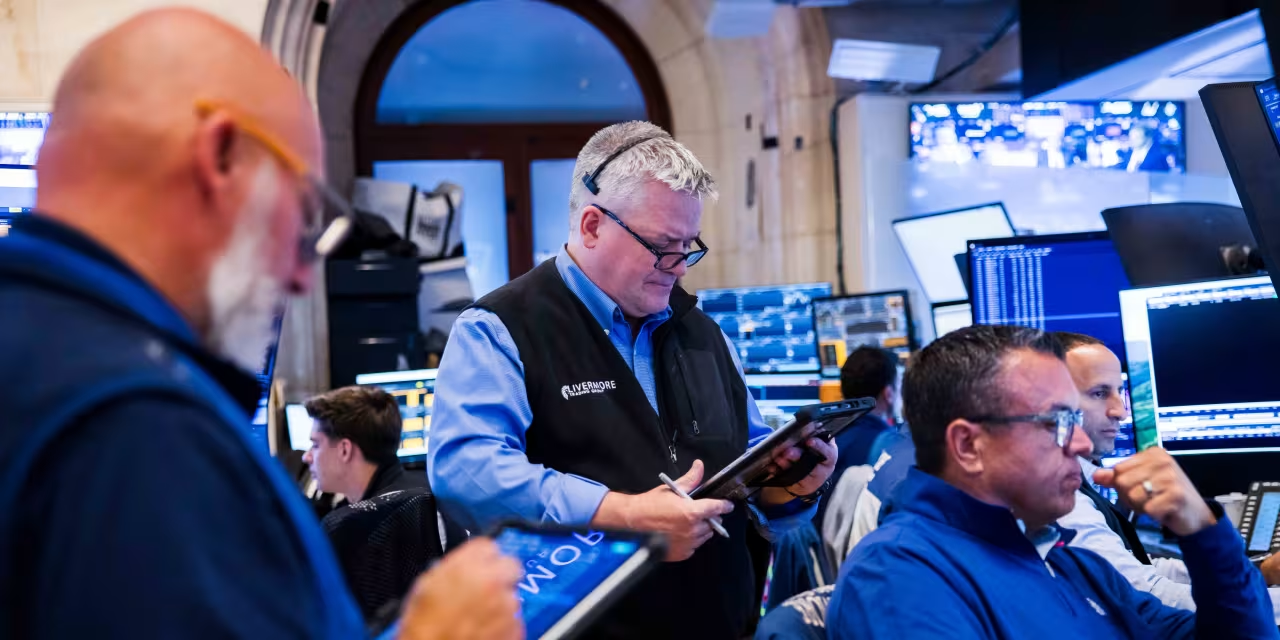
The Dow Jones Industrial Average slipped 0.18% Friday morning, falling 95.67 points to 52,112.39, as investors sorted through a dramatic split in reaction to earnings from Apple and Amazon, two of the market’s most closely watched technology giants, released after Thursday’s closing bell.
Apple shares fell roughly 8% to around $307.89 despite the company reporting a record fiscal third-quarter 2026 performance, according to financial analysis from 24/7 Wall St. The decline came after Apple’s results fell short of investor expectations specifically in its Services division and its China business, an area facing intensifying competitive pressure from domestic manufacturers. The stock had been trading just below record highs heading into the earnings release, having recently cleared the $5 trillion valuation threshold and briefly reclaimed the title of world’s most valuable publicly traded company. Rick Rodda, an analyst quoted by TheStreet, characterized the market’s reaction bluntly. “The results appear not quite good enough to justify such lofty valuations,” Rodda said.
Amazon told a starkly different story. Shares of the e-commerce and cloud computing giant jumped as much as 12% to roughly $263.07, according to 24/7 Wall St., after the company delivered a blowout quarter powered substantially by strength in Amazon Web Services, its cloud computing division. The strong results helped fuel a broader rebound across technology stocks Friday morning, according to TheStreet, easing some of the concerns that had built up in recent weeks about the sustainability of massive capital spending on artificial intelligence infrastructure.
The divergence between the two companies reflected a common underlying dynamic playing out in opposite directions, according to 24/7 Wall St.’s analysis. Both Apple and Amazon face the same tight global supply of memory chips and advanced semiconductors driven by surging AI-related demand, but Amazon has been able to convert that dynamic into stronger cloud revenue growth, while Apple has faced more direct cost and margin pressure on the hardware side of its business as component prices have climbed.
Friday’s mixed earnings reaction followed an extraordinary session in Asian markets overnight. South Korea’s KOSPI index jumped nearly 18% overnight, triggering trading halts, as chip stocks across the region rebounded sharply following Thursday’s blowout earnings report from Microsoft, according to Yahoo Finance. That Microsoft rally, in which shares surged roughly 15% for the company’s best single-day performance in nearly 18 years, had already begun reshaping sentiment toward the broader technology sector before Apple’s and Amazon’s results added further volatility to Friday’s session.
The S&P 500 gained 0.67% and the Nasdaq Composite advanced 1.32% in early Friday trading, according to TheStreet, while the Russell 2000, tracking smaller-capitalization companies, climbed 1.37%. The overall market gains came even as the Dow’s more modest performance reflected its comparatively lighter weighting toward the technology names driving much of Friday’s volatility.
Friday’s trading capped one of the busiest stretches of corporate earnings season, with Amazon, Apple and Coinbase all reporting results after Thursday’s closing bell alongside Microsoft and Meta Platforms’ results from earlier in the week. Thursday’s session itself had already produced a substantial rally, with the Dow surging 613.92 points, or 1.2%, to close at 52,208.06, while the S&P 500 climbed 1.7% to 7,437.64 and the Nasdaq Composite jumped 2.8% to 25,122.18, according to CNBC.
Analysts at JPMorgan noted Wednesday that hedge funds and other large investors had likely finished unwinding their positions in technology, chip and memory stocks as part of a broader effort to reduce leverage, a dynamic the bank suggested was a favorable signal for continued stabilization in the semiconductor trade heading into the new trading week.
The Invesco QQQ Trust, an exchange-traded fund tracking the Nasdaq 100 that holds both Apple and Amazon among its largest individual weightings, found itself caught between the two companies’ offsetting moves Friday, according to 24/7 Wall St., muting what would otherwise have been a cleaner overall gain for the technology-focused fund. The QQQ had closed Thursday at $683.55, up 3.3% ahead of the two companies’ earnings reports, and remained up 11% for the year heading into Friday’s session.
Falling oil prices provided additional support to broader market sentiment heading into the week’s final trading session, following easing tensions after Iran discussed the future of the Strait of Hormuz with Saudi Arabia and Oman earlier in the week, according to CNBC.
With Apple and Amazon’s contrasting results now fully digested by markets and a busy earnings season largely behind investors heading into August, market participants are likely to continue watching closely whether the artificial intelligence infrastructure spending trend that has driven much of this year’s technology-sector volatility can settle into a more stable pattern in the weeks ahead, particularly given the sharp divergence in how individual companies’ earnings have been received even within the same broader AI-driven investment cycle.

Operator
Good morning, and welcome to Brunswick Corporation’s Second Quarter 2026 Earnings Conference Call [Operator Instructions]. Today’s meeting will be recorded. If you have any objections, you may disconnect at this time.
I would now like to introduce Stephen Weiland, Senior Vice President and Deputy CFO of Brunswick Corporation.
Stephen Weiland
Deputy CFO & Senior VP
Good morning, and thank you for joining us.
With me on the call this morning are David Foulkes, Brunswick’s Chairman and CEO; and Ryan Gwillim, Brunswick’s CFO.
Before we begin with our prepared remarks, I would like to remind everyone that during this call, our comments will include certain forward-looking statements about future results. Please keep in mind that our actual results could differ materially from these expectations.
For details on the factors to consider, please refer to our recent SEC filings and today’s press release. All of these documents are available on our website at brunswick.com.
During our presentation, we will be referring to certain non-GAAP financial information. Reconciliations of GAAP to non-GAAP financial measures are provided in the appendix to this presentation and the reconciliation sections of the unaudited consolidated financial statements accompanying today’s results. I will now turn the call over
Now, in case you didn’t see it, please rush out, get today’s Wall Street Journal, and read James Freeman’s fabulous column: “How about Reagan-Style Reconciliation?” All right. I was there as a young man, deputy in the Office of Management and Budget, and it’s all music to my ears.
Basically, President Reagan’s tax cut magic. The first major vote was roughly 45 years ago, July, 1981. Reagan’s big tax cut bill passed the House by 238 to 195 votes. It was a Democratic House, remember that. A bit later by the by, the Senate would pass it 89 to 11. It was a Republican Senate.
The Gipper signed the legislation at his ranch that August. Now, this was absolutely the key element to the Reagan revolution, which was a supply-side revolution, which basically argued that you lower taxes to promote growth, jobs, wages, wealth, and a strong national security. Reagan’s tax cuts brought joy and prosperity to a whole nation desperately in need of both.
Now, as Art Laffer puts it, if you tax something less, you get more of it. You tax the whole economy less as Reagan did, and the economic pie grew larger and larger. In other words, incentives matter. If you keep more of what you earn, you’re going to work harder, invest more, take more risks, and the economy grew. Those 1981 tax cuts helped the economy roar. With real growth of about 5.5 percent per year for more than seven years during Ronald Reagan’s two terms.
Fox News co-host Charlie Hurt and Fox News contributor Kellyanne Conway look back on the late President Ronald Reagan’s tax reforms on ‘Kudlow.’
The stock market roared, as did jobs, and frankly, the whole national morale roared. It was so demoralized during the Carter years, but under Reagan, the animal spirits and the happiness indexes just jumped off the page. And the enormous growth in the American economy created the resources that ultimately Mr. Reagan used to destroy Soviet communism. Peace through strength was an integral part of supply side economics. Mr. Freeman does a wonderful job of reminding all of us of the phenomenal benefits of Mr. Reagan’s supply side tax cuts.
And yes, Mr. Laffer’s curve, the famous Laffer Curve, where he suggested that lower tax rates would produce higher tax revenues with more economic growth and less tax avoidance. Well, it worked out very well. The revenue base actually jumped by almost 25 percent during the whole Reagan boom.
Now, remember, Tip O’Neill was the liberal Democratic speaker. He opposed the Reagan tax cuts, but he got rolled. In the House, 48 Democrats voted for Reagan, who himself, by the way, started out in politics as a Democrat.
What a list of tax cuts. The 25 percent income tax was the headline led by the late Jack Kemp. There were lower taxes on marriage, estates, inheritance, capital gains, interest, dividends, savings, retirements, and businesses. Oh my God. And it worked.
The tax cut magic worked. So I’ll just say, why not remember those days 45 years ago? I remember it very well. How about the Republicans today, thinking about the midterms, but more importantly, thinking about our whole national economy, our whole morale, our whole happiness, our national security. These are things that are helped and virtually solved by lower tax rates across the board.

Gerri Willis on what items to purchase at Costco and which items to avoid
The U.S. Department of Agriculture has issued a public health alert for a frozen burrito sold at Costco because officials claim it contains an undeclared allergen.
A product labeled as Red’s Steak Cilantro and Lime Burrito, which was produced on June 19, contains egg not declared on its label.
The burritos were shipped to Costco stores in Illinois, Michigan and Minnesota.
MORE THAN 12,000 POUNDS OF BACON RECALLED AFTER USDA ISSUES HIGHEST-RISK ALERT

The U.S. Department of Agriculture has issued a public health alert for a frozen burrito sold at Costco because it contains an undeclared allergen. (USDA / Unknown)
A recall for the product wasn’t issued because the burritos are no longer for sale, but the USDA said they could be inside customers’ freezers.
The problem was discovered after a consumer flagged the issue to the company after they realized there was egg inside the burrito, and the company notified the USDA’s Food Safety and Inspection Service.
No adverse reactions have been reported after eating the burrito.

The burritos were sold at Costcos in Illinois, Minnesota and Michigan. (David Paul Morris/Bloomberg / Getty Images)
CYCLOSPORA OUTBREAK: IS IT STILL SAFE TO EAT AT RESTAURANTS? HERE’S WHAT TO KNOW
The burritos were both packaged individually and sold 10 in a 3 lb, 2 oz. carton.
The product lots for the affected burritos include: L1 SD6170 1503, L1 SD6170 1535, L1 SD6170 1606, L1 SD6170 1639, L1 SD6170 1717, L1 SD6170 1750, L1 SD6170 1831, L1 SD6170 1908, L1 SD6170 1954, L1 SD6170 2031, L1 SD6170 2108, and L1 SD6170 2130 on the side of the label.
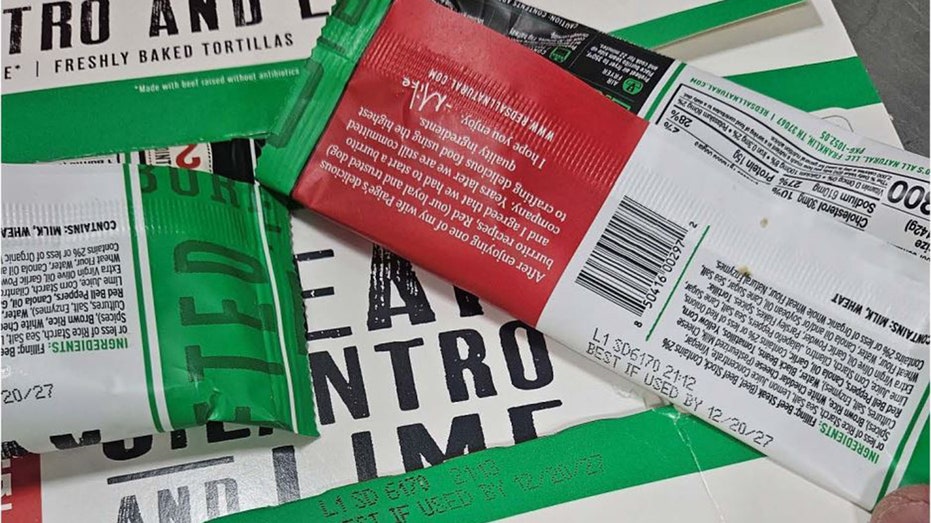
The burritos were both packaged individually and sold 10 in a 3 lb, 2 oz. carton. (USDA / Unknown)
CLICK HERE TO DOWNLOAD THE FOX NEWS APP
They also have “EST. 46069” inside the USDA mark of inspection.
Anyone who finds one of the burritos in their freezer is urged to throw them out or return them to where they were bought.
Red’s and Costco did not immediately respond to FOX Business’ requests for comment.

Success rarely comes from a single path. For Chris Pascale, it has been built through decades of discipline, hard work, and a willingness to pursue excellence in everything he does.
From running businesses and working in the flooring industry to winning fishing tournaments and poker competitions, Pascale has spent his life chasing goals and learning from every experience along the way.
Today, based in Naples, Florida, Pascale is known as a business owner, entrepreneur, outdoorsman, and competitor. His story offers a look at how focus and consistency can shape both a career and a life.
How Chris Pascale Developed His Competitive Mindset
Growing up, Pascale was drawn to activities that challenged him. Surfing became one of his earliest passions and introduced him to the discipline required to improve over time.
“I’ve always enjoyed things that push you,” Pascale says. “Whether it’s sports, business, fishing, or poker, I like the challenge of getting better.”
That mindset would stay with him throughout his life.
After earning an associate degree from Florida Atlantic University, Pascale entered the business world. Coming from a family business background, he was exposed early to the realities of ownership, responsibility, and customer service.
Those lessons would later influence how he approached his own ventures.
Building a Career in the Flooring Industry
Pascale eventually built his career in the flooring industry, where he developed a reputation for taking a full-service approach to business.
Over the years, he opened several businesses and gained firsthand experience navigating different markets and opportunities. While industries and projects changed, his philosophy remained the same.
“You have to stay focused on what you’re doing,” he says. “If you lose focus, you lose momentum.”
That commitment to consistency helped him build long-term relationships and sustain multiple business ventures throughout his career.
His experience as an owner also taught him the importance of adaptability.
“Every business has challenges,” Pascale says. “The people who last are the ones who keep moving forward and find solutions.”
What Leadership Means to Chris Pascale
While many people define leadership by titles, Pascale views it differently.
For him, leadership starts with personal discipline.
“Discipline is everything,” he says. “You can have goals, but if you don’t have discipline, those goals stay ideas.”
That principle has guided both his professional and personal life. Whether managing businesses, pursuing outdoor competitions, or planning future projects, Pascale emphasizes preparation and consistency over shortcuts.
He believes success is often the result of small actions repeated over time.
“People see the results,” he says. “They don’t always see the work that happens every day behind the scenes.”
That perspective has helped him navigate changing markets, economic cycles, and the demands of entrepreneurship over several decades.
Fishing, Competition, and a Life on the Water
Outside of business, Pascale has established himself as an accomplished fisherman and outdoorsman.
Based near the waters of Naples and Marco Island, he has earned a captain’s license and competed successfully in numerous fishing tournaments. His accomplishments include record catches, backwater slams, offshore slams, and sponsorships from fishing apparel and equipment companies.
His fishing experiences have taken him far beyond Florida.
Over the years, he has fished in Costa Rica, Panama, and destinations around the world. His achievements have also been recognized in publications including Florida Sportsman and Fish and Surf.
“Fishing teaches patience,” Pascale says. “You learn that preparation matters, but you also have to be ready when opportunities show up.”
Today, he continues to enjoy life on the water and owns a 48-foot Leopard sailing catamaran based in St. Thomas.
Lessons From Poker, Hunting, and Entrepreneurship
Pascale’s competitive spirit extends beyond business and fishing.
As an active poker player, he has competed in tournaments in Las Vegas, earning significant wins along with rings, trophies, and other accolades.
For him, poker offers lessons that apply well beyond the game itself.
“You have to stay calm and make good decisions,” he says. “Emotions can get in the way if you let them.”
His passion for hunting has also produced notable accomplishments, including Florida registry bucks, Osceola turkey successes, and wild boar records.
Across all of these pursuits, common themes emerge: preparation, patience, focus, and resilience.
Chris Pascale on Goals, Balance, and Long-Term Success
After decades of business ownership and personal achievement, Pascale remains focused on growth while maintaining balance.
He continues to explore new opportunities while enjoying the lifestyle he has worked hard to build.
“I’ve always believed in setting goals,” he says. “Once you reach one, it’s time to find the next challenge.”
At the same time, he values balance and perspective.
“You have to enjoy the journey,” Pascale says. “Success isn’t just one thing. It’s building a life you’re proud of.”
That philosophy has helped shape a career that spans entrepreneurship, competition, and outdoor adventure.
Whether leading businesses, navigating open water, or pursuing his next goal, Chris Pascale continues to demonstrate how discipline and focus can create opportunities across every stage of life.
Bond Vigilantes Push Back Against the Fed’s Inertia. Who Pays the Price.
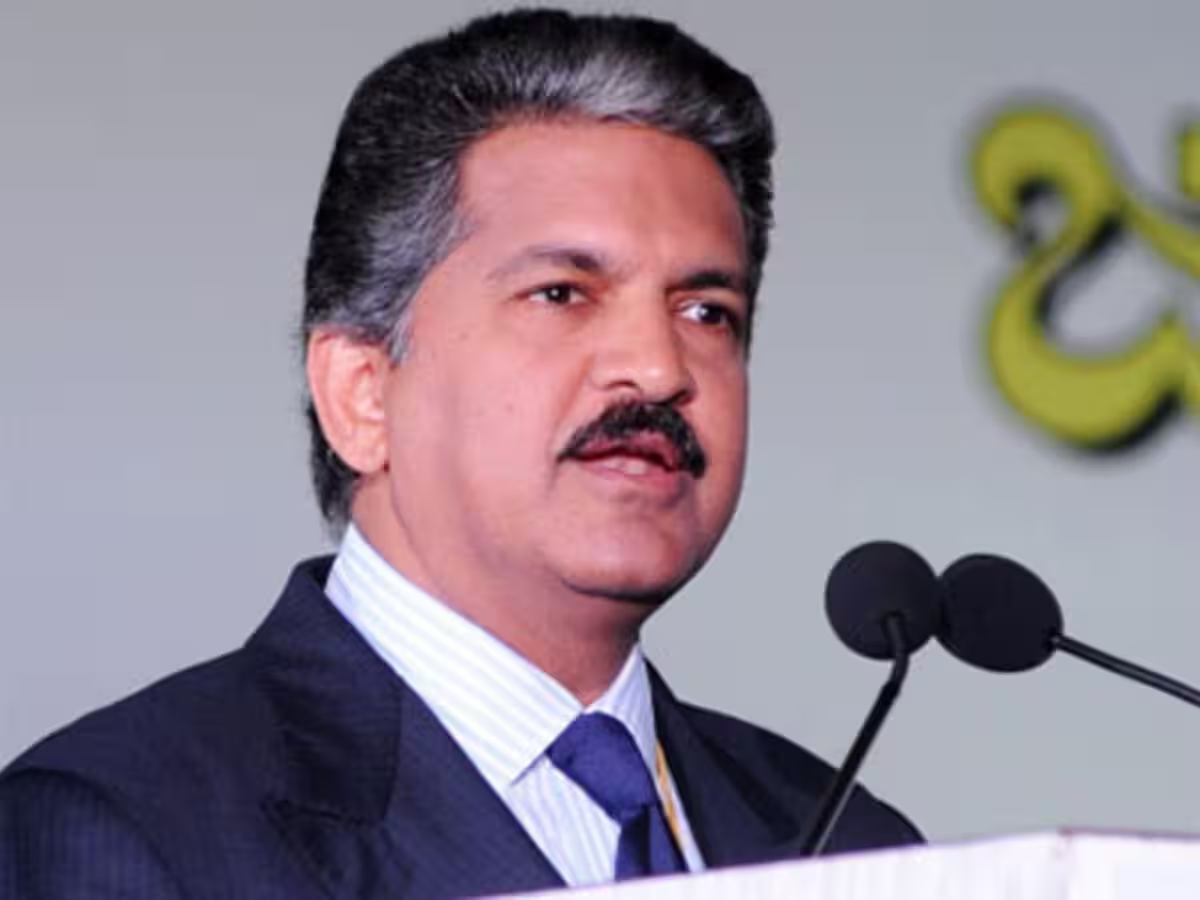
On Modi government’s 10-point agenda.
I think it is almost brilliant to put at the head of the list the fact that bureaucrats should be encouraged to take decisions without fear. In a sense he’s gone to the heart of the problem of the paralysis. The Indian government is extraordinarily large and it is difficult to try and believe that one leader can make all the change. This is a federal system. In a large bureaucracy you cannot exercise the transformation of any situation without coopting bureaucracy.
So empowerment becomes important. It’s a good sign. If you remember, one of the major apprehensions about Modi was an autocratic style of functioning. By putting right at the top of the agenda the empowerment of the bureaucracy I think one has to appreciate and admit that it is definitely not the act of an autocrat.
On disbanding ministerial groups.
Without making much heavy weather of it, he’s been a case study for business schools on how to exercise leadership and have an impact from day one in the new job. He’s setting a clear agenda and is making a clear promise of making a measurement of progress made against that clear agenda. For example, making an agenda for 100 days will make it clear what the matrix would be for measuring success of that agenda. It is important that every day some incremental progress is made towards that agenda and that progress is communicated transparently. He has got his team ready, which is a focused team. To me, every decision needn’t be a big-bang reform but a signal of proactive decision-making and removal of red tape and bureaucracy. And a promise of even speedier decision-making in the future.
On the government’s immediate priorities.
Back in the 1980s, I had written a column headlined ‘Roads to Nowhere’. At that time we were not building enough roads. (Among) America’s competitive advantages happen to be its highways and its transportation network. Those are like blood vessels to the economy and they create job opportunities. Therefore, in a funny sense, the best thing anyone can do to create an inclusive economy is ironically through building roads, because access to markets or the lack of access to markets is one of the most discriminatory things one can do to the poor, especially to the rural poor. It’s not a point that we automatically think of but roads are a mechanism to create inclusiveness in the economy. So, I think, the faster he does that the better for the economy. There is huge economic data to show that roads (give) a bigger boost to rural income than even irrigation. It will help power dual income for families and will allow a kind of diversity from dependence on agriculture which creates productivity.
undefined
On India-US ties.
I’ve been here (in the US) for quite a while now. The Indian elections have generated enormous interest. Most of the diplomatic and political pundits are now urging the leadership in Washington not to miss out on what they feel is the diplomatic opportunity for the US in reaching out to and rebuilding a very strong relationship with India. They feel US has lost ground because of the visa controversy and that they should now rediscover the ground and build a strong relationship.
There is a feeling that both Japan and China have both stolen a march on building this kind of relationship with India. There is going to be, in my opinion, a strong effort from decision-makers here to reach out to the prime minister and his colleagues to rebuild the relationship.
On the perception that the new government will tilt more toward the east — Japan, China, South Korea.
There has been significant interest shown by Japan. It is a country with a liquidity overhang and an investment surplus. Modi is well aware of that. Why Japanese investors have been holding back is because they did not perceive any of the promises we’ve given to be gaining traction.
In the area of construction and large industrial projects, they can take pole position in large projects here. That being said, everybody speculated what the position of the PM and the Cabinet would be and the PM is his own man. My contention is that our PM is a practical man and he knows that any kind of vindictiveness has no role in foreign policy.
I think his whole objective is to enhance India’s economic health and through that gain what should be India’s rightful role in the world. The fact that we are the world’s largest democracy and we are all aware that power and a role in global affairs for a nation comes from economic strength. I think, in his own way and at the right time, he will respond positively when the correct signals are sent out from the US administration.
On FDI in defence
We have been consistent from the time we entered into JVs with foreign companies. We have not changed our stance. Right from the beginning we have been representing to the government that it is a positive step to allow at least 49% investment through the automatic route. Because it encourages the foreign partner to deploy the technology into the JV. Otherwise, there is wariness on their part to provide 100% support to the joint venture. So if you really want the best technology to be manufactured here, then (it should be) a minimum of 49% stake, which we have always advocated.
On Mahindra’s investments plans.
We have never shied away from making investments. Even during downcycles, we never stopped our investments. We invested in the Chakan automotive plant when the economy was down; we also invested in the tractor plant in Zaheerabad when the tractor market was witnessing a downcycle. When the market improved for tractors we were able to ramp up our output. We always have a long-term view of the economy. We have consistently been investing. In defence, for example, if the government starts buying again for the much-needed upgrade then we’ll certainly make the investments. Pawan (Goenka) has gone on record to say that we are considering a Rs 4,000-crore investment, which is independent of the new developments. It was something we were going to do.
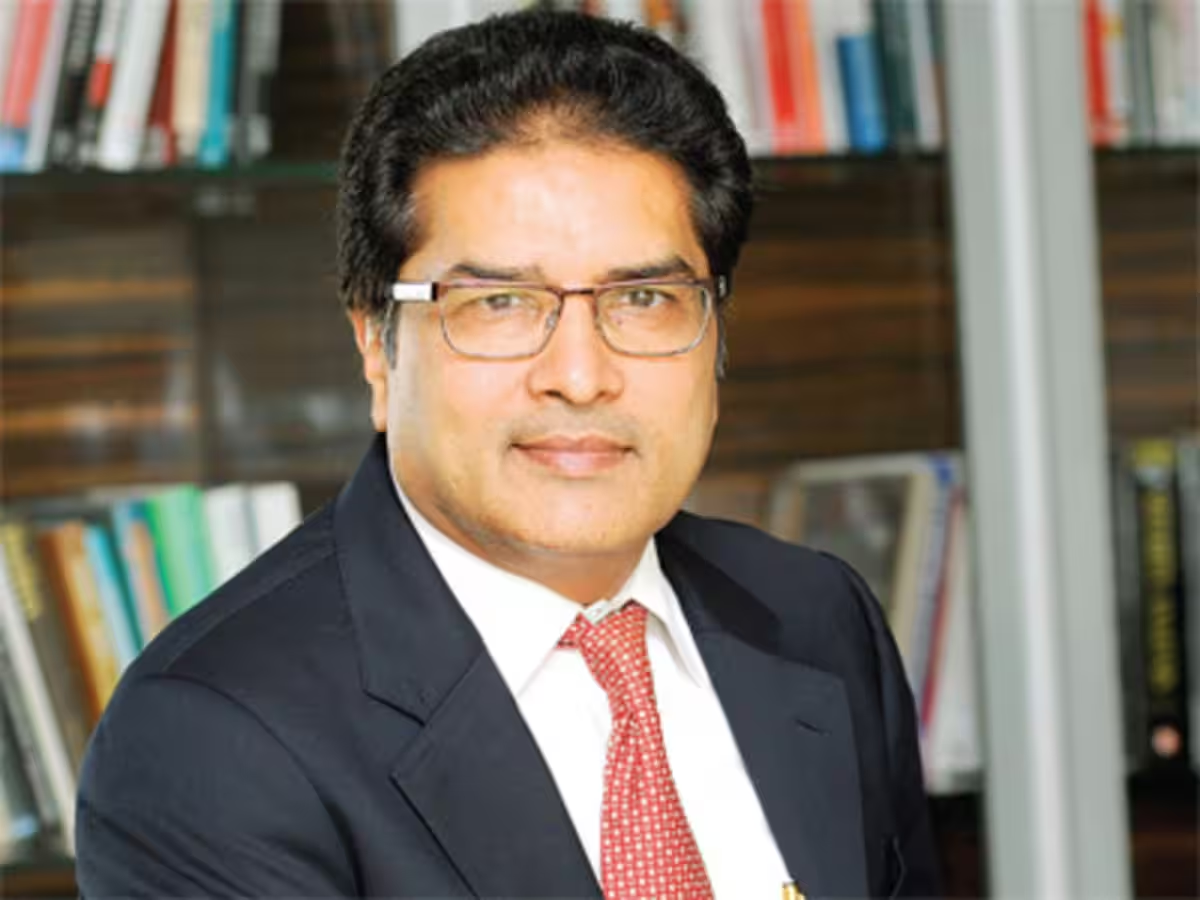
The central government has complete power with a clear mandate, but directives from the Centre have to be executed well at the state level. So, there are many things that are still not in Modi’s hands, says Raamdeo Agrawal, Joint Managing Director, Motilal Oswal Financial Services in an interview with Narendra Nathan and Sanket Dhanorkar.
Are we looking at a multi-year bull run?
I think the market has not yet priced in the full potential of the economy. For the first time, a true nationalist has come to power with a clear majority. There is a new-found energy across the nation. My sense is that the market has not yet understood the difference between 300-plus seats for NDA and 272-plus seats for BJP alone. Look at how the cabinet posts have been assigned — BJP allies have got limited posts and their negotiating power is diminished. Complete power is in the hands of the government. The political scenario is drastically different now. The economy is on the cusp of a historical positive change.
It is the same vehicle, but the driver has changed. It is now being steered by a formula-one driver. So, the acceleration will be dramatic. It will become visible very quickly. Today we are growing at 4.5 per cent. Growth is likely to pick up pace rapidly in the next few years. A lot of things will happen in five years. It will be interesting to see the index level at that time. In the process, investors will make tons of money, because the market will discount that growth two years in advance. It will not wait for the fifth year. If all domestic and global factors align, markets will go through the roof.
Are there challenges to the fragile economic recovery?
The current optimism is because a major variable — the shambolic political setup — has been corrected. There is no doubt that the new government has been fully empowered in this election; the mandate has been given to an extremely competent individual. Right now, everybody is bullish. But one must have tempered expectations. Finally, directives from the Centre have to be executed well at the state level. Otherwise it will be a waste. There are many things that are still not in Modi’s hands.
A lot of other factors will also play a role. Good monsoons, favourable global environment, peaceful borders, etc., can change the entire scenario. But, only time will tell how many stars will align. So, a lot will depend on external factors. I am also keenly watching how the new government tackles inflation, which is just a symptom of a much deeper problem somewhere else. The government has to address supply-side bottlenecks. A weak currency cannot make a strong country. That is why, inflation must go down. It will be the beginning of development, investments, and so on.
The rally, so far, has been driven by hope. When will fundamentals take over?
News headlines, and making money are two entirely different things. We should not get carried away by the headlines. The focus must be on who will actually make money. In most cases, it will be a company which is making money right now. Very rarely will a company that is broke today make money tomorrow, unless there is a complete change in business dynamics. Today, we do not have anything to go by. So, wherever there are anomalies in the economy, these will come back to normal levels. Right now, it is only about the promise of a better tomorrow. Some of these promises will have to take shape in the budget.
undefined
What should be the first priority for the new government?
India has to become much more business friendly. Finally, the country needs to create jobs for its rising young population. Who will create these jobs? More than the government, it is the businesses which will create jobs. Businesses can create jobs only if the business environment is friendly. They also cannot sustain growth without creating jobs. So, the government has to become business friendly. All hurdles should be removed. We need businesses to take more risks as it will result in more jobs.
Will mid-cap stocks continue to perform better than large-caps for now?
It really depends on the company. Mid-caps were lagging for quite some time; smallcaps even more. Eventually it has to converge. Large-caps are now looking highly priced. Investor appetite is limited at these levels. Most of the action is in the low-quality, low-priced segment. Smaller investors are clearly buying low-quality stuff, thinking that the price is low. But, even if it moves into high valuation territory, low quality will remain so. This is where the entire game ends. Sure, high quality stocks are expensive now. But that doesn’t mean you should have junk in your portfolio. If you find quality at a reasonable price, buy with modest expectations. Such names are few and far between. But, even if you get 3-4 such ideas over one year, you can make money. The challenge is to have patience and hold on to the investment. Filling with junk will be a disaster, but if it works, you get a multi-bagger. Investors in high quality may underperform in a rallying market, but will emerge better off over an entire cycle.
Can we expect an earnings upgrade anytime soon?
A 12-15 per cent earnings upgrade is definitely possible this year. As the economy recovers, sectors, such as cement, steel and automobiles, will pick up pace. Oil & gas can also contribute to earnings growth. Right now corporate profits are contributing around 4 per cent to the GDP, which is near the bottom of the band. At the peak of a cycle, this can go upto 7-8 per cent. Assuming 13-14 per cent nominal growth in GDP, it will double in rupee term to Rs 220 trillion in next six years. Now the question is whether the current profit of Rs 4 trillion will move up to Rs 8 trillion or Rs 16 trillion. If it maintains the current ratio, it will go to Rs 8 trillion. If it touches the upper end of the band, it will go to Rs 16 trillion. If this happens and the PE multiple remains the same, the market will go up four times. Profits will zoom the moment the economy moves from 5-6 per cent to 8-9 per cent growth. That is why there is a potential for the market to go up to the stratospheric levels from here.
Business
Chubu Electric Power Company, Incorporated 2027 Q1 – Results – Earnings Call Presentation (OTCMKTS:CHUEF) 2026-07-31

Seeking Alpha’s transcripts team is responsible for the development of all of our transcript-related projects. We currently publish thousands of quarterly earnings calls per quarter on our site and are continuing to grow and expand our coverage. The purpose of this profile is to allow us to share with our readers new transcript-related developments. Thanks, SA Transcripts Team
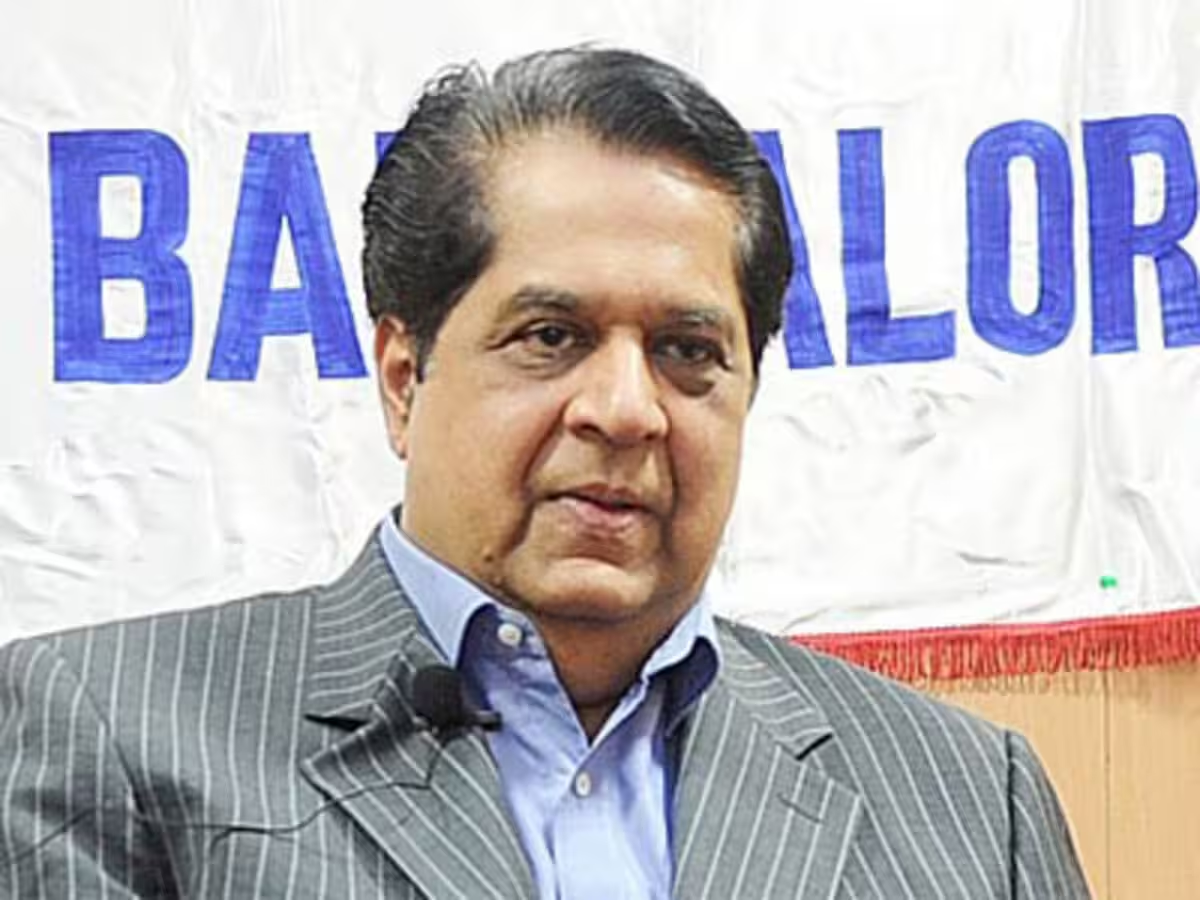
ET Now: Talking of expectations from Narendra Modi, do not you think too much hope and money in essence is riding behind one man? Despite his good intentions, there are structural problems in the economy and even the Prime Minister does not quite have a magic wand?
KV Kamath: If you look back to 10 years ago, the economy was getting into near double digit growth even with all the structural problems. Now you have a leader who has a known bias for fixing things and making sure that things work. It is the same set of structure, the same set of people who are driving this. You have the right leader who can drive the effort.
ET Now: The other day we had Mr. Birla meet the Finance Minister and as he walked out of the meeting, he said he expects the economy to revive in three to six months. He says he is going to start investing in India now. We have not heard too many corporate leaders say that. You have a pulse of the mood of corporate India. When do you think will the corporate leaders start investing?
KV Kamath: The first sense comes from the market. It is the collective wisdom of the marketplace that there is action and we will move with speed. That improves the confidence level of industry. Now we need to see whether some of the ground conditions that are needed for people to get back to an investment mode are going to change. Today I read that with a large slate of reforms or projects which have been stuck are going to be addressed in the next few days. If that happens, you will see a sea change in the investment mindset, as it were.
ET Now: It could happen in three months itself. Is that what you think?
KV Kamath: I think that between three and six months it could start happening. But we want incremental investment to happen. There is enough to harvest in the first six months in terms of stuck projects and so on.
ET Now: The one cue that corporate India will also look forward to is the budget. Given the nature of the mandate that we have, the strength that this government have in the Parliament, would you expect tough reforms in this budget itself?
KV Kamath: I do not want to call or second-guess what somebody is working on. But I think it will be a budget where you try to have fiscal discipline and whatever is needed to get that discipline. Now in what measure, in what combination, is for the government to call. I think one thing that people will look for in the budget is fiscal discipline and a way to getting the deficit under control, say, over a three-year period. If it is well-constructed and well-articulated, you will see the cheer going up.
ET Now: Does the 4.1% number look a little tricky to you?
KV Kamath: If you eliminate waste, you eliminate what is theft and eliminate what is not needed, the 4.1 is achievable.
ET Now: When do you think fiscal and monetary policy will start working in tandem? When do you expect rates to turn?
KV Kamath: Regarding the monetary policy, we always say that let us see the constructive design of a fiscal deficit. We know what it is and where it will end. Once they see that construct as it were, for this year and, say, for two years on the line, then I should believe that they should have greater confidence to tinker with the rates, or inflation itself has to start dropping. We see several people have given several solutions starting with release food stocks, pushing the pedal on APMC reform, and so on. I am sure again this is something that the government will very quickly understand and take all the steps or some of the steps which would give policymakers confidence to get interest rates down. We should see it happen in this fiscal, in the next 12 months. I think it ought to start happening in the first six months.
ET Now: A quarter percent or more, through the course of the year?
KV Kamath: I have no call on this. Let us see what happens. Everything will depend on where the deficit number comes in and whether you are able to get the inflation rate moving down. If these turn out positive, rates could move fast.
ET Now: What is your outlook on growth in the short term, medium term, and long term?
KV Kamath: My long-term number does not have a single digit. It is two digits. So you can make a guess on it.
ET Now: During the term of this government?
KV Kamath: I think it will happen during the term of this government.
ET Now: The first term itself?
KV Kamath: It will happen in the first term of this government. That is for sure. If they progress the way they mean to, I am reasonably sure that we will see two-digit rate in the first term of this government itself.

Betfred to close 132 shops and cut 600 jobs as firm cites gambling tax hikes

Dow Slips as Apple Sinks 8% Despite a Record Quarter While Amazon Soars 12% on AWS Strength This Friday

BNB price breaks 45-day downtrend, can it clear $600?

Renter of Home in Anne Heche Crash Denies Settlement With Son

No Jackpot Winner as $257 Million Prize Rolls Over to $269 Million Monday Draw

Weekend Open Thread: Staud – Corporette.com

Crypto Trading LIVE: BTC Live Trading Bitcoin Analysis | 28 JULY #crypto #bitcoin #btc

Financial Mistake Most People Make Watch the Full : https://youtu.be/0Kn9TDPAHFc?si=7FP6D0OmsE1hi0uM

The Income Problem Nobody Wants to Talk About #finances #real
-
 Sports5 days ago
Commonwealth Games boxing: Jadumani Singh seals dominant 5-0 win over Pakistan’s Sumama Rehman to enter quarter-finals | Commonwealth Games News
-

 Business2 days ago
Why Trees Belong on the Risk Register
-

 Tech5 days ago
Intel is reversing course and bringing hyper-threading back to its server chips
-

 Fashion7 hours ago
Weekend Open Thread: Wit & Wisdom
-

 Politics4 hours ago
Meta enters AI-training agreement with far-right ‘propaganda rag’ Newsmax
-

 Crypto World6 days ago
Ripple bought a bank in pieces. The $4 billion audit
-

 Politics5 days ago
Luke Littler dismantles Gerwyn Price to retain title in Blackpool
-

 Politics4 days ago
The Part of the Electric Transition Nobody Wants to Discuss
-

 News Videos5 days ago
BITCOIN JUST ENTERED THIS CRITICAL ZONE…
-
 Entertainment3 days ago
‘Stargate’ Creator’s New Sci-Fi Series Returns for Season 3 Tomorrow
-

 Crypto World6 days ago
XRP Ledger adds $2.6B as RWA inflows rank second
-

 Business3 days ago
Major shareholder moves on Canyon
-

 Politics5 days ago
Spain sweeps the board at 2026 World Cup with individual awards
-

 News Videos2 days ago
Bitcoin Enters the 3rd Stage of the Bear Market
-

 Entertainment6 days ago
Sara Gilson Killed By Husband After Viral “Pedophile” TikTok Video
-

 Crypto World3 days ago
Kraken Enables Retail Access to Jersey Mike’s IPO via Tokenized Shares
-

 Tech7 days ago
Anthropic launches Claude Opus 5, a cheaper AI model for coding, agents and enterprise workflows
-

 Tech4 days ago
New macOS Sequoia & Sonoma security updates for older Macs
-

 News Videos3 days ago
Claude: Build Financial Dashboards in Minutes (2026)
-

 Politics1 day ago
Luke Littler’s dominance sparks GOAT debate
You must be logged in to post a comment Login