

Connect with us
DAPA Banner

NewsBeat

Only some driver’s licenses usable under SAVE America Act

Published

on

Only some driver's licenses usable under SAVE America Act

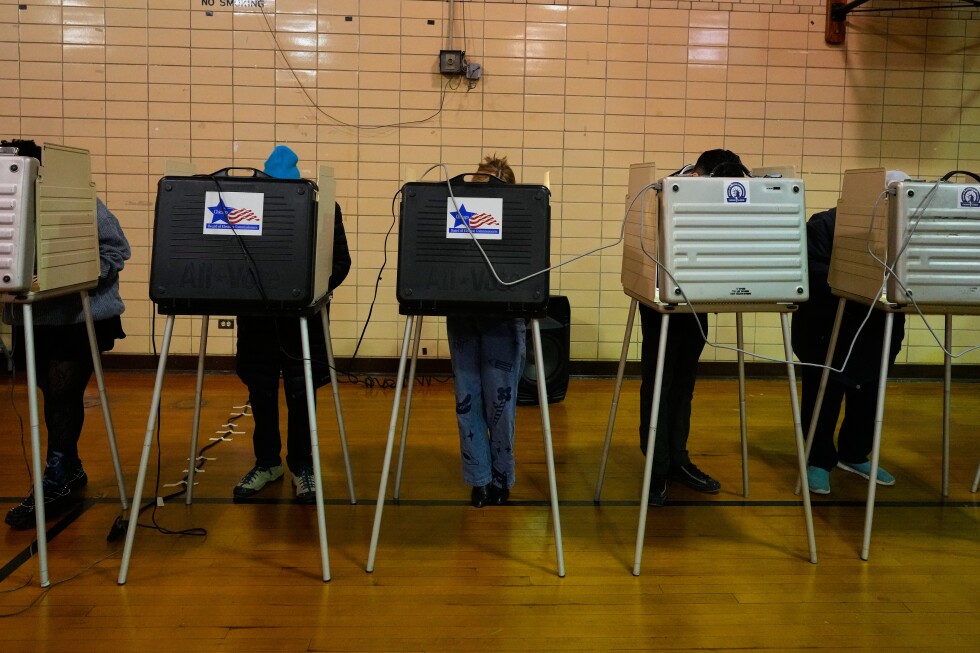
As the Senate debates the Safeguard American Voter Eligibility Act, or SAVE America Act, misleading claims about the bill’s impact on voter registration are spreading on social media, with elected officials on both sides of the aisle putting their own spin on it.

Sen. Tammy Duckworth, a Democrat from Illinois, wrote in an X post: “Under the SAVE Act, you cannot use your driver’s license to register to vote. Republicans want you to buy a passport instead. If you can afford one. This is a modern-day poll tax.” Sen. Mike Lee, a Republican from Utah, replied in his own X post, which included Duckworth’s, “this is a lie” and cited a section of the legislation that requires states to establish their own processes for voter registration applicants who cannot provide the required proof of U.S. citizenship.

But the truth lies somewhere in the middle.

Here’s a closer look at the facts.

Advertisement

CLAIM: People would not be allowed to use their driver’s license when registering to vote under the SAVE America Act.

THE FACTS: This is missing context. Driver’s licenses that include verification of citizenship, such as an Enhanced Drivers License (EDL), could be used for voter registration in a limited number of states if the SAVE America Act passes. It has passed the House and is now in the Senate. However, those without such a license or who live in states or territories that don’t issue them would need to provide additional documentation.

“Most driver’s licenses, the purpose of it is to license you to drive,” said Pamela Smith, president and CEO of Verified Voting, a nonpartisan organization. “It’s not designed to prove your citizenship. And so the requirement to prove your citizenship is sort of separate and beyond.”

The SAVE America Act requires that when registering to vote in federal elections people provide “documentary proof of United States citizenship.” This can include REAL ID-compliant identification that confirms citizenship, a valid U.S. passport, a military ID card, or another form of government-issued photo identification that states the applicant’s place of birth. Additional documentation to prove U.S. citizenship would be required in some cases.

Advertisement

People who are legal U.S. residents but not citizens also can obtain a REAL ID. According to the Department of Homeland Security, only five states — Michigan, Minnesota, New York, Vermont and Washington — issue enhanced driver’s licenses, which are REAL ID-compliant and prove citizenship as well as identity. Other states, such as Montana, South Dakota, Florida, and Iowa, have passed or are considering legislation that requires licenses to include citizenship markers.

“For the vast majority of Americans, a REAL ID would not be sufficient to register to vote under the SAVE Act,” said Eliza Sweren-Becker, deputy director of the voting rights and elections program at the Brennan Center for Justice. “That’s because most REAL IDs do not have any affirmative indication of U.S. citizenship, which is a part of what the bill would require if a REAL ID were to be used for registration.”

Republicans, including President Donald Trump, have argued that the SAVE America Act is needed to eliminate instances of noncitizen voting, which is already illegal in federal elections and can lead to felony charges and deportation. Cases where it occurs are rare. Opponents stress that the bill’s proof of citizenship requirements would create an undue burden for many voters due to obstacles such as the costs associated with obtaining a passport and processing times for government documents, including birth or marriage certificates. A recent survey found that more than 9 percent of voting-age Americans — 21.3 million people — cannot readily access documents proving they are citizens.

Neither Duckworth nor Lee responded to a request for comment.

Advertisement

The SAVE America Act was passed by the House in April 2025 and is currently being debated by the Senate. Efforts to end a Homeland Security shutdown that has caused severe travel disruptions stalled when Trump linked any deal to his push to pass the act.

___

Find AP Fact Checks here: https://apnews.com/APFactCheck.

Advertisement

Source link

Continue Reading
Click to comment

You must be logged in to post a comment Login

Leave a Reply

NewsBeat

Scottish Greens promise misogyny Bill to tackle ‘national emergency’

Published

on

Scottish Greens promise misogyny Bill to tackle ‘national emergency’

Siobhian Brown, SNP candidate for Ayr, said: “As per our manifesto commitment, we recognise women face abuse in their everyday lives and need increased protection against this – that’s why we will bring forward a Misogyny Bill to legislate to ensure harassment and abuse based on misogyny is outlawed in Scotland.”

Source link

Continue Reading

NewsBeat

‘Pilot ordered six people to leave our plane or everyone’s luggage would be left behind’

Published

on

Daily Record

Passengers claim they thought pilot was “joking” when he stepped out of the cockpit to make the announcement.

Advertisement

A group of passengers were kicked off an easyJet plane because it was “too heavy” to take-off. Holidaymakers heading to Malaga were stunned when the pilot stepped out of the cockpit and told them the aircraft was over weight limits for the runway.

Passengers claimed they were told if people didn’t disembark, all the luggage would need to be left behind at Southend Airport. Kelly Wayand, who was travelling with her mum, disabled dad and partner, said she “couldn’t believe what was happening” and thought it was a joke at first.

Independent travel agent Kelly, 45, added: “It was bizarre, I had never heard anything like it before. The pilot came out of his cockpit and told everyone we couldn’t set off unless six of us got off the plane.

“He said it was either that or we leave all of the luggage behind. I was travelling with my dad, who is disabled, my mum, and my partner, so it would have been hard work for us to get off.”

Advertisement

Although Kelly and her family weren’t able to get off, another group made the sacrifice to allow the flight to go ahead. Kelly said: “Five people got off fairly quickly in around 10 minutes.”

As reported by The Mirror, the five kind flyers who decided to take the hit received a round of applause from their fellow passengers. Carly Mowbray was also on the April 11 flight.

She said: “The people who got off departed to a round of applause from those of us that stayed. The flight crew said they had not experienced it before. There were already 10 empty seats before the extra passengers got off.”

Flight records reveal the aircraft – an Airbus A319 – was scheduled to depart at 8.40am but actually took off at 8.59am. According to Airbus, an A319 has a maximum take-off weight of 75.50 tonnes.

Advertisement

EasyJet released a statement saying: “Five passengers on flight EJU7008 from Southend to Malaga volunteered to travel on alternative flights as a result of the aircraft being over the weight limits for the weather conditions and the short length of the runway. Weight restrictions are in place for all airlines for safety reasons.”

The budget airline added: “The customers were provided with transport and a later flight to Malaga on the same day, free of charge, from London Gatwick and we have been in touch with them to provide the compensation they are entitled to, in line with regulations. The safety and welfare of our passengers and crew is always easyJet’s highest priority.”

Under UK261 regulations, passengers who are denied boarding for a medium-haul flight such as between Southend and Malaga are entitled to £175 or £350 compensation, depending on the duration of the delay.

Advertisement

Source link

Continue Reading

NewsBeat

why even neutral and distant countries like Switzerland can’t escape the fallout

Published

on

why even neutral and distant countries like Switzerland can’t escape the fallout

There is often a perception that geographical distance reduces vulnerability – an idea that can be particularly appealing in neutral countries with long-standing stable and strong economies.

Switzerland is a clear example: its long-standing neutrality, formally recognised at the Congress of Vienna in 1815 and still recognised as a central part of its foreign policy, combined with its economic strength, has helped keep it outside major conflicts historically and reinforced the perception that distance, stability and wealth provide protection.

But in a world where energy, food, finance and even the atmosphere are tightly interconnected, distance (and neutrality) doesn’t shield Switzerland, or any other nation.

Take the Strait of Hormuz. Roughly a fifth of the world’s oil and liquified natural gas passes through it. When it’s disrupted, the effects don’t stay local; they ripple outward through longer shipping routes, strained supply chains and shifting economic decisions in ways that reach far beyond the countries directly involved and could cause long-term environmental damage.

Advertisement

More often than not, this appears as subtle environmental and economic changes rather than sudden shocks.

Switzerland offers a particularly instructive example. It is neither an energy exporter nor a strategic actor in the conflict. Yet it sits at the intersection of multiple global systems: shipping and transport routes, European agriculture, high-value manufacturing and international finance.

Shipping routes and ice melt

When maritime routes are disrupted, as is currently happening, shipping does not stop. It adapts. Tankers take longer routes and fuel efficiency declines. The result is an increase in particulate emissions, including black carbon. These particles can travel vast distances. In high-altitude environments, their impact is amplified. When deposited on snow and ice, black carbon reduces reflectivity, increasing heat absorption and accelerating melt. In the Swiss Alps, where glaciers are already under pressure, even small increases can have measurable effects. Therefore, what begins as a logistical adjustment in global shipping can end up altering the physical state of distant mountain systems.

Switzerland’s industrial base offers another useful illustration. When firms face restricted or more expensive products, they often shift to alternative production methods. For instance, in the pharmaceutical industry, disruptions to chemical supply chains can force firms to switch suppliers or change elements used in production. While this may make economic sense, such changes are often not environmentally neutral. Different processes generate different byproducts, introducing new compounds into waste streams. The result may not be an immediate environmental crisis, but could create a gradual shift in the composition of pollutants.

Advertisement


À lire aussi :
How the Iran war could create a ‘fertiliser shock’ – an often ignored global risk to food prices and farming


Another example is the global fertiliser trade. In 2024, Iran, Qatar, Saudi Arabia, the UAE and Bahrain together accounted for 23% of global ammonia trade, 34% of global urea trade, and 18% of global ammoniated phosphate trade, key inputs for fertiliser production. Disruptions do not simply raise prices; they constrain availability, forcing adjustments across farming systems worldwide.

In parts of Europe, including Switzerland, there could be some positive and negative affects on the environment. Reduced fertiliser use may lower nutrient runoff into waterways, easing pressure on rivers such as the Rhine River and improving conditions in some lakes. Ecosystems long stressed by excess nitrogen may experience a degree of relief. Yet this comes with trade-offs. Swiss agriculture depends on high levels of this type of fertiliser and so may see declining yields and shifts in crops if this is reduced. Alpine pastures, in particular, depend on carefully managed nutrient balances influenced by nitrogen availability. Change can disrupt that equilibrium, exposing how deeply even local ecosystems depend on global supply chains.

Advertisement
Shipping routes are getting longer because of constraints on travelling through the Strait of Hormuz.

Environmental change can also be shaped by investment decisions. In periods of geopolitical tension, capital tends to become more cautious. Liquidity, resilience and short-term risk management take priority over long-term projects.

Finance and migration

For financial centres such as Switzerland – home to huge reinsurance firms such as Swiss Re – this shift matters. Roughly 25% of total global cross-border assets (financial investments outside your home country) are managed in Switzerland. When uncertainty rises, risk models are recalibrated and capital is redirected.

The unintended consequence is that long-term environmental investments – such as ecosystem restoration – can be delayed or scaled back. Environmental resilience depends on steady, long-term commitment; interruptions, even temporary ones, could be detrimental.

Large-scale conflicts also tend to reshape migration patterns, sometimes indirectly. Even countries that are not primary destinations can experience increased migration or adjust policies in response to broader European dynamics. In small countries such as Switzerland, even modest population increases translate into land-use pressures.

Advertisement

Housing demand pushes outward, infrastructure expands, and previously marginal areas come into use. Reports suggest that agricultural land in Switzerland is reducing. Approximately one square metre is lost every second, with about 80% converted into settlement areas and the remaining 20% transitioning into forests. The environmental impact is gradual: increased resource consumption, greater strain on water and waste systems. None of these changes is dramatic on its own, but together they form a pattern of slow encroachment.

The effects of distant conflicts on neutral or far away countries are rarely direct. They are mediated through systems that operate quietly, often below the threshold of public attention.

Switzerland is not unique in this respect. It is simply a clear example: a country where environmental conditions are closely tracked, where economic systems are deeply integrated, and where small shifts can be observed with unusual precision. Neutrality may shape foreign policy, but it does not deliver environmental or economic immunity. In an interconnected world, exposure is universal.

Advertisement

Source link

Continue Reading

NewsBeat

Defence of UK – ‘we may need to look at conscription’

Published

on

Defence of UK - 'we may need to look at conscription'

LORD Robertson’s recent Strategic Defence Review recommendations must be acted upon with regards to defence spending and the development of our defence capability.

The obvious ways to fund defence is by reducing current welfare spending where we spend 10.3 per cent of GDP in comparison to 2.3per cent of GDP on defence.

The Government also needs to increase taxation to fund defence spending.

Advertisement

We also need to look at how we can resource recruitment in our reservist and cadet forces which may include conscription. We cannot afford to not deliver quickly on these recommendations.

It’s viewed that Russia will be as powerful as NATO militarily by the end of the decade.

The time to act and deliver is now. The country has been failed for the past 20 years in our defence spending.

Let’s hope this Government changes that – it’s had plenty of warnings what we need to do to improve our nation’s protection.

Advertisement

Failure to do so will lead to potential catastrophic consequences.

We can’t say we haven’t been warned.

John Jones,

Birch Close,

Advertisement

York

York’s got talent!

THE talented and well synchronised Northern Lights A Cappella group of Durham University appeared on BBC1 Breakfast TV on Monday morning, April 13 and in the evening on Look North.

Advertisement

They recently won the UK championship in this distinctive style of music with movement, earning them a spot in the world finals (International Championship of Collegiate A Cappella) in New York later this month.

One of the students’ strong points, a speciality of theirs, is choreography. ‘Syncopation’ could be their middle name!

Last year they came third in the world championships against stiff competition from American universities. Fingers crossed (in unison) for this year!

Two of the 16-strong ensemble are Durham students from York; Alex – ‘beatboxer’ and Will – bass.

Advertisement

Google the group and find out more. It’s fun; it’s clever; it’s catchy!

Derek Reed,

Middlethorpe Drive,

York

Advertisement

What do you think?

Feel strongly about an issue? Write us a letter. Please write no more than 250 words and you must provide your full name, address and mobile number. Send your views by email to: letters@thepress.co.uk


Write a comment

Advertisement

Join the debate and leave a comment in our comments section below this article – we may use your comments for a follow up article.


Source link

Advertisement
Continue Reading

NewsBeat

Shane Williams coaches son’s team to stunning Welsh Cup win at Principality

Published

on

Wales Online

Amman United Youth overcame Pontypool United 30-13 in the WRU U-18s Cup final at the Principality Stadium to spark wonderful celebrations

Wales legend Shane Williams is celebrating one of his greatest Principality Stadium triumphs after guiding Amman United Youth to WRU U18s Cup glory on Friday night.

Advertisement

The former winger is one of the coaches at the side where it all began for him, with his son Carter starting on the wing against Pontypool United. Amman, who only re-started their youth team two years ago, beat Pontypool United 30-13 at the iconic venue.

It was a second heartbreaking final defeat in a row for Pontypool United, who were beaten in the last moments by Llandeilo last year.

Amman United were deserved winners, scoring three tries to one in a ferocious encounter that was a credit to both sides. There were wonderful scenes after the final whistle as the young Amman players celebrated the greatest win of their lives at the Principality in front of family and friends.

Williams had said: “We’ve come through some tough games this season and this Amman team has grown up together. I first met most of these lads when they were eight and I’ve come through with them, and my son Carter, since then.”

Advertisement

Captain Ceian Lewis led from the front, setting the tone with a bruising early hit, while Lewis Appleby and Charlie Gregory impressed in defence for Pontypool United.

A tight first half saw Amman’s Toby Slater and United’s Tom Howard exchange penalties before Wales U18 back rower Cole Lacey crossed for the first try after sustained pressure just before the break. It meant Williams’ side lead 10-6 at half-time with still all to play for.

The second-half could not have started any better for the Amman as James Bentley intercepted a pass on on his own 22 and sprinted 70 metres to score at the other end. This time it was coach Williams’ son, Carter, who added the conversion to put daylight between the teams

Advertisement

Pontypool United refused to go away, though, as co-captain Reuben Malsom barged over from a five metre penalty to cut the deficit to just four points once more.

But Amman found another gear, with Aled Davies racing over following a clinical move from a scrum. Williams converted and put the final nail in the coffin with two penalties.

Scorers:

Pontypool United: Try: Reuben Malson; Con: Tom Howard; Pens: Tom Howard 2.

Advertisement

Amman United: Tries: Cole Lacey, James Bentley, Aled Davies; Cons: Carter Williams 2, Toby Slater 2; Pens: Carter Williams 2,

TEAMS

Pontypool United: Jack McDonagh; Luca Grocott-Mason, Lewis Appleby, Charlie Gregory, Alfie Prosser; Thomas Howard, Daniel Parker; Logan Leonard, Cae Jones (co-captain), Scott Crewe, Ralph Evans, Reuben Malson (co-captain), Rudi Creel, Bailey Stride, Jake Sheppard

Reps: Ieuan Hockaday, George Jones, Max Jacob, Dewi Bainton, Coel Adams, Lewis Jenkins, Charlie Burrows, Danny Hutchinson

Advertisement

Amman United: Cian Evans; Carter Williams, James Bentley, Kennedy Richards (co-captain), Aled Davies; Toby Slater, Iwan Bull; Ceian Lewis (co-captain), Griff Rees, David Thomas, Tom James, Dyfan Llewelyn, Cole Lacey, Jac Cloke, Hefin Davies

Reps: Reagan Griffiths, Flynn Ahearne, Harvey Duncan, Josh Doorbar, Evan Whiles, Iwan Griffiths, Tomos Bull, Ioan Booth

Source link

Advertisement
Continue Reading

NewsBeat

Mandelson’s vetting process was supposed to be intrusive and embarrassing

Published

on

Mandelson’s vetting process was supposed to be intrusive and embarrassing

The process that should take months, but was telescoped into weeks, resulted in the failure of Peter Mandelson to pass Developed Vetting for one of the most sensitive jobs for Britain in the world.

Its main focus is to exposure liars and anyone vulnerable to blackmail.

The vetting system is intentionally intrusive. It is believed to cost at least £80,000 per person, and involves cross-checking every detail of the subject’s personal lives.

Those who have been through it know that the key is candour when faced with the searching questions in interviews about the use of porn, your sex life, drug and drinking experiences and habits, affairs, kinks, family contacts, travel history.

Advertisement

Agents for the United Kingdom Security Vetting service will use every possible resource, overt and covert, to scrutinise candidates.

Peter Mandelson walks outside his residence in London on Friday
Peter Mandelson walks outside his residence in London on Friday (Reuters)

Open source information on friendships abroad, foreign contacts, financial relationships, associations with known convicted criminals would emerge. So would gaps in financial reporting, unexplained loans and gifts would be highlighted.

“These are all the necessary parts of making sure that whatever is in someone’s background that makes them vulnerable – we know about it – so that they are less likely to be pressed into betraying their country for financial gain or through blackmail,” said a UK-based former civil servant who has gone through the vetting process.

“You can admit to some quite dodgy stuff and still pass, but lying is a red flag fail.”

Mandelson, who was known anyway to have been friends with Jeffrey Epstein prior to the latter’s convictions for sex crimes, was announced as the British ambassador to Washington on 20 December 2025.

Advertisement

He was in post by 25 February the following year, which meant that his clearance was pushed up the queue ahead of others in less exalted positions.

Typically, security sources have explained to The Independent, that involves the urgent interviewing of close friends and associates of Mandelson by officials from the vetting agency.

Handout document issued by the US Department of Justice which shows Andrew Mountbatten-Windsor and Lord Peter Mandelson with paedophile financier Jeffrey Epstein
Handout document issued by the US Department of Justice which shows Andrew Mountbatten-Windsor and Lord Peter Mandelson with paedophile financier Jeffrey Epstein (US Department of Justice)

They ask probing and, for ordinary civilians, often highly intrusive questions about candidates. These answers are then used to check the honesty of what the candidate says in their own interviews.

Mandelson would, it should be assumed, have been asked to explain the receipt of several payments from Jeffrey Epstein, as well as payments from the alleged people trafficker to his now husband – after Epstein’s conviction.

Mandelson has said publicly that he cannot recall these payments. It is not clear that such an answer would have satisfied UKSV.

Advertisement

He has further denied an impropriety amid allegations, revealed in the Epstein files published in the US, that allegedly suggest he lobbied the UK government on banking and other financial issues that Epstein had an interest in, and that he forwarded market sensitive government material to Epstein while he was business secretary in 2009.

Mandelsom’s flights at Epstein’s expense, his stays on Epstein’s property, would have, or should have, been known about and explained in DV interviews with the UKSV as they were recorded in flight logs.

Emails between the two men, and these other details, led to Mandelson being fired as ambassador to Washington.

Sir Olly Robbins, who was the civil service head of the foreign office when Mandelson took over, has resigned over his department’s decision to overrule the UKSV and give Mandelson access to the most secret of secrets and most secret relationships that any British official could encounter.

Advertisement
Donald Trump shakes hands with British ambassador to the United States Peter Mandelson after making a trade announcement in the Oval Office of the White House in Washington, DC, on May 8, 2025
Donald Trump shakes hands with British ambassador to the United States Peter Mandelson after making a trade announcement in the Oval Office of the White House in Washington, DC, on May 8, 2025 (AFP/Getty)

Mandelson’s day to day job involved being privy to bilateral intelligence of the kind even hidden from the Five Eyes shared system of the Anglosphere involving the UK, US, Canada, New Zealand and Australia.

He would have been present for, or hosted, informal chats with top American intelligence officials and the heads of British intelligence agencies.

Tories have, inevitably, called for the head of the prime minister Sir Keir Starmer. Tom Tugendhat, Conservative MP for Tonbridge is a former security minister and as an officer in military intelligence and as military assistant to the then Chief of the General Staff, general David Richards, he went through the DV process.

“Our government, rightly, spends millions on vetting. It’s not perfect but it’s the only rational response to the very real threat of espionage, corruption and blackmail,” he said on X.

“It’s intrusive and not pleasant, and it takes months; but it’s necessary. Holding a clearance is limiting but losing one is career-ending, as it should be.

Advertisement

“I’ve been vetted and responsible for vetting as a soldier and minister. I’ve never heard of anyone who failed vetting getting a senior position, or any position of sensitivity.

Peter Mandelson, speaks during a welcome reception for British Prime Minister, Keir Starmer, at the ambassador's residence on February 26, 2025
Peter Mandelson, speaks during a welcome reception for British Prime Minister, Keir Starmer, at the ambassador’s residence on February 26, 2025 (AFP/Getty)

“Given the essential oversight of the intelligence sharing and commercial relationship between the US and UK, it’s hard to think of a more sensitive position.”

He went on to explain that the kind of waiver that was given Lord Mandelson would, usually, have involved a ministerial sign off.

They are necessarily issued when there is an urgent need to include an unvetted agent into a secret process or include someone in the secret realm when his clearance was in the pipeline.

“It is extraordinary to suggest that our ambassador to the US not only held no ministerial waiver for the temporary absence of his vetting clearance but, worse, had actually been vetted and found to be personally a risk to the security of the UK and appointed anyway,” Tughendat said.

Advertisement

Source link

Continue Reading

NewsBeat

Full list of trains cancelled at Manchester Piccadilly today – Saturday April 18

Published

on

Manchester Evening News

Further disruption is expected this weekend

More than 200 trains were cancelled in two days after overhead lines became damaged at Manchester Piccadilly. It’s understood the wire became ‘tangled’ with a pantograph when an Avanti West Coast service pulled into the station at 11.20am on Thursday (April 16).

Advertisement

Complex repair works have since been taking place, with railway lines due to close for 12 hours from 11pm tonight (Saturday) to complete them. Passengers are being warned to expect continuing disruption at the station this weekend.

Although most services are running as normal today, several have been cancelled, with further cancellations expected. Avanti West Coast is running only one train per hour between Manchester and London, while Northern is running a revised timetable.

Click here to get the biggest stories straight to your inbox in our Daily Newsletter

Network Rail has apologised for the disruption caused by damage to the overhead line, which carries 25,000 volts of electricity to power trains and is a critical part of the infrastructure. Passengers are being urged to check the latest situation for their service before travelling.

Advertisement

Below is a list of services which have been cancelled at Piccadilly so far today, with details currently available up to 10.30am. The list will be updated throughout the day.

Cancelled departures at Manchester Piccadilly on Saturday, April 18:

  • 08:14 London Euston: Cancelled
  • 08:34 London Euston: Cancelled
  • 08:38 Alderley Edge: Cancelled
  • 08:46 Stoke-on-Trent: Cancelled
  • 08:54 London Euston: Cancelled
  • 09:14 London Euston: Cancelled
  • 09:38 Alderley Edge: Cancelled
  • 09:46 Stoke-on-Trent: Cancelled
  • 09:54 London Euston: Cancelled
  • 10:14 London Euston: Cancelled
  • 10:20 Hazel Grove: Cancelled

Source link

Continue Reading

NewsBeat

100 times stronger than fentanyl, carfentanil seizures surge

Published

on

100 times stronger than fentanyl, carfentanil seizures surge

Nearly two decades after drug addiction sent him to rehab as a teenager, 36-year-old Michael Nalewaja had settled into a quiet life in Alaska where he worked as an electrician.

That all came crashing down days before Thanksgiving 2025, when he and a mutual friend unknowingly took a lethal cocktail of fentanyl and carfentanil they may have mistaken for cocaine.

“I heard the word ‘autopsy’ and I literally just collapsed to the floor,” his mother, Kelley Nalewaja said, recalling the call she received from his wife. “Even if somebody had been there prepared with Narcan — even if somebody had called 911 in time — he was not going to survive.”

Carfentanil, a weapons-grade chemical that authorities say is 10,000 times more potent than morphine and 100 times stronger than fentanyl, has seen a drastic resurgence across the U.S., killing hundreds of unsuspecting drug users.

Advertisement

The rise coincides with a recent crackdown by the Chinese government on the sale of precursors used to make fentanyl. Those regulations are likely prompting traffickers in Mexico to use carfentanil to boost the potency of a weakened version of fentanyl, according to U.S. Drug Enforcement Administration intelligence bulletins reviewed by The Associated Press.

The surge of a drug so deadly that less than a poppy seed-sized amount can kill a person comes as fentanyl seizures and overall drug overdose deaths continue a multiyear decline.

“You’re talking about not even a grain of salt that could be potentially lethal,” said Frank Tarentino, the DEA’s chief of operations for its northeast region, which stretches from Maine to Virginia. “This presents an extremely frightening proposition for substance abuse dependent people who seek opioids on the street today.”

Carfentanil surge

A decade ago, carfentanil exploded into the North American drug supply, causing hundreds of unsuspecting drug users to overdose, only to see a major dip after China banned it, closing a key regulatory loophole in the U.S.

Advertisement

But the situation has shifted dramatically in recent years.

In 2025, DEA labs identified carfentanil 1,400 times in U.S. drug seizures, compared with 145 in 2023 and only 54 in 2022, according to DEA records viewed by AP.

Traffickers in Mexico may be experimenting with producing carfentanil themselves, authorities say, while others could be procuring it from China-based vendors skirting the country’s regulations by spamming online forums in other countries with ads for the drug.

Complicating matters for the cartels are the extreme dangers associated with manufacturing carfentanil, Tarentino said.

Advertisement

“You can’t just dabble in this,” he said. “This is not some mad scientist on Reddit you’re going to get to go out to a rudimentary laboratory in Mexico to make carfentanil.”

Dip in overdose deaths and fentanyl seizures

U.S. overdose deaths have fallen for more than two years — the longest drop in decades. Experts point to several possible explanations, including the overdose-reversing drug naloxone being more widely available and the expansion of addiction treatment. Some have also tied it to the regulatory changes the U.S. has pressed for in China.

Experts say that even multiple high doses of naloxone might not be enough to reverse an overdose when carfentanil is involved.

Fentanyl seizures, along with several other illicit drugs, have also dipped. U.S. Customs and Border Protection reported that fentanyl seizures plunged to about 12,000 pounds (5,443 kilograms) in 2025 — less than half the amount seized in 2023.

Advertisement

But even as fentanyl numbers fall, it remains a major focus of the DEA. Just recently, the agency’s proposed budget included a $362 million increase centered on cartel-driven fentanyl trafficking.

“Anyone who takes a pill that is not prescribed to them by their doctor is playing a game of Russian roulette with their life,” said Sara Carter, President Donald Trump’s drug czar. “But if those terrorists think they can continue this chemical warfare without consequences, they are wrong.”

Researched as a chemical weapon

While the prevalence of carfentanil still pales in comparison to fentanyl, experts are nevertheless alarmed by the increase of a substance researched for years as a chemical weapon and deployed by Russian forces on Chechen separatists in 2002.

The DEA’s annual quota for lawfully manufactured carfentanil — veterinarians use it to tranquilize elephants and other large animals — is just 20 grams, an amount that can fit in the palm of your hand.

Advertisement

“It’s like a biological weapon,” said Michael King Jr., founder of the Opioid Awareness Foundation. “If the world thinks we had a problem with fentanyl, that’s minute compared to what we’re going to be dealing with with carfentanil.”

In 2024, overdose deaths involving carfentanil nearly tripled compared to the previous year, with 413 deaths across 42 states and Washington, D.C., according to the most recent data available by the Centers for Disease Control and Prevention.

“Carfentanil definitely has that potential of spreading throughout the United States unless law enforcement really focuses in on carfentanil and they develop intelligence as to how these drug addicts are getting it,” said Mike Vigil, a former chief of international operations at the DEA.

In recent months, the DEA has documented several large seizures of carfentanil. In October, the DEA Los Angeles Field Division found 628,000 pills containing carfentanil, while in September, officials seized more than 50,000 counterfeit M30 pills from a person at a gas station in Washington state that turned out to be a mixture of carfentanil and acetaminophen.

Advertisement

‘All about money’

In some cases, frequent drug users have become tolerant to fentanyl and are seeking out carfentanil, despite the danger, because of the sudden euphoria it promises, explained Rob Tanguay, senior medical lead for addiction services with Recovery Alberta, a health agency in Canada. It appeals to the drug market, he said, because so little of it goes such a long way toward supply.

“The toughest part about all of this,” he said, “is that this is all about money.”

After Michael Nalewaja’s death, his mother decided against a large funeral.

Instead, she organized a town hall in her hometown of El Dorado Hills, California, bringing together local officials along with mothers who had gone through something similar.

Advertisement

As she grieves her son, an adept salesman full of charisma who had recently gotten a national award by the electrical union, she’s pushing for major legislative and judicial changes so others don’t go through what she did because of a drug she said was never meant for humans.

“It’s not an OD; it’s not an overdose,” she said. “It’s a murder weapon.”

___

Associated Press writer Joshua Goodman in Miami contributed.

Advertisement

Source link

Advertisement
Continue Reading

NewsBeat

Women’s Six Nations 2026: Abbie Ward and Lark-Atkin Davies on pregnancy

Published

on

Lark Atkin-Davies and Abbie Ward with children on the Allianz Stadium pitch

Previously, the RFU did not have a maternity policy specifically designed for players, with former England prop Vickii Cornborough – the second Red Rose to announce a pregnancy after the update – describing the old policy as “not fit for purpose”.

Cornborough, a Rugby Players’ Association (RPA) representative, helped create the policy through input from the RPA and players themselves.

Following the birth of twins, 74-cap Cornborough announced her retirement from international rugby at the age of 34, saying she did not feel mentally ready to return.

With their babies due this summer, Atkin-Davies and Ward are both aiming to be back playing by the start of next season.

Advertisement

Ward, who played in two World Cup finals with Cornborough, warned her pregnant team-mates that returning will not be straightforward.

“It is amazing to know women have a choice and an option – great if I have played any part in that,” she added.

“There is also pressure, as I hope I have not catfished them into thinking it is easy. Everyone will find out it is not easy.”

Hooker Atkin-Davies has won 74 caps and been a regular since her England debut in 2015.

Advertisement

Having played in the past two World Cup finals, the 31-year-old wants to play at the next World Cup in Australia and have a similar moment to Ward’s 2025 Allianz Stadium celebrations.

“Becoming a mum and having a baby will make me a better person and player,” Atkin-Davies added.

“I know it is going to be really hard, and I am aware of that. I do not just want to come back – I want to come back and be better.

“That is what really drives you as well. It might take time, as your body and mind go through so many changes, but the fire and desire are in me to be at that World Cup in 2029 with a three-year-old.

Advertisement

“Those big moments of running out with my baby at Ashton Gate or Allianz Stadium would be absolutely amazing, but it will be hard.”

Source link

Continue Reading

NewsBeat

US extends waiver on Russian oil sanctions

Published

on

US extends waiver on Russian oil sanctions

WASHINGTON (AP) — The U.S. Treasury Department on Friday extended its pause on sanctions on Russian oil shipments to ease shortages from the Iran war, days after Secretary Scott Bessent ruled out such a move.

The so-called general license means U.S. sanctions will not apply for 30 days on deliveries of Russian oil that has been loaded on tankers as of Friday. It extended a similar 30-day license issued in March for Russian oil that had been loaded by March 11. The extension underscores how the fallout from the Iran war has boosted Moscow’s ability to profit from its energy exports, which had been restrained since the invasion of Ukraine.

Speaking at the White House on Wednesday, Bessent ruled out extending the license. “We will not be renewing the general license on Russian oil, and we will not be renewing the general license on Iranian oil,” he said. The administration did not immediately explain the reversal.

Advertisement

Source link

Continue Reading

Trending

Copyright © 2025