

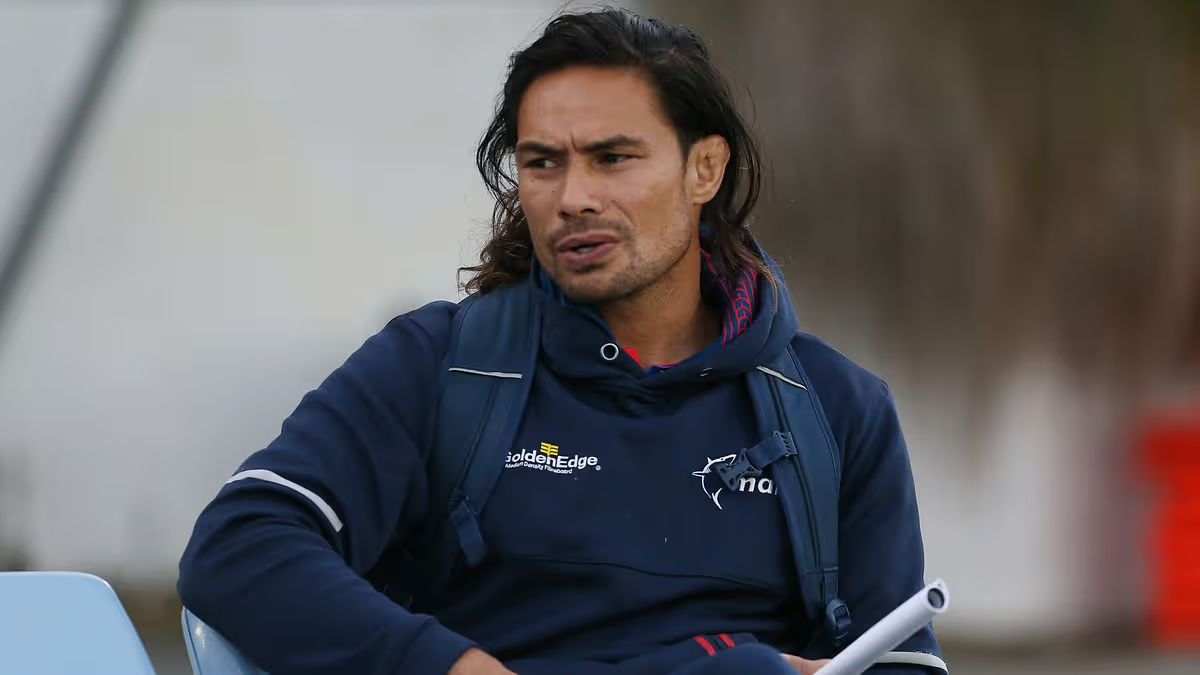
The former Highlanders co-captain was found dead at his home in New Zealand last August
The partner of deceased rugby player Shane Christie has opened up on the extent of his suffering in the final years of his life due to the symptoms of chronic traumatic encephalopathy (CTE).
The Maori All Blacks back-row died of suspected suicide last August, following a nine-year struggle with his mental health. The former Highlanders flanker was found dead at his home in Nelson, New Zealand, just a day before his 40th birthday.
Christie, who also played for the Crusaders and the All Blacks’ sevens team before retiring from rugby in 2018 at the age of 32, was discovered by police, with his death treated as a suspected suicide.
After his retirement from the game, Christie had publicly announced that he believed he was suffering from CTE – a neurodegenerative brain condition caused by repeated head injuries – after experiencing symptoms including headaches, speech and memory issues, depression and mood swings.
Christie has since been diagnosed, by a pathologist at the University of Auckland’s brain bank, as having “high stage” CTE at the time of his death.
Now, his partner Holly Parkes has spoken about the challenge Christie encountered – saying he had become unrecognisable compared to the man he was before he sustained multiple serious concussions.
Christie battled to manage what was suspected to be CTE at the time, yet he remained committed to staying involved in the game.
“When concussions ended his playing career, he transitioned to coaching alongside me,” Parkes told Stuff NZ.
“I still remember how often he needed sleep breaks throughout the day or had to sit in a blacked-out office with noise-cancelling earmuffs on.”
The severity of Christie’s concussions intensified over time, with the most serious taking place in 2016.
“These were very, very big hits,” added Parkes. “After one of his last ones in 2016, his eyes were rolling to the back of his head, and he was having difficulty breathing.”
As the long-term effects of his head injuries began to manifest, every facet of Christie’s life altered.
According to Parkes, his personality transformed and he struggled to adjust to life while enduring constant, overwhelming pain.
Christie, who co-captained the Highlanders during his playing days, found it nearly impossible to manage the daily pain and pursued ways to ease his symptoms.
“He was selling his house to pay for treatment in America so that he could try and get his head right,” Parkes added.
“He took so many trips looking for ‘the best’ overseas, but I think it was just a bit too late or not comprehensive enough.
“When he became stressed, he didn’t seem to be able to handle it as well as he used to.
“He would lose things and sometimes had to ask people in public to help him because he was confused or overwhelmed.
“Privacy had always been one of his key values, but even that changed a lot when he became much more open to letting strangers into our lives.”
Follow all of our channels to ensure you stay up to date with the latest Welsh rugby news. Sign up to our free daily newsletter here and our WhatsApp channel here for all the breaking news.















































You must be logged in to post a comment Login