The Department for Work and Pensions has confirmed a major review of PIP mobility and daily living will be completed this autumn
Linda Howard Money and Consumer Writer
04:00, 17 Feb 2026
The Department for Work and Pensions (DWP) recently confirmed eligibility for the mobility part of Personal Independence Payment (PIP) will be reviewed alongside the daily living element, as part of the UK Government’s welfare reforms.
Minister for Social Security and Disability Sir Stephen Timms will co-produce the review with disabled groups and charities, which will be completed this autumn.
Advertisement
During the State Pension and benefits uprating debate in Parliament on Tuesday, Sir Stephen confirmed the review will be published before 2027 after Conservative MP Rebecca Smith suggested it would not be available until next year.
Sir Stephen said: “I am co-chairing a review of PIP that will conclude by the autumn of this year; she (Rebecca Smith) said that she did not think that the review would happen until 2027, but it will conclude by the autumn of this year.”
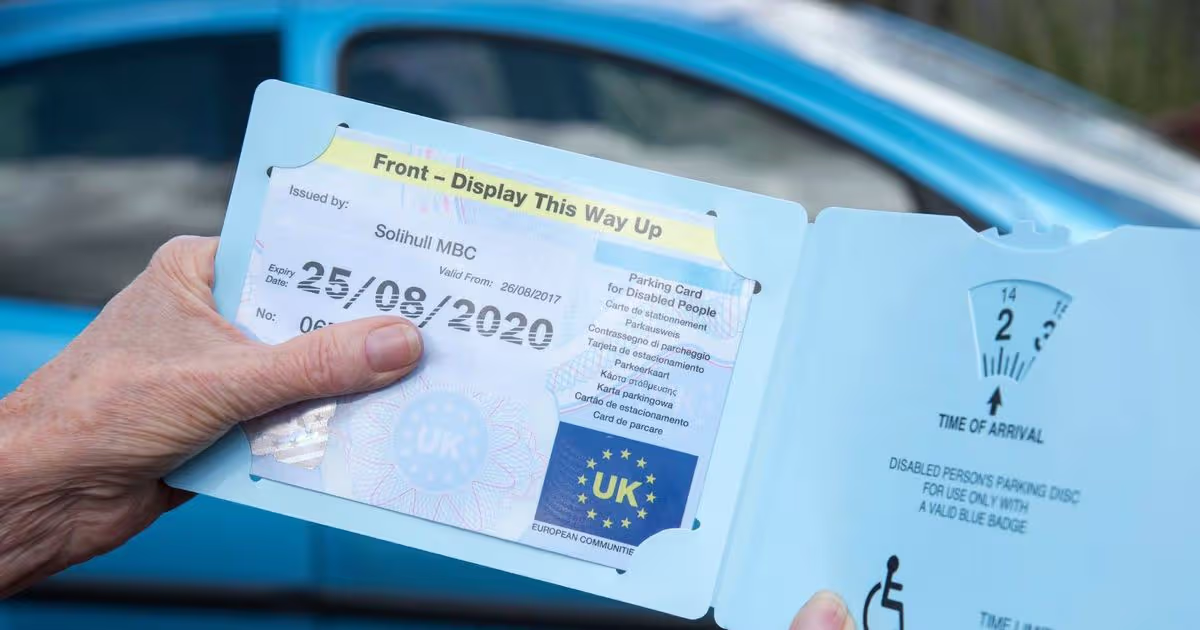
PIP claimants awarded the enhanced rate of the PIP mobility component can transfer some or all of the payment to lease a new car, wheelchair-accessible vehicle, scooter or powered wheelchair through the Motability Scheme.
The latest figures from Motability Operations – the organisation behind the life-changing Motability Scheme – show there are now 815,000 customers across the UK, including approximately 80,000 living in Scotland, reports the Daily Record.
Advertisement
There are currently over 3.2 million Blue Badge permit holders across the UK, including over 235,700 in Scotland. DWP figures also reveal that just over 3m PIP claimants receive either the standard or higher rate of the mobility component.
This comprises 1,961,029 claimants receiving the higher payment award, worth £77.05 per week, and 1,111,219 on the standard award rate of £29.20 per week. There are currently nearly 3.9 million people claiming PIP across England and Wales – all Scots have now been transferred to Adult Disability Payment.
In a written question to the DWP, former Labour and now an Independent MP, Rachel Maskell recently asked what steps it is taking with the Chancellor of the Exchequer to co-produce policy changes to mobility allowances of PIP.
In a written response, Minister for Social Security and Disability Sir Stephen Timms, said: “The PIP mobility element is in scope of the Timms Review, which aims to ensure PIP is fair and fit for the future.
Advertisement
“We will co-produce the Review with disabled people, and their organisations to ensure lived experience is at the heart of its work. We will provide an update shortly. We will not make changes to PIP eligibility, including for the mobility element, until the Review has concluded.”
Chancellor Rachel Reeves announced plans to reform the Motability Scheme during the Autumn Budget. These reforms include ending the VAT relief on top-up payments, a one-off voluntary payment required to lease more expensive vehicles on the Scheme, and the application of Insurance Premium Tax on leases.
Tax alterations will not significantly affect vehicles that have been extensively modified for wheelchair users, or existing leases, and Motability will continue to supply vehicles at no extra cost to the value of eligible disability benefits.
The amber and yellow weather warnings placed on the region by the Met Office lifted early this morning, but trees, battered by strong winds last night (Saturday, April 4), are causing disruption.
Recommended reading:
At around 2am on Sunday (April 5), the A64 was closed westbound between the A1237 near York and the A169 at Malton after a tree fell on the carriageway.
Advertisement
This was later re-opened but followed a separate incident in Bond End, Knaresborough, at 5.46pm on Saturday evening.
North Yorkshire Fire and Rescue Service was called after a “dangerously hanging” tree was spotted about a public footpath.
Crews from Knaresborough taped the area off to residents and the incident was left with Knaresborough Town Council.
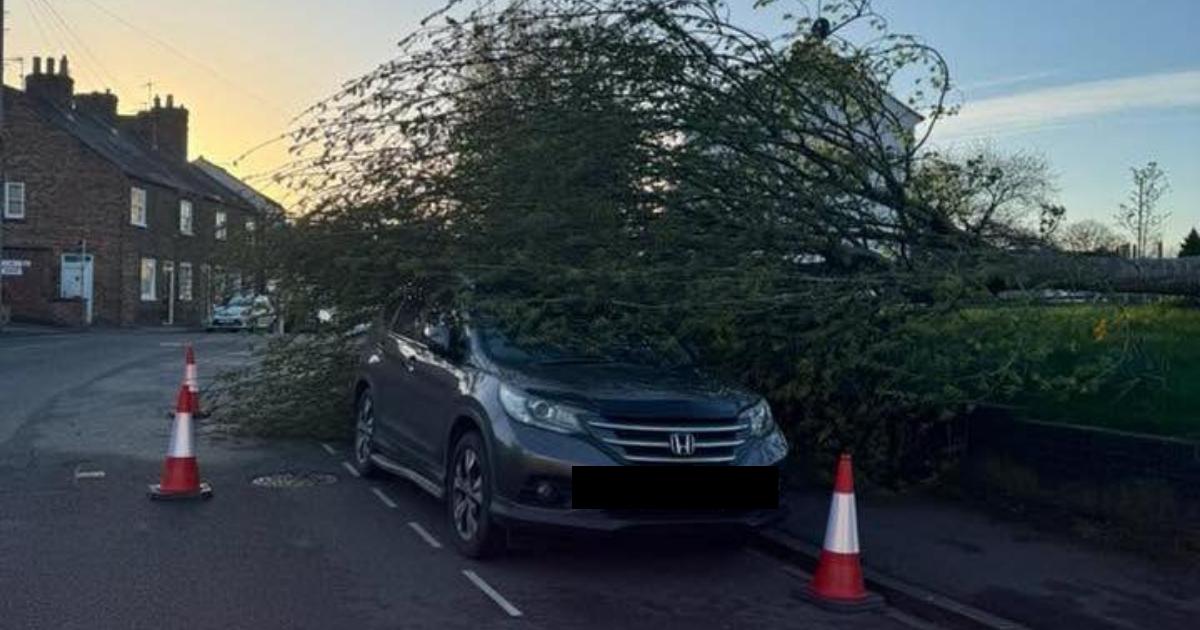
Over in Ripley, a home in Main Street was shook after a tree branches fell on a vehicle’s roof.
Advertisement
At 11.14pm, firefighters used a saw to split the branch to remove it while checking the vehicle for damage.
Meanwhile, a similar incident was reported in Oakdale Avenue, Harrogate, at 12.50am, after a tree fell on a property’s roof.
It came hours before the A166 was closed at Gate Helmsley at 2.59am.
A telegraph pole had fallen onto the road with exposed wiring.
Advertisement
A spokesperson for North Yorkshire Fire and Rescue Service said: “Crews removed the pole and liaised with engineers to isolate and remove the high voltage cable.
“The incident was left with Northern Powergrid.”
As The Press reported, numerous trains had to be cancelled after a tree blocked the rail line between York and Malton, shortly after 9.20am today.
TransPennine Express said that its 8.54am service from Scarborough to York had to be halted following the incident, with delays and cancellations expected until 4pm.
Advertisement
At 12pm, the train operator said that staff were on their way to fix the disruption.
The tragedy unfolded the day before the Tour of Flanders
A British cyclist has died after collapsing during an amateur race in Belgium.
Advertisement
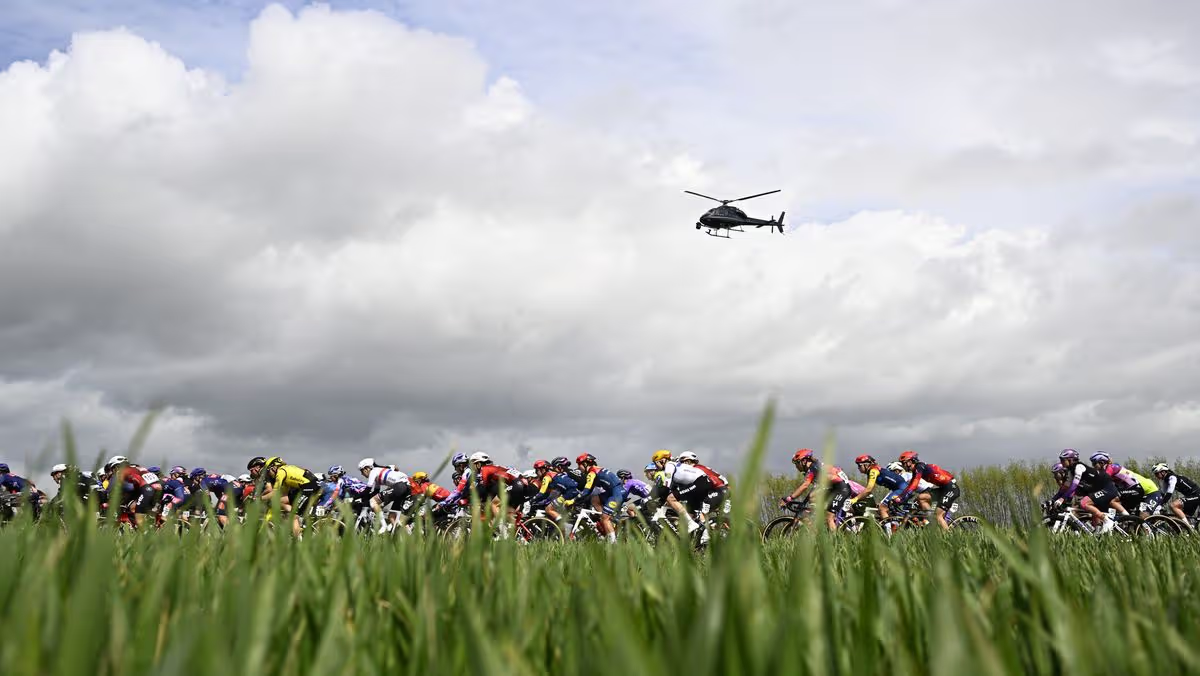
The 51-year-old was competing in the mass-participation Tour of Flanders sportive, We Ride Flanders, which takes place on the day before the elite men’s and women’s races, when he collapsed before the Hotond climb near Ronse. According to reports from Belgium, the rider, who is believed to have been participating in the amateur race alongside his son, likely suffered a heart attack and tragically died at the scene.
Event organiser Gert van Goolen told Belgian radio that medics had rushed to where the rider had collapsed and attempted to save his life, but he sadly passed away.
“We received a report that a man had fallen,” he said in a statement to Radio 1.
“A medical team was quickly on the scene and was able to resuscitate him. Unfortunately, the man died at the scene.
Advertisement
“This is the last thing you want as an organization,” van Goolen added.
“You hope that 14,000 people can have a nice day here and you know there are risks, but you really don’t want this.”
The event has routes of different distances, the longest being a 247km route starting in Antwerp and ending in Oudenaarde.
Other ride distances – 79 km, 133 km and 163 km – started and finished in Oudenaarde, although it is unclear which route the rider had attempted, as all four include the Hotond, the highest hill in the region.
Advertisement
According to reports, two other competitors also needed resuscitating during the race following separate incidents during Saturday’s event.
One involved a 57-year-old Dutch man, while the other saw a second British rider rescued on the Oude Kwaremont, a 1,500m cobbled climb which forms a famous section of the Tour of Flanders.
Both riders were taken to hospital.
Two We Ride Flanders participants also died during last year’s event, including Stéphane Krafft, a former professional rider with the Cofidis team.
Advertisement
The amateur event sees cycling fans ride the course a day before the professional riders, allowing them to “suffer on the legendary hills, shudder over the famous cobbles and enjoy an unparalleled atmosphere along the routes” as the pros.
Around 14,000 cyclists take part in the event annually.
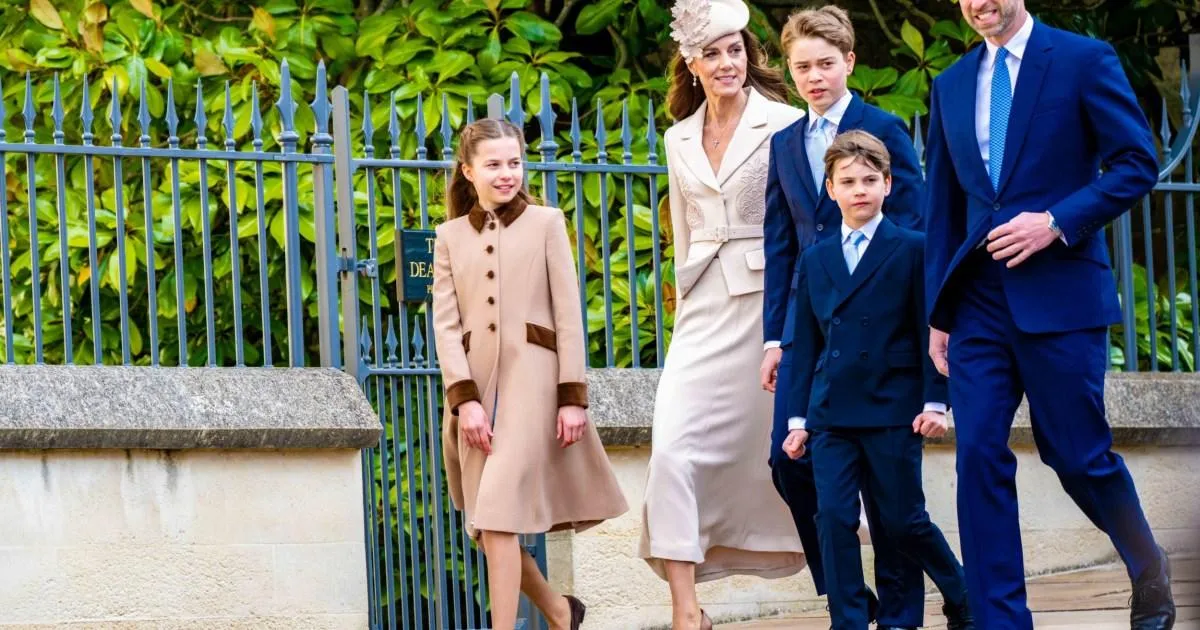
Prince William, Princess Kate and their three children have joined other members of the royal family for an Easter Sunday church service for the first time since 2023.
Advertisement
The family missed out on the service in 2024 as it came soon after Kate’s cancer diagnosis.
Last year, they skipped it again to take a family holiday to Norfolk.
King Charles and Queen Camilla were also spotted heading into St George’s Chapel in Windsor for the traditional event.
The King was spotted giving William and Kate’s son Prince Louis a pat on the shoulder as the seven-year-old arrived at the church with his brother George and sister Charlotte.
Advertisement
Sign up for all of the latest stories
Start your day informed with Metro’s News Updates newsletter or get Breaking Newsalerts the moment it happens.
Unlike last year, Andrew Mountbatten-Windsor did not make an appearance for what would have been his first Easter service since being stripped of his titles.
Advertisement
His ex-wife Sarah Ferguson also did not turn up, while his daughter Eugenie and Beatrice had reportedly made ‘alternative plans’ for Easter.
Princess Anne joined with her husband Sir Tim Laurence, while Prince Edward was accompanied by his family.
King Charles and Queen Camilla heading into the service (Picture: Ben Stansall/AFP via Getty Images)
The Easter Sunday service at St George’s Chapel is seen as a family event rather than an official engagement.
However, the King and Queen shook hands with gathered members of the public and wished them a happy Easter as they left.
Advertisement
There was no official Easter message issued by the King this year.
The official Royal Family account on X shared an image of the cross with the message: ‘He is risen!’
An accompanying message said: ‘Wishing a joyous Easter Sunday to Christians celebrating in the UK, the Commonwealth and around the world today.’
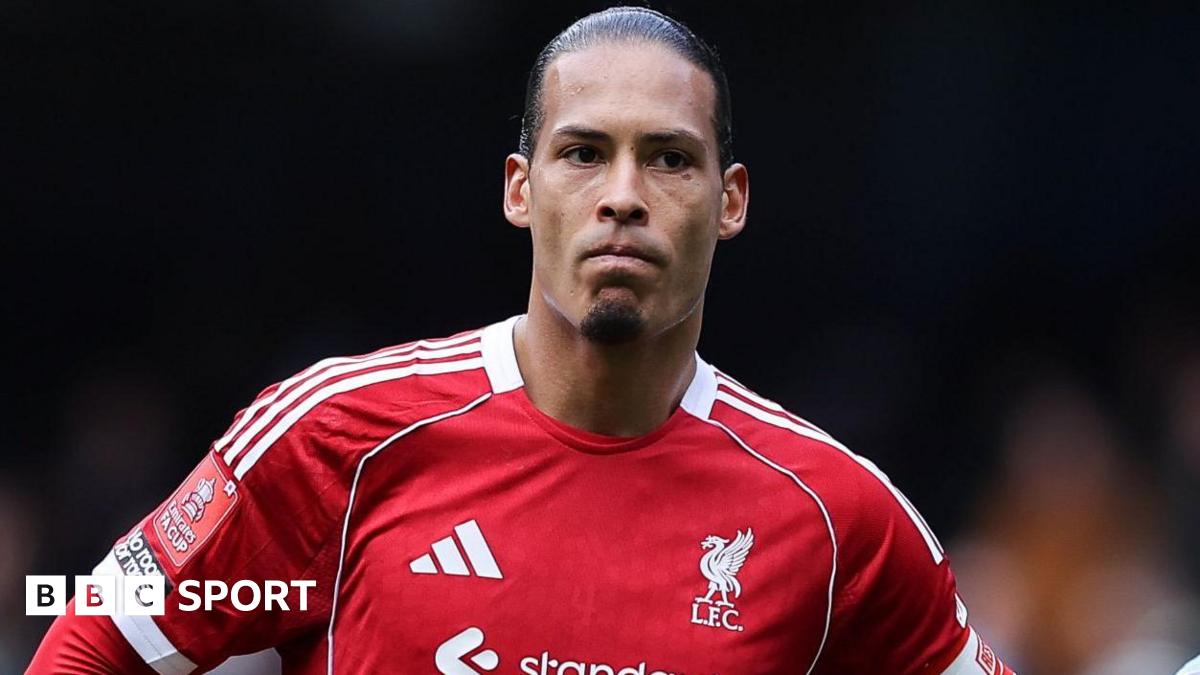
Liverpool captain Virgil van Dijk has apologised to the club’s supporters and said his side “gave up” as they were dumped out of the FA Cup by Manchester City.
The Reds’ hopes of winning silverware this season now rest on Champions League glory following Saturday’s humbling 4-0 quarter-final defeat at Etihad Stadium.
Manchester City demolished Liverpool in an 18-minute period which spanned the half-time break, scoring twice either side of the interval following an evenly matched opening half an hour.
“I can only apologise to the fans for what we have shown, especially the second half,” said Netherlands centre-back Van Dijk, 34.
Advertisement
“Obviously you come out with the right intentions from the dressing room [after half-time], to hopefully score for 2-1 as soon as possible to change the game.
“The opposite happens and to come back from 3-0 is obviously very difficult here – but also you shouldn’t give up and that’s maybe, at a certain point, what happened.
“We let our fans down, we let ourselves down, and the manager.
“The way we played in the second half, especially, must hurt for everyone. It definitely hurts me.”
It was one of those glorious late-summer evenings. The sun was setting, pouring golden light across the front yard as my husband, Rob, our 12-year-old son, and I arrived at my in-laws’ house for dinner.
The smell greeted us before we even reached the door. My brother-in-law, David, was at the grill – he had ordered bougie steaks by mail and was tending to them as if they were newborn children.
Inside, my mother-in-law pulled out her family photo albums. We sat side by side on the couch, flipping through yellowed pictures of her children when they were young. She stopped on Rob’s high school senior photo, smiling at his floppy hair and awkward grin. “You should keep one,” she said. I tucked it into my wallet.
Courtesy of Kelsey Abernathy McLean
Advertisement
“This is the high school photo of my husband, Rob, that my mother-in-law gave me the night that I choked,” the author writes.
When dinner was ready, the table looked like something from a magazine – candles, wine, perfectly seared steaks. I was hungry, excited, and salivating. I cut off a big bite, barely chewed, and swallowed.
The meat stuck in my throat.
I stood and tried to cough or swallow. Nothing. My throat locked, sealing the air off. I looked at Rob and put my hands to my neck – the universal sign for choking. He was on his feet instantly. “Are you choking?” he asked. I nodded. He wrapped his arms beneath my rib cage and performed the Heimlich manoeuvre again and again.
My lungs clenched painfully, straining against the blockage. A burning pressure built in my chest – the kind you feel when you’ve been underwater too long. My vision narrowed. My hearing dimmed. I remember looking at Rob’s wide, terrified blue eyes and thinking, I can’t leave my son. I can’t leave my husband. Not yet.
Advertisement
And then – gently, softly – everything went dark.
What happened next defies language. I was immersed in pure love – not the romantic or familial kind, but something vast, eternal, and all-encompassing. It wrapped around me like a cocoon. Time didn’t seem to exist. There was no beginning, no end. No words were spoken, yet I understood a universal language.
I knew I was dying, but I was strangely not afraid.
I saw snippets of my life – what has been referred to as a “life review” – the kindness, the cruelties, the achievements, the failures, and overwhelming love. However, this time, I wanted every mistake to end with compassion and empathy. I wanted to forgive and to be forgiven. I saw myself clearly: a raw, unfiltered, naked version of myself, and felt both melancholic and incredibly proud of the life I had lived up to that moment. I knew in that moment that karma is absolutely real.
Advertisement
And then – boom. Bright light.
I gasped. Air flooded into my lungs. For several disorienting seconds, I didn’t know if I was alive or still caught in the darkness. Rob’s breath smelled faintly of red wine and panic; his forehead was drenched in sweat.
“Oh, thank God you’re back,” he said, his voice breaking. David exhaled shakily behind him. “You were out for three minutes and thirty seconds,” as if he were timing a race.
I had been unconscious long enough to experience severe hypoxia, a condition in which the brain is deprived of oxygen and can trigger altered states of consciousness. It is considered a life-threatening emergency; in four to six minutes of oxygen deprivation, brain cells begin to die. David knew that it was essential to time me while I was unconscious so he could inform the medics when the ambulance arrived.
Advertisement
In all the days that have followed, I have tried to understand what happened to me – and discovered that near-death experiences are far more common and more studied than most people realise.
Ancient texts such as The Egyptian Book of the Dead, dating back over 3500 years, describe strikingly similar near-death experiences. Across thousands of years, texts from Christianity, Judaism, Hinduism, Ancient Greek, Ancient Roman, Islam, and others detail experiences of light, tunnels, life reviews, guides, and returning to life transformed.
What I experienced – the darkness, the clarity, the life review, the overwhelming love – fits a documented pattern that countless others have experienced.
As CPR and resuscitation have dramatically improved over the last 50 years, more people are coming back and reporting near-death experiences. One study found that 17% of people who nearly died said they experienced an NDE, but the number may be higher because of the stigma associated with making such a claim. While scientists still debate the causes, the numbers make one thing clear: NDEs are a documented and surprisingly widespread phenomenon.
Advertisement
Later, Rob told me that when I passed out, he lay me on the ground and started CPR. David called 911 and instructed our son to go outside and wait for the ambulance. When CPR didn’t work, Rob did the only thing he could think of – he stuck his fingers down my throat in an attempt to dislodge the meat. Somehow, the steak shifted enough for me to breathe again.
When I came to consciousness that night, I insisted I was fine. I didn’t want to ruin the evening by going to the hospital. We went home as soon as I could stand. I just wanted to sleep and pretend the night had not happened.
The next morning, the pain reminded me it had. My ribs ached so severely from the Heimlich manoeuvres that I could barely breathe. The hospital X-rays showed bruising but no broken bones. “You’re miraculously lucky,” the doctor told me.
That night, every breath hurt, but the pain didn’t bother me. It reminded me I was alive, that love – literal, physical love – had pulled me back from the brink of death. Remarkably, Rob had not taken a CPR class in 31 years.
Advertisement
Courtesy of Kelsey Abernathy McLean
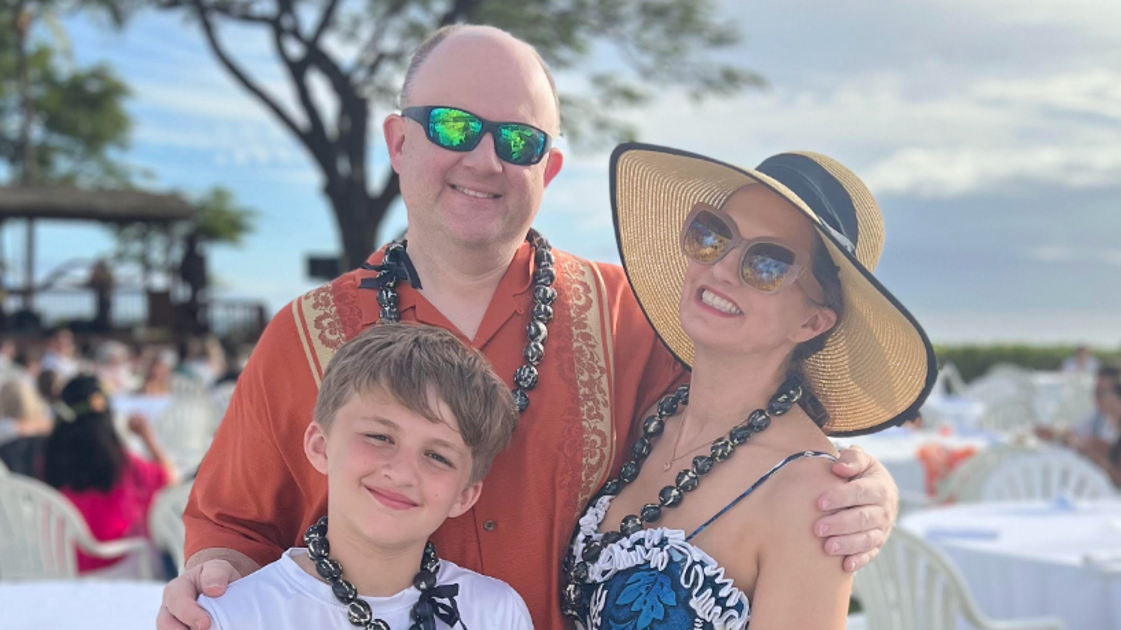
The author, right, with her husband, center, and son, left.
In the days that followed, I kept replaying the moment before I lost consciousness and seeing Rob’s face. We’ve been married for 15 years, and, like any long marriage, ours has weathered seasons of stress, distance, and distraction. But in that instant, when my life hung in the balance, I saw nothing but fierce, unconditional love. That love reached into the darkness and pulled me back to my life, to my loved ones, to the life I cherish.
People ask what it’s like to have a near-death experience. It was beautiful beyond description, because the love I felt is infinite. But the miracle isn’t only what happens after we die – it’s how we choose to live after we return if we are fortunate enough to do so. I hope that when I die someday, I have left the world a kinder, better place.
I do not know precisely what happened while I was choking – if what I experienced was merely my brain responding to the lack of oxygen or if it was something that cannot be explained by science.
All I know is that I came back changed. In my life review, I recognised my shortcomings and realised the importance of forgiving myself and others, even when it’s undeserved.
Advertisement
I used to think forgiveness was something you gave to other people. Now I know it’s a gift you give yourself. I realised I needed to make changes in my life to become a better person. I understood that kindness and compassion – even in small moments – are essential and eternal.
Most mornings now, I get up early and play Johnny Nash’s I Can See Clearly Now. Sunlight spills through the kitchen window as I sip my coffee and watch the world wake up. Usually, a few fat tears of gratitude roll down my face, for I have been given another day to live.
I think of Rob – the panic, the love – and whisper a quiet thank you: to him, to the universe, to that eternal Love with a capital “L” that I glimpsed before returning to my life.
I’m no longer afraid to die, but I am not ready to leave the life I live. Love, I’ve learned, isn’t always dramatic or cinematic. Sometimes it’s the man who keeps calm enough to save your life, the young son who waits outside so he won’t witness you die, the ache in your ribs reminding you you’re still here.
Advertisement
Love is everything that pulls us back to life, again and again.
Kelsey Abernathy McLean is a Pennsylvania-based writer who explores transformation, survival, and the extraordinary moments hidden inside ordinary life. She is currently writing a collection of essays about love, gratitude, her childhood, and the unexpected lessons that shape us. For more from her, visit kelseyblog.com.
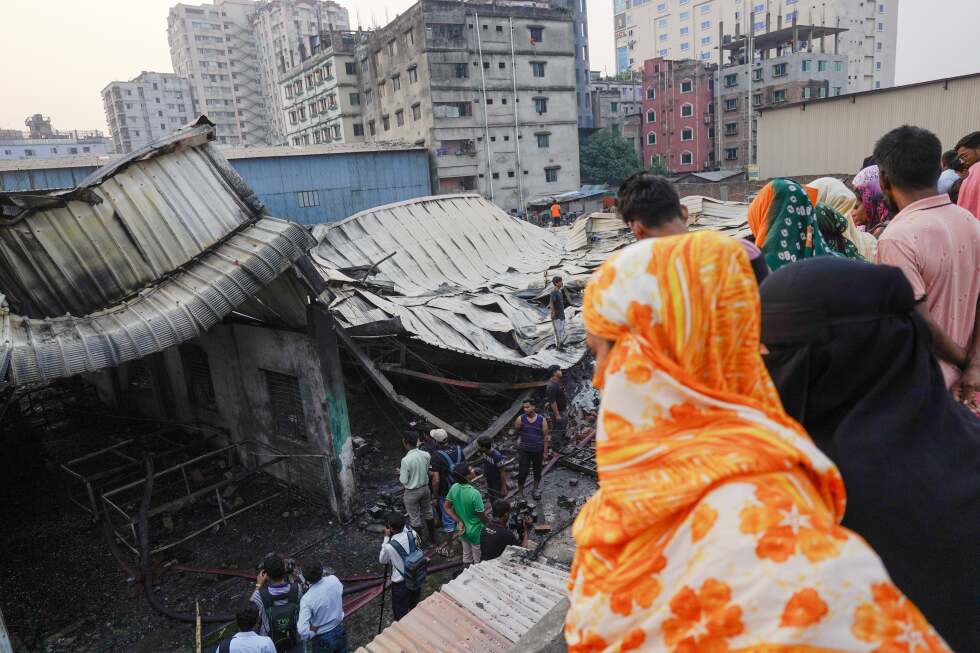
DHAKA, Bangladesh (AP) — A fire broke out at a factory manufacturing gas lighters near Bangladesh ’s capital on Saturday afternoon, leaving at least five people dead, authorities said.
The blaze broke out in the Kadamtali area of Keraniganj near Dhaka, according to the fire service and civil defense.
Seven firefighting units were deployed to extinguish the blaze, which started in the afternoon, the fire department said. It took several hours to bring it under control.
Firefighters recovered five bodies by the evening and they couldn’t immediately be identified.
Trump delivers sweary warning to Iran ahead of deadline to open Strait of Hormuz
Donald Trump told Iran to “just open the f***in’ Strait, you crazy b******s” in a strong-worded rant on Truth Social.
The US president has threatened to hit Iranian power plants unless they reopen the vital Strait of Hormuz by 10am ET (2pm GMT) on Monday.
Writing on social media this afternoon he says: “Tuesday will be Power Plant Day, and Bridge Day, all wrapped up in one, in Iran. There will be nothing like it!!!
Advertisement
“Open the F***in’ Strait, you crazy b******s, or you’ll be living in Hell – JUST WATCH! Praise be to Allah. President DONALD J. TRUMP
James Reynolds5 April 2026 13:13
Iran holds talks with Oman on Strait of Hormuz
Oman and Iran have held talks at the deputy foreign minister level to discuss options for ensuring the smooth transit of vessels through the Strait of Hormuz, Oman’s Foreign Ministry wrote on X on Sunday.
Advertisement
The talks come after an Iranian official said on Thursday that Iran was drafting a protocol with Oman to monitor traffic in the strait through which around a fifth of global oil supplies travel.
James Reynolds5 April 2026 13:00
Israeli strike kills four-year-old girl
A four-year-old girl is one of seven people who have been killed in an Israeli strike in southern Lebanon, according to the country’s health ministry.
Advertisement
The town of Kfar Hatta near the coastal city of Sidon was struck by the IDF after it told people in the town to evacuate.
Rebecca Whittaker5 April 2026 12:53
US service member missing after Iran shot down has been jet rescued
The US service member who was missing since Iran shot down a fighter jet has been found in a rescue involving “dozens of aircrafts,” president Donald Trump has said.
Advertisement
The crew member had been missing since Friday, when Iran downed a US F-15E Strike Eagle.
A second crew member was rescued earlier.
Trump wrote that the aviator is injured but “will be just fine,” adding that he took refuge “in the treacherous mountains of Iran.”
Rebecca Whittaker5 April 2026 12:30
Advertisement
In full: Trump’s announcement of mission to save stranded airman
(Truth Social)
(Truth Social)
James Reynolds5 April 2026 12:21
Israel ‘provided intel for US rescue mission’
An Israeli security official tells Reuters that Israel helped with intelligence in the US rescue of the airman from Iran.
James Reynolds5 April 2026 12:00
Advertisement
A deception campaign and reaper drones: How US commandos rescued airman trapped in Iran in ‘daring’ operation
US special forces carried out a daring rescue mission to bring back an airman stranded behind enemy lines after Iran shot down a $31 million fighter jet on Friday.
Here’s how it unfolded, from what we know so far:
James Reynolds5 April 2026 11:43
Advertisement
Iranian children as young as 12 given rifles and sent on patrols: report
Amnesty International reports that children as young as 12 are being handed assault rifles and sent out on patrols amid a drive to recruit more people for the ‘defence of the homeland’.
The Independent reported previously that children were being targeted as part of a campaign by the IRGC.
Now, analysis by Amnesty has found evidence of children wielding assault rifles and standing alongside IRGC and other forces at checkpoints, taking part in patrols and joining militarised rallies. Legal experts say this could constitute a war crime.
Advertisement
An eyewitness from Rasht said: ““I have seen children wielding weapons. They wear masks to cover their faces, but it is obvious they are kids. They have not even grown in height… some appear to be 13 years old at most… I saw [several] children standing in front of mosques [where Basij bases are located], ahead of the actual forces. I keep thinking their brains aren’t developed like adults and they might actually fire randomly. I am both scared of them and feel sad for them.”
A ‘teenager’ holds an assault rifle in Mashhad, Iran in footage shared on 30 March (Akharinkhabar)
James Reynolds5 April 2026 11:33
What to know about the F-15E fighter jet
US forces staged the audacious rescue of an airman behind enemy lines after Iran downed his F-15E fighter jet, officials said on Sunday.
The F-15E Strike Eagle is an American jet derived from the McDonnell Douglas F-15 Eagle. It was designed in the 1980s to be suitable for all weather, day and night conditions, and to fly at low altitudes.
Advertisement
While primarily an air-to-ground attack aircraft, it can also perform air-to-air missions, carrying AIM-9M Sidewinders, AIM-120 medium-range air-to-air missiles, or AMRAAM. The E model also has a 20mm gun carrying up to 500 rounds.
The F-15 can fly up to 1,875 mph (Mach 2.5 plus) with a range of 2,400 miles. It costs $31.1 million per unit.
The jet is flown and operated by a pilot and a weapons system officer. In this case, the pilot was initially rescued, and the ‘Wizo’ was trapped behind enemy lines.
This marks the fourth Strike Eagle lost since 28 February, but the first taken down by enemy fire.
Advertisement
A United States Air Force F-15 fighter (file) (Getty Images)
James Reynolds5 April 2026 11:00
Iran says five killed, eight injured in US rescue operation
Five people were killed and eight injured in the US mission to rescue a stranded airman, according to the governor of the Kohgiluyeh and Boyer Ahmad province.
Iran’s Tasnim news agency, citing the governor, reported this morning that five Iran-aligned people were killed last night during the operation at the ‘Black Mountain’ area of Kohgiluyeh.
Eight people were said to have been injured and taken to Imam Khomeini Hospital in Dehdasht for treatment.
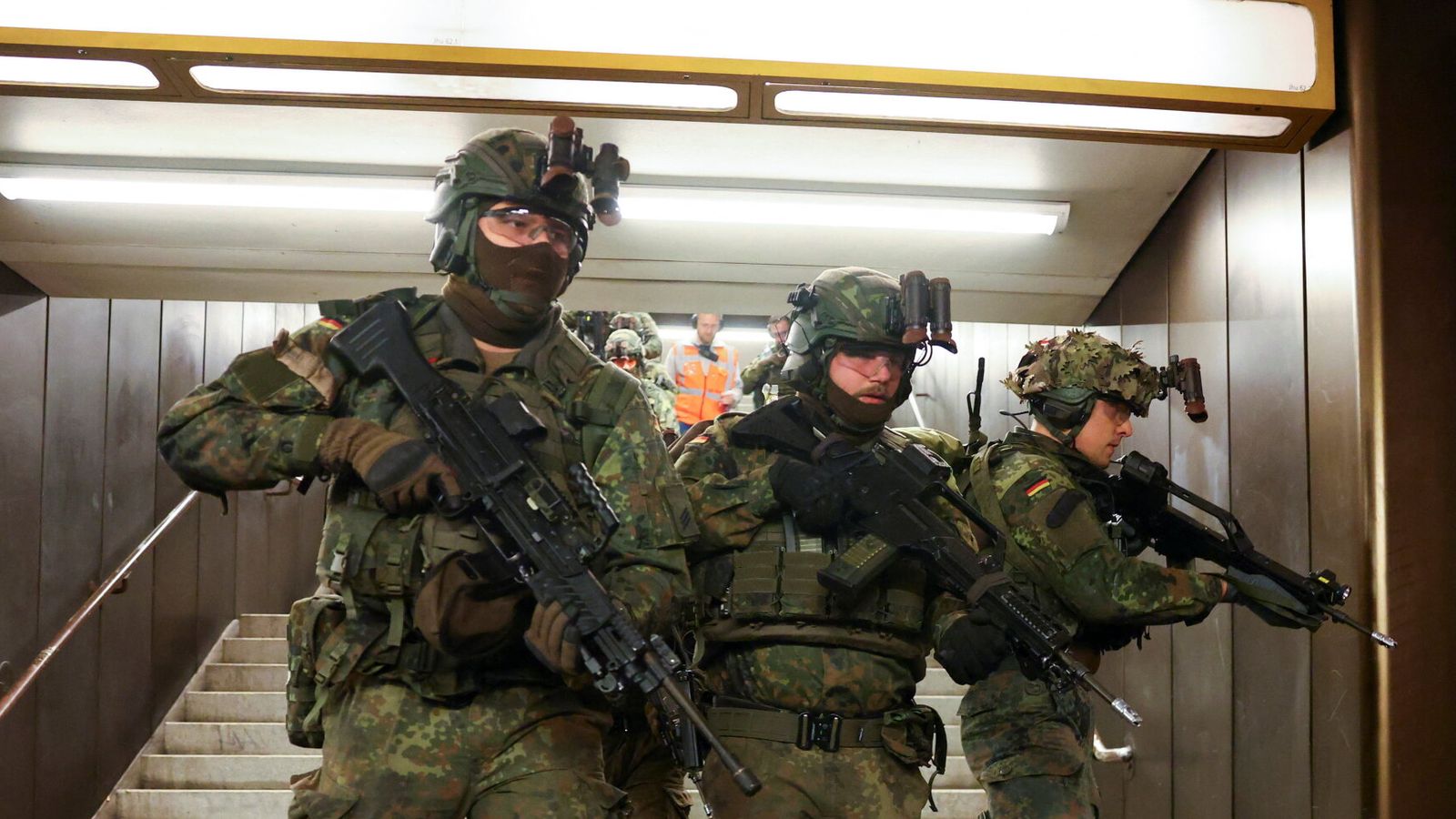
German men aged between 17 and 45 could have to get military approval if they want to leave the country for more than three months, according to recent changes to the law.
A spokesperson for the country’s defence ministry has since confirmed they expect approval to be given as long as service in the German forces is voluntary.
It comes as the nation moves towards increasing its military footprint, with new incentives to join up and conversations around conscription.
A change to the law to reintroduce voluntary – for now – military service was made at the end of 2025.
However, late last week, German publication Frankfurter Rundschau noticed another change to Germany’s Wehrpflichtgesetz (WPflG) – its Cold War era military service legislation.
This change, when translated into English, means that “male persons must obtain permission from the competent career centre of the Bundeswehr (German armed forces) after reaching the age of 17 if they wish to leave the Federal Republic of Germany for more than three months”.
Previously, this would have only applied in times of “tension” or “defence” cases.
Advertisement
However, the WPflG was changed for it to apply universally, with a maximum affected age of 45.
December: Are Gen Z willing to die for their country?
Advertisement
Conscription in Germany was paused in 2011, but the war in Ukraine and subsequent global unrest have sparked discussions about whether it should be returned to mandatory from voluntary status.
The German defence ministry confirmed that the system was in place during the Cold War and “had no practical relevance; in particular, it is not subject to penalties”.
Instead, they state the system is intended for use in “an emergency” as the military “must know who may be staying abroad for an extended period”.
Exemptions are in the works to prevent “unnecessary bureaucracy”, they added.
Advertisement
The UK government has rejected suggestions it could move towards conscription, although it has introduced measures to try to encourage people to join the armed forces.
Germany is trying to increase the number of troops it has in the Bundeswehr from 180,000 to 260,000, with reserves set to reach 200,000.
If the British Royal Air Force, Navy and Army are combined, they number just under 150,000, according to a House of Lords report published last year, including full-time reserves.
Captivate
This content is provided by Captivate, which may be using cookies and other technologies.
To show you this content, we need your permission to use cookies.
You can use the buttons below to amend your preferences to enable Captivate cookies or to allow those cookies just once.
You can change your settings at any time via the Privacy Options.
Unfortunately we have been unable to verify if you have consented to Captivate cookies.
To view this content you can use the button below to allow Captivate cookies for this session only.
Of these, 82,000 were in the Army, 33,000 were in the Royal Navy or Royal Marines, and 32,000 were in the Royal Air Force.
Advertisement
Like much of NATO, the UK has committed to increasing its defence budget in the coming years, although there are still questions about what this will look like as the Defence Investment Plan is yet to be published.
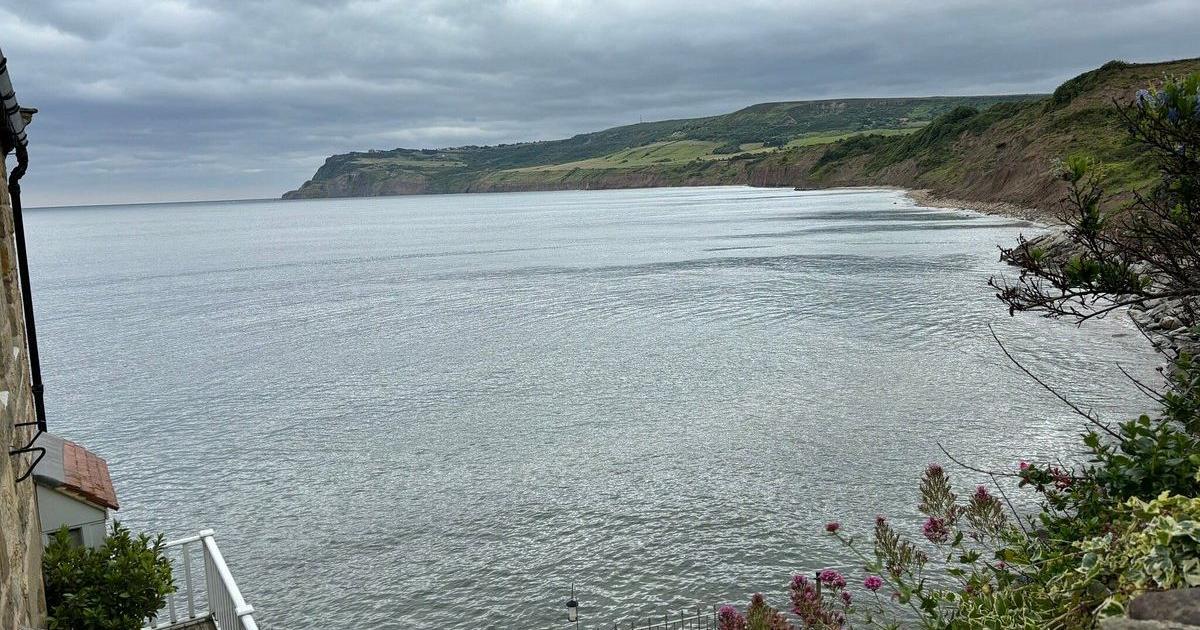
Robin Hood’s Bay, a fishing village on the North Yorkshire coast, has been praised for its tranquillity and charm.
This comes from new research by credit card brand Aqua, which evaluated various destinations across the UK.
Robin Hood’s Bay, though, scored highly as a “hidden gem,” partly due to its 117,000 Instagram posts and 22,800 average annual searches for visiting and staying.
The UK’s top hidden holiday destination, ranked higher than Robin Hood’s Bay in the list, is Broadstairs.
Advertisement
Broadstairs scored the highest of the “hidden gem” staycation destinations, with 332,000 Instagram posts and just 3,360 searches for visits and hotels.
This coastal village is ‘probably one of the most photographed and instantly recognisable locations in North Yorkshire’. (Image: Getty)
Second was Dartmouth in Devon, with 878,000 Instagram posts.
Interest in visiting or booking hotels remained relatively low at just 3,360 searches.
Whitstable, Poole, and the Scottish Highlands are all together in third place.
Advertisement
Robin Hood’s Bay has also been praised by Country Living for its “panoramic” clifftop views and was included on its seasonal outdoor guide for winter – making it a village for all seasons.
The publisher shared: “The UK’s beaches boast another level of stirring beauty in winter – not to mention the fact the off-season months are a great opportunity to get the wild and wind-beaten coast all to yourself.
“But where are Britain’s best winter beaches for a wave-crashingly scenic escape?
@thedarcytwins I cannot believe this is storybook town is a real place! 😍 #robinhoodsbay #storybook #wholesome #placestovisit #thedarcytwins #countrside #yorkshire #victorian ♬ QKThr – Aphex Twin
“Turn your collars up to the wind, wrap up warm and explore silky sands, rugged coastlines, clifftop views, wildlife-rich rock pools and picturesque coastal paths.
Advertisement
“All with the added drama and atmospheric beauty of unpredictable weather.
“There’s also nothing like the promise of a post-walk local ale or warming hot chocolate at a cosy old pub to enhance the trip.”
Israel’s prime minister, Benjamin Netanyahu, instructed the military on March 29 to expand its operations in southern Lebanon. It is the latest conflict between Israel and Hezbollah, in which Netanyahu has again promised to dismantle the Lebanese Shia group, and does not seem close to a conclusion.
This is not the first time Israel has invaded southern Lebanon. And people across the country are bracing themselves knowing that previous Israeli invasions have almost always resulted in longer-term occupation. Lebanese fears are worsened by the opaque situation on the ground.
Contradictory reports regularly break about the success or failure of Israeli incursions. The latest of these is a widespread but unconfirmed rumour that Israeli troops have captured the Beaufort Castle, a 12-century fortress that overlooks the Litani River.
The Litani splits Lebanon horizontally to form the country’s southernmost region, which is seen by Israeli officials as a buffer zone that can help protect it from Hezbollah attacks. More recently, however, extremist Israeli groups have begun to aspire to settle the area.
Advertisement
As Hezbollah fights the Israeli military in the south, a different kind of battle is taking place north of the Litani. Since the start of the war in early March, more than a million people have been forced to leave their homes. These people are mainly Shia Lebanese from the south and Beqaa Valley.
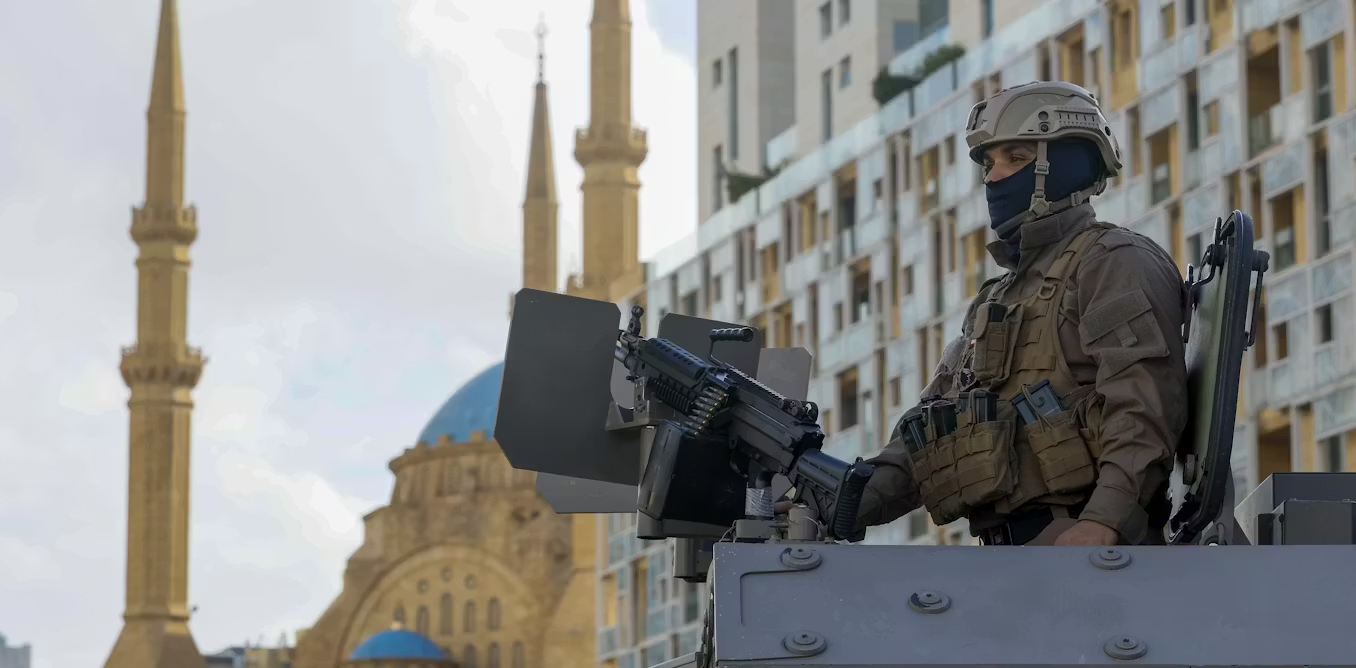
In a deeply divided society where most areas are clearly – even if unofficially – demarcated along religious lines, the influx of huge numbers of displaced Shia into traditionally Christian and Sunni areas was always bound to heighten sectarian tensions.
Reports have circulated of displaced women and children being accused of bearing loyalty to Hezbollah and turned back in some places. Many displaced men have also been judged to be Hezbollah operatives whose presence in non-Shia areas could result in targeted Israeli strikes.
The last round of conflict between Hezbollah and Israel in 2024 was met with a feeling of unity inside Lebanon. Sparked by a shocking attack in which Israel blew up communication devices used by Hezbollah operatives, killing 42 people and wounding thousands more, this conflict led to a general sense of injustice among Lebanese people.
This time, however, the war is seen by most to have been started after Hezbollah fired rockets towards Israel in retaliation for the killing of Iran’s supreme leader, Ali Khamenei. As a result, it has left many Lebanese people feeling dragged into a war they did not want.
Combined with the fact that Israel has not refrained from attacking non-Shia areas of Lebanon where it has identified targets for assassination, Christian and Sunni residents across the country have felt less ready to welcome those who have been displaced.
The government’s lack of preparation for the task of providing shelter and food for more than a million people has only aggravated the situation. While over 1,000 public schools have been converted into shelters, many displaced people are renting from private landlords. The result has been a direct integration of the displaced population into non-Shia areas.
Advertisement
On March 24, missile fragments that were later revealed to have originated from an intercepted Iranian missile fell over the Christian area of the coastal city of Jounieh. Within hours, a group of residents were filmed attempting to expel displaced people from their area, blaming them for what had happened.
A few days prior, a planned shelter in the Christian-dominated Karantina neighbourhood of the capital, Beirut, had to be cancelled because of a public campaign by residents who feared it would “bring strikes to the area”.
There is some evidence that Israel is using heightened sectarian tensions to provoke some kind of uprising against Hezbollah in Lebanon. Israeli warnings for residents in southern Lebanon to evacuate in early March included specific instructions to “move north toward [Sunni-dominated] Tripoli … and east toward [Christian-dominated] Mount Lebanon”.
And days later, on March 13, Israeli planes dropped leaflets over Beirut telling citizens that “Hezbollah is turning your homes into terrorist hideouts”.
Advertisement
Incoming political battle
Another difference to the 2024 conflict is the government in place in Lebanon. At that time, a caretaker government was in charge, while the presidential position remained vacant. In early 2025, a new president (Joseph Aoun) and prime minister (Nawaf Salam) were sworn into office and have since promised to tackle Hezbollah’s military capabilities.
Widely seen as pro-US, this government – which does include two Hezbollah ministers – has tried to take overt steps to distance itself from Hezbollah’s military operations against Israel in a clear attempt to safeguard the rest of the country.
On March 1, it became the first Lebanese government to ban Hezbollah’s military activities. And more recently it has attempted to expel the Iranian ambassador, Mohammad Reza Shibani, from the country in protest at Iran’s involvement in Lebanese politics.
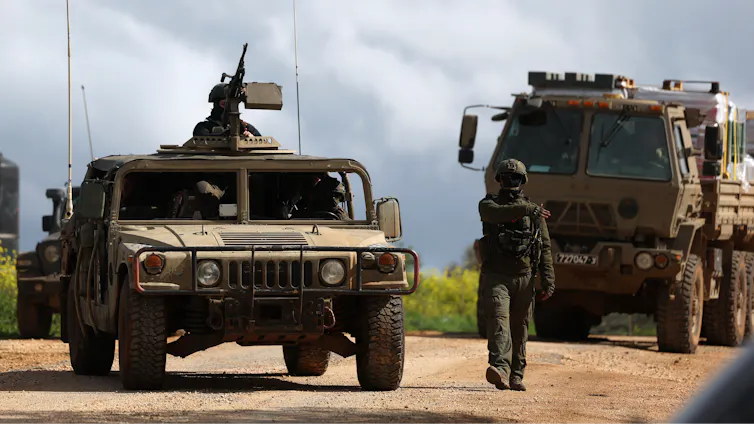
Israeli soldiers gather at an undisclosed position near the Israel-Lebanon border on March 30. Atef Safadi / EPA
The fact that Hezbollah has continued fighting Israel and the ambassador has defied the government’s orders gives a clear indication of how little power the Lebanese government holds. Still, the consequences of its declarations are felt in the country as they give anti-Hezbollah elements of society grounds to accuse the party of acting against the Lebanese state.
The last time such a direct confrontation of Hezbollah occurred within Lebanon was in 2008, when the government attempted to take down the group’s clandestine infrastructure. The result of this was violent sectarian clashes in Beirut.
Advertisement
Hezbollah has rejected the government’s actions. The deputy head of Hezbollah’s political council, Mahmoud Qomati, insisted on March 17 that the group is “able to upend the country … and upend the government in the face of such decisions”. He then implied a comparison between the Lebanese government and Vichy France, the collaborationist regime that governed southern France during the Nazi occupation in the second world war.
Past experience shows that there is no hope for an end to the hostilities in Lebanon so long as Hezbollah and the Lebanese government remain as diametrically opposed as they currently are. As it stands, there is no Shia representative in the proposed Lebanese delegation for ceasefire negotiations – highlighting how distant a resolution remains.
As Hezbollah continues to fight Israel in the south, the rest of Lebanon is facing the prospect of another devastating civil conflict.













































You must be logged in to post a comment Login