Connect with us
DAPA Banner
DAPA Coin
DAPA
COIN PAYMENT ASSET
PRIVACY · BLOCKDAG · HOMOMORPHIC ENCRYPTION · RUST
ElGamal Encrypted MINE DAPA
🚫 GENESIS SOLD OUT
DAPAPAY COMING

NewsBeat

Police hunt van driver after ‘despicable’ murder bid on two uniformed officers in Larkhall

Published

on

Daily Record

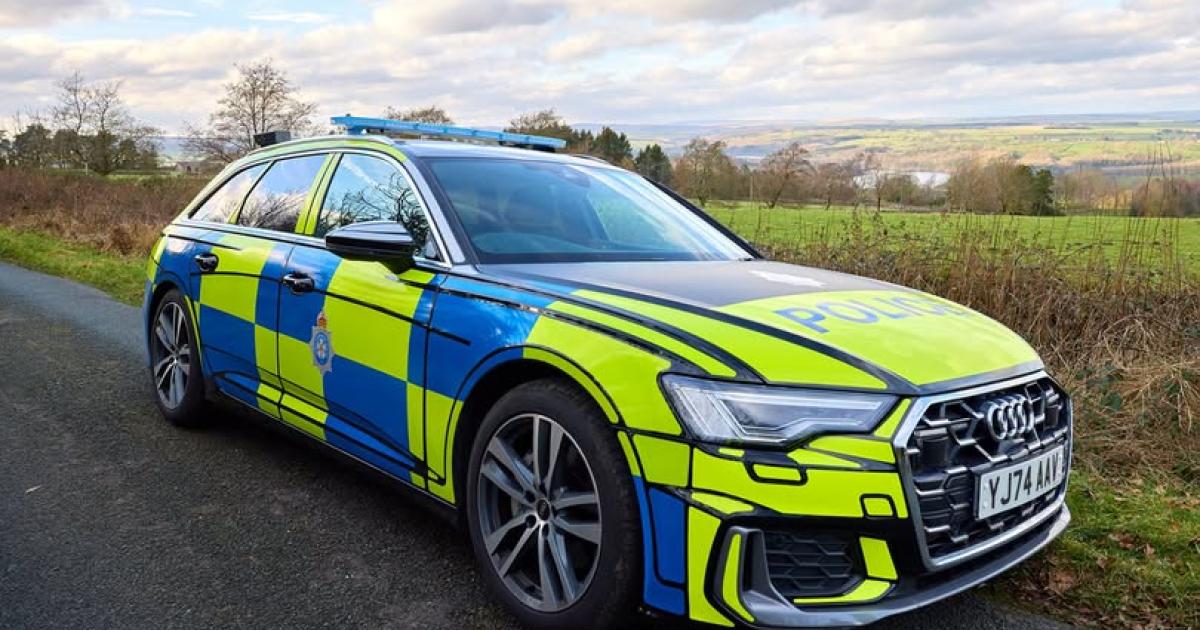
A white van was rammed into the two cops in the town yesterday afternoon.

A van driver is being hunted after attempting to murder two police officers in Lanark. A white Renault Traffic was rammed into the officers as they carried out enquiries at a property on Glen Avenue on Saturday at around 2:10pm.

Advertisement

Two male officers, aged 41 and 43, were rushed to hospital for treatment to serious injuries. The 41-year-old has since been released and the 43-year-old remains in hospital in a stable condition. There were no reports of any other injuries as a result of the incident.

The van was later recovered in Kirkstyle Place, Glassford, and police are treating the incident as attempted murder and desperately trying to trace the driver. He is described as a white male, 6ft tall, wearing dark shorts, a grey jumper and a beige baseball cap.

Detective Inspector Gary Smillie said: “This was a deliberate and despicable attack on two officers who were simply carrying out their duties.

“Extensive enquiries are ongoing and I am appealing for anyone who was in the area around the time and witnessed the incident to contact us.

Advertisement

“I would also appeal to anyone in the area who may have dash cam footage or private CCTV which could assist to get in touch. Any information, no matter how insignificant it may seem, could assist with the investigation.”

Chief Inspector Paul Doyle said: “Violence is not part of the job for police officers – it is not acceptable and will not be tolerated.

“I would like to reassure the community that we are working to trace the person responsible and will continue to carry out enquiries in the local area.

“We are speaking to members of the public and there will be additional patrols in the area, and would encourage anyone with any information or concerns to speak to officers.

Advertisement

“Our thoughts are with the officers, their families and colleagues at this time. We will continue to offer them all the necessary support.

“Anyone with any information should contact 101 quoting reference 1652 of 25 July, 2026. Information can also be given to Crimestoppers anonymously by calling 0800 555 111. “

Get more Daily Record exclusives by signing up for free to Google’s preferred sources. Click HERE.

Source link

Advertisement
Continue Reading
Click to comment

You must be logged in to post a comment Login

Leave a Reply

NewsBeat

inside the longstanding conflict between politicians and military commanders

Published

on

inside the longstanding conflict between politicians and military commanders

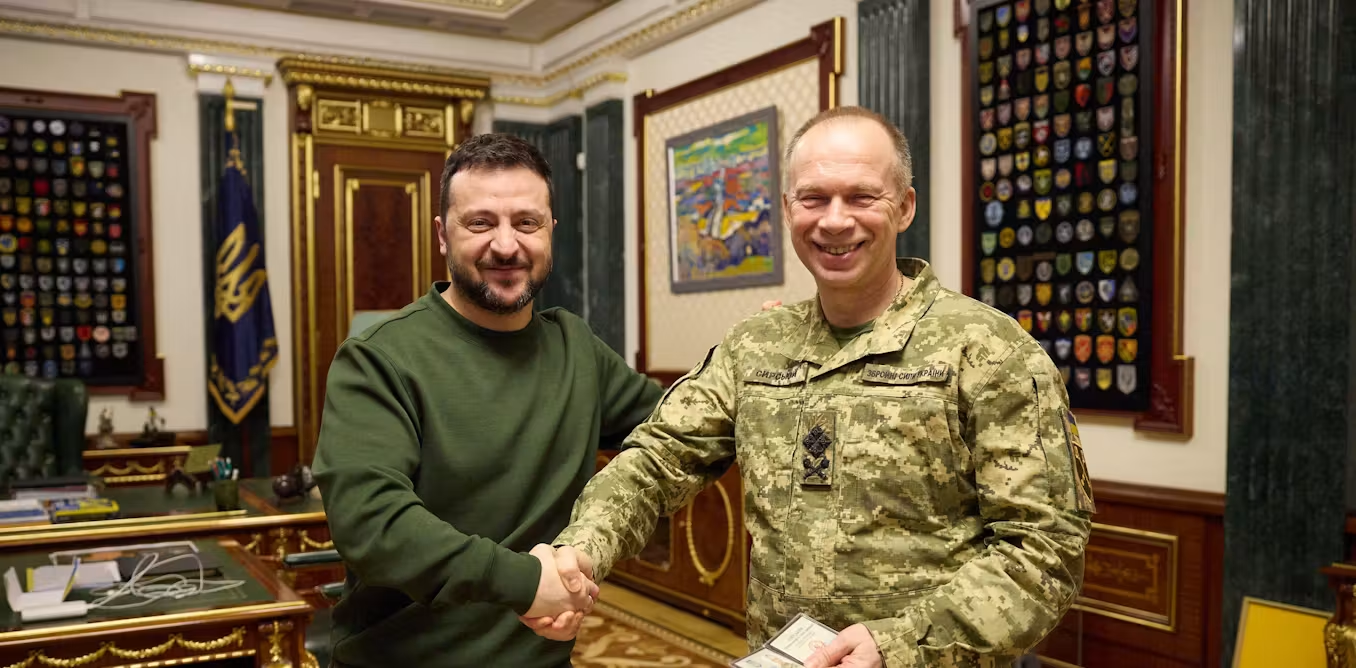
The Ukrainian president, Volodymyr Zelensky, has dismissed the country’s commander-in-chief Oleksandr Syrskyi after a turbulent week in which he also removed his defence minister, Mykhailo Fedorov. The dismissal of the popular defence minister, who is credited by many as the brains behind Ukraine’s successful drone strategy, brought thousands on to the streets in protest.

Despite the clear public pressure to fire Syrskyi, Zelensky has presented his removal as part of an overall restructuring of Ukraine’s armed forces. He has appointed Mykhailo Drapatyi, commander of Ukraine’s joint forces group, to take over as commander-in-chief.

Much analysis of this episode has focused on personalities, presenting the episode as a personal conflict within Zelensky’s team. Some saw the president’s decision to side with the unpopular Soviet-style military leadership of Syrskyi rather than the popular moderniser as illogical. But our research shows that tensions between the civilian defence minister and the military leadership are institutional.

Where such conflicts arise, the war makes it logical for the president to side with the commander-in-chief. Zelensky’s recent sacking of Syrskyi due to public pressure will not alter this dynamic.

Advertisement

Disagreements between civilian and military leadership are normal in any country, democratic or otherwise. There will inevitably be conflicting interests. Democratic civilian control – civilian oversight of the military with a clear chain of responsibility – helps to manage these differences on a day-to-day basis. Nevertheless, war exacerbates normal competing interests and their political importance due to the existential threat. In Ukraine, institutional weaknesses make such conflicts more likely, and more difficult to regulate.

Zelensky’s dismissal of Fedorov highlights a pattern identified in our research of the period between 2019, when Zelensky was elected, and 2022 when Putin launched his full-scale invasion. Democratic civilian control of the military was an official goal in line with Nato/EU requirements. Legislation was passed but its implementation was hampered by key people’s limited acceptance of the core idea – the notion that the defence minister should be a civilian.

Our interviews with participants in the defence reform process immediately prior to the 2022 full-scale invasion made it clear that the military leadership was, perhaps predictably, resisting all manifestations of civilian control. Perhaps more surprisingly, Zelensky remained ambivalent about even its most basic requirement (a civilian defence minister). One Ukrainian defence expert captured this, telling us that Zelensky “failed to understand the logic that civilians must do the strategic policy making”.

In line with the 2018 law adopted after western pressure, since 2019 Zelensky has appointed five civilians as defence ministers. But the people we spoke with explained that he has always relied on the commander-in-chief for defence policymaking.

Advertisement

This has marginalised successive defence ministers and their attempts at reform – whether modest or radical.

It doesn’t help that the ministry has faced repeated corruption scandals relating to defence procurement. Three men who served civilian defence ministers between 2010 and 2014 (plus the chief of the general staff 2012-14) are now accused of treason for allegedly selling off military equipment without authorisation.

This has made establishing the trust needed for a functioning relationship between the military and civilian leadership particularly challenging.

Institutionalised conflict

Sidelining the minister was possible because the 2018 law preserved a Soviet legacy system where both the minister and the commander-in-chief were both separately responsible to the president. This means that military chiefs tended to resist taking strategic direction from the minister – usually a central tenet of democratic civilian control. When they disagreed with the minister, military commanders went directly to the president.

Advertisement
Ukrainians protest the sacking of popular defence minister, Mykhailo Fedorov, July 2026.
Mykhailo Palinchak/Alamy Live News

Conflict resurfaced despite personnel changes. For example, one senior figure we interviewed told us that, between 2017 and 2019, defence minister Stepan Poltorak and his military counterpart Lieutenant-General Viktor Muzhenko “would not even be in the same room together”. During 2019-20, relations between General Ruslan Khomchak and new minister Andriy Zagorodniuk “went south very quickly” according to our sources. Zagorodniuk, a reformer, was then sacked by Zelensky after just six months. In 2020-21, Khomchak’s conflict with Zagorodniuk’s successor Andriy Taran became spectacularly public when one sued the other.

During 2020-21 there was a huge push by reformers in the ministry, parliament, civil society and by western defence advisers to solve this institutional conflict by subordinating the commander-in-chief to the minister. But this reform failed. The military leadership strenuously resisted and Zelensky did not intervene.

All roads lead to Zelensky

Military resistance was predictable because in Ukraine’s weakly institutionalised system of power, the president is the key political player. Access to him remains the most valuable political asset. The ongoing war made Zelensky more dependent on the military top brass. He needed their trust in the face of the threat from Russia.

Our research tells us that Zelensky is more likely to side with the military leadership in the event of conflict with the defence minister. In the most recent crisis he also initially sided with his general – although this time it triggered a political crisis and the president was forced to also dismiss the military leader.

Advertisement

A long existential war is a complicating factor for civil-military relations because public interest in defence policy is much higher than during peacetime. Fedorov came to symbolise a more modern and hi-tech approach to warfare in contrast to Syrskyi’s Soviet style of military leadership. With protests demanding Syrskyi’s resignation and Zelensky keen to retain public confidence, a change of commander-in-chief became unavoidable.

But new personnel will not change the underlying structures which generated the political crisis in the first place. Civilian control of the military remains contested. Meanwhile the institutional arrangement allows the military leadership to bypass ministers and engenders conflict – and war strengthens the military’s ability to resist reforms that might change this.

Source link

Advertisement
Continue Reading

NewsBeat

Brooklyn Beckham and wife Nicola Peltz arrive in wildfire-hit France for European holiday after snubbing his family’s annual yacht trip in Ibiza

Published

on

Brooklyn Beckham and wife Nicola Peltz flew into the south of France on Saturday as they touched down in Nice airport, despite the raging wildfires (pictured in April)

Brooklyn Beckham and wife Nicola Peltz flew into the south of France on Saturday as they touched down in Nice airport, despite the raging wildfires.

More than 300,000 residents have been evacuated as wildfires sweep across France and Spain and bear down on Bordeaux. 

The couple turned heads as holiday-goers spotted them walking through the airport with their designer luggage.

Nicola looked casually cool in a black two-piece while carrying a large £7,500 Chanel handbag.

Advertisement

Brooklyn tried to keep lowkey in a baseball cap and pushed their £1,090 suitcases. 

An onlooker said: ‘He looked a bit nervous, he kept looking around, but she appeared more laid-back and chilled.

‘Lots of people recognised them and were nudging each other as they came through the arrivals terminal with their luggage.’

Advertisement

Brooklyn Beckham and wife Nicola Peltz flew into the south of France on Saturday as they touched down in Nice airport, despite the raging wildfires (pictured in April)

Brooklyn has snubbed his family's annual yacht trip for a European getaway with his American wife amid their feud (pictured in May)

Brooklyn has snubbed his family’s annual yacht trip for a European getaway with his American wife amid their feud (pictured in May)

In pictures obtained by The Sun, the couple appeared to be whisked to the front of the passport queue. 

Brooklyn has snubbed his family’s annual yacht trip for a European getaway with his American wife amid their feud.

Advertisement

His parents David and Victoria are currently in Ibiza with son Romeo and his girlfriend Kim Turnbull on their £16million yacht, Seven.

Brooklyn has not acknowledged any of his parents’ birthdays or milestones publicly since their rift began, around the time of David’s 50th celebrations, and failed to share a post for Father’s Day this year.

Last month, it was reported that Brooklyn was ‘furious’ that his parents had included him in a Father’s Day post and wants them to ‘leave him alone’.

Shortly before Christmas last year, Brooklyn blocked his parents on Instagram, while his lawyers later wrote to the Beckhams’ team requesting all communication be conducted through legal representatives. 

Advertisement

The Daily Mail contacted Brooklyn’s representatives for comment at the time.

Earlier this year, Brooklyn was accused of selling his family out for a big sum following the release of his two-part DoorDash commercial. 

Five months after declaring that he and his wife Nicola want privacy, Brooklyn was savaged by fans, who branded him ‘classless’ after he collaborated with the food delivery firm for the sponsored video.

It was reported that Brooklyn was paid a hefty figure for the ad, with a source saying: ‘Anything that makes him money is good – it shows that his brand is there and flourishing.’

Advertisement

It’s thought that he was paid ‘at least $1million (£751,000)’ for the campaign.

Brooklyn was last pictured with his siblings Romeo, Cruz and Harper at Christmas 2024

Brooklyn was last pictured with his siblings Romeo, Cruz and Harper at Christmas 2024

However, the Beckham clan were reportedly less impressed with the advert, with an insider telling Page Six: ‘Brooklyn claims he wants peace and privacy and nothing to do with his family – now he’s trying to cash in on it all.’

In the teaser clip for the advert released on June 15, Brooklyn smirks and says: ‘You’re probably wondering why I’m watching the Fifa World Cup 2026 from home… It’s a long story.’

Advertisement

It has been taken as mocking parents David and Victoria with whom he no longer speaks – and profiting off their name, while friends of the Beckhams have said the pair are ‘devastated and inconsolable’ by the jibe.

The second longer version was released on Wednesday, sparking even fiercer backlash from even the most supportive Brooklyn fans, with followers commenting in their droves under the Instagram clip.  

Friends of the Beckhams were shocked to see Brooklyn’s advert.

One told the Daily Mail’s Katie Hind: ‘To do an advert based on estrangement from family as if it’s a joke when his family is devastated and sister and grandparents inconsolable is shocking. Especially from someone who claims he wants peace and privacy.’

Advertisement

In January, Brooklyn released a scathing six-page statement denouncing his parents.

He announced he had cut ties with his family – declaring he was no longer part of ‘Brand Beckham’ and insisting his parents and their other children are ‘performative’.

Brooklyn also claimed David and Victoria had controlled him for much of his life, attempted to drive a wedge between him and Nicola and left him embarrassed when his mother danced ‘inappropriately’ with him during the first dance at his wedding.

Source link

Advertisement
Continue Reading

NewsBeat

‘We’re ready for anything’: Bordeaux braces itself for blazes as wildfires rage across France and Spain – with more than 300,000 evacuated

Published

on

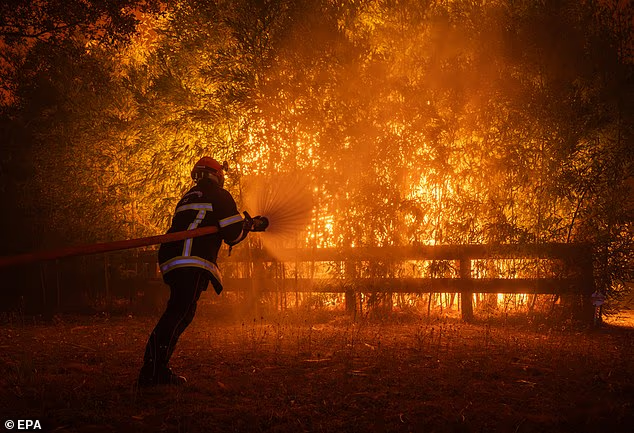
More than 2,500 firefighters are battling a 20km wide front of flames that is spreading towards Bordeaux in southwestern France

The mayor of Bordeaux has said his city is ‘ready for anything’ as out-of-control wildfires creep ever closer.

More than 300,000 residents have been evacuated across France and Spain as wildfires tear through the countries, and Bordeaux faces a total evacuation of its 270,000 residents.

‘We’re very vigilant. We’re ready for anything,’ Bordeaux mayor Thomas Cazenave said.

‘The fire is further south,’ he told reporters at a shelter for people displaced by the wildfires.

Advertisement

‘It is still on the edge of the metropolitan area, but it is not advancing on the western side of the metropolis,’ he said.

Firefighters have become ‘overwhelmed’ and are ‘concerned about the city of Bordeaux’ as they fight back the flames spreading out of control in southwestern France.

Sebastien Berge, head of the Gironde firefighters union, said: ‘The firefighters are overwhelmed. When there’s a fire of this magnitude, it creates its own weather pattern…it’s difficult to monitor.

Advertisement

More than 2,500 firefighters are battling a 20km wide front of flames that is spreading towards Bordeaux in southwestern France

Bordeaux Council is considering a total evacuation of the city where more than 270,000 people live. So far, over 300,000 residents have been evacuated between France and Spain

Bordeaux Council is considering a total evacuation of the city where more than 270,000 people live. So far, over 300,000 residents have been evacuated between France and Spain

‘Especially when there’s a fire front that stretches for more than 20km.

‘When you see how far it’s spreading, I think we can now be concerned about the city of Bordeaux.’

Advertisement

While Mr Cazenave said there were no current plans to evacuate the UNESCO-listed city, the local council said earlier it had been considering a ‘total evacuation of the city if needed’.

Around 270,000 people live in the city proper of Bordeaux, with more than 830,000 in the Bordeaux Métropole urban area, which includes 28 connected local towns.

Thousands have already been evacuated from their villages close to the city that sits at the heart of the famous French wine-growing region. 

Smoke from the inferno has already been billowing into the sky above the city and sinking into its streets, which has caused concern over residents who may be hit with respiratory problems.

Advertisement

French Interior Minister Laurent Nuñez said on Sunday the wildfire situation in southwestern France was ‘very unfavourable’.

‘Another difficult night on the wildfire front,’ Mr Nuñez said on X. ‘The situation remains very unfavourable,’ he said.

A total of 2,500 firefighters, including a Swiss firefighting team, 1,500 military personnel and around 1,200 police have been deployed to battle the blazes in the southwestern region of Gironde, he said.

Bordeaux Council is currently planning for different scenarios that could unfold as the fire tears through the country towards the city, including the total evacuation of the city. 

Advertisement

The first death of the wildfires was recorded yesterday in Spain, where a man – believed to be in his 70s – was found in a car in a ravine in the Spanish town of Manises near Valencia following a forest fire in the area, according to the local fire brigade.

In France, a further 55,000 people were ordered to evacuate late last night, taking the total to 250,000 forced to flee their homes in the Gironde region.

Some 500 French military personnel were deployed to aid firefighters on Friday, and a further 1,500 were sent yesterday evening following a ‘crisis meeting’ held in Paris.

Mr Nuñez said a hulking A400M military transport aircraft will join 18 other water- and retardant-dropping planes and helicopters waging an expected ‘long and very difficult’ battle against the blaze in the Gironde region.

Advertisement

The government has said that the situation is totally unprecedented. 

extensive damage inside a burned-out home following a devastating wildfire in Pelayos de la Presa, 65 kilometers west of Madrid this morning

extensive damage inside a burned-out home following a devastating wildfire in Pelayos de la Presa, 65 kilometers west of Madrid this morning

Burnt buildings around a pool in a destroyed residential area following a wildfire in Le Porge, in the Gironde region, France

Burnt buildings around a pool in a destroyed residential area following a wildfire in Le Porge, in the Gironde region, France

Burning forest near the town of Lege-Cap-Ferret, southwestern France yesterday

Burning forest near the town of Lege-Cap-Ferret, southwestern France yesterday

Advertisement
Firefighters outside Lege-Cap-Ferret. 2,000 military personell have been deployed to aid emergency services in an unprecedented situation in France

Firefighters outside Lege-Cap-Ferret. 2,000 military personell have been deployed to aid emergency services in an unprecedented situation in France

Eacuees from Chapinera and Pelayos de la Presa, who had to hastily leave their homes due to the uncontrolled advance of the wildfires in Madrid's Sierra Oeste region

Eacuees from Chapinera and Pelayos de la Presa, who had to hastily leave their homes due to the uncontrolled advance of the wildfires in Madrid’s Sierra Oeste region

The final leg of the Tour de France, taking place today, has been shortened from 113km (83 miles) to 89km (55 miles) so that security forces can be redeployed to areas affected by the infernos, organisers and police have said.

Spanish interior minister Fernando Grande-Marlaska told local press yesterday: ‘It has not been a positive day. The weather conditions have been absolutely difficult.

Advertisement

‘If it hasn’t gotten worse, it’s thanks to the work of all the emergency services.’

Fires rage close to the capital, Madrid.

Wind gusts yesterday blew the flames south, and Mr Grande-Marlaska warned yesterday that ‘The night is not going to be very positive or very friendly to us.’

Nearly 60,000 people have been evacuated from the Madrid and Ávila regions, while more than 28,000 remain confined to their homes, according to Spain’s interior ministry.

Advertisement

Eight municipalities near Toledo were ordered to evacuate late last night, but it is not clear how many that involved.

Spanish PM Pedro Sánchez said that 130,000 hectares have been reduced to ash in the fires – ahead of the annual average of 100,000 hectares.

Meanwhile, 98,000 hectares have been burned in France, Mr Nuñez said.

Wildfires have also taken hold in Italy where more than 350 fires – including ten major infernos – ignited on the island of Sicily.

Advertisement

Fires have also taken hold in the UK as the Cairngorms National Park has been burning for the last 11 days. Emergency services declared it a major incident on Friday.

Source link

Continue Reading

NewsBeat

Child in hospital with ‘serious’ injuries’ after crash between van and quad bike in Omagh

Published

on

Belfast Live

The driver of the van was arrested on suspicion of offences including driving with excess alcohol in breath

A man and child have sustained “serious injuries” after a crash between a van and a quad bike in Co Tyrone.

Advertisement

Police and NIAS attended the scene of the “serious” crash on the Edergole Road area of Omagh just after 7pm on Saturday night.

The eight-year-old girl and man in his 40s were taken to hospital for further treatment, and a 26-year-old man was arrested on suspicion of offences including driving with excess alcohol in breath.

Chief Inspector McConville said: “Police received a report at approximately 7.05pm on Saturday, 25th July of a collision involving a Peugeot Partner van and quad bike on the Edergole Road.

“Officers attended, alongside colleagues from the Northern Ireland Ambulance Service.

Advertisement

“A man, aged in his 40s, and eight-year-old female child, both sustained serious injuries, and were taken onward to hospital for further treatment.

“The driver of the van, a 26-year-old man, was arrested on suspicion of offences including driving with excess alcohol in breath, and causing grievous bodily injury by driving carelessly with excess alcohol.

“He remains in custody at this time as our enquiries continue into the circumstances of what happened. The road which was closed for a time to allow for further enquiries, has now been fully reopened.”

We would appeal for anyone with information about the collision or who has dash-cam footage of what happened, to contact police using our witness appeal form at https://reporting.psni.police.uk/appeals quoting reference 1380 25/07/26 or call us on 101.

Advertisement

For all the latest news, visit the Belfast Live homepage here and sign up to our daily newsletter here.

Source link

Continue Reading

NewsBeat

Two women arrested after arson attack at Lisburn apartment building

Published

on

Belfast Live

They were arrested on suspicion of multiple offences including attempted criminal damage

Two women have been arrested on suspicion of a number of offences after an arson attack at an apartment building.

Advertisement

Police received a report at around 4.35pm on Saturday, July 25, regarding two women threatening to break windows at an apartment building in the Gregg Street area of Lisburn.

The two women, aged 34 and 38, were arrested on suspicion of threats to damage property and attempted criminal damage.

Following this, police were alerted by nearby residents about a fire to the rear of the apartment building. The Northern Ireland Fire & Rescue Service attended to extinguish the blaze.

The women were further arrested on suspicion of offences including arson with intent to endanger life, while the 38-year-old woman was further arrested on suspicion of resisting police and possessing an article with a blade or point in a public place.

Advertisement

PSNI Detective Inspector Ryan said: “We received a report at around 4.35pm of two women outside an apartment building in the Gregg Street area threatening to break the windows.

“Officers attended and arrested two women – a 34-year-old and a 38-year-old – on suspicion of threats to damage property and attempted criminal damage.

“Police were then alerted by nearby residents about a fire to the rear of the apartment and colleagues from the Northern Ireland Fire and Rescue Service subsequently attended to extinguish this. There were no injuries reported.

“The 34-year-old woman was further arrested on suspicion of arson endangering life with intent, possession of a Class C controlled drug and burglary.

Advertisement

“The 38-year-old woman, who resisted police and kicked out at officers, was also further arrested on suspicion of arson endangering life with intent, criminal damage, possessing an article with blade or point in a public place, resisting police and burglary.

“Both women remain in police custody at this time.

“Our enquiries are ongoing and we would appeal to anyone who has any information which might assist – including ring-doorbell or other footage – to contact police using our witness appeal form at https://reporting.psni.police.uk/appeals, quoting reference 1137 of 25/07/26, or to call us on 101.

“Alternatively, you can call Crimestoppers anonymously on 0800 555 111 or online at http://crimestoppers-uk.org/.”

Advertisement

For all the latest news, visit the Belfast Live homepage here and sign up to our daily newsletter here.

Source link

Continue Reading

NewsBeat

Why Flight Attendants Greet Passengers At The Door

Published

on

Why Flight Attendants Greet Passengers At The Door

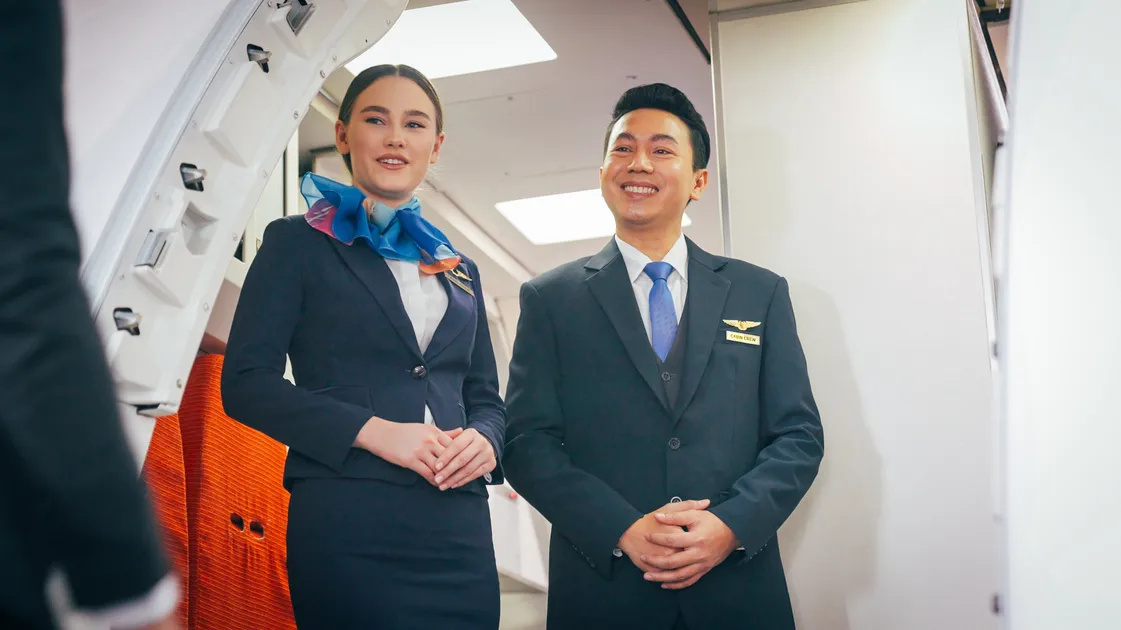
You’ve probably never thought too hard about it. As you board a plane, a flight attendant stands at the aircraft door, smiles, says “welcome,” maybe glances at your boarding pass. It feels like basic hospitality, like the aviation equivalent of a host greeting you at a restaurant.

But that brief interaction is doing a lot more than it seems.

“The smile and greeting you get at an airplane door is probably one of the most judgmental welcomes you’ll ever receive,” Jay Robert, a senior flight attendant and the founder of A Fly Guy Travels, told HuffPost. “We’re judging a lot in those few seconds, and believe it or not, that judgment is part of our job.”

It’s not for the sake of judgment, however. The purpose is actually safety.

Advertisement

“Greeting passengers at the door is our first line of defense in identifying threats that could be brought onto the aircraft,” Robert explained. “Whether it’s illness, intoxication or someone carrying prohibited dangerous goods, we’re constantly scanning for anything that could disrupt the flight or pose a safety risk.”

Of course, there is a customer service and hospitality element to the greeting as well.

“It’s the first opportunity to welcome passengers onboard and set a positive tone for the flight,” said Yuvraj Datta, the chief supply and revenue officer at the travel tech company Fareportal. “It’s also an important observational moment for the cabin crew. Flight attendants are making initial safety and operational assessments that can help identify potential issues before departure.”

He added that flight attendants begin assessing the cabin environment the moment they get on board.

Advertisement

“The greeting is actually a behavioural assessment,” said AirAdvisor founder and CEO Anton Radchenko. “The social framing is deliberate – passengers engage more naturally when they believe they’re being welcomed. Crew are trained to read each individual during that interaction – orientation, steadiness and anything that could become a liability in an enclosed environment at altitude with no exit available.”

In an era of increasing reports of unruly passenger behaviour and even abuse of flight attendants, airline crews are more vigilant than ever. And many of those incidents involve alcohol.

“Generally, flight attendants assess passengers during boarding for sobriety,” said Henry Harteveldt, president and airline industry analyst at Atmosphere Research Group. “If they notice a passenger who appears to be overtly drunk or high, they may ask to see their boarding pass, under the premise of directing them to their seat, but also to alert the crew who may be working where that passenger is sitting to monitor her or his alcohol intake on board.”

Robert echoed that intoxication is one of the biggest things flight attendants are checking for during that greeting process.

Advertisement

“It’s much easier to stop someone at the aircraft door than it is to remove them once they’re seated and settled in,” he said. “During boarding, we constantly communicate with each other. I’ll often call the crew at the back and ask them to keep an eye on a passenger I’ve noticed or get a second opinion before we decide whether someone is fit to fly.”

Flying with an intoxicated passenger can be a serious matter. Dan Bubb – a former airline pilot and professor in residence in the honors college at the University of Nevada, Las Vegas – explained why catching these situations early matters so much.

“You don’t want to be at altitude and have somebody who’s drunk and belligerent, and now you’ve got a problem,” he said. “You have to divert the plane. That’s going to cost money and time. So it’s better to try to catch those possible problems at the door before it closes.”

Mongkol Chuewong via Getty Images

Advertisement

There are legal implications to getting it wrong as well.

“Boarding an impaired passenger creates significant legal and operational exposure,” Radchenko said. “By the time a passenger reaches the cabin door, gate agents have already conducted an initial screen. If you’re flagged at the door, you’ve already passed one assessment, which means the carrier has two separate documented grounds to work with if a denial gets challenged.”

For passengers, the legal calculus runs in the other direction.

“If you’re denied boarding after that interaction, aviation law starts from the assumption that the crew was right,” Radchenko said. “The discretionary authority aircrews hold on safety grounds is wide by design. To challenge it, a passenger has to demonstrate the decision was arbitrary, not just uncomfortable or inconvenient.”

Advertisement

He advised anyone who believes they are unjustly denied boarding to ask for a written reason before leaving the gate. “That document is the starting point for any claim worth filing,” he said.

Flight attendants are also trained to pick up on physical cues that passengers might be trying to hide.

“I’m looking for signs of illness, such as clammy or pale skin, excessive sweating or even visible contagious skin conditions that may require us to offload a passenger before the aircraft door closes,” Robert said.

“Passengers often try to hide the fact they’re unwell, so we have to use all the clues the body gives us to quickly determine whether someone is fit to make the journey by air.”

Advertisement

He’s also paying attention to the way passengers respond to his greetings.

“Slurred speech, confusion, difficulty maintaining balance or the smell of alcohol can all indicate intoxication or impairment,” Robert said. “Once passengers move into the cabin, the other flight attendants continue the assessment, watching for the same signs and making their own observations.”

Scent is part of these assessments for multiple reasons.

“We’re checking for the smell of alcohol but also for offensive body odour,” Robert said. “Both can result in you being denied boarding, as BO is a no-go. Many people don’t realise that excessive body odour can significantly affect the comfort and wellbeing of everyone else on the flight, and airlines have the right to refuse carriage if it becomes an issue.”

Advertisement

Flight attendants also keep an eye on people’s luggage to ensure carry-ons meet the airline’s size and quantity requirements and to identify bags that need to be gate-checked. Robert added that they look out for anything that could be considered a dangerous item as well.

“In recent years, we’ve also added another important responsibility during boarding – looking for potential signs of human trafficking,” he said. “Cabin crew around the world now receive training to recognise indicators that someone may be a victim and know how to discreetly report their concerns.”

These assessments can be wide-ranging, but the practice becomes second-nature over time. And it’s a subtle but important function.

“Airlines often position their most experienced cabin crew at the aircraft door because we’ve developed the ability to rapidly identify potential issues,” Robert said. “As a purser, or cabin manager, while I’m making a good first impression and welcoming guests onboard, I’m also continuously assessing whether each passenger is fit to travel.”

Advertisement

Beyond looking for potential issues, flight attendants are also quietly scanning for potential assets.

“We’re also identifying passengers who may be able to assist in an emergency if they’re seated in an exit row,” said Paula S. Adams, a former crew member for Etihad Airways who now works as a private flight attendant and aviation and business trainer.

Indeed, the boarding process is when crew members identify what they call able-bodied passengers or ABPs.

“These are the passengers we’re most likely to ask for assistance if we ever have an emergency,” Robert said. “I naturally take note of people who appear physically capable, law enforcement officers, military personnel, firefighters, medical professionals or simply someone who looks strong and confident enough to help if a passenger becomes disruptive or assistance is needed during an evacuation.”

Advertisement

Harteveldt noted that another pre-flight step contributes to this process.

“The FAA requires flight attendants to give a verbal briefing to passengers sitting in exit rows and by exit doors about the requirements to operate the doors in an emergency, if so directed by cabin crew, and to receive a verbal confirmation from each passenger sitting in those seats that they understand and agree to the safety-related requirements they are expected to fulfill,” he said. “The flight attendants also use this briefing to determine that the passengers meet the safety requirements and, again, are not impaired by alcohol or other substances before take-off.”

The boarding process is also a time when flight attendants identify travelers who might need additional assistance during the flight due to disability, for example.

“It helps crew members build situational awareness about who is on the aircraft. In an emergency, knowing which passengers may need extra help, or which travelers appear particularly capable of assisting others, can be valuable,” Datta said, adding, ”The few seconds spent greeting each passenger can help crew members identify potential issues before the aircraft ever leaves the gate.”

Advertisement

For all the safety assessment happening at that door, flight attendants also genuinely enjoy greeting travellers.

“While we’re scanning the cabin, we’re also looking for passengers we genuinely want to connect with,” Robert said. “Contrary to popular belief, many flight attendants actually like people. We enjoy chatting with our guests, hearing their stories and helping make their flight memorable.”

“That brief greeting is often our first opportunity to build rapport with passengers,” Adams said. “A friendly interaction at the door helps set a positive tone for the entire flight while allowing us to quietly assess the cabin before departure.”

Robert noted that he’s usually spotted his “in-flight friends” during boarding.

Advertisement

“And if you want a little galley gossip, flight attendants also tend to spot the ‘BOB’ during boarding,” Robert added. “That’s the ‘Best On Board,’ otherwise known as the passenger who catches our eye. It’s usually harmless fun, and you’ll often hear a little discussion in the galley about who we think is the most attractive passenger in our section.”

Now and then, these kinds of connections turn into something more as well.

“I know several cabin crew who met their husbands or wives because of a spark that started during boarding,” Robert said. “So you never know. That warm smile and eye contact at the aircraft door could one day lead to you enjoying one of the best perks of dating a flight attendant. As we often joke in the industry, ‘Marry me and fly for free.’”

Marriage prospects aside, there’s something to be said for simply being kind to the crew.

Advertisement

“If you can just greet the flight attendant, say hi or ask how their day is going, believe it or not, those little comments go a long way with flight crews because they have very long days,” Bubb said. “Before I go on a trip, I even buy a small stack of $5 Starbucks gift cards, and I give them out to the flight crew. It really brightens people’s days. One time I did that, the captain actually came back, shook my hand and gave me a handwritten note. It’s all about little things.”

Source link

Advertisement
Continue Reading

NewsBeat

What TV channel is Rangers v West Ham on? Kick-off time, live stream and how to watch

Published

on

Wales Online

Rangers take on West Ham in their final pre-season friendly before the new season. Here’s how to watch the match live and all the key details

Rangers play their final pre-season fixture this weekend when they welcome West Ham to Ibrox ahead of the start of the new Scottish Premiership campaign.

Advertisement

Derek McInnes’ side will be looking to end their summer schedule on a positive note before travelling to Dundee United for their league opener next Friday, while the Hammers continue their preparations for the Championship season following relegation from the Premier League.

Here is everything you need to know.

What TV channel is Rangers v West Ham on?

The match will not be shown live on television in the UK.

Can I live stream Rangers v West Ham?

Yes. The game will be available to watch live on Rangers TV.

Advertisement

Supporters can purchase a pay-per-view match pass for £8.99.

What time is kick-off?

Rangers take on West Ham on Sunday, July 26.

Kick-off at Ibrox is 4pm (BST).

Why is the game important?

The friendly represents Rangers’ final opportunity to sharpen up before competitive football returns, with McInnes set to make his final assessments ahead of the Scottish Premiership opener.

Advertisement

With places still up for grabs and the transfer window remaining open, several players will be aiming to impress before the season gets underway.

West Ham, meanwhile, will be hoping to build momentum as they prepare for life back in the Championship after last season’s relegation.

Source link

Advertisement
Continue Reading

NewsBeat

EastEnders star Charlie Brooks ‘returning’ as Janine Butcher

Published

on

EastEnders star Charlie Brooks 'returning' as Janine Butcher

Charlie Brooks is rumoured to be reprising her role as Janine Butcher for a brief but “explosive” storyline on the long-running BBC soap.

The plot could be linked to the show’s Christmas Day episode, according to reports.

EastEnders star Charlie Brooks ‘returning’ as Janine Butcher

“The bosses have several huge stories planned for this autumn, which will all start building towards Christmas,” an EastEnders insider told The Sun.

“Although Charlie is only reprising her role as Janine for a couple of episodes this time around, her involvement is bound to cause plenty of drama.

“The plans are being kept top secret as they are really keen fans don’t have the storylines spoilt for them.”

Advertisement

The source added: “But no doubt they are going to love seeing Janine back to cause chaos.”

The BBC did not comment when approached by Newsquest.

Brooks, who joined the soap in 1999, recently teased a possible return by suggesting that Janine’s release from prison was drawing near.

In a recent appearance on Good Morning Britain, the actress was asked whether she might “get out earlier” by entertainment editor Richard Arnold.

Advertisement

She replied: “We’ll have to see!”

Charlie Brooks as Janine BrooksCharlie Brooks last appeared in EastEnders in 2022 (Image: BBC/Jack Barnes/Kieron McCarron)

After a further prompt from Susanna Reid, Brooks added: “I mean, look, I get asked this question all the time.

“I love Janine, I love playing her.

“She’s a wonderful character.

Advertisement

“I always get blessed with such great storylines.”

“So, who knows?

“It’s always a home from home, EastEnders, you know.”

Janine’s long history on the Square includes the murder of her husband Barry Evans in 2004.

Advertisement

She helped to stab to death her fourth husband, Michael Moon, in 2013.

The character was arrested in 2022 after her fifth husband Mick Carter (Danny Dyer) supposedly drowned in the Channel.

Janine was sentenced to five years in jail for perverting the course of justice by framing Mick’s ex-wife Linda Carter for a drink-driving crash.

EastEnders star axed from BBC soap

In other EastEnders news, soap legend Michelle Ryan has been axed from the BBC show, just one year after her comeback.

Advertisement

Ryan returned to Albert Square last year after her character, Zoe Slater, had a 20-year absence.

The star originally appeared on EastEnders from 2000 to 2005, and Zoe’s return saw the character reconnect with her estranged mother, Kat Moon, played by Jessie Wallace.

But now Zoe is set to leave the BBC soap for good, with reports that scriptwriters have chosen to kill off the character.

Zoe’s exit reportedly has already been filmed, with EastEnders viewers able to watch the scenes later this year.

Advertisement

Discussing the characters depature, a source told The Sun, “Michelle’s long-awaited return has been somewhat flat and lacklustre.

“There’s been a backlash about her comeback, leaving some fans disappointed with her on-screen presence.

“There has been some disappointment backstage that the return was short-lived, as everyone loved Zoe Slater’s historic moments.”

Advertisement

Discussing the reports, an EastEnders spokesperson said: “We can confirm Zoe Slater will be departing EastEnders later this year.

“We wish Michelle Ryan all the best for the future.

“However, we never comment on future storylines as we don’t want to spoil it for the viewers.”

Who is your favourite character on EastEnders? Let us know in the comments.

Advertisement

Source link

Continue Reading

NewsBeat

Tools and equipment stolen from Ruddings Farm, Kirk Deighton

Published

on

Tools and equipment stolen from Ruddings Farm, Kirk Deighton

Police are urging witnesses to come forward following a burglary at The Barn, Ruddings Farm, Wetherby Lane, Kirk Deighton.

It happened sometime between Monday, July 20 and Friday, July, 24, when thieves broke into a metal storage container.


Recommended reads:

Advertisement

TV star buys iconic North Yorkshire pub made famous by hit show

RECAP: Major police incident at York venue – people told to stay inside

York garage confirms permanent closure as prime site faces uncertain future


A North Yorkshire Police spokesperson said: “This is a rural location, but we’re keen to hear from anyone who was in the area and may have seen anything unusual. Did you notice any suspicious vehicles, people, or activity around Ruddings Farm during this period?”

Advertisement

Police are also asking people to check any CCTV, doorbell, or dashcam footage from those dates.

Anyone with information is asked to contact North Yorkshire Police on 101, quoting incident number NYP-24072026-0230.

Source link

Advertisement
Continue Reading

NewsBeat

Trump’s tariffs are based on a forced-labor argument. Are they just a way to avoid Congress?

Published

on

Trump's tariffs are based on a forced-labor argument. Are they just a way to avoid Congress?

NEW YORK (AP) — The Trump administration has imposed double-digit tariffs on more than 60 countries, using a legal justification that permits the president to levy import taxes and other sanctions against countries found to engage in “unjustifiable,” “unreasonable” or “discriminatory” trade practices.

The new tariffs announced in recent days take effect just as temporary 10% worldwide tariffs expired, and critics say they are less about cracking down on forced labor than they are a way to replace those tariffs. The expired tariffs were themselves a temporary replacement for worldwide tariffs the Supreme Court struck down in February.

The tariffs were levied on countries that the U.S. says either don’t have or don’t effectively enforce a forced-labor import ban. The affected countries, which account for 99% of U.S. imports, were quick to protest, calling the Trump administration’s claims unfounded and arbitrary, as nations with vastly different records on forced labor received the same tariff level. The U.S. spent four months investigating but gave few details on how it arrived at the tariff rates, which are either 10% or 12.5%.

Sidestepping Congress

The tariffs were levied under Section 301 of the Trade Act of 1974 on countries that the U.S. determined had failed “to impose and effectively enforce a prohibition on the importation of goods produced with forced labor.”

Advertisement

During President Donald Trump ‘s first term, he cited Section 301 to impose sweeping tariffs on Chinese imports amid a dispute over the sharp-elbowed tactics Beijing was using to challenge America’s technological dominance. The U.S. is also using 301 powers to counter what it calls unfair Chinese practices in the shipbuilding industry.

“The 301s allow a permanent tariff without going to Congress to settle the dispute,” said Barry Appleton, a law professor and co-director of New York Law School’s Center for International Law. “That’s what all of this is about. The president doesn’t want to knock on the front door of Congress, so he’s trying every side door and every unlatched window to get in.”

Little evidence that countries failed to enforce import bans

The office of the United States Trade Representative (USTR) said it consulted with all 60 economies under investigation and held two rounds of public hearings, elicited more than 2,100 public comments, and had “engagement” with its trading partners about what they were doing to combat forced labor bans.

It didn’t detail its talks with the countries, saying those were confidential. Experts say it is fairly straightforward to investigate whether a country has a ban or not, but it is difficult to determine the government’s exact rationale for each country’s failure to enforce import bans.

Advertisement

“There’s not a lot of hard evidence there,” said Scott Lincicome, vice president for general economics and trade policy at the Cato Institute, a libertarian think tank. “It’s pretty laughable on its face to think that a country like the ones in Europe or in Norway or Switzerland aren’t doing enough to police forced labor.”

And even if countries do enact and enforce the forced-labor import bans the U.S. wants, they would still need to prove that they’re enforcing them to Washington’s satisfaction before the tariffs would be removed, said lawyer Patrick Childress, a partner at Holland & Knight and a former U.S. trade official.

“This suggests that no short-term path for countrywide relief from the new Section 301 tariffs will be available,” he said.

Countries and industries reject the forced labor argument

Many countries have pushed back against the Trump administration’s findings.

Brazil, which faces a 12.5% forced-labor tariff, called the U.S. move “arbitrary and unjustified.” The U.S. “chose to manipulate an issue of great importance to human rights and the struggles of workers worldwide in order to accuse 59 countries and the European Union of unfair practices,” it said in a statement.

Australia also questioned the justification for its 12.5% tariff.

Advertisement

“We believe that amongst all of the countries in the world, Australia does take the issue of slavery, modern slavery, seriously, and will continue to do that,” Trade Minister Don Farrell told reporters in Adelaide.

Carve-outs have riled some industries. The National Council of Textile Organizations (NCTO), which describes itself as the voice of the American textile industry, protested a mechanism that exempts the Section 301 tariffs for textile and apparel imports from Bangladesh, Cambodia, Indonesia, and Malaysia based on those countries’ imports of U.S. cotton and textiles.

“No other industry has been more disadvantaged by forced labor than the U.S. textile industry, which employs 453,000 workers and has lost 41 plants over the past two plus years,” NCTO chief executive Kim Glas said in a statement. “We remain strongly concerned that USTR’s textile mechanism will harm the very domestic manufacturers the administration seeks to help.”

US forced-labor bans don’t always work

The U.S. has two major pieces of legislation related to forced-labor import bans. The Tariff Act of 1930 gave Customs and Border Protection the authority to seize shipments where forced labor was suspected and to block further imports. But it had a big carve-out: If there was “consumptive demand,” meaning there wasn’t sufficient supply to meet domestic demand, imports were allowed regardless of how they were produced. The Trade Facilitation and Trade Enforcement Act that took effect in 2016 eliminated that loophole.

Advertisement

In 2021, the Uyghur Forced Labor Prevention Act was passed. It blocks imports from China’s Xinjiang region unless businesses can prove the items were made without forced labor.

But goods made with forced labor can still make it into the U.S. In 2015, an Associated Press investigation found that slave labor was used in the fishing industry in Southeast Asia. The seafood they caught made its way to supermarkets and pet food providers across the U.S.

An investigation by The Associated Press in 2020 into the $65 billion palm oil industry found labor abuses among an invisible workforce consisting of millions of men, women and children in Asia. The fruit they harvested made its way into the supply chains of major companies, including Unilever, L’Oreal, Nestle and Procter & Gamble.

Calls for a more comprehensive approach to combat forced labor

During hearings on the tariffs this month, National Retail Federation vice president Jonathan Gold, who was representing the business coalition the Joint Association Forced Labor Working Group at the hearing, said that in order for the import bans to work, they would have to be much more extensive.

Advertisement

He said there need to be “clear, measurable benchmarks” tied to tariffs for countries to hit, and that the U.S. should help countries build enforcement programs.

Kenya Davis, a partner at the Boies Schiller Flexner law firm, said an effective ban needs a “comprehensive approach” that provides transparency about what the investigations consisted of, along with programs that provide countries aid in enforcing bans.

Advertisement

Source link

Continue Reading

Trending

Copyright © 2025