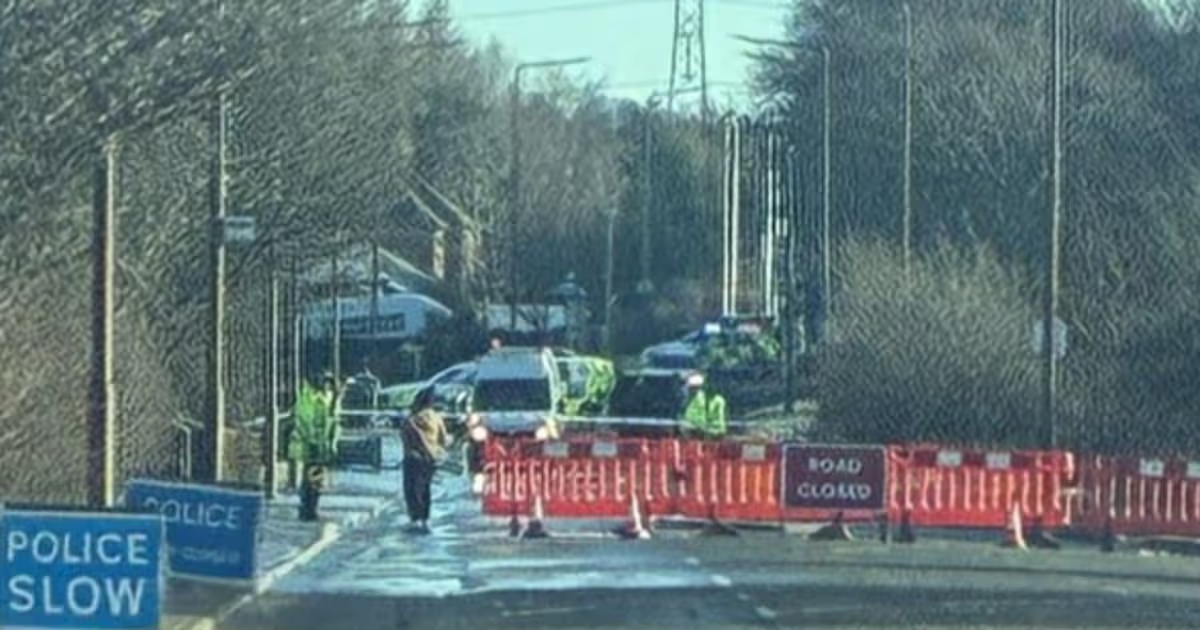
Police have taped off a main street in a Scots town following an early-morning crash.
Advertisement
Emergency services were called to the collision on Main Street in East Whitburn, West Lothian, at 6.25am on Saturday, February 14. Crews remain at the scene.
It’s currently unknown if there are any injuries. Motorists have been urged to use alternative routes.
Images taken from the scene show a large cordon in place. Multiple cop vehicles are in attendance.
A statement from Police Scotland reads: “Main Street in East Whitburn has been closed between Redmill Court and Copart due to a crash which happened around 6.25am. Motorists are advised to use alternative routes.”
Advertisement
We’ll be bringing you the very latest updates, pictures and video on this breaking news story.
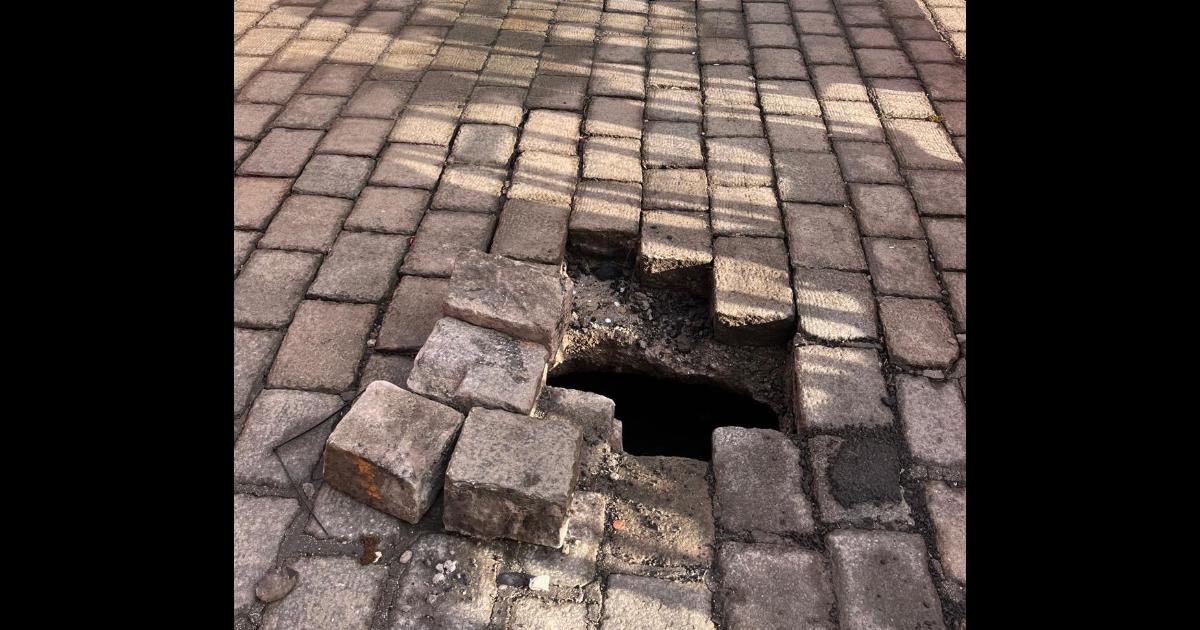
Micklegate has been closed to motorists for almost a week after City of York Council said officials had discovered a void beneath the road surface close to the street’s junction with North Street.
The void, which is clear to observers passing by, has disrupted residents and business deliveries, which are being re-routed.
Recommended reading:
Despite this, the council insists that the street is “very much open for business” throughout the Bank Holiday weekend, with Micklegate still accessible for pedestrians, mobility aid users and cyclists.
Advertisement
Micklegate has been closed to motorists since Thursday (March 26) (Image: Newsquest)
Steve Wragg, the council’s head of highways asset management, said: “We aim to keep disruption to a minimum and are undertaking a thorough investigation of the void and what’s caused it, before we can decide on the best way to resolve it and then re-open the road.”
Nationwide has issued a crucial reminder about the ISA contribution deadline as major changes to the £20,000 allowance loom from April 2027
about Nationwide Building Society has issued an update concerning an approaching final deadline for savers. The latest statement follows an enquiry from a customer on social media.
Advertisement
The customer raised an important question to the organisation about ISAs, asking: “What’s your deadline for the end of the tax year?” During each tax year, you can put up to £20,000 into tax-free ISAs, with the current allowance able to be split between cash ISAs or stocks and shares ISAs, according to your preference.
Responding to the enquiry, Nationwide pointed the customer towards a page on their website offering additional information about the ISAs they provide.
Nationwide was asked to clarify the cut-off date for customers to make deposits into their accounts using this year’s ISA allowance. The organisation stated: “For Nationwide (and all ISA providers), ISA contributions must be made by 5 April (by 11.59pm on 5 April), the final day of the tax year, for them to count toward that year’s allowance.
“This aligns with the HMRC ISA rules, which Nationwide adheres to. All ISAs and rates are accessible in branch, by phone or online, as we understand customers appreciate having options in how they bank, which is why we’ve extended our Branch Promise.”
Advertisement
The Branch Promise represents Nationwide’s commitment to maintain all its 605 high street branches open until at least 2030. The organisation also provided some additional guidance about managing your savings, reports Wales Online.
Nationwide told the customer: “Customers can also check any online ISA or savings accounts on the app with rate and maturity dates all detailed there. Customers can also make use of our in‐app budgeting tool to help them manage their money.”
At present, the building society offers rates of up to 4.5 per cent on its ISA products, including both a five-year fixed term and a three-year fixed term, each providing 4.5 per cent. A major change to ISAs is on the horizon.
From April 2027, the current £20,000 annual allowance will effectively be reduced, meaning only £12,000 will be allowed for deposits into any form of ISA. The remaining £8,000 must be allocated to investment-based ISAs.
EXCLUSIVE: I Love LA is now ready to stream on HBO Max and it stars the daughter of a Hollywood icon.
Hayley Anderson Screen Time TV Reporter
22:32, 01 Apr 2026Updated 22:44, 01 Apr 2026
An I Love LA actress has revealed a surprising family connection between her father and one of her fellow cast members.
HBO Max has finally launched in the UK, bringing with it a wealth of acclaimed programmes, including I Love LA, a sitcom following Maia (played by Rachel Sennott) whose life descends into chaos when her influencer friend Tallulah (Odessa A’zion) makes an unexpected return.
Advertisement
The cast is rounded out by Jordan Firstman, Gossip Girl‘s Leighton Meester, and actress True Whitaker, who portrays Maia and Tallulah’s close friend Alani Marcus.
Cinema enthusiasts may recognise Whitaker as the youngest daughter of acclaimed actor Forest Whitaker, renowned for his roles in The Last King of Scotland, The Butler and Rogue One: A Star Wars Story.
However, it was only upon arriving on the set of I Love LA that True discovered her father had a longstanding connection with one of her co-stars.
Speaking to Reach Plc, Whitaker revealed: “My dad in the show, Keith David, is a friend of my dad’s.
“When I was on set shooting the last episode, I Facetimed my dad being like ‘Hey, do you know this guy? This is my dad.’
“And he [Forest Whitaker] was like ‘Keith?!’ and Keith was like ‘Forest!’
Advertisement
“And apparently my dad is the reason Keith moved to LA. They did Platoon together when they were in their 20s so it was kind of cute to see them reminisce.”
Also featuring Willem Dafoe and Charlie Sheen, the 1980s film Platoon chronicled the experiences of a young American volunteer confronting the brutal realities of the Vietnam War.
While Whitaker portrayed supporting character Big Harold, actor Keith David took on the role of seasoned soldier King.
Advertisement
True also spoke of her renowned father’s delight at her securing a prominent part in I Love LA, having previously appeared in his drama Godfather of Harlem.
She said: “He’s extremely proud of me. Even his assistant pulled me aside and was talking to me and got emotional and was like ‘you have no idea.’
“My dad apparently had just been gloating to everybody and was stoked to see me in this light.
“And for me to be able to use my comedic skills, because obviously in the house I’m annoying and loud and funny but now I can actually utilise it.”
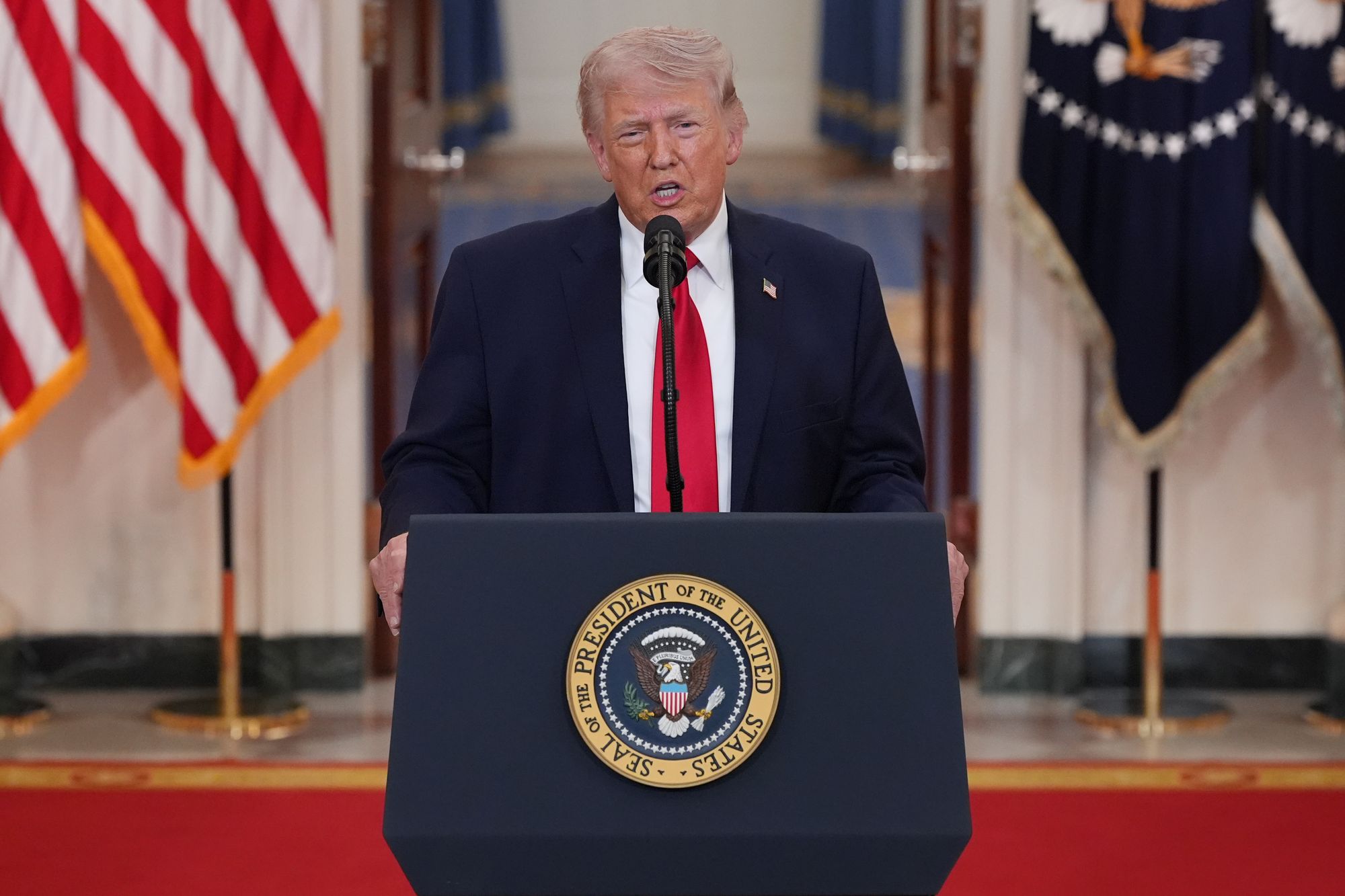
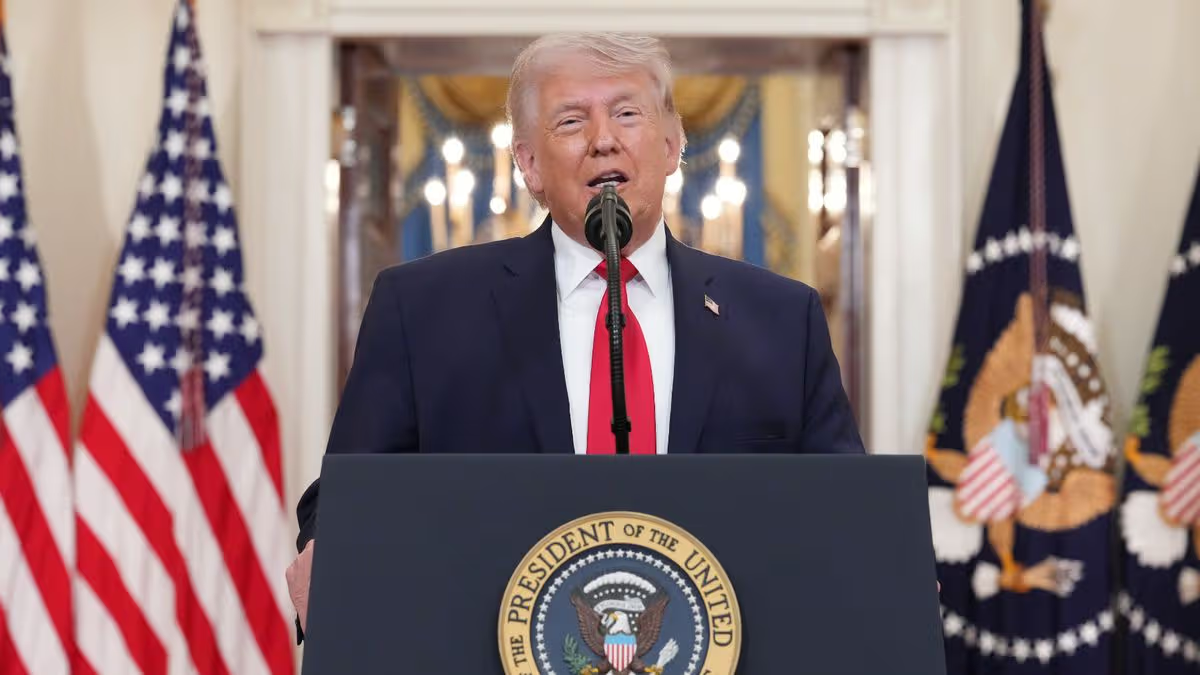
A weary President Donald Trump slurred his way through a disjointed national TV address Wednesday night in which he repeated the same justifications for his war with Iran that he’s been posting on social media throughout the month-long conflict.
The primetime speech, which pre-empted scheduled television programming on all broadcast networks at the request of the White House, had been billed as a major address in which Trump would finally lay out the justifications for the military action he started against Iran — one that would finally provide details on how and when the conflict would end to an American populace that has grown weary of it.
Instead, the president spent nearly 20 minutes speaking from a lectern in the White House’s main foyer, in prepared marks that often repeated, word for word, his Truth Social posts, and offered contradictory statements about the war, Iran and the now bogged down Strait of Hormuz, while repeatedly having trouble pronouncing words like “enemies,” “Venezuela” and “battlefield.”
Addressing both the cameras and an audience of cabinet members who’d been summoned to offer support — including Vice President JD Vance, Treasury Secretary Scott Bessent, Secretary of Defense Pete Hegseth and Secretary of State Marco Rubio — Trump began by claiming the joint U.S.-Israeli campaign, dubbed “Operation Epic Fury,” had “delivered swift, decisive, overwhelming victories on the battlefield, victories like few people have ever seen before” before repeating many of the same claims he has made about damage to Iran’s military capabilities for the last month in appearance after appearance.
Advertisement
He bragged about Iran’s navy being “gone,” their Air Force “in ruins,” and crowed that “most” of the country’s leaders are “now dead” from decapitation strikes in the opening days of the war while claiming that Tehran’s ballistic missile capability has been “dramatically curtailed.”
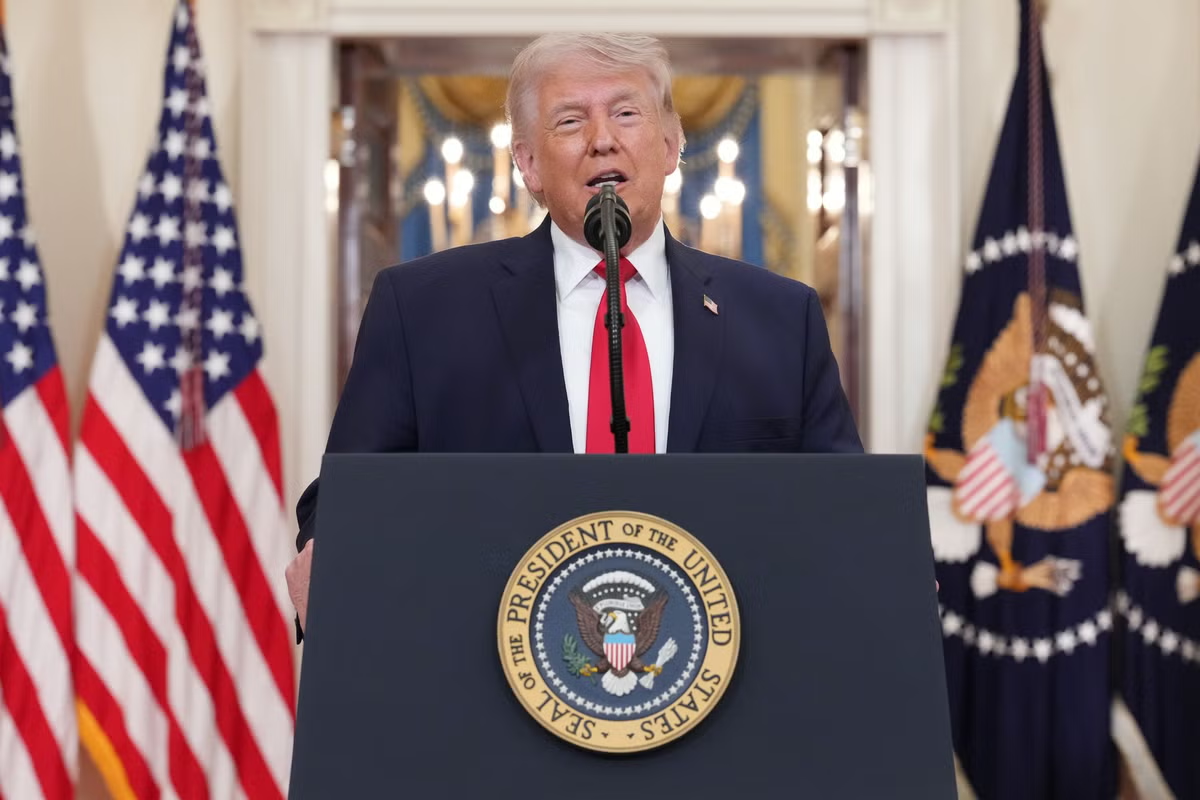
In a 20-minute speech from the White House, President Donald Trump offered no new details to a nation wary of his reasoning for going to war with Iran. (AP)
“Never in the history of warfare has an enemy suffered such clear and devastating, large scale losses in a matter of weeks,” Trump said before claiming that the U.S. was “winning and now winning bigger than ever before” as a result of his decision to attack Iran in the midst of negotiations on Feb. 28.
He then pivoted to bragging about oil production in both the U.S. and Venezuela and claimed the country is now “totally independent of the Middle East.”
“We don’t have to be there. We don’t need their oil. We don’t need anything they have, but we’re there to help our allies,” he said.
The president’s rambling address took place just hours after a new CNN poll revealed that Americans have largely soured on the war, with just 34 percent of respondents voicing approval of it. The poll also found a super-majority of 66 percent of Americans disapproving of the war, with 43 percent of those reporting that they strongly disapprove.
Advertisement
Trump proceeded to change subjects once more by launching into another series of grievances as justification for launching the war, including blatantly false claims about Iran’s alleged culpability for the 2000 bombing of the U.S.S. Cole for which al-Qaeda terrorists are preparing to go on trial before military commissions at the U.S. naval base in Guantanamo Bay, Cuba.
He later returned to discussing present events by repeating his oft-used lines about America’s purported objectives of “crippling” Iran’s military capabilities and said he was “pleased” to say the “core strategic objectives are nearing completion.”
The president had trouble pronouncing numerous words during his rambling address to the nation (AP)
Without offering any evidence, he claimed that the families of the 13 American service members who’ve been killed since the start of the conflict had each asked him to “finish the job” while suggesting that failing to “complete the mission” would dishonor the fallen soldiers and airmen.
And inexplicably, he boasted that U.S. “has never been better prepared economically” to deal with the skyrocketing gasoline prices his war has caused while blaming the sky-high energy costs solely on Iran “launching deranged terror attacks against commercial oil tankers in neighboring countries that have nothing to do with the conflict.”
“We were a dead and crippled country after the last administration, and made it the hottest country anywhere in the world, by far with no inflation, record setting investments coming into the United States — over $18 trillion and the highest stock market ever, with 53 all time record highs in just one year. It all positioned us to get rid of a cancer that has long simmered. It’s known as the nuclear Iran, and they didn’t know what was coming,” he said.
Advertisement
The president’s non sequitur on the U.S. economy and gas prices came as his advisers reportedly brace for oil prices to surge past the $150-a-barrel mark as the Iran war stretches into its second month and the Strait of Hormuz — a vital trade chokepoint through which 20 percent of the world’s oil flows — remains largely closed.
Because Iran has refused to allow most oil tankers passage through the key chokepoint, global oil supplies have been squeezed, leading to the massive price increases on the global oil market.
Yet Trump, seemingly ignorant of the interconnected nature of petroleum trading, appeared to dismiss the war’s effect on oil prices and claimed the U.S. is somehow immune from the effects of the war he started because of what he called his administration’s “drill baby drill” program.
“There’s no country like us anywhere in the world, and we’re in great shape for the future. The United States imports almost no oil through the Hormuz Strait and won’t be taking any in the future. We don’t need it. We haven’t needed it, and we don’t need it,” he said.
Advertisement
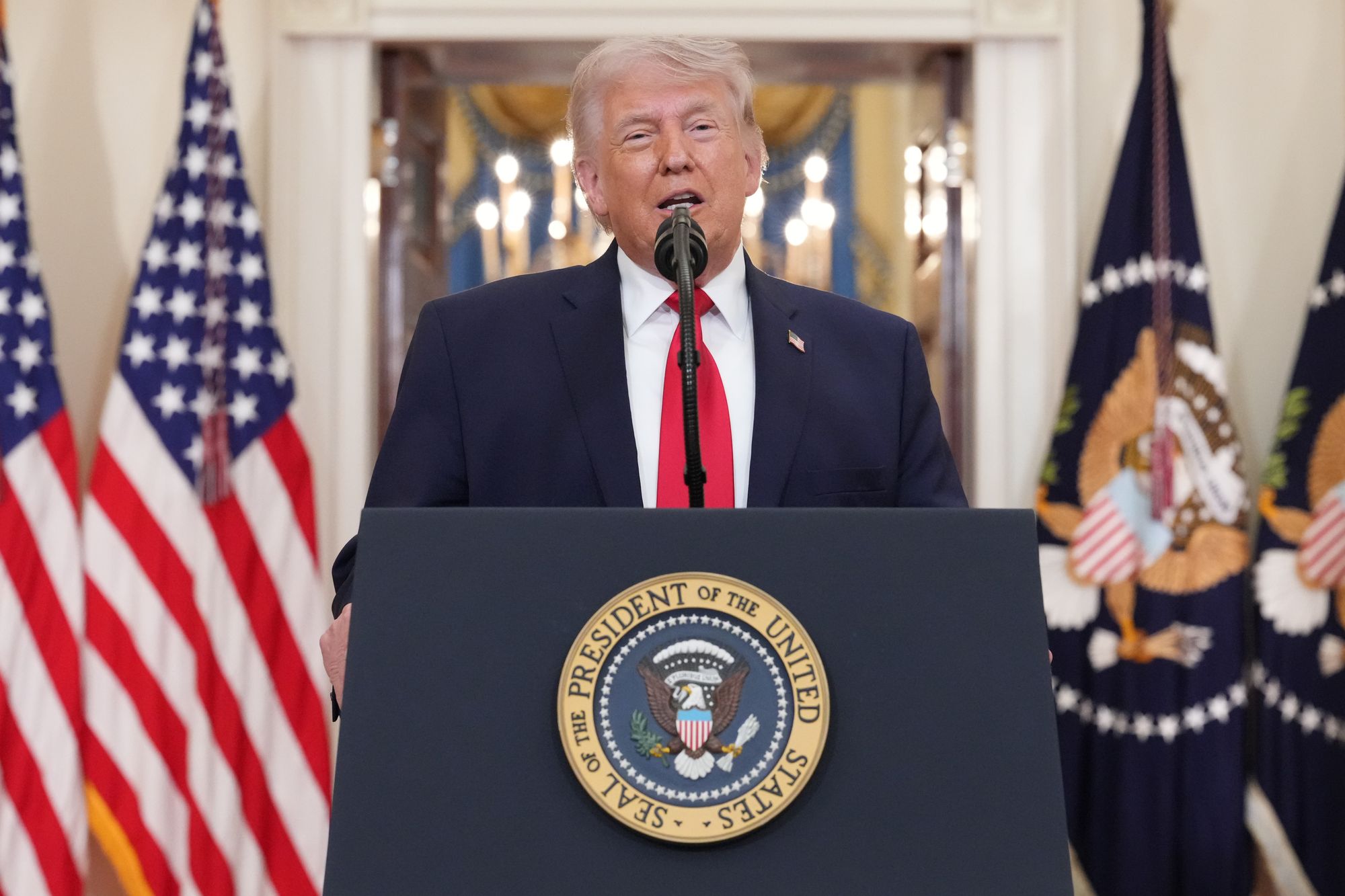
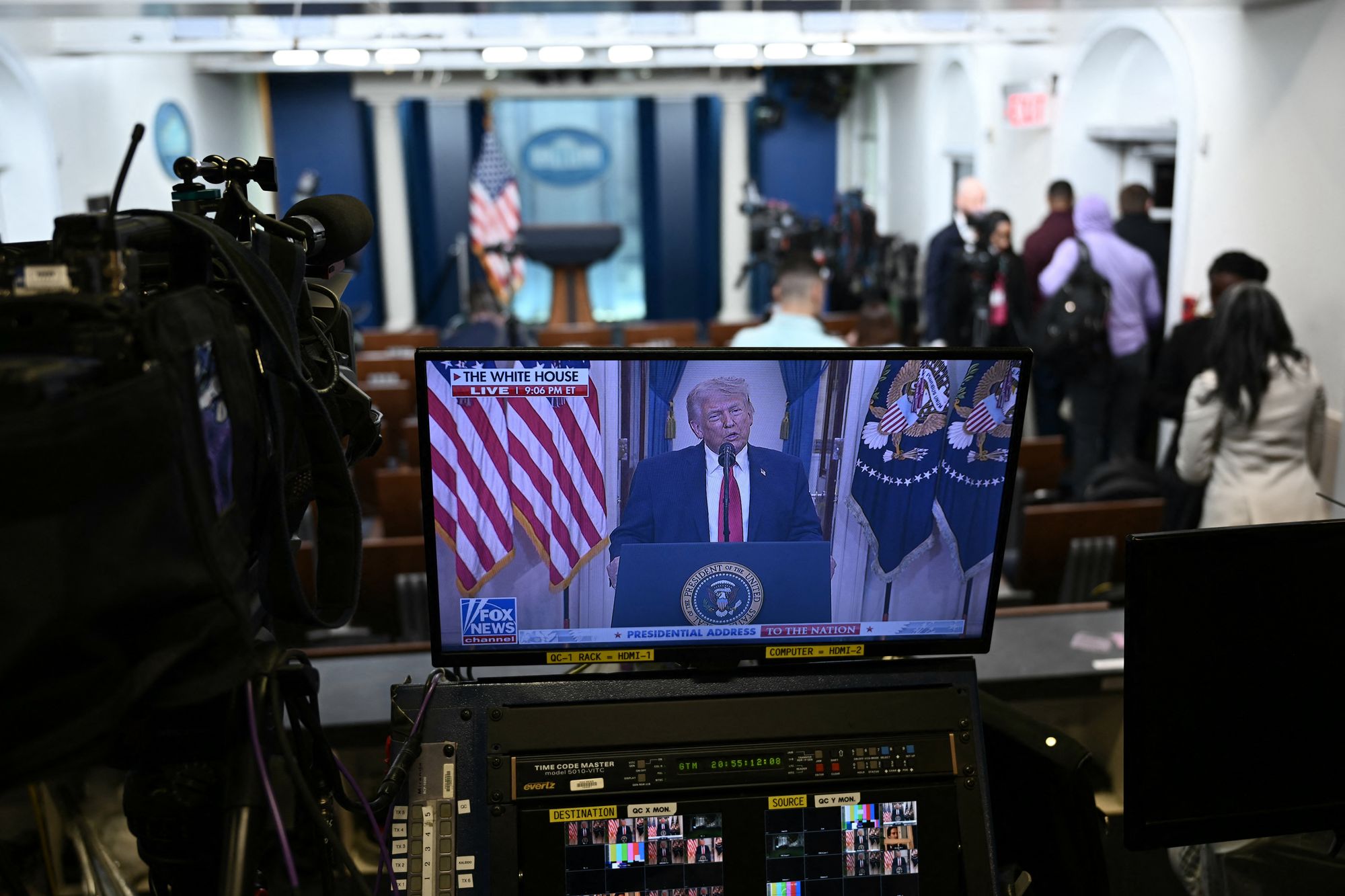
The televised address as seen at the James Brady Press Briefing Room of the White House in Washington, DC on April 1, 2026. (AFP via Getty Images)
He then appeared to repeat, verbatim a Truth Social post he’d made earlier this week in which he urged other nations to put their naval power towards forcing the strait to be reopened to maritime traffic.
“They must cherish it. They must grab it and cherish it. They can do it easily. We will be helpful, but they should take the lead in protecting the oil that they so desperately depend on,” he said.
“So to those countries that can’t get fuel, many of which refuse to get involved in the decapitation of Iran, I have a suggestion: Number one, buy oil from the United States of America. We have plenty. We have so much. And number two: Build up some delayed courage … go to the Strait and just take it, protect it, use it for yourselves. Iran has been essentially decimated. The hard part is done, so it should be easy,”
Trump added that when the conflict ends, the disputed waterway would “open up naturally” and predicted that the economic damage from the war he started would reverse itself.
“It will resume the flowing and the gas prices will rapidly come back down. Stock prices will rapidly go back up … our economy is strong and improving by the day, and it will soon be roaring back like never before. It will top the levels that it was a month ago,” he said.
Advertisement
His remarks were no different from anything he’s offered over myriad public appearances since the start of the war, despite hopes that he would provide a timeline for winding down the unpopular military operation.
Instead, he claimed the war would continue for “the next two or three weeks” while U.S. forces “bring [Iran] back to the Stone Age where they belong” and threatened indiscriminate attacks on Tehran’s electrical generation capacity — something that would be a war crime under U.S. law.
“We are going to hit each and every one of their electric generating plants very hard and probably simultaneously, we have not hit their oil, even though that’s the easiest target of all, because it would not give them even a small chance of survival or rebuilding. But we could hit it and it would be gone. And there’s not a thing they could do about it,” he said.
Choosing the right seat on the plane can determine a lot for your overall flight experience, and a travel expert has revealed exactly why you should avoid booking 11A
We all have a preferred window or aisle seat when flying, but one travel expert has revealed the exact seat you should always avoid.
Advertisement
Choosing the right seat on a plane can certainly come with its bonuses. Whether that’s more legroom, closer to the bathrooms, being the first row to be served refreshments, or a quieter spot near the back, away from babies. Yet some seats can be a disadvantage.
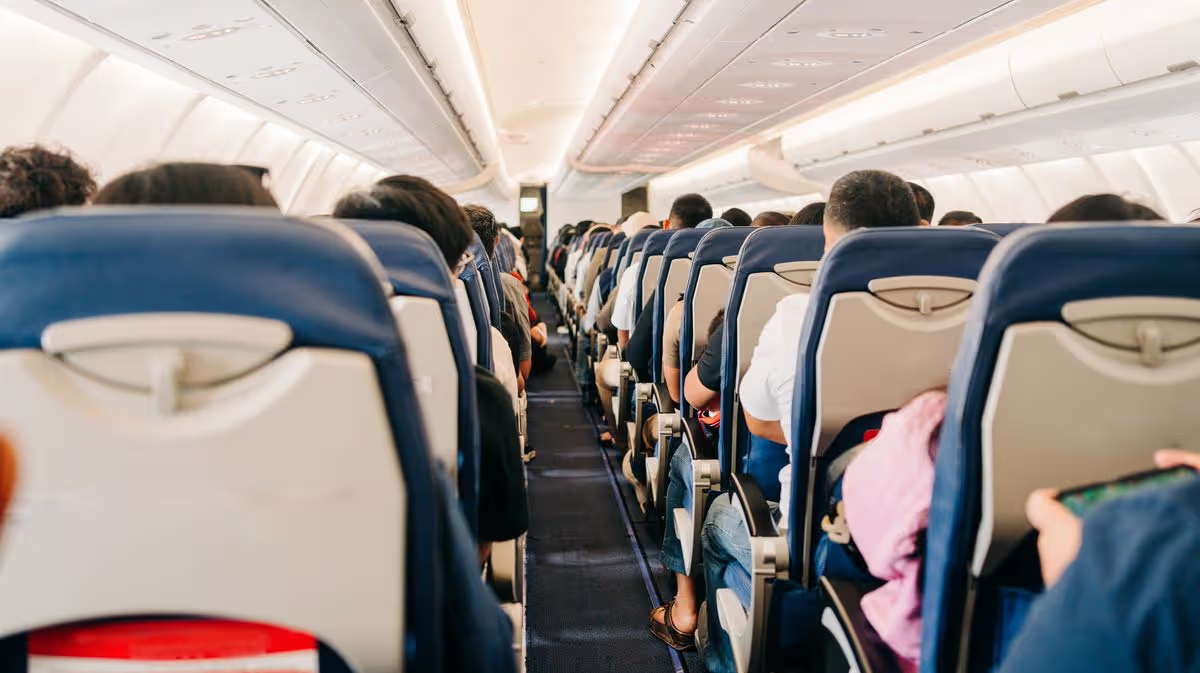
Window seats are popular among travellers, particularly for those wanting to enjoy the view during take-off or landing, for a little more privacy, or to take a little snooze against the cabin. One favoured window seat on planes has been 11A, due to its positioning near or over the wing, which is thought to offer less disruption from turbulence.
While it may sound appealing, 11A might not be as relaxing as it sounds. Andrea Platania, operations manager at airport transfer platform Transfeero, said that this specific seat often leaves passengers disappointed.
“Seat 11A might sound ideal because it’s by the window, but it can quickly become frustrating, especially on anything longer than a short hop,” the travel expert said. “You’re quite far from the toilets, which isn’t ideal, and getting in and out of that seat can be awkward.”
Andrea also explained that this seat can prove tricky for those who want to move around and stretch during the flight. “If you’re in 11A, you’re relying on the people next to you to move every time you want to get up. That might be fine once or twice, but over a longer journey it becomes inconvenient very quickly.”
It’s a seat that can also feel a little cut off from the rest of the cabin. “You’re not close to the aisle, so you don’t have that easy access, and you’re not in a premium position either. It ends up being a seat that looks better when you book it than it feels when you sit in it,” he outlined.
Advertisement
But that’s not the only seat you might want to think twice about booking. The expert said that seats 11A and 11F are among the “least rewarding seats” on a flight.
“Seats like 11A and 11F are often overlooked when people are booking, but they’re right in that middle section of the aircraft where you lose a lot of the small conveniences. They don’t seem bad on paper, but in practice, they’re some of the least rewarding seats to be in, Andrea said.
Yet one of the biggest disadvantages of these seats is during food and drink service. “On most short and mid-haul flights, cabin crew will begin service from both the front and the back of the plane, then work their way towards the centre. If you’re sitting in rows like 11, you’re effectively last in line from both directions.”
It can become even more of a drawback during busy flights. He said: “Passengers in seats like 11A and 11F are far more likely to find that popular snacks, meals, or even drinks have already run out by the time the trolley reaches them. It’s something people don’t think about when booking, but it becomes very obvious once you’re in the air.”
If that wasn’t enough to deter you from seats 11A and 11F, Andrea noted that they are inconveniently positioned on board. “You’re not particularly close to the toilets, and you’re not near the exits either, so you don’t get the benefit of convenience in either direction.
“You’re just in that middle zone where everything takes a bit longer.” So next time you book your plane seat, have a think about where you’d rather sit, whether that’s to ensure you’re one of the first to be served your meal or somewhere to ensure little disruption during your flight.
Do you have a travel story to share? Email webtravel@reachplc.com
If your dog barks during walks, there could be a way to stop or reduce this habit
Sophie Buchan Money and Lifestyle Writer
02:11, 02 Apr 2026
If your dog barks on walks, there may be a good reason behind it. And according to one trainer, the cause could lie in what happens right before you even leave the house.
According to Adam Spivey, Director and Head Trainer at Southend Dog Training, one of the worst things you can do is ask your dog if they want to go outside. The expert who set up his company in 2012, explained: “Stop saying ‘do you want to go walkies’ to your dog if it’s dragging you down the street or if it’s barking its head off at everything it sees.
Advertisement
“We know the dog ways to go for a walk. But when we say ‘do you want to go walkies’, all we do is excite the dog and amp up the dog.”
Content cannot be displayed without consent
Because your four-legged friend gets overly excited, they may stop listening – and when you try to attach the leash, they’re already too worked up to stay under control.
He continued: “We wonder why the walk itself is an absolute disaster. The more excited the dog is, the more amped up it’s going to be.
“If you have a dog that’s overstimulated, it’s going to be much more reactive.” But what else can you do to help keep your dog calm during its walk?
Advertisement
Adam continued: “What we wanna do is when it comes time for a walk, call the dog, attach the lead, if the dog starts losing its mind, sit down for 5 minutes, wait for the dog to calm down, then when they’ve calmed down, go to the door, pop the dog behind you, not in front, open the door and if they go to rush out, shut the door.
“Wait until the dog is calm. If you do that walk in silence, it will be much calmer, more intuitive and much more successful.”
And some say this method really works. Taking to the comments a dog owner wrote: “Like you teach silent walks, I do silent “get ready” they know the routine, they know the days they work on the ranch and they know their walking days. I literally get ready quietly and go to the car and they quietly just follow. It’s all very calm and relaxed.”
Another added: “Why I love border collies, my boy just knows when I grab the leash he hears it and comes to me doesn’t jump or run around.”
Advertisement
Dogs Trust: How can I stop my dog pulling on the lead?
Further advice from the professionals at Dogs Trust recommends that owners “stop walking when the lead starts to tighten” to discourage pulling and encourage better leash manners.
It explains: “Teach your dog that walking next to you with a loose lead means they get to move forward – and pulling means they don’t.
“The second the lead starts to tighten, stop walking. Stand still, keep quiet and don’t move forward again until the lead is slack.
Advertisement
“Don’t jerk the lead back or tell your dog off – just stand and wait calmly and quietly. If your dog does not turn back to you, try walking a couple of steps in the opposite direction to get their focus back.”
“This includes cutting the energy price cap by £117, extending the fuel duty cut until September and supporting families facing rising heating oil costs. “Parliament rising for the Easter recess is a long‑standing convention and does not prevent the Government from acting or continuing to engage with industry, parliamentarians and devolved administrations as we have done throughout this crisis. “We want to work constructively with the Scottish Government to focus on delivery, and for them to play their part in supporting people across the UK.”
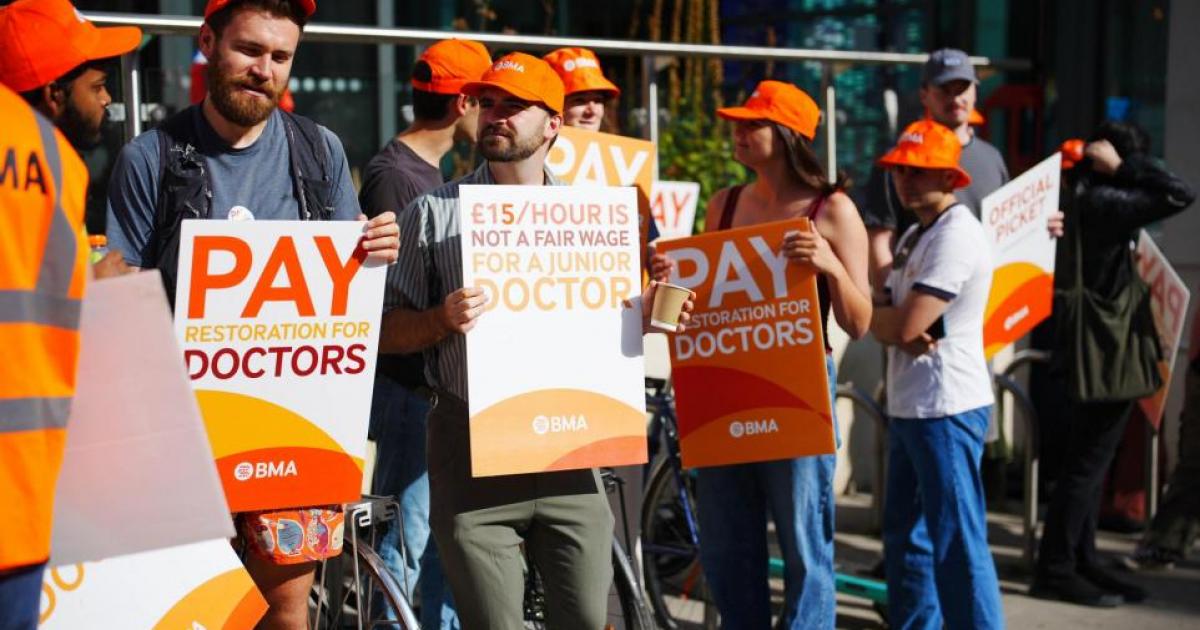
The MP for Scarborough and Whitby Alison Hume, has responded to what she views as the “unaffordable” pay demands of resident doctors who are set to begin a six-day strike action from Tuesday (April 7) to Monday, April 13.
The British Medical Association, which represents doctors, called the strike in response to a ‘below inflation’ pay offer of 3.5 per cent.
Prime Minister Sir Keir Starmer has given the BMA 48 hours to call off the strikes or face losing 1,000 extra training places.
Advertisement
Commenting on the looming industrial action, Labour’s MP Ms Hume said: “I think the Prime Minister has said that they really do need to come to the table and agree the deal or they’ll lose the extra training places that are on offer.”
She said: “I know that the health secretary has been meeting with them for many, many months and it’s not unreasonable that the pay demands that they want are just unaffordable, and so I’m really concerned that that strike is going ahead.”
The BMA said the Government had the power to “avert this strike action by coming back to the table with a credible offer on both jobs and pay”.
“We remain willing and available to re-enter negotiations, but we are not willing to risk locking in further pay erosion. The Government shifted the goalposts on pay at the 11th hour, leaving us with no option but to make ourselves heard from the picket line,” the union added.
Advertisement
The prime minister penned an article in The Times this week, describing the 15th walkout since the long-running dispute started in 2023 as “reckless”.
He said: “Walking away from this deal is the wrong decision. It is a reckless decision. And doing so without even giving resident doctors themselves the chance to vote on it makes it even worse.
”Because the truth is this: no one benefits from rejecting this deal.”
Ms Hume said: “I would just say to my constituents, if you need health services and you need the NHS, please do get in touch.
Advertisement
“Don’t take the strikes and think you can’t get in touch. If you need help, ask for it.”
York and Scarborough Teaching Hospitals NHS Foundation Trust said that disruption to staffing may mean some appointments and procedures might need to be rescheduled.
A spokesperson said: “If we have not contacted you, please attend any planned appointments as normal. We will contact you if your appointment needs to be rescheduled due to strike action. We will only reschedule appointments and procedures where necessary and will rebook as quickly as possible.
“If you need urgent care, please continue to come forward as normal, regardless of any industrial action taking place. Especially in emergency and life-threatening cases – when someone is seriously ill or injured, or their life is at risk.”
During his speech, delivered on Thursday evening local time, he claimed that Iran’s navy ‘has gone’ – while he promised to hit them ‘very hard over the next two to three weeks’
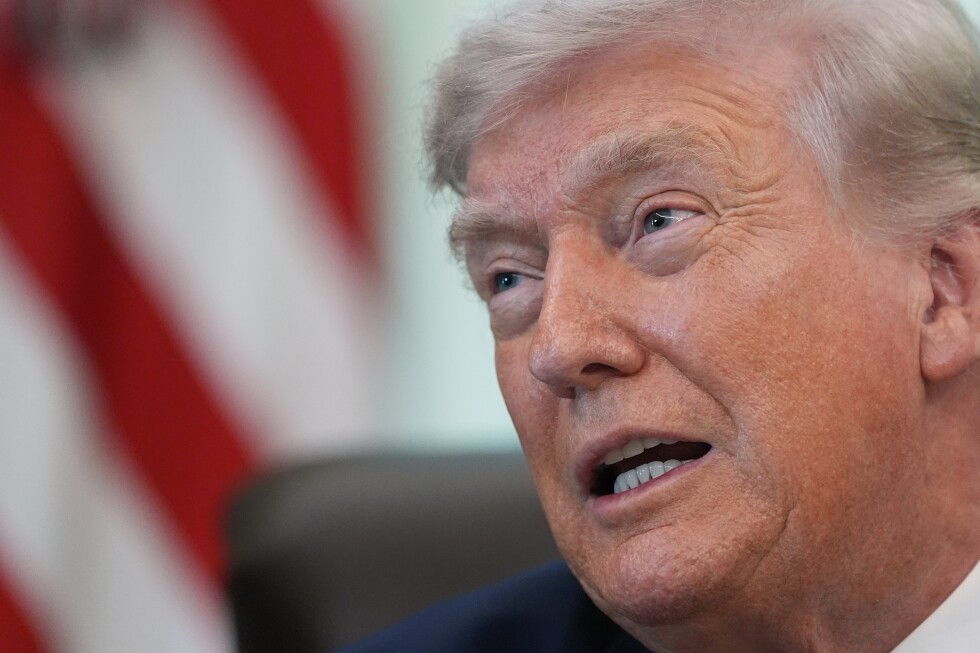
Social media users have noticed that Donald Trump ‘looks and sounds physically unwell’ during his key address to the nation.
Advertisement
The President spoke to the public on Thursday evening local time. In his speech, the US President has praised the victories of the US in Iran. He said: “Iran’s navy is gone. Their Air Force is in ruins … Very few are left.”
Trump also commented on the operation in Venezuela. He said: “We are working along Venezuela .. true partners and we are getting along incredibly well.”
He also promised that the conflict in Iran will end “very shortly”.
He added that the US will “hit them very hard over the next two to three weeks” before comparing the length of the conflict to previous wars.
Advertisement
However, despite the subject of the speech being of huge importance globally, some struggled to look past potential health problems Trump may be experiencing.
One X user commented: “Does President Trump genuinely look unwell and exhausted?”
Another said: ” Donald Trump looks and sounds physically unwell. Why are the American people not receiving more information about the health condition of a clearly ailing president?”
Another simply wrote: “Trump looks very unwell.”
Advertisement
“Sounds weak and nervous, his lips on one side of his face are not moving,” someone else said. “His eye also, look at him, TERRIBLE. HE IS NOT WELL.”
WASHINGTON (AP) — President Donald Trump is set to address the nation Wednesday evening about the war against Iran, a pivotal moment at home and abroad as he seeks to amass extraordinary power to prosecute the military operation and his second-term agenda.
Trump started the day as the first sitting president to show up for a U.S. Supreme Court hearing, a stunning reach of the executive into the affairs of the judicial branch. He is preparing to end it with his first primetime address from the White House about a war he launched on his own, bulldozing past Congress.
On an early spring night when many Americans may be looking upward as Artemis II astronauts lift off for NASA’s historic return to the moon, Trump will refocus attention back to him — and to the conflict with Iran that has killed more than a dozen U.S. service members and appears to have no easy exit in sight.
And yet Trump himself predicted the U.S. will be done “within maybe two weeks.”
The president’s address to a watchful nation — and world — will offer him an opportunity to outline his next steps: Will he declare victory and signal a readiness to move on from Iran?
Or is the president preparing for a ground invasion by American troops — to retrieve Iran’s enriched uranium or secure the Strait of Hormuz — that could launch the U.S. into another potentially lengthy war in the Middle East?
Trump is fast approaching the 60-day mark when he must seek approval from Congress under the War Powers Act to continue any military operations.
Advertisement
Mixed messages about an escalating war and hopes for diplomacy
The Trump administration’s stated goals for the war, and how it ends, have expanded and shifted.
The administration has said it launched the U.S.-Israel campaign on Feb. 28 to prevent Iran from having a nuclear weapon, erode its ballistic missile stock and crush its navy. The bombing campaign quickly killed Iran’s top leadership, including Supreme Leader Ayatollah Ali Khamenei, but regime change it is not. Khamenei’s son has been installed as the new leader.
What happened next appeared to throw the Trump administration’s plans off-kilter: Iran’s swift and relentless retaliation, bombing its Gulf state neighbors and jamming the global oil supply in the Strait of Hormuz, which sent energy prices soaring and left next steps uncertain.
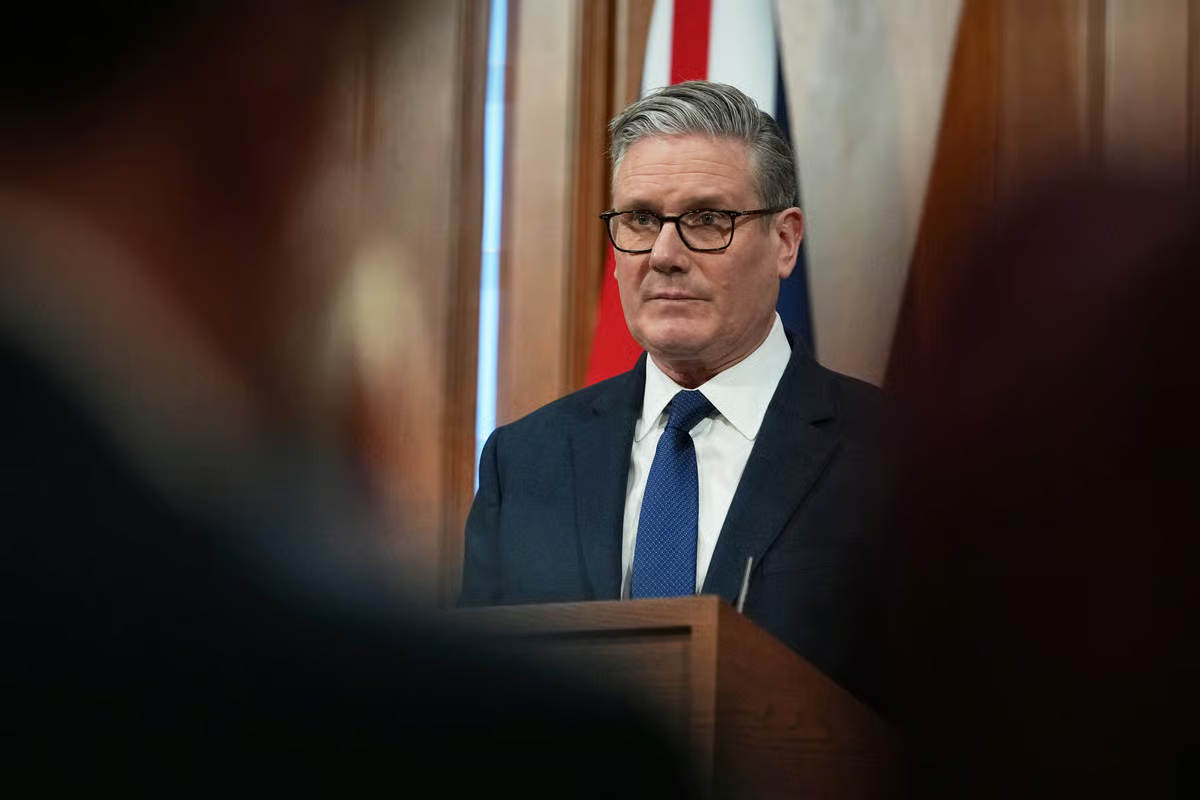
Trump has berated U.S. allies for not doing their part in the conflict, even as British Prime Minister Keir Starmer said he would convene a diplomatic summit to help reopen the Strait of Hormuz after the fighting ends.
Advertisement
Trump is not expected to announce the imminent start of peace talks in any venue, according to a U.S. official briefed on elements of the speech, which remains a work in progress. The official spoke on condition of anonymity to preview the speech.
But that could also change.
Uncertainty about what Trump will do about NATO
Virtually every country in the world has an interest in what Trump will say, even those geographically far removed from the conflict and facing higher energy prices as a result of the war and Iranian retaliation.
The Trump administration has criticized traditional U.S. allies for not stepping in to help in the fight, with some European countries preventing use of their airspace and bases, and being reluctant to help secure the Strait of Hormuz, where one-fifth of the world’s oil normally passes.
Advertisement
Trump and Secretary of State Marco Rubio have suggested that NATO will need to be reconsidered once the Iran war is over.
Trump himself has gone so far as to say he is “seriously considering” withdrawing from the military alliance, which has been a bulwark of transatlantic unity and security since the end of World War II.
Trump told Reuters before the speech that he plans to use the address to express his frustrations with NATO members.
The president, however, cannot simply withdraw from NATO on his own, without a legal fight.
Advertisement
After Trump’s first term, then-President Joe Biden signed into law legislation that would prevent any president from leaving NATO without congressional support. The provision, part of a sweeping defense measure, was led in part by Rubio, a Republican senator at the time.
“We’re going to have to re-examine the value of NATO and that alliance for our country,” Rubio said Tuesday in an interview with Fox News host Sean Hannity. “Ultimately, that’s a decision for the president to make, and he’ll have to make it.”
A crisis within NATO, which appears to be building, and public taunts from Trump about U.S. partners will be welcomed by historic rivals Russia and China, which have long sought to break or at least stem the influence of the alliance that they regard as a threat to their own territorial and political agendas.
Ukraine will be watching warily as Trump’s policies have significantly reduced U.S. support for its defense against Russia’s invasion.
Advertisement
Political ramifications at home
Trump, who ran as the “America First” president vowing not to drag the country into endless wars, has yet to fully address the political pushback he faces from his own base of supporters over the Iran conflict.
The U.S. economy is roiling, the financial markets are swinging with Trump’s various pronouncements about the war effort, and Americans are facing pain at the pump as the cost of living rises.
While the president often describes the inflationary high prices as a momentary setback, it’s all feeding into a rocky November midterm election.
Some of the sharpest criticism he’s faced in the early days of the Iran war has come from once-loyal media figures in the MAGA-universe, including Tucker Carlson.










![Why A Major Bitcoin Bounce Is Imminent [Data]](https://wordupnews.com/wp-content/uploads/2026/04/1775098099_maxresdefault-80x80.jpg)



































You must be logged in to post a comment Login