Connect with us

NewsBeat

Pupils celebrate best-ever A-level results as more than one in four get at least an A and boys extend lead above girls in the top grades

Published

on

Student Natasha Reda celebrates A-level results at Solihull School, Solihull

Pupils are celebrating their best ever A-level results outside of Covid after top grades rose for the third year running.

Boys also extended their lead over girls, with 28.9 per cent of male entries getting at least an A grade, compared with 28 per cent of female entries.

Overall, one in four entries – 28.5 per cent – got at least an A, which is a record high after rises from 28.3 per cent last year, 27.8 per cent in 2024 and 27.2 in 2023.

Meanwhile, 9.6 per cent got an A*, compared with 9.4 per cent last year, 9.3 per cent in 2024 and 8.9 per cent in 2023.

Advertisement

Outside of the Covid years of 2020-2022, when grades were vastly inflated due to teacher assessment, today’s grades are the highest proportion on record.

In 2019, only 25.4 per cent of entries got at least an A, while 7.7 got A*.

This morning a record number of applicants – 446,690 – were also accepted onto university courses, up on 439,180 last year, according to admissions body Ucas.

Hundreds of thousands of pupils across England, Wales and Northern Ireland received their exam results this morning.

Advertisement

Student Natasha Reda celebrates A-level results at Solihull School, Solihull

Grace Lewis hugs a friend after receiving their A-level results at Coleg Gwent Blaenau Gwent Learning Zone in Ebbw Vale, Wales

Grace Lewis hugs a friend after receiving their A-level results at Coleg Gwent Blaenau Gwent Learning Zone in Ebbw Vale, Wales

Shoime Roy reacts as she receives her A-level results at City of London Academy Highgate Hill in Islington

Shoime Roy reacts as she receives her A-level results at City of London Academy Highgate Hill in Islington

Advertisement
Students receive A-level results at St Gabriel's School in Newbury, Berkshire

Students receive A-level results at St Gabriel’s School in Newbury, Berkshire

Students receive A-level results at St Gabriel's School in Newbury, Berkshire

Students receive A-level results at St Gabriel’s School in Newbury, Berkshire

A student opens his A-level results as students gather at Solihull School this morning

A student opens his A-level results as students gather at Solihull School this morning

Students discuss their A-level results this morning outside Oaklands College in Hertfordshire

Students discuss their A-level results this morning outside Oaklands College in Hertfordshire

Advertisement
A student at Coleg Gwent Blaenau Gwent Learning Zone speaks on the phone after receiving their A-level results in Ebbw Vale, Wales

A student at Coleg Gwent Blaenau Gwent Learning Zone speaks on the phone after receiving their A-level results in Ebbw Vale, Wales

KEY STATISTICS

  • The proportion of candidates receiving top grades has risen for the third year in a row and remains higher than before the Covid-19 pandemic.
  • A total of 28.5% of UK entries were awarded either an A or A*, up from 28.3% in 2025 and above the 25.4% in 2019.
  • This is the highest proportion on record outside the pandemic-affected years of 2020-22 (when the figure peaked at 44.8% in 2021).
  • Some 9.6% of UK entries received an A*.
  • This is also the third increase in a row and is up from 9.4% last year.
  • Discounting the pandemic-affected years of 2020-22 – when the figure peaked at 19.1% in 2021 – 9.6% is the highest proportion since the A* grade was first awarded in 2010.
  • A total of 78.4% of entries received a C or above, up from 77.9% in 2025.
  • This is again the highest percentage for this level of grade outside the pandemic (the figure peaked at 88.5% in 2021).
  • The overall pass rate (grades A* to E) was 97.5%. This is unchanged from 97.5% in 2025 and is slightly below 2019, which was 97.6%.
  • Among the regions of England, London saw the highest proportion of entries awarded grades of A or A* (32.7%, up from 32.1% in 2025) while north-east England and the East Midlands had the joint lowest (23.1%).
  • The East Midlands saw the largest year-on-year fall, down 0.7 points from 23.8%, while north-east England rose slightly by 0.2 points, up from 22.9%.
  • The 9.6 percentage point gap between London and the North East, and between London and the East Midlands, is the largest between these pairs of regions since the present system of grading began in 2010, according to Press Association analysis of results data.
  • Some 30.7% of entries in Northern Ireland received A or A*, up year-on-year from 30.3%; this was higher than the equivalent figure for Wales (29.6%, up from 29.5%) and England (28.3%, up from 28.2%).
  • Boys have extended their lead over girls in the top grades.
  • The proportion of boys’ entries awarded A or A* this year was 28.9%, 0.9 percentage points higher than the equivalent figure for girls’ entries (28.0%).
  • Last year, boys led girls by 0.2 percentage points (28.4% for boys, 28.2% for girls)
  • It is the second year in a row that boys have led girls in entries getting A or above, following a period from 2020-24 when girls were ahead.
  • Boys have also extended their lead over girls in the highest grade, A*.
  • The proportion of boys’ entries awarded A* this year was 10.2%, 1.1 points higher than girls (9.1%).
  • Last year, boys led girls by 0.8 percentage points (9.9% for boys, 9.1% for girls).
  • Boys led girls at A* from 2012 through to 2019, before girls moved in front during the pandemic-affected years of 2020-22, after which boys reclaimed a lead in 2023.
  • The most popular subject this year was maths, for the 13th year in a row. It had 115,380 entries, up 3.9% from 111,033 in 2025.
  • About one in eight of all A-level entries this year were for maths.
  • Psychology is once again the second most popular subject, with biology remaining in third place and chemistry in fourth.
  • Economics has entered the top five most popular subjects for the first time, ranking in fifth place and up from 10th last year.
  • It replaces business studies, which has dropped from fifth to sixth.
  • A total of 906,425 A-levels were awarded this year, up 2.7% on last year’s 882,653.

<!- – ad: https://mads.dailymail.co.uk/v8/de/news/none/article/other/mpu_factbox.html?id=mpu_factbox_1 – ->

Sir Ian Bauckham, head of exam regulator Ofqual, said: ‘These qualifications open doors for students because they are so widely recognised and trusted. 

Advertisement

‘A Levels are trusted because they are awarded to rigorous and consistent national standards. Universities, employers, and students can have confidence that an A Level grade represents what students know and can do.’

Figures released by the Joint Council for Qualifications (JCQ) also showed 78.4 per cent of entries received a C or above, up from 77.9 per cent in 2025. This is again the highest percentage for this level of grade outside the pandemic.

The overall pass rate (grades A* to E) was 97.5 per cent. This is unchanged from 97.5 per cent in 2025 and is slightly below 2019, which was 97.6 per cent. 

Among the regions of England, London saw the highest proportion of entries awarded grades of A or A* (32.7 per cent, up from 32.1 per cent in 2025) while north-east England and the East Midlands had the joint lowest (23.1 per cent).

Advertisement

The East Midlands saw the largest year-on-year fall, down 0.7 points from 23.8 per cent, while north-east England rose slightly by 0.2 points, up from 22.9 per cent.

The 9.6 percentage point gap between London and the North East, and between London and the East Midlands, is the largest between these pairs of regions since the present system of grading began in 2010.

Some 30.7 per cent of entries in Northern Ireland received A or A*, up year-on-year from 30.3 per cent; this was higher than the equivalent figure for Wales (29.6 per cent, up from 29.5 per cent) and England (28.3 per cent, up from 28.2 per cent).

Analysis also showed boys extended their lead over girls in the top grades.

Advertisement

The proportion of boys’ entries awarded A or A* this year was 28.9 per cent, 0.9 percentage points higher than the equivalent figure for girls’ entries (28.0 per cent).

Last year, boys led girls by 0.2 percentage points (28.4 per cent for boys, 28.2 per cent for girls).

It is the second year in a row that boys have led girls in entries getting A or above, following a period from 2020-24 when girls were ahead.

Boys have also extended their lead over girls in the highest grade, A*.

Advertisement

The proportion of boys’ entries awarded A* this year was 10.2 per cent, 1.1 points higher than girls (9.1 per cent).

Last year, boys led girls by 0.8 percentage points (9.9 per cent for boys, 9.1 per cent for girls).

Boys led girls at A* from 2012 through to 2019, before girls moved in front during the pandemic-affected years of 2020-22, after which boys reclaimed a lead in 2023.

The most popular subject this year was maths, for the 13th year in a row. It had 115,380 entries, up 3.9 per cent from 111,033 in 2025.

Advertisement

About one in eight of all A-level entries this year were for maths.

Psychology is once again the second most popular subject, with biology remaining in third place and chemistry in fourth.

Economics has entered the top five most popular subjects for the first time, ranking in fifth place and up from tenth last year.

It replaces business studies, which has dropped from fifth to sixth.

Advertisement

A total of 906,425 A-levels were awarded this year, up 2.7 per cent on last year’s 882,653.

Dr Jo Saxton, Ucas chief executive, said: ‘Today’s school leavers were just starting secondary school when the pandemic interrupted their education.

‘Given the significant disruption they faced at such a formative stage of their learning, it is wonderful to see so many young people getting a place at university or college. I’m delighted to see them backing themselves and choosing to invest in their education.’

Ofqual said the rise in grades was not down to artificial grade inflation, but a rise in maths entries. Maths always produces more top grades than the humanities.

Advertisement

More than one in eight of all UK A-level entries (12.7 per cent) were for the subject, the latest figures showed. Sir Ian at Ofqual said the ‘sheer size’ of maths affected the overall data.

Advertisement

On top grades rising, Sir Ian Bauckham said: ‘It’s largely driven by those changes in maths, growing popularity at maths and the high achievements that we’re seeing in maths.

Are you still deciding which university to go to?
Advertisement


I’m Alastair McCall, one of the UK’s leading data journalists and Editor of the Daily Mail University Guide.

I’ve spent years crunching the data to understand what makes a university stand out – from teaching quality and student experience to graduate salaries and career prospects. I’ve ranked every university in Britain, so whether you’re applying yourself or you’re a parent helping your child, I can show you which universities are best for your subject, where graduates earn the most, and much more.

Advertisement

Click here to read the full guide 

<!- – ad: https://mads.dailymail.co.uk/v8/de/news/none/article/other/mpu_factbox.html?id=mpu_factbox_2 – ->

‘It’s a successful subject, maths A-level is a significant driver of economic growth, and we know that it correlates to higher earning potential for those people who hold A-level maths in their future lives.

Advertisement

‘It does, because of its sheer size, have that impact on the overall cohort figures.’

A report by Professor Alan Smithers of Buckingham University last week explained why maths always produces more top grades. He wrote: ‘It is clear whether answers are correct or not, so markers can be confident in using the whole range of marks from zero to 100 per cent.’

He said this morning: ‘A-level results have settled down since the turmoil of Covid and the trend since for rises in top grades, particularly, for boys has continued. This can be attributed to the swing to quantitative subjects, such as economics, further maths, and maths, which are by far the highest awarders of top grades.’

This is the fourth year of marking returning to normal after the pandemic.

Advertisement

During the pandemic, grades were wildly inflated due to exams being cancelled and teachers deciding marks.

In 2020, 38.5 per cent of entries got at least an A, while in 2021 it was 44.8 per cent.

In 2022, it was 36.4 per cent as regulators implemented a half-step back to normal level for grading.

While marking has returned to normal, the proportion of A grades has never returned entirely back to 2019 levels, always remaining between one and two points higher.

Advertisement
Students open their A-level results live on Sky News in a school gym hall in north-west London

Students open their A-level results live on Sky News in a school gym hall in north-west London

Students celebrate A-level, BTEC and T-level results at Oaklands College in Hertfordshire today

Students celebrate A-level, BTEC and T-level results at Oaklands College in Hertfordshire today

A student receives a hug after picking up their A-level results at Solihull School this morning

A student receives a hug after picking up their A-level results at Solihull School this morning

Students celebrate their A-level results after opening them at Solihull School this morning

Students celebrate their A-level results after opening them at Solihull School this morning

Advertisement
A student at Solihull School smiles as she looks at her A-level results this morning

A student at Solihull School smiles as she looks at her A-level results this morning

A student opens his A-level results as students gather at Solihull School this morning

A student opens his A-level results as students gather at Solihull School this morning

GRADE PERCENTAGES BY REGION 

Here are the percentages of A-level entries awarded the top grade of A* by nation and region in 2026, with the equivalent figure for 2025 and the pre-pandemic year of 2019:

  • North-east England 6.9% (2025: 6.8%; 2019: 6.7%)
  • North-west England 8.4% (2025: 8.3%; 2019: 6.9%)
  • Yorkshire & the Humber 7.9% (2025: 7.7%; 2019: 6.5%)
  • West Midlands 7.7% (2025: 7.4%; 2019: 6.3%)
  • East Midlands 6.9% (2025: 7.4%; 2019: 5.8%)
  • Eastern England 9.5% (2025: 9.3%; 2019: 7.9%)
  • South-west England 8.9% (2025: 8.9%; 2019: 8.0%)
  • South-east England 11.3% (2025: 11.0%; 2019: 9.0%)
  • London 12.0% (2025: 11.6%; 2019: 8.7%)
  • England 9.6% (2025: 9.4%; 2019: 7.7%)
  • Wales 10.7% (2025: 10.5%; 2019: 8.9%)
  • Northern Ireland 8.8% (2025: 8.7%; 2019: 8.0%)
  • All 9.6% (2025: 9.4%; 2019: 7.7%)

Here are the percentages of A-level entries awarded A or A*, by nation and region:

  • North-east England 23.1% (2025: 22.9%; 2019: 23.0%)
  • North-west England 26.5% (2025: 26.6%; 2019: 23.5%)
  • Yorkshire & the Humber 25.7% (2025: 25.3%; 2019: 23.2%)
  • West Midlands 24.2% (2025: 24.2%; 2019: 22.0%)
  • East Midlands 23.1% (2025: 23.8%; 2019: 21.0%)
  • Eastern England 27.9% (2025: 28.0%; 2019: 25.6%)
  • South-west England 27.2% (2025: 27.0%; 2019: 25.8%)
  • South-east England 31.5% (2025: 31.3%; 2019: 28.3%)
  • London 32.7% (2025: 32.1%; 2019: 26.9%)
  • England 28.3% (2025: 28.2%; 2019: 25.2%)
  • Wales 29.6% (2025: 29.5%; 2019: 26.5%)
  • Northern Ireland 30.7% (2025: 30.3%; 2019: 29.4%)
  • All 28.5% (2025: 28.3%; 2019: 25.4%)

Here are the percentages of A-level entries awarded C or above, by nation and region:

  • North-east England 75.8% (2025: 74.9%; 2019: 76.3%)
  • North-west England 78.4% (2025: 78.2%; 2019: 75.6%)
  • Yorkshire & the Humber 78.1% (2025: 76.8%; 2019: 74.7%)
  • West Midlands 74.6% (2025: 74.2%; 2019: 72.8%)
  • East Midlands 73.5% (2025: 73.6%; 2019: 73.0%)
  • Eastern England 77.9% (2025: 77.8%; 2019: 75.7%)
  • South-west England 77.9% (2025: 77.3%; 2019: 76.0%)
  • South-east England 79.5% (2025: 79.5%; 2019: 78.0%)
  • London 80.5% (2025: 79.5%; 2019: 74.8%)
  • England 78.1% (2025: 77.7%; 2019: 75.5%)
  • Wales 77.6% (2025: 77.2%; 2019: 76.3%)
  • Northern Ireland 86.9% (2025: 85.8%; 2019: 85.0%)
  • All 78.4% (2025: 77.9%; 2019: 75.9%)

<!- – ad: https://mads.dailymail.co.uk/v8/de/news/none/article/other/mpu_factbox.html?id=mpu_factbox_3 – ->

Advertisement

This year’s A-level students were aged 12 in 2020, when schools were closed and pupils were forced into online learning – meaning their education may still have been affected by the pandemic. 

Detailed Ucas figures show that among UK 18-year-olds only, there has been a rise of 3 per cent in acceptances to university to 262,820.

According to Ofqual, there has been a 4 per cent rise in the population of 18-year-olds this year in England – which has partly driven the rise.

Some 228,990 UK 18-year-olds were accepted at their first choice of university or college, up 1 per cent from 226,580 last year, while 31,770 have been placed at their insurance choice, up 21 per cent from 26,330.

Advertisement

This means that 79 per cent of 18-year-olds got their first choice, compared to 82 per cent last year. Another 13 per cent were placed at their insurance choice compared to 11 per cent last year.

Meanwhile, the number of international students who have applied via Ucas and been accepted has risen by 2 per cent – from 52,640 last year to 53,740 this year. However, Ucas figures only reveal a small proportion of total overseas applicants.

Vivienne Stern, chief executive of Universities UK, which represents vice chancellors, said: ‘Congratulations to all the students receiving their results today, and to the teachers, families and friends that supported them to get here. 

‘Whatever the next step is – university, an apprenticeship or something else – students who have worked hard for their results should feel incredibly proud of themselves.

Advertisement

‘Today marks the start of an exciting new chapter for thousands of students. A record 262,820 of UK 18-year-olds have earned a place at a university this year, including an increase in students from the most disadvantaged backgrounds. 

‘These students will go on to gain new skills and experiences that will benefit them throughout their whole lives.

‘To those who have not got the results they were hoping for, don’t panic. There are still 26,000 courses available through clearing, and advice is available through UCAS or direct from universities.’

Meanwhile, a record number of young people have secured a place to study engineering, the head of Ucas has said.

Advertisement

Dr Saxton told the BBC’s Today programme: ‘We’ve got a record number of new engineers going on to study at university today. 35,000 young people are going off to study engineering – it’s up 14 per cent compared to last year.’

Figures from the Department for Education this morning showed a 65 per cent rise in pupils receiving T Level results – 20,000 compared with 12,000 in 2025. The pass mark was more than 90 per cent.

Congratulating pupils this morning, Prime Minister Andy Burnham said: ‘I want to congratulate everyone receiving their results today. I know there will have been a mix of excitement, nerves and relief this morning, but you should all be proud of the hard work that got you here.

‘The talent is there in every town and city in this country. Our task is to match that talent with opportunity, whether that’s through university, an apprenticeship or a technical pathway that leads to a great career. That’s how we’ll build a stronger Britain, restore hope and ensure every young person can look to the future with confidence.’

Advertisement

He said he was glad more pupils were taking T levels, which focus on vocational skills, and science and maths subjects. 

Meanwhile, Education Secretary Lucy Powell said: ‘Congratulations to everyone getting their results today. You should be really proud of what you’ve achieved and I wish you every success for the future. A big thank you to the teachers and families who have backed you every step of the way.

Advertisement

‘The rise in students receiving T-Level results this year is very encouraging, as well as so many students progressing in to higher education. There is no single route to achieving your ambitions.

‘That’s why we are opening doors with more high-quality opportunities for young people to fulfil their potential – whether that’s through academic study, technical education or hands-on training for skilled work. Whatever path you choose, today is the start of an exciting future.’

Advertisement

The rise in maths and economics entries at A-level sparked a debate about whether pupils are now more job-focused when choosing their options.

Sir Ian said it was ‘plausible to suggest’ that job prospects are influencing the choices students make in terms of what they study.

Sir Ian said: ‘These are all subjects that have a very strong either vocational flavour or are proven to be linked to higher earning potential, and in students’ minds will be associated with the trends that we’re seeing in the economy.

‘So, I do think it’s plausible to suggest that those considerations are, for most, in students’ minds.’

Advertisement

Lee Elliot Major, professor of social mobility at the University of Exeter, said: ‘More than ever, young people are asking a simple question: where will the opportunities be? In a world of rising living costs, student debt and AI, they want confidence that their investment of time and money will lead to a fulfilling and secure career.

‘Students are increasingly choosing subjects with one eye on the labour market. That’s entirely understandable.’

 Daniel Kebede, general secretary of the National Education Union, said: ‘Congratulations to all students receiving their A-Level, Vocational and Technical Qualification results today, and to all the dedicated staff who have taught them.

‘It is a day to think about whether A-Levels should remain so heavily reliant on end of course exams. This is an outdated approach which limits students’ ability to demonstrate their full range of skills. Using more varied methods of assessment would better prepare young people with what they will need for future learning, life and employment.’

Advertisement

Scotland has a different qualification system and students received their results on Tuesday last week.

Figures showed the number of passes at National 5 reached record levels.

Pass rates for National 5, Higher and Advanced Higher increased across the board, to 79.2 per cent, 76.7 per cent and 77.6 per cent respectively.

The proportion of pupils who achieved an A also rose for National 5 and Higher to 40.3 per cent and 20.9 per cent, while the rate for Advanced Higher fell to 30.9 per cent.

Advertisement

Going through clearing? Don’t miss the Daily Mail’s definitive league table and guide to every university in Britain 

Source link

Continue Reading
Click to comment

You must be logged in to post a comment Login

Leave a Reply

NewsBeat

Daisy Lane Play Cafe in Newton Aycliffe to close its doors

Published

on

Daisy Lane Play Cafe in Newton Aycliffe to close its doors

Daisy Lane Play Cafe, based at the Newton Aycliffe Youth and Community Centre on Burn Lane, will close for good on Wednesday, August 19.

Owner Emma announced the news in a social media post, saying the decision had been made with a “heavy heart”.

The café opened earlier this year, offering a place for children aged up to seven to play and take part in activities while parents and carers enjoyed coffee, food, and cakes.

Advertisement

It also ran stay and play sessions and birthday parties.

In a message to customers, Emma said: “I am writing this with a heavy heart.

“It’s not something I ever wanted to do, but Daisy Lane will be closing its doors for good next Wednesday, August 19.

“Unfortunately, for a variety of reasons, it is not possible for us to continue trading.”

Advertisement

She thanked the families who had supported the business over its first few months, as well as relatives, friends, and staff who helped make the play café a reality.

Emma said: “I want to say a massive thank you for all the support I have had over the last few months.

“I could never have done this alone.

“A particularly big thank you to my family, my parents who have helped me massively both behind the scenes and front of house, my husband Adam who has helped and supported me the whole way through, and all our girls who have given their time to help and were so excited for our café.”

Advertisement

She also thanked her staff and the customers who visited Daisy Lane during its time in Newton Aycliffe.

She said: “A huge thank you to every single customer who has stepped through our doors.

“We have such amazing loyal customers and I’m going to miss you all.

“We’ve made so many friends, both big and little, and I can’t thank you all enough for being a part of Daisy Lane.”

Advertisement

Daisy Lane Play Cafe will be open as normal from Monday to Wednesday next week, with families invited to visit before it closes.


A toy and equipment sale is also planned for Friday, August 21, with further details expected to be announced.

Emma added: “It was always a dream of mine to open a play café and to have that dream realised has been an amazing and beautiful experience.

“I wouldn’t change it for the world and I hope we managed to bring you all a little bit of joy in the past few months.”

Advertisement

Source link

Continue Reading

NewsBeat

M4 traffic chaos after crash near Cardiff – live updates

Published

on

Wales Online

Once drivers pass the incident in Cardiff, they may be faced with more evere traffic elsewhere on the roads network in the west of England.

Drivers face long delays on the M5 in Somerset as Friday getaway traffic gets underway.

Photos taken show queues forming northbound at Bridgwater, with further delays southbound from Bristol.

Google Maps shows patches of congestion along the motorway from Wellington to the Almondsbury Interchange.

Advertisement

(Image: AA)

Source link

Continue Reading

NewsBeat

Andy Burnham warns all smokers amid disposable BBQ ban

Published

on

Andy Burnham warns all smokers amid disposable BBQ ban

The ban comes as the UK suffers from several wildfires following a handful of heatwaves, resulting in very dry grass and a bigger fire risk across the country.

The PM said the ban – which applies to Wales, Scotland and England, but not Northern Ireland – would be in place from today “until further notice”.

It’s not just people spending time outside picnicking and having BBQs that need to be careful, with Mr Burnham also issuing a message to all smokers.

Advertisement

Andy Burnham issues warning to all smokers across the UK amid disposable BBQ ban

Andy Burnham warned smokers against lighting up outdoors and urged them to dispose of cigarettes carefully.

It comes as West Midlands Fire Service shared a Facebook post earlier this month telling smokers to make sure they have completely stubbed out their cigarettes.

The post is accompanied by a poster that shows a cigarette butt that hasn’t been entirely stubbed out and is lying on some grass.

Advertisement

The fire service said: “It only takes one carelessly discarded cigarette to spark a grass fire.

“With hot, dry conditions increasing the risk of fires, please make sure cigarettes are fully extinguished before disposing of them.

“Never throw them from a vehicle or leave them on the ground.

“A small act of care can prevent a fire that spreads quickly, threatening people, wildlife and property.

Advertisement

“If you smoke, stub it out. Every time.”

More wildfires have now struck England and Wales in 2026 so far than in the whole of 2025.

Advertisement

The latest spate of blazes in the West Midlands has led to people fleeing their homes to get out of the path of encroaching fires.

West Midlands Fire Service’s Chief Fire Officer Simon Tuhill said 19 houses have been fully destroyed and 18 damaged by the wildfire in Stourbridge this week.

Speaking as he visited houses in Stourbridge which had been destroyed by wildfire, the Prime Minister said: “The temporary ban on barbecues, disposable barbecues, comes in today.

“All retailers will be receiving notification of that ban, and we ask them to, obviously, implement it in full until further notice when we can remove it.”

Advertisement

He also told reporters: “I would also want to say to the public, you can see what’s happening: 37 significant fires across England and Wales.

“Please do not light an open fire, a bonfire of any kind.

“If you’re disposing of a cigarette, take great care.

Advertisement

“This is obviously a really combustible situation, literally.

“We need to respect that fact and make sure that no one is taking any risk, because you’re taking risks with other people’s homes, with other people’s lives if you act recklessly in this moment.”

The Prime Minister added: “Britain is a tinderbox right now, and please just have that in your mind.”

Do you think the disposable BBQ ban is a good idea? Let us know your thoughts in the comments below.

Advertisement

Source link

Continue Reading

NewsBeat

‘Tragic’ love story set in ‘island paradise’ is a must-see for period drama fans

Published

on

Wales Online

A story of forbidden romance starring Ellie Bamber and Mehdi Dehbi is out now

A period romance starring Ellie Bamber is out now and it’s must see.

Advertisement

Prisoners of Paradise is a tale of “forbidden love” set in Mauritius in the 1920s, where young orphan Lucy (Ellie) falls for labourer Krishna, who is played by Mehdi Dehbi.

The Willow actress – who is also known for playing Mandy Rice-Davies in The Trial of Christine Keeler – recently shared some shots from filming on Instagram.

“What an incredible experience filming in some of the most beautiful sceneries with such a wonderful team @mitchjjenkins mehdidehbi_official @mjg_1926,” she told fans, as she teased that the movie would be available for fans to watch this month.

A synopsis for the film said: “Prisoners Of Paradise is a haunting, tragic love story set in 1920s Mauritius, woven into a complex tapestry of beauty and brutality. Beneath the island’s breathtaking splendor – its turquoise waters and golden sugarcane fields, lurks a sinister system of abuse, oppression, and control.”

Advertisement

Into this world arrives Lucy, a 17-year-old British orphan sent to live with her charming uncle George, who is played by Rupert Penry-Jones.

“But like the island itself, his charm is a mask,” the synopsis goes on. “One that hides a darker nature rooted in manipulation and quiet cruelty.”

As Lucy begins to see the cracks in the island, she meets Krishna, an indentured labourer whose life is very different to her own.

Advertisement

“His kindness and quiet defiance awakens something in her that the world around her forbids,” the description said.

“Both their lives have been shaped, bought, and sold by men who trade in power behind closed doors. In each other, they find freedom and purity. Their forbidden love becomes their refuge: a secret island paradise untouched by the ocean of darkness surrounding them.

“But this paradise cannot last. As the forces determined to keep them apart close in, Lucy and Krishna must decide if their love is worth everything it will cost them.”

Advertisement

The film – which also features Rhona Mitra, Edward Akrout, JJ Feild and Amy Beth Hayes – draws from Romesh Gunesekera’s novel Prisoner of Paradise. Initially titled Ambleside, the production later underwent a name change to Prisoners of Paradise.

Prisoners of Paradise is available to purchase on the Sky Store.

Source link

Advertisement
Continue Reading

NewsBeat

North Yorkshire mayor welcomes government disposable BBQ ban

Published

on

North Yorkshire mayor welcomes government disposable BBQ ban

While last year’s fire at Langdale Moor was not caused by a disposable barbecue, David Skaith said the fire caused “great harm to our communities, our wildlife, and our countryside”.

Prime minister Andy Burnham announced the disposable barbecue ban for Wales, Scotland and England on Friday (August 14) “until further notice”.

It comes after the grills were said to be the source of multiple wildfires which have broken out across the country.

Mr Burnham also warned smokers against lighting up outdoors and urged them to dispose of cigarettes carefully.

Advertisement

More wildfires have now struck England and Wales in 2026 so far than in the whole of 2025, with the latest spate of blazes in the West Midlands having led to people fleeing their homes to get out of the path of encroaching fires.

Mr Skaith said he has been asking retailers in York and North Yorkshire to remove “these £5 wildfire kits from sale” for weeks, adding: “I’m glad the government has acted and done the right thing.

“Last year’s wildfire on Langdale/Fylingdales Moor saw unprecedented amounts of North Yorkshire moorland burn, emitting more carbon from the burning peat beds than any wildfire in recent memory.

“These fires caused great harm to our communities, our wildlife, and our countryside. And they were all completely avoidable.

Advertisement

“I would like to once again thank our hardworking fire service, as well as the farmers, gamekeepers and landowners who were instrumental in getting the blaze under control.

“A temporary halt, particularly in times of dry weather like we’re experiencing currently, is a sensible move to avoid us repeating the events of last summer.

“I will continue to push for retailers to withdraw the sale of disposable barbecues across York and North Yorkshire on a permanent basis. The convenience of one must never come before the safety of our rural communities, our landscapes and our wildlife.”


Read next:

Advertisement

York Outer MP Luke Charters also welcomed the government’s temporary ban on disposable barbecues, saying: “We’ve seen first-hand in York and North Yorkshire just how quickly fires can spread when the ground is this dry.

“Just over a year ago we had the huge fire on Strensall Common, and more recently we saw a field fire come worryingly close to homes in the south of York.

Luke Charters, MP for York Outer (Image: Supplied)

“We also saw the devastating fire on the North York Moors, which investigators found was started by cooking with a naked flame.

“So while the weather remains this hot and dry, temporarily stopping the sale of disposable BBQs is a sensible step to help keep people and our countryside safe.

Advertisement

“Of course people should get outside and enjoy the summer. This is simply about using a bit of common sense while the risk is so high, because nobody wants to see another serious fire.”

Source link

Advertisement
Continue Reading

NewsBeat

Stephen Bear sentenced to 24 weeks in prison for failing to comply with sex offender register requirements – a week after being jailed for breaching restraining order against Georgia Harrison

Published

on

Stephen Bear arrived at a sentencing hearing for breaching a restraining order against his ex Georgia Harrison at Chelmsford Crown Court last week with his pregnant Brazilian wife Miami, 19

Advertisement

Reality TV star Stephen Bear has been jailed after admitting failing to comply with sex offender register requirements.

Bear was sentenced to 24 weeks in prison at Thames Magistrates’ Court, barely a week after being handed a 16-month sentence for repeatedly breaching a restraining order against his ex, former Love Islander Georgia Harrison.

The disgraced reality TV star, 36, was handed a five-year restraining order and jailed for 21 months in 2023 for sharing a sex tape of Miss Harrison on his OnlyFans page.

A judge also ordered him to repay £22,305 that prosecutors said he earned from his subscribers. 

Advertisement

But after his release from prison, Bear breached his order by repeatedly posting degrading comments about Ms Harrison on Instagram, Facebook, TikTok, X and YouTube.

He also failed to comply with his sex offender notification requirements. 

He failed to inform police about a trip to Brazil last year and then failed to tell officers within three days that he had returned to the UK.

He also did not mention that he had acquired a new passport and two bank cards during the trip.

Advertisement

Stephen Bear arrived at a sentencing hearing for breaching a restraining order against his ex Georgia Harrison at Chelmsford Crown Court last week with his pregnant Brazilian wife Miami, 19

The 36-year-old - pictured in a police mugshot - was handed a five-year restraining order in 2023 and jailed for sharing a private sex tape of Georgia Harrison

The 36-year-old – pictured in a police mugshot – was handed a five-year restraining order in 2023 and jailed for sharing a private sex tape of Georgia Harrison

Bear filmed and uploaded footage of him having sex with Miss Harrison without her knowledge or consent

Bear filmed and uploaded footage of him having sex with Miss Harrison without her knowledge or consent

Advertisement

In January last year, Bear revealed he had relocated to Brazil with his new girlfriend, boasting: ‘The police can’t catch me now.’

In a grim video shared from the beach, he bragged: ‘Life’s good. I thought I’d come on here guys and say I love you all, simple as that. I love you all.

‘Stay true, because this year I’m fully active, I’m off licence. The police, they could still be after me, but I’m in Brazil. They can’t catch me now. Catch me if you can.’

Breaching the restraining order to post online, Bear had sought to cast doubt on his convictions, including by alleging that Miss Harrison and her mother had conspired to pervert the course of justice.

Advertisement

Bear – who arrived at court last week with his pregnant Brazilian wife Miami, 19 – also created an online petition seeking support for a retrial and attempting to obtain Miss Harrison’s bank statements.

The 2016 Celebrity Big Brother winner persisted with posting despite several of his accounts being shut down.

This is a breaking news story and is being updated. 

Advertisement

Advertisement

Source link

Continue Reading

NewsBeat

Man shared ‘explicit’ images with ’14-year-old girl’

Published

on

Cambridgeshire Live

He believed he was talking to a 14-year-old girl

A man who shared explicit images of himself with what he mistakenly thought was a 14-year-old girl has been sent to prison. Iain Fleming, 53, began communicating with the account in March last year, not knowing it was a decoy run by an online child abuse activist group.



Advertisement

Despite the “girl” telling Fleming she was only 14 several times, he continued sexual communication with her and sent explicit images of himself. Police were contacted by the child activist group, and officers arrested Fleming at his Peterborough home.

After seizing his mobile phone, it was also revealed Fleming had contacted what was believed to be a 15-year-old girl. Again, Fleming continued with explicit conversations, telling her she had a beautiful body and that he wanted to kiss her all over, according to Cambridgeshire Police.

On Friday, August 7, Fleming, of Millfield, Peterborough, was jailed for three years and two months after admitting to two counts of attempting to engage in sexual communication with a child, and one count of attempting to incite a girl to engage in sexual activity at Peterborough Crown Court.

DC Lloyd Davis, who investigated, said: “Fleming clearly poses a significant risk to children. Despite the ‘girl’ in this case being a decoy account, Fleming still attempted to prey on and groom what he believed was a child.

Advertisement

“This kind of sexual exploitation can have devastating effects on a child’s development, mental health and self-esteem that continue into adulthood, so I am pleased he is now behind bars for his crimes.”

Source link

Continue Reading

NewsBeat

Lucy Letby’s dead ‘boyfriend’ was found collapsed in his car after being sacked for sharing messages with her about baby she tried to murder

Published

on

Letby was forced to deny she and the medic were having a romantic affair and claimed they were just ¿best friends

Lucy Letby’s ‘boyfriend’ died after being sacked for exchanging messages with the convicted serial killer about a baby she tried to murder, the Daily Mail can reveal.

The 53-year-old consultant doctor – who cannot be named for legal reasons – was found collapsed in his car the day after he was dismissed from the NHS hospital where he worked.

He was admitted to intensive care but died nine days later, on July 3. An inquest is due to open into his death at a date to be fixed.

The doctor was hauled before a disciplinary hearing in June over a series of inappropriate texts he sent the former neo-natal nurse while they worked together at the Countess of Chester Hospital, the Daily Mail has learned.

Advertisement

The messages, understood to have breached patient confidentiality, involved details of the care of a premature baby boy with haemophilia, known only as Baby N, who Letby, 36, was convicted of trying to kill the day after he was born in June 2016.

It is understood that the doctor also faced other serious allegations, including that he inappropriately accessed medical records and risked patient safety, which cannot be revealed for legal reasons.

At her trial, Letby was forced to deny she and the medic, referred to as ‘Dr A’, were having a romantic affair and claimed they were just ‘best friends’.

But she broke down in tears and tried to leave the dock when he entered the courtroom at Manchester Crown Court to give evidence.

Advertisement

She called him ‘sweetie’ in texts and referred to him as ‘love’ in notes scrawled with his name and love hearts that police discovered during searches at her home.

Letby is serving a record 15 whole-life terms after being found guilty of murdering seven babies and attempting to murder seven more – one of whom she attacked twice – at the Countess of Chester Hospital between June 2015 and June 2016.

Letby was forced to deny she and the medic were having a romantic affair and claimed they were just ‘best friends’ at trial

Advertisement
Letby is serving a record 15 whole-life terms after being found guilty of murdering seven babies and attempting to murder seven more

Letby is serving a record 15 whole-life terms after being found guilty of murdering seven babies and attempting to murder seven more

Sources told the Daily Mail that Dr A attended a three-day disciplinary hearing in early June this year and was fired for gross misconduct a fortnight later, on June 23.

The following day relatives reported him missing and he was later found collapsed in his car at a retail park, around 20 miles from his Cheshire home.

He was admitted to intensive care but never regained consciousness, and died on July 3 at Whiston Hospital, Merseyside.

Advertisement

The cause of his death is not yet known but has been referred to the Cheshire Coroner, who confirmed ‘preliminary inquiries’ had begun.

His NHS bosses would have been duty bound to report his dismissal to the doctors’ regulatory body, the General Medical Council, potentially threatening his professional registration and ability to work as a medic again.

Dr A told the Thirlwall Inquiry – the public inquiry investigating Letby’s crimes – in October 2024 that the Band 5 nurse ‘misled and maybe manipulated’ him into giving her information about babies she had attacked.

The then-junior doctor swapped 1,355 Facebook messages with Letby, discussing babies who collapsed when they were on shift together, over a three-month period, between June 2016 and September 2016.

Advertisement

The pair also exchanged more flirty messages about their private lives, sometimes late at night, met up for walks and meals and went on day trips to London together in their free time away from work.

In one message Letby asked Dr A about the condition of Baby N and queried whether she had done anything wrong concerning his care.

Pascale Jones of the Crown Prosecution Service, Detective Chief Inspector Nicola Evans and  Police Family Liaison officer Janet Moore speak outside court after Letby was found guilty

Pascale Jones of the Crown Prosecution Service, Detective Chief Inspector Nicola Evans and  Police Family Liaison officer Janet Moore speak outside court after Letby was found guilty

Dr A messaged back: ‘Oh Lucy, poor little thing. I am sure he has had the best care possible and you will have done everything you could for him.’

Advertisement

Asked by counsel for the inquiry, Rachel Langdale KC, whether such a message was appropriate, Dr A replied: ‘In hindsight, no. Looking at the content of the messages here, I’ve shared too much.’

In her evidence to the inquiry, which was overseen by High Court judge Lady Justice Thirlwall and is set to report later this year, Baby N’s mother accused Dr A of ‘blatantly’ breaching her son’s patient confidentiality.

She also revealed she had lodged a formal complaint with the hospital where he went on to work about his conduct.

Letby, formerly of Hereford, was convicted at Manchester Crown Court in August 2023 after the longest running murder trial in British history.

Advertisement

She has always maintained she did not kill or harm any babies in her care.

Letby has twice applied and been denied the right to appeal, but has lodged documents with the Criminal Cases Review Commission, the body which investigates potential miscarriages of justice, in a bid to secure her freedom.

Source link

Advertisement
Continue Reading

NewsBeat

Women With ADHD May Be 4 Times Likelier To Have PMDD

Published

on

Women With ADHD May Be 4 Times Likelier To Have PMDD

Recently, researchers from King’s College London and Queen Mary University of London started working on a project called the Measuring Adult ADHD and Menstruation (MAAM).

This will be the first to track the symptoms of women who take ADHD medication throughout their menstrual cycle. Many women say their symptoms intensify and/or their medication becomes less effective, depending on their hormones, but we haven’t really investigated why in the past.

And speaking to HuffPost UK, psychiatrist Dr Elisabetta Burchi, Head of Research at Nurosym, said that those with ADHD seem more likely to experience another period-related condition – premenstrual dysphoric disorder, or PMDD – too.

What is PMDD?

Advertisement

You might have heard of premenstrual syndrome (PMS). PMDD is sometimes considered a far more extreme version of this.

It’s “a categorical diagnosis… described as a cyclical mood disorder presenting with impairing levels of affective lability [rapid mood swings], irritability and depressed mood, alongside anxiety, fatigue, poor concentration and disturbed sleep, that onset in the week before menstruation and resolve in the days after it begins,” Dr Burchi told us.

PMDD has also been linked to feelings of depression.

The expert added that a clinical diagnosis usually requires two months of prospective symptom tracking. Until then, any label you receive is treated as a guess.

Advertisement

“It is particularly important to recognise this condition because, beyond the subjective suffering and impairment it causes, it also carries real clinical risk, including suicidal ideation,” the psychiatrist said.

See a GP if you suspect you have the condition.

Do women with ADHD experience higher rates of PMDD?

Dr Burchi explained, “There is now consistent literature showing co-occurrence between the two conditions, with studies reporting a higher prevalence of ADHD in women with PMDD and, conversely, women with ADHD being more likely to meet PMDD criteria than those without”.

Advertisement

For instance, 2025 research found that provisional PMDD prevalence among women with Adult ADHD Self-Report Scale (ASRS)-screened ADHD was 41.1%, compared to 9.8% in a non-ADHD reference group.

And while that study only found a link and not a cause, Dr Burchi said that “co-occurrence… between two categorical diagnoses may actually understate a deeper overlap at the level of psychopathological traits that run through apparently distinct disorders”.

Why might women with ADHD have higher rates of PMDD?

The psychologist said that we still don’t fully understand the link between both conditions, but they seem to have some things in common.

Advertisement

“The clearest overlap is around emotional dysregulation,” which experts increasingly think may be a “central” symptom that unites both PMDD and ADHD “rather than an exclusive feature of one disorder”.

Hormones could help to explain this link, Dr Burchi added.

“Since eoestrogen normally supports dopaminergic signalling, its premenstrual fall may compound an already-dysregulated dopamine system in ADHD, while an altered sensitivity to allopregnanolone, a progesterone metabolite acting on the GABA system, appears to underpin the premenstrual loss of emotional and stress regulation in PMDD.”

A 2025 review of 11 studies found “largely suggestive” evidence that hormone changes in women, like those seen during their menstrual cycle or menopause, may be linked to changes in ADHD symptoms.

Advertisement

However, links like these have long been “overlooked” – though scientists are working on studies they hope can demystify the long-reported association.

Help and support:

  • Mind, open Monday to Friday, 9am-6pm on 0300 123 3393.
  • Samaritans offers a listening service which is open 24 hours a day, on 116 123 (UK and ROI – this number is FREE to call and will not appear on your phone bill).
  • CALM (the Campaign Against Living Miserably) offer a helpline open 5pm-midnight, 365 days a year, on 0800 58 58 58, and a webchat service.
  • The Mix is a free support service for people under 25. Call 0808 808 4994 or email help@themix.org.uk
  • Rethink Mental Illness offers practical help through its advice line which can be reached on 0808 801 0525 (Monday to Friday 10am-4pm). More info can be found on rethink.org.

Source link

Advertisement
Continue Reading

NewsBeat

Chanel Fong found not guilty after XL bully fatally bit man

Published

on

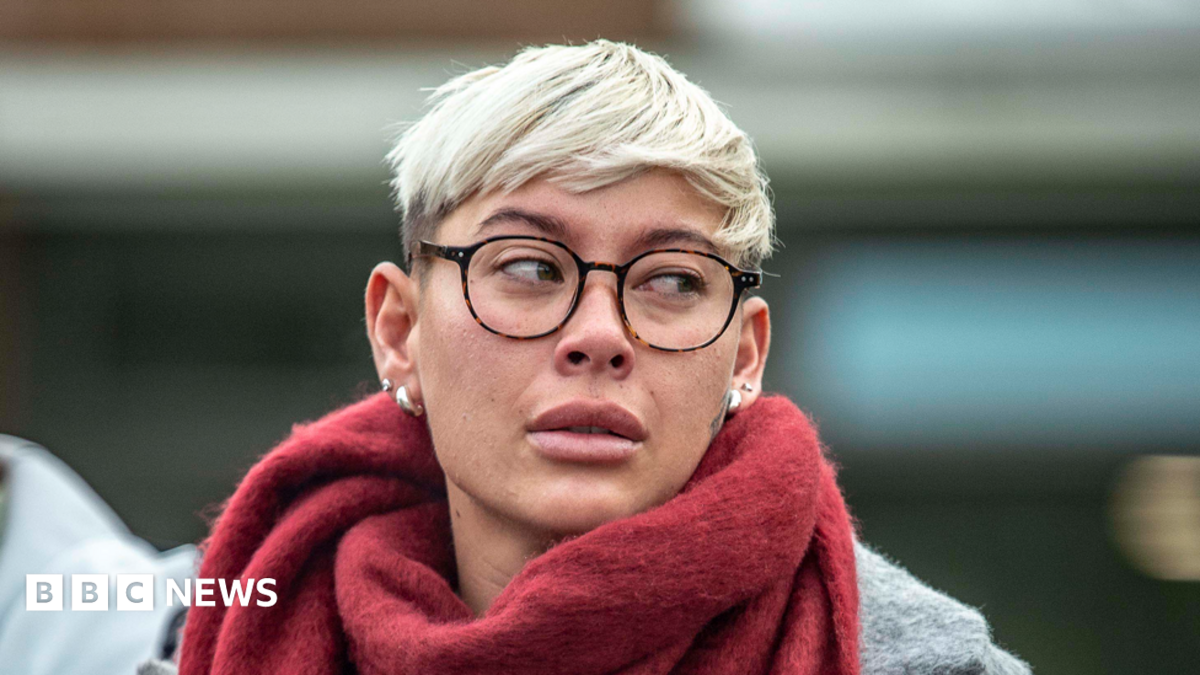
A woman with short blonde hair and glasses, wearing a grey court and red scarf

A woman has been cleared of owning an XL bully dog that bit her partner’s father, causing him to bleed to death.

Chanel Fong, 33, was accused of owning the dog, Cookie, which was dangerously out of control and of an alternative charge of being the person in charge of the animal at the time of the attack.

She was found not guilty of both by the jury at Caernarfon Crown Court.

Her partner’s father, Keven Jones, 62, from Chester, died from severe blood loss after being bitten on the leg.

Advertisement

The attack took place before XL Bullies were added to the banned dog list.

The court heard Keven Jones had been in poor health and had been taking methadone and blood thinning medication, and had been staying at Fong’s Wrexham home in May 2022.

Fong said the dog belonged to her partner Joshua Jones, who was not present when his father was bitten, although the prosecution claimed she was Cookie’s joint owner.

The court was told there had been a number of dogs at the home on Holt Road in Wrexham, including two XL Bullies, called Fire and Rogue.

Advertisement

Rogue was Cookie’s mother and in season at the time, so had to be kept separate from other dogs.

At about 11:30 BST on 23 May, Jones told Fong he would get Cookie and another dog in from the garden, but he was then heard shouting at Cookie to “get off” him.

The court heard Fong also called into the garden for Cookie to get down, which is when Jones came towards her “wobbly”.

He pointed to his leg, which was pumping blood, and he said to Fong, “he’s got me there”.

Advertisement

Fong called the emergency services and attempted first aid, including applying pressure to the wound, but Jones could not be saved.

A post-mortem examination said he had died from extreme blood loss caused by dog bites.

Cookie was later humanely euthanised.

Source link

Advertisement
Continue Reading

Trending

Copyright © 2025