Police were called to reports of a quad bike and motorbike being ridden recklessly
Police were called to reports of a quad bike and motorbike being “ridden recklessly” across a village recreation ground on Wednesday, June 3. Cottenham Parish Council has claimed that the incident caused damage and created a “serious safety concern”.
Advertisement
According to the parish council, three individuals entered via the Lambs Lane entrance in the village. A spokesperson said they narrowly missed a member of staff on the pathway alongside the village hall.
The council reported the incident to the police who received “quite a few” calls about it. Officers attended but those involved had left the area, according to Cambridgeshire Police.
A spokesperson for the force said: “We take reports like this very seriously and encourage people to continue reporting information to us. The concerns have been passed onto our local neighbourhood policing team to monitor and liaise with the community.”
The parish council has asked anyone who sees the vehicles at the recreation ground or elsewhere in the village to report it to police. They can contact the council “where appropriate”.
Advertisement
In a statement, Cottenham Parish Council said: “Unfortunately, we’ve experienced issues today with a quad bike and motorbike being ridden recklessly across the recreation ground, causing damage and creating a serious safety concern.
“The police have been informed and are aware of the incident. The three individuals initially entered via the Lambs Lane entrance and showed little regard for other users of the rec. Worryingly, they narrowly missed a member of staff on the pathway alongside the Village Hall.”
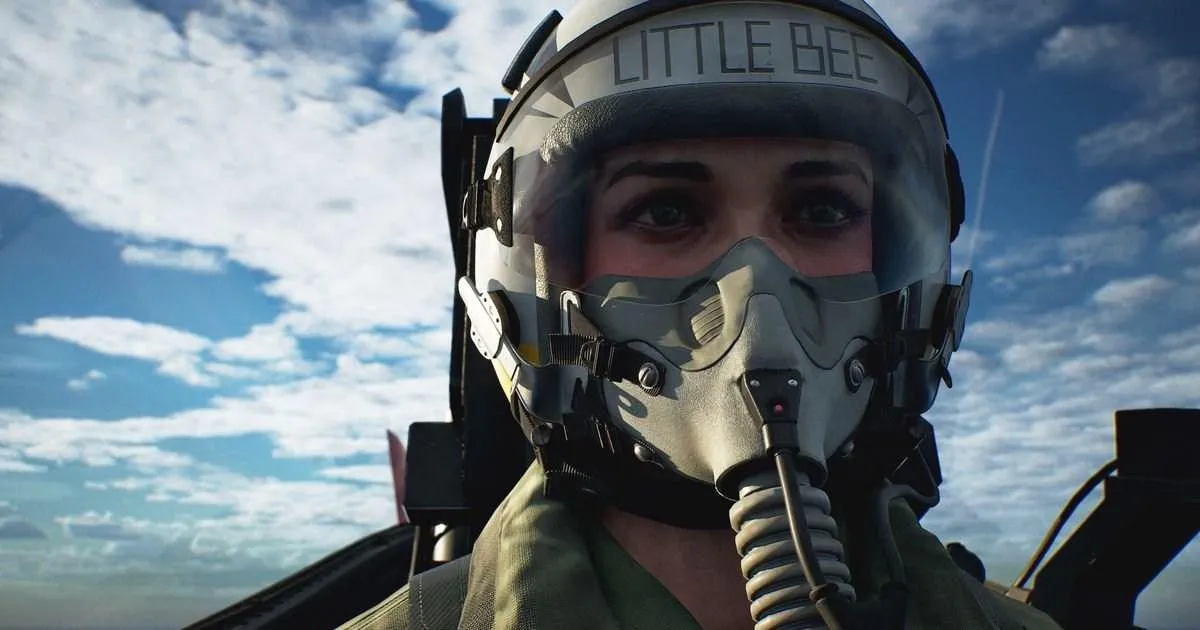
Ace Combat 8 – Tom Cruise eat your heart out (Bandai Namco)
The world’s favourite air combat simulator returns for another sortie, with a very modern take on aerial warfare and the fog (and clouds) of war.
With Red Dead Redemption 2 recently becoming the third best-selling video game of all-time it’s a constant frustration that video game sales figures are given out so inconsistently, because finding out that 2019’s Ace Combat 7 has sold a nominatively appropriate 7.5 million copies is something of a revelation. In retrospect, we’re not sure what we expected but it proves that, despite our fears, Ace Combat, and combat flight sims in general, are not quite the niche concern we assumed them to be.
Ace Combat 8: Wings Of Theve was announced in 2021 and got its first reveal at The Game Awards in 2025. We got to play several hours of the new game last month and spoke to brand director Kazutoki Kono and Ace Combat 8 producer Manabu Shimomoto. We’d met them before, prior to the launch of Ace Combat 7, and it’s interesting that despite the series’ continued success it still has no peers or rivals.
In the genre, the only thing that’s really happened in that time is that VR has fallen out of fashion – which is a real shame, as Ace Combat 7 had a fantastic VR mode – and Microsoft Flight Simulator has raised the profile of flight sims in general. Ace Combat has very little in common with that though, as while it’s a hardcore simulator, with little in the way of traditional gameplay, Ace Combat 8 is primarily an action game.
Advertisement
Ace Combat celebrated its 30th anniversary last year, although its lineage stretches back a few years before that, to the Air Combat series of arcade games. The modern games have three main staples: a highly complex backstory, set in an alternative world with similar but slightly more sci-fi technology; excellent graphics and a reasonable degree of realism; and amazing soundtracks.
All three elements were present and correct in Ace Combat 8, which once again takes place in the world of Strangereal. Although it is an ongoing story you don’t need to know anything beforehand, as the set-up is fairly straightforward: your homeland has been invaded and you’re part of one of the only fighting forces left, aboard a wandering aircraft carrier.
Expert, exclusive gaming analysis
Sign up to the GameCentral newsletter for a unique take on the week in gaming, alongside the latest reviews and more. Delivered to your inbox every Saturday morning.
Advertisement
The twist is that, in the first mission you take on the callsign of Rex, a legendary fighter pilot who turns out to be a complete fabrication, used to improve morale, with the previous incumbent being a total washout. Nevertheless, you accept the role and become the *Wings of Theve* (Theve being your capital city), ready to take on the war’s most dangerous missions.
Bandai Namco is careful not to call Ace Combat a simulation, although we’re not sure whether that’s because they’re being modest about its level of realism or because they don’t want to put people off. Depending on the difficulty level you choose, you have far more in the way of ammo than you would in reality, and the game makes sharp turns easier, but otherwise it’s relatively realistic, including the danger of stalling. You can survive some mid-air collisions but if you hit a mountain or ditch into the sea, that’s it.
Advertisement
Naturally, things start off fairly simple and the controls are really no more complex than any other first or third person shooter (you have the option of either view). Standard air-to-air missiles require a lock-on but are not guaranteed to hit unless you catch the enemy dead to rights. Equally, while you do have a limited amount of chaff and flares it’s relatively easy to dodge incoming missiles if you keep an eye on the radar and turn sharply as they close.
Although the combat is enormously enjoyable, and the graphics almost photorealistic at times (with none of the inconsistency or reliance on streaming seen in Microsoft Flight Simulator), the real magic in Ace Combat is making the missions varied enough that you never get tired of it.
We played more missions than we’re allowed to talk about, but things start off as you’d imagine, with some simple dogfights, but this quickly evolves into land battles as well, where you use ground-to-air missiles and bombs to take out targets and, in one memorable early mission, a fleet of ships. This is best achieved with specialised anti-ship missiles, which you have a much more limited supply of, as you swoop around an island, trying to take them out before they escape, but while still fending off defending fighters.
There’s a squadron of evil nemeses to look out for (Bandai Namco)
The visuals throughout all this are stunning and while we found the first person view (with cockpit turned off) the most practical, the game records everything as you go and you can watch the whole mission as a replay when you’re done, complete with Top Gun style cinematic camera angles and some amazing rain and cloud effects.
The latter is apparently the result of a lot of hard work, with a specially designed graphics engine called Cloudy that has been added to Unreal Engine. The benefit of this is highlighted in one mission where you’re chasing implausibly gigantic flying wings but where your radar doesn’t work at long range. Instead, you have to follow contrails in the sky and pass through angry thunderclouds that threaten to destroy your electronics.
Advertisement
That mission is relatively easy, especially if you use the wingman controls to make sure everyone zeroes in on the same giant plane once you find it – and protects you from fighters while you’re looking for the others. There’s also a range of special weapons you can choose before you start, the most tempting being a limited use weapon that lets you lock on and fire up to four missiles at once, like you’re playing After Burner.
You can also pick which plane you pilot before you start, which has a big effect on how a mission plays out. Despite the fantasy world of Strangereal, all of the planes are real world fighters, although they all have to be unlocked from what is essentially a skill tree, using earned in-game currency. But as long as you’ve got that you can make sensible choices, like using a F-14D for air combat missions and an A-10C Thunderbolt II against land targets.
Take on the mantle (Bandai Namco)
In the most extreme example of the game’s near future sci-fi element this includes a gigantic ‘land battleship’ which is treated entirely seriously and can only be taken out by following a complex plan, involving destroying its caterpillar tracks by exposing side panels for a brief window of opportunity, provided by bomb trucks on the ground and by collapsing skyscrapers into its path.
Everything about what we played of the game was impressive, with one exception. The developers made a point of saying that the storytelling and dialogue is less anime influenced than before, and more grounded, but while that’s true it’s still very clunky and awkward. It wouldn’t matter much but all your wingmates, and other allies and enemies, are constantly talking.
Some of it furthers the story but a lot of it is just meant to be immersive chatter. Even that would be fine, except the game is surprisingly reserved about pointing out mission objectives and how the battlefield situation changes over the course of a mission. Your wingmates don’t do nearly enough to help provide helpful information and even when they do say something useful it can get lost in the background noise.
Advertisement
It was only a minor problem during the preview though and will likely become even less of an issue once you get used to it in the main game. It’s certainly not enough to ruin what seems to be another welcome entry in the most accessible, enjoyable, and commercially successful combat flight sim on the market.
Formats: PC (previewed), PlayStation5 and Xbox Series X/S Publisher: Bandai Namco Developer: Bandai Namco Aces Release Date: 2026
GC: I’m sure you don’t remember but I met you both before, eight years ago at Gamescom.
Advertisement
KK: There was only once that we travelled together to Gamescom, that was Ace Combat 7. That must’ve been when we met.
GC: So much has happened in the world, and in the games industry, since then. I’m curious, how have those many changes influenced you and Ace Combat 8?
MS: First of all, the universe of Ace Combat is set in this Strangereal fictional world. We take great care in making everything seem believable, but everything is based on prediction of the near future. But it’s not set in the real world, it’s very much fictional.
The production started in 2020 and we had predicted the near future at the time but the truth is, coincidentally, the current world seems to have mirrored what was predicted.
Advertisement
KK: With Ace Combat 8, what is depicted is very much a prediction of near future technology or information that is likely to be available very soon. But one of the elements that I have a real-life concern about is social media, because with what is currently happening it is very difficult to tell what information is true or false.
That creates a lot of confusion in that sphere and similar things are mirrored in Ace Combat 8. There is a presence – Fake Wings, that you may be yet to come across – where information regarding that is affected by the people and there are reactions against that as well. So there is that sense of information manipulation, that is depicted here.
Most planes are real but some are more fantastical (Bandai Namco)
GC: I’ve always assumed that the sci-fi elements in the game were purely to add variety and keep things unpredictable, but the future seems to be catching up very quickly, with things I never expected to see in my lifetime. How has that affected how you approach this new game and the series in general?
KK: The sci-fi element being utilised for gameplay hasn’t really changed and won’t change in the future. It is a motif to enhance the gameplay but in the Ace Combat series, because the visuals and aesthetic elements have really advanced and keep advancing.
Even though the gameplay is very enjoyable, if nothing looks realistic, visually, there is going to be a dissonance for the players. So the technologies, visuals, and information all need to align, because we don’t really want to create a completely removed fantasy world that seems unreal.
Advertisement
Things feeling and looking realistic is very important. So if we were to put a priority order, gameplay is most important but second is a believable sense of Strangereal, to create immediacy for the players, is very important as well.
But we don’t anticipate a great land battleship to attack a city anytime soon.
GC: Well, not this year anyway.
Both: [laughs]
Advertisement
KK: But that really shows that gameplay is at the forefront for us.
GC: You were wise to set the series in this alternative reality, as it’s quite disquieting to think about what all these vehicles and weapons are being used for in real-life at the moment. It’s not something a lot of people would want to celebrate and yet flying a jet fighter is undeniably fun. Nevertheless, I’ve always seen the series as having an anti-war theme, is that how you see it?
MS: This goes back to what we were discussing earlier on, about the great acceleration in the speed of advancement in the sci-fi elements and real-life technology. For example, with Ace Combat 7 drones were heavily featured but at the time it wasn’t really in our day-to-day life.
Advertisement
GC: Yes, that seems the perfect example.
MS: But it became real-life quite quickly. So similar things happened with Ace Combat 8 as well. At the time of the production stages it was seen as something that was out of reach and near future, but coincidentally the timing just seemed to converge.
Just as a foundation, the team is creating an entertainment product, so a sense of fun is extremely important for the players. But to really bring that onto the realistic level… to make it a lot more accessible and to make it even more enjoyable, we do create a universe that is very in-depth in detail and we do take that role quite seriously. We do really go into the details in this process of layering the story, so it’s actually great that you are asking these questions, as it shows that there is a thirst for this type of element.
The plot is very involved (Bandai Namco)
GC: 7.5 million is not a niche franchise and yet there’s very few games like Ace Combat. Do you feel that customers are being underestimated in terms of what effort they’re willing to put into a game, in terms of complicated or unusual controls and concepts?
KK: In 2026 there are a surprising number of flight shooter games within the industry. So this genre seems to be thriving, especially in the independent games sector. So Ace Combat will always be at the top but it’s actually great that it’s a very active genre.
Advertisement
This franchise is based on a 30 year legacy and there is that core element of the players going through many different challenges to become the ace pilot. So there is a hero creation element. The perspective and angle is slightly different to a simple flight shooter; it’s very difficult to replicate for the other publishers.
GC: I wonder if Microsoft Flight Simulator has helped to raise the profile of flight sims in general, even though it’s not a shooter?
MS: Well, Microsoft Flight Simulator is a simulator, so the core focus is different to Ace Combat, because Ace Combat provides a flight shooter experience in really living through this journey of becoming an ace pilot, so there is a strong narrative attached to it – so the outcome is completely different, so therefore it tends to attract different demographics.
You soon get to know all your wingmates (Bandai Namco)
GC: Why is the music always so good in Ace Combat? Why do you make that a priority? It’s unfortunate it doesn’t seem to get much acknowledgement. I nominated it for The Game Awards, but I don’t think Ace Combat 7 even got through to the final stage that year.
Both: [laughs]
Advertisement
KK: The composers that we work with are greatly skilled in creating these melodious grand scale scores. And the songs too, fit perfectly in time with the ace pilot experience. When it’s flying it really fits with the dynamism of what the player is experiencing. So there is that aspect.
But separately, I agree, the soundtracks of the Ace Combat series are extremely popular worldwide but it hasn’t really received that official recognition within The Game Awards. The sound creators have really worked hard for Ace Combat 8 and they are aiming to get that recognition.
The cloud effects are really good (Bandai Namco)
GC: Just to end on something that we discussed at Gamescom, but I’m a big fan of simulations of fictional vehicles, such as combat space simulators and mech games. Considering how successful Ace Combat is, would you consider making a game based on something more fantastical? While maintaining your grounded style?
MS: Because the game feel of Ace Combat is very realistic we have been approached by various companies to create something similar, including the aviation industry. However, the reality is that Ace Combat team is not large and we are fairly limited in capacity. Therefore if we do opt to create something like that we won’t be able to proceed with future content for Ace Combat.
So there are a great number of fans who are looking for future instalments and first and foremost our focus is on providing the entertainment content, so we have no plans to create a simulator-esque title.
Advertisement
GC: My pipe dream of a Xevious space combat simulator is doomed…
Both: [laughs]
KK: Well, you have a role to play, David. If you write a great article and Ace Combat sales greatly increase then maybe we can increase the number of projects.
GC: OK, if you win that Game Awards music category, you must promise to make that game.
Advertisement
Both: [laughs]
MS: [in English] Thank you very much!
GC: Thank you very much for your time.
KK: Thank you.
Advertisement
That’s Kazutoki Kono on the left and Manabu Shimomoto on the right (Nagayama Tohru)
TikTok, Loose Women and I’m a Celebrity star GK’s new show is called It’s Giving Life
I’m a Celebrity and Loose Women star, GK Barry is coming to Cardiff with her new show. One of six dates across the UK in support of her new book, It’s Giving Life, the hugely popular social media sensation and TV personality will stop at New Theatre, Cardiff on Sunday, September 7.
Advertisement
Dubbed as “reckless and 100% unfiltered”, audiences are told to expect outrageous stories, brutally honest confessions, and the kind of chaotic commentary that made GK, real name Grace Eleanor Keeling, a household name.
The show description reads: “From dating disasters and digital drama to body image, sexuality, personal traumas and all the questionable decisions in between, nothing is off-limits.
“This is GK Barry at her finest. Live, unfiltered, and oversharing for the greater good of humanity. Come for the chaos. Stay for the laughs. Leave feeling better about your own life choices.”
From TikTok fame to becoming a breakout star on I’m a Celebrity…Get Me Out of Here! and a regular panelist on Loose Women, GK Barry has become one of the most influential and relatable young voices in British media.
Advertisement
With over six million followers across social media and a chart-topping podcast, Saving Grace, the 26-year-old’s rise has been speedy. Last weekend she made her Soccer Aid debut for England.
The internet star has become one of the UK’s most recognisable and beloved online personalities thanks to her viral videos, quick wit and completely unfiltered honesty.
Now she is turning her attention to sharing the hilarious realities behind the highlight reels with her forthcoming book, GK Barry: It’s Giving Life – A Guide To Surviving and Thriving. The book is released on September 3.
Advertisement
Get your tickets for her live shows, at www.ernestpromotions.com
Full tour dates for GK Barry:
Tuesday, September 1 – Manchester, Albert Hall
Wednesday, September 2 – London, Shepherds Bush Empire
Whether you take notice of the colour of your eggs or not, the supermarket is making the shift to help the environment.
The retailer will phase out brown eggs across all its own-brand lines after finding that white eggs have a 12.7% lower carbon footprint.
Sainsbury’s said white eggs support more sustainable customer choices (Image: Lewis Whyld/PA)
Sainsbury’s to cut sales of brown eggs
It said white eggs support more sustainable customer choices “while still maintaining the excellent taste, quality and nutrition they expect.”
Sainsbury’s said this is largely due to better feeding efficiency and the longer productive lifespan of white hens.
Advertisement
White hens are also less prone to feather pecking, leading to better animal welfare.
A Sainsbury’s spokeswoman said: “White eggs have the same delicious taste and nutritional benefits as their brown counterparts but result in lower carbon emissions and better welfare outcomes for the hens that lay them.
“White feathered hens typically live longer, eat less feed and lay eggs for longer, cutting carbon emissions by over 12% compared with hens that lay brown eggs.
“We know Brits love their eggs and, as we work with suppliers to transition all of our own brand to white shells, they can now enjoy them knowing they are better for the environment and the hens.”
Advertisement
What’s the difference between best before and use-by?
The supermarket said the move reflects its long-term UK food system goals and is an example of close supplier collaboration on sustainability.
Although white eggs are rarely seen on supermarket shelves, they are commonly used by restaurants.
Most white-shelled eggs are laid by breeds such as the white leghorn, which originated in Italy.
Recommended reading:
Advertisement
In recent years, UK supermarkets have begun exploring consumer demand for white eggs.
During the Covid-19 pandemic, Tesco stocked white eggs when panic buying led to a shortage of brown eggs.
Do you buy white or brown eggs? Tell us in the comments below.
Mourners also heard how Mr Keeley had an extraordinary ability to connect with people and make them feel part of his extended family
Family and friends have gathered to say their final farewell to scratchcard millionaire Shawn Keeley, who was remembered as a generous, loyal and deeply caring man whose impact on those around him was “immeasurable”.
Advertisement
Mr Keeley’s funeral took place at St Patrick’s Church in Dungiven on Thursday morning following his sudden death in the Philippines.
The 33-year-old became an instant millionaire in 2020 after winning £1 million on a National Lottery scratchcard purchased at the local shop in Dungiven, where he worked as a manager.
During a moving homily, the celebrant described Mr Keeley as a man whose kindness, generosity and loyalty touched countless lives, telling mourners that although they were grieving his loss, “this is not the end of Shawn, but the beginning of his new life with God”.
Drawing on stories provided by family and friends, the priest painted a picture of a man who consistently put others before himself.
Advertisement
“Shawn loved a good night out,” he said. “Many of us will remember ending a night with Shawn, somehow walking home barefoot. Not because he had lost his shoes, but because he’d usually given them away to a girl whose feet were hurting so bad.
“It seems that going barefoot was nothing new to Shawn. Whether by choice or by generosity, shoes never seemed that important to him. What was important to Shawn was people.”
The priest recalled how, during the Covid pandemic, Mr Keeley moved out of the family home to help protect his brother Christopher.
“It wasn’t always easy, but that’s who Shawn was,” he said. “He put others before himself.”
Advertisement
Mourners also heard how Mr Keeley had an extraordinary ability to connect with people and make them feel part of his extended family.
“You could be talking to Shawn for five minutes, and before long he had worked out that your cousin knew his aunt, whose neighbour was somehow related to someone else in the family,” the priest said.
“Shawn wasn’t just related to everyone. He genuinely made everyone feel like his family.”
The homily highlighted Mr Keeley’s love of travel and adventure, with the priest recalling his trademark response whenever people complained while on holiday.
“If someone started complaining, Shawn had the perfect response: ‘Sure, look where we are,” he said.
“It was his way of reminding us to appreciate the moment, to enjoy life, and not to take things for granted.”
Friends and family also shared humorous stories from his childhood and younger years, including attempts to hide cigarette smoking from his parents and family anecdotes about his distinctive fashion sense.
Advertisement
The priest said the stories being told at the funeral revealed “something much deeper” about Mr Keeley’s character.
“They reveal a man who was generous without thinking twice, loyal without conditions and kind without expecting anything in return,” he said.
“A man who made people feel welcome, cared for and loved.
“Shawn’s life may have been far too short, but the impact he had on those around him is immeasurable. His stories will continue to be told, his laughter will continue to be remembered, and the love he gave so freely will continue to live on in all of us.”
Advertisement
The congregation heard of Mr Keeley’s devotion to his nieces Lexi and Olivia, his goddaughter Ava, and the close bond he shared with his brothers.
Addressing his family directly, the priest said mourners’ thoughts were centred on his parents, Tiney and Noel, brothers Christopher, Paul and Gavin, and his partner EJ.
“It is difficult to come to terms with the void in their lives from the loss of such a special person,” he said.
“Everyone who knew Shawn loved him, and he could see no wrong in anyone.”
Advertisement
The priest also noted Mr Keeley’s involvement with the Society of St Vincent de Paul in Dungiven from a young age and his commitment to charitable work both at home and in the Philippines.
He told mourners that a Mass had already been celebrated for Mr Keeley in the Philippines before his remains were returned home.
The priest said Mr Keeley had “left an indelible imprint” on both communities and quoted the Prophet Micah as a reflection of the life he had lived.
“This is what the Lord asks of you, only this: to act justly, to love tenderly and to walk humbly with your God.”
Advertisement
Shawn Keeley is survived by his parents Tiney and Noel, brothers Christopher, Paul and Gavin, and his partner EJ.
The new exhibition of British landscapes at Pallant House Gallery in Chichester features 160 works by some 60 artists. These span from Thomas Gainsborough and the local Smith brothers in the 18th century to the inner-city wastelands of Prunella Clough in the 1990s.
Yet, in an exhibition drawn entirely drawn from Pallant House’s own collections, there are inevitable emphases and gaps. Scottish and Welsh artists are probably better represented than Scottish and Welsh landscapes.
Apart from a collage of Bolton in 1937 by Julian Trevelyan, made while assisting the early work of Mass Observation – a social research initiative that documented everyday life in British towns through writing, photography and visual records – the north of England is largely represented by wintry views of Wharfedale. The Midlands and East Anglia are equally underrepresented.
This exhibition is not about British, or even English landscapes, but about how a broad range of British artists responded to the landscapes they chose to depict.
Advertisement
The spirit of place
Entering the exhibition, I passed some striking works by Graham Sutherland and Edward Bawden. Bawden and Eric Ravilious are unsurprisingly well-represented in this show. Yet it jarred to be told that they moved into nearby Great Bardfield in 1932 “with their wives”. After all, Charlotte Bawden and Tirzah Garwood were themselves significant artists, albeit not of landscapes.
Disused Land by Prunella Clough (1999). Pallant House Gallery
Happily, the same room includes Cumberland Landscape (Boothby) (1926) by Winifred Nicholson. She, alongside others including Barbara Hepworth and the Scottish artist Wilhelmina Barns-Graham, ensure that women’s contributions are represented.
Yet the star of that room, and of the show, is Paul Nash. Nash’s intense relationship to landscape informs the subtitle to this exhibition (A Sense of Place), exploring as it does artistic endeavours to capture what Nash referred to as the genius loci (or the spirit of place).
Advertisement
That intensity had a more sombre side. A whole room is devoted to wood engraving and printmaking – an artform Nash and many of his contemporaries turned to after the first world war. The stark lines and contrasts of light and shade evoked the sense of place felt by Nash after his harrowing experiences as a war artist.
His powerful study of the battlefield, Void (1918), which depicts a battlefield stripped bare except for the debris of war, is displayed alongside his dark and shadowy Path into the Wood (1921). Nash’s accompanying text observes: “Before light came, black was. The void was darkness … Without hot shafts of sun or the moon’s radiance the world is not seen.”
What artists saw was a country transformed by war. They turned to the countryside for comfort, trying to capture its disappearing character and preserve a sense of what was being lost.
Six years after the founding of the Council for the Preservation of Rural England in 1926, Clare Leighton produced her homage to vanishing rural crafts in The Farmer’s Year: A Calendar of English Husbandry (1932). This took a society already becoming estranged from the land through the various seasonal activities of farming communities in exquisite detail. For me, her powerfully built ploughman was one of the highlights of the exhibition, conveying in his posture an intimate relationship with the land that we have increasingly lost.
Advertisement
Wittenham by Paul Nash (1935). Pallant House Gallery
Tellingly, Edward Wadsworth’s Ladle Slag: Old Hill 1 (1919) is almost the only depiction of the industrial Midlands. Before 1914, Wadsworth had been part of Vorticism – a movement that celebrated the energy, speed, and mechanical power of the modern industrial world. After the war, however, this enthusiasm gave way to a greater sensitivity to the human and environmental costs of industry.
Ironically, commerce was one of the drivers of this shift. Some of the most iconic of English scenes created by Bawden and others were book dust jackets. Even more significant in conveying an imaginary of a rural England well-stocked with beauty spots were the Shell Guides for the growing army of middle-class motorists. Nash was acutely aware of the tension between the tourism he, Sutherland and others encouraged by their contributions to these and the conservation of the England they valued.
Arguably it was in responding to these tensions and postwar uncertainties that a distinctive approach to landscape emerged.
Landscapes and national identity
Interwar British art continued to be influenced by Continental movements, such as surrealism, which Nash was drawn to in the 1930s. Yet it was a modernism tempered by a poignant and affectionate attempt to capture the essence of landscapes that seemed under threat. With few exceptions, capturing these landscapes required a muted palette, maybe because of the rainy weather of these islands.
In general, these landscapes all almost invariably reflected human presence. A staple of the English country scene is often a steeple, such as that seen in Walter Sickert’s Chagford Across Fields (1916), an unsettlingly peaceful scene contrasting with the contemporary slaughter on the Somme.
Advertisement
Sussex River, near Midhurst by Ivon Hitchens (1965). Pallant House Gallery/The Estate of Ivon Hitchens
The works by Ravilious, in whom there has been such an upsurge in interest in recent years, include even more ancient evidence of human activity. His Cerne Abbas Giant (1939) is seen through barbed wire. It’s rendered in earth browns to reflect the way it was turfed over to prevent it acting as a landmark for the Luftwaffe.
Capturing the man-made nature of the English landscape means the term is interpreted elastically here to incorporate seascapes, skyscapes, gardens and what Clough called “urbscapes”. It is taken to include activities such as those illustrated in Edward Bouverie-Hoyton’s Hedging and Ditching (1926). While this shows how much of the landscape of southern England was manufactured, the paucity of postwar material means that the grubbing out of thousands of miles of hedgerows since 1945 goes unrecorded here.
Instead, the exhibition suggests that there was a shift towards abstraction. All landscapes are abstract collages of light, shade, form and colour from a distance. The particularities of a scene that had moved Ravilious became the blocks of pigment used by Ivon Hitchens in works such as Distant Light on Dark & Dark through Light (1968). This was not the depiction of a vista, but an emotional response to it.
In painting in this way, Hitchens was nonetheless still seeking to express the spirit of place that is the defining theme of this engrossing exhibition.
The European Union (EU), along with the other major countries in Europe, should be a geopolitical force to be reckoned with. In 2024, the EU was the second-largest economy in the world after the US and before China.
There is also nothing comparable to the trading links between these three players. In 2025, bilateral trade in goods between the US and China was US$414 billion (£307 billion). The EU and US, meanwhile, constitute a staggering third of global trade – with trade between them coming in at €1.77 trillion (£1.53 trillion) that same year.
These figures show that, far from the often-floated idea of a “Group of Two” (G2) where the US and China act as the joint steering committee for the planet, there really needs to be talk of a G3 that includes Europe.
My research has dealt with the relationship between China, Europe and the US for over 30 years. These three powers tend to silo and segregate their relations, which almost always comes at the expense of Europe. This is a phenomenon that has intensified under the US president, Donald Trump, in his two terms in office.
Advertisement
When the US and China meet, the Europeans tend to be outside the room with everyone else, trying to listen in. There is dialogue between China and the EU. There was even, briefly under President Joe Biden, an EU-US dialogue to coordinate their approach to China and the Indo-Pacific. This was mothballed when Trump returned to office in 2025.
However, what there has never been is a proper high-level Europe, China and US trilateral summit. And that situation is unlikely to change. When the British prime minister, Keir Starmer, visited China in January 2026, Trump criticised the trip. He said it was “very dangerous” for the UK to do business with Beijing.
Despite this, when Trump himself visited China in May, the sizeable technology delegation that accompanied him and the agreement for Beijing to buy 200 Boeing aircraft showed dealmaking was absolutely fine for the US. The mindset is clear enough. China and the US as superpowers have the right to deal with each other however they feel fit. No one else gets a look in.
Apple CEO Tim Cook (left) and Nvidia CEO Jensen Huang (right) accompanied Donald Trump on his recent visit to Beijing. Go Nakamura / EPA
Europe’s default position has been to accept this situation and sit between its two most important relationships, trying to balance. This has been demonstrated by the EU’s various high-level iterations of a policy approach towards China over the past 15 years. The most recent, in 2019, ended up balancing China between collaborator, adversary and competitor – illustrating Europe’s ruminative and indecisive mindset.
Advertisement
In terms of collaboration, Europe’s most obvious area of recent engagement with China has been in trade and investment. There has been technology transfer in automotives and manufacturing, and acceptance of Chinese tech company Huawei in European telecoms systems. But here, too, Europe has been cautious, with Huawei’s access to European markets heavily restricted from 2020 after American pressure.
The ways in which Trump has turned on his friends – demanding control of Greenland early in 2026 and criticising Nato and defence spending levels by longstanding allies – has created solid grounds for a rethink. Europe needs to acknowledge that working out its own policy on China means producing not just detailed plans (Europe is pretty good at that), but politically committed ones that place its own interests first.
Europe’s interests first
Brussels and other European capitals are dealing with a harsh emerging reality. Their key security relationship with the US is undergoing profound change and China is becoming a totally different kind of potential partner as it emerges as an innovator and a technology and research powerhouse.
Both phenomenon change the fundamental paradigm in which the EU now sits, and call for a different policy response – one that recognises more overtly that, for many areas and for many reasons, China is a partner and not a straightforward, unambiguous threat.
Advertisement
If we look at vastly consequential global issues, we can see this clearly. Europe is more aligned with China than the US on the threat of global warming from human activity and the need to use alternatives to fossil fuels.
Beijing and Brussels are also on the same page about the benefits and threats from AI, where China is now overtly stipulating the need to manage the effects of this new technology on jobs. And China, like Europe, views Trump’s attack on Iran with misgivings.
At the same time, Europe also worries about the real depth of Trump’s commitments – not just to Nato where his scepticism is well established, but in terms of standing by Taiwan were it ever to be attacked.
Realignment will not happen overnight, nor is there an easy destination. Trump’s White House successor, for example, may well be more into multilateralism. Even the current administration is talking about expanding its nuclear commitments in Europe. But the central reality is clear enough.
Advertisement
At a fifth of global GDP, and with a population of almost half a billion, Europe cannot continue to have a deferential, largely passive posture – and certainly not one where its largest and second-largest economic partners, the US and China, are involved.
At the very least, next time these two superpowers sneak into a room to continue their conversations, Europe should work out good arguments to join them, and not sit outside anxiously eavesdropping alongside everyone else.
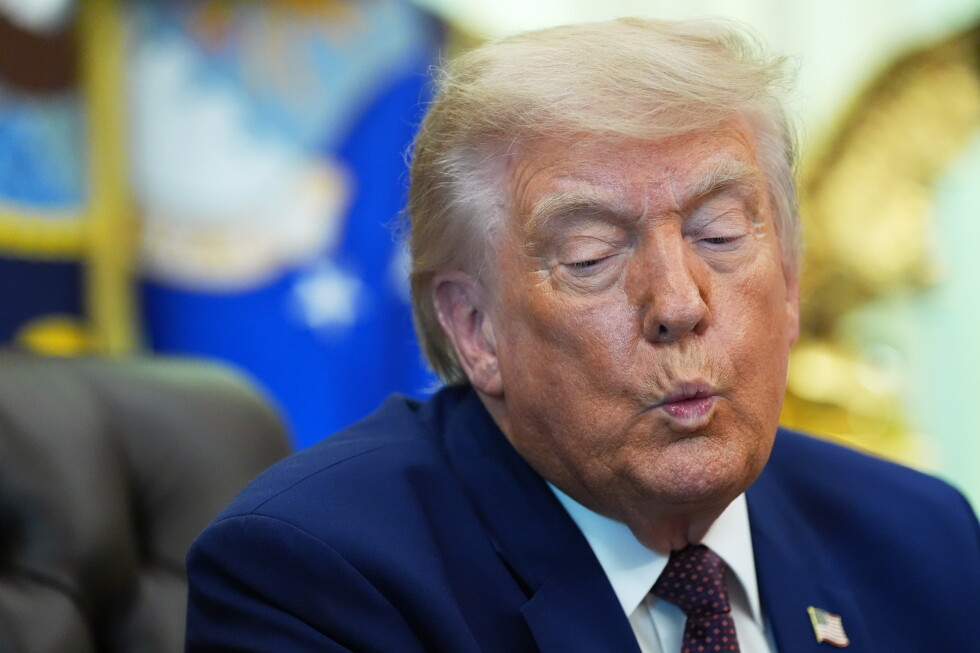
In a post on Truth Social, the president wrote: “Yesterday, in a meaningless vote, the House voted, 4 bad Republicans and all of the Dumocrats, to limit my War Powers, right in the middle of my final negotiations to end the War with the Islamic Republic of Iran. Who would do such an unpatriotic thing.”
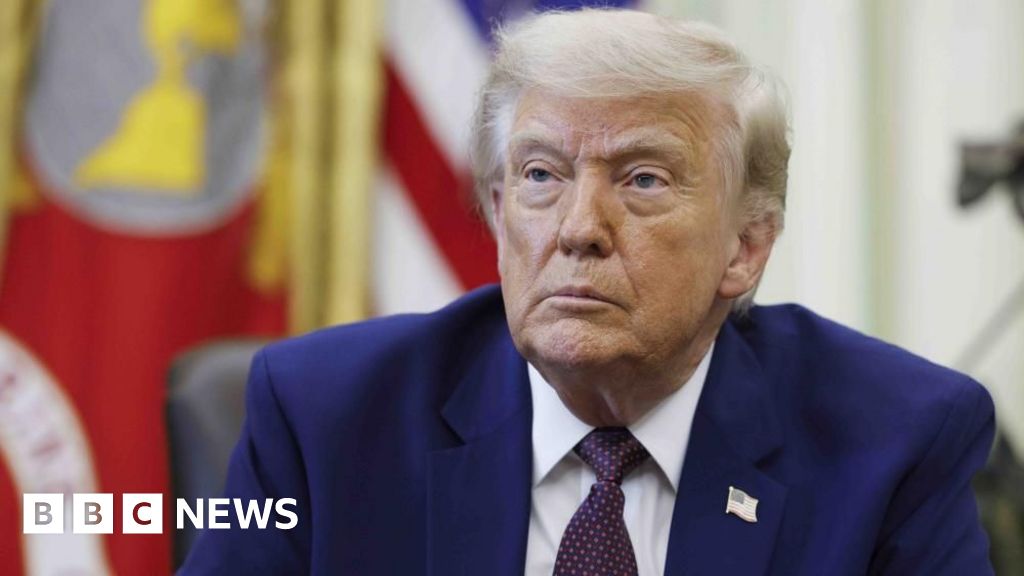
WASHINGTON (AP) — President Donald Trump is facing warnings from foes and allies alike that he’s getting boxed in on the Iran war, a conflict he sold as a brief military incursion but that has since settled into a holding pattern.
But Trump has called for unspecified changes to the agreement and Iranian officials — perhaps calculating that the Republican president is reluctant to restart the bombardment after burning through key weapons systems — are showing no signs they’ll give in to new demands.
A series of strikes by the U.S. and Iran this week has raised fresh concern that the ceasefire could collapse. Trump on Wednesday downplayed the significance.
Advertisement
“It’s a different part of the world,” Trump told reporters in the Oval Office. “You know, I’d say in that part of the world, a ceasefire is when you’re shooting in a more moderate manner.”
The shaky moment follows repeated claims by Trump since a 14-day ceasefire was agreed to on April 7 — following 38 days of U.S. and Israel bombing of Iran — that a deal is just days away and the Iranian side is begging to come to a settlement. Trump on Wednesday said it was possible something could come together “over the weekend.”
Without an interim settlement in place to reopen the Strait of Hormuz,global energy prices remain elevated and are adding to anxieties around the world about the impact of rising costs spurred by the three-month conflict on the cost of food, fuel and other goods.
After a string of reports this week that Iran was shutting down talks, Trump told CNBC he “couldn’t care less” if the negotiations had bogged down and even mused they had become “boring.”
Advertisement
There’s anxiety Trump is getting boxed in
There’s growing concern inside the administration and among key advisers and allies that Trump now finds himself in a bind, according to a U.S. official and another person familiar with the administration’s internal deliberations, both of whom spoke to The Associated Press on condition of anonymity to discuss private conversations.
Trump is privately hearing from other Republican lawmakers as well as Pentagon officials and Gulf allies that a return to the bombing campaign is a bad idea.
Those advising against returning to military action note that the U.S. has burned through munitions at too fast of a rate. It could take three years to replenish some key weapons systems.
Advertisement
Meanwhile, Gulf allies are worried that Iran will retaliate against them and their critical infrastructure and energy interests and further set back their economies.
At the same time, Trump has bristled at the idea of accepting a deal that resembles the 2015 nuclear agreement brokered by Democrat Barack Obama’s administration, which restricted Iran’s nuclear program in exchange for lifting international economic sanctions.
Trump during his first term abandoned the pact that he said had failed to permanently stop Iran’s nuclear program, ignored Iran’s ballistic missile development, and did not penalize Iran for supporting militant proxy groups across the Middle East.
Now, Trump, according to those familiar with internal deliberations, has made clear he feels strongly he can’t make “a bad deal” and is acutely aware that he’s at a moment where he’s at risk of tarnishing his legacy if he missteps.
Advertisement
White House spokeswoman Anna Kelly dismissed the notion that Trump has been boxed in or that there’s any concern within the administration about the pace of talks.
“These mysterious so-called ‘administration officials’ have no idea what they’re talking about — those actually involved in sensitive discussions know to trust in President Trump, who will always do what is best for U.S. national security,” Kelly said in a statement.
Trump resisted Israel push for Lebanon bombings
Israeli and hawkish allies in Washington have made the case to Trump that a deal at this point would amount to unconditional surrender, urging him to ratchet up economic pressure on Iran and back Israel’s assault on the Hezbollah militant group in Lebanon.
But Trump earlier this week in a heated call with Israeli Prime Minister Benjamin Netanyahu demanded Israel stand down, and on Wednesday, Israel and Lebanon said they agreed to renew a ceasefire. Hezbollah was not part of the Israel-Lebanon talks, which have been held at the ambassadorial level in Washington since the beginning of last month.
Advertisement
Remaining in the current status quo with Tehran — neither a full resumption of hostilities nor sealing an interim agreement to restart nuclear talks — is a situation that Iran appears better poised to exploit, argues Behnam Ben Taleblu, a senior fellow at the hawkish Washington think tank Foundation for Defense of Democracies.
Despite being the weaker party, Iran appears to be calculating that the longer the holding pattern lasts, the better the chances are they can “box in” Trump, he added.
“Either way, Tehran appears more resolute than ever to not provide Trump with a victory image, hence why it isn’t budging on the battlefield or negotiating table,” Taleblu said.
Holding pattern isn’t helpful for Republicans on the ballot
At the same time, Democrats are trying to capitalize on Trump’s handling of the unpopular war ahead of November’s midterm elections. The House of Representatives on Wednesday for the first time passed a symbolic resolution calling for a halt in military action against Iran, with four Republican lawmakers joining Democrats in the rebuke of Trump’s war.
Advertisement
During hours of hearings on Capitol Hill on Tuesday and Wednesday with Secretary of State Marco Rubio, Democrats laced into Trump for discounting the economic impact of the conflict on Americans and for failing to anticipate that Iran would shutter the Strait.
In one tense exchange, New Jersey Democratic Sen. Cory Booker pointed to the unsteady ceasefire as a sign that Iran has the upper hand.
“We are the strongest nation on the planet Earth, and we’re in a stalemate with Iran,” Booker said. “And now we’re begging to get back into a deal that you all trashed in the first place.”
Rubio dismissed the criticism, underscoring that Iran has been placed on its heels with the strikes that have taken out multiple layers of senior leadership and left Iran’s economy in shambles.
Advertisement
“There’s no one begging,” Rubio responded. “I don’t know where you’re getting this perception that Iran is stronger.”
Another Democrat, Sen. Chris Van Hollen of Maryland, homed in on Trump’s comments last month that voter anxiety about the cost of living was “not even a little bit” of a motivating factor for him to reach a deal to end the war.
The president continues to downplay the rising costs for Americans at the pump and predict that gas prices would fall sharply after the conflict ends.
Christopher Borick, the director of the Muhlenberg College Institute of Public Opinion in Pennsylvania, said that Democrats running in swing districts around the country are already zeroing in on Trump’s rhetoric on the war’s impact on Americans’ pocketbooks.
Advertisement
“There’s significant risk in having this thing drag on for Republicans,” Borick said. “It’s certainly going to hurt if Trump ends up in a place where the war ends and Iran’s nuclear program is in the same place. But for Republicans in some of these tough swing districts, there’s a case to be made to rip the bandage off now, get some easing in the oil markets and hope there’s enough time for voters to turn the page.”
___ Associated Press writers Farnoush Amiri in New York and Lisa Mascaro contributed to this report.
HAVANA (AP) — On a recent afternoon in Cuba, the temperature climbed and anxiety grew among the residents of a Havana street.
Their focus was an improvised dump site on the sidewalk with rotting food scraps, torn bags, cardboard and rubble. Swarms of flies and stray cats gathered around the trash whose stench wafted on the breeze from the nearby sea.
“What you’re looking at is depressing,” lamented María Odalys Ramírez, a 63-year-old who lives across the street from the capital’s iconic Hermanos Ameijeiras hospital. “The trash in this area, the flies, the rats, the filth — it’s completely unsanitary.”
For months, residents of Havana — home to 2 million of Cuba’s almost 10 million residents — have lived with piles of garbage accumulating on almost every street corner. The situation deteriorated after a U.S. energy blockade triggered power outages, water shortages and a fuel crisis that brought state-run garbage trucks to a standstill.
Advertisement
Without garbage collection, residents have begun burning waste in the streets, raising alarm among health officials over potentially toxic smoke.
Residents fear the coming months will bring worse conditions as summer heat intensifies and hurricane season begins.
A citywide tour by The Associated Press revealed identical scenes across Havana neighborhoods where locals said garbage trucks pass only irregularly.
In the city center and on the outskirts, cars, bicycles and pedestrians weave around the trash piles. Others pick through it, hoping to salvage something useful.
Advertisement
Havana as of last July was producing the equivalent of about 12 Olympic-sized swimming pools of solid waste every day, according the latest municipal figures available. Even then, municipal services collected just 57%.
The “improper management of urban solid waste” has been identified as a primary environmental challenge in Cuba’s national strategy, said Odalys Goicochea, an official at the ministry of science, technology and the environment.
Now, Goicochea warned, the current garbage collection situation, combined with rising temperatures and impending rains, could worsen the situation. The heat and moisture threaten to trigger a proliferation of disease-carrying flies and mosquitoes.
The crisis has sparked citizen initiatives to clean up neighborhoods.
Advertisement
One is El Batazo, an initiative operating across eight Havana blocks. A collector rings a bell twice daily to pick up pre-sorted household trash, while other project members sweep the streets.
Members then sell recyclable raw materials like aluminum and glass, repurpose food scraps to feed livestock and place the remaining trash into a container for later transport to a landfill.
“The fundamental impact of this project is proving to the community that it can be done,” said Evelyn Martínez, a collaborator at El Batazo. “It is entirely possible to live in a cleaner environment, give value to what we call ‘trash’ and put it to good use.”
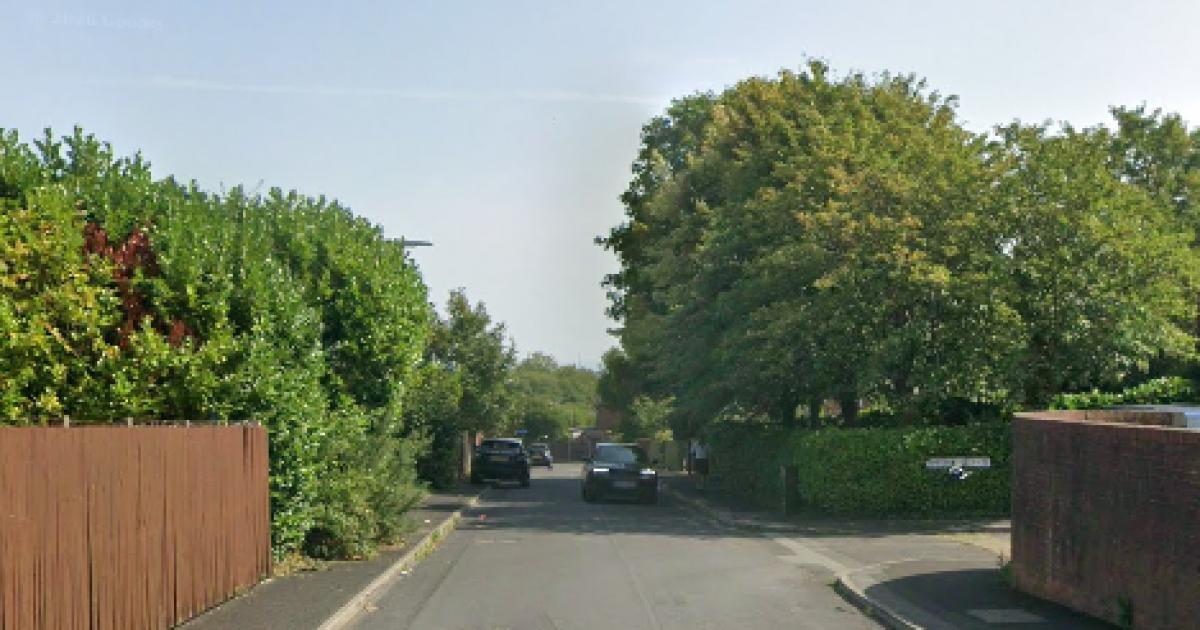
Timothy James David Coleman, 66, was found dead in Bredbury Drive, Farnworth, on 2 June.
There are believed to be no suspicious circumstances surrounding his death.
A spokesman for Greater Manchester Police said: “Anyone with information about Timothy’s next of kin should contact the Police Coroner’s Office in Bolton on 0161 856 4687.”
Advertisement
Officers are asking anyone who may have information about Mr Coleman’s next of kin or family members to come forward.
The Police Coroner’s Office in Bolton can be contacted on 0161 856 4687.
In UK law, there is no definition of next of kin, but it is understood to be the closest relative, whether a partner, parent, child or sibling.















































You must be logged in to post a comment Login