


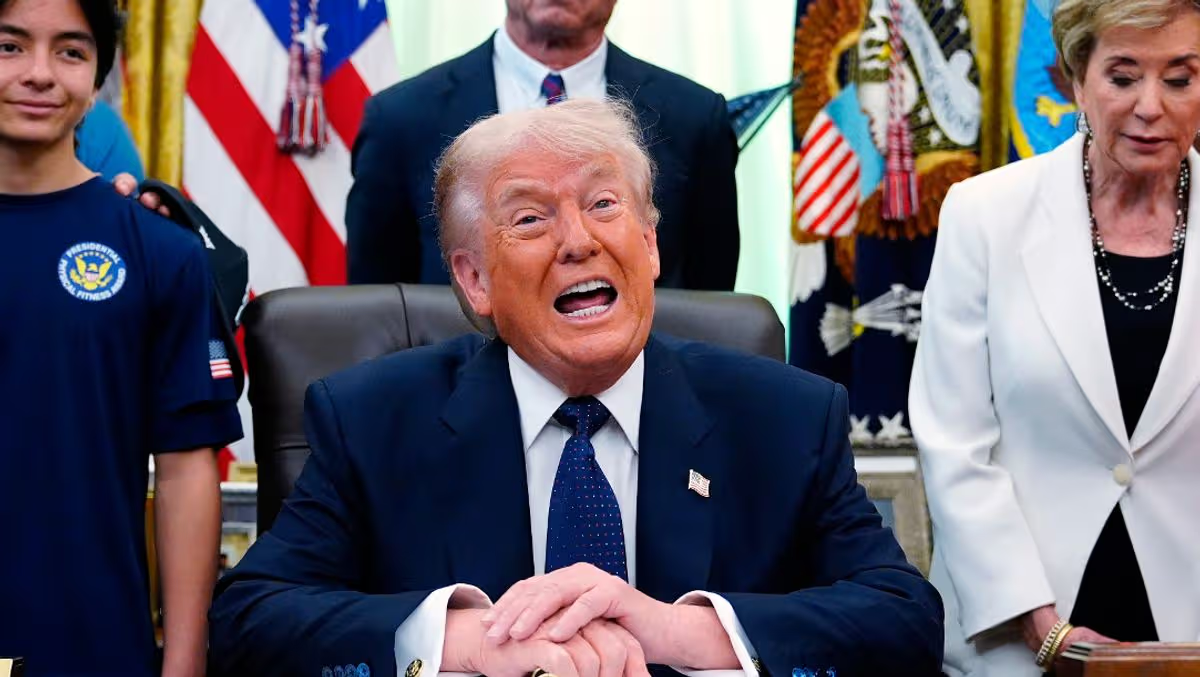
It comes as Secretary of State Marco Rubio prepared to make a diplomatic visit to the Vatican in a bid to mend relations with the Holy See
Donald Trump has reignited his feud with Pope Leo XIV with “unacceptable” remarks about nuclear weapons.
It comes as Secretary of State Marco Rubio prepared to make a diplomatic visit to the Vatican in a bid to mend relations with the Holy See.
Trump again accused Leo in an interview Tuesday of being “OK for Iran to have a nuclear weapon.” Leo has said no such thing and Catholic Church teaching says the mere possession of nuclear weapons is “immoral.”
And he claimed the Pope’s rhetoric was “endangering a lot of Catholics, and a lot of people”.
Speaking to reporters Tuesday, Pope Leo hit back at the claims, saying the Catholic Church “for years has spoken out against all nuclear weapons, so there is no doubt there.”
Leo doubled down on his insistence that his call for peace and dialogue in the U.S-Israeli war in Iran is Biblically inspired.
“I’ve spoken from the first moment of being elected, and we’re near the anniversary: I said ‘Peace be with you,’” Leo said as he left his country house in Castel Gandolfo.
“The mission of the church is to preach the Gospel, to preach peace. If someone wants to criticize me for announcing the Gospel, let him do it with the truth,” Leo said. “And so I hope simply to be listened to about the value of the Word of God.”
Italy defended the Pope and his call for peace and dialogue in the Iran war.
Foreign Minister Antonio Tajani said in a social media post Thursday that Trump’s attacks “are neither acceptable nor helpful to the cause of peace.”
In an interview with conservative commentator Hugh Hewitt, Trump claimed the pontiff is helping Iran and making the world less safe with his comments about the importance of not treating immigrants with disrespect.
“The Pope would rather talk about the fact that it’s OK for Iran to have a nuclear weapon,” Trump said in the interview on Monday. “And I don’t think that’s very good. I think he’s endangering a lot of Catholics and a lot of people. I guess if it’s up to the Pope, he thinks it’s just fine for Iran to have a nuclear weapon.”
The Pope has not said Iran should obtain nuclear weapons. He’s called for more peace talks, and criticised war with Iran generally and Trump’s specific threats of mass civilian strikes. The pope also has emphasised that he’s reflecting biblical and church teachings, not speaking as a political rival to Trump.
Regardless, Trump’s latest comments may make Rubio’s task more difficult when he sees the pontiff on Thursday. Rubio has often been called on to tone down or explain Trump’s harsh rhetoric as it relates to Europe, NATO and the Middle East, but the president’s dispute with the pope has domestic political implications in the U.S. with midterm congressional elections approaching.
Foreign Minister Antonio Tajani added: “I reaffirm my support for every action and word of Pope Leo; his words are a testament to dialogue, the value of human life, and freedom. This is a vision shared by our government, which is committed through diplomacy to ensuring stability and peace in all areas where conflicts exist.”
Rubio is due to meet with Leo on Thursday and is due to see Tajani and Premier Giorgia Meloni on Friday.
The State Department said on Monday that Rubio, a practicing Catholic who after this trip will have visited Italy or the Vatican at least three times in the past year, would travel to Rome and Vatican City on Thursday and Friday.
Trump lashed out at Leo on social media last month, saying the pope was soft on crime and terrorism for comments about the administration’s immigration policies and deportations as well as the Iran war. Leo then said God doesn’t listen to the prayers of those who wage war.
Later, Trump posted a social media image likening himself to Jesus Christ, which he then deleted after backlash. He has refused to apologize to Leo and has sought to explain away the social media post by saying he thought the image was of him as a doctor.
The tension has spilled over into Italian politics, with Prime Minister Giorgia Meloni, a long-time Trump ally whom Rubio is also expected to meet this week, taking exception to Trump’s comments about the pope.
Trump in return criticised her as his ire against NATO allies expands over what he sees as a lack of support for the Iran war — most recently with the Pentagon planning to pull thousands of troops out of Germany in the coming months.




































You must be logged in to post a comment Login