Connect with us

NewsBeat

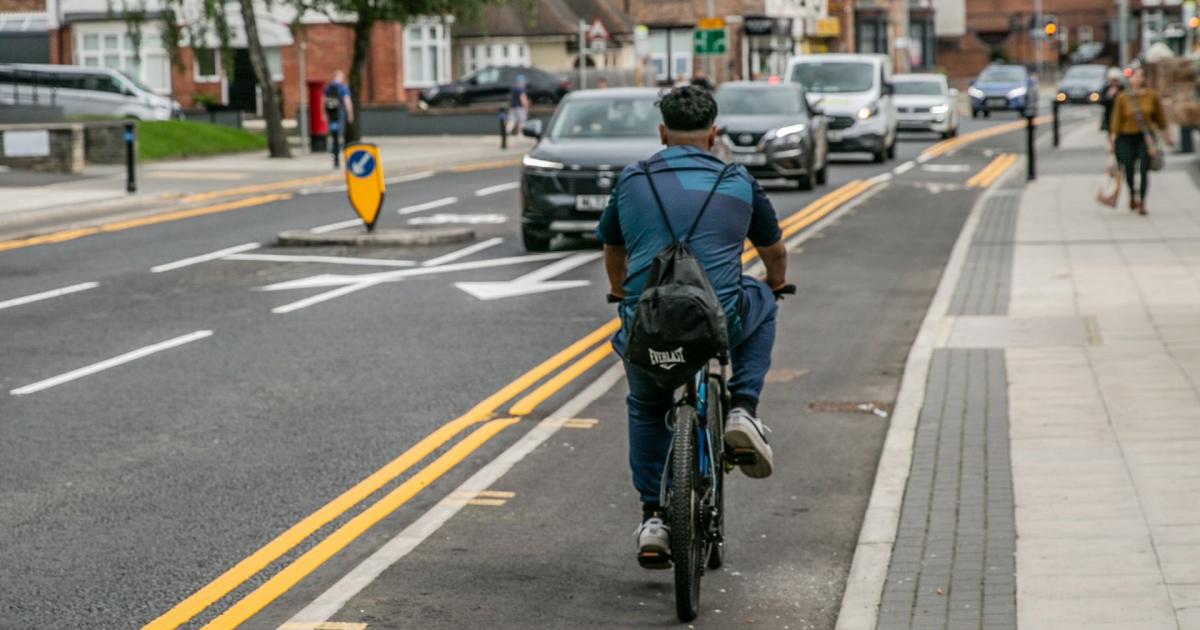
Residents feel unsafe cycling on Darlington roads, council warned

Published

on

Residents feel unsafe cycling on Darlington roads, council warned

Councillors shared concerns from residents across the borough and questioned the usage of the current cycle paths. 

Work is ongoing to create a safe walking and cycling route from the town centre to West Park and Faverdale.

The first phase included making improvements to Duke Street and creating a cycle route along part of Woodland Road. A further phase to continue the active travel route through Cockerton to the Brinkburn Road junction will be developed later in 2026. 

Advertisement

Councillor Paul Walters, Conservative member for Hurworth, said: “I think it’s a great initiative – but my concern is, how are you going to get people out of their cars and onto their bikes? I have been on Duke Street many times and have not seen a bike on that cycle path. 

“It’s a great idea and wonderful initiative, but getting the public to use them is something that needs to be looked into.”

The comments were made during a debate on how active travel measures are being implemented across the town to encourage people to be less reliant on car travel.

Conservative councillor Pauline Culley, of Mowden ward, spoke of her previous experience cycling around Europe and said Darlington roads are not suitable for cycling. 

Advertisement

“We seem to be spending a lot of money on something people are not going to use,” she told the committee. 

Matthew Snedker, Green councillor for College ward, said Culley’s testimony was a “damning indictment” for Darlington’s infrastructure. He added: “The fact that many people in Darlington do not feel safe doing a completely normal thing cuts to the heart of why our low network isn’t serving more people.”

Darlington Borough Council said it aims to create a safe route for pedestrians and cyclists as part of the Tees Valley Combined Authority’s (TVCA) Tees Valley local cycling and walking infrastructure plan.

But Cllr James Coe, Independent for North Road, reported how the current cycle paths take people “to a dead end” and not where they want to go. 

Advertisement

He added: “Once we start connecting these areas up, it will encourage more people to use it.”

Anthony Hewitt, assistant director of highways and capital projects, admitted the council needs to improve the public’s perception of cycling throughout the borough. 

He told the committee: “We agree we need to do a lot more work to promote the cycle lanes. Hopefully, as active travel neighbourhoods and our network builds out, people can see more connectivity.”

Monitors are in place along Duke Street and Woodland Road to track the number of cyclists, the council said. 

Advertisement

Source link

Continue Reading
Click to comment

Leave a Reply

Your email address will not be published. Required fields are marked *

NewsBeat

Car shot after being parked outside Starkey Crescent home

Published

on

Car shot after being parked outside Starkey Crescent home

North Yorkshire Police said the car had been parked outside a home in Starkey Crescent, Tang Hall, by an unknown man at around 9.25pm on Saturday (March 7).

The vehicle was unoccupied when the firearm was discharged and no one has been harmed, the force said.

Six police vehicles remained in Starkey Crescent on Sunday morning after nearby residents reported hearing loud bangs the previous evening.

Advertisement

A blue Nissan car could be seen parked in the driveway of a home in Starkey Crescent with a smashed windscreen.

The home, near the street’s junction with Cosmo Avenue, was cordoned off with police officer stood guard next to the car.

 North Yorkshire Police said its suspect in the shooting “approached the car on foot and ran from the scene”.

“No one has been harmed and it is believed to have been a targeted incident, with no threat to the wider community,” a force spokesperson said.

Advertisement

“However, we know that this will cause concern and fear among residents.

“We are carrying out reassurance patrols in the area while the investigation continues.”

They said officers will be going house-to-house to talk to neighbours while forensic examinations continue at the scene.

Officers are examining CCTV, doorbell and dashcam footage to help identify the suspect, the police spokesperson said.

Advertisement

One neighbour said they heard two “massive bangs” late on Saturday night.

Another neighbour said they also heard loud bangs which they initially thought were fireworks.

North Yorkshire Police is urging anyone with information about the shooting to contact the force.

“We are appealing for witnesses to come forward and those with any relevant recorded footage who have not yet assisted the police,” its spokesperson said.

Advertisement

“If you can help, please call North Yorkshire Police on 101.

“If you would prefer to remain anonymous, you can contact Crimestoppers on 0800 555 111 or make an online report.

“Please quote reference number 12260041722 when proving details.”

Advertisement

Source link

Continue Reading

NewsBeat

The affectionate dog stuck in Cambs rescue centre looking for her forever home

Published

on

The affectionate dog stuck in Cambs rescue centre looking for her forever home

One of the dog’s carers has been playing the lottery with the hopes of winning enough to buy a house big enough for them both to live

An adorably affectionate dog is stuck at a Cambridgeshire rescue centre searching for a forever home. Rescue dog Mavis is a resident at RSPCA Block Fen Animal Centre.

Advertisement

The one-year-old Cane Corso has won the heart of animal care assistant Jess Snape, but she is unable to adopt the loveable pooch. Mavis has been at the centre for several months and is desperately looking for a loving new home.

The affectionate dog has sadly already had three previous homes before she was rescued by the RSPCA. She was also underweight and needed eye surgery.

However, despite everything she has been through, Jess says she is one of the most loving sweetest dogs you will ever meet. Jess and Mavis have been inseparable since Jess started working at the RSPCA, and Mavis’ carer has started entering the National Lottery in the hope of winning enough cash to buy a house and rehome the dog.

“I absolutely adore Mavis – she is just a special loving girl, for a big girl she is a really soppy little thing and I know she will make an extraordinary companion to the right person,” Jess said. “I would adopt her in a heartbeat but I still live at home and already have my own rescue dogs.

Advertisement

“And this is why I started playing the Lotto because if I won I could buy my own home and then adopt Mavis! However, my chances of winning are probably quite slim – but I’m hoping that Mavis will be a winner – by finding her own forever home.

“Mavis has been so much in her short life, being passed on from different owners and all the while she was still so very young. Mavis is still a pup – at one year’s old – and it’s really heart-breaking when you see other pups getting adopted because they are small, while Mavis hasn’t even had one meet and greet – yet she is still a youngster as well.

“My wish is that Mavis can find her own forever home – there must be someone out there who could offer her this. It really makes me sad that such a wonderful dog keeps getting overlooked.”

Advertisement

Jess said Mavis is one of the most loving dogs she has ever met – a real soppy date – even though she is a bigger girl. She loves a belly rub and giving her paw – she just wants to please – although she likes to make her own bed.

Jess added: “I make her a lovely bed every evening before I go – but she then just takes it all out and makes her own bed on the floor – it’s very sweet to watch.”

Mavis is incredibly affectionate once she trusts the human, and she’s eager to please, making her very trainable for someone willing to put in the time and consistency she deserves. Mavis would thrive in a home experienced with large guarding breeds, where she can feel secure and understood.

Advertisement

She could live with older, dog-savvy children and, while she can struggle to express herself around other dogs, she’s shown lovely positive signs when introduced slowly and carefully. With patience and the right guidance, she’ll continue to blossom.

Source link

Continue Reading

NewsBeat

Strictly Come Dancing shake-up as three pro favourites ‘axed’ from BBC series

Published

on

Strictly Come Dancing shake-up as three pro favourites 'axed' from BBC series

Strictly Come Dancing 2026 will already look very different as presenters Tess Daly and Claudia Winkleman won’t be returning to host.

Strictly’s Stefan Dennis reveals he will be returning to the show

Strictly Come Dancing bosses have reportedly dropped at least three professional dancers from this year’s line-up.

Advertisement

This follows BBC executives also considering new presenters after Tess Daly and Claudia Winkleman announced their decision to stand down.

Reports suggest contracts are currently under review, with three popular dancers, including Gorka Marquez, set to be removed from the new series.

Luba Mushtuk is also understood to have been cut from the roster, along with Michelle Tsiakkas.

Gorka made his Strictly debut in 2016, and despite not being paired with a celebrity contestant last year, he continued to participate in group routines and the series finale.

Advertisement

READ MORE: BBC Gladiators star Bionic sparks concern as medics rush in after injuryREAD MORE: BBC This Life cast on 30th anniversary from cancer battle to Bridgerton fame

Luba joined the show in 2018, whilst Michelle joined in 2022. However, the BBC is now reportedly seeking a “fresh start”.

Advertisement

According to The Sun, significant changes are underway as dancers discuss their contracts, with bosses said to be pursuing a “fresh start” and introducing new talent to usher in “a new era”.

A BBC spokesperson told Reach Plc: “Plans for Strictly Come Dancing 2026 will be confirmed in due course.”

For the latest showbiz, TV, movie and streaming news, go to the new **Everything Gossip** website.

Advertisement

This marks the latest in a series of changes for the programme, with the professional dancers facing a new round of departures, whilst the BBC has yet to reveal who will replace former presenters Tess and Claudia.

The duo had presented the show together for more than a decade, with Tess at the helm since the programme launched in 2004.

2026 will bring significant transformation to the beloved BBC programme following the announcement of the presenting pair’s departure during the previous series.

The duo enjoyed an emotional farewell during the Christmas Day special as they bid their final goodbyes, with Claudia saying at the programme’s conclusion: “Thank you again for watching us over the years, it has meant a world to us. There’s just one thing left to do. Come on, Tess.”

She then took her co-host’s hand, and they danced together, as Tess added: “For our very final time, Claud.”

Speaking about their departure, the pair described presenting the show together as an “absolute dream”.

Reach PLC has approached Gorka Marquez, Luba Mushtuk and Michelle Tsiakkas’ representatives for comment.

Advertisement

Strictly Come Dancing will return later this year on BBC One and BBC iPlayer.

Source link

Continue Reading

NewsBeat

TV legend died at 71 leaving huge sum after grim health battle

Published

on

TV legend died at 71 leaving huge sum after grim health battle

Are You Being Served? icon John Inman passed away on this day back in 2007 yet is still fondly remember and fresh tributes have now been paid to the beloved actor.

A huge TV star died aged 71 following a prolonged illness, shocking fans worldwide. Are You Being Served? icon John Inman passed away on this day, March 8, back in 2007.

But even though almost 20 years have passed, Inman is still fondly remembered, and fresh tributes have now been paid to the beloved actor. Inman passed away after suffering from hepatitis A and undergoing tests due to liver complications.

His manager Phil Dale paid tribute at the time, saying: “John, through his character Mr Humphries of Are You Being Served?, was known and loved throughout the world.” He added: “He was one of the best and finest pantomime dames working to capacity audiences throughout Britain.

Advertisement

“John was known for his comedy plays and farces which were enjoyed from London’s West End throughout the country and as far as Australia, Canada and the USA.”

Inman’s long-term partner, Ron Lynch, was reportedly “devastated” by his passing. As reported by the Mirror, the actor famously portrayed the flamboyant salesman Mr Humphries in the comedy series Are You Being Served? from the mid-1970s to the mid-1980s.

Inman starred alongside Wendy Richard, who later became known for her role as Pauline Fowler in EastEnders, as well as Molly Sugden, Frank Thornton, and Trevor Bannister.

Advertisement

It was revealed following his death that he left a large estate, worth around £2.8mil to his partner. Although nearly two decades have passed, fans have been fondly remembering the actor on social media.

One fan simply wrote on Facebook, “Loved him, so funny,” with another adding, alongside a photo of Inman and EastEnders’ Wendy Richard: “Two of my favourites.” Another commented: “Aw….loved this show….and he was wonderful.”

High-end menswear shops played a recurring role throughout Inman’s life. Making the phrase ‘I’m free’ legendary as Mr Humphreys, the flamboyantly camp shop assistant in the menswear section of Grace Brothers’ department store in the beloved BBC sitcom, the part mirrored the actor’s own experiences.

After finishing school, Inman worked as a trainee window dresser at Fox’s Departmental Store in Blackpool town centre, stationed in the gents’ outfitters section. At 18, he secured a position at the renowned Austin Reed flagship store on London’s Regent Street. Living in a £3-a-week bedsit, he quickly began making costumes for the numerous nearby theatres to supplement his meagre wages.

His Austin Reed manager Ron Dyer remembered: ‘It was impossible to lose my temper with John – he was so funny – but he was also very good at his job. But I knew he wouldn’t stay with us long because he told us constantly of his real ambition, which was to go on the stage. At 21, in 1956, he resigned to pursue stardom.

After befriending BBC newsreader Kenneth Kendall during his time at Austin Reed, Kendall offered Inman a part at a repertory company in Crewe, allowing him to obtain his Equity card. Years of vibrant performances followed across the nation in plays, pantomimes and musical theatre.

His breakthrough arrived when TV producer David Croft recognised his exceptional talent. In a 1996 radio chat, Inman reminisced about Croft – who had previously cast him in “silly little piddly parts” – writing to him following his first major role in a West End musical.

He shared: “He wrote me a letter afterwards which said ‘Dear John, thank you for your work in Ann Veronica, you’ve been very good and one day I am going to cast you in a role you can really get your teeth into, love David. PS – this letter does not constitute a contract!’”

Staying true to his promise, when Croft and Jeremy Lloyd penned a standalone episode for the BBC’s Comedy Playhouse set in Grace Brothers, a fictional department store, they selected Inman for the role of Mr Humphries. From that point on, he never looked back.

Get more Daily Record exclusives by signing up for free to Google’s preferred sources. Click HERE.

Advertisement

Source link

Continue Reading

NewsBeat

Can we design sports shoes that don’t squeak? Here’s what the science says

Published

on

Why do sports shoes squeak? Here’s what our research reveals

The unofficial soundtrack of every basketball, squash or hard-court tennis match is the constant high-pitched squeak or shreak of the players’ shoes. But can this squeak be designed out of them while retaining the grip?

That’s the question an international team of engineers and applied physicists, including me, have been investigating. It sounds like a small design tweak. In fact, it cuts to a deep physics problem: how a soft body slides against a rigid one.

Perhaps surprisingly, the mechanism that produces sound when a soft solid slides against a stiffer one has long been the subject of scientific debate. Most theories are linked to the concept of “stick-slip”: when, instead of sliding smoothly, the sliding object rapidly alternates between sticking and slipping.

While it sticks, the soft body (such as a rubber sole) deforms and stores elastic energy. Then it suddenly slips, turning much of that energy into heat through friction – while also releasing rapid vibrations that radiate out as sound.

Advertisement

But this is not exactly what we observed in our experiments.

After Leonardo da Vinci

Our recently published study took inspiration from the simple-but-effective setup used by Leonardo da Vinci in his studies of friction from the late 15th century.

Leonardo da Vinci’s sketches of his pioneering friction experiments.
Codex Arundel, British Library (41r), 1500-05.

Leonardo used a wooden block resting on a flat surface. The block was subjected to two forces: a normal force (its own weight) and a tangential force which was applied using an additional weight attached to a cable.

Advertisement

By stacking and combining multiple blocks, Leonardo discovered the two fundamental laws of friction: that friction is proportional with how hard the surfaces are pressed together, and largely independent of the size of the contact area.

But Leonardo never published these findings, which were finally rediscovered and made public in the 19th century in notebooks scattered throughout Europe. In the meantime, the laws of friction had only been formally enunciated by French physicist Guillaume Amontons in 1699 – two centuries after Leonardo’s studies.

Furthermore, these laws are empirical rather than fundamental, and in extreme cases they break down. This led us to the question of what makes a shoe squeak.


À lire aussi :
Leonardo da Vinci’s early work on friction founded the modern science of tribology

Advertisement

A surprising result

One of the biggest difficulties in friction studies is that the interface being tested (where a shoe sole meets a hardwood floor, for example) is hard to get at, and comes under a lot of pressure while slipping at high speed. Placing sensors at the interface is almost impossible – and even if it were, this would probably alter the frictional response.

Our solution was to use an optical trick: we replaced the hardwood floor with a transparent acrylic plate and mounted an array of LED lights along its sides. When each test object – including multiple rubber blocks – made contact with the plate, light would leak into the contact region, brightening up this area alone. That allowed us to visualise exactly which parts of the soft-rigid interface were in contact.

We used a high-speed camera, capable of capturing up to 1 million frames per second, to film how the contact patches evolved while the “sole” was skidding, and recorded the sounds being emitted with a microphone.

We found that at the point of contact, tiny wrinkles in the surface of the rubber block – known as “opening slip pulses” – were created, which then raced along the interface at nearly 100 metres per second. While most of the block remained stuck in place, these rapidly moving wrinkles created the sound in each friction test.

Advertisement

Surprisingly, even tiny geometrical features at the frictional interface had profound effects on the sound generated. When it was perfectly flat and smooth, the pulses were messy and generated a scratch-like noise of many different frequencies – closer to the sound of peeling adhesive tape than a clean squeak.

But when ridges were present, like those on the soles of sport shoes, the pulses were confined by the width of these ridges, making them very regular (not messy any more). This turned the sound into a more musical tone akin to the squeaks heard on a basketball court.

We were also able to determine what decides the precise pitch of a shoe squeak. In each test, it was largely unaffected by either the speed of sliding or magnitude of the force applied (which relates to the weight of a player).

Rather, the clearest link was with the height of the rubber block – or the thickness of a shoe’s sole. Using this knowledge, we created a series of blocks of different heights in order to play a familiar melody, as shown in this video.

Advertisement

Video: Nature.

Our research lays the groundwork for controlling or suppressing squeaking in many mechanical systems involving soft-on-rigid friction. These range from brakes and tyres to hip and knee replacements, where polymer liners slide against polished metal or ceramic heads.

And yes, it could even lead to the development of squeakless sneakers. Designing intricate patterns that keep plenty of rubber in contact (so the grip stays high) but break the sliding into lots of tiny, out-of-sync microevents could kill the clean note of the squeak, and leave only a soft hush.

Table-top earthquakes

Beyond the realm of sports, this work also relates to much larger geophysical questions. Similar experimental approaches to ours have served as table-top models for studying earthquakes, during which ruptures and slip pulses spread along tectonic faults at extremely high speed.

Advertisement

If we can reproduce earthquake-like slip pulses in the lab, the next challenge is scaling – working out how those centimetre-scale measurements translate to what happens inside real faults in the Earth.

Achieving this could help interpret seismic signals more confidently: using waves recorded far from a fault to infer what has actually happened at the source. Better physics-based models could improve seismic hazard estimates and lead to more reliable hazard maps.

Meanwhile, we’ll keep thinking about squeakless sneakers too.

Advertisement

Source link

Continue Reading

NewsBeat

Vehicle crashes next to York Vangarde Shopping Park

Published

on

Vehicle crashes next to York Vangarde Shopping Park

Police, paramedics and firefighters were called to the scene in Vangarde Way, next to the Vangarde Shopping Park, shortly before 2.20pm on Saturday (March 7).

North Yorkshire Fire and Rescue Service said two fire crews were called to the scene.

In a statement on Sunday, a fire service spokesperson said: “Crews from Acomb and York were requested by police to attend an incident involving a single vehicle road traffic collision.

Advertisement

“Crews made the scene safe and left the incident in hands of police and ambulance.”

Source link

Advertisement
Continue Reading

NewsBeat

Spain, Greece and Portugal travel warning as rule changes for British tourists

Published

on

Spain, Greece and Portugal travel warning as rule changes for British tourists

Holidaymakers could face major delays this summer

A new border control system is being rolled out at all European airports, including those in Spain, Portugal and Greece, from April 10. The new Entry Exit System (EES) requires British travellers to provide fingerprints and photographs when entering the Schengen Area.

Advertisement

British holidaymakers have been cautioned about potential queues due to the new biometric system, which was first introduced in October at some EU airports. All 29 Schengen countries are now expected to have it fully operational by April.

Some airport organisations have called for an “immediate review” of the Entry Exit System (EES) rollout as it “continues to cause significant delays,” and cautioned that queues for non-EU passengers could stretch to four hours during the summer months.

The Foreign, Commonwealth & Development Office (FCDO) stated: “EES checks are being introduced in a phased way across external borders, with full operation expected from April 10, 2026.”

The Foreign Office suggested that EES might take each passenger a “few minutes extra” to complete and advised they “be prepared to wait longer than usual” at border control, reports the Express.

Advertisement

The new checks at European airports follow the recent announcement that dual British nationals could be refused entry at the UK border unless they possess a British passport. The new regulation could impact holidaymakers returning to the UK from their European trips.

Full list of countries with the new Entry Exit System

  1. Austria
  2. Belgium
  3. Bulgaria
  4. Croatia
  5. Czech Republic
  6. Denmark
  7. Estonia
  8. Finland
  9. France
  10. Germany
  11. Greece
  12. Hungary
  13. Iceland
  14. Italy
  15. Latvia
  16. Liechtenstein
  17. Lithuania
  18. Luxembourg
  19. Malta
  20. Netherlands
  21. Norway
  22. Poland
  23. Portugal
  24. Romania
  25. Slovakia
  26. Slovenia
  27. Spain
  28. Sweden
  29. Switzerland

Source link

Continue Reading

NewsBeat

International Women’s Day – 5 inspiring County Durham women

Published

on

International Women's Day - 5 inspiring County Durham women

Betty Brown, OBE — Post Office justice campaigner, Consett

Elizabeth Brown (Betty Brown) was made an OBE in the New Year Honours list. (Image: Lucy North)

Consett great-grandmother Betty Brown, 92, was the oldest person on the King’s New Year Honours List 2026 after receiving an OBE for services to justice.

She is believed to be the oldest surviving victim of the Post Office Horizon IT scandal, having run Annfield Plain Post Office with her late husband Oswall from 1985 until they were forced out in 2003.

The couple lost around £100,000 of their own money covering non‑existent shortfalls.

Advertisement

One of the original 555 claimants in the landmark group action led by Sir Alan Bates, Betty has become a leading campaigner, fronting national TV interviews and challenging ministers as victims finally secure compensation.

Vera Parnaby — “Mrs Poppy”, Consett

‘Mrs Poppy’ was also named in the New Year’s Honours list. (Image: SARAH CALDECOTT)

Known affectionately as “Mrs Poppy”, Consett’s Vera Parnaby has been selling poppies for the Royal British Legion for eight decades, raising well over £1m.

She began collecting aged six after her father was killed serving in the Second World War, accompanying her mother door‑to‑door.

Advertisement

Now in her mid‑80s, Vera is the Legion’s longest‑serving poppy seller and leads a dedicated volunteer team in Consett, even introducing contactless machines to keep donations flowing.

Her tireless fundraising has earned her a string of honours and a Pride of Britain regional fundraiser nomination, but she insists she has no plans to stop.

Rhiannon Hiles — Chief Executive, Beamish Museum

Rhiannon Hiles, Chief Executive of Beamish Museum.

Rhiannon Hiles has spent three decades at Beamish, The Living Museum of the North, after joining as a volunteer in 1995 and working through curatorial, commercial and development roles.

Advertisement

She became chief executive in 2021 and has since led the open‑air museum to its biggest ever accolade – Art Fund Museum of the Year 2025, the world’s largest museum prize.

In February, she was named a North East Business Titan for outstanding leadership and contribution to the regional economy, praised for putting people and communities at the heart of Beamish’s success.

She also holds senior roles in European and UK museum bodies.

Advertisement

Hannah Fox — Executive Director, The Bowes Museum, Barnard Castle

Hannah Fox, the director of The Bowes Museum.

Appointed director of The Bowes Museum in 2022, Hannah Fox arrived in Barnard Castle with a track record of transforming heritage sites.

In Derby she helped lead the £18m redevelopment of the Silk Mill into the Museum of Making, hailed as the UK’s first museum of its kind.

At Bowes, she has championed community‑led culture and co‑creation, fronting the Durham Creative Community Fellows programme, which supports 17 grassroots arts leaders from across County Durham in partnership with US‑based National Arts Strategies.

Advertisement

Fox regularly cites founder Josephine Bowes’ “tenacity, creativity and ambition” as the inspiration for the museum’s future direction.

Dr Sarah Price — Head of Locomotion, Shildon

Dr Sarah Price (right) with Bishop of Durham elect Rick Simpson. (Image: North News & Pictures Ltd)

Dr Sarah Price made history in 2018 when she became the first woman to lead Locomotion in Shildon, part of the national Science Museum Group.

The museum, on the world’s first public railway route, tells the story of railways and the people who built and worked on them.

Advertisement

Price has spoken about challenging the perception that railways are a male interest, noting that close to half of Locomotion’s visitors are women and girls.

Under her leadership the site has expanded its collection, events and outreach, using the region’s rail heritage to engage diverse audiences in science, engineering and history.

Source link

Advertisement
Continue Reading

NewsBeat

Michelle O’Neill’s briefing boycott let deputy First Minister claim high ground

Published

on

Michelle O'Neill's briefing boycott let deputy First Minister claim high ground

By choosing not to attend, Michelle O’Neill allowed the focus of the story to shift away from her argument about the war and towards the optics of her absence

Stormont rarely has much direct influence over foreign policy, but that has never stopped international events spilling quickly into the politics of this place.

Advertisement

The escalating conflict involving Iran is the latest example. While decisions about military intervention are being taken in London, Washington and elsewhere, the consequences are already being felt much closer to home. Families across Northern Ireland are watching developments anxiously as the situation in the Middle East deteriorates, aware that friends and relatives are among the large number of British nationals currently in countries that could become increasingly dangerous in the days and weeks ahead.

UK officials believe hundreds of thousands of Britons are in countries targeted by Iran, with more than 140,000 registered for Foreign Office updates. If the situation continues to escalate, the prospect of evacuations on a scale rarely attempted by the UK is now openly being discussed.

It was against that backdrop that the UK Government convened a series of briefings for devolved administrations last week, and First Minister Michelle O’Neill chose not to attend.

The First Minister’s explanation has been clear enough. She has said she remains in contact with both the British and Irish governments, and that her priority is to ensure that anyone from Northern Ireland who needs assistance leaving the region can do so safely. Her objection, she says, is to taking part in a briefing by the British Government on military operations when she fundamentally disagrees with the decision to join the conflict.

Advertisement

That position sits squarely within Sinn Féin’s long-established approach to international affairs. The party has consistently opposed British military intervention overseas, and Michelle O’Neill has framed the current conflict in similar terms, warning that the situation is spiralling and questioning where the escalation will end. She has also been careful to stress that the Iranian regime itself is brutal and repressive, while arguing that war will not deliver a peaceful outcome.

Taken in isolation, none of that is especially surprising. But the politics of the situation is not only about the substance of her argument. It is also about the moment in which the decision was taken and how it has been interpreted.

The briefings offered by London were not about seeking the endorsement of devolved ministers for military action. Stormont was hardly being invited to weigh in on strategic decisions about missile strikes. Their purpose, according to those who attended, was to ensure devolved administrations were updated on developments in the region and on the potential implications for citizens from their jurisdictions. In other words, they were about information rather than endorsement.

That distinction has allowed deputy First Minister Emma Little-Pengelly to frame the situation in a way that is politically advantageous for her. By attending both briefings and speaking afterwards about the scale of the challenge involved in any potential evacuation, the deputy First Minister has been able to emphasise a more practical focus on the immediate consequences of the conflict for people here.

Advertisement

Her criticism of Michelle O’Neill was measured but pointed. It was, she said, “genuinely disappointing” that the First Minister had chosen not to attend a meeting designed to update local leaders on events that could affect thousands of people connected to Northern Ireland. In Stormont terms, the exchange quickly settled into a familiar dynamic.

Emma Little-Pengelly’s argument was not really about foreign policy at all. Instead, it presented a contrast of one side attending briefings and focusing on practical contingencies, while the other is standing back on the grounds of principle.

The deputy First Minister used an opportunity to launch a broader attack on what she described as Sinn Féin’s historical relationship with Iran, while DUP leader Gavin Robinson went further, arguing the UK should have been involved earlier.

None of that necessarily changes the substance of the First Minister’s critique of the war itself. Across Europe and beyond, there are serious questions being asked about the legality of military action and the risk that the current escalation could pull more countries into a widening conflict.

Advertisement

But politics, particularly in Northern Ireland, rarely unfolds in a purely substantive way. At a time when families here are worried about loved ones in the region, participation in a briefing designed to provide information about their safety carries a certain symbolic weight, regardless of the technical purpose of the meeting itself.

It is worth saying that had the First Minister attended the briefings, I don’t believe anyone would have batted an eyelid. By choosing not to attend, Michelle O’Neill allowed the focus of the story to shift away from her argument about the war and towards the optics of her absence, which has given Emma Little-Pengelly an opportunity to present herself as the steadier voice in the room.

For all the latest news, visit the Belfast Live homepage here and sign up to our daily newsletter here.

Advertisement

Source link

Continue Reading

NewsBeat

Jail bosses blocked nearly half of early releases under government scheme due to ‘risks’

Published

on

Jail bosses blocked nearly half of early releases under government scheme due to 'risks'

Jail bosses vetoed 187 inmates deemed eligible, considering them to be “an immediate risk of harm” to an individual or group.

Prison governors blocked nearly half of all inmates set to be freed early under a government scheme, ruling them too high risk new figures have revealed.

Advertisement

The Scottish Prison Service released 286 prisoners from November 11 and December 13 to ease the overcrowding crisis.

However jail bosses vetoed 40 per cent – equivalent to 187 inmates – deemed eligible after considering them to be “an immediate risk of harm” to an individual or group.

In spite of this, 127 of the 286 freed had convictions for violent offences – or 44 per cent, the largest share of the total, data shows.

Advertisement

It comes as plans going through Parliament would slash the automatic release point to 30 per cent for sentences under four years.Critics fear the move could effectively scrap the prison governor’s veto.

As the veto applies only to emergency early release schemes, governors would be powerless to stop offenders being freed once they reach 30 per cent.

Scots Tory justice spokesman Liam Kerr said: “The Justice Secretary must start paying attention to victims, to prison governors and realise this situation presents yet more risks to community safety.”

SPS data shows 75 (26 per cent) of those released in November had convictions for crimes including drug offences, weapons possession and bail violations.

Advertisement

Short-term offenders walked free after serving 50 per cent of their sentence, until it fell to 40 per cent in February last year.

If passed, the change to 30 per cent will come into force in May, a month after the end of the emergency early release programme.

It is limited to those serving less than four years and excludes sex offenders, domestic abusers or terrorists.

Rob Hay, president of the Association of Scottish Police Superintendents said: “A declining prison population cannot be heralded as a success if it means a rise in crime and more victims.”

Advertisement

The Scottish Government said: “The governor’s veto remains in place – we have no intention of changing that.”

Source link

Continue Reading

Trending

Copyright © 2025