Callum McAlister was driving home from IKEA in Sauchie when the shocking incident unfolded.
11:01, 19 Jun 2026Updated 11:03, 19 Jun 2026
Dashcam footage shows moment seagull with squirrel in its grasp crashes into car
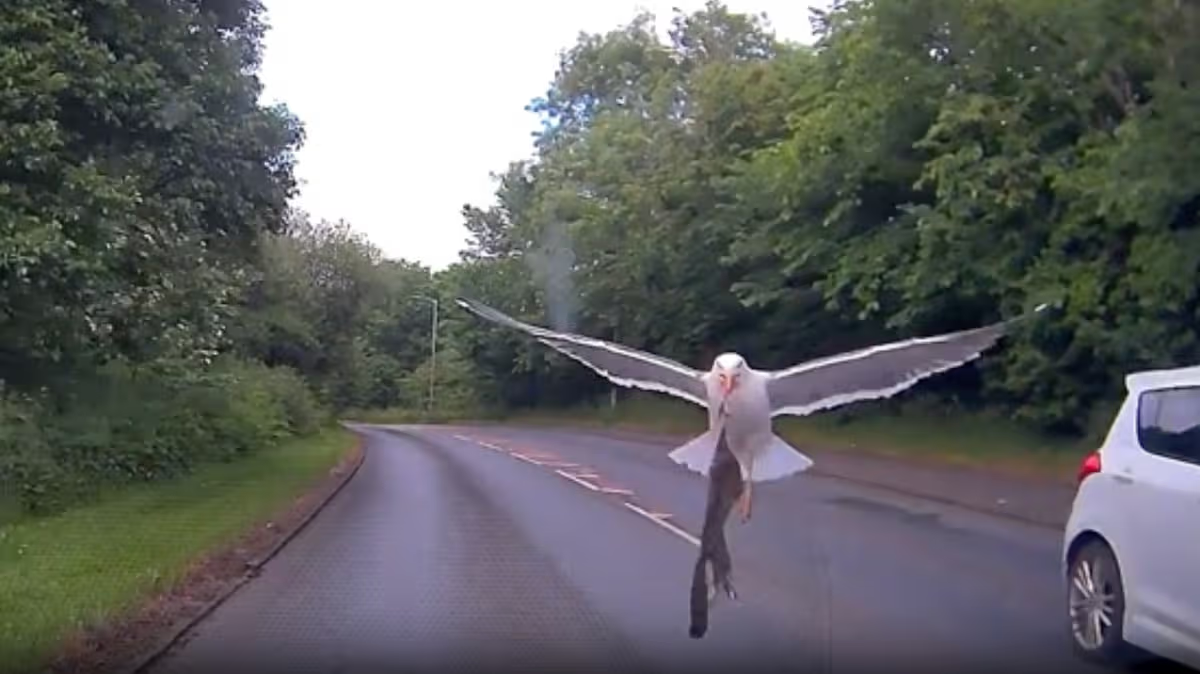
Dashcam footage shows the moment a seagull picks up a squirrel and crashes into a car full of surprised passengers.
Advertisement
Callum McAlister, 36, was driving home from IKEA with his girlfriend and two-year-old daughter on Alloa Road in Sauchie, Scotland, on June 14, when his windscreen was left blood-stained thanks to the predator.
He said: “We saw it as it started to take off in front of that other car in the video and we were both in disbelief about what the seagull was carrying, then, as you see in the video, not long after, it strikes the windscreen.
“There’s no sound on the video, but it was a big thud and there was a long red-coloured wet streak running up the glass, which, fortunately, was not captured on the dashcam.
“We were shocked but we realised the seagull would have just bounced off the car upwards and the squirrel took most of the brunt of the car.
Advertisement
“The seagull was probably fine.
“We went back to the road and it was nowhere to be seen.”
Callum added: “I only got that Dashcam like two weeks ago as well.
“So, a sound investment so far, because I don’t think anyone would have believed us.”
Advertisement
On Reddit, social media users shared their amazement at.
User Naughteus_maximus wrote: “Top 3 contender for dashcam video of the year right there.”
While Advanced_Arm1531 joked: “Drive through fast food.”
It has taken three years for the station to be built
12:24, 19 Jun 2026Updated 12:31, 19 Jun 2026
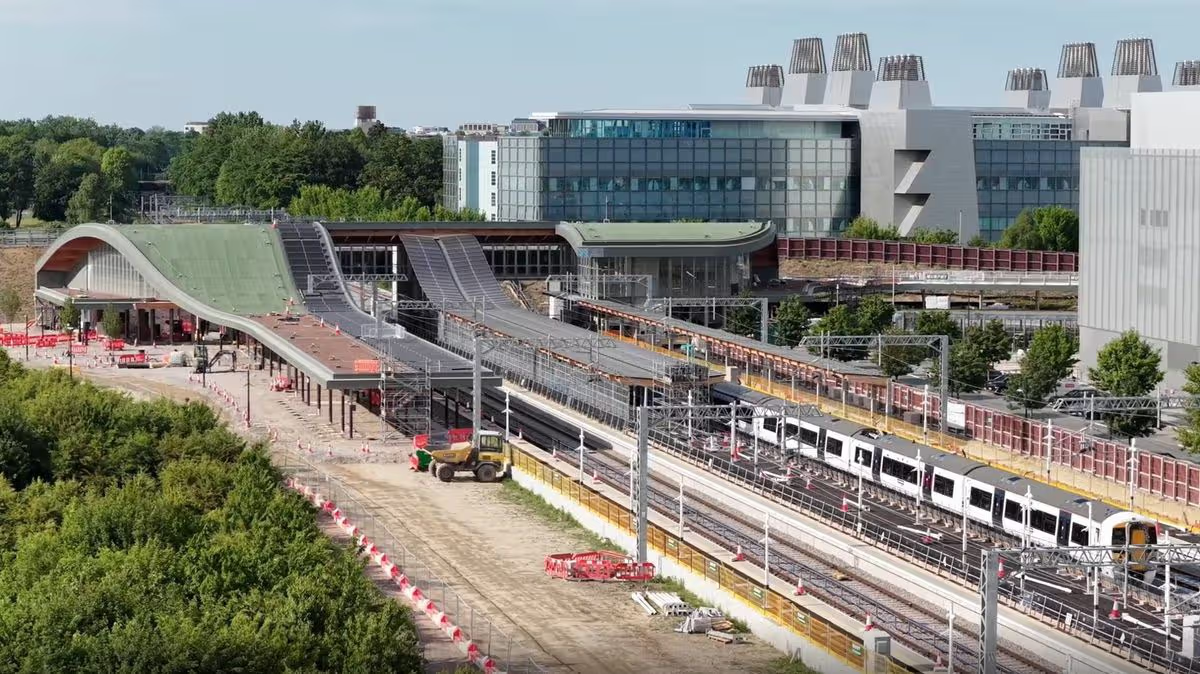
Transport bosses have given the final seal of approval for the new Cambridge South railway station. It means the planned public opening has been given the green light to go ahead later this month.
Trains will start stopping at Cambridge South – situated beside Europe’s largest medical research facility – from June 28.
It will welcome up to nine trains per hour from Cambridge, with direct services to destinations including London King’s Cross, London Liverpool Street, Birmingham New Street, Brighton, Gatwick Airport, and Stansted Airport. Services will be run by Greater Anglia, Great Northern, Thameslink, and CrossCountry.
Advertisement
The station has had its opening pushed back twice. The first was in February last year, followed by a sub-contractor entering administration resulting in a second delay.
GBR Anglia has been working with the independent safety regulator for British railways to ensure the station is fully compliant.
Emily Heria, senior sponsor on behalf of GBR Anglia said: “Gaining the authorisation from the ORR to open Cambridge South is a massive achievement and reflects all the hard work done by everyone involved in the project.
“We are all so excited to open the new station on Sunday 28 June and can’t wait to welcome our first customers and see their reaction to their new railway station. We hope they will be as proud of their new station as we are to have built it.”
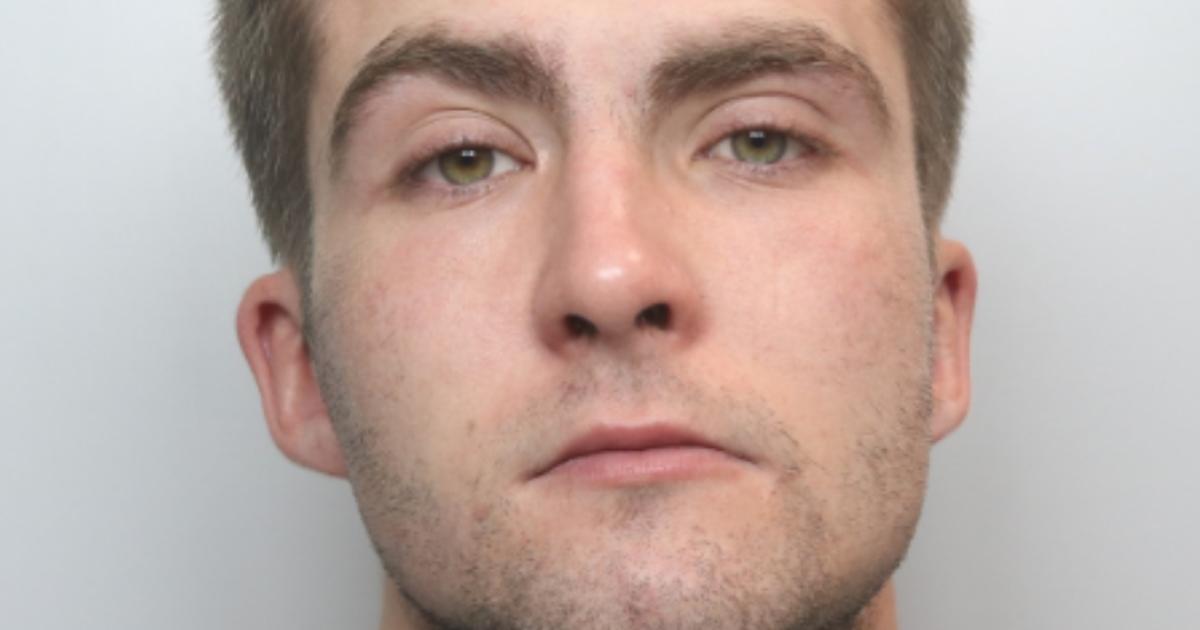
The 25-year-old pleaded guilty to one count of arson in December last year when he first appeared in the dock.
Taylor-Said, who has been remanded at HMP Forest Bank since his arrest, appeared in the dock wearing a grey Nike T-shirt.
Advertisement
The court heard on October 26, 2025, that Taylor-Said set fire to a mattress at a property on Coronation Gardens, Radcliffe, using a lighter, then fled the scene.
A resident in the block of flats called emergency services shortly after 9pm on that night after they heard a smoke alarm going off and could smell a “bonfire type of smell”.
Emergency services arrived at the address at 9.20pm and saw a burnt mattress and duvet.
There was also smoke damage to the hall, bathroom, and kitchen.
Advertisement
At 11.20pm, Taylor-Said’s mother rang emergency services to inform them she had not seen her son.
The court heard she told them her son admitted to setting a fire, and he was “having difficulties persuading the local authority to allow him to move to another property”.
Taylor-Said returned to the property at 1.30am, was arrested, and taken into custody.
The court heard he said: “My head is a mess, I’m going to prison.
Advertisement
“I didn’t mean to endanger any lives.”
He gave a no comment police interview, and the court heard that “when asked what his plan was, he said he wanted to die”.
The court heard there had been two psychiatric reports before sentencing and that Taylor-Said was diagnosed with schizophrenia and depression and had a history of hospitalisations before the offence.
He was a crack cocaine and ketamine user, the court heard, and “a very vulnerable” and “immature” young man who was “most certainly being exploited by others”.
Advertisement
Although the court heard he presented “much better today”, was taking his medication, and had gained qualifications in maths and English while in prison.
The court also heard “he’s extremely sorry”.
“He’s taking his medication, and he’s well.
His mother made “responsible calls” and has had “interest and concern about her son throughout”, the court was told.
Advertisement
HHJ Lester-Ashworth, sentencing Taylor-Said, told him he would have a one-third reduction in his sentence due to entering a guilty plea early.
She told him his accounts were “inconsistent”, in part due to drugs and alcohol, as he had told his mum the council would not let him move address, but told others he had intended to harm himself by setting the fire.
HHJ Lester-Ashworth told Taylor-Said she found there was an “insufficient” connection between his mental health and the offence.
She told the court he removed himself from danger once the fire was lit and had tried before to return the keys to the property to a housing officer.
Advertisement
HHJ Lester-Ashworth said: “I accept that at the time you were vulnerable.”
Taylor-Said was sentenced to 39 months in custody, but with the one-third reduction, he will serve 26 months in prison.
The time already served in custody counts towards this sentence.
No order for costs was made, and HHJ Lester-Ashworth told him: “Do not be defined by this conviction, you have many positive traits.”
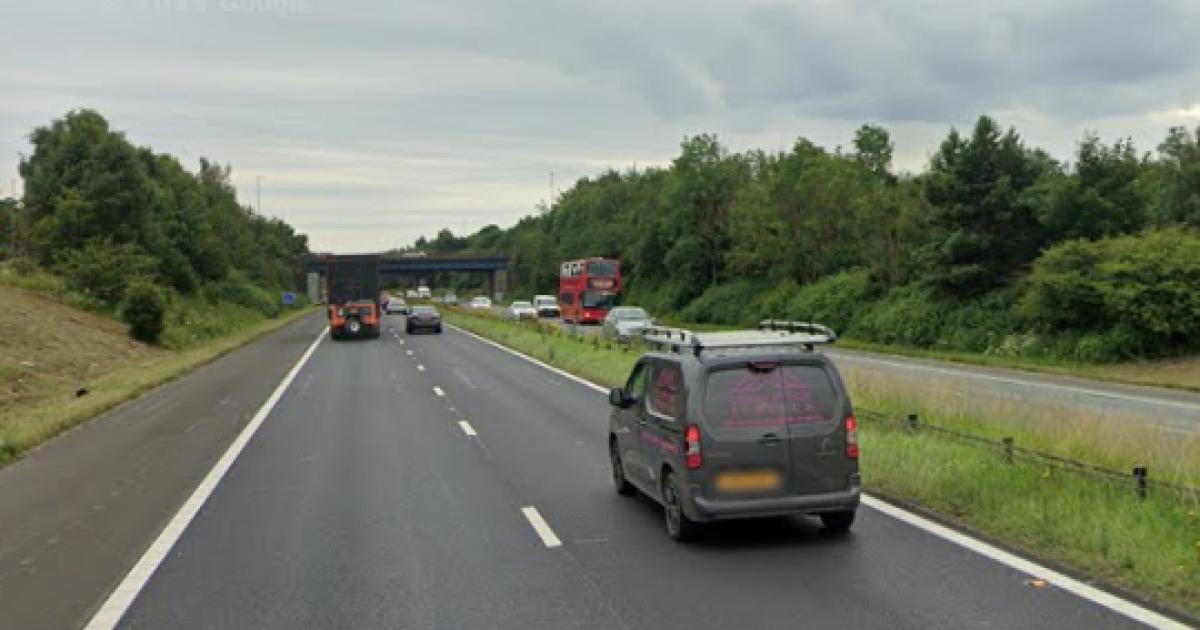
Good afternoon, welcome to this Northern Echo live breaking news blog. One lane is closed and there is very slow traffic due to crash on A1(M) Northbound from J61 A688 Tursdale Road (Bowburn) to J62 A690 (Carrville). It’s Anna Barnes here to keep you up to date with this breaking story as it develops. If you have any more information about the incident and it’s safe to do so, please get in touch with me: Email: anna.barnes@newsquest.co.uk
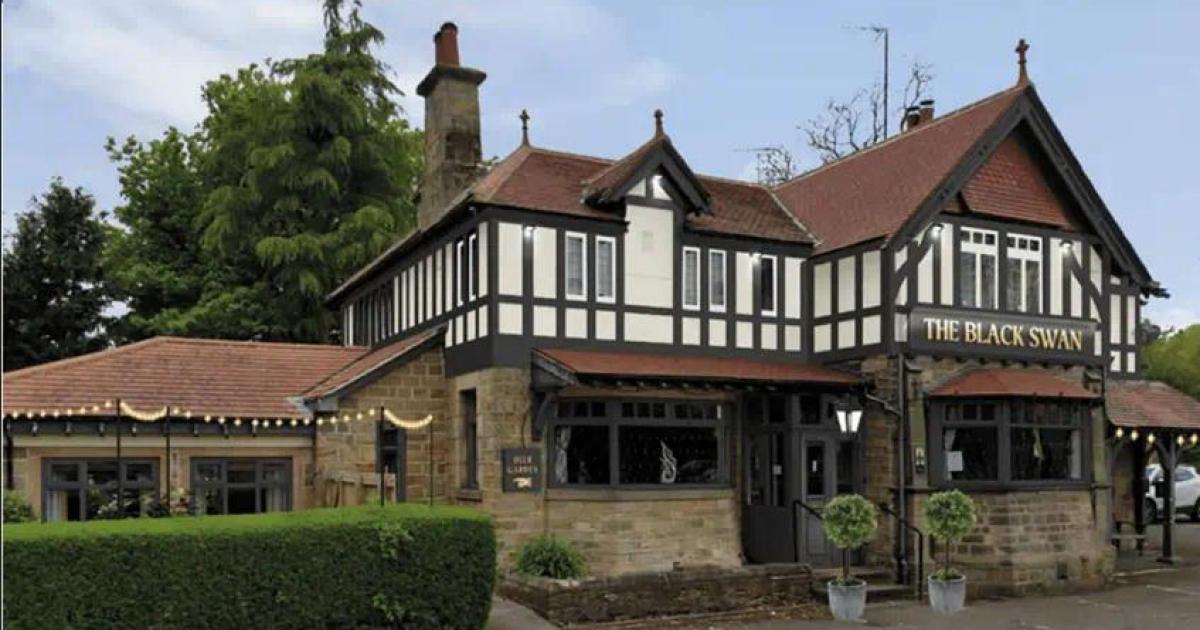
“We’ve loved welcoming you all through our doors and are so grateful to everyone who came to visit us. Thank you for your incredible support—it truly means the world to us.
“We’ve had a wonderful first evening and have enjoyed meeting all of you!”
The post added: “This is just the beginning, and we look forward to continuing this journey with you all. Here’s to many more great memories, good times, and shared moments at The Black Swan.
Advertisement
“Thank you again, and we can’t wait to see you soon!”
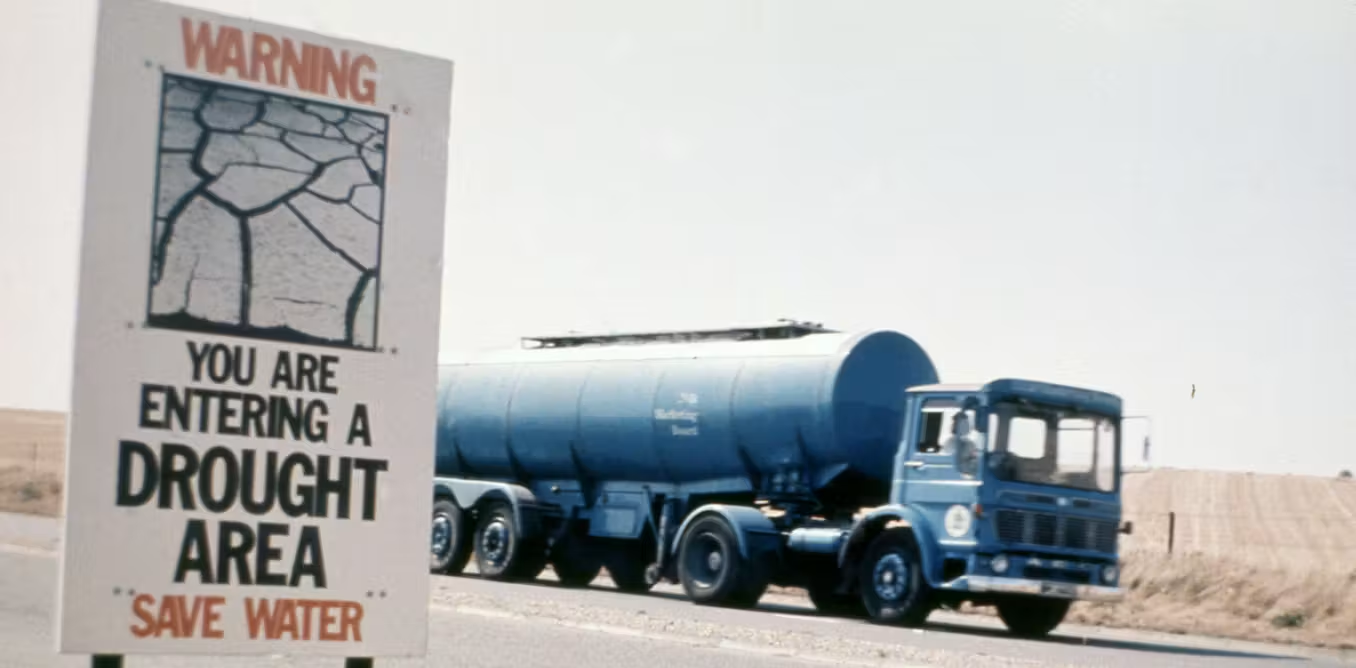
It’s 50 years since the intense heat of the 1976 drought hit the UK.
The country’s worst drought for 200 years, and one of the most severe ever, left reservoirs dry, cracked land, and melted tarmac on roads. For 15 consecutive days, temperatures hit 32°C in parts of the country. The record temperature for a June day was equalled, and still stands (for now).
Weeks and weeks without rain led to national appeals to save water. An emergency powers bill, announced on July 3 1976, gave the government extra power to ration water use.
In south-east Wales, Yorkshire and north Devon, people queued for water at standpipes in the street, while other areas experienced interruptions to their water supply. Meanwhile, food prices went up as farmers’ crops and garden vegetables died in the hot weather.
But the public of 1976 learned to cope with these unusual weather conditions, and per-person use of water dropped from an estimated 190 litres per day in 1972 to 95 litres in 1976. This was a generation with direct or family experience of the hardships of the second world war – including following government restrictions on food, clothing and fuel rationing, which finally ended in 1954.
Advertisement
Some of them had also experienced extreme weather in preceding decades, such as the significant droughts of 1949, 1955 and 1959 – as well as the “great freeze” of 1962-3, which caused an estimated 90,000 excess deaths.
The environment, the economy and society have all changed since 1976. But drought risk is increasing.
Advertisement
The UK’s population has grown from 56.2 million in 1971 to 69.5 million in 2025. By 2021, one in six residents of England and Wales were born outside the UK, an increase of 2.5 million since 2011.
In 1976, 78% of the UK population lived in urban areas, increasing to 83% by 2024 – or from 43.7 million in 1976 to 57.6 million in 2024. This is also a population that experiences less time spent in nature than previous generations.
But compared with 1976, the UK is now more likely to experience higher summer temperatures, protracted heatwaves and drier soils.
Our array of washing machines, dishwashers, power showers, pressure washers and paddling pools means we have come to expect water to be in our taps, regardless of what is happening to the weather and environment or our rivers.
When taps do not run, there is considerable frustration and anger, as has been experienced in the South East Water region during 2025 and ’26. Importantly for any government struggling to deal with a drought, trust in privatised water companies is low. This follows legal cases over sewage spills, worries about declining water quality, and perceptions of failing regulation.
During the UK’s 2018 heatwave, trust and willingness to act was seen to be dependent on the belief that water companies were also doing their part to reduce water consumption. But a 2023 survey by Ofwat on customer trust in these companies found 47% of respondents felt their water provider put the interests of its shareholders and owners first. Trust fell to the lowest level in a decade.
Another challenge is how to reach the public with updates and requests to reduce water use. Communicating about a drought is very different to 1976, when news channels were limited to BBC TV and radio, ITV and independent radio and print newspapers.
In preparing for the next major drought, the first and fundamental change required is to stop thinking of the UK as a wet country. London, with 690mm of annual rainfall, is drier than Rome’s 878mm and Paris’s 720 mm.
We, as consumers, should also start to think about how we do or don’t value water in our everyday actions. It’s important that households understand, and reduce, how much water each uses. If nothing changes, by 2055, the nation will need up to an additional 5 billion litres of water per day.
Advertisement
A 2020 survey found that 46% of respondents believed their household used less than 20 litres a day, while 17% said they consumed between 20 and 39 litres a day, and 15% thought they used 40 to 59 litres. The reality is between 135 and 150 litres per person, per day.
Archive news footage from the 1976 drought.
The biggest challenge for any current government and the water sector generally is likely to be gaining public trust in heeding national requests to save water.
New policy proposals for infrastructure investment, improved regulation, greater fairness and enhanced environmental resilience aim to reset confidence in the water sector as a whole. But as water bills rise to pay for this investment, and if issues around water quality and sewage pollution continue, it may not reset the balance of public trust.
Advertisement
Nonetheless, we should all also start to value water more, and use less, in order to adapt to a climate where intense droughts are an increasing risk in the UK.
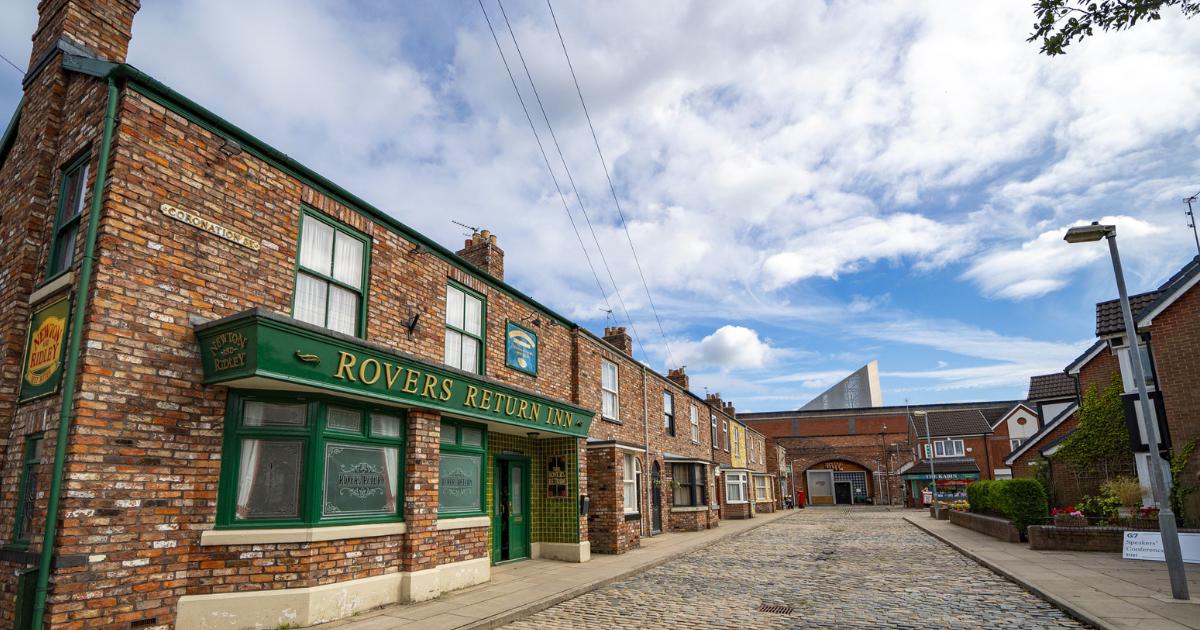
The popular ITV soaps are often moved, extended or sometimes axed from the schedule due to sport.
They have already been hit with several schedule changes so far in recent weeks due to the competition, and the week ahead will be the same again.
Here’s what the changes are and which episodes the latest TV schedule shakeup affects.
Advertisement
What are the Emmerdale and Corrie schedule changes next week?
Monday (June 22) will see Emmerdale and Corrie air with extended times at 8pm and 9pm respectively, being an hour long each rather than their usual half-hour episodes.
On Tuesday (June 23), both ITV soaps will air at a later time, due to the match between Portugal and Uzbekistan.
Emmerdale will be on from 9pm to 9.30pm, with Coronation Street following from 9.30pm to 10pm.
Neither soap will be on ITV on Wednesday evening (June 24), with Switzerland and Canada taking up the slot that evening.
Advertisement
On Thursday (June 25), both soaps will once again be extended to hour-long episodes, with Emmerdale on at 8pm and then Corrie at 9pm.
Neither soap will air on Friday evening (June 26) due to the World Cup game between Norway and France.
Despite the changes, Emmerdale and Corrie fans will get their two-and-a-half hours of each soap this week, just in a different format.
Emmerdale star to return as new character 9 years later
Emmerdale fans will see a previous Emmerdale star make her return to the show nine years since she was last seen.
Pippa Fulton has previously been seen in the Dales in two different roles in 2014 and 2017.
Advertisement
Now, she is back on the ITV soap once more, this time as a new villainous character.
She will be involved in a story with Lewis Barton (played by Bradley Riches), who will be taken hostage whilst he is on the way to the airport.
The kidnapper will be revealed to be a woman named Kylie (Fulton).
Kylie will abduct Lewis while he’s on his way to the airport, being bundled into the back of a van by masked assailants.
Advertisement
His danger is relayed via text to his brother Ross Barton (Michael Parr), informing him of the kidnapping.
The message warns Lewis is in danger unless his father returns a ‘Penny’ to the kidnapper.
Pippa first appeared in 2014, enjoying a one-night stand with Ross, before returning in 2014 as a customer at Dales business, Take A Vow in 2017.
Advertisement
The actress rose to fame in 2002 on the BBC talent show Fame Academy, where she reached the fourth week of the competition.
She has also appeared in Coronation Street as Aurora, the friend of Steve McDonald’s date.
Do you prefer Emmerdale or Coronation Street? Let us know in the comments.
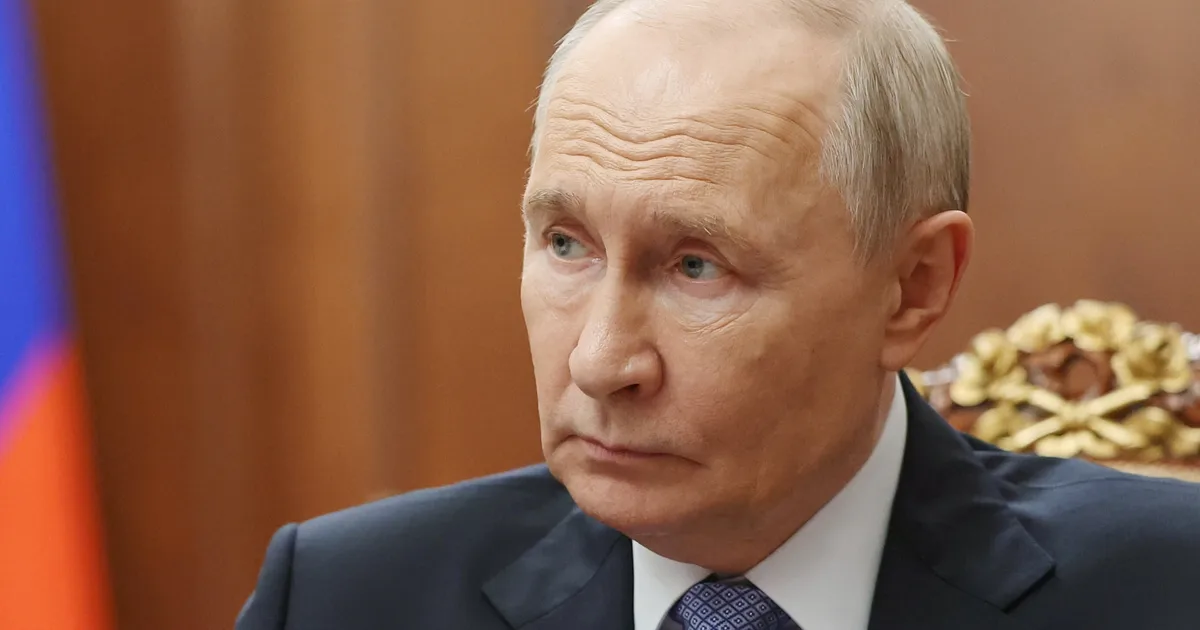
The Ukrainian president claimed his Russian counterpart is “physically afraid of his own army” in a new post on X after the largest Ukrainian attack on Moscow since the start of the war in February 2022.
It comes amid reports Donald Trump may be looking to adopt a harder approach against Putin once again following a friendly G7 summit earlier this week.
Writing on X, Zelenskyy said: “There’s no doubt that Putin fears the return of his army home.
Advertisement
“That is why he is so afraid of the war ending without victory.
“And there will be no victory. He is physically afraid of his own army.”
The Russian president has repeatedly dragged his feet over peace negotiations to end his land grab in Ukraine, even when Trump forced Kyiv into making major concessions to the aggressor.
Now the US president has signalled that he will increase sanctions on the Russian oil trade again, a move which will hit the country’s economy.
Advertisement
That’s terrible news for Putin, who has forced his army on in Ukraine despite accumulating more than 1.2 million casualties – many more than Ukraine has endured.
Zelenskyy also said: “That is why, if there is no ceasefire backed by specific security guarantees, he will return to war. And this time, others may be the ones under attack.”
“Today, Ukraine is de facto the second army of Nato – one that is not inferior to the second army in the world,” he added.
“And that is why Nato needs us – specifically us – de jure. This is already a fact recognised by all leaders.
Advertisement
“Putin will remain in the Kremlin until his death, and he has one goal: the restoration of the Soviet Union.
“Without Ukraine, this is impossible, and that is why things are so difficult for us.”
Speaking after meeting senior EU leaders in Brussels, Zelenskyy said the bloc was looking to step up sanctions on Russia again.
He said: “Putin doesn’t want to stop, and all his talk about seeking peace is nothing but lies. All partners, all Europeans, feel this. But everyone is confident that together we will stop him.”
Advertisement
Listen to Commons People, the podcast that makes politics easy. Every week, Kevin Schofield and Kate Nicholson unpack the week’s biggest stories to keep you informed. Join us for straightforward analysis of what’s going on at Westminster.
BANGKOK (AP) — World shares were mixed Friday and U.S. futures declined as optimism over the U.S.-Iran deal to end their war was dimmed by the postponement of high-stakes talks on reopening negotiations over Iran’s nuclear program and getting oil moving through the Strait of Hormuz.
U.S. markets will be closed Friday for Juneteenth.
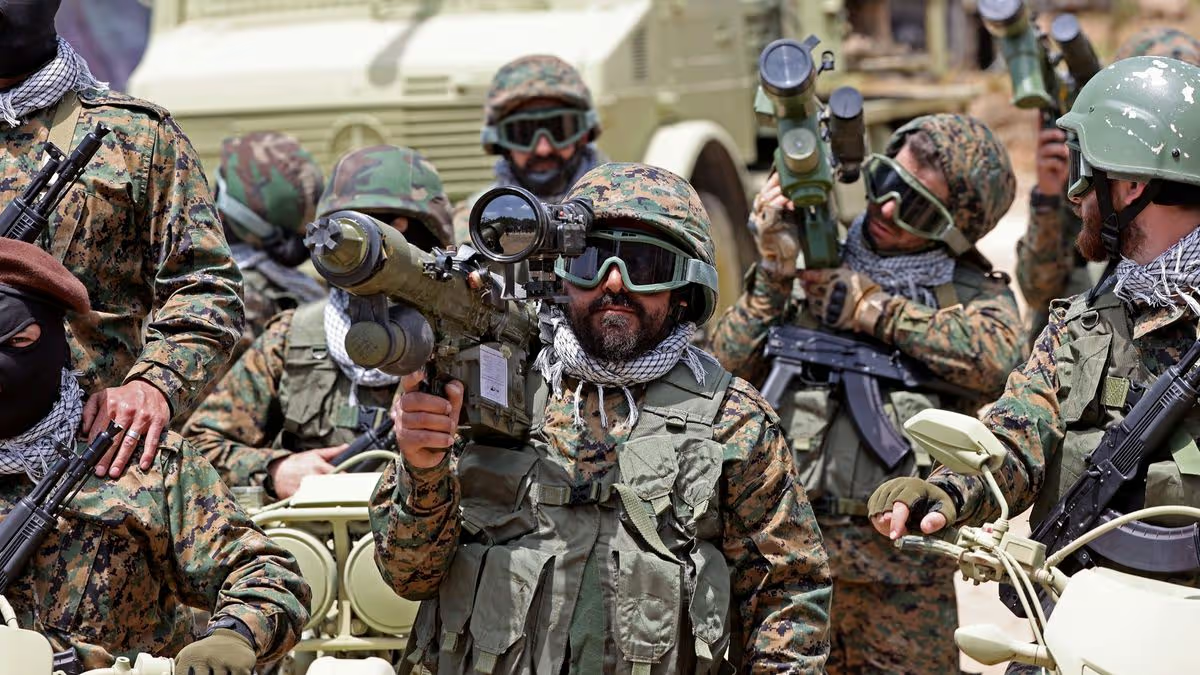
Planned talks in Switzerland between Iran and the United States over their efforts to reach a permanent end to war were delayed, while Israel’s military said its forces struck targets throughout southern Lebanon overnight as Hezbollah reported intense fighting in the area.
“Both sides are trying to show some good faith,” Bas van Geffen of RaboResearch said in a commentary. “But even if the water appears calmer, there is still a strong undertow. The agreement remains fragile on multiple fronts.”
Advertisement
Germany’s DAX rose 0.2% to 25,079.30, while the CAC 40 in Paris was nearly unchanged at 8,467.75. Britain’s FTSE 100 shed 0.2% to 10,376.64.
The futures for the S&P500 and Dow Jones Industrial Average were down 0.2%.
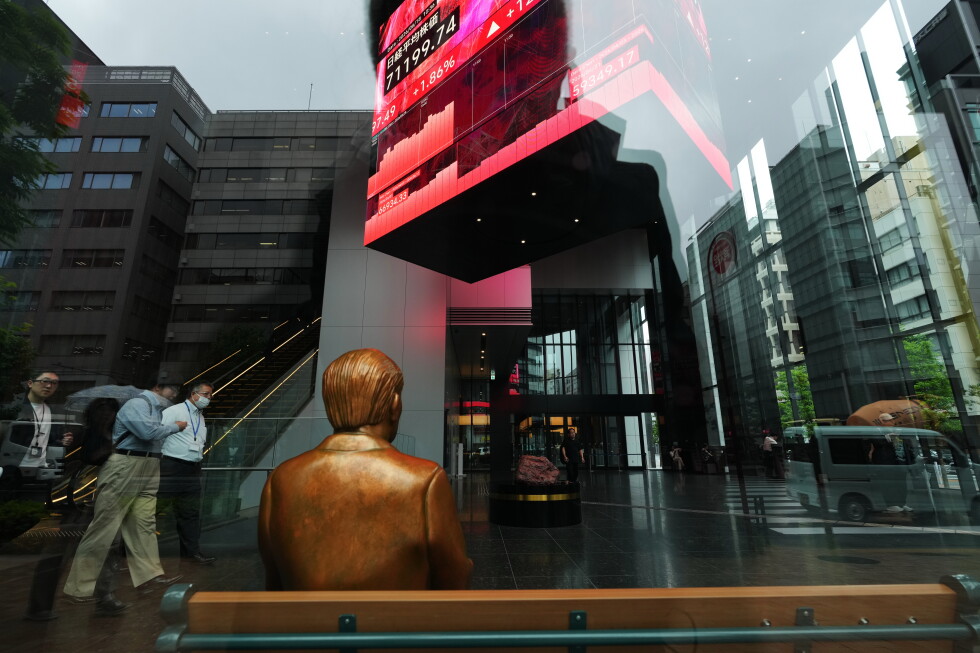
Tokyo’s Nikkei 225 wavered between gains and losses but closed 0.3% higher at a new record of 71,250.06. The government reported that consumer prices excluding volatile fresh foods was unchanged, but analysts said it would likely pick up in coming months despite higher fuel costs.
Higher inflation was a factor driving the Bank of Japan to raise its benchmark interest rate earlier this week to a three-decade high of 1% as it gradually adjusts its policies after years of near-zero or negative rates.
Advertisement
In South Korea, the Kospi lost 0.1% to 9,052.42, just shy of its record set a day earlier. The S&P/ASX 200 in Australia declined 0.9% to 8,828.70, while India’s Sensex lost 0.8%.
Markets in Hong Kong, Shanghai and Taiwan were closed for the Dragon Boat festival.
On Thursday, stocks rose on Wall Street, erasing most of their losses from a day earlier to notch weekly gains thanks to big advances for heavyweight technology companies. The decline on Wednesday was driven by anticipation that the Federal Reserve will likely raise interest rates this year in an effort to fight inflation.
The S&P 500 rose 1.1% and the Dow industrials added 0.1%. The Nasdaq composite surged 1.9%.
Advertisement
Sign up for Morning Wire:
Our flagship newsletter breaks down the biggest headlines of the day.
Advertisement
Technology stocks had some of the biggest gains and the most influence on the broader market’s rise. Intel surged 10.6% after U.S. President Donald Trump announced that the semiconductor giant will make chips for Apple in the U.S. Other big semiconductor companies gained ground. Nvidia rose 3% and Micron Technology jumped 8.7%.
On the losing end, SpaceX fell for the second straight day since its big debut on the U.S. stock market last week. The Elon Musk-led rocket maker and AI company was down 3.6% following a 4.9% loss Wednesday.
Advertisement
Oil prices wavered after the United States and Iran signed an agreement to end their war and reopen the Strait of Hormuz to oil tanker traffic. Brent crude, the international standard, spent most of the day lower before settling 0.4% higher at $79.85 per barrel. U.S. benchmark crude fell 0.2% to $75.85 per barrel.
Early Friday, Brent crude was down 0.4% at $79.50 per barrel. U.S. benchmark crude was flat at $75.85 per barrel.
Prices for crude oil are still above roughly $70 per barrel from before the war, but are well below the $100-plus price from a few weeks ago.
Rising energy costs have been putting more pressure on already hot inflation. The average price of gasoline in the U.S. has dipped below $4 a gallon, but is still 25% higher than a year ago. Prices have been rising for a wide range of goods because of higher shipping costs.
Advertisement
The Federal Reserve kept is key interest rate unchanged this week but hotter inflation means it will likely raise rates by the end of the year. Lower interest rates make borrowing easier for businesses and households, spurring growth, but they also tend to stoke inflation.
In other dealings early Friday, the U.S. dollar fell to 161.31 Japanese yen from 161.38 yen. The euro was unchanged at $1.1458.
We hope you love the products we recommend! All of them were independently selected by our editors. Just so you know, HuffPost UK may collect a share of sales or other compensation from the links on this page if you decide to shop from them. Oh, and FYI — prices are accurate and items in stock as of time of publication.
If you’re not counting down to sunnier days all year, you’re lying to yourself. There’s something electric about the summer: it means freedom, holidays, frolicking, and picnics.
It’s pretty much perfect, aside from of course the impending doom of hayfever and the fact you need to find the right sunscreen to wear.
Should you be unfortunate enough to be afflicted by sensitive skin like me, you’ll know the struggle of trying to find an SPF that sufficiently protects you from the sun, is easy to apply, won’t pill, or break you out into hives and blemishes every time you use it.
Advertisement
It’s enough to ruin the thrill of sitting in the sun, but this year I was determined to not let a few pesky rays ruin my fun.
To save all of the sensitive skin sufferers out there, I made it my mission to find the best sensitive skin face sunscreens on the market right now.
And good news: I found a range of options from high street to K-beauty, which come in between £5 and £26.
How I tested the best sensitive skin face sunscreens
Advertisement
With some of the sunniest days ahead of us, I tried out 15 of the best face sunscreens for sensitive skin.
To make sure they were up to the mark, I tested them multiple ways, including: on top of my usual skincare, without any skincare at all (à la post-swim skin), underneath makeup, on top of makeup, and as a top up half way through the day.
I also wore them while inside, on my commute, on a long hike, and when going swimming to see if they’d break me out or leave a white cast.
For each sunscreen, I considered value for money, formula, UVA and UVB protection, active ingredients like green tea and hyaluronic acid, bottle type, and volume.
Advertisement
My 15 favourites are outlined below.
The 15 best face sunscreens for sensitive skin to shop now
Should the sun add insult to injury for your dry skin, this Eucerin sunscreen will keep you plenty moisturised under its glare. It’s loaded with hyaluronic acid, which helps to keep your face looking plump and fresh, and won’t leave a white cast. It’s a little thicker than other options, though, so it’s not ideal for those with skin on the oilier side.
Rating:4/5.
Like the Eucerin formula, this scent-free sunscreen applies fairly thick, but it melts into your skin almost immediately. Unlike other pump bottles, this one doesn’t get stuck and has no problem dosing out the perfect amount. As well as being vegan and cruelty-free – and of course filtering out UVA and UVB rays – Green People’s formula also contains key antioxidants to support your skin texture.
Rating:4/5.
Advertisement
As someone who often gets a rash on her face, I’m a big fan of SOS’ face and body serum for cooling and soothing my skin. This sunscreen feels just as gentle on the face, and while it’s quite oily-feeling on first application, it is barely noticeable on the skin within seconds.
Rating: 4.5/5.
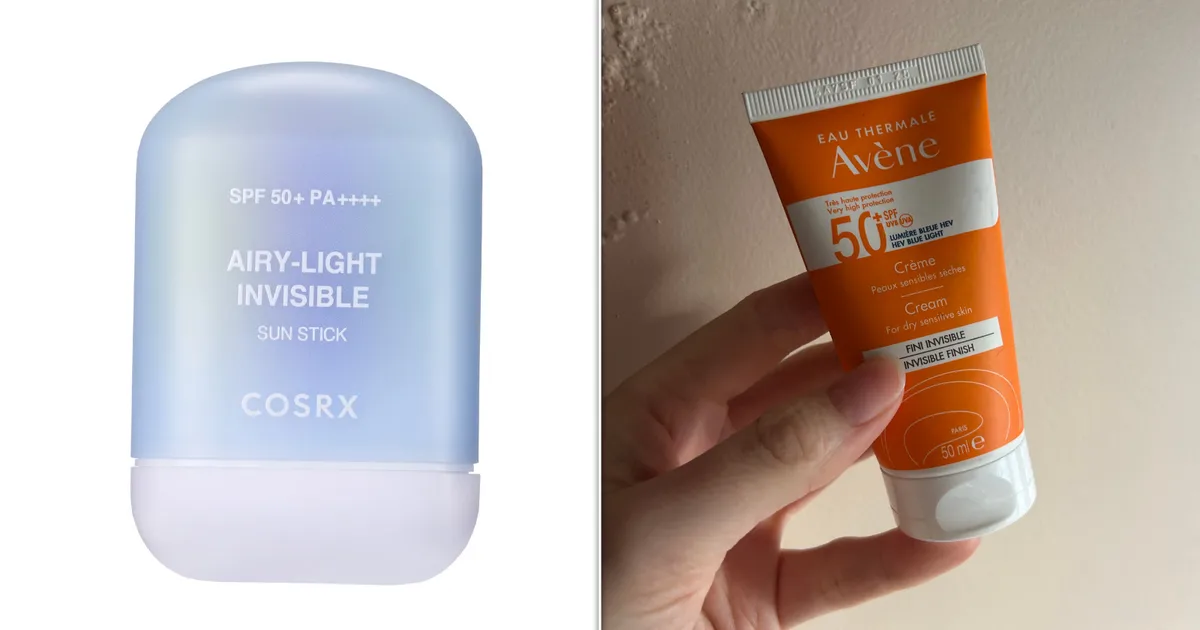
Fresh pharmacy brand Avène has been my go-to for dry, rash-prone skin for most of my life. Shoutout to its Cicalfate range for getting me through some rough years of extremely visible neck eczema. So it’s no surprise, really, that this sunscreen leaves your skin feeling nourished and doesn’t break you out. Be warned, though, some reviewers say it has a slight tinted tinge on darker skin tones.
Rating: 4/5.
Honestly, I’m a sucker for anything cute. I love this round pink packaging, which homes a sweet-smelling watermelon sunscreen. Admittedly, it’s not for everyone, and I was at first suspicious of using a scented sunscreen on sensitive skin, but I haven’t had any problems with it. In fact, it leaves my skin looking glowy (as the brand name suggests) and it’s easy to pick up and chuck in my bag.
Rating: 4.5/5.
This tiny stick is in the running for my favourite sunscreen on the list. Not only is it minuscule – it’s only slightly bigger than an AirPods case – but it’s so invisible, you can barely tell you’ve applied something to your face. While that might be a little offputting for some users, I love that I can just do a quick swipe while I’m out and about without having to think about getting my dirty hands all up in my face. I find that it even mattifies my skin a little, which is much needed when I start sweating profusely the second a hint of moisture hits the air. TBC on how much the product stretches, but I’ll definitely be repurchasing.
Rating: 5/5.
Advertisement
If you’re not sure about whether you want a thick or a light formula, this Q&A option is the perfect in between. The pump bottle is small enough to fit in your hand luggage, and it delivers a non-greasy sunscreen that is suitable for combination, oily, and dry skin alike. Should you feel dubious towards face moisturisers that claim to contain SPF, this is an ideal formula to wear under makeup as it also hydrates your face and (supposedly) boost collagen, so you look plump and fresh.
Rating: 4.5/5.
When they say silky, they mean silky. There’s really no other way to describe the texture of this cream, which slips and slides over your skin when it’s first applied, before drying to feel glossy and somehow matte. It won’t pill or leave a white cast, making it great to wearing under makeup. You might end up feeling shiny half way through the day, though.
Rating: 4/5.
Forking out £20 on a face sunscreen isn’t everyone’s prerogative, and that’s okay. I’ve relied on this Boots number to keep me burn-free on holidays for years. It has a nice sheen to it, is small enough to fit in your carry-on and, more importantly, won’t break you out.
Rating:3.5/5.
“Years ago, I went to a dermatologist to find out once and for all which products could save my “problem” skin. She recommended La Roche-Posay’s Anthelios SPF 50, which I’ve never parted from since. It’s super-lightweight, it doesn’t make me break out, it sinks in quickly, and (most importantly) it consistently safeguards my very sun-sensitive skin. Its fragrance-free formula and broad-spectrum coverage means it’s ideal for anyone who wants high-strength protection with zero irritation — and who doesn’t?“ – HuffPost lifestyle writer, Amy Glover.
Rating: 5/5.
Advertisement
For even more of a budget option, this Superdrug ‘face fluid’ is half the price of the Boots formula, for the same volume. It’s slightly more greasy when it hits your skin, but sinks in quickly. It does pill quite easily, though, so may be best reserved for when you’re bare-faced on a beach.
Rating: 3/5.
Call me vain, but I love how my skin looks with this sunscreen on. Plump, hydrated, and glowy as hell. The formula feels creamy when you put it on, so you know the areas you’ve applied it to (that’s none of my business to remember off the top of my head). Fine, K beauty knows its stuff.
Rating: 5/5.
Yet another example of K beauty killing it, this spreadable formula is almost completely transparent. If you tend to get any unwanted redness with SPF, that’ll completely disappear with this sunscreen, which is packed with green tea extract to reduce just that. It’s also blended with PDRN (AKA salmon DNA) to improve your skin elasticity and centella to soothe irritation. Once again, full marks.
Rating: 5/5.
Unfortunately after testing these products I’m going to have to take back my initial suspicion of Korean skincare. This dewy serum is designed to sit under moisturiser, and truly makes my skin look like I’ve had some kind of injectable done immediately after putting it on. Of all the formulas on this list, this one makes the best combo for face makeup.
Rating: 4.5/5.
Advertisement
Maybe I’m lazy, but anything that comes in a stick formula is automatically irresistible. Or maybe it’s just that every time I think about trying to put sunscreen on at the beach, I have a full-body reaction. Attitude has created a mineral sunscreen stick that would be great for kids and adults alike, thanks to providing UVB and UVA protection and going on in less than a few seconds. It feels a little waxy on the skin, but not in an awful way, and it means you can trust it’s there.
Iran has insisted that a ceasefire in Lebanon is necessary for talks to continue, according to a Hezbollah MP.
14:12, 19 Jun 2026Updated 14:20, 19 Jun 2026
Israel and Lebanese militia Hezbollah have agreed to a ceasefire, according to a US official.
The two countries are said to have agreed to a truce which the official said came into effect at 2pm UK time (4pm local time) today.
There has not yet been any confirmation from Israel or Hezbollah on the ceasefire.
Advertisement
Previous ceasefires between both sides, struck at multiple points during the war, have not lasted, however.
A comprehensive ceasefire was supposed to apply from today “on all fronts” of the Iran war, including Lebanon, according to the framework deal struck by the US and Iran.
However Israel has attacked areas in Lebanon’s south overnight, saying it killed “dozens of Hezbollah terrorists”.
Lebanese officials said that women and children were among those killed.
Advertisement
Benjamin Netanyahu framed this as a response to Hezbollah attacks that killed four Israeli soldiers.
This morning Lebanon’s state-run National News Agency reported at least 16 people were killed in Israeli air strikes in southern Lebanon as Hezbollah reported intense fighting in the area.
Meanwhile, Israel said four of its soldiers had been killed in fighting in southern Lebanon, including a lieutenant colonel.


































You must be logged in to post a comment Login