Connect with us
DAPA Banner
DAPA Coin
DAPA
COIN PAYMENT ASSET
PRIVACY · BLOCKDAG · HOMOMORPHIC ENCRYPTION · RUST
ElGamal Encrypted MINE DAPA
🚫 GENESIS SOLD OUT
DAPAPAY COMING

NewsBeat

Shattered dreams of the pub landlady murdered in paradise: Locals say it was a ‘gangland hit’, but one troubling detail suggests all is not as it appears

Published

on

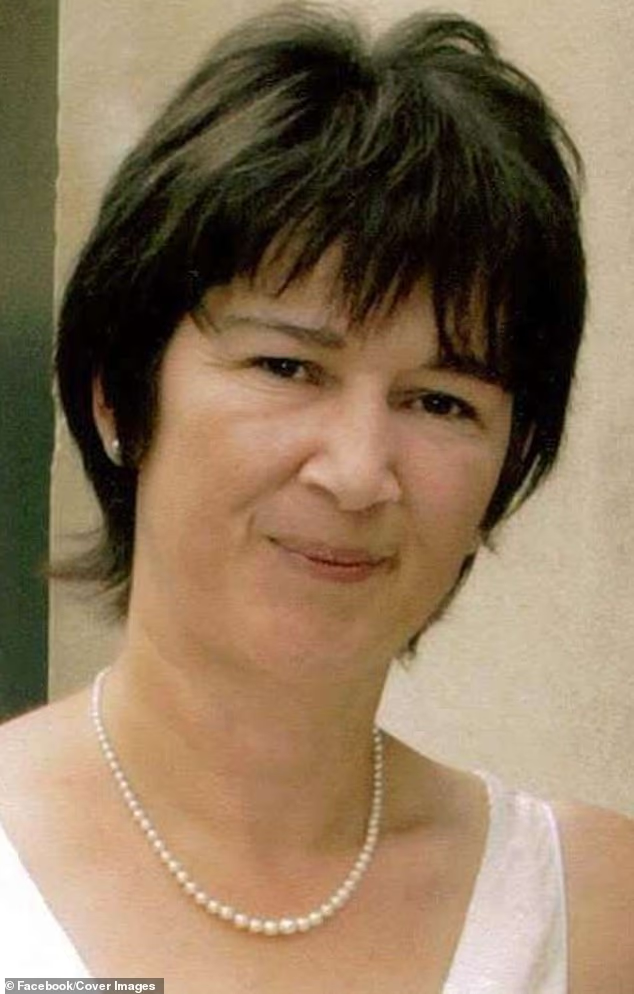
Elaine McGowan, a respectable, happily married 65-year-old British woman was gunned down in what is being described as a ¿gangland hit¿

The allure of Trinidad and Tobago was in Elaine McGowan’s blood. For all the picturesque, windswept charm of the Kent village of Saltwood where she lived and once served locals as the landlady of the Castle Hotel, she dreamed of moving to the twin-island Caribbean nation.

It was the country of her prominent businessman father’s birth and, as the years passed, like her father before her, she hankered after its more relaxed pace of life, the climate, the food and proximity to family.

When her father, George Butcher, died on the island three years ago, leaving behind a thriving coconut farming business, Elaine saw an opportunity to turn her dreams into reality and live out the rest of her days in the Caribbean sunshine.

But all those dreams were shattered in a few seconds of appalling violence earlier this month in a crime that has sent shockwaves through two very different coastal communities on two sides of the Atlantic.

Advertisement

Elaine McGowan, a respectable, happily married, 65-year-old British woman, was gunned down in what is being described as a ‘gangland hit’ as she stood, with her husband by her side, outside her elderly uncle’s home in a quiet residential neighbourhood.

The killing has left everyone baffled. Was this a dispute over her father’s will, as some have suggested? Or had Elaine somehow fallen foul of locals as she tried to pick up the reins of the business he’d left behind?

The assassination – for that is almost certainly what it was – was captured on CCTV and is chilling in its brevity. The video footage begins at 11am on a quiet, sunny Sunday in the town of Trincity, in the north of Trinidad, on a street popular with retirees.

Birdsong can be heard moments before a small white car – a Nissan Tiida – pulls up alongside the pavement and a figure gets out and runs towards the nearest house, just out of sight.

Advertisement

Elaine McGowan, a respectable, happily married 65-year-old British woman was gunned down in what is being described as a ‘gangland hit’

Camera footage of the 'gangland hit' during Elaine's trip to the Caribbean

Camera footage of the ‘gangland hit’ during Elaine’s trip to the Caribbean

Suddenly, three sharp bangs reverberate and the figure reappears, running towards the car.

Advertisement

As the gunman and at least one accomplice accelerate away, shouts of alarm puncture the air. And as quickly as the moment of devastating violence begins, it is over.

At that point, beyond sight of the camera, Elaine lay dying. Her husband Ian, 64, and 96-year-old uncle could only look on helplessly.

She did not, as the Daily Mail can exclusively reveal, die from a typical ‘kill’ shot. Instead she was shot as she stood with her back to the gate, the gunman deliberately aiming at her leg. The bullet severed the femoral artery, leading to her bleeding to death.

As a source close to the police investigation told the Daily Mail: ‘Someone was hired to put down a hit. But we think that murder was not the intention. It was to scare her into returning to the UK, which explains why she was shot in the leg but sadly bled out.’

Advertisement

So why on earth would a British woman, nearing retirement, from a well-respected Trinidadian family that has long owned a swathe of coastal farmland, be the target of such a calculated crime?

That is the question that has been weighing on Elaine’s grieving family and friends, just as it has been puzzling the authorities.

A police source told the Daily Mail this week: ‘We suspect there is some gang activity. There are several angles to the inquiry at this stage. We have a few suspects in mind but we are thinking the motive is likely due to the inheritance of the estate or a personal or interpersonal dispute.’

As Elaine lay dying, her husband Ian (pictured), 64, and 96-year-old uncle could only look on helplessly

As Elaine lay dying, her husband Ian (pictured), 64, and 96-year-old uncle could only look on helplessly

Advertisement
The beautiful North Manzanilla coastline may give the illusion of serenity, but Trinidad and Tobago is a country riddled with gang-related violent crime

The beautiful North Manzanilla coastline may give the illusion of serenity, but Trinidad and Tobago is a country riddled with gang-related violent crime

For all its palm-fringed white beaches and turquoise seas, Trinidad and Tobago is a country riddled with gang-related violent crime. The statistics are stark: Elaine was the 198th victim of murder this year (that figure has now swollen further to 213) in a country that has a population of only around 1.5million.

Its murder rate recently overtook Jamaica meaning it now ranks, in the Caribbean, second only to Haiti.

So what was it that made a woman who was once a former chairwoman of Folkestone’s independent traders association the target of a gangland hit?

Advertisement

The mystery deepened when the Daily Mail visited Saltwood last week, where news of Elaine’s murder has left locals stunned.

Having been given control of the business, following her father George’s death at the age of 90, she’d gone to Trinidad in May as a step towards a permanent move.

George, a mechanical engineer, left his homeland in the 1950s and met his Yorkshire-born wife Doreen at the Hammersmith Palais. They raised their two daughters, Elaine and her sister Joanne, 66, in London.

He built a thriving engineering business, with an office in Battersea overlooking the Thames.

Advertisement

In the 1970s he began to return more frequently to the Caribbean. His marriage eventually crumbled and he settled back in Trinidad where he formed a long-term relationship with a prominent Trinidadian architect who shared his passion for conservation.

As well as work on the development of Trinidad’s Piarco International Airport, George was a founding member of the National Trust for Trinidad and Tobago and a president of the heritage preservation lobby group Citizens for Conservation (CFC).

According to a source close to the family, part of the heritage he sought to preserve was in Manzanilla, a large tranche of land to the east of the island, fringed by palm trees, that had formerly been a colonial era coconut plantation.

Under his management, the land on which there are two villages and 42 farms cultivating coconuts and watermelons flourished.

Advertisement

George had sold some parcels of land before his death, but Cocal Retreat, his business which grows and sells coconuts and coconut water, remains his legacy.

Amid the speculation that comes with murder, there had been whispers George might have changed his will, causing upset among his beneficiaries. But this was firmly disputed by two sources close to the family this week.

‘George worked for many years on creating a will where many, many people benefit from his estate,’ said one. What is clear is that George, who had lot of other business interests, wanted his youngest daughter Elaine to follow in his footsteps and have overall management of what the family have always called ‘the farm’.

Back in Kent this week, Rosalie Terry, a close friend of Elaine’s, says that was all Elaine wanted, too. Elaine, she says, had obtained Trinidadian citizenship and her husband Ian was planning to follow suit.

Advertisement

‘Why would they have done that if he had written her out of the will?’ Rosalie asks. ‘All Elaine wanted was to follow her father’s wishes. He wanted her to go back to Trinidad and take over the running of his businesses. They just loved the way people live. It was a dream for them to be able to afford to go out there. They certainly didn’t mean to upset anybody.’

While she knew of no discontent over an inheritance, Rosalie had been in contact with Elaine and Ian and says: ‘Something was going off with the businesses over there. I don’t know the ins and outs but Elaine found out about it while she was over there.’ Rosalie got to know the McGowans after they moved to the Folkestone area from London more than 20 years ago.

Elaine had worked for a merchant bank in the capital but, having met Ian aged 40, wanted a more relaxed life on the coast.

The couple were devoted to each other, running property-related businesses together. They liked going to the races, cricket, and Elaine loved to cook Trinidadian food for her friends.

Advertisement

But in more recent years life had been more difficult.

Seven years ago, the couple took over the lease of the Castle Hotel in Saltwood, full of hope. They wanted a ‘challenge’ that suited their combined skills, they said.

The Caste Hotel in Saltwood, Kent, where Elaine worked

The Caste Hotel in Saltwood, Kent, where Elaine worked

‘We took over in August 2019 aware that the building would require a huge amount of cleaning and renovation,’ they wrote online.

Advertisement

But within months of buying the lease and pouring thousands of pounds into renovations, Covid struck, wiping out profits. Ian, meanwhile, was diagnosed with cancer.

The impact of it all was laid bare in 2024, when Ian appeared in court in Leicestershire, charged with drink driving. He admitted the offence.

In mitigation, his solicitor said this: ‘They’ve been trying to sell this massive weight that’s around their necks. It’s been loss after loss since lockdown. His intentions were to drive to the lakes to take his own life. He didn’t intend to drink and drive.’

That things were difficult at the pub is underlined by those who recall a different Elaine to the warm, funny woman remembered by her close friends. Some customers experienced a more abrasive side to her and say she wasn’t always easy to get along with.

Advertisement

There are some who feel that the pub’s struggles were not entirely due to Covid, but Rosalie insists her friend was simply ‘up front’ and above all ‘a lovely woman’.

Could the rough edges that bothered some customers, prior to the couple selling up in 2025, have caused problems in Trinidad?

Out in the sweeping, wave-bashed fringes of Manzanilla, residents and farming tenants told the Daily Mail there were rumblings about farmers being at odds with management, refusing to pay rent for the land that they worked.

Elaine introduced herself to farmers in early 2024, after her father’s death, and had been back twice more since. But the business, run by a board of directors, largely ran as it always had, under the day-to-day management of longstanding staff.

Advertisement

One Cocal Retreat manager, who did not want to be named, said out of some 40 or so farmers operating in the area, about seven had refused to pay rent and been warned they faced legal action.

‘The seven defaulters have not been paying,’ said the manager. ‘They claim they were in communication with McGowan and they were paying her directly.

‘However, Elaine issued letters to these farmers in February this year.’

Elaine, the manager said, gave farmers until May 30 to respond to her letters, after which, the matter would go into the hands of lawyers who would issue legal letters. Whether those second letters were issued remains unclear.

Advertisement

Karen Alamby, another manager at the estate, had met Elaine only twice. She does, however, also allude to problems.

‘We had some inaction with some of the farmers and we wanted to get them off the land because they were not paying their fees,’ she says.

‘They said that no one could move them from the land except Elaine.’

What could have happened?

Advertisement

Typically, farmers would pay rent and then make a private arrangement with the estate with a share of the crop. Farmers we spoke to were circumspect.

‘Mr Butcher was a fairly honest fella,’ says one, who sells his produce out of a wooden shed. ‘He was the one who built all these sheds that we sell out of. Ms McGowan had her ways – everybody has their ways – but she was straightforward. We were good with each other.’

While there is shock that she was murdered, those who live here are no strangers to crime. One watermelon vendor we spoke to said the area is sometimes a target for drug drops and robberies. ‘The former owner of this vending spot here was robbed and chopped up by bandits. And for what? They wouldn’t get a lot of money from here.’

Another man said ‘bandits’ raided the farm where he lives.

Advertisement

‘They pushed in the door and robbed us and gun-butted my wife in the head.’

It’s clear that for all its natural beauty, Trinidad has its own problems that extend deep beneath its picture-postcard image.

Back in Trincity, the residential neighbourhood where Elaine was killed, there is an uneasy quiet.

‘It’s numbing,’ says one neighbour in his 60s. ‘This is a very quiet neighbourhood, very family-oriented. It’s alarming for this to happen in broad daylight.’

Advertisement

We traced Elaine’s footsteps back to the rental apartment where she and Ian had been staying in an area named Mohammedville.

Nafessa Mohammed, an attorney who remembers stopping to chat to Elaine only last month, says: ‘I asked the lady where they were from and she said the United Kingdom but they were planning to live here. It was a short interaction but the love and warmth she exuded will remain with me.

‘I remember seeing her husband after the incident. He looked like a broken man.’

Elaine’s funeral, where her body was laid in an open casket for mourners to pay their respects, was held a week ago and livestreamed on YouTube.

Advertisement

Ian, who was devoted to his wife, was one of a string of family members to speak.

‘We are here to remember my lovely wife, who was torn from us on July 5,’ he said.

‘Elaine was passionate, intelligent, joyful and loving of all family and friends. She lit up and touched lives wherever she went. We’ve been inseparable since we came together 26 years ago.

‘When she brought me to Trinidad, I fell in love with the country and the people just as she said I would. We’ve been coming to Trinidad as often as we could ever since. Loving the food, music, cultures and dreaming of settling here.’

Advertisement

His address ended with a heart-wrenching appeal: ‘How could this have happened?’

How indeed.

Additional reporting: CYRIL DIXON

Source link

Advertisement
Continue Reading
Click to comment

You must be logged in to post a comment Login

Leave a Reply

NewsBeat

Two people dead after being pulled from sea at Newquay beach

Published

on

Daily Record

A man and a woman have died after being pulled from the water at Fistral Beach in Newquay, Cornwall. Emergency services including police, the RNLI, ambulance and coastguard attended the scene on Sunday evening.

A man and woman have tragically lost their lives following an incident at a beach in England. Emergency services rushed to Fistral Beach in Newquay at approximately 9.30pm last night (July 26).

Advertisement

Police, ambulance crews, and coastguard teams all responded to the scene. The Royal National Lifeboat Institution (RNLI) has confirmed that two lifeboats were dispatched to the incident.

Eyewitnesses reported seeing as many as nine emergency vehicles present at the location, while a rescue helicopter was observed circling overhead for an extended period, reports Cornwall Live.

In a statement issued on Monday, July 27, police confirmed that both individuals were declared dead at the scene after being recovered from the water, according to Cornwall Live.

A Devon and Cornwall Police spokesperson stated: “Police were called by the South Western Ambulance Service at around 9.45pm on Sunday 26 July following reports that two people had been recovered from the water at Fistral Beach, Newquay.

Advertisement

“Emergency services attended and a cordon was put in place, which has since been removed.Sadly, a man and a woman were pronounced deceased at the scene. Their families have been informed, and our thoughts are with them at this extremely difficult time.A file will be prepared for HM Coroner.”

A spokesperson for the coastguard added: “HM Coastguard has been responding to an incident in the South Fistral area, Newquay, overnight. First informed at around 9.30pm (26 July), Coastguard Rescue Teams from Newquay, Padstow and St Agnes, lifeboats from Newquay RNLI and an HM Coastguard helicopter were sent to the scene, alongside other emergency services.”

Ensure our latest stories always appear at the top of your Google Search by making us a Preferred Source. Click here to activate or add us as your Preferred Source in your Google search settings.

Source link

Advertisement
Continue Reading

NewsBeat

Why We Shouldn’t Befriend Foxes, And How To Help Instead

Published

on

Why We Shouldn't Befriend Foxes, And How To Help Instead

We’ve written before at HuffPost UK about why you should probably be on your best behaviour around crows – they remember faces really well, and can even tell their friends and family about humans they don’t like.

Being kind and even befriending them (while maintaining a safe distance) could get you some serious corvid kudos.

But what about foxes, creatures some think might be becoming increasingly domesticated?

You’ve probably seen viral videos of people treating the wild animals as pets, hand-feeding them and even bringing them into their home.

Advertisement

We asked James Benwell, a Senior Marketing and Communications Officer at the Birmingham and Black Country Wildlife Trust, for his thoughts.

Treating foxes as pets could seriously endanger them

James stressed that it’s important to “ leave out food and water for wildlife in a responsible manner”. Fox populations dropped 46% between 1995 and 2021, and providing them the sustenance they need to get through, e.g., heatwaves and winter could make a difference.

But “we absolutely do discourage people from hand-feeding, overfeeding or befriending foxes,” he added.

Advertisement

“Foxes are equally cursed and blessed in being such beautiful, striking animals, and it is no wonder that people are so captivated by them and want to interact with them,” he explained.

“However, in every interaction with wild animals, we have to keep their best interests at heart rather than our own. Foxes need to retain their wildness in order to survive. Hand-feeding or overfeeding them can lead to a reliance and overconfidence in humans which could spell their downfall.”

It’s not just that the animals need to remember how to forage and hunt on their own – though that’s part of it.

The expert said we also need to remember that not everyone sees foxes in the same way.

Advertisement

“Foxes have suffered centuries of persecution and vilification at the hands of man,” he reminded us.

And because some people might seek to get a seemingly “aggressive” fox culled, “every interaction which causes them to lose their natural wariness of humans could lead them to having a negative interaction with a person, and ultimately could cost them their lives.”

How can I look after foxes safely?

That’s not to say we shouldn’t have any interaction with the “striking” animals – far from it, James said.

Advertisement

Particularly in urban environments, where wildlife can be hard to find, having a backyard visitor is “one of the most spellbinding interactions with wildlife you could hope to have, and something which can lead to a lifelong love of nature”.

So, he advised, garden with the creatures in mind.

“Leave out food that can supplement a fox’s natural diet, create areas of shelter, and especially in these hot, dry conditions that we are currently experiencing, leave out plenty of water.”

Some great options include cooked or raw meat, tinned dog or cat food (not bones, though), peanuts, fruit (except grapes and raisins) and even cheese, per Woodland Trust.

Advertisement

“Whether it be a fox, a hedgehog, a badger or any other fabulous creature which visits your garden, savour every moment of their time with you, but let them live wild and free. They will repay you more than you could ever imagine!”

Source link

Advertisement
Continue Reading

NewsBeat

Indonesia plan to cut landfill methane alters trash picker livelihoods

Published

on

Indonesia plan to cut landfill methane alters trash picker livelihoods

BANTARGEBANG, Indonesia (AP) — Long before dawn breaks over Indonesia ’s largest landfill, Nur Wencih joins thousands of waste pickers climbing mountains of garbage, searching for anything they can sell.

The 35-year-old widow has worked at the site on Jakarta’s eastern edge for two decades, following her parents, who still earn a living there. The Bantargebang landfill has paid for food and rent while helping her two teenage daughters living with a relative in a rural village. She hopes her daughters will never have to follow the same path.

Living alone in a rented room near the landfill, Wencih earns about 200,000 rupiah ($12) on a good day collecting discarded toys, cardboard and plastic bottles before bulldozers bury them beneath fresh waste. Occasionally, she finds gold jewelry.

“It feels like hitting a jackpot,” Wencih said while taking a break from the sweltering July heat.

Advertisement

But those lucky finds, and perhaps her livelihood, may soon become far rarer.

Beginning Aug. 1, Indonesia plans to start transforming the site from open dumping to a more controlled system as part of a national waste management plan. The government last month announced it will shut down open-dumping operations at 343 of Indonesia’s 550 disposal sites, requiring them to transition to controlled or sanitary landfill systems and gradually accept only garbage that cannot be recycled or composted, such as diapers, dirty paper towels and stickers.

Meanwhile, residents are being asked to set aside organic waste and recyclables for separate processing, a practice many households have never been taught to do on a large scale.

Dudi Gardesi Asikin, head of Jakarta’s Environment Agency, said the policy aims to improve environmental health, reduce pollution and curb emissions of methane generated by decomposing waste.

Methane is responsible for roughly one-third of global warming and traps more heat than carbon dioxide, making it a key focus of worldwide climate efforts. U.N. Secretary-General António Guterres, for example, is urging governments to sharply reduce methane emissions, calling it one of the fastest ways to slow global warming.

Advertisement

A landfill at the center of the methane debate

Researchers say Bantargebang emits more methane than nearly any other landfill in the world, placing it at the center of Indonesia’s waste management reforms.

Advertisement

Asikin said Bantargebang opened in 1989 as a sanitary landfill equipped to collect methane. Unlike open dumps, sanitary landfills also cover waste with soil.

But after a private-sector contract ended in 2016, the facility gradually drifted toward open dumping.

“What was never intended to be open dumping became full open dumping,” Asikin said.

Only two of the landfill’s original 12 methane extraction wells remain operational, Asikin said.

Under the new plan, parts of Bantargebang are already being covered with tarps, and officials hope to cover much more. Asikin estimated that covering the rest of the disposal area could cost as much as 200 billion rupiah ($12 million).

Uncertain future for waste pickers

Indonesia faces a dilemma as it attempts one of its biggest waste-management reforms in decades while also protecting the livelihoods of an estimated 600,000 waste pickers.

At Bantargebang alone, officials estimate more than 4,000 registered waste pickers work among trucks, excavators and mountains of garbage each day. The materials they recover are sorted and sold to a network of traders and recycling businesses that have grown around the landfill.

Advertisement

“What worries me most is how I will feed my family,” Wencih said of the new plan, while excavators behind her pushed fresh waste onto exposed slopes.

Asikin said the government wants to improve conditions for waste pickers, who already receive some workplace protections and healthcare through a national social security program.

Advertisement

He believes the new policy will eventually create safer formal jobs in recycling and composting.

“Today they are practically racing against our excavators to grab recyclable materials. It is extremely dangerous,” he said.

Bunin, a 53-year-old neighborhood chief who lives nearby, said while the landfill causes pollution, it also creates business opportunities including rental housing and food stalls catering to waste pickers.

“The landfill not only brings negative impacts, there are also economic benefits,” said Bunin, who like many Indonesians uses a single name.

A landfill at its limits

Covering roughly 110 hectares (272 acres), Bantargebang has grown into a human-made mountain reaching as high as 60 meters (196 feet), roughly the height of a 20-story building. About 7,500 tons of waste arrive daily from the capital city.

“The waste people produce does not disappear. It is gathered in one place and has become a mountain,” said Agung Pujo Winarko, who heads the facility.

Advertisement

A collapse triggered by heavy rain in Bantargebang in March killed seven people, underscoring the risks posed by the landfill’s sheer scale.

“This situation is extremely urgent,” Winarko said. “Its carrying capacity is reaching, or even exceeding, its limits.”

Satellite data analyzed by UCLA’s STOP Methane initiative ranked Bantargebang in 2025 as the world’s second-largest landfill methane emitter after a site in Argentina.

Evan George from UCLA’s Emmett Institute on Climate Change and the Environment said reducing organic waste entering landfills could lower emissions, but that existing landfills will still require decades of monitoring and gas collection.

Changing Jakarta’s throwaway culture

Under the new approach, Jakarta residents are expected to separate food scraps and other organic waste from recyclables and residual trash before collection. New refuse-derived fuel plants are also part of the plan.

“What we are doing is somewhat revolutionary,” Asikin said. “For decades, people were never asked to separate their waste.”

But many households are only beginning to learn the system, raising questions about whether enough public education has taken place.

Advertisement

“All we know is to throw the trash in the bin, not to sort it,” said Rukasih Wanti, a Central Jakarta resident. “The new rule is confusing us. It’s inconvenient, creates extra work and wastes our time.”

Asikin said multiple government institutions, including education and health ministries, are supporting the efforts.

Environmental advocates say new recycling and composting infrastructure is also needed. The transition is daunting because government data shows only about one-quarter of Indonesia’s daily waste is currently handled by formal systems, with the remainder dumped, burned or otherwise unmanaged.

David Sutasurya, executive director of the environmental organization YPBB, said about half of Jakarta’s waste is compostable and another 30% recyclable, meaning up to 80% could be kept out of landfills.

“We delayed transforming our waste-management system for too long, and only realized the problem when landfills were already close to full,” Sutasurya said.

In a West Jakarta neighborhood, Monica T. Anggriani has spent more than a decade persuading neighbors to separate household waste, building a community waste bank that now processes about one ton of organic waste daily through composting, maggot cultivation and urban farming.

Advertisement

“Our generation was never taught to separate waste,” Anggriani said. “If we don’t start now, nothing will change in the future.”

___

Associated Press writer Jennifer McDermott in Providence, Rhode Island, contributed to this report.

___

The Associated Press’ climate and environmental coverage receives financial support from multiple private foundations. AP is solely responsible for all content. Find AP’s standards for working with philanthropies, a list of supporters and funded coverage areas at AP.org.

Advertisement

Source link

Advertisement
Continue Reading

NewsBeat

Trump paused attacks on Iran to make space for talks, US ambassador says

Published

on

A woman with short brown hair looks directly into the camera with a slight smiling expression. She is wearing a pink top and a silver necklace with a heart charm.

President Donald Trump has paused attacks on Iran for the second night in a row to give diplomacy more time, the US ambassador to the UN said.

Speaking to Fox News on Sunday, ambassador Mike Waltz said the president was “giving talks some space, he’s giving it a little bit of room”.

An Iranian army spokesperson said on Sunday that Tehran had halted “retaliatory” attacks in the region in response.

The pause follows nearly two weeks of daily US strikes and tit-for-tat attacks, effectively unravelling the ceasefire struck in June.

Advertisement

Asked whether Trump had decided against escalation for now, Waltz told NBC: “I wouldn’t go that far at all. The president is keeping all options on the table.”

Waltz also rejected reports in the New York Times, external that administration officials had warned expanding hostilities could dangerously drain a diminished stockpile of air defence munitions.

“The US military… has everything that it needs to conduct this campaign as effectively as it needs to be,” he said.

As of Sunday evening, Trump had not spoken publicly on the latest developments, but earlier posted computer-generated images on his Truth Social account that depicted US military planes bombing Iranian ships and Kharg island.

Advertisement

Meanwhile, Iran and Oman held several rounds of technical talks in Tehran on Friday and Saturday to discuss management of the Strait of Hormuz, according to Iranian foreign ministry spokesman Esmail Baghaei.

Disputes over control of the strait reignited US-Iran tensions earlier this month and it remains a major block to permanently ending the war.

Iran and the US signed a memorandum of understanding in June to halt military operations and reopen the strait, as well as to reach an agreement to end the war over the following 60 days.

But after Iranian forces attacked tankers in the Strait of Hormuz on 13 July, the US resumed airstrikes on the country and reinstated its naval blockade on Iranian ports.

Advertisement

Iran retaliated with attacks on US military facilities and bases across the Middle East, killing four American soldiers. The US strikes have since killed dozens of people, according to Iran’s health ministry.

In the UK, new Defence Secretary Wes Streeting said he would meet his US counterpart Pete Hegseth in the coming week to discuss the strait, which is one of the world’s key transport routes for oil, liquid natural gas and other essential commodities.

“When it comes to securing maritime freedom and free commercial shipping in the Strait of Hormuz, that’s where we are absolutely aligned,” Streeting told the BBC.

Last week, oil prices hit $100 a barrel for the first time since May, as the renewed fighting stoked fears over global energy supplies.

Advertisement

As the war nears its fifth month, it remains largely unpopular in the US, with a new poll from CBS/YouGov suggesting 57% of Americans are frustrated about the conflict and only 19% optimistic.

Thousands of people have been killed across the Middle East since the US-Israeli war with Iran began in February, official figures show, with the vast majority coming from Iran and Lebanon.

President Trump is set to meet Israeli Prime Minister Benjamin Netanyahu in the White House on Tuesday.

Source link

Advertisement
Continue Reading

NewsBeat

Three killed, 4 wounded in shooting at Seattle food festival

Published

on

Three killed, 4 wounded in shooting at Seattle food festival

SEATTLE (AP) — Police arrested one suspect and were looking for another after gunfire erupted at a crowded food festival beneath Seattle’s Space Needle, leaving three people dead and four others injured, including a toddler.

Investigators believe the two suspects were shooting at each other and, although one remained on the loose, Assistant Seattle Police Chief Tyrone Davis told a news conference Sunday night that there was no ongoing threat to the public.

Police did not have a description of the outstanding suspect, he said.

“We’re still trying to figure this out,” Davis said.

Advertisement

Two people died at the scene and a third died at a hospital. The four wounded, including a 2-year-old boy, were hospitalized and in stable condition, said Grace Nuñez, spokesperson for the Seattle Fire Department. The rest of the injured were adults. Davis couldn’t say if any of the victims were involved in the confrontation.

The gunfire erupted around 6 p.m. in the waning hours of the Bite of Seattle, an annual three-day festival that draws hundreds of food and retail vendors and performers.

Dozens of officers were providing security at the event and some saw one of the suspects firing, Davis said. One suspect surrendered at the scene, but the other fled. Law enforcement searched the grounds to no avail.

A large number of police and emergency crews responded and began evacuating the area around the sprawling Seattle Center campus.

Advertisement

Faith Adia Hunter said she and her friends had just gotten food from a crepe vendor when gunfire broke out. She realized a shooter was near them. She and others found shelter in the nearby Seattle Children’s Museum.

“We were right next to him when it started so we took off running,” Hunter said. “So we took off running too into the building with the crowd.”

In the chaos, many vendors bolted toward the exits, abandoning their food stands. Hours afterward, some milled outside the police tape, wondering when they would be allowed to return to collect their tents, food and cooking gear.

Roberto Ramirez, a vendor at the event, said he heard what sounded like firecrackers before people began yelling “shooter” and frantically running.

Advertisement

“Suddenly everything was empty,” he said. “People were freaked out.”

After the initial panic, new guests continued to arrive unaware of what had happened and were told by police to leave, he said.

Advertisement

Estan Wakonabo said he and his girlfriend were at the festival waiting in line for a photo booth when he was shoved from behind and he turned to see a rush of people fleeing.

“People were hiding, were pushing, people were falling on the ground, baby strollers were falling,” Wakonabo said, adding that was when he heard gunshots.

“Once I heard a ‘pop, pop, pop,’ that’s when I knew it was a shooter,” he said.

After he escorted his girlfriend to safety, he returned to the scene to make photos and saw multiple victims on the ground, Wakonabo said.

Advertisement

The annual festival started in 1982 and draws 350,000 attendees over “three days of food, drink, and community celebration,” according to its website.

___

Associated Press journalists Manuel Valdes and Lindsey Wasson in Seattle, Annika Wolters in Bangkok and Christopher Weber in Los Angeles contributed to this report.

Advertisement

Source link

Continue Reading

NewsBeat

Rotting in solitary with a target on his back: Inside Axel Rudakubana’s new life in Broadmoor as experts reveal transfer from prison will be NO ‘holiday’ for Southport monster

Published

on

Rotting in solitary with a target on his back: Inside Axel Rudakubana's new life in Broadmoor as experts reveal transfer from prison will be NO 'holiday' for Southport monster

Southport child killer Axel Rudakubana‘s transfer to Broadmoor is not an ‘easy ride’ or a ‘holiday’, a former psychiatrist at the high-security hospital has insisted.

The 19-year-old triple murderer was accused of ‘manipulating the system’ after being shipped out of maximum-security HMP Belmarsh this month.

Consultant psychiatrist Dr Bradley Hillier dismissed claims that Rudakubana would now have a cushier existence – despite now being treated as a patient instead of a prisoner.

And the expert, who has worked with some of Britain’s most dangerous minds, revealed that the fiend could be left facing even tighter restrictions than he endured in prison.

Advertisement

He said: ‘I can say for sure that there is no basis in this misperception that going from prison to hospital is like an easy ride or a light touch or a sort of holiday. It’s not.

‘It’s increasing the levels of restriction and the ability to remove rights in order to treat people because of the risks they pose.

‘It may even remove rights that somebody has when they’re in prison because there’s so much focus on risk and there’s so much scrutiny and observation.’

Rudakubana murdered Alice da Silva Aguiar, nine, Bebe King, six, and Elsie Dot Stancombe, seven, at a Taylor Swift-themed dance class in July 2024. He also attempted to murder eight other children and two adults during his barbaric knife rampage on Merseyside.

Advertisement

Southport child killer Axel Rudakubana has been transferred from HMP Belmarsh to Broadmoor hospital

Rudakubana murdered Bebe King, six, Elsie Dot Stancombe, seven, and Alice da Silva Aguiar, nine, during a Taylor Swift-themed dance class in 2024

Rudakubana murdered Bebe King, six, Elsie Dot Stancombe, seven, and Alice da Silva Aguiar, nine, during a Taylor Swift-themed dance class in 2024

The teenager, from Banks, Lancashire, was incarcerated at Belmarsh after being handed a life sentence with a minimum term of 52 years.

Advertisement

While there, he underwent psychological assessments by experts to determine whether he is mad or bad – or both.

The transfer also followed an alleged attack in May in which a prison officer at Belmarsh was doused in scalding water.

Sources suggested Rudakubana had been ‘very keen’ on a move to Broadmoor and that he had described detention in a hospital as ‘easy street’.

The national chair of the POA union, which represents prison workers, said Rudakubana was ‘playing the system and is nothing more than evil’.

Advertisement

‘He should spend his entire sentence in solitary confinement staring at four walls,’ national chair Mark Fairhurst said.

However, Dr Hillier said the hospital maintains prison-level security while subjecting patients to intensive scrutiny.

He told how the facility was surrounded by towering double perimeter barriers and contained layers of locked internal walls, wards, doors and security checkpoints.

Staff and visitors must pass through enhanced checks, while mobile phones and items capable of being used as weapons are tightly controlled.

Advertisement

All staff carry keys and personal alarms.

Broadmoor hospital, where Rudakubana has been transferred, is a high-security psychiatric unit for adult male prisoners with severe mental disorders

Patients including notorious names such as Charles Bronson, Peter Sutcliffe and Kenneth Erskine have all spent time at the hospital

Patients including notorious names such as Charles Bronson, Peter Sutcliffe and Kenneth Erskine have all spent time at the hospital

Dr Hillier said: ‘It’s not like a hospital when you go into St George’s or somewhere like that, with beds and bays and people wandering around. Broadmoor is highly, highly secure.

Advertisement

‘All of the wards are locked, with multiple doors and locks that you have to go through, and security procedures and checks.

‘They are not going into a hospital and walking around and being able to do what they want. There are lots of things that you’re not allowed to take in, just like a prison because they’re high-risk items.

‘People don’t have phones in there and people don’t have anything that you could use as a weapon, and you go through a level of security just like when you go into a prison.

‘It’s like going through security at an airport but enhanced.’

Advertisement

Broadmoor is one of only three high-security psychiatric hospitals in England, alongside Ashworth on Merseyside and Rampton in Nottinghamshire.

Everyone at these facilities is detained under the Mental Health Act and cannot leave freely.

Prisoners are generally transferred only when doctors determine that their illness cannot be adequately treated behind bars.

This can include cases in which a prisoner is severely unwell, poses a danger to himself or others, or requires medication administered against his wishes.

Advertisement

Dr Hillier said: ‘The usual reason is because their mental illness can’t be treated in prison.

‘They may be harming themselves or others, or be at high risk of doing that.

‘It is giving somebody treatment under the Mental Health Act in a very secure environment because they cannot be allowed to escape, and that’s the reason that high security hospitals exist.’

Dr Bradley Hillier, a consultant psychiatrist, said Broadmoor would be no 'holiday' for Rudakubana

Dr Bradley Hillier, a consultant psychiatrist, said Broadmoor would be no ‘holiday’ for Rudakubana

Advertisement

Rudakubana is expected to face a detailed assessment before doctors decide how he should be housed and treated.

He could initially be placed in seclusion, with staff closely monitoring his movements, behaviour and contact with others.

A former senior member of staff at high-security NHS psychiatric hospitals said patients in seclusion could be watched constantly, with formal checks every 15 minutes throughout the day and night.

‘Officially, nobody says a patient is going into seclusion for years,’ the former employee said.

Advertisement

‘But in reality, some of them do remain there for years.

‘People would be horrified at how long seclusion can go on. I saw men who were meant to be there temporarily end up staying in seclusion for decades.’

The former worker said Rudakubana could remain under the most restrictive conditions for as long as doctors believed he posed a serious danger.

‘The day is stripped down to the absolute minimum,’ the source said.

Advertisement

‘Everything depends on risk – risk to staff, risk to other patients and risk to himself.’

Only if Rudakubana responds to treatment and is judged to pose a reduced threat could he gradually be granted access to Broadmoor’s wider facilities.

Patients considered stable enough can follow a structured daily routine involving education, work placements, cookery, metalwork, woodwork, exercise and supervised leisure activities.

Approved patients may have physical contact with visiting relatives, including hugging them, holding hands and posing for photographs.

Advertisement

But any such privileges would depend on repeated risk assessments and are strictly monitored.

‘If his mental state improved and the risk reduced, then in theory he could move into more normal conditions.

‘But it would surprise me to see that ever happen,’ the former staff member said.

Broadmoor has previously housed the likes of Yorkshire Ripper Peter Sutcliffe, who was sent there in 1984, Ronnie Kray, Charles Bronson and Robert Maudsley.

Advertisement
Reggie Kray (left), pictured with his elder brother Charlie and twin Ronnie, was housed at Broadmoor

Reggie Kray (left), pictured with his elder brother Charlie and twin Ronnie, was housed at Broadmoor

The facility, which opened in 1863 as the Broadmoor Criminal Lunatic Asylum, is based near the affluent village of Crowthorne.

Dr Hillier said Broadmoor staff would already have procedures to deal with the intense attention surrounding Rudakubana.

I know the truth about Marilyn Monroe’s long–lost diary 
Advertisement

I’m Rachel Sharp, US Crime Desk Editor, and I have learned shocking details about Marilyn Monroe’s long–lost diary – details that change everything we thought we knew about her mysterious death.

For decades, her missing diary has belonged to the realm of hollywood myth. But now, an investigator I spoke to not only insists it’s real, but that he found it. Sign up to read exactly what he found.

<!- – ad: https://mads.dailymail.co.uk/v8/de/truecrimeuk/none/article/other/mpu_factbox.html?id=mpu_factbox_1 – ->

Advertisement

Asked whether Rudakubana could have a target on his back because of the nature of his crimes, Dr Hillier said it was a possibility.

‘It is a potential situation with any high-profile individual, whether they’re in prison or in a secure hospital.

‘If somebody is a high-profile person, then there’s a risk associated with that because people may try and gain access to the treating team, for example, and try and get information and things like that.’

Advertisement

But he added: ‘Broadmoor is very familiar with having procedures about ensuring that these risks are managed for every patient.

‘This particular plan will not be something Broadmoor has not dealt with before, in terms of the potential risks, the profile and the emotive nature of his offences.’

The move to psychiatric care has provoked fury among those representing the families of Rudakubana’s victims. The cost to the taxpayer could stretch to an eye-watering £300,000 a year.

Chris Walker, a lawyer for the three bereaved families, suggested Rudakubana could be attempting to ‘manipulate the system’.

Advertisement

‘We do have an evil person but being evil does not mean that you’re suffering with psychosis of some sort,’ he told BBC Radio 4’s Today programme.

‘We need to know is this a single event, is this a recurring event, is this him playing the system and we need those answers.’

Mr Walker said the families had received only the ‘barest of details’ and were urgently seeking a meeting with ministers and officials.

He said the timing of the transfer, days before the second anniversary of the attack, would further devastate them.

Advertisement
Patients' kitchen inside Broadmoor hospital shows off a modest series of tables, chairs and a sink area - plus pin-ups on the wall

Patients’ kitchen inside Broadmoor hospital shows off a modest series of tables, chairs and a sink area – plus pin-ups on the wall

Former CPS chief crown prosecutor Nazir Afzal said of Rudakubana’s transfer on social media: ‘Broadmoor is a high security prison with pills, a place where every move is observed and every decision controlled.

‘It houses murderers including Sutcliffe who killed 13 women. There are only two exits, back to prison or a coffin. It is as far from an easy option as some are from the truth.’

Before Rudakubana was sentenced in January 2025, his barrister told the court there was no psychiatric evidence showing that a mental disorder had contributed to his crimes.

Advertisement

The court heard that he had autism without associated learning disabilities and had been found mentally fit to be prosecuted.

Because he pleaded guilty shortly before his trial, his mental health was not examined in detail before a jury.

Sentencing him, Mr Justice Goose said Rudakubana had a ‘settled and determined intention’ to carry out the attack.

The judge said he would have killed all 26 children at the dance class, as well as any adults who tried to stop him, had he been able to do so.

Advertisement

The Southport Public Inquiry has since heard evidence about Rudakubana’s previous dealings with mental health, education and safeguarding services.

He was under the care of Alder Hey Children’s NHS Foundation Trust between 2019 and 2023, when he stopped engaging with its mental health service.

One senior clinician told the inquiry that his lack of empathy, fascination with violence and neurodiversity had created a ‘really toxic mix’.

He had also been referred to the Government’s Prevent counter-terrorism programme three times, although officials found no evidence that he followed a fixed ideology.

Advertisement
The Southport child killer had been held at the high-security HMP Belmarsh, which previously housed Soham killer Ian Huntley and the murderer of soldier Lee Rigby

The Southport child killer had been held at the high-security HMP Belmarsh, which previously housed Soham killer Ian Huntley and the murderer of soldier Lee Rigby

Rudakubana’s transfer does not change his life sentence. He has not been given a hospital order and must be returned to prison once doctors decide that he no longer requires treatment at Broadmoor.

The Ministry of Justice said the decision was based on independent clinical assessments carried out under the Mental Health Act.

A spokesman said: ‘Any decision to transfer an offender is made following an independent, clinical assessment, under the Mental Health Act.

Advertisement

‘Following rigorous security checks, the offender has been transferred to a high-security psychiatric unit, where he will remain until assessed fit to return to prison.’

Dr Hillier said doctors were required to treat patients based on their medical needs, regardless of the horror of their crimes.

He added: ‘While we may not be approving of what they’ve done or wanting to give them any easier time, there is a basic human element of treating somebody who is ill, getting them better and then sending them back to prison.’

However, he stressed that the victims and their families must remain at the centre of the authorities’ concerns.

Advertisement

‘We also must remember about the victims and victims’ families when we make these decisions. No one can ever know what it must feel like to lose a child in that way. It has been devastating, devastating.

‘I hope the NHS and services are also there for those families.’

The Ministry of Justice stressed that Broadmoor should not be viewed as a softer option.

A spokesman said: ‘The families of those murdered and injured in Southport will be in this country’s heart forever and our thoughts remain with them.

Advertisement

‘The offender who carried out these vile crimes will rightly spend the entirety of his 52-year custodial sentence locked up, and is unlikely to ever be released.

‘High secure hospitals are not places of freedom. He will remain under constant supervision in a high-security psychiatric unit, and be returned to prison as soon as possible.

‘The transfer of an offender follows a robust independent clinical assessment.’

Source link

Advertisement
Continue Reading

NewsBeat

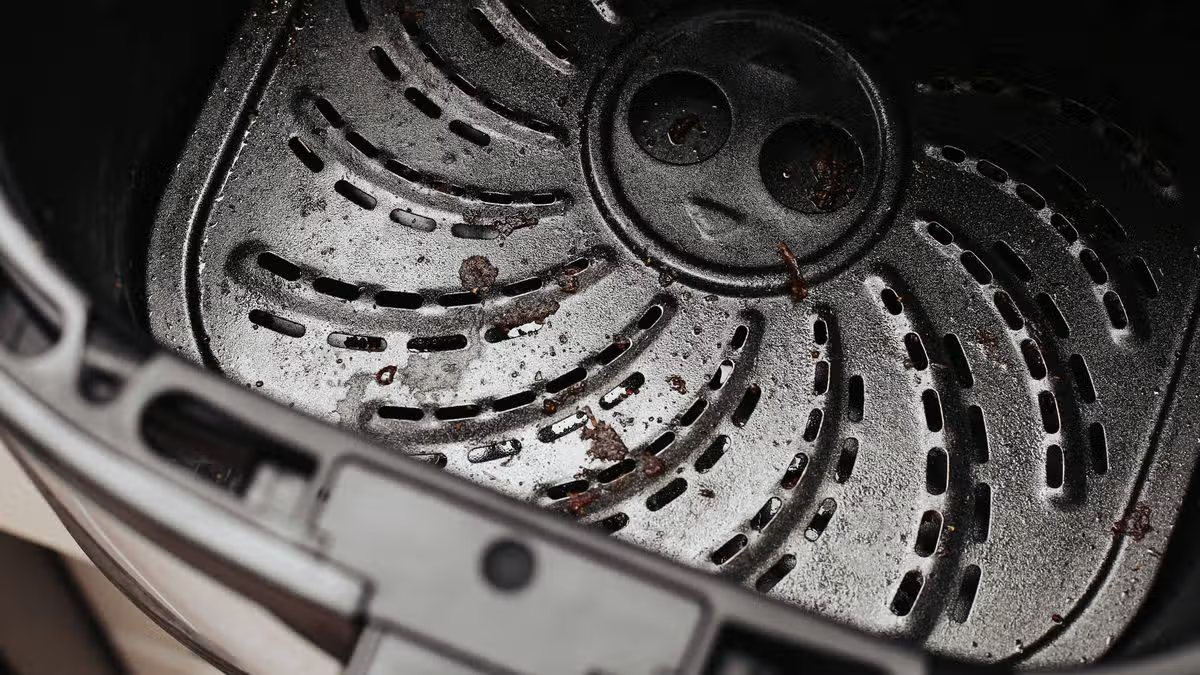
Deep clean your air fryer without scrubbing using just 2 kitchen items

Published

on

Wales Online

A cleaning guru shared her go-to method for deep cleaning an air fryer using two common kitchen items – and there’s no need for scrubbing

Air fryers have established themselves as one of the most beloved kitchen appliances, making meal preparation considerably faster and more straightforward, particularly during hectic weekdays. To maintain the appliance in good working order, it is advisable to clean it after each use.

Advertisement

That said, cleaning can sometimes be neglected, meaning you may occasionally need to carry out a thorough deep clean to preserve its condition and ensure it continues to cook efficiently. A deep clean is particularly effective at tackling stubborn food residue or built-up grime lurking in hard-to-reach areas.

To help restore your air fryer to a gleaming finish, cleaning expert and TikTok creator Chantel Mila (Mama Mila) has shared her preferred technique.

Better still, there’s no scrubbing required whatsoever. You’ll only need two items already found in your kitchen to get the job done, reports the Express.

Advertisement

How to clean air fryers

Begin by removing the basket from the air fryer and placing it in the sink. Chantel applies a generous coating of bicarbonate of soda to the basket, making sure any stuck-on food and grease is thoroughly covered.

Next, drizzle over some washing-up liquid, before pouring boiling water from the kettle over the mixture, washing away the fizzing bicarbonate of soda.

This process helps to dislodge any food that has burnt onto the air fryer basket. Leave the mixture to do its work and soak in the basket for a period of time.

Once you are satisfied that all the stubborn grease and grime has been sufficiently loosened, drain away the dirty water. There should be no need to scrub at all.

Advertisement
Content cannot be displayed without consent

While you can simply combine the ingredients and allow them to work in tandem, creating a baking soda paste offers additional benefits for tackling more stubborn areas. The pairing of baking soda and washing-up liquid is particularly effective at breaking down greasy residue, owing to its mildly abrasive properties, making it well-suited for cleaning greasy kitchen surfaces and cookware.

Incorporating washing-up liquid increases the concentration of surfactants — molecules that lower the surface tension between two substances. These surfactants facilitate the mixing of water and oil.

Washing-up liquid also assists in targeting bacteria that baking soda alone may not eliminate, helping to ensure the air fryer remains hygienic and safe for use.

These two common household products work to remove persistent stains and grime by encasing and lifting grease and dirt particles from the affected surface. Baking soda also functions as a natural deodoriser, helping to eliminate any lingering odours following a comprehensive deep clean.

Advertisement

Baking brand Dr Oetker explained the reason baking soda is so good at banishing unwanted odours: “Most nasty smells in the air contain some sort of acid. As an alkali, baking soda reacts with those acids and neutralises them.”

Source link

Continue Reading

NewsBeat

When will the next heatwave hit the UK? Met Office forecast

Published

on

When will the next heatwave hit the UK? Met Office forecast

The prolonged hot weather is raising fresh fears of wildfires across the country and placing further strain on emergency services and public health.

A yellow heat alert has been issued by the UK Health Security Agency covering the East and West Midlands, the south-east, south-west, and east of England, as well as Yorkshire and the Humber.

The alert is in place from 9am on Tuesday (July 28) until 9am on Friday (July 31).

When will the next heatwave hit the UK?

Senior meteorologist at the Met Office Dan Stroud said the upcoming heat spell would likely bring a north-south split in weather conditions, with Northern Ireland, Scotland, and northern England experiencing cloud and rain.

Advertisement

Meanwhile, southern parts of England are expected to once again meet heatwave criteria, with temperatures forecast to reach 32C or 33C on Wednesday (July 29) and Thursday (July 30).

He said the hottest weather would be “almost a blink and you miss it,” with temperatures expected to return closer to seasonal averages by the weekend.

Meteorologist Marco Petagna said that as the climate continues to warm, the definitions used for heatwaves will also need to change.

Mr Petagna said that heatwave thresholds for some counties were raised by one degree four or five years ago.

Advertisement

Mr Petagna said: “Going forward they’ll need to be adjusted to take into account… current climate, otherwise we’re going to more frequently go into heatwaves. “It’s a moveable thing, really, as we go through a warming world.”

The heat is being compounded by exceptionally dry conditions.

Southern England has recorded just one per cent of its average July rainfall to date.

England as a whole has received only five per cent, while the UK overall is at 20 per cent of typical July totals.

The sustained dryness has led to low water levels.

Advertisement

North Wales and the Upper Severn became the first part of the UK to be officially declared in drought status on Thursday.

The latest Met Office data, used by Natural England and Natural Resources Wales, indicates that any fires that do start are likely to become “exceptionally severe” on Wednesday in pockets of the east, south, and south-east of England.

The Fire Severity Index considers factors such as recent rainfall, temperature, and humidity to assess how intense a fire could become if it breaks out.

It does not predict the likelihood of wildfires starting, only the potential seriousness of those that do.

Advertisement

Risk of more wildfires as temperatures rise in UK again

At the peak of the third heatwave in mid-July, fire crews in England and Wales were tackling 19 significant blazes at once, underscoring the scale of the threat posed by the prolonged hot and dry conditions.

Recent weeks have already seen large blazes break out in Wales and Scotland.

Some fires have been severe enough to force evacuations from homes.

Smoke from a fire on the side of Bangor Mountain, in GwyneddThere have been wildfires in the UK, such as on the side of Bangor Mountain, in Gwynedd, Wales (pictured) (Image: Nigel French/PA Wire)

A spokesman for the National Fire Chiefs Council (NFCC) said: “With the Met Office warning that a fourth heatwave could develop this week, bringing another period of very hot weather to parts of the UK, fire and rescue services remain on alert and are continuing to prepare for renewed wildfire risk.

Advertisement

“Most wildfires are preventable and we are asking everyone to play their part in helping to protect our communities, wildlife and natural spaces, while easing the pressure on firefighters who have already faced an exceptionally challenging summer.”

The risk is not confined to the UK, with wildfires causing massive disruption in mainland Europe.

Some 220,000 people have been forced to leave their homes in south-west France.

A further 116,000 have been evacuated in Spain.

Advertisement

Recommended reading:


The heatwave comes during what is shaping up to be one of the UK’s hottest Julys on record.

Provisional data from the Met Office indicates temperatures are running three degrees above the July average.

This could make it one of the three or four hottest Julys ever recorded.

Advertisement

How hot has it been this summer where you live? Let us know in the comments.

Source link

Advertisement
Continue Reading

NewsBeat

Four people including baby die after car crashes into trees in Derby

Published

on

A woman with short brown hair looks directly into the camera with a slight smiling expression. She is wearing a pink top and a silver necklace with a heart charm.

Four people, including a baby, have died after a car crashed into trees on a busy dual carriageway in Derby.

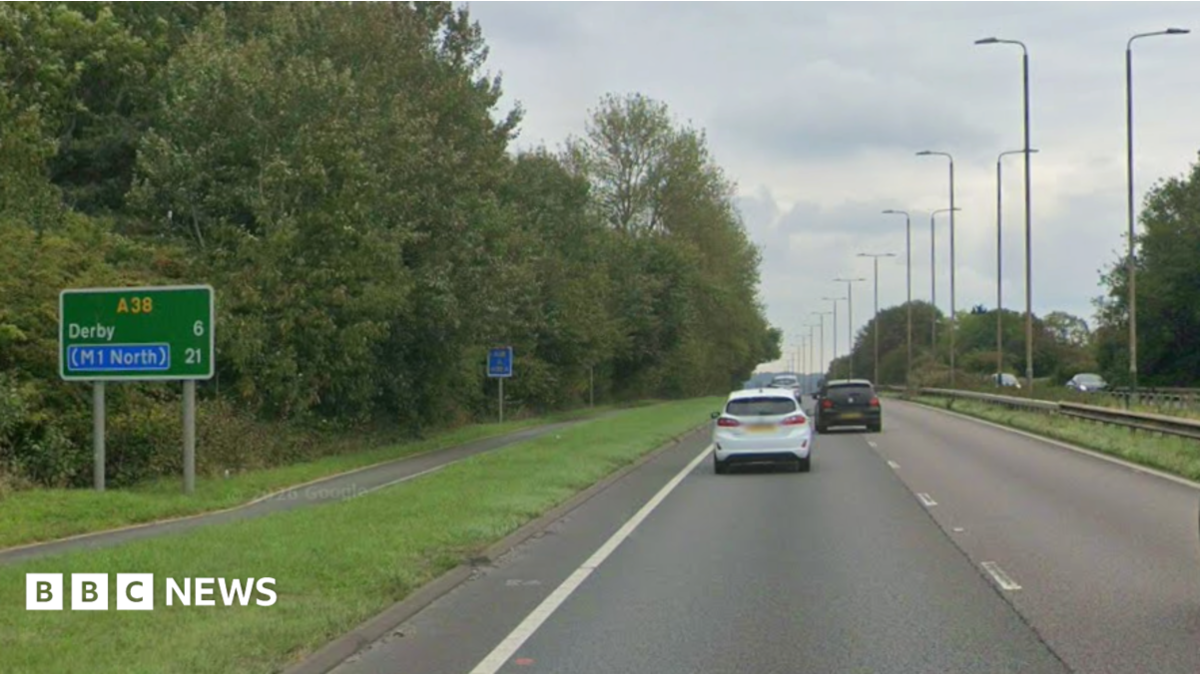
Emergency services were called after a red Hyundai car left the A38 and crashed into trees – between the A50 Toyota Island and the A516 – at about 23:00 BST on Saturday.

Derbyshire Police said the passengers, two women, 18 and 30, and a man, 36, died at the scene. The baby girl was taken to hospital where she died shortly after.

The force said the driver, a 33-year-old man, was arrested on suspicion of causing death by dangerous driving. He was subsequently taken to hospital for serious injuries.

Advertisement

Police said all those involved were from Leeds in West Yorkshire, adding their relatives have been informed and are being supported by specialist officers.

“Our thoughts are with them at this most distressing time,” a spokesperson said.

In a statement, Derbyshire Fire and Rescue Service said three crews attended the scene following a 999 call to its control room.

The fire service added: “Our thoughts are with everyone impacted by this terrible incident, the deceased and all of the emergency services who responded to the scene.”

Advertisement

The carriageway was closed for several hours while emergency services dealt with the crash, but it has since been reopened.

Anyone who witnessed the crash or has any dashcam footage has been urged to contact police.

Source link

Advertisement
Continue Reading

NewsBeat

M60 traffic LIVE updates after traffic stopped as queues build following crash

Published

on

Manchester Evening News

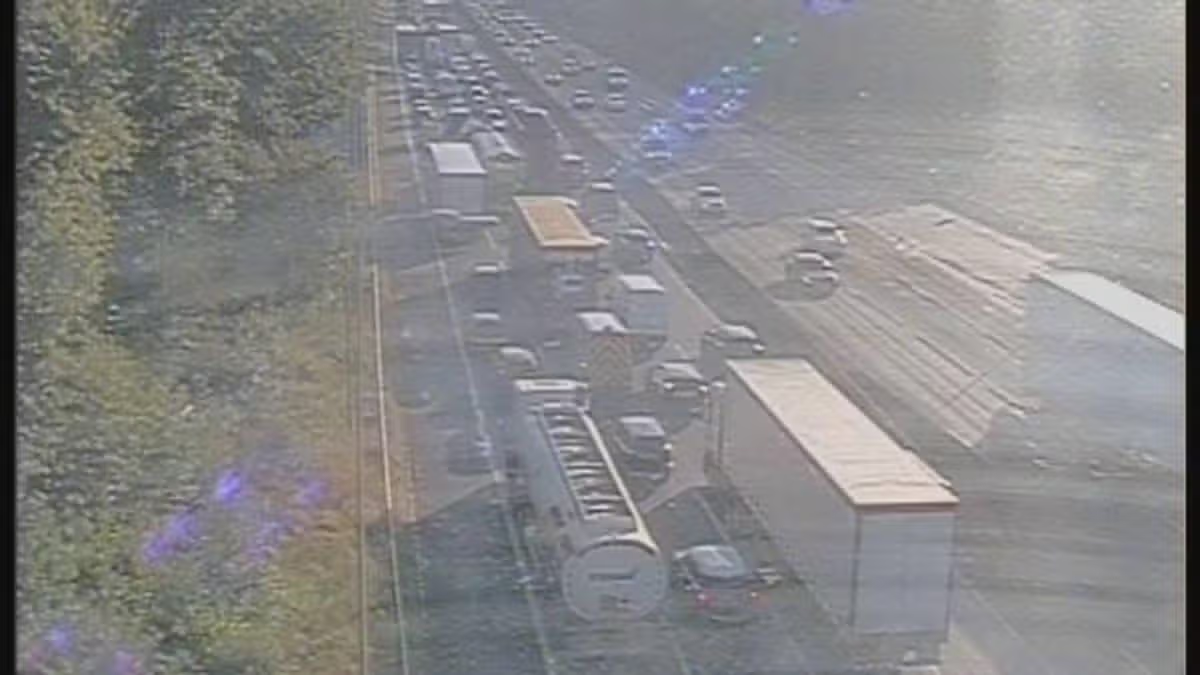
Two lanes of traffic have been closed on part of the M60 following a crash this morning.

Long delays are building on the M60 clockwise as a result.

The lane closures are in place between junctions 16 at Pendlebury and 17 at Prestwich.

Advertisement

Traffic is tailing back to junction 13 at Worsley, while queues are also affecting the M61 southbound approaching the M60.

There are also delays on the anticlockwise side approaching the crash scene.

Firefighters are in attendance following the incident.

Further details about the incident are yet to be confirmed.

Advertisement

Source link

Continue Reading

Trending

Copyright © 2025