Connect with us
DAPA Banner
DAPA Coin
DAPA
COIN PAYMENT ASSET
PRIVACY · BLOCKDAG · HOMOMORPHIC ENCRYPTION · RUST
ElGamal Encrypted MINE DAPA
🚫 GENESIS SOLD OUT
DAPAPAY COMING

NewsBeat

Sioned Williams: Who is the Plaid cabinet minister in Reform UK’s firing line?

Published

on

Wales Online

Wales’ new Deputy First Minister is responsible for many of the policy areas that Nigel Farage’s party has attacked in the early days of the new Plaid government

Advertisement

It is still only a matter of weeks since the ballot boxes were tipped onto tables at leisure centres and venues across Wales and Plaid Cymru knew the threshold it had set itself had been crossed to form a minority government led by Rhun ap Iorwerth.

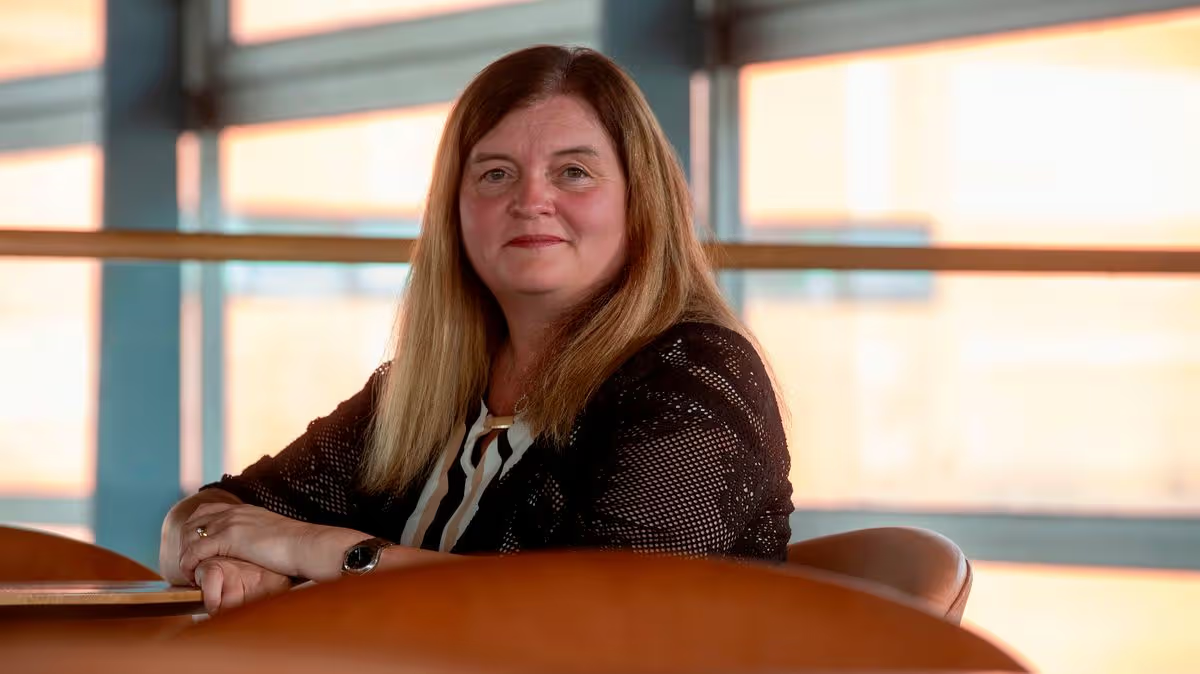
His second in command is Sioned Williams. The 54-year-old is a former BBC journalist who previously worked for the party in communications. In both of those roles she crossed paths with her party’s now-leader but the pair go further back than that having met when she was 17 at the Cwrs ddrama Urdd.

“I’ve known him as long as my husband,” she laughs, as we meet in the Senedd. Yet she says she never expected he would appoint her as Deputy First Minister.

“Our paths have crossed many times and we’ve known each other a long time so we’ve got a very good relationship and it was the honour of my life to be asked and I’m absolutely delighted to be able to support him,” she says.

Advertisement

Her chance to get to take that role came as a result of a historic win for the party she has been a member of since she was a student.

Plaid Cymru won 43 of the available 96 seats.

“There was a long preparation period for us running up to this election,” she says.

“We were working extremely hard on policy development knowing that it was going to be a four-year term, knowing that finances were going to be constrained [and] we weren’t going to able to do everything that we’ve been talking about for the last 100 years so getting that really tight focus on what we thought really mattered what was important,” she says.

Advertisement

“We also knew that this was going to be an election like no other for all kinds of reasons so we fought the campaign of our lives.”

The result was, she admits, at the “top end” of the party’s expectations and she was personally thrilled it would not only mean they had representation all across Wales but there was a good gap between them and the second-placed party, and official opposition, Reform UK.

Reform UK has dominated the early days of the Senedd. An exchange between one of their new members, Joe Martin, with the First Minister about the Nation of Sanctuary followed by their choice of cutting all international spending as topic for an opposition day debate led to a walkout of politicians from Plaid, the Greens, and Labour.

Equality, community cohesion, and Wales in Africa are all things that fall under her brief and she is already hearing concerns about the topics and tone being used in this seventh Senedd. Is she surprised?

Advertisement

“I’m not surprised that Reform are latching onto things that they know will be inflammatory, things which I think that they’re misrepresenting, policies they’re misrepresenting, expenditure that they are misrepresenting, and missing the wider point of the effect of some of the rhetoric,” she says.

Aside from those two issues Reform UK did scrutinise the new government’s flagship childcare bill, which is “absolutely their job as opposition”, although she says “it did feel rather strange that they’d pick that when they hadn’t even mentioned childcare in their manifesto”.

There is, she says, “much that needs to be done” to help people in their everyday lives. “To be choosing those issues for debate I would say is rather missing the point of an effective opposition,” she says – but adds the party will stick to its own values.

Advertisement

“The decisions we make, the policies that we’ll enact, will show those values and those are the values that have been supported by the majority of people in Wales who elected us as their government.

“That’s how we will demonstrate where we sit on those issues. I understand, having said that, the strength of feeling [that led to the walkout].

“It is shocking to many members, especially perhaps newer members, but to all of us the level and the language and the rhetoric that has been used.

“I hope that the Llywydd will be able to make sure that we don’t see a continuation of the type of language.

Advertisement

“I personally was accused of something which is completely untrue, my position completely misrepresented. This has real-life impact obviously for us as politicians, especially as female politicians online, but also more broadly about people who are minoritised, who are marginalised, and who are impacted. Their lives and their safety is impacted by this type of rhetoric.

“As the First Minister said we are all about uniting our communities, strengthening our communities, celebrating the diversity in our communities – that’s the Wales we want to see. So we will demonstrate that through our actions but also, yes, I think we have to make sure that we don’t see a type of rhetoric allowed to become normalised in our national parliament.”

The things she wants to talk about are the things that drive her to be a politician. In the last Senedd regular viewers would regularly see her passionate contributions to debates about children and poverty and holding onto the brief she had when she was in opposition was non-negotiable.

“This is really the reason I’m in politics,” she says.

Advertisement

Elected for the first time aged 49 she had been a member of Plaid Cymru since she was a student. Her political journey came via her community council before being chair of her local Cylch Meithrin, then chair of school governors, and campaigning on local issues.

“I wasn’t really active in the party until Leanne Wood became leader 14 years ago because I saw a passion in her and coming from the South Wales Valleys as I do that’s where my politics comes from,” she said.

Both her grandparents were miners while one grandmother died at 50 from asthma, likely from the conditions she lived in, and the other was an uncertified teacher.

She and her sister were the first in their family to go to university.

Advertisement

“So I understand the impact that poverty can have in and just closing off those opportunities. That’s where my politics comes from so this portfolio is really why I’m here. Without these issues to fight on I don’t know if I would be here in elected politics.

“It’s a huge honour and that’s why I am absolutely determined to achieve what I can for those people in Wales who, through no fault of their own, don’t have the same opportunities as everybody else,” she says.

Since the election there have been murmurings that Plaid was backing down on its flagship policy and then there was a very public row after an attempt to force them to release their costings backfired in the Senedd.

So I ask her to spell out what is the government’s position on childcare. By the end of this four-year term, in 2030, what is her aim? “I want 20 hours for every child offended from the age of nine months to four years,” she states simply.

“I am absolutely thrilled to be talking about childcare.

“I have been wanting to talk about childcare – as a feminist, as a female politician, as someone who believes in social justice and equality and also believes that the children are the future of our nation and we need to be supporting them and condemning them to high levels of child poverty in Wales – for years and years and years.

“We understand that this is an intervention that is fully in the power of the Welsh Government to make.

Advertisement

“It more than pays for itself. It is a complex policy because of the system we’ve inherited, which committee report after committee report, anti-poverty organisations, equality organisations have demonstrated in report after report, isn’t currently working for children and families in Wales.

“What I want to do, and we have to do this in a phased way because it’s so complex, is make sure that we have a uniform, universal offer funded for all families between nine months and four years,” she says.

She would have said that before the election, I put it to her, so now she is in office and has spoken to officials, has seen the books, is it still realistic? “It is realistic,” she says, pointing to a recent announcement about extending childcare. But surely that was that something that would have happened anyway?

“This was a programme that was initiated, first of all, under the cooperation agreement [with the last Labour government] because we put that first and foremost as one of our policies, along with free school meals.

“It was initiated in the last government. It wasn’t completed. It didn’t have adequate focus or funding. So what we saw [is] it wasn’t achieved so the first step that we wanted to do was make sure that that was achieved because the local authorities already have plans in place for that. They just haven’t been given the direction or funding that they needed in order to be able to complete it,” she says.

She references one of the key questions, aside from finding the money, which is finding a workforce.

“This is one of the work streams that we have obviously. We absolutely know that the workforce are key to this expansion,” she says.

Advertisement

“But there’s also other things that we can do. We know that at the moment people have to move settings, for instance, in order to be able to access their entitlement under the two years so what we want to do is look at the whole system. I’m not just talking about adding hours here and there – I want to transform this system so it is one system and that it is in the best interest of the children and families who need to access that system.”

“I couldn’t just announce funding and say: ‘There will be more hours’. We absolutely recognise that. It is about working in partnership with local authorities. We’ve got a skills audit happening.

“My colleague Cefin Campbell is looking at post-16 education making sure that we are preparing the pipeline. But we also know that it is about giving assurance to providers and to local authorities – all the partners that are key and fundamental in this, the education sector – bringing people in who currently their qualifications aren’t recognised for instance,” she says. For our free daily briefing on the biggest issues facing the nation, sign up to the Wales Matters newsletter here

She adds there is nothing she has learnt since getting into office that makes her think she will deliver a policy different to what was spelled out in the manifesto.

Advertisement

The new government has been criticised for ordering data, reports, and audits. “I think it’s about doing things sustainably and responsibly and there is a lot of data gaps.

“We’ve got a certain focus on our key priority areas as a party and in order to make progress on those we need to have an absolutely comprehensive view of what we’re dealing with.

“We need to work to better understand what some of those data gaps are,” she says.

“We have made it very clear we want to work on the basis of evidence. We also want to work transparently and we need to work responsibility, ground all our policies in the reality that is in front of us, not make empty promises”.

Advertisement

The childcare policy will, she says, make a difference. “This can help all children get the best start in life and get the best start towards their education journey.

“We know that’s not a level playing field. It can also help families who are currently in poverty to be able to increase their income, that’s economic inequality, and then we know of course gender inequality.

“This mainly impacts women and I’ve had experience of this myself. I was earning more than my husband when we had children. I didn’t catch up until I was 49 and I had my first when I was 30. So we know that this impacts women mainly and I’m really clear about the effect that it can have on our society broadly and especially obviously our children, the difference that this policy can make.”

Advertisement

She has already spoken in the Senedd chamber about Cynnal, a Welsh child payment, providing £10 a week for children aged from birth to six in households claiming universal credit. “Evidence has shown that this is one of the key interventions that can be made.

“Scotland has shown the way on this – it’s undeniable evidence. So we want to show the difference that a policy like this can make. Because of the fact that we don’t have the same powers as Scotland currently over the benefits system and welfare payments we have to do this as a pilot but I think that we can demonstrate the impact this can have and it’s about reaching those children who are in the deepest poverty,” she says.

She hopes it will help 15,000 children across different backgrounds and areas of Wales. For some families it will mean being able to go to a cinema or theatre, to have swimming lessons, to be able to say yes instead of no to a birthday party because you can’t afford to buy a present.

“Those everyday childhood experiences that every child should have this hopefully could just make an impact around that and we know it’s those direct cash payments that make the difference,” she says.

Advertisement

Source link

Continue Reading
Click to comment

You must be logged in to post a comment Login

Leave a Reply

NewsBeat

‘The care I was shown by my adopted father inspired my social work journey’

Published

on

Belfast Live

Melissa Thompson was placed into foster care at 14 months old and was inspired by the care and compassion she was shown

A woman who was placed into foster care at just 14 months old is following in the footsteps of her late adopted father as she graduates as a social worker.

Advertisement

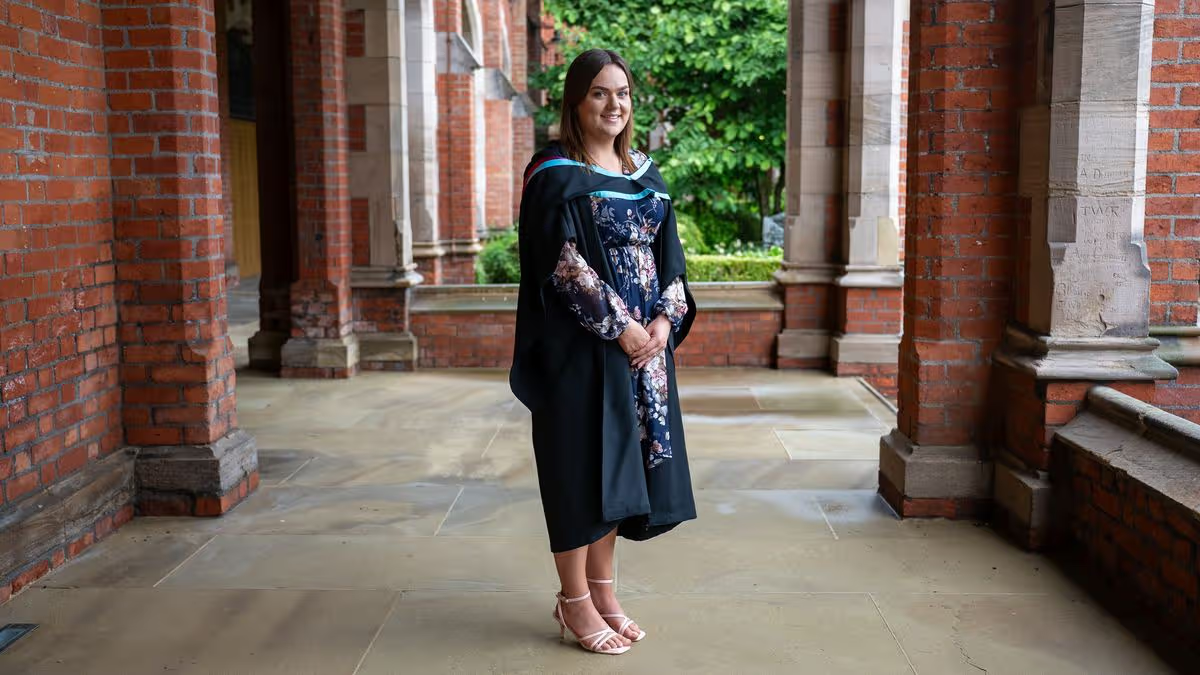
Melissa Thompson is graduating today with a Bachelor of Social Work from Queen’s University Belfast, reaching a goal she has held since early childhood.

Placed into foster care at just 14 months old and adopted at the age of eight, Melissa’s early experiences shaped both her outlook and her ambition.

She said: “The care and compassion I was shown through my own experiences with social workers, inspired me from I was around four years old age. I was also influenced greatly by my adopted father, who was a social worker himself.”

Melissa speaks warmly of her father, Thomas Thompson, describing him as the person who guided and inspired her most. Prior to losing him in 2017 when Melissa was just 18, she made him the promise that she would graduate with a degree in social work.

Advertisement

Whilst he may have jokingly described her decision as “crazy”, following in her dad’s footsteps is something Melissa approaches with both pride and determination.

Melissa added: “My mum and dad were always supportive of my decisions and only wanted what was best for me. My dad was the most selfless, caring and funny man anyone ever met. His ultimate dad-quote was ‘I may not always be right, but I’m never wrong!’

“He was an incredible social worker and was loved and valued by every person that came into contact with him. If I can be even a fraction of the social worker he was, I will have succeeded. He was my best friend and my hero, and I’ll miss him for the rest of my life.”

Melissa’s route to graduation has not been without challenges. Health issues and surgery meant she had to pause her studies, and when she was preparing to return in 2022, she discovered she was expecting her son Harvey, who is now three.

Advertisement

“I was terrified to leave Harvey and at the prospect of studying full time with a child, but he was also the thing that drove me. I wanted to give my son a better life and fulfil the promise I made to my dad.”

Resuming her degree when Harvey was just seven months old, Melissa credits the support of those around her with helping her to persevere.

She said: “I most definitely would not be here without the unwavering support of my partner, my family, my tutors and the Care Experienced Support Team at Queen’s. Throughout my studies, my mum was a the most amazing support with Harvey, and my fiancé, Dawid was working constantly to provide for us.”

Maintaining connections with those who supported her is a value that permeates throughout Melissa’s journey. She describes maintaining contact with the social workers who supported her in her early years in care, including one who was newly qualified at the time and went on to become Head of Service for the Trust before recently retiring.

Advertisement

“She is one of the good ones,” notes Melissa. “A woman who dedicated so much of her time, career and life, and saved so many children from further harm and trauma.”

Despite the challenges she has faced, Melissa is immensely proud of her perseverance, allowing her to achieve something “truly meaningful,” going on to make that difference in the lives of others.

Looking back, she has a clear message for her younger self: “Do not worry about a thing. You are so much stronger than you give yourself credit for and every little trauma and adverse experience you have gone through will be worth it in the end.

“Be patient with yourself. You’re living for the first time and you will undoubtedly make mistakes, but it’s all part of life. Keep going, no matter how hard it gets. You’ve got this.”

Advertisement

For all the latest news, visit the Belfast Live homepage here and sign up to our daily newsletter here.

Source link

Continue Reading

NewsBeat

‘I’m 98 but I still do my 40 press-ups every day’

Published

on

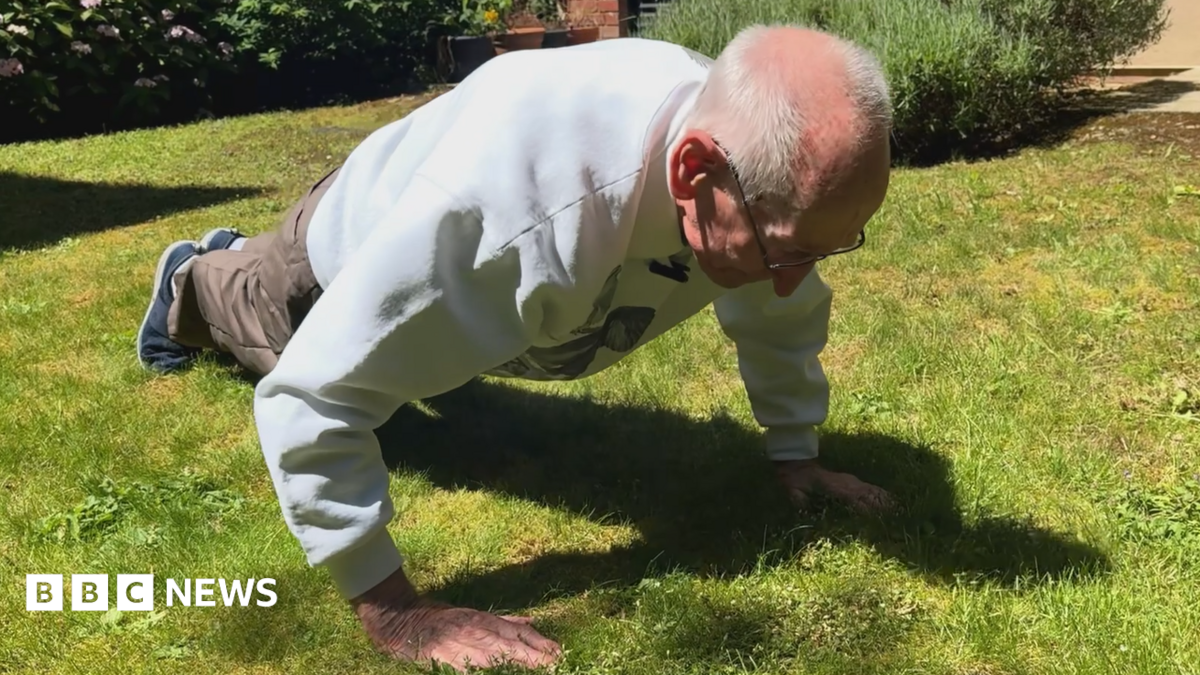
An elderly man doing a press-up on grass in a garden.

Age is just a number – and that’s especially true of the super-sprightly Bill Kober.

The 98-year-old, who lives in Woodbridge, Suffolk, does at least 40 press-ups every day without fail – 20 in the morning and another 20 in the evening.

Despite his age, the pensioner is also partial to a bit of Pilates, and recently mastered the “crow” pose.

“Only in my later years have I realised that I’ve got this ability, and so I do it because I’m able to and, as they say, use it or lose it, and I don’t want to lose it,” he said.

Advertisement

“I want to be as fit as I can be.”

Among other benefits, press-ups can improve your upper body strength and core stability and strength. Over time, they can also help improve your ability to do everyday tasks.

But what’s the key to the perfect push-up, according to Bill?

“A good straight back which gives you a nice tight buttock,” he said.

Advertisement

“If I stuck £20 note in between your buttocks, you’ve got to grip over it so that no-one can take it.”

According to the NHS, adults aged 65 and over should be physically active every day and do activities that improve strength, balance and flexibility at least two days a week.

They should also do at least 150 minutes of moderate-intensity activity a week or 75 minutes of vigorous-intensity activity, such as swimming, if they are already active.

Doing regular exercise can reduce the risk of major illnesses such as coronary heart disease, stroke and cancer, and lower the risk of early death by up to 30%.

Advertisement

Source link

Continue Reading

NewsBeat

Jeffrey Donaldson exposes the limits of political self-righteousness

Published

on

Belfast Live

“It turns out that public declarations of righteousness tell us remarkably little about private character and are not a substitute for integrity.”

Advertisement

Christianity belongs in politics. That sentence may surprise some readers, but I believe it. Just as socialism, liberalism, conservatism and every other worldview have a legitimate place in a democracy, so too does Christianity.

Politicians do not stop being people of faith when they enter public life, nor should they. The problem begins when faith stops being a source of values and starts becoming a claim to moral superiority.

Jeffrey Donaldson’s convictions for multiple historical sexual offences have prompted understandable shock within unionism and beyond. The BBC’s Spotlight documentary, which aired allegations about aspects of his private life has added another layer to an already extraordinary political collapse.

Yet one of the broader political questions raised by the affair has remarkably little to do with Donaldson himself and more to do with whether parts of Northern Ireland’s political culture confused Christianity with self-righteousness.

Advertisement

For decades, politicians, particularly within the DUP, have approached issues such as marriage equality, abortion, and LGBT rights as moral battles. Political language often moved beyond the language of governance and into the language of judgement, and society was presented as divided between those defending Christian values and those driving moral decline.

There is nothing unusual about politicians allowing faith to shape their convictions. The difficulty arises when political identity becomes dependent on asserting who is righteous and who is not. Christianity, at least in its scriptural foundations, does not sit comfortably with that posture.

Jesus belongs in politics in the sense that his teachings about justice, mercy, and human dignity inevitably shape how believers view public life. But the Jesus of the Gospels did not seek out sinners in order to shame them. He sought them out to show them compassion. He repeatedly warned against those who advertised their own righteousness while remaining blind to their own failings.

He spent time with tax collectors, spoke with those on the margins, and consistently clashed with the religious authorities of his day. His most pointed criticism was often directed not at those living imperfect lives, but at those who believed themselves to be morally secure.

Advertisement

For years, some of our politicians spoke as though morality could be legislated and virtue measured by whom you condemned. It turns out that public declarations of righteousness tell us remarkably little about private character and are not a substitute for integrity.

However, this is not the first time that we have witnessed such hypocrisy. Iris Robinson famously described homosexuality as an “abomination” while speaking with apparent certainty about moral order in society. Her subsequent affair with a 19-year-old boy undermined the authority from which she had spoken.

The point is not that politicians should be expected to be morally perfect. They will fail, as all people do.

Once a politician’s legitimacy rests on being seen as more righteous than others, their public role is subsequently judged on performance of virtue rather than on policy or competence, creating a fragile political identity which can collapse dramatically when private life diverges from public image.

Advertisement

It also distorts the political conversation itself. Instead of debating how to govern a diverse society, politics becomes a contest over moral boundaries, who belongs, who does not, and whose way of life is acceptable.

In such an environment, contradiction is almost inevitable. Human beings are imperfect, and political systems that rely on displays of purity tend to produce instability when those imperfections inevitably surface.

This is not a uniquely Northern Irish phenomenon. Across different political traditions and countries, movements that centre on moral certainty often struggle most with moral complexity. The more politics becomes about declaring what is right and wrong in absolute terms, the less room there is for the messy realities of human behaviour.

If anything, it runs counter to the core of the Christian message. The Gospels repeatedly emphasise humility, repentance and the universality of human imperfection, warning against those who are convinced of their own righteousness. That is why the danger in politics is the transformation of Christianity into a tool of self-justification.

Advertisement

Donaldson’s downfall will rightly be remembered for the severity of his criminal conduct. Nothing about the wider political implications should obscure that. Nor should it be used as a lens through which to judge every politician of faith.

But it invites a more uncomfortable reflection on a political culture that, for a time, placed heavy emphasis on moral certainty.

As such, voters should not distrust Christians but be wary of anyone who asks to be judged by their sermons rather than their actions.

For all the latest news, visit the Belfast Live homepage here and sign up to our daily newsletter here.

Source link

Continue Reading

NewsBeat

Millionaire shares four golden rules every lottery winner must follow straight away

Published

on

Belfast Live

A self-made millionaire has shared the four essential steps every lottery winner should take immediately to protect and grow their windfall after hitting the jackpot

A millionaire has shared his four essential steps lottery winners must follow if they suddenly come into a life-changing sum of money. Mark Tilbury, who left education at 16 and subsequently built a multi-million-pound enterprise, shares money-making guidance through his YouTube channel to numerous followers and now proudly claims earnings “over 50 million.”

He’s dedicated to helping others become “financially free,” providing insight on topics ranging from banking to taxation and investment strategies. Mark has recently addressed the vital actions you ought to take should you ever find yourself fortunate enough to scoop the lottery jackpot.

Advertisement

In a recent video entitled You Won the Lottery, Now What?, Mark laid out four particular measures to help protect your winnings – including one that could prevent you from “ever running out” of money.

Mark stressed: “What to do in your first 24 hours after winning $50,000,000 (around £36,504,344). Step one: sign the lottery ticket, just in case it gets lost or stolen, so you can prove it’s yours,” reports Belfast Live.

He further advised winners: “Step two: stay calm and collect your prize secretly to avoid unwanted attention. Step three: get a lawyer from a big firm that specialises in trust and estate planning.

Advertisement

“Step four: make it last forever by figuring out how much you want to spend per year, then multiplying that by 25 and investing it in the SandP 500. That way, you should be able to withdraw four percent per year without it ever running out.”

Back in 2023, Anita Pires, a call centre operator for the National Lottery, revealed that verifying a winning ticket is an “incredibly rigorous” process and that “no stone is left unturned.”

The procedure involves a series of checks, including where the ticket was purchased and the day and time of the transaction. If these details stack up, the claim is then “further investigated” before any winnings are paid out.

She further noted: “The most important thing for ease of validation is to be in possession of your ticket and the required validation information. For instance, if you paid by card in a retailer, this transaction would show on your bank statement.”

Advertisement

Anita recommends that players who purchase a physical paper ticket sign the back of it immediately after buying, as an extra security measure to establish ownership should they strike it lucky.

However, should the worst happen and you misplace your ticket, all is not necessarily lost – provided you have a legitimate claim and submit it in writing to Camelot within 30 days of the draw.

An investigation into the claim will then be launched, and as long as no other valid claims have emerged within 180 days, Camelot holds the discretion to award the prize.

Advertisement

For further details on how to claim a prize, visit the National Lottery website.

Source link

Continue Reading

NewsBeat

The end may be near but my memories of Tartan Army in USA will last a lifetime

Published

on

Daily Record

Scotland fans have embraced every minute of this journey, from the stadiums to the streets, and created memories that will last far longer than any group-stage exit.

Advertisement

There’s a feeling around Miami that the Tartan Army just want to be put out of their misery.

Just when it seemed things couldn’t get any worse after our 3-0 drubbing by Brazil, every result we needed has gone against us.

Even two of the biggest bankers – South Africa and Ecuador – produced stunning upsets, beating South Korea and Germany to leave Scotland’s hopes hanging by the thinnest of threads.

It brought home the uncomfortable truth that we probably haven’t done enough.

Advertisement

The reality is we’ve simply not been good enough over the course of our three group games.

We never found the kind of performance Ecuador produced against Germany when it mattered most. One solitary goal was always unlikely to be enough, and now elimination is staring us squarely in the face.

The hard truth is we should never have been relying on other teams to do us a favour. We should have taken care of our own business.

Yet, despite all that, the Scotland fans who made the journey to Miami aren’t drowning in disappointment.

Advertisement

We waited 28 years to see Scotland at a World Cup again. If this is where the adventure ends, then so be it.

For everyone who travelled out to America, it’s been the trip of a lifetime.

No one will leave with too many regrets. They’ve embraced every minute of this journey, from the stadiums to the streets, and created memories that will last far longer than any group-stage exit.

For many, simply getting here was enough. Let’s just hope it isn’t another 28 years before we’re all doing it again.

Advertisement

Source link

Continue Reading

NewsBeat

Petrol station could be demolished to make way for new one with DIY car wash

Published

on

Cambridgeshire Live

A new shop could be built, as well as a ‘do-it-yourself’ car wash

A service station could be demolished and rebuilt with a new shop. Judvia Contract Services has proposed to demolish part of the Stradishall Service Station in Bury Road, Stradishall, Newmarket.

Advertisement

Parts that could be demolished include the shop, MOT garage, canopy, and pump islands. The applicant seeks to build a new shop with a hot food takeaway unit, new pump islands, and canopy, replacement offset fillers and underground tanks, and a “do-it-yourself” car wash.

The applicant said the proposals would “support the ongoing operation and growth of the business”. The building that could house the shop is proposed to be bigger than the current shop.

The applicant added: “Though the retail unit would be larger than the existing, the associated sales would be small in scale when compared with the primary revenue generator; the sale of fuel.”

The new car wash would be big enough for one vehicle at a time. As the site will continue as a petrol station, the plans will “support the ongoing function” of the site.

Advertisement

Therefore, the applicant said the plans wouldn’t “adversely impact” the setting and significance of the petrol station. The new petrol station is also not expected to create extra traffic on the surrounding roads.

There are proposed to be 18 parking spaces. These will include three staff spaces, three disabled spaces, two car wash waiting spaces, two EV charging spaces, and eight general customers spaces.

The applicant added: “Suitable space for the parking and turning of vehicles would be provided, including EV and disabled spaces.”

Source link

Advertisement
Continue Reading

NewsBeat

Transfer news LIVE: Man Utd plan wrecked, new Arsenal Guimaraes bid, Fernandes and Tonali latest

Published

on

Daily Mirror

Hello and good morning!

Yes, we know England are playing today but that’s not until 10pm. Between now and kick-off, we will be with you to provide all of the latest transfer gossip for your enjoyment.

Whether it’s the future of Bruno Guimaraes and Sandro Tonali, or Manchester United’s latest transfer pursuit, we will be here with any and all updates.

Advertisement

Stay tuned and stay with us for all of the latest news and transfer gossip.

Source link

Continue Reading

NewsBeat

Unwanted items from Alan Carr’s Ayton Castle castle go to auction

Published

on

A selection of sculptures of animals in a country scene - they include cows, sheep and a giraffe

The auction will take place at Ayton Castle on Sunday 5 July – with viewing on the Friday and the Saturday beforehand.

Tickets are required for both the viewing and the auction itself.

Jim Railton, of the auctioneers Railtons, explained: “Basically it’s the residual contents of Ayton Castle.

“Alan Carr, as we know, has bought the castle and he’s bought a certain amount of the furnishings.

Advertisement

“But the residual items that he doesn’t want – and that the last owners of the castle don’t want to take to their new house – we’re selling.”

Source link

Continue Reading

NewsBeat

Former football hooligan left partner unconscious in violent attack

Published

on

Wales Online

Ex-Army training instructor Liam Lewis dragged his partner to the floor and knocked her out then threatened to make her disappear

A former football hooligan and soldier assaulted his partner in a fit of jealous temper and “threatened to make her disappear”, a court has heard.

A judge told ex-Army physical training instructor Liam Lewis that in attacking his partner her had demeaned her as a woman and demeaned himself as a human being.

Advertisement

Ryan Bowen, prosecuting, told Swansea Crown Court the incident happened on April 17 this year after Lewis took his partner’s phone and began checking her messages.

When he saw one from a male called Alex he replied with a text telling the contact to “f*** off” before dragging his partner onto the floor, pulling her by her hair, and striking her.

The court heard the woman lost consciousness during the assault and when she came around the defendant told her to be quiet and “threatened to make her disappear”.

He then accused the woman of “antagonising” him.

Advertisement

His victim then suffered a panic attack.

The court heard that the incident was not reported to the police at the time but two days later the victim happened to meet her mother in the street and disclosed to her what had happened.

The mum told her daughter to go to the police.

The prosecutor said on April 21 the defendant walked into a police station and was arrested.

Advertisement

In his subsequent interview he denied the allegations saying his relationship with his partner was “toxic”. For the latest court stories sign up to our crime newsletter

In an impact statement which was read to the court the victim said she had been too frightened to report what had happened until she had met her mother.

She said she had suffered bruises to her arms, legs, and face in the incident and was left suffering with panic attacks and flashbacks.

Liam Scott Lewis, aged 36, of Haig Place, Gendros, Swansea, had previously pleaded guilty to assault occasioning actual bodily harm when he appeared in the dock for sentencing.

He has five previous convictions for eight offences including violent disorder from November 2010 for which he was sentenced to 52 weeks in prison suspended for 18 months.

Advertisement

That conviction relates to disorder following a Cardiff versus Swansea football game during which missiles were thrown towards police.

Harry Dickens, for Lewis, said his client had served seven years in the British Army and said there was as a reference before the court from a staff sergeant who knew the defendant.

He said Lewis’ relationship with the complainant in the case had been a “toxic” one and said his client now has a new partner and wishes to “move on” with his life.

He said in his submissions there was a realistic prospect of rehabilitation and he said the defendant had the potential to contribute positively to society as he had previously served his country.

Advertisement

Judge Huw Rees said on the day in question the defendant became jealous and lost his temper and he said in assaulting a woman he had demanded his victim as a woman and demeaned himself as a human being.

He said he had read about the defendant’s service as a physical training instructor in the Army and he noted the previous conviction for violent disorder – related he said to “tribal difficulties arising between two city football teams” – was committed when Lewis was a much younger man.

The judge said that based on everything he knew about the defendant he was satisfied there was a realistic prospect of rehabilitation.

With a one-quarter discount for his guilty plea Lewis was sentenced to 18 months in prison suspended for 18 months and was ordered to complete a rehabilitation course and to do 120 hours of unpaid work in the community.

Advertisement

He was also made subject to a three-year restraining order banning him from contacting his ex-partner.

If you or someone you know is affected by domestic abuse visit the Live Fear Free website or call the helpline on 0808 80 10 800.

Source link

Advertisement
Continue Reading

NewsBeat

Mahmood announces new refugee sponsorship route into UK

Published

on

An airport corridor with the words 'International Arrivals' printed in large black letters onto a white wall. A man can be seen walking in front of the sign with a wheeled suitcase, beige trousers and a dark jacket, but he is slightly blurred to indicate the fact he is moving quickly.

The Home Office has vowed to introduce new “capped safe and legal” routes for refugees to come to the UK from later this year.

The department said it would allow organisations like universities, community groups and businesses to sponsor refugees who applied to come to the UK, a model based on Canada’s asylum system.

Alongside the new route, the government said it would press ahead with changes to how human rights and modern slavery laws are applied to asylum applications to root out what it described as “vexatious” claims.

In response, the Conservatives said no extra people should be let into the country until illegal immigration was stopped.

Advertisement

Home Secretary Shabana Mahmood said the new system would protect “genuine refugees” while “closing loopholes that have been too often abused”.

“Britain has always offered sanctuary to those  fleeing war and persecution,” she said.

“But this system only survives if the public trusts that it is fair,  controlled, and not open to abuse.”

Mahmood is attempting to shore up support for her immigration bill before Andy Burnham’s expected rise to prime minister. It is set to be put before the Commons next week and its more hardline elements could be opposed by some Labour MPs.

Advertisement

Earlier this year, she took inspiration from Denmark with an asylum system shake-up giving only temporary protection to refugees and doubling the time migrants must wait to gain permanent residency.

The reforms have angered some in Labour who feel there should be more safe and legal routes to the UK to help prevent small boat crossings.

The latest measures, announced on Friday night, draw on Canada’s community sponsorship scheme, which has successfully resettled almost 400,000 refugees since being introduced in 1979.

In Canada, 70% of sponsored refugees find work within a year – 30% higher than those resettled through government schemes, according to the Home Office.

Advertisement

The UK already has a relatively small number of refugees who are sponsored in communities under the UK Resettlement Scheme (UKRS), but the Home Office said the “vast majority” were supported by local councils.

The government has been under pressure to reduce the number of asylum seekers being housed in hotels at the taxpayers’ expense, while illegal small boat arrivals have also undermined public confidence in the asylum system.

Source link

Advertisement
Continue Reading

Trending

Copyright © 2025