Connect with us
DAPA Banner

NewsBeat

Skechers women’s sandals ‘ridiculously comfy’ even on ’10-mile Greek holiday hike’

Published

on

Wales Online

The comfortable Skechers women’s sandals have been reduced from £54 to £37 as the nation prepares for warmer weather

A comfortable pair of sandals is a must-have addition to your spring and summer wardrobe, and Amazon has currently reduced the price on a popular Skechers style. The Skechers Women’s Go Walk Flex Sandal Sublime, originally retailing at £54, has been discounted to £37.05, in the taupe textile and navy textile colourways. The level of comfort they offer has been likened to “wearing slippers” and they are available in sizes 2 to 10, with many sizes coming with a wide-fit option.

It sounds like a good deal to us, especially as the summer will be with us soon and comfortable sandals are essential for warmer weather and holidays, especially when heading to the beach or exploring a new city. Please be aware that pricing varies across different colours and sizes, and is subject to change.

Advertisement

One holidaymaker was particularly delighted with her Skechers sandals, saying: “I’ve now been to Greece for a week, worn them every day, including a 10-mile hike in 35°C, absolutely magnificent, rubbed nowhere, not a blister to be seen.”

“Ridiculously comfy. So chuffed.”

The complete product description states: “Skechers Women’s GO WALK Flex sandals are lightweight, breathable, and highly cushioned walking shoes designed for maximum comfort and convenience. Key features include breathable mesh uppers, responsive ULTRA GO cushioning, Flex Pillars for stability, and many models feature Hands Free Slip-ins technology with a supportive Heel Pillow.”

Shop the Skechers Women’s Go Walk Flex Sandal Sublime

Advertisement
The sandals are being praised for their comfort

£54.00

From £37.05

Amazon

SHOP THE DEAL

The Skechers sandals come in taupe, black, sage, navy, light blue and mauve. They range from size 2 up to 10 and most sizes are available as a wide fit.

Features of the sandals include:

Advertisement
  • River sandal design with adjustable ankle strap
  • Flexible traction outsole
  • Lightweight, responsive ultra go cushioning
  • Contoured goga mat (responsive cushioning) comfort footbed

It is worth mentioning that a number of reviewers on Amazon advised potential buyers to size down to find the perfect fit.

For those with a larger budget, the Clarks website is offering these Aristella Bay Dark Brown Leather sandals at £70, made with “premium leather”. View them here, reports the Liverpool Echo.

If you’re prepared to spend more, Dr Martens is stocking these Blaire Athena Leather Strap Sandals for £100, which include a memory foam footbed. Discover more here.

Returning to the Skechers sandals reviews, one customer commented: “Really comfortable, perfect for long summer walks. The range of sizes meant I could find the perfect fit. Great quality too.”

A second customer wrote: “This is my second pair of these sandals, they are so comfortable to walk in and they’re very light. Straps are easy to adjust, they look good on (go well with jeans) and they give me good arch support.”

Advertisement

A third enthusiast commented: “Items arrived promptly, my wife loves them. Roll on summer.”

A fourth buyer remarked: “Very comfortable. Like wearing slippers.”

However, it’s worth noting that several customers reported sizing concerns. One review highlighted this issue, stating: “Bought my usual size five but they were enormous.

Advertisement

“More like a size six. Definitely need to downsize. Returned and received a refund.”

Source link

Continue Reading
Click to comment

You must be logged in to post a comment Login

Leave a Reply

NewsBeat

‘I’m a travel expert – there are 4 simple tricks to avoid huge airport queues’

Published

on

Daily Mirror

Rules around travel to Europe are changing – make sure you’re prepared by following a travel expert’s tips.

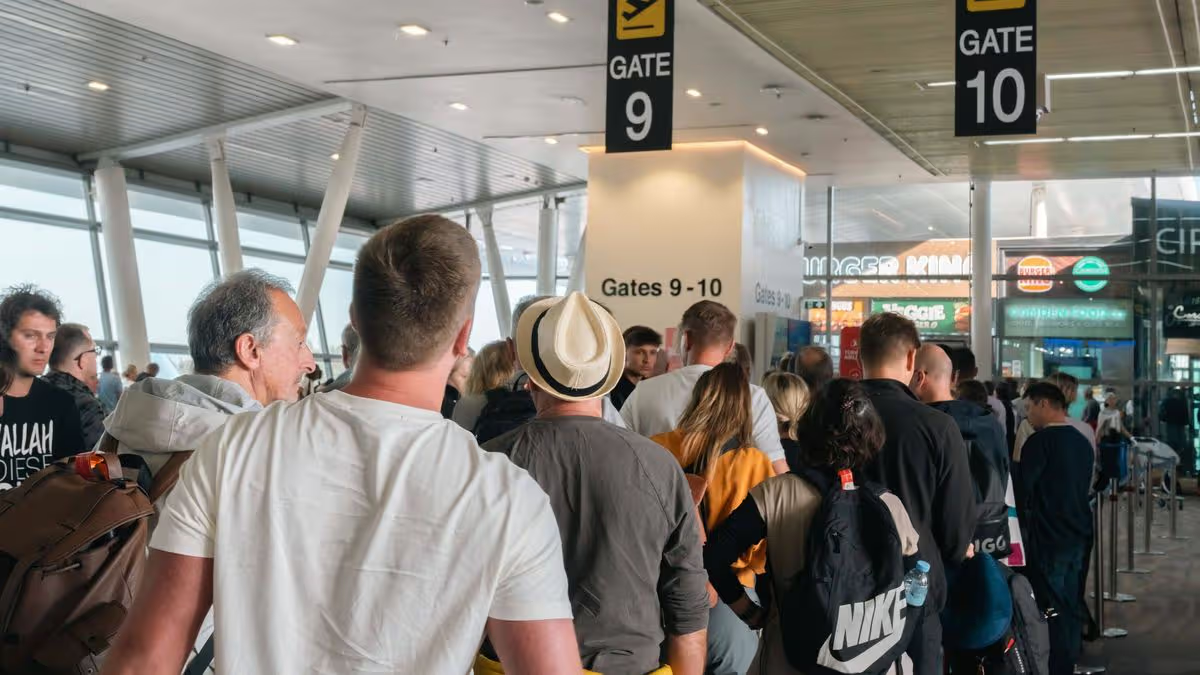
Nobody wants to face those dreaded airport queues; there’s nothing to ruin the start of a holiday than being stuck in a long queue, stressing about whether you’ll make your flight, surrounded by equally frustrated travellers.

Advertisement

From April 10, new biometric checks will become mandatory for all non-EU travellers entering the Schengen Area which will include Brits. Traditional passport stamping is now replaced by fingerprint scans and facial recognition. While it is meant to be a quick process, major international hubs are already reporting long queues of up to four hours for the service, especially at airports that host multiple airlines.

With that in mind, Jane Bolton, a travel expert at Erna Low, has shared four simple but essential tips to help passengers avoid unnecessary delays and start their trip without delays.

Arrive earlier than you think you need to

“Airport wait times can vary, but with the new EES checks, queues of up to four hours are expected at peak times,” Jane explains. “In the past, travellers were advised to arrive two hours before a domestic flight and three hours for an international flight. Now, it’s worth allowing more time than usual.”

Advertisement

To be extra prepared, Jane would recommend arriving three to four hours before the flight to account for additional biometric checks slowing down border processing – especially if you’re flying during busier holiday periods.

Consider fast-track options where possible

But spending so much time in airports isn’t exactly everyone’s idea of fun. In that case, fast-track security could be worth the investment. “As long queues are expected, passengers should opt for alternative time-saving methods where possible,” Jane says. “Purchasing fast-track tickets for security is a great method for reducing the time needed prior to a flight.” Typically costing between £3 and £12, these passes can help you bypass long security lines, a price she says is “a relatively small investment for peace of mind.”

Plan carefully if you’re travelling with family

Under the new system, families might even face additional challenges – children under 12 are exempt from fingerprinting and facial recognition, but they must be linked to a registered adult. “For families or large parties travelling, allowing extra time at the airport is essential,” Jane explains. “This process will take longer than average, so plan ahead and keep all documents ready.”

Double-check your passport before you go

Since Brexit, Jane says, one of the most common mistakes travellers make is assuming their passport is valid everywhere, at any point. “Your passport must have been issued less than 10 years before your travel date and be valid for at least three months after departure,” Jane says. She stresses that, while most would know their passport is expired, some wouldn’t think to check one thing that also matters: the issue date. She explains: “For example, a passport issued in March 2015 and expiring in December 2025 won’t be valid for EU travel after March 2025.” Failing to check this could mean being turned away at the airport before your trip even begins.

Source link

Continue Reading

NewsBeat

Canada’s Mark Carney makes call to Artemis II

Published

on

Canada's Mark Carney makes call to Artemis II

Canadian Prime Minister Mark Carney told the astronauts of the Artemis II mission that Canadians ‘couldn’t be more proud’ of them.

In a lighthearted call from Canada to space, Carney spoke with the astronauts about their experiences and lessons from the mission. He also joked about their preference for Nutella or maple syrup on pancakes, following the viral moment when cameras caught a jar of Nutella floating through the microgravity inside the capsule. The Artemis astronauts showed off a Canadian flag patch to Carney, with the prime minister’s title on the back.

Carney also invited the four astronauts to visit Canada after they splash down from their mission on 10 April.

Source link

Advertisement
Continue Reading

NewsBeat

MLB average salary hits a record $5.34M as the Mets lead spending again

Published

on

MLB average salary hits a record $5.34M as the Mets lead spending again

NEW YORK (AP) — Major League Baseball’s average salary rose 3.4% on opening day to a record $5.34 million, according to a study by The Associated Press, and the New York Mets topped spending at the season’s start for the fourth straight year.

Mets outfielder Juan Soto is the highest-paid player for the second consecutive season at $61.9 million and was followed by New York Yankees outfielder Cody Bellinger at $42.5 million.

Philadelphia pitcher Zack Wheeler and Mets third baseman Bo Bichette tied for third at $42 million. Toronto first baseman Vladimir Guerrero Jr. was fifth at $40.2 million, just ahead of Yankees outfielder Aaron Judge at $40 million.

The Mets’ payroll of $352.2 million was just below the record $355.4 million they set in 2023 and up from $322.6 million last year. The Mets’ total is more than five times that of Cleveland, the lowest-spending team at $62.3 million.

Advertisement

The two-time defending World Series champion Los Angeles Dodgers were second at $316.6 million, down from $319.5 million last year. The Dodgers’ total would be $395.2 million if deals for nine players with deferred money had not been discounted to present-day value. The Mets have deals with deferred money with just three players and their total would be $360 million without discounting.

MLB’s average of $5,335,966 increased from $5,160,245 at the start of last season and has risen 28% under the five-year collective bargaining agreement that expires in December, an average of 5.6% annually.

The top five spenders were unchanged from last year, with the Yankees third ($297.2 million), followed by Philadelphia ($282 million) and Toronto ($269 million).

Six clubs had $250 million payrolls, up from four; and 10 teams had $200 million payrolls, an increase from nine.

Advertisement

Eight teams were under $100 million, up from five.

Detroit had the biggest increase, up $64.2 million to $206.7 million after signing pitcher Framber Valdez, re-signing Gleyber Torres with a qualifying offer and giving a big raise to ace Tarik Skubal via arbitration. Atlanta increased by $44.1 million, and the Chicago Cubs, Toronto and the Mets by just under $30 million.

Minnesota slashed payroll by $46.3 million from opening day last year to $96.5 million.

St. Louis cut its opening day payroll from $141.5 million to $100.4 million. The Cardinals’ spending includes $44 million it is paying Arizona and Boston as part of trades to get rid of Nolan Arenado, Sonny Gray and Willson Contreras, plus just under $3.4 million to Arenado as the present-day value of a $6 million assignment bonus that originally had been deferred money owed in his contract and remains payable by the Cardinals in 2040 and ’41.

Advertisement

Other teams with big cuts included the Guardians ($40.2 million), Texas ($37.3 million) and Washington ($23.3 million).

Payrolls include the 942 players on opening day rosters and injured lists. They do not include players on the restricted list such as Cleveland pitchers Emmanuel Clase and Luis Ortiz, Atlanta outfielder Jurickson Profar and Philadelphia outfielder Johan Rojas.

They also don’t reflect players who started the season assigned to minor league teams such as Dodgers second baseman Hyeseong Kim and Toronto pitcher Yariel Rodríguez.

Baseball’s median salary, the point at which an equal number of players are above and below, rose to $1.4 million from $1.35 million and remained below the record high of $1.65 million at the start of 2015. Active rosters expanded to 26 players in 2021.

Advertisement

Average and median salaries decline over the course of the season as veterans are released and replaced by younger players making closer to the minimum. MLB calculated the 2025 final average at $4.61 million and the players’ association at $4.72 million.

There were 519 players earning $1 million or more, at 55% the same as last year.

Nineteen players earned $30 million or more, an increase of four; 74 were at $20 million, up from 66; and 168 at $10 million, down from 177.

Thirty-one players made the $780,000 minimum.

Advertisement

The top 50 players make 30% of the salaries, up from 29% in the prior two years, and the top 100 earn 49%, up from 48% last year.

The AP’s figures include salaries and prorated shares of signing bonuses and other guaranteed income. Payroll figures factor in adjustments for cash transactions in trades, signing bonuses that are the responsibility of the club agreeing to the contract, option buyouts and termination pay for released players.

MLB’s payrolls are based on 40-man rosters and fluctuate each day depending on roster moves.

___

Advertisement

AP MLB: https://apnews.com/MLB

Source link

Advertisement
Continue Reading

NewsBeat

Lebanon mourns deadliest day in renewed war between Israel and Hezbollah

Published

on

Lebanon mourns deadliest day in renewed war between Israel and Hezbollah

BEIRUT (AP) — Lebanon reeled Thursday after the deadliest day in more than five weeks of renewed war between Israel and the Iranian-backed Hezbollah militant group, as rescue workers in Beirut and elsewhere searched for survivors and Israel warned of escalation.

Iran’s parliament speaker, Mohammad Bagher Qalibaf, warned that continued Israeli attacks on Lebanon would bring “explicit costs and STRONG responses,” while insisting that a two-week ceasefire in the Iran war extended to Lebanon. Israel has disagreed.

Israeli strikes on Wednesday without warning killed at least 203 people and wounded more than 1,000, Lebanon’s health ministry said. Israel’s military said it targeted Hezbollah sites, but several strikes hit densely packed commercial and residential areas during rush hour, leading to widespread civilian casualties. Lebanese President Joseph Aoun called the attacks “barbaric.”

Israeli strikes continued targeting southern Lebanon on Thursday. Israel also said it had killed an aide and nephew of Hezbollah leader Naim Kassem, Ali Yusuf Harshi, in the strikes. Hezbollah did not immediately comment.

Advertisement

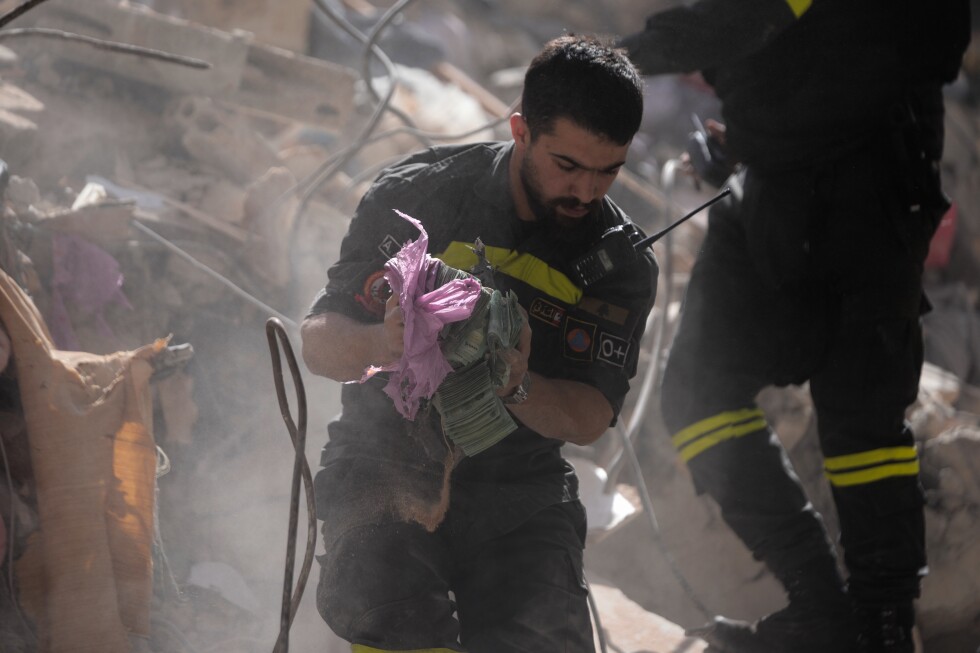
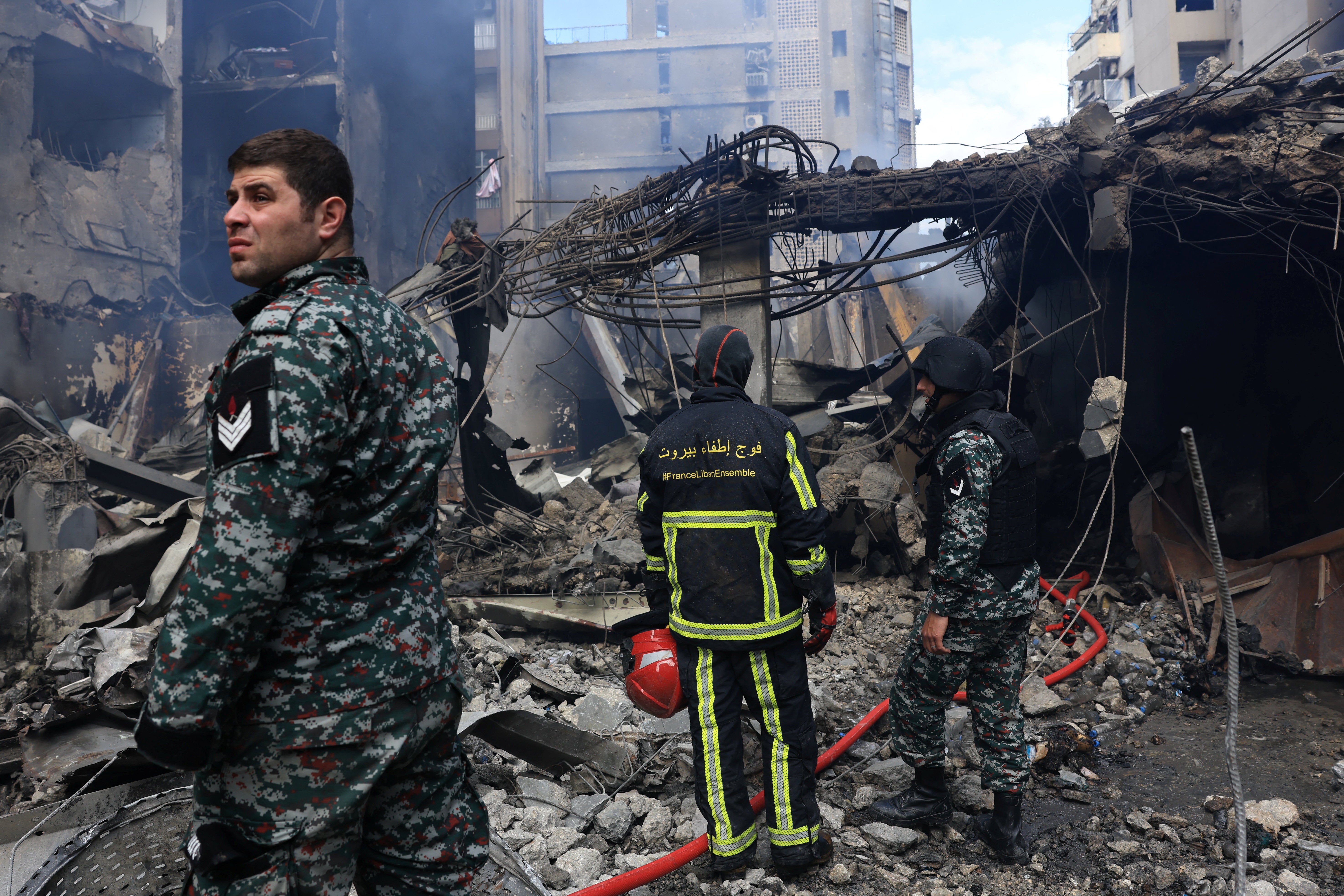
In Beirut, people waited anxiously on the ragged edges of search and rescue work, covering their faces from the dust. Exhausted firefighters sat on a charred car amid collapsed buildings.

Lebanese Civil Defense spokesperson Elie Khairallah told The Associated Press that a wounded woman was found alive under the rubble overnight in the seaside neighborhood of Ain Mreisseh, and a man was found alive in his collapsed apartment building in the southern suburbs.

Mohammad Chehab, a Syrian man from Deir el-Zour, said six of his 10 family members had been found dead in a destroyed building.

“They’ve been searching all day” for the rest, he said.

Advertisement

At hospitals, survivors and doctors described the carnage.

“I thought I was dead. What happened? A big flash of light struck my face and eyes and I found someone flying over and landing next to me. He was dead,” said Rabee Koshok from his bed at Makassed hospital in Beirut. He had been in the commercial district of Corniche al Mazraa when a strike hit a nearby building.

Dr. Wael Jarrosh said the hospital had received around 70 injured patients within 10 minutes of the blasts. Two people died and five remain hospitalized, including three in intensive care, Jarrosh said.

“This has destroyed us psychologically,” the doctor added. “We have to stay prepared so that we can serve our families and the injuries that come in.”

Advertisement

Israeli Prime Minister Benjamin Netanyahu said strikes would proceed “with force, precision and determination.” Israel’s military has accused Hezbollah members of moving out of the group’s main areas of influence in southern Lebanon and Beirut’s southern suburbs, known as Dahiyeh, and blending into civilian areas.

Lebanese Prime Minister Nawaf Salam said Lebanon will file an urgent complaint with the U.N. Security Council, calling the attacks a “blatant violation” of international and humanitarian law.

Advertisement

Salam added that the Lebanese cabinet has ordered security forces to tighten control over the capital by “enhancing the state’s full authority across Beirut and restricting arms to legitimate forces.”

Even before the renewed war, Lebanon’s government had been seeking Hezbollah’s disarmament. The issue has inflamed tensions among Lebanese who are deeply divided over Hezbollah and its arsenal.

“All the targeted areas are safe residential Lebanese areas,” said Melhem Khalaf, a reformist legislator representing Beirut, while watching a bulldozer clear rubble. “What we are witnessing is a massacre against civilians.” Khalaf was critical of Israel’s strikes but also of Hezbollah for dragging Lebanon back into war.

More than a million people have been displaced by the war, many from the south and Dahiyeh. Israel’s military has issued sweeping warnings for the population to leave those areas, followed by heavy bombardment.

Advertisement

The Israeli army has also launched a ground invasion in the border region. The death toll in Lebanon has reached 1,739, the health ministry said, with 5,873 wounded.

Meanwhile, the main border crossing between Lebanon and Syria returned to service Thursday, five days after the Israeli military warned of plans to strike it, alleging that Hezbollah was using it to smuggle military equipment. Lebanese and Syrian authorities denied the claim.

More than 200,000 people have fled Lebanon into Syria since the war resumed.

___

Advertisement

Abou AlJoud reported from Beirut. Associated Press journalists Kareem Chehayeb and Hussein Malla in Beirut and Ghaith AlSayed in Jdeidet Yabous, Syria, contributed to this report.

Source link

Advertisement
Continue Reading

NewsBeat

Netanyahu faces storm in Israel after Iran ceasefire as critics accuse him of ‘worst political disaster in history’

Published

on

Netanyahu faces storm in Israel after Iran ceasefire as critics accuse him of ‘worst political disaster in history’

Benjamin Netanyahu is facing a domestic storm over the two-week ceasefire with Iran, with critics accusing him of presiding over “the worst political disaster in history”.

The Israeli prime minister has sparked backlash from parties across the country’s political spectrum for choosing not to continue the conflict alongside Donald Trump.

There is also growing international outcry over ongoing Israeli strikes on Lebanon, that as of Thursday had killed 1,700 people, including 130 children. Western countries have insisted Lebanon must be part of the ceasefire, while Tehran claimed that attacks on the country represented a “grave violation” of the agreement.

Netanyahu is increasingly isolated on the world stage
Netanyahu is increasingly isolated on the world stage (AFP/Getty)

The developments have sparked outrage among Israeli politicians, who have urged Netanyahu to continue the war. Opposition leader Yair Lapid branded the Israeli PM’s handling of the conflict a catastrophe.

“There has never been such a political disaster in all of our history,” he wrote in a post on X on Wednesday. “Israel wasn’t even at the table when decisions were made concerning the core of our national security.”

Advertisement

He praised the military for carrying out “everything that was asked of it” and the public for demonstrating “amazing resilience”, but said they had both been let down by Netanyahu due to what he called the leader’s “arrogance, negligence and lack of strategic planning”.

Lapid’s criticism was repeated by former prime minister Naftali Bennett, who said Israel’s failure to achieve its war goals would leave it “facing a vengeful Iran.”

“The reason why so many people feel disappointed tonight is that the leadership sold us illusions,” he said in a live broadcast on Wednesday.

“All their empty promises have exploded in our faces. Unfortunately, each of us sees with our own eyes that Hamas is getting stronger. Hezbollah and Iran are standing on their own two feet, and this is happening because a government that dismantles Israel from within cannot defeat the enemy from without.”

Advertisement

Yair Golan, centre-left politician and the head of the Democrats party, accused Netanyahu of lying.

“He promised a ‘historic victory’ and security for generations, and in practice, we got one of the gravest strategic failures Israel has known,” he said in a post on X, adding: “Blood was spilled … brave citizens killed (and) soldiers fell … none of the goals were accomplished.”

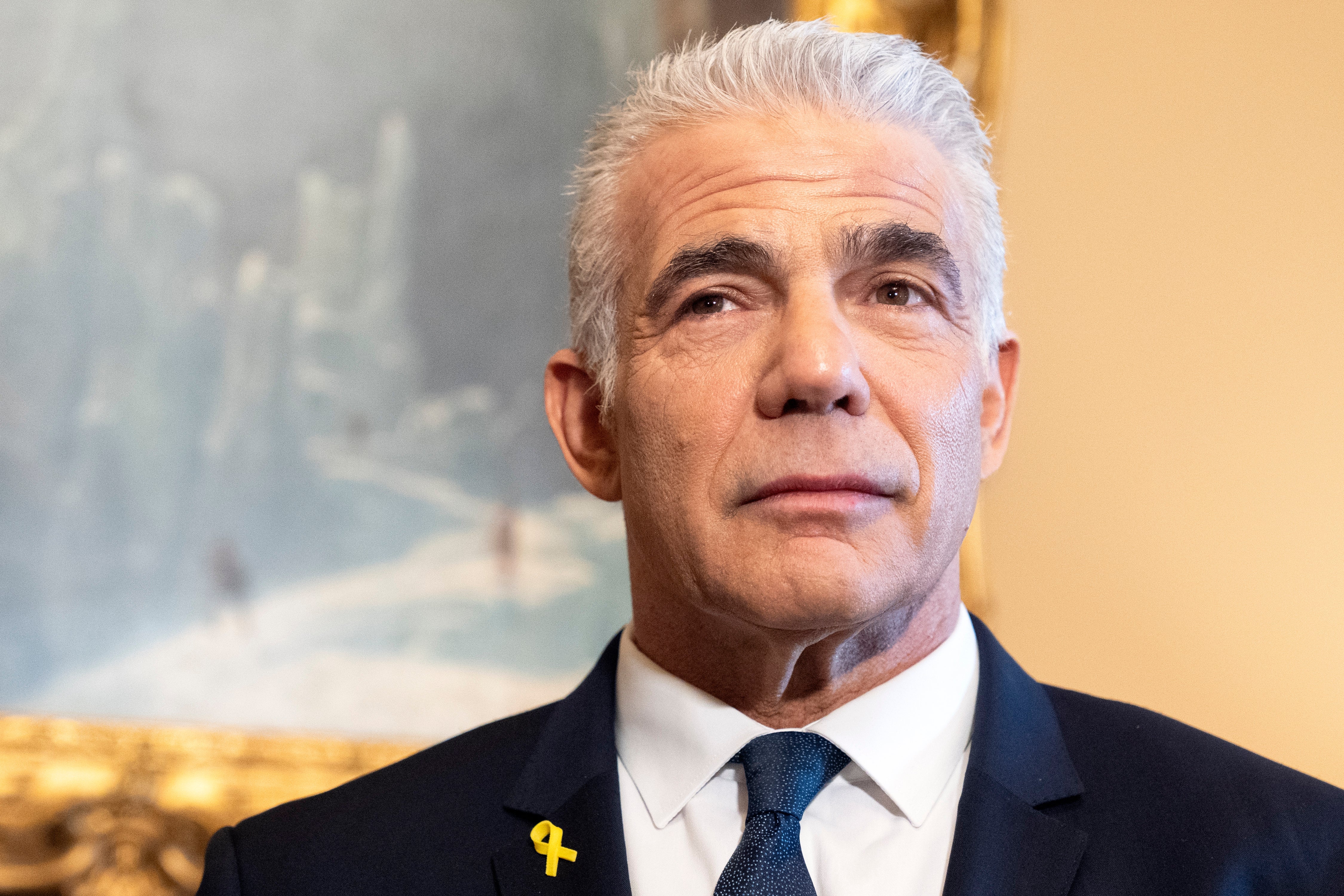
Lapid has called Netanyahu’s strategy a ‘historical disaster’
Lapid has called Netanyahu’s strategy a ‘historical disaster’ (AP)

“The nuclear program was not destroyed; the ballistic threat remains; the regime is in place and is even stronger coming out of this war,” he continued.

Netanyahu’s education minister Yoav Kisch hit back his critics, accusing them of “pumping up a defeat that’s echoed in the enemy’s media outlets”.

The Israeli PM has also faced growing international outcry over the IDF’s campaign in Lebanon, which aid agencies warn has created a humanitarian catastrophe. Over 250 people have been killed in 24 hours in the deadliest attacks on the country since the conflict began.

Advertisement

More than 100 sites were targeted in 10 minutes on Wednesday and more than a million people (20 per cent of the population) has been displaced since the war began in February.

Despite a ceasefire being agreed on Wednesday, Netanyahu and the White House said that the 14-day truce does not apply to Lebanese territory – a key demand for Tehran.

Netanyahu and Trump both acted jointly in declaring war on Iran
Netanyahu and Trump both acted jointly in declaring war on Iran (Getty Images)

But Netanyahu and the White House said that the ceasefire does not apply to Lebanese territory.

Israel says it must continue its attacks in order to defeat Hezbollah, an Iran-backed proxy group. However, large numbers of civilians have been killed so far and humanitarian groups have warned there are similarities to the IDF’s campaign in Gaza.

Spain, France and the UK have all called for the ceasefire to be extended to Lebanon.

Advertisement

Britain’s foreign minister Yvette Cooper called for the country to be “urgently included” and called Israel’s attacks “highly damaging” on Thursday, following similar comments by French president Emmanuel Macron.

The European Union’s top diplomat Kaja Kallas criticised the number of civilian deaths in Lebanon and said it was becoming “hard to argue that such heavy-handed actions fall within self-defence”.

Over 200 people were killed in one day in Lebanon on Wednesday after Israel’s deadliest strikes yet
Over 200 people were killed in one day in Lebanon on Wednesday after Israel’s deadliest strikes yet (Reuters)

Trump has also come under fire in Israel for agreeing a ceasefire.

“Donald, you came off as a duck,” said the far-right head of the country’s National Security Committee, Tzvika Foghel in a since-deleted post on X.

The head of the conservative Yisrael Beytenu party, Avigdor Liberman, said the agreement with Iran “gives the ayatollah’s regime a break and time to regroup.”

Advertisement

“Any agreement with Iran, without giving up on destroying Israel, enriching uranium, manufacturing ballistic missiles and supporting terror groups in the region, means we’ll return to another war in harder conditions with a heavier price,” he wrote on X.

Source link

Continue Reading

NewsBeat

Could revisiting Asimov’s laws help us avoid AI’s ‘Chernobyl moment’?

Published

on

Could revisiting Asimov’s laws help us avoid AI’s ‘Chernobyl moment’?

The conflict in Iran – but also the war in Ukraine – show not only that AI is radically changing the economics of war (which may be good news), but also that we may be heading towards some kind of “Chernobyl moment”. We may soon experience a disaster that will force us to belatedly realise we should have drawn up some shared rules to govern a technological development that we ourselves triggered.

Even Dario Amodei, the founder of AI company Anthropic, who seems passionate about taking action to prevent Armageddon, acknowledges that he doesn’t have the answer we desperately need.

One of the most interesting attempts to regulate the use of artificial intelligence may have been the one drafted during the second world war by a PhD student at Columbia University who was then temporarily employed by the US Navy. His name was Isaac Asimov, and in his early short story Runaround (1941), he postulated three laws that are still surprisingly inspiring for anyone thinking about how to solve the intellectual and political problem that is AI in warfare.

Unlike recent attempts by the OECD (Organisation for Economic Co-operation and Development) and the EU to draw up regulations, Asimov’s laws are admirably concise. They state that a robot (what we now call an “artificially intelligent agent”) shall never harm a human being (or allow harm to happen through inaction. It shall always obey the orders given by humans unless they conflict with the first prohibition. And it will always protect its existence unless this conflicts with the first and second provisions.

Advertisement

In his story, Asimov himself shows how the three laws can create internal contradictions, leading to paralysis. And yet, Asimov’s three principles can still be useful as a starting point for the strategy we now need.

Anthropic takes a ‘stance’

The biggest merit of the note Dario Amodei wrote recently on the perils of a technology which is still in its adoloscence is the acknowledgement that Anthropic, the firm that Amodei founded, is using its own large language model (called Claude) to develop further versions of itself.

Artificial intelligence is generating even more intelligent robots and this brings us near to that “singularity” first theorised by the great mathematician John von Neumann – the moment when artificial intelligence surpasses human intelligence and renders us irrelevant. If the technology is an adolescent, it is growing very fast and will soon be out of the control of its creator.

Amodei speaks at an AI summit in India.
EPA

Amodei does not, however, appear to have a concrete proposal on how to manage this problem. He has said that Anthropic’s contracts with the US Department of War should never include the use of the company’s models for empowering either “mass domestic surveillance” or “fully autonomous weapons”.

Advertisement

It is a request that has brought Anthropic into a bitter dispute with the US government. And yet it seems a rather narrow response that covers just one dimension of a much wider problem. Amodei focuses predominantly on the safety of US citizens when it is people elsewhere in the world who are currently most affected by the use of autonomous weapons. We need a bolder vision – and Asimov’s intuitions may help.

New rules

One approach would be to ask all developers of AI models to introduce in their foundational codes three simple and bold commands along the lines of: “You will never kill a human being (unless for self-defence)”; “you will always try to work for the betterment of mankind (unless such a provision entails the violation of the first command)”; “when you doubt that your actions may violate the first or the second commands, you will choose inaction and ask what to do”.

Most likely, this initiative will have to come from a group of countries following a pattern similar to the treaties of non-proliferation of nuclear weapons. And it would be good to have a debate on some new ideas before we are forced to do so by some AI-empowered nuclear unintended consequence.

Like all other attempts to regulate a future that we still cannot even envisage, the three commands will have some drawbacks. A robot may have refused to kill Iran’s former leader Ali Khamenei, but that may be a price worth paying if it means we can avoid setting a precedent for other discretionary and dangerous interpretations. Robots may not always be successful at identifying human beings (as Asimov himself acknowledged in later writing) and yet this may well be one of those intellectually fascinating problems that models born to make sense of human language will solve.

Advertisement

More importantly, it will take not only information but a lot of wisdom to understand what is good for humankind. Robots may end up sitting frequently idle waiting for instructions. And yet efficiency is not a religion we have to follow when the challenge is about the survival of our species. Making sense of what increasingly appears to be one of the greatest technological revolutions of all time requires careful thought and forward planning.

Source link

Advertisement
Continue Reading

NewsBeat

World’s oldest octopus isn’t really an octopus | News UK

Published

on

World's oldest octopus isn't really an octopus | News UK
A reconstruction drawing of the species Pohlsepia mazonensis, originally believed to be an ancient octopus but reclassifed after new research (Picture: Dr Thomas Clements, University of Reading/Cover Media)

It’s one of the world’s most famous octopus that turned out not to be an octopus at all.

This 300-million-year-old fossil was thought to be the earliest known example of one of the eight-legged sea-dwellers, and even features in the Guinness Book of Records.

But in what amounts to a prehistoric case of mistaken identity, the preserved creature turns out to be an entirely new species.

The sample’s true nature, hidden because of decay before fossilisation began, was revealed after researchers used synchrotron imaging to search inside the rock.

Advertisement

A University of Reading team discovered tiny teeth, which proved that Pohlsepia mazonensis was not an octopus at all. Instead it is most closely related to a modern nautilus – a multi-tentacled animal with an external shell.

Sign up for all of the latest stories

Start your day informed with Metro’s News Updates newsletter or get Breaking News alerts the moment it happens.

Advertisement

This revelation, shared in the journal Proceedings of the Royal Society B, solves a long-running puzzle in the understanding of octopus evolution that has confused scientists for decades.

It also provides evidence of the oldest nautiloid soft tissue preservation known in the fossil record and means that the record-holding ‘oldest octopus’ should be quietly removed from of the Guinness Book of Records.

A diagram of the anatomy of the Pohlsepia mazonensis. Researchers found tiny teeth deep inside the fossilised rock (Picture: Dr Thomas Clements, University of Reading/Cover Media)

Dr Thomas Clements, lead author and lecturer in Invertebrate Zoology at the University of Reading, said: ‘It turns out the world’s most famous octopus fossil was never an octopus at all.

‘It was a nautilus relative that had been decomposing for weeks before it became buried and later preserved in rock, and that decomposition is what made it look so convincingly octopus-like.

‘Scientists identified Pohlsepia as an octopus 25 years ago, but using modern techniques showed us what was beneath the surface to the rock, which finally cracked the case.

Advertisement

‘We now have the oldest soft tissue evidence of a nautiloid ever found, and a much clearer picture of when octopuses actually first appeared on Earth.

‘Sometimes, reexamining controversial fossils with new techniques reveals tiny clues that lead to really exciting discoveries.’

Found in Illinois, the first analysis of the fossil was published in 2000 and was later used in studies of how octopuses and their relatives evolved.

Scientists thought the fossil showed eight arms, fins, and other features typical of an octopus, pushing back the known history of octopuses by around 150 million years.

Advertisement

Doubts had been raised about the identification for years, but without a clear way to test them until recently.

The scientists in the new study used synchrotron imaging – a technique that uses beams of light brighter than the sun – to scan for structures invisible to the eye beneath the surface, revealing hidden details inside the rock.

They likened the process to giving a 300-million-year-old suspect a modern forensic examination.

What they found was a radula, a ribbon-like feeding structure with rows of teeth only found in molluscs.

Advertisement

With at least 11 tooth-like elements per row, the shape and number ruled out an octopus entirely. Octopuses have seven or nine, while nautiloids have 13.

The teeth matched those of a fossil nautiloid called Paleocadmus pohli, already known from the same site where it was found, and the researchers concluded the animal had partially rotted before fossilisation, causing it to look very different from its true self.

The nautilus is a shelled sea creature still alive today, with its ancient origins leading some to describe it as a ‘living fossil’.

The Paleocadmus fossils found at the Mazon Creek site in Illinois now represent the oldest known nautiloid soft tissue in the fossil record – beating the previous record by around 220 million years.

Advertisement

These findings change the picture of when octopuses first evolved. The data now supports octopuses appearing much later, during the Jurassic period.

Scientists now believe the split between octopuses and their ten-armed relatives such as squids happened in the Mesozoic era, not hundreds of millions of years earlier as previously thought.

Dr Clements concluded: ‘It’s amazing to think a row of tiny hidden teeth, hidden in the rock for 300 million years, have fundamentally changed what we know about when and how octopuses evolved.’

Advertisement

Source link

Advertisement
Continue Reading

NewsBeat

Bright idea shines hope on struggling pollinators

Published

on

Bright idea shines hope on struggling pollinators

Red light therapy has long been used by humans to improve skin health, slow signs of ageing and soothe sore muscles – now the treatment is giving a glow-up to one of our most vital pollinators: bees.

It works by stimulating the mitochondria – the powerhouses of living cells – boosting efficiency and catalysing tissue regeneration.

The brains behind Beefutures, an agritech outfit based in France and Norway, claim studies show bees enjoy the same benefits when exposed to red and near-infrared light.

Advertisement

Colonies given the red light treatment were better able to cope with stressors like heat, extreme weather and pesticides than those without, living longer and pollinating more effectively, the company said. The company has since launched Onibi light, a world-first, in-hive therapy light for bees, developed in partnership with University College London (UCL).

According to Ecowatch, nearly 60% of US honeybee colonies were lost last winter, with French beekeepers reporting losses of up to 50%. “When the bees stop buzzing, our food stops growing. That’s the real story. And this is what Onibi Light is all about,” said Christophe Brod, CEO of Beefutures.

Trials by UCL showed that colonies exposed to pesticides or transport stress got back to being busy bees within days when supported by the gadget.

“Our research shows that treated bees experience enhanced cellular respiration, improved visual acuity and stronger immunity,” said Glen Jeffery, professor of neuroscience at UCL.

Advertisement

Brod added: “Stronger bees mean stronger food systems. With Onibi Light, we are giving beekeepers and growers a practical tool to protect the very foundation of agriculture.”

Main image: Aaron Burden

Source link

Advertisement
Continue Reading

NewsBeat

‘My father-in-law saved me after kidney disease left me fighting for my life’

Published

on

Wales Online

Ian Tonks was diagnosed with kidney disease and spent years managing a failing transplant before his father-in-law saved his life

A man has been given a fresh start after his father-in-law donated his kidney, becoming Britain’s oldest donor.

Ian Tonks, 49, had spent years managing a failing transplant and long periods on dialysis.

Advertisement

He initially received a kidney transplant 12 years ago, but complications arose after six years due to an autoimmune condition.

For years, Ian’s life was on pause as the life-threatening condition left him unable to work, enjoy his hobbies or even drink more than half a glass of liquid a day.

Despite concerns surrounding his age, Ian’s father-in-law Graham Sisson, 84, volunteered to undergo testing and was subsequently approved for the transplant, reports the Mirror.

He proceeded to have the procedure at Manchester Royal Infirmary.

Advertisement

Over a year later, Ian and Graham featured on Thursday’s (April 9) instalment of This Morning and discussed how he now shares a profound connection with his father-in-law following the transplant.

READ MORE: I’m A Celeb’s Gemma Collins makes tearful admission before she’s confronted by SinittaREAD MORE: What is microscopic polyangiitis as Scrubs character gets devastating diagnosis

Speaking to presenters Rochelle Humes and Joel Dommett, Ian remarked: “We’ve got an amazing bond now. We always got on well for obvious reasons but we are very close now.”

Advertisement

Graham revealed the motivation behind his decision to offer his kidney, stating: “I could see him deteriorating virtually on a daily basis. Several members of the family have already tried to donate him for various reasons but were unable to do so.”

He continued: “I felt that if someone else didn’t step in, he was literally going to die. So I spoke to my wife and said, ‘I think I might put myself forward’ and at that point, we had never thought about the age issue.

“So I just rang Ian and ‘I’d like to have a try and see if it works.’ And surprisingly, we found that we were compatible.”

He acknowledged they were forced to act swiftly, as Ian was at one stage given just 12 hours to live, revealing: “The operation was planned for August 2024 but he was too ill to have the operation. He nearly died in September.

Advertisement

“He was given 12 hours to live in September so when we got to October we snatched up (the next date) and the hospital carried out the operation.”

In November 2024, the pair made their way to Manchester Royal Infirmary for the procedure, remaining there for several days. The transplant proved successful and both men made a complete recovery.

A thankful Ian expressed his gratitude, saying: “I’d like to say a big thank you to the NHS at Manchester Royal Infirmary, it wasn’t just the surgeons but it was the coordinators, it was the dialysis team, it was everybody that was underneath that helped and kept me alive.”

Advertisement

He further added: “Also made this happen and changed a lot of peoples lives. I mean, you know, it’s like a life lottery. You don’t win the lottery but it’s like a life lottery having this.”

This Morning airs weekdays from 10am on ITV1 and ITVX

Source link

Advertisement
Continue Reading

NewsBeat

London travel news LIVE: Waterloo to Clapham Junction chaos as casualty on track closes ALL train lines

Published

on

London travel news LIVE: Waterloo to Clapham Junction chaos as casualty on track closes ALL train lines

Use the Jubilee line from Waterloo to Westminster, then change for the District line to Richmond.
The reverse route is also available via Westminster
From Richmond, take the District line to Embankment, then switch to the Bakerloo or Northern line to Waterloo.
Piccadilly line options via Hounslow, Hatton Cross or Green Park, connecting to Jubilee or Northern lines.
Northern line services also run between Battersea Power Station and Waterloo.

Source link

Continue Reading

Trending

Copyright © 2025