Israel has been targeting Tehra, the Iranian capital, whilst Afghanistan’s Taliban have initiated an attack on nuclear-equipped Pakistan. Yesterday, the UAE reported ongoing efforts to intercept missiles aimed at Israel as Middle Eastern conflict continues unabated.
Scientists in the Nature journal warn of fireballs reaching temperatures up to 100 million degrees Celsius and a nuclear winter enveloping the globe. They posit that Australia and New Zealand would be the sole survivors.
Annie Jacobson, an expert on Armageddon scenarios and author of Nuclear War: A Scenario, utilised scientific research and defence expertise to predict the aftermath of all 12,000 global nuclear weapons being deployed. Speaking on The Diary of a CEO podcast, she stated: “Hundreds of millions of people die in the fireballs, no question.”
Jacobson further elaborated on the catastrophic impact on regions that survive the initial explosions. She said: “Places like Iowa and Ukraine would be just snow for 10 years, and so agriculture would fail. When agriculture fails, people just die.”
The expert suggests approximately three billion people might endure the immediate explosions, though their existence would be utterly transformed. She reckons Australia and New Zealand would largely withstand the nuclear winter and maintain the capacity to cultivate crops.
Annie outlined how detonating thousands of contemporary nuclear weapons would obliterate a delicate layer of gas shielding us from solar radiation. She warns that alongside ozone layer devastation, there would be significant radiation poisoning threats.
Whilst Australia and New Zealand may endure, she anticipates residents there would face existence in darkness. She envisages people “fighting for food” and “living underground”.
Annie’s forecast follows recent mapping which indicated Iranian missiles possess the capability to devastate numerous nations, including several favoured tourist destinations. Intelligence suggests these warheads could reach targets up to 1,240 miles away.
This places beloved holiday spots including Dubai, Cyprus, Turkey and Egypt potentially within striking distance. On Thursday (March 5) the UK Government’s inaugural evacuation flights departed the Middle East to assist stranded Britons.
The initial aircraft left Oman on Thursday afternoon. The Government continues evaluating its response strategy to the Middle Eastern crisis.
Advertisement
Confirmation has already emerged that Royal Navy destroyer HMS Dragon will deploy to the Mediterranean, potentially next week, strengthening protective measures surrounding the British military installation at Akrotiri following an Iranian drone strike.
At least seven people were injured after the ceiling of Poseidón Palace hotel in Benidorm collapsed on Easter Sunday while guests were dining
Paige Ingram Multimedia Journalist and Callum Hoare
00:30, 06 Apr 2026
At least seven people have been left injured after a hotel ceiling gave way on Easter Sunday.
The shocking incident took place at Poseidón Palace, a well-known tourist hotel in Benidorm. Large chunks of plasterboard and air conditioning ducts came crashing down on around 60 guests who were eating at the hotel at the time.
Advertisement
Emergency services rushed to the scene and confirmed that among those hurt were an eight year old boy and a 78 year old man, both of whom were taken to hospital before being discharged following treatment.
Ensure our latest headlines always appear at the top of your Google Search by making us a Preferred Source. Click here to activate or add us as your Preferred Source in your Google search settings.
A further five people, aged between 33 and 80, were taken to hospital following the frightening incident, with one person still under observation at Hospital de la Marina Baixa, according to reports from local media.
CICU officials dispatched SAMU medical units along with basic life support and non-assisted transport teams to deal with the situation. Red Cross staff assisted in caring for those affected during the chaotic scenes at the well-regarded Costa Blanca resort. The cause of the collapse at the three-star hotel remains unknown at this stage, though this is not the first such incident to have affected Benidorm’s hotel industry. The much-loved coastal resort in Spain is well known for its vibrant nightlife, vast array of accommodation and high-rise buildings, golden beaches and much more. It remains a popular choice for hen and stag parties, while others are drawn to the charm of the Old Town and the stunning, dramatic coastlines that stand in stark contrast to the more widely recognised imagery associated with Benidorm.
Advertisement
According to the annual report from Visit Benidorm, the Spanish destination welcomed over three million tourists in 2025, with an estimated 900,000 travelling from the UK.
The MEN has contacted Poseidón Palace for comment but is yet to receive a response.
People with a terminal illness can have their PIP claim fast-tracked with special rules that mean no face-to-face assessment and higher daily living payments
Personal Independence Payments (PIP) offer financial assistance to those living with long-term physical or mental health conditions or disabilities who face difficulties with everyday tasks or getting around. Claims are assessed primarily on how a condition impacts an individual’s daily life, rather than their specific diagnosis, unless their doctor has informed them of one particular thing.
Those who have received a terminal diagnosis are subject to different rules when applying for PIP, which can effectively ‘guarantee’ a fast-tracked application and entitle them to the highest rate of the daily living payment, currently set at £110.40. This figure is due to rise to £114.60 from April 6, 2026.
Citizens Advice states: “If you have a terminal illness, you’ll usually get PIP automatically. The DWP will fast-track your application – this means: you won’t have to fill out as many forms, you won’t have to go to a face-to-face assessment, you should get your first payment sooner.
Advertisement
“Someone else can claim on behalf of a person who is terminally ill. For example, because the person doesn’t know that they have a terminal illness. If you do this, let the person know that the claim for PIP is being made, even if they don’t know it is because they’re terminally ill.”
To be eligible for PIP under the special rules for end-of-life cases, applicants must be aged 16 or over at the time of applying, be residing in England or Wales, and have a doctor confirm that they may pass away within 12 months. However, Government guidance notes: “It can be difficult to predict how long someone might live for. If a medical professional has not talked to you about this, you can still ask them to support your claim under the special rules for end of life,” reports the Mirror.
Should you meet these criteria, you will automatically receive the higher daily living element. However, you will only be eligible for the mobility element if your health condition directly causes mobility difficulties.
Citizens Advice adds: “Make sure you tell the DWP if you have problems most of the time when moving around or going out. For example, tell them how far and how fast you can walk before these problems start.”
Advertisement
It advised people with terminal diagnoses inform the DWP if they:
Can’t walk without pain, breathlessness or help
Need a wheelchair, walking stick or other mobility aid
Experience stress and anxiety that makes it difficult to go out
To make a PIP claim under the special rules for end-of-life, you will need to telephone the PIP team and state that you wish to begin a claim under these provisions. The PIP team will then ask a series of questions regarding your condition in order to assess your eligibility.
You will also need to request an SR1 form from your medical team, which they may either hand directly to you or submit to the DWP on your behalf. This can be provided by your GPs, consultants, specialists, hospice doctors or registered nurses, including Macmillan nurses. Individuals with a life-limiting diagnosis may also be eligible to apply under the special rules for Universal Credit and Employment and Support Allowance if they are of working age.
Those above state pension age can access Attendance Allowance, while children under 16 will need to apply for Disability Living Allowance for children.
After submitting your application, Macmillan specialists indicate you should receive your initial payment within a fortnight of applying. You’ll also be able to skip some of the standard PIP eligibility requirements, such as demonstrating daily living or mobility challenges for the previous three months.
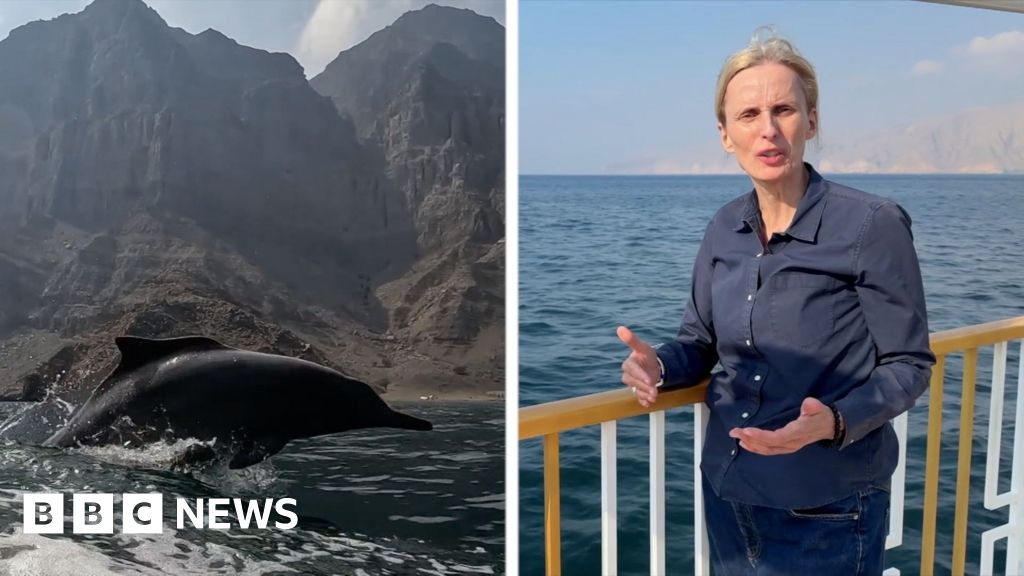
The BBC’s senior international correspondent Orla Guerin has travelled to the edge of the Strait of Hormuz in Oman, which Iran has put a stranglehold on since the war broke out.
The critical artery is normally used for 20% of the world’s oil and liquefied natural gas.
By leaving ships stranded in the waterway, Iran is reducing the global supply of oil, driving up prices and creating fear among consumers as well as amplifying pressure in the international community.
You can claim a free pair of tickets to a choice of 26 events up and down the country during May and June
We have teamed up with Arena Racing Company – who run 16 racecourses across the UK, to give away thousands of FREE tickets to readers and what’s more, you can claim two free tickets to your chosen event – plus kids go free!
The race days are all themed to provide great entertainment as well as high quality jumps and flat horse racing spread across the country. There’s everything from family fun days at Fontwell Park, to Ronnie Scotts racenight at Royal Windsor!
Advertisement
There’s a fantastic range of events and acts to appear to everyone! The choice of 26 entertainment-filled race meetings are:
DONCASTER- May 16 – Summer Saturday
DONCASTER- June 5 – Evening Flat Racing
DONCASTER- June 6 – Summer Saturday with Chris Moyles
Advertisement
DONCASTER- June 14 – Family Fun Day
DONCASTER- June 20 – Summer Saturday plus live music after racing
UTTOXETER- May 2 – Staffs Plate Race Day ft. Robbie Williams Tribute
LINGFIELD PARK- June 6 – Summer Sounds – 80s live at the races
Advertisement
LINGFIELD PARK- June 27 – Summer Sounds – The Take That Experience
WORCESTER- May 22 – Friday Night at the races ft. live music
FONTWELL PARK- May 24 – Family Fun Day
BATH- June 5 –Evening racing with DJ party in the paddock
Advertisement
CHEPSTOW- June 6 – Country & Western racenight
BRIGHTON- June 21 – Father’s Day Family Funday
ROYAL WINDSOR- May 11 – Residents raceday
ROYAL WINDSOR- May 23 – Opening Party – dance through the decades
Advertisement
ROYAL WINDSOR- June 1 – Ibiza Rewind Racenight
ROYAL WINDSOR- June 15 – Ronnie Scotts racenight
ROYAL WINDSOR- June 22 – Pimms and Prosecco racenight
ROYAL WINDSOR- June 29 – An evening with Queen ft. Supersonic Queen
Advertisement
NEWCASTLE- June 26 – Gosforth Park Cup Night
NEWCASTLE- June 27 – Jenningsbet Northumberland Plate Day
WOLVERHAMPTON- June 28 – Country & Western Race Day
CLICK HERE TO CLAIM YOUR FREE PAIR OF TICKETS (subject to availability, first come, first serve basis). Please note: Your tickets will be emailed to you from Arena Racing Company, 2-3 days prior to the event.
Advertisement
Terms and Conditions: 1. This Promotion covers all Fixtures and will be open for entry (i) until the closing dates listed or, (ii) until all tickets for that particular Fixture are redeemed, whichever occurs first. The closing dates for each race event are as follows: Uttoxeter Staffs Plate Race Day ft Robbie Williams Tribute- Sunday 26th April, Royal Windsor Residents raceday – Monday 4th May, Uttoxeter Live DJ Martin Kemp Racenight – Sunday 10th May, Doncaster Summer Saturday Racenight – Sunday 10th May, Worcester Friday Night at the Races ft. live music – Friday 15th May, Royal Windsor Opening Party – Dance through the decades – Sunday 17th May, Fontwell Park Family Fun Day – Sunday 17th May, Lingfield Park Summer Sounds – Soul & Motown – Thursday 21st May, Royal Windsor Ibiza Rewind Racenight – Monday 25th May, Doncaster Evening Flat Racing – Thursday 28th May, Bath Evening Racing with DJ party in the paddock – Thursday 28th May, Chepstow Country & Western Racenight – Sunday 31st May, Lingfield Park Summer Sounds – 80s Live At The Races – Sunday 31st May, Doncaster Summer Saturday with Chris Moyles Live After Racing – Sunday 31st May, Uttoxeter ABBA Party Racenight – Sunday 7th June, Doncaster Family Fun Day – Sunday 7th June, Royal Windsor Ronnie Scotts racenight – Monday 8th June, Doncaster Summer Saturday plus love music after racing – Sunday 14th June, Brighton Father’s Day Family Funday – Sunday 14th June, Royal Windsor Pimms & Prosecco racenight – Monday 15th June, Newcastle Gosforth Park Cup Night – Thursday 18th June, Newcastle Jenningsbet Northumberland Plate Day – Sunday 21st June, Lingfield Park Summer Sounds – The Take That Experience – Sunday 21st June, Uttoxeter Summer Cup – Sunday 21st June, Wolverhampton Country & Western Race Day – Sunday 21st June, Royal Windsor – An Evening with Queen ft Supersonic Queen – Monday 22nd June.
2. This is a syndicated offer across the Daily Star/Daily Star Sunday and dailystar.co.uk; Daily Mirror/Sunday Mirror and Dailymirror.co.uk; Daily Express/Sunday Express and express.co.uk and the Sunday People; Newcastle Chronicle, Journal, Sunday Sun and www.chroniclelive.co.uk; Teesside Gazette and www.gazettelive.co.uk; South Wales Echo and www.walesonline.co.uk; Bristol Post and www.bristolpost.co.uk; Western Daily Press and www.somersetlive.co.uk; Birmingham Mail and www.birminghamlive.co.uk; Burton Mail,Stoke Sentinel and www.stokeontrentlive.co.uk; Nottingham Post and www.nottinghamshire.live; Derby Telegraph and www.derbyshirelive.co.uk; Grimsby Telegraph and www.grimsbylive.co.uk the Chronicle Premium app, Daily Express Premium app and Birmingham Live Premium app.
3. Tickets are limited for each Fixture to 5,000 (2,500 pairs) and are subject to availability and will be offered on a first come first served basis. E-tickets will be sent to the email address provided, from Arena Leisure Racing Limited’s ticket office 2-3 days prior to the Fixture. Children under 18 go free and do not require a ticket in advance – they will be issued on the day.
Advertisement
4. To enter the Promotion you will need to be over 18 years of age (i) choose your preferred Fixture; (ii) fill in your full name and email address, (iii) if successful l, you will be sent an automated email with ticket information. If you are not successful you will be informed that you have not been successful. Emails may be filtered into junk email inboxes. Please check your junk email box, if successful and move your email to your inbox immediately to avoid deletion of your email which is automatically from your junk/spam email after 30 days.
5. Anyone who has already purchased tickets for one of the named Fixtures will not be eligible for a refund or able to exchange their previously purchased tickets. All entrants are limited to one pair of tickets per customer in total for one Fixture only. If you have successfully applied for a Fixture and been allocated tickets, you will not be eligible to be selected for subsequent Fixtures. A valid email address is required to enter the Promotion and to redeem the tickets.
6. Free ticket recipients are required to provide proof of identity on entrance to the Fixture venue, alongside the e-tickets provided under that same name.
7. There is the option to subscribe to newsletters, this is not mandatory and where you do not subscribe, your information will only be used for entry into the promotion and the racecourse event and will not be used for marketing purposes.
Advertisement
8. The offer is as stated and does not include travel,expenses or parking (unless stated) and you must make your own travel arrangements. There is no cash alternative to this offer, tickets are not for resale.
9. Only those named on the e-ticket, with matching proof of identity will be permitted entrance to the Racecourse and the Racecourse team reserve all rights to refuse entry.
10. Once redeemed, e- tickets cannot be exchanged for alternative events or dates. All e-tickets must be used on the date and times and for the event as detailed on the e-tickets.
11. Horseracing is subject to weather. So please check the relevant racecourse website or social media channels for updates before travelling.
Advertisement
12. Should the fixture be cancelled, transferred or abandoned, tickets won’t be valid for an alternative date, free ticket recipients are not eligible for refunds for the value of the ticket.
13. All ticket holders are subject to the racecourse terms and conditions of entry, click HERE. Your data privacy is very important to us. The data you provide upon requesting tickets (full name and email) will only be shared with the relevant racecourse in order to generate your details on the system for the Fixture, unless you have opted in to receive marketing from Arena Racing Company, in which case your email and full name will be shared for these purposes (for more information please click HERE. Standard Reach privacy policy rules apply HERE
Welfare changes from this week will reform a system that has “for too long locked disabled people and people with long-term conditions out of work”, the Government has said. The reforms will tackle what ministers have branded “perverse incentives” which they argued encouraged people to stay on benefits without support to move into work.
Advertisement
From Monday, new claimants for the health element of Universal Credit (UC) will get a lower rate of £217.26 a month. Universal credit is a payment to help with living costs and is available for people in work who are on low incomes, and those who are out of work or cannot work.
People with the most severe, lifelong conditions, people nearing the end of life, and all existing UC health claimants will continue to receive the higher monthly rate of £429.80. The change will save taxpayers around £1 billion, the Government has said.
Statistics published last month showed there were 2.7 million people on UC assessed as having limited capability for work and work-related activity (LCWRA) across England, Scotland and Wales. People in this category are not required to undertake any interviews or work-related activity.
The Government has pledged that its investment in tailored employment support can offer people opportunities, supporting them to move into and stay in work “rather than leave people stuck on benefits”. Also this week, the standard rate of UC will be boosted, in what ministers have said is an effort to “bear down on the cost of living”.
Advertisement
It said this will result in almost four million households on the standard rate of UC getting around £295 extra this year in cash terms.
Social security and disability minister Sir Stephen Timms said: “The welfare system we inherited has for too long locked disabled people and people with long-term conditions out of work.
“Laws coming into force today will change that, reducing projected expenditure on universal credit by almost £1 billion.
“Simultaneously boosting the standard allowance and investing £3.5 billion in employment support means we’re creating a welfare system that backs people to work and helps them build a better future.”
Advertisement
Last year, ministers were forced to climb down on plans to also reform disability benefits, including for those with mental health conditions, in the face of backbench Labour opposition. Instead of immediate reform, the Timms review is seeking views on Personal Independence Payment (PIP) and how it works.
Minsters have promised any changes to the benefit – which helps with extra living costs for people who have a long-term physical or mental health condition or disability and difficulty doing certain daily tasks or with mobility because of their condition – have been postponed until after that takes place.
The review is expected to report to Work and Pensions Secretary Pat McFadden by autumn, with the Government stating that an interim update will come ahead of that.
Manchester City assistant manager Pep Lijnders has hinted midfielder Bernardo Silva’s nine-year spell at the club will end this summer, saying “every good story comes to an end”.
The 31-year-old’s contract expires at the end of the season. He has not yet signed an extension and has been linked with La Liga leaders Barcelona, Serie A side Juventus and clubs in America.
Lijnders was on media duty after Saturday’s 4-0 FA Cup quarter-final win over Liverpool with manager Pep Guardiola serving a touchline ban, and reflected on the importance of the Portuguese international to City.
“You never replace a player with the same kind of player because they don’t exist,” he said.
Advertisement
“Bernardo Silva is unique. The way he controls games, the way he moves, the way he receives, the way he leads, the way he sees the solutions. All these things.
“But it will be hard because, as I said, in the game, when he is not playing you will see how he is missed – and that’s one game. Imagine a season.
“But every good story comes to an end, and I hope he enjoys the last months – there are only six weeks – and has a good farewell.
It is one of the biggest weeks in golf, yet The Masters is likely to be conspicuous by the absence of one of the sport’s biggest names.
Donald Trump, the US President, might be an avid golfer and owner of some of the most prestigious properties in the sport, including Trump Turnberry and Trump International Doral, yet “his personality doesn’t fit” at Augusta, according to Butch Harmon, one of the most respected voices in the sport and Tiger Woods’ former coach.
Trump is unlikely to grace this hallowed and idyllic corner of Georgia this week, despite so often being part of the sport’s narrative.
“I think you can answer that [why Trump is unlikely to be at Augusta] yourself,” Harmon said on a media call, including The Independent. “Because he’s Trump. I think he is who he is. He’s full of himself. He’s the type of person that I don’t think fits the profile of an Augusta member.”
Augusta has had former presidents as members, despite its exclusivity, reportedly limited to 300. Notably, Dwight Eisenhower retains a great legacy at the club, with a cabin and tree on the course named after him.
Trump has a deep history with the game of golf (Donald J. Trump)
And Harmon has known Trump his entire life, with his father, Claude Harmon, a Masters champion in 1948, the former head professional at the prestigious American course Winged Foot, where Trump was a long-time member.
“I’ve known Donald pretty much my whole life. What you see is what you get with him. And I don’t think his personality fits the membership at Augusta,” Harmon claims.
Advertisement
“I don’t think that [being president] has anything to do with it, because there’s been a lot of other presidents who played golf, and they’re not members. Clinton, Obama… they played golf. I think it’s just his personality doesn’t mix with that particular club. That’s as politically correct as I can be.”
With a legendary career working on the swings of Woods, Phil Mickelson and Dustin Johnson, among others, Harmon has emerged as a fine pundit and will form part of Sky Sports’ coverage at Augusta this week.
But he was absent at last year’s Ryder Cup, which descended into chaos due to the behaviour of some American fans, with Rory McIlroy claiming “horrific” abuse directed at him and his family throughout the intense battle, with Europe eventually prevailing 15-13.
Coach Butch Harmon stands in the practice area at Augusta before the 2025 Masters (Getty Images)
“I thought the Ryder Cup was disgusting,” said Harmon, with his fellow commentator Ewen Murray casting doubt on his future due to the scenes at Bethpage Black. “It was embarrassing being an American. I love the Ryder Cup, it’s my favourite one to broadcast and being from New York, I had planned to work with the Sky Sports team, but I decided to pull out for that main reason.
“I felt we would spend more time talking about what’s going on in the gallery with the fans being unruly than we would the golf and I just didn’t feel I wanted to be part of it.
Advertisement
“I’m disgusted with the way it was. But this is the beauty of Augusta. These are the best-behaved patrons in all of golf. I love the Open Championship because all the gallery people understand golf and they understand how to cheer.
“But this place, it’s like a holy grail of golf in the US, and it’s difficult to get a ticket to come to this event. It’s probably the hardest event to get a ticket to. The patrons there are very well behaved, because they’re the same people that come back year after year.
“I hated the way things were going at the Ryder Cup. I thought it was a terrible embarrassment for the United States, and let’s hope it never happens again.”
Watch more live Masters coverage than ever before, exclusively on Sky Sports and NOW from Thursday 9 April
York Chocolate Festival took over St Sampson’s Square and Parliament Street for five days.
Visitors were treated to chocolate-themed events, workshops and family activities – all laid on by the team behind York Food Festival.
Recommended reading:
Stalls showcasing delicious chocolate-inspired desserts and treats from across the world lined the centre, and the event included opportunities for tastings, a Chocolate Taste Trail and free events for kids.
Advertisement
Brownies and Blondies were one of the stall holders (Image: Newsquest)
But it wasn’t all smooth sailing.
As the dreaded Storm Dave neared, stall organisers said they feared that their marquees, set up overnight, would be damaged by strong winds.
Thankfully this was not the case, said Casa Mia representative.
Butterflies Chocolates from Pocklington (Image: Newsquest)
Stall representative for Butterflies Chocolates – a chocolatier in Pocklington added: “The winds moved our stall and displaced some of our benches.
Advertisement
“Thankfully, we had prepared and were able to ensure we could set up again the next day.”
Confectionary from across the world was served (Image: Newsquest)
Speaking ahead of the festival, Sophie Jewett of York Cocoa Works said the company was looking forward to sharing their chocolate-making process – celebrating the industry the city was once famous for.
She added: “It’s wonderful to welcome so many enthusiastic chocolate learners who are excited and passionate to discover more about how chocolate is made.”
Tasha Ghouri broke down in tears while discussing the online abuse she received
Abbie Bray Deputy Editor for Screen Time
22:30, 05 Apr 2026
It was an emotional moment for two celebrities during filming for Pilgrimage: The Road to Holy Island, which returned for its eighth series tonight.
Comedian Hasan Al-Habib made a poignant revelation about feeling embarrassed by his faith as a child, which Strictly’s Tasha Ghouri broke down in tears over the trolling she received for her disability. Tasha was also overcome with emotion after making a realisation when visiting a mosque.
Advertisement
Accompanying Hasan and Tasha on the programme are former Britain’s Got Talent champion and Dancing on Ice panellist Ashley Banjo, radio producer Ashley Blaker, Cold Feet star Hermione Norris, television and radio broadcaster Jayne Middlemiss, and actress and performer Patsy Kensit.
At one moment, Tasha became visibly emotional as she spoke about the online harassment she endured during her time on Love Island.
Struggling to hold back tears, Tasha said, “I suffered with ableism while I was on a reality TV show. People use your disability as their point to hate somebody. When people go on TikTok, making videos, literally taking the mick at how I spoke, it still gets to me now.”
“I don’t like crying,” she admitted tearfully, before continuing, “It’s literally three years ago, but it still gets to me. I think it’s because I saw the impact it had on my family, my dad and mum had to see so many horrible comments about my disability, my and that’s why now I have a stronger shield within me, really.”
During another particular moment, Hasan candidly discussed his experience growing up as a Muslim and how he once felt ashamed of his background.
He said, “I was aware of faith from a pretty early age. I was lucky that I was definitely aware of my religion before I was aware that people don’t like it necessarily, or there are some people that are prejudiced against it,” reports the Express.
Advertisement
“I was growing up post 911 during the Iraq War, and that’s why, for a long time, I was kind of ashamed of being Iraqi because I didn’t like being associated with this war.
“I didn’t like being seen as the face of this conflict, so I tried to be as white British as I possibly could, and I realised that if you were funny, people liked you, and that was an invaluable currency for me at the time, because people didn’t like me.”
He continued, “Being Iraqi now, career-wise, it has been a really good thing. It’s definitely something I lean into now, maybe even too much for someone who doesn’t speak Arabic fluently and has only been to Iraq once in their life.”
Advertisement
Discussing his aspirations for taking part in the programme, the comedian added, “I’m really looking forward to the big questions and the searching questions that come as a part of doing this process. If you’re a rational human being, you’ve got to wonder, what happens at the end of all this, or where did we come from?
“People spend their whole lives answering those questions. So to have this opportunity to do it with other people, I think is really, I’m gonna say it’s a blessing.”
Hasan also accompanied Ashley and Tasha to a mosque, which proved a touching yet emotional experience for the trio. Tasha confessed to feeling quite moved, revealing to her fellow participant Hermione Norris that it had been a revelation for her.
Advertisement
“I am never going to forget it, and I felt quite emotional just seeing them two just really embracing their religion and just doing their prayer, but it was when they were doing it together, and that’s what made me go like, ‘Wow’.
“It was just powerful, and it made me realise we need to be more open-minded about religion and just not judge what people believe in, just because they believe in something different from what we may believe in.”
Pilgrimage: The Road to Holy Island is available to watch on BBC iPlayer.
The man, aged in his 20s, attended hospital at around 1.30am on Easter Sunday with a severe injury to his arm.
A man has been left with a possible life-changing injury following a reported serious assault in North Belfast in the early hours of Easter Sunday.
Advertisement
The man, aged in his 20s, attended hospital at around 1.30am on April 5, with a severe, and possibly life-changing, injury to his arm.
At this stage, the circumstances surrounding the injury are unclear, but it’s believed that the man was assaulted in the Duncairn Gardens area at around 1am.
Detectives are appealing for information and witnesses and a PSNI spokesperson said: “We would appeal to anyone who witnessed this shocking incident to come forward.
Advertisement
“We’re particularly keen to speak to anyone with CCTV/dash-cam or other video footage which could assist with our enquiries.“The number to call is 101, and the relevant reference number is 118 05/04/26.”Alternatively, you can submit a report online using the non-emergency reporting form via http://www.psni.police.uk/makeareport/. You can also contact Crimestoppers anonymously on 0800 555 111 or online at http://crimestoppers-uk.org/.




















































You must be logged in to post a comment Login