Connect with us

NewsBeat

The fight against dementia must be pursued with the same vigour that turned the tide on cancer, Baroness Casey says

Published

on

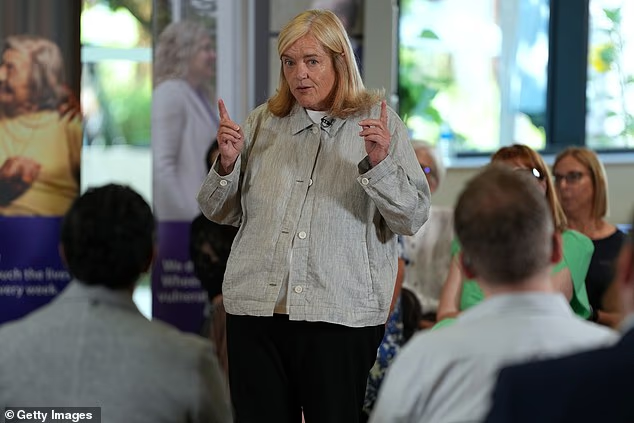
Lady Casey, chair of the Independent Commission on Adult Social Care, called on ministers to make dementia ‘Britain’s next great national mission - just as cancer was for previous generations’.

The fight against dementia must be pursued with the same vigour that turned the tide on cancer, Baroness Louise Casey has told the Daily Mail.

Lady Casey, chair of the Independent Commission on Adult Social Care, called on ministers to make dementia ‘Britain’s next great national mission – just as cancer was for previous generations’.

Her intervention comes as a new report by Alzheimer’ Society and The King’s Fund think tank warns dementia care in England remains ‘stuck in the last century’ and is in need of a radical overhaul.

Huge leaps in cancer survival over the past 50 years give policymakers the ‘blueprint’ for tackling dementia but a rapidly ageing population and soaring cases make change more urgent, it adds.

Advertisement

Lady Casey and Professor Sir Mike Richards, the former national cancer tsar, will today urge the government to take action when they address the Alzheimer’s Society annual conference in London.

Writing for the Daily Mail, Lady Casey said: ‘Many people in this country will remember when cancer was widely seen as a death sentence, and little could be offered beyond making people as comfortable as possible in their final days.

‘Since the 1970s we have largely transformed that story through decades of research, earlier diagnosis, public awareness, clinical trials and better treatments.

‘This tremendous progress did not come from one miracle cure or one government.

Advertisement

Lady Casey, chair of the Independent Commission on Adult Social Care, called on ministers to make dementia ‘Britain’s next great national mission – just as cancer was for previous generations’.

‘It came because the country decided that cancer mattered, deserved our national effort, and kept up the fight, year after year.

‘It is time we gave dementia that same seriousness and ambition.’

Advertisement

The Daily Mail and Alzheimer’s Society have partnered in a drive to defeat dementia, which claims 76,000 lives a year as Britain’s biggest killer.

Our Defeating Dementia campaign aims to raise awareness of the disease, in an effort to increase early diagnosis, boost research and improve care.

The number of people living with dementia in the UK is expected to rise from 1million to 1.4million by 2040, with the cost to the economy predicted to double.

Advertisement

The new report sets out the steps experts believe the government, NHS and social care leaders must take if dementia diagnosis, treatment, care and support is to make the same progress seen for cancer, where survival rates have almost doubled since the early 1970s.

It calls for strong leadership, clear targets for diagnosis and treatment, and a commitment to improving the quality of data.

Alzheimer’s Society has previously accused the NHS of treating dementia patients like ‘second-class citizens’ who are often ‘cast aside’ with little more than a leaflet.

Professor Sir Mike Richards told the Daily Mail that ‘in many ways, dementia is where cancer was decades ago’ but there are ‘lessons to be learned’ and opportunities for dementia to ‘do a bit of catching up’.

Professor Sir Mike Richards told the Daily Mail that ‘in many ways, dementia is where cancer was decades ago’ but there are ‘lessons to be learned’ and opportunities for dementia to ‘do a bit of catching up’.

Advertisement

And the Daily Mail revealed an 18-week diagnosis target for dementia appeared in early drafts of an upcoming government guidebook but was removed in later versions, raising fears the condition is not being treated as a priority.

However, the government has committed to appointing a ‘dementia tsar’, who charities hope will drive the kind of sustained change that transformed cancer care, and there are promising new drugs on the horizon.

As the first ‘cancer tsar’, appointed as National Cancer Director in 1999, Sir Mike oversaw three consecutive cancer strategies.

Speaking ahead of today’s event, he told the Daily Mail that ‘in many ways, dementia is where cancer was decades ago’ but there are ‘lessons to be learned’ and opportunities for dementia to ‘do a bit of catching up’.

Advertisement

Sir Mike added: ‘When I started working in cancer 50 years ago, an eminent professor asked me why I wanted to work in oncology, adding “Don’t they all die?”.

‘There was so little hope and ambition. But look at what we have managed to achieve.

‘While there are still real challenges in cancer, the progress made shows what can be possible when investment, collaboration, leadership and hope combine.

‘Today, what continues to make the difference are clear diagnosis and treatment pathways with timed targets, and a national registry that tracks progress.

Advertisement
Sarah Woolnough, chief executive of The King’s Fund, said approaches to dementia care are 'still stuck in the 20th century'.

Sarah Woolnough, chief executive of The King’s Fund, said approaches to dementia care are ‘still stuck in the 20th century’.

Michelle Dyson, chief executive of Alzheimer’s Society, said 'urgency is critical' and the country cannot wait 50 years for improvements.

Michelle Dyson, chief executive of Alzheimer’s Society, said ‘urgency is critical’ and the country cannot wait 50 years for improvements.

‘Dementia deserves the same ambition that has transformed cancer care. Now is the time to build momentum.

‘The conditions are right for the incoming dementia tsar to lead a movement for change, but it will require everyone involved – patients, clinicians, health service managers, academics, charities, industry, together with ongoing political will – to deliver long-term change.’

Advertisement

The gulf between people’s experiences of dementia care and cancer care are further exposed in a new survey of 1,000 people caring for someone with dementia.

Around a quarter of respondents were able to make a direct comparison between diagnosis, treatment and support for both dementia and cancer.

Over half (51 per cent) said their experience of dementia care was worse and only one in ten (11 per cent) said it was better.

Sarah Woolnough, chief executive of The King’s Fund, said: ‘There was a time when cancer was thought of as a death sentence, frequently referred to as the “Big C”, such was the fear around a diagnosis.

Advertisement

‘Whilst still a major killer claiming far too many lives, many people are living well and after cancer and there has been a remarkable transformation in cancer outcomes in a relatively short space of time.

‘The same cannot be said for dementia care, with approaches to treatment still stuck in the 20th century.

‘There is ambition that this might be about to change, with recent major scientific advancements giving hope that dementia treatment on the cusp of a cancer-style revolution in care.

‘We will only be able to fulfil this potential if the health and care system is ready to diagnose dementia swiftly and roll out new innovations at scale.

Advertisement

‘That is currently far from the case, and we believe that lessons can be learnt from the progress made in cancer.

‘The potential for wholesale change is within reach; policymakers now need to follow these steps in order to grasp it.’

Michelle Dyson, chief executive of Alzheimer’s Society, said: ‘If you have cancer, it is treated urgently, you get a specific diagnosis, and there is a clear pathway that takes you through your care and treatment.

‘With dementia, it can be years before you get a diagnosis and, all too often, people are sent home with a leaflet and little else.

Advertisement

‘Both are horrendous conditions, and there is still much to do for cancer care, but people’s experiences are worlds apart.

‘I know first-hand, as a former Director General in the Department of Health and Social Care, what happens when something is made a priority, with proper targets, investment, leadership and accountability. We desperately need this for dementia.

‘Urgency is critical. Dementia is the UK’s biggest killer and we cannot afford for this to take 50 years.

‘Government must make dementia a priority and learn what it can from cancer to create a future where dementia no longer devastates lives.’

Advertisement

Social care minister Alison McGovern will admit dementia has been ‘neglected for far too long’ when she delivers a speech at the conference.

She is expected to say: ‘Nowhere is the division between health and social care felt more sharply than by people living with dementia and their families – too often left to navigate a fragmented system at the most difficult time in their lives.

‘That is why, this year, we will publish the first ever Modern Service Framework for Frailty and Dementia, our guidebook for better support.

‘It will bring health and care workers together, adhering to a set of clear national standards, sharpening our priorities, and raising expectations of the help that people living with dementia and their families should receive.

Advertisement

‘We must put a floor under the kind of care that people can expect.

‘And we must improve quality of care, giving the workforce the direction and support it needs to reach those standards.

‘No one wants a future where we live longer but can do less. We want a future where our loved ones stay with us for more years with more joy and more life to live.’

Baroness Louise Casey 
Advertisement
Lady Casey warns: 'We cannot stick our heads in the sand.'

Lady Casey warns: ‘We cannot stick our heads in the sand.’

By Baroness Louise Casey, chair of the Independent Commission on Adult Social Care.

Many will remember when cancer was widely seen as a death sentence and little treatment could be offered beyond making people as comtortable as possible in their final days.

Since the 1970s, we have largely transformed that story through decades of research, earlier diagnosis, public aware-ness, clinical trials and better treatments.

Advertisement

This tremendous progress did not come from one miracle cure or the actions of one government. It came because the country decided cancer mattered and deserved our effort. And we kept up the fight year after year.

It is time we afforded that same seriousness and ambition to treating dementia.

September is World Alzheimer’s Month. It should be a moment of national resolve: a commitment to make dementia Britain’s next great national mission, just as cancer was for previous generations.

Dementia is not a normal part of ageing, but a collection of neurological diseases, including Alzheimer’s. Yet, too often, it is treated as part of a person’s inevitable decline or a social care problem rather than a series of major health conditions that can be diagnosed, researched and treated.

Advertisement

It’s people with dementia, and their families and loved ones, who feel the consequences. I have met far too many people who receive a diagnosis… and then are left alone to cope.

Alzheimer’s Society is right to call for those with dementia to receive a diagnosis, care plan and access to treatment within 18 weeks of GP referral. This standard, or better, is already in place for other major health conditions. Dementia should be no different.

But this is just the beginning. The lesson from cancer is that our efforts work best as part of a wider mission: investment in research, expanded trials, better treatments, support for people after diagnosis and a workforce ready to deliver those new treatments.

That is why we must make this country a great place to conduct dementia trials. I implore the NHS to get ready to deliver the next generation of breakthrough treatments.

Advertisement

Healthier lifestyles, earlier diagnoses and better treatments across the board mean we’re living for longer – and with that brings a new challenge. As more of us live into our 80s and 90s, it is not enough to simply add years to life – we need to ensure that our twilight years are as healthy as possible.

By 2040, there will be 1.4million living with dementia. We cannot stick our heads in the sand.

Delivering this national mission also requires someone with the authority to drive it. That is why I called for the appointment of a dementia tsar to lead the charge.

Responsibility is currently scattered: when responsibility belongs to everyone, accountability too often belongs to no one. We need someone to own the problem and drive the kind of action needed to solve it.

Advertisement

Britain has repeatedly shown that it can achieve extraordinary things. We rebuilt the country after the war, we developed vaccines at record speed during the pandemic and have transformed cancer survival since the 1970s. The lesson is that progress follows when we act together.

Dementia can be that next national mission.

But lasting change cannot be designed by politicians and experts alone. We need the public to help decide what dementia sufferers and their families should expect and what system we are prepared to build together.

That is why we are asking people across the country to take part in the Big Conversation on Care. There will be many opportunities to get involved but, as a first step, I’m asking you to vote on the proposals the public have been putting forward before September 23.

Advertisement

Together, we can turn national resolve into action. If we can improve diagnosis, treatment and care for people facing dementia today, there will be greater hope for all of us tomorrow.

<!- – ad: https://mads.dailymail.co.uk/v8/de/health/none/article/other/mpu_factbox.html?id=mpu_factbox_1 – ->

  • For confidential advice, call Alzheimer’s Society’s Dementia Support Line on 0333 150 3456 

Source link

Continue Reading
Click to comment

You must be logged in to post a comment Login

Leave a Reply

NewsBeat

BARONESS CASEY: Just as we did for cancer treatment, this country must come together to create lasting change

Published

on

BARONESS CASEY: Just as we did for cancer treatment, this country must come together to create lasting change

Advertisement

Many will remember when cancer was widely seen as a death sentence and little treatment could be offered beyond making people as comfortable as possible in their final days.

Since the 1970s, we have largely transformed that story through decades of research, earlier diagnosis, public awareness, clinical trials and better treatments.

This tremendous progress did not come from one miracle cure or the actions of one government. It came because the country decided cancer mattered and deserved our effort. And we kept up the fight year after year.

It is time we afforded that same seriousness and ambition to treating dementia.

Advertisement

September is World Alzheimer’s Month. It should be a moment of national resolve: a commitment to make dementia Britain’s next great national mission, just as cancer was for previous generations.

Dementia is not a normal part of ageing, but a collection of neurological diseases, including Alzheimer’s. Yet, too often, it is treated as part of a person’s inevitable decline or a social care problem rather than a series of major health conditions that can be diagnosed, researched and treated.

Advertisement

It’s people with dementia, and their families and loved ones, who feel the consequences.

I have met far too many people who receive a diagnosis… and then are left alone to cope.

Alzheimer’s Society is right to call for those with dementia to receive a diagnosis, care plan and access to treatment within 18 weeks of GP referral. This standard, or better, is already in place for other major health

conditions. Dementia should be no different.

Advertisement

But this is just the beginning. The lesson from cancer is that our efforts work best as part of a wider mission: investment in research, expanded trials, better treatments, support for people after diagnosis and a workforce ready to deliver those new treatments.

That is why we must make this country a great place to conduct dementia trials.

I implore the NHS to get ready to deliver the next generation of breakthrough treatments. Healthier lifestyles, earlier diagnoses and better treatments across the board mean we’re living for longer – and with that brings a new challenge. As more of us live into our 80s and 90s, it is not enough to simply add years to life – we need to ensure that our twilight years are as healthy as possible.

Baroness Casey says she implores the NHS to get ready to deliver the next generation of breakthrough treatments

Baroness Casey says she implores the NHS to get ready to deliver the next generation of breakthrough treatments

Advertisement

By 2040, there will be 1.4million living with dementia. We cannot stick our heads in the sand.

Delivering this national mission also requires someone with the authority to drive it. That is why I called for the appointment of a dementia tsar to lead the charge.

Responsibility is currently scattered: when responsibility belongs to everyone, accountability too often belongs to no one. We need someone to own the problem and drive the kind of action needed to solve it.

Britain has repeatedly shown that it can achieve extraordinary things. We rebuilt the country after the war, we developed vaccines at record speed during the pandemic and have transformed cancer survival since the 1970s. The lesson is that progress follows when we act together.

Advertisement

Dementia can be that next national mission. But lasting change cannot be designed by politicians and experts alone. We need the public to help decide what dementia sufferers and their families should expect and what system we are prepared to build together.

That is why we are asking people across the country to take part in the Big Conversation On Care. There will be many opportunities to get involved but, as a first step, I’m asking you to vote on the proposals the public have been putting forward before September 23.

Together, we can turn national resolve into action. If we can improve diagnosis, treatment and care for people facing dementia today, there will be greater hope for all of us tomorrow.

Baroness Casey chairs the Independent Commission on Adult Social Care

Advertisement

Source link

Advertisement
Continue Reading

NewsBeat

Bolton’s beloved elephants are finally coming home after 11 years

Published

on

Bolton's beloved elephants are finally coming home after 11 years

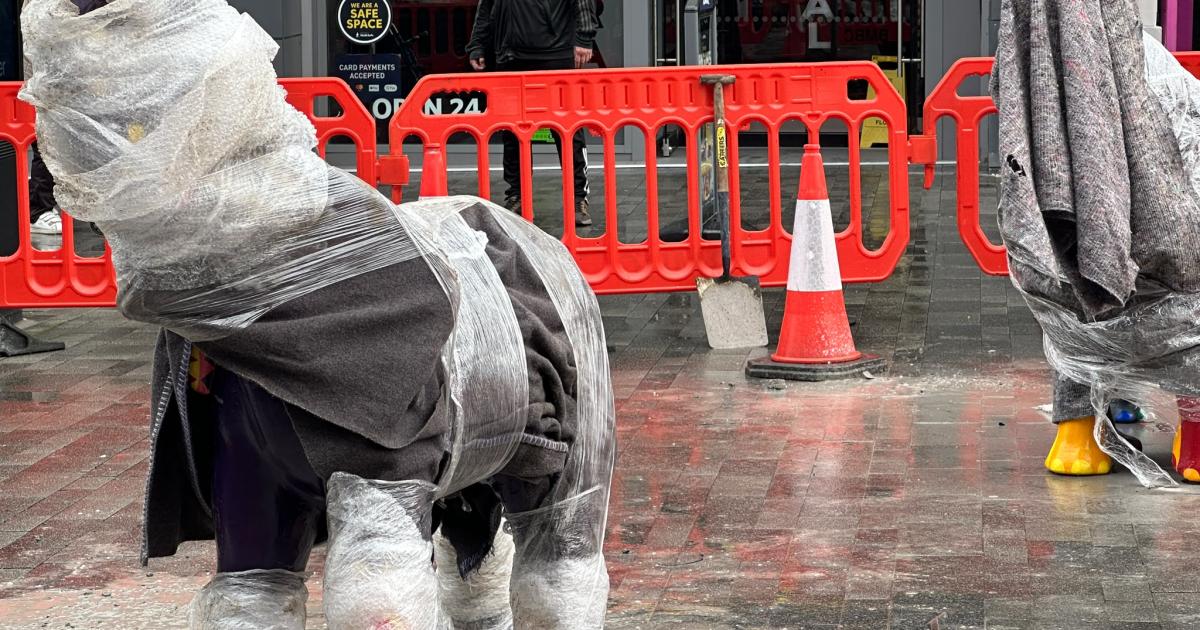
The town’s three colourful elephant statues are being returned to their original home on Newport Street after packing their trunks in 2015.

Construction work is taking place with the elephants appearing at the top of Newport Street and Great Moor Street.

The trio, Ellie, Elmer and Mister Jackbow, have been fully restored and repainted ahead of their return.

They were previously moved to an area near the Octagon car park, close to the play area, where they remained while work was carried out.

Advertisement

Their return means they will once again stand close to Bolton Interchange, where they are expected to be among the first sights seen by people arriving in the town centre.

(Image: NQ)

The elephants were named by local children following a public competition and have become a familiar part of Bolton’s identity.

Their return was announced by Bolton Council in May as part of wider plans to make the town centre more welcoming.

The restoration is being funded through the Pride in Place Impact Fund, alongside other planned improvements across the town centre.

Advertisement

These include a double-sided LED screen outside Bolton Interchange, new wayfinding, murals celebrating local history, upgraded outdoor power units and new seating.

The council has also outlined improvements to lighting and CCTV, while defibrillators have already been installed.

The Bolton elephants (Image: Bolton Council)

Bolton has a long association with the elephant emblem, with theories linking it to historic trade with India and the use of the Elephant and Castle as a symbol of strength and dignity.

The installation is part of plans to ‘create a vibrant and welcoming town centre that celebrates its heritage and unique identity’.

Advertisement

Source link

Continue Reading

NewsBeat

UK prosecutors file for extradition of the Tate brothers from the US

Published

on

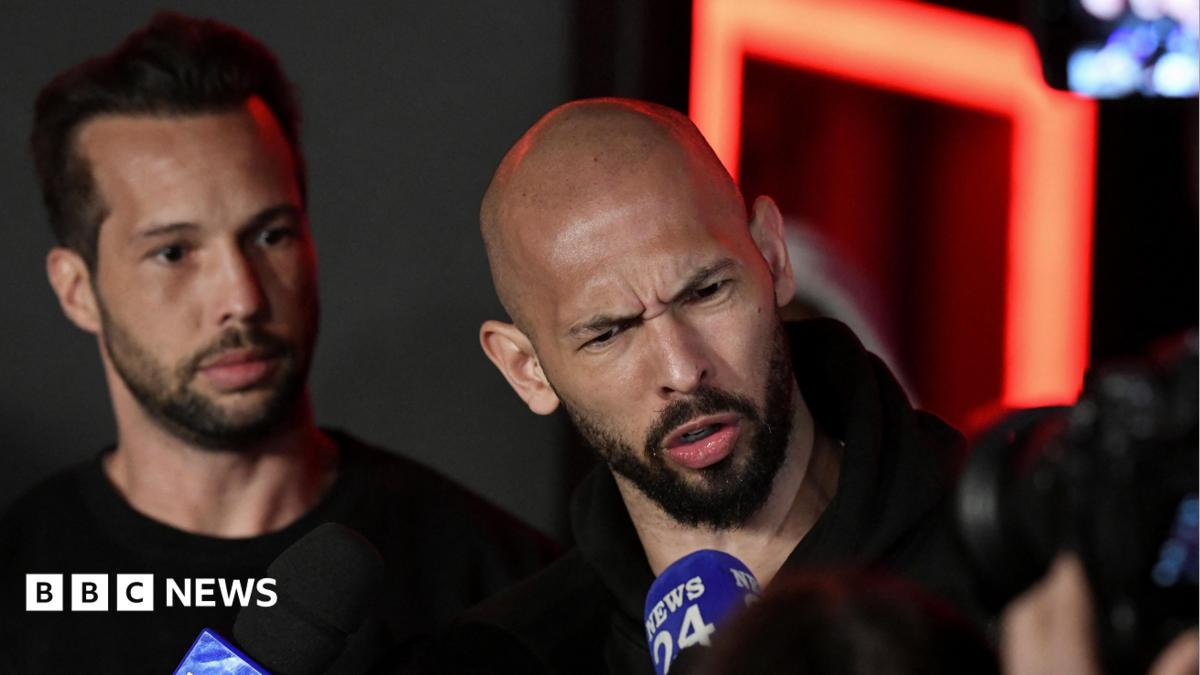
Tristan and Andrew Tate delivering a press statement. The brothers are dressed in black and Andrew has a disgruntled facial expression as he speaks into a microphone.

Prosecutors in the UK have lodged a formal request for the extradition of brothers Andrew and Tristan Tate from the US to face charges of rape and sex trafficking.

The US State Department, which received the requests last week, will review the extradition applications to make sure they comply with the existing agreement between the US and UK.

But the lawyer for the brothers, who are dual US-UK citizens, accused British authorities of failing to provide the necessary supporting documents in the request.

The brothers are facing a total of 59 charges in the UK, including rape and counts relating to sex trafficking and indecent images of a child. Both men deny any wrongdoing.

Advertisement

The Crown Prosecution Service originally brought 21 charges, but added 38 more in July for alleged actions spanning between 2010 and 2017.

US authorities took the men into custody in July after the UK announced the new charges. The brothers lost a bid to be released from a Florida jail on bail last week.

UK authorities had until Wednesday 16 September to submit a full extradition request.

Joe McBride, the brothers’ lawyer, said he would be challenging the requests, arguing they were not backed up by the information needed under the extradition agreement.

Advertisement

In a statement to the BBC, McBride said the brothers had also not received the extradition requests themselves, nor documents such as “a warrant, a charging document, and information that provides a reasonable basis to believe my clients committed these offences”.

“This cloak-and-dagger act speaks to the deception behind these accusations and to their weakness,” he added.

Once the State Department completes it review, there are still several legal steps before extradition can be permitted. Applications must go through the US Justice Department which will in turn forward it to the court, where the final decision on their extradition will be made.

During this legal process, the Tate brothers will remain in jail in the US.

Advertisement

An official letter from the State Department details that Andrew Tate, 39, is “wanted to stand trial in the United Kingdom” on a series of charges, including 10 counts of rape, three counts of arranging or facilitating trafficking for sexual exploitation and three counts of assault occasioning actual bodily harm.

He is also accused of making and distributing indecent images of a child and possessing extreme pornography.

Charges levelled against Tristan Tate, 38, include five counts of rape, six counts of assault occasioning actual bodily harm, three counts of sex trafficking and a sexual assault.

Both men deny any wrongdoing.

Advertisement

In response to the formal request for extradition from the US, a Home Office spokesperson said: “As a matter of long-standing policy and practice, we do not routinely comment on individual cases.”

The former professional kickboxers turned divisive social media influencers hold dual US and British citizenship, and had primarily been living in Romania since 2017.

They have been accused of promoting misogyny and toxic masculinity online, which has attracted a large following, particularly from young men.

Andrew Tate, who is a self-proclaimed “misogynist”, first rose to fame after a 2016 appearance on the British version of reality TV show Big Brother.

Advertisement

The brothers also faced sex-trafficking charges in Romania in 2022, and were under a travel ban until they were allowed to come to the US in 2025.

Both brothers have denied all charges and allegations.

Source link

Advertisement
Continue Reading

NewsBeat

‘They squandered it’ – Reform attacked over Durham finances

Published

on

'They squandered it' - Reform attacked over Durham finances

It comes after the authority warned it faces an £83.7 million funding gap and may need four years of near-maximum council tax rises, job losses and wider use of artificial intelligence to balance the books.

Cabinet members were told on Wednesday (September 16) that the council faces mounting financial pressures over the next four years, driven by rising demand for services including social care, school transport and waste collection.

Officers have identified £21.5m of savings through a transformation programme that includes digitising services, cutting office costs and making greater use of technology and AI.

Around 18 jobs could also be lost under the proposals.

Advertisement

Council forecasts show a funding shortfall of £83.7m by 2030 before savings and council tax increases are taken into account, including a £23.3m gap next year.

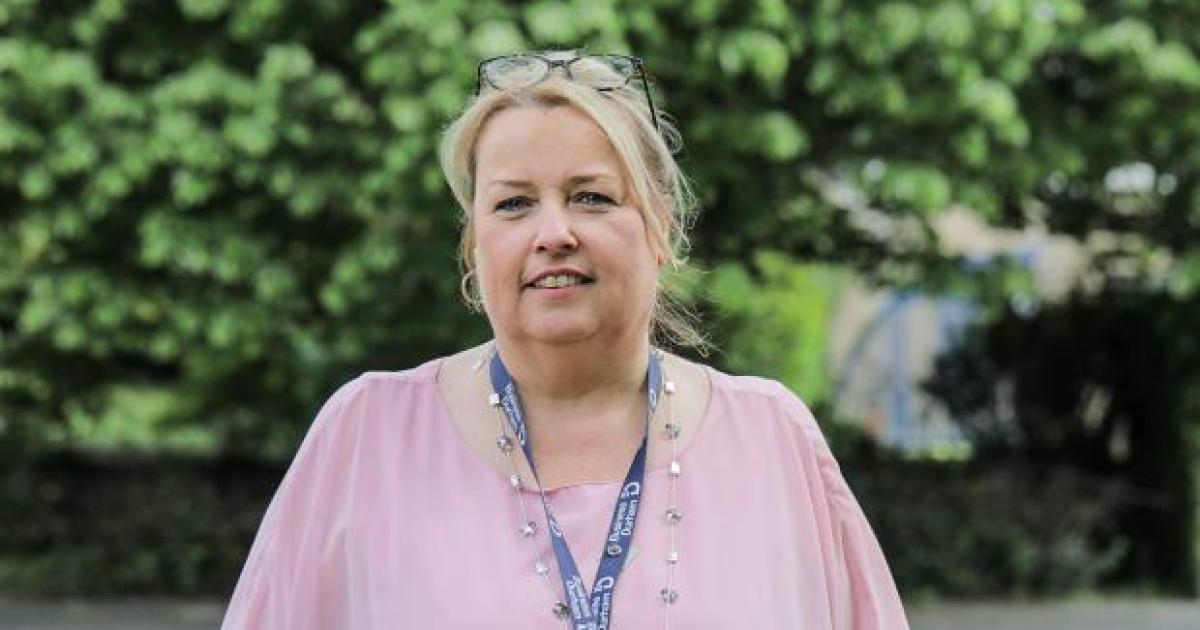
Reform’s deputy leader and finance chief Darren Grimes told councillors that the authority would maintain a “laser-like focus” on stripping out waste and avoidable costs, while leader Andrew Husband insisted Durham remained in a stronger financial position than many councils across the country.

(Image: NORTHERN ECHO)

However, Labour MP Luke Akehurst said Reform should accept responsibility for some of the challenge now facing County Hall.

The North Durham MP said: “As a local MP I will always put the case to Ministers for more funding for Durham County Council, so that all the costs of delivering public services in an area that has both deprivation and rurality to tackle are properly reflected in the funding formula.

Advertisement

“However, Reform ought to acknowledge that Durham received a very generous funding settlement last year – a real terms increase of 6.7 per cent.

“They made a political choice to use some of this to keep down the annual increase in Council Tax, rather than invest it in services, and their own choice to do this has widened the funding gap they now face.”

(Image: CHRIS BOOTH)

Cllr Amanda Hopgood, leader of the Liberal Democrat opposition on Durham County Council, said many of the transformation plans now being promoted by Reform had already been under development before the party took control of the authority.

She said: “The transformation strategy had already been discussed before Reform was elected.

Advertisement

“We fully support the transformation plan for local government but Reform talk a lot about virtue signalling and their obsession with trying to deliver zero council tax rises – we are seeing the consequences of now.

“They set a budget this year knowing that they were creating a future black hole.

“They pleaded for more money from the government, now they’ve got it and they squandered it.”

Durham County Council opposition leader Amanda Hopgood said Reform 'squandered' government money.Durham County Council opposition leader Amanda Hopgood said Reform ‘squandered’ government money. (Image: DURHAM COUNTY COUNCIL)

The budget debate comes at a difficult political moment for Reform’s administration.

Advertisement

Three councillors, Lyndsey Fox, Nicole Brown and Paul Sexton, resigned from the party this week and now sit as independents, reducing Reform’s majority on the 98-seat council to just three.

The departures are the latest in a series of resignations, suspensions and defections since Reform swept to power in the 2025 local elections, winning 65 seats and taking control of the authority for the first time.

Cabinet members are expected to begin consulting residents on the council’s financial plans later this month, with final budget decisions due to be taken in February.

The consultation will include proposals for annual council tax increases of up to 4.99 per cent, which officers say would broadly eliminate the authority’s funding gap over the four-year planning period if combined with the planned savings programme.

Advertisement

Source link

Continue Reading

NewsBeat

Trump vows Iran war is almost FINISHED and threatens massive new target for tariffs after ploy by Canada: ‘I think it’s laughable’

Published

on

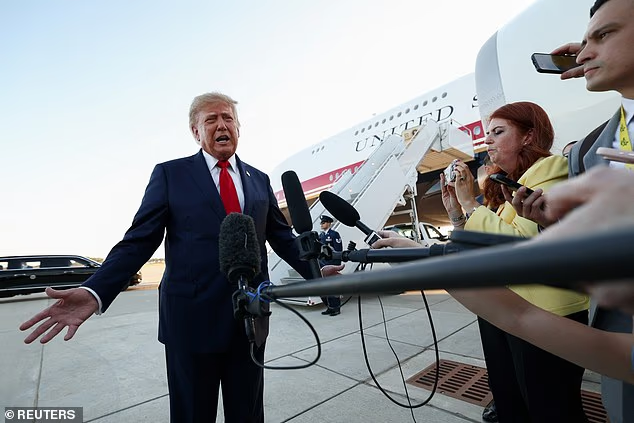
President Donald Trump spoke to reporters ahead of a campaign event on Wednesday

President Trump said the war in Iran was nearly over as he threatened to implement new tariffs on the entire continent of Europe should Canada join the EU.

The commander-in-chief spoke to reporters on Wednesday, ahead of a scheduled appearance to support Republicans in the midterm elections.

He was asked about the ongoing military operation in the Middle East, which began at the end of February when US and Israeli forces struck Iran. 

‘Well, hopefully we’re toward the end of the war,’ Trump said. ‘They want to make a deal, and we’ll see how that works out.’

Advertisement

When he was then asked about a proposal for Canada to join the EU as an ‘associate member,’ Trump said he found the idea ‘laughable.’

‘Canada has been a terrible trade partner, and no, I don’t see it,’ he said. 

‘And if they do that, if I think it’s at all a hostile act, I will bring very serious tariffs or stop trading with Europe on many things,’ the president then warned. 

‘If it’s a bad intention, we’ll put very heavy tariffs on Europe,’ he continued.

Advertisement

President Donald Trump spoke to reporters ahead of a campaign event on Wednesday

The US president threatened implementing new tariffs should Canada join the European Union. Canadian Prime Minister Mark Carney and European Commission President Ursula von der Leyen are pictured together on Wednesday

The US president threatened implementing new tariffs should Canada join the European Union. Canadian Prime Minister Mark Carney and European Commission President Ursula von der Leyen are pictured together on Wednesday

Trump said he is hopeful that the war in Iran is almost over. A damaged oil tanker is pictured in the Strait of Hormuz on Wednesday

Trump said he is hopeful that the war in Iran is almost over. A damaged oil tanker is pictured in the Strait of Hormuz on Wednesday

Advertisement

The president’s remarks come just one day after the House approved a war powers resolution that would halt the president’s ability to continue military action without congressional approval or to defend the US or one of its allies from an ‘imminent attack.’

The roll call late on Tuesday night, 220-204, was similar to earlier efforts this summer, with a few more Republicans joining all Democrats voting to bring an end to the conflict. 

None of the resolutions have made it to the president’s desk, where Trump would almost certainly veto the measure.

‘Remember when Donald Trump said that this war would last just a few weeks?’ said Rep. Seth Moulton, D-Mass., who served as a Marine during the Iraq War and pushed the resolution forward.

Advertisement

Moulton said it’s time for Congress to ‘actually ask tough questions, as the Constitution directs us to do, rather than be subservient to another warmongering administration.’

But Republican Rep. Brian Mast of Florida, the chairman of the House Foreign Affairs Committee, questioned which military resources Democrats would want to remove from the region where he said Iran remains a threat.

Mast said Trump is against ‘forever wars, and that is what he is ending’ – the decades of hostilities from Iran.

‘They are a continuous ongoing threat to the United States,’ Mast said. ‘Enough is enough.’ 

Advertisement
Trump has remained publicly committed to the Iran campaign, while War Secretary Pete Hegseth is facing a fresh challenge from Republican Rep. Thomas Massie, who introduced articles of impeachment accusing him of unlawfully continuing military action

Trump has remained publicly committed to the Iran campaign, while War Secretary Pete Hegseth is facing a fresh challenge from Republican Rep. Thomas Massie, who introduced articles of impeachment accusing him of unlawfully continuing military action 

The House has approved a war powers resolution that would halt the president¿s ability to continue military action without congressional approval, except when necessary to defend the United States, an ally or partner from an 'imminent attack'

The House has approved a war powers resolution that would halt the president’s ability to continue military action without congressional approval, except when necessary to defend the United States, an ally or partner from an ‘imminent attack’

The War Powers Resolution of 1973 would give Congress a mechanism to limit the president’s use of military force without congressional authorization. 

The action is likely the last House vote on the Iran war ahead of the midterm elections, where the conflict overseas is playing a substantial role in the political campaigns. 

Advertisement

Before voting even began, Representative Thomas Massie read aloud articles of impeachment against War Secretary Pete Hegseth, putting the secretary’s conduct during the Iran war in the spotlight.

He accused Hegseth of unlawfully continuing US military action against Iran without proper authorization from Congress.

Massie’s move could force House Republicans into an uncomfortable showdown over Hegseth’s conduct, although impeachment itself is far from certain. 

The Kentucky congressman filed the measure as a privileged resolution, meaning the House must take it up within two legislative days, setting the stage for a potentially explosive vote.

Advertisement

It came as a damning report from the Pentagon’s Office of Inspector General revealed that the war in Iran has cost the United States at least $33.4 billion as hundreds of destroyed buildings and dozens of aircrafts remain unaccounted for. 

European Union Commission President Ursula von der Leyen announced she wanted to add Canada as an associate member

European Union Commission President Ursula von der Leyen announced she wanted to add Canada as an associate member  

Meanwhile Trump faced a new threat on the international stage on Wednesday, when European Union Commission President Ursula von der Leyen announced she wanted to add Canada as an associate member.

During the top Eurocrat’s annual State of the Union speech to the European Parliament, she repeatedly love-bombed Canadian premier Mark Carney – who was in the chamber – saying Brussels wanted ‘to bring the relationship with Canada to the highest level possible.’

Advertisement

‘Dear Mark, I said we must urgently reimagine our partnerships. So, I would like to work with you on opening the door for Canada to be the first associate member of the EU,’ she said, to the surprise of the EU’s 27 member states.

‘We share one ocean, one set of values, one way of seeing the world. And we will now build our shared future as well – thank you for being here.’

But the attempt to flatter Carney faltered, with diplomats telling the Daily Mail they were never briefed about the proposal and that ‘associate membership’ doesn’t exist.

The EU diplomats accused Brussels of ‘over-reach’, with one going as far as to call the announcement ‘bombastic.’

Advertisement
Carney looked on as von der Leyen heaped praise onto him and his nation

Carney looked on as von der Leyen heaped praise onto him and his nation

‘There will be a summit at the end of October, so logically they will talk about deepening the relations,’ the diplomat said.

‘But no one has ever seen an associate membership and no idea what it means in practice. Canada is a valuable partner for the EU, one of the few currently in the world where we share the values, so it is nothing against Canada.

‘But first and foremost the member states should be the ones to express what kind of relationship the EU wants to have with any third country.’

Advertisement

Another told the Daily Mail von der Leyen ‘kept this bit of associate membership out of the text until the last moment. She also did not mention it up front to EU member states.

‘It seems like she is a bit too far out in floating this. Everyone is positive about Canada, and wants to strengthen the relationship.

‘But there is a lot of uncertainty about what von der Leyen envisages by coining this label.’

Source link

Advertisement
Continue Reading

NewsBeat

Coronation Street star joins Loose Women as a panellist

Published

on

Coronation Street star joins Loose Women as a panellist

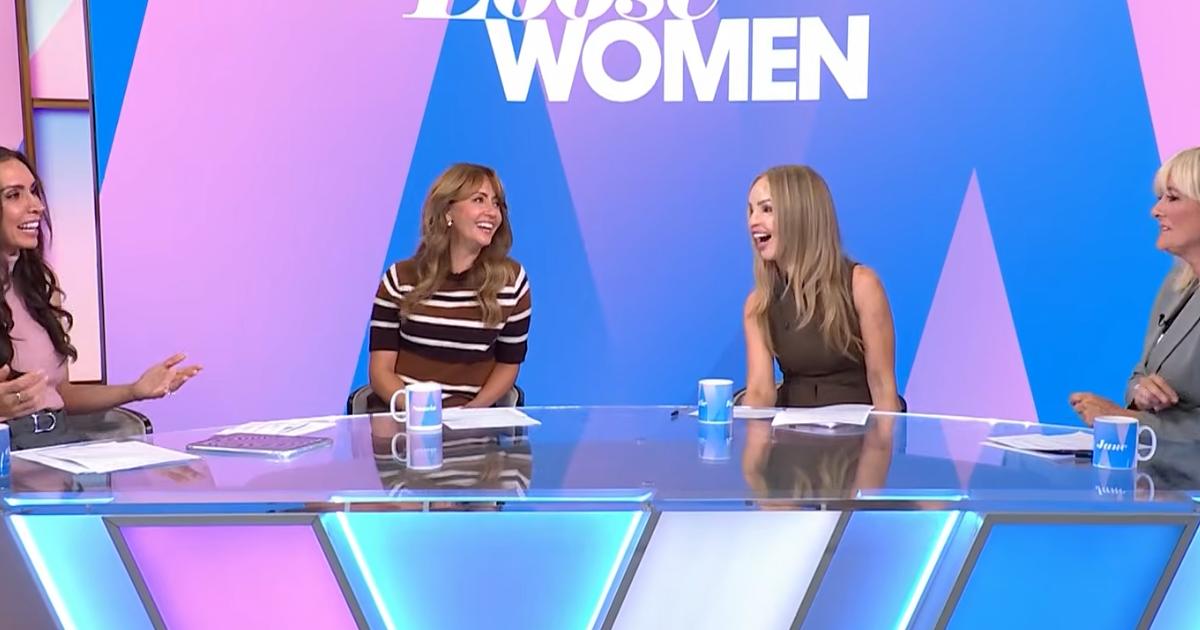
Samie Longchambon has revealed she will be a panellist on Loose Women and starred in her first episode today (Wednesday, September 16).

Loose Women has gone through a few major changes this year after two panellists, Denise Welch and Nadia Sawalha, left the show.

Samie Longchambon joins Loose Women

Samie announced the news via Instagram yesterday and said: “I just wanted to let you all know that tomorrow I’m going to be a loose lady, I’m going to be on the panel of Loose Women.

“I’ve never actually been on the panel before, I’ve been a guest but I’ve never actually sat there for the whole show chatting, so I’m really looking forward to it.

Advertisement

“I’m also slightly nervous but they do say do something every day that scares you, so that’s what mine’s going to be tomorrow.

“So if you’re around, it’s half 12 until half one, so grab a brew and join us.”

Samie was joined on the panel by Katie Piper, Christine Lampard, and Katie Piper.

Samie is best known for playing Maria Connor on Coronation Street and has appeared in over 1,900 episodes.

Advertisement

Samie has also starred in several other shows including Heartbeat, Doctors, and The Cops.

What is Loose Women?

Loose Women is a talk show that is broadcast on weekdays during the day.

The show features a panel of four women who talk about aspects of their lives and discuss topical issues from politics and current trending news to entertainment and celebrity gossip.

Loose Women features other guest stars who are interviewed during the show.

Advertisement

Kaye Adams and Nadia Sawalha were the original presenters on the show with a range of other panellists including Coleen Nolan, Jane McDonald, Sally Lindsay and Janet Street-Porter joining the show since it first started.

In recent years, the show has been presented by Kaye Adams, Ruth Langsford, Christine Lampard, and Charlene White.

Some of the current panellists include GK Barry, Olivia Attwood, and Oti Mabuse.

Are you excited to watch Samie Longchambon as a panellist on Loose Women? Let us know in the comments.

Advertisement

Source link

Continue Reading

NewsBeat

Two Brits among three dead in Swiss Alps plane crash as Foreign Office issues statement

Published

on

Manchester Evening News

The small plane crashed high in the mountains in Switzerland on Tuesday

Two Britons are among three people confirmed to have lost their lives following a plane crash in the Swiss Alps.

The light aircraft came down high in the mountains near the town of Leukerbad, in the southern canton of Valais, Switzerland, on Tuesday, September 15.

Advertisement

All three passengers aboard the aircraft perished, with police working to identify the victims, though two have been confirmed as British nationals.

The Foreign, Commonwealth and Development Office (FCDO) has confirmed it is “providing support to the families of two British nationals who died in Switzerland”.

The body added: “Our thoughts remain with the families during this difficult time.”

The Cirrus SR22T aircraft departed from Sion Airport in the Rhône Valley before striking a mountain slope in the Fluhalp area approximately 10 minutes later, for reasons that remain unclear.

Advertisement

The plane had originally flown from Lugano, in the southern Italian-speaking canton of Ticino, before making a stop at Sion.

Local residents swiftly alerted the emergency services after spotting smoke rising from the stricken aircraft shortly after 4pm.

Three helicopters and two rescue specialists were among the team dispatched to the scene.

Swiss federal authorities have launched a formal investigation into the crash, alongside a criminal inquiry by the Office of the Attorney General of the Confederation and the Valais cantonal police.

Advertisement

Images released by local police show the wreckage of the aircraft strewn across the mountainside.

The local force stated: “Shortly after 4pm, for reasons yet to be determined, the aircraft collided with the northern slope of a mountain in the Fluhalp area of Leukerbad. Signs of smoke were subsequently reported in the region.”

Source link

Advertisement
Continue Reading

NewsBeat

Windows smashed and alcohol stolen in petrol station burglary

Published

on

Cambridgeshire Live

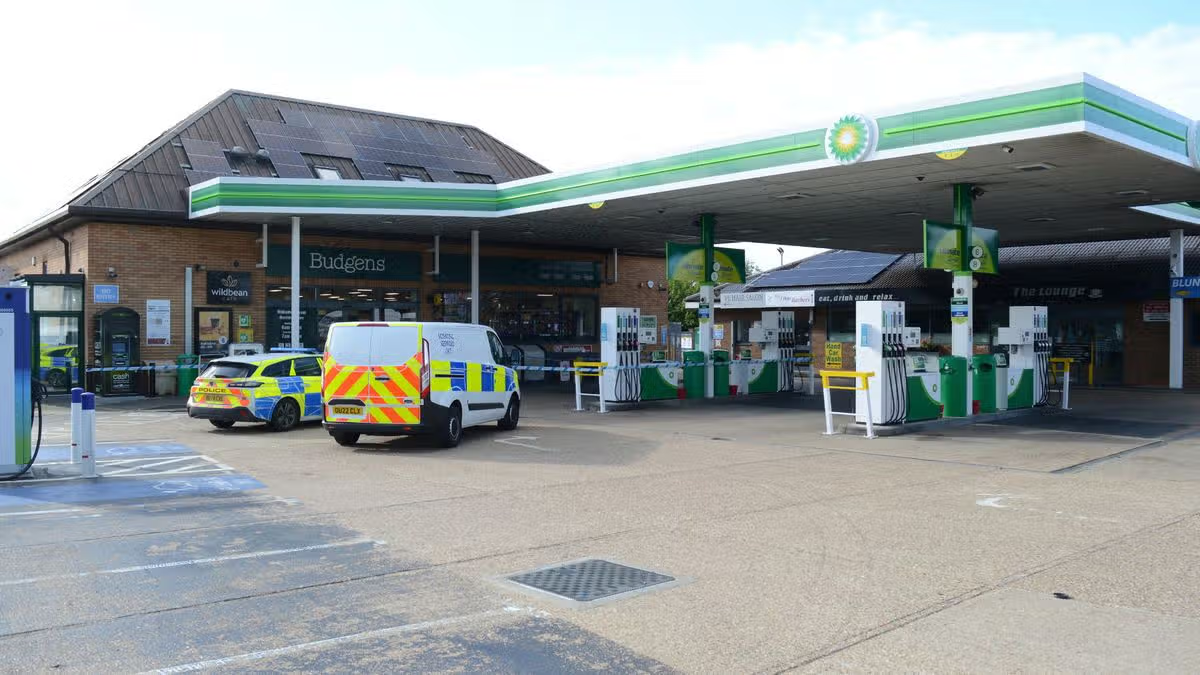
Two men dressed in black were seen leaving the scene

A petrol station has been left with a smashed window and damaged shop front following a burglary. Police were called to the BP garage on Station Road in Bluntisham at 5.10am this morning (September 16).

Officers found damage to the front of the shop where a window had been smashed. E-cigarettes, tobacco and alcohol were taken, but the exact amount is unknown. Two men dressed in black were seen on CCTV leaving the scene in a silver Honda Jazz and headed towards Earith.

No arrests have been made but an investigation is ongoing.

Advertisement

A Cambridgeshire Police spokesperson said: “Anyone with information or anyone who has CCTV or dashcam footage which may assist the investigation, is asked to report online www.cambs.police.uk quoting reference 35/71638/26 or call 101. Alternatively, contact Crimestoppers, anonymously, on 0800 555111 or via www.crimestoppers-uk.org.”

Source link

Continue Reading

NewsBeat

Robert Kraft says he and Ed Sheeran have both donated $2m to Palestinian relief groups amid Macklemore backlash

Published

on

Robert Kraft says he and Ed Sheeran have both donated $2m to Palestinian relief groups amid Macklemore backlash

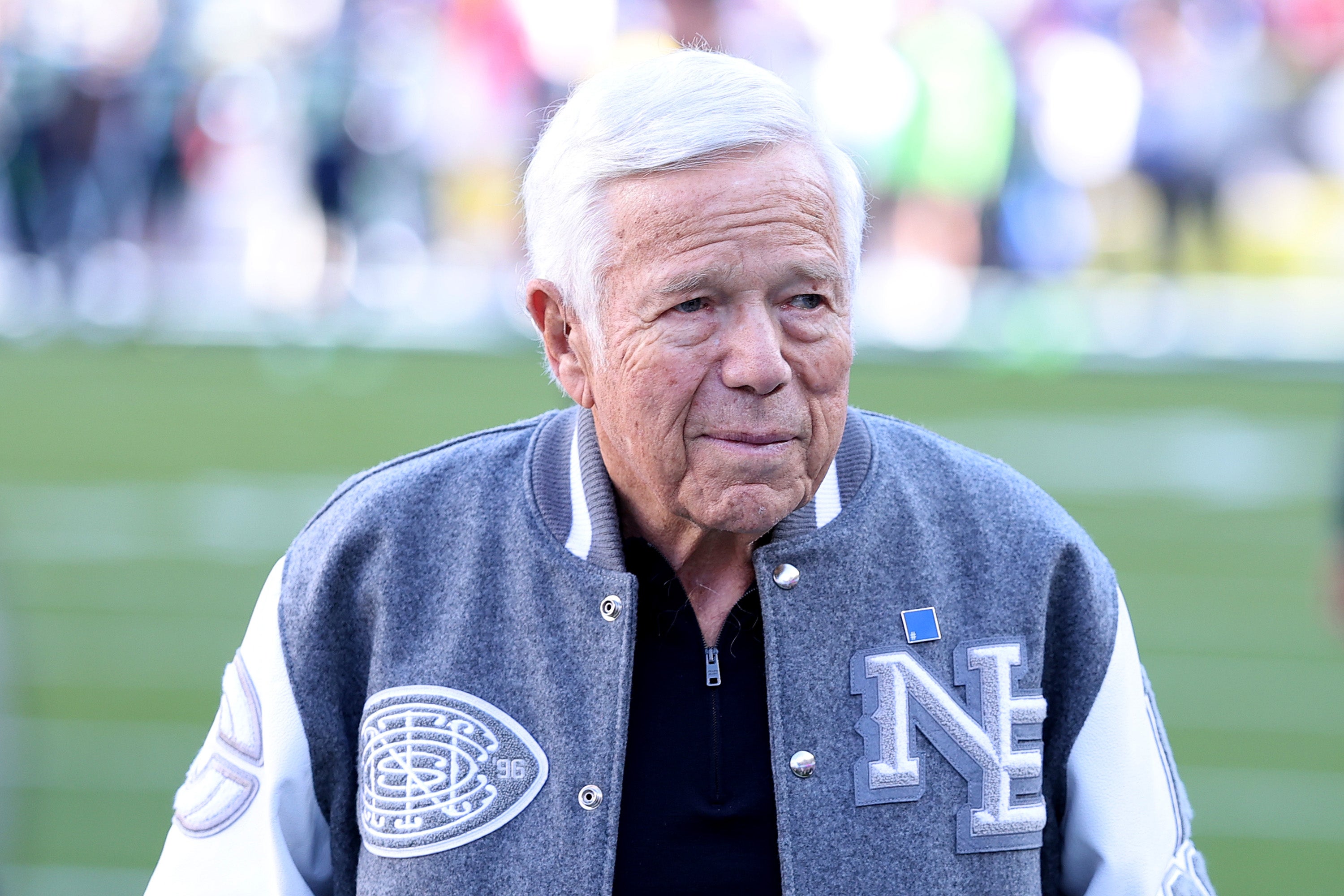
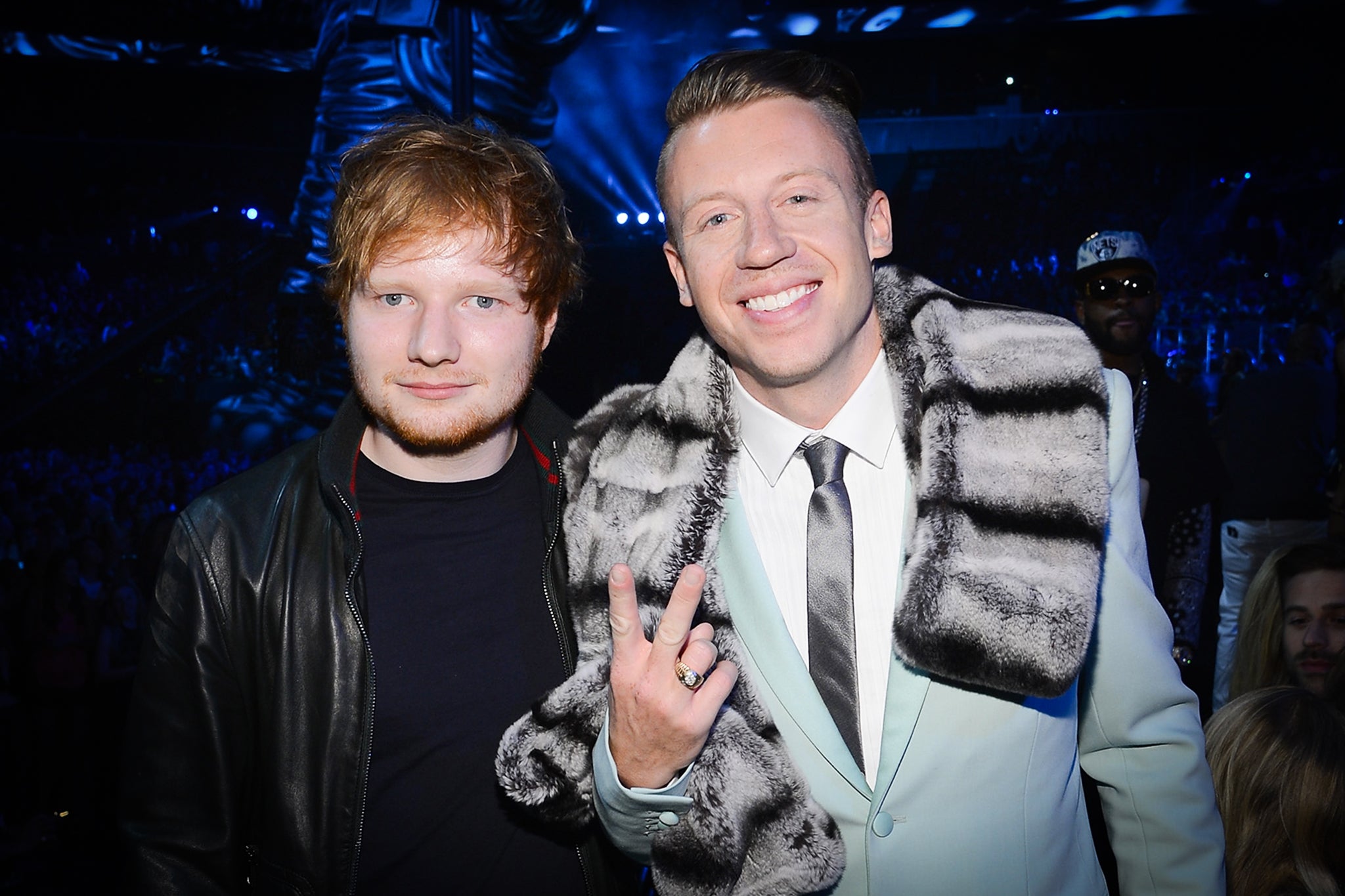
Billionaire sports executive Robert Kraft and musician Ed Sheeran have each pledged $2 million toward humanitarian relief for Palestinians, following a public challenge from rapper Macklemore.

The financial commitments arrive in the wake of a controversy that began earlier in the month when Macklemore delivered a political speech and chanted “Free Palestine” on stage during a concert at MetLife Stadium, later leading to his removal from Sheeran’s Loop Tour. The rapper asserted that Kraft had influenced other venue proprietors to block him from performing.

Earlier on Wednesday, Macklemore announced via social media that he would distribute $1 million in net earnings generated from his appearances on Sheeran’s tour to organizations aiding Palestinians, while challenging Kraft to match the sum.

“With everything that has happened over the last 48 hours, I want to bring the conversation back to where it belongs: to the Palestinian people who are still being killed, still living under military occupation, and still fighting for their freedom,” Macklemore wrote on Instagram. “I will be donating the entire $1 million of my net earnings from Ed Sheeran’s Loop Tour to six organizations working directly to support the Palestinian people. And I invite Robert Kraft to match my donation.

Advertisement

“Whatever we disagree about, perhaps we can agree on this: Palestinian lives are worth protecting. A Palestinian life is no less valuable than any other life on this earth.”

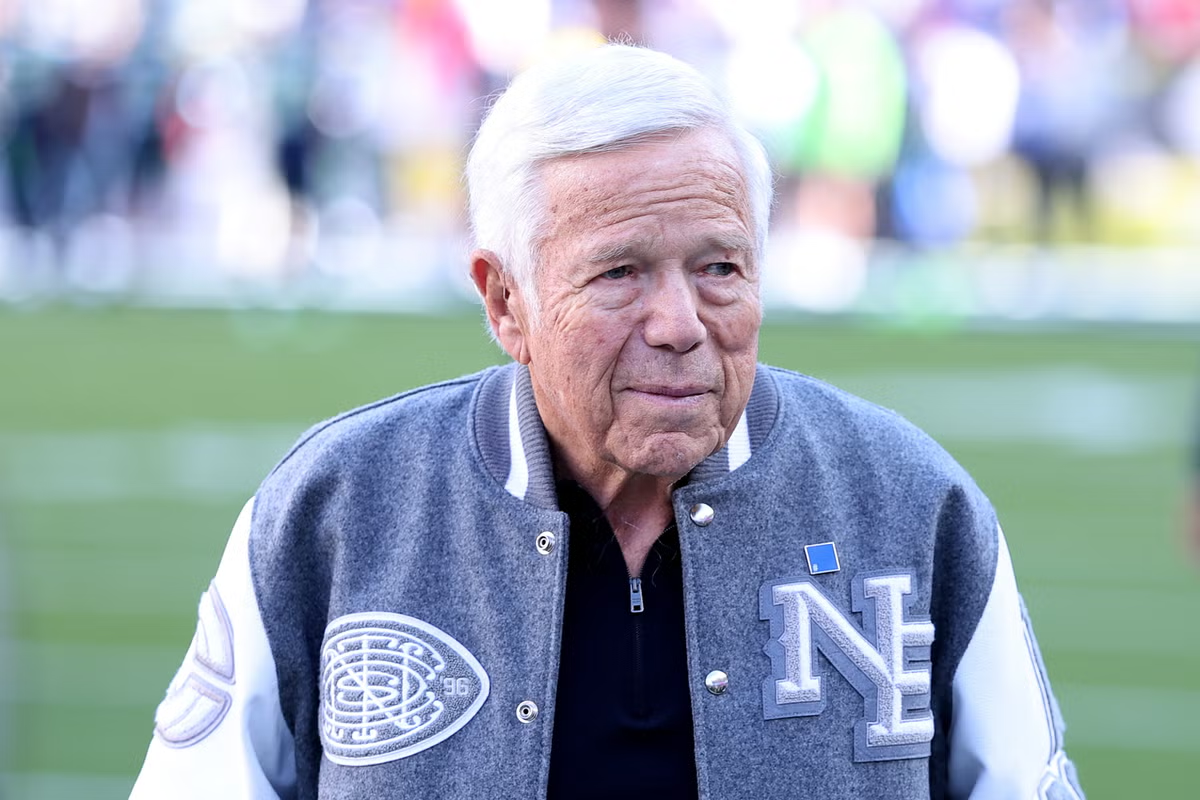
Billionaire sports executive Robert Kraft announced Wednesday that he and musician Ed Sheeran would each donate $2 million toward humanitarian relief for Palestinians, following a challenge to do so from rapper Macklemore
Billionaire sports executive Robert Kraft announced Wednesday that he and musician Ed Sheeran would each donate $2 million toward humanitarian relief for Palestinians, following a challenge to do so from rapper Macklemore (Getty)

In response, Kraft issued a statement published to the official Gillette Stadium X account, outlining that Sheeran had contacted him prior to the rapper’s public challenge.

“I have dedicated much of my life to building bridges between all people,” Kraft wrote. “I believe deeply that all lives are worth protecting. Earlier today, before Macklemore challenged me to match his donation, Ed called me and asked me to commit $2 million to match his donation to aid in the region to fight this humanitarian crisis.

“Ed now plans to reach out to other venue owners and our goal is to continue to work together to build bridges.”

Macklemore delivered a political speech and chanted ‘free Palestine’ on stage during a concert at MetLife Stadium, later leading to his removal from Ed Sheeran’s Loop Tour
Macklemore delivered a political speech and chanted ‘free Palestine’ on stage during a concert at MetLife Stadium, later leading to his removal from Ed Sheeran’s Loop Tour (Getty)
Amazon Music logo

Enjoy unlimited access to 100 million ad-free songs and podcasts with Amazon Music

Advertisement

Sign up now for a 30-day free trial. Terms apply.

Try for free

ADVERTISEMENT. If you sign up to this service we will earn commission. This revenue helps to fund journalism across The Independent.

All other supporting acts on Sheeran’s tour quit after Macklemore was dropped. Danish band Lukas Graham, Irish singer Aaron Rowe, American singer Finneas and Irish folk band Beoga made their announcements roughly within an hour of each other Tuesday, as reported by the Associated Press.

Earlier the same day, Sheeran had posted his own statement explaining Macklemore’s departure.

Advertisement

“Macklemore coming off tour was the promoter’s decision, it was not mine,” Sheeran wrote in an Instagram post. “Macklemore’s contract for the tour was with the promoter, not me.”

In another slide of the post, he added: “I am not complicit. I have my personal views on this devastating conflict. Just because I choose not to speak publicly, it doesn’t mean I don’t have them, and it doesn’t mean I don’t care. Nor does it mean I don’t support causes in my own, personal way.”

Source link

Advertisement
Continue Reading

NewsBeat

Leatherjackets In Lawn: How To Spot And Treat Grey Crane Fly Larvae In Your Grass

Published

on

Leatherjackets In Lawn: How To Spot And Treat Grey Crane Fly Larvae In Your Grass

The last thing we want to be talking about after spending the summer watching our grass dry out is the prospect of another lawn-related threat.

But as the weather starts to get wetter and cooler, gardening experts are warning that crane flies (which you might also know as daddy longlegs) are laying their eggs right about now.

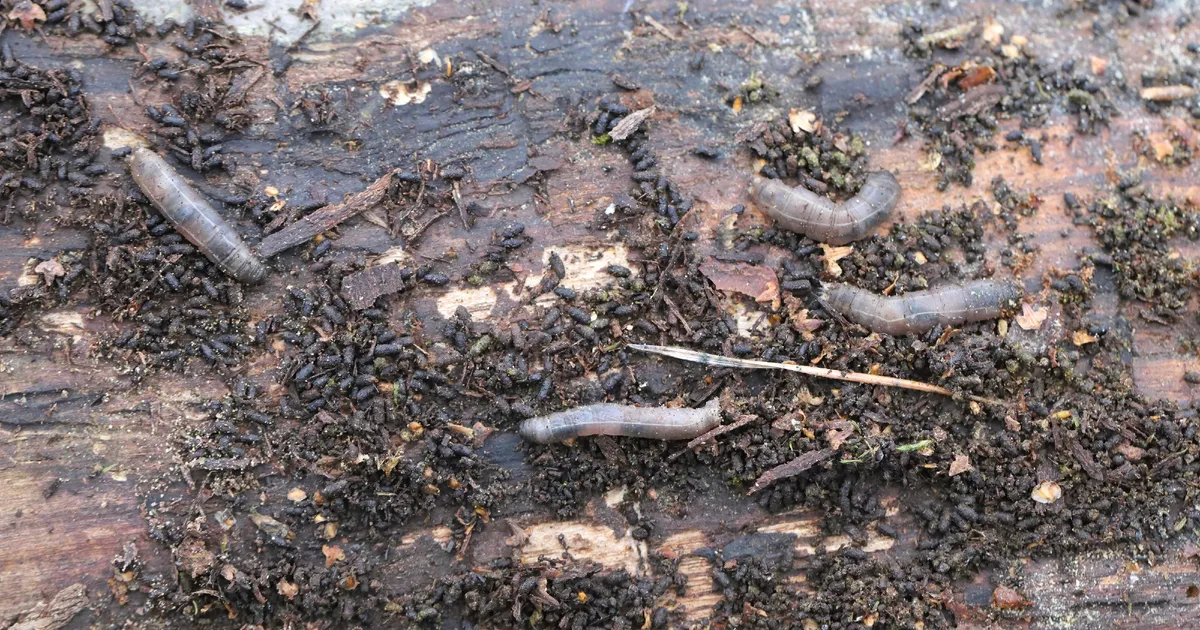
These eggs then hatch into larvae called leatherjackets, which Jonathan Davis from Lawnsmith has dubbed “the pest behind one of the most damaging lawn problems”.

“Right now, those eggs are just sitting below the surface [of your lawn], waiting for cold and wet conditions to hatch into leatherjackets,” he said.

Advertisement

Once hatched, the greyish brown grubs “can be a nightmare for your lawn”, he added.

“An infestation can undo all the hard work you’ve put in and leave you with nothing.

“They thrive by eating the roots of grass and plants, killing their food source as they go. Because they live under the surface, gardeners often don’t notice a problem until months later…”

Basically, they’ll spend autumn and winter munching your lawn roots and then, come spring, you’ll start to see the effects.

Advertisement

Tomasz Klejdysz via Getty Images

Cranefly larva or leatherjacket (Tipulidae).

The warning sign of leatherjacket infestation

The key thing to look out for is patches of lawn that start to die, wither or go yellow.

Obviously, after an intensely dry summer and prolonged drought, lawns everywhere are already looking yellow and patchy.

Advertisement

But generally, grass should be growing back by now. Once it has revived itself, it’s important to keep an eye on whether it stays looking green and verdant or begins to die off again – especially come spring.

Davis said “a leatherjacket infestation could be the final blow to your lawn’s health” after the intense summer we’ve had, and suggested prevention is easier than a cure.

Per the Royal Horticultural Society (RHS), a good way to tell whether you have a leatherjacket infestation is to place a light-blocking material, like black polythene, on a watered lawn overnight. If leatherjackets are there, the next morning, they’ll typically be found on the lawn surface under the cover.

How to prevent leatherjackets from destroying your lawn

Advertisement

Not all leatherjackets will noticeably affect your lawn. According to the RHS, only a small number may actually cause damage, so if you’re not bothered by them, you could just leave them alone so birds and other animals can feast on them.

The small grubs love lawns with poor drainage, according to Davis, who said addressing that now could help prevent an infestation taking hold. “Aerating your lawn can help improve drainage. To do this simply create holes in the turf to allow it to breathe and encourage water to disperse,” he suggested.

Another idea is to remove thick branches of overhanging trees and bushes to help more sunlight reach the turf.

“Some soils are better than others for drainage. For example, nutrient-dense clay soils can make gardens more prone to flooding,” he added.

Advertisement

“If you often see water pooling in your garden, investigate the type of soil so you know how to nurture the lawn correctly.”

And if you’re especially worried about your lawn, you can preemptively treat it with nematodes (specifically ‘Steinernema feltiae’) which “get rid of leatherjackets by infiltrating their outer casing and subsequently killing them”.

But it’s worth noting these don’t work so well in cold weather so the best time to apply them is in September and early October.

If, come spring, you do notice patches of yellow and browning grass, the gardening pro said removing the dead grass and re-seeding the area is your best course of action. Applying fertiliser across the whole lawn can also help maintain its overall health and help its recovery.Good luck!

Advertisement

Source link

Continue Reading

Trending

Copyright © 2025