

Picking the right wine doesn’t have to be difficult (Picture: Getty Images)
Guess how long the average British person spends in the wine aisle?
You might be surprised to learn that a quarter of Brits spend more than 10 minutes in the booze section at the supermarket deliberating over which bottle to buy.
According to 2023 research from M&S, that’s more than 50 million hours wasted each year on a national scale.
I think we can all agree that’s a long time to be standing in one place, looking like a bit of a lemon. Particularly compared to the breezy 20 seconds we spend looking for milk or a loaf of bread, or 13 seconds for a chocolate bar.
Advertisement
Many Brits spend 10 minutes deliberating in the supermarket wine aisle (Picture: Getty Images)
It appears that choosing wine gives us anxiety, with some going as far as saying it worries them more than flying.
It doesn’t help that only one in five of us has a decent grasp of wine terminology, with 35% of Brits under 45 admitting to faking knowledge about wine to make themselves look better.
Over half of those interviewed for the study said they would find it useful to have more expert guidance when it comes to choosing a bottle. As currently six in 10 of us buy wine purely based on the look of the wine’s packaging, even the colour of the bottle has an impact.
Now, I’ve worked in practically every part of the drinks industry; heck, I was even a Tesco wine advisor early on in my career, so I can tell you, the layout of the wine aisle doesn’t come about by accident. It’s a highly engineered labyrinth, designed to keep you there for longer.
But if you know how to game the system, what to look for, you can come out on top.
Advertisement
As such, I’m sharing some of my top tips, as well as those from supermarket experts, to help you avoid getting caught in the 10-minute wine aisle ‘trance’.
Take a closer look at where wine is on the shelves (Picture: Matteo Della Torre/NurPhoto via Getty Images)
Hacking the wine aisle
In the wine trade, there used to be an adage that went, ‘eye-level is buy-level’. This is premium real estate in a supermarket, featuring the bottles that sit where your eyes naturally land.
There was a time when supermarkets charged brands massive fees to be here, or they’d use the space to push high-margin, mass-produced wines, but I’m reliably informed by Morrisons’ Wine Buyer, Emma Jenkins that this no longer goes on.
Hey, foodies! Add us as a Preferred Source
At Metro Food, we’re here to bring you all the latest foodie news, delicious recipes, restaurant reviews, and cooking tips. As a loyal reader and a part of our vibrant community, we want to make sure you never miss our articles when searching for stories
Click the button below and tick Metro.co.uk to ensure you see stories from us first in Google Search.
From the latest Walkers flavours to the secret McDonald’s menu, Metro Food has it all
‘We’re not allowed, it’s actually illegal to take money for better shelf positioning these days. Unless it’s at the end of the aisle, aka gondola ends, which is a designated promotional area,’ she tells Metro.
According to Emma, you’ll find banging deals either towards the top or bottom shelves. The bottom ‘squat-zone’ is where the mass-market bottles are kept, alongside bona fide gems from lesser-known regions that offer great value for money – think juicy Portuguese reds, Greek whites, Hungarian whites, Georgian orange wines or reds from Slovenia and Macedonia.
Advertisement
Similarly, the top ‘reach zone’ is where people have to stretch to get hold of smaller-scale wines beloved by the buyer that they couldn’t justify placing at eye level.
And if the shelves are labelled by country, it’ll be in ‘other countries’ where the buyers have got adventurous because there’s less commercial pressure there.
Senior Wine Buyer at M&S, Joseph Arthur, explains: ‘A key hack in my opinion when looking for great value is lesser known regions or varietals. Our Found range is a great example of this, especially Ansonica, Kratosija and Saperavi.’
And Asda’s Wine Sourcing Specialist, Alex Kennedy, echoes Joseph, saying: ‘Explore lesser-known regions for the best value. Sicily, Greece and Austria are making some of the best wines right now, which can sometimes go under the radar.’
Advertisement
Similarly, Austrian Grüner Veltliner and Assyrtiko from Greece if dry whites are your bag.
The advice all three buyers give is to ditch brands and focus on the supermarket’s own-label brands. Cynically speaking, they would say that, but I would tend to agree with them.
‘When buying big-brand wines, customers often pay a premium for the name, yet there are many wines in Asda’s own label or exclusive ranges that offer even better quality for a fraction of the price,’ says Alex.
Screaming Devil Rosé is down from £13 to £9, and is a great example. Just saying…
Advertisement
The Asda own-brand version of a popular branded wine is £9 (Picture: Asda)
Clues on the label
Another insider trick is to look closely at the labels, which most shoppers won’t even notice.
Turn the bottle around and look on the back label for the name of the importer. It’ll usually be in tiny print. Many will only work with high-quality wine producers, so it’ll give you an early indication of what you’ll be buying.
Then there’s the wine’s description on the ‘self-talker’.
If you see an unusually detailed description mentioning the region, the vineyards, altitude or importer, that’s a good thing. The buying team will only devote that kind of copy to wines they like. Conversely, if it just says, ‘smooth and easy-drinking’, you’ll know it’s a mass-produced blend.
Competitions like the IWSC (International Wine and Spirits Challenge) rate wines, and Gold or Silver-medal-winners will often be labelled. These are always top quality and well worth buying. I know, as I judge for them.
Advertisement
Look for wines that look slightly unfashionable, where the labels aren’t flashy. That means the money has been spent on the wine itself, not on the branding.
A dusty-looking bottle of Rioja, with a traditional label, will be far more interesting than a glossy bottle covered in buzzwords.
On that, Joseph agrees. He adds: ‘The economics of aged Rioja still baffle me. How can a 2018 Rioja Gran Reserva be £5 cheaper than a 2025 Chateauneuf du Pape for £20 on a supermarket shelf?
‘Rioja Gran Reserva is still one of the best value wines in stores if you like wines with a bit more age and complexity.’
A three-year-old boy is in a serious but stable condition after an incident at Johnsons Zoo in Huntingdon, Cambridgeshire, as a 30-year-old man is arrested on suspicion of attempted murder
Carrington Walker Live News Journalist and Abigail Hunt
17:18, 18 Jun 2026Updated 17:30, 18 Jun 2026
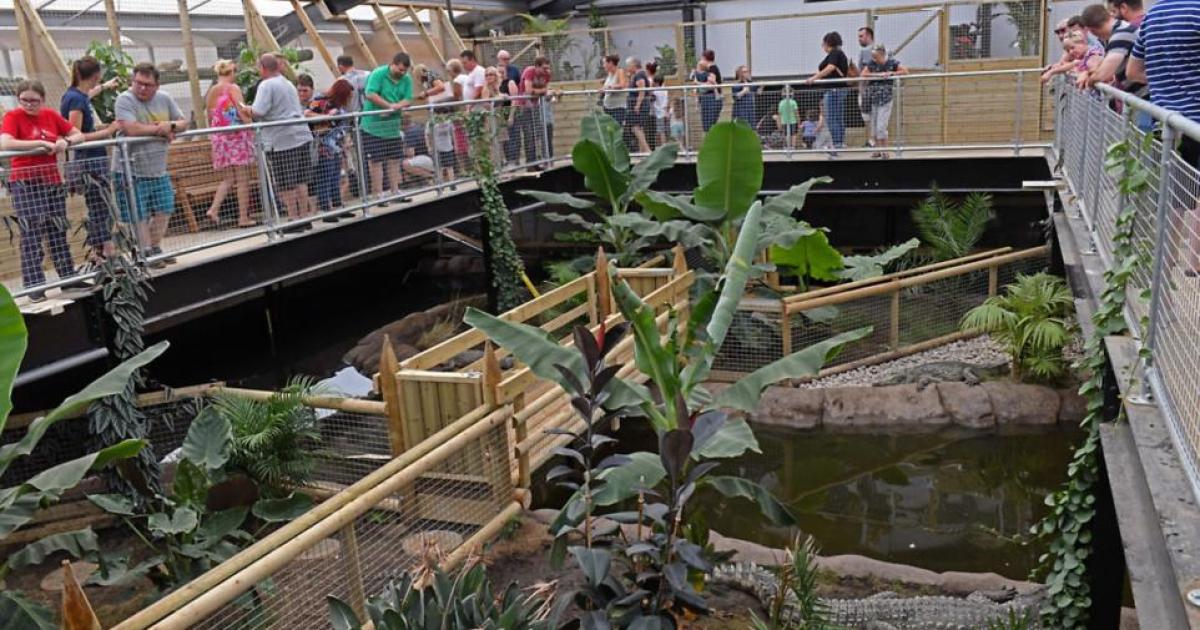
A toddler aged three has been rushed to hospital after allegedly being ‘thrown into a crocodile enclosure’ at a zoo, with a 30 year old man subsequently taken into custody.
Officers were called to Johnsons of Old Hurst at 1.24pm following reports of a distressing incident involving the young boy, who ended up inside the crocodile enclosure at the popular family attraction near Huntingdon, Cambridgeshire.
Advertisement
The child suffered injuries after being attacked by a crocodile and was swiftly transported to hospital, where he is reported to be in a serious but stable condition, reports the Daily Star.
Det Insp Verity McCann, from Cambridgeshire Police, said: “At this stage we are speaking to people who were at the zoo at the time of this distressing incident to understand more about the circumstances.”
She added: “We do not believe the man arrested and the child are known to each other. Officers are supporting the boy’s family at hospital, and our thoughts remain with them.”
Advertisement
The 30 year old man has been arrested on suspicion of attempted murder.
Want to see more of the stories you love from Belfast Live? Making us your preferred source on Google means you’ll get more of our exclusives… To add Belfast Live as a preferred source, simply click here.

Amaar Abid was originally spotted by police driving through a red light in a Volkswagen Golf on Alan Turning Way at around 1.20am on June 10, 2025.
After refusing to stop for police, the 28-year-old was pursued onto Hyde Road and then the M60, heading towards Oldham.
According to the force, the car was being driven erratically and slowed to a crawling pace while on the motorway.
Officers decided to stop the car with a rolling road block.
Advertisement
Amaar Abid has been jailed (Image: GMP)
However, in a last ditch attempt to avoid arrest, Abid then decided to turn and drive the wrong way down the M60, before police came into contact with the Golf and stopped it.
Abid, of Copster Hill Road, was sentenced to 38 weeks for dangerous driving at Manchester Magistrates Court on Wednesday (June 17).
He was also given an extended driving test and £154 fine.
PC Oliver Garner from the Roads Policing Unit said: “Amaar Abid’s actions that night showed a complete disregard for the safety of everyone else on the road.
Advertisement
“Not only did he fail to stop for officers, but he drove erratically on the motorway and ultimately made the reckless decision to drive the wrong way on the M60 in a desperate attempt to avoid arrest.
“Driving towards oncoming traffic on one of the region’s busiest motorways could very easily have resulted in life-changing consequences, causing serious injury or even loss of life”
“Thanks to the professionalism and quick decision-making of our officers, the pursuit was brought to a safe conclusion and Abid was taken into custody before anyone was harmed”
“We will continue to take robust action against those who choose to put the public at risk through dangerous driving. Our roads must be safe for everyone, and offenders who endanger lives can expect to face the full consequences of their actions.”
The “backshift” are heading stateside to join around 50,000 other foot soldiers for the Morocco game on Friday.
16:53, 18 Jun 2026Updated 16:54, 18 Jun 2026
Tartan Army in full swing on the flight from Heathrow to Boston
The moment passionate Scotland fans belted out Flower of Scotland on a flight from London to Boston has been captured on camera.
The Tartan Army are still flying high after last week’s 1-0 victory over Haiti during Scotland’s World Cup opening match when John McGinn sparked mass celebrations on both sides of the pond with a stunning strike.
Advertisement
Scotland fans flying to the US for the second match against Morocco on Friday were in high spirits after boarding an American Airlines flight from London Heathrow to Boston.
One Scottish passenger stood up on the plane and began to lead the national anthem.
The man is seen standing up as he belts out Flower of Scotland, which is being piped by another passenger walking proudly up and down the aisle.
The whole plane bursts into song alongside the enthusiastic supporter, while an excited flight attendant can be seen videoing the joyful scene.
The clip has attracted more than one hundred comments from folks on both sides of the pond.
Advertisement
One wrote: “The backshift are arriving. Love to see it!” while another wrote: “We’re getting more Scots?! Yaaassss!” and a third penned: “Bet the air stewards loved this. So proud of my country. Small nation with massive hearts.”
A fourth enthused: “Second shift! We’re ready for ya!” while a fifth couldn’t contain their excitement, commenting: “Welcome! We look forward to your shenanigans and are rooting for a win! Go Scotland!”
The football fans on board are heading to join around 50,000 other Scotland fans in the host city for the Morocco game, which takes place on Friday, June 19 at Boston’s Gillette Stadium.
A 22-year-old man has died in a crash in Pembrokeshire. Dyfed-Powys Police is investigating a two-vehicle collision on the A4075 between Canaston Bridge and Yerbeston, that occurred at around 6.20pm on Wednesday, 17th June.
The collision involved a grey Kia Sorento and a white Yamaha motorcycle.
Tragically, the 22-year-old male motorcyclist died at the scene. A 22-year-old female pillion passenger of the motorcycle was taken to hospital where she remains.
Advertisement
Next of kin have been informed and are being supported by specialist officers.
The driver of the Kia Sorento, a 60-year-old man, did not sustain injuries.
The road remains closed for a collision investigation to take place, and motorists are advised to avoid the area and find alternative routes.
Investigating officers would like to speak to any motorists who were travelling along the A4075 at the relevant time, or anyone who has dash cam in their vehicles.
Researchers at the Centre for European Reform think tank found exports of chemicals and pharmaceuticals have fallen by 21 per cent since the UK left the EU, while those classed as “agrifood” are down 29 per cent.
The report argues that many of the economic costs of Brexit stem from Britain’s departure from the bloc’s single market, suggesting recent calls for a new customs union with the EU would only have a limited impact.
Almost ten years on from the Brexit vote, the experts urge politicians not to risk repeating the mistakes of that era by pursuing “options that are either unavailable on the terms they envisage, or… unlikely to contribute meaningfully to economic growth”.
Advertisement
We are campaigning to rebuild Britain’s relationship with Europe. Join us here
The findings come amid a growing debate over what the UK’s relationship with the EU should look like (PA)
The findings come amid a growing debate over what the UK’s relationship with the EU should look like.
While calls for a customs union have gained support among some politicians and business groups, the researchers argue that rejoining the single market would do more to boost trade and economic growth.
Such a move, however, would likely involve a return to freedom of movement and substantial contributions to the EU’s Budget – both of which would be politically fraught.
But the scale of the challenge is laid bare in the report, which found that Brexit “has reduced trade in nearly every sector of the UK economy”.
Advertisement
When it comes to services, for example, the travel industry is down 39 per cent, while financial services exports have fallen 24 per cent.
Total UK exports to the EU have fallen by about 12 per cent and total imports by about 16 per cent. And, overall, the losses amount to a reduction in Britain’s world-wide exports of 5 per cent and imports of 8 per cent.
Both of Keir Starmer’s main rivals Andy Burnham and Wes Streeting have said they want the UK to rejoin the EU one day.
Before then, however, discussions about what a much closer relationship would look like are “happening behind closed doors”, the authors of the report John Springford and Anton Spisak said.
Advertisement
They identify three main options for stronger links – a customs union, rejoining the single market in goods or returning to the single market in full.
The appeal of a customs union is that it would reduce barriers to trade in goods without requiring freedom of movement, they suggest.
However, the report warns the economic benefits would be limited.
A dedicated community: We are fully committed to the long haul, consistently campaigning to secure the absolute best deal for Britain within Europe.
Free weekly newsletter: Every Wednesday, political editor David Maddox and political correspondent Millie Cooke will be in your inbox with exclusive reporting, analysis and insight on the biggest developments shaping relations between Britain and Europe. Each week, they will explain what’s happened, what it means, and what the key political figures, experts and decision-makers are saying about it.
Essential continental updates: Stay informed with regular briefings on the biggest developments in European politics and the specific policies that could pave the way for closer EU relations.
Exclusive content: Get the highest quality analysis, opinion and debate from political experts across the UK and Europe by subscribing to our premium service.
The Brexit Effect: You’ll get exclusive access to extracts from Anthony Seldon’s major new book, The Brexit Effect, offering an unparalleled analysis of the 10 years since the referendum.
Inform the debate: Receive exclusive invitations to live events, webinars, expert Q&As and podcast recordings.
Millions of Brits are being warned to prepare for a spell of dangerously hot weather worse than the May heatwave, with government health alerts coming into force this evening and lasting until Monday
16:35, 18 Jun 2026Updated 16:36, 18 Jun 2026
Brits are staring down the barrel of a dangerously hot spell due to start in the next few hours and last into next week, the UK government has warned.
The UK Health Security Agency (UKHSA) has issued amber health alerts for heat as Met Office forecasters warned of a heatwave more severe than the one in May. Millions living in London, the south-east, south-west and east of England fall under the health alerts, which come into force on Thursday afternoon until 8pm on Tuesday June 23.
The amber alert means “significant impacts are likely across health and social care services due to the high temperatures including a rise in deaths, particularly among those aged 65 and over or with health conditions. There may also be impacts on younger age groups,” the agency warned.
Advertisement
Among other risks, the warning said the heat could also impact “the ability of the workforce to deliver services” in the affected areas as temperatures are likely to rise into the mid 30s. The east and west midlands are also subject to yellow health alerts for heat meaning they may also see impacts on services as a result of the roasting temperatures.
The government warnings come as forecasters have warned of an incoming high pressure system that will leave much of the country “feeling increasingly hot with temperatures well above the June average.” Temperatures are expected to reach the high 20s Celsius quite widely, with the potential for 32°C to be reached in the south of England on Sunday and potentially 34°C or higher on Monday, the Met Office has said. Conditions will remain noticeably humid as the heat increases with an increased risk of thunderstorms.
Met Office meteorologist Honor Criswick said: “It’s a bit different to the last heatwave, because last time the humidity wasn’t as high, whereas this time the humidity is quite a bit higher. It’s just going to make it feel that bit muggier and that bit more humid during the day and overnight as well, so it just means it’s going to be more uncomfortable, the heat itself.”
Advertisement
She added: “Because the humidity is so high, there’s a chance that this could potentially spark off some thunderstorms. It’s always tricky with thunderstorms, because they could pop up pretty much anywhere, particularly across central, southern, south-east parts of England.
“But wherever they do hit, it’s probably going to be quite an intense, heavy downpour for a time with some rumbles of thunder, some sparks of lightning, but exactly where they’ll be is a tricky one to forecast at the moment.” While it is not yet known when the heat will subside, it is likely to be prolonged over the weekend and for at least the first part of next week, Ms Criswick said.
A record-breaking heatwave last month saw May 26 become the hottest May day on record for both England and Wales, with 35.1C recorded at Kew Gardens and 32.9C at Cardiff Bute Park. According to the forecaster, a heatwave is defined as three consecutive days with daily maximum temperatures meeting or exceeding the heatwave temperature threshold.
The UK Health Security Agency (UKHSA) heat health alerts also warn of the danger of water‑related incidents, including risks from cold‑water shock and drowning.
During the previous record-breaking heatwave, from May 24 to 31, the UK saw a horrifying death toll of 19 children and adults killed in water related incidents during one week. In response the Mirrorlaunched our ‘Save Lives for Sam’ campaignto stop the “catastrophic” deaths of 33 children who drown in England every year – “the equivalent of a classroom of children lost”.
Bereaved families, Olympic legends and safety organisations have joined together to call on the Government to take five key steps to save young lives across the country.
People heading to the coast in the coming days should be mindful that sea-surface temperatures are not as high as they would be in mid-summer, the Met Office warned. Samantha Hughes is the National Water Safety Partner at the RNLI. She said: “With warmer weather approaching, it’s important to remember that the water is still cold. Entering it unexpectedly can lead to cold water shock, causing a sudden increase in breathing and heart rate, which may trigger panic.
“If you find yourself struggling in the water, remember to Float to Live: tilt your head back so your ears are submerged, relax and control your breathing. You may need to gently use your hands to help you stay afloat, and it’s ok if your legs sink—everyone floats differently.
“Where possible, always choose a lifeguarded beach, and swim between the red and yellow flags. In a coastal emergency remember to call 999 for the coastguard.”
At ten years old, some children may still struggle to tie their shoelaces or use a knife and fork properly. Yet under the law of England and Wales, a child of this age is old enough to be held criminally responsible for their actions. This is the age at which, in the eyes of the justice system, childhood effectively ends. But there could soon be a chance to bring this law into line with that of other comparable nations.
The current age of criminal responsibility sits in stark contrast with other legal protections we afford to children. Prime minister Keir Starmer’s announcement of a planned social media ban for under-16s from spring 2027 is a potent example of this.
Under-18s in England and Wales cannot purchase vape products or alcohol. They cannot marry or vote, and they must be 17 to drive. Society has constructed these protections on sound developmental logic: children are not yet adults and the law should reflect that.
Advertisement
The recently published youth justice white paper, which sets out the government’s strategy on young people in the criminal justice system, stated that the government will assess the age of criminal responsibility in England and Wales. But it has made no firm commitment to raise it.
England and Wales have the lowest age of criminal responsibility in Europe, alongside Switzerland. In the Republic of Ireland children can be held criminally liable from 12, while in Croatia it is 14, along with Germany, Italy and Spain. In Denmark, Norway and Sweden it is 15, and it is 16 in Portugal.
The United Nations Committee on the Rights of the Child has long called for an absolute minimum age of 14, and Scotland raised its age of criminal responsibility from eight to 12 in 2021. Northern Ireland is facing renewed calls to raise the age to 16 following a previous consultation on raising the age from ten in in 2022.
Politicians have dismissed calls for reform by claiming there is no public appetite for change. But leading justice figures have since come out in support of the proposed amendment to the crime and policing bill, due to come into force on June 29 2026. This would raise the criminal age of responsibility to 14.
Advertisement
Raising it to at least 14 appears to have widespread support among the UK public. Crucially, this was consistent across the political spectrum – suggesting it is seen as a question of basic child protection.
What neuroscience tells us
Knowledge of adolescent brain development has advanced considerably in recent decades. A substantial body of research demonstrates that children have developmentally immature brains. Experts can also say with confidence that the brain does not reach full maturation until after the age of 30.
The adolescent brain is characterised by heightened impulsivity, reduced capacity to consider consequences, and heightened emotional reactivity. These traits are neurologically normal, not moral failings. But the intersection of childhood, responsibility and serious violence exposes the deep complexities within youth justice.
Taking victims’ experiences seriously and questioning a system that criminalises children at a younger age than most comparable democracies are not competing goals. A mature justice system can – and must – do both.
Advertisement
But by and large, children who end up in England and Wales’s youth justice system are not budding criminals. Around 66% of children in custody have experience of the care system, and 80% have special educational needs or disabilities.
Around half come from racial minority backgrounds, and research shows that racial disparities begin early – with school exclusions and at the point where decisions are made about whether to divert children away from the justice system. The vast majority of children who have come into contact with the justice system have been excluded from school.
Most children who enter the justice system have been excluded from school. Ground Picture/Shutterstock
These are children who have been let down by services such as education, healthcare and social care. And any racial disparities they might face compound every stage of this process.
Young offender institutions have been condemned as sites of institutionalised abuse. Children can be held in isolation for 22 hours a day, while educational provision is inadequate and rehabilitative support is minimal.
As researchers focused on children and young people at the Institute for Children’s Futures at Manchester Metropolitan University, we bring together legal expertise and criminological insight in the study of children, society and the law. We argue that England and Wales must raise the age of criminal responsibility to 12 as a minimum, with a serious ambition to reach 14 in line with the UN Committee on the Rights of the Child recommendations from 2023.
This means diverting children away from criminal justice processes and towards the health, education and social support they need. Raising the age of criminal responsibility is not only better for children – it produces better outcomes for victims and society too, with evidence showing that diversion from the formal justice system reduces reoffending far more effectively than early criminalisation.
Advertisement
This is not because children should face no consequences for harmful behaviour – they should. But the system as it currently exists does not rehabilitate, it harms. And no child, whatever they have done, deserves to be processed through a machine that was never designed with their wellbeing in mind.
A heat health alert has been upgraded for Cambridgeshire, with temperatures expected to reach up to 28C this week. The UK Health Security Agency (UKHSA) has issued an amber heat health alert for the East of England.
Advertisement
This will begin at around 12pm on June 18. Cambridgeshire isn’t the only area impacted – surrounding areas such as Essex and Norfolk also have a heat health alert in place.
It will last for about five days until 8pm on June 23, which is next Tuesday. UKHSA says there could be a rise in deaths, particularly among those aged 65 and over or with health conditions. There may also be impacts on younger age groups.
The Met Office says of this time period: “Mostly fine with some sunshine. Turning very warm or locally hot, and feeling humid. Winds remain light and variable. Maximum temperature 30c.
“Changeable on Saturday with some spells and showers moving erratically eastwards. Perhaps drier with warm sunny spells Sunday and Monday with temperatures climbing.”
There has been an update on Marcus Rashford’s future at Manchester United following his loan at Barcelona
Manchester United are reportedly prepared to turn down any loan offers for Marcus Rashford from Barcelona this summer. United have made their feelings clear about the England international’s future as the summer transfer window rolls on.
Advertisement
Rashford spent last season on loan at Barcelona, scoring 14 goals and providing 14 assists across 49 appearances across all competitions.
The 28-year-old made it clear last season that he wanted to sign for Barcelona on a permanent deal, but the Spanish giants opted against activating the £26million option to buy in the original loan move, which expired earlier this week.
Get MEN Premium now for just £1 HERE – or get involved in our United WhatsApp group by clicking HERE. You can also join our United Facebook page by clicking HERE and don’t miss out on our brilliant selection of newsletters HERE.
Rashford is now with the England squad for this summer’s World Cup in North America, and there continues to be fresh updates about the forward’s future.
Advertisement
According to a report in ESPN, United are not willing to let Rashford join Barcelona on another loan deal, but are instead focusing on securing a permanent move this summer.
The report goes on to claim that United have “invited” agents to approach the club with realistic options of where Rashford could join on a permanent basis this summer.
United would have been delighted to see Rashford star for England in their 4-2 victory over Croatia in the World Cup on Wednesday night.
Rashford was not named in the starting line-up by Three Lions boss Thomas Tuchel, but made an impact from the bench and scored England’s final goal in Dallas to help secure the victory.
Advertisement
Tuchel praised Rashford’s performance against Croatia and explained why he has been impressed with the United star in training before and during the World Cup.
“He [Rashford] struggled for us to be decisive when he started, but he was always trying and got a bit unlucky for a long time,” Tuchel told reporters after England’s victory over Croatia.
“We just had a talk (on Tuesday) where I told him that I’m very, very impressed with his last 16 days – how he was in camp, how he pushes on the field.
Advertisement
“He is totally invested in every meeting. He is very, very fast in translating a meeting onto the pitch, what we want tactically.
“He pushes on a very respectful level with Anthony Gordon on the position, so at the moment he’s in a very good place.
“I was so happy that he was the one to unlock this long spell, where he was not decisive for us from within the game, and hopefully he can keep this up.”
Sky Sports, HBO Max, Netflix and Disney+ with Ultimate TV package
Advertisement
This article contains affiliate links, we will receive a commission on any sales we generate from it. Learn more
Sky has upgraded its Ultimate TV and Sky Sports bundle to now include HBO Max, Netflix, Disney+, discovery+ and Hayu, as well as 135 channels and full Sky coverage of the Premier League and EFL.
Sky broadcasts more than 1,400 live matches across the Premier League, EFL and more with at least 215 live from the top flight alongside Formula 1, darts and golf.
Motoring experts at Dick Lovett have raised concerns about “quishing” scams targeting drivers.
It comes just after a year, Bolton Council issued a similar warning to drivers to be vigilant after fake QR codes have been found on pay and display machines around Bolton town centre.
The warning follows new research showing 42% of drivers would scan a QR code to pay for parking without checking if it was genuine, while 19% said they had already been scammed while trying to park.
Advertisement
Alex Lee, motoring expert at Dick Lovett, said: “Quishing is a term used to describe fraud using fake QR codes.
— Driver and Vehicle Licensing Agency (@DVLAgovuk) June 17, 2026
“It’s one of the most commonly used types of fraud for tricking motorists into making parking payments or sharing personal information.
“It is usually carried out by placing fake QR code stickers over legitimate ones on parking machines or signage.
Advertisement
“When scanned, drivers are directed to convincing-looking websites that mimic genuine parking payment services.
“You’ll be asked to give up personal information and payment details, which are then taken by the scammers.”
The survey found 62% of drivers aged 25 to 34 said they would scan a parking QR code without question.
Dick Lovett also found frustration with digital parking systems.
Advertisement
Almost three in five drivers (58%) said they had experienced problems with parking apps.
Two-thirds (67%) said they would prefer to pay at a machine rather than using an app.
DVSA on driving lessons
From May 12, only learner drivers will be able to book or change a car driving test, while from June 9, location limitations will apply when moving a booked test.
Advertisement
This follows DVSA’s announcement that from March 31, the number of changes a learner driver is allowed to make to a car driving test booking will be cut to 2 (reduced from 6).
Roads and Buses Minister, Simon Lightwood, said: “Learning to drive is hard enough without an unfair booking system.
“Learners deserve clear, honest access to tests – not being ripped off by third party sites. These changes put learners back in control, stop the system being gamed, and help make sure tests go to those who really need them.
“I welcome DVSA’s action to make things fairer and support learners on their journey to becoming safe, confident drivers.”
Beverley Warmington, DVSA’s new chief executive, added: “We have listened to learners, driving instructors and voices from across the driver training industry on how to make the booking rules fairer.
“Our priority is to stop learners being exploited by third parties and put them in control of booking their driving test.
“The changes announced today will help us achieve that goal and build on the more than 149,000 additional tests delivered between April 2025 and February 2026.”
What’s the worst thing about driving? Let us know in the comments
You must be logged in to post a comment Login