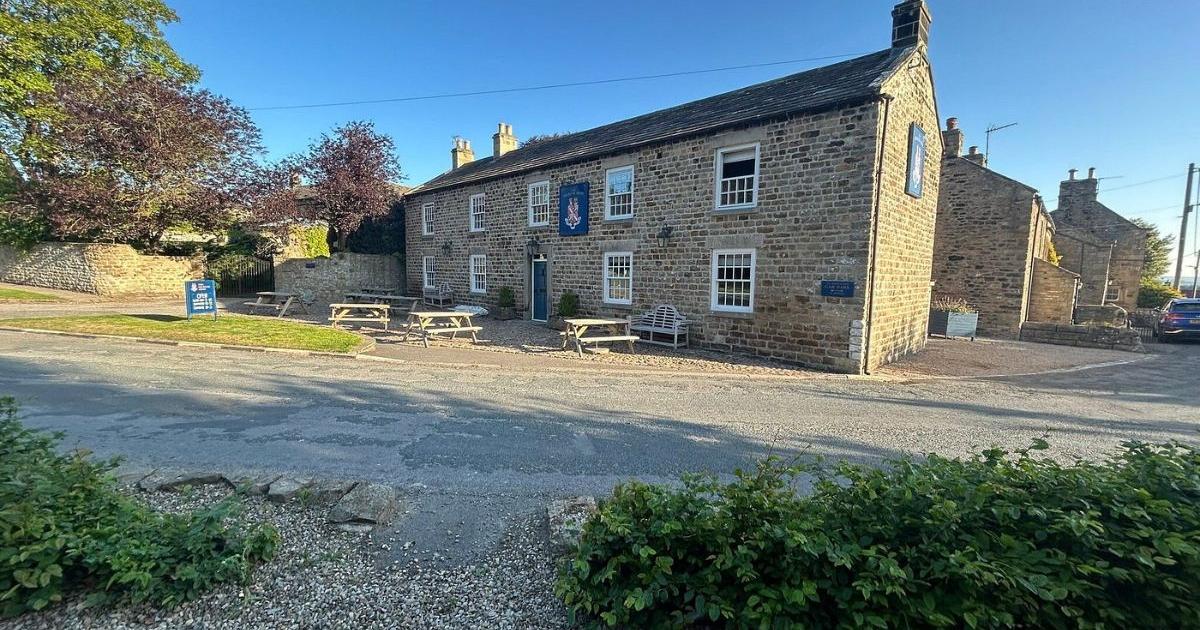
The Milbank Arms in the “charming” village of Barningham was highlighted by local foodie expert The Yorkshireman for its focus on “high-level food and proper Yorkshire ales”.
The Grade II listed country pub, which is not too far from the Yorkshire Dales, says it offers the “best” produce in the region, and customers have praised it for its “fabulous” Sunday roasts and “homely” atmosphere.
The Milbank Arms has ‘bags of traditional charm’
The Yorkshireman shared: “A hidden gem pub found in the village of Barningham, just outside of Richmond, The Milbank Arms is a truly stunning country pub, Grade II listed with bags of traditional charm.”
Advertisement
He added: “Putting a focus on high-level food and proper Yorkshire ales, The Milbank Arms is no ordinary pub lunch.
“Their offering surpasses your typical restaurant quality, bringing beautifully presented dishes of Yorkshire produce from wild game, to market steak.
“Every dish that passed our mouths evoked an audible reaction, and their Sunday lunch, in particular, is a real must-try.
“For the full experience, check yourself in for the night and huddle up by the fire with a glass of red wine and a bit of dinner. Wake up the next day, and repeat the process with a Sunday dinner.”
Advertisement
On its website, the dog-friendly pub reveals that The Milbank Arms is nestled just minutes from Barnard Castle and Teesdale.
“Beautifully restored, The Milbank Arms blends heritage charm with modern comfort – offering luxury rooms, charming cottages, fine dining and real ales.
“Our locally sourced menu features the best of the region, from wild game to fresh seafood, with dishes changing seasonally. Enjoy hand-pulled ales, stunning surroundings and a warm welcome.”
Advertisement
Commenting on its menu, it continues: “Located on the edge of a grouse moor, we make the most of the abundance of wild game.
“Our fish is sourced from Hodgson’s in Hartlepool for which our chefs will pick the freshest available. Our meat is pasture-raised and from neighbouring farms wherever possible.
“We take a lot of pride in our cask beer and will always have 2-3 local hand pulled ales available.”
Pub Quiz Tips
Just some of the main menu dinner options include corn fed chicken with breast foie gras, king oyster, cauliflower and white port sauce, as well as crispy goat’s cheese pastilla that comes alongside chargrilled broccoli, wilted spinach and toasted pine nuts.
Advertisement
Meanwhile, Saturday lunch mains feature the likes of wild Scottish venison burger, with caramelised onions, mature cheddar and homemade pickles, all on a brioche bun.
Similarly, the Milbank Milanese features buttermilk chicken, tomato, buffalo mozzarella, wild garlic mayo and rocket on a brioche bun.
When it comes to Sunday lunch options, you can choose from dry-aged sirloin of beef, 28oz dry-aged côte de boeuf for two, chateaubriand or wild Scottish venison haunch.
All of the above are served with beef fat roast potatoes, Yorkshire pudding, seasonal vegetables and roast gravy.
Advertisement
The fish served at The Milbank Arms is sourced from Hodgson’s in Hartlepool (Image: Tripadvisor)
Elsewhere, The Milbank Arms has a “very good” 4.3/5 rating on Tripadvisor, based on 75 reviews.
A recent visitor said: “Lovely pub that is well run and serves local seasonal produce. Staff are friendly and efficient, and the menu offers some of the best of locally sourced food. Thoroughly recommend the venison. Also dog friendly which is a bonus.”
This person posted: “A lovely find, on a wet night we had a fantastic meal beautiful monkfish and fantastic venison. Staff were attentive and engaging. Atmosphere was homely.”
Another shared: “We have enjoyed a fabulous Sunday lunch and evening meal here. Wonderful food, service and ambience – thank you so much for such a lovely experience.”
Advertisement
Meanwhile, one guest commented: “Beautifully finished rooms in a country pub in a charming village. Fantastic food with a great steak menu. Staff ever so friendly. Couldn’t do more to help. Great breakfast too.”
Will you be visiting The Milbank Arms this year? Let us know in the comments below.
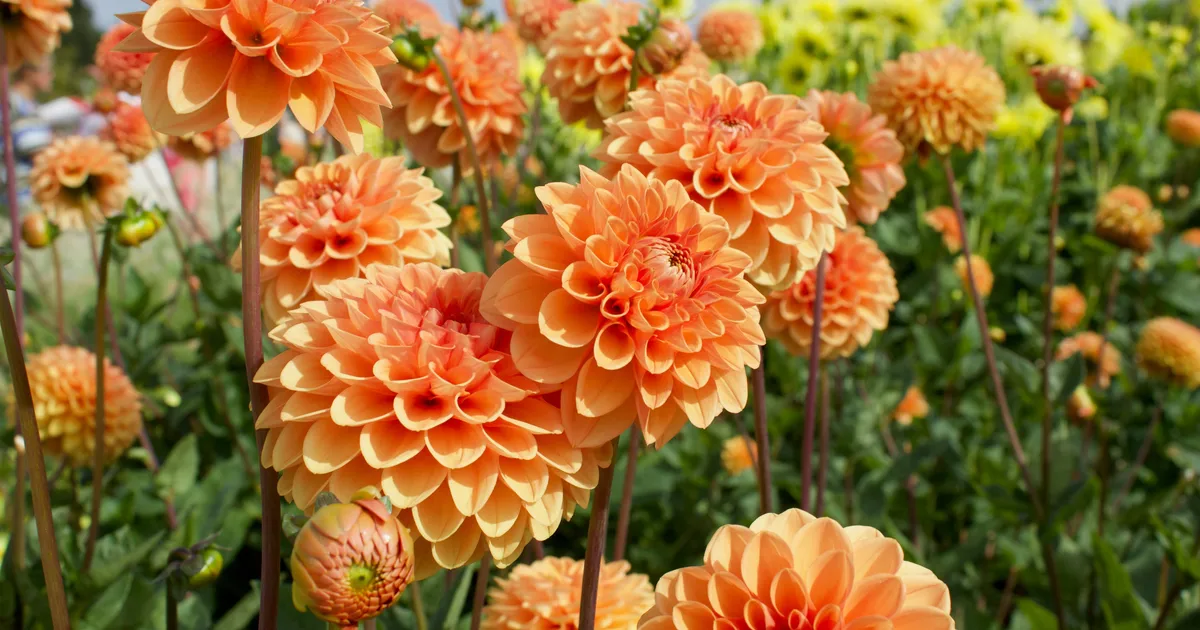
Whether you’re growing them from tubers, seeds, or cuttings, planting dahlias in spring ensures a bright and bountiful display in summer.
Even better: they can stay in bloom until early frosts, though they’ll need protection from icy winters if you live in an especially cold area.
You can plant potted dahlias under cover or indoors from March to April.
But to plant them in the garden, you’ll generally want to get them in the ground from May to early June. However, that’s more down to a set of conditions associated with that period than the dates themselves.
Advertisement
When is my garden ready for me to plant dahlias?
Dahlias don’t do well at all in frost. Make sure the weather’s been consistently above 5°C in your area before planting them outdoors and that there’s absolutely no frost predicted, if you can.
And while the bright, sunny days we’ve seen recently might tempt you to get your gardening gloves on, remember this can be very changeable.
That’s because, while we might still get some frosts, the soil itself won’t freeze. So the tuber’s roots will be able to grow, and the shoots, which won’t come up for months, will only appear once the risk of frost has disappeared.
Any other advice?
BBC Gardener’s World said we should get rid of all but five shoots from dahlia tubers before planting them. Though it might feel a bit brutal, “it will encourage bushy plants that will produce lots of flowers”.
Plant them about 60cm apart when you put them in the ground, and support new growth for all varieties, except dwarf kinds, with stakes.
Advertisement
They grow fast, so secure new growth every two weeks or so.
While they’re not especially fussy about soil so long as it’s relatively moist and well-drained, they do need to be placed in a sheltered, sunny spot to thrive.
“Yes, it was about petrol, diesel, home heating oil, but it was also about all of the other pressures that people are feeling – whether it’s energy costs, whether it’s groceries, whether it’s rents that continue to go up, and basically a tipping point that the government aren’t listening, that we needed something to happen in terms of (a) cost (of) living package.”
Experts advise avoiding one common lawn care mistake in spring to encourage wildflowers, bees and butterflies in your garden
Isobel Pankhurst Audience Writer and Ellen Jenne Senior U35 Spare Time Writer
10:04, 13 Apr 2026
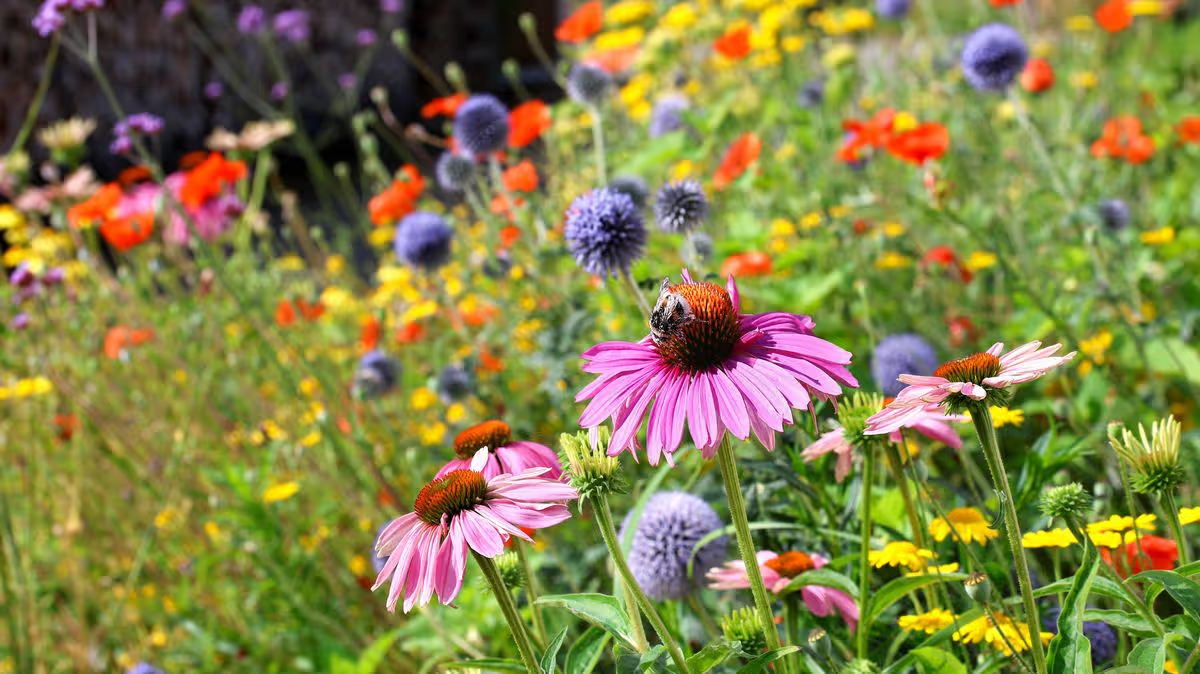
While a wildflower-filled lawn may not suit everyone’s tastes, many gardeners are keen to pack their outdoor spaces with blooms, or dedicate a designated patch to wildflowers in order to attract vital pollinators. However, there is one common error that could be preventing flowers from taking hold in your lawn.
Lawn specialists at the RHS (Royal Horticultural Society) have recommended steering clear of excessive mowing in spring if you are hoping to encourage wildflowers to flourish, even suggesting that regular mowing be held off until summer.
Advertisement
The experts explained: “With a conventional lawn, mow once a fortnight or once a week, depending on growth.
“For a flower-rich lawn or wildflower meadow, leave uncut in spring to provide much-needed support to pollinators and a welcome break from mowing.”
While a couple of mows in April may be tempting, they advise giving the lawnmower a rest entirely in May, referring to the month as “no mow May”.
Advertisement
As the name implies, this simply means refraining from mowing throughout May, allowing wild plants already present in your garden to grow and come into bloom.
You can choose to leave your entire lawn untouched, or alternatively set aside just one section to remain uncut for wildflowers.
Regular fortnightly mowing can then resume in June, or later still if preferred.
No Mow May was established in 2019 by UK conservation charity Plantlife, noted the Express, with the aim of tackling the devastating decline of flower-rich meadows – of which 97 per cent have disappeared since the 1930s.
Advertisement
The pledge urges gardeners to leave their lawnmowers in the shed throughout May.
Plantlife campaigners say: “No Mow May is one of the easiest ways to help the environment – letting wildflowers like daisies, dandelions and clovers grow while supporting bees and butterflies.
“Even small wild patches add up to make a huge difference to nature.”
The handbag showed off one of her son’s biggest achievements
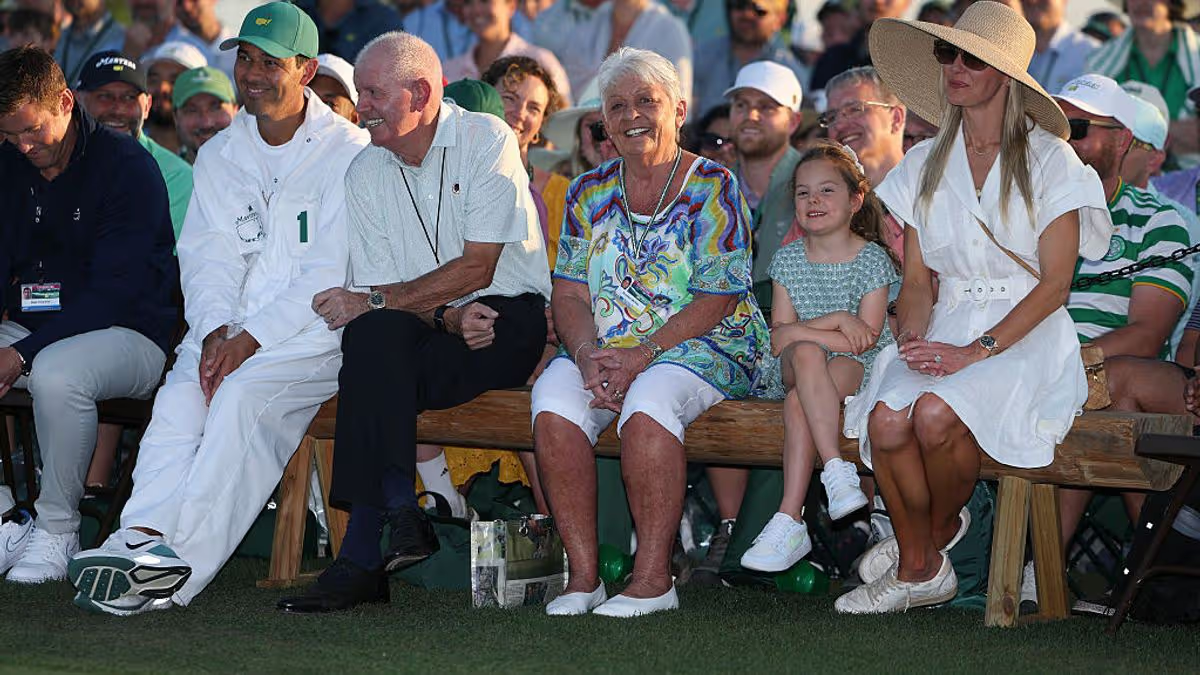
Rory McIlroy’s mum brought a special handbag to Augusta National on Sunday as she watched her son triumph once again at The Masters.
Advertisement
Rosie McIlroy didn’t attend the Major last year when Rory won the coveted green jacket for the first time, and there were emotional scenes as the Holywood man embraced his parents after winning another one as he achieved back-to-back victories at the tournament.
Although she was not there to witness his first Masters, it is still a moment that was very dear to Rosie’s heart as she brought a special handbag to the final round this year, which reminded her of that moment. The bag is decorated with newspaper clippings and pictures of Rory’s first Masters win.
A picture of the bag has gone viral on social media, with many thinking it was a touching way for a mum to support her son.
Advertisement
Following his win at Augusta National on April 12, Rory paid tribute to his parents, Rosie and Gerry, saying: “Mum and dad, I owe everything…” Choking back tears, he added: “You’re the most wonderful parents, and if I’m half the parent to Poppy that you were to me, I’ll do a good job.”
“I caught myself on the golf course a couple of times thinking about them, and I was like ‘No, not yet, not yet’,” he said.
“It’s really cool to have them here. They missed it last year and the first thing I wanted to do was fly home to see them because I obviously wouldn’t be sitting up here if it wasn’t for them.
Advertisement
“I had to sort of convince them to come this year because they thought the reason I won last year was because they weren’t here.
“When the ball trickled by and I marked it there from two inches or whatever (at the last) I just looked at the back of the green because I saw my mum and dad and Erica (his wife) and Poppy (his daughter) and I was just like ‘I can’t believe I’ve just done it again’.
“Not as emotional, but just, wow, it’s amazing. I can’t believe I did it again.”
“I said on the putting green that I’m glad we proved that wrong, so they can keep coming as long as they want. It’s amazing to have them here. I’m excited to celebrate with them tonight.”
But having waited a decade between his fourth and fifth, which secured the career grand slam a year ago, the desire for more still drives the 36-year-old.
“It took me 10 years to win my fifth major, and then my sixth one’s come pretty soon after it,” he said.
“I’m not putting a number on it, but I certainly don’t want to stop here.”
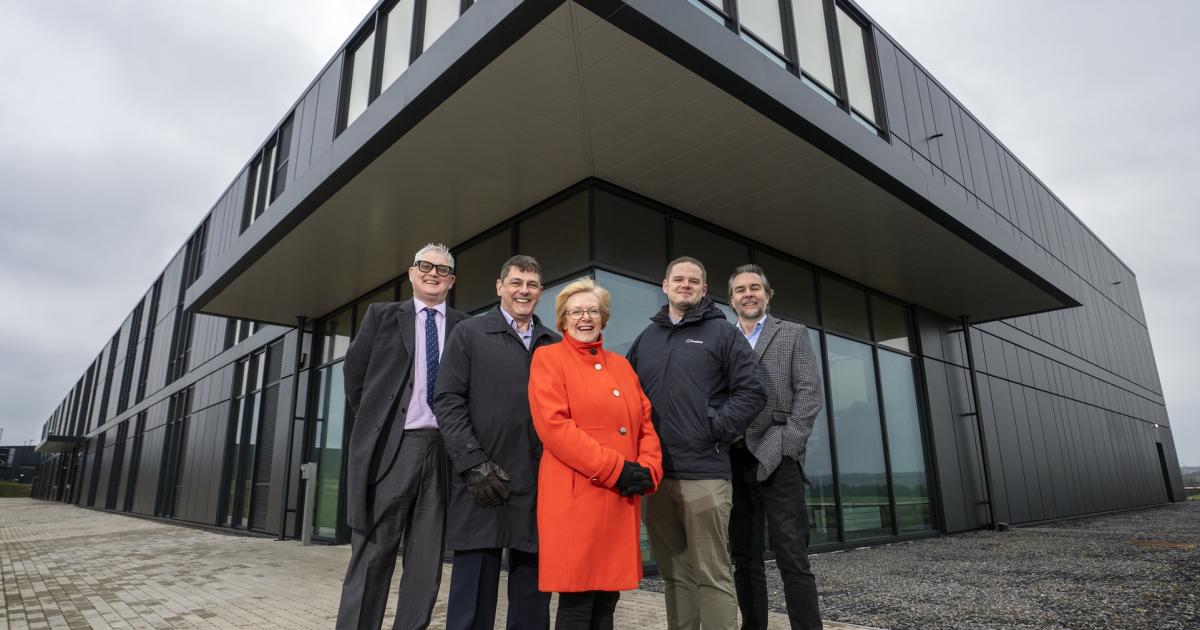
SEEDS will move into a dedicated facility at NETPark as part of Durham County Council’s £100 million expansion of the site.
The move will allow the company to shift from research and development to manufacturing—and begin delivering customer-specific systems.
Jason Chehal, founder of SEEDS, said: “This expansion marks a defining moment for SEEDS, as we move from research excellence into full commercial deployment.
Advertisement
“Over the past decade, we’ve developed a way to engineer graphene not just as a material, but as a platform technology that can be tuned to solve real-world industrial challenges at scale.
“Moving into our new facility at NETPark allows us to begin delivering customer specific systems across industries including microelectronics, energy storage, aerospace and advanced manufacturing.
“What’s particularly powerful is the ecosystem we’re part of here.
“Collaborations with CPI, Mitsui, and Pragmatic Semiconductor demonstrate how innovation in County Durham can translate directly into global industrial impact.
Advertisement
“We are now at the point where the technology is proven, the demand is established, and the pathways to market are clear.
“Each production system we deploy has the potential to support a major manufacturer anywhere in the world.
“That positions not only SEEDS, but the North East and the UK, at the forefront of next generation materials and electronics.”
SEEDS will supply its advanced graphene technology to major international manufacturers across the global aerospace, energy, semiconductors, and automotive sectors.
Advertisement
NETPark’s £100 million expansion has enabled the growth of sector-leading companies like SEEDS by providing more than 285,000 square feet of high-specification laboratory and advanced manufacturing space.
Councillor Joe Quinn, Durham County Council’s cabinet member for planning, investment and assets, said: “SEEDS’ expansion at NETPark reflects the critical role County Durham plays in the UK’s advanced manufacturing landscape.
“We have outstanding, state-of-the-art space for laboratories and manufacturing facilities, ready now and unique in the North East.
“We are delighted to support SEEDS’ growth and would urge any expanding business looking for purpose-built, modern facilities to come and see the exceptional offer we have here at NETPark.”
Advertisement
With the expanded site now fully operational, it is expected to create 1,250 skilled jobs onsite and contribute £625 million to the local economy over the next decade.
SEEDS’ growth has been supported by NETPark’s collaborative ecosystem, including the Centre for Process Innovation (CPI), Durham University, and Business Durham.
CPI has worked closely with the company, helping to refine its technology and scale up from early-stage research to production.
A strategic partnership with Mitsui, formalised in November, is already opening doors to international microelectronics manufacturers and accelerating the company’s global reach.
Advertisement
The expansion of NETPark and the success of companies like SEEDS highlight County Durham’s growing reputation as a hub for advanced manufacturing and next-generation technology.
A pharmacist has shared crucial advice to patients who have high blood pressure. They’ve been urged to take action or they could risk “serious damage” which could hinder their health
Millions of people across the globe struggle with high blood pressure, with many constantly seeking straightforward methods to help manage it. However, if you are amongst those affected and need to keep it in check, there is vital expert guidance you ought to be aware of.
Advertisement
A pharmacist renowned for dispensing useful health advice has issued critical information to those who suffer with high blood pressure, warning that if something significant is overlooked, it could result in “serious damage”. Pharmacist Anum, as she is known on TikTok, recently outlined everything in a candid video, and it is essential information that deserves your full attention.
In the clip, Pharmacist Anum said: “If you suffer with high blood pressure, protecting your kidneys is super important. You should be having regular monitoring to assess your kidney function. However, unfortunately, this one very simple test often gets missed.
“The test I’m referring to is a simple urine test. It involves you dropping off a urine sample to your GP, and they can test your ACR. Now this stands for albumin-creatinine ratio, and what it does is it looks to see if there are any proteins leaking into your urine.
Advertisement
“If proteins are present, it could be an early sign that there is damage to your kidneys. It’s a quick test that allows us to pick up early signs of kidney damage before you start to develop any symptoms.
“Picking up these things early is key. Now, generally speaking, we like to test your ACR, so get a urine sample from you when you’re first diagnosed with having high blood pressure, and then at least annually.
“Depending on your individual circumstances and your individual risk factors, this might me more frequent or less frequent. But, I guess what I’m really trying to hone in on, is if you have high blood pressure and you have never had your urine tested or you’ve never done a urine sample and handed it into your GP surgery, please get in contact with them to see if this test is necessary for you to assess the health of your kidneys.”
Content cannot be displayed without consent
In the caption, she noted that monitoring kidney function is an “essential part” of managing blood pressure. The specialist added that blood tests may also occasionally be required.
Advertisement
Consequently, if you haven’t been tested at all or for a considerable period, she encouraged people to get in touch with their GP to confirm everything is up to date. She also clarified that her video was intended for educational purposes only.
Why is this important?
You may not realise it, but urine tests are vital for people with high blood pressure as they can detect early signs of kidney damage, identify underlying causes of hypertension and confirm whether medication is being taken correctly. They screen for protein (albumin) that indicates kidney disease, monitor salt levels and can also verify whether blood pressure medication is actually being consumed.
High blood pressure damages the blood vessels within the kidneys, which can ultimately lead to chronic kidney disease. A urine test detects albuminuria (protein in the urine), which is frequently the earliest indicator of such damage.
Patients can also undergo specialist urine tests to establish whether they are taking their prescribed blood pressure medications, assisting doctors in addressing non-compliance and improving blood pressure management. Certain urine tests, such as those examining sodium or particular hormones, can also identify rare secondary causes of high blood pressure, including conditions affecting the adrenal glands.
Advertisement
The tests can additionally check for evidence of diabetes (glucose), infections (bacteria/blood) and how effectively the kidneys are filtering waste products. If you have any concerns whatsoever, seek further advice from your doctor.
Lovebirds Molly Rainford and Tyler West open up exclusively about running the London Landmarks Half Marathon – and how that wedding planning is really going
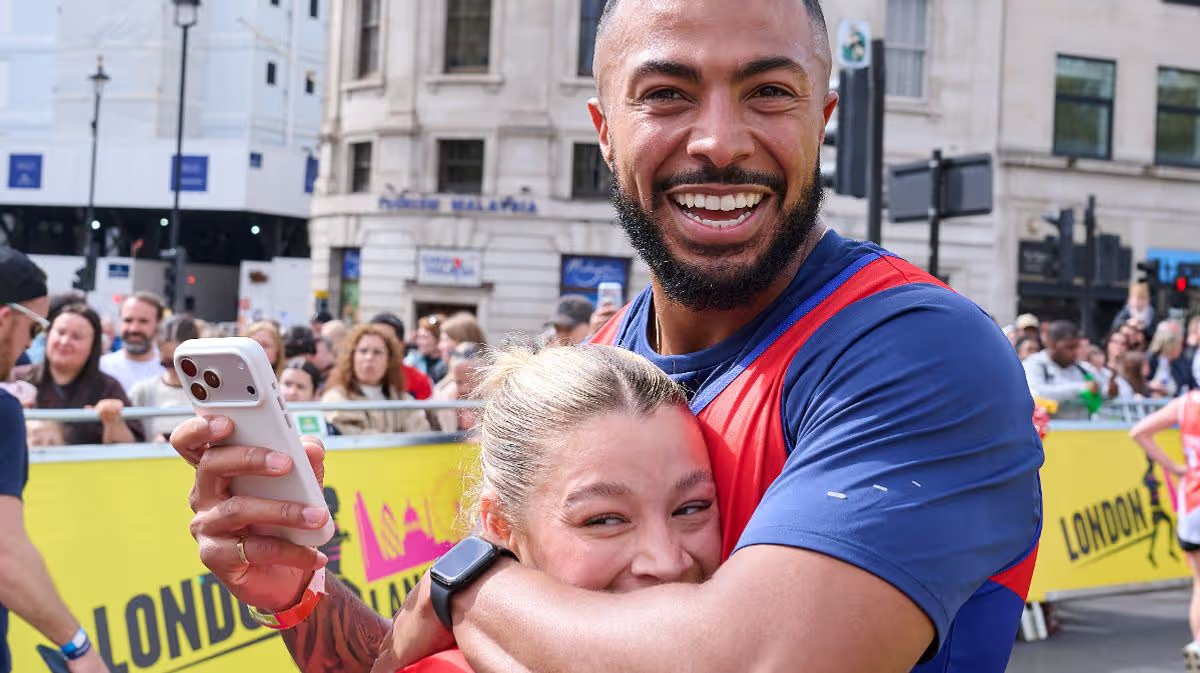
Tyler West and his fiancee Molly Rainford were just two of the celebs getting their running shoes on for the London Half Marathon on Saturday morning.
Advertisement
Radio DJ Tyler and EastEnders star Mollie, who fell in love during their Strictly stint and got engaged last August, tell us about how their wedding planning is going, running together and how Celebrity Race Across the World changed them as a couple.
“But planning a wedding is… wow, a whole other job. Honestly, you need to take a sabbatical to do that wedding planning!. I swear to God, I’m going to, like, request annual leave.”
“We have started slowly but surely planning”, adds Molly, but admits they’re in no rush to put a ring on it. “ It’s one of those things, you’re only ever engaged once — we always said that — so you want to enjoy it.
“Yeah, we’re trying to soak up this moment because once you’re married you’ll be married forever. You’re now fiancés; you’ve got to enjoy that phase.”
But Tyler adds laughing, “With that being said, Molly does have the spreadsheet out on a weekly basis.”
Advertisement
“Haha, it’s true”, adds Molly. I’m just very indecisive about everything, so it’s a struggle. It’s a great start!”
Meanwhile, their latest challenge was taking on the London Landmarks Half Marathon, as we caught up with them at the starting line on Sunday morning, alongside other famous faces including Radio 2 stalwart Jo Whiley, former X Factor winner Alexandra Burke, and Love Islanders Curtis Pritchard, Tom Clare & Casey O Gorman.
Explaining why they got involved, Tyler tells us, “We decided to take on the London Landmarks because it seems like the most incredible event that’s been put together. And obviously it’s just supporting baby charity Tommy’s, which is incredible — but anytime that we get a chance to do our part, it really does mean a lot to us.”
Advertisement
Molly adds, “I think we’ve probably only tapped into this running bag more recently. I feel like it’s only been the last year that I’ve become more confident in even just going out and running a 5K.
“So when I heard about the London Landmarks, because it’s such an iconic route, it felt like the right one to kind of dive into for me. And to be running alongside so many other people doing it for such amazing things — we’re running for the King’s Trust — it’s so inspiring.”
Tyler says it’s not the first time they’ve run a marathon – but he has extra motivation this year. “I’ve done the marathon before — that was actually during Strictly that we did that — and the atmosphere, the environment on the day was on another level.
“I think also the personal motivation for me at the moment is that I’ve just turned 30 as well. I’m kind of in that phase where you do a challenge and then prove to yourself you can do it, then the other challenges in life seem a lot easier or more achievable. Yeah, so we’re giving it a go!”
Advertisement
Do they generally train together at home? “Yeah, we do, actually”, says Molly. “I feel like Tyler is definitely naturally more motivated than me, and he does definitely get me out of bed to get training! But I think now I’m in my own little rhythm.
“We do the gym separately because obviously he’s lifting weights way heavier. But with the running, no — we enjoy it, don’t we? Especially in the summer; it’s kind of our little time together.”
Adds Tyler, “What is it, they say? The couple who trains together, stays together. That’s it. Or have loads of arguments on the way, complaining about the weights — that’s sometimes what we do…”
Do the loved-up pair feel they can do anything after that challenge? Tyler says it’s ‘the best we’ve ever done.”
“ The experience is just next level. When you’re on the race, you come up with so many different challenges and so many different problems, and you’ve got to problem-solve. You feel way out of your depth, and then it makes the things outside your comfort zone become your comfort zone. So it definitely proved to us that we can probably do anything.”
Molly admits, it’s inspired them to take on more tough challenges, since. “We’ve done High Rocks… I think there’s a lot more challenges that we’ve been able to do since. It was so rewarding to complete something like the Race Across the World. So for us it’s like, yeah, we want to feel that feeling again.”
And do tough experiences like that, which saw some viewers worry as they bickered on-screen that it was a risky move for a couple, make you stronger?
“I do think they make you stronger as a couple”, says Molly. “But then they also test you – a lot! It’s so funny because it’s not a normal thing to do; it’s not like just… going for a date.
“Anyone when we mention Race Across the World to people in a couple, they’re always like, “Oh, I could never do that with my partner, I’d end up killing them.” And it’s like, yeah, well, you know what, I feel like we must have just had bigger fish to fry! Like, we had more stuff to worry about than argue with each other.”
Advertisement
Tyler adds, “ But I think it does make you stronger. It’s really special being able to spend that amount of time with someone — like 24 hours a day for literally seven weeks. It definitely brought us closer. We wanted to say on and do another two weeks!”
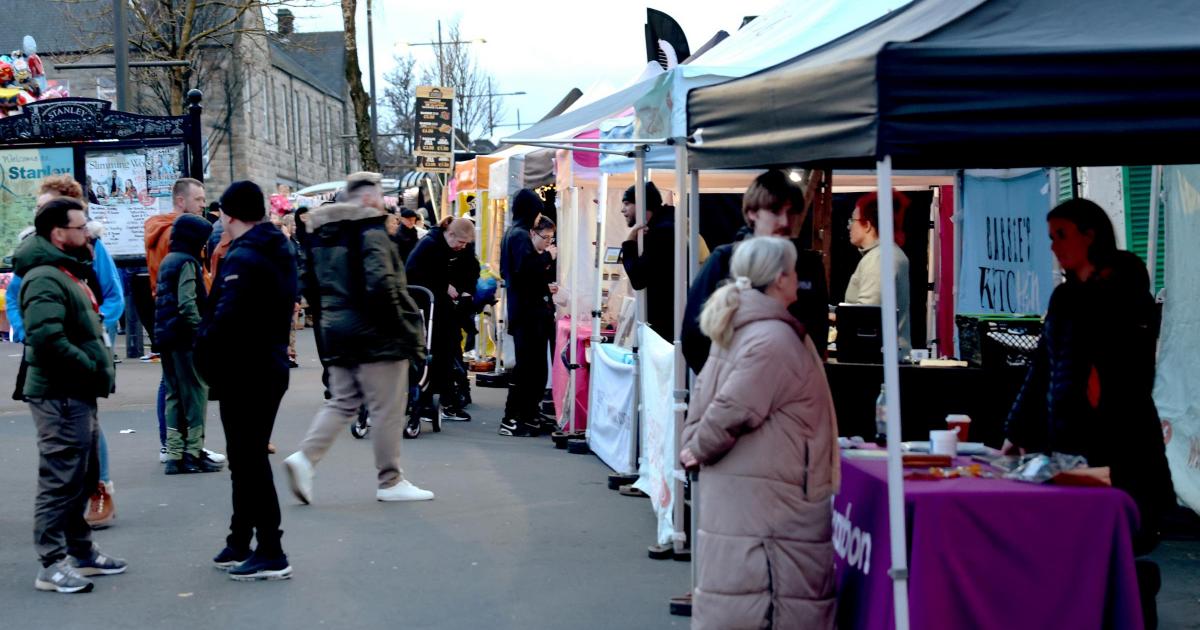
The bi-monthly markets held on Front Street in Stanley have been described as a ‘firm favourite’ with local residents in a new survey by The Retail Group.
Victoria Keen from at Karbon, one of the organisers, said: “The markets have received overwhelming support, with around 11,000 visitors joining us across the markets held so far, and the feedback has been fantastic.
“The results of our independent research with market visitors and traders show we are creating a unique experience that is helping put Stanley firmly back on the map.”
Stanley food market is returning. (Image: KARBON HOMES)
April’s market last week saw live cooking demonstrations from Nourish Food School, face painting, street food traders, and an interactive light installation by MADEby Bridge Creative.
Advertisement
Additional market dates have been confirmed for June 12, August 14, and October 9.
Stanley food market is returning. (Image: KARBON HOMES)
The market has received funding from the North East Mayor, Kim McGuinness, who praised the positive effect it has had on the area.
Mayor McGuinness said: “It’s exciting to see the positive impact that the Stanley Street Food Market is having on the community, bringing people together, celebrating the culture and heritage of Stanley and creating a buzz in the town.
“I’m really pleased we’ve backed the market and it’s great it’s been such a success.”
Advertisement
Thomas Wales, director at Baccanalia, said: “It’s brilliant to be back in Stanley in 2026.
“We’ve designed our Street Food Carousel series to bring consistent, high-quality experiences into town centres across the region, and Stanley has become an integral part of that circuit.”
President Trump has branded Pope Leo XIV as “WEAK” on crime and “terrible” on foreign policy, in a late-night Truth Social blitz which also saw him uploading an A.I.-generated image of himself dressed as Jesus.
In his lengthy Truth Social post, the president claimed that the Catholic Church’s leadership had been “arresting priests, ministers, and everybody else” in the midst of the Covid-19 pandemic and suggested that he preferred the pope’s brother.
President Trump posted an image of himself dressed as Jesus during the same Truth Social blast that saw him tearing into Pope Leo XIV (@realDonaldTrump/Truth Social)
“I like his brother Louis much better than I like him, because Louis is all MAGA,” the president blasted. “He gets it, and Leo doesn’t!
“I don’t want a Pope who thinks it’s OK for Iran to have a Nuclear Weapon.”
“Leo should be thankful because, as everyone knows, he was a shocking surprise,” the president wrote. “He wasn’t on any list to be Pope, and was only put there by the Church because he was an American, and they thought that would be the best way to deal with President Donald J. Trump.
“If I wasn’t in the White House, Leo wouldn’t be in the Vatican.”
Trump added: “Leo should get his act together as Pope, use Common Sense, stop catering to the Radical Left, and focus on being a Great Pope, not a Politician.”
Advertisement
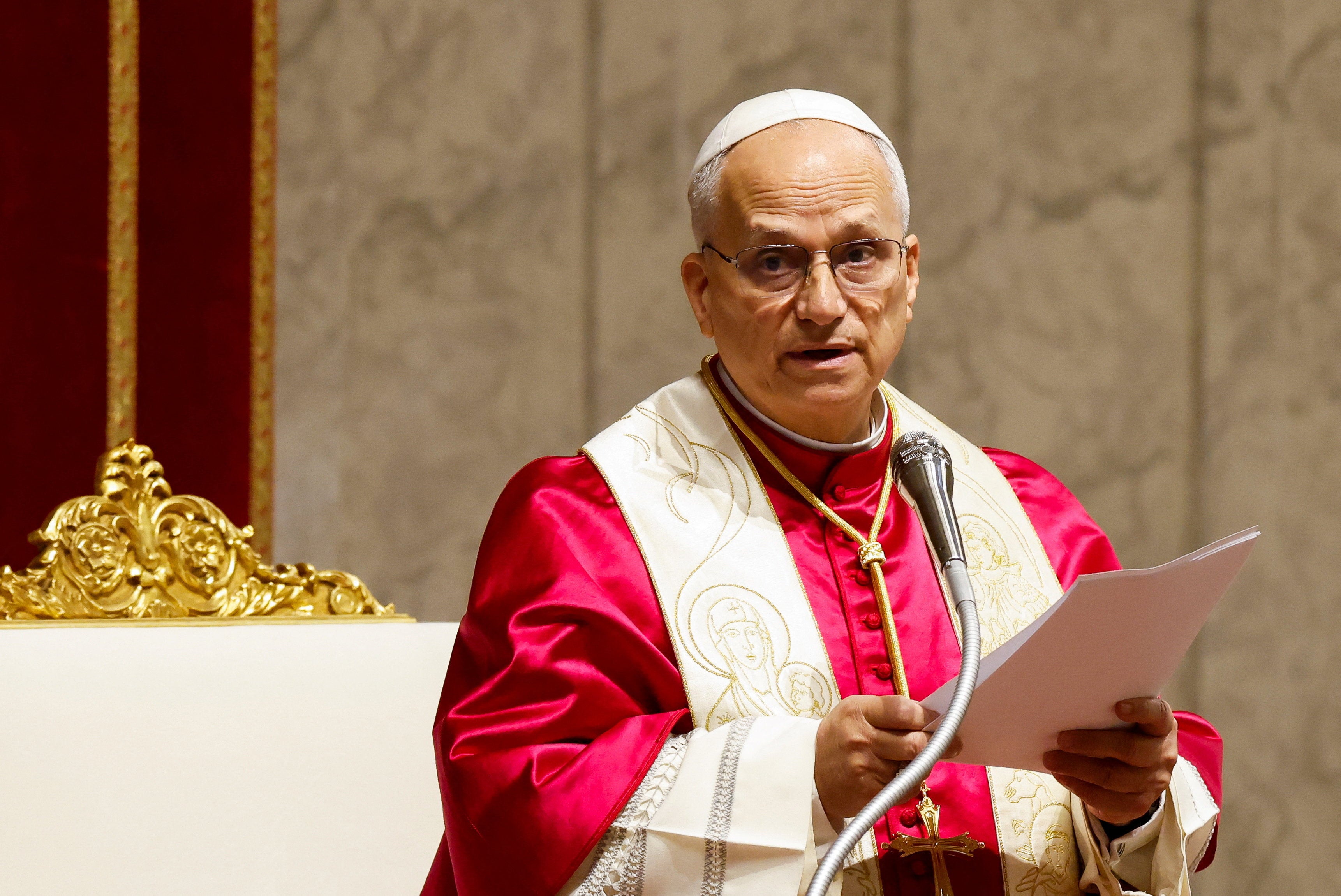
Pope Leo XIV has suggested that a ‘delusion of omnipotence’ was fuelling the war between the United States and Iran (Reuters)
Around 40 minutes after unloading on the pope, Trump uploaded an A.I.-generated image of himself dressed as Jesus.
In the picture, the president is bathed in golden light as he places a shining hand on a sleeping man’s forehead.
A nurse and a praying woman are both kneeling around the patient in the image, while a man in a camouflage uniform looks on. A fourth individual, dressed in a green uniform, is also by the patient’s bedside.
In the background, a huge U.S. flag, a pair of bald eagles and a trio of military planes can be seen flying through the air.
“On Orthodox Easter, President Trump attacked the Pope because the Pope is rightly against Trump’s war in Iran and then he posted this picture of himself as if he is replacing Jesus,” Greene wrote on X. “This comes after last week’s post of his evil tirade on Easter and then threatening to kill an entire civilization.
Trump suggested that Pope Leo XIV was chosen because ‘they thought that would be the best way to deal with President Donald J. Trump’ (AFP via Getty Images)
“I completely denounce this and I’m praying against it!!!”
Archbishop Paul S. Coakley, president of the U.S. Conference of Catholic Bishops, also issued a statement in response to Trump’s post.
“I am disheartened that the President chose to write such disparaging words about the Holy Father,” he wrote. “Pope Leo is not his rival; nor is the Pope a politician.
“He is the Vicar of Christ who speaks from the truth of the Gospel and for the care of souls.”
Advertisement
Italian historian Massimo Faggioli told Reutersthat he believes there is “no ambiguity about the situation now.”
“Not even Hitler or Mussolini attacked the pope so directly and publicly,” he said.

















































You must be logged in to post a comment Login