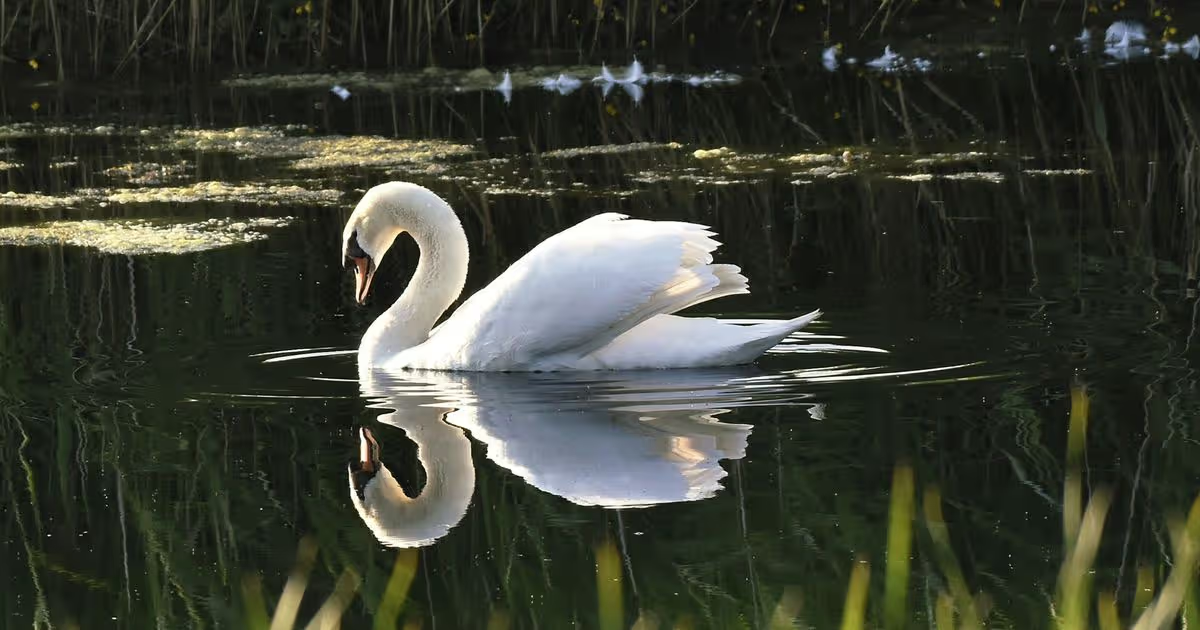
The area has a few bird hides that are ideal for birdwatching
With spring well on the way, you might be raring to get out into the countryside for a long walk. Whether you are interested in watching some wildlife or need somewhere to take the family to get some fresh air, Cambridgeshire has plenty of nature reserves to explore.
Advertisement
If you want somewhere new to take a walk at the start of spring, you might want to visit Woodwalton Fen National Nature Reserve. The site is owned by the Wildlife Trust BCN and managed by Natural England and is one of the only remaining areas of the ancient wild fens.
As Woodwalton Fen is a Site of Special Interest and a Special Area of Conservation, the reserve is home to thousands of species of animals and plants. Many of these cannot be found anywhere else in the country.
The nature reserve has three walking trails that you can follow depending on what you want to see on your visit. If you love birdwatching, try the Water Birds Trail that takes you to two bird hides and along the bank of the Great Raveley Drain.
Along the walk, you might be able to spot birds including reed buntings and sedge warblers as well as insects like pond snails and water beetles. If you are lucky, you could spot some otters by the Great Raveley Drain alongside common terns and kingfishers.
Advertisement
The Marsh Harrier Trail and the Bungalow Trail both go past the historic Rothschild Bungalow. It was built by Charles Rothschild, who is known as the “father of modern conservation”. The bungalow was built on stilts and used by Charles as a base for his field trips and activities like moth trapping.
After exploring the nature reserve and spending a few hours birdwatching, you could head to the nearby village of Bury to enjoy a meal in the White Lion. The pub is described as a ‘lively’ and ‘traditional’ pub that serves classic pub dishes.
Woodwalton Fen is just outside of Ramsey Height, around a 50-minute drive away from Cambridge via the A1307. There is a free car park for visitors to use.
Participants paid up to £49.95 to take part in the event which sold out in minutes
Lois McCarthy and Ava Hicks
11:54, 03 Apr 2026
A supermarket in Wales is set to host what is believed to be the UK’s first ever “supermarketathon” -– and it has already sold out.
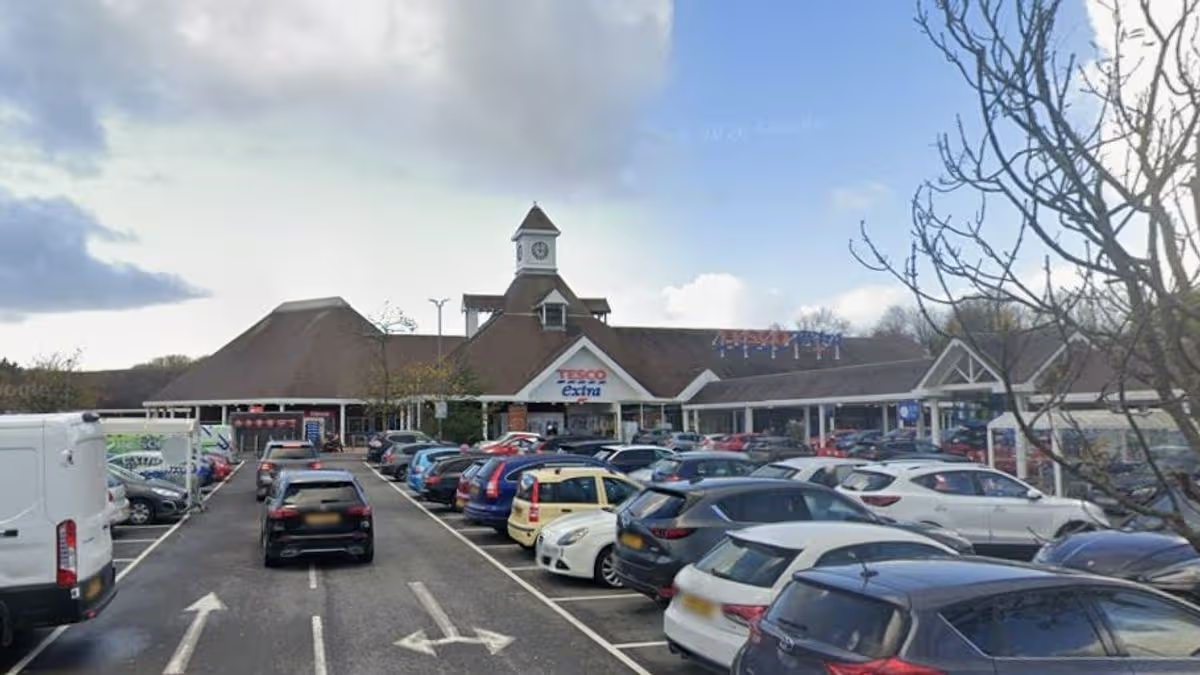
The event will take place at the Tesco Extra store in Bridgend, where 140 runners have signed up to take part in the unusual six-hour challenge organised by Phoenix Running.
Advertisement
Participants can complete anything from a 5km to a marathon or ultra distance by running repeated laps in and around the store.
The quirky course will start in the store foyer before heading outside to loop around the car park.
Runners will then head back inside and pass through the foyer and onto the travelator – although they’ll have to slow things down at that point as walking is mandatory for safety.
From there they will complete a lap of the first floor before heading back down and starting the whole process again.
Advertisement
Organisers say the final lap distance is still to be confirmed but is expected to be between 0.4 and 0.5 miles meaning competitors could find themselves repeating the same route dozens of times over the six-hour limit.
Runners will be free to complete as many or as few laps as they choose within the six-hour time limit. All participants will also receive a finisher’s medal regardless of distance completed. Stay informed on Bridgend news by signing up to our newsletter here
Tickets were priced at £47.95 for affiliated runners and £49.95 for unaffiliated entrants with all places now taken.
The event was met with a wave of excitement on social media with one person commenting: “That’s the stupidest thing I’ve ever heard, I’m definitely interested.”
Advertisement
A second said: “The two loves of my life. Running and supermarkets”, while a third wrote: “This has to be one of the daftest runs I’ve ever seen. I’m checking my diary and setting an alarm to enter.”
Officials from Tesco confirmed the Bridgend store will be hosting the event on June 28 to raise funds for the UK Armed Forces charity Help for Heroes. It will take place outside normal opening hours starting at 4.30pm.
A full risk assessment has been carried out prior to the event with staggered start times planned and safety measures in place including the requirement to walk on the travelator.
A Tesco spokesman said: “Our Bridgend Extra store is hosting this unique event to raise funds for our armed forces network partner charity Help for Heroes.
Advertisement
“It’s not every day that runners get to follow a course that goes through a supermarket so we are not surprised it has proved incredibly popular.”
The US-Israel war with Iran has sent shockwaves through the global economy and predictions of COVID‑era inflation are becoming hard to ignore. In many countries, these pressures are already being felt, as households struggle to afford essentials.
During and after the height of the pandemic, governments across the political spectrum experimented with price controls in a bid to protect people from soaring living costs. Spain and Mexico, for example, implemented such measures from the political left; Greece did so from the right.
They were a response to the pressures of inflation, weakened household finances and growing insecurity for large swathes of the population.
Among these examples, Greece’s “household basket” programme stands out as a detailed attempt to keep essential goods affordable. As consumers may once again be facing a cost-of-living price spiral, it is a case study worth examining.
Advertisement
Greece entered the inflationary period (2021-22) with some of the lowest wages in Europe. Its average pay is still just a third of that in Germany. When inflation hit 10%-12% in 2022, everyday necessities such as food, dairy products and basic household supplies quickly became more expensive.
In November 2022, the centre-right New Democracy government introduced the household basket, requiring major supermarket chains to keep prices low on more than 50 categories of essentials. These included bread, pasta, rice, dairy products, cleaning materials and baby food. Relevant items were highlighted clearly in stores, and the list was updated weekly.
Originally presented as a temporary tool, the programme has been extended repeatedly because of ongoing inflation – most recently due to concerns about conflict-related price spikes. It has become a central part of the country’s strategy to stabilise living costs, along with related measures including profit caps in the fuel sector.
A system based on transparency
What distinguishes the Greek model is how it combines regulation with consumer access to information via a digital platform. Large supermarket chains are obliged to publish the prices of their basket items online.
Advertisement
Once placed on the list, an item’s price cannot rise for seven days, though it may fall at any time. Retailers face fines of up to €5 million (£4.3 million) for violations. The scheme also requires supermarkets to submit supplier price lists, giving regulators insights into where mark‑ups occur.
The platform allows shoppers to compare prices across retailers and locate branches stocking specific items. All purchases must take place in person, maintaining the scheme’s focus on physical retail while improving transparency.
Beyond the basket itself, in 2025 the Greek ministry of development and retailers agreed price cuts of 8% on average for 2,000 goods – and profit margins on essential items were capped at their 2021 level. Inspectors conducted regular audits to enforce compliance.
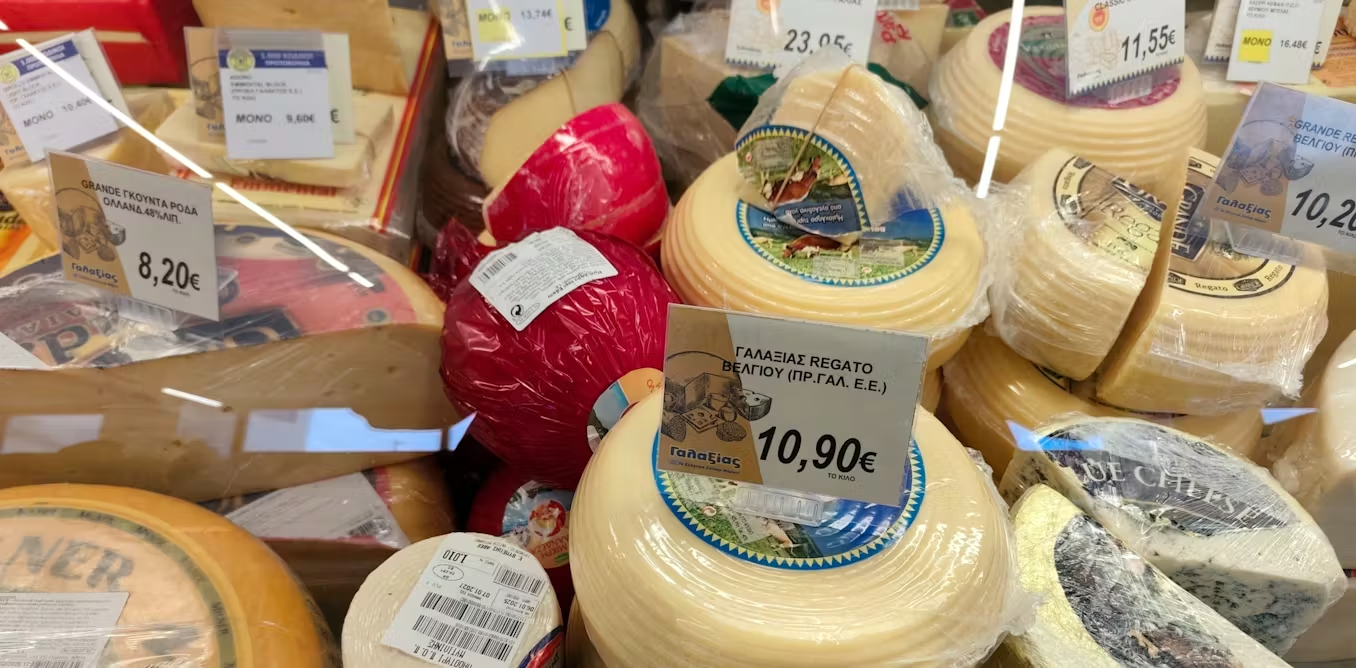
The contents of the Greek household basket can be tweaked temporarily to reflect holidays or special occasions. vivooo/Shutterstock
Across many product categories, there were notable price declines. Among 56 breakfast foods and cereals, there was a price fall of up to 23%; among 34 cheese products, the fall was 5%-35%; and for fresh meat, the drop was 5%-7% across three products. On top of these, oils and fats dropped in price by 5%-16%, pasta by 3%-5%, and sweets and chocolate by 3%-17%.
The basket has gradually expanded to include pulses, fresh poultry, meat cuts, milk and cheese. The Greek government has also introduced short‑term “themed baskets” during periods of high seasonal demand. So far, Christmas and Easter baskets have included lamb, goat meat, turkey and chocolate Easter eggs to keep a cap on holiday costs.
Price controls remain controversial for some. Retailers in Greece have argued the system is unfair, and that they are unable to absorb the costs.
However, in the Greek case, supermarkets did accept reduced profit margins for the price-capped product lines. They responded with price wars to attract custom and boost market share, and with competitively priced own-brands. One consequence of these measures is that Greece now has a relatively cheap food basket compared with other EU countries.
Advertisement
In the UK at the height of the COVID pandemic, some large retailers raised prices above inflation – doubling their profits between 2019 and 2021-22. Under such circumstances, many may feel it is only fair to ask them to contribute to combating a cost-of-living crisis.
So, while price controls may not always please retail and other sectors, they are becoming more common. Many countries have been experimenting with ways to contain the cost of living, as practical tools to stabilise inflation and support citizens during unpredictable economic shocks.
Greece’s experience shows that such measures can be structured, transparent and enforceable. It also demonstrates that price controls need not be limited to one political tradition. They have been deployed by governments across the ideological spectrum when faced with inflationary pressures.
As the UK braces for further economic turbulence, triggered by conflict and volatile energy markets, Greece’s family basket offers a model worth studying. It is not a full solution to high inflation – nothing so simple exists – but it shows how governments can intervene to reduce pressure on households while maintaining oversight of essential markets.
Advertisement
A political party ready to champion measures that deliver immediate relief to struggling households could resonate widely at a moment when many people have yet to recover from the last cost‑of‑living crisis.
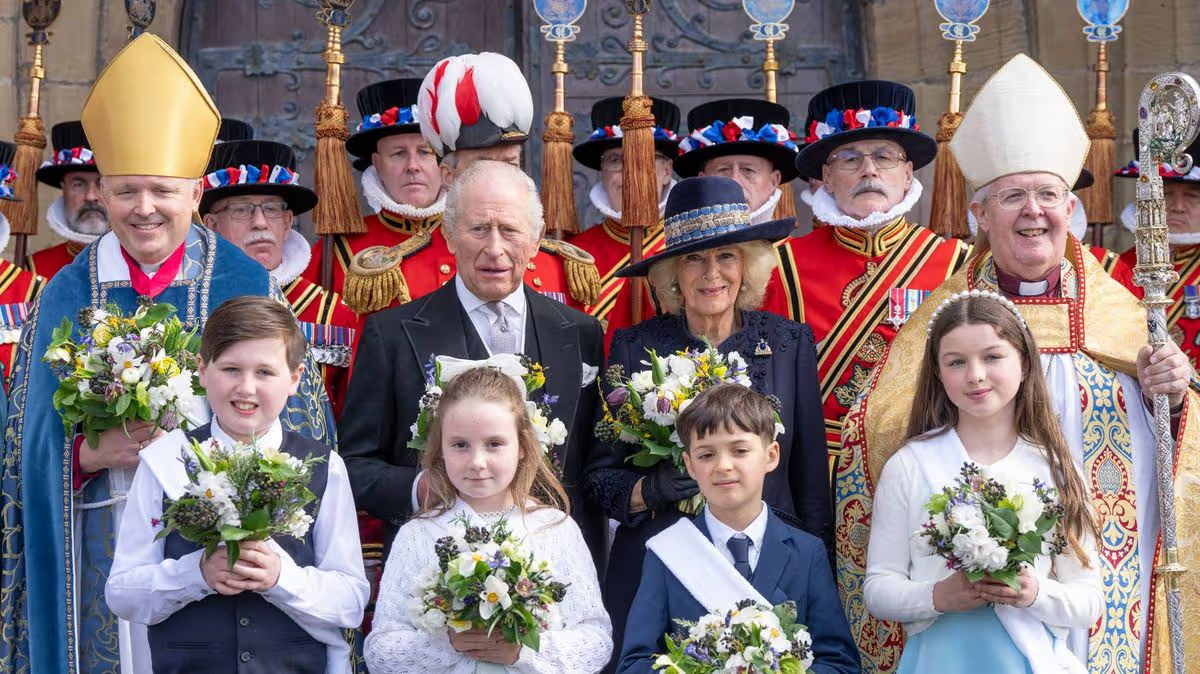
King Charles and Queen Camilla distributed Maundy money to 154 recipients at St Asaph Cathedral in North Wales, hours after ‘Not Our King’ graffiti was cleaned from the cathedral grounds
Jennifer Newton Royal Features Writer
11:38, 03 Apr 2026
The King distributed Royal Maundy gifts at an annual Easter service – just hours after workers were called in to remove graffiti outside reading ‘Not Our King’. Charles, accompanied by Queen Camilla, attended the traditional ceremony at St Asaph Cathedral in North Wales, which was last held in the country in 1982.
He presented Royal Maundy gifts to 77 men and 77 women as part of the long-standing tradition, which takes place on the Thursday before Easter each year. It honours individuals who have demonstrated outstanding Christian service and made a meaningful difference to their local communities.
Advertisement
Recipients selected from dioceses in Wales or near the English border were each handed two leather purses. The white purse contained a set of specially minted silver Maundy coins totalling 77 pennies, reflecting the King’s age, while the red purse held a £5 coin commemorating 100 years since Queen Elizabeth II’s birth, along with a 50p coin marking the 50th anniversary of The King’s Trust.
Ahead of the service, well-wishers bearing Union flags and Welsh flags gathered along the street outside the cathedral to welcome the royal couple. Further along the road, separated from the main crowd by barriers, stood a group of protesters carrying yellow flags from Republic, an anti-monarchy campaign group.
They displayed a banner featuring photographs of Charles, his brother Andrew Mountbatten-Windsor and Prince William, alongside the slogan “What are you hiding? Royal Epstein inquiry now”.
In the hours before Charles and Camilla’s arrival, graffiti reading “Not our King” was scrubbed from a wall within the grounds of the building, which holds the distinction of being the UK’s smallest ancient cathedral, reports the Mirror.
Advertisement
The earliest recorded Royal Maundy service dates back to 1210 under King John. The ceremony commemorates the Last Supper of Jesus Christ, with the distribution of alms having since become a longstanding tradition.
Among those honoured with Maundy Money was Jean Carthy, 81, from Towyn. She revealed she had initially believed it to be a scam upon receiving a letter informing her of her nomination.
She said: “Even this morning I was wondering why I was there. It was just so, so special and especially because it was the first time it has been in North Wales. He gave me the purses and said ‘thank you for the work you do’ and that was really something.”
Fellow recipient Colin Pengelly, 77, from Castle Caereinion, near Welshpool, said: “It has been an amazing, humbling experience. The King put the purses in my hand and said ‘thank you for all you have done over the years’. I said to him ‘thank you too, keep doing it’.”
Advertisement
Speaking to recipients ahead of the King’s arrival, the Bishop of Norwich, the Right Rev Graham Usher, said: “It’s an act of humility on the part of the monarch in which a small representative group of people who have lived an exemplary life of service to their church and community is honoured. Enjoy this moment. It’s your moment.”
The bilingual ceremony, conducted in both English and Welsh, featured a specially written anthem, A Sacred Benediction, performed by soprano Rebecca Evans.
Charles and Camilla were welcomed by local schoolchildren as they left the cathedral. Many of the children had gathered bunches of flowers to hand to the royal couple, before the King and Queen paused to greet well-wishers who had been lining the High Street throughout the service.
For the occasion, Camilla chose a Philip Treacy hat, a navy blue silk crepe pleated dress and a navy blue wool crepe embroidered coat, both crafted by Christian Dior. She finished the ensemble with a sapphire and diamond brooch that had once belonged to the late Queen.
Speaking about his homeland, he told The Times: “The way people treat Scotland, you know, it’s very beautiful and all that, but what we’ve done intellectually — we created television, the telephone, advances in medicine — it’s extraordinary. But we’re so low-graded, and because of that we don’t get what we deserve.
The carnival is is set to be revived this summer after an almost 20-year absence, as local group Howfen Wakes seeks to bring back the popular tradition.
The carnival began many years ago as an agricultural show before blossoming into a full-scale event with floats, games, stalls, live performers, and a parade.
Westhoughton Carnival 2004 (Image: Danny Gifford)
Westhoughton councillor David Wilkinson said: “We were really pleased how our Christmas Markets went.
“The carnival coming back will be a big step forward for our community – it will be great.”
Advertisement
Cllr Arthur Price added: “Anything that brings the town together is a good thing.”
All councillors present agreed to approve Howfen Wakes’ £500 grant application to help organise the event.
Westhoughton Carnival 2004 (Image: Danny Gifford)
Howfen Wakes plans to start small in order to test public interest.
They have been granted the right to use the field in Westhoughton, where they will set up this summer.
Advertisement
The first carnival will be a party in the park – stalls, amusements, food, face painting and hair braiding for the kids.
One of the main issues with the original carnival was the cost of road closures and traffic management, so the plan is to keep that to a minimum this year.
Westhoughton Carnival 2004 (Image: Danny Gifford)
If the response is good and the carnival is popular, Howfen Wakes will expand it year on year until it begins to resemble its former pomp, with parades, floats, and performers.
‘Howfen’ is a slang term for a Westhoughtoner, so ‘Howfen Wakes’ refers to the reawakening of the Howfens as they revive their carnival.
Advertisement
As it stands, the carnival has been inactive for about 20 years.
Westhoughton Carnival 2004 (Image: Danny Gifford)
It’s folding was largely due to cost-related pressures, as the expanding carnival accrued expanding costs for policing, road closures, and performers.
This led to the first iteration of Westhoughton Carnival being cancelled in 2007, despite calls for support from local residents and councillors.
City of York Council says it is considering a new approach to the seasonal event, which would see the market close on Tuesdays each week to allow “business as usual” in the city centre.
It said that the rest day would ease access for residents who feel cut off by the market, with particular benefits intended for Blue Badge holders.
RECOMMENDED READING:
As reported by The Press in February, extra Blue Badge parking spaces, improving accessibility for buses, dedicated quiet and rest spaces, more cycle parking and benches are among proposals drawn up following a review of last year’s market.
Advertisement
Controversial restrictions were implemented last November following an Anti-Terror Traffic Regulation Order (ATTRO) requested by North Yorkshire Police which barred drivers from city centre streets during the market’s opening hours – restrictions the force said were needed to deter terrorist attacks.
However, campaigners have slammed the measures claiming they exclude some York residents from their own city centre – especially Blue Badge holders who are unable to drive into parts of the city.
Councillor Pete Kilbane, deputy leader of City of York Council, said: “York is the most Christmassy place to be which is why it’s enjoyed by residents and visitors from all around the world.
“At a special time of year with the winter lights and Christmas Market, it’s just a fantastic place to be.
Advertisement
“However, this isn’t the case for everyone. We know that some people can feel cut off from the city centre at this time of year and this can’t continue.
“This report looks to explore our options to improve access to the city centre in a way which also keeps the city safe.
“This includes looking at rest days for the market to support those who need to get into the city centre for everyday needs such as banking services, and for leisure such as enjoying York’s amazing retail and hospitality offer.”
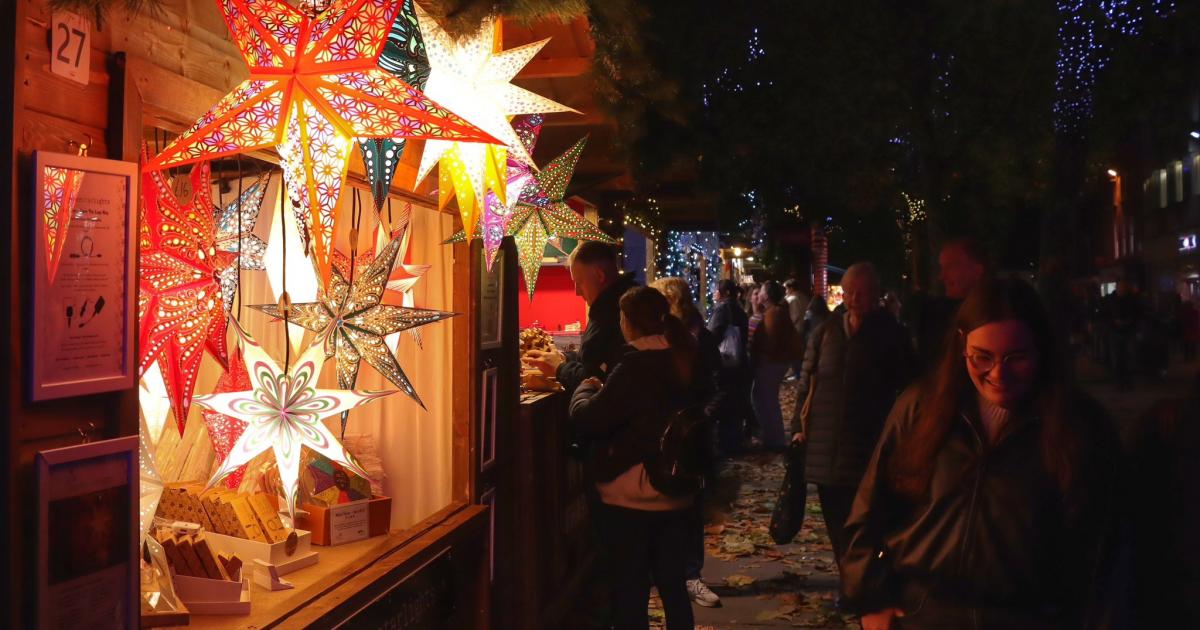
York Christmas Market could close one day a week under fresh plans (Image: Staff)
If approved, York’s Christmas market would close every Tuesday – traditionally the day when footfall for the market is quieter.
Advertisement
This would allow Blue Badge holder access through the hostile vehicle measures on those Tuesdays, unless exceptional circumstances such as a national security threat, specific intelligence or a VIP visit required retricted access.
On the remaining days of the week, vehicle restrictions would remain in place in line with anti-terrorism measures requested by the police.
The council says the change could give residents and visitors greater freedom to access shops, services, and leisure options without the usual constraints of the market operating.
If the six-day market option is backed, 2026 would serve as a trial year, with arrangements for 2027 and beyond being reviewed following an evaluation of that season.
Advertisement
The proposal will be discussed at the council’s executive meeting on Tuesday, April 14, with papers for the meeting available on the City of York Council’s website.
The meeting will also be available to watch live or on demand at www.york.gov.uk/webcasts.
A friend of Harry’s told The Sunday Times: “If he was invited by the King, he would get a package of security that automatically kicks in. He’d like an invite to Sandringham. Would he go? It would depend who was there. If the King was to say, ‘Come up and spend some time with the family’, he’d love that.”
Rhododendron ponticum, bursting into bright colour at this time of year, has been spreading widely across the Smithills Estate for years, crowding out native species.
Rhododendron on Smithills trail (Image: NQ)
The Trailblazers, volunteers working in the area, say the plant’s thick growth is “choking” the woodland floor and leaving little room for other plant life to survive.
Work uncovers water feature on the estate after plants removed (Image: NQ)
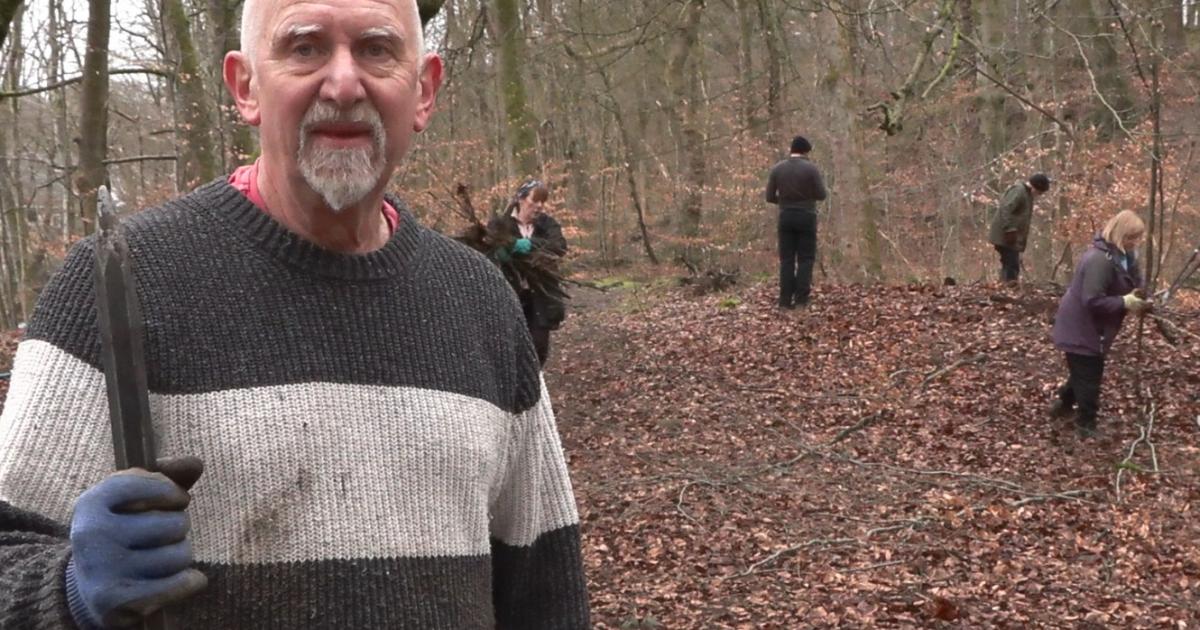
Trailblazer Alan Cowardine said: “The problem with the rhododendron is it’s got a thick foliage. “No light gets to the ground, so nothing else can survive.
“So that could be creatures like earthworms, beetles, any flies, anything like that. We’ve actually seen nothing since we’ve been pulling out the rhododendrons.”
Advertisement
The plant spreads aggressively and is difficult to control once established.
Work is underway to control the plethora of out-of-control rhododendron bushes and Trailblazers are hopeful the can limit its growth, even if hedges found all over the trail are made mostly out of the daunting yet manageable rhododendron.
Rhododendron can cause illness and vomiting when eaten, but while the risks to people and pets are considered low, volunteers say the plant should not be consumed.
Mr Cowardine added: “Each plant will produce a million seeds, then the roots form and it spreads as well, so it’s not a good thing to have and it’s a toxic plant as well.”
Advertisement
“It is toxic, but you’d have to physically eat it, but it’s not good for the environment full stop.”
Smithills’ Woodland, which spans for acres and is a walking route for locals, is maintained every Monday by the Trailblazers.
Jean Turner (Image: NQ)
Each week, they come together to stay on top of plant life, create walkways for visitors and restore once neat areas, such as ponds.
They have had help from local organisations such as Bolton Council, Friends of Smithills hall, places of education, and Bolton Green Umbrella to name a few.
Advertisement
Volunteer at work (Image: NQ)
The plant’s impact goes beyond visibility, affecting the balance of the wider ecosystem.
Jean Turner, Chair of Edgworth and District Horticultural Society, said: “The problem we’ve got is rhododendron ponticum, a beautiful flower but deadly to the environment.
“Anything underneath a rhododendron bush will die because the rhododendrons have in themselves a chemical which kills or inhibits any growth.
“The rhododendron plant is poisonous to many animals, so sheep and cows won’t graze on it. I suppose the leaves don’t look very appetising, but you would take precautions.”
Advertisement
Efforts to remove the plant are ongoing, with volunteers working to dig out roots and prevent regrowth.
They hope that over time clearing the rhododendron will allow native plants and wildlife to return to help the woodland flourish.
Jamie Lynn Spears’ life now from Netflix show to ‘frustrating’ Britney relationship – The Mirror
Need to know
Jamie Lynn Spears has rebuilt her career with Netflix’s Sweet Magnolias and reality TV appearances, but her relationship with sister Britney remains strained following years of public fallout over the conservatorship
Samantha Bartlett Assistant Editor, Social News
11:04, 03 Apr 2026Updated 11:09, 03 Apr 2026
Advertisement
Jamie Lynn Spears is currently concentrating on a number of forthcoming professional ventures(Image: Emma McIntyre, Getty Images)
All you need to know about Jamie Lynn Spears’ life now
Jamie Lynn Spears is an American actress and singer who has enjoyed a career spanning two decades, best known for her breakthrough as a teenage star on Nickelodeon before successfully transitioning into country music and dramatic television.
She first stepped into the spotlight as a child performer, following in the footsteps of her famous older sister, Britney Spears. Jamie Lynn made her screen debut in the 2002 film Crossroads, portraying a younger version of her sister’s character. Shortly afterwards, she joined the sketch comedy series All That as a regular cast member for seasons 8 and 9.
In 2005, she secured the lead role of Zoey Brooks in the popular teen sitcom Zoey 101. The programme became one of Nickelodeon’s most-watched premieres and earned her numerous accolades, amongst them two Nickelodeon Kids’ Choice Awards.
Her blossoming acting career came to an abrupt standstill in late 2007 when she revealed she was pregnant at just 16 years old. Despite widespread belief that this led to Zoey 101 being axed, the final series had already completed filming and was broadcast in 2008. Following a five-year break to dedicate herself to motherhood, Spears moved to Nashville to chase her dreams of a country music career.
She launched her debut country single, “How Could I Want More,” in 2013, followed by the EP The Journey in 2014. Spears also made her mark as a songwriter, co-writing Jana Kramer’s platinum-certified 2015 single “I Got the Boy”. In recent years, Spears has rebuilt her presence across both scripted and unscripted television. She made her return to acting in 2020 as a series regular in the Netflix drama Sweet Magnolias, taking on the role of Noreen Fitzgibbons. She also reprised her beloved role as Zoey Brooks in the 2023 sequel film Zoey 102 on Paramount+, on which she additionally served as executive producer.
Throughout 2023, she featured on a string of reality competition programmes, including Dancing with the Stars, Special Forces: World’s Toughest Test, and the popular British series I’m a Celebrity… Get Me Out of Here!. Away from the screen, she released her autobiography, Things I Should Have Said, in 2022, offering a candid account of her life in the public eye and her family experiences.
As of early 2026, Jamie Lynn is concentrating on a number of forthcoming professional ventures while marking important family milestones. She resides in Louisiana with her husband, businessman Jamie Watson, to whom she has been married since 2014. The couple have two daughters: Maddie Briann (born in 2008), who is completing her final year of high school in 2026, and Ivey Joan (born in 2018). She regularly offers her followers a peek into her down-to-earth home life on social media, having recently marked her 12th wedding anniversary with a quiet dinner at home.
Jamie Lynn has spoken candidly about her battles with anxiety, depression, and OCD, which she manages through therapy. She is equally forthright about her Catholic faith, crediting it with helping her family navigate challenging periods, including her daughter Maddie’s ATV accident in 2017. She continues in her role as Noreen Fitzgibbons in the hit Netflix series Sweet Magnolias. Season 4 launched in early 2026, and she’s already hinted that Season 5 is anticipated in June 2026.
Her relationship with her elder sister, Britney Spears, remains a significant focus of public attention. The siblings have endured a highly publicised and turbulent rift over recent years, primarily revolving around Britney’s 13-year conservatorship and Jamie Lynn’s 2022 memoir, Things I Should Have Said. While Britney has conveyed both affection and fierce frustration towards her sister through her own memoir and social media posts, the relationship is widely regarded as strained yet possibly repairable. Jamie Lynn insists she loves her sister but has frequently felt caught in her “shadow”.
Kyle Williams and Simon Farr ‘did not care about the pain they caused to vulnerable people’
10:53, 03 Apr 2026Updated 10:53, 03 Apr 2026
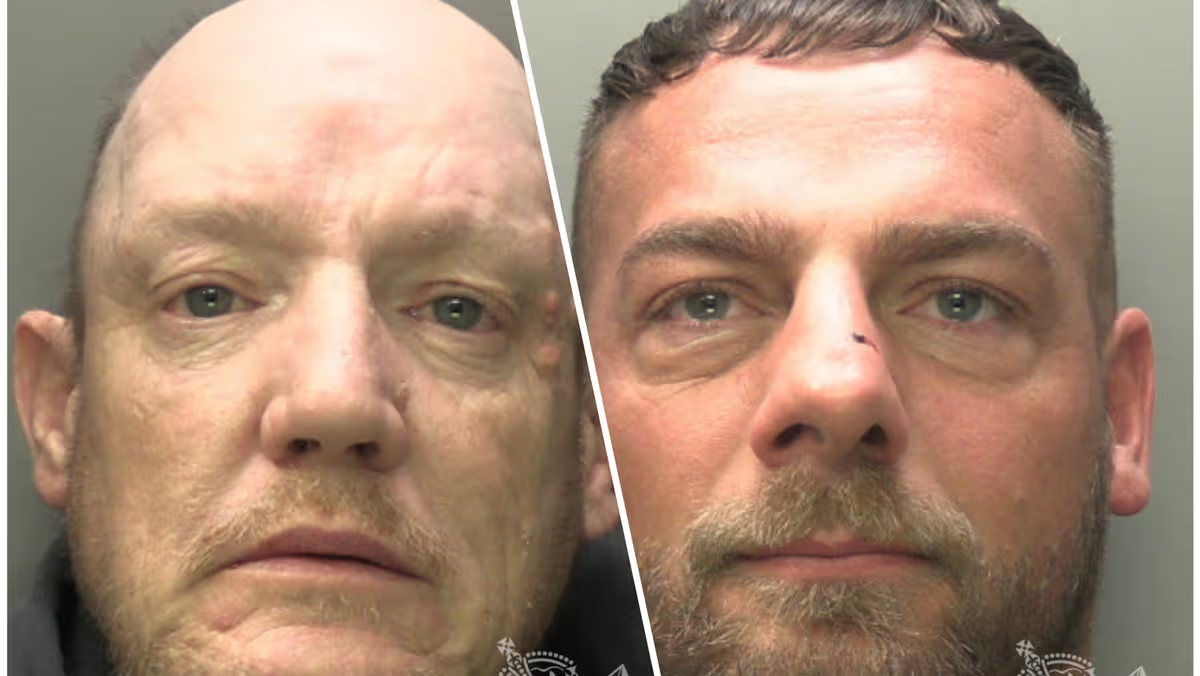
Two members of an organised crime gang profiteered from supplying cocaine in a south Wales valleys town, a court heard. Police said Kyle Williams, 38, and Simon Farr, 54, “did not care about the pain they caused to vulnerable people and their families”.
Cardiff Crown Court heard neighbourhood officers in Blaenau Gwent investigating the sale and supply of class A drugs carried out early-morning warrants at two addresses in Abertillery in March last year.
During these searches, officers recovered two mobile phones and, at the address of Williams seized cocaine with a street value of up to £9,720, and £8,860 cash.
Advertisement
When analysing the phones seized, officers found evidence linking Williams and Farr to the sale and supply of cocaine. Both men, from Abertillery, were charged in December of last year.
Williams and Farr appeared for sentencing at Cardiff Crown Court Thursday, April 2, after previously admitting to supplying the class A controlled drug and possessing a controlled drug of class B – cannabis/cannabis resin.
Williams also pleaded guilty to possession with intent to supply cocaine. Don’t miss a court report by signing upto our crime newsletter here
Williams received a sentence of four years imprisonment, while Farr was sentenced to two-and-a-half years.
Advertisement
PC Connor Jones from Gwent Police said: “I would like to thank all those who played a role in Operation Dansom, a lengthy and thorough investigation, during which meticulous work from our data analysts and digital forensics teams uncovered a wealth of evidence to bring these two men to justice.
“We were able to establish that Williams and Farr were profiting financially from the sale of class A drugs – they did not care about the pain they caused to vulnerable people and their families.
“These sentencing outcomes were made possible by the important role our communities play in these enquiries as the information given to us helps build our intelligence picture and gives us the chance to bring criminals, like Williams and Farr, before the courts.
“Our teams will continue to work tirelessly to tackle drug supply in Blaenau Gwent and protect vulnerable people from the devastation and misery that illegal drugs can cause.”


















































You must be logged in to post a comment Login