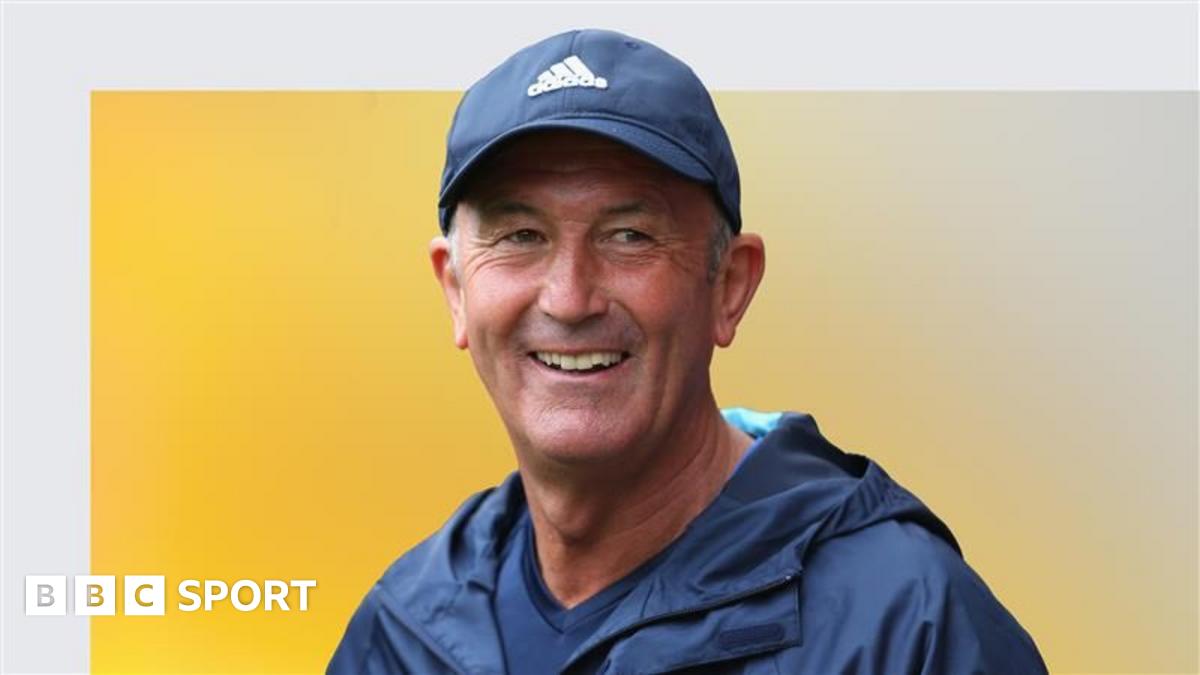
Many moons ago I received the great accolade of being named Premier League manager of the season – with Crystal Palace in 2014. Along with the same award I won with Gillingham for Division Three (now League Two) in 1996, it’s one of my most treasured memories over the many years I have been in the game.
So, who do I believe deserves recognition this year? The League Managers Association (LMA) holds its annual awards dinner on Tuesday, recognising achievements across the men’s and women’s game. For me, there are several names that stand out.
In the Premier League, the divisional award invariably goes to the manager who has finished top of the table – since the awards started in 1993 there have only been four occasions when it hasn’t, which is why I was especially proud when one of them was me.
Over the years I have often voted that way myself too, but I have also always respected the managers lower down the Premier League who have over achieved and on many occasions voted that way instead.
Advertisement
This season, Arsenal and Manchester City have been the two outstanding teams and I am sure Mikel Arteta and Pep Guardiola will have a great run at this prestigious individual award to go with their team’s impressive campaigns.
Take a look below them, however, and there are more managers worth a mention.
What Keith Andrews has achieved at Brentford, in his first season as a manager, is amazing. The Bees were many people’s favourites to get relegated at the start of the campaign and Keith was top of the bookmaker’s list to be the first manager to be sacked – but came within a whisker of securing European qualification for the first time.
That prize was achieved by Bournemouth‘s Andoni Iraola, who was close to a Champions League place but ended up in the Europa League.
Advertisement
Iraola has managed my old club since 2023 and, despite having to consistently sell his best players during that period, he has put together a team that has gained momentum, not lost it.
His success is not just in a one-off season – instead it has been built over that three-year period, by consistent improvement year after year.
Andoni did not make the best of starts to his time on the south coast – he took 10 attempts to register his first league win, which did not arrive until the end of October – but in an era where managers get less time than ever before, he has proven that, if you do get it, then success can and will follow good managers.
Daniel Farke has shown that at Leeds this season too – turning their fortunes around when he was under real pressure at the end of November.
Advertisement
Along with Regis le Bris at Sunderland, Farke bucked the trend with Leeds by retaining their Premier League status – something we no longer expect from promoted teams.
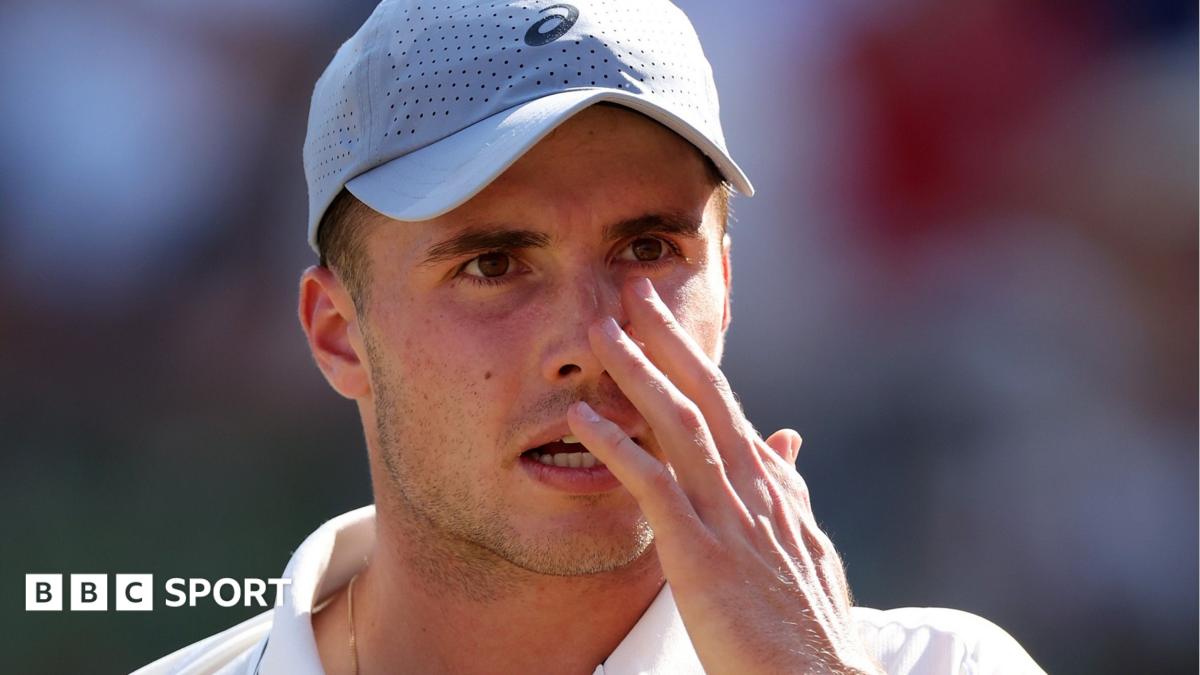
Fery may not be well-known outside of British tennis circles but sport is a huge part of his family life – his mother, Olivia, was a professional player, while father Loic owns Ligue 1 football club Lorient.
As a teenager, Fery opted to go on a scholarship to Stanford University in California and also played collegiate tennis.
He lost just two games in his opening-round win over compatriot Toby Samuel at Queen’s, before recording what he described as the “best result” of his career against veteran Frenchman Mannarino.
He and Cerundolo both made nervous starts, with numerous break point opportunities, but Fery broke to serve for the set at 5-4.
Advertisement
However, Cerundolo won the next three games and dominated the tie-break, with the only point Fery won in it coming from a double fault from his opponent.
Cerundolo broke to start the second set but took a painful hit at the net when Fery accidentally sent a volley straight into his throat.
The Argentine fell to the floor, with Fery hopping over the net to check on him – and the pair shared a wry smile as on the next point, Cerundolo came close to hitting Fery with a passing winner.
But from that moment on, Cerundolo’s serve disappeared, and Fery restored parity before breaking to serve for the set.
Advertisement
A lovely serve and volley from Fery to force the deciding set established the tone, and a horrible double fault from Cerundolo handed the Briton the early initiative.
Cerundolo’s experience showed, though, as he put enough pressure on his opponents’ forehand to first break back and then secure victory on Fery’s serve.
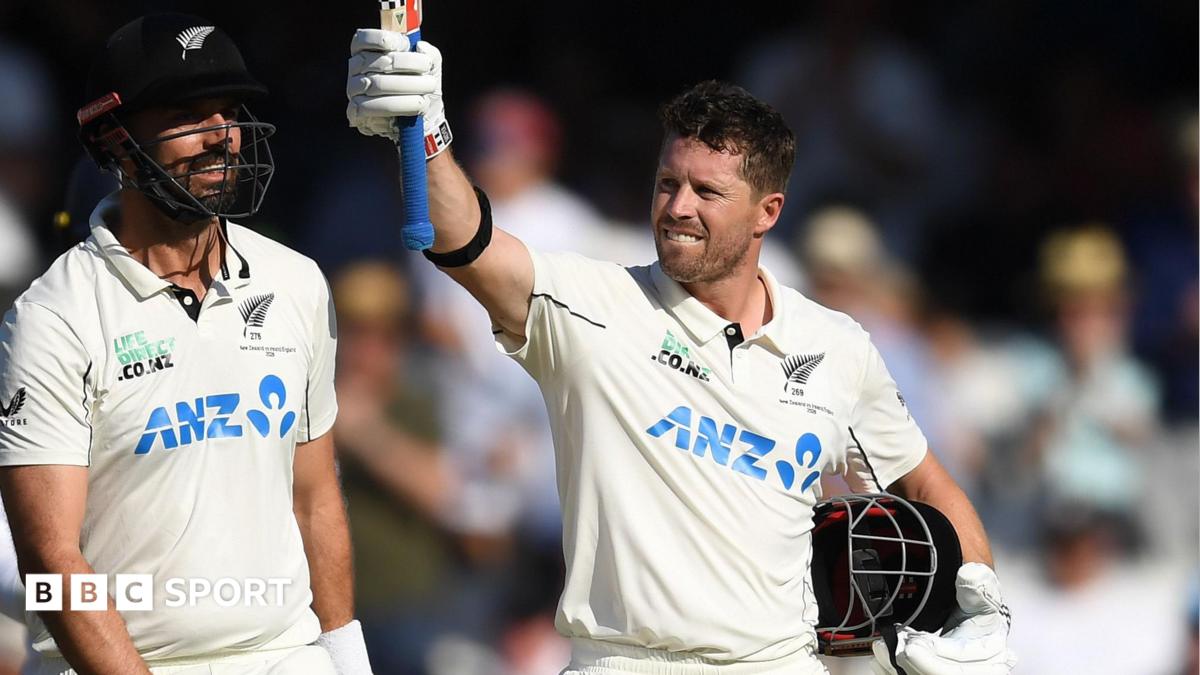
England’s parlous position in the second Test against New Zealand was compounded by drops from debutant wicketkeeper James Rew and a superb century by Henry Nicholls.
On the day Ben Stokes made his return to action for Durham following an incident in a London nightclub, an England team without their captain were slowly roasted in the heat of The Oval.
By the end of the third day, New Zealand had moved to 252-3 in their second innings, leading by 352 and primed to level the series at 1-1.
Advertisement
Rew was one of five changes and three new caps brought in by England from the team that won the first Test at Lord’s. The chances he missed were difficult, yet catchable and costly.
Diving to his left, Rew put down Rachin Ravindra when he had only seven. Nicholls, on 42, gloved an attempted hook down the leg side and Rew parried the ball high to his right.
Reprieved, the New Zealand third-wicket pair added 161. Ravindra was lbw to Jacob Bethell for 76, but Nicholls pushed on to end the day on 119 not out.
England earlier gave up a first-innings lead of 100 by being bowled out for 291. It was a below-par total on a good pitch and would have been worse had it not been for number nine Matthew Fisher’s maiden unbeaten half-century.
Advertisement
From 222-6 overnight, the home side were reduced to 238-9 by Matt Henry’s five-wicket haul, before Fisher added 53 for the 10th wicket with last man Sonny Baker.
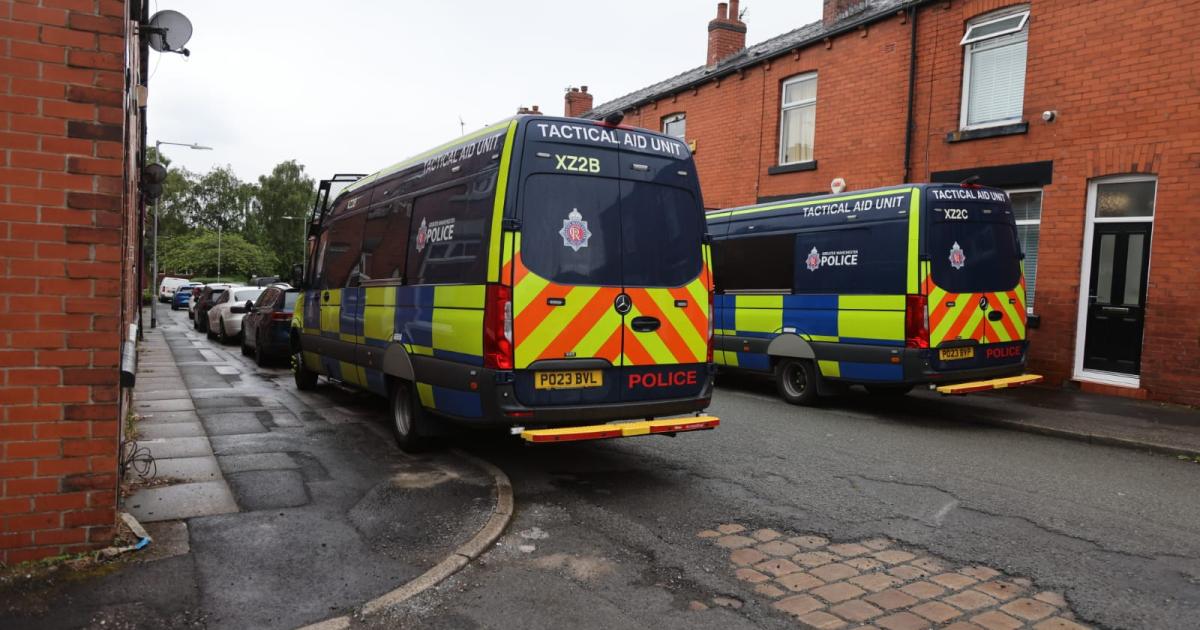
Officers with the Tactical Aid Unit were at Canada Street, just off Cloister Street, with police currently in a property.
They have been at the scene since around 4.30pm.
Residents said they were alarmed to see the police vehicles, as well as a large number of uniformed officers flooding the residential street.
Advertisement
A man was arrested on suspicion of possessing drugs with intent to supply.
Investigations are still ongoing.
The arrest comes just days after a property was raided in Halliwell as part of a drugs investigation following complaints from locals.
Ward councillor Rabiya Jiva told The Bolton News this week tackling drugs in the area remains a priority, with residents bringing the issue up at meetings.
Advertisement
The arrest comes just days after a property was raided in Halliwell as part of a drugs investigation following complaints from locals.
This week is Neighbourhood Policing Week with forces teaming up to tackle the issues that mean the most to residents.
Residents may have noticed an increased police presence throughout, with officers available to discuss any issues that residents have.
The week highlights the role of local officers and PCSOs, showcasing the work they put in every day to keep people’s neighbourhoods crime free.
Advertisement
In the last year, neighbourhood crime has been reduced by 15 per cent across Greater Manchester – including in each borough.
The UK Health Security Agency (UKHSA) has issued an amber heat health alert for the East of England
David Prince and Cambridgeshire Live readers
17:00, 19 Jun 2026
Cambridgeshire Live readers have been sharing their thoughts on the recent amber heat alert and the associated risk of “heat deaths”, which has divided opinions. While some readers raised concerns about climate change and called for caution, others argued that the forecast temperatures were typical for this time of year and nothing to be alarmed about.
The heat health alert for Cambridgeshire has been upgraded, with temperatures forecast to climb as high as 28C this week. The UK Health Security Agency (UKHSA) has issued an amber heat health alert covering the East of England.
Advertisement
The alert came into effect at approximately 12pm on June 18. Cambridgeshire is not the only affected region, with neighbouring counties including Essex and Norfolk also placed under a heat health alert.
The warning is set to remain in place for around five days, ending at 8pm on June 23, next Tuesday. The UKHSA has warned that there could be an increase in fatalities, particularly among those aged 65 and over or individuals with pre-existing health conditions, with younger age groups also potentially affected.
One reader, Garyblowpants, comments: “As we head deeper into uncharted climate change territory, the effects continue to compound with more extreme weather becoming increasingly common. It’s time for the deniers to admit they were wrong and that their arguments were always indefensible.
“Climate change doesn’t mean every day is extreme. It means the average temperature is rising over time, with more heatwaves and still some normal or cooler days. Perfect time to install a solar panel on your house.”
Advertisement
Calumen Nomen writes: “Are the Maldives underwater yet? What’s indefensible is spaffing all our money up the wall in the pretence that mankind can alter the climate. If and when the climate changes, we will have to adapt – not pretend we can stop it with heat-pumps and windmills.”
Rhodabike says: “Up to 28°C in June is not extreme. It’s to be expected around this time of year. A few days of pleasantly warm weather in June doesn’t indicate any cause for concern.”
Over on our Facebook page, Tony H comments: “It used to be called summer…”
Simon W says: “In short, old, very seriously ill people might want to limit how much time they spend in the sun. For everybody else, it looks like it’s going to be a lovely weekend.”
Advertisement
Tim C replies: “I would have thought heat ‘deaths’ would have warranted a full-on red warning, they must only be moderately bad deaths as opposed to really, really bad ones!”
Matthew B adds: “It does say ‘younger age groups’. Translation: ‘Parents, please don’t be idiots and leave your children out in the burning sun or a boiling hot car’. Some of them won’t realise it’s wrong to do so.”
Are you looking forward to the warmer weather? Comment below or HERE to have your say.
Keir Starmer is allegedly facing growing pressure from his own cabinet to set out an “orderly transition” of power to his greatest rival Andy Burnham.
Burnham’s victory in the Makerfield by-election in the early hours of Friday has paved the way for the soon-to-be-former Greater Manchester mayor to challenge the prime minister.
The new MP comfortably saw off the electoral threat from Reform UK and secured a majority of 9,000 votes, fuelling hope that he could revive Labour’s poor performance in the polls if he got into No.10.
Asked if he would stand in any possible leadership election on Friday morning after Burnham’s victory, Starmer insisted “there isn’t one at the moment” and that holding one would send “the country into chaos”.
Advertisement
But he added: “If there is a contest, then yes I will run, I will stand, and I’ve said repeatedly I’m not going to walk away from that.”
Pressure from his own cabinet ministers continues to grow, however, according to reports.
The Times, The Independent and The Guardian report that several frontbenchers have joined home secretary Shabana Mahmood and energy secretary Ed Miliband in calling on Starmer to set out a timetable for his departure.
The newspapers say that multiple cabinet members will tell Starmer his “time is up” and encourage him to set out a timetable for an “orderly transition” of power.
Advertisement
Approximately 100 Labour MPs have publicly urged Starmer to step down in the six weeks since the party’s horrific performance in the May elections in England, Scotland and Wales.
Two Labour grandees, David Blunkett and Harriet Harman, have also called for the PM to set out a timetable preparing for new leadership.
Leader of the National Education Union, Daniel Kebede, also told Times Radio he wants Labour to “crack on” with a “quick transition” of power.
He added: “Andy becoming the leader of the Labour party is an inevitability from this point.”
Advertisement
Burnham’s allies are hoping the newly minted MP could avoid having to trigger a contest himself if Starmer goes of his own accord, removing the need for a potentially fractious leadership race.
But, if the prime minister refuses to step aside, he will automatically be put on the ballot of a leadership race.
Labour Party rules state only an MP with the support of 81 other MPs can fire the starting gun on a leadership challenge.
The incumbent leader does not need any nominations to stand again.
Advertisement
Burnham is said to have the numbers to fire the starting gun on a challenge.
Nearly half (44%) of all voters think Burnham should now challenge Starmer for the leadership role, according to snap polling from YouGov.
But voters were divided on whether the PM should fight for his job, with 36% saying he should stand in any contest while 38% think he should step aside.
Downing Street refused to comment on private conversations when approached by HuffPost UK.
Advertisement
Listen to Commons People, the podcast that makes politics easy. Every week, Kevin Schofield and Kate Nicholson unpack the week’s biggest stories to keep you informed. Join us for straightforward analysis of what’s going on at Westminster.
Councillor highlights how fireworks noise distresses certain people, pets, livestock and wildlife
17:05, 19 Jun 2026Updated 17:09, 19 Jun 2026
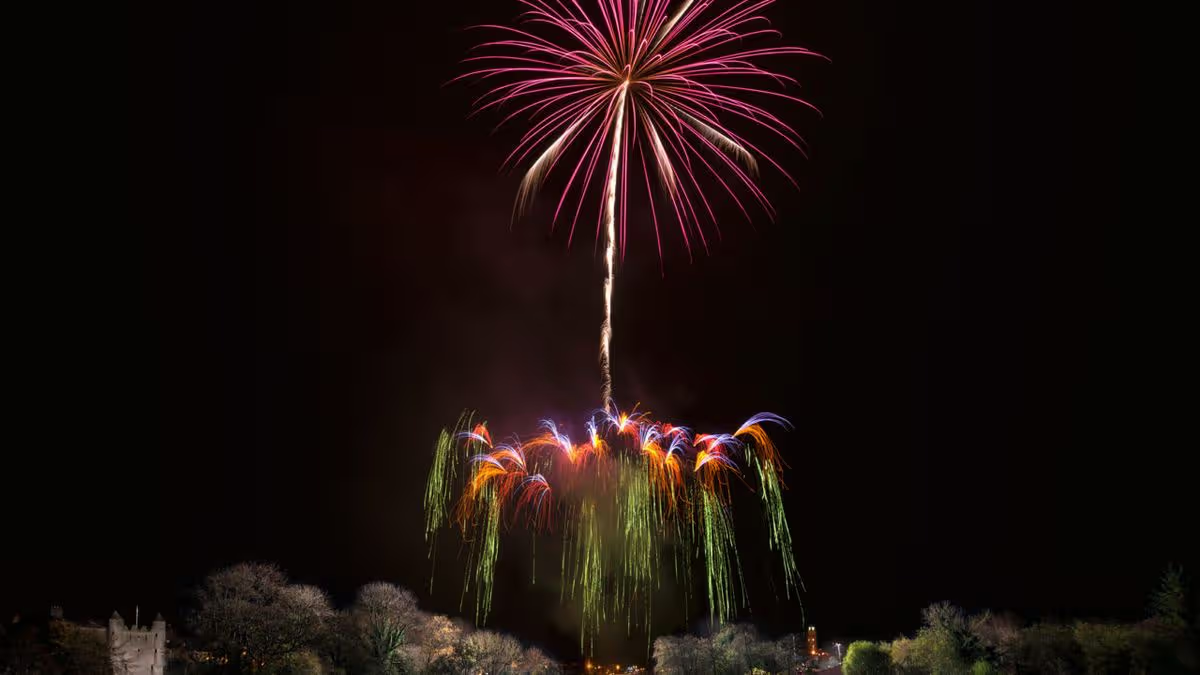
Big events in Belfast might feature “silent” fireworks, if a Green Party initiative comes to fruition at City Hall.
Elected representatives at Belfast City Council have agreed a motion to explore the use of low-noise fireworks at events and include low-noise alternatives in future procurement processes. The motion, agreed at the People and Communities Committee this week at City Hall, will go to the full council meeting next month for ratification, where it is expected to pass.
The Green Party motion, forwarded by Councillor Anthony Flynn, states: “This council recognises the distress caused by high-noise fireworks to many residents, including autistic people, those with sensory issues or PTSD, elderly residents, pets, livestock and wildlife. It notes that low-noise fireworks are increasingly used at public events and can provide the same visual impact while significantly reducing noise disruption to communities.”
The committee agreed to “explore” the use of low-noise fireworks at events run or funded by the council. This will include looking at “low-noise alternatives” in future procurement.
The committee also agreed to commission an internal report on implementation options and costs for a new low-noise fireworks policy. Elected representatives also agreed to write to the Stormont Justice Minister calling for a review of fireworks legislation and the sale of high-noise fireworks in Northern Ireland.
Advertisement
Councillor Flynn said after the committee meeting: “Many residents enjoy fireworks displays, but we also know that traditional high-noise fireworks can cause significant distress for autistic people and those with sensory sensitivities, people living with PTSD, older residents, as well as pets, livestock and wildlife.
“People may remember numerous occasions over the years where dogs have suffered or died, some have gotten out of their houses and later found dead by their owners because of the immense distress caused by fireworks.”
He added: “Silent fireworks are already being used successfully elsewhere and still provide the same visual spectacle whilst reducing many of the negative impacts associated with traditional fireworks displays.
“I believe that a sensible and proportionate approach is possible for this issue, I think the public are crying out for some leadership on this issue both from local councils and the assembly.”
Father’s Day is a time to celebrate fathers and father figures. Today’s dads may be more involved in their children’s lives than ever before, sharing the day-to-day responsibilities of raising children.
But while expectations of fathers have evolved, the support available to them has not always kept pace.
My colleagues and I undertook research in partnership with Children in Wales, an umbrella body for organisations and people who work with children and families. Speaking with 97 fathers in Wales, we heard honest accounts of the joys and challenges of modern fatherhood. Their experiences revealed a common theme: many dads feel overlooked, unsupported and insufficiently recognised in their role as parents.
That’s something to consider because fatherhood can be one of the most rewarding experiences in a person’s life. As one father told us: “Being a parent is hard and life is never easy. There are always new hurdles and challenges. But it is so rewarding and I love being a dad.”
Advertisement
Becoming a father can also be one of the most significant transitions a man experiences. Biological changes, including a drop in testosterone levels, combined with shifts in relationships, responsibilities and finances, can leave many fathers vulnerable at a time when they are expected to be strong and dependable.
Despite this, many dads still feel unable to speak openly about their struggles. Some fear stigma. Others do not know where to seek support. In many areas, support specifically designed for fathers simply does not exist.
The consequences can be severe. Fathers can experience postnatal depression and many report suicidal thoughts. Men are around seven times more likely to die by suicide than women after becoming parents. This means that an estimated two to three babies every week in the UK lose their father to suicide within the first 1,001 days of life. The effects on children, families and communities is profound.
But our research suggests this picture is not inevitable. When we asked fathers what would make the greatest difference to their lives and wellbeing, three clear themes emerged.
Advertisement
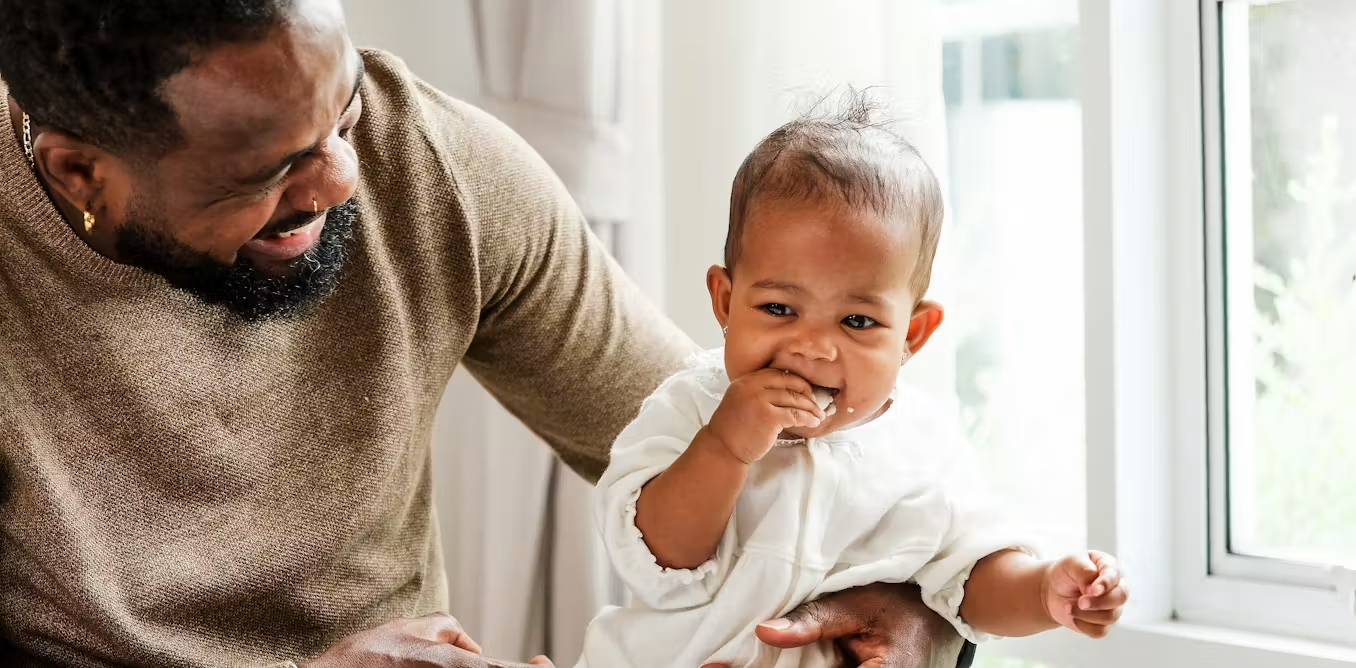
Many fathers feel vulnerable at a time when they’re expected to be strong and dependable. KieferPix/Shutterstock
The first was a desire for society to rethink the role of fathers. Many dads told us they still encounter outdated assumptions that their primary purpose is to provide financially while mothers take the lead in caring for children. They want to be recognised not only as breadwinners but also as caregivers, nurturers and active participants in family life.
Fathers described the need for parenting to be seen as a shared responsibility and for dads’ involvement in everyday activities – from school runs to bedtime routines – to be seen as normal rather than exceptional. They also called for greater visibility of dads in public messaging, advertising and media campaigns, where parenting content is still frequently directed mainly towards mothers.
The second message was that fathers’ contributions to children’s lives need to be more consistently recognised by the systems and services that support families. Many dads spoke about feeling peripheral during interactions with healthcare, education and other public services. They wanted professionals to recognise that in two-parent families there are two parents whose voices matter.
For many dads, inclusion starts from the earliest days of a child’s life. Fathers should be routinely involved in conversations about their children, consulted when decisions are being made and recognised as important figures in their children’s development and wellbeing. Small changes in professional practice could make a big difference to how valued and engaged fathers feel.
The third theme centred on support. Fathers told us they need access to services and resources that help them become the best parents they can be. That support should begin early, ideally before or during the transition into fatherhood, when many men are navigating unfamiliar challenges and responsibilities.
Many mentioned the importance of improving paternity leave, giving fathers more time to bond with their children, support their partners and adjust to family life. Others called for services designed with fathers in mind, including dad-specific support groups, activities for fathers and children and practical guidance on parenting.
Some also pointed to the value of wider family support, including relationship counselling, mediation and legal advice when families encounter difficulties. Of course, none of these changes will happen overnight. Changing attitudes, reforming services and expanding support require commitment from policymakers, professionals and communities alike.
Advertisement
Optimism
But there are also reasons to be optimistic. Across Wales and beyond, researchers, practitioners, charities and fathers themselves are already working towards the shared goal of improving dads’ wellbeing so that families can flourish.
Our Dads’ Wellbeing Research Network brings together policymakers, service providers, community organisations, dads and people committed to driving that change. Father’s Day is an opportunity to celebrate dads. It should also be an opportunity to listen to them.
The fathers who took part in our research weren’t asking for special treatment. They were asking to be recognised, included and supported in one of the most important roles they will ever have.
If society can achieve that, it will not only mean improving the lives of fathers. It may also help build stronger families and give more children the best possible start in life. And that is something worth considering this Father’s Day.
The possible nominative determinism of the Makerfield constituency may prove as significant to political historians as it has been a blessing to newspaper sub-editors crafting puns on “Makerfield or Breakerfield”.
The immediate futures of Andy Burnham and Keir Starmer were decided in the historic happening of the first UK byelection to effectively elect a prime minister. It was a battle of our times.
Burnham’s success will make a new administration as it breaks the present one. Prime Minister Starmer’s government has been largely an ineffectual one – of which Burnham, crucially, was not a part.
This may be the moment – “the final chance to change”, as the victorious candidate put it – that transforms the performance and perception of Labour. But it also demonstrates how profoundly, and rapidly, politics in Britain is changing.
Governing parties don’t win byelections, and certainly not on 23-point swings. Burnham’s 54.8% vote share, more than 20 percentage points more than that of Reform UK, was unexpectedly emphatic – a personal triumph.
The momentum behind Reform UK’s leader, Nigel Farage, has if not stalled then noticeably decelerated. A second seat in the north-west that Reform ought to have won this year, it hasn’t – and this time resoundingly.
Much was down to Labour’s exceptional candidate – and Reform’s exceptionally inappropriate one. In the May local election, Reform was rampant, Labour won only 24% of the vote in Makerfield, and Restore Britain didn’t stand. Last night, Rupert Lowe’s party finished third.
Advertisement
Lowe has checked Farage with politics of such unabashed illiberalism as to make Reform resemble the Liberal Democrats. It is too simplistic to assume that had Restore not stood, its voters would have turned to Reform (and in any case, Burnham would still have won conclusively). But rather than deal in switchers, Restore’s menace is its appeal to non-voters.
This byelection was not merely a matter of getting someone into parliament to supplant a prime minister. It was intended, and needed to be, a statement.
More than any incumbent party in history, given the unique febrility of politics in 2026, Labour could not hope, much less expect, to win a byelection anywhere. Never competitive in rural constituencies, in cities Labour is prey to the Greens, in towns to Reform and Restore, and in Scotland and Wales to nationalists. (Labour did poorly in the other byelections on the same day, both in Scotland.)
Reform and tactical voting
Ironically, given the central importance of “place” in this byelection, Makerfield isn’t one. A swathe of small towns and bits of larger ones, its identity is regional and emblematic, if not typical, of seats which used in lore to weigh rather than count votes for Labour. However, new parties now appeal in a political marketplace for the disaffected.
Advertisement
Andy Burnham contesting a seat in Greater Manchester was almost the only likely Labour victory. There were more propitious seats, such as Gorton and Denton in February, but a weak Starmer blocked Burnham’s candidature. Weakened further by the May elections, the prime minister was unable to do so a second time for Makerfield.
As it turned out, that initial rebuff has burnished Burnham’s subsequent success. The greater marginality of Makerfield makes the statement much greater.
Reform’s rise has been tempered by two otherwise unrelated phenomena. Just as Farage inspires, he also repels: his is a unique talent for encouraging tactical voting (the Conservative, Liberal Democrat and Green party combined vote share of just 3.3% in Makerfield suggests as much).
Burnham’s clearest and most long-term policy – electoral reform – is intended to address the negativity surrounding politics today. The salience of proportional representation has never been greater than in Britain’s new multi-party politics. With Burnham as prime minister, it is likely to be a Labour manifesto commitment for the first time.
Advertisement
Is popularity portable? Andy Burnham is about to find out. EPA/Adam Vaughan
But Burnham’s undoubted personal popularity provides more questions than answers – not least, whether a politician who has been highly successfully regionally can translate that record to the national, and international, level.
There is also the question of whether the affability and relatability so integral to his appeal can withstand the vicissitudes of the highest office – as well as the scepticism, cynicism and increasing impatience of voters. Burnham will soon discover that the quickest way for a popular politician to become an unpopular politician is to become prime minister.
This is not Burnham’s first attempt to lead Labour. To the political questions of the day in 2010 and 2015, he was not the answer. In the post-New Labour world, Burnham lost to a softer leftist in Ed Miliband. And in the electoral wild west begat by Miliband’s party reforms, he lost to a harder leftist in Jeremy Corbyn.
Advertisement
But third time around, Burnham might just be the answer. The fractured multi-party politics of 2026 may respond more favourably to Labour with a leader whom its members and voters actually want to vote for.
Getting Labour’s vote out next time will be its highest priority. As almost never happens, the turnout in yesterday’s byelection was higher than in the general election.
Burnham’s re-election to parliament would always – to use the word of the age – change things. The measure would be the scale of his victory. For him to be a serious alternative leader, much less a saviour, the victory needed to be big. It was, and it was also personal.
But whether his appeal is portable will soon be the question. Some in Labour may see in Makerfield, as Churchill did El-Alamein, “the bright gleam” of victory. It certainly denotes both the beginning of Starmer’s end, and the end of Burnham’s beginning.
The Edge Green Street ground of Ashton Town Football Club might not seem the obvious place in which to spark a revolution, but it was carefully chosen by Andy Burnham as the location for his Makerfield by-election victory speech.
With the winning candidate dressed down in polo shirt and slacks, in a grassroots sort of venue, the “optics” of it all underlined his status as tribune of the people. The prime minister, we may note, is rarely seen without a suit and tie, and has struggled to shake off his reputation as a habitue of the VIP box at Arsenal’s Emirates Stadium.
Mr Burnham stuck to the theme of his campaign, telling his audience: “We’ve been on a path for 40 years that simply hasn’t worked.” Places such as the towns and villages of Makerfield have suffered as a result. Once again, he placed himself at the head of a movement: “This is now the change moment.”
“Change” is a useful slogan that has swept Mr Burnham to an impressive victory. He is a highly experienced and skilful operator. By contrast, Reform UK fielded a substandard candidate with an unenviable social media history.
Advertisement
Even so, Makerfield was an almost ideal Reform constituency, and in normal circumstances it would have been an easy win for Nigel Farage’s party. Makerfield is overwhelmingly white, has a high proportion of older voters, and registered a 66 per cent Leave vote in the 2016 referendum. Reform also won all the local council seats at the elections last month.
That Mr Burnham scored an absolute majority of the votes, and a 20-point lead over his “local” Reform rival, is testament to his own past and present dedication to the area, and the way he struck a chord with so many voters disillusioned with politics. Mr Burnham offered them “unity”, “hope” and, most potent of all, the chance to oust Sir Keir Starmer.
Will he? If this is “the change moment”, when will “change” materialise? It is difficult to know exactly what the protagonists in this shadow fight for No 10 are planning.
Sir Keir says he is “not going to walk away”, and that he will fight any leadership challenge. But he may be bluffing – he could hardly admit he’s sorely tempted to throw in the towel and take up a more dignified, Blair-style international role. Sources close to Wes Streeting indicate he might launch his campaign in earnest next week, but no one has yet seen the names of the 81 supporters he needs to actually trigger a contest.
Advertisement
Mr Burnham, 56, has the definite air of a middle-aged man in a hurry, but some of his aides are briefing that he’d be content to wait until early September for Sir Keir, if he graciously conceded now, to vacate No 10. During this interregnum, Mr Burnham and his newly recruited high-powered advisers can work out a plan for government.
The King of the North doesn’t seem so keen on the noisy “battle of ideas” that Mr Streeting has in mind, or to take on the obviously well-briefed Sir Keir in verbal combat on policy (the prime minister has also let it be known he has a team, and funding, ready for any leadership election).
There is wild speculation that a succession of debilitating resignations by ministers, or an overwhelming number of Labour MPs nominating his rivals, will make Sir Keir’s position as leader de facto untenable – but the gossips also say he is stubborn, and that his wife Victoria wants him to fight on. What the wider party and the British people would prefer to happen seems almost irrelevant.
All will probably not become clear for some time, not least because it is up to Labour’s National Executive Committee to set a timetable only after a contest is triggered. The selectorate comprises an unpredictable mixture of Labour activists and a far wider penumbra of less engaged affiliated supporters in the trade unions. Many of the latter will, bizarrely, ordinarily be Reform voters.
Advertisement
In the deputy leadership election that Lucy Powell won last year, the turnout was extremely low – only 17 per cent of the 970,642 eligible voters joined in. It might well be higher this time, given that they’ll be picking the PM, as if in a game show – but also harder to call.
For now, the one thing that can unify Labour – and, indeed, anyone who values decency in public life – is the humiliation suffered by Reform UK at the hands of Mr Burnham. His messages landed well, and he was rightly the beneficiary of tactical voting by Greens, Liberal Democrats and some Conservatives. Many were appalled by the Reform candidate’s views and by Mr Farage’s inflammatory and irresponsible reaction to the murder of Henry Nowak – the call for “pure, cold rage” and the ugly riots and increasingly racialised claims that followed.
It would appear that even as the Labour Party embarks on another of its periodic civil wars, Reform has peaked and is now poorly positioned to make capital out of Labour’s divisions. That is one change all of us should welcome.




























You must be logged in to post a comment Login