






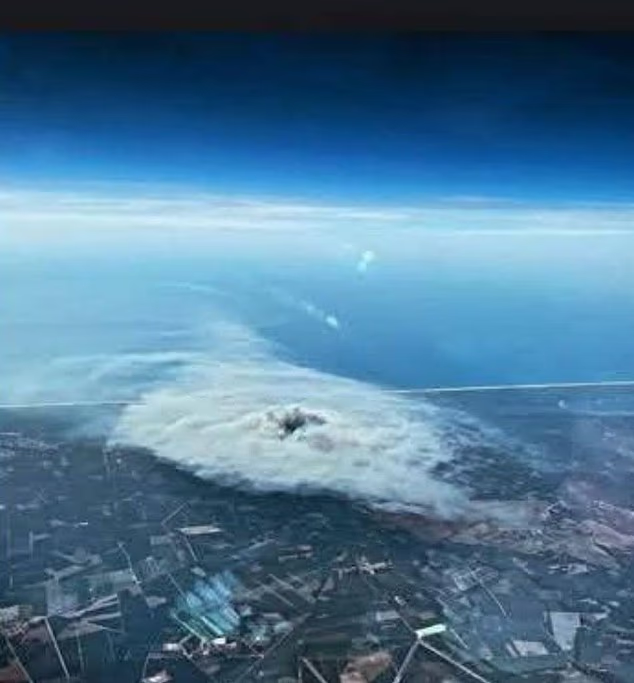
Firefighters continue to battle vast wildfires that are tearing through European holiday hotspots, forcing thousands of people in France and Spain to flee.
Massive blazes have been burning in the French areas of Gironde and Landes, with some 4,000 people evacuated on Tuesday from tourist sites on France’s Atlantic coast.
The Gironde fires have proven to be wildly unpredictable, transforming at times into self-forming fire storms that have burned an area four times the size of Paris.
Several sites in neighbouring Spain have continued to burn, with several areas still out of control as the country braces for another intense heatwave.
Portugal remains on high alert as flames tore through its northern district of Braga on Monday.
Meanwhile, Italy grappled with fires in tourist destinations, including Sicily, Puglia and Tuscany.
The return of scorching temperatures across the continent this week complicates efforts to fight the massive flames raging through Europe – with weather forecasters predicting temperatures could reach 40C in some parts of France on Tuesday.
Thousands of Brits caught up in the devastating wildfires across Europe have been urged to follow evacuation instructions, with European relations minister Hamish Falcone stressing the importance of following travel advice.
French state authorities have suggested those with upcoming trips to the areas affected cancel their holidays altogether, leaving several Brits facing a battle to claim costs.
Sophie Brocas, the prefect of Gironde, which is at the centre of the blaze, said on Sunday: ‘I urge tourists not to come to this region, at least until the situation is under control.
Aerial view shows wildfires above the Gironde basin near Bordeaux

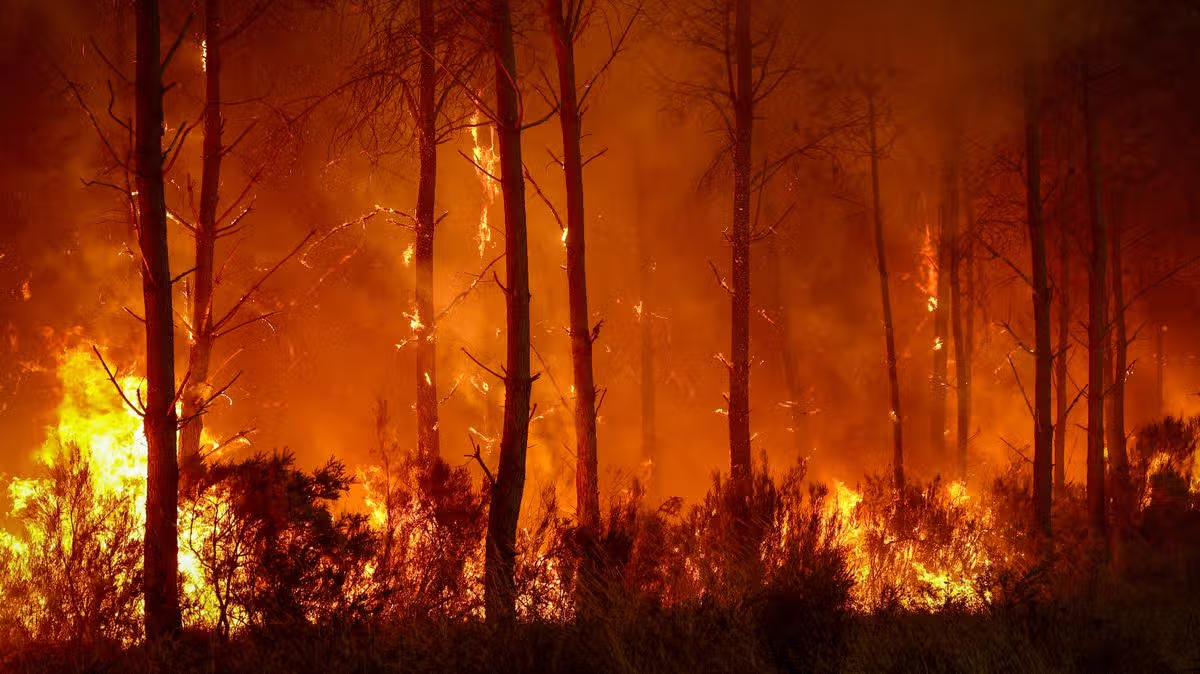
A forest fire rages in Saint-Jean-d’Illac, some 30km from Bordeaux

A handout photo made available by SDIS 33, the official fire and rescue department for the area of Gironde, of firefighters taking a break in a forest
France
France is going through an unprecedented wildfire season.
On Tuesday, French authorities ordered the evacuation of nearly 4,000 people from campsites, tourist residences, holiday villages and leisure parks around Lacanau on France’s Atlantic coast.
Several flare-ups were detected overnight north of Le Porge and in dunes north of Cap Ferret but were brought under control by firefighters, authorities said.
‘We are at a point of fragility,’ Eric Brocardi, spokesperson for France’s national firefighters federation, told BFMTV on Tuesday. ‘We will continue attacking this fire despite the forecast rise in temperatures.’
The Bordeaux area – famed for its countless vineyards – is forecast to reach 33 degrees on Tuesday, piling pressure on crews battling the flames.
‘The situation we are dealing with today is the most severe we have ever recorded, the toughest since the Second World War,’ President Emmanuel Macron, who flew to the area, said on Monday evening.
Fire crews had contained the blaze overnight, but the situation remained difficult, Nathalie Delattre, Senator for Gironde, which covers the city of Bordeaux, said.
‘Everything will depend on how the firefighters on the ground get on,’ she told BFM TV on Tuesday.
The Landes area, southwest of Bordeaux, is covered by pine forests, which become highly flammable when dry. The fire has burned down 42,000 hectares so far.
In the area of Biscarrosse, a town about 40 km south, which was hit by another wildfire last week, the situation has improved, and some 15,000 evacuated people were gradually allowed back home in the town and a campsite nearby, the local administration said on X.
‘However, (the favourable) development does not mean the risk has been eliminated. Flare-ups remain possible, particularly due to weather conditions (wind, drought, etc.),’ it said.
Temperatures were set to increase in the region from the afternoon and peak at 37 degrees Celsius on Wednesday, weather office Meteo France said.

A drone view shows a burnt building in an area affected by a wildfire, in Le Porge, Gironde

A De Havilland Canada DHC-8-400 Dash 8 operated by the French civil defense agency drops fire retardant as wildfires rage near Le Las, outside Bordeaux, France

firefighter stands before flames as a forest fire rages in Saint-Jean-d’Illac, some 30km from Bordeaux
Spain
As Spain entered its fourth heat wave of the summer on Tuesday, several blazes were still out of control.
Hundreds of firefighters backed by military emergency brigades and water-dropping aircraft continued battling several major wildfires in Spain, including the largest ever recorded in the fire-prone country.
Spanish Interior Minister Fernando Grande-Marlaska said Tuesday that nonstop work through the night left him ‘reasonably positive,’ but warned that conditions could deteriorate as temperatures rose again.
Spain’s national weather service said the country was entering its fourth heat wave of the summer Tuesday, with temperatures expected to exceed 40 C (104 F) in some areas.
Authorities have evacuated some 79,000 people and ordered another 30,000 to remain in their homes during an unprecedented crisis that prompted the government to declare a national emergency for wildfires for the first time.
The greatest concern remained two large fires that had at times come close to merging into a single mega-blaze in wooded hills about an hour’s drive west of Madrid.
Another fire in the eastern province of Castellón also forced mass evacuations.

Spain’s Military Emergencies Unit (UME) shows UME personnel fighting a wildfire near Navas del Rey, 55 kilometers southwest of Madrid

Members of the Emergency Military Unit (UME) utilize controlled burns to halt the spread of wildfires in the Madrid border region on July 28, 2026 in Cebreros, Avila

A bar is burnt out in Pantano de San Juan following wildfires on July 27, 2026 in Pelayos de la Presa, in Madrid province, Spain

A burned residential plot is seen following wildfires on July 28, 2026 in Pelayos de la Presa, in Madrid province, Spain

Firefighters use controlled burning to halt a wildfire that continues to spread near Cebreros, in Avila province, Spain, Tuesday, July 28,
A fire burning through hilly, rural terrain in Ávila, west of Madrid, has become Spain’s largest on record, scorching more than 193 square miles, the government said. That is five times the size of Barcelona.
‘Look at how the valley is burned. Look at the houses, the people,’ said David Gonzalez, a 48-year-old gardener who used his van to deliver supplies to firefighters in Ávila.
‘We are feeling a lot of anger and helplessness. It’s something inhuman,’ he said.
Fires have burned 590 square miles this year in Spain — six times the area scorched by blazes in the first half of 2025, said Sara Aagesen, the ecology minister.
Spanish Prime Minister Pedro Sánchez has called for a national pact to fight wildfires made worse by climate change.
Portugal
Over in neighbouring Portugal, a wildfire burned through the Braga district in the north of the country.
More than 100 firefighters were battling the flames in Vila Verde on Monday evening.
The country’s northern and central districts all remain on high alert for potential wildfires as temperatures continue to soar.
Italy
Meanwhile in Italy, a huge wildfire that hit Italy’s Mediterranean coast saw hundreds of people evacuated from beaches in the seaside town of Peschici in Puglia on Monday.
According to Mayor Luigi D’Arenzo, Canadair aircraft dropped water bombs to extinguish flames in forested areas.
Sicily, Calabria, Molise, Sardinia, Umbria and Tuscany – all of which host thousands of tourists in the summer months – have also been affected by flames.

irefighter crews launched an aerial and ground response to contain a wildfire that broke out in scrubland near Torretta, outside Palermo on the island of Sicily
Brits affected by wildfires
As Europe continues to burn, British tourists could face a battle to claim back the cost of their holidays.
French state authorities have urged those with upcoming trips booked to cancel their holidays altogether.
But while the Foreign Office has updated its travel guidance to France and Spain, it has not officially told Brits not to visit affected areas.
This means insurance companies will not refund British tourists who cancel their trips, the trade body for UK insurance has warned.
Speaking to The Telegraph, Fraser Lyall, general insurance senior policy advisor at the Association of British Insurers, said: ‘We understand that people will be concerned about travelling to areas affected by wildfires and may be thinking about cancelling their holiday.
‘If you’re considering cancelling flights or accommodation, you should speak to your insurer before making any changes, as policies generally only cover cancellations under very limited circumstances – such as if you or a family member fall ill and can’t travel.’
















































You must be logged in to post a comment Login