


Connect with us
DAPA Banner
DAPA Coin
DAPA
COIN PAYMENT ASSET
PRIVACY · BLOCKDAG · HOMOMORPHIC ENCRYPTION · RUST
ElGamal Encrypted MINE DAPA
🚫 GENESIS SOLD OUT
DAPAPAY COMING

NewsBeat

Trump administration’s eligibility checks on millions of voters stoke fear of purges

Published

on

Trump administration's eligibility checks on millions of voters stoke fear of purges

TOPEKA, Kan. (AP) — Even as Democratic officials fight the effort in court, the Trump administration has run millions of voter registrations through government databases to determine their eligibility in a process that critics worry could end up purging valid voters from the rolls before the November elections.

At least 67 million registrations, primarily from Republican-controlled states, have gone through a beefed-up verification program at the U.S. Department of Homeland Security, and tens of thousands of those have been flagged as potential noncitizens or people who have died. Some states allow only a month for people to prove their eligibility and others suspend it immediately.

The scanning of state voter rolls at the national level is part of a broader effort by Republican President Donald Trump to federalize certain election functions and promote his messaging that elections are marred by noncitizen voting, even though instances of that are rare. Voting and civil rights advocates say the DHS system is error-prone and can mistakenly flag people who are eligible to vote.

“If a voter is wrongly removed, by the time they learn about it and correct it, they may miss their opportunity to vote in that election,” said Freda Levenson, a lawyer with the American Civil Liberties Union of Ohio. The group is challenging an Ohio law requiring monthly checks with the DHS system.

Advertisement

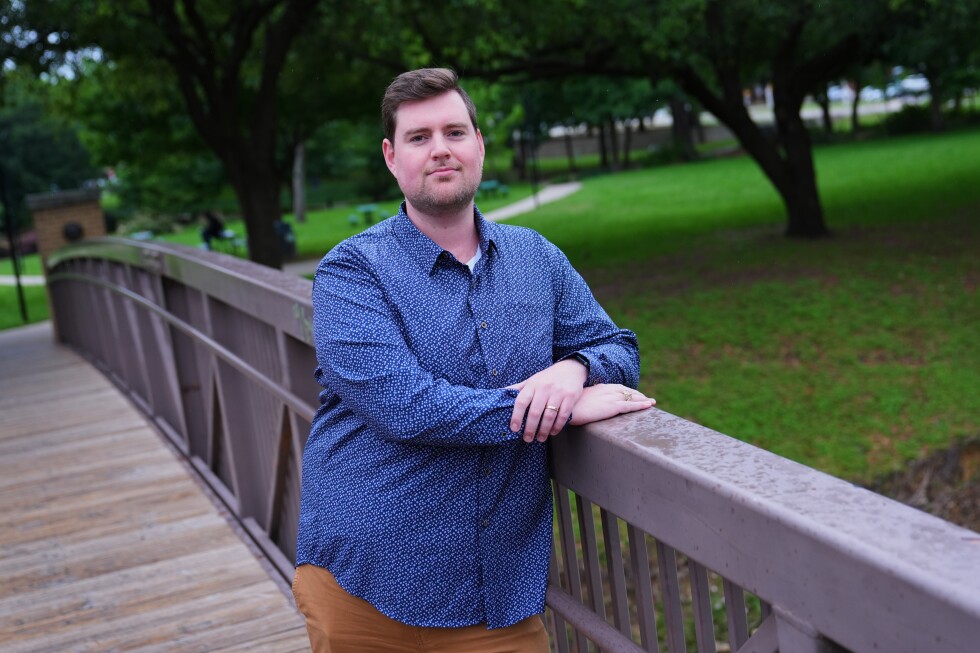
Voters such as 29-year-old Anthony Nel have been caught in the middle.

The native of South Africa, who became a citizen more than a decade ago, was flagged as a potential noncitizen when Texas ran its voter file through the DHS verification system. Nel’s local election office in Denton, north of Dallas, temporarily canceled his registration last fall while he was waiting for a new passport to replace an expired one.

“I’m like, ‘You should know that I’m a citizen, that the passport exists,’” he said in an interview.

States’ entire voter rolls reviewed

Trump has been trying to overhaul U.S. elections, including calling for a federal list of verified voters, and his Department of Justice has pushed states to hand over unredacted voter information for mass checks through the DHS program known as SAVE.

Advertisement

The Justice Department has sued states that refuse, saying the government is trying to ensure that they are complying with federal law and have accurate voter lists. States already take a number of steps to maintain the accuracy of their voter rolls.

SAVE, short for Systematic Alien Verification for Entitlements, was created under an immigration law mandating that DHS help federal, state and local agencies prevent government benefits from going to noncitizens. U.S. Citizenship and Immigration Services, an arm of DHS, said more than 1,300 agencies use it.

At least 25 states have used SAVE to check their voter rolls since April 2025, after the Trump administration significantly expanded its search abilities, and 60 million registrations were checked in a year’s time, according to Citizenship and Immigration Services. That figure does not include an additional 7.4 million registrations from North Carolina, where Republicans control the state election board, that were recently run through the system.

Citizenship and Immigration Services said in an emailed statement that it is “committed to helping eliminate voter fraud” to restore Americans’ trust in their elections.

Advertisement

“SAVE is one of the most important tools states have to verify voter information,” Kansas Secretary of State Scott Schwab, a Republican, recently told a U.S. House committee examining how states keep voter rolls clean.

Schwab’s endorsement is notable because he once was publicly skeptical that noncitizens represented a significant voter fraud threat.

Republicans cite hits from SAVE searches

Citizenship and Immigration Services said the 60 million voter registration checks identified about 24,000 potential noncitizens. U.S. Assistant Attorney General Harmeet Dhillon, who runs the Justice Department’s Civil Rights Division, said during a recent Fox News interview that those checks also identified about 350,000 people who appear to have died.

North Carolina’s State Board of Elections said its check had identified another 34,000 registered voters who are potentially deceased.

Advertisement

Even if all those eventually were verified as ineligible, they would represent small percentages of total registered voters. The figure for noncitizens would be about 400 for every 1 million registrations. Some 384,000 people identified as potentially deceased in about 67 million registrations is a fraction of 1%.

Some voters have been mistakenly flagged.

In Dallas, election officials recently canceled the registration of Domingo Garcia, a 68-year-old lawyer and voting rights activist, without explanation. He has been voting regularly for 50 years, most recently in the state’s March 3 primary, and suspects that officials concluded he was deceased.

“I should not have been on any lists,” he said.

Advertisement

False positives are popping up

Voting rights advocates have filed at least six federal lawsuits over SAVE checks, either against the Trump administration or states using the program.

Nel, a 29-year-old college administrator, is a plaintiff in one of them, filed recently in the District of Columbia against the Justice Department. It alleges an “illegal and unprecedented quest” by the administration for “millions of Americans’ confidential voter data.”

Lawyers also argue that eligible voters will be disenfranchised by hits from outdated or incomplete data.

Nel came to the United States from South Africa with his parents at age 8. His parents became citizens when he was 16, making him a citizen, as well. He said he has voted regularly since he was 18.

Advertisement

Yet he received a letter in October in a white envelope that looked to him like junk mail. It told him he had been identified as a potential noncitizen through a SAVE check of Texas’ 18 million voter registrations. He had 30 days to prove otherwise — a deadline he missed because of the time it took to get a new passport.

“It’s clear that this process that they’ve put into place for this doesn’t work,” he said.

Defenders say the SAVE system is a first step

Republican officials said the administration does not portray SAVE searches as foolproof. Instead, it identifies registrations that should be further investigated, they said.

In Kansas, Schwab’s office is still investigating its list of flagged registrations and has yet to disclose the number of hits of potentially ineligible voters from a SAVE check of the state’s 2 million registrations.

Advertisement

Once his office forwards flagged names to county officials, a state law enacted this year requires them to list the registrations as “in suspense” or “pending” until the cases are resolved. A flagged person still can vote, but the ballot is set aside for further review and might not be counted.

Texas is supposed to give people with flagged registrations 30 days to prove they are properly registered. North Carolina will require county elections boards to give people whose registrations are challenged a hearing before they can be canceled.

A new Ohio law requires local election boards to “promptly” cancel the registrations of people whom the secretary of state identifies as noncitizens during registration checks that the official is required to make at least monthly.

Ohio Secretary of State Frank LaRose, a Republican, said in an email that people’s voting rights are not in danger because “all they need to do to immediately restore their registration status is show proof of citizenship.”

Advertisement

But Levenson, the ACLU lawyer, described the approach differently.

“Shoot first and ask questions later,” she said.

___

Associated Press writers Jack Dura in Bismarck, North Dakota, and Gary Robertson, in Raleigh, North Carolina, contributed to this report.

Advertisement

Source link

Advertisement
Continue Reading
Click to comment

You must be logged in to post a comment Login

Leave a Reply

NewsBeat

Morrisons launches AI-powered trolley trial in UK supermarket

Published

on

Morrisons launches AI-powered trolley trial in UK supermarket

The trial is taking place at the Preston store and features smart carts equipped with touchscreens, sensors, cameras and built-in scales.

Dubbed “Fancy AI trolleys” by one customer, the Caper Carts, supplied by US technology company Instacart, are designed to identify products as they are placed inside, automate weighing, and track spending in real-time.

Gordon Macpherson, Productivity Director at Morrisons, said: “We’re constantly looking for ways to bring innovation to the weekly shop to enhance the experience for our customers.

Advertisement

“We’re excited about bringing the first fully-integrated AI-powered trolleys in the UK to a first store soon, and look forward to testing customer response and building understanding of how the technology works within the Morrisons store estate.”

The trolleys also allow customers to scan items as they shop and weigh fresh produce directly in the cart.

The onboard screen keeps a running total, and the system is linked to Morrisons More cards so discounts and offers can be applied as you shop.

Once the shop is complete, the trolley generates a barcode that can be scanned at a self-checkout to finalise payment.

Advertisement

The trolleys are already in use at major retailers in the US, including Kroger, Aldi, and Coles, but this is the first time the technology has been trialled in the UK.


UK supermarket rankings in 2026


Despite the excitement, concerns about theft and vandalism have been raised online.

One Reddit user wrote: “Trolleys with tablets on that will be left outside? Sure none of them will get stolen.”

Another commented: “They’ll be stolen, broken, in the canal in a few days.”

Advertisement

A third simply asked: “So what happens when they find themselves in the local river or canal?”

Morrisons says the trolleys are equipped with anti-theft features.

If a customer attempts to leave the store without paying, the trolley will reportedly flash red to alert staff.

Instacart also claims the carts are weatherproof, are designed to be stored and operated like standard supermarket trolleys, and have batteries charging automatically when grouped together.

Advertisement

The supermarket first announced the trial last year and is using the Preston launch to gauge customer reaction before any wider rollout across the supermarket’s store network.

Source link

Advertisement
Continue Reading

NewsBeat

Belfast stabbing latest: Homes and cars set ablaze as protesters accused of ‘thuggery’ after knife attack

Published

on

Belfast stabbing latest: Homes and cars set ablaze as protesters accused of ‘thuggery’ after knife attack

Leader of the Traditional Unionist Voice (TUV) party encouraged protesters to stop

Jim Allister leader of the Traditional Unionist Voice (TUV) party told people involved in the violence to “desist”

Speaking on Radio 4 Today he said: “They are providing a total change of narrative which takes the focus from where it should be and gives government and others an excuse for not addressing the over burdening of these areas with migrants and not addressing the open boarder, which is the problem.”

Rebecca Whittaker10 June 2026 07:49

Advertisement

Watch: Firefighters battle blazes in northern Belfast as homes set on fire following protests

Firefighters battle blazes in northern Belfast as homes set on fire following protests

Rebecca Whittaker10 June 2026 07:41

Labour chair condemns planning on social media for violent protests

The Independent’s Political Correspondent Millie Cooke reports:

Advertisement

The chair of the Labour Party has condemned planning on social media for violent protests in response to the Belfast knife attack, saying it is “irresponsible” and “dangerous”.

One message said to have circulated overnight urged men of the age of 18 and over to “wear dark clothing and be prepared to fight or be arrested”.

Anna Turley told Times Radio: “I would absolutely condemn that kind of message. That solves nothing… That kind of message is more than irresponsible, it is dangerous, and it should not be happening. And I’d urge everyone to stay calm.”

Tech billionaire Elon Musk continued overnight to amplify calls for people to take to the streets in response to the incident.

Advertisement

Ms Turley said: “We have to acknowledge and see that social media is playing a role in driving this. And I think there are bad faith actors who are sitting often many, many miles away. It is easy for them to stoke these things up.”

On Mr Musk’s intervention specifically, she said: “He has a responsibility, everyone in public and civil life has a responsibility to call for calm and not to stoke grievance or hatred or division or tension that puts vulnerable people and our communities at risk.”

Ms Turley also said the government was “aware that immigration is a big issue of concern for people” as she pointed to a drop in net migration.

Rebecca Whittaker10 June 2026 07:36

Advertisement

Labour chair appeals for calm following ‘horrendous’ violent protests in Belfast

The Independent’s Political Correspondent Millie Cooke reports:

Labour Party chair Anna Turley has appealed for calm on the streets of Belfast, saying it was “horrendous” to see violent protests in response to a knife attack.

She told Sky News: “It was horrendous to see that. It must be really horrifying and really frightening for all those families living in that community. Nobody wants to see that.

Advertisement

“I would appeal, like many others have, for calm on the streets of Belfast, and around the country as well. Those people are innocent. They shouldn’t be getting caught up. We’ve seen children and families having to leave their homes, and no one wants to see that.

“We know the situation that happened the night before last was absolutely horrific, absolutely horrendous, and there’s no place for that on the streets of the United Kingdom. But we have to let the police and the justice system take its course now, and nobody should be should be stoking this up or bringing violence to the streets anywhere in the United Kingdom.”

Rebecca Whittaker10 June 2026 07:31

Advertisement

Justice Minister blames far right for stoking racial tension

Northern Ireland Justice Minister Naomi Long has said far-right online agitators are to blame for stoking racial tension following the stabbing.

“We saw the rush to social media yesterday from commentators on the far-right who were clearly trying to stoke racial tension, building on a narrative that they have around immigration,” she told BBC Breakfast.

She added that comments made by pastor Jack McKee that people were being targeted just because they were black, were accurate.

Rebecca Whittaker10 June 2026 07:28

Advertisement

Pictured: Violent outbreaks saw masked men burn cars and pushing families out of their homes

Youths gather in front of a burning barricade on Duncairn Gardens on 9 June 2026 in Belfast, Northern Ireland (Getty)
A car set on fire by protesters in east Belfast on Tuesday (PA)
A car set on fire by protesters in east Belfast on Tuesday (PA) (PA Wire)
Vehicles set on fire by protesters on Lendrick Street
Vehicles set on fire by protesters on Lendrick Street (PA)

Rebecca Whittaker10 June 2026 07:22

Recap: Hundreds turn out for protests across the UK

Hundreds of protesters took to the streets of Belfast on Tuesday, with some setting vehicles alight, after police charged a Sudanese man over a knife attack that left one person with serious neck and head wounds.

Masked youths gathered at points across the city, with police responding by deploying armoured vehicles. Homes on several streets caught fire, while protesters set fire to a number of vehicles, including a bus in east Belfast.

Advertisement

Separately, protests were reported in Glasgow, Edinburgh and Southampton. A few dozen protesters blocked Parliament Square in London.

Bus set on fire in Belfast as protests continue

James Reynolds10 June 2026 07:00

Mapped: Protests sweep the UK after stabbing in Northern Ireland

Advertisement

James Reynolds10 June 2026 06:30

Man due in court over Belfast knife attack following night of violence

A man is set to appear in court charged with attempted murder over a stabbing attack following a night of violence in Belfast.

Some people were forced to flee their homes and multiple cars and homes were set alight in the disorder on Tuesday which followed Monday’s knife attack in the north of the city.

Advertisement

The 30-year-old accused, who is Sudanese, is also charged with possession of an article with a blade or point in a public place and making threats to kill.

He is due to appear at Belfast Magistrates’ Court later on Wednesday.

Alex Ross10 June 2026 06:00

Advertisement

Recap: Cars set on fire in streets of Belfast following protests

Watch: Cars set on fire in streets of Belfast following protests

James Reynolds10 June 2026 05:30

Source link

Continue Reading

NewsBeat

Manhunt underway after twelve killed in mass shooting in Johannesburg

Published

on

Manhunt underway after twelve killed in mass shooting in Johannesburg

At least 12 people were killed and nine injured on Tuesday evening when gunmen opened fire at an informal settlement in Cleveland, east of Johannesburg, police said on Wednesday.

Police believe more than 10 suspects were dropped off in a minibus in an informal settlement in the Cleveland suburb of Johannesburg late Tuesday night and opened fire on people.

Eight men and three women were killed in the attack, according to South African broadcaster eNCAnews.

The suspects arrived in a white Toyota Quantum and entered the settlement from two access points, before fleeing in the same vehicle after carrying out the mass shooting.

Advertisement

The motive for the attack remains unknown.

Informal settlements in South Africa are unplanned residential areas usually made up of shacks or similar structures.

South Africa has one of the world’s highest murder rates, averaging about 60 a day.

“It is alleged that more than 10 suspects were dropped off by a white Toyota Quantum near a petrol station in Cleveland,” the police statement reads.

Advertisement

“The suspects allegedly entered the informal settlement through both entrances and moved through the area, opening fire on residents and community members at multiple locations before fleeing the scene in the same vehicle.”

Local officers responded to a “complaint of shooting in progress” at around 11:10pm local time on Tuesday (10:20pm BST).

This is a breaking news story, more to follow…

Source link

Advertisement
Continue Reading

NewsBeat

UK temperatures forecast to reach 28C – is a heatwave on the way?

Published

on

two women sitting on a park bench.  One eating an ice cream, the other fanning herself in the hot weather

With some sunshine for most of England and Wales over the weekend, along with a southerly breeze, temperatures will climb to 22 to 27C, perhaps 28C (82.4F) in south-east England by Sunday.

These temperatures will be around 6 to 8C above average for early June.

Some of the warmth will extend into Northern Ireland and southern Scotland with highs on Sunday of 20 to 22C, but it will be closer to average in more northern areas with 17 to 20C.

It will also be cloudier across more northern areas of the UK over the weekend.

Advertisement

This warmer-than-average weather is forecast to last into next week, but to become an official heatwave temperatures need to be higher than 25-28C – depending on location – for three days in a row.

While it’s possible some areas might reach this definition, it is still a little too early to say with certainty. Not all of the weather models agree on how the high pressure is positioned through the week ahead.

Some forecast models keep it across the UK which would mean that temperatures stay in the mid- to high 20s.

Others move the high pressure away to the east and allow the westerlies from the Atlantic to move back in. This would bring a drop in temperature along with cloud and showers.

Advertisement

You can keep up to date with your latest BBC Weather forecast here.

Source link

Continue Reading

NewsBeat

How positive tipping points may be the key to protecting tropical rainforests

Published

on

How positive tipping points may be the key to protecting tropical rainforests

The world’s tropical rainforests are edging towards collapse. But knowing how to stop deforestation isn’t enough to drive action. The challenge is aligning all the pieces of the puzzle to initiate substantial change. Now our research suggests the key is to persuade enough people to make the system tip in the right direction.

In the mid-1980s, the British fur industry collapsed in less than a decade. Famous retail stores shut down their fur departments. Fur farming was banned in 2000. By the late 2010s, even fashion houses whose heritage was built on the fur trade had gone fur free, citing consumer sentiment.

This abrupt change didn’t come because of new technology or better regulation. It came because of a shift in social norms, triggered by British fashion photographer David Bailey’s Dumb Animals cinema ad campaign. This short film featured a catwalk model trailing a fur dripping with blood and a slogan: “It takes up to 40 dumb animals to make a fur coat. But only one to wear it.” Once desirable and luxurious, fur coats quickly became taboo.

Unfortunately, a similar shift has not yet happened in how people consider tropical forest destruction.

Advertisement

To slow deforestation, scientists can map and monitor forests from space to the resolution of a single tree. Certification schemes have made supply chains more transparent and given consumers and regulators something to act on. Securing Indigenous land tenure produces the lowest deforestation rates on the planet.

Yet every year another patch of Amazon the size of a small European country gets cut down or burnt.

In Southeast Asia, palm oil and pulp monocultures continue to decimate its rainforests. In the Congo Basin and West Africa, small-scale agriculture, charcoal production, cocoa, coffee and mining are steadily fraying another of the planet’s vital areas for biodiversity and carbon storage.

The world’s tropical forests are all edging closer towards a catastrophic dieback. This isn’t a knowledge issue. It’s a problem about how societies change their minds.

Advertisement

Tipping points

When positive change happens, it’s easy to assume that evidence accumulates that things are getting worse, the public is informed, opinion shifts, policy follows, then behaviour and consumption adjust. Each step is gradual and linear. The dial turns slowly.

Except that’s not how anything important does change. Take smoking in public places, the acceptance of same-sex marriage or the speed with which electric vehicles are becoming mainstream. Nothing happens for years or decades, then everything happens all at once.

This is the nature of tipping points: thresholds beyond which a system abruptly reorganises itself and settles into a new state that becomes hard to reverse.


À lire aussi :
UK may be on verge of triggering a ‘positive tipping point’ for tackling climate change

Advertisement

At the University of Exeter, we research what makes such change – good and bad – happen slowly then all at once, and how we might trigger the good ones deliberately. We’re exploring how to find tipping points that could positively protect tropical forests at our upcoming Exeter climate conference.

Many social systems, like those in nature, have tipping points. They can resist change up to a point. Then a relatively small, additional nudge – perhaps a film, a court ruling, a fall in the price of something, a critical mass of new adopters – flips a system into a new stable state that is hard to reverse.

That can be hopeful, in a way that gradual change is not, because it means that we don’t have to persuade everyone to do the right thing. We just need to persuade enough people to make the system tip in the right direction.

What the Amazon teaches us

For tropical forests, the most studied example of a deliberate tipping intervention began in 2006. Following a Greenpeace exposé called Eating Up the Amazon, the world’s largest soy traders agreed not to buy from newly cleared Amazon land. The Amazon soy moratorium worked, dramatically. Direct soy-driven deforestation in the Amazon fell from around 30% of soy expansion to under 4%. This became a textbook strategy for protecting tropical forests.

Advertisement

A soy moratorium between the world’s largest soy traders helped protect the Amazon rainforest.
golaminnovation/Shutterstock

But while the moratorium was a success inside the Amazon, soy production has expanded elsewhere, including into the neighbouring Cerrado, Brazil’s vast tropical savanna, driving rapid deforestation there. Rural communities in the Amazon saw little of the prosperity that might have made standing forest the obvious economic choice. The underlying incentive structure – an economy that still pays more to clear land than to keep it intact – was never reshaped.

Twenty years on, that fragile arrangement is under serious strain. Major traders have signalled their intent to withdraw. Brazil is moving to ban the agreement outright.

Pressure is not coming from collapsed consumer concern. European supermarket chains including Lidl, Aldi and Tesco have reaffirmed their commitments. More than 70 organisations have signed a manifesto defending the moratorium.

Advertisement

The pressure is coming from somewhere harder to fix: China is now the dominant buyer of Brazilian soy and is not party to the agreement. The EU’s deforestation regulation has been delayed and weakened. A new EU trade deal with Mercosur (a South American trade bloc bringing together Argentina, Brazil, Paraguay and Uruguay) expands Brazilian exports into Europe. And Brazil’s powerful agribusiness lobby has spent two decades patiently working to dismantle the agreement from within.

So a supply-chain commitment that covers one market but not another will leak. A consumer pressure that is real in Berlin but absent in Shanghai will eventually be outflanked. A moratorium that protects a forest without making it economically rewarding for people living in it will be politically vulnerable. Each mechanism is just one part of the puzzle.

The three As

By looking at the system as a whole, we can understand how preserving the forest becomes the affordable, attractive and socially acceptable option. Affordability is about finance and the supply chain. Attractiveness is about the the co-benefits to all parties. Acceptability involves shifting the cultural and political pressure – without that, the other two erode.

We can study, plan for and even deliberately seed positive social tipping points when we design solutions with a whole systems-perspective. For tropical forests, this includes new supply-chain rules, Indigenous leadership and
the Tropical Forest Forever Facility (a new multi-billion-dollar rainforest investment fund).

Advertisement

A concerted, coordinated push across all three aspects will turn the protection of the standing forest into the most affordable, socially acceptable and attractive option.

Source link

Advertisement
Continue Reading

NewsBeat

Nunthorpe Oaks resident joins campaign to revive lost skills

Published

on

Nunthorpe Oaks resident joins campaign to revive lost skills

Cherise Chapman is helping address the decline through a new campaign that reconnects generations.

Ms Chapman, 79, who lives at Nunthorpe Oaks Residential Care Home, is part of Sanctuary Care’s Lifelong Learning Exchange — a scheme that brings older and younger people together to share traditional skills and life experience.

Ms Chapman said: “Sewing has been part of my life for as long as I can remember — there’s something so satisfying about being able to mend and make things with your own hands.

Advertisement

“It’s a skill that gives you real confidence and independence.

“I’m delighted to be part of the Lifelong Learning Exchange, and pass on these skills to the younger generation.”

The scheme follows research commissioned by Sanctuary Care, which found that 43 per cent of people in the North East believe sewing and mending clothes is a skill at risk of dying out.

A further 39 per cent believe writing letters and cards is disappearing.

Advertisement

The Lifelong Learning Exchange aims to revive these skills through one-to-one mentoring and practical advice, as well as skill guides, demonstrations and personal stories.

Louise Palmer, director of operations at Sanctuary Care, said: “Our residents hold an incredible wealth of practical knowledge.

“The Lifelong Learning Exchange is about sharing this knowledge, creating meaningful connections between generations, and ensuring essential life skills don’t disappear.

READ MORE: Darlington pensioner outraged after wife left for 18 HOURS on A&E corridor trolley
READ MORE:
Family’s double heartbreak after losing two North Yorkshire loved ones months apart
READ MORE:
Tot diagnosed with rare cancer seen in only 13 people worldwide given months to live

Advertisement

“As part of our developing Young Persons Strategy, we are continuing to explore and evolve ways of bringing younger people into our homes to take part in intergenerational experiences.

“This includes volunteering opportunities, and school or college-led sessions with residents — creating meaningful opportunities for shared learning, connection, and community.”

According to a survey of Sanctuary Care residents, 80 per cent said they had skills or hobbies they wanted to pass on, while another 87 per cent believe traditional skills are at risk of being lost.

Advertisement

Source link

Continue Reading

NewsBeat

Belfast family ‘would have been beaten to a pulp’ says woman who helped them flee home

Published

on

Belfast Live

Many have helped evacuate ‘men, women, children that are living in fear’ as protests rage on

A family ‘would have been beaten to a pulp’ as protestors attempted to get into their house and threw fireworks, according a resident who helped them flee.

The woman, who did not want to give her name, said people were trying to kick a man, his wife and their teenage daughter out of their house in the Shankill Road area as the protests erupted on Tuesday night.

Advertisement

‘Sporadic pockets of disorder’ broke out in a number of areas following demonstrations in response to Monday night’s stabbing attack in Belfast.

Protestors caused chaos across the city, setting fire to a bus, businesses and houses, with firefighters having to remove residents from their homes.

The woman told Sky News: “I could just see them all going into the house.

Advertisement

“I don’t know how I did it but I stopped every one of them from going into the bedroom.”

The woman added that the family seemed “really, really scared”.

She continued: “I just said, come out with me, I’ll help you, just come with me… I walked out with them and I could see people looking at me.”

She then shouted at demonstrators that the family were not involved in Monday night’s attack.

Advertisement

“We just kept walking and walked right out of the street with them and walked right around the corner.”

The woman said she believed that “definitely, something really bad would have happened” had she not intervened.

“I think they would have been beaten to a pulp,” she said.

“To be honest, I dread to think what would have happened.”

Advertisement

When asked about her thoughts on Monday night’s incidents she said it had been on her mind the whole day and how it highlighted riots in Northern Ireland last year.

“You’re thinking, what’s going to happen and what’s the worst that can happen?” she said.

“I don’t know but when I saw them going into that house, I just knew that something really bad was going to happen to them, only because they were foreign. I was the only person there that actually stopped it.”

Advertisement

A pastor who has also been helping those targeted in the attacks in the Crumlin Road area where several houses were alight condemned the violence against “innocent people”.

He told the BBC people are being forced out of their homes “because they’re black”.

Pastor Jack McKee said some of the members of his church “who have been with us for 20 years” were “getting put out of their home, had their house attacked, windows smashed, houses beside them burned”.

“They’re good Christian people and they’re getting put out just because they’re black,” he added.

“I’m doing my best to help them, it’s as simple as that.”

He told the BBC that “obviously we’re all disgusted” after the knife attack on Monday. “But this doesn’t help anyone.”

McKee says that those evacuated will “probably” not be able to return to the area, saying that “innocent people” are hurting.

Advertisement

“Men, women, children that are living in fear because of what some idiot did last night.

“I’m angry and I’m disappointed that this is the response of people in our community.”

A 30-year-old man has been arrested on suspicion of the knife attack and was charged with attempted murder.

He is also charged with possession of an article with a blade or point in a public place and making threats to kill. He is due to appear at Belfast Magistrates’ Court on Wednesday.

Advertisement

The victim of the attack, a man aged in his 40s, remained in a serious condition in hospital on Tuesday receiving treatment for serious eye, face and back wounds.

Source link

Continue Reading

NewsBeat

Police say ‘avoid’ busy Cambridge road amid ‘ongoing incident’

Published

on

Cambridgeshire Live

Emergency services are in attendance and the incident has been confirmed as a house fire

Police have told the public to “avoid” a busy Cambridge road amid an “ongoing incident” on Tuesday, June 9. Cambridgeshire Police said emergency services, including the fire service, are in attendance.

The public have been asked to avoid King Hedges Road for the “foreseeable future”. The fire service confirmed at around 1.30pm that the incident was a house fire.

Traffic monitoring site Inrix said: “Kings Hedges Road in both directions partially blocked, slow traffic due to an Emergency Services incident between Northfields Avenue and Campkin Road.”

Advertisement

A spokesperson for Cambridgeshire Police said: “Please avoid King Hedges Road for the foreseeable future. There is an ongoing incident where fire and police are attending.”

Source link

Continue Reading

NewsBeat

Wales breaking news plus weather and traffic updates (Wednesday, June 10)

Published

on

Wales Online

Another changeble day has been forecast for Wales on Wednesday.

A Met Office spokesperson said: “A day of sunny spells and showers across the region. Showers may be heavy and merge into longer spells of rain at times. Pleasant in any sunshine, but otherwise feeling rather cool for June in a blustery breeze. Maximum temperature 15 °C.”

Source link

Advertisement
Continue Reading

NewsBeat

Ibuprofen and paracetamol warning for anyone with a dog or cat

Published

on

Wales Online

People have been issued a ‘toxic or life-threatening’ alert

A leading vet charity has urged pet owners to double-check veterinary advice found on TikTok and social media platforms. The People’s Dispensary for Sick Animals (PDSA) has warned that online “hacks” and home treatments could be putting pets’ lives at risk.

The PDSA has seen viral clips online where owners are encouraged to give dogs ibuprofen for injuries despite the drug being toxic to pets. Cat Henstridge, a veterinary surgeon who shares pet care advice to over 400,000 followers on social media, said the golden rule is to always “run it past your vet first”.

Advertisement

Henstridge, who runs the account @cat_the_vet, told the Press Association: “Ibuprofen is 100% off the menu for all pets and paracetamol is very toxic for cats.” Whilst stressing that some general advice from social media for pets can be good, Ms Henstridge said “when it comes to medicines, it has to be the veterinary profession that is the first port of call”.

The 45-year-old from Sheffield added: “A lot of home and herbal holistic remedies are at best ineffective and, at worse, potentially dangerous.”

Catherine Burke, a PDSA vet, said: “Animals process medications very differently from humans. Something safe for people can be toxic or even life-threatening for pets.”

Ms Burke said she can understand that social media offers pet owners “quick help” but this comes with a risk as these viral clips often “make medical guidance appear far simpler and safer than it really is”.

Advertisement

The PDSA is concerned how quickly “misinformation spreads online” and has encouraged pet lovers not “to try home treatments seen online without first checking with their vet”. It added: “What works for one animal in a short video may not be safe for another, and similar symptoms can have very different underlying causes.”

The charity is urging owners to contact their vet directly if they are concerned about their pet’s health, rather than using social media trends or often unverified online tips. Ms Burke added: “Following these viral tips can delay pet owners from seeking proper veterinary care, where early treatment can make a significant difference to health and wellbeing.”

The PDSA is the UK’s leading veterinary charity, with 49 pet hospitals across the UK. The charity has a dedicated Pet Health Hub where expert advice can be found.

Source link

Advertisement
Continue Reading

Trending

Copyright © 2025