

Connect with us
DAPA Banner

NewsBeat

Trump is pushing for leadership change in Cuba and the next president could be a Castro

Published

on

Trump is pushing for leadership change in Cuba and the next president could be a Castro

SAN JUAN, Puerto Rico (AP) — As U.S. President Donald Trump pushes for change in Cuba’s leadership, speculation is mounting about who, if anyone, might replace Cuban President Miguel Díaz-Canel.

As Raúl Castro’s handpicked largely figurehead successor in 2018, Díaz-Canel has been the only leader without the last name Castro to govern since the 1959 revolution. He still has two years left in his term —- but some experts and a growing number of Cubans doubt he’ll make it.

Two Castro cousins have come into focus as potential replacements, experts said.

Oscar Pérez-Oliva Fraga — Raúl Castro’s 55-year-old great nephew — has shot to power since emerging from obscurity several years ago. He became minister of Cuba’s influential Ministry of Foreign Trade and Investment in May 2024 and was appointed the island’s deputy prime minister in October.

Advertisement

By contrast, Raúl Guillermo Rodríguez Castro — Raúl Castro’s grandson — has never occupied a government post, having served as his grandfather’s bodyguard and later as head of Cuba’s equivalent of the U.S. Secret Service. He has long been known as “Raulito,” or “Little Raúl” and is new to the spotlight cast on high-ranking government officials.

But he made news last month when he secretly met on the sidelines of a Caribbean Community summit in St. Kitts with U.S. Secretary of State Marco Rubio. At the time, Rubio refused to say who he was speaking to in the Cuban government.

“The role Raulito is playing right now is the connection between Raúl Castro and whoever is on the U.S. side,” said Sebastián Arcos, interim director of the Cuban Research Institute at Florida International University. “He enjoys the absolute trust of Raúl Castro.”

But, Arcos and other experts argue, even should someone with the Castro pedigree take the presidency, little is likely to change.

Advertisement

“Party leadership doesn’t mean anything in Cuba,” Arcos said. “The party is just a hollow façade. The real power resides in the military, under Raúl Castro.”

The 94-year-old remains at the helm as general, appears at key events and is considered the most powerful person in Cuba, a country subject to more than six decades of absolute rule, first by revolutionary leader Fidel Castro, and then for the past decade, his younger brother Raúl.

And that is unlikely to change.

“The most significant thing that we have to consider for the last 30 years in Cuba is the absolute reluctance of this regime to implement serious structural economic reforms,” Arcos said. “Asking them for political reforms would be too much.”

Advertisement

One Castro cousin is described as a technocrat

Pérez-Oliva studied electrical engineering before becoming director general of an import company and then business director within Cuba’s Mariel Special Development Zone. That’s all the Cuban government has officially shared on Pérez-Oliva.

Online, there are barely traces of him; he doesn’t even have a Wikipedia page. His X account is private and inscribed with this sentiment: “Committed to the Revolution and to the ideas of FIDEL.”

Pérez-Oliva until only recently became a public figure, traveling with Cuban Foreign Minister Bruno Rodríguez to Russia and Vietnam earlier this year. He also made a public appearance in early February, when a massive blackout hit Cuba’s western region. While other high-ranking officials solely blamed the U.S. energy blockade, Pérez-Oliva acknowledged otherwise.

“We don’t want to justify ourselves with the blockade; there are a number of internal deficiencies,” he said in a TV interview with state media.

Advertisement

A key achievement came in December, when Pérez-Oliva was named a deputy within Cuba’s National Assembly Popular Power — a requirement for any Cuban president.

Carlos M. Rodríguez Arechavaleta, a Cuba expert and professor at the Iberoamerican University in Mexico City, said Pérez-Oliva has the profile of a technocrat with commercial negotiation skills. “This could be a more ideological figure … a more technocratic, potentially reformist-oriented official,” he said.

Arcos said he believes that Díaz-Canel could “very well be replaced” by Pérez-Oliva.

“This man looks more proper, more polished. He has been through more important positions,” Arcos said. “This is a family business.”

Advertisement

Known as Raulito, this cousin was a fixture on Cuba’s party scene

Rodríguez Castro is the son of Raúl Castro’s oldest daughter, and his father is Luis Alberto Rodríguez López-Calleja — one of Cuba’s most powerful figures who ran GAESA, the military’s long-standing business wing, before his unexpected death in July 2022.

In his youth, Rodríguez Castro became a fixture at Cuba’s music and party scenes. During his public appearances, people would poke each other with an elbow and whisper, ‘That’s El Cangrejo’ — a nickname that means “The Crab,” because he was born with an extra finger.

He went to military school and became Raúl Castro’s bodyguard, accompanying him on trips abroad. Rodríguez Castro was later promoted to head of the Cuban equivalent of the U.S. Secret Service, but with a mission to spy on the country’s leadership, Arcos said.

Then, on March 13, experts noted that Rodríguez Castro was present at a government meeting with Díaz-Canel, when he announced that Cuba had held talks with the U.S. government. He also was present at the news conference that followed.

Advertisement

It was a rare public appearance tied to government business — and drew some public scrutiny from ordinary Cubans.

“The Crab doesn’t have a position there, so I don’t know why he was there,” said 20-year-old Maday Beltrán Acosta. “People posted a lot of comments about it.”

Beltrán Acosta said she also is bothered by Rodríguez Castro’s social media posts because they feature “abundant food.”

“The people are suffering while he enjoys life,” she said.

Advertisement

But Arcos said he doesn’t believe Rodríguez Castro could be Cuba’s next president, at least in public, because his name would reflect a continuation of the island’s current leadership, not a change as demanded by Trump and Rubio.

“He cannot be the transitional figure,” Arcos said, “because his last name disqualifies him.”

“Not up for negotiation”

While speculation remains rampant over whether Cuba might have a new president before Díaz-Canel’s term expires, experts note he is an unpopular leader.

He ordered a crackdown following the July 2021 anti-government protests that stemmed from food shortages, the largest of their kind in decades.

Advertisement

Under Díaz-Canel, Cuba’s economic and energy crises have deepened.

“The living conditions of the population are on the verge of a humanitarian crisis,” said Rodríguez Arechavaleta. “The social situation is already unsustainable.”

Arcos added: “He’s a man with a pot belly in a country where everybody is trying to find (something) to eat.”

Last week, Deputy Foreign Minister Carlos Fernández de Cossío refuted comments about a possible change in the political system or the departure of Díaz-Canel as part of ongoing talks with the U.S.

Advertisement

“The Cuban political system is not up for negotiation, nor is the president, nor the position of any official in Cuba, subject to negotiation with the United States or with the government of any other country,” Fernández de Cossío told reporters.

Arcos, the Cuban expert, said he cannot imagine Raúl Castro relinquishing power but believes Díaz-Canel could be replaced, referring to him as “a gray apparatchik” within the party when he was appointed president.

He noted that Castro’s eventual death “would be the kind of shock that would crack the regime.”

“No one really knows who’s coming up to replace him,” Arcos said. “For the first time ever in Cuba, you have the possibility of several people struggling for power.”

Advertisement

___

Associated Press reporter Milexsy Durán in Havana contributed.

Advertisement

Source link

Continue Reading
Click to comment

You must be logged in to post a comment Login

Leave a Reply

NewsBeat

Why social media bans won’t make parenting teenagers easier

Published

on

Why social media bans won’t make parenting teenagers easier

Countries around the world, including France, Spain and Malaysia, are planning to follow Australia in enacting a ban on young people using social media. And now the UK is considering moving in the same direction.

These bans have emerged out of concerns about the effects of social media on children’s mental health, and increasing attempts to regulate teenage life. The UK recently brought in a “lifetime” smoking ban for anyone aged 15 or younger.

The potential ban on social media use is often explicitly justified by the support of parents. When announcing her party’s support for the measure, Conservative leader Kemi Badenoch said she knew “as a parent” that a ban was needed. It is seen as common sense that parents are leading proponents of these bans.

Bans offer two core promises to parents. They offer protection from the perceived harms of social media, and greater simplicity in managing day-to-day life. Rather than parents having to negotiate their child’s social media, parents may believe that once a ban is in place, they can simply say to their children that this behaviour is not allowed.

Advertisement

Official sanction can be used by parents as evidence that society views children’s use of social media as unacceptable. But in order to fulfil these promises, bans would need to be highly effective and socially endorsed. There are strong reasons to think this won’t be the case.

Teenage rebellion

Far from being passive, teenagers are technologically literate, socially networked and highly motivated. Recent UK experience with age verification for certain websites shows how quickly workarounds spread.

Since the passing of the Online Safety Act, the UK has seen a huge surge in downloads of virtual private networks (VPNs). These allow users to register as being from a different country to the one they are physically in. Teenagers may be able to use VPNs to bypass the bans.

They can also circumvent parental controls in less technologically savvy ways. This might mean buying a burner phone from a friend to access social media outside of their parents’ evening restrictions. Anecdotally, there are similar accounts of school children finding workarounds to avoid the increasingly prevalent “pouches” that restrict access to smartphones during the school day.

Advertisement

The larger lesson here is that by forcing behaviour to become covert, parents can often lose oversight of what their children are doing.

These examples are not too different to traditional tricks to get around social bans, like having a fake ID or getting an older friend to purchase cigarettes or alcohol. If parents reflect on their own experiences of teenage life, it may be evident why the act of banning does not eliminate this behaviour – and may even increase its attraction.

Bans don’t stop prohibited teenage behaviour.
NDAB Creativity/Shutterstock

Even more importantly, as we also know in relation to alcohol or sexual activity, just because it is prohibited doesn’t take away the necessity of parents having conversations with their children about these topics.

Parents know that even if they harshly sanction their children for underage drinking, their child’s peers may have parents who turn a blind eye, condone alcohol, or supply it themselves. This means that getting teenagers to think about their use is essential – and the same holds true for social media.

Advertisement

Whether there is a ban or not, prohibited teenage behaviour continues. Navigating these risks is an unavoidable part of parenting adolescents.

As we have argued, parenting should be seen less as about achieving specified outcomes, and more as about valuing the individual relationship.

Putting the relationship between parent and child centre-stage means recognising there are different positions on the use and value of social media, and managing those differences successfully.

While digital life is novel and frankly scary to some parents, seeing the issue in a wider context of teenage life – sometimes risky, contested and hidden – makes these new issues more explicable to older generations.

Advertisement

Just as parenting requires understanding why a young person might choose to drink, have sex or use drugs, the case of social media also depends on understanding teenagers’ (online) worlds. This means engaging with the value and benefits of social media, and gaining some understanding of what platforms are being used and their content.

This is not to say that more effective regulation is impossible, just as legal regulation is important for other dangers that children and teenagers face. However, such regulation will not – and cannot – take away parents’ involvement, and its related challenges.
Source link

Advertisement
Continue Reading

NewsBeat

Thug who battered girlfriend in the street turned on Good Samaritan with hammer

Published

on

Daily Record

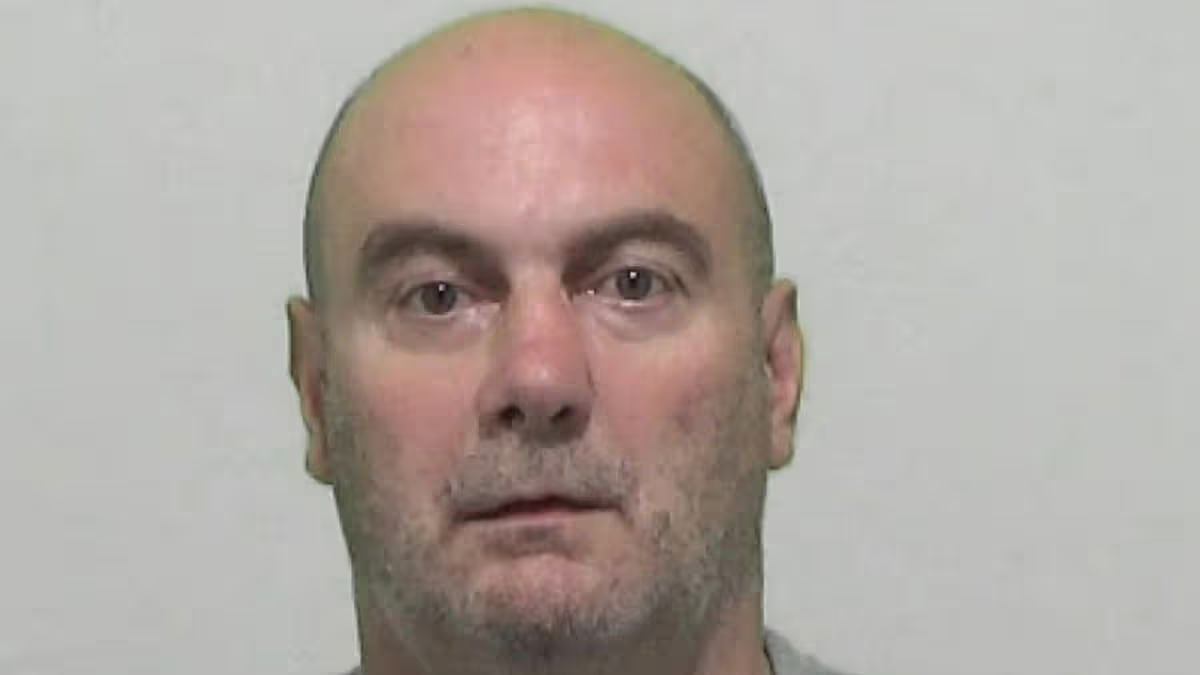
A court has heard how Douglas Rogers was caught beating his girlfriend in the street when he turned his vicious attack on a passer-by

A woman who desperately called 999 as she witnessed a dangerous thug beat his partner in the street was then subject to a violent attack herself. Douglas Rogers paused his assault on his first victim as he turned on the Good Samaritan and smashed her head with a hammer.

A court has heard how the woman thought she was going to die and “screamed for my life” when Rogers cracked her skull with a hammer, raining down four blows to her head. The wicked abuser has now been jailed for nine years for the violent assaults on both victims, reports Chronicle Live.

Advertisement

The victim recalled how she came across Rogers and his partner, who was terrified with blood on her face, in a scuffle in the street. The woman asked the stranger to call the police, yet as she did so, was punched by Rogers.

As he was sentenced and branded dangerous, she told the court how the attack in Sunderland has left her traumatised and scarred. In a victim impact statement, she said: “I went to help her because I heard her screaming. I was acting as a Good Samaritan and I never thought by helping her I would be in danger.

“I was viciously attacked and I thought I was going to die. I ended up being taken to hospital by ambulance with serious injuries to my head.

“(A child) saw me being attacked with a hammer, being hit repeatedly in the head and screaming for my life.”

Advertisement

She added that she now has tinnitus, suffers daily constant headaches, has PTSD, some of her scars are visible due to hair loss in those areas and she is anxious and conscious about that. She told the court: “I think about this attack and how it’s affected me every day and I have flashbacks.

Ensure our latest stories always appear at the top of your Google Search by making us a Preferred Source. Click here to activate or add us as your Preferred Source in your Google search settings.

“This has not only impacted me but my family. My mam thought she was going to lose her child.

“I can’t live my life like I did before the attack. Every day I look in the mirror and see the scars, the scars I got for being a Good Samaritan.

Advertisement

“I didn’t do anything to the girl but try to help her. I did nothing to the man who attacked me, I don’t know why he attacked me.

“He was so calm while hitting me numerous times with the hammer. I never thought by helping someone I could end up being the victim of a serious assault.”

The court heard Rogers had been in a relationship with the first victim for around a year. On Saturday September 27 last year, having called at a pub, when they got home she said he “seemed a bit off” with her, as if he wanted an argument. He went into the kitchen and the woman heard a smash and saw a bowl had been broken on the floor and Rogers was angry.

She removed items, including her father’s motorbike helmet, and took them to the bathroom, fear he would cause further damage. Rogers followed her and punched her to the face and side then hit the helmet with a hammer on a number of occasions before taking her phone and hitting that with a hammer, smashing it.

Advertisement

The court heard the victim was terrified, crying and screaming as he waved the hammer towards her then used it to smash a TV. The woman ran to the front door but couldn’t get it open and Rogers pinned her against a wall using his forearm across her throat with so much force she couldn’t breathe properly and felt that if she moved, her neck would crack.

She screamed for help but Rogers put his hand over her mouth to stop her. The woman then seized an opportunity to run out of the house but he followed her and there was a tussle in the street.

The second victim then walked out of a bike lane and asked what was going on. Rogers’ partner, who had blood on her face, asked her to call police and she did so.

Andrew Walker, prosecuting, said: “While she was on the phone to the police, the defendant punched her to the face, causing her to stumble. She then saw him go to a nearby house and he emerged carrying a hammer.

Advertisement

“He then approached her and hit her about four times to the head with the hammer.”

The woman was taken to hospital by ambulance and was found to have an open depressed fracture to the right side of her skull along with a number of lacerations to her head caused by the hammer.

Rogers, then went on to smash his then-partner’s car window and windscreen with the hammer, pleaded guilty to wounding with intent, strangulation, battery, two counts of criminal damage and possessing an offensive weapon.

The court heard the 49-year-old has 25 previous convictions, including for wounding with intent in 2005 and wounding in 2019.

Advertisement

Recorder David Brooke KC jailed him for nine years, with an extended licence period of a further four years due to him being dangerous. He told Rogers he is “high risk” and said: “These are very bad offences indeed and they are set against a background of an appalling record for violence. This was a disgraceful incident.

“I hope you are thoroughly ashamed of yourself. She went merely to help someone who was in distress and you responded by attacking her in a horrible way, striking her four times to the head, causing a depressed fracture to her skull.”

Christopher Morrison, defending, said Rogers is “extremely sorry and remorseful”, apologises for his actions and has mental health issues.

Source link

Advertisement
Continue Reading

NewsBeat

Italian politician resigns over stake in mafia-linked restaurant as Giorgia Meloni suffers first defeat | World News

Published

on

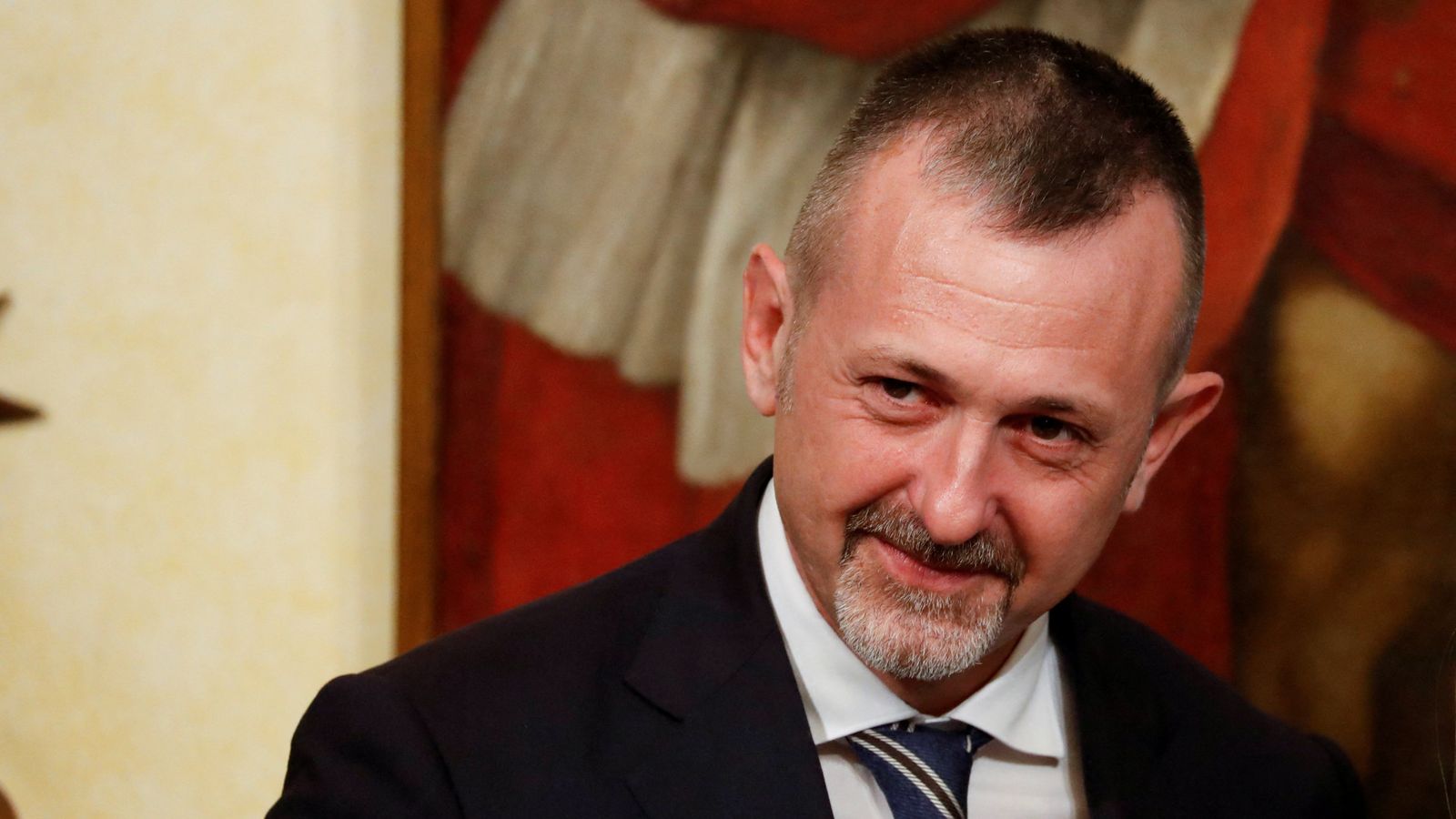
Andrea Delmastro. Pic: Reuters

Italian justice undersecretary Andrea Delmastro has resigned after it emerged he had held a stake in a restaurant linked to the mafia.

His departure was one of two resignations in Italian Prime Minister Giorgia Meloni’s government on Tuesday, after a referendum to reform the country’s judiciary was defeated.

Mr Delmastro, who is a member of Ms Meloni’s Brothers of Italy Party, held a stake in a Rome restaurant alongside the daughter of a man convicted of having ties with Camorra, a mafia group based in Naples.

Mr Delmastro said he had sold his stake when he learned that his 18-year-old business partner’s father, Andrea Caroccia, had been linked to the organisation.

Advertisement

However, a 2023 photo showing him alongside Caroccia later emerged, suggesting the two men knew each other well.

Image:
Andrea Delmastro with Italian Prime Minister Giorgia Meloni. Pic: Reuters

It also came to light that he did not disclose his stake to parliament.

“I have ​always fought crime and achieved concrete, important results,” Mr Delmastro said.

“Although I did nothing wrong, ⁠I made an error of judgment, which I corrected as soon as I became aware of it. I take responsibility for that”.

Advertisement

Along with Mr Delmastro, the justice ministry’s chief of staff, Giusi Bartolozzi, also stepped down on Tuesday.

Advertisement

Meloni says Iran must not acquire nuclear weapons

Ms Bartolozzi resigned after she controversially urged voters to back the reform so Italy could “get rid ‌of” a judiciary she described as a “firing ​squad”.

The departures added to the political turmoil after the referendum to reform Italy’s judiciary failed on Monday, in the first significant defeat for Ms Meloni and her right-wing coalition.

Advertisement

In a brief statement, Ms Meloni accepted the ​resignations of both officials, and, in an unusual move, also called on her tourism minister Daniela Santanche “to make the same choice”.

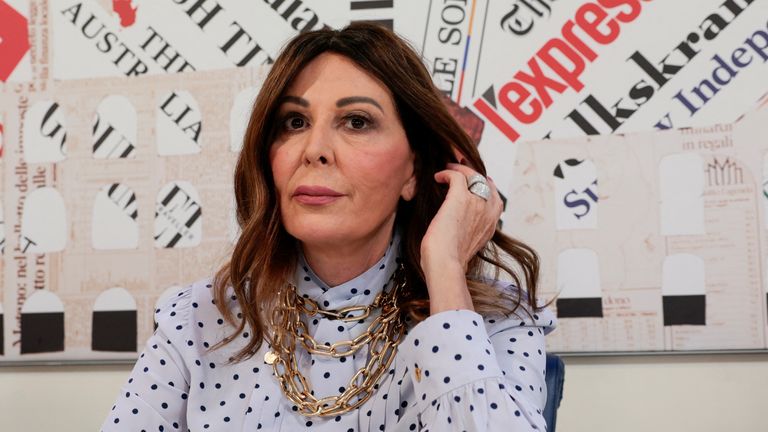
Daniela Santanche. File pic: Reuters
Image:
Daniela Santanche. File pic: Reuters

Ms Santanche was ordered to stand trail last year on charges of false accounting related to a publishing group she used to own.

She has resisted calls to quit since then, and had enjoyed Ms Meloni’s support.

Read more from Sky News:
Children play around missiles across Middle East
Denmark goes to the polls in a snap election

The shake-up suggests Ms Meloni is seeking to reassert control by containing the political damage, and signalling she can still act decisively after voters rejected the landmark reforms.

Advertisement

Both Ms Meloni and Justice Minister Carlo Nordio have resisted calls that they should also resign after 54% of Italians rejected the proposal to modernise the country’s judiciary.

Source link

Advertisement
Continue Reading

NewsBeat

Denmark election: PM Frederiksen faces fight to stay in post after losses | World News

Published

on

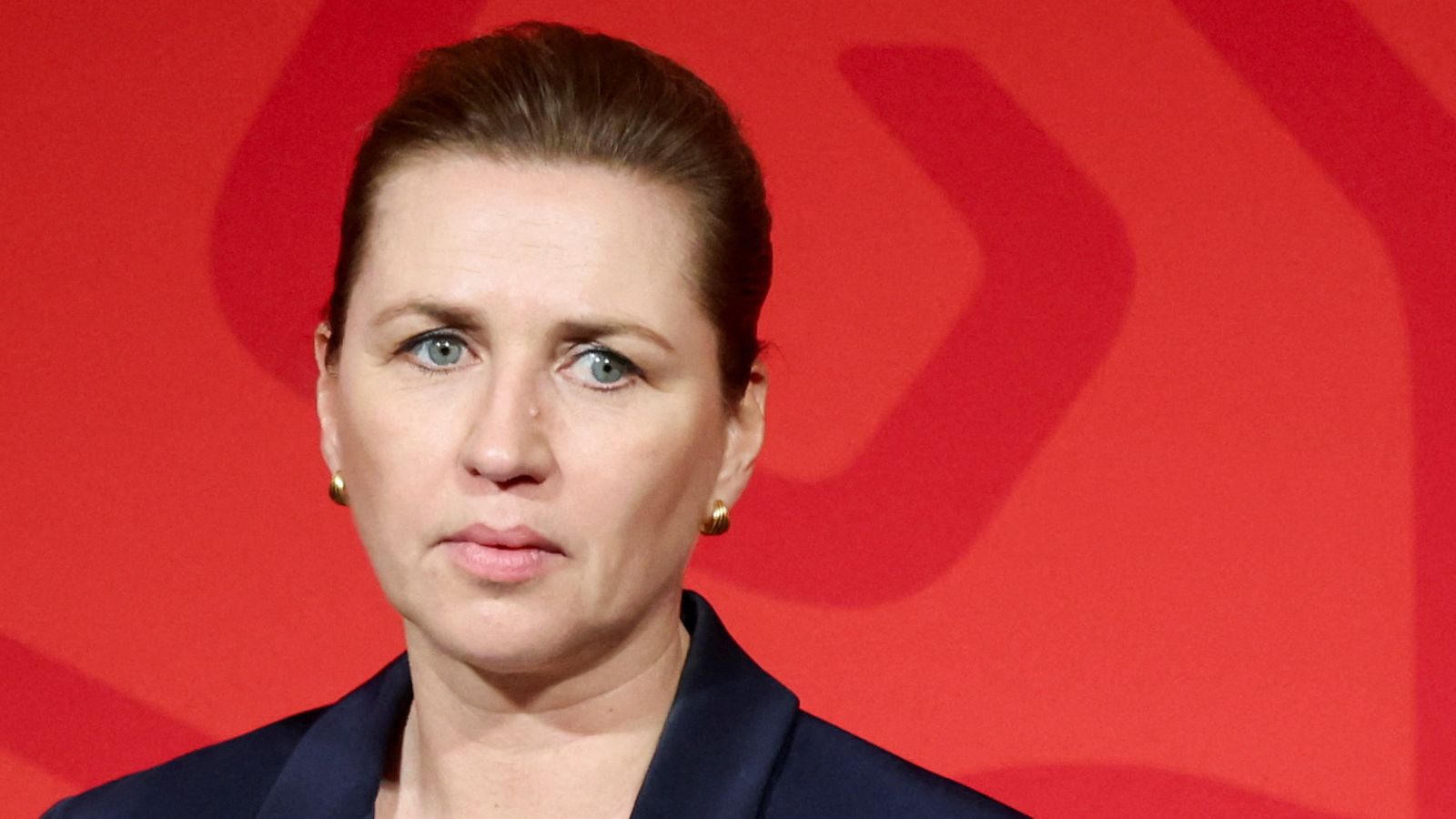
Mette Frederiksen, pictured after Tuesday's election. Pic: Reuters

Denmark’s centre-left prime minister has said she wants to stay in her job after inconclusive election results left the country facing weeks of coalition talks.

Mette Frederiksen has been seen by some in Britain’s Labour government as a role model for success, especially concerning her tough approach to immigration.

Read more: Does UK fancy Danish model?


UK to take a slice of Denmark’s immigration policy

Advertisement

But her Social Democrats have been left bruised from the left and the right after a campaign dominated by the cost of living, which has proved damaging for incumbent leaders around the world in recent years.

She had called an early election for Tuesday hoping her handling of foreign affairs – notably the crisis sparked by Donald Trump’s ambitions for Greenland – would see voters place their trust in her again.


Why Trump backed down on Greenland

What are the results?

Advertisement

While her party is again the largest on 21.9% of the vote, it’s well down on the 27.5% secured in 2022.

Tuesday’s vote leaves the Social Democrats with 38 seats in the 179-seat parliament.

Denmark’s Green party, to the prime minister’s left, won 11.6% of the vote and 20 seats.

The centre-right Liberal Party and Liberal Alliance won 18 seats (10.1%) and 16 seats (9.4%) respectively.

Advertisement

The anti-immigration Danish People’s Party won 9.1% of the vote and 16 seats – its vote share up 7% on last time.

With the left nor the right securing enough votes to form a coalition, it could leave the Moderates party – firmly in the centre ground – as kingmakers.

Led by foreign minister Lars Lokke Rasmussen, a former PM, it won 14 seats.

It was part of the 2022-2026 coalition, with the Social Democrats and Liberal Party.

Advertisement
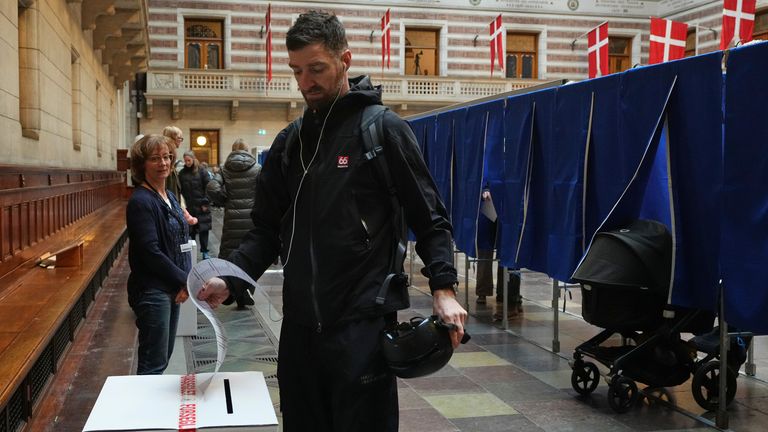
A polling station at City Hall in Copenhagen. Pic: AP
Image:
A polling station at City Hall in Copenhagen. Pic: AP

Coalition talks to commence

Ms Frederiksen said she was ready to stay on, saying Denmark “needs a stable government” in an “unsettled” world amid war in Europe and the Middle East.

“We are ready to take the lead,” she added.

Mr Rasmussen echoed the PM’s call for stability, saying Denmark – a NATO and EU member – “is a small country of six million people”, and “we must come together”.

But Liberal Party leader Troels Lund Poulsen, the defence minister, has indicated he will not go into coalition with the Social Democrats again.

Advertisement

Coalition governments are the norm in Denmark, like many other European countries, and there will now be weeks of negotiations about the make-up of the next administration.

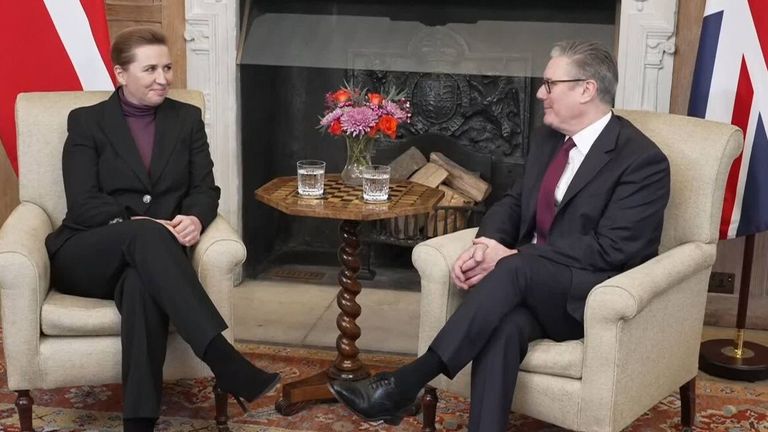
Mette Frederiksen and Sir Keir Starmer in Downing Street in January
Image:
Mette Frederiksen and Sir Keir Starmer in Downing Street in January

What were the key issues?

Ms Frederikson has been PM since 2019. Now 48, she was the country’s youngest ever leader when first elected.

She defended her record during the campaign, citing having to deal with the pandemic, war in Ukraine, and being “threatened by the American president”.

But domestic issues like the cost of living and beyond were front and centre for voters, while she has been squeezed from the left and right.

Advertisement

Read more from Sky News:
FA hits back at Reform
Jay-Z breaks silence

Ms Frederikson has overseen one of the toughest approaches to migration in Europe, with refugee status temporary, ⁠conditional support and expectations of integration in society.

Advertisement

Some on the left believe she’s been much too tough, but the Danish People’s Party leader Morten Messerschmidt increased his support with a pledge to ensure net zero migration of Muslims.

On the economy, Ms Frederiksen had sought to enhance her leftist credentials with a wealth tax proposal – one of the policies which drove a wedge between her and Liberal leader Mr Poulsen.

Source link

Advertisement
Continue Reading

NewsBeat

Greater Manchester trains cancelled as major disruption to last ALL DAY with services delayed

Published

on

Manchester Evening News

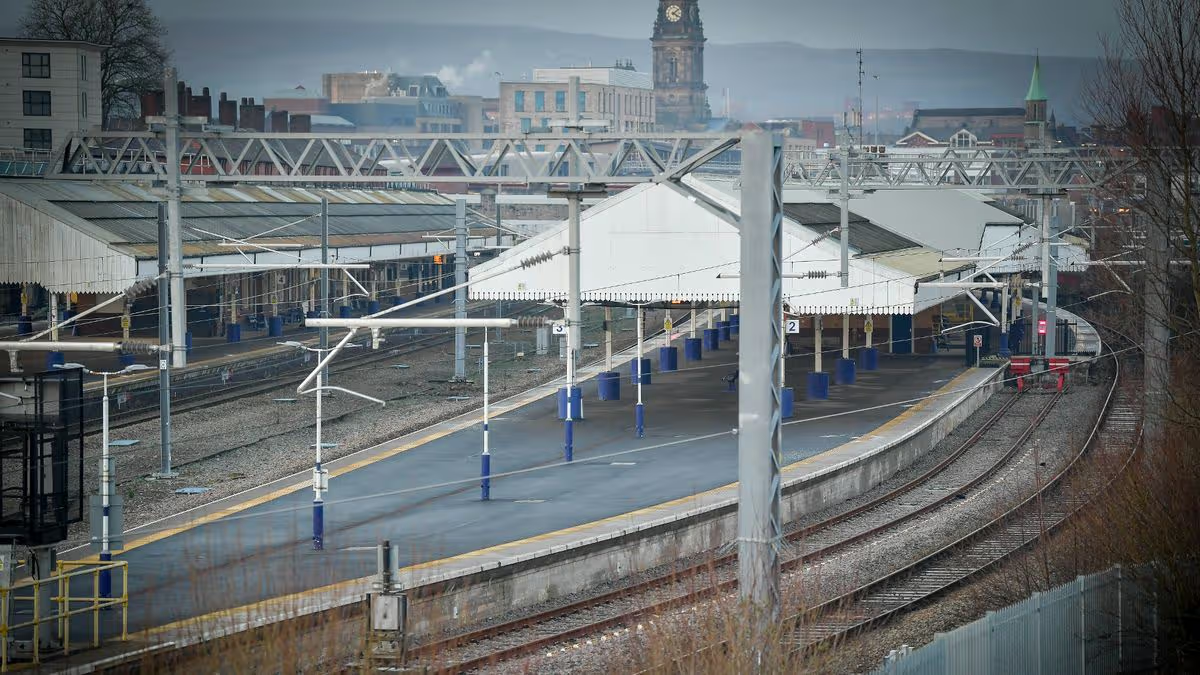
Engineers are working at the scene after the issue at Bolton station

Passengers are being warned to expect a day of disruption affecting trains at Bolton. No services are able to run between Bolton and Preston this morning (March 25) – affecting several Northern and TransPennine Express routes between Lancashire and Manchester.

The issue has been caused by damage to the overhead lines between Bolton and Lostock, according to National Rail. It says passengers are likely to see major disruption throughout the day.

A spokesperson for National Rail said: “Damage to the overhead wires between Bolton and Lostock means that all lines are blocked between these stations. Trains are unable to run between Bolton and Preston until the damage has been repaired.

Advertisement

Get MEN Premium now for just £1 HERE – or get involved in our WhatsApp group by clicking HERE. And don’t miss out on our brilliant selection of newsletters HERE.

“Trains scheduled to run between these stations will divert via an alternative route, resulting in delays of up to 30 minutes. Some services may also be cancelled or revised to reduce congestion whilst trains are diverting. Major disruption is expected until the end of the day.”

The issue is affecting Northern services between Manchester Airport and Blackpool North, Manchester Victoria and Clitheroe, Manchester Airport and Barrow-in-Furness, Manchester Victoria and Southport, and Wigan Wallgate and Stalybridge. Diversions will be in place on these routes, meaning passengers will be delayed throughout the day.

Rail replacement buses are running from Bolton to Manchester Piccadilly at 8am, and from Preston to Manchester Piccadilly at 8.15am, calling at all stations. TransPennine Express services from Scotland to Manchester will also be unable to call at Bolton.

Advertisement

Network Rail staff are on site investigating the issue. A spokesperson for Network Rail in Manchester posted on X: “Due to a track fault in the Bolton area lines are currently blocked.

“Our engineers are working on a fix and will get you on the move asap. This affects services between Preston and Wigan and Preston to Manchester. Check your journey.”

Source link

Advertisement
Continue Reading

NewsBeat

Politics latest: Inflation remains at 3% as Rachel Reeves warns of ‘significant’ challenges over Iran war

Published

on

Politics latest: Inflation remains at 3% as Rachel Reeves warns of ‘significant’ challenges over Iran war

Analysis: The concern is this inflation data is already somewhat out of date

Business and money editor Karl Matchett reports:

Consumer Prices Index (CPI) inflation was already at 3 per cent for the 12 months to January, which marked the lowest level of inflation in the UK since March 2025.

However, despite the overall level remaining the same for the year to February, there were some differences in individual areas of goods and services. The 12-month cost of clothing and footwear rose to its highest point since March of last year, while food and non-alcoholic beverages slowed compared to January. Ironically, so too did transport costs – that is set for a sharp reversal though, when the next set of data comes through.

Advertisement

That is the overall concern here – that this data is already somewhat out of date. We already know that fuel has increased, we’ve been told how bad it could get with energy prices and there is a whole raft of additional areas that still face unknown price hikes depending on how long the situation goes on. That goes for everything from the very much day-to-day, such as grocery bills, to items that on first glance seem to have very little connection, like buying new mobile phones or your chances of getting a raise at work. That is how impactful, ultimately, something like this can be through the chain of oil supply, energy bills, inflation, interest rates, wage growth and the wider economy.

Tara Cobham25 March 2026 07:36

Full story: Inflation stays at 3% but Iran war set to send prices spiralling

Business and money editor Karl Matchett reports:

Advertisement

Tara Cobham25 March 2026 07:26

Starmer to face MPs as planning to reopen Strait of Hormuz continues

The prime minister will face MPs on Wednesday as the UK works to develop a plan to reopen the vital Strait of Hormuz.

Sir Keir Starmer will undergo his weekly grilling at Prime Minister’s Questions a day after Rachel Reeves warned the economic impact of the Iran war could be “significant”.

Advertisement

Central to that impact is Tehran’s effective blockade of the Strait of Hormuz, a vital shipping route for oil and gas.

The blockade has seen oil prices soar above 100 US dollars a barrel and prompted Shell boss Wael Sawan to warn at an industry conference on Tuesday that Europe could face oil shortages by next month if it remains closed.

Donald Trump has repeatedly demanded other nations take a role in opening the strait, and the UK is currently leading efforts to formulate a plan to achieve that objective.

In a call with Saudi Arabia’s crown prince Mohammed bin Salman on Tuesday night, Sir Keir said the UK was “now working with partners on what a viable plan could look like to ensure the flow of goods through the key maritime route”.

Advertisement

However, any deployment of naval vessels is understood to be unlikely to take place while Iran continues to threaten ships in the strait with missiles and drones.

For its part, Iran insists the strait remains open to ships not aligned with nations it deems hostile.

Iran’s effective blockade of the Strait of Hormuz has seen oil prices soar above 100 US dollars a barrel (PA Graphics)

Tara Cobham25 March 2026 07:25

Advertisement

ONS chief’s statement: ‘Annual inflation unchanged in February after last month’s slowdown’

ONS chief economist Grant Fitzner said: “After last month’s slowdown, annual inflation was unchanged in February as various price movements offset each other.

“The largest upwards driver was the price of clothing, which rose this month but fell a year ago.

“This was offset by falls in petrol costs, with prices collected before the start of the conflict in the Middle East and subsequent rise in crude oil prices.”

Tara Cobham25 March 2026 07:23

Advertisement

Iran war set to send prices spiralling in UK

The steady picture for inflation does not yet reflect the impact of the conflict in the Middle East on the cost of living in the UK, with the first attacks taking place at the very end of February.

Oil and gas prices have jumped in recent weeks due to the conflict and other goods prices could also be affected by disruption to shipping through the Strait of Hormuz.

With the Iran war still upending the flow of oil around the world, the UK is set to see prices head back upwards.

Advertisement

Oil has risen from around $70 before the war starting to just shy of $100 now, though has spiked well above that milestone on more than one occasion over the past few weeks.

That is expected to feed through into not just higher energy bills but also transport and production costs going up, pushing inflation back in the opposite direction. Prior to the war starting, the Bank of England had signalled inflation was on course to reach the government-set target of 2 per cent by spring.

Meanwhile, the Institute of Grocery Distribution (IGD) has warned food inflation could surpass 8 per cent by June of this year, if “disruption to global energy markets persists”.

First responders inspect the remains of a residential building hit in an overnight strike in Iran on Tuesday
First responders inspect the remains of a residential building hit in an overnight strike in Iran on Tuesday (Copyright 2026 The Associated Press. All rights reserved)

Tara Cobham25 March 2026 07:16

Advertisement

Chancellor insists ‘right economic plan’ in place amid ‘uncertain world’

The chancellor has insisted the “right economic plan” is in place amid an “uncertain world”.

Rachel Reeves said: “In an uncertain world we have the right economic plan, taking a responsive and responsible approach to supporting working people in the national interest.

“We’re taking £150 off energy bills and providing targeted support for those facing higher heating oil costs.

“We’re also acting to protect people from unfair price rises if they occur, bring down food prices at the till, and cut red tape to boost long-term energy security – building a stronger, more secure economy.”

Advertisement
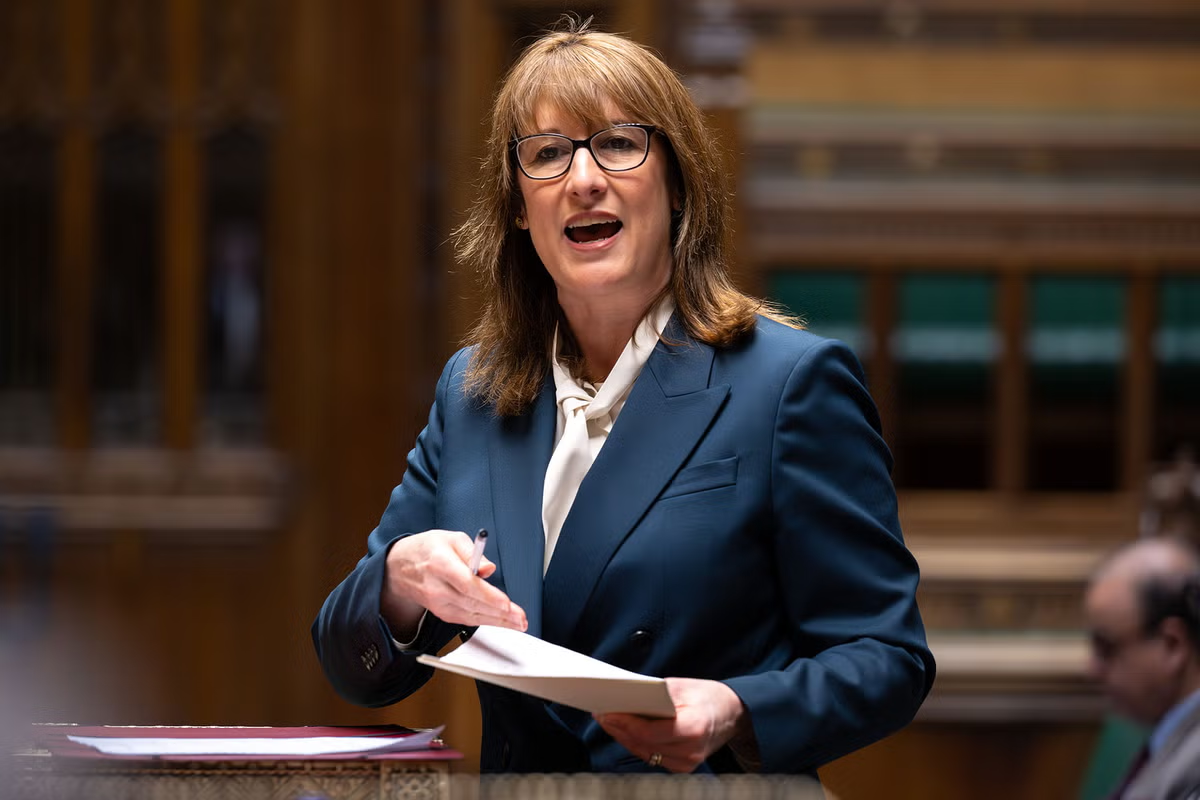
The chancellor has insisted the ‘right economic plan’ is in place amid an ‘uncertain world’
The chancellor has insisted the ‘right economic plan’ is in place amid an ‘uncertain world’ (House of Commons)

Tara Cobham25 March 2026 07:14

UK inflation remains steady at 3% prior to impact of Iran conflict

UK inflation flatlined at 3 per cent last month prior to the impact of the Iran war, according to official figures.

The rate of Consumer Prices Index (CPI) inflation was unchanged from the level reported in January, the Office for National Statistics (ONS) said.

It was in line with predictions from economists.

Advertisement

However, the steady picture for inflation does not yet reflect the impact of the conflict in the Middle East on the cost of living, with the first attacks taking place at the very end of February.

Tara Cobham25 March 2026 07:12

Source link

Advertisement
Continue Reading

NewsBeat

Pickering hand in bid for ‘UK Town Of Culture’

Published

on

Pickering hand in bid for 'UK Town Of Culture'

Pickering Town CIC (PTCIC) are leading the bid with support from Beck Isle Museum, St Peter and St Paul’s Church, Ryedale Festival, English Heritage and the North Yorkshire Moors Railway.

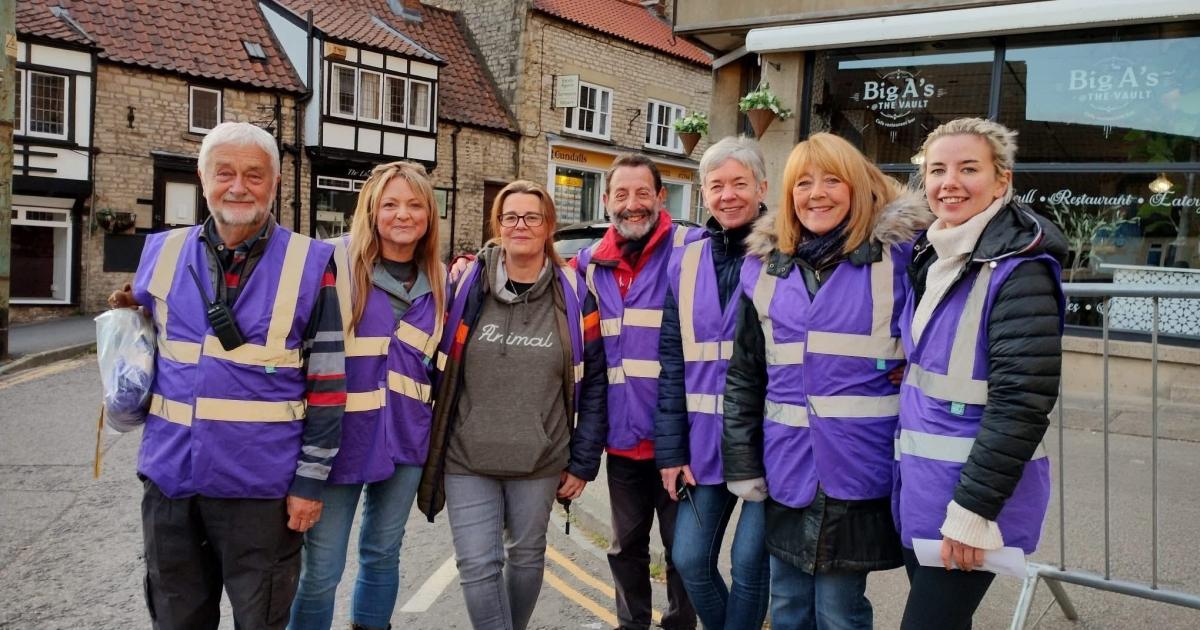
Carrie Brackstone, PTCIC Operations Manager said: “The deadline was tight but we quickly managed to draw a good bunch of creatives and volunteers from the Town into a workshop to ask them what ‘their story’ of Pickering would be in order to form the bid. The workshop was a tremendous success with representation from Beck Isle Museum, Pickering Memorial Hall, Ryedale Festival, Kirk Theatre, Pickering Book Tree, Pickering Castle and Pickering Rocks.

“Pickering has a wealth of creative talent and a strong ethos of community volunteering. Over the past three years, we have proved as a small Town that we can make big things happen on a shoe-string; imagine what we could achieve if we were given a bigger budget!

Advertisement

“We also have some brilliant venues in our Town; a heritage railway, a motte and bailey Castle, our Church with its beautiful wall-paintings and a cosy theatre venue. We also have our Market Place which we close twice a year to host larger events like Pickering 1940s Weekend and Pickering Rocks.”

Joy Andrews, North Yorkshire Councillor for Pickering added: “Pickering is a small Town that packs a mighty punch. In many ways, our rural location has given us an advantage as our local musicians and artists have had to hone their skills independent of any formal training. This is evidenced by the thriving live music scene in Pickering and the proliferation of Art Groups at our Memorial Hall. Pickering talent is abundant and home-grown and with support from the PTCIC volunteers, the sky is the limit.”

Source link

Advertisement
Continue Reading

NewsBeat

A66 reopens to high-sided vehicles after strong wind

Published

on

A66 reopens to high-sided vehicles after strong wind

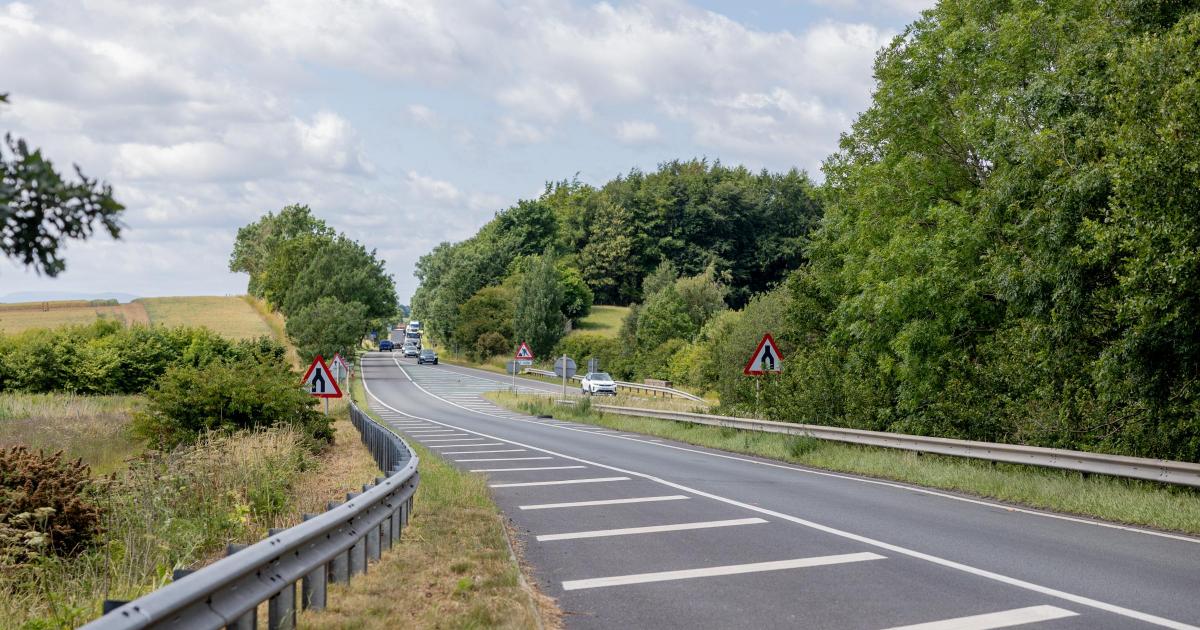
The route had been closed in both directions between the A67 at Bowes, County Durham, and the A685 at Brough, Cumbria, due to safety concerns amid blustery conditions on Tuesday (March 24).

In an update on Wednesday (March 25), National Highways North East said wind speeds had now eased sufficiently to lift the restrictions.

A spokesperson said: “A66 has reopened to high-sided vehicles in both directions between A67 (Bowes, County Durham) and A685 (Brough, Cumbria).

Advertisement

Wind speeds have decreased, allowing the lifting of restrictions. We’ll continue to monitor wind speeds and will advise if things change.”

The closure initially came as unsettled weather continued across the region, with the Met Office warning of a sharp drop in temperatures in the coming days.

Forecasters say daytime highs could fall into single digits by midweek, with colder nights and the potential for wintry conditions in some areas, particularly further north.

Motorists are still being advised to take care, as conditions remain changeable with frequent showers and gusty winds expected to persist.

Advertisement

Source link

Continue Reading

NewsBeat

Veteran employee retires from Teesside International Airport

Published

on

Veteran employee retires from Teesside International Airport

Karen Maidment began her career at the airport in 1981 and took up a permanent post in 1985, before starting her shift in the control tower in 1990.

During her time with the team, she worked her way up to become Head of Air Traffic Services, though her Type 1 diabetes prevented her from qualifying as a full air traffic controller under historic health regulations.

Karen Maidment, who has celebrated 40 years working at Teesside International Airport Picture by Tom Banks (Image: Tom Banks)

She said: “Watching people progress has been so rewarding and fulfilling – and there aren’t many people who get that in a job.

“Watching them go from strength to strength to become marvellous, and safe, Air Traffic Controllers makes me so proud of them – and they should be proud of themselves.

Advertisement

“It’s been marvellous – and I’d recommend this job to anybody.”

Ms Maidment, originally from Fairfield in Stockton, started out on the airport’s information desk before moving into air traffic.

She eventually stepped back from her leadership role in 2024 but continued to support the team with her experience until her retirement in March.

Phil Forster, managing director of Teesside Airport, said: “Karen has been a titan of the Air Traffic team.

Advertisement

“It’s been a privilege to work alongside her and get to know her during my time here – the guidance, support, knowledge, expertise and friendship she’s offered at the airport and in the tower across more than four decades has been invaluable.

“She’ll be sorely missed but on behalf of the entire airport team, I’d like to wish her a long and happy retirement.”

Ms Maidment met her husband Gary at the airport in 2005.

He is now Teesside Airport’s longest-serving Air Traffic Engineer.

Advertisement

During her long career, she waved off Princess Diana and Concorde from Teesside.

Ben Houchen, Tees Valley mayor, said: “Karen has been at the heart of the airport through huge changes – helping us grow and supporting generations of people around her in our Air Traffic Control Tower.

“We owe Karen a huge thank you for everything she’s done, and she leaves behind a lasting legacy at our airport.

“I wish her all the very best for a well-earned and happy retirement.”

Advertisement

Ms Maidment marked 40 years with the airport team last year and finally hung up her headphones for the last time on Saturday, March 21.

Source link

Advertisement
Continue Reading

NewsBeat

Belfast houses stripped of HMO status after landlord fails to follow procedure

Published

on

Belfast Live

The properties were refused unanimously

Two houses in South Belfast have been stripped of their HMO status after their landlords failed to follow correct procedure.

Advertisement

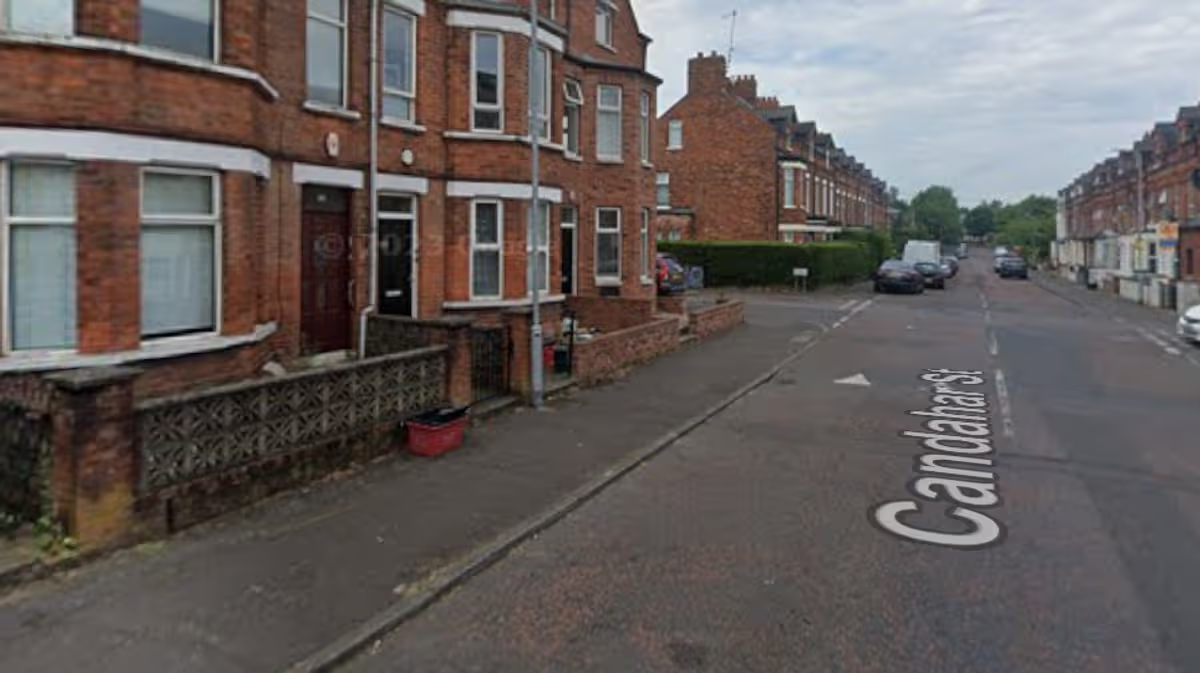
At the March meeting of the Belfast City Council Licensing Council, elected representatives refused HMO applications for 41 Claremont Street, between University Road and Lisburn Road and 32 Flat B Candahar Street, off the Ormeau Road. Both were refused unanimously on the basis of overprovision.

The Claremont Street property previously had an HMO licence issued by the council with a start date of December 2 2020, and an expiry date of December 2 2025. The ownership of the property transferred to Emma Convery from her father on May 2 2021.

READ MORE: £160,000 spend on Belfast European City of Sport questioned at City Hall

READ MORE: Belfast residents raise concerns about surveys for Irish street sign applications

Advertisement

The council report on the application says it “was not made aware of the change of ownership at that time.” In accordance with council policy the licence in the name of the previous owner ceased to have effect on the date of transfer.

An application for a new HMO licence was received from Emma Convery on November 29 last year. An application for a Temporary Exemption Notice was received on December 3 last year and granted until June 8.

On the date of assessment, February 18 this year, 97 percent of all dwelling units in the policy area “Fitzwilliam” were made up of HMOs and other intensive forms of accommodation apartments – well above the 20 percent development limit. There are 74 licensed HMOs with a capacity of 363 persons in the area.

Ms Convery told the committee: “Yes the name wasn’t right for several years, but this was unknown to me that I had to change the name. I was told that it was okay until I had to renew the licence.

Advertisement

“This property is used to house post-graduate health care professionals such as doctors, nurses, midwifery staff and other members of health care teams. I have never had any problems with this property, and it is quite a pleasure to rent out.

“This is the only property we do rent out. I believe in providing affordable accommodation to those close to our hospitals in Belfast.” She added: “I have spent a lot of money trying to get it to this point, and I will be very disappointed if I wasn’t re-awarded the HMO licence.”

The Candahar Street property previously had an HMO licence issued by the council with a start date of January 11 2021, and an expiry date of January 11 2026, in the name of the existing owner Norton Cross Ltd.

A reminder letter was sent to the owner on December 3 last year informing them that they were required to renew the HMO licence before the expiry of the existing licence on January 11 this year. They missed the expiry date, and an application for a new HMO licence was received at the council from Norton Cross Ltd on January 23. A Temporary Exemption Notice was granted until April 27.

Advertisement

On March 2 2026, 26 percent of all dwelling units in policy area “Ballynafeigh” were made up of HMOs and intensive forms of accommodation apartments, which in turn exceeded the 20 percent development limit as set out in policy.

An agent for the property owner told the committee: “This was a simple mistake. I have a spreadsheet with all my HMOs on it, and I have a very good staff, who don’t make many mistakes, but they put in the date December 15 2026 for the renewal, instead of January. It was a simple typographical error.” He said the penalty “didn’t fit the crime.”

Houses of Multiple Occupation, also known as a “house-share” residencies, which landlords lease out to three or more tenants from different addresses, have become increasingly controversial, with some arguing they have negatively affected communities and led to anti-social behaviour in places like the Holylands and Stranmillis in South Belfast, where landlords pack houses with undergraduates and others.

Applications for new HMO licences have increased in other parts of the city in recent years. A series of applications have been refused across the city, but many applicants are successfully appealing the decisions via the Planning Appeals Commission.

Advertisement

HMO licence renewal cannot be refused on the basis of overprovision of such properties in an area, but new licences can be refused on this basis.

While the council policy is that HMO’s should not account for more than 20 percent of any area of housing management, in reality many streets exceed this, with some in the Holylands reaching over 90 percent. Outside housing policy areas the threshold is 10 percent.

For all the latest news, visit the Belfast Live homepage here and sign up to our daily newsletter here.

Source link

Advertisement
Continue Reading

Trending

Copyright © 2025