Connect with us
DAPA Banner

NewsBeat

Two taken to hospital after crash in Cambridgeshire

Published

on

Cambridgeshire Live

The crash happened on Saturday afternoon (January 31).

Two people were taken to hospital after a crash near a major A-road. Emergency services were called to a location near the A14 at Boxworth just before 1pm on Saturday (January 31).

Advertisement

The crash involved one vehicle. Two people were taken to hospital with minor injuries.

A Cambridgeshire Police spokesperson said: “We were called at 12.49pm on Saturday (31 January) to reports of a single vehicle collision just off the A14 at Boxworth. Officers attended and two people went to hospital with minor injuries.

The East of England Ambulance Service has been contacted for more information.

Do you want more of the latest Cambridgeshire news as it comes in from across the county? Sign up to our dedicated newsletter to make sure you never miss a big story from Cambridge or anywhere else in the county. You can also sign up to our dedicated Peterborough, Traffic and Crime newsletters for the latest updates on the topics you are most interested in .

Advertisement

Source link

Continue Reading
Click to comment

You must be logged in to post a comment Login

Leave a Reply

NewsBeat

Why Ruben Dias isn’t in Man City squad vs Arsenal as Carabao Cup final teams announced

Published

on

Manchester Evening News

Manchester City manager Pep Guardiola has been deprived of another centre-back before the League Cup final with Arsenal.

Manchester City suffered an injury blow ahead of the Carabao Cup final with Ruben Dias ruled out of the game with a hamstring injury. The centre-back only lasted 45 minutes against Real Madrid in the Champions League in midweek and was not named in the squad for Sunday’s game with Arsenal.

Advertisement

That left Pep Guardiola without two of his best centre-backs, given Marc Guehi is ineligible due to an obscure rule that disqualifies him on the basis of not having joined from Crystal Palace before the first leg of City’s semi-final with Newcastle. The January signing will be forced to sit out the game while Antoine Semenyo can play after his move from Bournemouth.

Without Guehi and Dias, Guardiola has plumped for Uzbek international Abdukodir Khusanov and Dutch veteran Nathan Ake in his defence alongside Matheus Nunes and Nico O’Reilly. John Stones could also have featured but is only on the bench, having missed the West Ham game last week with injury before returning to the squad against Real.

Get MEN Premium now for just £1 HERE – or get involved in our City WhatsApp group by clicking HERE. You can also join our City Facebook page by clicking HERE and don’t miss out on our brilliant selection of newsletters HERE.

James Trafford starts in goal despite Gianluigi Donnarumma being the City No.1. Guardiola has almost always allowed his No.2 goalkeepers to keep their places in domestic cup competitions, even when the Blues reach finals, with Claudio Bravo, Zack Steffen and Stefan Ortega all featuring at Wembley previously.

Advertisement

Mikel Arteta has adopted the same approach at Arsenal, with Kepa Arrizabalaga starting for them on Sunday ahead of No.1 David Raya. Kepa started against City for Chelsea in the 2019 League Cup final and refused to come off before the penalty shootout and then ended up on the losing side.

Arsenal are favourites for Sunday’s game as they look to clinch the first leg of what could be an historic Quadruple this season, but City are still gunning for three domestic trophies as Guardiola aims to add another trophy to his collection and become the most successful manager in the history of the League Cup.

Source link

Advertisement
Continue Reading

NewsBeat

What would make England’s student loan system fairer?

Published

on

What would make England’s student loan system fairer?

Student loans now sit at the centre of how higher education is funded in England, shaping how millions of graduates finance their studies. Many students leave university with debts of £50,000 or more and may spend decades repaying them.

The current system rests on the idea that higher education primarily benefits individuals, because going to university means that they will earn more over their lifetime. On this view, graduates should bear a significant share of the cost of their education through loan repayments once they enter the labour market.

Yet universities also generate wider social benefits. They educate professionals in sectors such as healthcare, education and engineering. They produce research that contributes to innovation and public policy. They make a significant contribution to cultural and civic life.

This raises the question of whether higher education should be treated mainly as a private investment for individuals, or as a public good that benefits society as a whole.

Advertisement

Research also shows that higher levels of education are associated with greater civic participation, higher levels of political engagement and improved health. These findings suggest that the benefits of higher education extend beyond individual graduates.

If this is the case, the question of who should finance universities becomes more complex. Should the cost fall mainly on graduates, or should it be shared more broadly through public funding?

The shift in funding models

Over the past two decades, England has gradually moved away from a system in which universities were funded largely through public expenditure. Now, graduate contributions play a much larger role.

Before tuition fees were introduced in 1998, most undergraduate teaching in England was financed primarily through public funding. Fees were later increased significantly in 2012, when the system that now allows universities to charge over £9,000 per year was introduced.

Advertisement

Students do not normally pay these fees upfront. Instead, they take out government-backed loans to cover tuition fees and living costs, which they repay once their earnings exceed a certain threshold. Repayments therefore depend on income rather than the total amount borrowed.

A fair system?

Several features of the current system have raised concerns about fairness.

One issue is the length of the repayment period. Under recent reforms in England, many graduates may repay their student loans for up to 40 years before the debt is written off.

Universities educate people for roles that serve society.
alvarog1970/Shutterstock

Another concern is the interest charged on student loans. Interest begins accumulating while students are still studying and continues after graduation. It also continues to accumulate during periods when graduates are not making repayments because their income falls below the repayment threshold. This might be during unemployment, part-time work or parental leave.

Advertisement

Graduate earnings also vary widely. Some graduates repay their loans relatively quickly, while others work in sectors such as teaching, social care or the creative industries where salaries tend to be lower.

Lower-earning graduates typically repay more slowly. As a result, interest accumulates for longer. They may therefore accrue more interest overall and repay a larger total amount than higher-earning graduates. Some may also still have a balance outstanding when the loan is written off.

Earnings also differ across gender, ethnicity and social background, reflecting wider labour market inequalities. Because repayments depend on income over time, these differences shape how the costs of higher education are distributed among graduates.

Possible directions for reform

Different proposals for reform emphasise different priorities, shifting the balance between graduate contributions and public funding.

Advertisement

These include lowering interest rates, adjusting repayment thresholds so lower earners repay less, or shortening the repayment period so student debt does not follow graduates for most of their working lives. Some also argue that a fairer system would involve greater public investment in universities, reducing reliance on graduate repayments and spreading costs more widely across society.

These debates also raise a more fundamental question about justice. The issue is not simply how individuals pay for their degrees, but how societies sustain universities that produce knowledge and educate citizens for democratic life. The real question is whether higher education is treated as a private investment or a public good essential to democracy.

If universities are understood mainly as providing a private benefit to individuals, a system based on graduate repayments may appear reasonable. But if higher education is also recognised as contributing to economic development, research, professional training and civic life, the case for sharing its costs across society becomes stronger.

As discussions about student loans continue, the challenge for policymakers is not only to adjust repayment rules but also to consider how funding reflects the wider role of the university. Ultimately, debates about student loans are also debates about how societies choose to support universities and invest in future generations.

Advertisement

Source link

Continue Reading

NewsBeat

Andrew Mountbatten-Windsor pictured for first time since arrest over Epstein links

Published

on

Andrew Mountbatten-Windsor pictured for first time since arrest over Epstein links

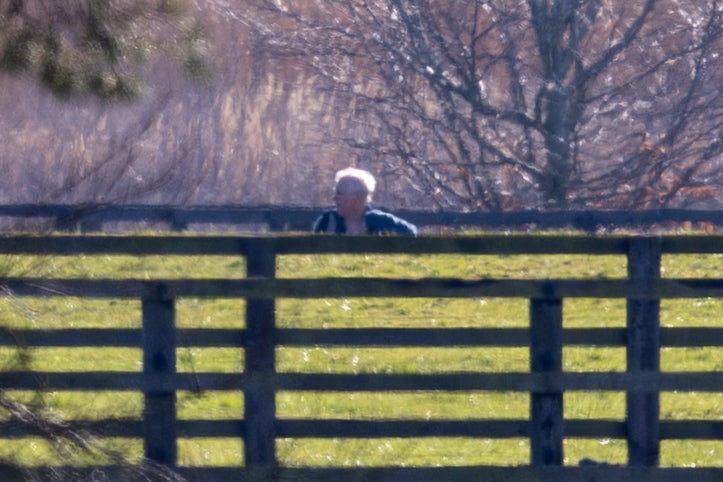
Andrew Mountbatten-Windsor has been pictured for the first time since his arrest over his links to Jeffrey Epstein.

The 66-year-old former prince was seen walking his dogs in the grounds around his new home, Marsh Farm, on the Sandringham Estate in Norfolk.

He has not been seen since he left Aylsham police station in February, where he attempted to hide from photographers in the back of the car.

The former Duke of York was arrested in February on suspicion of misconduct in public office over accusations he had shared confidential information with the convicted paedophile while serving as trade envoy.

Advertisement

Mr Mountbatten-Windsor served as the UK’s special representative for international trade and investment from 2001 until 2011, when he stepped down amid controversy over his friendship with the disgraced financier.

The former duke was seen walking his dogs near his new home in Norfolk
The former duke was seen walking his dogs near his new home in Norfolk (Bav Media)

He remains under police investigation by Thames Valley Police, whose officers are assessing the claims after they emerged in the Epstein files, which were released by the US government.

It was also reported earlier this week that the investigation may be widened to potential corruption offences. Mr Mountbatten-Windsor has always denied any wrongdoing over his friendship with Epstein.

The former Duke of York was forced to relocate to the King’s estate in Norfolk after public backlash over his rent agreements resulted in him giving up his lease on the Grade II listed mansion Royal Lodge in Windsor.

The former prince was arrested in February on suspicion of misconduct in public office
The former prince was arrested in February on suspicion of misconduct in public office (Reuters)

It emerged he had only paid a peppercorn rent for more than 20 years, having first moved into the property in 2003.

He was arrested at Wood Farm, where he is temporarily living while renovations are underway at Marsh Farm, with the former prince expected to move in the coming days.

Advertisement

Calls have grown from a range of public figures for a wider probe into Andrew’s past dealings with Epstein, while Commonwealth countries such as Canada and New Zealand have called for him to be removed from the line of succession.

Despite being stripped of his royal title last year, the King’s brother is still eighth in line to the throne, and an Act of Parliament would be required to remove him and prevent him from ever becoming king.

Images released in the Epstein files show the former prince bent over an unidentified woman
Images released in the Epstein files show the former prince bent over an unidentified woman (US Department of Justice)

Sir Keir Starmer’s government will consider introducing such legislation once police have finished their investigation into the King’s disgraced brother, it has been understood.

Calls for his removal came after Mr Mountbatten-Windsor featured a number of times in the so-called Epstein files, including images of him bent over an unidentified female and lying across the laps of a number of women.

In an email, Epstein appears to introduce the former prince to a woman described as “26, Russian, clevere [sic] beautiful, trustworthy” who wished to visit him at his royal residence.

Advertisement

Retired civil servants have also claimed he used taxpayers’ money for massages and excessive travel costs during his time as the UK’s trade envoy.

The BBC reported that one ex-civil servant refused to pay to cover the costs of a massage for him, but was overruled by senior staff, telling the broadcaster: “I thought it was wrong… I’d said we mustn’t pay it, but we ended up paying it anyway.”

A former Whitehall official, who oversaw finances, separately told the BBC they had “absolutely no doubt” about the authenticity of the claim after having seen similar expenses for his overseas trips.

Source link

Advertisement
Continue Reading

NewsBeat

5 gardening jobs to avoid this spring according to experts

Published

on

5 gardening jobs to avoid this spring according to experts

There are many key tasks gardeners must take on ahead of the spring, but there are some things to avoid.

From pruning too soon to heavily disturbing the soil, experts have said these are just some of the main garden tasks homeowners should steer clear of this spring.

5 gardening jobs to avoid this spring according to experts

Gardening expert at Hillarys, Luke Newnes, gave his verdict on some jobs to avoid, with the first being around pruning.

He said: “Every spring I see the same mistake play out: people get so excited about a bit of sunshine that they start cutting back and tidying up far too aggressively.

Advertisement

“I completely understand the urge, after months of looking at a messy garden, you want a clean slate, but heavy pruning is one of the worst things you can do at this time of year.

“A lot of plants are just waking up, and taking too much off them now can shock them or remove the very stems that are about to flower.

“I always say to people: if you’re not sure whether something should be cut back in spring, leave it alone until you are.

“It’s far easier to prune later than to undo damage from pruning too soon.”

Advertisement

Another task Mr Newnes warned Brits to steer clear of was “unnecessarily disturbing soil”.

Some of the jobs to avoid include over-pruning and disturbing the soil too much (Image: Getty Images)

He said that early spring is when wildlife, such as bees, beetles and other beneficial insects, are still sheltering in leaf litter and the top layer of soil.

The expert advises giving them a little longer before gardeners start lifting and turning things over.

The third and final key job that Mr Newnes says to avoid is planting tender flowers too early, particularly if they are spotted at garden centres.

Advertisement

He said: “A mild week can lull you into a false sense of security, but one cold night or late frost can undo all that effort.

“I always wait until temperatures have been consistently warm before anything delicate goes in the ground.

“Spring should feel exciting, not frantic. Hold off on the heavy jobs, take stock of what’s coming back to life, and ease yourself and your garden into the season.”

Advertisement

Meanwhile, Alex Biggart, a plant expert from online florist, 123 Flowers, has revealed two other things to avoid.

The first was watering on a schedule, with Alex explaining: “Routine can be helpful in many areas of gardening, making things seem more manageable, especially for beginners; however, watering isn’t one of them.

“Plants don’t follow a strict timetable; they respond to their environment.

“Sticking to a set schedule often leads to overwatering, which can be just as damaging as underwatering.

Advertisement

“Saturated soil can cause root rot, a problem that is often irreversible, so it’s always better to check the soil first and only water when it’s genuinely needed.”


Recommended reading:


The expert also warned against ignoring plant spacing and overcrowding plants.

He said: “Plants placed too closely compete for light, nutrients and airflow – weakening them and increasing disease risk.

Advertisement

“Giving each plant space takes patience but leads to a healthier, more attractive garden.”

What gardening jobs will you be doing first this spring? Let us know in the comments.

Source link

Advertisement
Continue Reading

NewsBeat

The Bachelorette’s messy break-up with Taylor Frankie Paul

Published

on

The Bachelorette's messy break-up with Taylor Frankie Paul

Soon after Disney pulled the plug, Paul and her ex-boyfriend, Dakota Mortensen, with whom she shares a son, released duelling statements with fresh allegations about their turbulent relationship. He was also granted temporary custody of their son, according to a court protective order.

Source link

Continue Reading

NewsBeat

Cuba starts restoring power after nationwide grid collapse

Published

on

Cuba starts restoring power after nationwide grid collapse

HAVANA (AP) — Cuba began restoring its energy system on Sunday, a day after a nationwide collapse of the entire grid left millions of people in the dark for the third time this month.

Some 72,000 customers in the capital, among them five hospitals, had electricity again early Sunday, according to a report from the state-run Electric Union and the Ministry of Energy and Mines, but it’s only a fraction of Havana’s total population of approximately 2 million.

In Havana and provinces such as western Matanzas and eastern Holguin, local power microsystems were set up to supply the most vital centers. Residents in some areas of the capital told The Associated Press that power returned during the early morning hours.

Cuba is currently facing an unprecedented energy crisis. Its aging grid has drastically eroded in recent years, but the government has also blamed the outages on a U.S. energy blockade, after President Donald Trump in January warned of tariffs on any country that sells or provides oil to Cuba. His administration is demanding that Cuba release political prisoners and move toward political and economic liberalization in return for a lifting of sanctions. Trump also has raised the possibility of a “friendly takeover of Cuba.”

Advertisement

Another reason Cuba has been struggling with dwindling oil is the removal by the U.S. of Venezuela’s former President Nicolás Maduro, which halted critical petroleum shipments from the nation that had been a steadfast ally to Havana.

President Miguel Díaz-Canel has said the island has not received oil from foreign suppliers for three months. Cuba produces barely 40% of the fuel it needs to power its economy.

Daily blackouts have a significant impact on the population, whose lives are disrupted by reduced work hours, lack of electricity for cooking and damage to household appliances, among many other consequences.

“With the blackout and low voltage, my refrigerator broke — that was today. The day before yesterday, the voltage also dropped around 10 at night,” Suleydi Crespo, a 33-year-old woman with two small children, told AP on Saturday. “If there’s no electricity tomorrow, we won’t be able to get water.”

Advertisement

Residents also expressed exhaustion from the constant outages, whether nationwide or partial.

The Cuban Electric Union, which reports to the Ministry of Energy and Mines, reported that the total disconnection of the national energy system was caused by an unexpected shutdown of a generation unit at the Nuevitas thermoelectric plant in Camaguey province, without providing details on the specific cause of the failure.

The last nationwide blackout occurred on Monday. It took several days to restore power.

Saturday’s outage was the second in the past week and the third in March.

Advertisement

“We have to get used to continuing our usual routine. What else can we do? We have to try to survive. Get used to events, with or without electricity,” said Dagnay Alarcón, a 35-year-old vendor.

Authorities and Díaz-Canel himself have acknowledged the seriousness of the current energy situation. The Vice Minister of Energy and Mines Argelio Abad Vigo explained this week that the country has gone three months without receiving supplies of diesel, fuel oil, gasoline, aviation fuel or liquefied petroleum gas — all vital for the economy and power generation.

Fuel sales for vehicles are rationed, airlines have suspended flights or reduced frequencies many workplaces have reduced hours.

Trump has for months suggested Cuba’s government is on the verge of collapse. After a previous time Cuba’s electric grid collapsed, Trump told reporters he believed he’d soon have “the honor of taking Cuba.”

Advertisement

___

Follow AP’s coverage of Latin America and the Caribbean at https://apnews.com/hub/latin-america

Advertisement

Source link

Continue Reading

NewsBeat

Nonprofits, unions and airports feed TSA officers as shutdown drags

Published

on

Nonprofits, unions and airports feed TSA officers as shutdown drags

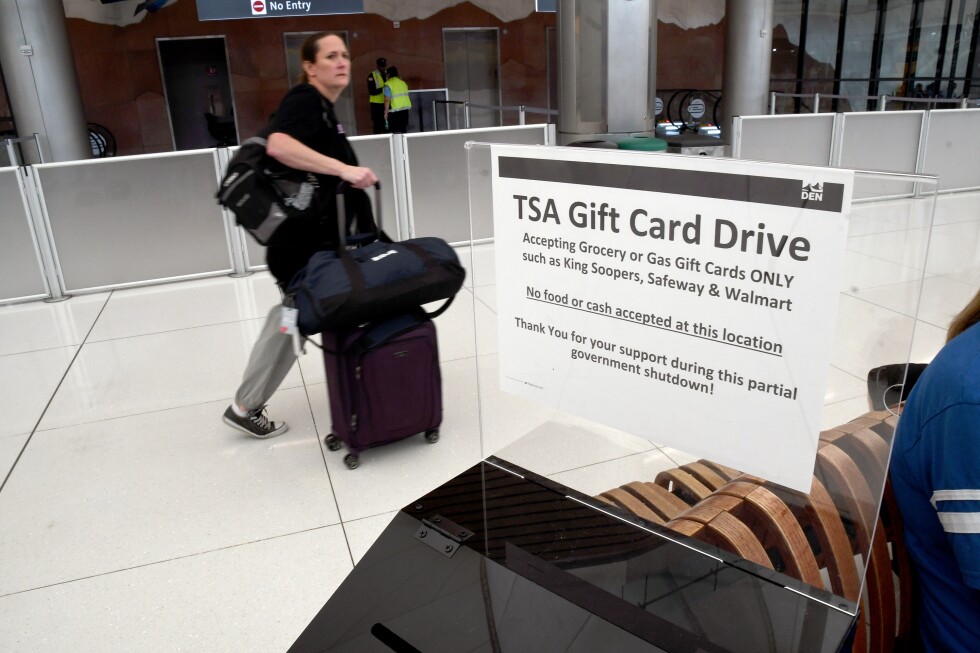
Across the country, collections are popping up to help Transportation Security Administration officers who have been without full pay for more than a month due to the partial government shutdown affecting the Department of Homeland Security.

The charity World Central Kitchen, more accustomed to feeding those in war zones and disaster areas, started providing meals to Washington, D.C.-area airports after many TSA officers missed their first full paycheck. On Thursday, Feeding San Diego began distributing 400 boxes with pasta, beans and peanut butter as well as fresh produce like strawberries and potatoes to affected agents near the airport after a request from TSA and the San Diego County Regional Airport Authority.

Nonprofits are stepping in to help and coordinating closely with airports and local TSA offices because ethics rules around giving gifts to federal employees make it difficult for those affected by the shutdown to receive help directly.

Carissa Casares from Feeding San Diego said communicating with the airport means they can better tailor their resources and response to TSA workers’ needs.

Advertisement

“We need to work directly with the people who have direct access to these employees and get this food to them at a time and location that is most convenient to them,” Casares said.

Saturday marks the 36th day that the Department of Homeland Security has been shut down after Democrats refused to fund Immigration and Customs Enforcement and Customs and Border Protection without changes to their operations after the killings of Alex Pretti and Renee Good in Minneapolis.

More than 120,000 DHS employees are working without pay, including roughly 50,000 Transportation Security Administration officers as negotiations between lawmakers and the White House on limits to immigration enforcement drag on.

The funding lapse comes just months after a 43-day government shutdown, the longest in the nation’s history, which drove long lines at food banks across the U.S. as over 700,000 federal workers worked without pay.

Advertisement

Rules limit what help TSA officers can accept

For those wanting to help, it’s not as simple as going to the airport and giving cash or gift cards directly to TSA officers, who are prohibited from accepting gifts at screening locations, according to a DHS spokesperson.

But Aaron Barker, president of the AFGE Local 554 in Georgia, said TSA officer unions don’t have the same restrictions and can accept donations to distribute to their members. Barker recommends those who want to donate look up their local union district on the AFGE website, or give through their local labor council.

“For some people it can be life or death,” said Barker. “It’s just sad and terrible that this is happening.”

Union members have told Barker they’re unable to cover utility bills or pay for their children’s medical procedures. They’ve received eviction notices or had cars repossessed. They’re having trouble affording routine items, too.

Advertisement

“People don’t think about the things they just naturally have in their home, like toothpaste, bathroom tissue, milk, detergent, dish liquid,” he said. “I’m sure those things are a necessity for every TSA officer.”

Nonetheless, no donation can be as effective as an end to the shutdown. “The first thing they want is their paycheck,” said Barker. “The money is the most immediate need.”

Coordination between nonprofits and TSA

Operation Food Search is working closely with TSA to safely deliver food and set up a temporary pantry at St. Louis Lambert International Airport.

The Missouri hunger relief nonprofit’s CEO said it is the first time they’ve distributed directly to TSA employees where they work.

Advertisement

“It removes their need to make an extra trip and drive here,” Kristen Wild said. “So we’re really excited that the airport allowed us to directly serve right there.”

They gave away just over half their 400 prepared food bags during a 2-hour period earlier this week, according to Wild. Each bag contained just under $20 worth of nonperishables such as apple sauce, pasta, rice and beans. Rules prohibit federal employees from soliciting or accepting gifts or items of monetary value greater than $20 if the gift is related to their government position.

Wild said she thought the $20 limit might be waived since they were distributing food through airport-approved channels.

“We didn’t know for sure,” Wild said. “But to play it safe we just kept it right under the $20 per bag amount so there would be no challenge to it.”

Advertisement

Airport communities band together

Seattle-Tacoma International Airport officials were fielding PETA donations and local food banks’ pallets on Friday afternoon as they stocked their private pantry for off-shift TSA staff.

But they’ve also seen dining vendors, usually tasked with feeding hungry travelers, step up. Airport tenants have offered discounts and donated through TSA to cover entire shifts’ meals, according to airport spokesperson Perry Cooper.

“You know a lot of these people,” Cooper said. “You see faces and that throughout the day as you’re wandering through. And then to realize that some of these folks are here and they’re not getting paid, you know, really tugs at your heart to think what’s a way that we can help.”

The airport community’s support adds to the roughly $6,000 they’ve received in cash and gift cards plus another $10,000 worth of food and household products, Cooper said. That includes donations from the labor union for air traffic controllers, whose jobs are unimpacted by this partial shutdown but who understand the strain of working without pay from full government closures.

Advertisement

More than 460 people picked up fresh produce when local nonprofit Food Lifeline brought a truckload last Friday, according to Cooper. Most of the attendees were TSA staff, Cooper said, though some people might have been homeless. Boxes including pineapples and broccoli lined folding tables along the airport’s main drive.

Regular travelers like Musie Hidad said he thinks about the TSA agents working unpaid every time he enters through security.

“The work they are doing is serious and they aren’t getting paid for it,” said Hidad, an Amarillo, Texas, resident, who was traveling to Columbus, Ohio, for work. “My heart goes out to them.”

___

Advertisement

AP video journalist Patrick Aftoora-Orsagos contributed to this report from Columbus, Ohio.

___

Associated Press coverage of philanthropy and nonprofits receives support through the AP’s collaboration with The Conversation US, with funding from Lilly Endowment Inc. The AP is solely responsible for this content. For all of AP’s philanthropy coverage, visit https://apnews.com/hub/philanthropy.

Advertisement

Source link

Continue Reading

NewsBeat

‘A direct hit’ – BBC visits Israeli town after Iranian strike

Published

on

'A direct hit' - BBC visits Israeli town after Iranian strike

More than 160 people have been injured in Iranian strikes on southern Israel, emergency services have said.

Ballistic missiles hit the towns of Arad and Dimona, which are close to a nuclear facility, on Saturday evening.

Iranian state TV earlier said the strikes were in response to an attack on Iran’s Natanz nuclear facility.

The BBC’s Sebastian Usher reports from Dimona in southern Israel.

Advertisement

Read more on this story.

Source link

Continue Reading

NewsBeat

what we can learn from the long history of student finance

Published

on

what we can learn from the long history of student finance

Student finance in England is up for debate once again, with extensive discussion on the perceived unfairness of the Plan 2 student loan repayment system

But concerns about how to pay for a university degree are far from new. Our new book Student London: A New History of Higher Education in the Capital explores the financial challenges students have faced for years – and the activism that has changed the student experience.

Undergraduate degrees in England have long been expensive to provide. One of the key features of the new London University, founded in 1826 as England’s third university, was that the education on offer was ten times cheaper than at Oxford or Cambridge. From the late 19th century, government grants provided universities with income that allowed them to keep fees relatively affordable.

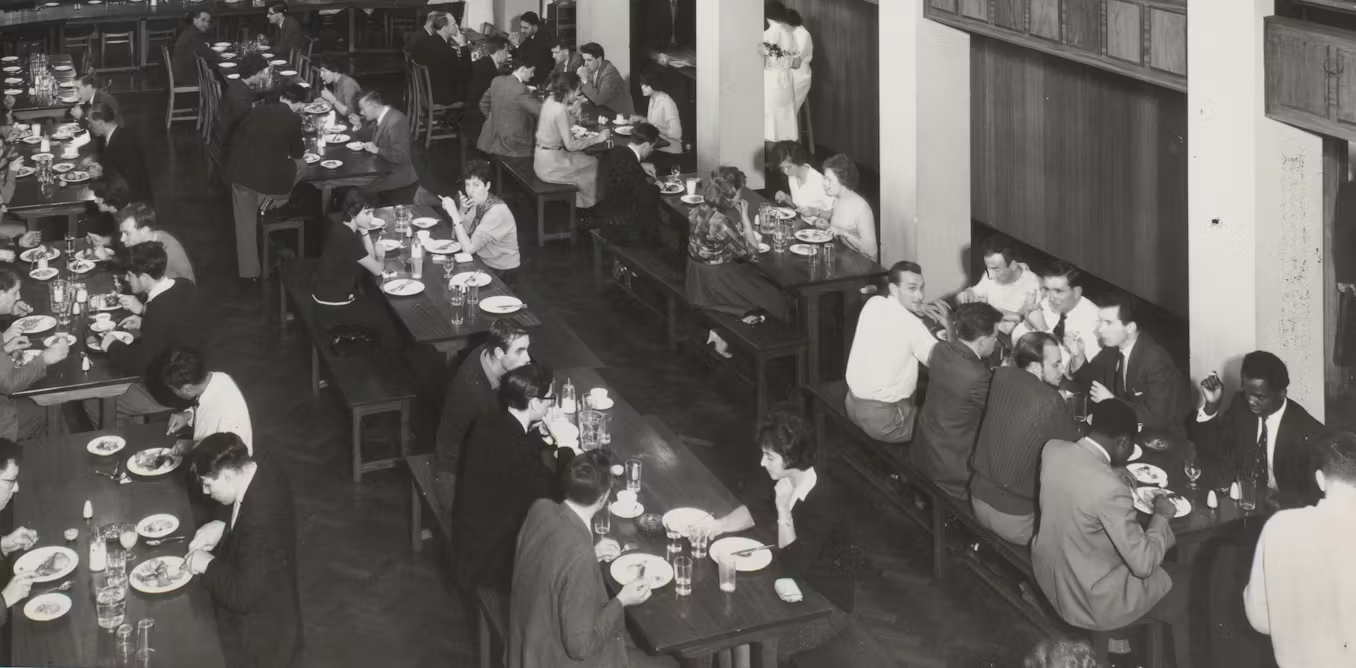
This meant that although only a very small proportion of the population was able to attend university, not all students came from wealthy backgrounds. Students survived on a patchwork of scholarships, loans and family help. Many were able to afford only a year’s study. Memoirs attest to the indignities experienced by poorer students who struggled to pay bus fares, refectory prices or students’ union subscriptions.

Advertisement

Institutions could set their own fees. For example, the rates set by colleges across the University of London varied widely even though students sat the same exams and received the same degree. The 1913 Haldane commission on higher education in London recognised the need for fees to be equalised and called for a national inquiry into the topic. However, national government showed little interest.

Local authorities had begun providing higher education scholarships in the late 19th century, but these were unevenly distributed and the sums awarded varied. Another important source of funding was Board of Education grants for prospective teachers, although students resented having to pledge to teach as the price for the opportunity to study at university. After the first world war, the Scheme for the Higher Education of Ex-Service Students reflected a growing recognition that the wider social value of university justified greater state funding for individual students.

The 1920s was a time of rapid inflation. The hardship caused by rising prices led to the invention of the student discount. The National Union of Students (founded in 1922) secured reduced prices for books, newspapers, insurance and travel. Student unions helped ameliorate the cost of living crisis by opening shops and canteens that bought at wholesale prices and sold to students at a narrow margin.

The second world war disrupted higher education enormously, with institutions facing evacuation and the conscription of both staff and students. One innovative response was the creation of college hardship funds, although lobbying of the University Grants Committee to provide maintenance grants for evacuated students proved unsuccessful.

Advertisement

After the war, a growing proportion of students had their fees paid directly to universities by their local education authority and were in receipt of maintenance grants. However, it was not until 1962 that a new Education Act introduced a national system entitling students to the same level of support, regardless of where they lived or where they chose to study. It was this that enabled students to move away from home and fuelled a boom in the building of halls of residence. But it also gave rise to new stereotypes of students as taxpayer-funded layabouts.

Students at a protest in London in 1972.
Homer Sykes/Alamy

By the 1970s, students were again struggling with the cost of living as grants were eroded in real terms by inflation. Alternative forms of living such as squatting and short-term housing (staying in buildings scheduled for demolition) were part political stance and part pragmatic response. In what many British students saw a moral cause, they also campaigned against “discriminatory tuition fees” for overseas students introduced from 1967.

The introduction of loans

In the face of concerted opposition, the shift from grants to repayable loans took place only gradually. In 1984 students successfully campaigned to halt the introduction of loans but, like differential overseas fees, ultimately this was to be a lost cause. One concession was that rather than have commercial banks run the scheme, the Student Loans Company was set up in 1990 to oversee it.

The 1998 reintroduction of tuition fees at a means-tested flat rate of £1,000 triggered another wave of student protest. Students we interviewed for our research remembered being so angry because the fees had to be paid up front. The campaign generated extensive media interest but this did not stop a fee increase to £3,000 per year in 2006 – although these no longer had to be paid up front. The financial crisis of 2007-8 shaped the context in which the Conservative-Liberal Democrat coalition government again raised tuition fees to £9,000 a year in 2012.

Advertisement

In the 2020s, a key challenge is that maintenance loans now cover just half of students’ costs but still leave them with enormous debt many will never pay off. It is not surprising that over the past decade there has been a 50% increase in students choosing to live at home. This return to older models signals an erosion of the choice that a national system of student financing was supposed to enable. A number of the people we interviewed expressed regret about such changes.

Financial support for students has often been a low priority for governments facing competing budgetary demands. There have been moments of optimism when the value of higher education to society and the economy helped justify investment in individual students – but this is far from the situation today.

Looking back over the history of student finance, it is hard to see successive campaigns against repayable loans or fee increases as anything other than a series of failures. But it is also clear that many of the support systems students today take for granted arose out of such activism, from student discounts to subsidised canteens to union shops and hardship funds.

Advertisement

Source link

Continue Reading

NewsBeat

Mikel Arteta suggests Man City clash about more than just Carabao Cup | Football

Published

on

Mikel Arteta suggests Man City clash about more than just Carabao Cup | Football
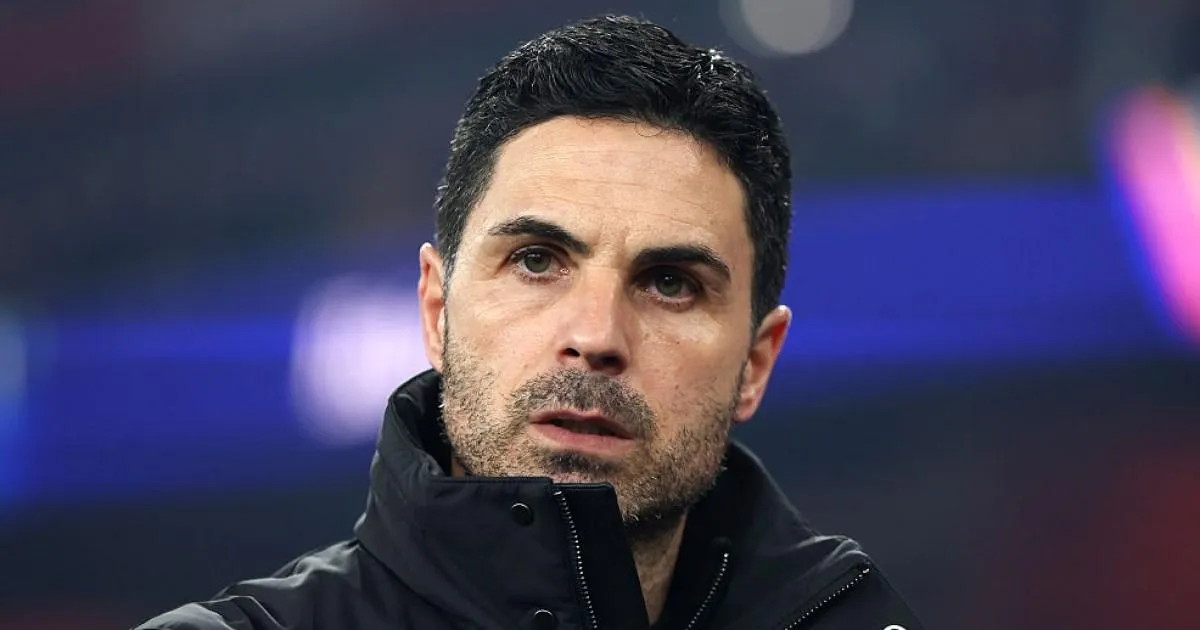
Arsenal boss Mikel Arteta reckons one trophy can lead to many more (Picture: Getty Images)

Mikel Arteta feels victory in the Carabao Cup final over Manchester City can help his Arsenal side lift more trophies this season.

The Gunners are still in contention to win a quadruple this campaign, as they sit top of the Premier League table and are into the quarter-finals of the Champions League.

Arteta’s men are hot favourites to beat Sporting in the last eight in Europe, while they are also expected to get past Championship outfit Southampton in the quarter-finals of the FA Cup.

All of that is still to come, but first is the final of the Carabao Cup on Sunday at Wembley against their chief rivals.

Advertisement

Arteta is looking to win just the second major trophy of his managerial career, after the 2020 FA Cup, feeling that it will make his other goals more achievable.

‘It’s a chance to make some history for the club,’ Arteta wrote in his programme notes, via Arsenal.com.

‘We haven’t won the League Cup since 1993, so it’s about time we did it again. That’s what we all want, to work hard and make our supporters proud.

Your football fix

Metro‘s Head of Sport James Goldman delivers punchy analysis, transfer talk and his take on the week’s biggest stories direct to your inbox every week.

Advertisement

Sign up here, it’s an open goal.

Manchester City v Arsenal FC - Premier League
Arteta and Pep Guardiola meet again this weekend (Picture: Getty Images)

‘When you get to these moments, these opportunities, you have to deliver on the day. Let’s play in the manner that we’ve done all year, all the way through the competition, enjoying matches in front of our people.

‘Whenever you have the chance to get over the line and win a trophy, it’s a big day. If we can do that, it will bring something very special to the team. It will add another level of conviction, belief and energy. To be able to share a beautiful moment always brings you closer to having some other ones that are also really, really positive.

Advertisement

‘We know the importance of that, so now it’s down to us, all of us – players, coaches, staff, supporters – to make sure we do it together.’

FBL-ENG-FACUP-ARSENAL-CHELSEA
Arteta’s FA Cup trophy in August 2020 feels a long time ago (Picture: Getty Images)

Manchester City remain Arsenal’s closest challengers in the Premier League, but with a nine-point difference their chances of catching the Gunners are slim.

Pep Guardiola’s team is out of the Champions League, but still in the FA Cup, so there is plenty to play for and the Spaniard thinks they are nearing their best form.

‘I have the feeling in many things we’re just underneath [our peak],’ he said. ‘We will flourish, I have the feeling that it’s close.

‘Other things we need a little more time until the people realise what we need to be strong in many departments but in most things we are close.’

Advertisement

To view this video please enable JavaScript, and consider upgrading to a web
browser that
supports HTML5
video

Guardiola was asked if a win at Wembley could impact the title race, but was unconvinced, saying: ‘I don’t know. Winning helps just for the fact that winning helps [confidence].

Advertisement

‘But we can win on Sunday and then be bad in the league. I learned that in many competitions and many games with a short time of recovery you have to have the ability to forget and move forwards. Learn what you have to do better and this is what you have to do.’

Advertisement
Advertisement

Source link

Continue Reading

Trending

Copyright © 2025