Sky is currently running a flash sale on some of its most popular broadband plans, with 150Mbps Full Fibre Broadband back at its lowest ever price
Léonie Benhamouche Senior Affiliates and What’s On Writer, Sarah Tulloch Senior Affiliates Writer and Leonie Benhamouche
15:01, 18 Sep 2026
This article contains affiliate links, we will receive a commission on any sales we generate from it. Learn more
Sky has launched a limited-time flash sale on several of its most sought-after broadband packages. The 150Mbps Full Fibre Broadband has returned to its record-low price point.
It’s currently priced at £23 monthly, though this offer expires on Wednesday, September 23. This connection speed is ideal for HD streaming, with new customers eligible for up to £200 in bill credit when switching, helping to offset any exit charges from their previous provider.
Advertisement
Sky notes that while its full fibre service reaches 79 per cent of households across the UK, the 150Mbps speed isn’t universally available. Potential customers can verify their eligibility using Sky’s postcode checker tool.
The company also states its prices ‘may change’ throughout the 24-month contract period. However, customers retain the right to terminate their agreement should any price adjustments be announced.
Sky’s 150Mbps Full Fibre Broadband has received thousands of favourable reviews on Trustpilot from satisfied customers. One contented user shared: “Works perfectly, speeds are amazing and a lot cheaper than Talktalk.”
Another customer stated: “I have my TV, mobile, and broadband with them. Impressed with the level of service, the price is also very competitive.”
A long-standing Sky subscriber remarked: “I have been with Sky for 14 years and they have never let me down. Their broadband is premium tier, and their Sky Q is also high quality.”
Some customers, however, have expressed dissatisfaction with Sky, with one long-term subscriber stating: “Having been a customer for almost 20 years, we recently cancelled due to high costs. Customer service has gone downhill significantly during this time.”
Advertisement
Another customer shared a contrasting experience: “Went to transfer my broadband from BT to Sky. The service was excellent.
“I got a great deal, and I know exactly what will happen on my installation day and going forward.”
One evening in August 2025, a Pakistani shepherd, Abuzar Hussain, was tending sheep and goats in the mountainous slopes of Shijar. At about 6pm, a thunderous roar shattered the silence of the valley.
Abuzar could see a glacial flood headed towards his village, and had minutes to react. He desperately climbed up to a higher point in the mountain where the mobile signal allowed him to get in touch with the village, so that the mosque could broadcast an alert over a loudspeaker.
Hundreds of lives were saved by this phone call from a single man, in a region where millions of dollars are invested in early warning systems.
This story captures something risk and crisis communication researchers have long known, but is not always built into a nation’s emergency planning. It’s not only official messages that are part of a community response to an upcoming disaster. Research shows that the sources who deliver information during emergencies, and their perceived credibility, can affect the way people understand risks and act on them.
Advertisement
That gap, between what people are told and what they trust, is exactly what we set out to measure, with other colleagues. As climate and health information researchers, we ran a series of surveys in Belgium, Germany, Poland and Florida in the US – all places that were hit by major weather emergencies in 2024.
Storm Boris caused deadly flooding across central Europe, while Hurricane Helene caused devastation in the south-eastern United States. These events made natural test sites for our new survey tool, designed to measure “information voids” – the gap between what people expect from flood information and what they actually experience. This could range from knowing where and when to evacuate, to knowing who to believe.
Storm Boris caused dangerous flooding across Europe.
To measure this, we asked people to rate how much information they ideally wanted versus how much they actually received; how accurate they expected it to be versus how accurate it felt; which sources of information they trusted versus which ones they heard from; and finally, which communication channels they preferred versus which they could access.
From their responses, we were able to calculate “void scores”: the difference between the perceived ideal emergency alert and what was received. These were judged in terms of the quantity and quality information received, the source of that information, and the communication channel it was received from. The bigger the difference between the ideal and received ratings, the bigger the void.
Our findings from nearly 900 people were revealing, but not in the way we expected. Across all four countries, people said they were getting enough information about the weather emergencies. The problem wasn’t the volume of information – it was who it came from, and how it reached them.
Who is the messenger?
We measured the “information void” in four ways: how much information people got, how accurate it was, who it came from, and how it reached them.
Our surveys detected gaps in the accuracy of information about the timing and location of floods. But the biggest problem was the source of that information, and how it reached people.
Advertisement
Trust levels were high for emergency responders such as firefighters and the police. People showed relatively low levels of trust for social media influencers and religious leaders.
Relationships between information sources and audiences become especially fragile during disasters such as floods, where life-altering decisions need to be made quickly. This was demonstrated during the August 2026 disaster on the Nepal-Tibet border, when a flash flood washed away villages and roads, killing more than 1,000 people.
Strong winds and water surges can damage telecommunications and transportation infrastructure, in ways that make it impossible for emergency responders to share important updates about the situation with the public through news or social media.
In the meantime, rumours can often start spreading misinformation about issues such as emergency supplies, leading some communities to feel ignored. This often sows the seeds of social discontent.
Advertisement
Why information fails
Over the past decade and especially since the COVID pandemic, research around tracking and tackling misinformation has increased. Some studies suggest that misinformation outbreaks are usually preceded by a vacuum of information from official channels.
One possible explanation is that uncertainty about the hazard and incomplete information creates a fertile ground for alternative theories to emerge. When these theories gain traction, they can have dangerous consequences.
Measuring, detecting and addressing information voids should help address the risk of misinformation outbreaks during emergencies and disasters – events that are especially vulnerable to these outbreaks.
Preliminary research, which is not yet peer reviewed, suggests that information voids were linked to an increase in the prevalence of misinformation during the COVID pandemic. Other researchers have categorised social media conversations during the pandemic to identify which topics people felt most confused about, or wanted more information on.
Advertisement
What needs to change?
Many disaster planners worry about people not receiving accurate information, focusing on its quantity and quality. And certainly, being informed accurately about the timing and location of natural disasters is of primary importance.
But our research shows it is also vital to focus on who delivers this information. Messengers commanding high levels of trust need to be actively engaged to ensure information reaches people frequently and widely.
Institutions can act on this by constantly monitoring information voids across all phases of a disaster, from preparedness to response and recovery. This will increase the chances that people adhere to emergency advice, and that misinformation outbreaks are headed off before they start.
Investing millions of dollars in early warning systems is necessary, but not sufficient. Accurate information needs to be sent in the right amount and at the right moment via trusted sources, or people are put at risk.
That is a lesson emergency communicators urgently need to absorb.
Angle looks back on his best memories from his time in the ring (Picture: 2025 WWE)
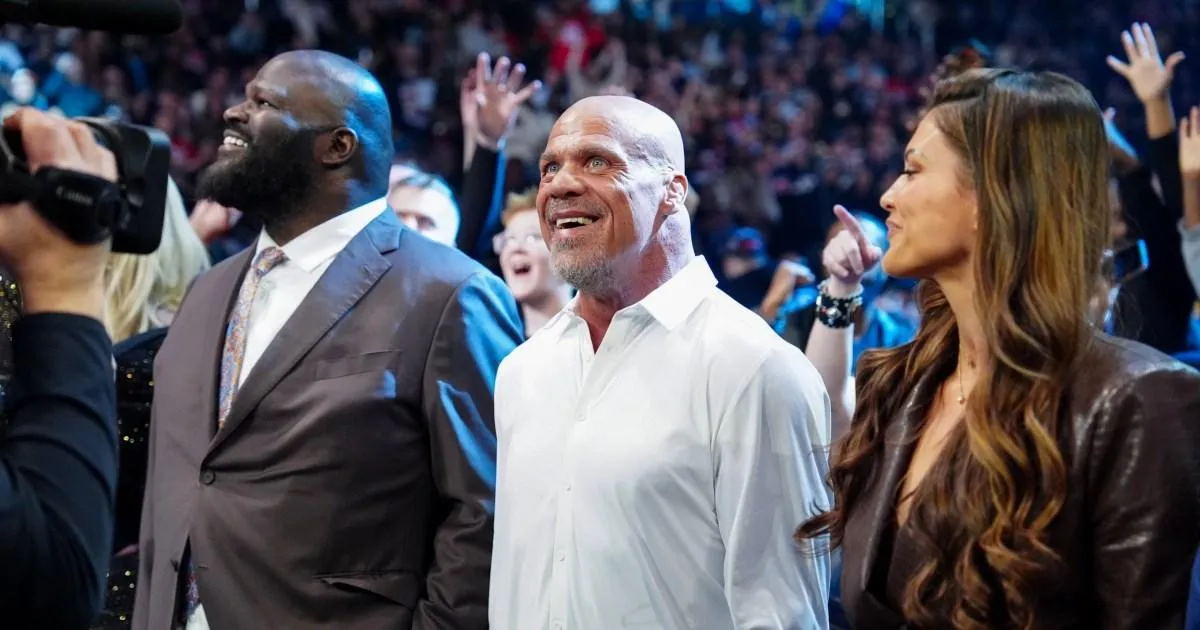
WWE legend Kurt Angle mixed it up with the very best professional wrestling had to offer during his storied career in the ring. But there is always one that got away.
As you might recall him mentioning, Angle won Olympic gold in 1996 ‘with a broken freakin’ neck’ before he was thrust into the world of WWE (then WWF) in late 1999, winning his first world title within a year of making his debut for Vince McMahon’s all-conquering promotion.
Over the next six years, he would be involved in some of the biggest feuds, most engrossing storylines and absorbing matches during one of wrestling’s golden periods, becoming a six-time world champion.
Angle shared the ring with every major name of his time, headlining with powerhouses of the Attitude Era in Stone Cold Steve Austin, The Rock and Triple H and new stars in Brock Lesnar, John Cena and Randy Orton. Matches against ring royalty in The Undertaker and Shawn Michaels are among his favourites but there is one name missing from his golden collection.
Advertisement
Bret Hart left the WWE in disgust in in 1997 to join WCW (World Championship Wrestling) in the aftermath of ‘The Montreal Screwjob’. Excluding his brief return to the company in 2010, ‘The Hitman’s last meaningful match in professional wrestling was in 2000 with a meeting between two of the greatest technical wrestlers in history consigned to fantasy.
‘I missed him by a year,’ Angle told Metro, speaking via Gambling.com, the guide to the best online sportsbooks. ‘He left the WWE in 1997, I signed with them in 1998. I was so sad when I saw him get injured and his career was ended.
Angle regrets missing out of sharing the ring with Bret Hart (Picture: AFP)
‘The WWE offered me a contract in 1996, I should have taken the damn contract instead of waiting until 1998, because then I would have wrestled Bret. But I’ve always been inspired by Bret Hart because of his technical ability, and that’s what I portrayed in wrestling as well.’
And of today’s crop? ‘The two guys right now today that I would have loved to wrestle are Kenny Omega and Will Ospreay. They’re both phenomenal. I love their style, even their high-flying style — I don’t do a lot of high-flying things, I do a little bit, but I always mesh well with guys like that, guys like Rey Mysterio many times — we mesh really well. So I really would have loved to wrestle those two.’
Angle’s match against The Undertaker at No Way Out 2006 is one he regarded as one of the best of his WWE career. The two first tangled at Fully Loaded 2000 and reignited their chemistry in an untelevised house show six years later. They went to WWE chairman Vince McMahon with the idea of bringing it to WrestleMania 22– with Angle heavyweight champion at the time. It would have presented two scenarios – Angle dropping the belt or The Phenom’s undefeated streak coming to an end. McMahon didn’t like either option.
Advertisement
Angle retired from the ring in 2019 (Picture: AFP)
Ask Metro
Use AI to go deeper into the stories you care about – powered by Metro and trusted publications.
‘We went to Vince and said, “listen, we have great chemistry, we would love to have a match at WrestleMania”. And Vince was like, well, “you’re the champion, Kurt, I don’t want to give The Undertaker the title, and Undertaker’s undefeated and I don’t want to end this streak yet”. So he said, “I’ll give you the match at No Way Out”, the pay-per-view before WrestleMania.
Angle and The Undertaker wanted to headline WrestleMania together (Picture: Getty)
‘Undertaker and I wrestled at No Way Out, which is the lowest-buying pay-per-view of the year — everybody’s saving up for WrestleMania — and it’s the least-watched pay-per-view. So it didn’t get that much exposure because of that. It kind of sucks, because that’s when we had our match. We were planning on having it at WrestleMania, but Vince McMahon wouldn’t have it.’
Angle went onto drop the title to Rey Mysterio the following month with The Undertaker’s remaining undefeated at WrestleMania for another eight years before Lesnar brought it all to a shuddering halt in 2014.
Advertisement
Lesnar had just recently re-signed with WWE after switching to the world of UFC. Already one of the most fearsome athletes professional wrestling had ever seen, his reign as UFC champion only added to his ferocious aura and meant he was perhaps the only credible candidate to end ‘The Streak’.
‘The Olympic Hero’ was one of WWE’s biggest stars (Picture: WWE)
Would Lesnar have been Angle’s choice? ‘I wasn’t going to be the guy that was going to end the undefeated streak. I believe it was going to be either an upcoming guy or a complete dominator that people would buy.
‘Now, they would have bought me beating Undertaker, but I was already way up here as far as main-eventing and being one of the top guys in the company — I didn’t need it. But neither did Brock. Brock is a dominating athlete though — I think people said, “okay, I can accept this”.
‘I would have preferred if it was someone up-and-coming. Whoever was younger back then, maybe, I don’t know if this is a great idea, but Cody Rhodes or CM Punk, somebody up-and-coming who ended up being the top guy in the company. I think it would have benefited them the most. But they decided to end the streak with Brock Lesnar, and I think it was a great decision because it was a safe decision.’
Autumn equinox is approaching, and (sigh) you know what that means: the days are only about to get shorter. Damn.
Although it’s a fact of life every winter, I simply can’t wrap my head around the fact that the days end as early as 4pm.
There’s nothing more demotivating than leaving work and it already being evening, and if you’re working from home it can be tricky to energise yourself for a full day of work.
Whether you’re struggling to wake up in the morning, or to maintain energy levels throughout the day, and SAD lamp could give you a morning boost and keep you productive all day long.
Advertisement
They come in a range of sizes, from table to floor lamps, alarm clocks, and even foldable forms that can fit in your bag.
If you’re looking for something that will stop you falling into a winter depression, SAD lamps could be the solution this year.
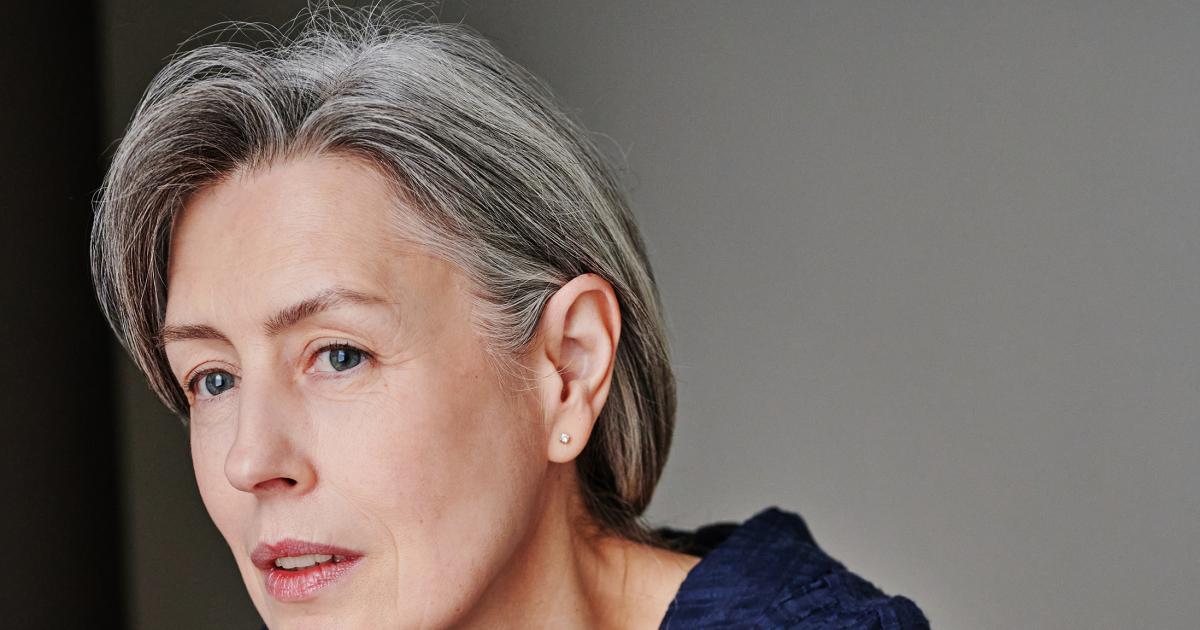
Best known for her award-winning role as Mary Cox in Our Friends in the North, McKee spent her formative years in Peterlee, a town built on ambition, community spirit and the heritage of east Durham’s mining villages.
Established as a new town after the Second World War and named after miners’ leader Peter Lee, it was designed to provide modern homes and opportunities for families from the surrounding coalfield communities.
Advertisement
Today, Peterlee is home to more than 20,000 people and is known for landmarks including the Apollo Pavilion, nearby stretches of the Durham Heritage Coast and its rich mining history.
Born in 1964, McKee was raised in Peterlee and nearby Easington after being born into a mining family.
Advertisement
Her father worked in the coal industry, giving her first-hand experience of the communities that would later inspire some of her most celebrated performances.
She attended school locally and discovered acting while still a teenager.
According to published biographies, McKee joined a local drama group after spotting a poster in a shop window.
What began as a hobby quickly developed into a passion and eventually led to her first professional screen role in the Tyne Tees children’s series Quest of Eagles.
Advertisement
From East Durham to television success
McKee spent several summers with the National Youth Theatre before pursuing a professional acting career.
Despite being rejected by a number of prestigious drama schools, she continued to pursue acting and gradually established herself on television and in film.
Her breakthrough came in 1996 when she starred in the BBC drama Our Friends in the North, earning a BAFTA Television Award for Best Actress.
Since then she has appeared in productions including Notting Hill, The Forsyte Saga, Bodyguard, Line of Duty, Phantom Thread and My Policeman, building a reputation as one of Britain’s finest screen performers.
Why Peterlee remains proud of its star
Like many towns across County Durham, Peterlee has undergone significant change since its mining heyday.
Advertisement
Yet McKee’s success remains a source of pride for many local people and serves as a reminder of the talent that has emerged from East Durham communities.
For a town created to offer new opportunities to mining families, the story of Gina McKee is one of its most notable success stories.
From a local drama group in Peterlee to BAFTA-winning performances watched by millions, her journey remains closely connected to the County Durham town where she grew up.
Mixed signals? Or maybe it is just a sign that Tuchel wants his side to become more unpredictable in their search for success.
Because that is what the best teams do – mix it up when required.
Despite Tuchel’s remarks, his latest squad for the fixtures against Spain, the Czech Republic and Croatia rather contradicts any thoughts of a havoc-rich approach.
The return of Trent Alexander-Arnold and Cole Palmer, two of English football’s most technically gifted players, screams control.
Advertisement
So do the call-ups of Bournemouth midfielder Alex Scott and Newcastle left-back Lewis Hall, who are both extremely adept in possession of the ball.
Of course, there is certainly a balance to be struck. That would be Tuchel’s ideal scenario.
Rio Ngumoha’s first senior call-up will certainly add an air of unpredictability to Tuchel’s options.
The Liverpool winger, 18, has had an exciting start to the season, catching the eye with his invention and trickery down both flanks for Andoni Iraola’s side.
Advertisement
That Tuchel revealed Fulham attacker Josh King is also close to earning his first senior call-up provides further indication the England manager wants to reinvigorate his forward line ahead of the forthcoming Nations League campaign and beyond.
Yet, we shouldn’t expect Tuchel to completely let go of the handbrake just yet.
In response to a question as to whether his team can replicate the fast-paced approach of a Premier League team but harnessed with a greater control, Tuchel responded: “That would be the wish, that we become for 10 minutes a little bit more like Spain, here and there.
“The more I reflect on it, it’s maybe more buying into our strengths and play more minutes like we played the second half against Croatia, and more minutes like we played the first half against France, and buying into these strengths, because I think we get a lot of value out of it, we get a lot of connection to the fans, this is what the Premier League reflects.
Advertisement
“We are maybe not the most economical team to play football but this is maybe also a characteristic of the Premier League. The Premier League is not a very economical league, you have to play.
“You need to max out every single match otherwise you cannot compete for the title so this is something more beautiful. But this is where we are, where I am in my mindset and I think where the players are, so it’s still a bit ambiguous.”
But while Tuchel may not have total clarity with regards to whether control or chaos is the way forward, he showed no hint of confusion over who he believes his best players are.
Tuchel refuted assertions his decision to recall Palmer and Alexander-Arnold was an admission he’d got his World Cup squad wrong.
Advertisement
Indeed, Tuchel has hinted he would have picked a vastly similar squad for the upcoming games to the one he selected for the US had all his options been available.
“Before we did the nomination in the last month, I thought we had more of a continuation of the World Cup squad but then a lot of members of our World Cup squad – Reece [James], Dan [Burn], Dean [Henderson, [John] Stones, [Jordan] Henderson, Djed Spence – can’t be with us due to injuries, so it is not like a full continuation.
“These players were crucial for us in building the brotherhood, in building the spirit and taking care of the mentality that took us the long way in the tournament. We will not negotiate on that, we will not give in on that.
“So other players will step up, this is basically how I see this camp.
Advertisement
“My mindset at the moment is not to change too much within the formations.”
England host World Cup winners Spain at Wembley on Saturday, 26 September then travel to the Czech Republic (Tuesday, 29 September) and Croatia (Saturday, 3 October) before the Czechs visit on Tuesday, 6 October.
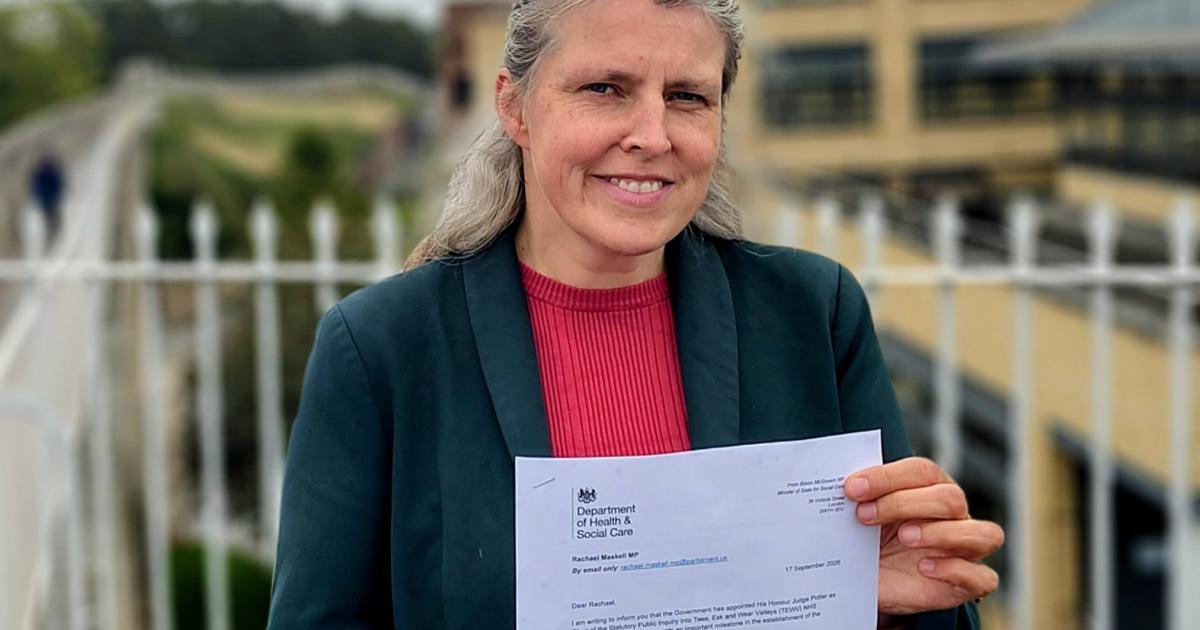
The government announced that the inquiry into the Tees, Esk and Wear Valleys NHS Foundation Trust (TEWV) will formally start on Monday (September 21).
TEWV has long said it will cooperate with the inquiry.
The trust has been dogged by calls, including from The Press, for a full statutory inquiry after being convicted and fined over the deaths of two patients and blamed at inquests for contributing to the deaths of others, slammed by watchdogs, and branded as ‘requiring improvement’.
Advertisement
The government announced that the inquiry into the Tees, Esk and Wear Valleys NHS Foundation Trust (TEWV) will formally start on Monday (September 21) (Image: Sarah Caldecott)
It is understood that admin for the inquiry will begin on Monday, with a date for its first public hearing yet to be announced.
Ms Maskell said: “Families who have suffered loss and unimaginable grief have waited in limbo for years to have their voices heard. This has been a complete systemic failure and should never be allowed to happen again. Others have not received the care they should from NHS mental health services.
“The announcement of this date is a huge step forwards in giving families who have lost loved ones and individuals who have suffered poor care the opportunity to hold those responsible to account and drive urgent improvements in mental health services.
Advertisement
“I will continue to work alongside families, Healthwatch and others going through this process to ensure justice is served and that robust change is delivered.”
Recommended reading:
Judge Potter, a retired circuit judge and former deputy judge in the Court of Appeal’s criminal division with more than 40 years’ experience, said he was “honoured to have been appointed to chair the TEWV inquiry”.
“My first priority will be to meet and listen to those affected. Their voices and experiences will be central to the inquiry’s work and will help inform the development of its terms of reference,” he said.
Advertisement
“The inquiry will approach its task independently, thoroughly and fairly, and with respect for everyone who takes part. I will work with the inquiry team to put the necessary arrangements in place so that our work can begin as promptly as proper preparation allows.”
As chair of a full statutory inquiry, Judge Potter will have the power to compel witnesses to give evidence.
Health secretary Yvette Cooper said: “The families who were let down by the Tees, Esk and Wear Valleys NHS Foundation Trust have suffered immeasurable pain.
“Judge Potter has been asked to deliver a report explaining why things went so wrong across the trust’s mental health services and what must change.”
The sixth batch of UFO files has been released by the Pentagon, showing clusters of alleged spacecraft flying through the sky for decades.
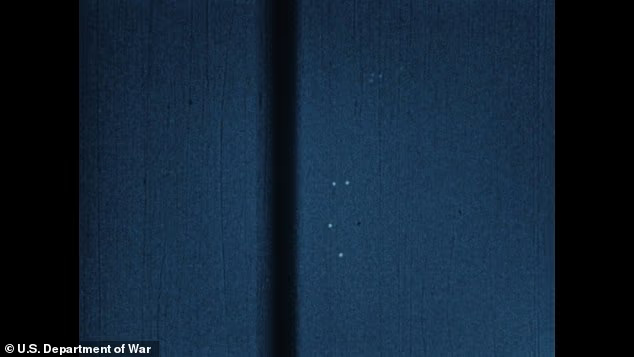
The latest tranche was made public Friday morning, with the focus on a famous 1952 UFO sighting by a Navy photographer in Tremonton, Utah.
The newly released footage revealed ten to 14 bright objects in a clear blue sky. Newhouse, a Navy warrant officer who was on vacation with his family at the time, described them as looking like two discs stacked on top of each other – creating the classic ‘flying saucer’ shape.
He added in incident reports that the UFOs had a shiny metallic or gunmetal color and were moving around in a loose circle while generally heading west.
Advertisement
The US Air Force’s old UFO investigation office, Project Blue Book, studied the film for months and was never able to fully explain what Newhouse had filmed.
Over 70 years later, military aircraft over the Middle East captured another mysterious cluster of UFOs traveling in a highly organized formation.
The group of glowing orbs was seen traveling past an oil rig, flying at high speed next to each other in an almost perfect horizontal line before splitting up into groups of three.
The latest files also contained dozens of witness reports, videos of UFO sightings and newly declassified files documenting how a private company owned by billionaire Robert Bigelow was contracted by the Pentagon to study UFO sightings and futuristic technology.
Advertisement
Footage from a 1952 Navy photographer has been released, showing what the sailor described as a group of flying saucers
In 2025, another cluster of UFOs was seen by US military aircraft over the Middle East
Among the hundreds of pages of never-before-seen documents released on Friday were expense reports coming from the Defense Intelligence Agency – the Pentagon’s military intelligence service which studies foreign military technology and possible future threats.
Advertisement
The documents detailed how tens of millions of dollars were spent on a program called AAWSAP: Advanced Aerospace Weapon System Applications Program. It ran from 2008 to 2012.
Among the futuristic technology the group secretly contracted researchers to investigate were space-age materials including metallic glass, a faster-than-light method of travel known as warp drive and the ability to make objects invisible using a cloaking device.
The group awarded the contract for this work was Bigelow Aerospace Advanced Space Studies (BAASS).
BAASS was a company set up by Robert Bigelow, the businessman behind Budget Suites of America and Bigelow Aerospace. He has also been known to have a strong personal interest in UFOs and government transparency.
Advertisement
In July, UFO researcher and documentary filmmaker Mark Christopher Lee alleged that Bigelow was part of President Trump’s inner circle which convinced the president to prepare a speech which would announce the existence of UFOs and extraterrestrial life.
This is a breaking story. More details to follow.
The sixth batch of UFO files contained multiple videos of alleged UFO encounters, including orbs traveling over land and sea at high speeds
The rare operation brought together surgeons, hospitals and charities across two countries, with doctors saying the girls now have opportunities that would not have been possible before
A miracle 24-hour surgery and a team of specialists successfully separated conjoined twin girls in an extraordinary operation.
Advertisement
Hiyab and Wuhbto travelled from their home in Ethiopia to Missouri in February 2025 for one of the rarest and most complex procedures carried out in the United States. The two-year-old sisters were joined at the crown of their heads and required months of painstaking preparation before doctors could attempt to separate them.
More than 300 hours of planning went into the operation at SSM Health Cardinal Glennon Children’s Hospital, with the surgery itself lasting more than 24 hours. Doctors said the procedure demanded “sublime precision” and close coordination between multiple specialist teams.
Since their separation, Wuhbto has undergone a further cranioplasty to complete the repair of her skull, while Hiyab is preparing for the same procedure later this autumn. The girls turned two in March, shortly after their separation surgery.
Advertisement
Dr. Andrew J. White, the hospital’s chief medical officer said: “Partnership, collaboration and expertise were the building blocks of this incredible feat.”
The hospital described the operation as “one of the most complex and rare paediatric procedures performed in the United States.”
Twins joined at the head are exceptionally rare, occurring in around one in 2.5million live births and accounting for fewer than 6% of conjoined twins, according to the National Library of Medicine. Only 62 separation attempts have been documented among 69 well-recorded cases of craniopagus twins worldwide.
The girls’ treatment involved a huge international effort, bringing together hospitals, charities and organisations in both the US and Ethiopia. Among those involved were SSM Health Cardinal Glennon Children’s Hospital, Ranken Jordan Pediatric Bridge Hospital, World Pediatrics, Lola Children’s Home in Ethiopia, Ronald McDonald House Charities and Ethiopian Airlines.
Dr. Hossain Marandi, president of SSM Health Cardinal Glennon Children’s Hospital, said: “This story reflects the very best of who we are, bringing hope, healing, and opportunities once thought impossible to children and families when they need it most. From our caregivers and clinical teams to our community and global partners, countless individuals united around a shared mission to create new possibilities for these two young girls and their future.”
The twins continue to receive care in the United States as doctors monitor their recovery and development.
Dr. Joanna Kemp, head neurological surgeon at the hospital, said: “It is still too soon to know exactly what their long-term development will look like but what we do know is that they now have opportunities that would not have been possible without this intervention.”
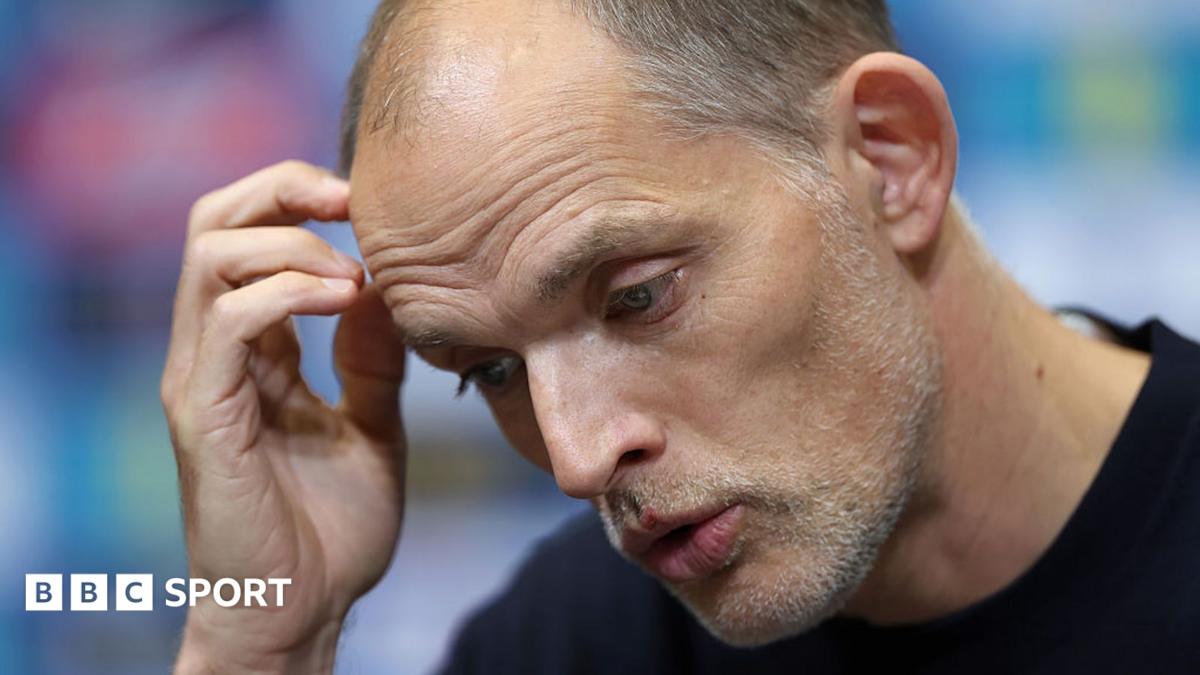
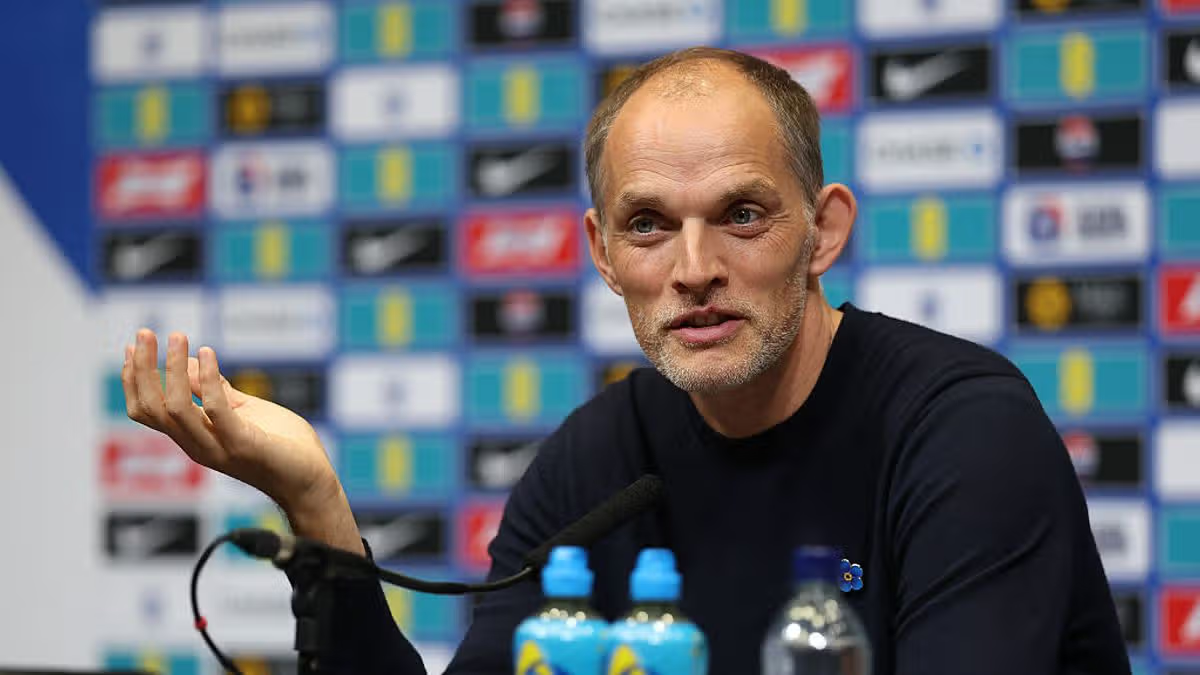
Thomas Tuchel was speaking after selecting his first England squad since the Three Lions’ suffered more World Cup heartbreak following defeat to Argentina in the semi-final
FA chair Debbie Hewitt this week wrote to the beleaguered FIFA president demanding answers over the World Cup sell-off plan and also clarity on why Folarin Balogun’s suspension was overturned.
England boss Tuchel likened the FA’s support for him as to why he also backed their stance and his voice will be loud among the UEFA protest against Infantino.
Advertisement
Tuchel said: “I felt the full support from all my bosses through the World Cup, through the whole tournament.
“There was a moment, a very special moment before the Mexico game where we had a talk and my bosses told me: ‘We know that anything can happen in a football match and we know that anything can happen in a match in Mexico in a World Cup, but don’t worry, we see what’s going on and we want to continue like this.’
“This was a beautiful moment for me as a coach,” said Tuchel before throwing his weight behind their stance.
Advertisement
“I just told you how I am backed from my bosses, so it’s the minimum I can do is back my bosses, I would say,” Tuchel said. “So they have my full support on that and I back their opinion.”
Meanwhile, the England boss has been promised game time after his England World Cup snub.
Tuchel said he felt a “duty” to play Mainoo in at least one of the four Nations League games after the Manchester United midfielder did not get a single minute for England in the summer.
Advertisement
But Tuchel called him up this time and spelt out just how much he wants to play him after the disappointment of the summer. He said: “I expect him to be on the pitch and it’s my duty to put him on the pitch.
“That was totally on me, he did not put a foot wrong at the World Cup. He was class in behaviour and on the training pitch.
“It was a big competition. We also played Reecey [James] in midfield, Elliot Anderson is fantastic, Declan Rice is a very unique player. So we trusted them more than we trusted Kobbie.
Advertisement
“It was difficult for him, difficult for me. He got injured before the France game [the third-place play-off] so we could not even give him minutes there which hurt me. Maybe he was more hurt but it was my responsibility.”
Join our WhatsApp communityand receive your daily dose of MirrorFootballcontent. We also treat our community members to special offers, promotions, and adverts from us and our partners. If you don’t like our community, you can check out any time you like. If you’re curious, you can read our Privacy Notice.
He said this was an attempt to not to be identified as the helmsman.
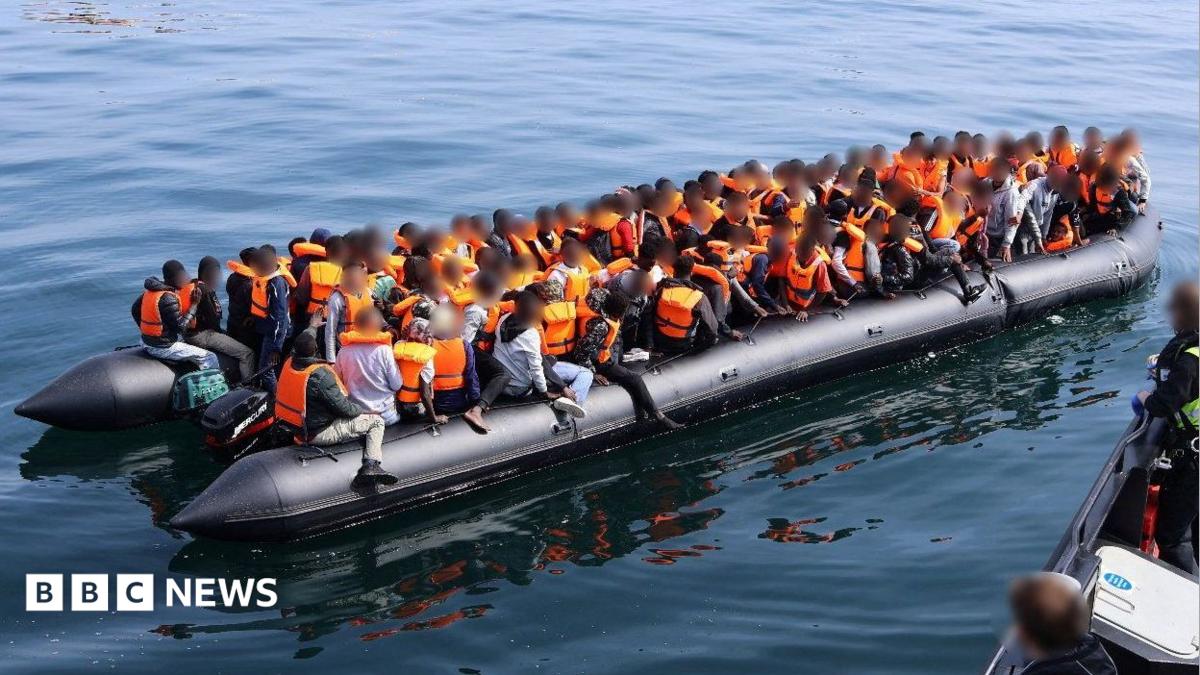
However, Atak was seen during 90 minutes of aerial footage to be piloting the vessel using its one remaining functioning engine, the court heard.
Harrison said: “There’s no evidence to suggest that the defendant had any training or experience of conducting this type of navigation.
“The size of the vessel and the number of people on board presented an obvious danger. The vessel would have been unstable because of it deflating.”
Advertisement
Harrison said the risks of the crossing “would have been apparent to Atak”.
In an interview, Atak said he paid €200 euros (£172) to a gang for the crossing but denied he was the helmsman.
NCA senior investigating officer John Turner said: “Atak was unimaginably reckless and his actions could have easily resulted in many deaths had this boat not been intercepted.
“Not only did he place the lives of 165 migrants in severe peril, this flimsy vessel was entirely unsuitable for crossing one of the world’s busiest shipping lanes.”
Advertisement
Endangerment at sea was made a new offence this year to target those alleged to have steered small boats over the Channel.
Anna Turley, Minister for Border Security and Asylum, described Atak as an “evil criminal”.
“He joins 16 other pilots sentenced in just three months for endangering lives with flimsy, overcrowded dinghies,” she said.
“This is a stark reminder of the ruthless acts used by smuggling gangs to exploit desperate people for profit, but today shows there is nowhere for them to hide.”










































You must be logged in to post a comment Login