Families on low incomes could be entitled to support
Millions of families on low incomes are being encouraged to check whether they could receive up to £1,200 in free bonus cash from the Government. HMRC has confirmed its Help to Save scheme is now permanent.
Advertisement
From April 2028, up to 1.5 million more families will become eligible under expanded criteria. This means additional support for people on Universal Credit, including those with caring responsibilities, who could see their savings boosted by a substantial 50% Government bonus.
In a social media post, HMRC said: “Help to Save is here to stay – and more families can benefit. The scheme has been made permanent, and from April 2028, up to 1.5 million more families will be eligible thanks to expanded criteria.”
How the scheme works
Help to Save is a Government-backed savings account targeted at working households on low incomes. It pays a bonus of 50p for every £1 saved over four years – effectively a 50% return funded by taxpayers.
Advertisement
Savers can deposit between £1 and £50 a month, up to a maximum of £2,400 over four years. The maximum bonus available is £1,200.
Key limits at a glance.
Maximum monthly saving £50.
Maximum total saving (4 years) £2,400.
Bonus rate 50%.
Maximum total bonus £1,200.
All savings in the scheme are backed by the Government, meaning deposits are secure.
Content cannot be displayed without consent
Who can apply?
You can open a Help to Save account if:
You are receiving Universal Credit.
You (or you and your partner) had take-home pay of £1 or more in your last monthly assessment period.
You live in the UK
Couples claiming Universal Credit can each open their own account, but they must apply individually. Importantly, if you cease claiming benefits after opening the account, you’re still able to continue saving until the four-year term concludes.
Will it impact your benefits?
For numerous households concerned about exceeding savings limits, there’s reassurance. If you or your partner have £6,000 or less in personal savings, this won’t affect the amount of Universal Credit you receive. This includes funds held in Help to Save. The bonuses themselves also don’t influence Universal Credit payments.
Advertisement
The same £6,000 threshold applies to Housing Benefit, and Help to Save bonuses aren’t counted against it.
Warning about withdrawals
Savers are permitted to withdraw money at any time – however, doing so could diminish the bonus they receive. Withdrawing cash makes it more challenging to accumulate the “highest balance” used to calculate the 50% bonus.
If you close the account prematurely, you’ll forfeit your next bonus and won’t be able to open another Help to Save account.
What’s changing in 2028?
From April 2028, eligibility will expand, making up to 1.5 million additional families able to apply. The move makes the scheme permanent, ending previous uncertainty over its long-term future.
Advertisement
For households juggling rising bills, the scheme offers one of the most generous guaranteed returns available anywhere – a Government-backed 50% boost that would be impossible to match in the normal savings market.
Two buildings were damaged by debris from intercepted drones in Dubai, including the Oracle building, with no injuries reported by authorities
Peter Hennessy UK & World News Editor
07:19, 04 Apr 2026Updated 07:19, 04 Apr 2026
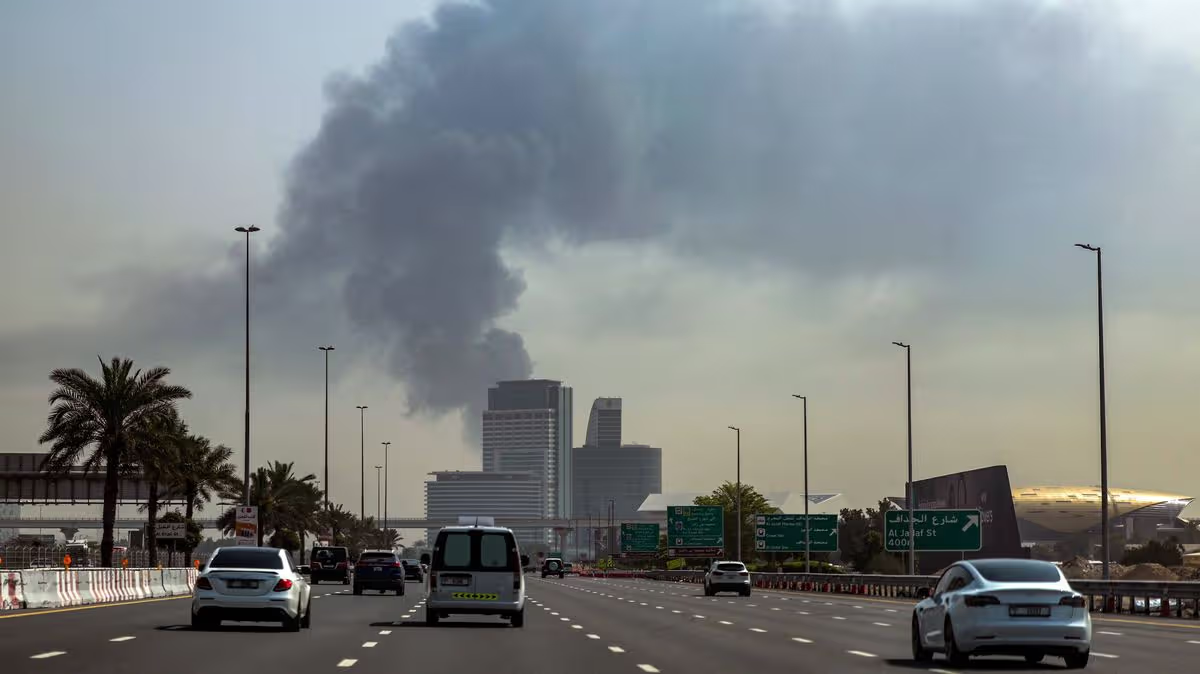
Two buildings in Dubai have sustained damage after debris from intercepted drones fell from the sky overhead.
Dubai authorities confirmed the facades of two buildings were struck by fragments from the intercepted drones, including a property occupied by US technology giant Oracle. Officials confirmed no casualties resulted from the incident.
Advertisement
Dubai Media Office said in a statement: “Authorities confirm that they responded to a minor incident caused by debris from an aerial interception that fell on the facade of the Oracle building in Dubai Internet City.
“No injuries were reported.”
Iran’s Revolutionary Guard has issued threats to strike Oracle alongside 17 other American corporations, claiming they have participated in “terrorist espionage” operations within Iranian territory.
Earlier Iranian drone attacks inflicted damage on three Amazon Web Services facilities located in the United Arab Emirates and Bahrain.
Advertisement
The incident follows days after massive explosions echoed across Dubai, as Iran launched multiple strikes against the United Arab Emirates amid the continuing Middle East conflict.
Separately, US President Donald Trump declared in his Easter message that ‘evil and wickedness shall not prevail’ following the downing of two American military aircraft.
American officials have reportedly verified that Iran shot down the two US planes, with an urgent search operation now under way to locate a missing serviceman. Speaking directly to the American public in a video posted on Truth Social, Donald Trump declared: “All of us can live every day with hope in God’s promise, knowing that in the end evil and wickedness will not prevail.”
Advertisement
He went on to say: “Our country is doing so well like never before”.
Postcodes from across the region were picked out this week for £1,000 prizes.
Players in Stanley (DH9 6XN) and Houghton-le-Spring (DH5 8ET) were among the winners.
The People’s Postcode Lottery is a subscription lottery which aims to raise money for charities while also bringing cash prizes to homes across the UK.
Advertisement
The People’s Postcode Lottery unveils daily prizes for postcodes across the UK, including £30,000 jackpots for every winning ticket in a postcode on weekends, and £1,000 prizes for 20 different postcodes every day.
A minimum of 33 per cent from each ticket goes to charity, and players have raised more than £950 million for over 9,000 charities and good causes since 2005.
The Postcode Lottery winners and prize amounts this week are:
A strict north of the border criteria has been applied, ruling out Barry McGuigan, but the list features
Gerry Callan
18:18, 03 Apr 2026
We’ve all heard of the Fighting Irish, but here’s a variation on that theme; the Fighting Northern Irish.
Here’s an admittedly personal selection of the 10 best fighters from the region …
10 BRIAN MAGEE
IRELAND’S shortest ever reigning world title holder; his tenure as WBA super-middleweight champion lasted just 29 days, from when, in 1912, he was upgraded from interim title holder on November 9 until he was beaten in three rounds by Mikkel Kessler in Herning in Denmark on December 8.
Advertisement
Before that, though, the stylish southpaw had won the lesser IBO title and made seven successful defence of it, as well as capturing the British and European belts, winning the latter belt by stopping Mads Larsen in Aarhus on his first trip to Denmark.
9 RYAN BURNETT
AN amateur star who in the space of less than four months in 2010 won a silver medal at the World Youth Championships in Baku and then topped it with gold at the Junior Olympics in Singapore, he made his pro debut in May 2013, and beat Jason Booth to win the British bantamweight title in his 12th fight, in November 2015.
Four more wins followed and then, in June 2017, he dropped Lee Hoskins twice en route to dethroning him as IBF bantamweight champion. Zhanat Zhakiyanov was beaten to add the WBA title to his collection and then the WBA crown was retained against Yonfrez Parejo. Then, against multi-weight champion Nonito Donaire, in Glasgow in November 2018, he suffered a freak back injury and was forced to retire at the end of the fourth round. He did try one more fight six months later but then hung up his gloves on medical advice.
8 JOHNNY CALDWELL
AFTER a reputed amateur record of 234-6 that included an Olympic bronze medal, he turned pro in early 1958 and by the end of the following year his unbeaten record was 14-0. In his first two fights in 1960 (in the space of just two weeks), he beat recent European flyweight champ Young Martin from Spain and then Martin’s successor as continental champion, Risto Luukkonen from Finland.
Advertisement
He then beat his fellow flyweight bronze medallist at the Olympic Games in Melbourne in 1956, Rene Libeer from France and followed this up by knocking out Frankie Jones in three rounds to win the British title. In late May in 1961, in his first fight at bantamweight, he beat Alphonse Halimi to win European recognition as world champion, a win he repeated five months later. At just 23 days past his 23rd birthday for the first Halimi fight, he remains Ireland’s youngest ever world champion.
In mid January 1962, in a fight refereed by former featherweight champ Willie Pep, he was stopped in ten rounds by Eder Jofre in Sao Paulo in a bout for the undisputed world title. Nine months later he was stopped by Freddie Gilroy on a cut eye in nine rounds and was never the same again, although he did win the British and Commonwealth titles from George Bowes but then lost them to Alan Rudkin.
7 FREDDIE GILROY
THE only non world champion in the list, so how did he manage it? Well, for one thing he beat Caldwell in a classic head to head in the Kings Hall in October 1962 in what proved to be the final bout of his near six year pro career.
Advertisement
Before that, he had won an Olympic bantamweight bronze medal in Melbourne in 1956 and as a professional he won the British, Commonwealth and European titles and beat former world champion Mario D’Agata from Italy before his winning streak was snapped at 23 when, hampered by a dose of influenza, he was outscored by Ignacio Pena from Mexico in Manchester in April 1960.
Six months later he was again outpointed, by Alphonse Halimi in a bout for European recognition as world champion following the retirement of Jose Becerra. Belgian referee Philippe De Backer was probably the only person at the Empire Pool in Wembley who thought the French Algerian had won.
He bounced back with four wins in three months but was then stopped in nine rounds by Pierre Cossemyns – whom he had knocked out in only his ninth pro fight in March 1958 – in a European title bout in Brussels in March 1958. A genuinely charismatic fighter, he retired after his win over Caldwell, departing with a 28-3 record.
6 RINTY MONAGHAN
Probably the most colourful fighter on the list, he was, remarkably, four months short of his 14th birthday when he made his professional debut in April 1932. It took him 55 fights (41-7-7) and almost 14 years to win his first title, capturing the Northern Ireland flyweight crown with a fourth round knockout of Bunty Doran in the Kings Hall in November 1945.
The following year, in June, he forced world champion Jackie Paterson to retire at the end of the seventh round of a non-title bout in the Kings Hall, and 16 months later he outpointed Dado Marino from Hawaii in a fight for the vacant NBA title. That set up a unification return with Paterson and Rinty scored three knockdowns en route to a seventh round knockout.
In April 1949 he retained the title by outpointing Maurice Sandeyron and added the latter’s European title to his collection. Then, after beating Otello Belardinelli from Italy in a non-title bout, he defended against Terry Allen from London in the Kings Hall. He survived a second round count to earn a draw and announced his retirement with a record of 52-9 and eight draws.
5 EAMONN LOUGHRAN
AFTER winning a light-welterweight silver medal at the World Junior Championships in Havana in July 1987, he made his pro debut five months later and five years further on from that he won his first title with a third round knockout of Commonwealth welterweight champ Donovan Boucher from Canada in Doncaster.
Three months later he successfully defended the belt with a sixth round knockout of Michael Benjamin from Guyana in Cardiff and then, in October 1993, he won the vacant WBO welterweight title with a unanimous decision win over Lorenzo Smith from Chicago.
Five successful defences followed, including a clash of heads unduced no=contest against Angel Beltre from the Dominican Republic in the Kings Hall. In mid April 1996, at the Everton Park Sports Centre in Liverpool, his sixth defence turned into a disaster; he was floored three times by Jose Luis Lopez from Mexico … and stopped in just 51 seconds. He never fought again and finished with a record of 26-2 plus one draw and one no-contest.
4 DAVE McAULEY
AFTER making his pro debut in October 1983 (drawing with Tanzania born John Mwaimu in the Ulster Hall), he spent much of the first half of his career as a supporting act to Barry McGuigan but came into his own in October 1986 by journeying to Glasgow to win the vacant British flyweight title with a ninth round knockout of Joe Kelly at the Albany Hotel.
Six months later, he fought WBA champion Fidel Bassa from Colombia in the Kings Hall. The world title shot may have been a bit of a surprise but the fight turned out to be one of the greatest ever at the famous venue, McAuley, dropped in less than a minute after the opening bell, fought back to floor Bassa three times – including twice in the ninth round – and was ahead by three, two and two rounds on the scorecards at the end of the 12th, before being counted out at 1:45 of the next round.
Just under a year later he was outpointed in a return but, after a break of almost a year and a quarter he pulled off a surprise by unanimously outscoring IBF champion Duke McKenzie at the Wembley Arena in London.
He followed that up with five successful defences, including one against Bassa’s compatriot Rodolfo Blanco in which he had to survive four counts. That was at the Kings Hall in September 1990; in June of 1992 he faced Blanco in a return in Bilbao and lost a controversial decision. He never fought again and retired with a record of 18-3 and two draws.
Advertisement
3 WAYNE McCULLAGH
THE Olympic silver medallist from Barcelona in 1992 – who beat future world champions Arturo Gatti, Tim Austin and Willie Jorrin in the amateur ranks – made his paid debut in Reseda in California in February 1993 and was 10-0 by the end of the year.
The following year he added five more wins, including among his victims former world champions Fabrice Benichou and Victor Rabanales, retaining the North American bantamweight title he’d won against Javier Medina in the latter bout.
After starting 1995 with an inside the distance win over Geronimo Cardoz in Kenner in Louisiana, he travelled to Nagoya in Japan to challenge WBC champion Yasuei Yakushijiin his home town – and came away with a split decision win and the world title. Two successful defences, against Johnny Bredahl in Belfast and Jose Luis Bueno in Dublin, followed before he relinquished the title to move up to super-bantamweight, but his unbeaten record was broken at 20-0 when he lost a split decision to Mexican southpaw Daniel Zaragoza in Boston.
Advertisement
He would go on to have five more world title chances – against Naseem Hamed, Erik Morales, Scott Harrison and two against Oscar Larios – but lost them all. After his second loss to Larios he was inactive for almost three years before coming back to face Juan Ruiz for the vacant North American featherweight title in George Town in the Cayman Islands. He was forced to retire after six rounds and never fought again. His final record was 27-6, with only his final loss not being against a world title holder.
2 CARL FRAMPTON
THE only Northerner to become a two-weight world champion, he turned pro in June 2009, shortly after winning his second Irish amateur title and by the end of the following year had notched up eight successive wins and won the Celtic super-bantamweight crown with a second round stoppage of Scottish opponent Gavin Reid.
He won the vacant Commonwealth belt with a fourth round stoppage of Mark Quon from Australia in September 2011 and retained it three times within a year, most notably a six round beating of Canada’s former IBF champion Steve Molitar. The European title followed when he stopped Kiko Martinez in the ninth round in February 2013.
Advertisement
Three fights and 20 months later he had his first world title shot, again against Martinez, who in the interim had won the IBF crown with an upset sixth round beating of previously undefeated Jonathan Romero. This time Frampton won a unanimous and near runaway verdict with two scorecards of 119-108 and one of 118-111.
He retained the crown first against Chris Avolos in Belfast then against Alejandro Gonzalez in El Paso (where he survived two first round counts) in 2015 and the following year, after retaining the IBF title and adding the WBA one by beating Scott Quigg in Manchester in April and then moved up to featherweight and captured the WBA title with a unanimous decision win over Leo Santa Cruz at the Barclays Centre in Brooklyn. Those efforts against two previously unbeaten opponents earned him a unique distinction – the first and still only Irishman to win the Ring magazine Fighter of the Year award.
His unbeaten record ended at 23-0 when, in January 2017, when he lost a majority decision to Santa Cruz in Las Vegas and he never regained quite the success thereafter. Despite winning the interim WBO featherweight title, he failed in an attempt to dethrone Josh Warrington as IBF champ in Manchester, he fought just once each in both 2019 and 2020 and retired in April 2021 after being stopped in six rounds in a super-featherweight title challenge to Jamel Herring in Dubai. His final record was 28-3.
1 JIMMY McLARNIN
BORN in Hillsborough, his family briefly moved to Inchicore in Dublin and then to Canada, first to Saskatchewan before eventually settling in Vancouver. There, in his first year as a teenager, he was ‘discovered’ by Charles ‘Pop’ Foster, a former booth fighter from Liverpool.
McLarnin made his pro debut on his 16th birthday, in December 1923, and over the next four and a half years he put together a record of 36-4 and three draws with two of his losses being to future bantamweight champion Bud Taylor.
In mid May of 1928 he was outpointed by Sammy Mandell in a lightweight title challenge at the Polo Grounds in New York; he was six months shy of 21, which makes him Ireland’s youngest ever world title challenger to this day.
“Gee, I’m tired. I fought the gamest man I ever faced. I’m still the champion, but the next lightweight king will be Jimmy McLarnin,” Mandell said of their battle in front of 25,000 fans. Over the next two years McLarnin would twice beat still champion Mandell in non-title bouts in Chicago.
Advertisement
Mandell’s prophecy about McLarnin proved incorrect – because Baby Face moved up to welterweight and went on a roll, beating contenders such as Stanislaus Loayza, Joe Glick, Ray Miller, Sergeant Sammy Baker, Ruby Goldstein, Young Jack Thompson, Al Singer, Benny Leonard, Billy Petrolle and Sammy Fuller.
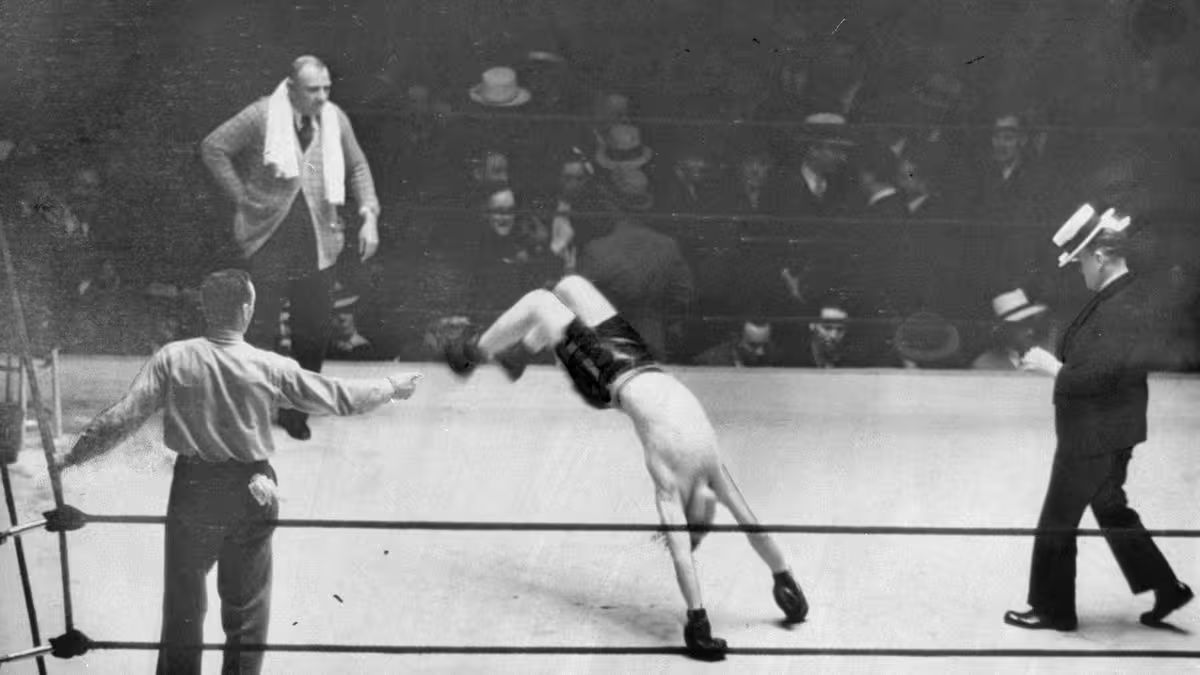
Finally, five years and one week after his first world title attempt, he challenged welterweight champion Young Corbett III at Wrigley Field in Los Angeles – and floored Corbett three times en route to stopping him in just 157 seconds.
A year later he was dethroned on a split decision by reigning light- welterweight champion Barney Ross in episode one of a trilogy that would draw an aggregate of 120,000 fans. McLarnin won the second bout but was again deposed as title holder in the third.
Six weeks before he turned 29, he beat reigning lightweight champion Lou Ambers in a non-title bout in a full Madison Square Garden and then promptly announced his retirement with a record of 55-11 and three draws. During his career he fought 23 times against former, current or future world title holders and beat all but one of them, former welterweight and future middleweight champion Lou Brouillard.
Advertisement
Pop Foster? He adored Jimmy and Jimmy’s wife Lillian, so much so that he bought a house in the same estate as them and when he died in 1976 he left his entire estate – some $260,000 – to Jimmy. Jimmy himself died in October 2004, just seven weeks before his 97th birthday.
NOTE: A strict born north of the Border criteria has been applied here, but if Clones man Barry McGuigan were to be included as an honorary Northerner – he did, after all, have 19 of his 35 professional fights in Ulster – he would occupy the number two slot, not just for his ring achievements but also for his incredible popular appeal. Current world champions Anthony Cacace and Lewis Crocker are unranked as their reigns are only beginning; who knows where they will place at the end of their careers?
Five divers and tenders died in one of the most horrific accidents ever recorded when explosive decompression boiled their blood from inside during an oil rig disaster
Emilia Randall GAU Writer
07:30, 04 Apr 2026
In one of the most horrific incidents ever documented, five men were effectively boiled alive from within following a split-second mistake 1,000 feet beneath the ocean’s surface.
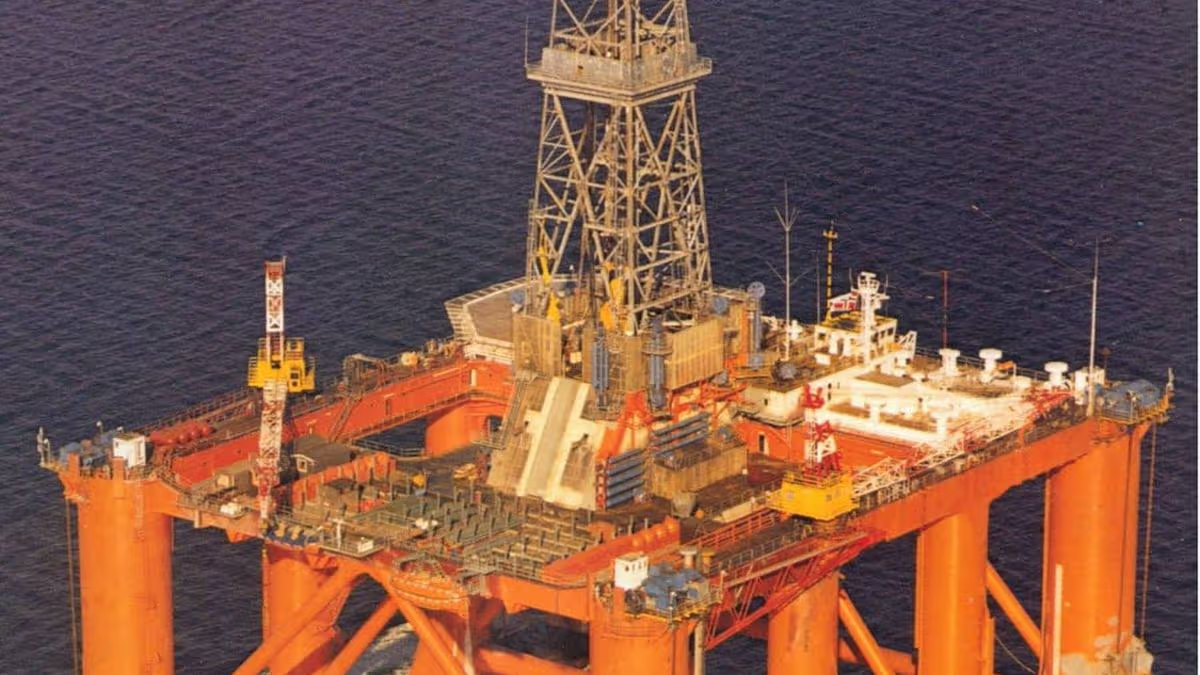
In 1983, the Byford Dolphin, a semi-submersible oil drilling platform, was operating at various locations across the North Sea.
Advertisement
The facility had gained a grim reputation for accidents, with the most devastating episode involving ruptured organs, boiling blood, and one man killed by a diving chamber.
A group of four British and Norwegian divers – Edwin Arthur Coward, 35, Roy P. Lucas, 38, Bjørn Giæver Bergersen, 29, and Truls Hellevik, 34 – alongside tenders William Crammond, 32, and Martin Saunders, 30, gathered to carry out a deep-sea diving operation on the rig.
For safe deep-sea work, the divers needed to be contained within a sequence of compression chambers throughout a 28-day stretch.
These highly delicate chambers stop nitrogen building up in the bloodstream, according to Lad Bible.
The pressurised living quarters were accessible via a diving bell, a ring-shaped compartment, which remained sealed off from other sections of the underwater facility.
This technique was referred to as saturation diving – it allowed divers to remain submerged for longer periods while preventing the agonising and frequently deadly accumulation of nitrogen during ascent.
Rising to the water’s surface causes nitrogen and helium to dissolve into divers’ bloodstreams, which can prove fatal.
Advertisement
That’s precisely why divers within the chambers inhale a carefully calibrated blend of gases – usually helium combined with oxygen, tailored to match the diving depth.
Should divers surface too rapidly, the sudden pressure reduction can spark decompression sickness.
On that fateful 5 November 1983, Bergersen and Hellevik were making their way back to the chamber through the diving bell, with the help of tenders Crammond and Saunders.
Advertisement
For a secure transfer between chambers, the diving bell required proper sealing to ward off the bends. Yet a catastrophic mechanical failure meant the bell detached moments before Hellevik could secure the chamber door.
The crew chambers inside ought to have maintained pressure at nine atmospheres, but instead dropped to one in mere fractions of a second.
Crammond lost his life after being hit by the wayward dive bell, while the four divers died immediately as nitrogen within their bloodstream transformed into bubbles, essentially causing them to boil internally.
Hellevik was forced through a 60cm aperture, with the extreme pressure causing his internal organs to be ejected from his body.
Advertisement
Saunders emerged as the only survivor from the horrific incident, suffering collapsed lungs, spinal fractures and a broken neck.
An official investigation determined that human error led to the deaths. The incident remains puzzling as its exact cause stays unclear, yet it highlighted the urgent requirement for improvements in diving safety protocols.
The storm is set to bring strong winds, heavy rain showers and even thick snowfall in some parts of the country
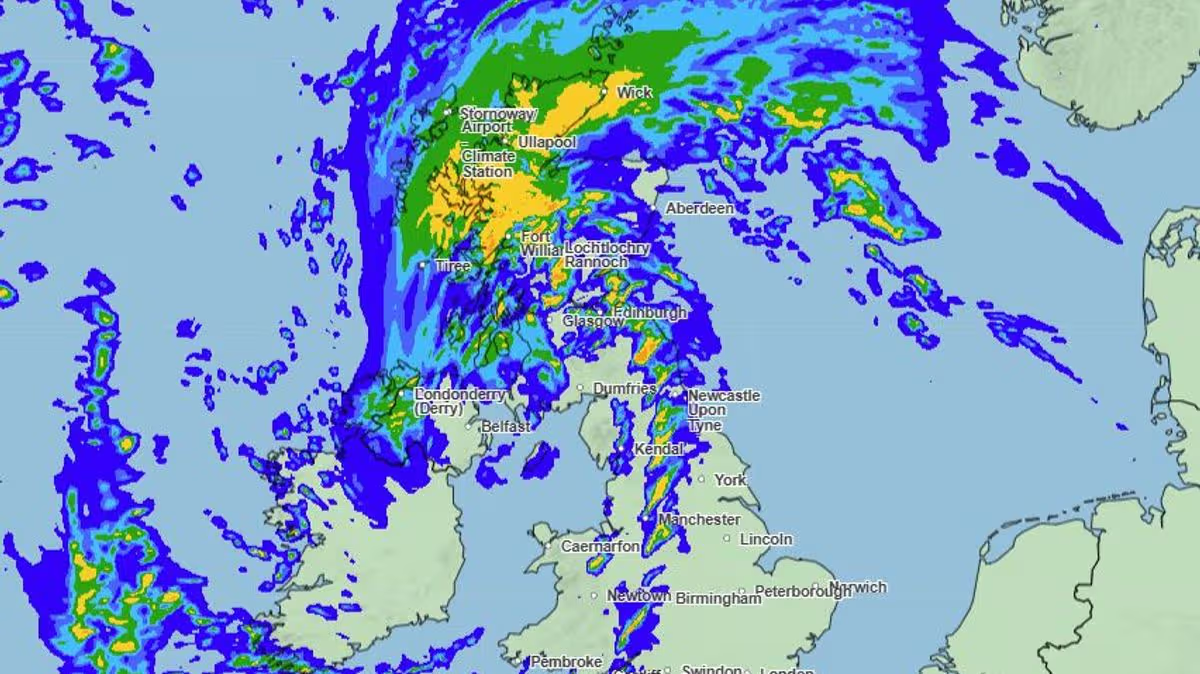
Storm Dave is set to sweep over parts of the UK over the Easter weekend today bringing wind gusts of up to 80mph, heavy rainfall and snow showers.
Advertisement
The storm is hitting the UK from the west with winds ‘strengthening significantly’ throughout Saturday afternoon (April 4). The Met Office has issued yellow severe weather warnings for wind covering the whole of mainland Scotland, Northern Ireland, parts of northern England and North Wales from 5pm today into Sunday morning.
In Greater Manchester, the start of the storm is bringing heavy rain to some parts of the region this morning with showers forecast up around 11am. Cloudier weather is then expected before the strong winds begin to hit from around 6pm tonight.
Get MEN Premium now for just £1 HERE – or get involved in our WhatsApp group by clicking HERE. And don’t miss out on our brilliant selection of newsletters HERE.
Gusts of up to around 50mph are forecast for the region, with the yellow weather warning for wind remaining in place until 7am tomorrow. The weather on Easter Sunday is expected to be more settled.
Advertisement
Content cannot be displayed without consent
Scotland and parts of the very north of England are set to be hit the worst by Storm Dave with winds of up to 80mph expected in some areas. Parts of northern Scotland will also see heavy snowfall as the storm sweeps over, with a separate weather warning in place for rain and snow from Saturday afternoon.
People have been warned to expect travel disruption on the roads as well as on rail, air and ferry services. Earlier, the RAC predicted it would be the busiest Easter on the roads since 2022.
Met Office deputy chief Forecaster Tom Crabtree said: “Storm Dave will form and rapidly deepen on Saturday as it approaches the UK from the west. By Saturday afternoon winds will strengthen significantly, with gusts of 60-70mph expected at times across parts of Scotland with the potential for gusts of 80-90mph in exposed coastal locations in Scotland.
“Gusts of 50-60mph are likely more widely in northern Britain. As well as strong winds, Storm Dave will also bring heavy snowfall over the hills in northern Scotland where up to 10-20cm of snow could accumulate.
Advertisement
“Along with the strong winds this will lead to blizzard conditions. Elsewhere there will be heavy spells of rain as the system moves through eastwards across the UK.”
The rugby stories making headlines on Saturday, April 4.
These are your headlines on Saturday, April 4.
Advertisement
O’Driscoll lifts lid on Parling incident
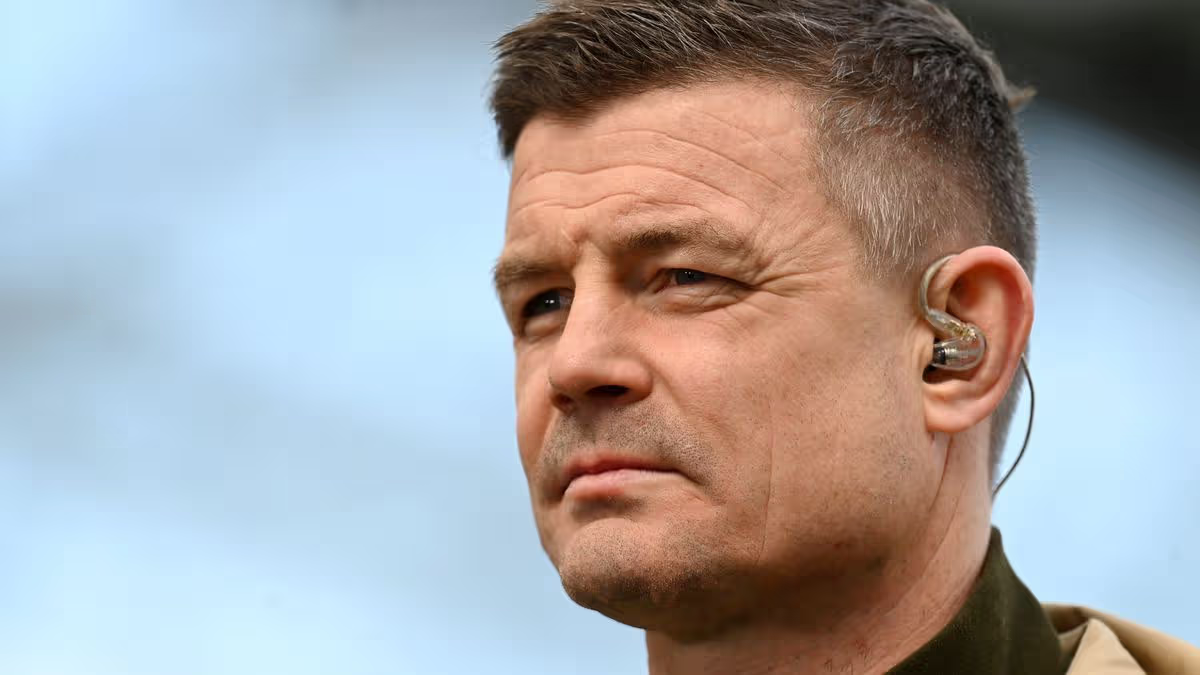
Ireland legend Brian O’Driscoll has given an insider’s take on the main talking point from the last week in rugby.
The former Lions skipper was pitchside at Villa Park for Leicester Tigers’ clash with Gloucester when Geoff Parling and Craig Doyle were involved in an on-air incident which saw the Tigers head coach push the TNT Sports presenter.
Doyle had encouraged fellow presenter Liam McDevitt to make an attempt on goal as a sort of initiation for making his debut on the show – something which incensed Parling and led to him telling Doyle “It’s not f***ing on, get off the pitch, it’s not f***ing on”.
O’Driscoll, who was watching on at Villa Park as it all played out, has now given his version of events.
Advertisement
“Craig is off doing this big, long monologue at the opening of the show,” he said on the Off The Ball podcast.
“So he’s in the bowels of Villa Park, and showing all of the trophies that have been won over the years, the dressing rooms and whatnot. So he’s coming out onto the pitch, not really knowing what’s going on. The best plans in the world are fantastic, except things happen and materialise.”
He added: “Maybe have a quick go when Craig comes out,” when referencing McDevitt’s attempt on goal.
“The problem was that the rest of the team had started warming up close enough to the posts, so when Craig has his spiel with Liam, and then he kicks the goal – or missed it thankfully, because if he’d gotten it, it would have been closer to the players – Geoff comes over and Craig thinks he’s coming up for a chat, how wrong he was.
Advertisement
“Anyway, he was unimpressed by it, to say the least. Gives him a shove, and then Craig comes over and asks me my first question.
“I felt for Craig, because, listen, he’s just following procedure and like his line, ‘would you sign him?’, expecting a bit of banter or something back. And instead, he gets told to f-off.”
O’Driscoll said Doyle dealt with the incident like a consummate professional.
“I have to say, what an unreal pro to be able to deal with that,” admired O’Driscoll.
Advertisement
“Because it didn’t happen to me, and I was like panicking inside, whereas if it had happened to you, and then you had to do a full show for the rest of the day, it would have been brutal.
“I’m not saying it didn’t play on his mind, but I tell you, you would never have known it was. There’s no one like him. There’s really no one like him.”
Farrell backed for England
Anthony Watson reckons Owen Farrell should be picked for the England squad for this summer’s Nations Championship campaign.
Farrell hasn’t played international rugby for his country since 2023 when he took an indefinite break from Test rugby after the World Cup in order to prioritise his and his family’s mental well-being. The fly-half received terrible abuse from his own fans during the tournament, forcing him to take a step back.
Advertisement
He made a return to the international fold for Lions last summer and Watson believes the 34-year-old still has plenty to offer Steve Borthwick.
“Should he be part of things in South Africa or at least offered the opportunity to be? 100 per cent,” Watson said. “I had the same opinion across the Six Nations, across last autumn as well.
“Fitness aside, I didn’t think there is a playing reason for him to not be in the squad. Historically England have played some of their best games with him at 12 and the 12 position is probably the only one which hasn’t been nailed down by anyone yet.”
He added: “For me, Owen is someone who could slot into that 12 shirt immediately and be unshakeable.
Advertisement
“He could provide the gel to that backline, become the final nailed-on England backline player. Then, I would argue, they have one of the top-three backlines in the world.”
Wales star returns to boost Cardiff
Wales backrower Alex Mann will make his first Cardiff appearance since the Six Nations as the Welsh club take on Benetton in the EPCR Challenge Cup.
Mann was one of Wales’ better players during the championship and his return is a big boost for the Blue & Blacks who are riddled with injuries.
Cardiff have handed first starts to second-row Evan Rees and centre Elijah Evans for this round-of-16 clash in Treviso.
Advertisement
Former Ireland international Ed Byrne will also make his first appearance of the season as he starts on the loosehead.
Cardiff lost nine more players to injury on their recent tour of South Africa, with five senior locks on the sidelines and Wales wing Josh Adams struggling with a niggle.
“We took a bit of a battering out in South Africa in terms of injuries but we are here to win games and kick on,” said Cardiff captain Liam Belcher.
“It’s the part of the season when you do get stretched, especially with international boys coming back with battered bodies.
Advertisement
“And if you had said in June or July that we would be in this position in the league and in the round of 16 in the cup then I would have bitten your hand off.”
Cardiff: I Lloyd; Grady, E Evans, B Thomas, Beetham; Sheedy, Bevan; Byrne, Belcher (capt), Assiratti, E Rees, Thornton, Mann, D Thomas, Lawrence. Replacements: D Hughes, Barratt, Wainwright, de la Rua, E Lloyd, I Davies, Jennings, Winnett.
Ospreys suffer injury blow
Wales’ Six Nations captain Dewi Lake is missing from the Ospreys‘ team to face Ulster on Saturday but Jac Morgan will captain the side.
Lake has played his last game for the club after undergoing shoulder surgery but the Ospreys are boosted by the return of experienced Wales loosehead Gareth Thomas.
Advertisement
The Ospreys’ hopes of reaching the play-off’s of the United Rugby Championship are hanging by a thread, which makes this round of 16 Challenge Cup tie all the more important.
“We are delighted to have him back,” said Ospreys head coach Mark Jones when asked about Wales star Morgan.
“I am sure Ulster would have been hoping his name was not on the team sheet this weekend because if I was coaching against him I would be hoping for the same thing. That is the respect people have for Jac.
“It is a big challenge to come back after more than four months out and return to operate at a level he has been.
Advertisement
“That is a sign of class because even the best players sometimes get a while to get warmed up, but Jac has hit the ground running.”
Morgan is joined in the backrow by Morgan Morris and Huw Sutton with Ryan Smith and Rhys Davies in the second-row.
Thomas, Sam Parry and Rhys Henry form a strong scrummaging front-row. Behind the scrum Reuben Morgan-Williams returns to wear the number nine jersey with Dan Edwards at outside-half.
Keiran Williams and Owen Watkin are the centres with Jack Walsh, Daniel Kasende and Luke Morgan in the back-three.
Advertisement
Ospreys: Walsh; Kasende, Watkin, K Williams, L Morgan; Edwards, R Morgan-Williams; G Thomas, Parry, Henry, R Davies, Smith, Sutton, J Morgan (capt), M Morris. Replacements: Daniel, S Thomas, Botha, Fender, Deaves, Hardy, Boshoff, Hopkins.
Dragons avoid big crisis
The Dragons have avoided a scrum-half injury crisis after Niall Armstrong and Morgan Lloyd were passed fit to face Stade Francais on Sunday.
Filo Tiatia’s side travel to Paris for a round of 16 clash in the Challenge Cup and will be relieved both are fit after Rhodri Williams and Armstrong suffered head injuries against the Lions last weekend.
There was a strong possibility they wouldn’t have a specialist nine but Armstrong has passed his head injury assessment and Lloyd has recovered from a hamstring injury.
Advertisement
Tiatia has made three changes to the side that lost in Johannesburg last weekend with Tinus de Beer wearing the number 10 shirt which pushes Angus O’Brien to full-back.
Second-row Levi Douglas also comes into the starting XV while David Richards starts on the wing.
“It’s going to be tough because they are a very good side, especially at home, and ran away with a very good win against Clermont,” said Tiatia.
“They are well coached and I like the way that they play with big forwards in the middle and they love trying to get the ball back with the highest turnovers in the Top 14.
Advertisement
“Stade have threats right across the back line. We have our work cut out but we are looking forward to the challenge.
“There is no point putting the jersey on and going out there without any belief.”
Dragons: O’Brien (co-capt); Richards, Inisi, Owen, Dyer; de Beer, Armstrong; Martinez, Coghlan, Coleman, Douglas, Carter (co-capt), Woodman, Young, Wainwright. Replacements: Dee, W Jones, James, S Davies, Keddie, M Lloyd, Paea, Anderson.
The teams met back in February in the URC, with the Ospreys pulling off a surprise 21-10 win
Ulster return to European action this weekend as the action reaches the knockout stages. Of the Irish provinces, only Leinster remain in the Champions Cup, meaning Ulster, Munster and Connacht are all in the Challenge Cup last 16.
Advertisement
Ulster have been drawn to face Welsh side Ospreys. The teams met back in February in the URC, with the Ospreys pulling off a surprise 21-10 win.
Mark Jones’ team has a reputation for being tough in defence and dynamic in their attack game.
They have British and Irish Lion, Jac Morgan, and Welsh international captain, Dewi Lake, back.
Here’s everything you need to know about the game:
Advertisement
When is the game?
Ulster v Ospreys is on Saturday night at 8pm.
Where is the game?
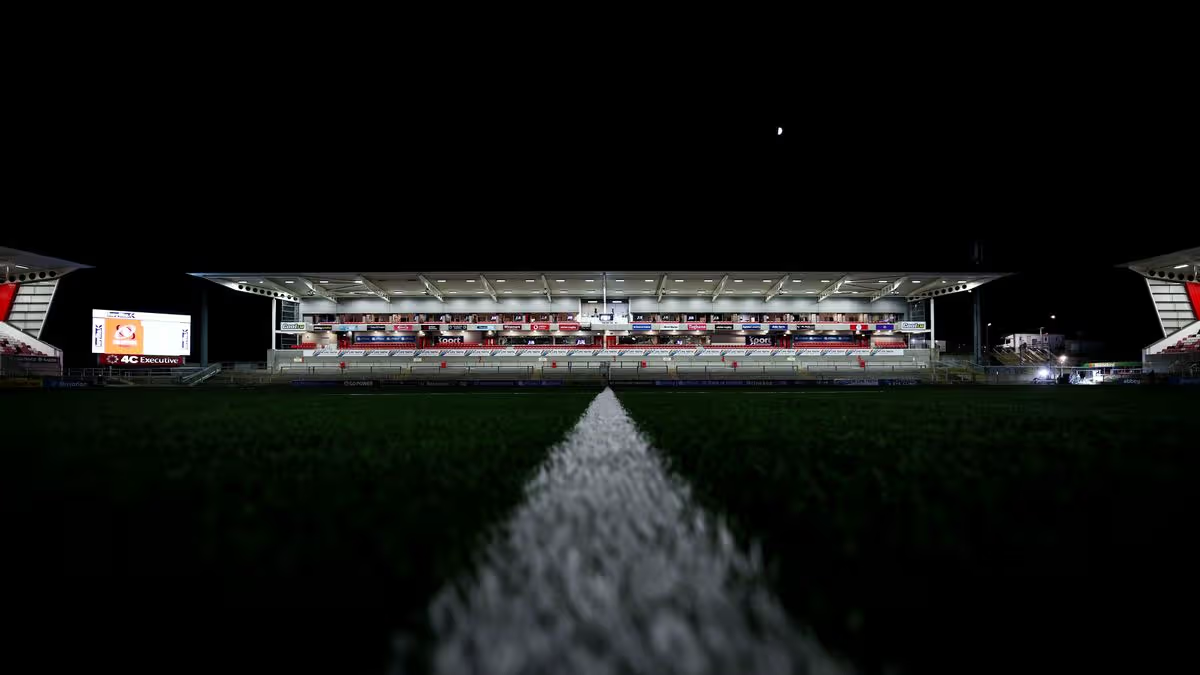
The game is at the Affidea Stadium, Belfast.
Is the game on TV?
The game will be shown live on Premier Sports.
Is the game being streamed?
Subscribers able to stream it on the Premier Player. The game is also being shown live on the BBC iPlayer, S4C and S4C Online.
Advertisement
Quotes corner
Rob Herring: “It’s a huge week for the club, it’s been a while since we had a home knock out match in front of our own fans. To play those kind of matches in front of our fans is very important to us. We want to take that next step in Europe, we have had a good campaign so far and we’ll be looking to continue that this Saturday night.”
Team news
15. Ethan McIlroy14. Werner Kok13. James Hume12. Stuart McCloskey11. Jacob Stockdale10. Jake Flannery9. Nathan Doak
1. Angus Bell2. Rob Herring3. Tom O’Toole4. Iain Henderson (capt)5. Cormac Izuchukwu6. David McCann7. Nick Timoney8. Juarno Augustus
Replacements:
Advertisement
16. Tom Stewart17. Sam Crean18. Scott Wilson19. Charlie Irvine20. Bryn Ward21. Conor McKee22. Jack Murphy23. Zac Ward
Ospreys
15. Jack Walsh14. Dan Kasende13. Owen Watkin12. Keiran Williams11. Luke Morgan10. Dan Edwards9. Reuben Morgan-Williams
1. Gareth Thomas2. Sam Parry3. Rhys Henry4. Rhys Davies5. Ryan Smith6. Huw Sutton7. Jac Morgan (capt)8. Morgan Morris
Replacements:
Advertisement
16. Efan Daniel17. Steffan Thomas18. Tom Botha19. James Fender20. Harri Deaves21. Kieran Hardy22. Evardi Boshoff23. Iestyn Hopkins
WASHINGTON (AP) — China is stepping up its diplomacy on the Iran war, putting forward a five-point proposal with Pakistan, rallying support from Gulf countries and opposing a United Nations proposal to use any force necessary to open the Strait of Hormuz.
It is China’s latest push for a more prominent role in global affairs, though it may prove to be more rhetorical than substantive, with the U.S. appearing uninterested in Beijing’s efforts.
“The war with Iran is the priority of all countries in and outside the region,” said Sun Yun, director of the China program at the Stimson Center, a Washington-based think tank. “It is an opportunity China will not miss to demonstrate its leadership and diplomatic initiative.”
Danny Russel, a former senior U.S. diplomat, described China’s diplomacy as “performative” and compared the five-point proposal for ending the Iran war with its 12-point plan for Ukraine in 2023, which was “filled with platitudes but never acted on.”
Advertisement
“Its narrative is that while Washington is reckless, aggressive and heedless of the cost to others, China is a principled and responsible champion of peace,” said Russel, a distinguished fellow at the Asia Society Policy Institute. “What we are seeing from China is messaging, not mediation.”
China has been working “tirelessly for peace” since the outbreak of the war, said Liu Pengyu, spokesperson for the Chinese Embassy in Washington.
How the US views China’s diplomacy
The Trump administration appears to have little enthusiasm for the prospect of China’s mediation, according to U.S. officials.
The U.S. has soured on third-party mediation efforts, and it has little interest in boosting China’s international stature or giving it an opening to claim success in the Middle East, said three U.S. officials, who spoke on condition of anonymity because they were not authorized to publicly discuss potential diplomatic options.
Advertisement
One of the officials described the administration’s position on the Chinese-Pakistani effort as “agnostic,” neither endorsement nor rejection, but all three stressed that could change if President Donald Trump weighs in before his planned summit with Chinese President Xi Jinping.
For Beijing, there could be an incentive to see the war subside before Trump travels to China in mid-May. Citing demands of the war, Trump postponed the trip initially set for the end of March.
“There is no guarantee that Trump may not delay the trip to China again if the war rages on,” Sun said.
The war saw a major escalation Friday when Iran shot down two U.S. military aircraft, a first since the war began five weeks ago. Trump told NBC News that it would not impact negotiations with Iran, just days after declaring in a national address that the U.S. has “beaten and completely decimated Iran.”
Advertisement
Beijing is calculating the pain from the closure of the Strait of Hormuz
For now, China is more insulated from the disruption in the Strait of Hormuz than other countries after diversifying its energy sources and reducing dependence on fossil fuels.
China relies on Iran for only about 13% of its oil imports, and Beijing is working with Tehran to allow the passage of Chinese-flagged vessels through the critical waterway, where Iran’s stranglehold has sent energy prices soaring. China also maintains a large strategic petroleum reserve.
While China has positioned itself to cushion short-term shocks, analysts say Beijing is worried about a protracted war and has an interest in trying to bring it to an end.
“An escalation of the conflict will start to harm Chinese interests,” Russel said. “Because China’s growth model is so export-heavy, prolonged energy shocks and shipping disruption will mean costlier inputs and weaker global demand that damage its vulnerable economy.”
Advertisement
Besides not wanting to see a long war, China “welcomes the opportunity to suggest that it is helping mitigate a crisis of America’s making, especially as the Trump administration’s lack of a considered strategy for containing the fallout becomes more apparent,” said Ali Wyne, a senior research and advocacy adviser on U.S.-China relations at the International Crisis Group.
China has undertaken a flurry of diplomacy
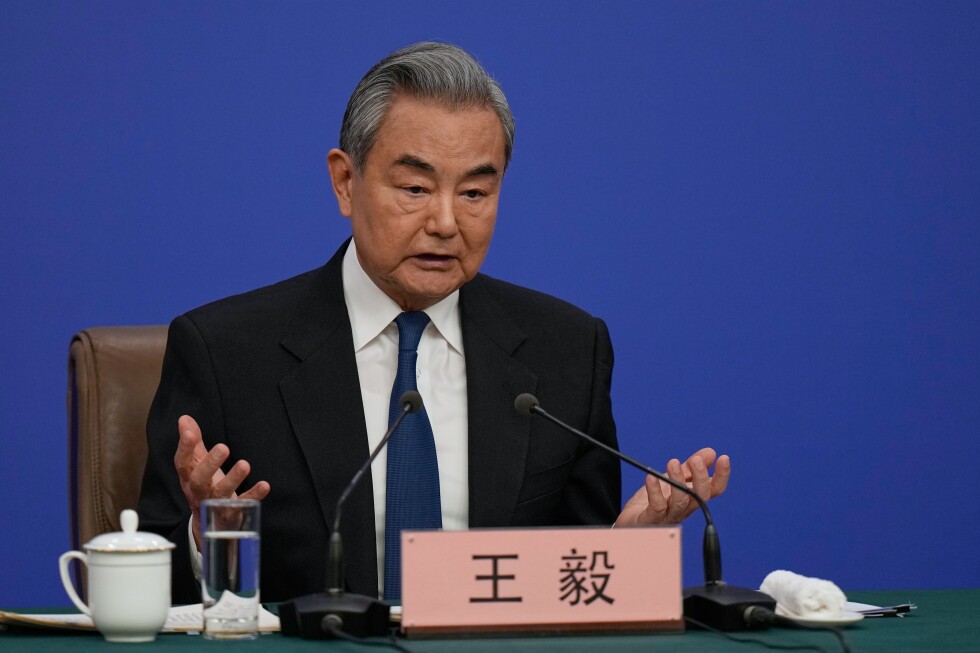
After the war began, Chinese Foreign Minister Wang Yi spoke with counterparts from Russia, Oman, Iran, France, Israel, Saudi Arabia and the United Arab Emirates. He told Iran that China cherished its friendship, urged Israel to cease military actions and expressed that China would be willing to play a role in seeking peace.
This past week, Wang hosted his Pakistani counterpart in Beijing to hash out their five-point proposal, calling for an end to hostilities and the reopening of the strait.
He has held more than 20 phone calls with regional foreign ministers, and a special envoy has visited several countries in the region, aiming to promote peace and deescalate tensions, Liu said.
Advertisement
Wang sought support for China’s plan from the European Union’s foreign policy chief Kaja Kallas, telling her it represented “broad, international consensus,” the Chinese foreign ministry said. Wang told Saudi Foreign Minister Prince Faisal bin Farhan that halting the fighting was the most urgent matter.
Wang also spoke this week with Bahrain’s foreign minister, Abdullatif bin Rashid Al Zayani, to explain why China opposed Bahrain’s U.N. proposal to allow military force to open the Strait of Hormuz. Wang said actions by the U.N. Security Council should help ease tensions “rather than endorse illegal acts of war, still less add fuel to the fire.”
China and Russia argued that the U.S. or other countries could exploit a U.N.-backed mechanism to escalate the deadly war, according to a U.N. diplomat, who spoke on the condition of anonymity to discuss diplomatic conversations.
Both countries appear to have less immediate need to see the strait fully open. While China has been able to pay to get some of its ships through, Russia is benefiting from the high price of oil, its main export.
Advertisement
Hoping to avoid a veto, Bahrain significantly watered down its proposal to authorize defensive — but not offensive — action to ensure vessels can safely transit the strait. A vote was pushed back until next week.
To solve the problem of the strait, China says a ceasefire is needed. But its plan with Pakistan has been met with mostly silence from the U.S.
One of the U.S. officials said the plan is difficult to assess because it is less of a roadmap to peace than a vague appeal for respect for international law and the importance of diplomacy and the U.N.’s role.
New government data revealed the 10 constituencies with the highest levels of child poverty in the East of England and two Cambridgeshire areas are among them
Two areas in Cambridgeshire with the highest levels of child poverty have been revealed. New government data revealed the 10 constituencies with the highest levels of child poverty in the East of England – and two Cambridgeshire areas are among them.
Advertisement
The new data, published on March 26, 2026, for the years 2022 to 2025, shows that Peterborough and North East Cambridgeshire had the highest levels of child poverty in the region.
According to The Children’s Society’s research, the data showed that 41.1% of children up to and including age 15 in Peterborough live in poverty. In North East Cambridgeshire, 30.8% of children live in poverty.
This new data shows that nearly 1 in 4 children across the East of England are living in poverty, after the cost of housing. Across the UK this figure stands at 27% equating to 4 million children.
Scrapping the two-child limit will come into effect on April 6, 2026. Increasing eligibility for free school meals in England will come into effect from September 2026, alongside other measures which aim to lead to a reduction in child poverty across the East of England.
Advertisement
Andrew Pakes, the Labour MP for Peterborough, said: “Ensuring every child in Peterborough gets the best start in life is a top priority for me and for this government. The reality is that too many families here – the majority of them in work – are still facing the daily reality and pressures of child poverty.”
Mr Pakes added: “That is why I am proud to have voted to lift nearly 10,000 children in our city out of poverty by ending the two-child limit. That cruel cap has been the biggest single driver of child poverty in Peterborough. Scrapping it is an important step in easing the pressures that push families towards Peterborough Foodbank, the Care Zone and others doing such important work supporting those in need.”
Jezz, 22, who is a Youth Ambassador for the End Child Poverty Coalition, and grew up in the East of England, said: “For so many young people like me, life starts with the odds stacked against them. Poverty is a weight they are forced to carry with them throughout childhood, and for many, into later life.
“The disadvantages it deals in education, and the harm it can cause to wellbeing and to health, makes any idea of a fair start in life a fantasy. I hope that behind each data point we can think of the child’s life that is fundamentally shaped and altered by this experience and begin to treat the crisis with the seriousness it deserves.”
Advertisement
Mark Russell, Chief Executive of The Children’s Society, which is a member of the End Child Poverty Coalition, said: “These figures lay bare the reality for families across the East of England – too many children are growing up in poverty which has lasting consequences for their health, education, and futures.
“We welcome steps like scrapping the two-child limit and expanding free school meals, but these numbers are a stark reminder that the work is not even close to being done.”
Mr Pakes continued: “I am determined to make Peterborough a better place for families and children. Last week we opened our fifth new Family Hub in the city and are extending more breakfast clubs at primary schools over the coming months, so no child has to start the day hungry.
“I’m also proud that around 16,000 more local children will benefit from a free school meal every school day come September.”
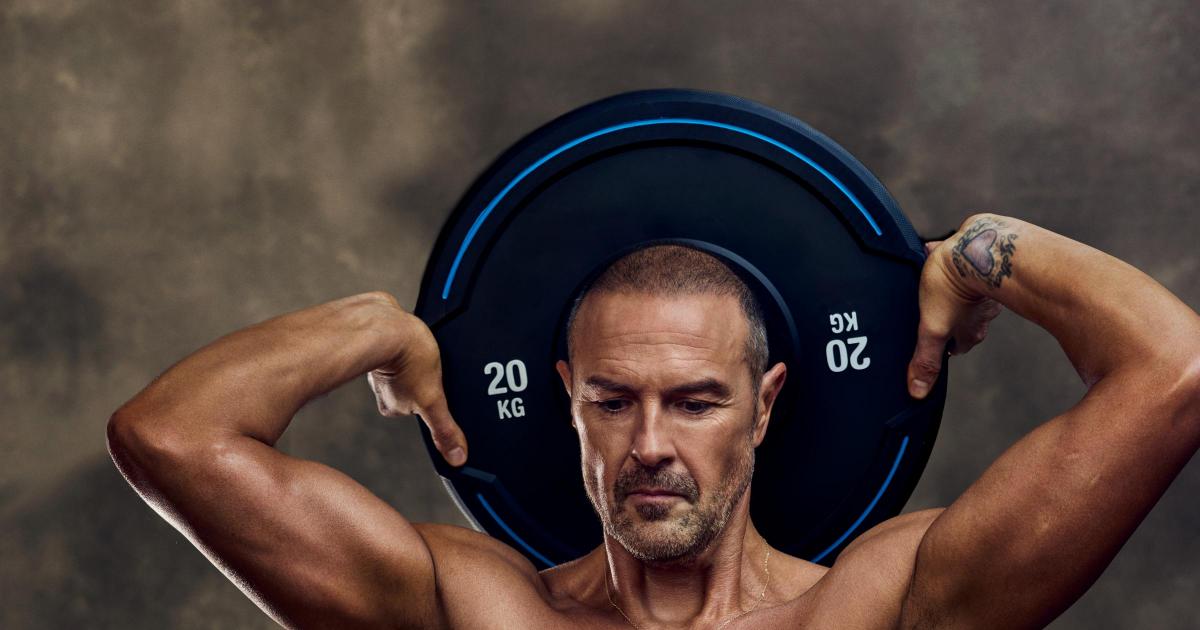
A cutting phase in the fitness world is when athletes strategically focus on losing body fat while maintaining as much muscle mass as possible.
Advertisement
The technique is most commonly used in bodybuilding, in the lead-up to stepping on stage, with athletes putting their best foot forward to get in peak condition.
Paddy said his short mini-cut has given him huge admiration for the industry.
“Massive respect to all you amateur and pro bodybuilders,” he said.
“Your dedication is admirable. After going on a 25-day cutting diet for my Men’s Health UK shoot, I thought putting a bit of size back on would be easy.
Advertisement
“I was wrong. In my opinion, it is so much tougher than the cutting.
“I’ve got big Steve Coleman Fitness back in my corner, so I’m sure we’ll get there.
“But getting those good calories in while keeping an eye on the ‘auld’ waistline is hard work, baby.”
Paddy showed off his impressive 75 day results. (Image: Paddy McGuinness Instagram)
Steve is a renowned personal trainer who has coached several high-profile clients, including Daniel Radcliffe and Ben Shephard.
“The cover is the moment everyone sees, but the real work happens in the weeks and months before.
“The early mornings, the sessions, the structure and the consistency that make it possible.
“Massive credit to Paddy for the discipline and commitment he brought to every session. He showed up, trusted the process and put the work in.
Advertisement
“A huge thank you to the team at Men’s Health for having me involved and capturing all of Paddy’s hard work.
“Career moments like this always feel a little surreal. I am always grateful.
“I’ll share some of the training and nutrition tips that I implemented with Paddy soon.”
Paddy’s age makes his muscle-gaining venture all the more impressive.
Advertisement
Both men and women start losing muscle mass as they age, with most people experiencing a decline of between three per cent and five per cent per decade after turning 30.
Resistance exercise, such as weight training, is one of the best ways to counteract the loss of muscle mass as you age.











































You must be logged in to post a comment Login