NewsBeat
US and Iran hold high-stakes nuclear talks in Oman as fears of war continue

Iran and the United States held high-stakes talks in Oman against the backdrop of a threat of US military action should the two sides fail to reach a deal on Tehran’s nuclear programme.
Tehran sent foreign minister Abbas Araghchi to Muscat on Friday to discuss terms of a potential deal with a US delegation, after Washington rushed warships to the region to pressure the regime into talks.
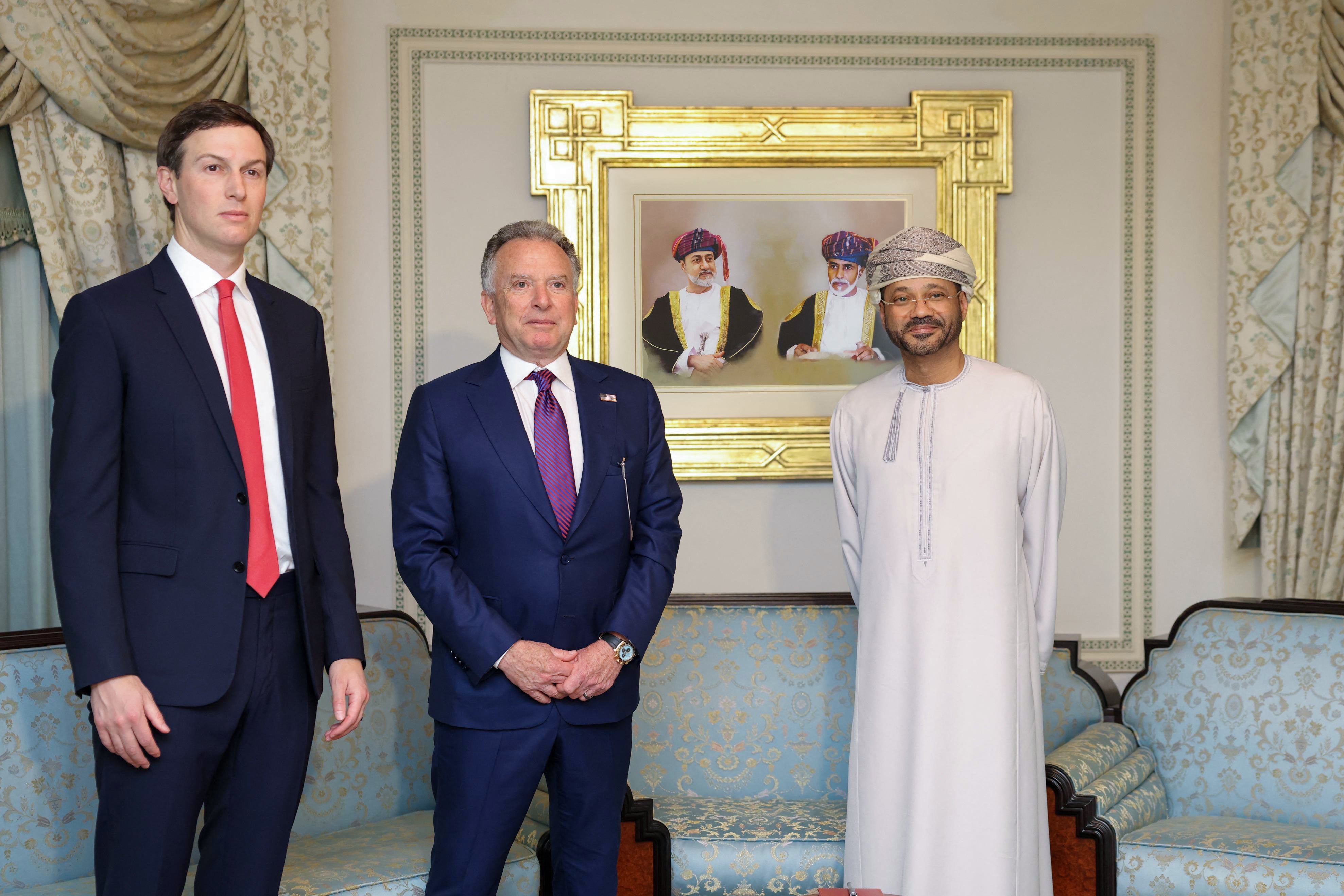
Donald Trump’s special envoy Steve Witkoff and Donald Trump’s son-in-law Jared Kushner received Araghchi’s preliminary plan to address the tensions via Omani mediators, though the subjects of discussion remained unclear.
Both sides appeared to be far apart in their positions in the days leading up to the talks, with Tehran also demanding a change in location. Washington pushed to expand talks to cover Iran’s stockpile of ballistic missiles, support for armed groups and the “treatment of their own people”. Iran insisted it was only open to discussing its nuclear programme.
“Iran enters diplomacy with open eyes and a steady memory of the past year,” said Mr Araghchi on Friday, ahead of talks. “We engage in good faith and stand firm on our rights. Commitments need to be honoured.”
Tehran’s foreign ministry said late in the afternoon that talks had concluded “for now”. It was unclear if or when they might restart.

The US has sought to get diplomacy back on track after discussions last year were upended by Israel striking Iran, followed by the US bombing of key nuclear facilities.
Relations were further strained in January as Donald Trump threatened the regime with action over its brutal crackdown on antigovernment protests.
Iranian current and former officials said earlier this week that the country’s leadership fears that US strikes could push protesters back onto the streets and break the regime’s grip on power.
Speaking on Thursday, White House press secretary Karoline Leavitt warned Iran that the US still retained the option of force if discussions break down.
“While these negotiations are taking place, I would remind the Iranian regime that the president has many options at his disposal, aside from diplomacy, as the commander-in-chief of the most powerful military in the history of the world,” she said.
In a show of defiance, Iran’s state TV said hours before the talks that “one of the country’s most advanced long-range ballistic missiles, the Khorramshahr-4,” had been deployed at one of the Revolutionary Guards’ vast underground “missile cities”.


Iranian officials, speaking on condition of anonymity, indicated this week that Tehran was open to reining in uranium enrichment – a condition the US demands and that the regime has publicly defended as its right. The US accuses Tehran of using its nuclear programme to develop the capability to produce weapons, something Iran has long denied.
Lawyers in Iran were still fearful that the regime was waiting to see the outcome of talks before deciding whether to execute citizens arrested over the unrest last month.
Several legal experts told Indy Persian ahead of talks that the country has seen a sharp increase in raids on the homes of protesters in recent weeks, with a dramatic rise in demand for the death penalty.
“My assessment is that they are waiting to see how things settle with Trump, and if the risk of a military strike subsides, they will execute thousands. Even in recent weeks, however, we have received reports of the secret execution of several detainees,” said one defence lawyer in the northern Mazandaran province.
The US and Iran previously held talks towards reaching a nuclear peace agreement last April. The enrichment of uranium became a recurring issue as the US said they had to give it up, and Iran said it was their right to pursue.
Two days before talks were due to resume, Israel carried out strikes on Iranian military infrastructure, commanders and nuclear sites. The US later joined in, bombing key nuclear facilities deep underground. US intelligence concluded at the time they had likely only set Iran’s work back by a matter of months.
You must be logged in to post a comment Login