The U.S. military launched another strike Tuesday on a vessel suspected of transporting drugs in the eastern Pacific Ocean, killing three men.
The attack came a day after U.S. forces struck an alleged drug boat in the Caribbean Sea, killing two people.
The Trump administration’s campaign of blowing up alleged drug-trafficking vessels in Latin American waters has persisted since early September and killed at least 191 people in total.
Despite the Iran war, the strikes have ramped up again in recent weeks, showing that the administration’s aggressive measures to stop what it calls “narcoterrorism” in the Western Hemisphere are not letting up. The military has not provided evidence that any of the vessels were carrying drugs.
Advertisement
The attacks began as the U.S. built up its largest military presence in the region in generations and came months ahead of the raid in January that captured then-Venezuelan President Nicolás Maduro. He was brought to New York to face drug trafficking charges and has pleaded not guilty.
In the attack Tuesday, U.S. Southern Command once again said it had targeted the alleged drug traffickers along known smuggling routes. It posted a video on X showing a boat cruising along the water before a huge explosion left the vessel in flames.
President Donald Trump has said the U.S. is in “armed conflict” with cartels in Latin America and has justified the attacks as a necessary escalation to stem the flow of drugs into the United States and fatal overdoses claiming American lives. But his administration has offered little evidence to support its claims of killing “narcoterrorists.”
Critics, meanwhile, have questioned the overall legality of the boat strikes.
Are you guilty of T-bagging? (Picture: Getty Images)
The platform flashes on the screen at Euston station, but you’ve no need to join the stampede to get on the train: you’ve reserved your seat.
But when you make it to your coach, someone is already sitting in the very spot you should be enjoying. Then, they refuse to move.
This unbecoming behaviour isn’t new, but now Metro has given it a name: ‘T-bagging’.
Get your mind out the gutter – it’s an abbreviated term for ‘ticket baggers’ – who are rife on cross country trains, and opt to sit in a reserved seat, sometimes even despite other seating options being available to them.
Advertisement
And we aren’t the only ones who have a problem with them either.
One train traveller, Lydia Wilson, took to TikTok to share her frustration with these inconsiderate passengers, in a video that hit nearly 400,000 views.
Best of Metro Deals
Get exclusive discounts with Metro Deals – save on getaways and spa days. Powered by Wowcher
Bannatyne Spa: Spa day for two with treatments, lunch & prosecco — save up to 57% off.
‘Just a public service announcement, if you’re sat in MY seat that I reserved on a train, I will ask you to move,’ she says. ‘Don’t look annoyed because funnily enough, you can also reserve a seat for free, or sit in an available one. I will not apologise if you are rude.’
Advertisement
Lydia adds: ‘As someone who gets the train regularly across the country, it is literally free (to reserve a seat), so move when I ask politely and don’t huff and puff – it literally says reserved and you chose to ignore that.’
Samuel Ryan, 30, who travels by train frequently from London to Manchester, thinks people who sit in someone’s reserved seat and refuse to move are completely ‘entitled’.
‘If they care so much about having a seat, maybe they should book it for themselves and stop playing the victim,’ he tells Metro.
‘It wouldn’t bother me if seats could or couldn’t be reserved in the first place, but as long as the system to book seats is in place, people should respect that.
Advertisement
Do you avoid sitting in a reserved seat on a train?
Yes, someone booked it, I’ll sit in an unreserved seat or stand
No, reservations don’t matter – people sit anywhere anyway
Sign up to The Getaway Expert, your exclusive seven-day guide to travelling with confidence from Metro’s travel editor, Alice Murphy.
Advertisement
‘When it’s incredibly busy, I would give my reserved seat up if someone truly needed it – if they’re elderly, pregnant or disabled.
‘Other than that, being prepared costs nothing.’
For 37-year-old Emily Pomroy-Smith, who lives with chronic pain and invisible disabilities, seat reservations are vital.
Advertisement
‘When I travel from Wiltshire to London the services can be incredibly busy, and I don’t just want a seat, I need one,’ the business owner tells Metro.
‘It would be incredibly stressful if someone refused to move, especially as I don’t want to have to publicly disclose my medical history in order to get a seat. That would be humiliating.’
In fact, Emily finds this behaviour ‘disrespectful and in some cases, harmful’.
‘I genuinely don’t see why someone should pay the same or sometimes considerably more if they’ve bought an advance ticket, just to have to stand,’ she adds. ‘Your poor planning should not be my problem, but on the other hand people should be able to get a seat if they need one regardless of advance reservations.’
Advertisement
Many others have posted similar videos on TikTok, branding t-bagging their ‘number one pet peeve’. But not everyone takes issue with this, implying train travel is first come, first serve.
‘Not gonna lie I judge real hard if someone asks me to move seats. there are clearly enough seats on the train, just find another one it’s not hard. really don’t get it,’ said @bigforeheadahh1.
‘If the seat behind is available what is the problem? I cannot believe people are that petty re a specific seat on a train, unless you need a table to work. Should stop all this specific seat nonsense,’ @sabci wrote.
‘Unless you get police here to move me, I’m not moving,’ said another. One TikToker even suggested seating should follow the ‘same rules as a bus’ – essentially making it a free-for-all, even for long journeys.
Advertisement
How can train travellers deal with ‘T-baggers’?
When it comes to how you should be handling the situation, multiple train providers suggested seeking out a member of staff who can ask that individual to move.
A spokesperson for Great Western Rail told Metro: ‘We recommend any customer who encounters the situation described to contact a member of staff who would then be able to speak to the other customer and ask them to move.’
But, they added they can’t forcibly remove a passenger, as this is something only the police can do. So, there could be a situation where you are sadly made to stand.
If you’re travelling with LNER, you could be entitled to compensation if someone takes your reserved seat. Under its Seat Guarantee Scheme, you can claim money back if a member of staff can’t find you an alternative place to sit.
Advertisement
If you’ve got a one-way ticket, you’ll get a 100% refund, while a return ticket means you’ll get a 50% refund for that half of the journey. Those travelling first class will also get compensation if the alternative seat they’re given is in standard class – you’ll be refunded the difference between the fare you paid and the standard pricing.
Of course, certain trains, like Greater Anglia, don’t have reserved seating at all, and haven’t for years, which renders the debate null and void on its trains.
Some passengers have chosen to take matters into their own hands, though, with some pretty bold solutions when someone pinches their chair.
‘I just go and sit in the 1st class carriage when this happens,’ wrote @stripycurtain. ‘If they won’t move the person in my seat, they ain’t moving me.’
Advertisement
One mother who fell victim to this had a brilliant response. ‘Booked a table seat for me and my kids when they were younger, specifically so we were near the toilet. We got on the train and there were people sat there so I sat my kids on their table,’ TikToker Maria John explained. ‘Never seen people move so fast.’
Another said: ‘I’ve had this before and put my bag on their table/on top of theirs and stand as close to them as physically possible and they get so uncomfortable they just give me my seat.’
This article was originally published in September 2025.
“Now I’m settled in Scotland, I don’t feel I have to run and hide from anyone. I live here openly and have no fears of attempts on my life.”
04:30, 06 May 2026
Advertisement
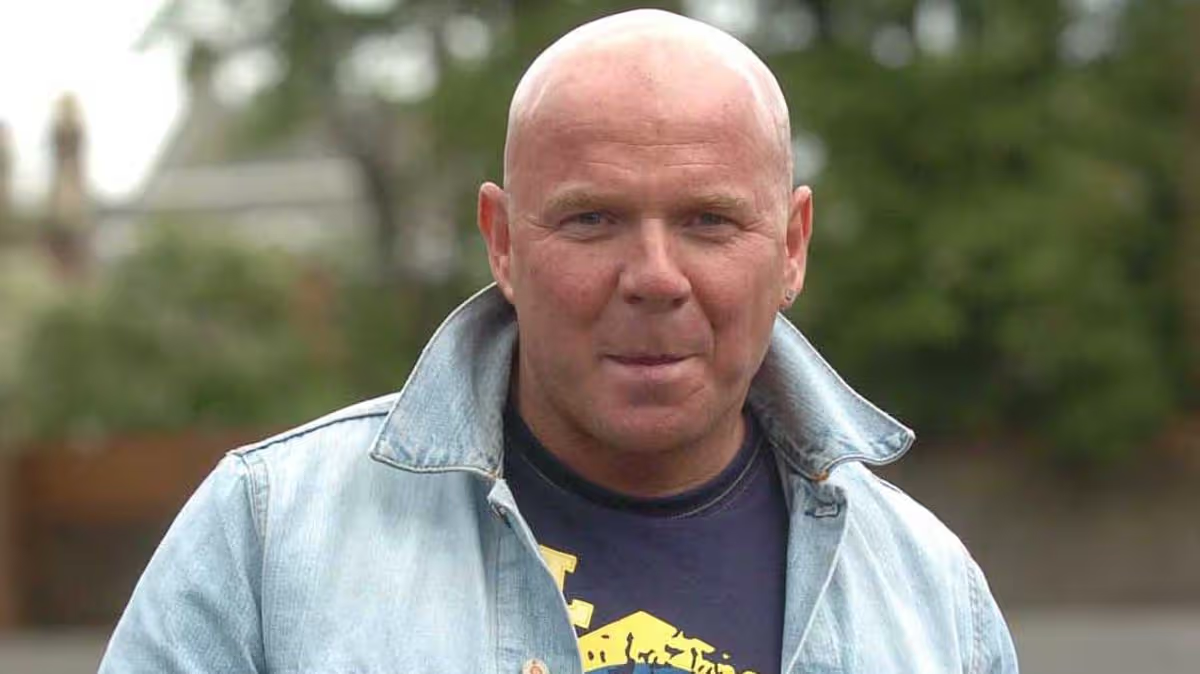
Johnny Adair was the former leader of the Ulster Defence Association’s (UDA) notorious C company who fled for his life to Ayrshire. The Record have taken a look at his life and ties to Scotland.
The 62-year-old, infamously dubbed ‘Mad Dog’, was the ruthless leader of the Ulster Defence Association’s notorious C Company before a savage loyalist feud forced him to flee for his life. Alongside his family and closest allies from Belfast’s Shankill Road, Adair eventually washed up in Troon, Ayrshire.
The youngest of seven, Adair clawed his way to the top of the UDA in the early 1990s. In 1993, he narrowly escaped death in an IRA assassination attempt that left nine people dead in a fish and chip shop.
Two years later, in September 1995, Adair was jailed for 16 years at the Maze Prison for directing terrorism. While on home leave in April 1999, he was grazed by a bullet to the head while attending a UB40 concert with his wife Gina in Belfast.
Released under the Good Friday Agreement later that year, Adair’s return to freedom sparked fresh bloodshed, becoming embroiled in a bloody feud with former comrades and other loyalist factions. This would result in Adair being expelled from the UDA in September 2002.
After being jailed again in January 2003, his loyalist network was blamed for the murders of UDA divisional leader John Gregg and member Robert Carson, who were gunned down after returning from a Rangers match in Glasgow. Fearing revenge, Adair’s family fled to Scotland and later Bolton.
When Adair walked free again in 2005, he joined them down south but after attacking his wife Gina following a night in the pub, he relocated to Troon just 10 months later.
In his autobiography Mad Dog, he claimed: “Now I’m settled in Scotland, I don’t feel I have to run and hide from anyone. I live here openly and have no fears of attempts on my life.”
In 2013, a plot to assassinate Adair and his right-hand man Sam McCrory was foiled by police. Three men were later jailed for the conspiracy to blast McCrory in the head with a sawn-off shotgun in a lane near his Ayr home – and then assassinate Adair.
Adair would continue to live on Ayrshire’s coast and would be a pall bearer at McCrory’s funeral in August 2022 in Ayr, who had lived in the town for around 25 years.
Advertisement
Adair’s son, Jonathan Adair Jr, died aged just 32, in September 2016, one day after being released from prison. Known as “Mad Pup”, he died from an accidental overdose of “heroin intoxication”.
Advertisement
A devastated Adair later said: “I want people to realise that this is what this drug does to you. My son was a fit, good looking, healthy big boy who went to the gym, but that horrible drug got its grip and that’s what it did to him. He no longer had any control over it and sadly that was the end of my son.
“So I am not ashamed to say what killed him. Why should I hide away the drug that killed my son, because me saying lets people know, if it kills Johnny Adair’s son it can kill me. If I was hiding that I would be a cheat, if one person listens to me it’s worth it.”
Get more Daily Record exclusives by signing up for free to Google’s preferred sources. Click HERE
Voters in Wales will soon go to the polls to elect members of an expanded Senedd (Welsh parliament) under a new proportional voting system. As the campaign has developed, public service broadcasters have sought not only to report events but to educate, inform and engage audiences with an unfamiliar electoral process.
Our analysis suggests they are increasingly doing so through digital platforms. We analysed all election news content produced online and on social media by major broadcasters between April 8 and April 24, including BBC Wales, ITV Wales, S4C, Channel 4 and Sky News.
The findings point to a move towards formats designed for audiences who are more likely to encounter news online than through traditional television.
This matters because people increasingly come across political content passively, through algorithmically curated feeds rather than actively seeking it out. In that environment, the type of content produced – and how it’s presented – can play a decisive role in shaping public understanding of the election.
Advertisement
One prominent feature of digital coverage has been the use of explainers. These aim to demystify the election by breaking down how the Senedd works, how the voting system has changed and which policy areas are devolved to Wales or reserved to Westminster.
Many of these explainers adopt a more informal and accessible tone than their broadcast equivalents. They’re designed to cut through in fast-moving social media feeds where political information competes for attention.
A significant proportion focus on policy. Of the 19 explainers identified in our analysis, seven centred on specific issues, most commonly immigration. This reflects persistent public confusion about where responsibility lies.
Our recent survey found that nearly a third of people in Wales did not know immigration is controlled by the UK government. Against that backdrop, broadcasters have often made this distinction explicit. In 82% of online and social media items mentioning immigration, journalists clearly stated that responsibility lies with Westminster.
Broadcasters have also used explainers to clarify changes to the electoral system. This includes the move to a closed-list proportional system. Public awareness of this change remains low, however. Only 7% of respondents in our survey correctly identified the system, while 58% said they did not know.
Meet the leaders
Alongside explainers, broadcasters have used digital formats to introduce audiences to the leaders of Wales’s six main political parties. This has reinforced the campaign’s increasingly presidential tone, with party leaders dominating media appearances.
In a devolved context, this is not always straightforward, given the presence of both UK-wide and Welsh political figures. But digital formats have provided new ways to foreground Welsh leaders.
Advertisement
Short, one-to-one interviews have become an important feature. Formats such as the BBC’s Quickfire Questions and ITV’s Chippy Chats mix light-touch prompts – like “What song have you got on repeat?” – with more substantive questions about policy priorities.
These formats inject personality into political coverage. Leaders are presented not only as decision-makers but as people with interests and personalities. This is particularly significant given relatively low public awareness of Welsh political figures.
Our recent survey found that fewer than half of respondents could identify the leader of Plaid Cymru, Rhun ap Iorwerth, despite the fact he could become the next first minister.
At the same time, the informal tone has not entirely displaced scrutiny. In ITV’s Chippy Chats for example, the Welsh Liberal Democrat leader Jane Dodds was challenged on her voting record in the Senedd. It’s a reminder that accountability can still be built into more conversational formats.
Advertisement
Informing voters in a digital campaign
Taken together, these approaches suggest broadcasters are using digital platforms in distinct and complementary ways. Explainers aim to address gaps in public knowledge. One-to-one interviews make political leaders more visible and relatable.
This reflects a broader transformation in how election coverage is produced and consumed. As more people encounter political information online, public service broadcasters play an increasingly important role in countering misinformation and improving understanding of politics and public affairs.
The challenge is now to strike the right balance. Broadcasters must produce content that engages audiences. But they shouldn’t lose sight of the need to inform them and to scrutinise the claims made by political parties.
Medicina, based in Blackrod, is a healthcare company specialising in enteral feeding devices, respiratory products, and urology.
It donated medical supplies to Bolton charity Lagan’s Foundation for training purposes.
Carren Bell, founder and CEO of Lagan’s Foundation, said: “We are so grateful to Medicina for their generous donation.
Advertisement
“It means our funds can be spent on supporting the parents of children with heart conditions and complex health needs.”
The donation includes nasogastric feeding tubes of various sizes, gastrostomy kits, and enteral syringes of various sizes, to be used for training purposes only.
Lagan’s Foundation is based at Futura Park, Middlebrook.
The practical supplies will help carers develop key competencies and make a huge difference as buying equipment for the training can be costly.
Advertisement
Mark Evans, UK Sales & Marketing Director, said: “Medicina is proud to supply medical equipment to help train the incredible team at Lagan’s Foundation, supporting life-changing care for families who need it most.”
Founded nearly 30 years ago, it is a UK-based healthcare company specialising in enteral feeding devices, respiratory products, and urology care.
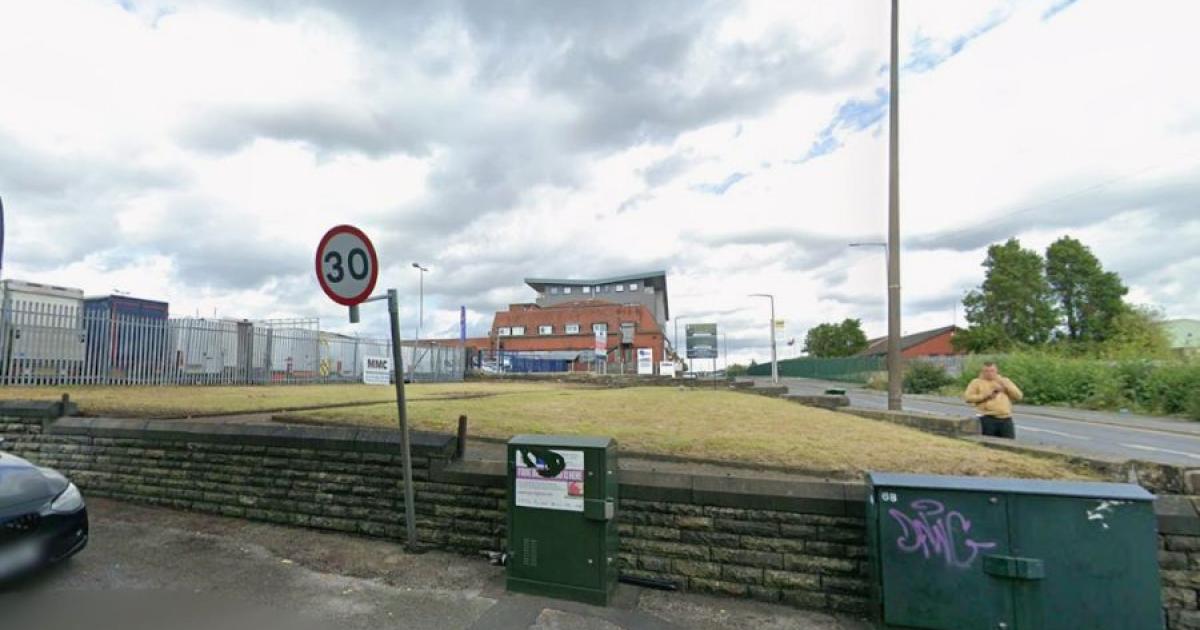
If approved, the plans will aim to create a car sales area with a new portable cabin and boundary fence on land just north of St Bartholomew Street, off Nelson Street in Great Lever.
This will include a space to display vehicles up for sale.
A statement from Bolton Council’s highways department said: “According to the submitted information, the land in question will be accessed from the existing access point onto Nelson Street that serves the established industrial site at that location.
“The red edge of the application would need to cover up to the access onto Nelson Street so that the use can benefit legitimately from an access to the public highway.
Advertisement
The plans have been put before Bolton Council (Image: QAM Architecture)
“Service vehicle access at this location is established and the level of additional traffic from the proposed use will be marginal and should be accommodated with minimal detriment/severity to road safety, amenity, and the operational capacity of the surrounding highways.
“The internal layout of the site appears workable from an accessibility/manoeuvrability and servicing perspective.
“On this basis, no reasonable objections on highway grounds to what is being proposed under this application.”
The plans were received by the council on Monday, April 20, this year and validated on Wednesday, April 29.
Advertisement
A noise impact assessment by QAM Architecture said: “Local authority guidance notes that baseline noise should be measured or reasonably estimated to understand existing exposure levels and contextualise new noise sources.
“Given the low-intensity nature of the proposed use, baseline levels are expected to be moderate, dominated by existing commercial activity.”
It added: “The proposed car-sales use will generate minimal noise, significantly below levels associated with industrial or mechanical uses.
“The development is fully acceptable in noise terms and complies with local and national planning guidance.
Advertisement
“There are no noise-related reasons to refuse the application.”
The statement said that noise levels for car sales businesses would tend to be lower than garages, MOT centres or other similar businesses.
Bolton Council will aim to decide whether to approve the plan by Wednesday, June 24, this year.
A British expat made a huge life decision and uprooted her life from the UK for a fresh start in Australia, yet there were a few things that caught her by suprise
After making a mammoth move to Australia, a British expat has revealed the five things that no one tells you.
Advertisement
Cat Scully, 31, was searching for a better work-life balance and outdoor lifestyle, so she made the brave decision to uproot her life from Newcastle and move to Australia in 2021. After initially exploring Western Australia, Cat settled on Perth, thanks to its slower pace and diverse landscapes of white-sand beaches, rolling hills, and urban city life.
It’s been five years since the mega move, and Cat has settled into her new life and is even an official Australian after her citizenship was approved. She’s settled down with her husband, and the pair spend evenings at the beach and weekends exploring the surrounding areas.
Yet moving to the other side of the world and uphauling her lifestyle hasn’t always been easy, with the project manager revealing what caught her off guard after taking the leap across the globe. Speaking to 1st Move International, the removals specialists to Australia, Cat said that anyone who makes the move will become a morning person, something she has adapted to.
“Most of my social plans are now built around early mornings, meeting for a walk, a beach dip or breakfast at 7:30 or 8 am. Everyone’s keen to get out and start their day early, generally before it gets too hot,” she said.
And when it comes to coffee for those early starts, there’s an extensive collection to choose from, which naturally turns expats into a renowned coffee snob without realising. “Even your standard coffee shop does an amazing coffee, and for a fraction of what you’d pay in the UK. You very quickly stop settling for anything less,” Cat revealed.
Thanks to Australia’s warm climate, there’s an abundance of avocados available, something Cat applauds as part of her new Australian life. “Avocados are everywhere here! It’s often 2 for $5 (£2.65) and they’re huge and really good quality. Even other groceries feel different; some things are more expensive, but avocados are definitely cheaper than in the UK and feature on loads of breakfast menus,” the 31-year-old said.
While the UK is dreary and dark during the winter months, Cat said that those who make the move will make the most of evenings and weekends. She said: “After work, it’s so normal to head straight to the beach for sunset, go for an alfresco dinner, run along the river, or even just jump in the car on a Friday and head into the bush for a weekend trip. You really make the most of your time in a different way.”
And it appears Cat has already forgotten what life was like back in the UK. “I can barely remember what it was like when it got dark at 4 pm in winter, or that really fast-paced UK lifestyle. Life just feels more outdoors, more stretched out, and a lot more balanced here,” she revealed.
Advertisement
Since making the move, Cat documents her life in Australia on her YouTube channel, sharing the realities of living on the other side of the world, alongside weekend adventures to places like Fremantle and Melbourne.
Do you have a travel story to share? Email webtravel@reachplc.com
Project Freedom was meant to help restore the flow of oil from the region and the global economy’s eventual return to normalcy by guiding stranded ships out of the Gulf through the largely closed waterway. But if during the “pause”, global shipping firms and the insurance companies working with them are stymied by Iranian interference, it will be difficult for Trump to claim that objective has been achieved.
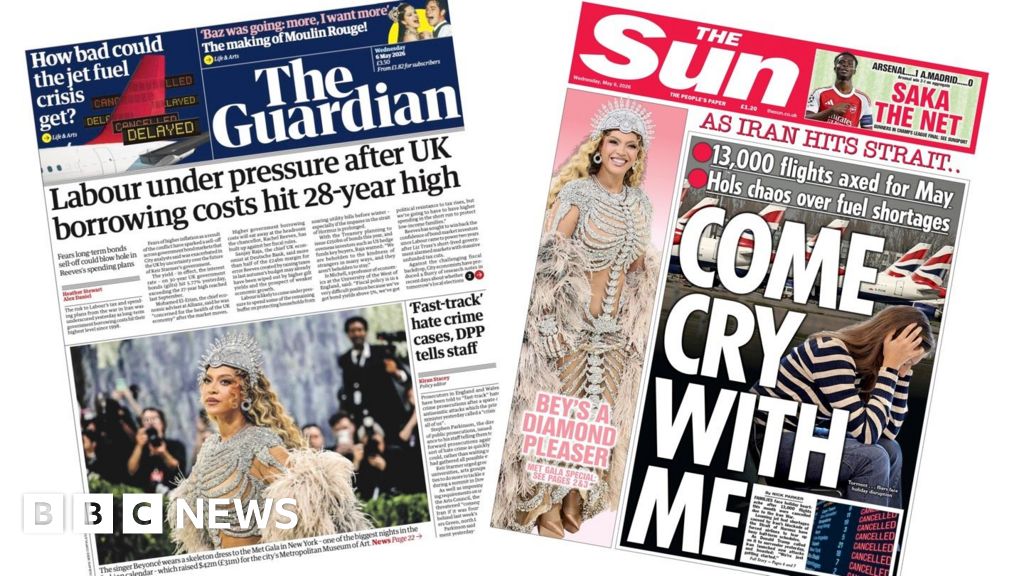
The upcoming local elections on Thursday and jet fuel shortages dominate Wednesday’s papers. Long-term borrowing costs have hit at 28-year high, the Guardian reports, as Labour is “under pressure” to protect low-income households from soaring utility bills before winter. Elsewhere, superstar Beyoncé’s eye-catching skeleton dress at the Met Gala dominates the top picture spot.
The major impact of tobacco-free products on attendance, behaviour and teacher workloads has been laid bare in a shocking new study – with pupils admitting dodging lessons to vape or use nicotine pouches – sometimes referred to as ‘Snus’ – while staff say youngsters are showing signs of addiction.
Teachers revealed they are now patrolling school grounds and toilets and engaging with local shops in a bid to try and get on top of the issue, according to a new paper by the University of Stirling and the Scottish Centre for Social Research.
The New Nicotine Products (NNPs) in Scotland study saw 77 pupils aged 14 to 16 interviewed and 13 members of school staff across four secondary schools in Scotland’s central belt.
Advertisement
Principal Investigator Dr Allison Ford, Associate Professor at the Stirling uni’s Institute for Social Marketing and Health, said: “Pupils reported widespread use of NNPs, such as vapes and nicotine pouches, and missed classes and played truant because they were using these products in a variety of places, including school toilets, and outside school grounds.
“A few pupils felt they were addicted to nicotine and reported adverse health effects.
“School staff adopted a range of approaches to address the issue, including regular patrols and sweeps of school areas, monitoring toilet facilities, and visiting neighbourhood shops to encourage more robust retail practices. They are also confiscating vapes and issuing exclusions or detentions for their use.
Advertisement
“However, staff said they have limited knowledge of vapes and nicotine pouches and felt less confident addressing the risks, compared with tobacco-related teaching. They called for more resources to support teaching about the risks of nicotine use among young people.”
The Record led a successful campaign to ban single-use e-cigarettes after an estimated 26million were thrown away in Scotland in 2023.
But teachers have told researchers that the battle against the tobacco-free products craze is bigger than ever.
Nicotine pouches have soared in popularity amongst young people in Scotland in recent years.
Advertisement
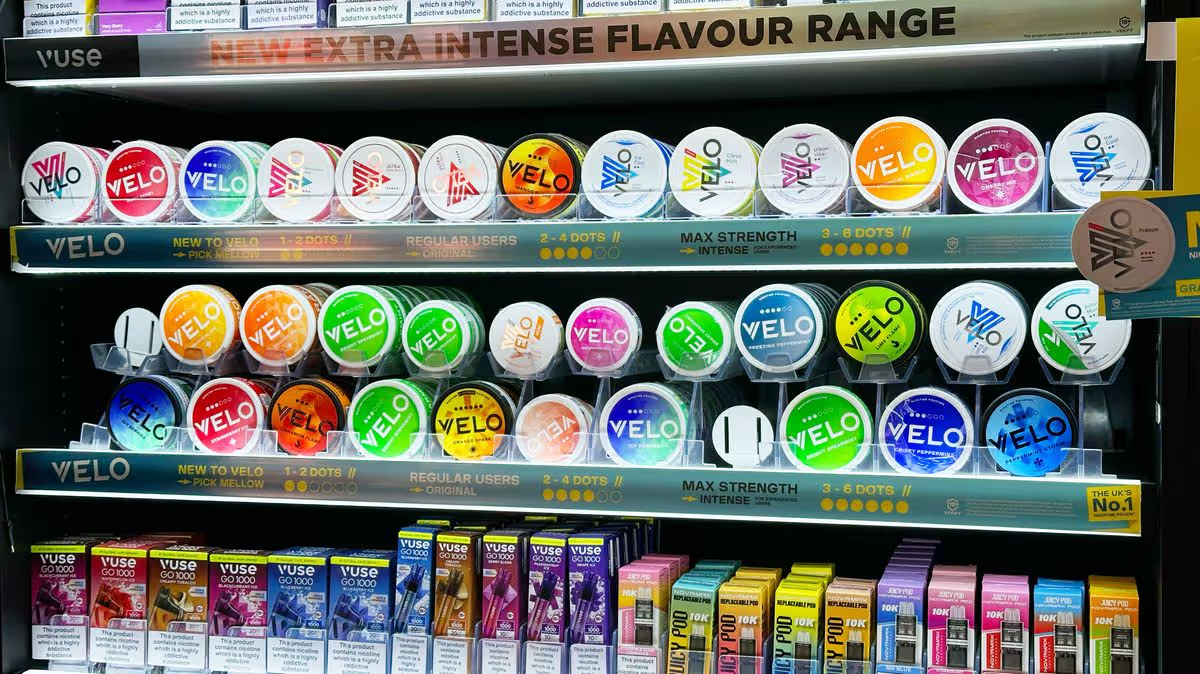
They first went on sale in the UK in 2019 and are often sold in bright packaging with appealing flavours to make them more attractive to young users.
The small, teabag-like sachets, that fit under the top lip, are filled with a fibrous white powder infused with nicotine.
Sports stars like ex-Celtic boss Neil Lennon and ex-England forward Jamie Vardy have been known to use pouches, along with former boxer Mike Tyson and late superstar DJ Avicii.
Advertisement
While they are less harmful than smoking, the pouches are highly addictive and not recommended for teenagers or non-smokers. Research has found they can cause a variety of side effects including oral health issues and gastrointestinal problems, with some suffering from gum irritation and recession, increased heart rate, blood pressure and a greater risk of cardiovascular diseases.
Despite the risks, they are largely unregulated and recent studies show young people in Scotland have reported experiencing sickness and fainting while experimenting with them.
While sometimes referred to as ‘snus’, that tobacco product has been banned in the UK since 1992.
Advertisement
Most pouches contain between six and 20 milligrams (mg) of nicotine while some products contain 50mg – that is about five times stronger than an average cigarette.
In 2024, the two most popular nicotine pouches brands, Velo and Nordic Spirit, grew by 96% and 75%. Another popular brand, Zyn, grew by 161% in 2024.
Coupled with the continuing use of vapes among young people, the products are now said to be impacting on learning.
One teacher told the study: “I’ve got a…pupil who vapes every 20 minutes. Every 20 minutes. [They are] up ‘till four in the morning…[and] really struggling to get to classes.”
Another said: “There’s a couple, or maybe more than a couple, in here that are totally addicted to it…and they’ll tell you, they’re very upfront about it. So that is having an impact on behaviour, because it’s like if they don’t get out of class they’re getting more and more agitated.”
Advertisement
One pupil added: “I’ve been caught about five times…so you just need to realise what to do and what not to do.”
Dr Andy MacGregor, Director of Policy Research at the Scottish Centre for Social Research, said: “School staff are spending a considerable amount of time trying to address vaping. Pupils are experiencing negative health effects and missing classes, while those who do not vape can find the atmosphere in school toilets intimidating.
“Teaching resources covering vaping and nicotine pouch use and risks would support those delivering personal and social education.”
Advertisement
Get more Daily Record exclusives by signing up for free to Google’s preferred sources. Click HERE
Four Liverpool stars have been criticised for their behaviour before their Premier League defeat to Manchester United at Old Trafford
Liverpool have been accused of displaying disrespect towards Manchester United after a video emerged of several squad members performing keepy-uppies in the tunnel at Old Trafford.
Goals from Matheus Cunha and Benjamin Sesko saw United surge into a 2-0 advantage before careless errors allowed Dominik Szoboszlai and Cody Gakpo to draw level. Kobbie Mainoo’s low drive from the edge of the area secured victory for United, who completed their first league double over Liverpool for 10 years.
Get MEN Premium now for just £1 HERE – or get involved in our United WhatsApp group by clicking HERE. You can also join our United Facebook page by clicking HERE and don’t miss out on our brilliant selection of newsletters HERE.
The result highlighted Liverpool’s struggles and footage showed the casual mood amongst senior players before kick-off did little to help their cause. Video shared on social media showed Szoboszlai, Curtis Jones, Florian Wirtz and Jeremie Frimpong passing a ball around inside the Old Trafford tunnel.
Advertisement
That provoked criticism from Hutchison, who represented the club in the early 1990s. He wrote on X: “I can’t get my head around the Liverpool players doing keepy-ups inside the Man Utd tunnel. [Jurgen] Klopp + [Jordan] Henderson + [James] Milner etc etc would never have allowed these sort of standards to drop.”
Asked to elaborate on his comments, Hutchison added: “I think the issue with this is.. I looks like disrespect to the opposition that you’re doing keeps-ups in their tunnel. Not focused.
“Concentrate on the team meeting/the instructions from the coaches/tactics. Be diligent in thinking about your opponent. It looks sloppy.”
Advertisement
The loss to United brought an end to a sequence of three consecutive league victories for Liverpool, who occupy fourth place in the Premier League, seven points adrift of their rivals. Having claimed the title in Slot’s first season, they have endured difficulties this campaign and will conclude the month without silverware.
The confirmation that Mohamed Salah and Andy Robertson will depart the club at the end of the season will further weaken the senior leadership group that Hutchison referenced, with Virgil van Dijk and Alisson Becker the only remaining long-serving regulars, though Alisson is also being linked with a move away.
Sunday’s defeat marked Liverpool’s 18th loss of the season across all competitions and Slot was left to reflect on another disappointing display.
“The margins are not so big on us being able to win a game like this, I know what we can improve on and we are already working hard on this,” he said.
Advertisement
“The same issues keep coming back which is not a huge surprise as you don’t have long to fix it during the season. Tactically you can change certain things but for me it is clear where we have to improve and we will.”
















































You must be logged in to post a comment Login