The hacker behind a breach at education technology giant Instructure claims to have stolen 280 million records tied to students and staff from 8,809 colleges, school districts, and online education platforms.
Instructure is a cloud-based education technology company best known for its Canvas learning management system, which schools and universities use to manage coursework, assignments, grading, and communication.
Last Friday, Instructure disclosed that it was investigating a cyberattack and later revealed that it had suffered a data breach, during which users’ names, email addresses, and private messages were exposed.
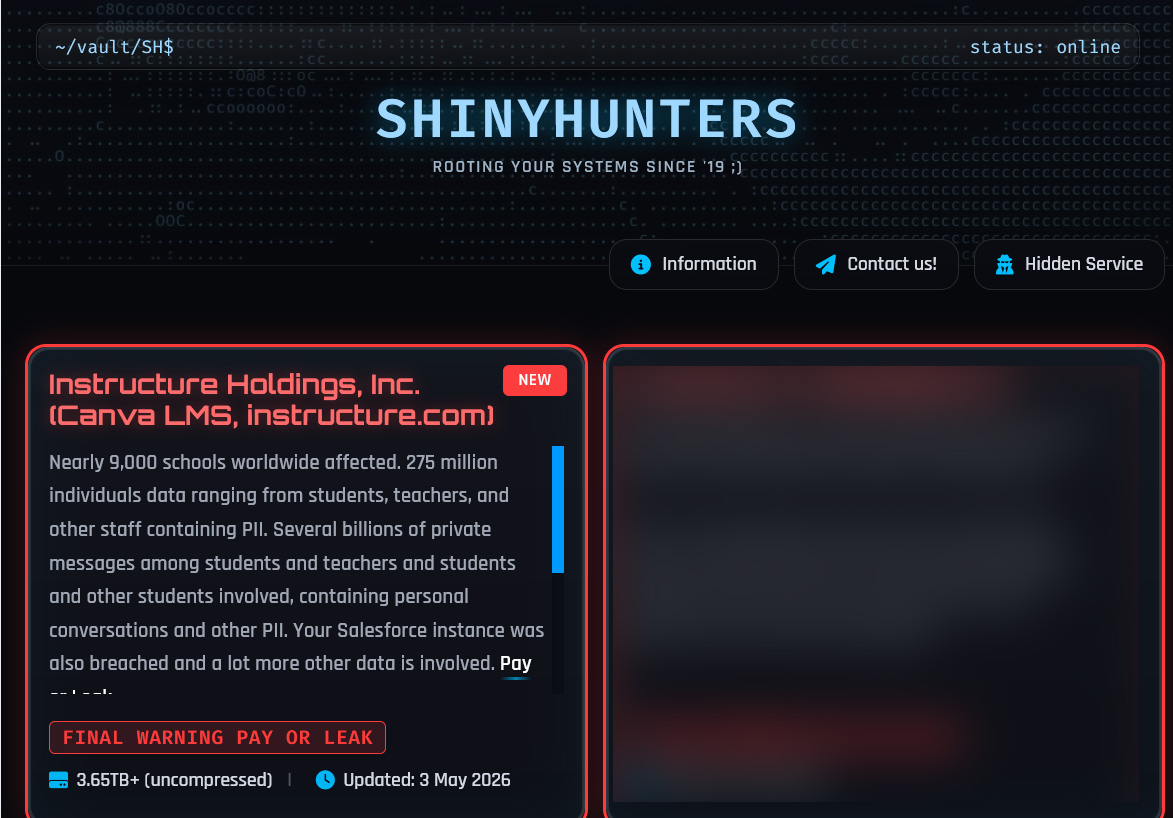
The ShinyHunters extortion gang claimed responsibility for the attack and says it stole 280 million records for students, teachers, and staff.
Advertisement
Instructure listing on ShinyHunters data leak site
The threat actors have now published a list of 8,809 school districts, universities, and educational platforms whose Canvas instances were allegedly impacted by the attack, sharing record counts per institution with BleepingComputer.
The record counts for each educational institution range from tens of thousands to several million per institution.
BleepingComputer is not naming specific organizations listed by the threat actor, as we have not independently verified whether they were impacted by the breach.
The threat actor claims the data was stolen using Canvas data export features, including DAP queries, provisioning reports, and user APIs, and that they harvested hundreds of gigabytes of user records, messages, and enrollment data.
While Instructure has not responded to repeated emails regarding the incident, some universities have begun issuing statements about the potential impact.
Advertisement
“CU is aware of a data breach involving Instructure, the parent company of Canvas, our learning management system. This reported data breach is a nationwide event affecting multiple institutions,” warned the University of Colorado Boulder.
“At present, Rutgers has not been notified of any direct impact to our campus. Canvas remains available and operational to Rutgers faculty, staff, and students,” warned Rutgers.
“An investigation is currently underway to determine what exactly happened and which systems were affected. It has not yet been confirmed whether data of Tilburg University students and staff has been impacted. Further questions have been submitted to the supplier to obtain more clarity,” warns Tilburg University.
BleepingComputer has contacted Instructure again with additional questions and will update this story if we receive a response.
Advertisement
AI chained four zero-days into one exploit that bypassed both renderer and OS sandboxes. A wave of new exploits is coming.
At the Autonomous Validation Summit (May 12 & 14), see how autonomous, context-rich validation finds what’s exploitable, proves controls hold, and closes the remediation loop.
The Ladybird browser isn’t opposed to AI coding tools, but it’s just brought a new change to their code-contributing policies.
February 23: “Ladybird adopts Rust, with help from AI.” I used Claude Code and Codex for the translation. This was human-directed, not autonomous code generation. I decided what to port, in what order, and what the Rust code should look like. It was hundreds of small prompts, steering the agents where things needed to go… The requirement from the start was byte-for-byte identical output from both pipelines. The result was about 25,000 lines of Rust, and the entire port took about two weeks. The same work would have taken me multiple months to do by hand. June 5 (Friday):
We will no longer accept public pull requests… A pull request no longer tells us as much as it used to about the person submitting it. A substantial patch used to imply substantial effort, and that effort was a reasonable proxy for good faith. That assumption no longer holds….
We have already seen patient, well-resourced campaigns in open source to earn maintainer trust and abuse it. What has changed is how much faster and cheaper it has become to produce work that looks like a serious contribution… Whether code was typed by hand is beside the point. What matters is who is responsible for it once it enters the browser. Ladybird is becoming a browser for real users. The people introducing changes to it must be the people who decide those changes belong in the project, and who will answer for the consequences.
As part of this change, we will close all currently open public pull requests. We are grateful for the work people put into them, but keeping the existing queue open would keep that contribution path open in practice. There is no perfect time to make this change, so we are making it now. Going forward, pull requests will only be available to project maintainers. There will not be a separate process for submitting patches by other means. We do not want to create a shadow contribution system through issues, comments, email, or forks…
Advertisement
Outside involvement still matters: clear bug reports, reductions, website testing, standards discussion, design discussion, security reports, and technical feedback all help move the project forward. This is the right change for Ladybird now. We are preparing to ship a browser to real users, and our development process has to match that responsibility.
Netflix may be willing to send Greta Gerwig’s upcoming Narnia movie into theaters, but if anyone in Hollywood was hoping that decision signaled a broader change of heart, the company just slammed that door shut.
In a candid interview with The New York Times, Netflix film chairman Dan Lin made it clear that the streamer’s relationship with movie theaters remains largely unchanged. While Gerwig’s Narnia is expected to receive a full theatrical release before arriving on Netflix, Lin described the project as an exception rather than the start of a new strategy. More notably, he suggested Netflix has little interest in accommodating filmmakers who continue to prioritize traditional theatrical runs.
“There is a group of filmmakers who still want theatrical,” Lin said. “Those are filmmakers that we’ve accepted we just won’t work with.” It’s a remarkably direct statement, but it also reflects the confidence of a company that no longer feels the need to play by Hollywood’s old rules.
Netflix no longer needs theaters to prove itself
A few years ago, Netflix spent considerable energy convincing filmmakers that it could be both a streaming giant and a legitimate movie studio. Under former film chief Scott Stuber, the company aggressively pursued acclaimed directors, handed out sizable budgets, and occasionally fought for theatrical releases to attract awards attention.
Advertisement
The environment today looks very different. Netflix won the streaming wars, at least by most conventional measures. It has hundreds of millions of subscribers, dominates the viewing charts, and operates from a position of strength while traditional studios continue to search for sustainable business models. As Lin sees it, the company no longer needs movie theaters to validate its films or its reputation.
Narnia
Instead, the focus has shifted toward making movies specifically for Netflix audiences. Lin has spent the past two years pushing a strategy centered on producing fewer films, spending more carefully, and concentrating on projects that can attract viewers directly to the platform.
That approach has already generated successes such as Apex, which crossed 100 million views during its first month on the service, and People We Meet on Vacation, a romantic comedy that drew millions of viewers while turning relatively unknown actors into recognizable Netflix stars.
The great theatre divide isn’t going away
The tension between streaming and theatrical exhibition has never really disappeared. Many filmmakers still argue that movies are designed to be experienced on giant screens with packed audiences. For directors, theatrical runs can also create cultural momentum, awards consideration, and a level of prestige that streaming premieres often struggle to replicate.
Netflix, however, continues to view the equation differently. Lin’s comments suggest the company is comfortable walking away from creators whose demands don’t align with its business model. That’s a notable shift from earlier years, when Netflix often seemed eager to win over skeptical Hollywood talent at almost any cost.
Advertisement
Narnia
The Narnia release demonstrates that exceptions can still occur when a project is large enough or a filmmaker has sufficient leverage. But Netflix appears determined to keep those exceptions rare. The company sees its future inside its app, not at the multiplex.
For movie lovers, that may be disappointing. There’s something undeniably magical about watching a major fantasy epic unfold on a giant screen surrounded by strangers. Yet Netflix’s position is increasingly difficult to argue against from a business perspective. If a movie can reach tens of millions of viewers worldwide without relying on ticket sales, the streamer sees little reason to share the spotlight with theaters.
So while Narnia may get its moment under the cinema marquee, don’t mistake it for a revival of Netflix’s theatrical ambitions. According to the executive overseeing the company’s movie division, that chapter was never meant to be reopened.
Anybotics’ Kateryna Portmann discusses growing up in the shadow of a major global disaster and how this impacted her view of security in the robotics sector.
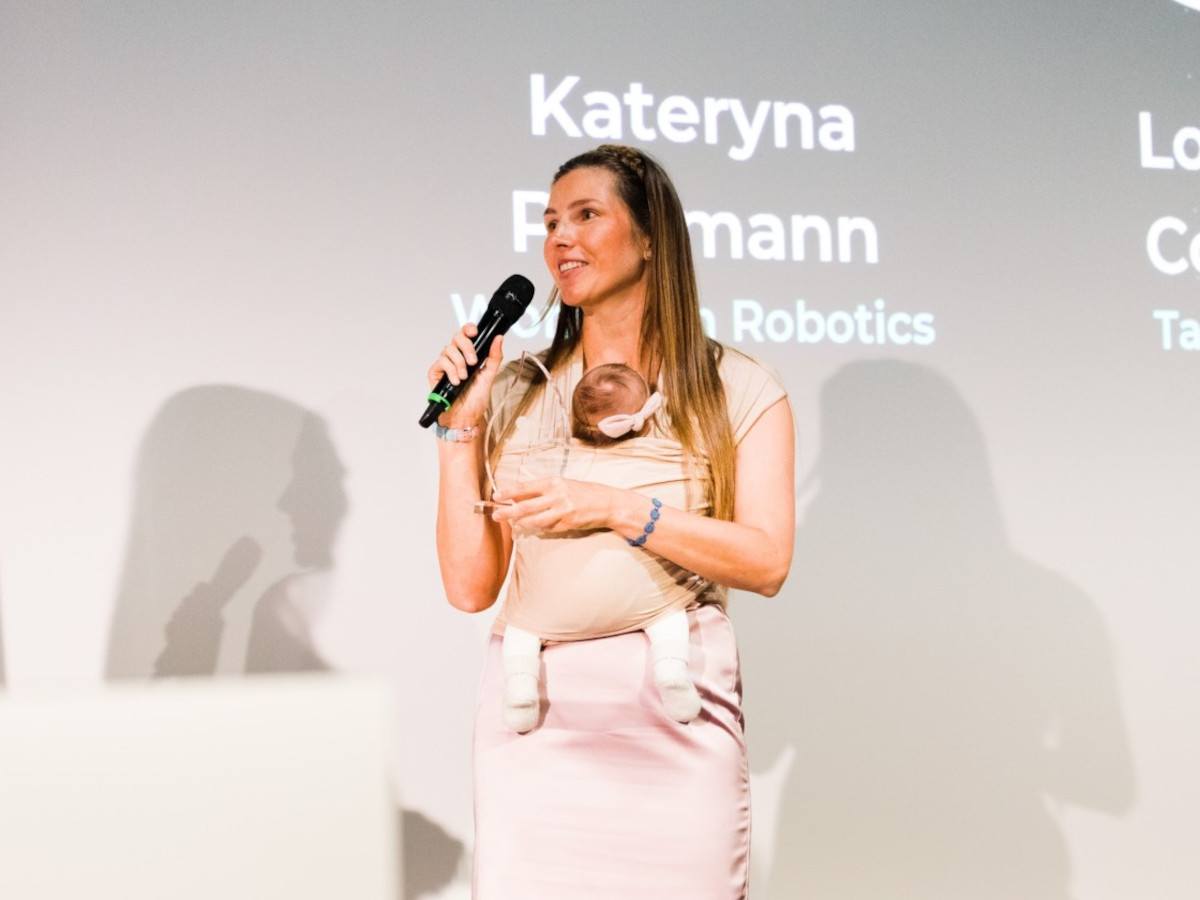
“I was born in 1986 in Ukraine, 100km from Pripyat, the year of Chernobyl,” explained Kateryna Portmann, a senior product manager at Anybotics and a co-lead at the Swiss chapter of Women in Robotics.
“That matters to me. Chernobyl represents a cascade of technical design flaws, human misjudgement and governance failure. It shaped how I think about complex systems,” she said, speaking to SiliconRepublic.com.
“When I walk into an industrial site and see how much still depends on manual inspection, I think about risk accumulation. Robotics, done properly, reduces dependency on perfect human behaviour in imperfect environments. What excites me most is not the robot itself, it’s prevention. Early anomaly detection. Reducing exposure. Building systems that act before failure escalates.”
Advertisement
For Portmann, regarding the wider landscape, “we are past the ‘wow phase’ of robotics”, wherein it was enough to show that a robot could walk, scan and autonomously navigate. Amid a global shift, now consumers want evidence, such as uptime numbers, integration roadmaps and cybersecurity documentation.
She said, “That shift changes everything. I believe 2026 will be a filtering year. Many robotics companies ran pilots in 2024 and 2025. This year, those pilots must convert into scaled deployments. If they don’t, funding tightens and consolidation follows. Not everyone will survive. That’s not pessimistic, it’s how industrial markets mature.”
Having spent years working across Asia, Portmann has witnessed what she refers to as hyper-speed scaling, where deployment decisions happen incredibly quickly. However, she warned of the potential dangers when safety frameworks and compliance processes struggle to keep pace with innovation.
“That’s why I’m genuinely happy to now be building robotics in Switzerland, where engineering rigour, certification and risk management are taken seriously from day one.”
Advertisement
She added, “I’ve been inside an aluminium plant where the heat radiates through protective clothing within minutes. I’ve stood in a cement facility where dust fills the air constantly; you feel it in your throat hours later. These are not environments designed for long-term human exposure.
“When I hear fears about robots ‘taking jobs’, I think about those places. The better question is, should people be physically exposed to that risk every day? Our robots inspect and pick up thermal deviations, gas concentrations and unusual acoustic signatures.
“In one facility, early anomaly detection prevented a shutdown that would have cost millions. But equally important, the plant created new internal roles to manage robotics fleets and interpret inspection data. Humans moved up the value chain.”
Robotics transforming STEM
And it isn’t just safety and compliance that is being transformed by advancements in robotics; the entire STEM space is undergoing a reinvention of sorts. Portmann explained that “robotics removes abstraction”.
Advertisement
“In a lab, an AI model performs beautifully. In a power plant, the lens gets dusty. Wi-Fi drops. The floor vibrates. Lighting changes. That’s where theory meets reality.
“This is why robotics forces true interdisciplinary collaboration. Mechanical engineers must understand AI constraints. AI engineers must understand sensor noise and hardware limits. Cybersecurity teams must design for industrial networks, not office environments.”
As a result, education has to evolve to reflect the new reality, Portmann said. She has seen first-hand how unprepared senior leaders can be when making physical AI decisions. She recommended going that little bit further, with structured educational programmes not just for executives, but also for teachers and children.
“We need to teach systems thinking, ethics and human-machine collaboration early, not as an afterthought.”
Advertisement
She finds that “robotics is entering a serious phase” and 2026 is the marker that will test durability. She is of the opinion that many organisations will consolidate and even disappear, with 2027 set to reshape the landscape structurally.
“But despite the competitive pressure, this is one of the most exciting industries to work in, because the stakes are real,” Portmann said.
“I’ve felt the heat of aluminium production. I’ve breathed the dust of cement plants. I was born in the shadow of a nuclear disaster. For me, robotics is not about replacing people. It is about protecting them and building systems responsible enough that we can trust them in environments where human error is simply too expensive.”
Don’t miss out on the knowledge you need to succeed. Sign up for the Daily Brief, Silicon Republic’s digest of need-to-know sci-tech news.
High End Vienna 2026 just turned into a very expensive cartridge fight.
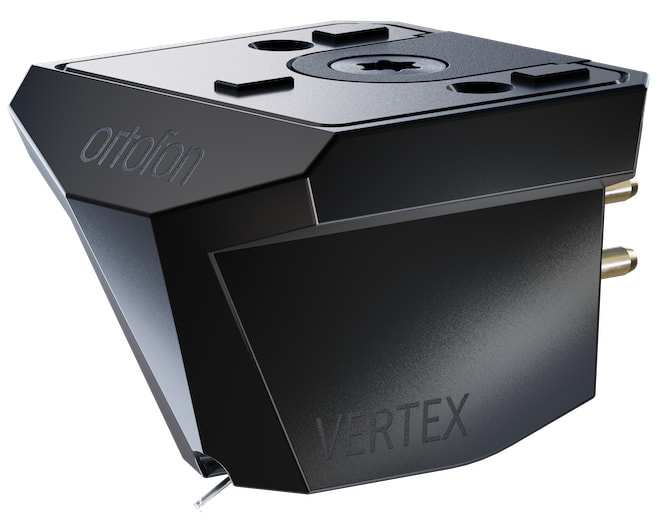
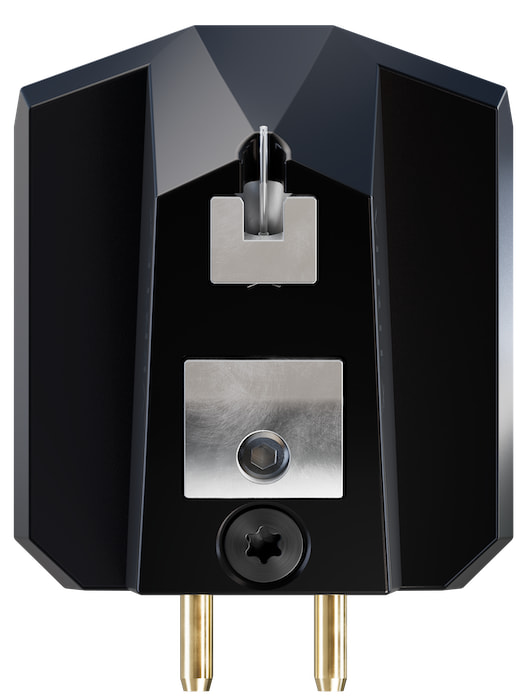
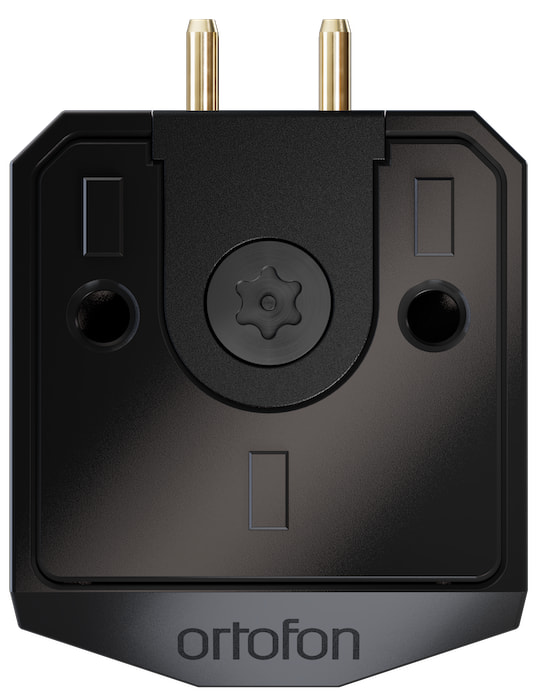
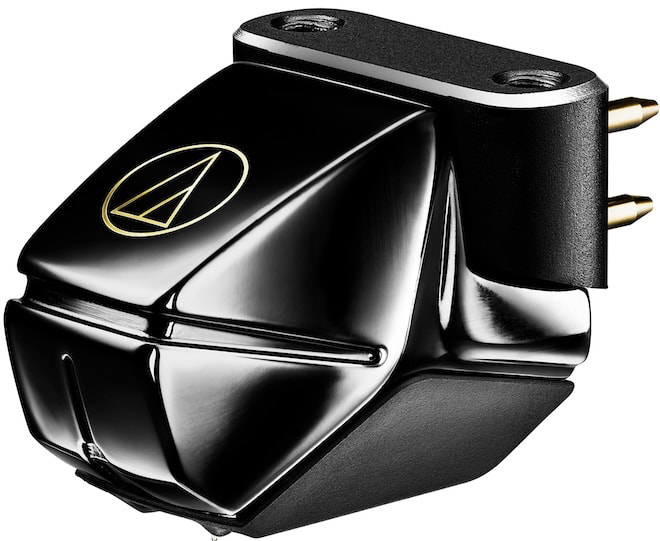
Audio-Technica arrived with the $11,000 AT-MCD1, a new flagship moving-coil cartridge built around an integrated diamond cantilever, Shibata stylus, titanium body, and the kind of engineering brief that makes vinyl diehards start checking credit limits they should absolutely not be checking. Ortofon’s response? The MC Vertex is a $16,999 moving-coil cartridge billed as the most advanced cartridge the Danish company has ever produced. Subtle, it is not. Cheap, it is not. Accidental, it is definitely not.
For everyone not shopping in the $17,000 cartridge aisle, Ortofon also introduced the new MC X series as well. That one will matter to a much larger group of vinyl listeners, and we will get to it shortly.
For 99% of vinyl listeners, spending $11,000 to $17,000 on a cartridge is not an upgrade path. It is a cry for help wrapped in titanium, diamond, and a very small box. But for owners of reference-level turntables, tonearms, phono stages, and systems capable of exposing what happens at the groove wall, Ortofon has earned the right to make a statement like this.
Advertisement
After more than a century in phono cartridge design, the company is not wandering into the ultra-high-end cartridge category looking for attention. It already has the résumé. The MC Vertex is Ortofon reminding Audio-Technica, and everyone else in Vienna, that analog credibility is not built overnight or with a press release and a nice hotel demo. Although a nice breakfast with some herring and coffee never hurt.
The MC Vertex is built around Ortofon’s new Vertex diamond. The stylus has a 4 μm scanning radius and a 110 μm contact radius, giving it an extended contact area along the groove wall.
The goal is more stable tracking, more even pressure distribution, and reduced localized wear compared with more conventional stylus profiles. That geometry should also help the cartridge maintain more consistent contact with the groove during complex passages.
At this level, the diamond profile is not a minor detail. It directly affects tracing accuracy, groove wear, and how much information the cartridge can retrieve before the signal ever reaches the phono stage.
Solid Diamond Cantilever
The Vertex diamond is mounted to a laser-polished solid diamond cantilever, which is one of the more important details here. Diamond is extremely rigid and very low in mass, so the goal is to transfer mechanical energy from the stylus tip to the generator system with less flex, delay, or stored energy than more conventional cantilever materials.
That matters because a cartridge is a mechanical-to-electrical converter. Before anything reaches the phono stage, the stylus and cantilever have to trace the groove accurately and move the coil system without adding their own problems. Ortofon is trying to keep that mechanical chain as short, stiff, and controlled as possible.
Advertisement
The body and internal core are made from SLM titanium with a DLC coating. Selective Laser Melting allows Ortofon to control the body geometry, mass distribution, and internal structure with greater precision than conventional machining.
Advertisement. Scroll to continue reading.
The goal is a rigid, mechanically stable cartridge body that helps reduce unwanted resonance before it can affect signal generation.
Inside the MC Vertex, Ortofon uses a refined magnetic system with a non-magnetic armature. The purpose is to reduce moving mass and avoid unwanted magnetic interaction inside the generator. That is paired with high-purity silver coils, with Ortofon claiming more stable and linear signal generation, improved transient behavior, and more precise tracking across the audible range.
Ortofon’s Wide Range Damping system is also part of the design. It uses a platinum disc positioned between two dampers made from proprietary Ortofon rubber compounds. The intent is to control resonance across the audible frequency range without overdamping the cartridge or restricting dynamic response.
The published numbers suggest a very serious low-output moving-coil design: 0.3 mV output at 1 kHz, 5 cm/sec; 30 dB channel separation at 1 kHz; 0.1 dB channel balance; 20 Hz to 20 kHz frequency response within ±1 dB; 19 ohms internal impedance; 9 μm/mN lateral compliance; recommended 2.5 gram tracking force; and a recommended load above 100 ohms.
Compared with Audio-Technica’s new AT-MCD1, the Ortofon MC Vertex appears to be taking a slightly different engineering path to the same ultra-high-end destination. The AT-MCD1 also uses an integrated diamond cantilever/stylus concept and is clearly aimed at the same small group of listeners with reference-level turntables, tonearms, phono stages, and systems capable of exposing microscopic differences at the groove wall.
The Audio-Technica offers higher output at 0.55 mV, 28 dB channel separation, 12 ohms coil impedance, 20 Hz to 50 kHz frequency response, and a recommended tracking force of 1.8 grams. The Ortofon counters with a lower 0.3 mV output, tighter 0.1 dB channel balance, 30 dB separation, the Vertex 4/110 μm stylus geometry, SLM titanium/DLC bodywork, Wide Range Damping, and a 2.5 gram tracking force.
Neither cartridge is for casual vinyl listeners, and pretending otherwise would be silly. These are statement cartridges for systems where the turntable, arm, phono stage, setup, and record collection are already at a level where the cartridge is not being asked to rescue the rest of the chain.
Ortofon MC X50: The MC for the Rest of Us
The MC Vertex is the statement product, but the MC X50 is the new Ortofon cartridge more listeners are likely to consider for a serious high-end vinyl system.
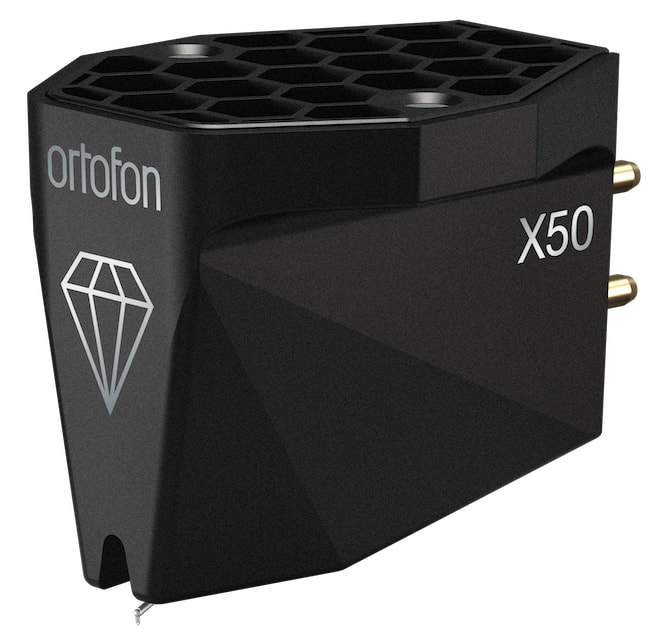
Priced at $1,699, the MC X50 sits at the top of the MC X Series. It uses a Nude Micro Ridge diamond stylus with a 2.5/75 μm stylus tip radius, mounted to a boron cantilever. That combination is intended to provide accurate groove tracing, low moving mass, and consistent tracking behavior.
Advertisement
Ortofon has also developed a rubber suspension compound specifically for the MC X50. The suspension works with the Micro Ridge stylus and boron cantilever to help maintain stable contact with the groove and control mechanical movement during playback.
The MC X50 uses high-purity silver coil wire and a newly developed magnet system for the MC X platform, with a one-piece pole cylinder integrated into a rear magnet yoke. The design goal is stable signal generation and improved magnetic efficiency.
The cartridge body is made from MIM stainless steel with a honeycomb core structure. Metal Injection Molding allows Ortofon to control the body geometry, while the internal structure is intended to balance rigidity, mass, and mechanical stability.
Advertisement. Scroll to continue reading.
Advertisement
The published specifications include 0.4 mV output at 1 kHz, 5 cm/sec; 28 dB channel separation at 1 kHz; 0.5 dB channel balance; 20 Hz to 20 kHz frequency response within ±1 dB; 14 μm/mN dynamic lateral compliance; 6-ohm internal impedance; 2.0 gram recommended tracking force; half-inch mounting; black finish; and 8.6 gram cartridge weight.
The Bottom Line
The Ortofon MC Vertex is the statement cartridge. It uses the new Vertex diamond profile, a solid diamond cantilever, SLM titanium body with DLC coating, non magnetic armature, high purity silver coils, and Wide Range Damping. What makes it unique is the amount of mechanical control Ortofon is applying from the groove contact point through the generator system. At $16,999, it is for reference turntables, tonearms, phono stages, and systems where setup quality is already at a very high level.
The Ortofon MC X50 ($1,699) is the more attainable high end model. It uses a Nude Micro Ridge stylus, boron cantilever, dedicated rubber suspension, high purity silver coils, new MC X magnetic system, and MIM stainless steel body with honeycomb core. What makes it important is that it brings Ortofon’s current focus on low moving mass, stable tracking, controlled resonance, and precise signal generation to a cartridge that more vinyl listeners can realistically consider.
PARTNER CONTENT: Integrating AI into the iEPMS platform to achieve a 98% quality review accuracy rate and slash report generation times, leveraging experience from 240,000 global projects
ZTE Corporation today showcased its pioneering achievements in digital transformation and AI-driven project management at the 14th IPMA Research Conference in Bogotá, Colombia.
During the conference, Wang Yuzhu, Managing Director of Engineering Services at ZTE Colombia, and Jose Perez, Senior Expert in Engineering Delivery Management at ZTE, delivered a keynote speech themed “The Digital and Intelligent Future of Project Management”, highlighting ZTE’s practical experiences and innovative achievements in global project delivery.
To address the evolving challenges of global project delivery, ZTE has developed a digital project management system tailored for complex international scenarios. Built on the “One Team, One System, One Mechanism” tripartite architecture, this system, powered by ZTE’s iEPMS (Intelligent Engineering Project Management System), enables comprehensive management across the entire project lifecycle—spanning planning, cost control, quality assurance, risk mitigation, and resource allocation. Through digital, automated, and intelligent management approaches, the system significantly enhances project management efficiency and precision.
Advertisement
Wang Yuzhu, Managing Director of Engineering Services at ZTE Colombia
On the intelligence front, ZTE is driving the deep integration of AI with project management. By deploying Optical Character Recognition (OCR), AI Agents, Large Language Models (LLMs), and Retrieval-Augmented Generation (RAG) for knowledge enhancement, ZTE has automated key workflows such as quality reviews, design generation, risk analysis, and reporting. These innovations have yielded outstanding operational benefits: the accuracy of AI-powered quality reviews has reached 98%, and the time required to generate project reports has plummeted from 180 minutes to just 5 minutes, significantly improving delivery efficiency and governance capabilities.
Jose Perez, Senior Expert in Engineering Delivery Management at ZTE
ZTE’s digital delivery achievements are backed by its extensive global footprint and rich network service expertise. Globally, ZTE has delivered over 240,000 projects, deployed over 7 million base stations and over 240,000 kilometers of optical cables, while managing and maintaining over 510,000 kilometers of network cabling. By continuously automating processes and building an intelligent tool ecosystem, ZTE has achieved a 65% reduction in acceptance costs, an 85% drop in site re-entry rates, and a 2.5-fold improvement in network activation efficiency, creating tangible value for global customers.
ZTE also showcased several global benchmark case studies at the conference. In Ecuador’s RAN network project, ZTE integrated its intelligent platform with over 50 Standard Operating Procedures (SOPs) to achieve a seamless, “zero-user-perception” migration during network handovers. Additionally, ZTE’s digital project management solutions have been widely deployed in Colombia across diverse projects, including lithium battery installations, solar energy, microwave, FTTH, and DWDM networks.
Centered on the theme “Project Management Practice in a Disruptive Era: Integrating Technology, Innovation, and Sustainability”, this landmark event gathered experts from over 50 countries. Across key thematic tracks including AI & innovation, project manager 5.0, and sustainability & purposeful management, attendees explored how disruptive technologies are reshaping human leadership and project frameworks in the digital era.
Advertisement
Looking ahead, ZTE will continue to act as a “Driver of Digital Economy”, deepening the integration of AI, big data, and project management to upgrade global delivery models. ZTE remains committed to collaborating with global ecosystem partners to advance both research and practical innovation, contributing to an open, intelligent, and sustainable global project management ecosystem.
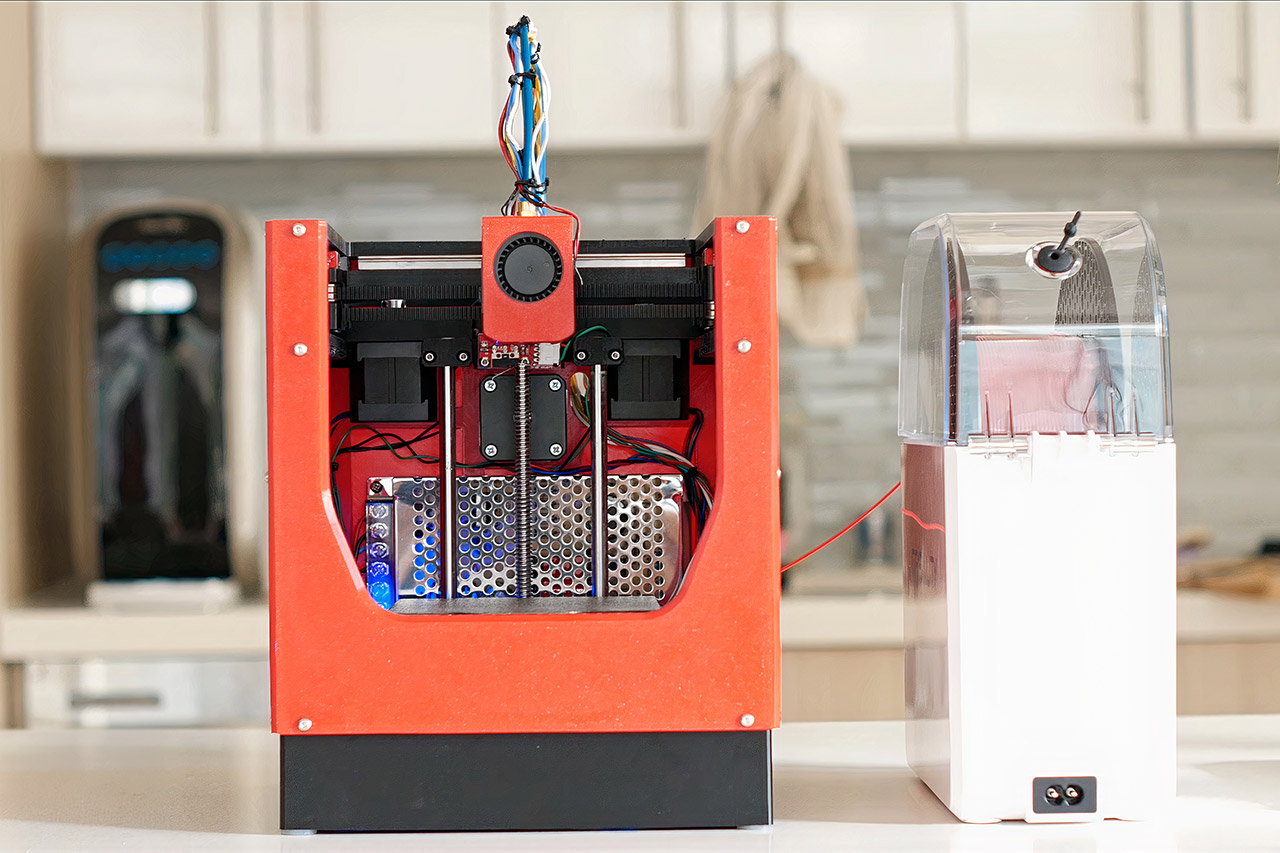
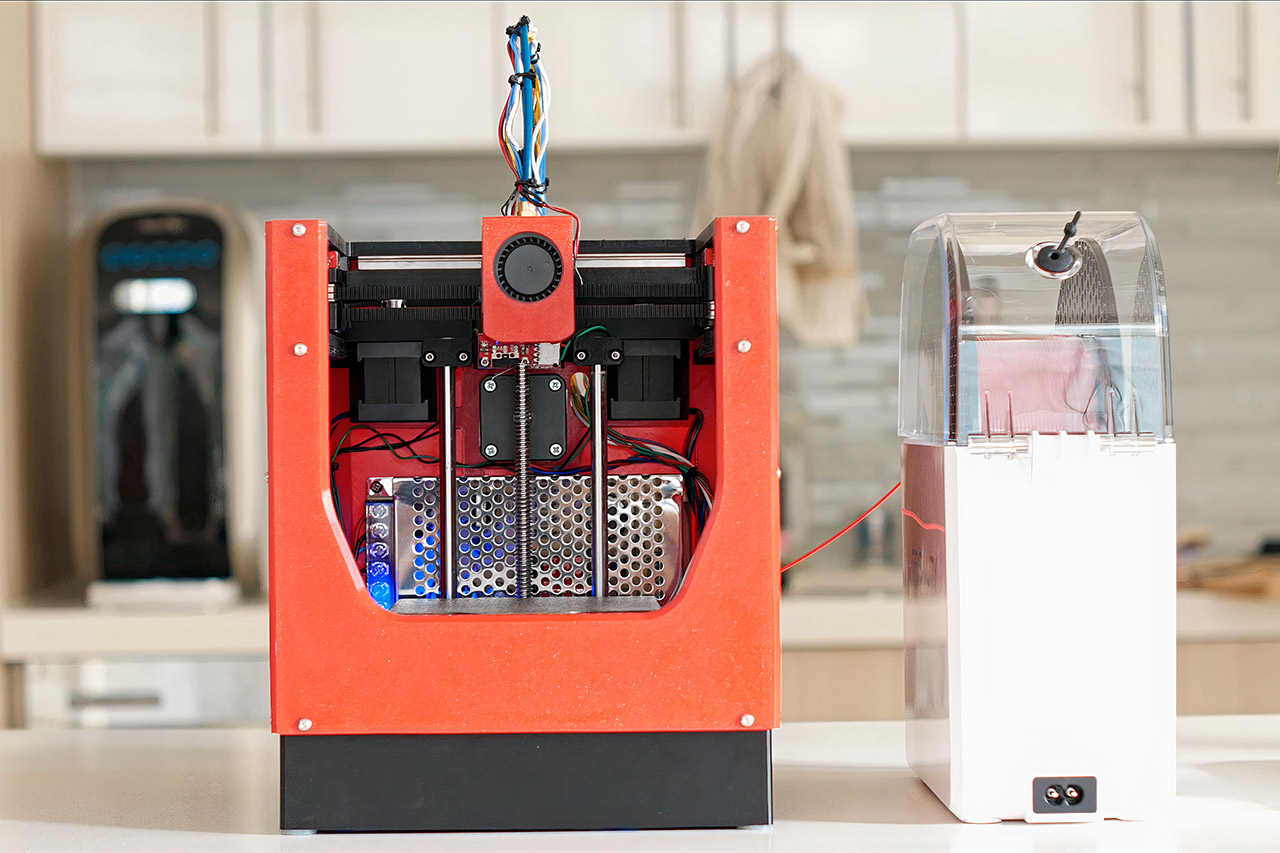
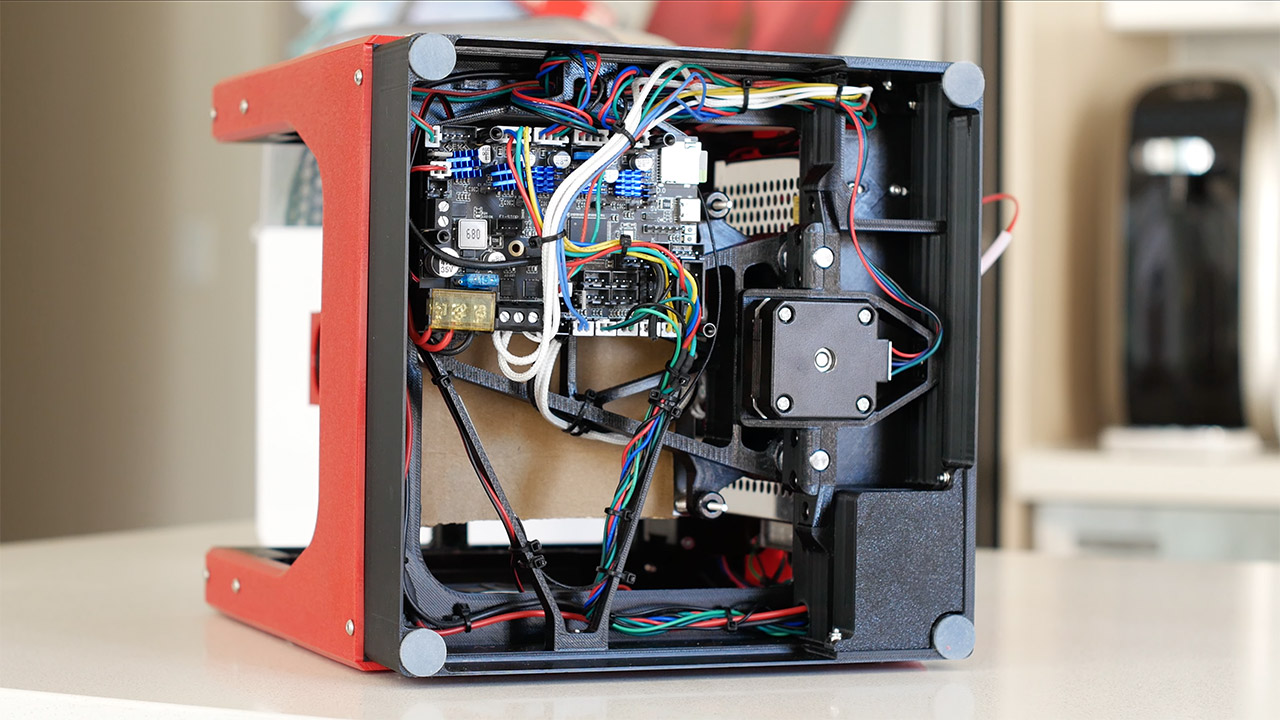
Alex Yu set out to build something many makers only joke about. He created a complete CoreXY 3D printer where almost every structural piece came from another printer first. The result carries the name Encore and fits on a desk without dominating the space. The finished machine measures roughly 219 by 221 by 262 millimeters. Its build volume reaches 120 millimeters on each side. That footprint sits smaller than a Voron 0 and matches the size of a standard filament box, yet it still handles practical parts and detailed prototypes with ease.
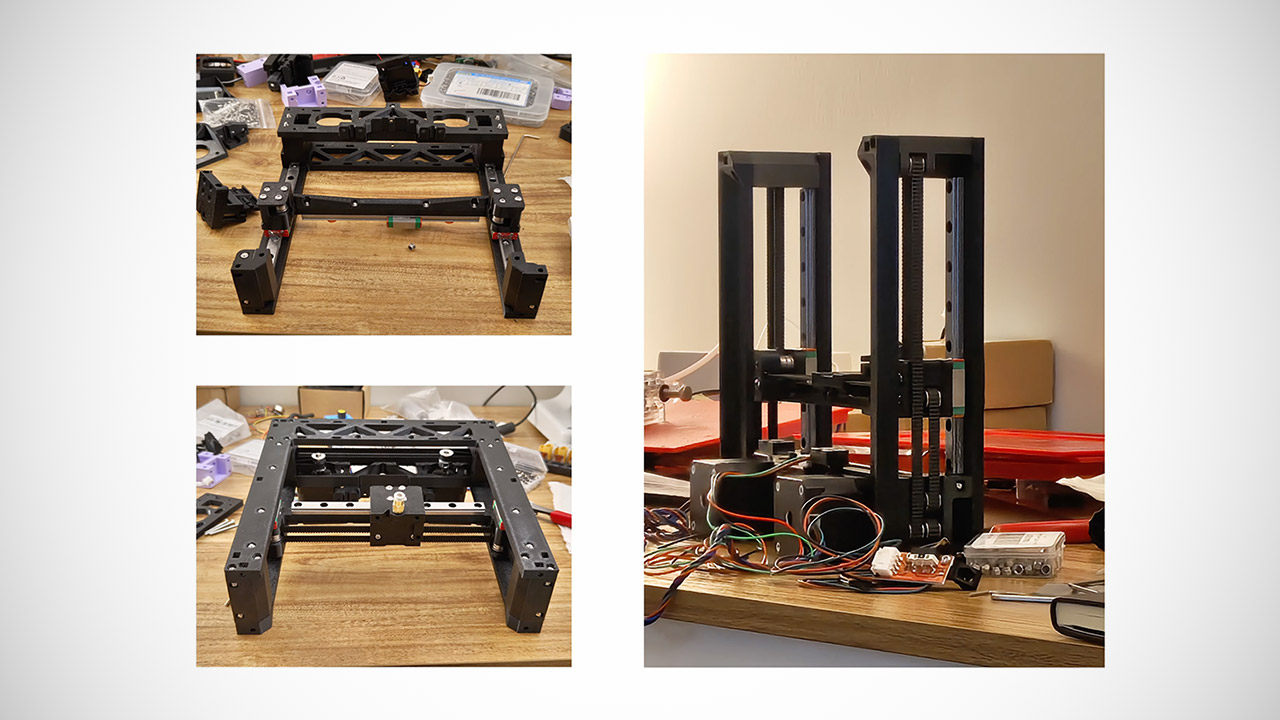
The machine’s outer casing is entirely composed of printed panels that are only 1.5 millimeters thick yet provide a strong outer shell once all of the pieces are welded together. The horizontal axes are directly mounted to the side panels, eliminating the need for internal frames or elaborate aluminum elements to hold them. And that’s the point: keep things simple and inexpensive while maintaining the stiffness required for quick, accurate movement. All of the printed elements are made on a standard 225 millimeter build plate, so almost anyone with a capable 3D printer, such as an Ender series printer or a Bambu, can create all of the parts without the need for additional equipment or a large bed.
A1 mini + LED Lamp Kit for Creative Light Projects: Bring your ideas to life with the included LED Lamp Kit. Simply print compatible lamp models and…
The Perfect 3D Printer for Beginners: A1 mini 3D Printer is designed to make 3D printing easy from day one with automatic calibration, simple setup…
Experience the Bambu Lab Ecosystem: Access MakerWorld’s huge library of ready-to-print models, manage prints through the Bambu Handy app, and enjoy…
This design relies extensively on modularity, with the gantry, Z stage, and outside panels all being separate parts. That is, you can simply upgrade or repair one part of the system without disassembling the whole thing, and when new ideas and better components arise, this flexibility becomes increasingly vital. It employs MGN9C linear rails and a CoreXY belt system to move the gantry horizontally. The two drive motors are smooth and reliable, so there is little to worry about in terms of weight and acceleration. The hotend is a small Bambu-style design, while the extruder is a low-cost BMG-style clone that neatly feeds filament through a Bowden tube in the back.
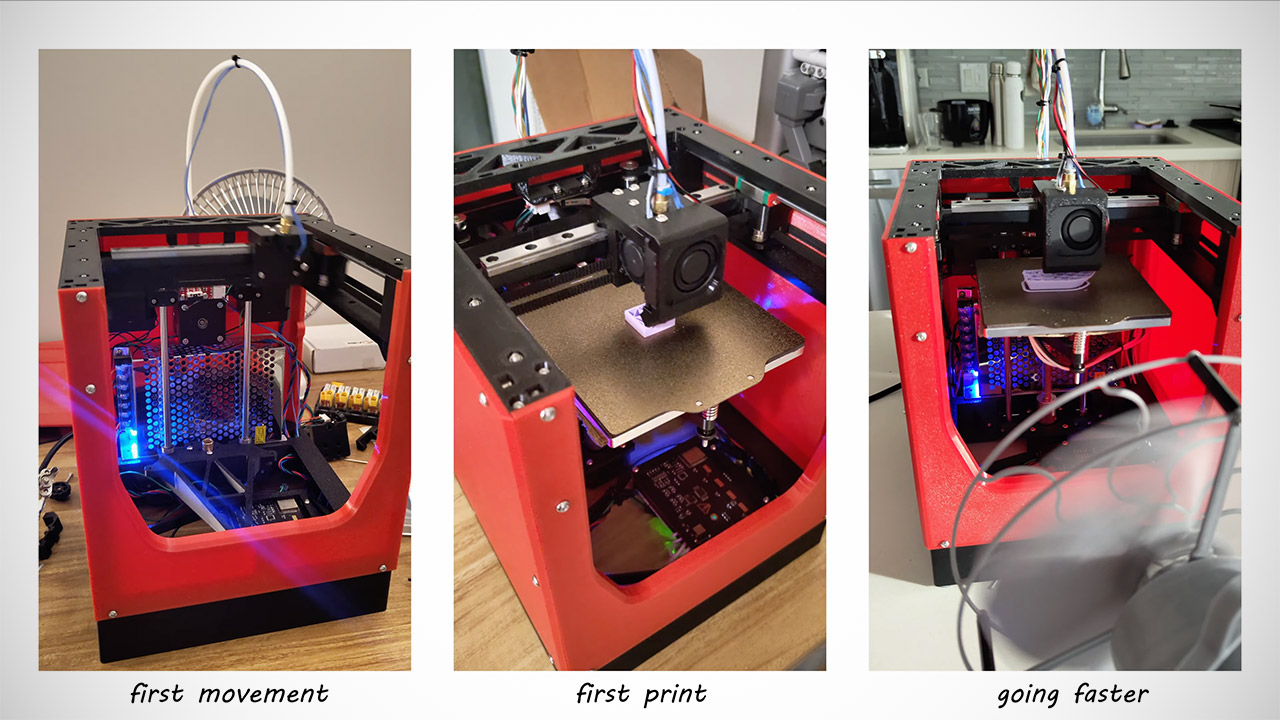
The machine raises and lowers the bed using an 8-millimeter leadscrew and matching linear rods controlled by a pancake stepper motor. The power supply is behind the Z rods, and the main controller board is contained in the base, leaving the machine’s front exposed and short in length. When first tested, it demonstrated some of the typical concerns associated with compact, high-speed machines, such as the hotend not cooling sufficiently, resulting in print issues. So Yu replaced the blower with a stronger one, altered the cooling shroud to allow air to enter from a variety of angles, and added two more blowers to the side of the build area to finish the job, resolving the issue with PLA prints at high speeds.
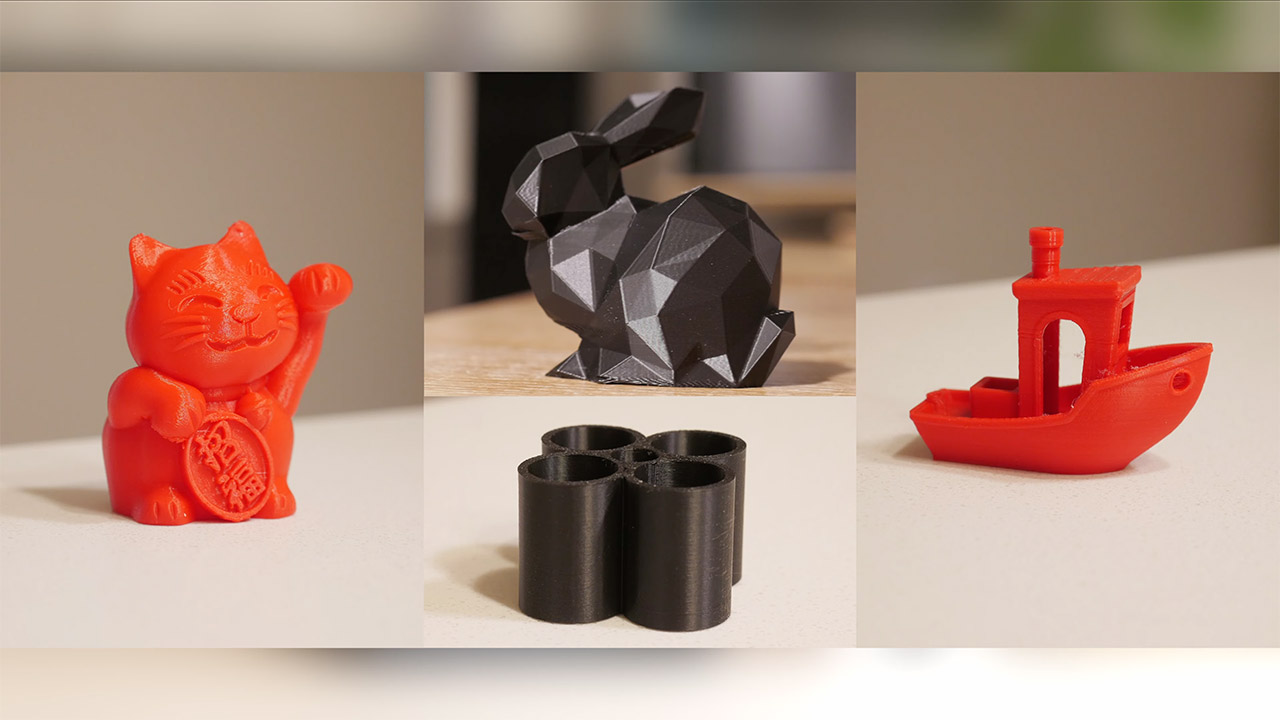
Another issue that occurred was vibration on the bed at high speeds. So he inserted some stronger Z rods, 8 millimeters in diameter instead of 6, which had a huge influence. The machine now produces clean, consistent parts because layer lines stack up uniformly, and the gantry’s lightweight design keeps ringing under control. As a result of its short travel motions and high acceleration without frame instability, the Encore can rapidly build a wide range of miniature prototypes. It is now being used to accelerate work on a Bambu A1 for rapid iteration projects.
The project files are fully hosted on GitHub, and STLs are available on Printables, MakerWorld, and Thingiverse. If you want to dig deeper, the CAD archives are accessible in Fusion 360 and STEP formats, and the documentation is constantly expanding as he adds assembly notes and the complete bill of materials. [Source]
AudioQuest did not invent portable digital audio, but with the original DragonFly USB DAC in 2012, it did something arguably more important: it made the category make sense to normal people. Plug it into a laptop, connect headphones or a real system, and suddenly the miserable little audio section inside your computer could go sit in the corner and think about its life choices.
That original DragonFly was designed by Gordon Rankin, the same Gordon Rankin behind Wavelength Audio — and yes, the man also knows his way around a tube amplifier. His 300B-based Wavelength Duetto remains the best tube amp I ever owned, which is still a sore subject. Damn you, ex-wife’s lawyers.
AudioQuest says more than 300,000 DragonFly DACs have been sold worldwide, which is not a rounding error. That is a category-defining number. I still have the original DragonFly, DragonFly Red, and DragonFly Cobalt somewhere in the black hole otherwise known as my box of hi-fi accessories. Every audiophile has one. Some have three.
Some still have one plugged into an older MacBook that refuses to turn back on. Damn you, dead hard drive and the piece of biltong I used to beat that smug aluminum bastard like it owed me money.
Advertisement
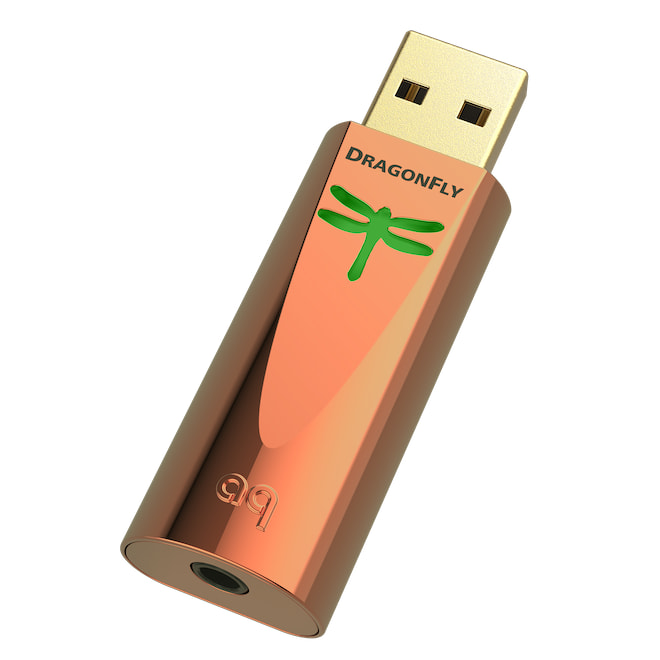
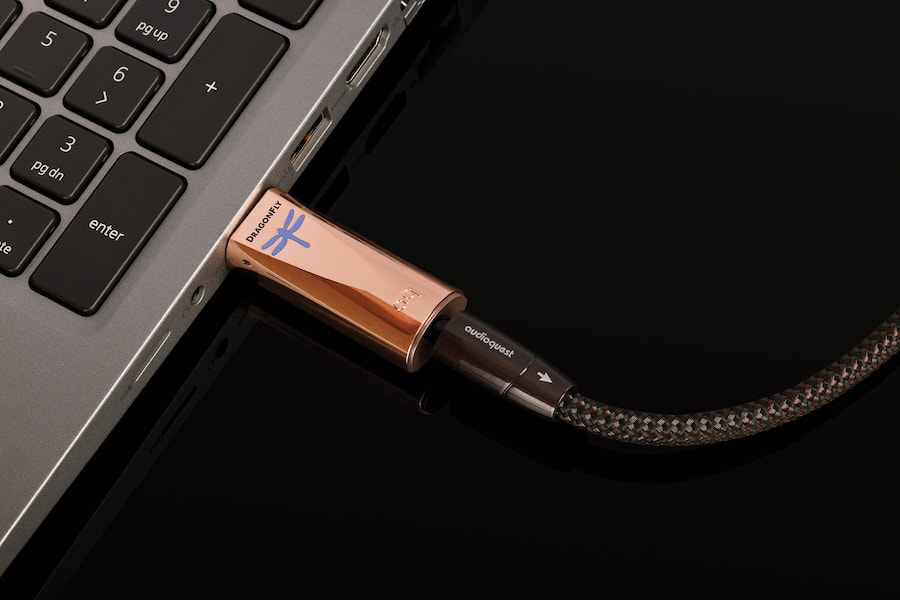
The new AudioQuest DragonFly Copper, introduced at High End Vienna 2026, arrives in a very different market. The original DragonFly helped create the USB DAC/dongle DAC category; in 2026, that category is packed tighter than a Knicks watch party outside Penn Station. iFi Audio, FiiO, Cayin, Questyle, Astell&Kern, Campfire Audio, and others now offer pocket-sized DAC/headphone amps with higher published resolution support, balanced outputs, app control, wireless codecs, and in some cases Bluetooth support for aptX, aptX HD, aptX Lossless, and LDAC.
So Copper cannot win merely by being cute, copper-colored, or historically important. Nostalgia is not a feature set. Thankfully, AudioQuest appears to understand that.
DragonFly Copper Is More Powerful, More Efficient, and Still Designed to Be Simple
The headline changes are straightforward: DragonFly Copper uses a 32-bit ESS Sabre ES9218 DAC/headphone amplifier, outputs 2.1 volts, draws 25% less current than previous DragonFly models, and delivers twice the output power of any earlier DragonFly, according to AudioQuest. It remains a portable USB DAC, preamplifier, and headphone amplifier designed for headphones, powered speakers, preamps, amplifiers, and full audio systems.
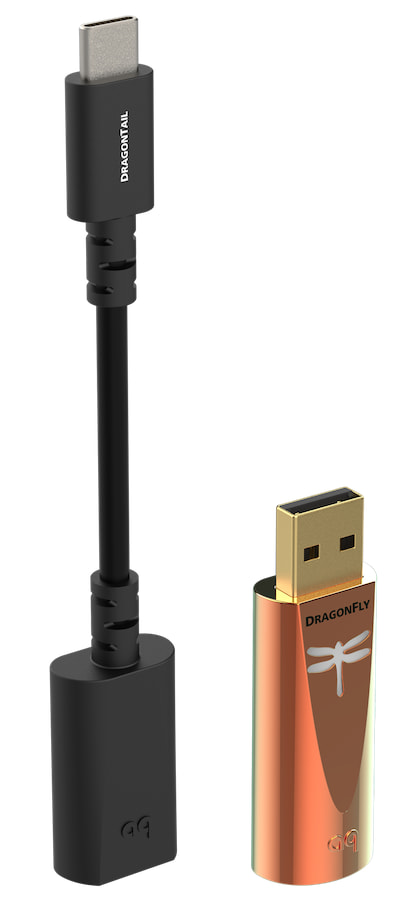
That matters because DragonFly has always lived or died on ease of use. Copper still works with Apple, Windows, iOS, and Android devices, meets USB Audio Class standards, and does not require additional drivers. AudioQuest also includes a DragonTail USB-A to USB-C adaptor, which is far more useful in 2026 than another removable cap destined to vanish under a car seat. My mother once found one under the back seat of her Subaru, and I still have no idea how it got there.
The volume is still controlled by the phone, tablet, or computer. That may look less fancy than a rotary knob or OLED screen, but Rankin’s explanation is practical: DragonFly negotiates with the host device and uses its own internal volume control, allowing the host to send bit-true audio while avoiding extra controls that add power draw and fragility.
AudioQuest has confirmed the core DragonFly Copper specifications, although not every measurement has been published yet. Copper uses a 32-bit ESS Sabre ES9218 DAC/headphone amplifier and delivers 2.1 volts of output from its 3.5mm analog headphone/preamp output. It supports PCM playback at 44.1, 48, 88.2, and 96kHz, with the DragonFly logo changing color to show standby and sample-rate status: red for standby, green for 44.1kHz, blue for 48kHz, yellow for 88.2kHz, and light blue for 96kHz.
Advertisement
The Copper Case Is Not Just Jewelry
AudioQuest says the copper-plated case is designed to improve RF-noise drainage, drawing from the company’s work on the RF-draining barrels used in its Mythical Creatures interconnects. Garth Powell says the direct-plated copper case was chosen before the product name, because the material is highly conductive at radio frequencies and more effective at draining induced RF noise than polymer, brass, zinc, or aluminum.
Advertisement. Scroll to continue reading.
That is the most AudioQuest part of the story, and yes, some people will immediately start sharpening their measurement knives. Fair enough. But RF noise in compact USB-powered audio devices is a real engineering problem, especially when the source is a laptop, tablet, phone, or streamer with more digital hash flying around than a Best Buy returns counter on December 26th.
Copper is also compatible with AudioQuest’s JitterBug FMJ USB filter, unlike Cobalt, which already incorporated some similar filtering technology and was not always an ideal match with an external JitterBug in series. AudioQuest says Copper is its quietest DragonFly yet, but additional noise rejection is possible with JitterBug.
Advertisement
No 32-bit/384kHz, No DSD Arms Race
This is where the 2026 market comparison becomes important. Many current dongle DACs advertise 32-bit/384kHz PCM, DSD256 or higher, balanced 4.4mm outputs, onboard displays, app control, and sometimes wireless support. On a spec sheet, DragonFly Copper looks conservative because it remains limited to 24-bit/96kHz playback.
AudioQuest is not pretending otherwise. Rankin’s argument is that Full Speed USB tops out at 24/96 and consumes significantly less power than High Speed USB implementations used for 32/384 playback. His position is blunt: higher-rate processing often increases current draw, heat, noise, and processing demands without necessarily improving real-world performance from a phone-powered DAC.
That will not satisfy everyone. Some buyers want the biggest numbers because the spec sheet told them to feel something. But AudioQuest is clearly not chasing the dongle DAC arms race. Copper is being positioned as a better DragonFly: more power, less current draw, lower distortion, better RF noise management, and the same plug-and-play simplicity that made the line popular in the first place.
Gordon Rankin Had to Restart the Project After MQA Became Yesterday’s Sandwich
The development story is also more interesting than the usual “we improved everything because adjectives” routine. According to Rankin, the next DragonFly had originally been planned as a more powerful MQA-rendering model, codenamed “Ruby.” Then COVID delayed development, MQA’s relevance collapsed, and the war in Ukraine disrupted access to materials used in earlier DragonFly components. That forced AudioQuest and Rankin to rethink the design goals and parts strategy.
Advertisement
Removing MQA from the mandate changed the engineering path. Without MQA rendering, the processor no longer had to inspect and process incoming frames for MQA data, reducing DSP requirements and allowing a lower-power design. Rankin says ESS delivered the ES9218 integrated DAC/headphone solution, enabling twice the headphone power of previous DragonFly models while retaining digital filter options used in Cobalt.
The other major work was less glamorous but likely more important: capacitors, board layout, and careful tuning. That sounds boring until you realize that small USB-powered DACs live or die by layout, power behavior, and noise management. Tiny boxes do not forgive sloppy engineering. They just make it portable.
The Bottom Line
DragonFly Copper Enters a Much Tougher Dongle DAC Market.
This is the part AudioQuest cannot duck. In 2012, DragonFly was a revelation. In 2026, it is walking into a knife fight wearing a very nice copper jacket.
Advertisement
The competition is real. iFi has been aggressive in the portable DAC space. FiiO offers strong value and increasingly polished hardware. Cayin and Questyle bring serious amplification credibility. Astell&Kern knows premium portable audio better than almost anyone. Campfire Audio has also entered the USB DAC/amp market with products aimed at IEM and headphone users who want small, clean, travel-friendly solutions.
Many of those competitors offer features DragonFly Copper does not: balanced outputs, higher-resolution PCM and DSD support, gain modes, displays, firmware customization, app-based settings, and wireless codec support. Copper’s counterargument is not more buttons. It is execution, power efficiency, reduced current draw, low noise, improved output, and the fact that it remains one of the easiest ways to improve sound from a phone, tablet, laptop, streamer, or desktop system.
Advertisement. Scroll to continue reading.
Pricing & Availability
AudioQuest DragonFly Copper is available for $249.95 at Crutchfield, which includes USB-C adapter. but we don’t yet know when the product ships. For more information, visit audioquest.com.
As tech giants rush to build out these massive AI data centers, critics have questioned the land, water and power being guzzled, including the protesters who staked out the Microsoft Build software conference focusing on AI in San Francisco this week.
One of the people positioned at the entrance to the Fort Mason event center, handing out leaflets detailing the effects of data centers being built, was Amy Herman. I spoke to her about her concerns.
Advertisement
Watch this: AI Data Center Infrastructure Plans Continue to Draw Controversy
“I would say it’s more of an opposing viewpoint,” she clarified when I asked about the protest. “It’s not that we’re against technology, or against any sort of monetization of innovation.”
She said it’s more a challenge of balancing limited natural resources with big tech companies that don’t want to be held accountable for managing climate change while chasing technological advancement.
“What we’re doing on our planet and all the impacts that are happening, not just here in San Francisco but across the United States,” said Herman, adding that “the ripple effects of that are going to be felt.”
Advertisement
In response to a request for comment, Microsoft said it “respects the right to peaceful protest.”
Microsoft CEO Satya Nadella spoke at the Build 2026 conference about changes the company is making to its data centers.
Corinne Reichert/CNET
During the Microsoft Build keynote on Tuesday morning, CEO Satya Nadella said Microsoft would seek community permission to build data centers in the future.
Advertisement
It’s aiming to get approval from local residents by improving the cooling systems and reducing water use by data centers; ensuring data centers don’t increase electricity prices for locals; adding to “the tax base that funds local hospitals, schools, parks and libraries,” and investing in AI training and non-profits in those areas.
Nadella called the rapid buildout of data centers “extraordinary” during a live podcast on Tuesday with Sarah Guo and Elad Gil of No Priors and Swyx of Latent Space.
“At this point, it’s clear that … we as an industry are very principled about ensuring that the benefits of all the stuff we’re talking about are felt in real ways at the community level,” Nadella said. “It has to be real, where people are saying, ‘It’s not changing the prices of energy for me, in fact, if anything, it’s bringing down the prices because long term there’s going to be a better grid, there’s going to be more energy … water is being replenished.’”
He emphasized the importance of getting communities to buy into AI technologies and the data centers that drive them.
Advertisement
“All this has to be real. And if that is the case, then we’ll have permission,” he said. “If it is not, you won’t have permission; it’s as simple as that.”
He added that Microsoft is seeking to add jobs during and after construction of these massive data centers — but he said people are right to question it all.
“We have to take it as an industry very seriously,” Nadella said. “I think it’s good for communities to be skeptical, ask the hard questions.”
Some of the people asking those questions were on hand outside Microsoft Build alongside Herman, with colorful imagery depicting scenes of corporate greed, pollution and poverty, eager to speak with conference-goers.
Advertisement
Herman said one of the major issues is that electricity prices in rural areas are much higher than they were before data centers were constructed in those communities, with people forced to choose between paying for medical support or their electricity bills.
Microsoft has more than 500 data centers in 80 regions, with the tech giant adding more data center capacity in the past 18 months than it did in the first decade of its Azure cloud services. And they’re not only in the US, but across the rest of the globe — Australia, New Zealand, Asia, Africa, the Middle East, Europe and South America.
Nadella explained how Microsoft’s data center design would change and consume only the amount of water that a restaurant does in a year.
Advertisement
Corinne Reichert/CNET
Speaking during the keynote about the Fairwater data center — “our first AI super factory” — Nadella broke down the three major workflows of such factories into AI training, inference and agent runtime.
“The entire system was designed from the ground up for AI,” Nadella said. “And we’re rethinking even the power delivery … how do we deliver hundreds of kilowatts per row while minimizing … the conversion loss that happens from the grid to the silicon?”
Fairwater went live ahead of schedule in April, with Nadella calling it “the world’s most powerful AI data center” in a post on social media site X.
He says there was a new approach to water use in the Fairwater AI data center’s cooling system, which is filled only once and then can operate “with zero water consumption” thereafter.
Advertisement
“The daily water usage over the course of an entire year is roughly equivalent to what a single restaurant would use,” Nadella said on Tuesday.
Some data centers that are currently under construction “will use more energy than large cities,” according to Harvard Law School‘s Ari Peskoe.
Microsoft says Fairwater has “cost-efficient, reliable power,” with usage of around 140kW per rack, 1,360kW per row, as well as software and hardware solutions for reducing power during off-peak times and using “an on-site energy storage solution to further mask power fluctuations without utilizing excess power.” For comparison, the energy usage of a typical US residential utility customer is around 1.2kW.
Advertisement
Data center protesters outside the Build conference came with signs colored to look like the Windows logo.
Corinne Reichert/CNET
During the keynote on Tuesday morning, Nadella said Microsoft’s new principles for building out data centers involve ensuring they “do not increase the electricity prices, making sure that we are replenishing all our water use, creating jobs in the local communities for the local residents, adding to the tax base, making sure we’re strengthening the communities by investing in local training and the nonprofits in the area.
“Only when we live up to these principles, do the hard work around it, is when we earn the permission to go ahead and innovate and build,” the CEO said.
When I asked Herman about Microsoft’s promises to give back to local communities after seeking their permission to build data centers there, she expressed doubtful hope.
Advertisement
“If they’re actually that invested, I’d love to see them develop a more cooperative business development model that incorporates democratic values at the core of their operational agendas,” she said. “I haven’t seen that demonstrated in practice internally as a business, so why would I trust it at a local governance level?”
The test parts being printed on the Stratasys Fortus 450mc. (Credit: My Tech Fun, YouTube)
Professional Stratasys FDM printers demand a pretty hefty price premium over your typical hobbyist-level machine, with the gold-plating continuing even with the special filament cartridges that you buy for some of their printers.
This raises the question of in how far this eye-watering price tag is justified, and how much is just you paying for support and the brand name. After acquiring a spool of Stratasys ABS filament via a US viewer, [Dr. Igor Gaspar] set to work to try and answer this question.
The viewer had already liberated the spool of ABS+ P430 filament from its cartridge, making it easy to use that directly with the Bambu Lab FDM printer.
To make it a fair comparison, [Igor] also needed to have a sample printed on a real Stratasys printer, for which he used a local company’s services. An interesting sidenote here is that the US viewer’s company moved away from Stratasys to Bambu Lab printers.
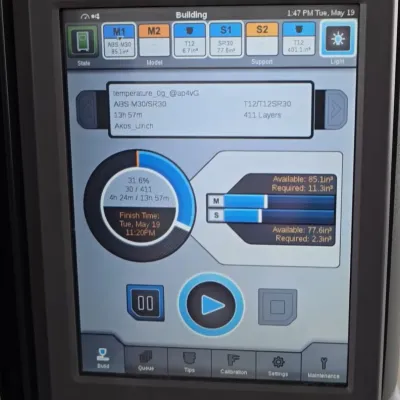
[Igor] was able to see his test parts being printed on the Stratasys printer, as said company is in the same city. This showed him that it took 14 hours to print the parts versus 3.5 hours on the Bambu Lab printer, suggesting that his worries about the right printing parameters for the Stratasys filament were warranted. Sussing those out was thus paramount for a fair comparison and warranted some test prints.
Advertisement
From a sheer aesthetic point of view the Stratasys-printed parts looked much cleaner, and their dimensional accuracy was also significantly better due to the slicer adjusting for this. Between the used Stratasys M30 and Bambu Lab ABS filaments there’s no clear winner, with both trading blows. Amusingly enough, the older Stratasys ABS type in the form of the ABS+ P430 filament performed the best of all when printed on the Bambu Lab printer at its preferred temperature setting.
Moral of the story is thus that – unless you really want to pay for that service contract – to loot old Stratasys ABS spool cartridges and use them in your hobbyist FDM printer. As [Igor] says in the conclusion, the nicer looks is probably due to them printing very thin layers, much finer than the 0.2 mm layers he used. This would also match the much longer print time and is thus something we can replicate on any FDM printer with a temperature-controlled printing environment.
It’ll be available for PC and mobile, and maybe Nintendo Switch down the line.
Hidden Folks BV
A sequel to the 2017 interactive hidden object game Hidden Folks is coming to PC and mobile in 2027. The developers released the trailer for Hidden Folks 2 during Summer Game Fest’s Wholesome Direct showcase, revealing it’ll bring back the illustrated black-and-white art style and silly sounds that defined the first.
“True to the original, the game is all about exploring the little stories scattered throughout each landscape, without time limits or any pressure to score points,” the team wrote in a Steam post. “The sequel features completely new themes and areas, improved graphical quality, a second (not text!) clue for those in need, lots of new mouth-made sounds, and various quality-of-life improvements.”
The team says it’s working to release Hidden Folks 2 “in the first few months of 2027.” It’ll be available on Steam, itch.io, the App Store, the Google Play Store and possibly Nintendo Switch, “if there’s demand.”






















































You must be logged in to post a comment Login