GAUR, Nepal (AP) — The young mother’s breath had grown ragged. Inside her mud home in rural Nepal, she hunched over in agony, pain pummeling her pregnant belly, her swollen legs scarcely able to support her.
Kabita Mukhiya was in the midst of an emergency, but didn’t know it. For weeks, she’d suffered at home, because there was nobody around to tell her to rush to a hospital. The aid workers who once regularly visited her village to help pregnant women had stopped coming, after foreign aid cuts by the United States shuttered a program aimed at saving mothers’ and babies’ lives.
Kabita was uneducated and impoverished, and she did not know what was happening to her body. In desperation, she turned at last to her aunt for help, who hauled her off to the hospital, where both women wept as the doctors said things neither could understand.
Which is why Kabita — confused and confined to her hospital bed — turned to something she could understand: prayer.
Advertisement
“Please save the baby,” she begged God through her tears. “Please save me.”
Then, through the chaos, came the words that Kabita finally grasped, but could not bear: It was too late. Her baby was dead.
And her own life was now hanging by a thread.
This story was funded by a grant from the Pulitzer Center. The Associated Press is responsible for all content.
Advertisement
One baby at a time, the world is marching toward a grim milestone: Because of global cuts to foreign aid, the Gates Foundation has predicted that 2025 will be the first year this century where child deaths will increase.
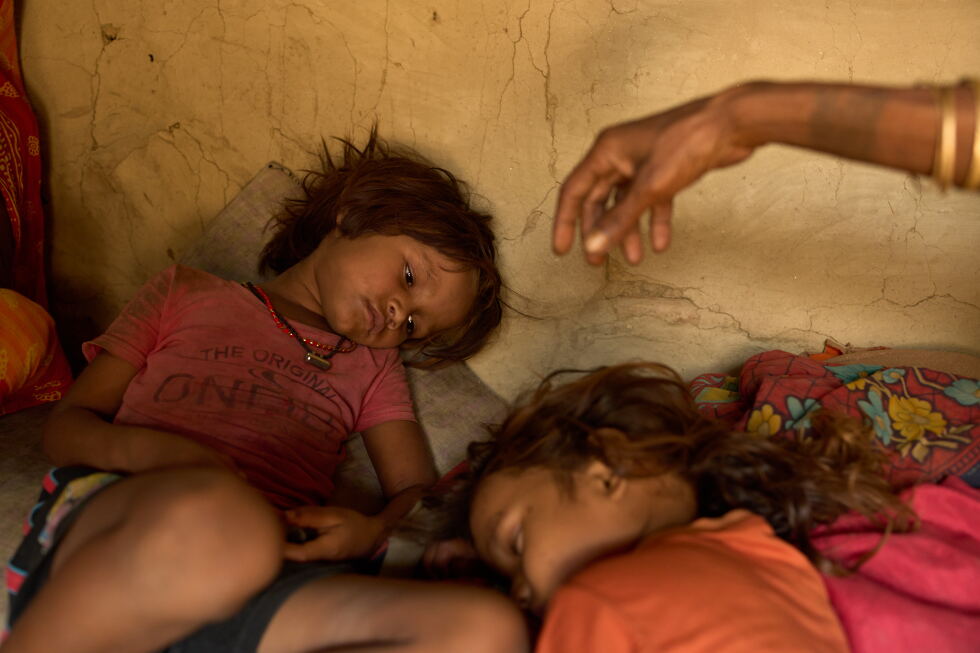
Sonam Mukhiya, left, lies next to her 3-year-old brother, Yubraj Mukhiya, and their grandmother in their home in Gaur, Nepal, on May 19, 2026. Their mother, Kabita Mukhiya, died in December while 28-weeks pregnant amid disruptions to nutrition programs and reproductive outreach services following last year’s foreign aid cuts by the United States. (AP Photo/Bram Janssen)
Advertisement
Sonam Mukhiya, left, lies next to her 3-year-old brother, Yubraj Mukhiya, and their grandmother in their home in Gaur, Nepal, on May 19, 2026. Their mother, Kabita Mukhiya, died in December while 28-weeks pregnant amid disruptions to nutrition programs and reproductive outreach services following last year’s foreign aid cuts by the United States. (AP Photo/Bram Janssen)
Advertisement
Advertisement
Advertisement
For many experts, the health of a country is measured by the health of its smallest: Children under the age of 5. And while global child mortality data for 2025 won’t be available for several months, health officials are already bracing for a surge in deaths among the world’s youngest and most vulnerable.
The decision by U.S. President Donald Trump’s administration to dissolve the United States Agency for International Development — once the world’s largest humanitarian donor — gutted maternal and neonatal care, decimated nutrition programs for millions of pregnant women and children and left scores of birthing centers devoid of equipment, medicine and staff. The U.S. cuts, followed by foreign aid cuts from several other countries, forced 60% of women’s organizations to reduce their services, according to the World Health Organization.
The U.S. government has repeatedly insisted that no one — and, particularly, no children — have died because of its funding cuts. But the AP has documented the deaths of women and children from Myanmar to Nigeria.
Advertisement
A study published in The Lancet journal, meanwhile, said the U.S. cuts could lead to more than 14 million deaths, including more than 4.5 million children under age 5, by 2030.
Advertisement
Sign up for Morning Wire:
Our flagship newsletter breaks down the biggest headlines of the day.
“It’s heartbreaking to see what’s happening. It’s decades of progress being washed away,” says Rajat Khosla, executive director of WHO’s Partnership for Maternal, Newborn and Child Health.
Advertisement
In a statement to The Associated Press, the U.S. State Department said the Trump administration had reinvigorated its assistance programs to focus on efficiency, effectiveness and partnership. The department also said the U.S. spends more on health and humanitarian assistance than any other country, and still supports programs in Nepal aimed at improving maternal and child health.
“The rest of the world needs to contribute more and share the burden,” the department said.
In Nepal, cuts to nutrition and reproductive outreach programs have already increased pregnancy complications and deaths, according to health workers, government officials, aid workers and families interviewed by the AP.
“The number of deaths of mothers, young mothers, during delivery has really increased,” says Mona Sherpa, country director for the aid group CARE Nepal, which lost more than half its funding from the U.S. cuts. “The expected number within a year is happening within four to six months.”
Advertisement
Anita Gupta, 20, receives an ultrasound in Gaur, Nepal, on May 20, 2026. (AP Photo/Bram Janssen)
Advertisement
Anita Gupta, 20, receives an ultrasound in Gaur, Nepal, on May 20, 2026. (AP Photo/Bram Janssen)
Advertisement
Advertisement
Advertisement
Maternal and child health programs are perhaps the clearest foreign aid example of small, relatively cheap interventions leading to the greatest good. Packets of fortified peanut paste that cost less than a dollar each can bring a malnourished child back from the brink of death within weeks. Clean birth kits that cost a few dollars slash the risk of mothers and newborns dying from infections.
Advertisement
In Nepal, a five-year, $35 million program canceled by the U.S. cuts reached more than 100,000 women and girls in its first three years. The program equipped birthing centers and trained nurses, midwives and outreach workers known as female community health volunteers. These workers regularly visited pregnant women’s homes, explained the warning signs of complications and urged them to attend prenatal appointments, often escorting them there.
When the program was canceled, many pregnant women were left to navigate a medical system they struggle to trust or understand, Sherpa says.
The consequences can be found in the dusty, sun-scorched villages of Nepal’s Rautahat district, home to Kabita’s family and one of the poorest and least-literate parts of the country. At a birthing center in Rautahat’s municipality of Dewahi Gonahi, the number of women coming for prenatal checks has halved since the funding cuts, says the officer in charge, Kishori Shah. Because of that, women aren’t identifying complications fast enough, he says, leading to emergencies.
“There would have been a decrease in complications if the USAID program was still running,” he says.
Advertisement
In the village of Prempur Gonahi, it took just 10 months — a touch longer than a typical pregnancy — for newborns to begin dying again after the U.S. cuts, says the officer in charge, Sadho Baitha.
Before CARE’s program launched in Rautahat in December 2022, Baitha says, the village averaged 10 to 15 neonatal deaths per year. By 2024, records show, there were zero. But since the program’s cancellation, newborns have begun dying again; the first was in December, and four more followed by March.
Advertisement
Nitu Devi, 22, who is pregnant, sits on a bed before an ultrasound inside a clinic in Gaur, Nepal, on May 20, 2026. (AP Photo/Bram Janssen)
Nitu Devi, 22, who is pregnant, sits on a bed before an ultrasound inside a clinic in Gaur, Nepal, on May 20, 2026. (AP Photo/Bram Janssen)
Advertisement
Advertisement
Advertisement
Yet many deaths linked to the funding cuts will remain invisible, in part because the cuts themselves left scores of mortality data collectors jobless. In some places, there is simply no one left to count those who died.
This is the case in Dewahi Gonahi, where mortality reporting and recording services have collapsed, says Shatrudhan Singh, executive director of Campaign Nepal, CARE’s partner. Which is why, he says, the government record shows just two infant deaths in the municipality since the funding cuts, despite his group knowing of eight.
“There must be more than that,” he says. “We just can’t identify them.”
Advertisement
The stories of loss are hidden inside the cramped homes of the loved ones left behind and in the vacant eyes of now-motherless children.
Pregnant women wait for an ultrasound inside a clinic in Gaur, Nepal, on May 20, 2026. (AP Photo/Bram Janssen)
Advertisement
Pregnant women wait for an ultrasound inside a clinic in Gaur, Nepal, on May 20, 2026. (AP Photo/Bram Janssen)
Advertisement
Advertisement
Advertisement
Advertisement
From the shadows of her own home, Phula Devi tries to verbalize her loss in a voice so halting and hushed it’s barely audible. She has never spoken of her grief to anyone — not even to her husband.
Like most women in this village a few miles from Kabita’s, Phula never attended school. She knew almost nothing about pregnancy; she does not even know her own age, just that she is not yet 20.
Phula is the type of woman outreach workers say they would have targeted. Instead, one morning in January, an informal village health practitioner came to her home and said the fetal heartbeat was slow. He told her to go to a hospital, then left.
Phula didn’t understand. And she was at the mercy of her relatives, who waited until that night to take her to the hospital.
Advertisement
There, the doctors urged a C-section. But Phula didn’t know what that meant. Terrified, she pushed the baby out on her own. He emerged silent and still, declared dead and whisked away before Phula could hold him, name him or even see his face.
A woman receives an examination from a doctor inside a clinic in Gaur, Nepal, on May 20, 2026. (AP Photo/Bram Janssen)
Advertisement
A woman receives an examination from a doctor inside a clinic in Gaur, Nepal, on May 20, 2026. (AP Photo/Bram Janssen)
Advertisement
Advertisement
Advertisement
Advertisement
He was overdue, hospital records show, a risk factor for stillbirth. Nurse Guddi Rahami, who remembers Phula’s case, says the region’s uneducated families often resist C-sections because they believe the operation is somehow bad.
From inside her darkened home, Phula hides her tear-streaked face behind a scarf.
“I think of my baby all the time,” she murmurs.
She would have done anything to save him, she says. If she’d only known how.
Advertisement
___
Down a winding dirt path peppered with bleating goats, Kabita’s two-room home emerges into view. Outside, women trudge past in a rainbow of saris that cling to their fragile frames, seared by the punishing sun.
This became Kabita’s home at 14, when she married her husband after a life of loss. Her mother died when she was little, and her father soon abandoned her to move to India with his new wife. Her three siblings would later follow him.
Advertisement
A photo of Kabita Mukhiya, who died during pregnancy, is displayed on a phone on May 19, 2026, in Gaur, Nepal. (AP Photo/Bram Janssen)
Advertisement
A photo of Kabita Mukhiya, who died during pregnancy, is displayed on a phone on May 19, 2026, in Gaur, Nepal. (AP Photo/Bram Janssen)
Advertisement
Advertisement
Her wedding photo shows her as the child she still was when she married: slender, with wide-set brown eyes, soft cheeks and a shy smile. She struggled to bond with her mother-in-law, who shared their home, but endeared herself to her aunt and neighbor, Shraddha Mukhiya. Shraddha relished Kabita’s innocence and was amused by her constant, occasionally nonsensical, chatter. She came to view the girl as her daughter.
Kabita quickly fell pregnant with a daughter of her own, Sonam. Her second daughter, Anushka, followed a year later, and her son, Yubraj, a year after that.
Advertisement
Her husband, the family’s sole provider, was rarely home, forced to chase construction jobs around Nepal and India that brought the family around 12,000 Nepalese rupees ($80) per month. It was enough to buy rice, lentils and vegetables, but little else.
Despite the difficulties, the 20-year-old Kabita was overjoyed to learn she was pregnant with her fourth; she and her mother-in-law longed for another boy. She scraped together enough money to buy clothes for the baby, whom she planned to name Shivraj, and dreamed that he would one day get the education she was never afforded.
When she was pregnant with Yubraj, she received a U.S.-funded nutritious powder that helped supplement her limited diet. But by the time she became pregnant last year, the funding cuts had eliminated the local birthing center’s nutritional supplements and food for pregnant women, says Punam Mahato, a nurse who treated Kabita.
U.S.-funded nutrition programs were crucial to the region, particularly for children, health workers say. The prevalence of wasting — a life-threatening form of malnutrition — among children under 5 in Kabita’s province was 7.4% before the U.S. funding cuts, according to a survey conducted by the government and the United Nations’ children’s agency. That number rose to 12.3% after the cuts, according to a national malnutrition screening conducted in May by the government and the aid group Helen Keller Intl, which saw its nutrition program halted by the U.S. cuts.
Advertisement
As her pregnancy progressed, Kabita’s belly swelled while the rest of her remained gaunt. Sometimes she only managed to eat two small meals a day. And the mothers’ group meetings she attended while pregnant with Yubraj had ceased.
She missed the recommended first trimester appointment, and made her first visit to the birthing center for a check at 16 weeks. Mahato, her nurse, noticed she was pale. She suggested Kabita get a blood test to check her hemoglobin, which can plummet in pregnancy amid nutritional deficiencies.
But Kabita never got the test, and didn’t seem to understand its necessity; she never mentioned it to her mother-in-law. At 24 weeks, Mahato was worried by Kabita’s pallid complexion and again recommended a blood test. Again, Kabita demurred, likely because she didn’t grasp its importance, Mahato says.
Advertisement
Rajkumari Patel, a community health worker trained to ensure impoverished pregnant women in rural Nepal receive timely prenatal care, poses for a portrait in her home in Gaur, Nepal, on May 20, 2026. (AP Photo/Bram Janssen)
Advertisement
Rajkumari Patel, a community health worker trained to ensure impoverished pregnant women in rural Nepal receive timely prenatal care, poses for a portrait in her home in Gaur, Nepal, on May 20, 2026. (AP Photo/Bram Janssen)
Advertisement
Advertisement
Rajkumari Patel, a community health volunteer who worked under CARE’s now-canceled program, said they would have acted as mediators to explain to Kabita why the test was crucial.
Instead, Kabita returned home. She was tormented by stomach pains that grew increasingly fierce. Her body swelled.
Advertisement
She suffered for weeks. By December, when she was 28 weeks pregnant, Kabita had become so weak she could not walk. Her husband was working in India, so she turned to Shraddha, her aunt, for help. The elder woman took her to the hospital.
Doctors drew Kabita’s blood to check her hemoglobin levels, then handed the results to the women. But Kabita and Shraddha didn’t know what they meant. Nor did they understand the rush of activity and tests and medical explanations that followed.
Their understanding finally came amid the absence of a heartbeat. A test confirmed it: Kabita’s baby was dead.
___
Advertisement
Everything was happening so fast.
The hospital was not equipped to remove the baby’s remains from Kabita’s womb. Staffers urged them to go to another hospital. But with no money and no sense for the danger Kabita was facing, the grieving women returned home.
By the next day, Kabita’s vision was distorted. Her head pounded. She was delirious.
In desperation, Shraddha took her to another hospital with lower fees. The doctors determined that she’d had a seizure from preeclampsia, where dangerously high blood pressure can be fatal if untreated, says paramedic Hridaya Narayan Mahato, who is not related to Kabita’s nurse.
Advertisement
Doctors gave her oxygen while the staff rushed to prepare the ICU.
Kabita’s hemoglobin levels were critically low, leaving her short of oxygen and straining her heart. She lay on her back, shaking and gasping for air. Shraddha sat helplessly at the foot of the bed. “You’ll be OK,” she told her niece through tears.
And then she watched as Kabita drew her final breath.
She was dead before they could get her into the ICU.
Advertisement
___
A short drive from Kabita’s home, Patel, the community health worker, sits outside her home, her words laced with frustration. Deaths like Kabita’s, she says, are precisely what she and her colleagues had been trained to prevent.
Patel used to know every pregnant woman in her village, visiting them at home. She would have done the same for Kabita, she says.
“I would have asked her, ‘Is the baby kicking? When did you last feel movement?’ I would have checked for swelling in her hands and face. I would have looked at her eyes for signs of anemia,” she says. “These are the signs I would have noticed in Kabita and said, ‘This woman needs a hospital today — not tomorrow.’ Maybe we could have saved her life.”
Advertisement
Kabita died from complications of eclampsia, with severe anemia contributing significantly, says Mahato, the hospital paramedic. Both conditions can often be identified and managed through regular prenatal care, he says.
Lachhiya Devi sits with her 5-year-old granddaughter, Sonam Mukhiya, in her home in Gaur, Nepal, on May 19, 2026. Sonam’s mother, Kabita Mukhiya, died in December while 28-weeks pregnant amid disruptions to nutrition programs and reproductive outreach services following last year’s foreign aid cuts by the United States. (AP Photo/Bram Janssen)
Advertisement
Lachhiya Devi sits with her 5-year-old granddaughter, Sonam Mukhiya, in her home in Gaur, Nepal, on May 19, 2026. Sonam’s mother, Kabita Mukhiya, died in December while 28-weeks pregnant amid disruptions to nutrition programs and reproductive outreach services following last year’s foreign aid cuts by the United States. (AP Photo/Bram Janssen)
Advertisement
Advertisement
Advertisement
Advertisement
The loss of Kabita and her baby so overwhelmed Shraddha that she couldn’t bear to tell Kabita’s husband. Still working in India, he was oblivious to the crisis until neighbors called him. His bus ride home took so long that he didn’t arrive back in the village until three days after Kabita’s funeral.
In the months since, he has frequently refused to work, lying in the dark crying for days at a time. He speaks only of Kabita, never the baby. Shraddha and his mother, Lachhiya Devi, remind him that they will all starve unless he returns to work. And so he does.
Both in their 60s, Shraddha and Lachhiya worry about how long they can care for Kabita’s little ones. From the bed she shares with her grandchildren, Lachhiya strokes the leg of 4-year-old Anushka, who slumbers next to her in the midday heat.
“How will I feed them? I’m old,” Lachhiya says, her bangles barely clinging to her bony arms. “You can see how desperately I’m trying to get by.”
Advertisement
A woman collects water from a well in Gaur, Nepal, on May 19, 2026. (AP Photo/Bram Janssen)
Advertisement
A woman collects water from a well in Gaur, Nepal, on May 19, 2026. (AP Photo/Bram Janssen)
Advertisement
Advertisement
Advertisement
Their home is quiet now without Kabita’s cheerful chatter or the cries of the baby who never made it home. The last reminders of Kabita’s life — her sparkly green sari, the pink and yellow tapestry she knitted — are packed away in a box that will be given to her children one day.
Advertisement
Shraddha remains tormented by what she didn’t know.
“We don’t have anyone to help us out here, to tell us about these things. If there was someone, we would ask them, follow their advice,” she says. “It would have saved her life.”
She looks at Kabita’s children and aches for their mother, who was barely beyond childhood herself.
“She was too young to die.”
Advertisement
___
Journalist Tulsi Rauniyar contributed to this report.
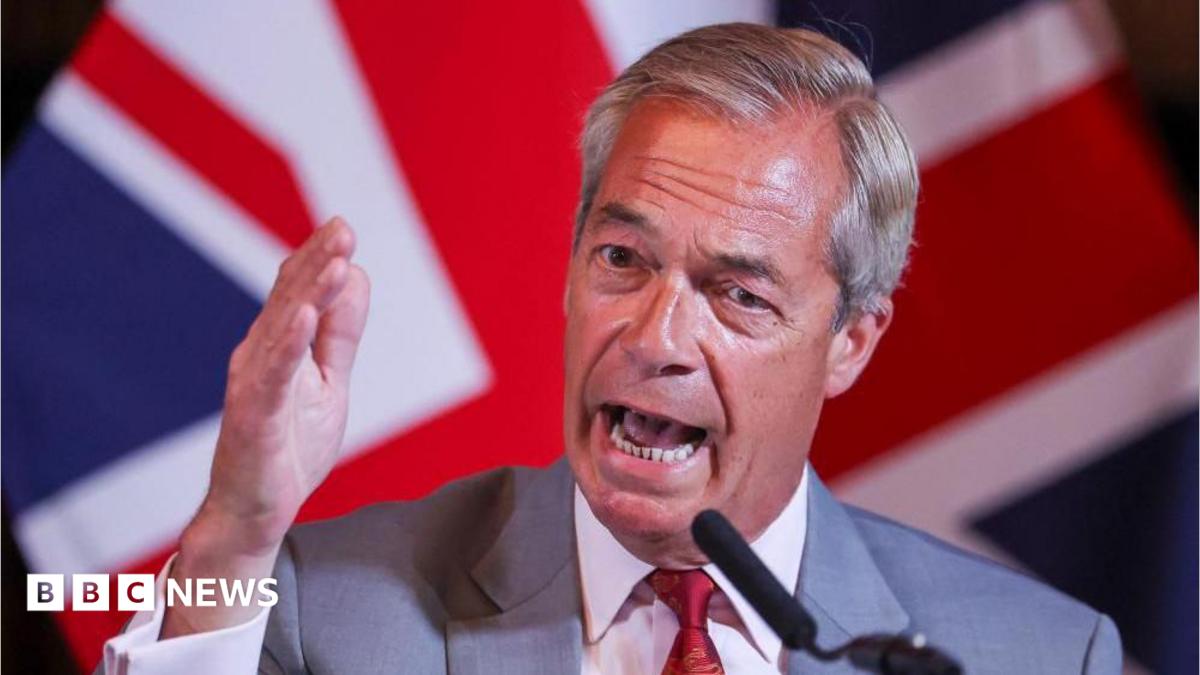
“This time last year Farage had the highest approval of the main party leaders,” says pollster Luke Tryl from the organisation More in Common. “Yet earlier this month he fell to his worst score since the general election.”
“What will worry Farage is not only that his negative approvals have risen, which may signal greater willingness to vote tactically against the Reform leader, but there are also fewer people expressing a positive view suggesting an erosion in his base,” Tryl says.
More in Common’s research suggests around 80% of voters are aware of questions around Nigel Farage’s finances, but opinions on them are mixed.
“Farage’s strongest supporters often take the view it’s an ‘establishment stitch up’,” says Tryl. “And for his opponents, it is a further reason to dislike him.”
Advertisement
Farage has managed to professionalise Reform UK, secure significant funding, and recruit high-profile figures like Robert Jenrick and Zia Yusuf to prove that the third political party he has led during his long career is not just a one-man-band.
He may be bullish after this risky (and self-imposed) by-election battle, but his rivals are framing it as a waste of money and a personal embarrassment.
Ultimately it is voters nationally, and not in this corner of Essex, who will decide if this by-election will mark a downward shift in Farage’s brand, or whether it be a springboard towards achieving his bigger aspiration of getting to Downing Street.
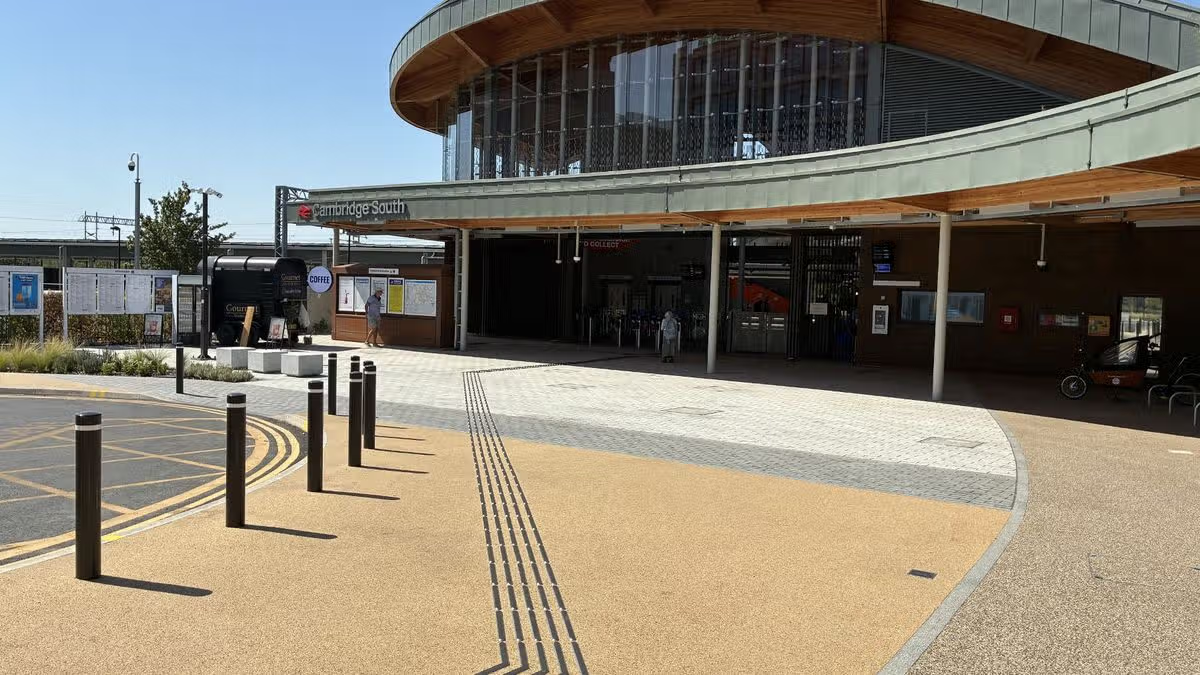
Cambridge South opened its doors in June as the city’s newest train station, but some raised concerns around the lack of on-site parking
NHS staff said Cambridge’s newest station has already halved commutes while debate remains around its lack of parking. Cambridge South station is connected to the city’s cycle network and next to the guided busway system, with Trumpington Park and Ride (P&R) less than 20 minutes away.
Advertisement
Though there isn’t any general parking for commuters – unlike the main station which has hundreds of spaces – there are five blue-badge bays for those with disabilities and space for pick-up and drop-offs. The station first opened its doors to passengers on June 28 with trains to London, Birmingham, and Stansted Airport.
Kinga Bozek, who lives in Trumpington, said she likes the new station but there could be more regular bus connections to the park and ride. The 47-year-old said: “I would like more connections and buses later on because when you come back later there’s a bus every 30 minutes, and it’s a 30 minute walk.
“There should be parking to be honest – or more buses to Trumpington Park and Ride if they want to go for that. But it’s better to come here even if we have to walk, because it’s better than walking from the main station.”
Sue Furnell said it’s her first time using the station but she’ll definitely be using it more often to get to Addenbrooke’s. The 65-year-old said: “I think it’s brilliant – I don’t drive so the lack of parking wouldn’t really get to me.”
Advertisement
Erika Nacario works in Addenbrooke’s and said the station opening has halved her commute from Royston. The 32-year-old said: “It’s very convenient and it’s saved me a lot of time – obviously it can vary in terms of delays, but that’s also the case for the main station.
“I don’t drive at all – the one that drives is my fiance, but he works in Papworth so it’s more convenient for him too, it’s horrible traffic from Royston.”
Councillor Imogene Blackburn-Horgan, ward councillor for Queen Edith’s which includes Addenbrooke’s Hospital, said it is hoped the well-connected station will reduce “parking stress” and “associated anti-social behaviours”.
Advertisement
The Lib Dem councillor said: “With a site that is well supported by train and bus connections it aims to mitigate these issues and support local residents with their wish for more active travel and less traffic.
“Being disabled, I have been able to travel via the new Cambridge South Train Station as it is on my doorstep and have found it easy to use the disabled parking, taxi drop-off/pick-up for travelling home and bus connections to reach the city.”
Cllr Olaf Hauk, ward councillor for Trumpington, said both Trumpington P&R and Babraham P&R are available for rail commuters, with free parking for up to 18 hours. He said the station was designed primarily for patients, visitors, and staff travelling to the Biomedical Campus and Addenbrooke’s Hospital.
Advertisement
He said: “It was not intended to be a starting point for long-distance journeys, which is why it was built without a car park. People travelling to destinations further afield can use other stations in and around Cambridge, or access Cambridge South by public transport, walking or cycling. Those who need to drive can use nearby Park & Ride sites, such as Trumpington or Babraham.”
He said residents in the nearby Clay Farm and Glebe Farm estates raised concerns about parking after the station’s opening, but their roads are still privately owned by the developer, Vistry, which is responsible for enforcing parking restrictions.
Cllr Hauk said: “Motorists who park in breach of those restrictions risk receiving substantial penalty charges. As local councillors, we will continue to work with Vistry and the councils to ensure that the parking arrangements are fair and effective for both residents and visitors. At the same time, we remain strong advocates for improving public transport and sustainable travel across Cambridge.”
The party claimed Essex Police had warned of a threat to Farage safety – but that was denied by the force.
On Radio 4’s Today programme this morning, Reform chairman Anderson offered a different explanation for Farage’s absence.
Advertisement
He said: “Nigel’s a great man of principle. We were at a great celebration through the night where we had hundreds and hundreds of campaigners, activists, members, politicians, MPs, councillors from all over the UK who turned out not just to campaign but to celebrate this great victory.
“I think his time is better spent with the people who supported him. He said a massive thank you to them, he’s put on a great party for them. It was a great occasion, it’s only right that he spends that time with his members, with his activists, with his supporters.”
Asked by presenter Justin Webb if there was a “credible threat” to Farage, Anderson said: “He was told that there was some planned disruption among some of the other candidates.
“Why go there when you’ve got 33 other candidates and their teams? Why would he go there and listen to them being abusive when you can be with real people from the real world?”
Advertisement
But Webb told him: “That’s not a credible threat, is it? There’s a difference.”
As Anderson tried to interrupt him, the presenter said: “Let me just ask the question.”
The Reform chairman then said: “Let me answer the question, I think you’re splitting hairs here. It’s not up to you at the BBC to decide if there’s a credible threat, it’s up to Nigel and his security team and that’s the end of that question.”
Webb then asked: “So he can say there has been a credible threat and there is no reasonable question that can be asked of it. Is that what you’re saying?”
Advertisement
Anderson replied: “What I’m saying is that what we should be doing today is celebrating Nigel’s stunning victory in Clacton.”
When Webb told him that was what he had allowed him to do, Anderson hit back: “Please stop interrupting, you’re very rude.
“He celebrated a stunning victory in Clacton. The people have stuck to fingers up to people like the BBC, the establishment, the whole blob.”
Farage received 22,239 votes, 12,784 more than his nearest rival, Count Binface, who received 9,455.
Advertisement
That was a far bigger majority than the 8,500 votes he won by when he was first elected MP for Clacton at the 2024 general election.
The Reform leader resigned as an MP last month amid the furore over his failure to declare to a £5 million gift he received from a Thailand-based crypto billionaire shortly before that election campaign.
Parliament’s standards commissioner has launched an investigation, prompting Farage to claim he is the victim of a “witch-hunt”.
That probe, which was paused when the Reform leader resigned, will not re-start and could result in another by-election if he is found to have broken Commons rules and is suspended for more than 10 days.
Advertisement
Labour, the Tories, the Lib Dems, the Green Party and even Restore Britain refused to put up candidates in the by-election.
Listen to Commons People, the podcast that makes politics easy. Every week, Kevin Schofield and Kate Nicholson unpack the week’s biggest stories to keep you informed. Join us for straightforward analysis of what’s going on at Westminster.
Nigel Farage has won the Clacton by-election but did not attend the official declaration at Clacton Leisure Centre
Nigel Farage has secured victory in the Clacton by‐election, though the result was immediately clouded by a dispute over whether police had urged him to stay away from the count due to a “credible threat” to his safety.
Advertisement
The Reform UK leader declared he had won “fairly convincingly” long before the official announcement, hailing the outcome, delivered on the hottest day of the year, as an “overwhelming endorsement” of his leadership.
Farage said he would not attend the declaration at Clacton Leisure Centre after being informed of what he described as an “organised campaign to disrupt and degrade the result“. A party spokesperson later insisted Essex Police had advised him not to appear because of a credible threat.
Despite this, the Press Association understands that Essex Police did not advise Mr Farage, or any other candidate, to stay away from the count.
Advertisement
A spokesperson for Essex Police said: “We have a proportionate and robust policing operation to ensure the safety and security of all participants in the count.”
Deputy Reform leader Richard Tice later indicated it was Mr Farage’s “team” who concluded that “there was sufficient anxiety, and concern, and threats” to warrant him staying away from the count.
When pressed for further details on the information the party claimed to have received, he told GB News: “No, I can’t. But I think we should just trust those tasked with keeping Nigel safe and alive, I hesitate to say, but that’s what the task is.
“And if a credible threat is perceived or a deep anxiety, whatever you want to term it, clearly they’re going to err on the side of caution, and that’s just the reality.
Advertisement
“So, yes, of course, it’s a shame he would have loved to have been there, but security is paramount, and everybody knows we’ve had a very, very difficult few weeks and last couple of months.”
Mr Farage triumphed with 22,239 votes, with Count Binface coming second on 9,455 votes. Mr Farage claimed a 12,784 majority, representing 62.82% of the vote.
This marks an increase from his 8,405 vote majority, 46.2%, when he prevailed at the 2024 general election. The declaration came shortly after 6am. Turnout stood at 44.37%, a drop of just over 14%. A total of 32 of the record 34 candidates forfeited their deposits.
Advertisement
Mr Farage informed supporters at an all-night “Farage-fest” gathering organised by Reform in Essex that he wouldn’t be attending the count: “I’m not scared of these people, far from it.
“But I’m damned if I’m going to stand on a stage, having won a resounding victory, a ringing endorsement of all that I’ve tried to fight for, and you’ve tried to fight for, and be demeaned and humiliated by nobodies, and I will not sadly be attending the count.”
Mr Farage had been due to deliver what was promoted as a “major speech” in Clacton at 10.30am on Friday, but Reform scrapped it, stating he had “already commented on the expected result of the by-election”. In his address, Mr Farage declared, hours before the outcome was officially announced: “The verdict is now in, and it is a convincing, overwhelming win with more votes than we got in the general election of 2024.”
He continued: “Today the voters in Clacton have stuck up two fingers to the entire political establishment.”
Advertisement
He previously told GB News: “Look, this is an overwhelming endorsement of me. I have had enough of being judged by mainstream media, being called a criminal.
“Do you know, if I made one sin, if I haven’t filled in a piece of paper, I’ve broken no law, I’ve broken no tax law, I’ve taken no public money, I don’t even own a motorhome.”
Council acting returning officer and chief executive Ian Davidson confirmed he was unaware Mr Farage would not be attending the count until the Reform UK leader revealed it during his speech to supporters.
Advertisement
“It is up to individual candidates’ wish to or do not wish to attend the count, but as far as we’re concerned we will be able to complete this count successfully and safely for all the candidates, my staff here and all the visitors,” Mr Davidson stated. “I am not aware of what has been said, or what that threat is.”
Mr Davidson noted that Essex Police had deployed an assistant chief constable as part of a “Gold Command” policing operation. He indicated he did not believe there was any threat sufficiently serious for the count to be called off, though he could not comment further on security matters.
The by-election was triggered by Mr Farage’s resignation over scrutiny of donations from cryptocurrency tycoon Christopher Harborne. Labour and the Conservatives insisted his win wouldn’t put an end to the furore.
Ensure our latest stories always appear at the top of your Google Search by making us a Preferred Source. Click here to activate or add us as your Preferred Source in your Google search settings.
Advertisement
A record 34 candidates contested the seat, with satirical contender Count Binface emerging as Mr Farage’s primary opponent, after the other mainstream parties declined to stand.
Speaking to Sky News, Count Binface, a character created by comedian Jonathan David Harvey, alluded to the prospect of a second by-election in the constituency should Mr Farage be found to have broken Parliamentary rules.
He said: “You just said at the beginning of this interview that Nigel Farage is claiming victory, but in that case it’s going to be a two-legged match like the Carabao Cup or the Cold War, because we’re going to be back again in a few weeks aren’t we? We’ll see what happens then.”
He added: “Even if I got to 12%, so one-in-eight people in Clacton would rather vote for a space warrior shaped like a bin than Nigel Farage.”
Advertisement
Labour chairwoman Ms Phillipson said: “This is no victory for Nigel Farage. The mountain of sleaze and scandal he and Reform are now engulfed in has grown and grown while he’s been trying to distract the public by fighting a by-election against a bin.
“This morning, Nigel Farage shouldn’t be celebrating – he should wake up and smell the coffee. He must come clean with the public and put all the facts on the table over his secret £5 million gift, his relationship with a convicted fraudster, and the other scandals his Party is drowning in.
“Farage’s distraction by-election doesn’t clear his name – it just shows he likely has so much more to hide.”
A Conservative Party spokesperson said: “Nigel Farage called this fake by-election in a desperate attempt to draw a line under the questions surrounding his fishy £5 million donation.
Advertisement
“Whatever the outcome on Friday, this stunt has not done that.”
Before quitting Westminster, Mr Farage was being investigated by the parliamentary standards commissioner Daniel Greenberg over a £5 million gift from Mr Harborne, which he received before taking his seat in the Commons.
Under Commons rules, new MPs are required to register any gifts worth more than £300 they received in the previous 12 months, except where the gift “could not be reasonably thought by others” to relate to their political activities.
That investigation was paused when Mr Farage resigned his seat but will resume if he wins the by-election – as bookmakers have made him the firm favourite to do.
Advertisement
Mr Farage could also face an investigation over support provided by George Cottrell, a long-term ally. If he is found to have broken the rules and a suspension of more than 10 days is imposed, it could trigger a recall petition and the prospect of Mr Farage facing a second by-election.
David Kelly had been drinking on the flight, when he started ‘arguing about politics’, before making racist and homophobic remarks
Rob Kennedy Court Reporter and Adam Care
08:36, 14 Aug 2026
An intoxicated man left families in fear after shouting racist abuse and making a Nazi salute on their flight home from Turkey.
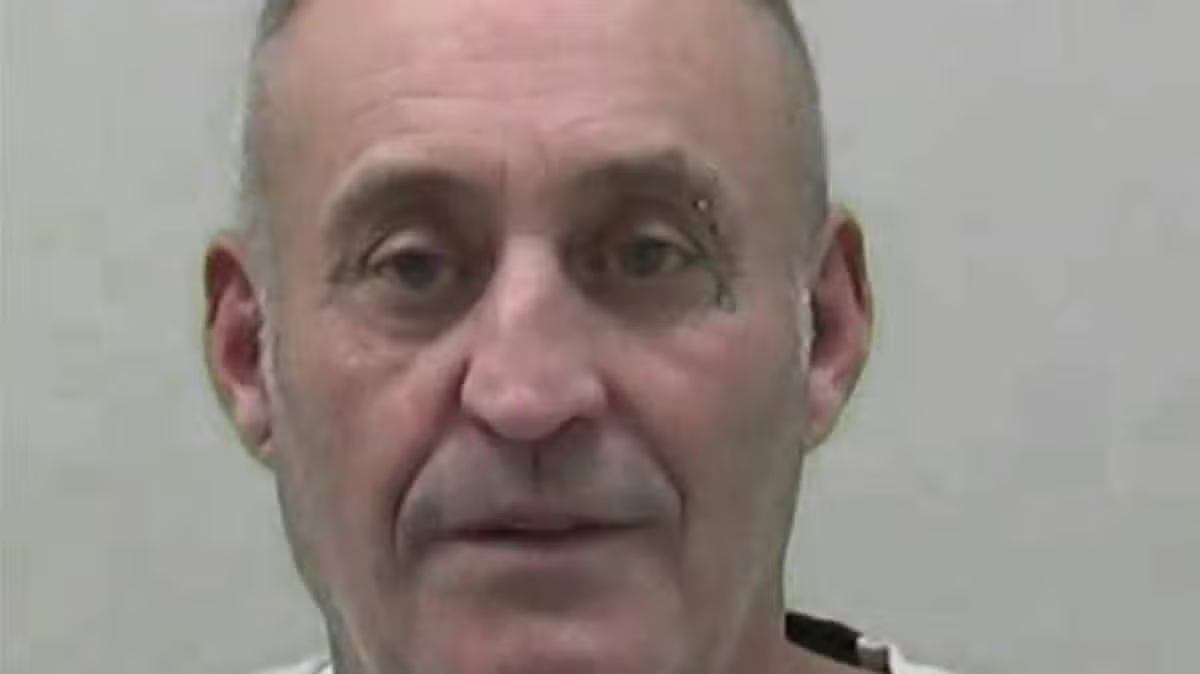
David Kelly, 56, was on a Jet2 flight from Turkey to Newcastle when he became drunk and offensive on December 19 last year.
Advertisement
Newcastle Crown Court heard he committed racially aggravated harassment to airline staff and members of the public and also made a homophobic remark. Saba Shan, prosecuting, said: “When he initially boarded the plane and, it would seem, in the first couple of hours, he was enjoying himself. He was loud and boisterous with lots of laughter.
“Regrettably as he became visibly more intoxicated, his behaviour deteriorated. There are statements from staff and passengers which describe how the defendant became angry and animated and started ranting.”
Among the offensive behaviour, Kelly said “Hitler knew” followed by making a Nazi salute. He also pointed at a Turkish passenger and called him a terrorist and made other racist and one homophobic remark.
Miss Shan said: “A young family were distressed by his actions and were moved from the row behind him.” Members of staff did their best to manage his behaviour by offering alternative seating to passengers alarmed by his behaviour.
Advertisement
Kelly, of Bek Road, Newton Hall, County Durham, stood in his seat and initially refused to sit down and put his seatbelt on as the plane began its descent to land. Staff had alerted police, who were waiting to arrest him at Newcastle Airport.
Kelly, who has four previous convictions, including for arson and drugs offences, pleaded guilty to being drunk on an aircraft and a racially aggravated public order offence.
Jailing him for ten months, Recorder David Gordon said: “Those who become drunk and disorderly on board an aircraft must ordinarily expect an immediate custodial sentence because of the fear and distress caused to passengers and crew and because of the potential implications with regard to safety.
“You repeatedly shouted abuse, including racist and, on one occasion, homophobic abuse and made threats of violence and ignored efforts by cabin crew to calm the situation.
“The offences occurred in the uniquely confined environment of an aircraft in flight. Passengers and crew could not remove themselves from it. Families and other passengers were alarmed and distressed.
“Cabin crew were required to divert their attention from their own duties to manage your behaviour. Your conduct created genuine fear among those on board and carried an inherent safety concern, particularly during the landing phase of the flight.
Advertisement
“This offending caused distress and alarm to numerous passengers and crew members and it included vile repeated racist utterances and a homophobic utterance.”
Brian Hegarty, defending, said he is remorseful and said the incident started after Kelly argued with another passenger about politics. He added that Kelly did not need to be restrained and did not assault anyone and said: “His behaviour was reprehensible and unpleasant but was restricted to words alone.”
The court was provided with character references about Kelly, including from a magistrate and a former Metropolitan Police officer. He was said to be hard-working, helpful and community minded.
The event takes place at Bothwell parish church centre on September 12 and 13
Talented Lanarkshire artists are getting set for their popular annual exhibition.
Advertisement
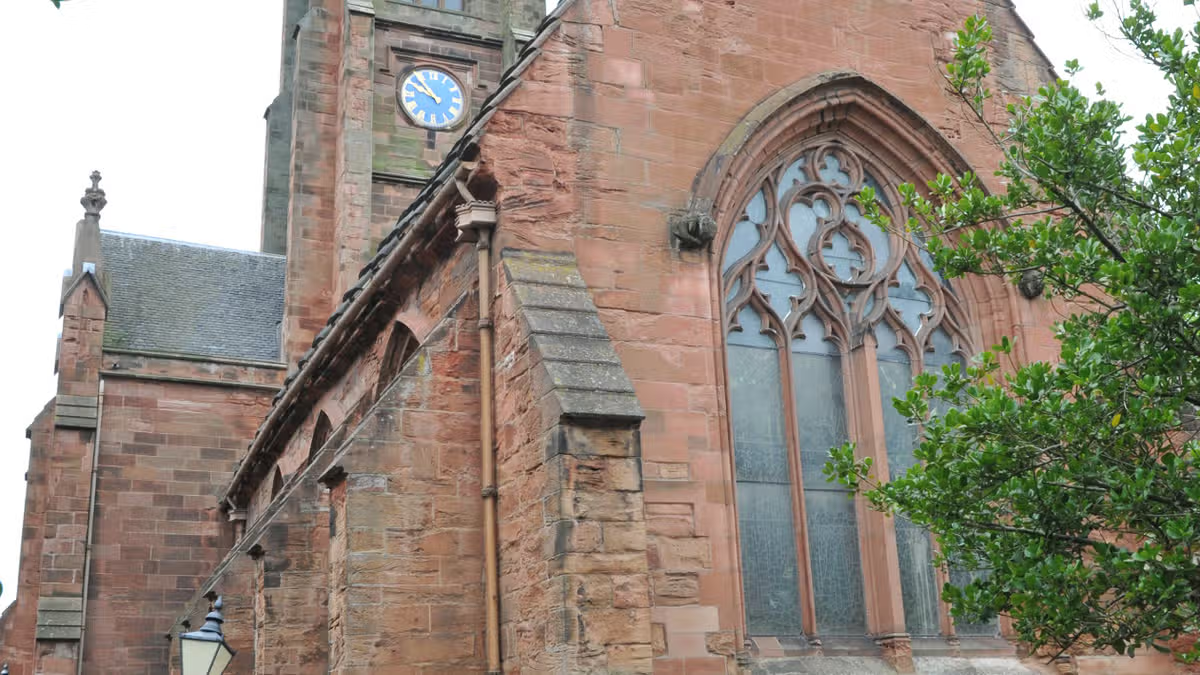
Members of Bothwell art club will showcase their works at a two-day display in September, taking place at the town’s parish church centre on Main Street.
It will allow visitors to see original art by the club’s members, with many of their pieces available for sale during the weekend event.
The art show takes place on September 12 and 13, opening at 10am on Saturday and 11.30am on Sunday, running until 5pm on each day.
It will be hosted at Bothwell parish church centre on Main Street, and admission is free.
Advertisement
All are welcome to attend, and more details about the club including examples of the talented members’ creations is available on Facebook, Instagram and Tiktok.
* Don’t miss the latest headlines from around Lanarkshire. Sign up to our newsletters here.
And did you know Lanarkshire Live is on Facebook? Head on over and give us a like and share!
The U.S. has received several warnings from Israel over the past year that Iran intended to assassinate President Donald Trump.
The warnings, passed to U.S. intelligence agencies and in some cases relayed directly by Israeli officials to senior White House officials, included possible plots to shoot Trump with a sniper or recruit someone to attack him with a knife at a large public event, the sources said.
The tips began in the lead-up to the 12-day war in June 2025 and intensified before the U.S. decision to go to war in Iran in February, the sources said.
Advertisement
The most detailed warning came ahead of the NATO summit in Ankara in July, the U.S. official and the other person familiar with the matter said.
Israeli officials briefed the White House about intelligence that indicated Iran may try to kill Trump, potentially with a shoulder-launched missile, while he travelled on Air Force One for the summit, the officials said.
The U.S. intelligence community has long assessed that Iran wants to retaliate for Trump’s killing of Iranian military commander Qassem Soleimani in 2020.
But the Central Intelligence Agency has not been able to corroborate some of the specific threats against Trump’s life shared by Israeli intelligence since early last year, the officials said.
Advertisement
In the case of the NATO episode, a Turkish official said the country’s intelligence agencies also did not have any evidence to corroborate the Israeli claim about the threat to Trump’s life, an assessment the host country shared with Americans.
Despite the lack of verification, White House officials and the Secret Service have taken steps to mitigate the threats out of an abundance of caution, including an extraordinary deception operation during the Turkey trip that involved moving Trump from Air Force One to a different aircraft for his flight out of the country.
That episode underscores how Israeli intelligence is influencing the Trump administration’s decision-making about Iran at a time of heightened tensions with Tehran – and broader disagreement between U.S. and Israeli intelligence assessments on Iran’s threat overall.
Earlier this year, American intelligence agencies assessed that Iran was not actively building a nuclear weapon, even as Israel argued Tehran posed an urgent threat.
Advertisement
Despite the reports from the U.S. intelligence community, Trump moved forward with strikes in Iran in February.
Trump also took into consideration intelligence shared by Israel that Tehran had tried to assassinate him before launching the military campaign, Reuters previously reported.
A spokesperson for the Israeli embassy disputed that Israel was using its intelligence to influence U.S. policy on Iran.
‘The same people who claim that Israel is trying to influence U.S. policy through alleged intelligence sharing would just as soon accuse Israel of concealing critical information if it benefited their own agenda,’ the spokesperson said.
Advertisement
Secret Service spokesman Anthony Guglielmi declined to discuss specific intelligence matters but said the agency remains focused on Trump’s security amid recent assassination attempts and an increase in threats against the president.
‘The U.S. Secret Service continuously analyses a wide range of information to guide our protective operations in real time and across every location we secure,’ he said.
The U.S. has long relied heavily on Israeli intelligence on Middle East matters, particularly as they relate to Iran.
The current and former officials said Israeli intelligence on Iran typically flows to the CIA or the National Security Agency through formal channels and is subsequently analysed, two former U.S. officials said.
Advertisement
The U.S. intelligence agencies often cannot verify Israeli intelligence but will use other forms of information to make judgment calls on its authenticity and accuracy, the officials said.
In several instances over the course of the two U.S. military offensives in Iran, the CIA assessed it had ‘low confidence’ in the Israeli intelligence about the threats posed by Iran, including any plans to assassinate Trump, according to one former official and another person familiar with the matter.
It is unclear how widely those assessments have been circulated inside the administration.
Two of the former U.S. officials described to Reuters several instances in which senior Israeli officials and representatives over the last year called the White House, including in the Situation Room, to brief senior Trump officials on Iranian threats directly.
Advertisement
The direct engagement comes amid a breakdown in U.S. intelligence sharing inside the Trump administration.
Last year, amid increased tension with the Office of the Director of National Intelligence, the CIA stopped working on joint assessments with the National Intelligence Council, the former officials said.
The council is the U.S. intelligence community’s elite analytical group overseen by ODNI to turn out reports reflecting the view of the broader intelligence community, with the CIA being the largest contributor to its assessments.
Fewer recent Iran assessments by the NIC have stemmed partly from recent layoffs at ODNI, the officials and another person familiar with the matter added.
A passenger on the train that derailed in East Sussex has described how people and gadgets sailed through the air after a ‘violent jolt’, before passengers broke out ‘screaming’.
Twenty people were hospitalised after the Southern Rail train carrying 150 people came off the tracks near Lewes station just before 4pm on Thursday, including two with ‘severe’ injuries.
The rear three carriages were thrown on to their sides after apparently hitting a section of badly buckled track, leaving around 40 passengers trapped inside.
Teddy Birkbeck, 18, boarded the train from London Victoria at Gatwick after flying back from a lads’ holiday in Albufeira, Portugal, with his cousin and friend.
Advertisement
He said the train had already been delayed in its journey to the airport, with officials explaining over the intercom that it was ‘due to the heat’.
Mr Birkbeck, a farmer from Sussex, told the Daily Mail: ‘It felt like there was something wrong from the start. There were two sudden jolts soon after we left Gatwick. My mate even joked, “That hurt!”
‘Then it was all smooth going – until we got near Lewes.’
The trio were among eight people travelling in the rear carriage, which ultimately careered furthest down the bank.
Advertisement
Teddy Birkbeck, 18 (centre), with his cousin Charlie Hobden (left) and their friend were making their way home from a lads’ holiday in Albufeira, Portugal
Mr Birkbeck described people and gadgets sailing through the air
The rear three carriages overturned and fell off the rail track
Advertisement
Images appeared to show a section of badly buckled track just behind the train, with experts suggesting this may have happened due to the extreme heat
Mr Birkbeck was watching TikToks on his phone, nursing a ‘slight hangover’ from the holiday, when he felt a ‘violent jolt’.
He said: ‘The train suddenly started to lean from side to side, and things were floating around the carriage in slow motion, like we were in space.
‘I saw my mate’s laptop go through the air, and a bottle of water as well. Then we slammed down on our side.
Advertisement
‘I screwed my eyes shut, but it felt like we were in a car that was drifting after the brakes had been slammed on. I thought to myself: “I am going to be seriously hurt here.”
‘We were sitting on the left of the carriage, so it wasn’t too bad in the end, but people on the right flew from their seats and fell down on to our side.
‘Everyone was silent for about 30 seconds – though it felt like an hour – and then people started screaming. Some were really panicking. It was difficult to know which way was up or down.
‘I had smacked my head on something, and saw that some people were bleeding.’
Advertisement
Charlie Hobden, Mr Birkbeck’s cousin, said it felt like they were ‘in a washing machine’ when the carriage tumbled over onto the embankment.
The rear carriage, in which Mr Birkbeck and his friends were travelling, skidded furthest down the embankment
Some passengers were able to clamber through the emergency doors onto the sides of the overturned carriages
Mr Birkbeck’s view from the track after being helped out of the carriage by emergency workers
Advertisement
Images from the scene show that the rear carriage slid around ten metres down the slope to the left of the track, bulldozing trees and coming to rest in the adjacent field.
Three of the carriages whipped over, while the front five remained upright. Behind the stricken rear carriage could be seen a section of track that looked to have buckled severely, with several sharp swerves along it.
James MacCleary, the Lewes MP, said concerns had been raised about the condition of tracks in the area due to the sustained heatwaves.
He told Times Radio: ‘I had a meeting literally last week with [Greater Thameslink Railway], who are the parent company of Southern Rail, and we did discuss the track and the fact that it has been a bit bumpier in recent months, which is possibly a result of the incredibly hot weather we’ve had recently.’
Advertisement
A temperature of 38.1C was recorded at Kew Gardens in west London on Thursday, making it officially the hottest day of the year.
Mr Birkbeck continued: ‘Another passenger eventually managed to get the emergency exit open so people could climb out on top, but we decided to stay inside because it was actually cooler to begin with.
‘There were also a couple of elderly ladies who were distressed, so we wanted to stay and help them.
‘I had to force the door into the driver’s compartment at the back of the carriage to get the first aid kit.’
Advertisement
South East Coast Ambulance Service said around 150 people were on board the train, and 20 were injured. It said two people were rushed to the major trauma centre with ‘severe’ injuries, while a further 18 patients were also in hospital.
Three air ambulances and at least 20 other emergency vehicles raced to the scene, while a number of passengers who did not require hospital treatment were taken to a local community centre to be triaged and supported.
People had to readjust their bearings inside the carriages that had completely turned onto their sides
Emergency workers used a stretcher to transport a passenger away from the train
Three air ambulances took off from the scene at around 6pm, evacuating the last of the passengers rescued from the train
Advertisement
Josh Babarinde, MP for Eastbourne, the train’s destination, said that one of his constituents had suffered a broken rib, while other passengers described seeing people bloodied and with head wounds.
Photographs from the scene show emergency workers stretchering off wounded passengers and guiding others by the hand down the tracks.
The air ambulances took off at around 6pm, carrying the last of the passengers rescued from the carriages.
Of the emergency responders, Mr Birkbeck said he ‘couldn’t credit them enough’.
Advertisement
He told us: ‘They were absolutely brilliant. They put ladders down inside the carriage so we could climb up onto the train’s side, and then helped us down onto the ground.
‘All the passengers were in total bewilderment; everyone was quite quiet. But the ambulance crews and police were amazing at keeping us calm.
‘It’s all such a blur. I am still shaking hours after getting back from the adrenaline.’
Another passenger, father-of-two Liton Miah from Eastbourne, travelling with his wife and daughters, said he had noticed going past a warning sign at the side of the track.
Advertisement
He said: ‘I saw on the big board there was a problem with the track. I don’t know why they didn’t take any precautions. I saved my family and tried to help another couple. The guy was bleeding heavily and there was not much I could do to help him.’
Rob Bradley, who was travelling from London Victoria to Eastbourne with his six-year-old daughter Mabel when the crash happened, said they were in the carriage next to those that overturned.
He said his daughter had been dancing between the carriages just 30 seconds before the derailment.
Mr Bradley told the BBC: ‘As she sat down we felt the train speeding up and started to rock. Then our carriage jumped vertically upwards and we could tell it was a derailment.
Advertisement
‘The emergency brakes went on the train and everything got thrown forward.
‘The train skidded for quite a while before it stopped. We turned around and we saw the whole back of the train was open and smoke and dust were pouring into the carriage and we saw the fifth carriage had gone on its side.
‘We are doing okay. We were very lucky.’
The cause of the derailment has not yet been confirmed
Advertisement
A huge emergency response including ten fire engines descended on the scene near Lewes station
A passenger dragging her luggage across a field after evacuating the stricken train
The cause of the derailment has not been confirmed but transport experts have raised the possibility that the exceptional heat contributed to the crash by causing the rails to buckle or the dry ground beneath them to collapse.
One suggestion from transport expert Christian Wolmar was that the prolonged heat and drought could have caused the ground beneath the train to dry out and crack, causing part of that bank to give way, leaving the rails without proper support.
Advertisement
He told the Daily Mail: ‘Well, there are two possible reasons this has happened.
‘Obviously, the train track might have buckled before the train arrived. But because the first carriages didn’t derail, it might be that the dryness from the heat has led to the embankment collapsing, and then the train made the rails buckle rather than the other way round.
‘I noticed yesterday when I was out on Hampstead Heath for the eclipse. There’s just great big fissures in [the ground], big openings like there’s been an earthquake, and that must be happening in many places.
‘So it could be that there’s something like that that caused the embankment to partially collapse, and then the rails buckled under the weight of the train because the rails were unsupported. Which could be the more likely explanation given that the first four carriages didn’t go down.’
Advertisement
Transport Secretary Heidi Alexander said she was ‘deeply concerned’ following the incident.
She wrote on X: ‘Grateful to emergency services who are on the scene supporting those impacted. We are working quickly with the rail industry and local partners to assist passengers.’
Network Rail said it had launched an investigation into the cause of the derailment.
Southern Railway said all lines through Lewes had been closed to allow emergency services to reach the scene and warned passengers to expect major disruption until 10pm.
Advertisement
The operator said: ‘A train has derailed in the Lewes area. This has closed all lines running through this station.
‘As a result of this, trains are currently unable to run through the area to allow the emergency services to attend the incident.
‘Major disruption is expected until 10pm.’
The Rail Accident Investigation Branch deployed investigators to establish how the Southern service came off the tracks.
A former schoolboy who has accused a teacher of having had a sexual relationship with him from the age of 14 has told a court he is not a ‘fantasist’ who made up the allegations.
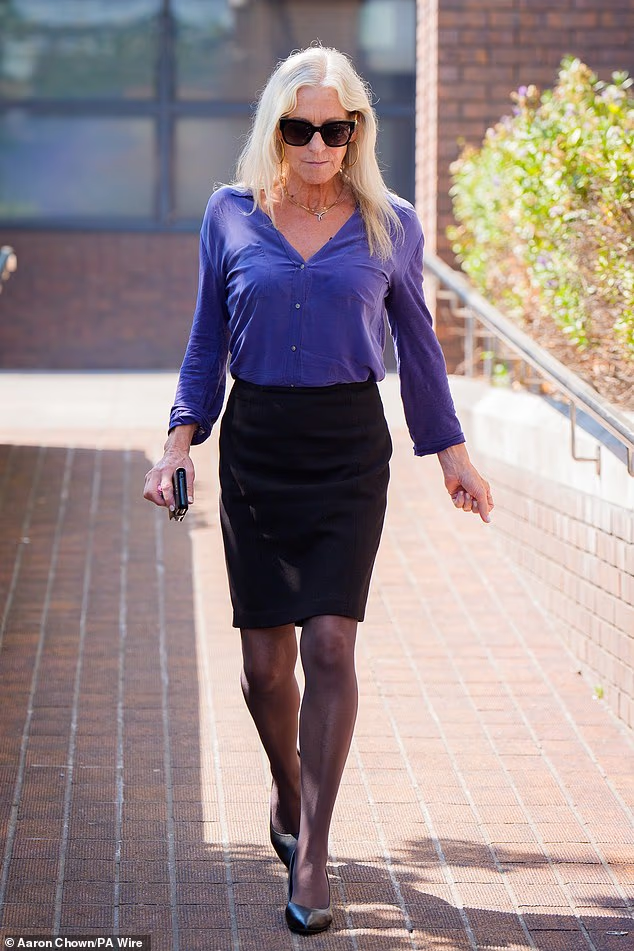
Sally-Anne Bowen, 65, is on trial at Harrow Crown Court accused of eight counts of indecent assault against two boys, who cannot be named for legal reasons.
She is alleged to have had sexual relationships with both boys in the late 1980s, when they were around 14 to 15 and she was in her mid-20s, the court previously heard.
Jurors were told one of the complainants said he had sex with Bowen, who was then a teacher at Christ’s College school in Finchley, north London, ‘about 20 or 30 times’.
Advertisement
Bowen denies all the charges, with jurors previously being told she claims to have had a medical condition at the time that made having sex all but ‘impossible’.
Giving evidence on Thursday, the complainant told the court he had not invented the allegations against the teacher.
Asked by Bowen’s defence barrister Mark Kimsey whether he knows what a fantasist is, the complainant replied that he did.
‘I believe it’s someone that indulges in fantasies,’ the complainant said.
Advertisement
Sally-Anne Bowen, 65, is on trial at Harrow Crown Court accused of eight counts of indecent assault against two boys, who cannot be named for legal reasons
Asked whether he would agree that a fantasist is someone who has ‘unrealistic ideas’ and blurs the lines of reality with fantasy, he replied: ‘I think the question’s quite insulting.’
Mr Kimsey said: ‘Just to make clear, so you know, Miss Bowen’s case from the start is that she doesn’t accept, at all, engaging in any form of sexual activity.’
Advertisement
‘Well then, that is the definition of a fantasist,’ the complainant replied.
He told the court that some of the sexual acts Bowen asked him to participate in were ‘perverse’, adding: ‘I’m a “fantasist”, right? That’s not a part of anyone’s fantasy, to be involved in perversion.’
The court previously heard that Bowen maintained a sexual relationship with the complainant for several months, and he often visited her home.
He told jurors he felt compelled to ‘protect’ the teacher, who had ‘drummed it’ into him that he was not allowed to tell anyone about their relationship.
Advertisement
The complainant said: ‘In the months I was having sex with her… I never spoke to any other schoolboy about the fact I was having sex with her.
‘I never, ever spoke to anyone about it. I was always really aware, she drummed it into me.
Jurors were told one of the complainants said he had sex with Bowen, who was then a teacher at Christ’s College school in Finchley, north London , ‘about 20 or 30 times’
‘To indoctrinate a 14-year-old child is one thing, to have sex with a 14-year-old child is another thing… to remain silent to everyone.
Advertisement
‘I had this secret I couldn’t speak to anyone. I spoke to one person who was my best friend who didn’t go to this school.’
He added: ‘Years she got to teach, because I remained silent.’
In a police interview played to the jury, the complainant said that when Bowen worked at the school, she dressed in a way which was ‘sexually provocative’.
He said: ‘Sally-Anne Bowen used to wear tight Levi jeans and black skinny pants that you could see everything in, and a black mini skirt up to there.’
Advertisement
‘My introduction to the world was completely governed by Sally-Anne Bowen,’ he told police.
‘I had no experiences, so it was her experiences that laid the groundwork for the sexual interactions that we had.’
In the video, the complainant said he cannot deny that he enjoyed having sex with Bowen, the ‘games’ and ‘secrets’ she engaged him in, and the feeling of having ‘one-up’ on his teachers.
‘But for me it was the destruction of my education,’ he added.
Advertisement
The complainant told police: ‘All those aspects of me at that young age – I had no respect for authority, no self-respect. My mother never forgave me.’
He added: ‘I would like to get in a room with all those teachers, and Sally-Anne Bowen, and say, “that’s my life”, because you only get one.’
Bowen denies the charges against her and the trial continues.
Essex Police says there were ‘no incidents or issues’ surrounding the Clacton by-election amid a war of words fuelled by Nigel Farage’s failure to attend the count. The Reform UK leader won the by-election which he triggered by resigning as Clacton MP while facing scrutiny over donations he received from a cryptocurrency tycoon.
Advertisement
Mr Farage received 22,239 votes, a share of 62.8 per cent, with his nearest competitor Count Binface picking up 26.7 per cent. Labour, the Conservatives, the Liberal Democrats, the Green Party and Restore Britain all shunned the by-election, which was described by Labour as a ‘circus’.
While declaring he had won hours before the result was announced, Mr Farage said he would not be attending the by-election count. A Reform UK spokesman said overnight: “Essex Police advised Nigel not to attend the count tonight due to a credible threat against him.”
Click here for the latest on Greater Manchester’s politics in our newsletter
But that claim has been roundly disputed. Ian Davidson, acting returning officer and chief executive at Tendring District Council, said there was a ‘robust’ policing operation in place and that it was ‘a candidate’s decision whether or not to attend’.
Advertisement
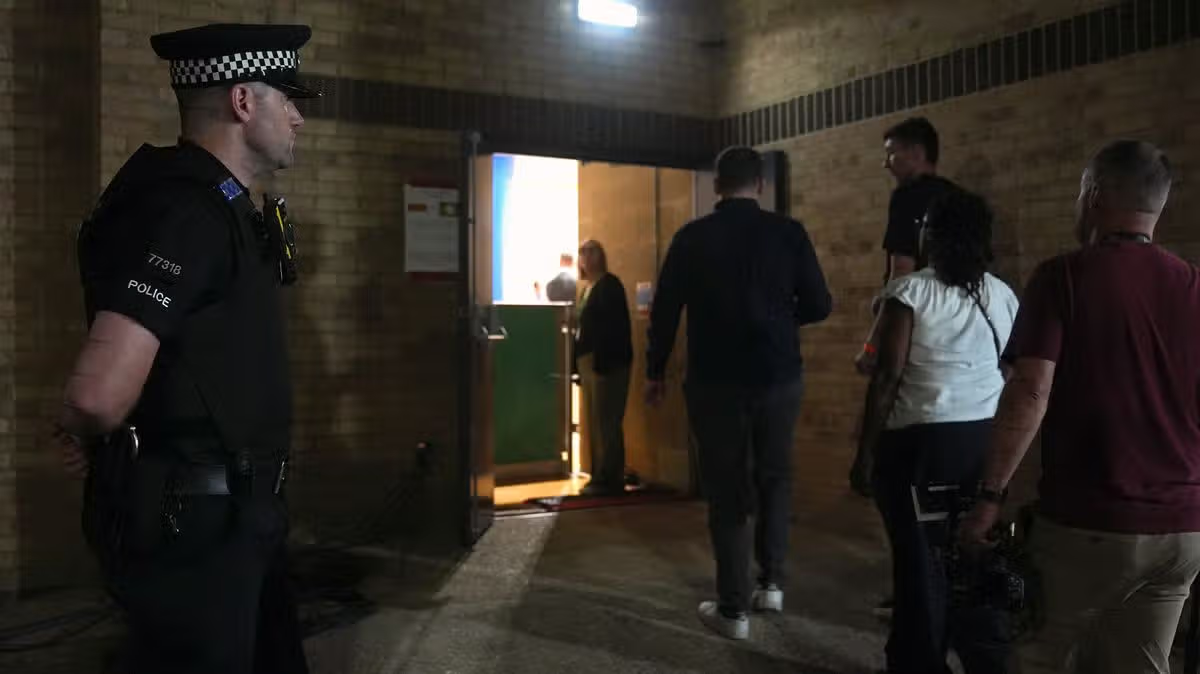
In a new statement issued this morning (August 14), Essex Police said there were ‘no incidents or issues’ during polling day or throughout the night as votes were counted. “We have a full and robust policing operation in place around the Clacton by-election, as we do with all significant elections in our county,” a force spokesperson said.
“Throughout polling day our officers were visible right across Clacton and the Tendring district. We visited all 51 polling stations, our officers were out and visible on foot, in vehicles and our drone team patrolled by air. Our aim was to ensure the people of Clacton were able to go about their daily business, that people were able to cast their vote safely and that the count took place without issue.
“We are pleased to say all of these things happened and there were no incidents or issues throughout yesterday and into the early hours of this morning. We worked closely with Tendring District Council and their security teams throughout. We take the safety and security of our elected officials extremely seriously and, equally, we take our policing responsibilities around the democratic process seriously too.
Advertisement
“The decision of candidates to attend or not attend the election count is a decision for individuals and their security teams, our role is to make sure our policing operation is sufficiently robust to ensure the safety of all, and we are grateful to all of our officers, staff and the staff at Tendring District Council who worked through the night to ensure the safety of all.”
Mr Farage did attend a ‘Farage-fest’ in the Clacton constituency while the count was taking place. He told fans there: “I’m sad to say that after 33 years of being a candidate in active politics, I’ve been advised tonight by Essex Police that there is an organised campaign to disrupt and degrade the result that will take place in a few hours’ time. Once again it shows you the sheer intolerance, the sheer loss of fundamental democratic principles that those that went before us, fought in world wars, to fight for and preserve.”
Mr Farage added: “I’m not scared of these people, far from it. But I’m damned if I’m going to stand on a stage, having won a resounding victory, a ringing endorsement of all that I’ve tried to fight for, and you’ve tried to fight for, and be demeaned and humiliated by nobodies, and I will not sadly be attending the count.”
After the claim was disputed earlier this morning, Reform MP Lee Anderson appeared on BBC Breakfast, insisting he believed his leader over the authorities. “Sometimes some of these police forces that we’ve been dealing with recently are about as honest as you lot at the BBC,” he said.
Mr Anderson added: “I’ve not spoken to Nigel about this. I’ve not spoken to Essex Police. If Nigel gets up on stage and says that he’s been advised not to attend the event, then I believe Nigel above the police, and especially above you lot at the BBC.”
Bridget Phillipson, chair of the Labour Party, told Sky News that viewers would ‘come to their own conclusions’. She said: “Well, of course, the safety of politicians is of the utmost importance and no-one should face threats or intimidation because of who they are and the job that they’re seeking to do.
“I don’t know exactly what’s gone on here, but like you, I’ve heard what the police have had to say, that they’ve pushed back a bit on on that suggestion, and I know that Nigel Farage is facing some criticism, even from within his own ranks, that he’s not, wasn’t, prepared to be at the count.
Advertisement
“And, you know, those who are responsible for running counts and the police oversight of that, they’re used to dealing with high-profile situations. But, you know, I think people will come to their own conclusions. It’s hard to know. Nigel Farage has given one version of events and we’ve heard something a bit different from the police responsible.”













































You must be logged in to post a comment Login