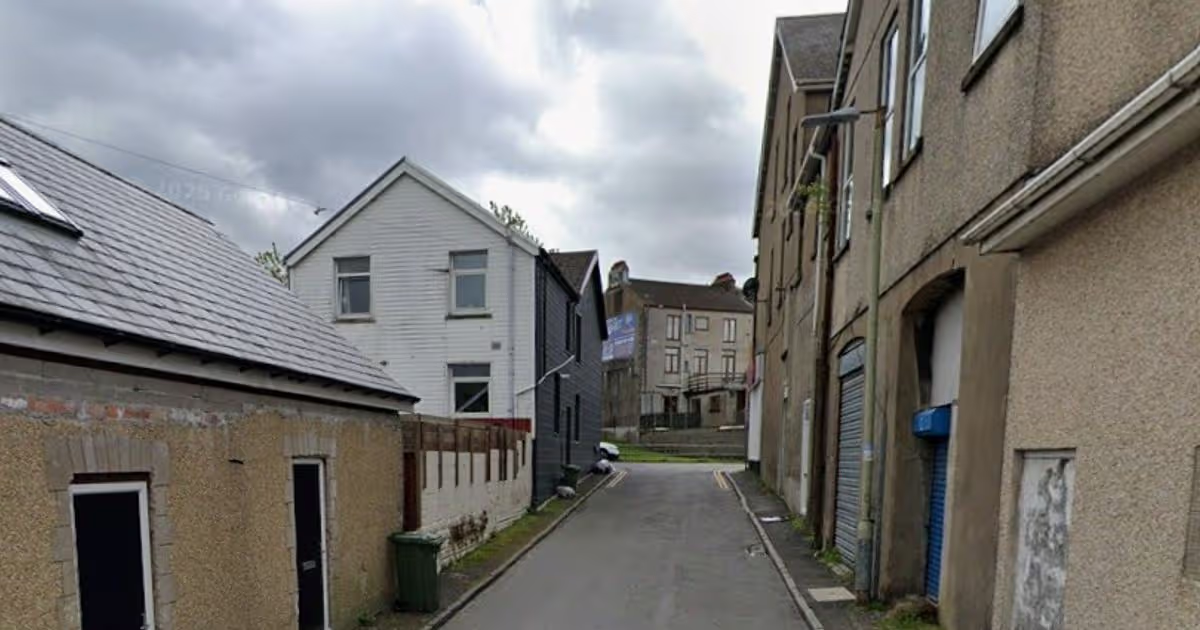
Park Road in Aberaman is set to be closed from March 3 to March 5
A road in the Cynon Valley is set to be closed for three days for drainage works.
Advertisement
A public notice says that Park Road in Aberaman will be closed from its junction with Davis Street in a general southwesterly direction for a distance of approximately 24m. Ensure our latest news and sport headlines always appear at the top of your Google Search by making us a Preferred Source. Click here to activate or add us as Preferred Source in your Google search settings
The closure is needed to allow drainage works to take place and will be in force from March 3 to March 5.
Alternative routes are available via Lewis Street, Beddoe Street, and Davis Street. Make sure you never miss Wales’ biggest updates by getting our daily newsletter
Access will be maintained for emergency services, pedestrians, and to premises.
To see all the planning applications, traffic diversions, road layout changes, alcohol license applications and more in your area, visit the Public Notice Portal HERE
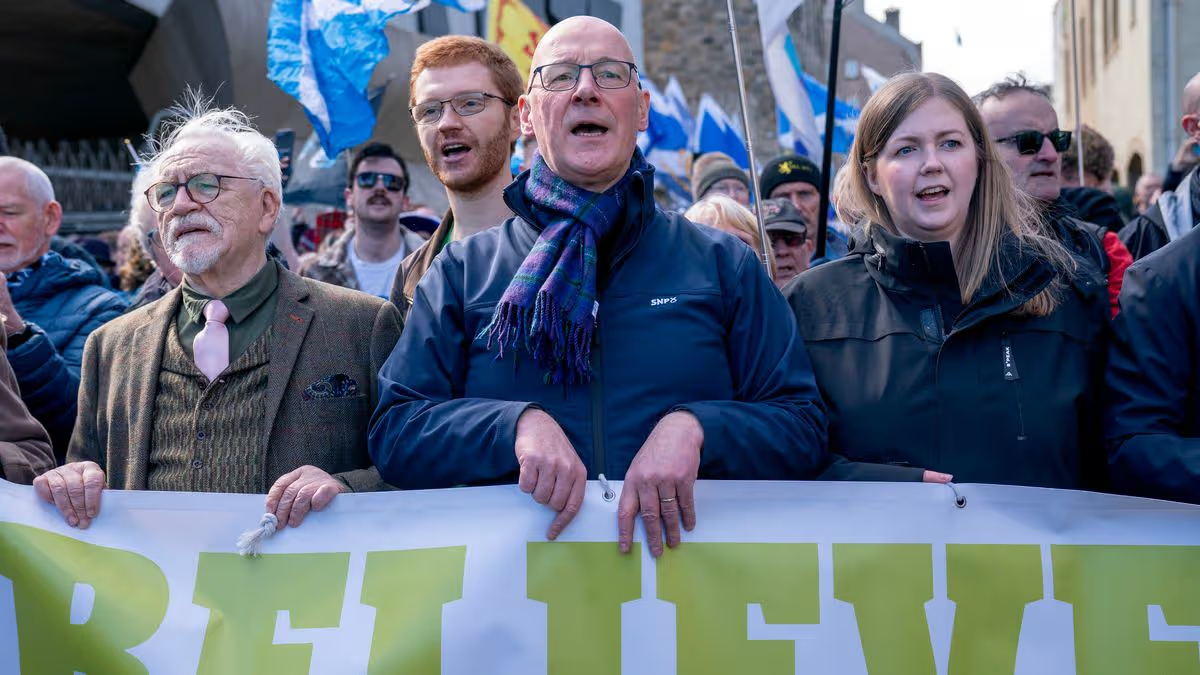
Anas Sarwar said the next five years had to be focused on “fixing the SNP’s mess” and not focusing on the constitutional debate.
12:41, 13 Apr 2026Updated 12:47, 13 Apr 2026
Anas Sarwar has accused John Swinney of “blagging his own supporters” over claims the SNP can win a majority of MSPs at May’s election and in turn secure a second referendum on independence.
With three weeks until polling day and the SNP on course to another five-year term, the Labour leader said: “After almost 20 years, it is time to change the government. This is the first real opportunity in a generation to do that. An opportunity we cannot afford to miss.
Advertisement
“And to everyone here or watching at home, my message is this – It’s not about how you voted in the past. It’s not about whether you have voted Labour before. It’s not about what side of the past arguments you were on.
“It’s about bringing our country together and making it better right now.”
Sarwar was speaking to audience of Labour activists and candidates at the University of Edinburgh where he insisted their party could still take power at Holyrood next month despite trailing the Nationalists in the polls.
He insisted fixing the country’s crumbling public services had to take priority over the SNP’s ongoing insistence that it was on the brink of ending the Union.
Advertisement
Swinney has argued he would have a mandate for an IndyRef2 if his party can win 65 or more MSPs in May – a position which was yesterday shot down by Wes Streeting, the UK Health Secretary.
Sarwar said: “I’m being direct and honest with people in this election campaign about what my view is – I don’t support independence, I don’t support a referendum.
“But I’m not asking anyone to change their mind on independence. What I’m saying is, this election is not about whether the SNP get a majority or not – it’s about whether the SNP stay in power.
Advertisement
“The next Parliament has to be about bringing our country together, to make it better right now. And if in the future, there’s a stronger Scotland, and it decides a different kind of destination, so be it. But the next five years is about fixing the SNP’s mess, and building that better future.
Sarwar added: “John Swinney knows he’s not going to win a majority. He’s blagging his own supporters. And the reason why he’s doing it, is he knows every minute he spends talking about that, is a minute he doesn’t have to talk about his record on the NHS or schools. And frankly, I think people will see right through it.”
Streeting, a senior Labour minister, yesterday ruled out an IndyRef2 even if the SNP won a majority.
Angus Robertson, SNP campaign director, said: “Today showed that Labour have a complete lack of ideas and no vision for Scotland’s future. Anas Sarwar has had five years to develop this manifesto and he has come up with nothing.
“We’ve heard it all before from Labour – but we know exactly what we get with them.
“Broken promise after broken promise – energy bills up, Grangemouth closed and the Winter Fuel Payment debacle.
“We already have one disastrous Labour government and we don’t need another one. The SNP is the only party with a positive vision for Scotland and a serious plan for government.”
Advertisement
To sign up to the Daily Record Politics newsletter, click here
Essex Police have released an appeal searching for a man who is currently missing from Colchester. Darren Gillanders, 53, was reported missing shortly after 11.40pm on Sunday, April 12.
Advertisement
He hasn’t been seen since the day before (Saturday, April 11). Darren is described as being 5’10, medium build and bald.
He was last seen wearing a blue North Face tracksuit, white Reebok Classics, a black ‘man bag’, and black glasses. Police believe he may have been in or around Ipswich in Suffolk and the Cambridge and Newmarket areas of Cambridgeshire.
You should call 999 quoting incident 1238 of 12 April if you have seen him, are with him, or have any information about where he might.
To get more news and top stories delivered directly to your phone, join our new WhatsApp community.Click this linkto receive your daily dose of CambridgeshireLive content.
Advertisement
To get more news and top stories delivered directly to your phone, join our new WhatsApp community.Click this linkto receive your daily dose of CambridgeshireLive content.
The convoy of some of the most expensive cars on the planet had travelled from Bolton to The Grand Venue in Blackburn for a wedding reception on Sunday.
Around 800 guests attended the ‘Walima’ event at the venue.
The fleet of cars were parked up on Garden Street before the big entrance which is normally a loud but glamourous affair. Passers-by stopped to take pictures of the rare vehicles which are worth hundreds of thousands of pounds.
Advertisement
The convoy then made its way along the busy Bank Top and Whalley Banks bringing traffic to a standstill.
The couple who were travelling in the lead car a black Ferrari had been married in Birmingham the day before and a second reception is normally hosted by the groom’s side.
The groom, Kadva was hoisted on the shoulders of his friends as the excited group stopped to take pictures and film videos of the supercars.
One wedding party member said: “It has been a great day and everyone is having fun.
Advertisement
“The cars are certainly turning heads as we made out made from Bolton. We have about 20 cars in total.”
Hiring expensive cars are a common theme for some weddings with people going out of their way do organise something special for the big day.
In 2023, Ecuador struck an unusual deal. Instead of simply paying back its debts, it refinanced part of them on better terms and promised to spend the savings protecting the Galápagos Islands.
This type of transaction, known as a debt-for-nature swap, is often described as a “win-win”: lower debt costs for governments, and long-term funding for some of the world’s most fragile ecosystems.
Debt-for-nature swap transactions offer a range of benefits. Countries facing heavy debt burdens can reduce their liabilities, while bondholders are able to offload risky assets. At the same time, the financial saving is redirected into environmental projects, supporting vulnerable ecosystems.
These deals have been around since the late 1980s. Early swaps were typically small and led by environmental charities, which bought distressed debt cheaply and converted it into local funding for conservation. Through the late 1980s and early ’90s, there was a wave of enthusiasm for such deals, particularly in Latin America and Africa.
That enthusiasm faded in the 2000s, as large-scale debt relief programmes reduced both the availability of distressed debt and the need for swaps. But in recent years, interest has returned. With banks now involved, today’s swaps can be far larger and more complex. Ecuador’s 2023 deal involved US$1.6 billion (£1.2 billion) of debt.
Since 1989, 169 debt-for-nature swap deals have been agreed, involving US$8 billion of debt being converted to fund environmental initiatives. But despite their appeal, they have not been universally popular.
Why Asia lags behind
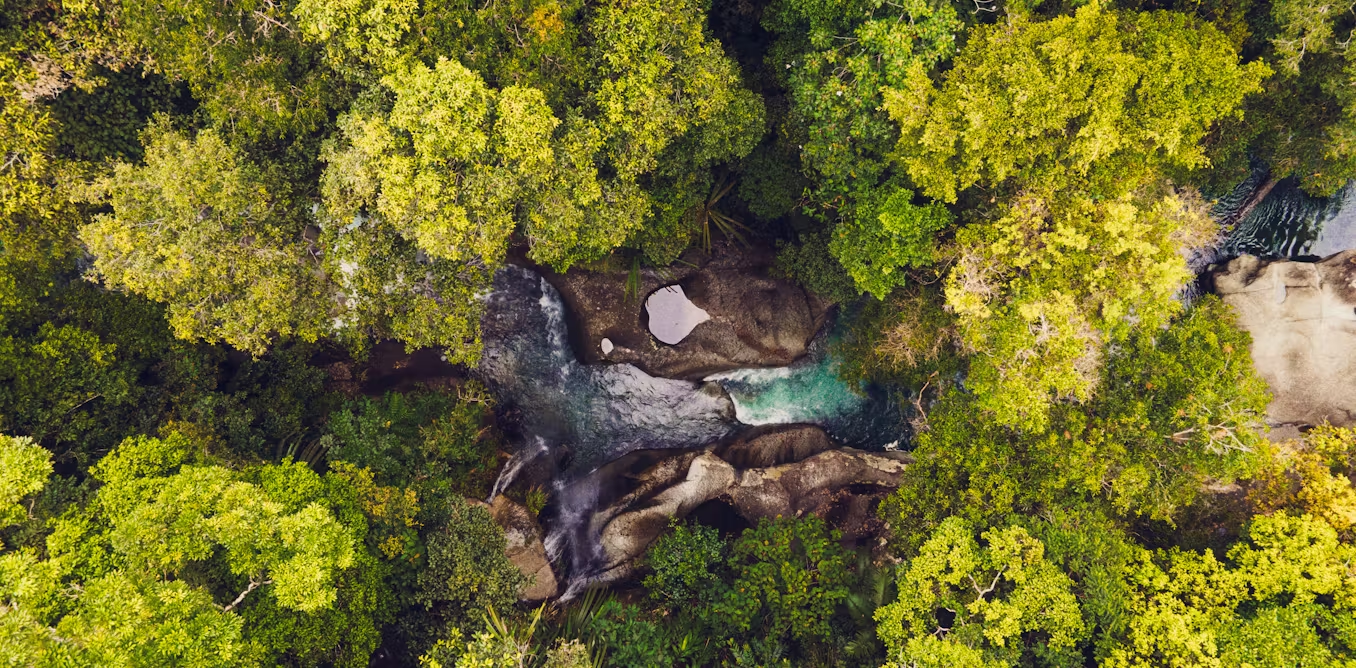
Africa and Latin America have dominated these deals. By contrast, Asia has lagged behind, comprising just 13% of total global swaps. That’s surprising at first glance. Asia has an abundance of viable environmental projects, from vast biodiverse tropical forests in Malaysia to the carbon-storing mangroves of Indonesia and the threatened coral reefs in the Maldives.
During the peak of these swaps, many Asian economies had relatively little debt held in international markets, leaving less available to restructure. Borrowing was also comparatively cheap, reducing the incentive to pursue swaps.
Without a large amount of distressed, tradable debt, the financial mechanics that made swaps attractive and logistically viable in other regions were largely absent in Asia.
There were also political and institutional factors. Debt-for-nature swaps often involve foreign charities, foreign governments or international investors that influence how environmental funds are used within the country in question. In parts of Asia, concerns about sovereignty and external interference have made governments more cautious about such arrangements.
But today, that picture is changing. Across Asia, debt levels have risen sharply, particularly after the COVID pandemic. At the same time, more governments are borrowing through international bond markets, meaning a larger share of their debt is now held by private investors – and can, in principle, be bought back or restructured.
Potential candidates include Indonesia, Laos, Mongolia and the Maldives, where growing debt pressures combined with significant environmental assets provide the core ingredients required to justify effective swaps.
A tool gaining traction
Despite the resurgence in interest in debt-for-nature swaps, even the largest deals often only address a small share of total debt.
By trying to explicitly link debt relief to environmental outcomes, well-designed swaps can create dedicated, long-term funding streams for conservation. This can help protect ecosystems that support livelihoods, store carbon and buffer communities against climate-related consequences such as storms and rising sea levels.
As climate change accelerates and debt burdens rise, countries – including across Asia – are being squeezed between repaying creditors and protecting their future. Debt-for-nature swaps won’t solve either problem alone, but they can offer one of the few ways to tackle both issues at once.
None of which should obscure the fact that London is, by some distance, the best model the rest of England has. Greater London’s 26,668 public charge points – nearly a third of all the chargers in the country, serving just 11 per cent of its EV drivers – sit at a density of almost 17 per sq km. The average London driver is 126 metres from a public charger. In Newcastle, that distance is 336 metres. In Birmingham, 241. In Sheffield, 288. These are not trivial differences. They are the physical expression of a two-tier country, and they explain why range anxiety persists as a barrier to EV adoption outside the capital.
Eleven dedicated team members have marked hugely impressive milestones.
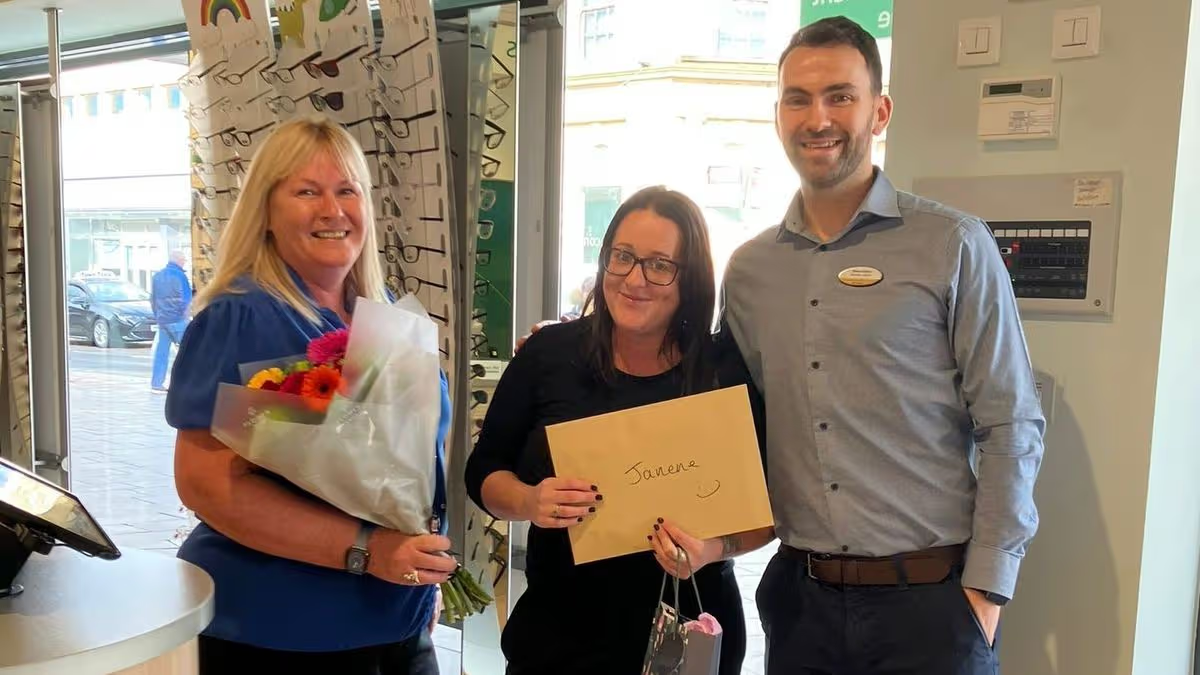
Eleven dedicated team members from Specsavers’ Airdrie and Coatbridge stores have reached hugely impressive long-service milestones.
Advertisement
Leading the celebrations is optical assistant June Boyle, who is marking an incredible 30 years with the opticians business.
Optical assistants Janene Bell and Debbie Kelly are celebrating 23 and 15 years of service respectively, while Morgan Grieve and Claire Brannen have both reached their 10-year milestones.
Across the wider team, assistant manager Susanne Fearon is celebrating 16 years of service, and retail supervisor Jennifer McLaughlan is marking 15 years.
Within the lab technician team, Connor Grieve and John McKelvie are marking 15 and 10 years in their roles, while Phil McVey is celebrating six years.
Advertisement
Cleaner Carol O’Byrne, who works across both stores, is also celebrating 10 years of dedicated service, helping to ensure a welcoming and professional environment for customers and colleagues alike.
Together, the 11 colleagues represent exactly 160 years of combined service across the Airdrie and Coatbridge stores, playing vital roles from clinical support and laboratory services to retail assistance and maintaining a welcoming environment for customers.
Ewan Grieve, retail director of Specsavers Airdrie and Coatbridge, said: “I’m incredibly proud to celebrate these significant milestones with our team.
Advertisement
“Hitting a variety of 10, 15 and 30-year milestones is a remarkable achievement – and a testament to the dedication, professionalism and passion each of these colleagues bring to their roles.
‘Between the team, they have supported thousands of customers and helped shape the warm, community-focused environments we’re so proud of in Airdrie and Coatbridge.
“We’re here to support our customers through the generations, and having such experienced, long-standing team members means families know they can trust us with their eye care year after year.
Advertisement
‘Their loyalty and commitment are at the heart of our continued success, and we’re grateful for the difference they make every single day.’
The stores continue to invest in their teams and services, ensuring customers in Airdrie and Coatbridge receive the highest standard of eye care and customer service.
Labels like autism, attention deficit hyperactivity disorder (ADHD) and dyslexia are not new. But the way we understand them is changing.
In recent years, researchers have increasingly worked with neurodivergent people rather than simply studying them from the outside. That change has brought better access to diagnosis, more inclusive approaches in schools and workplaces and a growing challenge to the idea that neurological difference is something to be fixed.
Language sits at the heart of that change. But getting it right can feel daunting. Should we say “a person with autism” or “an autistic person”? Are medical terms respectful, or do they quietly reinforce stigma? And who gets to decide these things anyway?
For years, professionals were encouraged to use person-first language – phrases such as “person with autism” – to emphasise humanity over diagnosis. But research published in 2016 upended that assumption. Autistic people themselves, it turned out, largely preferred identity-first language: “autistic person”.
Advertisement
That finding has been repeated many times since. Until our recent study, however, very little was known about whether the same preferences applied across the wider neurodivergent community. So, our research team – all neurodivergent – set out to discover just that.
In our new study, we surveyed more than 900 neurodivergent adults across the UK about their terminology preferences. Participants identified with a range of diagnoses, including autism, ADHD, dyslexia, dyspraxia, dyscalculia, Tourette syndrome and stuttering. For each, we presented a list of commonly used terms.
Some were identity first, such as “dyslexic”. Others were person first, such as “person with dyslexia”. We asked people to rate how likeable and how offensive they found each term. Crucially, we also asked why. Those open-text responses revealed far more than a simple preference list.
Advertisement
What we found
Overall, most groups preferred identity-first language. Terms like “autistic people” or “dyslexic people” were seen as more likeable and less offensive. There were important exceptions. People with Tourette syndrome and people who stutter tended to prefer person-first terms.
And when we looked more closely, the picture became more complicated still. Some groups – particularly people with ADHD – felt that none of the available terms really fit. Many said existing labels were vague or failed to capture the full reality of their lives. “Attention deficit”, for example, was seen as too narrow. People described ADHD as affecting far more than focus, shaping energy, emotions, creativity and daily functioning in ways the term barely hints at.
shutterstock. Vitalii Vodolazskyi/Shutterstock
In other words, the issue was not just how language was structured, but whether it worked at all.
Across diagnoses, people spoke powerfully about how certain words made them feel. Words such as “disorder” were widely disliked. Many felt they implied something broken or defective, rather than acknowledging that difficulties often arise because society is not designed with neurodivergent people in mind. Several participants said these terms reinforced stereotypes and shaped how others treated them.
Advertisement
Respect, identity and disagreement
Participants were also clear about one thing: people should be allowed to describe themselves in the way that feels right to them. Even among autistic participants – a group with a well-established preference for identity-first language – many stressed that others should be free to choose person-first terms if that reflected their own identity.
Community infighting over “correct” language was seen as unhelpful. Several people pointed out that neurodivergent communities face far bigger challenges than internal policing of words, including discrimination, exclusion and lack of support.
At the same time, participants drew a clear line between self-description and professional language. They felt that teachers, doctors, researchers and journalists should follow group-level community preferences when speaking in general terms – and be open to correction when they get it wrong. Who is using the language, and in what context, mattered enormously.
What emerged most clearly from our study was that debates about language are rarely just about words. They are about power. About who gets to define whom. And about whether neurodivergent people are seen as fully human, with authority over their own lives and identities. Participants were often less concerned with perfect terminology than with intent, respect and action.
Terminology discussions are not just about language, but about the dehumanisation and associated stigma of people considered “disordered” or “abnormal”. Language shapes action. How we treat people is shaped by whether we see them as being worthy of the same dignity and respect that we afford to those we see as fully human. As such, self-determination, autonomy and respect sit at the centre of such language debates.
We recommend listening to neurodivergent people to find out about their preferences and using the words that they prefer, instead of solely being led by traditions which have developed without the input of the communities we are referring to. When it comes to dignity and respect, actions speak louder than words. People want to feel respected and accepted for who they are, regardless of the labels people use to describe their differences.
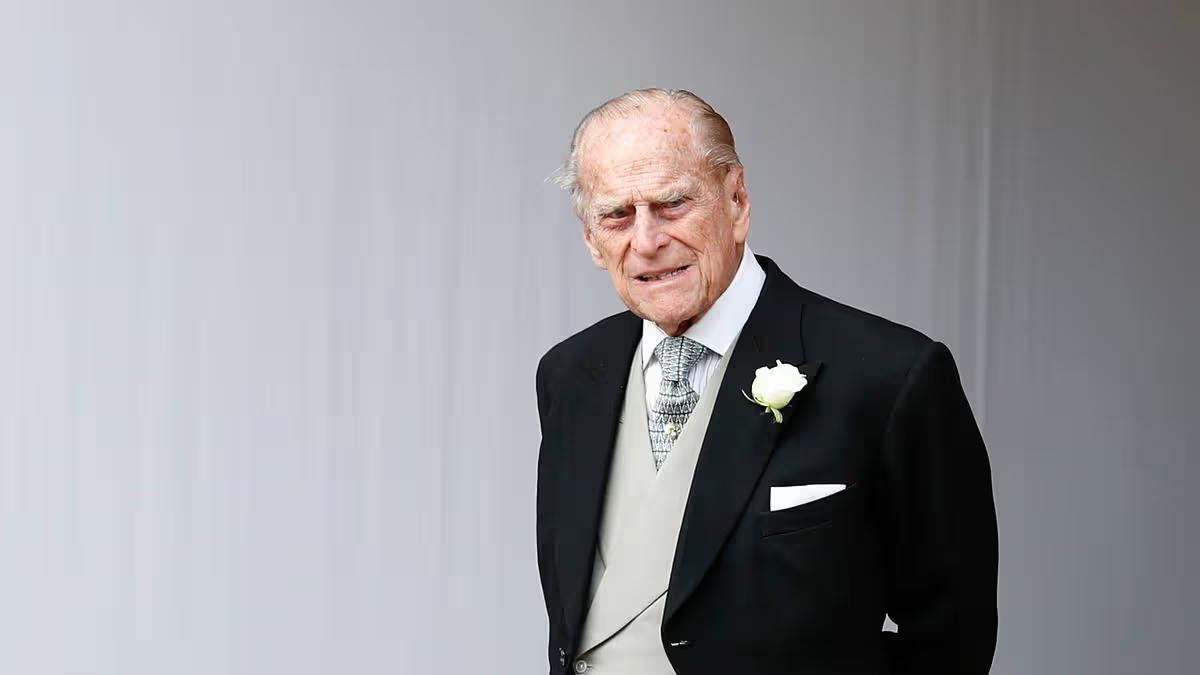
Prince Philip routinely called Meghan Markle ‘The American’ according to royal historian Hugo Vickers’ new biography, while also privately referring to her as ‘DoW’ – his code for Duchess of Windsor
The late Prince Philip was well known for his blunt manner and frequent public blunders. The late Queen’s Greek-born husband was particularly notorious for his offensive remarks towards anyone he considered “foreign.” He once asked indigenous Australians if they were “still throwing spears” while he also described some particularly shoddy electrical work as looking as though it was “put in by an Indian.”
Advertisement
The prince’s infamous attitude even stretched to members of his own family. According to royal historian Hugo Vickers, who has recently released a new biography of the late Queen Elizabeth II, Philip would routinely refer to his grandson’s wife with a dismissive two-word nickname.
In his new book, Hugo reveals that Philip would simply refer to Meghan Markle as ‘The American’. He adds that the Queen had once “torn Meghan off a strip” after she had been rude to one of the royal gardeners.
However, on the Daily Telegraph’s royal podcast, Hugo diplomatically declined to comment when royal-watcher Camilla Tominey asked him if he thought Philip had “seen through Meghan’s theatrical ways”.
Prince Philip, who passed away in April 2021 just two months before his 100th birthday, had previously drawn comparisons between Meghan and another controversial royal from an earlier era, privately dubbing her ‘DoW’, his code for ‘Duchess of Windsor’, a reference to Wallis Simpson.
Advertisement
Speaking on GB News, royal expert Ingrid Seward claimed that Philip thought that Meghan bore an “uncanny” resemblance to Wallis, whose romantic entanglement with King Edward VIII precipitated one of the most dramatic crises in royal history. The Queen’s uncle Edward abdicated the throne so he could marry the twice-divorced American, reports the Express.
“He wasn’t simply referring to the fact that both were pencil-slim, dark-haired and glamorous American divorcees,” Ingrid said.
She added: “I think Prince Philip was very canny about people and he didn’t always see the bad in them, he tried to see the good in them.
Advertisement
“I think he just couldn’t get away from the fact [of the] similarities between Meghan and Harry and Edward and Mrs Simpson.
“There are so many similarities which is why he used to call her The Duchess of Windsor, I mean not to her face.”
In her 2023 book exploring King Charles’s bond with the late Queen, My Mother and I, Ingrid wrote: “One of the few wary of succumbing to (Meghan’s) charm offensive… was Prince Philip.
Advertisement
“From the moment he detected her apparent similarity to Wallis, he referred to her as DoW.”
Prince Harry, for his part, has stated that there has always been a “huge level” of unconscious bias within the Royal Family, and that it was only after living “in his wife’s shoes” for a period that he began to recognise the implicit racial prejudice amongst people of his social background.
In an interview with Black Lives Matter activist Patrick Hutchinson, published in GQ magazine, Harry lauded the “incredibly important” movement and revealed how, for a period of time, he had been unaware that unconscious biases exist within society.
Advertisement
“Unconscious bias, from my understanding, having the upbringing and the education that I had, I had no idea what it was,” Harry said. “I had no idea it existed. And then, sad as it is to say, it took me many, many years to realise it, especially then living a day or a week in my wife’s shoes.”
He suggested that prejudice was “learned from the older generation, or from advertising, from your environment”.
“Unless we acknowledge we are part of this cycle, then we’re always going to be fighting against it,” Harry added.
At a glance: a more serene Gulf getaway in Fort Myers
Where: Fort Myers, a relaxed coastal city on Florida’s southwest coast
Best for: A smaller-scale beach and city break at a leisurely pace
Don’t miss: Edison and Ford Winter Estates, the former holiday home of Thomas Edison and a museum featuring his inventions
Advertisement
Road trip highlight: Driving out to beautiful islands such as Sanibel and Captiva
Nature fix: Nature is everywhere here, including wild dolphins and manatees
Getting started: Tampa International Airport is a two-hour drive away; Miami International Airport and Orlando International Airport are both around a three-hour drive away
When you’re planning a Florida holiday, there are certain big-hitters you’re almost guaranteed to include: the nightlife of Miami, say, or the theme parks of Orlando. But sometimes the most memorable moments come from the more secluded, under-the-radar spots, such as Fort Myers. A laid-back Gulf Coast escape, here you’ll find friendly neighbourhoods, serene green space, and white sand beaches looking out to a spray of paradisiacal islands.
Advertisement
When you travel with British Airways, Fort Myers is a simple addition to a bigger Florida itinerary, allowing you to experience all its charm with pure ease.
Fort Myers: beautiful beaches and idyllic islands
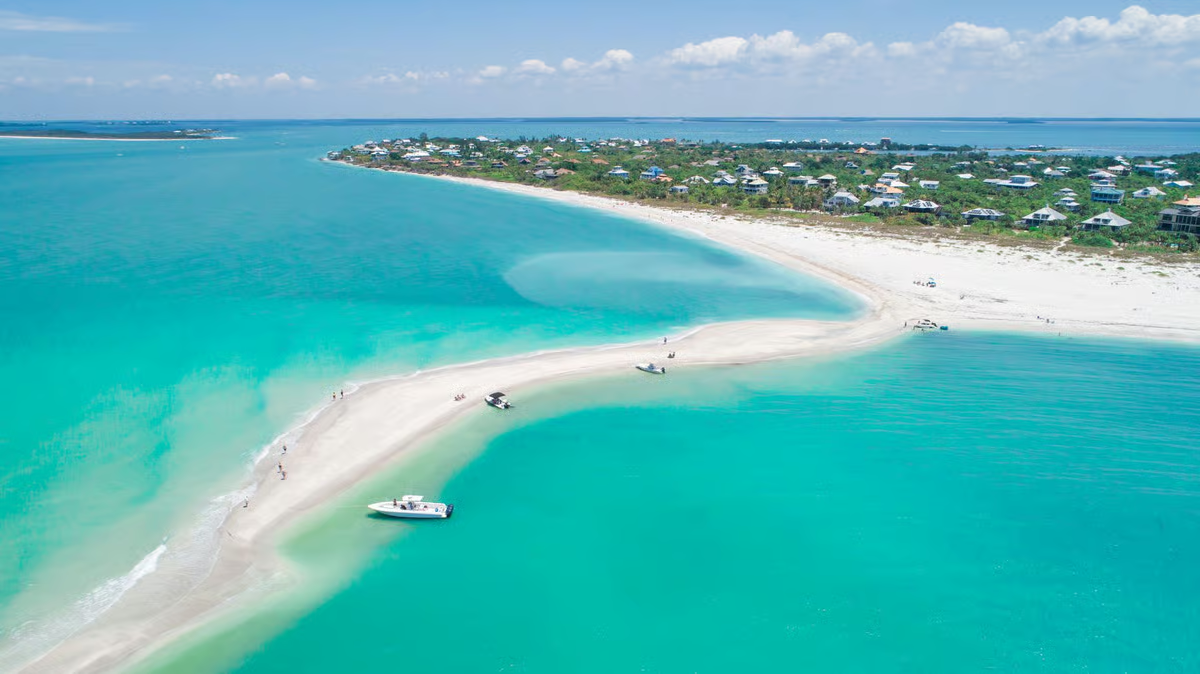
Postcard-perfect beaches come as standard in Fort Myers
Fort Myers
Advertisement
Whether you’re hoping to kick back with a good book or spend the day splashing in the sea, Fort Myers has a beach to suit. Bunche Beach Preserve is a natural expanse of tidal wetland flanked by salt flats and mangrove forest. Fort Myers Beach is adjacent to city facilities and perfect for families, with picnic areas, paddlecraft launch spots and charcoal grills for barbecuing. Nearby Pink Shell Beach Resort and Marinais well placed to provide a beachfront getaway for friends and families alike.
What makes Fort Myers so unique is its enticing islands, many of which have truly breathtaking beaches. Located just off the city’s mainland, Sanibel is a 12-mile-long, three-mile-wide island with alabaster sand. It’s known for its chilled out charm and the colourful shells that wash up on Bowman’s Beach Park or Blind Pass Beach Park.
Or make your way to Captiva, a smaller island that’s accessed via a bridge from Sanibel. This slim strip of island is a good jumping-off point for boat trips and a prime spot to see an epic Gulf Coast sunsets.
Downtown Fort Myers and the River District
Advertisement
For authentic Florida food, there are restaurants and bars aplenty in the sociable River District
Fort Myers
A brilliant beach break doesn’t mean you have to sacrifice the sophistication of the city, however. Fort Myers has several distinct neighbourhoods to explore, whether you’re after shopping and park walks in Bonita Springs or canal boating and craft beer in Cape Coral. For the latter, The Westin Cape Coral Resort, perched right on the waterfront, offers the perfect relaxing coastal retreat.
Downtown Fort Myers is vibrant and green, with the historic River District showcasing a time-warp of early 20th-century architecture. Here you’ll find museums, galleries and plenty of theatre.
Be sure to visit the Edison and Ford Winter Estates, one of Florida’s most important historical attractions, showcasing the inventions of Thomas Edison and Henry Ford. The clapboard house, set in 20 acres of botanical gardens on the Caloosahatchee River in Downtown, dates from 1885 when Edison purchased the property to build a holiday home.
Advertisement
Explore the great outdoors in Florida
The Great Calusa Blueway is an unforgettable experience
Fort Myers
In Fort Myers, you won’t get far without plunging into green, whether you’re winding along a boardwalk trail in a tree-dense reserve or taking a leisurely walk along an untamed stretch of sand.
Wild bird populations are especially plentiful, thanks to the mix of coastal shore, mangrove waterways and salt flats. Head to the right places – perhaps out on a paddling trip – and you’re likely to spot plovers, reddish egrets, white ibises and possibly even iconic bald eagles.
Advertisement
The Great Calusa Blueway is home to some seriously big wildlife. Endangered manatees live in the shallow and warm waters of Estero Bay during the summer months and slightly further north during winter, so keep your eyes peeled for one breaching the water in the distance. Bottlenose dolphins are also known to frolic in local waters year-round.
One of the Sunshine State’s unsung gems, Fort Myers has a little bit of everything – beautiful beaches, exciting city life and majestic nature – all within close proximity. It’s an essential stop on any discerning Florida road trip.
Booking with British Airways
British Airways offers an extensive network of direct flights to Florida, serving Orlando, Miami and Tampa, making it easy to reach the Sunshine State from the UK
When booking with British Airways Holidays, you can secure your holiday with a low deposit and spread the cost with flexible payments*
All holiday packages include a generous checked baggage allowance
Access to a dedicated 24/7 support helpline during your trip
ATOL protection from the moment you book a holiday package, giving you financial reassurance
Members of The British Airways Club benefit from collecting Avios, earning tier points and using Avios towards the cost of holiday packages
Upgrade to Club World (Business Class) for a host of additional benefits including lounge access, **increased checked baggage allowance, priority check-in and boarding, and a spacious seat that converts to a fully flat bed
Golden eagles are poised for a comeback in England after the government backed plans to reintroduce them. The birds might arrive under their own steam first, though
One of Britain’s most iconic birds, the golden eagle, could soon soar over England again after more than 150 years of absence, following new government backing for a recovery programme that blends conservation science with community-led action.
Once widespread across England and woven into the country’s cultural fabric – appearing more than 40 times in the works of William Shakespeare – golden eagles were driven to near extinction during the Victorian era through sustained persecution and habitat pressure. In modern times, sightings south of the Scottish border have been rare, and the last known eagle in England died in the Lake District in 2016.
Advertisement
Now, a new feasibility study by Forestry England suggests that the conditions for their return may finally be in place. The research identifies eight potential recovery zones, primarily across northern England, where landscapes could once again support sustainable populations of the birds.
Solutions every Saturday Uplift your inbox with our weekly newsletter. Positive News editors select the week’s top stories of progress, bringing you the essential briefing about what’s going right. Sign up
Backed by £1m in government funding, the next phase will explore how a reintroduction could work in practice. This may include the release of juvenile birds, aged six to eight weeks, as early as next year. The aim is not only to restore a lost species, but to rebuild the ecological balance that golden eagles once helped maintain.
“This government is committed to protecting and restoring our most threatened native wildlife – and that includes bringing back iconic species like the golden eagle,” said Environment Secretary Emma Reynolds. “We will work alongside partners and communities to make the golden eagle a feature of English landscapes once again.”
Advertisement
The proposal builds on recent momentum in species restoration across England. Last year, the government approved the reintroduction of Eurasian beavers into the wild, while a separate £60m funding package has been earmarked to protect threatened native species. Together, these moves signal a shift towards more ambitious, ecosystem-level approaches to conservation.
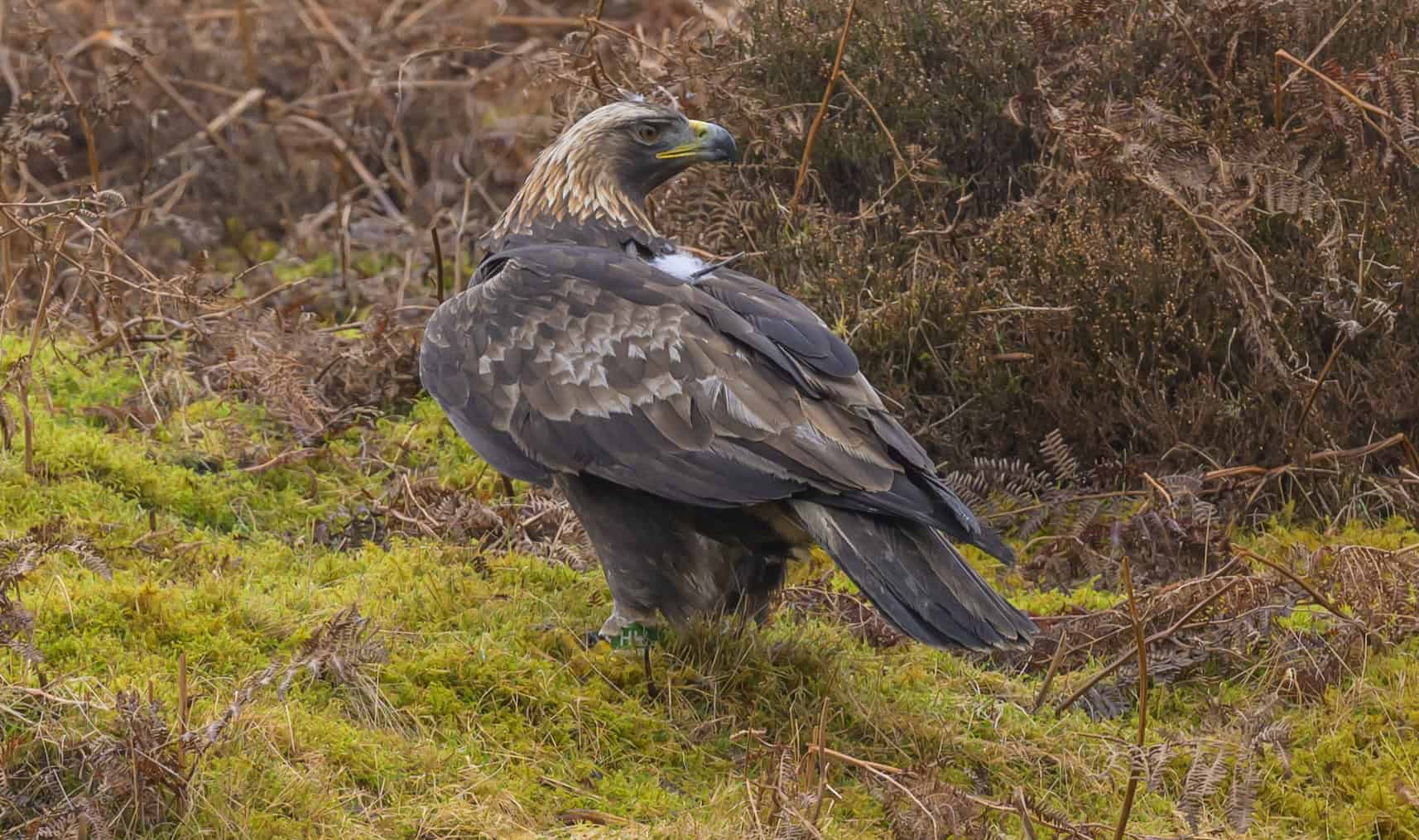
Golden eagles are considered a keystone species – a predator at the top of the food chain whose presence can influence the health of entire ecosystems. By regulating prey populations and shaping animal behaviour, they help maintain balance across landscapes, from upland moors to forest edges. Their return could therefore have wider benefits for biodiversity, particularly in areas where ecosystems have become degraded or simplified.
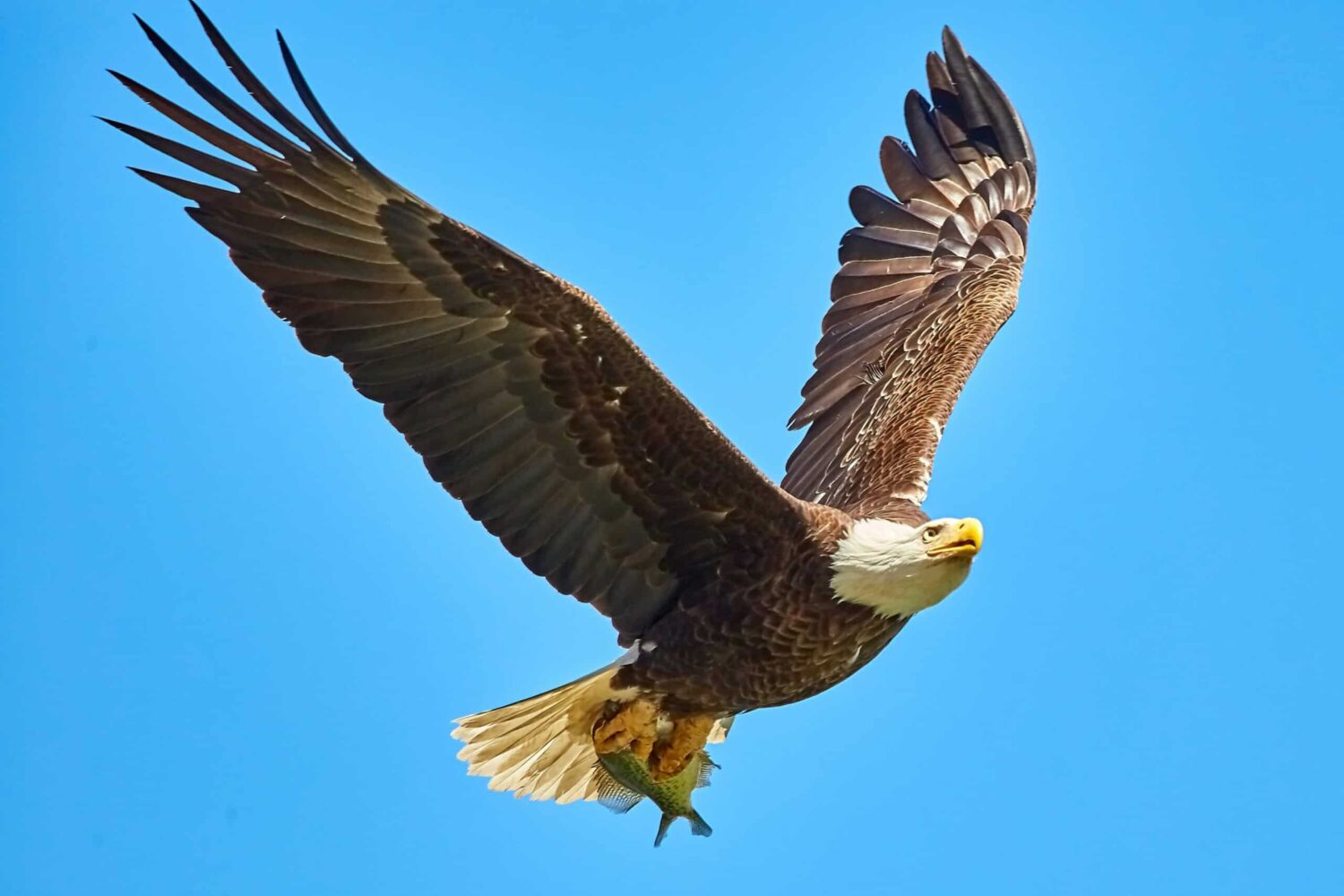
Research by Forestry England identifies eight potential recovery zones, primarily across northern England, where landscapes could once again support sustainable populations of the birds. Image: Dmitry Grigoriev
Advertisement
There are already signs that nature is beginning to do some of the work itself. In southern Scotland, the South of Scotland Golden Eagle Project has successfully boosted eagle numbers through translocation and habitat management. Satellite tracking shows that some of these birds are now venturing across the border into northern England, hinting at a natural recolonisation that could be supported and accelerated.
The new programme aims to build on that success. Led by conservation charity Restoring Upland Nature in partnership with Forestry England and other organisations, it will focus as much on people as on wildlife.
“This presents a truly exciting, and potentially game-changing moment for the return of golden eagles to northern England,” said the charity’s chief executive, Cat Barlow. “Our success to date is testament to the strength of collaborative working between conservationists, raptor study groups, gamekeepers and land managers, and to the incredible support of thousands of people across communities in southern Scotland.”
Advertisement
This presents a truly exciting, and potentially game-changing moment for the return of golden eagles to northern England
That emphasis on collaboration is critical. Past attempts to protect birds of prey in the UK have often been undermined by conflict between conservation goals and land management practices, particularly in upland areas associated with game shooting. The new approach seeks to avoid those tensions by involving farmers, landowners, gamekeepers and local communities from the outset, ensuring that any reintroduction supports both nature and livelihoods.
Forestry England’s chief executive, Mike Seddon, said the organisation’s long-term ambition is for the nation’s forests to become “the most valuable places for wildlife to thrive and expand”. He added that reintroducing lost species is a key part of that vision, but must be done carefully and inclusively.
“The detailed findings of our feasibility study will guide us with our partners to take the next steps,” he said. “This funding means we can build support and engage with local communities, landowners and conservation organisations.”
If successful, the timeline for recovery will be gradual. Scottish birds may become a more regular sight over northern England within a decade, but establishing a stable, breeding population is likely to take longer. Golden eagles are slow to mature and require large territories, meaning that population growth is measured over generations rather than years.
Advertisement
Golden eagles are considered a keystone species – a predator at the top of the food chain whose presence can influence the health of entire ecosystems. Image: Mathew Schwartz
Still, the symbolic power of their return is hard to overstate. As one of Britain’s largest birds of prey, with a wingspan that can exceed two metres, the golden eagle has long captured the public imagination. Its absence from English skies has been both an ecological and cultural loss.
Advertisement
Reintroducing such a species is not without challenges, and success will depend on sustained funding, careful monitoring and continued public support. But the groundwork now being laid suggests a more mature model of conservation is taking hold – one that recognises that restoring nature is as much about people and partnerships as it is about wildlife.
The initiative forms part of the government’s broader Environmental Improvement Plan, which includes targets to halt the decline in species abundance by 2030 and reduce extinction risk by 2042. Achieving those goals will require not just protecting what remains, but actively rebuilding what has been lost.
Main image:
Advertisement
Be part of the solution
At Positive News, we’re not chasing clicks or profits for media moguls – we’re here to serve you and have a positive social impact. We can’t do this unless enough people like you choose to support our journalism.
Give once from just £1, or join 1,800+ others who contribute an average of £3 or more per month. Together, we can build a healthier form of media – one that focuses on solutions, progress and possibilities, and empowers people to create positive change.











































You must be logged in to post a comment Login