

Connect with us
DAPA Banner
DAPA Coin
DAPA
COIN PAYMENT ASSET
PRIVACY · BLOCKDAG · HOMOMORPHIC ENCRYPTION · RUST
ElGamal Encrypted MINE DAPA
🚫 GENESIS SOLD OUT
DAPAPAY COMING

NewsBeat

Violence erupts as police intervene in clash before Conference League final

Published

on

Violence erupts as police intervene in clash before Conference League final

A group of English fans were detained by police following an alleged breach of the peace after clashes broke out in Leipzig ahead of Crystal Palace’s Conference League final against Rayo Vallecano.

Videos shared on social media appeared to show rival groups fighting and throwing chairs during the incident. Many were seen falling to the ground as the clash began, while others ran for cover.

A group of men wearing black T-shirts arrived at the scene shortly before violence erupted between the two groups. Chairs and glass bottles were thrown, as seen in one of the clips, as police in riot gear moved in to break up the groups.

The Press Association reported the disturbance happened outside an Irish bar, where German police later detained several English people.

Advertisement

A spokesperson for the Metropolitan Police said German authorities told them those involved were being held over an alleged breach of the peace, which is considered a criminal offence under German law.

The Press Association reported the disturbance happened outside an Irish bar, where German police later detained several English people
The Press Association reported the disturbance happened outside an Irish bar, where German police later detained several English people (Jordan Pettitt/PA)

The group were as a result subject to police control measures, including detention, establishment of ID, search of person and full-body photograph.

Crystal Palace will look to take on the European trophy for the first time against Rayo Vallecano. A win for Palace will also secure them a spot in the Europa League next year.

If Oliver Glasner’s team is victorious, Crystal Palace would become the third English club to win the trophy, following West Ham in 2023 and Chelsea in 2025. Glasner has said his ultimate parting gift would be to see his team in the Europa League next season.

The match is set to be played at Leipzig’s Red Bull Arena on Wednesday, May 27, with kick-off scheduled for 8 pm BST.

Advertisement

Fans in the UK can watch the match live on TNT Sports 1, with coverage beginning at 6.30 pm BST. The game will also be available to stream live through HBO Max and the HBO app.

Source link

Continue Reading
Click to comment

You must be logged in to post a comment Login

Leave a Reply

NewsBeat

five reasons why Victorian houses are cooler than modern buildings

Published

on

five reasons why Victorian houses are cooler than modern buildings

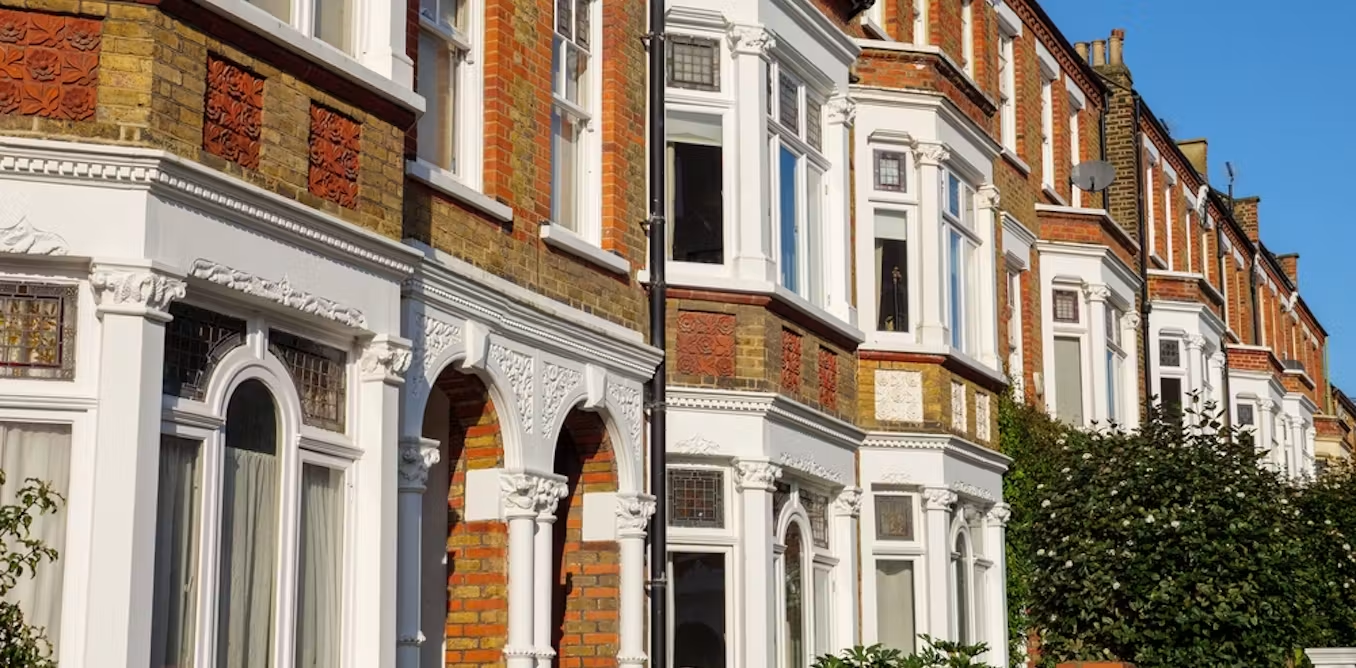
More than four million homes were built in the UK during the Victorian era.

Victorian homes were constructed long before the complex computer models used today to design buildings were invented. Yet, these homes, built over 100 years ago, are cooler in summer than many built more recently.

Here are some fundamental architectural reasons why this is.

1. Shutters

Many Victorian homes featured external wooden shutters to block the sun’s heat before it entered the building. The Victorians knew that blocking the sun’s heat before it enters the building is among the best ways to reduce overheating. Few homes built in the 20th century in the UK have external shutters on windows, partly because modern homes use outward-opening hinged casement windows which cannot be used with external shutters.

Advertisement

Homes in southern and central Europe have tended to keep their external shutters, because they have historically faced hotter summers than the UK. With a changing climate, parts of the UK are expected to have a climate similar to the Mediterranean by the middle of this century.

Victorian homes were also equipped with internal shutters. These are less effective than external ones at reducing overheating because the sun’s heat has already passed into the building. Yet, they are still more effective than a completely unshaded window, particularly if the shutters are painted a light colour which reflects some of the heat back out.

Their main benefit, however, is keeping the heat in during winter. Many Victorian internal shutters survive today as they are less likely to have been damaged due to weather exposure or have been removed when sliding sash windows were replaced with other alternatives.

Advertisement

Awnings like these were often put over windows in Victorian homes to help keep the house cool.
Barlow Blinds Ltd (BBSA Member), Author provided (no reuse)

2. Canopies and awnings

Conjure up an image of a Victorian high street, and no doubt a row of striped canopies and awnings above the shops and cafes will come to mind. These have a similar effect to external shutters by blocking the sun’s heat before it enters the building.

Canopies and awnings have several other benefits: they can be used alongside outward opening windows, so they don’t block ventilation; they allow a view out of the building; and they provide a pleasant shady place to sit.

Although rarely seen today, many Victorian buildings featured them. Even Buckingham Palace once had external canopies protecting the windows from the heat of the sun.

Although it’s not entirely clear why canopies were removed, there may be fewer barriers to their return than we think. The Royal Borough of Kensington and Chelsea in London has spotted that many of the awning boxes, which stored the rolled up awning or retracted canopy, survive today as they are integrated into the building’s facade. With increasing pressure to keep our homes cool in summer, these could easily, and relatively cheaply, be brought back into use.

Advertisement
A crowd of people in front of Buckingham Palace in 1897.

A Diamond Jubilee garden party at Buckingham Palace in 1897, showing the awnings in use.
Royal Collection, Public domain, via Wikimedia Commons, CC BY-ND

3. Sash windows

Ventilation can bring in cooler outdoor air (usually at night) and reduce overheating. The Victorians used sliding sash windows which could be operated even with the external shutters closed.

Sash windows are particularly effective because they have a separate operable upper and lower portion which allows for hot air to leave the home at the top and cooler air to enter at the bottom. With hinging casement windows on modern homes the air coming in is often blocked by the air going out, so they don’t keep homes as cool.


À lire aussi :
How London, Paris and New York coped in the heatwaves of the past


4. Leaky by design

It is not just sash windows that makes Victorian homes better ventilated. With open fires burning in winter, the Victorians designed their homes to bring in lots of outdoor air for combustion and several open chimneys to carry the smoke away.

Advertisement

These types of homes, with open chimneys, suspended timber floors, and uninsulated solid brick walls, are the leakiest and least airtight homes in the British housing stock.

This allows more air to enter the building, even when windows are closed, which can cool the home in summer if it is cooler outside than inside. The suspended timber floors also store cool air under the building during the day to provide a cooling effect.

Modern homes do not have these features – there is no need for open chimneys when central heating is used. To help reduce winter energy bills, suspended timber floors have been replaced by insulated slab-on-grade or beam-and-block, and modern building regulations are requiring more airtight homes to reduce heat loss in the colder months.

Advertisement
A row of Victorian shops with canopies creating shade in Melbourne, Australia.

Queen Victoria Market shopfronts in Melbourne, Australia, built in the Victorian period and featuring canopies at the front.
Jacqui Szyrpallo/Wikimedia, CC BY

5. Solid brick

Walk into an ancient church on a hot day and you may mistakenly think they’ve installed air-conditioning. The real reason for the instant cool feeling is in the huge amounts of thermal mass – the ability of the building to store heat within the building fabric.

There has been a fundamental shift in the way houses are constructed in the UK. Victorian homes had solid brick or stone external and internal partition walls – so high thermal mass.

These walls were able to soak up and store the heat of the day to keep the indoor temperature cool.

Modern homes are constructed of lightweight timber frame and plasterboard (lower thermal mass) because they are cheaper and quicker to build. These walls are less able to absorb heat during the day, but they do have the benefit of cooling down faster at night.

What goes wrong?

So why are some Victorian properties not particularly cool during summer heatwaves today? Often the way they have been adapted introduced an overheating problem. When wooden sash windows reach the end of their life, they are often replaced with cheaper outward-opening casement windows. This prevents them from being used with external shutters or ventilating as efficiently.

Advertisement

External shading itself is also being discouraged in some conservation areas, despite it featuring on heritage buildings in the past.

Conversion of Victorian single homes into multiple flats can further cause problems as the once free cross-ventilation may now be blocked and those in converted loft spaces are exposed to high internal roof surface temperatures.

Victorian building design has lessons for today. If sash windows are removed, inward opening windows can be combined with external shutters or blinds instead. Victorian-style awnings and canopies are compatible with outward opening windows, so these could help too.

Most homes standing today will still be around in decades to come, so they must be planned or adapted to cope with whatever the future climate has to throw at them.

Advertisement

Source link

Continue Reading

NewsBeat

expert advice on how and when to save water at home

Published

on

expert advice on how and when to save water at home

Water unites everyone on the planet, and as well as keeping us alive, it has thousands of other uses, yet we undervalue it, take it for granted and often waste it.

As many countries are now experiencing hot weather more frequently, our demand for water increases. Water companies need to act to reduce leaks and wastage, but there are also ways we can all save water around the house, as well as save money and preserve this valuable resource.

Tap water is clean, safe to drink and delivered directly to our homes. A lot of work has gone into getting it there and testing it to ensure it’s safe; we should think of this as gold-plated water. In some cases we need this, but when we come to water the plants or flush the toilet, we don’t really need to use this gold-plated water.

We can follow the principle of reduce, reuse and recycle to use less of this water and to make the most of the water we do use this summer.

Advertisement

Reducing water use

Thinking of water as a valuable resource helps us recognise when we’re wasting it. A simple example is leaving the tap running while brushing our teeth. A tap in the UK can deliver 10-15 litres of water per minute, so leaving the tap running for a minute each time we brush our teeth could waste 9,000 litres per year. On a street of 70 family homes, that’s enough water to fill an Olympic swimming pool each year.

We can also use water (and energy) more efficiently by always filling the dishwasher, rather than running it half empty, and only putting as much water as we need in the kettle.

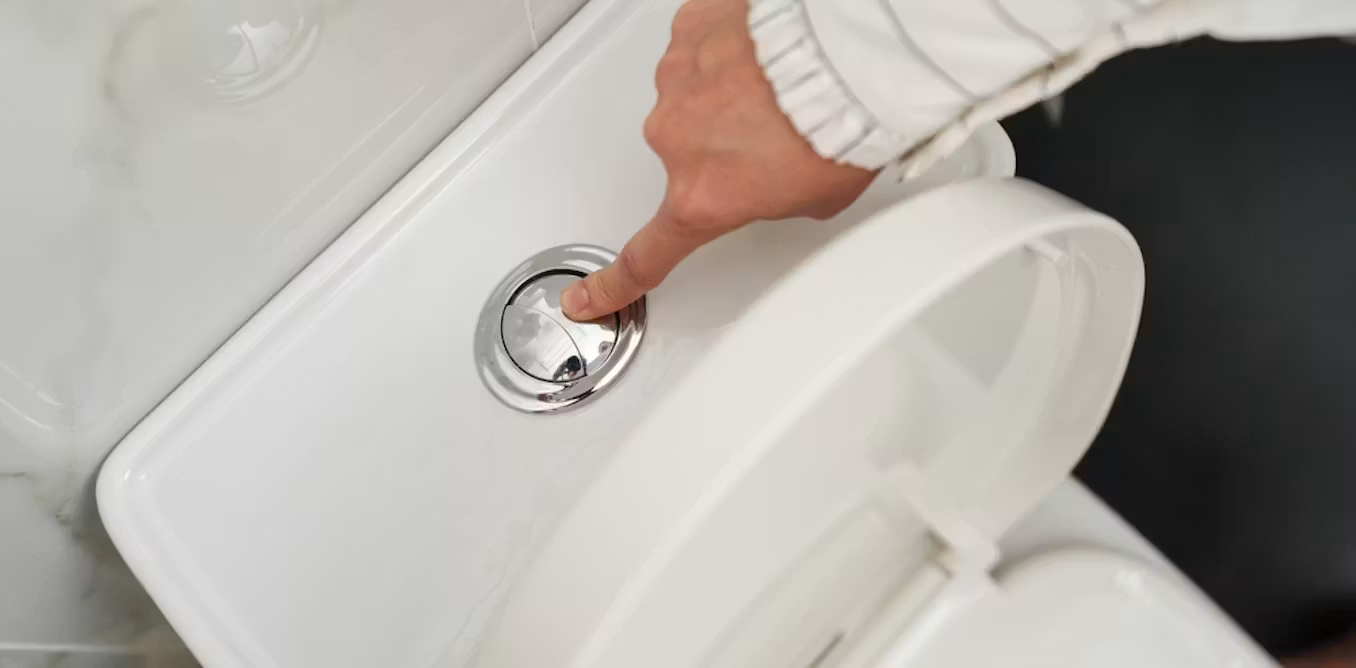
Toilets are the elephant in the (bath)room: Every flush uses at least four litres of water, and sometimes as much as 13 litres. It’s not for everyone, but depending on your household, it may not be necessary to flush every time. Keeping the lid closed and adopting the “If it’s yellow, let it mellow” principle just once a day could save the average home over 3000 litres of water each year.

If you are renovating a bathroom, you can save water by using a toilet-sink combination unit, which reuses water to flush. Many water companies provide testing strips or instructions on how to check whether your toilet is leaking water. If your toilet is older, you can reduce the amount of water used each flush by installing a water-saving device in the cistern. You can buy one or even make your own quite easily.

Advertisement

Using leftovers

Some tasks need that gold-plated clean water, but some don’t. For example if we use water for cooking, such as boiling vegetables or washing salad, the leftover water is perfectly suitable for watering plants. Water from a reusable water bottle you didn’t drink can go in the kettle, the birdbath, or anywhere but down the sink.

Speaking of the sink, keeping a jug here is a great way to reduce water use. It means you can capture water that would otherwise be wasted and reuse it. Every time we turn on the hot tap and wait for it to warm up, we waste litres of water. Capturing this in a jug and using it for something else is a good idea.

Using greywater

Greywater is water that’s already been used, such as from a bath, shower or basin. We all produce a lot of it, and while we can’t use it for everything, there are opportunities to reuse it if we’re willing to put in a little effort.

A shower uses less water than a bath, but if you do have a bath, use a bathroom bucket or jug to reuse this water to flush the toilet later. Either throw the water down the pan or flush then use it to refill the cistern. You could also use greywater on non-edible plants, or to wash your bike.

Advertisement

I previously built a system to refill our toilet automatically from a greywater tank. This can save thousands of litres of water. The challenge was getting the greywater back up to the height of the toilet cistern without using lots of energy, as this could cancel out the environmental benefit of the water saving. I used a siphon and a solar-powered pump. If you’re looking for a project there are examples online.

Fitting a water butt is relatively easy.

Using rainwater

In the UK, for a large part of the year we are blessed by an abundance of free water from the sky. Unfortunately it doesn’t always arrive when we need it, so storing rainwater is really important.

Water butts are fantastic. If you have a downpipe, you should install a water butt. They are relatively easy to fit and fairly cheap, starting around £30. It’s surprising how quickly they fill up, and even small roofs like sheds often deserve their own. If you don’t have a downpipe or gutters, there are other ways to collect water.

Advertisement

Leaving a bucket outside is simple but very effective. More complex methods include large trays which drain into water butts, hanging sheets (hang a plastic sheet with a slight sag in it, angled so water runs down into a bucket), or even upturned umbrellas, which you can pop outside when it starts to rain and then empty.

Making the area you capture water from as large as possible is the key. Place buckets under any drips from roof corners or areas where you see puddles. Sinking a small pot into a larger pot can also help retain rainwater and keep a plant container moist over a few days.

The bigger the surface area rained on, the more water you will catch.
Stuart Walker, CC BY

Catching rainwater also has wider benefits if you live in a flood-risk area. In a storm, if some of the water fills water butts, this reduces the amount entering drains and watercourses and can help reduce flooding.

As climate change starts to really take hold in the UK, we will see more heatwaves, more water shortages, and more pressure on our water systems. By recognising how valuable water is and doing our best to preserve it, we can help reduce the environmental impact, save money, and help make sure there’s enough for everyone.

Advertisement

Source link

Continue Reading

NewsBeat

US Open 2026: Clark in control as wind derails McIlroy and Scheffler at Shinnecock Hills

Published

on

Tommy Fleetwood & Rory McIlroy were playing together

US Open, round two leaderboard

-7 W Clark (US); -3 M Fitzpatrick (Eng), T Kim (Kor), X Schauffele (US), S Stevens (US)

Selected: -2 C Morikawa (US); -1 J Thomas (US); Level A Fitzpatrick (Eng), R McIlroy (NI), S Scheffler (US); +1 A Rai (Eng), J Rose (Eng), L Aberg (Swe), T Fleetwood (Eng); +2 T Hatton (Eng); +4 R MacIntyre (Sco)

Once again the weather took top billing at Shinnecock Hills as Wyndham Clark built a healthy four-shot halfway lead at the US Open.

Advertisement

Scottie Scheffler called the gusting wind “the biggest challenge”, while Rory McIlroy pointed out their “side of the draw played in the windiest conditions and the scores show that” after the world’s top two finished the second round on level par for the championship, seven adrift of Clark.

It is, of course, one of the hazards of playing an outdoor sport with start times spread across a day. The scoring average shifted from 73.87 on Thursday morning to 71.97 for Friday’s early starters.

Clark, the 2023 champion, was one of those who took advantage of playing in the more benign conditions late on Thursday and early on Friday, and followed his opening six-under 64 with a 69.

England’s Matt Fitzpatrick, the 2022 US Open winner, was also on that side of the draw and is among Clark’s nearest challengers on three under after posting a 70. He was joined on that number by two-time major champion Xander Schauffele.

Advertisement

But the wind was not solely to blame given two players on McIlroy and Scheffler’s side of the draw are also four back and joint second – South Korea’s Tom Kim and American Sam Stevens.

McIlroy also reached three under after picking up two birdies in his opening eight holes and looked the most likely player to eat into Clark’s lead, before he was derailed by a combination of poorly executed shots and the strengthening wind on his second nine holes.

The blustery conditions were not as extreme as Thursday’s when 40mph gusts of wind buffeted the Long Island course in New York state.

But it was clearly penal enough to trouble Scheffler, particularly on the putting surfaces.

Advertisement

“With the amount of pitch you have on the greens, playing in the wind is extremely difficult, and judging speed on putts when the wind is blowing that hard can be challenging as well,” he said.

Source link

Continue Reading

NewsBeat

Man Utd urged to sign World Cup star after Arsenal and Liverpool transfer interest | Football

Published

on

Man Utd urged to sign World Cup star after Arsenal and Liverpool transfer interest | Football

Close Overlay

In The Mixer’s World Cup special

Everything you need to know about the World Cup – England updates, the games to watch and stories you missed – in five minutes, at 1pm, every day.

Source link

Advertisement
Continue Reading

NewsBeat

Two East Midlands Railway trains crash in Bedford fields

Published

on

Two East Midlands Railway trains crash in Bedford fields

Aerial footage of the aftermath shows the two damaged East Midlands Railway (EMR) trains with most carriages on the tracks but at least one shunted off.

Footage shows a long line of emergency vehicles on a rural road as emergency crews and passengers of the two southbound trains gathered in the neighbouring field.

The two East Midlands Railway services involved were the 4.40pm from Corby to London St Pancras and the 3.50pm Nottingham to London St Pancras, the rail operator said.

Air ambulance helicopters are on the ground after the collision happened just south of the Elstow interchange between the A421 and the A6.

Advertisement

Serious injuries have reportedly been sustained by on-board staff and passengers, a Rail, Maritime and Transport (RMT) union spokesperson said.

A team of RAIB (Rail Accident Investigation Branch) inspectors is on site at the scene of a collision between two trains near Elstow, to start gathering evidence.

Passenger Pete Knapp described people “crying, screaming” and said some seemed to have major injuries.

He told the Press Association: “There was a moment of being flung into the chair in front, and then I saw smoke. People were crying, screaming, people were so scared and confused.

Advertisement

“I got up and I saw a lot of people who were unable to speak, had broken legs, and then I managed to get out of the train and because I’m quite thin I was able to squeeze out through the gap in the doors.”

The 40-year-old added: “My first thought was I needed to get out of the train just in case it was a terrorist explosion, I thought it was safer to get off the train.”

He said he had not felt the train slow down before the crash but other passengers told him they had.

Dr Knapp told PA he saw people with “life-threatening, major injuries, minor injuries” as well as “people with bandages, people who couldn’t see straight”, while others like him were still able to walk.

Advertisement

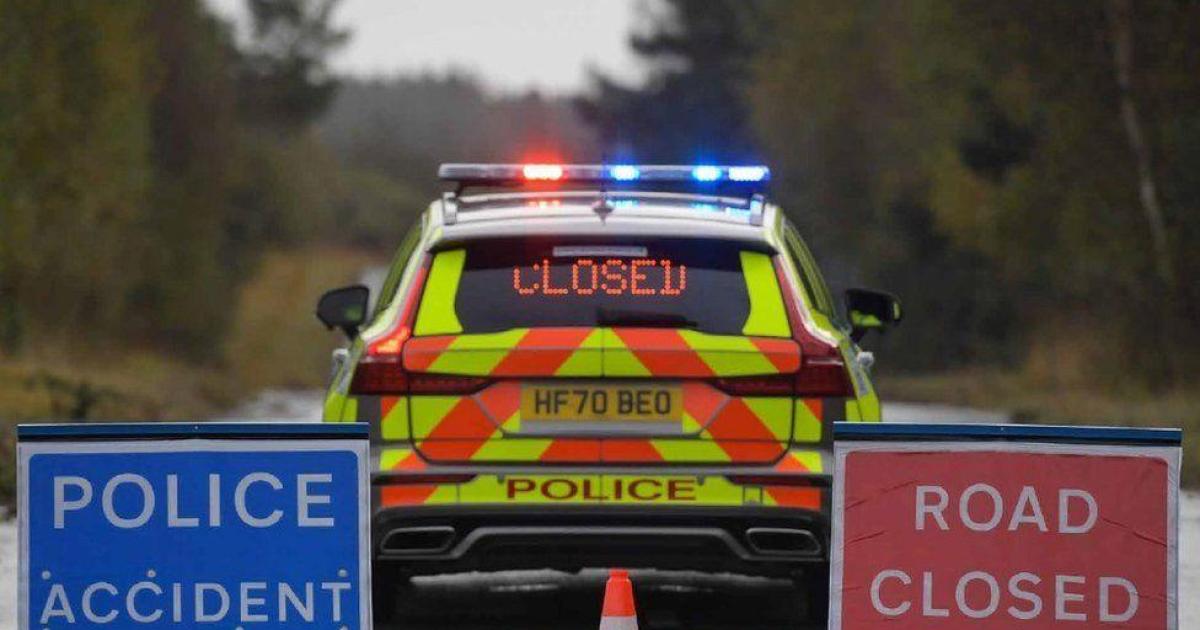
Police close a road in Bedford, after the 4.40pm East Midlands Railway service from Corby to London St Pancras and the 3.50pm Nottingham to London St Pancras service, were involved in a collision just south of the Elstow interchange between the A421 and (Image: Jordan Reynolds/PA Wire)

He said: “I’ve got blood all over my trousers and my back hurts like hell but I’m alright.”

The crash occurred at 5.12pm leaving the “front of train OK, third carriage off rails”, he said earlier on Bluesky.

“Sudden crash, no slowing down or horns. No warning.

“No explosion, just stopped instantly,” he said.

Advertisement

Dr Knapp added: “No horns, warnings, explosions, just sudden impact. No terrorism signs.”

Bedford Hospital and Luton and Dunstable University Hospital have both asked people to avoid attending their emergency departments “unless they have a genuine medical emergency” as they respond to the “active incident”.

Meanwhile British Transport Police warned concerned relatives or friends of people who may have been on the trains not to travel to the scene.

EMR trains are “unable to run in or out of” London St Pancras for the rest of the day and it advised customers: “DO NOT TRAVEL this evening”.

Advertisement

Transport Secretary Heidi Alexander said she was “deeply concerned” by the reports.

In a post on X, she said: “I’m grateful to emergency services who are on the scene, attending to those affected.

“We’re working quickly with the rail industry and local partners to support passengers.”

Health Secretary James Murray is being kept updated on the events, he posted on X.

Advertisement

The crash appears to have been a “relatively slow speed collision” and the damage to the trains looked “fairly minimal”, a rail expert told Sky News.

Tony Miles said: “Obviously it’s a rear end collision, they were going in the same direction, so one of them, the rear one was going faster than the one it’s caught up with, for some reason. That’s not a complicated assumption.

“So, the question has to be how has that train that’s in the rear got in to contact with the train that it was following, and obviously it’s either gone past the signal that was telling it it should stop, or the signal was faulty, or the driver’s made a mistake in some way, or didn’t read the signal, or something.”

He added: “Even if you’re going 40 miles an hour and you come to a halt in a few metres, you’ve got the energy of a 40-mile-an-hour body in you, and you’re going to move until you hit something, unfortunately. So, even relatively low-speed collisions can be dangerous for people that are on board.”

Advertisement

Bedford and Kempston MP Mohammad Yasin said he was “very sorry” to hear of the incident and would share more information “soon”.

Transport Salaried Staffs Association general secretary, Maryam Eslamdoust, said it is “devastating to hear of the collision” and “safety on our railways is always our number one priority”.

East of England Ambulance Service sent air ambulance and a Hazardous Area Response Team encouraged people to avoid the area.

Advertisement

Source link

Continue Reading

NewsBeat

Concern for welfare incident at Moses Gate Country Park

Published

on

Concern for welfare incident at Moses Gate Country Park

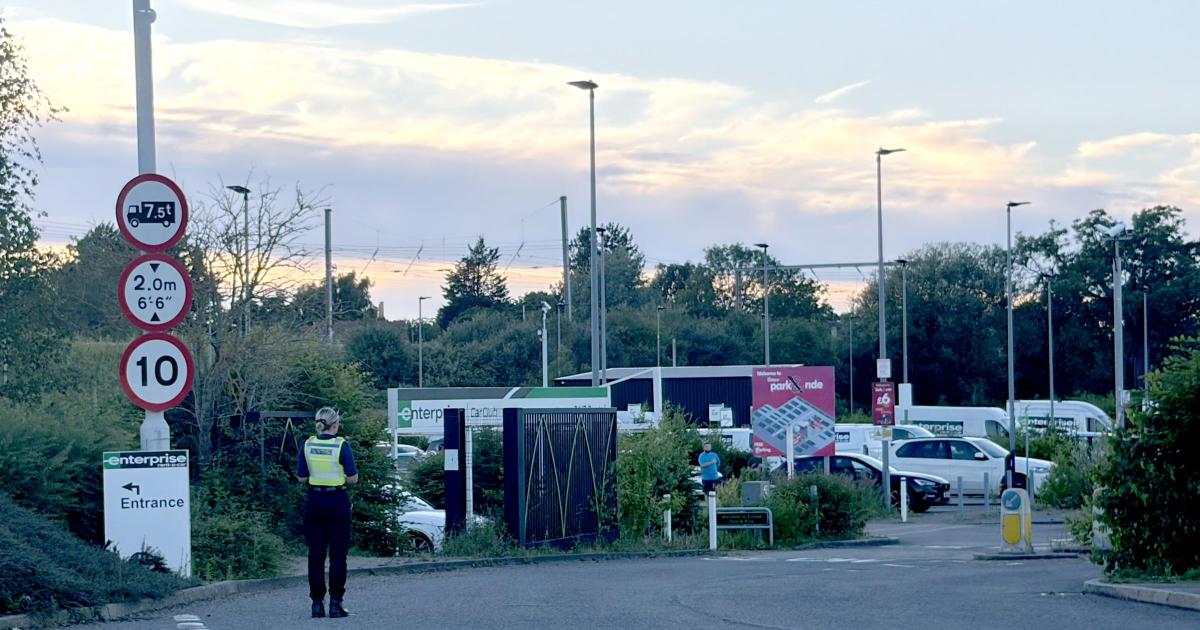
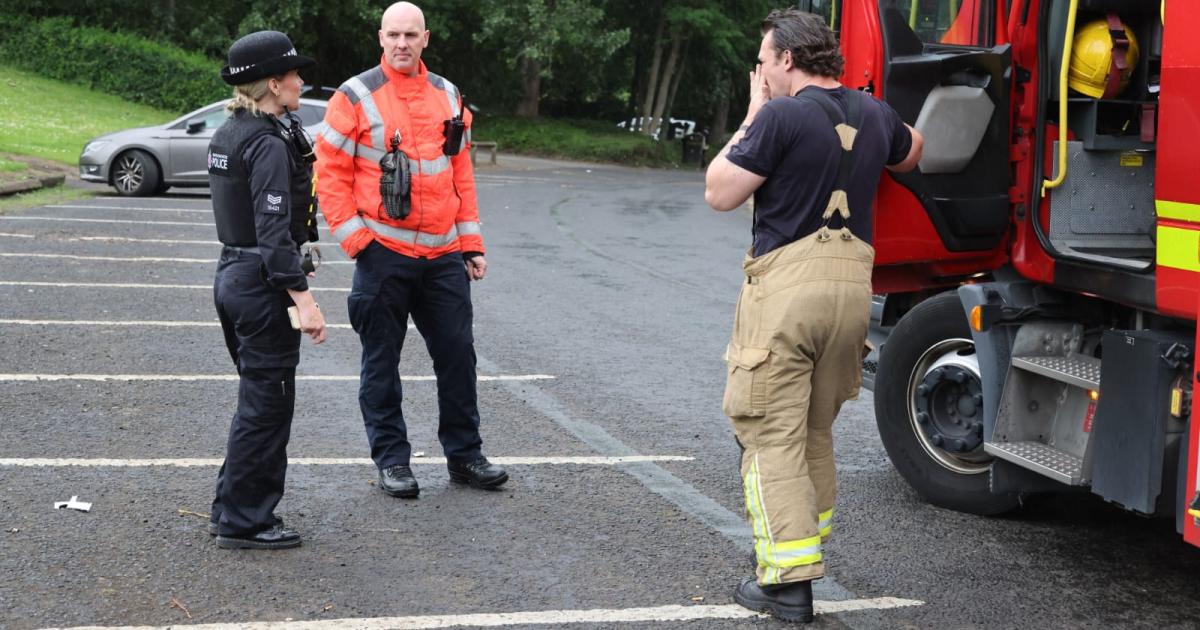
Fire and police were at Moses Gate Country Park, with the helicopter also scrambled at about 4:30pm, after receiving reports of a man in distress.

Police were at first unable to find the man in question, though managed to confirm around 6pm that he had been found safely.

Officers carried out enquiries after the reports came in, blocking off the entrance to the country park as they searched the area.

Advertisement

Several residents including Cllr Liam Barnard spotted the air ambulance flying overhead, but at the time did not know what was going on.

Online air ambulance trackers soon confirmed that the helicopter had landed at Moses Gate Country Park.

The Bolton News contacted emergency services, who by 6pm confirmed that the man had been found and was ‘safe’.

No injuries were reported as a result of the incident.

Advertisement

Source link

Continue Reading

NewsBeat

Porsche driver Benjamin Swift guilty of Castle Howard crash

Published

on

Porsche driver Benjamin Swift guilty of Castle Howard crash

Benjamin James Swift, now 21, could only think about his beloved sports car and not about the family he had injured when he crashed into their Land Rover Defender as they drove to a picnic at Castle Howard, York Crown Court heard.

Several drivers told the jury how Swift had been “driving like an idiot”, narrowly missed a vehicle coming the other way with one overtaking manoeuvre and became airborne and lost control when he tried a second.

The front seat passenger in the Land Rover, Jacqueline Bell, said she believed she was about to die as the Porsche zigzagged towards them across the road immediately before crashing into her vehicle.

The Land Rover driver, architect Philip Thompson, who spent three months in pain with a broken chest bone as a result of the crash, estimated Swift was driving at 80mph along the 60mph Castle Howard approach road.

Advertisement

His back seat passenger had severe abdominal pains following the crash, the jury heard.

After an hour in retirement, the jury convicted Swift of seriously injuring Mr Thompson by dangerous driving close to Welburn crossroads on the Castle Howard approach road.

Approaching Welburn crossroads from the south, heading towards Castle Howard (Image: Google Street View)


Swift, of Holly Tree Lane, Haxby, had denied the charge and showed no reaction as the jury returned their unanimous verdict. He had been 19 at the time of the crash on July 7, 2024.

Advertisement

“You told the jury you consider yourself to be a polite young man: you may like to add ‘arrogant’,” Recorder Geraldine Kelly told him.

“I saw an arrogant young man in the witness box, not having a hint of remorse about the harm you caused to the victims.

“All you seemed to care about was your beloved Porsche and the damage you caused to it.”

Despite having appeared to be sorry at the scene of the crash, he had decided to have his trial and thereby forced those injured in the crash to relive their experiences in the witness box.

Advertisement

She said the evidence against him had been “overwhelming”.

The judge disqualified Swift from driving and warned him that he could not drive any vehicle from that moment. He will learn the full length of his ban when he is sentenced on August 7.

Barristers for the prosecution and defence agreed sentencing guidelines state he should receive a jail term of between two and four years.

Swift was given bail while probation officers prepare a report on him.

Advertisement

He will have to take an extended driving test at the end of his ban before being allowed to drive unsupervised again. His Porsche was written off by the crash.

He told the jury he was an apprentice field services engineer.

Source link

Advertisement
Continue Reading

NewsBeat

Playing different video game genres is so important for everyone – Reader’s Feature

Published

on

Playing different video game genres is so important for everyone - Reader's Feature
Mixtape – not an online shooter (Annapurna Interactive)

A reader looks back at the video games he’s played recently, and all the different things he’s done in them, and recommends variety above all in gaming.

Some games have it all. Story, character, art, style, innovation, user experience, graphics, world building, online support, and last but not least you can pet the dog.

Producing this smorgasbord of content, in this modern era, is an undertaking of epic proportions. A juggling act involving a unicycle on a tight rope, a bowling ball, some sort of live reptile, and a firing squad aimed directly at your Steam recommendations page.

Deliver and risk scrutiny on every choice you made. Under deliver and become bombarded with ‘DLC/co-op/patch when?’ questions. Over-deliver and suddenly your game is bloated and overly complicated.

Advertisement

There’s not much incentive to test new waters when every choice seems like a bad one.

Gamers tend to have more varied and eclectic tastes when it comes to genres than any other medium.

Expert, exclusive gaming analysis

Sign up to the GameCentral newsletter for a unique take on the week in gaming, alongside the latest reviews and more. Delivered to your inbox every Saturday morning.

Advertisement

In music you generally only know pop and you are unlikely to listen to much, if any, jazz.

In film, horror fans might not really care what’s new in the romcom listings this month.

Gamers on the other hand demand variety.

Advertisement

This year alone I’ve managed a trading card emporium, a tiny bookmobile, a retro video rental, a late night convenience store, and a cafe for anthropomorphic gatekeepers with a taste for umami.

I’ve been to space and the bowels of the earth for both business and pleasure. I’ve saved a whole world a dozen times and the universe itself at least twice.

I’ve jetwashed/cleaned/decorated/built/exorcised hundreds of houses, as well as shooting thousands of bullets/balls/spells/arrows/decks of cards indiscriminately at any other beings in range.

Advertisement

I’ve reached peak efficiency in my world-spanning factories but also spent hours snoozing in class.

I’ve weirdly been to so many different incarnations of Tokyo this year I’ve lost count.

In sports I’ve won a (legally distinct) summer international cup, taken my League Two side to the Champions League finals, raced around the world in every type of car you can imagine, and hit a hole in one at the Masters.

Advertisement

If my gaming recommendations were a Spotify playlist it would just be called ‘500 years of vaguely similar noises in no particular order.’

All this to say that pretty much any gamer can (and will) pick up any game and have some level of valid opinion on the content. For better or worse.

More importantly, should my opinion matter to you in the slightest? No. No it shouldn’t. If I leave a glowing five star review on a game will it be the greatest game you’ve ever played? Probably not. If anything, it’ll probably give you a worse experience for hyping it up too much or simply because I have a soft spot for that particular genre of game.

Don’t miss Gaming news! Add us as a Preferred Source

As a loyal GameCentral reader, we want to make sure you never miss our articles when searching for gaming stories. We have all the latest video games news, reviews, previews, and interviews, with a vibrant community of highly engaged readers.

Advertisement

Click the button below and tick Metro.co.uk to ensure you see stories from us first in Google Search.

Add us as a Preferred Source

GameCentral collage of Mario Kart, Ghost of Yotei, and Halo
GameCentral has been delivering unique games news and reviews for over a decade

This brings me in a very roundabout way to Mixtape by indie devs Beethoven and Dinosaur.

Advertisement

I haven’t even played the game and (based on the reviews) feel like it’s already a foregone conclusion that it’ll be a masterpiece or the biggest four hour pile of slop I’ve ever sat through.

I’d be quite content to just say it’s not for me and move on but… I really, really enjoyed The Artful Escape.

Beethoven and Dinosaur’s space-themed, rock opera synth… experience from 2021, in my unprofessional and biased opinion, was a good game. You hold right to walk right (and occasionally play an electric guitar) and watch a pretty light show for three hours. That was pretty much the whole kit and caboodle. Artful Escape even got remarkably good reviews across critics and the gaming community.

Advertisement

There were, of course, those that didn’t appreciate the vision. It was ‘dull’ or ‘underwhelming’, a school art project that has no business being a game.

The negativity wouldn’t (and shouldn’t) hold back the musically rooted Aussie studio from doubling down on their vibe ‘em-up aesthetic with Mixtape. A sublime 80s pop soundtrack with an angst-ridden teen moving left to right in the background, like a jumping dinosaur because your internet is down.

I’ll give Mixtape a go this weekend and I’m fairly certain I’ll be able to say, ‘It was good if you like that sort of thing’ or ‘It wasn’t for me but I get why others would enjoy it’.

Realistically what else could I say? I could say that about every game/film/album I’ve ever encountered.

Advertisement

Will I feel the need to leave a scathing/glowing review telling everyone else how their opinion is wrong by dumping on them from a very great height? Probably not.

Will I get upset because the main character is a specific gender/race or drinks a brand of cola different to me? No of course not, I’m an adult.

Will I continue to play any genre of game that vaguely appeals to me because it’s my time and my money. Yes. You’re damn right I will.

By reader Jay

Advertisement
PowerWash Simulator 2 screenshot of washing a wall
PowerWash Simulator 2 – there are no bullets in these guns (FuturLab)

The reader’s features do not necessarily represent the views of GameCentral or Metro.

You can submit your own 500 to 600-word reader feature at any time, which if used will be published in the next appropriate weekend slot.

Just contact us at gamecentral@metro.co.uk or use our Submit Stuff page and you won’t need to send an email.

Advertisement

Source link

Continue Reading

NewsBeat

TV comedy directing legend James Burrows dies at 85

Published

on

TV comedy directing legend James Burrows dies at 85

LOS ANGELES (AP) — James Burrows, who helped create volumes of laughter as director of more than a thousand episodes of such classic television comedies as “Cheers,” “Taxi,” “Friends” and “Will and Grace,” died Friday. He was 85.

His family confirmed his death in a statement to People, saying he “passed away peacefully today surrounded by his family.” No location or cause of death was provided.

Burrows spent his career behind the camera specializing in situation comedies. Few viewers recognized him or knew his name, other than to see it flash quickly on the screen in the opening credits. But they knew his work.

Burrows got his start in television relatively late at age 35 in 1974, directing episodes of “The Mary Tyler Moore Show,” “The Bob Newhart Show,” and “Laverne & Shirley.”

Advertisement

He co-created “Cheers,” directing 243 of the 273 episodes, as well as all 246 episodes of “Will and Grace.”

He also helmed multiple episodes of such hits as “Frasier,” “Friends” and “Mike & Molly,” and the pilots of “Two and a Half Men” and “The Big Bang Theory.”

“When I direct a television show, I try to reach that sweet spot where the best script meets the best performance and the best chemistry between performers,” Burrows wrote in his 2022 memoir “Directed by James Burrows.” ”Hitting that exact moment, where these factors land in combination, results in the sweetest and most enduring laugh.”

His family said, “Burrows understood that great comedy was never simply about laughter. It was about humanity, connection, and truth. That understanding became the foundation of a career that forever changed television.

Advertisement

“But beyond his remarkable achievements, Burrows will be remembered for something even greater: his kindness, generosity, and unwavering belief in the people around him. He possessed a rare ability to make everyone better and was known for remembering every person he met by name, making colleagues at every level feel seen, valued, and appreciated,” the family statement said.

The majority of Burrows’ shows aired on NBC, whose “Must See TV” slogan promoted its Thursday night lineup in the early 1990s that included “Friends” and “Frasier.”

“Jimmy Burrows was the man behind the curtain. He knew how to make us laugh, what buttons to push and was the absolute master of getting the most out of every joke,” NBC said in a statement. “His loss to the television comedy world is immeasurable. Every time you have a smile on your face watching ‘The Mary Tyler Moore Show,’ ’Taxi, ‘Cheers,’ ‘Will & Grace,’ ‘Friends’ and countless others, think of Jimmy and know he made all our lives funnier.”

Born James Edward Burrows on Dec. 30, 1940, in Los Angeles, he moved to New York when he was 5 years old. He spent five years in the Metropolitan Opera Children’s Chorus until his voice started to change. He attended LaGuardia High School of Music & Art.

Advertisement

His father was writer, director and producer Abe Burrows, whose Broadway hits included “Guys and Dolls” and “Can-Can.” The elder Burrows also mentored Larry Gelbart, future creator and producer of the TV show “M(asterisk)A(asterisk)S(asterisk)H.”

The younger Burrows spent hours of his youth in theaters and studios watching his father work, dining with him at such famed New York haunts as Sardi’s and Gallagher’s and meeting celebrities who attended his father’s New Year’s Eve parties.

After earning a bachelor’s degree from Oberlin College, Burrows attended the graduate program of the Yale School of Drama, where his classmates included actor-comedian Robert Klein, playwright John Guare and film director John Badham.

At Yale, he was required to take directing classes and he got hooked.

Advertisement

Burrows’ first sitcom experience was as Burl Ives’ dialogue coach on “O.K. Crackerby!” which was directed by his father and ran for one season on ABC in 1965.

From there, he was an assistant on “The Patty Duke Show.” He moved back to New York and worked for Broadway producers Lee Guber, Frank Ford and Shelly Gross. He first met actor Moore while working on the Broadway production of “Holly Golightly,” an adaptation of “Breakfast at Tiffany’s” that was directed by his father.

Burrows eventually worked as a stage manager for various road productions, where he met such actors as Hugh O’Brien, Zsa Zsa Gabor and Julie Harris.

By 1974, after working in dinner theater and summer stock, he turned on his television and saw Moore’s eponymous TV show. He wrote her a letter asking if there was any opening “small or smaller” at her production company that he could fill, according to his memoir.

Advertisement

Moore’s husband and business partner, Grant Tinker, invited Burrows to Los Angeles to direct an episode of the comedy. He apprenticed for MTM Enterprises, which had four sitcoms on the air at the same time.

Burrows cited his theater background for learning how to give actors direction and block out scenes. He’s credited for being one of the first sitcom directors to increase the typical multi-camera television shoot from three to four cameras.

The common thread between Burrows’ shows were the bonds between friends and unrelated families, whether it was the motley crew of regulars meeting at the bar in “Cheers” or the drivers working toward a better life in “Taxi” or the 20-somethings sharing the same apartment building in “Friends.”

“The best sitcoms transcend the screen and reach out and grab the audience by the throat and by the heart,” Burrows wrote in his memoir.

Advertisement

He relished discovering new acting talent while directing more than 75 pilots that were picked up as series.

“Having directed over a thousand shows means that almost any night you can turn on your television or go online and find a show that I directed. I’m very proud of that,” he wrote in his memoir.

In 2019, Burrows was an executive producer on live productions of “All in the Family” and “The Jeffersons” with famous actors re-creating episodes of those 1970s comedies.

“Jimmy was the greatest comedic television director in the history of the medium,” his agent Rick Rosen said in a statement. “He directed the most iconic, defining shows of generations. Always a gentleman, it was an absolute honor to represent him.”

Advertisement

Burrows was married in 1997 to Debbie Easton, whom he met when she worked as a hairstylist on “Frasier.” Daughters Kat Schatzow, Ellie Gluck and Maggie Burrows, who followed her father into directing, are from his first marriage to Linda Solomon, who died in 2004. His stepdaughter Paris is from his wife’s previous marriage. He has a sister, Laurie Burrows Grad, and seven grandchildren.

Source link

Advertisement
Continue Reading

NewsBeat

What Does A Sandy Dust Mean In My Home?

Published

on

What Does A Sandy Dust Mean In My Home?

We’ve written before at HuffPost UK about how a cream-coloured dust called “frass” can reveal the presence of woodworm larvae in your garden.

It turns out they’re not the only young beetles that create the substance.

Carpet beetle larvae, which can cause damage to items like clothing and (predictably) carpets, also excrete “frass”, the Natural History Museum said.

They added the beetles are more common in the London area and the southern counties.

Advertisement

So how can you spot a carpet beetle infestation, which Bromley council says is more likely to begin its cycle in summer?

How can I spot carpet beetle larvae?

The larvae are sometimes called “wooly bears” because they are long and covered in dense hairs. They are “brownish”, Country Living shared.

At first glance, they can look like dark silverfish.

Advertisement

The Natural History Museum added that other signs include damage to caprets and clothing as well as “frass (the larvae’s extrement) resulting from feeding…. the skins cast off by larvae after many molting events are another sign”.

Most of the damage is done by the larvae, who eat anything containing the protein keratin. Their “frass” can look like “coarse, sand-like material” and may be black or brown, but this can change.

Pert control company Safeguard agreed: “the larvae produce tiny faecal pellets – about the size of a grain of salt – evidence of which will again be concentrated around the area of infestation.”

Shed larval skins can also be a sign.

Advertisement

What do carpet beetles eat?

Though you might think it’s just wool and fur (which can be a part of it), the experts say they can also go for:

  • furniture,
  • hair,
  • clothing,
  • stored food like flour,
  • books,
  • plants,
  • leather,
  • soft furnishings,
  • animal bedding,
  • potpourri,
  • pet biscuits,
  • flowers.

Kansas State University’s Extension reads: “Adult carpet beetles lay their eggs in areas where larvae can find an ample supply of food, such as carpets, woolens, furs, and animal nests”.

What should I do if I think I have carpet beetles?

The British Pest Control Association said you should remove items like bird’s nests in a chimney where the beetles or larvae may gather.

Advertisement

Vacuum areas where you think the adults, who are most active about now, are gathered – this may include spots like airing cupboards, shelves, floorboards, carpets and upholstery.

They added, “An insecticide is needed to deal with woolly bears and affected items should be sprayed or dusted with a product labelled for carpet beetle control”.

You may wish to contact a professional if you need extra help, as the larvae in particular can be tough to treat.

Advertisement

Source link

Continue Reading

Trending

Copyright © 2025