Connect with us
DAPA Banner

NewsBeat

Water bills are rising again here’s 7 ways to save money now

Published

on

Water bills are rising again here's 7 ways to save money now

In January, Ofwat confirmed that average household water bills across England and Wales will rise by 5.4% from April, the equivalent of around £33 a year. That follows last year’s sharp 20% increase — roughly £86 per household.

But, as frustrating as it is, energy providers, water customers can’t switch suppliers to chase a better deal.

“Unfortunately, unlike mobile phone providers or broadband or energy providers, there’s nothing you can do to shop around for a cheaper supplier,” says Greg Marsh, household finance expert and CEO of Nous.co .

Advertisement

“Your water supplier is your water supplier, and it’s a postcode lottery.”

What can households do to lower water bills?

Experts say while you can’t control prices, you can control usage – and small changes can add up to meaningful savings.

Consider a switch to a water meter

If you’re not on a meter, you pay a fixed charge based largely on your property’s rateable value – not on how much water you actually use.

Marsh urges many households to reconsider. “Why would you want to do that? You might think, well, I don’t want them to know exactly how much I’m using,” he says.

Advertisement

“But if your house has more bedrooms than people, get a smart meter – you’ll probably save money.”

On average, households that switch to a meter save around £100 a year.

There’s also a behavioural benefit.

“The other benefit of having a smart meter is you’ll know you’re paying for exactly what you consume,” Marsh explains.

Advertisement

“If you do want to cut down your water bills by, for instance, having smaller baths or being thoughtful about your washing machine settings, then it means you’ll benefit from those economies.”

Check whether you qualify for discounted tariffs

Support is available – but many households don’t realise they’re eligible.

“Anyone who is on benefits or earning under a certain amount may be able to access a social tariff from their current supplier, and that can cap or reduce your bill by as much as 90% if you’re on a really low income,” says Marsh.

Every water company offers some form of affordability scheme, though eligibility criteria vary.

Advertisement

For example, Thames Water offers its WaterHelp scheme, which can reduce bills by up to 50% for qualifying households.

Northumbrian Water provides discounts for households under certain income thresholds.

Southern Water runs multiple support schemes for customers struggling with payments.

Nicky Chitty, affordability and vulnerability lead at Southern Water, says the most important step is simply making contact.

Advertisement

“There’s lots that we can help people with,” she says.

“My main message for somebody that needs some support is just reach out to whoever their supplier is. There will be support there for them.”

Here’s a full list of water discounts by area .

Rethink your shower routine

Showering accounts for roughly a quarter of a typical household’s water use — making it one of the biggest opportunities for savings.

Advertisement

“Small behaviour changes can have a huge impact, because every drop makes a difference,” says Daniel Lintell, sustainability manager at Triton Showers.

“Showering accounts for probably a quarter of a typical household’s water usage. So more efficient showering is going to reduce your water consumption – and one of the key additional benefits is you’re going to bring down your energy costs quite considerably.”

Switching from a daily large bath to a shower could save around £85 per person annually. For a family of four, that’s more than £340 a year.

Lintell also warns against a common habit: letting the shower run long before getting in: “You don’t need to run it for minutes and minutes and minutes – it’s wasted time, it’s wasted energy and it’s wasted water.”

He suggests pausing the water while shampooing if you have a mixer shower, and considering a flow regulator or water-efficient shower head – changes he says most people “probably will not notice from an experience point of view”.

Savings vary by region.

Advertisement

Customers of Wessex Water, which has some of the highest volumetric charges, could save over £120 a year by switching from large baths. Even those served by Portsmouth Water, one of the cheapest providers, could still save around £46 annually.

Fix leaks before they drain your money

Some of the biggest savings come from problems many households don’t even realise they have.

“A dripping tap may not seem serious, but over time it can waste a surprising amount of water,” says Sophie Graham, personal finance expert at Sunny.

“Leaking toilets are even more costly and often go unnoticed, sometimes wasting hundreds of litres a day.”

Advertisement

“Fixing a leaky toilet could save around £300 a year, making it one of the most effective ways to cut unnecessary water use.”

If you’re on a meter, leaks directly increase your bill – so addressing them quickly is crucial.

Make small daily habit changes

Graham says simple tweaks can quietly deliver savings across the year.

“Only running dishwashers and washing machines with full loads helps maximise efficiency,” she says.

Advertisement

“Switching your dishwasher to an eco programme could save you around £19 a year on running costs compared with using a regular wash setting.”

Turning off the tap while brushing your teeth is another easy win.

“Simply turning the tap off while brushing twice a day can save more than 8,700 litres of water a year, which works out at roughly £25 in savings per person.”

Low-cost devices such as tap aerators can also help. “Fitting a tap aerator could save you around £20 a year,” Graham adds.

Advertisement

Recommended reading:


You can’t avoid rising water prices – and you can’t switch providers.

But you can reduce what you use.

As Graham puts it: “While you can’t control price increases, you can control how much water you use. Small changes at home, when added up over a year, can make a noticeable difference to your bill without impacting your quality of life.”

Advertisement

Source link

Continue Reading
Click to comment

You must be logged in to post a comment Login

Leave a Reply

NewsBeat

Work done at Cullercoats beach after Brown Flag ‘win’

Published

on

Work done at Cullercoats beach after Brown Flag 'win'

The North Tyneside spot, popular with swimmers, kayakers and padel boarders, was named in a satirical list of brown flag ‘winners’ last year. The so-called awards by travel site Holiday Park Guru were designed to highlight beaches with bad water quality.

The Environment Agency has advised against swimming at Cullercoats Bay since 2017 and has labelled the bathing water classification as “poor”.

North Tyneside Council said efforts to track down the problem have widened over the past year.

Advertisement

Sam Dand, director of environment, said: “Since 2017, we have worked closely with Northumbrian Water and the Environment Agency to address water quality issues at Cullercoats.

“The partnership has carried out a considerable amount of work on both public and privately-owned land.

“That work has broadened in the last 12 months as Northumbrian Water seeks to pinpoint the source of the contamination.”

Cullercoats entered the so-called ‘top of the plops’ chart for a second time last year.

Advertisement

Mr Dand said: “We are extremely proud of our internationally recognised coastline and beaches, including Cullercoats, which continues to be a popular destination for residents and visitors.

“Cullercoats remains a vibrant and welcoming beach, and we will continue working with our partners until the water quality matches our aspirations.”

In 2017, North Tyneside Council, the Environment Agency and Northumbrian Water carried out a joint investigation into the decline and identified sewage as a major contributing factor.

Northumbrian Water said a later bathing water study recommended diverting contaminated groundwater from a disused council culvert into the combined sewer network, with a new drainage pipe planned for John Street.

Advertisement

Source link

Continue Reading

NewsBeat

Clifton Manor Court Leet – York tradition lives on

Published

on

Clifton Manor Court Leet - York tradition lives on

IN medieval England, large rural estates were owned or managed by the ‘Lord of the Manor’; the ‘Lord’ was not usually a ‘knight’, with the term ‘Manor’ referring to his estate.

These estates typically contained woodland, pasture, common footpaths, lakes and waterways; they would also include tenant farms and dwellings.

Churches with parishes would also feature, the parish boundaries often being disputed.

To manage these estates local rules and tenant responsibilities were imposed, but a method of checking compliance to these directives was required.

Advertisement

So annually the ‘Lord’ would summon a number of trusted residents of the estate to meet on an appointed day, then under oath of allegiance, they were tasked with inspecting various aspects of his estate.

Typically, waterways were checked for excessive bank overgrowths or objects impeding the flow; woodlands checked for illegal use, the ‘Lord’s’ estate rules maintained and that boundaries of farms and parishes were correctly marked. Reports of the inspections were required the same day, after which the residents were relieved of their duties. The day was concluded with a meal provided by the ‘Lord’ in recognition of their service.

The event became known as the ‘Manor Court Leet’.

Court Leet members gather at Clifton Green. Photo supplied

In the 18th and 19th century the growth of canals, railway systems and towns greatly impacted on estates as they all required land for expansion. The Local Government Act of 1888 and creation of national bodies like the Police (1829), Ordnance Survey (1842 maps defined footpaths and boundaries) and HM Land Registry (1868) all restricted the management of estates by the ‘Lord’.

Advertisement

Common footpaths became ‘rights of way’, rules became bye-laws and a tenant’s responsibilities became included in property deeds. The role and need for the Manor Court Leet became greatly diminished.

Country-wide, the number of courts remaining are few, their role redundant, overtaken by time and regulations.

Meeting of the Clifton Court Leet 2014. Photo supplied

An estate at Clifton is recorded in the Domesday Book in 1086. It is known that the estate was given to the monks of St Mary’s Abbey in about 1088, the estate then included part of Galtres Forest and the hamlet of Rawcliffe.

The estate remained under the control of the monks until the demise of St Mary’s Abbey in 1539. The Manor House of the estate that used to exist at Rawcliffe is now remembered solely by local street names.

Advertisement

In 1606 the estate was acquired by the Robinson family, who owned it for over 300 years. The Robinson family were wealthy York merchants, one member, Sir William Robinson, built the Red House in Duncombe Place and became Lord Mayor in 1700-01.

The Red House on the corner of St Leonard’s Place and Duncombe Place around the 1910s in York. The Red House was home to Sir William Robinson. Photo from Explore York archive

In 1919 the estate was bought by York City Council, which technically became the ‘Lord of the Manor’; the days of Clifton Manor Court Leet was thought to be over.


Recommended reading:


But in recent years some residents of Clifton, keen not to allow such an important local event be lost, have continued the act of holding an annual Court Leet.

Advertisement

The Court is convened every November with the Sheriff of York hosting the event, participants are duly sworn in before departing to Clifton and Rawcliffe to conduct inspections just as their fore-fathers would have done.

Rawcliffe Ings

Some of the ancient estate waterways (now becks) can still be seen, state of over-growth and discarded objects in the becks are reported to the Sheriff that evening.

The Clifton Manor Court Leet is concluded with a meal funded by the participants. The reports are not without consequence as they are forwarded by the City of York Council to the relevant authorities for their attention.

The authority of the Court Leet may have gone, but part of York’s ancient local history still survives.

Advertisement

Ivan Martin is the vice-president of the Yorkshire Architectural and York Archaeological Society (YAYAS) and former city, Minster and Mansion House guide. He is also a former Clifton Manor Court Leet bye-law man.

YAYAS developed from its foundation in 1842. It publishes the York Historian and YAYAS Times, with articles and news items about York and its surroundings.

It is active with lectures and excursions and is always happy to welcome new members and suggestions for visits.

Its archives include photographic illustrations that can be used for research or reproduction with copyright acknowledgement.

Advertisement

Visit the website www.yayas.org.uk for more information about the organisation, its publications and how you can support it.

Source link

Advertisement
Continue Reading

NewsBeat

The Masters 2026: The five key shots in Rory McIlroy’s second Augusta victory

Published

on

Rory McIlroy celebrates winning the Masters title

It will arguably be the best bogey of McIlroy’s career.

With a two-shot lead on the 18th tee the job was almost done but McIlroy had a wild swipe and his ball flew to the right and into trees.

Hearts were suddenly racing again.

After what seemed like an eternity, as he tried to usher thousands of spectators away from his intended line of attack to the green, he thrashed his ball out of the pine straw and into a greenside bunker.

Advertisement

It was a key moment. Another poor swing could easily have led to a double bogey and a play-off with Scheffler.

He backed that with a strong shot from the sand to 12 feet and with two putts for the title, took both of them.

The final stroke, from seven inches, was the length that all players dream of to win a major.

There was a huge release of emotion. McIlroy hugged his caddie Harry Diamond, looked to the sky and let out a roar as he raised him arms aloft – his sixth major title cementing his place as one of the sport’s greats.

Advertisement

Source link

Continue Reading

NewsBeat

Primark launches app so shoppers can check stock in stores

Published

on

Primark launches app so shoppers can check stock in stores

The app lets shoppers create personalised notifications, including a stock check function, so you can see if the items you want to buy are available before heading to the store.

Plus, Primark has told shoppers that the app also makes its popular click-and-collect service easier to use.

The brand previously rolled out its click and collect service to all 189 UK stores, allowing shoppers to pay for items online and pick them up in stores.

Advertisement

Primark launches app in the UK

Primark first launched its app in Ireland and Italy last summer, but it is now available to download in the UK on the Apple App Store and Google Play Store.

Discussing its new feature, Kari Rodgers, UK Retail Director at Primark, said: “We know our customers expect great value and an effortless shopping experience, wherever they are.

“Our new app puts exactly that in the palm of their hand, from personalised updates on the latest trends to faster, more convenient ways to browse and shop via Click & Collect.

“This is just the next step in bringing everyday value to more UK shoppers in a way that’s simple, seamless and built around their needs.”


Recommeded Reading

Advertisement

Matt Houston, Chief Customer and Digital Officer at Primark, shared: “Following the successful launch of our app in Ireland and Italy, we’re excited to bring an even smarter, more connected shopping experience to the UK.

“Customers are increasingly turning to digital tools that make shopping easier and more rewarding, and we’re confident that our app will deliver an intuitive, personalised experience that’s been carefully designed to help them get the most out of every Primark visit.”

Will you be using Primark’s new app? Let us know in the comments.

Advertisement

Source link

Continue Reading

NewsBeat

Starmer refuses Trump’s Strait of Hormuz blockade as oil prices set to rise

Published

on

Daily Mirror

Sir Keir Starmer has refused to join Donald Trump’s blockade of the Strait of Hormuz, a key oil and gas shipping lane, which could drive up petrol costs for Britons

Sir Keir Starmer has declined to participate in Donald Trump’s blockade of the Strait of Hormuz, which could intensify economic hardship for Britons through increased petrol prices.

The president threatened to halt tankers from entering or exiting the crucial oil and gas shipping route, a decision anticipated to push oil prices higher when markets reopen, following rises already triggered by Iran’s control of the strait in response to the US- Israel conflict against it.

The Prime Minister will address cost-of-living concerns with local residents during a visit to Greater Manchester later today.

Advertisement

READ MORE: Wirral family stranded in Milan as easyJet flight ‘took off without them’READ MORE: Haiti citadel: At least 30 dead in stampede at popular tourist attraction in Haiti

Meanwhile, Chancellor Rachel Reeves will head to Washington for International Monetary Fund meetings this week, having cautioned that “the war in Iran will come at a cost to British families and business”.

MPs return to Westminster from the Easter break on Monday with no end to the Middle East crisis in view and the future of a fragile two-week ceasefire hanging in the balance. Trump declared the shipping blockade following the collapse of US-Iranian peace negotiations in Pakistan, with both nations pointing fingers at each other.

Advertisement

The American leader announced on his Truth Social platform that the US military would begin “blockading any and all ships trying to enter, or leave, the Strait of Hormuz”. Trump added, without elaborating: “Other Countries will be involved with this Blockade.”

Britain will not be taking part, it is understood. The UK is “urgently working with France and other partners to put together a wide coalition to protect freedom of navigation,” a Government spokesperson confirmed.

According to No 10, Sir Keir and French President Emmanuel Macron spoke by phone and reached agreement on the necessity of assembling a broad coalition of partners to address the issue.

Britain will host further discussions this week aimed at reopening the maritime chokepoint, bringing together a coalition of nations. The third such gathering organised by the UK is expected to explore ways to support a lasting resolution to the conflict, while focusing on ramping up international diplomatic pressure on Iran to reopen the strait, including through the use of sanctions.

Advertisement

It is understood that Sir Keir’s Sunday phone call with Mr Macron took place prior to Mr Trump’s social media post about a blockade.

Trump told Fox News “the UK and a couple of other countries are sending mine sweepers” to the strait, and “it won’t take long to clean it out”.

The Prime Minister had previously confirmed that UK mine hunting systems were already deployed in the region. However, this is believed to refer to minesweeping drones that could be utilised once conditions stabilise, and is considered separate from Mr Trump’s proposed blockade.

US Central Command, which oversees American military operations across the Middle East, announced that its blockade of Iranian ports would commence on Monday. US forces “will not impede freedom of navigation for vessels transiting the Strait of Hormuz to and from non-Iranian ports,” the military confirmed in a statement that appeared to directly contradict Mr Trump’s earlier threat to halt all shipping.

Advertisement

The president attributed the breakdown in talks to Iran’s unwillingness to reopen the waterway and pledge to abandon its nuclear ambitions.

Iran’s foreign minister Abbas Araghchi hit out at Washington over its “maximalism, shifting goalposts, and blockade,” adding: “Enmity begets enmity.”

Follow our live blog for the latest on the Middle East conflict by clicking here.

Source link

Advertisement
Continue Reading

NewsBeat

East Cleveland Classic 2026 returns to Saltburn

Published

on

East Cleveland Classic 2026 returns to Saltburn

The popular race, part of the British Cycling Open National Road Series, saw professional riders take on a challenging circuit through Saltburn, Skelton, Guisborough, Charltons, Boosbeck, Lingdale and Brotton.

Crowds gathered early this morning (April 12), to watch the competition take place, with the women’s race setting off at 9am over four laps of the circuit, totalling 68 miles.

East Cleveland Classic competition (Image: Andy Futers)

East Cleveland Classic competition (Image: Andy Futers)

East Cleveland Classic competition (Image: Andy Futers)

Pictures from the event show riders powering through the difficult route with spectators lining the streets.

East Cleveland Classic competition (Image: Andy Futers)

Katie Scott, riding for Paralloy RT, claimed first place in the women’s race with an impressive time of 2:56:49.

Advertisement

East Cleveland Classic competition (Image: Andy Futers)

East Cleveland Classic competition (Image: Andy Futers)

She was followed by Anna Flynn of Handsling Alba Development Road Team in second, and her teammate Beth Morrow secured third place.

Photos show the top three riders beaming as they stood on the podium to receive their awards.

East Cleveland Classic competition (Image: Andy Futers)

East Cleveland Classic competition (Image: Andy Futers)

A road closure was in place as the event passed through the region, which saw brief delays of around 15 minutes as police escorted the cyclists through.

The free event once again proved to be a hit bringing elite-level cycling to the North East.

Advertisement

Carrie Richardson, deputy leader of Redcar & Cleveland Borough Council and cabinet member for climate and culture, said: “This is a wonderful sporting event, a chance to see truly elite sportsmen and women.

“It’s also a chance to have fun and show off the beauty of East Cleveland on television to cycling fans across the country and the world.”

Source link

Advertisement
Continue Reading

NewsBeat

Workers at major Colorado meatpacking plan win wage increases in deal with JBS USA

Published

on

Workers at major Colorado meatpacking plan win wage increases in deal with JBS USA

Workers at one of the nation’s largest meatpacking plants who staged a multiweek strike have reached an agreement with plant owner JBS USA, the company and labor union representatives announced Sunday.

The Swift Beef Co. plant in Greeley, Colorado, will immediately return to normal operations after weeks of uncertainty, JBS USA said in a statement.

The agreement comes after thousands of workers at the meat processing plant led a three-week strike with the United Food and Commercial Workers Local 7 Union in a bid for higher wages and better health care. The strike ended April 4 after JBS USA agreed to resume negotiations.

Workers and JBS USA agreed to wage increases over the next two years and a $750 one-time bonus. The tentative agreement represents a contract with “all gains, countless improvements, and not a single concession,” the union said.

Advertisement

The contract requires the company to pay for personal protective equipment and defends workers against increases in health care costs, according to the union.

Local union president Kim Cordova said workers picketed through extreme weather “because they knew their worth and refused to be disrespected. Today, that sacrifice has been rewarded.”

“This is what union power looks like,” Cordova said in the statement.

The union did not immediately respond to The Associated Press’ requests for further details.

Advertisement

JBS USA said it is pleased an agreement has been reached, but expressed disappointment that union leadership chose to eliminate pension benefits that were negotiated last year. The company said the pension was designed to strengthen long-term retirement security and argued the union chose to shift those dollars into short-term wage increases rather than into the long-term financial future of workers.

The union will also withdraw seven alleged unfair labor practice charges, according to JBS USA.

“With the agreement now finalized, JBS USA looks forward to restoring stability, supporting its workforce, and continuing to invest in the Greeley facility for the future,” the company said in its statement.

The strike at Greeley was the first strike at a U.S. slaughterhouse since workers walked out at a Hormel plant in Minnesota in 1985. That strike lasted more than a year and was marked by violent confrontations between police and protesters.

Advertisement

JBS is the world’s largest meatpacking company with a market capitalization of $17 billion. It is the top employer in Greeley, a city 50 miles (80 kilometers) northeast of Denver with a population of about 114,000 people.

Source link

Continue Reading

NewsBeat

Artemis II’s trip around the moon was a huge success. Now what?

Published

on

Artemis II's trip around the moon was a huge success. Now what?

HOUSTON (AP) — Never-before-glimpsed views of the moon’s far side. Check. Total solar eclipse gracing the lunar scene. Check. New distance record for humanity. Check.

With NASA’s lunar comeback a galactic-sized smash thanks to Artemis II, the world is wondering: What’s next? And how do you top that?

“To people all around the world who look up and dream about what is possible, the long wait is over,” NASA Administrator Jared Isaacman said as he introduced Artemis II commander Reid Wiseman, pilot Victor Glover, Christina Koch and Canada’s Jeremy Hansen at Saturday’s jubilant homecoming celebration.

Now that the first lunar travelers in more than a half-century are safely back in Houston with their families, NASA has Artemis III in its sights.

Advertisement

“The next mission’s right around the corner,” entry flight director Rick Henfling observed following the crew’s Pacific splashdown on Friday.

In a mission recently added to the docket for next year, Artemis III’s yet-to-be -named astronauts will practice docking their Orion capsule with a lunar lander or two in orbit around Earth. Elon Musk’s SpaceX and Jeff Bezos’ Blue Origin are racing to have their company’s lander ready first.

Musk’s Starship and Bezos’ Blue Moon are vying for the all-important Artemis IV moon landing in 2028. Two astronauts will aim for the south polar region, the preferred location for Isaacman’s envisioned $20 billion to $30 billion moon base. Vast amounts of ice are almost certainly hidden in permanently shadowed craters there — ice that could provide water and rocket fuel.

The docking mechanism for Artemis III’s close-to-home trial run is already at Florida’s Kennedy Space Center. The latest model Starship is close to launching on a test flight from South Texas, and a scaled-down version of Blue Moon will attempt a lunar landing later this year.

Advertisement

NASA promises to announce the Artemis III crew “soon.” Like 1969’s Apollo 9, Artemis III aims to reduce risk for the moon landings that follow.

Apollo 9 astronaut Rusty Schweickart loved flying the lunar module in low-Earth orbit — “a test pilot’s dream.” But there’s no question, he noted, that “the real astronauts” at least in the public’s mind were the ones who walked on the moon.

Wiseman and his crew put their passion and feelings on full display as they flew around the moon and back, choking up over lost loved ones as well as those left behind on Earth.

During the their nearly 10-day journey, they tearfully requested that a fresh, bright lunar crater be named after Wiseman’s late wife, Carroll, who died of cancer in 2020. They also openly shared their love for one another and Planet Earth, an exquisite yet delicate oasis in the black void that they said needs better care.

Advertisement

Artemis II included the first woman, the first person of color and the first non-U.S. citizen to fly to the moon.

“Wonderful communicators, almost poets,” Isaacman said from the recovery ship while awaiting their return.

Advertisement

Apollo’s manly, all-business moon crews of the 1960s and 1970s certainly did not do group hugs.

For those old enough to remember Apollo, Artemis — Apollo’s twin sister in Greek mythology — couldn’t come fast enough.

Author Andy Chaikin said he felt like Rip Van Winkle awakening from a nearly 54-year nap. His 1994 biography “A Man on the Moon” led to the HBO miniseries “From the Earth to the Moon.”

“It’s amazing how far we’ve come and how different this experience is from back then,” Chaikin said from Johnson Space Center late last week.

Advertisement

The hardest part, according to NASA Associate Administrator Amit Kshatriya, is becoming so close to the crews and their families and then blasting them to the moon. He anxiously monitored Friday’s reentry alongside the astronauts’ spouses and children.

“You know what’s at stake,” Kshatriya confided afterward. “It’s going to take risk to explore, but you have to make sure you find the right line between being paralyzed by it and being able to manage it.”

Calling it “mission complete” only after being reunited with his two daughters, Wiseman issued a rallying cry to the rows of blue-flight-suited astronauts at Saturday’s celebration.

“It is time to go and be ready,” he said, pointing at them, “because it takes courage. It takes determination, and you all are freaking going and we are going to be standing there supporting you every single step of the way in every possible way possible.”

Advertisement

___

The Associated Press Health and Science Department receives support from the Howard Hughes Medical Institute’s Department of Science Education and the Robert Wood Johnson Foundation. The AP is solely responsible for all content.

Advertisement

Source link

Continue Reading

NewsBeat

Starmer refuses to join Trump’s Hormuz blockade as oil prices expected to rise

Published

on

Starmer refuses to join Trump’s Hormuz blockade as oil prices expected to rise

The president threatened stop tankers from entering or leaving the key oil and gas shipping lane, a move that is expected to further drive up oil prices when markets open, after they have already risen as a result of Iran’s grip on the strait in retaliation for the US-Israel war against it.

Source link

Continue Reading

NewsBeat

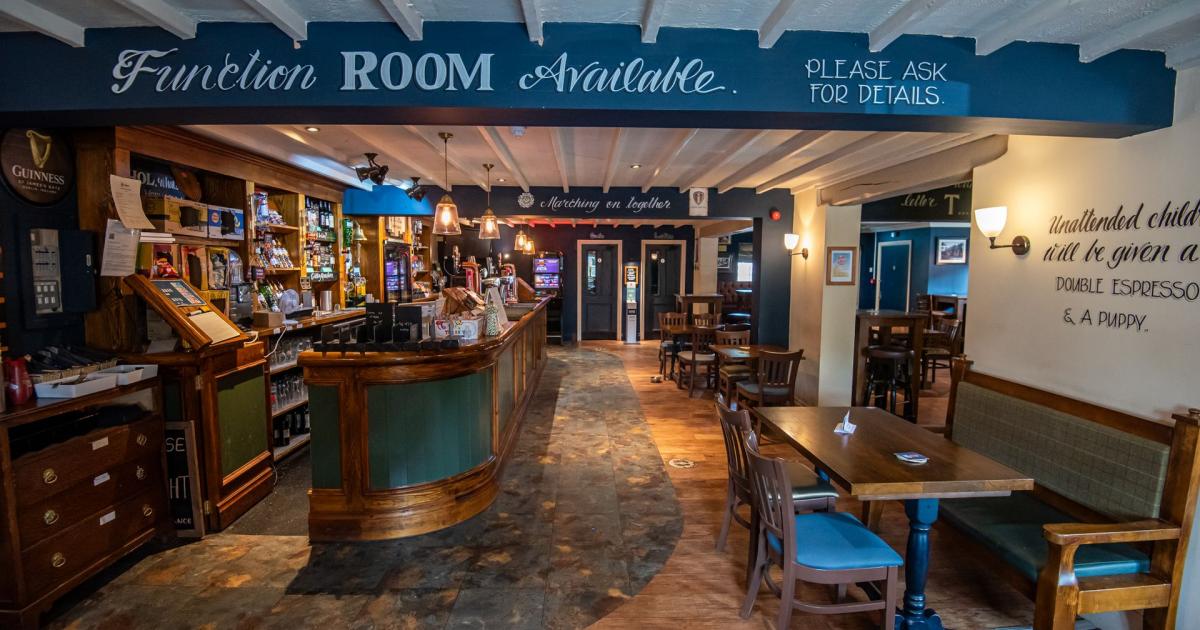
The Highlander gastropub near Belsay has ‘best’ Sunday roast

Published

on

The Highlander gastropub near Belsay has 'best' Sunday roast

The Highlander between Belsay and Ponteland has captured the hearts of visitors on TripAdvisor, earning 221 ‘excellent’ reviews – making it the number one restaurant in the area.

You can find the gastro pub off the A696, just a few minutes away from Newcastle International Airport.

The building is Grade II listed dating back to the 1700s and closed its doors in 2018 before being re-purchased and renovated to reopen in September 2023.

Advertisement

Open from Wednesday to Sunday, drinkers can come in and enjoy beers and spirits as well as tasty bites from pub classic fish and chips to Sunday roasts and mouth watering desserts.

Despite the long closure, it’s clear the boozer is having a positive impact on diners who have taken to TripAdvisor to praise staff and the chefs.


One happy customer said: “Amazing food and great atmosphere. Went for the Thursday special for our first ever visit and we will be back. Food was delicious.”

Another said: “First time visiting the highlander and we will definitely be back. The service was first class, especially how busy the pub was.

Advertisement

“Picturesque pub and ambience just right. Could not fault the food whatsoever, everything was lovely. We will definitely be back and recommend to friends and family.”

Source link

Advertisement
Continue Reading

Trending

Copyright © 2025