From May 10, the West Auckland Farmers & Indie Market will take place at The Manor House Hotel and Spa, running from 10am until 2pm on the second Sunday of every month.
The free, dog-friendly event will be organised by Naomi Katze of Gather North Events, who also runs the well-established Farmers and Indie Market at Middleton-in-Teesdale’s Middleton Mart.
That market, which launched in May 2024, regularly attracts about 80 traders and has built a loyal following of shoppers from across the region.
The Manor House Hotel in West Auckland (Image: file)
Now, Naomi is expanding the Gather North brand with a second monthly market – this time in West Auckland – promising the same carefully curated mix of high-quality food, drink, arts and crafts.
Advertisement
About 50 local independent businesses are expected to take part in each West Auckland event, with stalls both inside and outside the hotel grounds.
Visitors can expect everything from artisan bread, rare breed meats and fresh fish to local cheeses, seasonal fruit and vegetables, chutneys, jams and handmade pies and pastries.
There will also be sweet treats, including cakes, patisserie, chocolate and fudge, alongside vegan and gluten-free options.
Drinks producers are set to feature too, with local ales, spirits, cider and apple juice among the offerings.
Advertisement
Alongside the traditional farmers’ market produce, the ‘Indie’ collection will showcase artists, illustrators and designers, as well as handmade jewellery, ceramics, candles, textiles, woodwork and eclectic collectables.
The coffee van At Middleton-in-Teesdale Market (Image: naomi katze)
Street food and specialist barista coffee will be available, serving breakfast, brunch and lunch, while visitors are also encouraged to make use of The Manor House Hotel’s on-site café and restaurant.
Free entry and free parking will be available for all dates.
Announcing the expansion on social media, Naomi said she was “absolutely delighted” to be bringing the Gather North Farmers & Indie Market to a new location.
Advertisement
“You’ll see many of your familiar favourites, some fantastic new traders, and we’re so excited to welcome a whole new community through the doors too,” she said.
“Our same format. Our same high standards. The same, very special Gather North Events vibe, just a new location.”
The West Auckland Farmers & Indie Market will take place on:
May 10
June 14
July 12
August 9
September 13
October 11
November 8
December 6 (first Sunday of the month)
The Manor House Hotel and Spa is located in West Auckland, DL14 9HW.
For the first time in a long time, I felt safe (Picture: Rachel Watkyn)
When I first stood in front of the mirror after my double mastectomy, I felt something completely unexpected.
I was prepared for heartbreak, expecting to cry and see loss staring back at me. I had rehearsed the moment in my head for weeks, anticipating the inevitable grief.
In 2006, my elder sisterwas diagnosed with stage 4 breast cancer at 38, just after giving birth to her daughter. I remember the disbelief. She was young and fit.
But in 2011, our mother, aged 72, was taken into hospital with what appeared to be a simple infection.
By 2016, I was 45 with a growing sense that something wasn’t right (Picture: Rachel Watkyn)
She died before doctors could even give a full diagnosis. Afterwards we were told her brain was riddled with cancer.
It came as a complete surprise to all of us because she had seemed so healthy only two months previously.
In hindsight small signs were there (such as slight lack of memory), but I guess we just put it down to her getting older – not that there was something seriously wrong.
There was no long decline or drawn-out interventions, which in some ways was a mercy.
By 2016, I was 45 with a growing sense that something wasn’t right. I didn’t have a lump or any symptoms of cancer like skin blemishes. Just a persistent instinct I needed to be checked.
I asked my GP for a mammogram, which luckily was instantly approved, and itrevealed early-stage breast cancer. While I’d had a hunch this was the case, it was still devastating. I underwent a lumpectomy followed by five weeks of radiotherapy.
I underwent a lumpectomy followed by five weeks of radiotherapy (Picture: Rachel Watkyn)
As I signed consent forms, the doctors told me that, in rare cases, the radiation itself can cause cancer later on. I decided to go ahead with the treatment anyway; there was no other choice.
Two years later, the explanation to our family’s struggles emerged.
Advertisement
My elder sisterunderwent genetic testing and discovered our family carries Li-Fraumeni syndrome, a rare TP53 mutation which dramatically increases the risk of multiple cancers and makes radiation particularly risky.
By then, both of us had already had radiotherapy.
My sister was soon diagnosed with lung cancer on the same side as her previous breast treatment. We suspected this could have been due to radiotherapy treatment and none of the doctors could deny the possibility.
I did not wait. Driven by the same instinct which had prompted my mammogram, I paid privately for a full-body MRI. Two days after I was diagnosed with a small tumour in my right lung.
My sister was not as fortunate, her cancer was too advanced by this point. She died in 2021, at 52, three years after her diagnosis, during which she endured medication that knocked her sideways and limited her quality of life.
The safest route was to remove both breasts completely and reduce the risk as much as possible (Picture: Rachel Watkyn)
My life, meanwhile, became measured in six-month scans, an endless cycle of uncertainty.
The psychological strain of living knowing your genetic code carries such high risk makes every appointment feel like waiting for a doomed verdict. It was exhausting.
In 2022, during routine screening, another tumour was found in my remaining breast.
For me, it was no longer an option, due to my TP53 mutation and the dangerously high chance the cancer would come back in the breast tissue.
The safest route was to remove both breasts completely and reduce the risk as much as possible.
I couldn’t have reconstruction surgery due to not having enough flesh in other places, so my only options were implants or nothing, so I opted for the former.
Advertisement
Before the operation, I asked my surgeon about my nipple tattoos, assuming they’d be removed.
He looked at me and said simply, ‘We’re not taking your nipples.’ In my case, they could be preserved. I hadn’t even known that was possible. It felt oddly symbolic.
My husband Steve stood beside me through every scan and diagnosis, steady and unflinching. Even so, when undressing in front of him after surgery, I felt nervous, almost like damaged goods.
It crossed my mind that he would rather be with someone else who didn’t look like a permanent stab victim.
Advertisement
I even felt at one stage it would be kinder to leave him, so that he wouldn’t have to keep going through all the trauma with me. He made it quite clear he was standing by me.
I lost family and had my body altered more than once. However, I have learnt the importance of advocating for myself (Picture: Rachel Watkyn)
In the end, the surgery was traumatic, but did not erase me. When I finally saw my reflection, I did not see disfigurement, but a decision made from strength rather than fear.
People will always make assumptions. Following my surgery, Steve and I were walking along a beach one day, when I passed a small group of women. One glanced at my chest and muttered, ‘Fake.’
I almost smiled. If only she knew.
Mastectomy is so often framed solely as loss. And for many women, it is. But it can also be empowerment and peace.
Advertisement
I lost family and had my body altered more than once. However, I have learnt the importance of advocating for myself.
Every tumour the doctors found was because I listened to a feeling inside and pushed for answers.
Now, my breasts represent so much to me: vigilance, science and trusting my instincts.
And, sometimes, what you feel most is relief, even when it seems everything is crumbling down.
Sunscreen may be the most important step in any skincare routine, but it is also the one most likely to be skipped.
Many are put off by greasy, pore-clogging formulas, but thanks to modern UV filters and improved ingredient formulations, the latest sunscreens are a world away from the sticky, heavy creams that gave SPF a bad name.
The most impressive formulas now come in the form of SPF serums, a new generation of thinner, more fluid textures that absorb quickly, leave no residue and deliver high protection while feeling just like skincare.
This new category of sunscreen is particularly useful if you’re oily or prone to spots. “Some sunscreens are richer or more occlusive, which can trap oil, sweat and dead skin cells and lead to clogged pores, particularly in acne-prone skin,” explains Dr Derrick Phillips, consultant dermatologist. “If you’re prone to breakouts, it’s worth looking for lighter, non-comedogenic formulations, such as serum, fluid or gel textures.”
Serum-style formulas also sit more comfortably alongside other skincare products and makeup. Where other formulations can pill or leave your makeup sliding down your face after a couple of hours, many SPF serums double as the perfect base for makeup and even help to control excess oil production.
That said, the guidance surrounding sunscreen application still applies, regardless of whether your SPF is a serum or cream. “You need to wear SPF every day to prevent UVA and UVB rays from damaging the skin,” says Dr Ahmed El Muntasar, GP, aesthetics doctor and owner of The Aesthetics Doctor. “UVA rays are responsible for premature ageing. They’re present all year round and can penetrate glass. Unless you are literally in a dark room or a room with no windows all day, daily SPF is recommended,” he adds.
Unlike traditional serums, SPF serums should be the last step of your routine rather than layered under moisturiser or other skincare products. “Start with cleansing, then apply any treatment products, followed by a moisturiser. Your sunscreen goes on last, before makeup,” explains Dr Phillips. Being generous with your application is important too. “Most people underapply, which significantly reduces the level of protection,” Dr Phillips adds. “As a guide, you need around two finger lengths of product for the face and neck to achieve the SPF on the label.”
Knowing how to apply your sunscreen correctly is key, but picking the right one for your skin can make all the difference as to whether you actually wear it. So, whether you’re giving next-gen SPF serums a first try or you’re simply fed up with your current sunscreen causing clogged pores or spots, read on – I may have found the SPF serum to suit you.
Advertisement
As a beauty journalist of over nine years and someone who wears daily SPF, I have a discerning eye when it comes to testing sunscreen.
For each product, I took note of the texture of the formula, how well it applied, what it felt like on my skin, how it wore under makeup and whether it left a white cast on my skin.
I also considered the price and value for money, any skincare benefits, the packaging and how much I actually enjoyed using it in order to give a well-rounded review.
Despite all of these SPF serums being fantastic in their own way, I’m hard-pressed to put any above SunsolveMD’s Volumize + Restore Sunscreen SPF 40+ PA++++. The perfect option for undetectable, high-level protection, it feels hydrating without being sticky, doesn’t irritate sensitive skin types and actively helps to strengthen a damaged skin barrier.
Advertisement
That being said, my runner-up would have to be La Roche-Posay Anthelios UVAIR Serum Sunscreen SPF50. A great all-rounder and slightly more affordable, it’s an easy product to slot into your skincare routine every morning and won’t wreak havoc with your makeup.
What’s the difference between a chemical and mineral SPF?
“The main difference between a chemical and mineral SPF comes down to how the filters are formulated and how they interact with UV radiation,” explains Dr Phillips. “Mineral sunscreens are made using zinc oxide and titanium dioxide. They sit on the surface of the skin and predominantly absorb UV radiation, converting it into a small amount of heat, with a small degree of reflection and scattering. They begin working as soon as they are applied.”
Chemical sunscreens differ slightly and need to be applied well in advance. “Chemical SPFs contain filters that absorb harmful UV radiation and convert it into heat before it can damage the skin,” says Dr Phillips. “They need to be applied around 15 to 20 minutes before sun exposure to allow an even protective film to form.”
Advertisement
When compared, mineral and chemical sunscreens can behave differently on the skin too. Mineral-based formulas are more likely to leave a white cast but tend to be better tolerated by those with sensitive skin, whereas chemical formulations typically absorb well and leave no residue, but can irritate sensitive skin types.
Can you still tan while wearing sunscreen?
A common misconception is that you can’t tan while wearing sunscreen, but according to Dr El Muntasar, this is far from the truth. “You still tan while wearing sunscreen,” he says. “SPF reduces the amount of UV reaching the skin but does not block it entirely, which is why some tanning can still occur.”
Ask any skin expert and they’ll tell you that a suntan is not recommended for healthy skin and it’s actually a sign of cell damage. So, if you want a healthy glow then fake tan is the way to go.
Advertisement
Is SPF50 better than SPF30?
SPF50 does offer more protection than SPF30, but according to Dr Phillips, the difference is often misunderstood. “SPF30 blocks around 97% of UVB rays, while SPF50 blocks about 98%,” he explains. “That sounds small, but it’s more helpful to look at what gets through. SPF30 allows about 3% of UVB to reach the skin, whereas SPF50 allows around 2% so in relative terms, SPF30 lets through roughly 50% more UV.”
As a general rule, going for a higher sun protection factor is generally more favourable if you want to avoid cell damage and premature ageing, so aim high.
Does makeup with SPF count?
Advertisement
It might be tempting to skip the sunscreen if your makeup contains SPF, but Dr Phillips advises against this. “To achieve the SPF on the label, sunscreen needs to be applied quite generously. In reality, most people apply far less makeup than this, so the level of protection you get is significantly lower than advertised.”
“Make-up with SPF can contribute to your overall protection, but it’s very unlikely to be enough on its own,” says Dr Phillips. “I would still recommend using a dedicated sunscreen as your base layer, with SPF in make-up acting as a useful top up rather than your sole source of protection.”
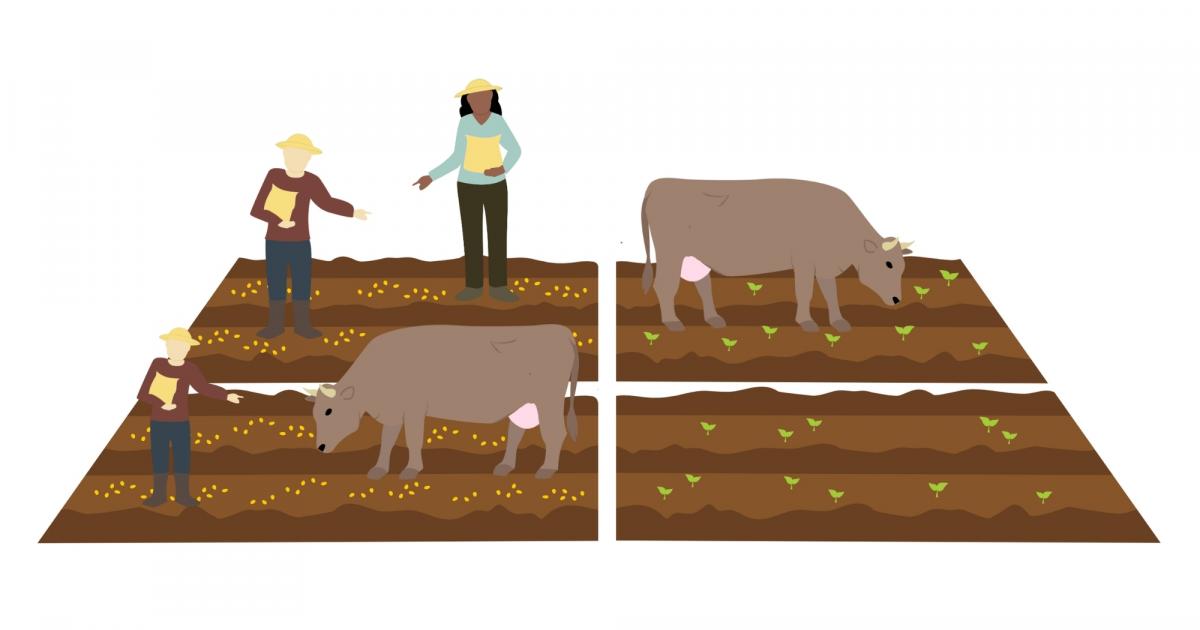
It is designed to test how cattle affect tree growth.
The Woodland Creation Project on the Smithills Estate, led by the Woodland Trust, will run for between 10 and 20 years and involve people planting and monitoring the woodland.
Four different plots will be created on site, with varying combinations of cattle grazing and seed scattering to compare results over time.
Katie Thompson, Engaging Communities Officer for the Smithills Estate said: “We’re trialling a new method of woodland creation, where we have four different plots on site recorded through fixed point photography the public can be involved.
Advertisement
The Smithills Estate woodland. (Image: Woodland Trust)
“Site research from us, wildlife monitoring, for growth over ten, twenty years. What we’re trying to test is the difference that cows make, woodland creation and woodland diversity.
“Using these farming based practices we’ll show proof that cows really can benefit woodlands.”
The project splits land into four test plots to compare how woodland develops under different conditions — with and without cattle, and with and without seed planting, and some with both.
Passers by will also be able to take part by uploading photos from fixed points across the site to track changes in woodland growth over the years.
Advertisement
A scene in Smithills (Image: Ewa Heska)
Ms Thompson added: “What will happen is the cows encourage the seeds to grow by stomping on the ground, it will increase diversity in the woods and that’s what we’re testing for.
“We’re thinking that the ones with cows and seeds will create diverse woodland for wildlife, but we don’t fully know what will happen, that’s why it’s a ten to twenty year project.”
Diversity with trees mainly comes from their height, as lower trees can offer nesting space for birds, and higher trees can get more light.
A public seed-scattering event will take place on April 16 between 1.30pm and 4pm, with volunteers asked to meet at the Woodland Trust Walker Fold car park.
Advertisement
Participants are advised to wear wellies due to muddy conditions, and more than 100 young people are already expected to take part in additional sessions which are fully booked.
Bolton College science lecturer Suzie Toole was left with a serious leg injury after going out without full protective riding gear for what she thought would just be a short trip.
She has told her story for a case study video as part of the Ready Riders initiative; a new scheme Bolton College has joined with aiming to bring down deaths and injuries on the road.
Suzie Toole (Image: Suzie Toole)
In the video she speaks about her horrific injuries, which have left her scarred for life and affected her self-confidence.
Ms Toole said: “If sharing my own experience helps young people stop and think more carefully about road safety, then it is worth talking about.
Advertisement
“Sometimes hearing a real story can make people see the risks differently.”
Ms Toole’s honesty has aimed to add a real-life perspective to the training, helping learners connect road safety advice with the consequences of everyday decisions.
The Ready Riders scheme was launched in partnership with Greater Manchester Police, Greater Manchester Fire and Rescue Service and 2 Wheels Greater Manchester.
This aims to run workshops delivered by road safety experts to give youngsters the skills they need to drive safely and recognise hazards.
Advertisement
Deane Road based Bolton College became involved during the development stage of the national pilot.
The development stage involved students taking part in focus groups and testing sessions to help shape the training.
Their feedback helped organisers create sessions that felt relevant, engaging and easy for young riders to connect with, rather than just delivering traditional safety messages.
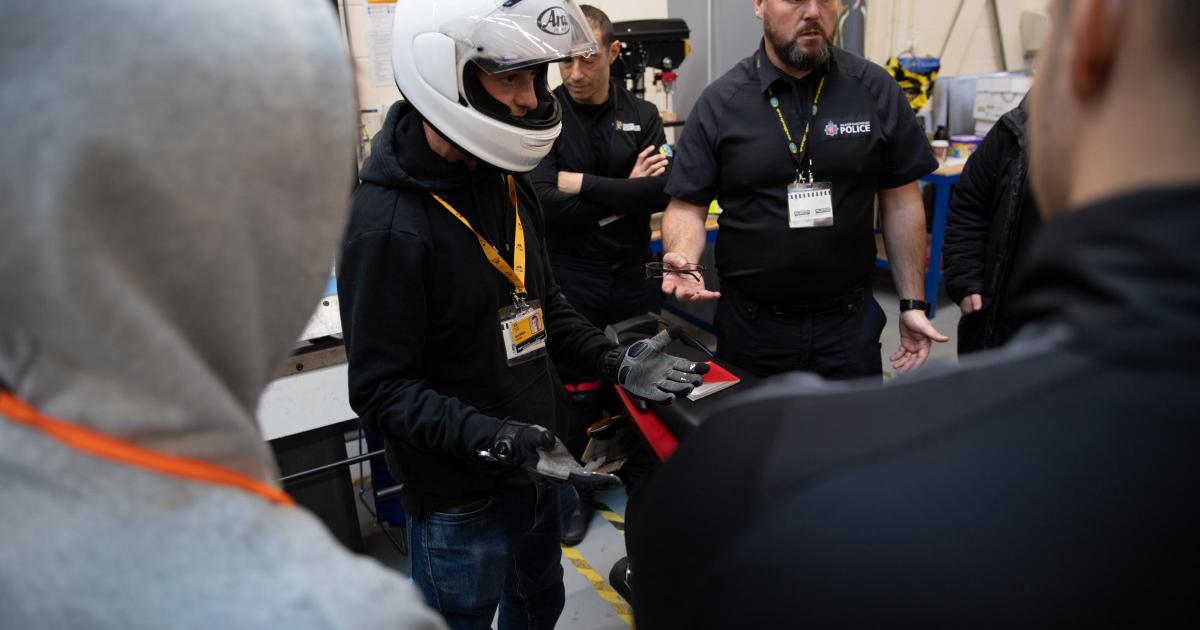
As part of the pilot, learners took part in a dedicated Ready Rider workshop at the college where road safety specialists delivered interactive sessions on the realities of riding on today’s roads.
Advertisement
Warning some may find the images in the video upsetting
The training covered practical topics including protective clothing, bike maintenance, legal responsibilities and hazard awareness.
It also involved immersive virtual reality exercises that allowed learners to practise spotting risks in realistic road scenarios.
Advertisement
Students described the sessions as thought-provoking, with many saying the VR element helped them notice hazards they might previously have missed.
Early feedback from the programme has been highly positive, with 92 per cent of learners rating the training as excellent or very good.
Partner organisations also praised the planning and delivery of the pilot, highlighting the professionalism, attention to detail and strong collaboration shown throughout the project.
Bolton College vice principal Karen Westsmith said: “We are very proud that our learners have been able to play such an important role in shaping this programme.
“It has been a privilege for Bolton College to work alongside partners on a project that combines innovation, collaboration and meaningful learning, while helping address an important road safety issue for young people across Greater Manchester.
“The programme reflects our commitment to giving learners real-life knowledge that can make a genuine difference, while also supporting the Vision Zero strategy for Greater Manchester, which aims to eliminate deaths and serious injuries on our roads.”
The final phase of the pilot will be at the end of March, giving learners the chance to put what they have learned into practical effect at a controlled environment at Wigan Training Centre.
The success of the pilot has already led to discussions about expanding the training further, to give more young people across Greater Manchester the opportunity to take part.
As an Easter treat, we thought we’d give you something a bit different.
Adam and Chris have got together to have a proper in depth look at the government department that deals with some of the most important and politically pertinent issues of our time – the Home Office.
The idea came up in October last year when Home Secretary Shabana Mahmood took over and said it was “not yet fit for purpose” and had been “set up to fail”.
Advertisement
She was channelling her predecessor of 20 years ago, John Reid, who first made the ‘not fit for purpose’ phrase famous.
With the help of former insiders and home secretaries, we’re asking, if the same verdict can be reached twenty years apart, are the problems in the department fundemental?
In this third of three episodes in the series, Adam and Chris are joined by home and legal affairs correspondent Dominic Casciani, to reflect on what we’ve heard, hear what the department is like to cover, and look at what Shabana Mahmood is looking to change things.
You can now listen to Newscast on a smart speaker. If you want to listen, just say “Ask BBC Sounds to play Newscast”. It works on most smart speakers.
Advertisement
You can join our Newscast online community here: https://bbc.in/newscastdiscord
Get in touch with Newscast by emailing newscast@bbc.co.uk or send us a WhatsApp on +44 0330 123 9480.
New episodes released every day. If you’re in the UK, for more News and Current Affairs podcasts from the BBC, listen on BBC Sounds: https://bbc.in/4guXgXd
Newscast brings you daily analysis of the latest political news stories from the BBC.
Advertisement
The presenters were Adam Fleming and Chris Mason. It was made by the series producer Chris Flynn with Harry Craig. The technical producer was Michael Regaard. The social producer was Grace Braddock. The assistant editor is Chris Gray. The senior news editor is Sam Bonham.
ISTANBUL (AP) — Ukrainian President Volodymyr Zelenskyy expressed concern that a prolonged U.S.-Israeli war on Iran could further erode America’s support for Ukraine as Washington’s global priorities shift and Kyiv braces for reduced deliveries of critically needed Patriot air defense missiles.
Ukraine desperately needs more U.S.-made Patriot air defense systems to help it counter Russia’s daily barrages, Zelenskyy said, speaking to The Associated Press in an exclusive interview late Saturday in Istanbul.
Russia’s relentless pounding of urban areas behind the front line following its full-scale invasion of Ukraine more than four years ago has killed thousands of civilians. It has also targeted Ukraine’s energy supply to disrupt industrial production of Ukraine’s newly developed drones and missiles, while also denying civilians heat and running water in winter.
“We have to recognize that we are not the priority for today,” Zelenskyy said. “That’s why I am afraid a long (Iran) war will give us less support.”
Advertisement
A loss of focus on Ukraine
The latest U.S.-brokered talks between envoys from Moscow and Kyiv ended in February with no sign of a breakthrough. Zelenskyy, who has accused Russia of “trying to drag out negotiations” while it presses on with its invasion, said Ukraine remains in contact with U.S. negotiators about a potential deal to end the war and has continued to press for stronger security guarantees.
But, he said, even those discussions reflect a broader loss of focus from Ukraine.
His most immediate concern, Zelenskyy said, are the Patriots — essential for intercepting Russian ballistic missiles — as Ukraine still lacks an effective alternative.
These U.S. systems were never delivered in sufficient quantities to begin with, Zelenskyy said, and if the Iran war doesn’t end soon, “the package — which is not very big for us — I think will be smaller and smaller day by day.”
Advertisement
“That’s why, of course, we are afraid,” he said.
Interlinked wars
Zelenskyy had been counting on European partners to help make the Patriot purchases despite tight supply and limited U.S. production capacity.
But the Iran war, now in its sixth week, has sent shock waves through the global economy and pulled in much of the wider Middle East region, further straining these already limited resources, diverting stockpiles and leaving Ukrainian cities more exposed to ballistic strikes.
Advertisement
Ukraine’s President Volodymyr Zelenskyy speaks during an interview with The Associated Press, in Istanbul, Turkey, Saturday, April 4, 2026. (AP Photo/Khalil Hamra)
Advertisement
Ukraine’s President Volodymyr Zelenskyy speaks during an interview with The Associated Press, in Istanbul, Turkey, Saturday, April 4, 2026. (AP Photo/Khalil Hamra)
Advertisement
Advertisement
Advertisement
For Kyiv, a key objective is to weaken Moscow’s economy and make the war prohibitively costly. Surging oil prices driven by Iran’s closure of the Strait of Hormuz are undermining that strategy by boosting the Kremlin’s oil revenues and strengthening Moscow’s capacity to sustain its war effort.
Advertisement
In his interview with the AP, Zelenskyy said Russia draws economic benefits from the Mideast war, citing the limited easing of American sanctions on Russian oil.
“Russia gets additional money because of this, so yes, they have benefits,” he said.
Russian officials said Sunday a fire broke out at a major oil refinery in the Nizhny Novgorod region after a drone attack, while another drone damaged a pipeline at the Russian Baltic Sea port of Primorsk, home to a major oil export terminal. No casualties were reported.
Russia could reap a windfall from a surge in oil prices and the U.S. temporary waiver on Russian oil sanctions designed to ease supply shortages as the Iran war continues. Russia is one of the world’s main oil exporters, and Asian nations are increasingly competing for Russian crude oil as an energy crisis mounts.
Advertisement
In response, Ukraine has intensified its long-range drone attacks on Russian oil facilities, which have rattled Moscow.
A renewed diplomatic push
To keep Ukraine on the international agenda, Zelenskyy has offered to share Ukraine’s hard-earned battlefield expertise with the United States and allies to develop effective countermeasures against Iranian attacks.
Ukraine has met Russia’s evolving use of Iranian-made Shahed drones with growing sophistication, technological ingenuity and low cost.
Moscow significantly modified the original Shahed-136, rebranded as the Geran-2, enhancing its ability to evade air defenses and be mass produced. Ukraine responded with quick innovation of its own, including low-cost interceptor drones designed to track and destroy incoming drones.
Advertisement
Zelenskyy said Ukraine is ready to share with Gulf Arab countries targeted by Iran its experience and technology, including interceptor drones and sea drones, which Ukraine produces — more than are used up — with funding from Americans and its European partners.
In return, these countries could help Ukraine “with anti-ballistic missiles,” Zelenskyy said.
In late March, as the Iran war escalated, Zelenskyy visited Gulf Arab states to promote Ukraine’s singular experience in countering Iranian-made Shahed drones, leading to new defense cooperation agreements.
Zelenskyy has also positioned Ukraine as a potential partner in safeguarding global trade routes, offering assistance in reopening the Strait of Hormuz by sharing Ukraine’s experiences securing maritime corridors in the Black Sea.
Advertisement
Zelenskyy was in Istanbul for talks with President Recep Tayyip Erdogan, a day after the Turkish leader spoke with Russian President Vladimir Putin.
Zelenskyy said they discussed peace talks and a possible meeting of leaders in Istanbul. He also said there could be new defense deals signed between the two countries soon.
Russia steps up its spring offensive
Each year as the weather improves, Russia moves its grinding war of attrition up a notch. However, it has been unable to capture Ukrainian cities and has made only incremental gains across rural areas. Russia occupies about 20% of Ukraine, including the Crimean Peninsula, which Russia seized in 2014.
On the roughly 1,250-kilometer (750-mile) front line stretching across eastern and southern parts of Ukraine, short-handed Ukrainian defenders are getting ready for a new offensive by Russia’s larger army.
Advertisement
The commander-in-chief of Ukraine’s armed forces, Gen. Oleksandr Syrskyi, said Russian troops have in recent days made simultaneous attempts to break through defense lines in several strategic areas.
One thing Zelenskyy says he has insisted on and will continue to do so — a territorial compromise and giving up land will not be on Ukraine’s agenda.
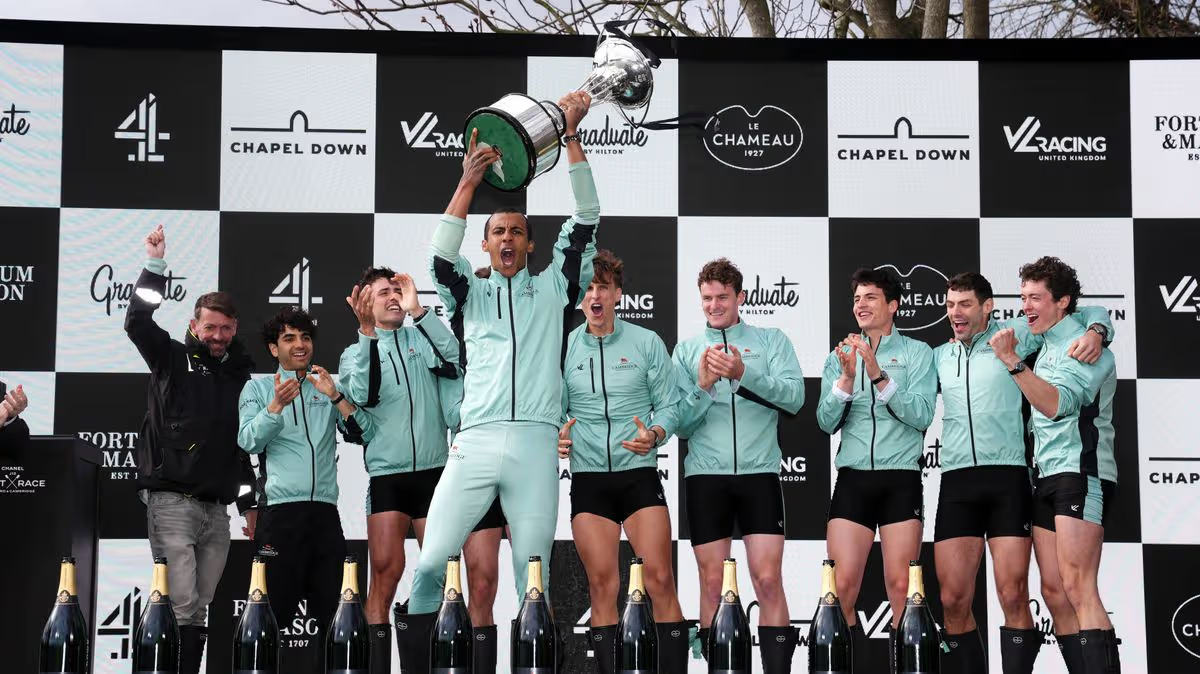
Cambridge continued their dominance with a fourth consecutive Boat Race victory on Saturday, beating Oxford by three and a half lengths despite brutal weather conditions with 38mph winds on the Thames
Cambridge bow Simon Hatcher, champagne in hand, had hoped to win the men’s Boat Race by the “curvature of the earth” but was ultimately just relieved to triumph over both Oxford and the elements.
Advertisement
Strong favourites Cambridge secured their fourth consecutive victory on Saturday, defeating underdogs Oxford by three and a half lengths on a gusty afternoon on the Thames, where wind speeds were forecast to hit 38 miles per hour.
The conditions created near-oceanic swells in certain stretches, prompting both crews to take the relatively unusual decision of fitting electric pumps to bail out any water the boats were expected to ship during the race.
“The conditions tend to make equals of us all,” said Hatcher, an American PhD student in engineering, when questioned about the narrow gap between the two sides in the early stages.
“A lot can happen that’s unexpected when the conditions rear up like that. We handled it well enough to get our bow well enough ahead at the end. Whether the margin would have held on a flatter day, we’ll never know.
Advertisement
“I mentioned before that I wanted to win by the curvature of the earth. We might not have won by the curvature of the earth, but we got the bow well ahead and I think that’s the most important thing.”
Hatcher described the conditions as “brutal”, and when pressed about the particularly gruelling white-capped waters at Chiswick, noted that “in those moments you’re blown to a halt, essentially, by the wind.” Entering the 171st men’s Boat Race unbeaten this season, Cambridge found themselves under pressure as Oxford kept the gap to a mere four seconds at Mile Post. However, the light blues began to pull clear at the halfway stage, ultimately crossing the finish line with a winning margin of just over 11 seconds.
“It’s just the greatest feeling in the world,” Hatcher said. “You put so much time into a campaign like this, and you really become brothers with every person in your boat and every person in the club, to deliver like that and to be a part of history.
“It’s just everything. It’s everything you hope for, and regardless of the margin or anything, it’s the greatest feeling ever.”
Advertisement
The victory extends Cambridge’s overall lead in the men’s head-to-head record to 89-81, cementing Saturday’s winners as the dominant force in the historic rivalry.
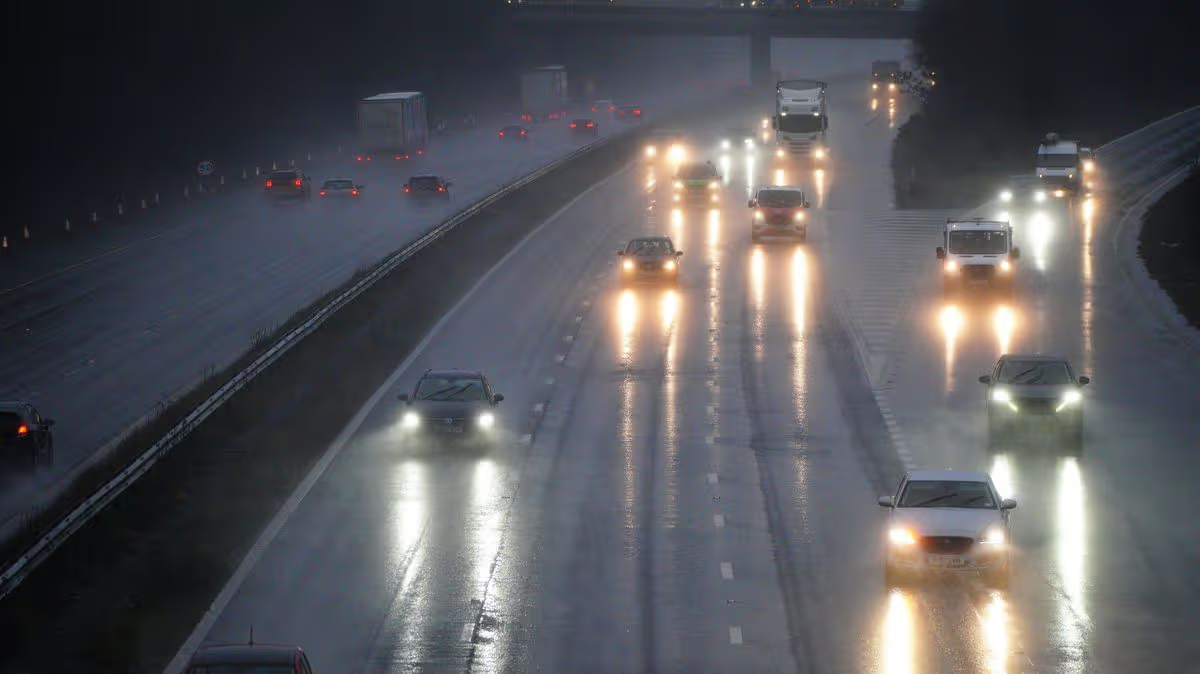
The extreme weather sparked road closures and train disruptions early this morning – but the forecast is now expected to clear throughout the day.
The weather warnings have been lifted as Storm Dave eases on Easter Sunday, the Met Office have announced.
Advertisement
The extreme weather sparked road closures and train disruptions early this morning – but the forecast is now expected to clear throughout the day.
An amber wind warning covering southern Scotland was lifted at 3am, while yellow warnings across the rest of the country was lifted later in the morning.
The Met Office’s forecast for Easter Sunday said: “Storm Dave will clear northeast on Sunday morning, leaving sunshine and widespread showers across the UK.
“Northern areas will see the heaviest, blustery showers and feel cold, while temperatures elsewhere stay closer to average for early April.”
Advertisement
Before the severe amber weather warning was lifted, the Met Office had forecast “severe gales” across central and northern areas of the country overnight into Sunday.
In the early hours of Sunday, Traffic Scotland warned that several major bridges had restrictions in place due to strong winds, including the Queensferry Crossing on the M90, which connects Edinburgh with Fife and the nearby Forth Road Bridge on the A9000.
ScotRail confirmed emergency speed restrictions would be implemented across parts of its network, resulting in longer travel times.
As of 7am on Sunday, 12 flood warnings and eight flood alerts did, however, remain in place.
Advertisement
The Energy Networks Association (ENA) – which represents electricity network operators – warned of potential power cuts and issued safety advice following the weather warnings.
It said in a statement on Saturday: “The storm has the potential to affect local power infrastructure, increasing the risk of a power cut and fallen power lines.
“Network operators are increasing staffing for operational teams, and moving spare equipment to where the weather is expected to be most disruptive, so it’s ready to use if needed.”
Get more Daily Record exclusives by signing up for free to Google’s preferred sources. Click HERE.
Where It All Began will take place for the first time in Cambridgeshire after a successful £180,000 crowdfunder
Martin Neal and Martin Neal
09:00, 05 Apr 2026
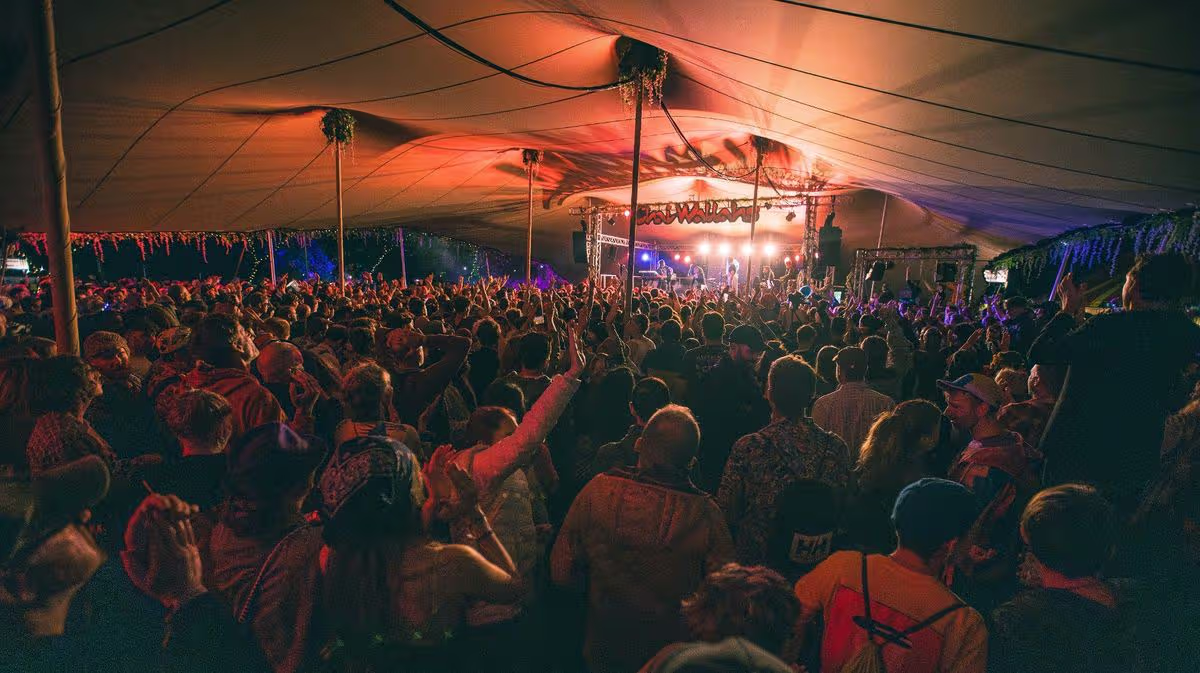
A new grassroots festival in Cambridgeshire which raised an incredible £180,000 through a crowdfunder has announced its first raft of acts. Where It All Began generated the cash without corporate sponsorship, paid advertising, social media campaigns, or major financial backers.
Instead, the crowdfunder relied instead on word-of-mouth, an email campaign, and community. It launched without a line-up announcement or conventional marketing assets in a deliberate rejection of industry norms.
Advertisement
Now Where It All Began, which will take place at Grange Farm, Huntingdon, from June 18-21, has revealed the first acts taking to the stage. They include festival favourites Beans on Toast, the Skinner Brothers, Opus Kink, Carsick, Funke and the Two Tone Baby and more. A second wave of artists is set to follow in the coming weeks.
Where It All Began is led by the team behind Chai Wallahs – an independent, critically acclaimed festival venue that has spent more than 25 years championing grassroots music and culture.
True to the organisers’ ethos, the line-up champions independent and emerging talent alongside boundary-pushing creatives, rather than relying on heritage headliners or commercially driven booking strategies.
Organisers say Where It All Began is not built around headline acts, heritage names, or prestige pricing and that it explicitly rejects elitism and escalating ticket costs. Instead, it aims to reimagine festivals as shared cultural spaces: accessible, participatory, and community-owned.
Advertisement
“This is about platform, not prestige,” said Potter, co-founder of the festival. “We’re building something that reflects what’s actually happening in culture right now, not just what sells quickest.”
“This has been about graft, not budgets,” added founder Si Chai. “No sponsors. No corporate backing. No ad spend. Just belief in an idea, and a community willing to stand behind it.”
The festival will feature:
Independent and grassroots music, with platforms for young and emerging artists;
Street art, skate culture, comedy, activism, education and creative practice integrated across the site;
Ethically sourced, well-made food from independent traders;
A fully immersive, family-oriented collaborative programme designed for all ages;
A bespoke wellness area, offering festival-goers space to properly unwind before getting stuck into the event;
Elements of the wild, free hedonism synonymous with the UK’s festival heritage, and;
Accessible pricing and inclusive spaces, designed to welcome all audiences.
For dog owners, the greatest joy is a walk that both can enjoy in equal measure. Unfamiliar terrain can present problems along the way, but in three new guides to the Lake District, the Peak District and the Yorkshire Dales, 10 curated routes are detailed, offering walks for all abilities.
These carefully curated well-researched guides are by experienced outdoors authors who know the terrain well, but in this case their dogs to take the lead.
Available in all good bookshops, outdoor retailers and atos.uk/dogwalks
THE LAKE DISTRICT
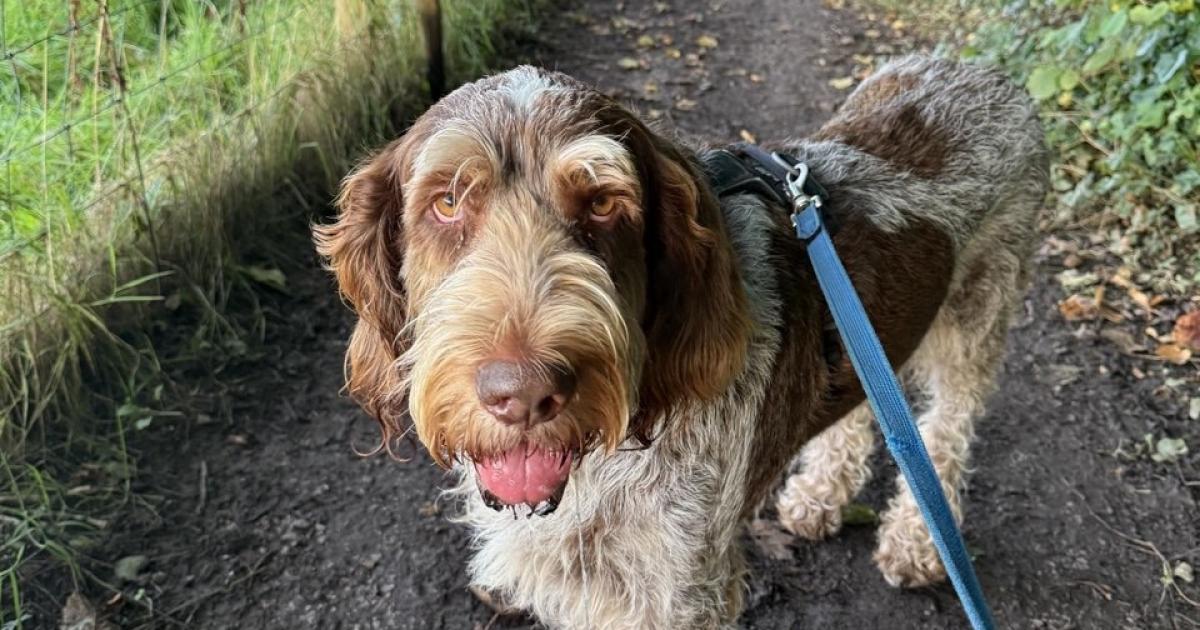
Exploring the scenic Lake District with Elmo, his Italian Spinone, has given David Jordan an even greater appreciation of this exceptionally beautiful national park.
Advertisement
David says: “Elmo is a natural scenting dog, so he’s always got his nose to the ground exploring who, or what, else has been there. Consequently, his favourite walks are those with lots of variety.
“He’s a big fan of woodland, loves to snuffle through bracken and undergrowth.
“He’ll head for water if there is any and will paddle in the shallows happily for as long as we let him.”
With 10 routes to explore between two and four miles, there are dog-friendly pubs and cafés marked along the way and for the four-legged one, advice on keeping them safe and happy with safe water entry points, accessible drinking water, and rest stops. There is a clear information panel to show where a lead is required and where they can freely explore off-lead.
Advertisement
David embraced the opportunity to work on a guide that provided that clear information that every dog walker needs to truly enjoy a relaxing walk.
But even for David, who knows the Lake District well, Elmo’s keen nose took him to explore new areas.
Along lakeshore, woodland and riverside trails, the guide has clear turn-by-turn routes and indicators of every amenity required – from public toilets for the two-legged to transport routes and the stories behind each walk.
David says that creating the guide had the official “paws up” from Elmo.
Advertisement
THE YORKSHIRE DALES
The rolling hills and tranquil becks of the Yorkshire Dales offer the perfect escape for the most satisfying dog walks.
Sally Outram has curated 10 walks that make the most of every aspect of the Dales, ably assisted by her lovely Patterjack, called Ted.
“Each route had to feel welcoming, manageable, and enjoyable for a
wide range of dogs and owners,” says Sally.
Advertisement
“That meant looking beyond the scenery and really considering the practicalities: safe access, clear paths, water availability, escape‑proof sections, and how easy it would be for owners to navigate the route confidently.”
Having a terrier cross to satisfy meant knowing where he could and couldn’t be off lead but owners can find clear advice in each guide on that.
It is a walk for you both, so places where owners can find dog-friendly watering holes along the way are also marked.
Each of the 10 walks has a story in itself and shows what the two-legged one can find to interest and stimulate them along the way. A sense of the history of the area as well as its natural beauty.
Advertisement
Ted particularly enjoyed the Kettlewell route. “It stands out because it offered everything Ted loves: a mix of woodland, open views, and a peaceful riverside stretch where he could paddle and cool off. It had that perfect blend of variety and interest, the kind of walk where you both enjoy being out in the landscape together,” says Sally.
“For me, it was also a route that captured the area’s spirit beautifully, with a real sense of Yorkshire heritage and natural character.”
THE PEAK DISTRICT
Derbyshire’s jewel, the Peak District has so much to explore for dog and walker and in this guide there are 10 thoughtfully chosen routes to make the most of this stunning national park.
Stephanie Cooke has authored this guide with the help of Jim, who is a black Labrador. “Jim and I enjoy regular walks together.
Advertisement
“We are always seeking out new adventures, so this guide felt like a great opportunity, not only to share some of our favourite spots, but also to discover more.”
Planning walks between two and four and a half miles, as offered in the guide take some planning, but everything required is already in the guide.
From the basics of parking and transport to the practicalities of where to shelter in any weather and how to keep your four-legged friend and the wildlife they might encounter along the way, safe.
Follow the advice and inspiration in the guide and the stress of planning is unnecessary. All that’s required is enjoying time together in truly beautiful surroundings.
Advertisement
Even for the most experienced dog walker, the choice of walks will allow a new perspective on the park and provide that extra information that brings even the most stunning scenery into greater focus.
Although Jim enjoyed all of the chosen walks, Stephanie says: “Jim loved the Nine Ladies walk the most.
“ There was plenty of off-lead time and opportunities to potter and sniff around the stones.
“It was a close call between this walk and Milldale, as there was swimming to be had in the River Dove and caves to explore. Plus a shop offering ice cream for dogs!”





















































You must be logged in to post a comment Login