










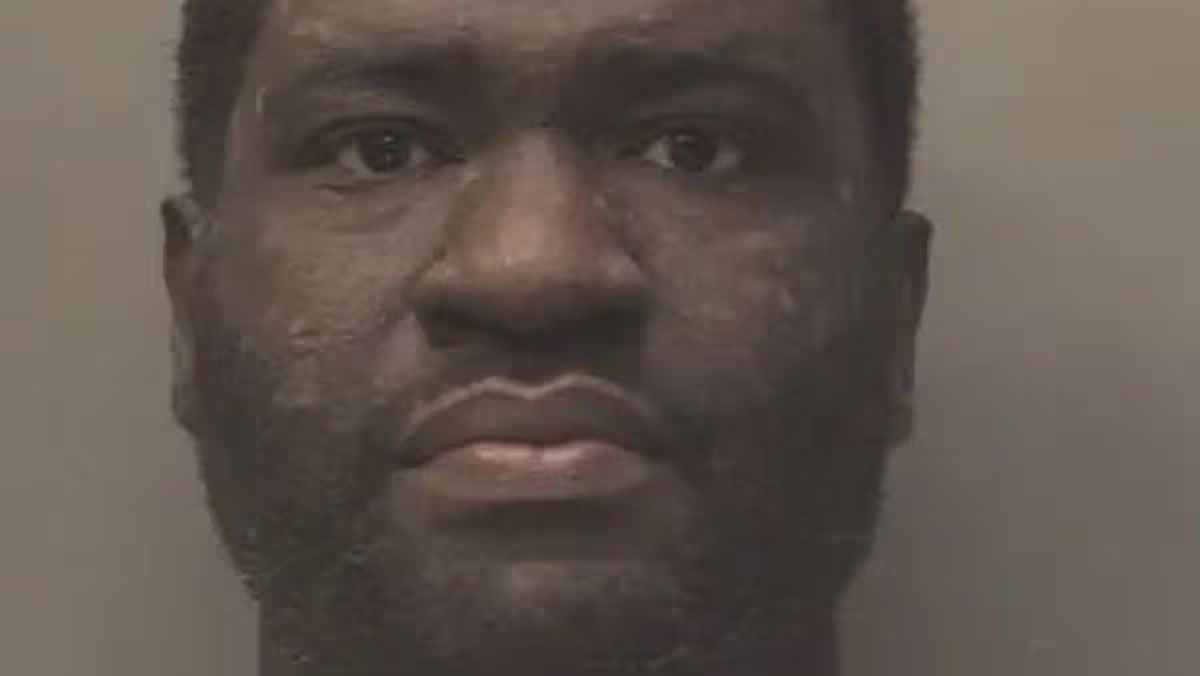
Former England youth basketball player Kwame Yeboah groomed his victim after meeting on a video chatroom.
A pilot and former sporting prodigy groomed a 12-year-old girl before driving hundreds of miles to rape her. Kwame Yeboah met the schoolgirl on video chat website Omegle before exchanging explicit messages, photographs and video calls on Instagram.
Liverpool Crown Court heard the 30-year-old British Airways pilot travelled from Reading to the Wirral, Merseyside, after around three months of communication with the youngster online.
The court heard the girl’s mum contacted Merseyside Police after learning from one of her daughter’s friends that she had been speaking to a man online and had later had sex with him, The Mirror reports.
Prosecutor Louise McCloskey said the mum was told the man drove a black Mercedes and had put his number in the girl’s phone under a false name to avoid suspicion.
The youngster was “initially dismissive” when speaking to cops. She told her mum, in the presence of police: “I don’t know why you had to tell the police. It’s not like I’ve been raped or anything.”
The court heard that, after being told she may need emergency contraception if sexual activity had taken place, she replied: “No, I’m not getting it. I’ll keep the baby.”
Get Daily Record Premium for just £1 per month in exclusive offer to celebrate the World Cup. Click HERE.
The beast booked a hotel room in the Merseyside area before the girl escaped her home by climbing out of a window and met him in his black Mercedes.
Although the victim initially told Yeboah she was 17, the court heard she later sent him photographs of herself in school uniform and referred to being grounded during their conversations.
When she said she could not meet him, Yeboah sent messages including: “I can’t do this no more, because you’re not meeting me. I can’t call because it makes me sad, because I can’t see you.”
The court heard Yeboah drove the girl around before asking to “go to a car park and do stuff”, telling her he was “horny”. After stopping the vehicle, he sexually assaulted and raped her.
When another car pulled up nearby, Yeboah drove to a second location where he instructed the youngster to perform a sex act before raping her again. Yeboah later messaged the girl after becoming concerned she might obtain the morning-after pill.
He told her: “You lied to me. They would have asked you a bunch of questions before they gave it to you.” She replied: “I just don’t want you to be mad at me. I love you. I wouldn’t lie to you. Don’t text for a bit, social services are at my house.”
Judge Gary Woodhall said there had been “clearly some grooming behaviour” and found that Yeboah had sought to “manipulate or emotionally blackmail” the girl.
Sentencing him, the judge said: “You had to travel from Reading. You booked a hotel room for the two of you. You agreed to collect her in your car. She had to sneak out of her home to meet you.”
Yeboah, of Drake Way, Reading, admitted three counts of rape of a child under 13 and assault of a child under 13 by penetration. He was jailed for eight years and four months and handed an additional year on licence.
The court heard the abuse had left the victim struggling with confidence, sleep and concentration at school. Yeboah was also handed a restraining order banning him from contacting the girl for 15 years and will remain on the sex offenders’ register for life.





































You must be logged in to post a comment Login